



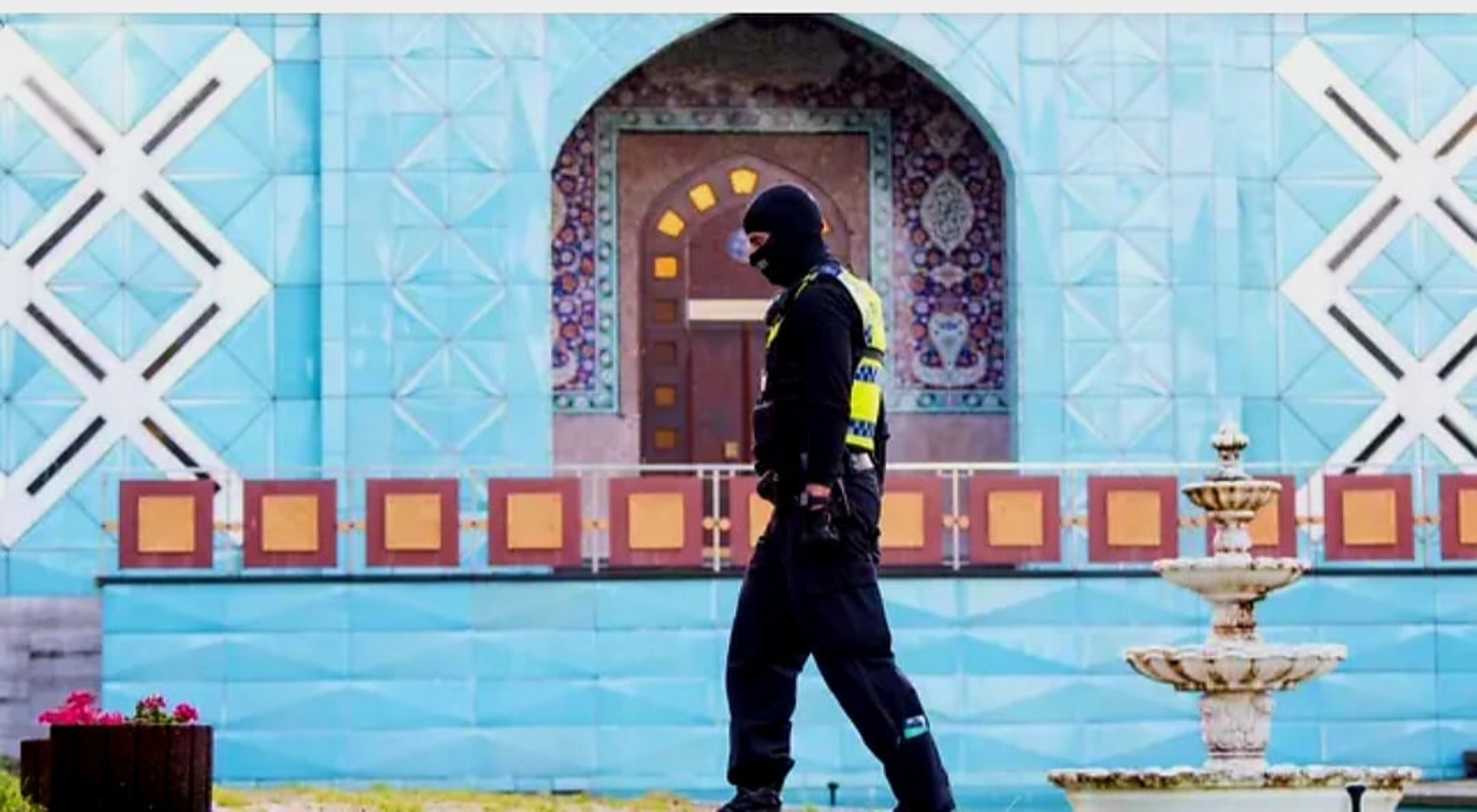
Among the reasons cited by the German Federal Ministry of the Interior for banning the activities of the Shiite mosque association Islamic Centre Hamburg (IZH) is its support for terrorism.
PREVIOUS OPERATIONS AND THE FINAL CLOSURE DECISION
In November of last year, state authorities conducted a search operation at this building, also known as the Imam Ali Mosque, but no closure decision was issued. In a comprehensive operation carried out in July 2024, a definitive closure decision was made for the IZH. Federal Interior Minister Nancy Faeser personally announced that the activities of the IZH, the association operating the 'Blue Mosque', had been banned.
REASONS FOR THE BAN AND INTERIOR MINISTER FAESER'S STATEMENTS
According to the Federal Ministry of the Interior, the association engages in activities contrary to Germany's constitutional order. It is known that mosque representatives, who spread antisemitic and anti-Israel rhetoric, have in the past praised the violent acts of terrorist organizations such as Hamas and have also supported banned terrorist organizations like Hezbollah.
Interior Minister Faeser stated that searches were conducted at 53 separate locations affiliated with the IZH across 8 states, including mosques and association buildings, that many materials and assets were seized as a result of the operations, and that a ban was also imposed on five other separate associations affiliated with the IZH.

The Interior Minister continued her remarks with the following sentences: "What we know for certain is that the Islamic Centre Hamburg acts against Germany's constitutional order and operates accordingly. However, a situation that is very important to me and which I especially want to be distinguished is this: We are not targeting a religion. We clearly distinguish between the extremist religious groups we are fighting against and the Muslims who are a part of our country and practice their religion."
ACCUSATIONS OF SUPPORT FOR TERRORISM
The most significant component of the 200-page ban decision prepared by the Federal Ministry of the Interior is the accusation of support for terrorism. Among the items listed under the heading of terrorism are:
The IZH's support for Hezbollah, which is banned in Germany,
Providing political and religious direction to local mosques with an antisemitic and anti-democratic stance on behalf of the Iranian state,
Fundraising activities aimed at supporting Hezbollah, which is banned in Germany, in order to spread the totalitarian Islamism ideology of the Iranian regime.
HISTORY AND IMPORTANCE OF THE BLUE MOSQUE
The "Blue Mosque" is considered one of the most important centers for the Shiite community in Europe. Founded in 1953 by Iranians in exile, the IZH has close ties to Iran. These ties were further strengthened, especially after the extremist religious structure in Tehran came to power after 1979.
The Hamburg Office for the Protection of the Constitution (Verfassungsschutz) had been monitoring the IZH since 1993. Classified as Islamist because it adopted the extremist ideology of the Iranian Mullah regime, this association, according to the Verfassungsschutz, continued its activities in Germany like an outpost acting under the instructions of Tehran.
MONITORING AND COURT PROCESS IN 2023
The IZH management had filed a lawsuit against the monitoring activities of the Verfassungsschutz but was unsuccessful. While the court stated that only some statements in the Verfassungsschutz report were unlawful, Hamburg Interior Senator Andy Grote stated after the court decision that the IZH was an ultra-radical and anti-democratic institution.
IRANIAN CONNECTIONS AND EVIDENCE
An incidental finding obtained in retrospective research was considered very important for the Verfassungsschutz authorities to deepen their research and determine the content of the investigation. During an airport check upon his return from a trip from Iran to Germany, important documents belonging to Iranian security units were seized from the imam of the "Blue Mosque". According to these documents, the director of the IZH, Mohammad Hadi Mofatteh, had been appointed as the imam of the Blue Mosque with a personal letter written by the representative of the Iranian supreme leader. Furthermore, these documents also contained information that Mohammad Hadi Mofatteh had served as a Revolutionary Guard in the early 1990s.
FUTURE AND OWNERSHIP STATUS OF THE BLUE MOSQUE
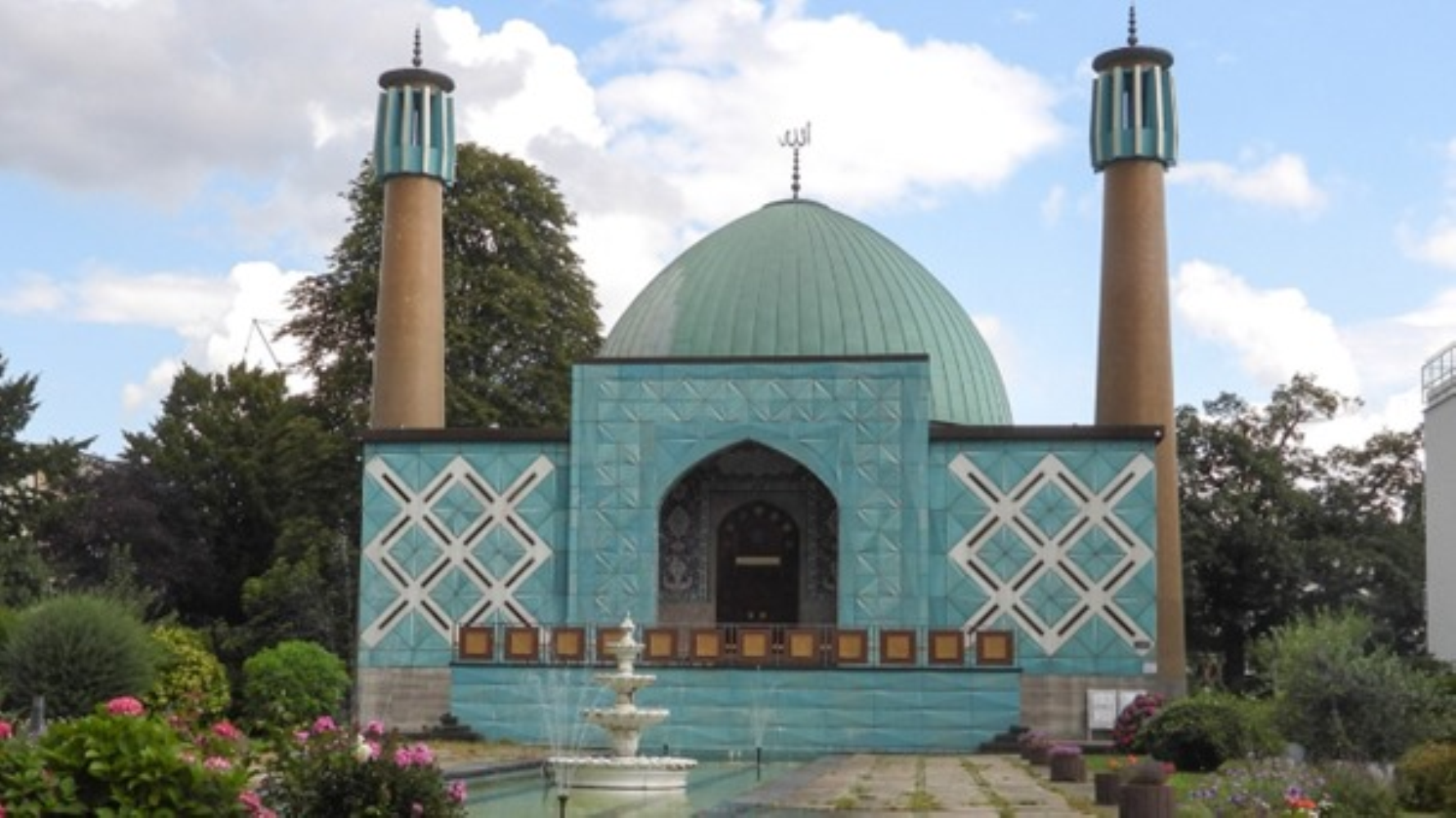
After the bans, the fate of the protected Blue Mosque building is a matter of curiosity. Although it is stated that the building, whose ownership will pass to the state, will continue to be used for religious purposes in the future, it is not yet known who will take over the new management of the mosque.
DIPLOMATIC TENSION, RETALIATION, AND THE JAMSHID SHARMAHD CASE
It is thought that this ban could cause a diplomatic crisis between Iran and Germany. In diplomatic circles, it is being discussed that Tehran could respond to this ban through German organizations in Iran, resort to bans, or retaliate in a harsher manner.
According to information reflected from NDR and WDR, the Ministry of Foreign Affairs is concerned that the closure of the Blue Mosque could lead to the execution of the sentence of German-Iranian Jamshid Sharmahd, who was sentenced to death on terrorism charges in February 2023. Sharmahd, who was active in opposition movements in Iran, was captured in Dubai by Iranian intelligence in the summer of 2020 and taken to Iran. The 68-year-old Sharmahd, who was tried in a revolutionary court, was held responsible for a terrorist attack in which 14 people died and was accused of cooperating with US and Israeli intelligence services. The fact that Sharmahd denied all accusations did not prevent Iran from issuing a death sentence against him.
German Foreign Minister Annalena Baerbock described the decision as unacceptable and called on the Iranian government to immediately reverse the decision. Following this incident, the German government expelled two employees at the Iranian Embassy, one of whom was an intelligence officer.
Most Read

Striking picture for Özgür Özel's 'New Party'

Özgür Özel gives a dated response regarding the number of resignations

Forest fire in Antalya brought under control

The PKK opening and Özgür Özel’s path!..

How did the newspapers view Özgür Özel's farewell to the CHP?

He killed his wife by slitting her throat: Their children witnessed the moments

What did the CHP do?

Özel’s new party move in the world press

The New CHP, against CEHAPE

Fire at TUSAŞ engine factory in Eskişehir under control