



When men wore dresses with pink, red, green, or white lace, was the world a less masculine place? In an era when boys wore the same clothes as girls, were women living in a world where they were better understood, happier, or subjected to less violence?
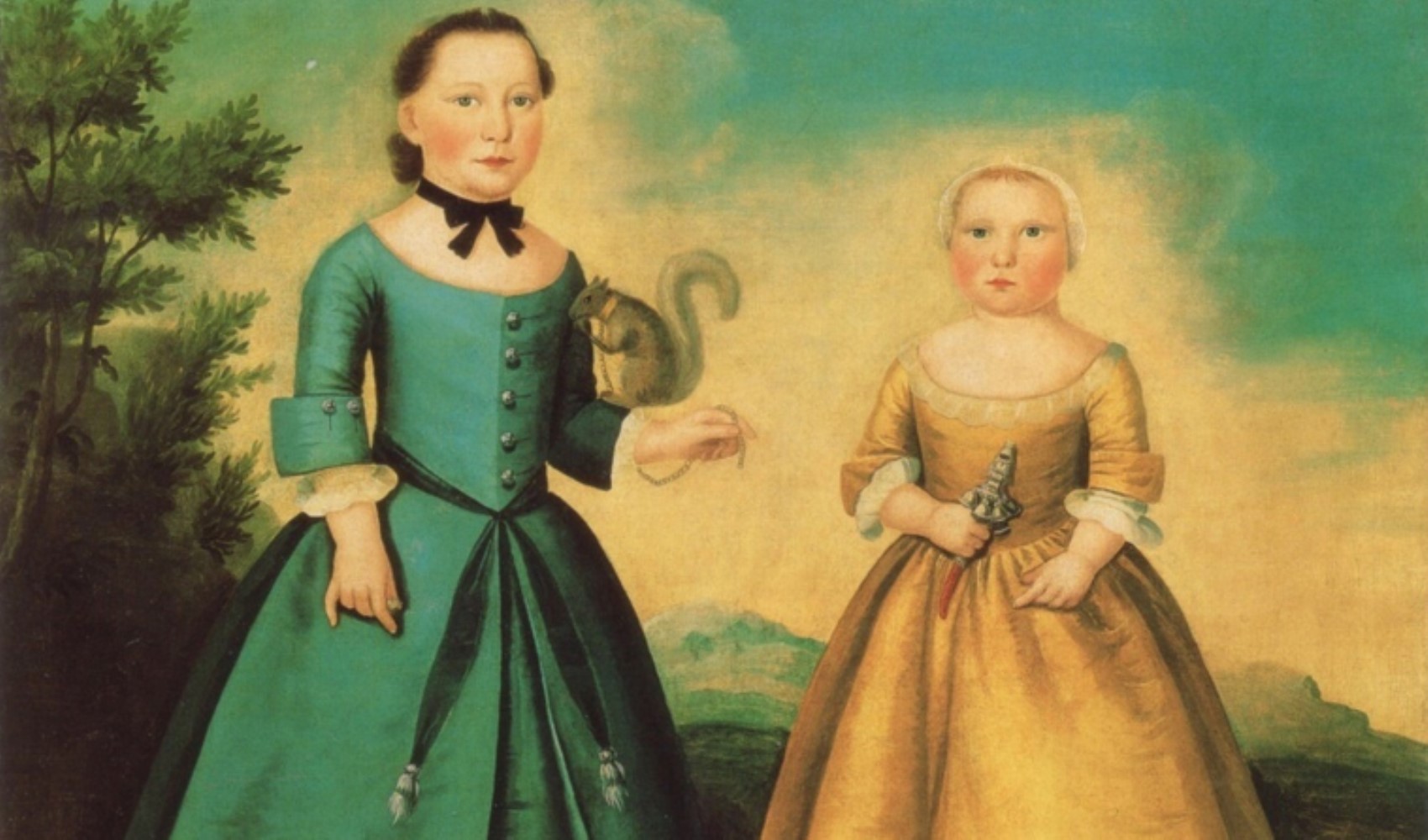
(A painting by Joseph Badger in the 18th century; the child in the green dress on the left is a boy)
If we lived in a mono-causal world where events could be reduced to a single cause, such a theory might make sense. However, we live in a social system where intricate causal networks are complex to chaotic dimensions. The most natural method that humans, as social beings, have developed to make the natural chaos they are born into understandable is what we call reduction.
When concepts like social complexity, reduction, and mono-causality are at stake, it is, of course, impossible not to leaf through the books of Niklas Luhmann to elaborate on the subject. Although Niklas Luhmann has been subjected to justified criticism for the rapid transitions he made while applying theories he took from biological systems to sociological systems, he is also known as the person who adapted systems theory to the social sciences in the most comprehensive and original way.
Niklas Luhmann defines "reduction of complexity" as the process of systems making a specific choice within the limitless information and possibilities in their environment, and creating meaning through this choice. According to Niklas Luhmann, it is not possible for complex systems to function without reducing complexity, that is, without subjecting them to a reduction process.
However, this process of reducing complexity is not consciously applied to the social system from the outside; because this is not an invention and it already exists in the nature of social systems. Social systems make an effort of reduction to maintain their existence and make themselves understandable. The most effective instrument of this effort is communication. Systems or individuals reduce complexity by classifying, separating, and making sense of events through communication, so that it becomes naturally possible to understand social systems.
We, too, must use the same method to make sense of the issue of women and men, which is one of the most complex problems of both human history and our present day.
We must examine why women and men, whose common denominator is being human, are subjected to such a deep distinction by looking from different perspectives, by reducing, and by dividing them into sub-headings, so that we can approach the stage of producing solutions. Because problems, just like social systems, have structures that are too complex to be understood with a single theory when handled as a whole.
It would be naive to hope that this issue, which has come down to us from our thousands of years of history, will be solved simply within a few decades. However, the way not to give up on the search for a solution is again to look at the past. Because the most realistic ruler with which we can measure change is time.
Although the idea that we have developed sufficiently in terms of women's rights is defended with appetite by patriarchal authorities, we still live in a world where women are defined by their husbands' names and cannot naturally give their own names to their children. However, considering the darkness in our recent past; although the rights women have gained—the right to inherit, the right to work, the right to go to university—are rights we have acquired in the very recent past, it is significant when viewed from the perspective of not underestimating the distance covered.
I had started browsing black-and-white historical albums via the internet to observe how fast a change we are experiencing and to write a hopeful article on this subject, when I came across a picture of a very cute little girl. When I read the name written underneath, I could not hide my astonishment even from myself. This cute little girl, posing proudly in a dress with lace, ruffles, and ribbons, was none other than Franklin D. Roosevelt, who served as the American president during the Second World War. Then, as I progressed a little further on the same subject, encountering photographs of many different and famous names piqued my curiosity even more.
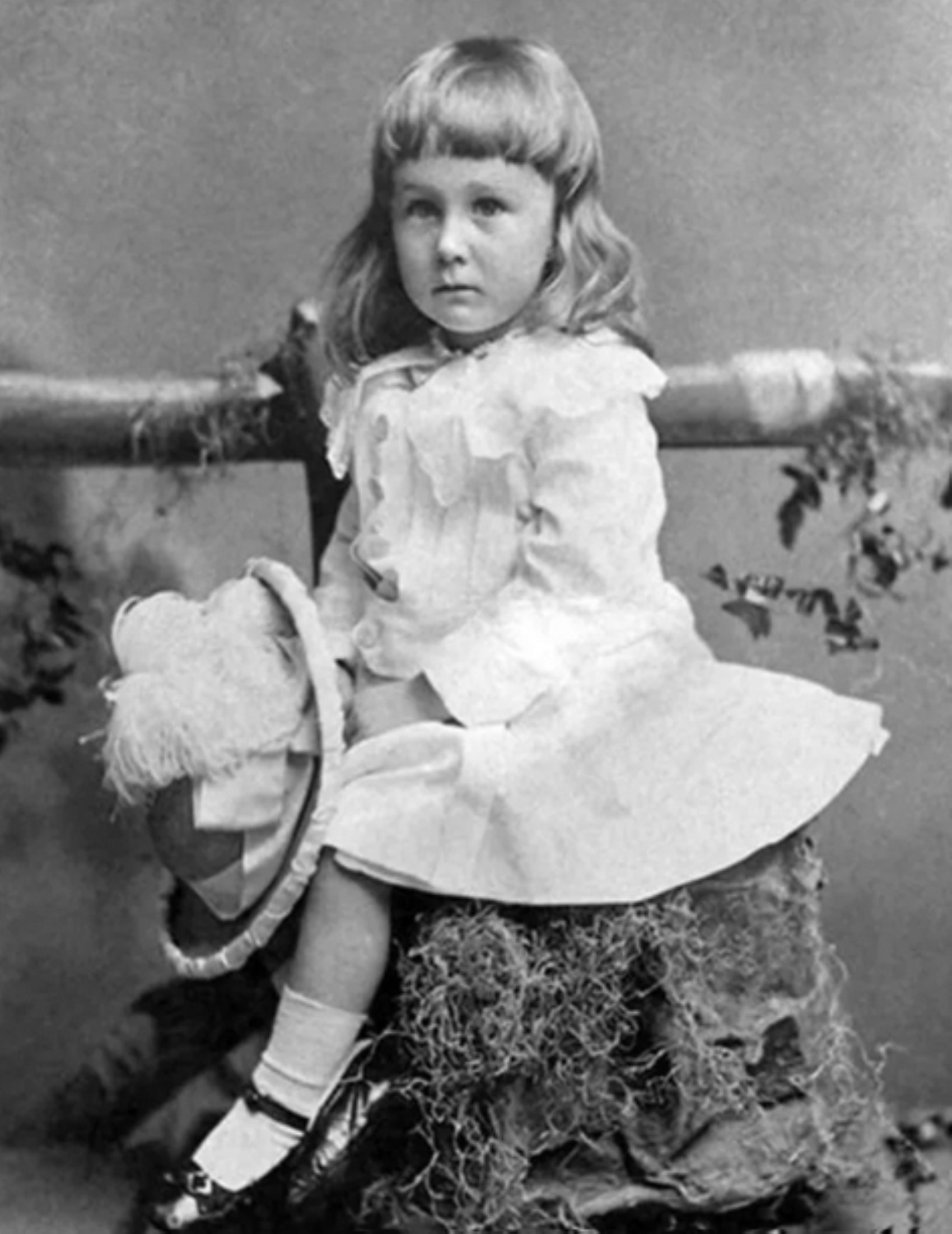
(Franklin D. Roosevelt in the 19th century: In those years, it was considered normal for boys to dress the same as girls and for their hair to be long.)
It seems that in the 19th century and earlier periods, there was no clothing and color distinction that separated girls and boys with sharp lines.
It is obvious that the lace and ruffled dresses that Franklin D. Roosevelt, who served as the President of the United States during a period corresponding to the Second World War years, such as 1933 to 1945, wore as a child did not prevent him from becoming a masculine head of state.
However, we know that President Roosevelt's wife, Eleanor Roosevelt, was an activist and a strong character who supported feminist policies and gender equality. Eleanor Roosevelt was a powerful figure who advocated for women's participation in the workforce and human rights. In this context, it is impossible not to wonder if President Roosevelt's support for his wife's feminist struggle, or his not hindering his wife's work, might have had an effect on him not being treated as if he were a separate being from girls since his infancy.
In the past, just as it is now, girls were dressed in pink, white, lace-trimmed, fancy, multi-layered dresses, but boys were not necessarily superhero candidates equipped with blue-toned clothes with superhero stickers, always wearing pants.
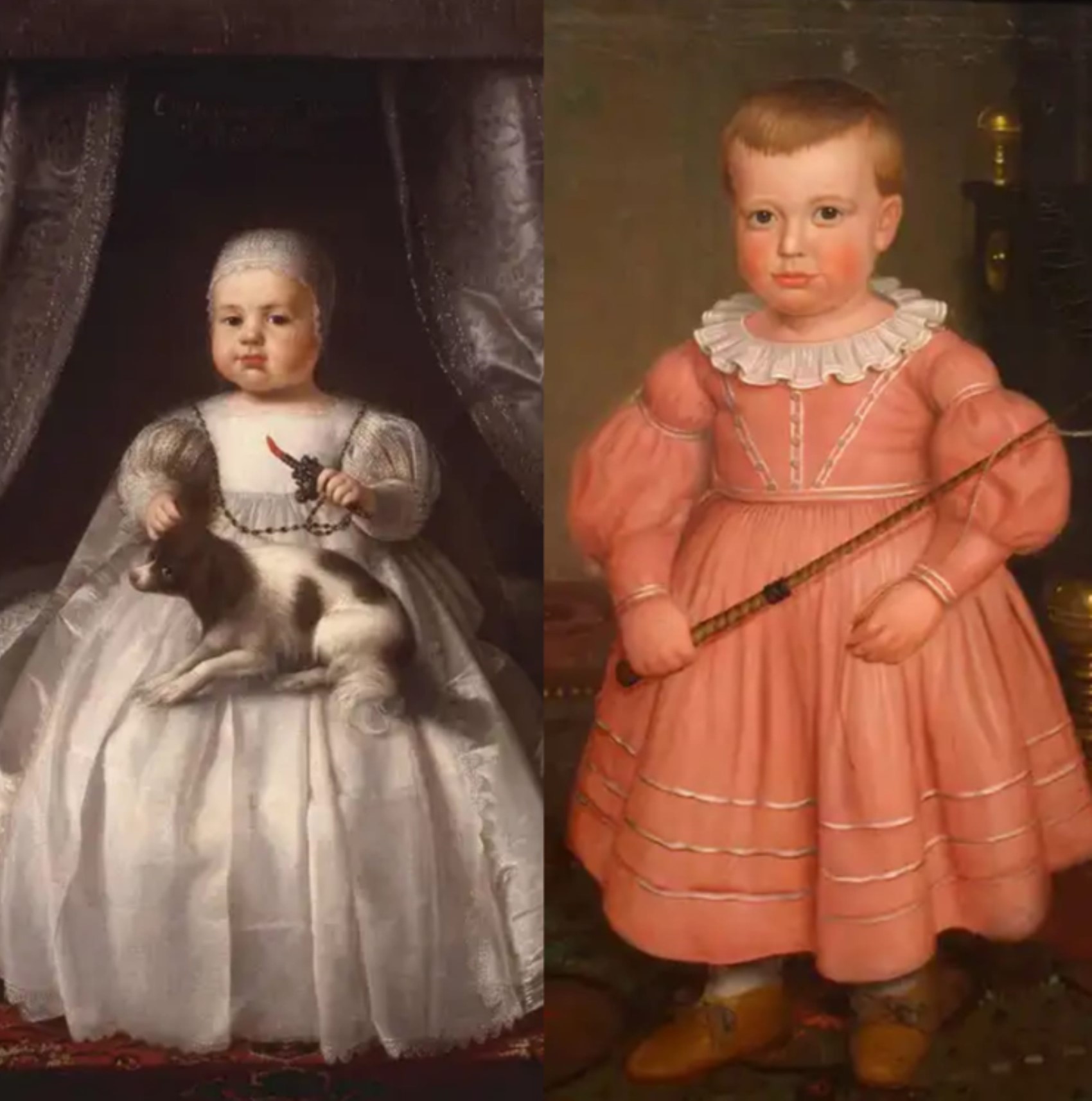
(The picture on the left is a painting of King Charles II of England made in 1630. The picture on the right is an anonymous oil painting from the 18th century.)
Today, we are faced with a highly conservative children's fashion that we can almost call traditional, which is excessively gendered. The patriarchal normativity attributed to gender roles has taken on the task of pre-determining the roles that children should assume in society. It is dictated from their earliest ages what standards children will comply with when they grow up, what kind of expectations they should meet, and what kind of adults they will be in the future.
So what happened that, as time went on, the world, which we expected to make progress in the direction of civilization, decided to open blue and pink chasms between boys and girls? Why do we insistently place our children into a kind of self-definition framework from the moment they are born? It is a need for people to define themselves, yes, but it is just as easy for this effort of definition to turn into a divisive instrument. Because people focus on the idea of what they are not, rather than what they are, to define themselves.
Boys encounter this information from their earliest ages: "Boys are children who wear blue." When boys compare this information with the information that "Girls are children who wear pink," they reach the conclusion, by human nature, that "Boys are children who do not wear pink." And the foundation laid with this othering information is just the headline of the issue.
One of the tools that most affects children's imagination is children's books. The girl in these books wears dresses that look like wedding gowns. These dresses are mostly pink and have flowing skirts. The princess, who is dictated to the girl as the ideal young woman, turns the last page of her book with the happy-ending deception while running to her shiny, sparkly prince with a bridal crown on her perfectly combed hair. No princess, for example, is a crane operator in her adventure in a children's book; she cannot operate construction machinery, she is not an engineer, and she has no superpowers. When she is in a difficult situation, she only cries and waits for help. Because dealing with self-defense methods is not on the princess girl's agenda. When the adventure of helplessness is escalated and the princess is cornered, the fairy godmother comes, saves her, and throws her into the prince's arms.

In a world where thousands of women are killed every year due to domestic violence, what if the ugly monster in the story is the groom-prince himself? What if the princess girl, who does not know how to defend herself, is not safe where she is sent, and is even facing a vital danger? It does not occur to anyone to take precautions by thinking about these, nor to teach the princess-girl how to defend herself against the real problems of real life.
Boys, on the other hand, grow up with books about fire trucks, police cars, construction machinery, and superheroes that fly, run away, and fight. No boy's superhero is a character wearing a groom's suit with a flower pinned to his lapel. Because the only goal desired to be instilled in a boy's life is not to be someone's spouse and to cook, iron, and clean for this spouse throughout his life. This incorrect behavioral information, which has been instilled in boys based on the foundation of othering girls, does not take long to turn into a sick idea such as "Men are human and women are creatures created to serve them" when exposed to patriarchal dogma enough. Moreover, this perverse tendency is not a rare remark in the world and in our beautiful country.
In a patriarchal structure where the man is tried to be positioned as the main subject and the woman as the auxiliary object, it is impossible not to agree with Simone de Beauvoir's findings again and again.
Simone de Beauvoir, while analyzing gender roles in her book "The Second Sex" (Le Deuxième Sexe), talks about how women have been positioned as the "other" throughout history and the social, cultural, and economic consequences of this positioning. Beauvoir says, "While the patriarchal structure defines man as an independent, thought-based subject, it has defined woman throughout history as an 'other' against the universal man." Because the patriarchal structure has reduced woman to an object that exists for man by shaping woman's existence through man's definition and needs.
It is, of course, very difficult not to feel helpless in the face of this situation, not knowing how deeply this conscious and malicious practice has penetrated every corner of society with religions, traditions, and patriarchal commands. However, society consists of individuals, and change, even if it takes a long time, is always carried out from the bottom up.
Therefore, we can start by not planting the wrong seeds in the fresh minds of our own children. I am not saying, of course, let's dress our boys in tulle, lace dresses; we are a little late to reverse this separation. However, we can take care not to raise sons who think they are little princes, unable to go to the kitchen and get a glass of water by themselves. Or we can start changing the world by not raising adolescent boys who cannot even imagine washing dishes, cooking, or putting laundry in the machine and then hanging it on the drying rack.
We can also not raise our girls, who are very likely to be subjected to physical and psychological violence in the face of the patriarchal male world when they reach their adult lives, as well-behaved slave princesses or voluntary servants.
These nuances are unfortunately not situations that happen when family and child-rearing methods are left to their own devices. It is necessary to act with a conscious and positively manipulative agenda. For example, one should not praise the behavior of a girl who runs and brings her father's slippers when he comes home, or takes his jacket and hangs it in the coat rack. First of all, the father, as a man, should explain to his daughter what she is doing wrong. We need to calculate the fracture that this act, which seems like an act of love to parents, will create in your child's character, and we need to give up the momentary feeling of being loved, even if it is difficult.
Because children, who only live their childhood and adolescence with us, determine the main outlines of what kind of a world we and our children will live in in the future as active members of society in their adult lives.
Most Read

Striking picture for Özgür Özel's 'New Party'

Özgür Özel gives a dated response regarding the number of resignations

Forest fire in Antalya brought under control

The PKK opening and Özgür Özel’s path!..

How did the newspapers view Özgür Özel's farewell to the CHP?

He killed his wife by slitting her throat: Their children witnessed the moments

What did the CHP do?

Özel’s new party move in the world press

The New CHP, against CEHAPE

Fire at TUSAŞ engine factory in Eskişehir under control