



"Reciprocal Access Agreement"
The Philippines recently participated in the RIMPAC exercise in the Indo-Pacific Ocean with its highest-quality naval forces. Speaking during the exercise, Philippine President Ferdinand Marcos Jr. stated that they are open to all kinds of cooperation with America and allied countries against the Chinese threat in the South China Sea in the future.
In June, the Philippines faced off with China while attempting to supply its troops at the disputed Second Thomas Shoal, and a Filipino sailor was injured during the clashes.
In recent times, the maritime clashes the Philippines has experienced with China have led Japan and the Philippines, both feeling threatened in the region, to sit down at the negotiating table rapidly.
On July 8, 2024, in Manila, the capital of the Philippines, Philippine Secretary of National Defense Gilberto Teodoro, Japanese Minister for Foreign Affairs Yoko Kamikawa, and Japanese Minister of Defense Minoru Kihara signed a historic agreement.
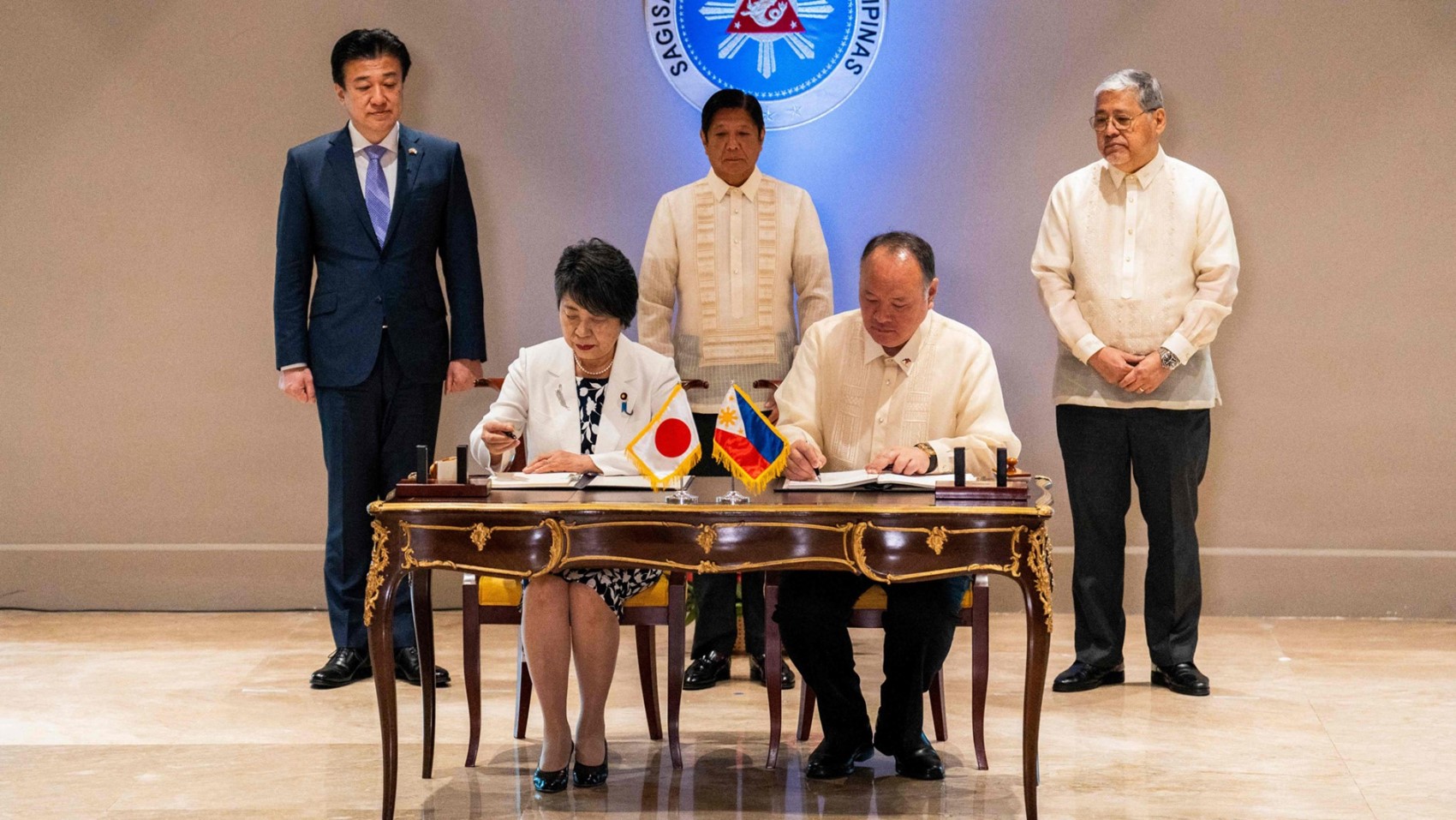
The military pact, signed at a ceremony also attended by Philippine President Ferdinand Marcos Jr., became the first agreement Japan has signed in Asia after many years. Japan had previously signed similar versions of this agreement with the UK and Australia in recent years.
This agreement, which is seen as a turning point in terms of rising tension in the Indo-Pacific region, is qualitatively a "Reciprocal Access Agreement" (RAA).
The Signed Military Pact Carries the Characteristic Features of RAA-Type Agreements.
The agreement:
- Allows the military forces of the two countries to be stationed on each other's territory.
- Includes commitments that the countries will mutually carry out operational activities together.
- Another goal of the agreement is to facilitate cooperation in areas such as combat training, joint exercises, and disaster response.
- As a detailing clause, Japan promises to support the Philippines regarding its sovereignty rights over island groups.
- Another very important clause is that Japan has agreed to provide the Philippines with radar systems to be used in coastal surveillance.
Although Japan has no territorial claims in the South China Sea, it expects support from the Philippines regarding potential disputes that may arise with China in the East China Sea.
THE NAME OF THE REGION SUBJECT TO CLASHES IS SECOND THOMAS SHOAL
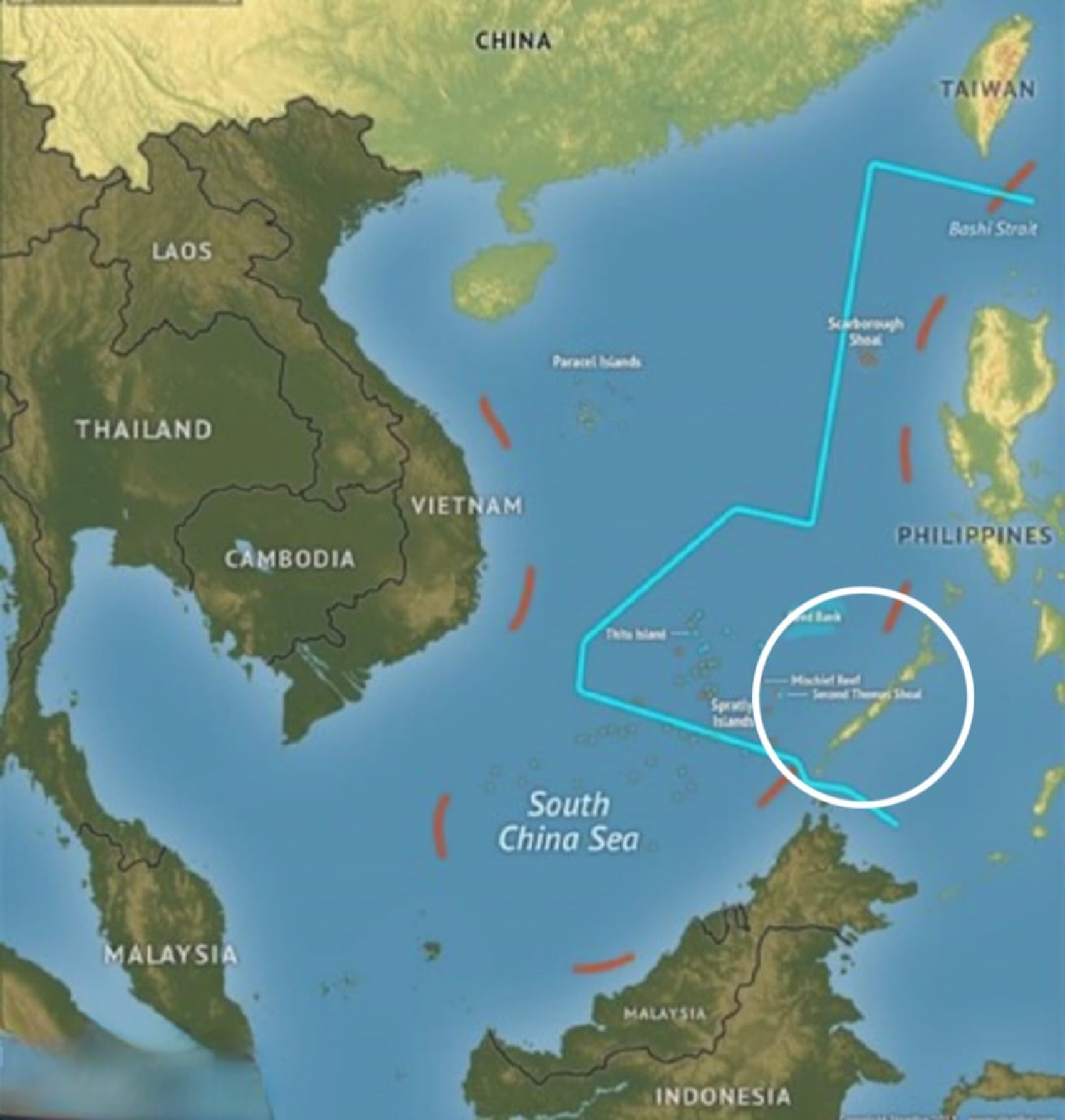
Second Thomas Shoal is a submerged reef in the South China Sea that is part of the Spratly Islands.
It is located approximately 105 nautical miles (195 km) west of the Philippines' Palawan Island. These reefs, which can be partially seen above the water during low tide, are geographically located underwater. These reefs, which are only visible above the water during low tide, are claimed by countries such as China, the Philippines, Taiwan, Malaysia, Vietnam, and Brunei.
Especially China, with its 'nine-dash line' policy, considers a large portion of the reefs in the South China Sea to be within its own maritime jurisdiction.
The 'Nine-Dash Line', known in international literature as the 'Nine-Dash Line', is a term used by China to define a vast region it claims in the South China Sea. This line was drawn by the People's Republic of China in 1947 and submitted to the United Nations in 2009. In other words, China says, "these places used to be ours."
SO WHAT IS THE SIGNIFICANCE OF THESE REEFS THAT HAVE BROUGHT 6 COUNTRIES FACE TO FACE?
The Second Thomas Shoal reefs are located on important maritime trade routes of the South China Sea. The presence of rich fishing grounds and potential oil and natural gas reserves in the region is the most important factor that brings these countries face to face, or causes them to unite against China by forming alliances.
HISTORICAL BACKGROUND
However, when the names of the Philippines, Japan, China, and America are listed one after another in the same sentence, it is impossible not to take a look at the recent past. Because when you flip through the pages of recent history, they appear as enemies in a completely different scenario.
In the late 1930s and early 1940s, Japan, which possessed powerful military technology and a large navy, had the strength to pursue expansionist policies in the Asia-Pacific region at that time. Seeing America as an obstacle to its expansionist policy, it carried out the Pearl Harbor attack on December 7, 1941, which caused the deaths of approximately 2,400 Americans, and occupied the Philippines immediately after the attack.
However, Japan had not calculated that it could not destroy all of America's military power. With this maneuver, it had made a strategic mistake in a war where it was strong, which would lead it to defeat. The Pearl Harbor attack caused the US to enter World War II, completely changing the balances in the region and ensuring the liberation of the Philippines and China from Japanese occupation with the influence of America and allied forces.
RESHUFFLED CARDS
A lot of time has passed since both the Pearl Harbor attack and Japan's occupation of China and the Philippines. The cards have been reshuffled many times. In the current scenario, Japan and the Philippines, who feel their countries are under threat due to China's aggressive stance in the South China Sea, have met at the same table to sign a defense pact to engage in military and strategic cooperation with America's support.
This issue seems likely to occupy world politics for a long time to come and to be the scene of active maneuvers on the Indo-Pacific trade route, which concerns almost the entire world. Let us hope that the power of agreements and alliances will be strong enough not to fuel wars, but to calm countries with aggressive intentions and ensure that a common path is found.
Most Read

Striking picture for Özgür Özel's 'New Party'

The PKK opening and Özgür Özel’s path!..

How did the newspapers view Özgür Özel's farewell to the CHP?

He killed his wife by slitting her throat: Their children witnessed the moments

What did the CHP do?

Özel’s new party move in the world press

Fire at TUSAŞ engine factory in Eskişehir under control

The New CHP, against CEHAPE

From self-efficacy to despair

Kılıçdaroğlu's first message on Özgür Özel's new party announcement