



The Balance Between Social Contract and Individual Freedoms
By their very nature, humans consider the functionality of the community in which they live. Although social contracts necessary for living together may seem to restrict individual freedom, individuals find ways to be part of the community without completely losing their freedom. Thus, as a part of the community, the individual, who is in a constant state of change, moves away from the chaos of primitive loneliness.
For a community to be functional, a common social contract and ethical framework around which everyone gathers is necessary. In periods when civil constitutions had not yet been established, religions filled the power vacuum that was expected to be strong and legitimate.
However, as empires spreading over vast geographies began to create their own civil laws alongside increasingly complex state administrations, history became the scene of violent power struggles between religious control mechanisms and civil laws. The main headings of these conflicts still contain the same issues today.
Dogmatic Texts and Dynamic Societies
These conflicts are broadly as follows: First, divine texts have definitive rules and are closed to change. However, since humans are dynamic beings, these dogmatic texts, which address a specific group, cannot impartially answer all situations. Therefore, states have created civil constitutions based on the principle of treating their citizens equally. In our country, too, there is a constitution based on the separation of powers, namely the principles of Legis lativus, Iudicare, and Exequi (legislative, judicial, and executive). Although traditional law and the country's religious structure are taken into account during the judicial process, the provisions of the Constitution, which are fundamentally secular and democratic, are applied.
Although we have a very comprehensive constitution supported by law enforcement agencies, it must be acknowledged that religious texts also regulate traditional and daily life for a large segment of the population. In fact, religious tendencies among the public in Turkey have been visibly on the rise for the last 40 years.
Both the constitution and religious texts act with the principle of regulating social life. However, when the issue comes down to disagreements of criminal proportions, these two systems clash. This state of conflict, which deeply affects the social structure, manifests itself as a severe increase in femicides.
Mustafa Kemal's Vision for the Directorate of Religious Affairs
One of Mustafa Kemal's most visionary actions was to institutionalize the Directorate of Religious Affairs and ensure that the distribution of religious knowledge was gathered under a single authority. Mustafa Kemal knew that it was impossible for a single state to be subject to two legal systems.
It is for this reason that the duty of the Directorate of Religious Affairs was determined precisely in this vein. In cases where religious practices and civil law conflict, the duty of the Directorate of Religious Affairs was to prevent the spread of violent fatwas among the public in order to prevent harm to the people. It was to help guarantee the rights to life and freedoms of all citizens in the country, especially women and non-Muslims.
Mustafa Kemal defined the job description of the Directorate of Religious Affairs in this direction because he did not want the poor people living in Anatolia after the war, who were deprived of education and health services, to be exploited by neighborhood mullahs, charlatan hocas, and sects, to be dragged into ignorance, and to become criminalized among themselves through violent fatwas.
Mustafa Kemal Atatürk points to the importance of the Directorate of Religious Affairs with these sentences in order to make it possible for the public to refer to a single and authentic source regarding religion.
"Gentlemen, the closure of dervish lodges, shrines, and the prohibition and abolition of all kinds of sects, as well as titles such as sheikhdom, dervishhood, discipleship, chelebi-hood, fortune-telling, sorcery, and custodianship of shrines, were also carried out during the period of the Law on the Maintenance of Order. How essential the actions and practices in this regard were from the point of view of showing that our social body is not a superstitious, primitive tribe; this is appreciated."
Since this fundamental problem in our country still persists, the Directorate of Religious Affairs is tasked with preventing incorrect fatwas that encourage violence and warning the public against charlatan hocas and fatwa distributors.
Responsibilities of Religious Officials Regarding Fatwas and Their Social Impacts
The institutional Directorate of Religious Affairs has the authority to appoint imams, muezzins, and muftis to mosques. These employees have uniforms provided by the state, such as the robes and turbans they wear while on duty. These garments express the person's job description. However, for a religious official to be able to issue a fatwa, it is not enough to just wear a robe; they must have a certain seniority. Especially if this fatwa concerns the entire public, it must be announced in a public broadcasting organization or published in a newspaper.
The confusion starts here; if the authority to wear religious uniforms and issue fatwas belongs only to the Directorate of Religious Affairs, who are these men roaming the market in robes and turbans, publishing magazines, printing books, having YouTube channels, and distributing fatwas freely just because they have a robe and a turban? What kind of action is the Directorate of Religious Affairs taking on this matter?
For example, if a group of citizens said, 'We love our country very much, so we founded a foundation called 'el polis-ül yahsi dergahı' (the lodge of the good police), and we are collecting donations from our members at home and abroad in the name of national security,' and if they claimed that they were inviting humanity to security and peace under the name of security advocates by dressing sect members in police uniforms. If they patrolled the neighborhoods and organized security and peace chats on YouTube, explaining that some situations that the police declare as crimes are not crimes, what would be the reaction of the official police institution of the Republic of Turkey to this situation?
Well, isn't the Directorate of Religious Affairs also an official institution? Why does everyone who comes to mind wear a robe and, with their bearded face, distribute fatwas on the market from a YouTube channel, in the name of some sect, while also carrying out all the actions I listed above?
Fatwa Traps That Approve Violence Against Women
Within marriage, don't we all know as citizens of a state of law that rape occurring between husband and wife is a crime?
Two turbaned, robed, and very bearded men I watched on YouTube a few days ago talked about whether a husband has the right to rape his wife who does not want to sleep with him, and after their very, very short chat, they concluded that it is religiously permissible for a man to rape his wife.
In the more radical of these sects, a fatwa is issued stating, 'a man has the right to rape a woman whose desire he feels, provided that he takes her into his marriage immediately afterwards.'
While a considerable segment of the public determines their daily lives with the fatwas of these men, should we not be surprised at the terrible increase in rape and femicides in our country? Does this mean the following: there are many potential rapists and murderers roaming the market, carrying in their pockets the fatwa-certified approval of some imam of some sect.
Conflict Between Civil Law and Religious Interpretations
The Civil Law of the Republic of Turkey defends the exact opposite of this situation. Well, after a crime is committed, isn't the Directorate of Religious Affairs institution, which does not conduct an open struggle against these fatwa-givers with Civil Law and does not defend the privilege of its own official attire, clashing with it? Do these two institutions not communicate with each other after the element of crime is formed?
If Civil Law defines beating women as a clear crime, while religious texts describe the methods of beating women with appetite and issue a "permissible" fatwa, in a country where violence against women and femicides are so high, might it be time for the representatives of Civil Law and the Directorate of Religious Affairs to put their robes aside and think?
If a man who beats and rapes his wife says in court, 'I committed this act with the fatwa I received from the sheikh of my sect.' The answer of official law to the Directorate of Religious Affairs, which conflicts with civil law on this matter, would be: 'The principles of this law are not dependent on fatwas; in the legal order, there is a penalty for this crime committed.' In this case, is the Directorate of Religious Affairs, which indirectly causes the crime to be committed, saying, 'Oh civil law, beating this woman is lawful for her husband, we will settle accounts with you in the next world'?
Isn't it a tremendous confusion?
Need for Reform in Religious Practices
When it is said that there should be a Reform in religion, people show emotional reactions as if their religion is being attacked. Religion is a spiritual matter; a free and civilized state also defends the individual's spiritual life and religious preferences. However, when it comes to raping, beating, imprisoning a person at home, or preventing their right to education, the situation changes. An individual's freedom and right to life are universal rights that must be defended above religion and states. They cannot be violated by being based on either religion or tradition. The practice and encouragement of the opposite is, without exception, a universal crime.
Expecting this situation, the gravity of which we do not sufficiently realize, to resolve itself without taking precautions is contrary to the nature of rational mind.
The solution to this issue is not for institutions to blame each other. The Directorate of Religious Affairs and Civil Law are in need of seeking a common solution regarding situations that cause the violation of universal human rights. If the President of Religious Affairs stands behind the fatwa, 'Oh male citizen, you have the right to rape your wife who does not want to sleep with you,' or if he approves the fatwa, 'You can beat your wife if she does not obey your orders,' with peace of mind, then we have a very serious problem.
It is not the time at all to compete for ego by saying, "Whose robe is blacker." Every minute that you, the authorities, drag your feet and move away from the solution, a person's light of life goes out, and the traditional Turkish family structure that we imagine around a colorful table turns into a crime scene covered in blood.
Police radios and siren sounds replace the joyful laughter of children. The fact that the traditional family structure, which you sanctify by underlining it at every opportunity, is turning into a crime scene with illegal and irregular fatwas, when will it disturb your conscience, when will it knot your voice, when will it choke your throat with the blessings of your luxurious table, the sending of a child left motherless and fatherless to an orphanage.
Most Read

Houthis strike Saudi-owned tanker

4 drones shot down near US Consulate General in Erbil
It never ends: Another FETÖ memory
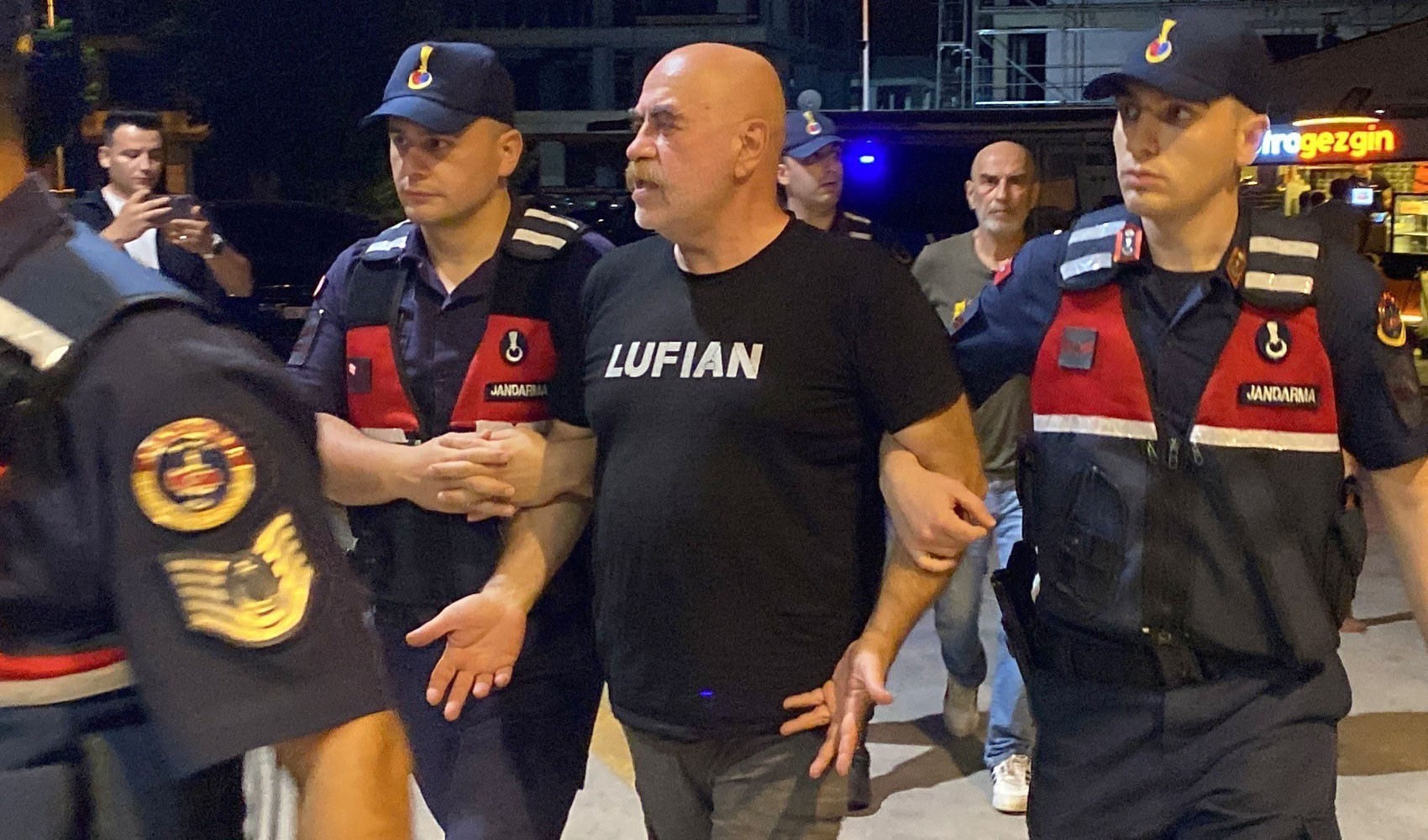
Famous director Ezel Akay and his brother have been detained

A mind fixated on leggings...
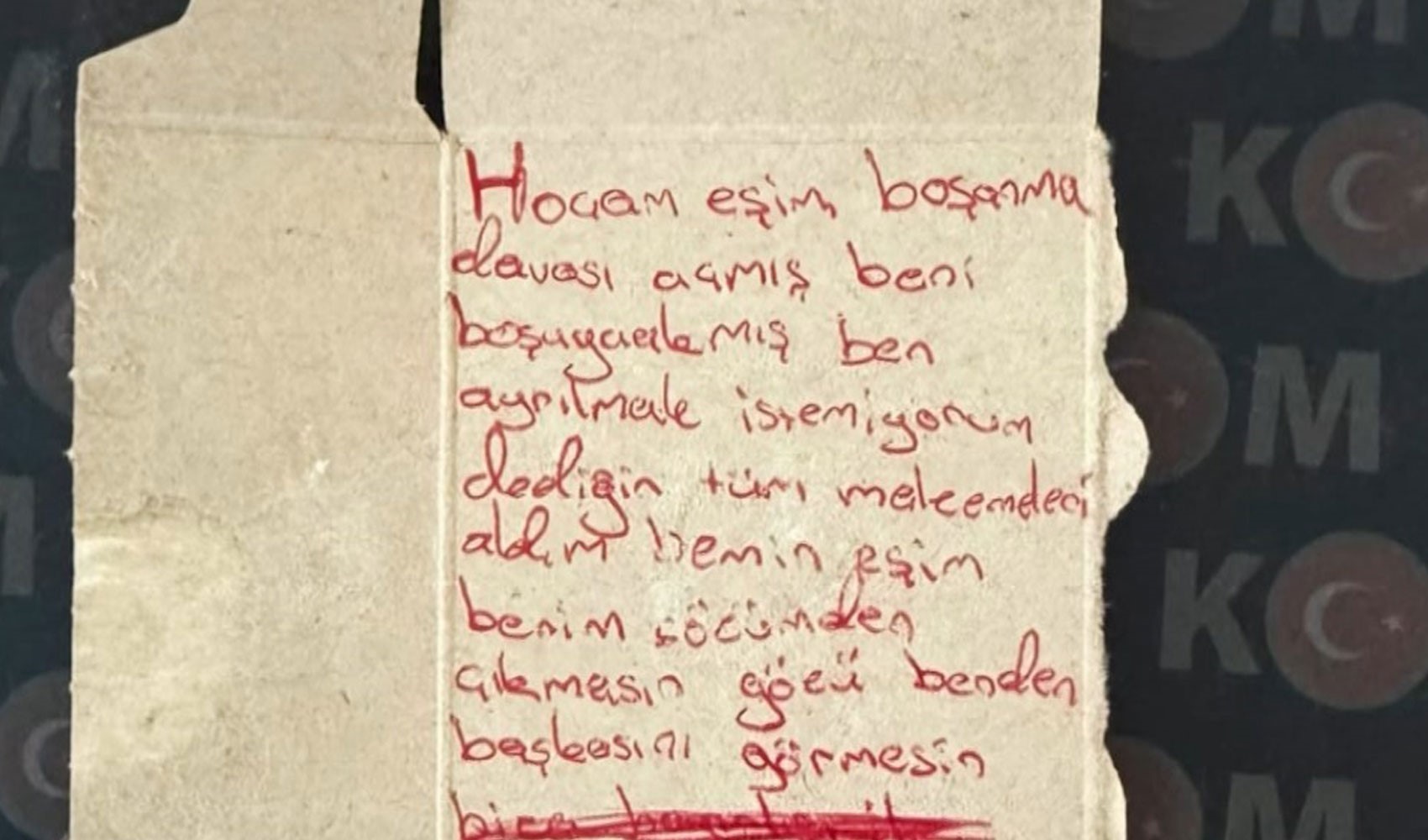
'Papers with spells and curses' operation: 'Master, my spouse filed for divorce'
He announced which municipalities will join the 'New Party', the Istanbul detail drew attention
The official, rumored to be switching to the AKP, has begun a persuasion tour

A critical distinction in the claim about eating out

CHP's mass SMS move in response to Özel's new party decision