



Men of great stature, dressed in formal attire, robes, or uniforms, dealing with very serious matters, often choose as their rivals a cartoonist drawing in a newspaper, a theatrical play, a film, or a humor magazine.
They seal the doors of theaters where people go to laugh with chained locks. Just as the iconic figure, the fascist and racist Hitler, shut down the newspaper Le Canard Enchaîné, famous for its satirical cartoons, during his occupation of France.
Because comedy is the nightmare of authority. The moment an authoritarian figure of fear begins to appear ridiculous among the public, they lose their influence.
History is full of countless examples supporting this theory. For instance, before the French Revolution, Molière's play “Tartuffe, or the Impostor” reduced the influence of religious-looking frauds on the public by making them look ridiculous and humiliating them.
The humor magazine El Clínic in Chile became one of the important tools that drew attention to the regime's oppressive policies and human rights violations during the Augusto Pinochet dictatorship.
THE FUNCTION OF LAUGHTER
In his work "Laughter: An Essay on the Meaning of the Comic," Henri Bergson explains that laughter has a function of punishing rigidity and mechanical behavior in social conduct.
According to Bergson, the fact that humor aims to correct behaviors that do not conform to social norms makes authority figures direct subjects of humor.
CRITIQUE OF SOCIAL NORMS IN CARNIVAL AND CARNIVALESQUE THEORY
In his theory, while analyzing medieval carnivals, Mikhail Bakhtin argues that the existing authorities mocked in carnivals were actually being questioned through these events, and that carnivals even had the power to topple authoritarian regimes.
In this vein, the marks that creative cartoonists have left on white paper with charcoal have been so powerful that the screams of the shadows they sketched against oppressive systems have been heard from all over the world.
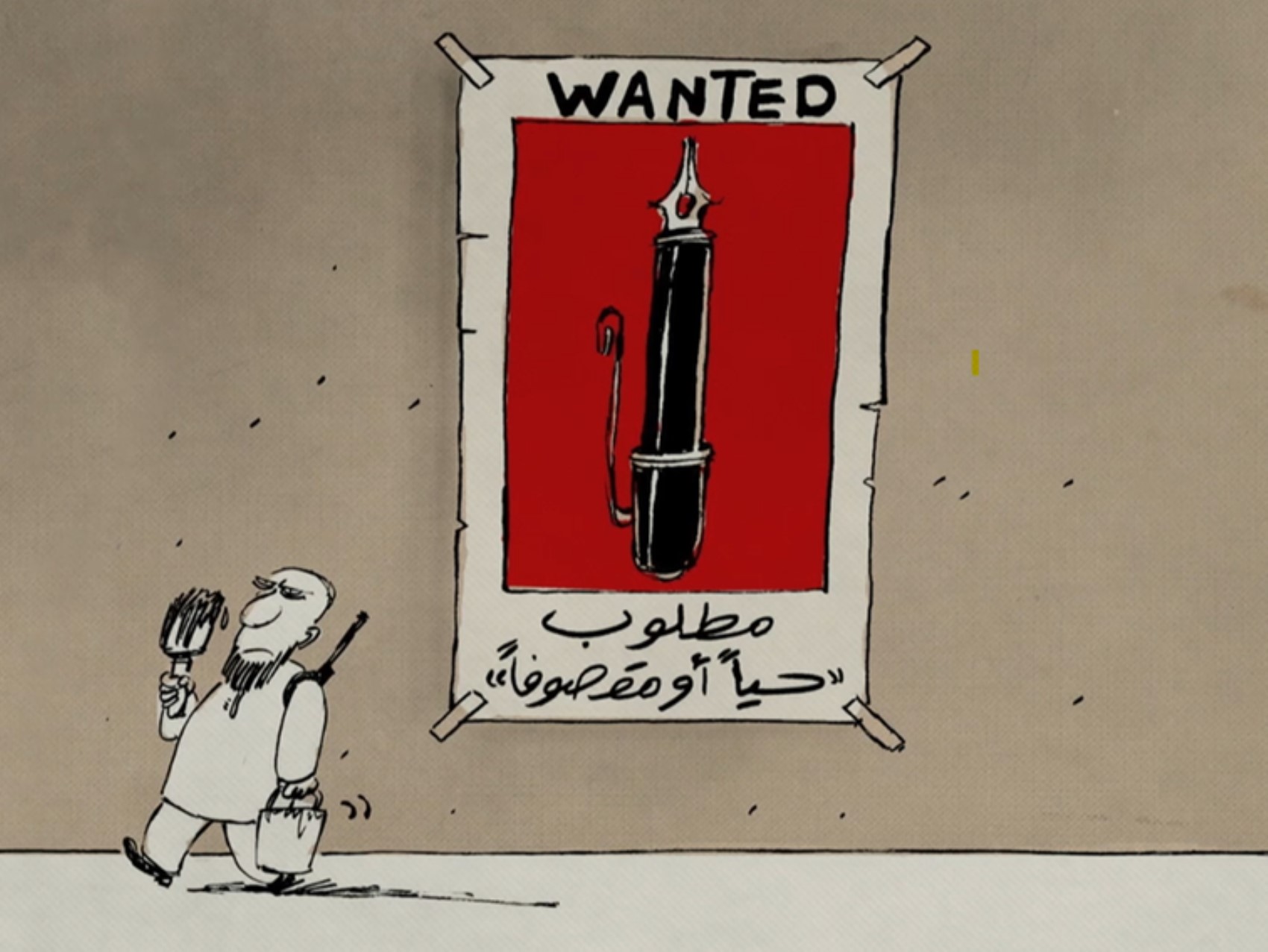
A CARTOONIST REVOLUTIONARY: DOAA EL-ADL
The voice of the shadows that Doaa El-Adl casts on white paper also creates an effect at frequencies high enough for the whole world to hear.
Living in Cairo, Doaa is one of the most famous female cartoonists in the Arab world. Despite censorship, pressure, and violent threats, she has not given up on drawing or living in Cairo for 20 years.
When asked, "Do you have a wish for yourself?" Doaa says, "Yes," showing her drawing, "More freedom."
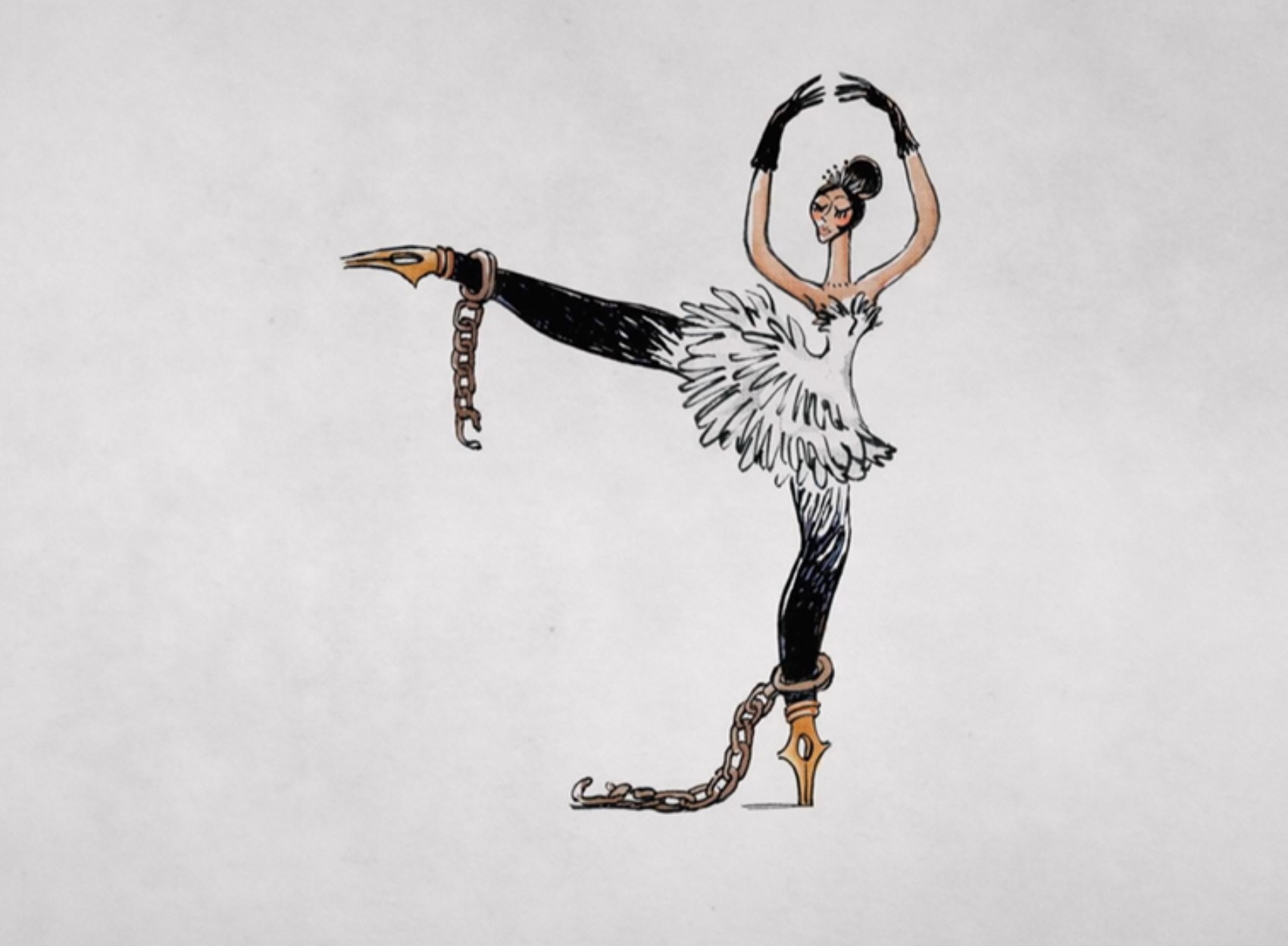
COULD THE WALLS YOU BUILD AROUND YOURSELF TO PROTECT YOURSELF BE YOUR PRISON?
Behind her shy smile, you cannot even imagine that you might encounter such a loud pen, but Doaa’s pen screams with all its might to the whole world what the oppressive regime she lives in means for a woman.
In Cairo, when they come together with women in their own circles, they talk about how difficult life has become for Egyptian women living under the pressure of extremist Salafists and the Muslim Brotherhood for 30 years.
They describe how the constant harassment they face from men while walking on the street, taking the bus, or working makes life difficult.
Doaa says, "Women used to be able to wear skirts and even show their legs; this was a more modern country in the 60s." "Now, to protect myself from harassment, I no longer take the bus, I don't walk on crowded streets, and I am careful not to enter secluded streets or go to neighborhoods I don't know," she adds.
She depicts so well with her cartoon that the measures she takes to protect herself are actually walls she has built around herself, that we understand how she feels as a woman in the city she lives in with an expression more powerful than millions of words.
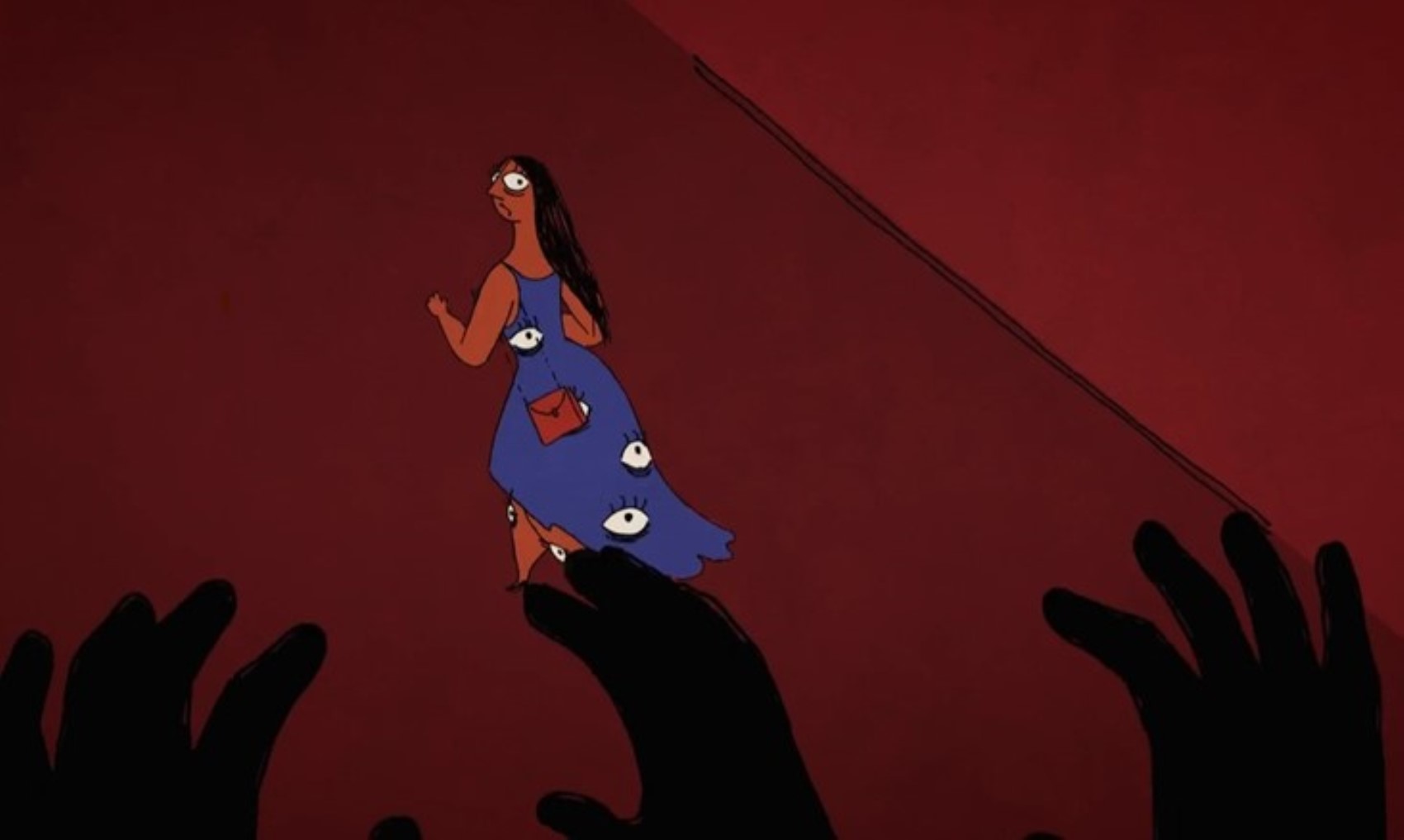
STIGMATA: WOMEN IN EGYPT ARE FOUND GUILTY WHEN THEY ARE RAPED
Doaa says that when women in Egypt are raped, they usually have to hide this situation. For this reason, she was deeply affected by Yasmine El-Baramawy, who was raped and physically assaulted with knives by a large group of men in Tahrir Square in 2013, sharing her experiences with the whole world without hiding them.
She remembers her feelings and the intense anger she felt while drawing as she looks at her work. She says she drew the defiant facial expression of the woman in the boat with all the anger inside her. On the sail, it says, "You will never possess my soul."
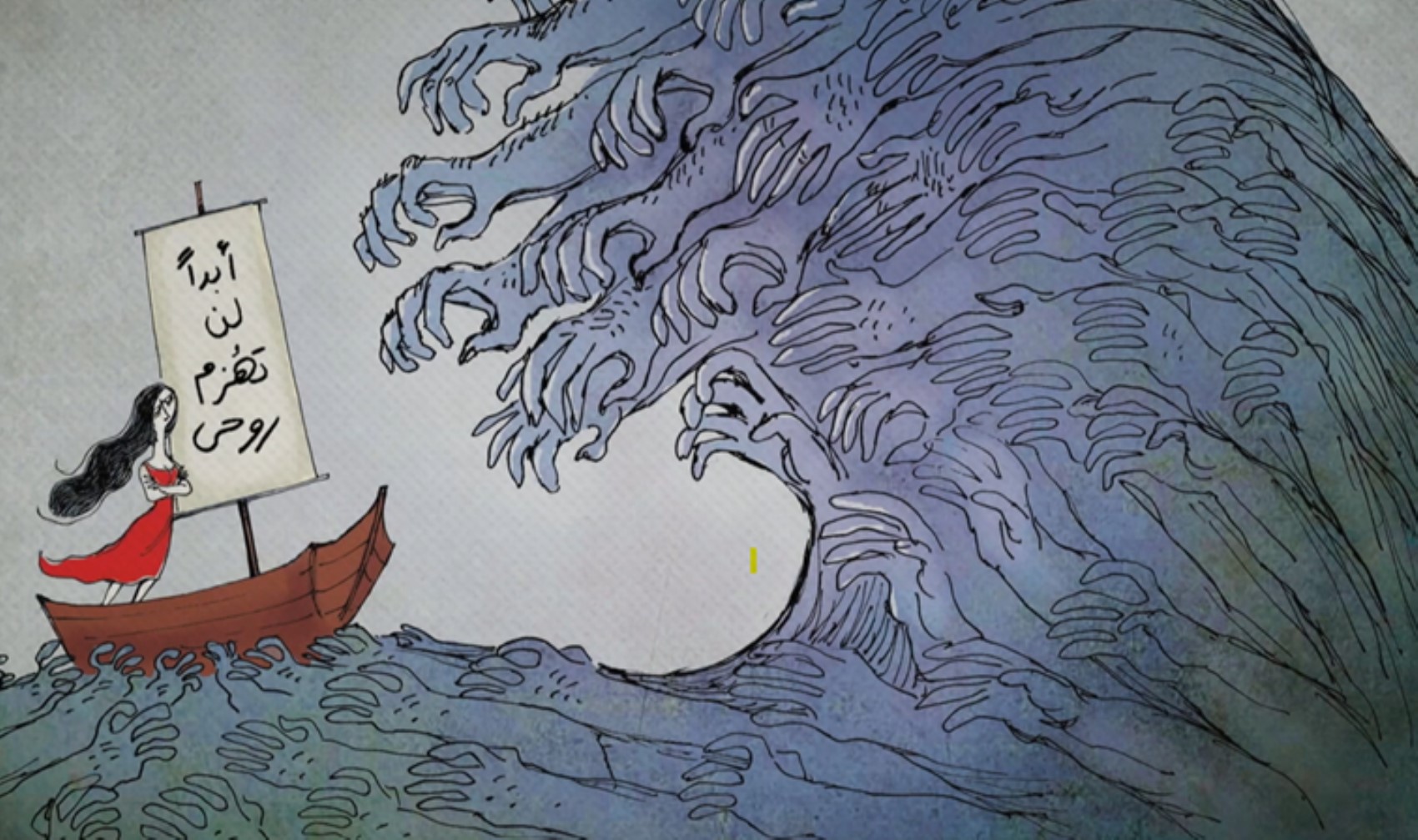
RAPE AND VIOLENCE IN LIBERATION SQUARE
Tahrir means liberation; I wonder if there is another place in the world that contradicts its name so much? 91 more women have been reported to have experienced the same horrific attack in Tahrir Square.
Among these women are foreign journalists. A large group of men pull the woman into their midst, another group prevents the woman from being rescued with weapons, and while the woman, who is raped by dozens of men and beaten to death, is left to die, another group of men takes photos of the woman whose clothes have been torn.
This unimaginable horror is committed in a country where extremist religious men, for whom even looking at women is forbidden because it is a sin, are in the majority at protests.
CBS foreign correspondent Lara Logan was forcibly separated from her friends by 200 men during the protests during Hosni Mubarak's withdrawal from power in February 2011 and was subjected to sexual harassment and physical violence. Lara Logan, who said, "I thought I would never see my children again until I was rescued by a group of women and soldiers," was able to return to America because she was a foreigner and was able to speak about this issue.
However, the treatment that Egyptian women are subjected to is terrifying.
When many figures in Egypt's upper house said that women themselves were responsible for the rapes they suffered, this situation caused a great stir in the international arena. Especially General Afifi's sentence, "Women have contributed 100% to the rape because they put themselves in such an environment," shows that, let alone the state condemning the events, it is almost of a nature that encourages rape, and that such events in Egypt are actually being attempted to be normalized by politicians.
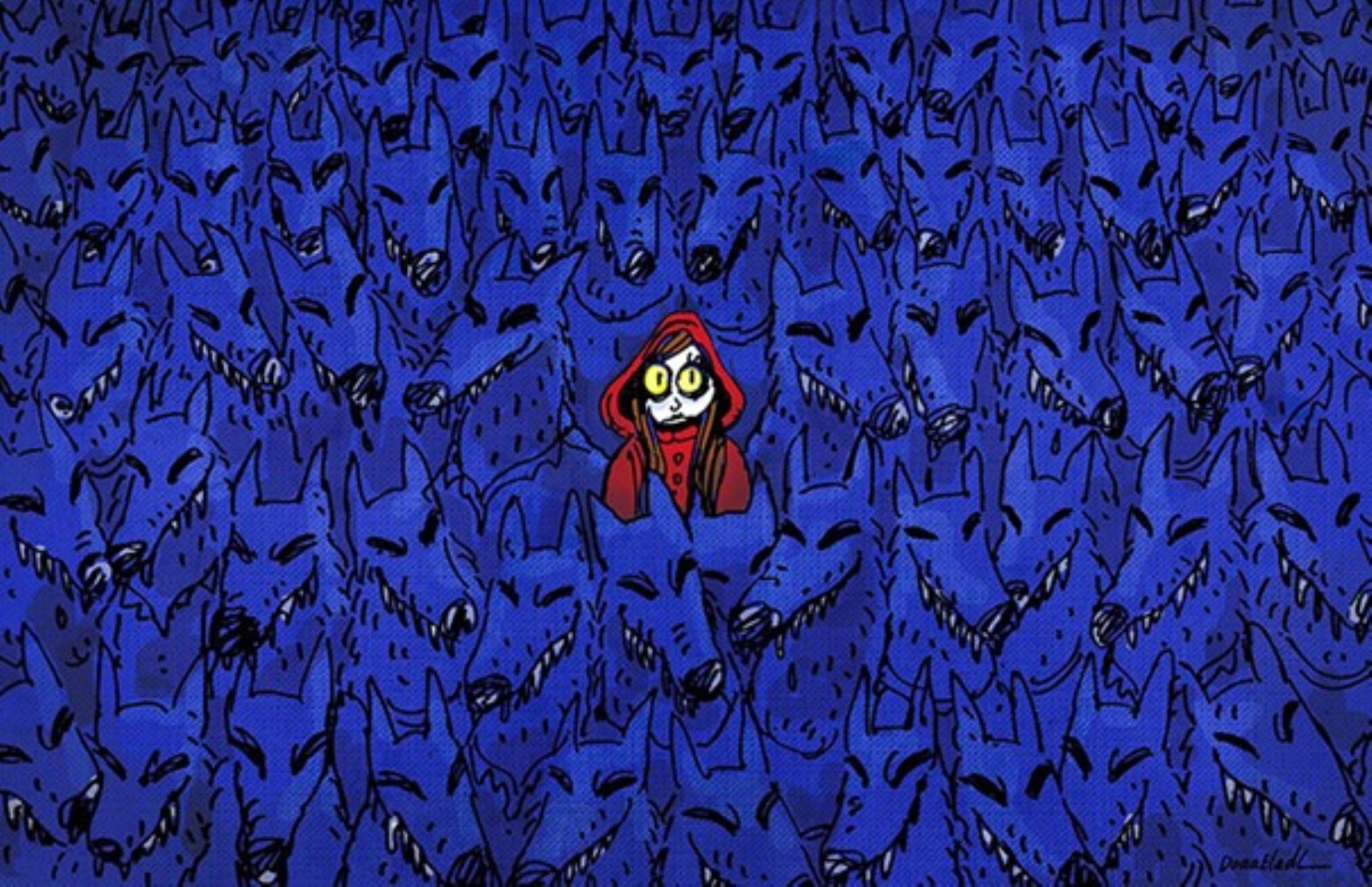
It should not be forgotten that it is never possible for systems to be changed from the top down. Awareness and change always start with the people.
The best way to tell the public that the walls of fear created by pressures in the public mind are not made of stone or steel, but of lying cardboard, is art, humor, and comedy. As monsters are made ridiculous and humiliated, they shrink and become touchable.
Just as in Doaa's drawings, the expressive power of dramatic humor has the strength to shake the reign of authoritarian regimes to their foundations, and therefore they are perceived as a threat. Because art and humor are capable of creating resistance, as they are the tools that deliver the weaknesses of authoritarian regimes to the public in the shortest way.
Cartoons: Doaa El-Adl
Most Read

Striking picture for Özgür Özel's 'New Party'

Özgür Özel gives a dated response regarding the number of resignations

Forest fire in Antalya brought under control

The PKK opening and Özgür Özel’s path!..

Houthis strike Saudi-owned tanker

How did the newspapers view Özgür Özel's farewell to the CHP?

What did the CHP do?

Özel’s new party move in the world press

The New CHP, against CEHAPE

From self-efficacy to despair