



THE ISSUE OF THE DEMOCRATIC NATURE OF ELECTIONS
Since the transition to a multi-party political system, numerous general and local elections have been held in Turkey. This is, of course, extremely important. However, the mere fact that elections are held in a country does not, by itself, prove the existence of a democratic society. Voting (elections) that is not supported by other essential elements can also signify an authoritarian regime based on a plebiscite.
The most important guarantee of democratic political life must be the ability of opposition parties to participate in elections under equal conditions with the government. The most important element that can ensure this is that the state apparatus is not used by the government as a tool of oppression.
During the propaganda process, public resources and public power must not be used in favor of the ruling party—there must be serious legal guarantees in place regarding this. It is equally important that the election judiciary be truly transparent, impartial, and that there be no doubt that its decisions are fair.
Now, let us examine to what extent these criteria were valid in the 1957 elections.
THE GOVERNMENT'S OBSTRUCTION OF THE ELECTORAL ALLIANCE
Prior to these elections, opposition political parties had attempted to form an electoral alliance. However, the Democrat Party government passed a law that would prevent electoral alliances. For this reason, all political parties were forced to enter the elections with their own lists. Nevertheless, there were electoral districts where de facto cooperation took place among opposition parties that were legally prevented from forming an alliance. There were electoral districts where parties withdrew in favor of one another.
THE OBSTRUCTION OF ORD. PROF. FUAT KÖPRÜLÜ’S CANDIDACY
Fuat Köprülü was one of the most important founders of the Democrat Party. He believed that the group that broke away from the party during the September 6-7 events and the "Right of Proof" (İspat Hakkı) debates was justified in its thinking. This segment, which believed that the party had abandoned the liberal democratic structure it had initially put forward, had founded the Freedom Party (Hürriyet Partisi). Fuat Köprülü also resigned from the Democrat Party and joined the Freedom Party. After the decision for early general elections in 1957 was announced, Köprülü becoming a parliamentary candidate for the Freedom Party posed a very serious political threat to the Democrat Party leaders. The government changed the election law to prevent Köprülü from becoming a candidate.
According to the change, it would not be possible for a person to become a candidate from another party until six months had passed since their resignation from their party. Köprülü had resigned from the DP on September 6, 1957. The date of the early general election was October 27, 1957. In this way, the government prevented Fuat Köprülü, who was among the founders of the Democrat Party, from becoming a candidate for the Freedom Party.
VOTER REGISTRY FRAUD
Another method the government resorted to was the falsification of voter registries. Since the offices of the village headmen (muhtars) were overwhelmingly pro-government, serious falsifications were made on the voter lists.
Through the agency of the muhtars, CHP voters were erased from the registries and replaced with Democrat Party supporters. And this was done in several ballot boxes.
The DP's mobile "election-winning teams" transported their own partisans, who had been registered multiple times, from ballot box to ballot box. In other words, the government carried out an organized election operation. Or rather, it had taken every measure from the very beginning to turn the ballot box results in its favor. Later, Turkey would see governments that committed similar, and even much more organized, election frauds.
In summary, in the 1957 elections, voters likely to vote for the CHP could not see their names in the voter registries, and instead, the Democrat Party's multiply-registered partisans cast votes in their place. And they did so in several places. By the time the voters' applications through the election judiciary were concluded, "the horse had already crossed the Üsküdar."
Fraud could be committed through the muhtars, the government's most important allies. Very few CHP voters had resorted to applying to provincial/district election boards to correct the situation.
According to the election law at the time, the objection process began at the muhtars' offices. Irregular registrations and duplicate registrations reached exorbitant rates in some electoral districts.
The headline of the Ulus newspaper dated September 28, 1957, was as follows: "Voter registries are, in a word, a disaster."
THE LIFTING OF BÖLÜKBAŞI’S IMMUNITY - HIS ARREST AND RE-ELECTION AS A DEPUTY
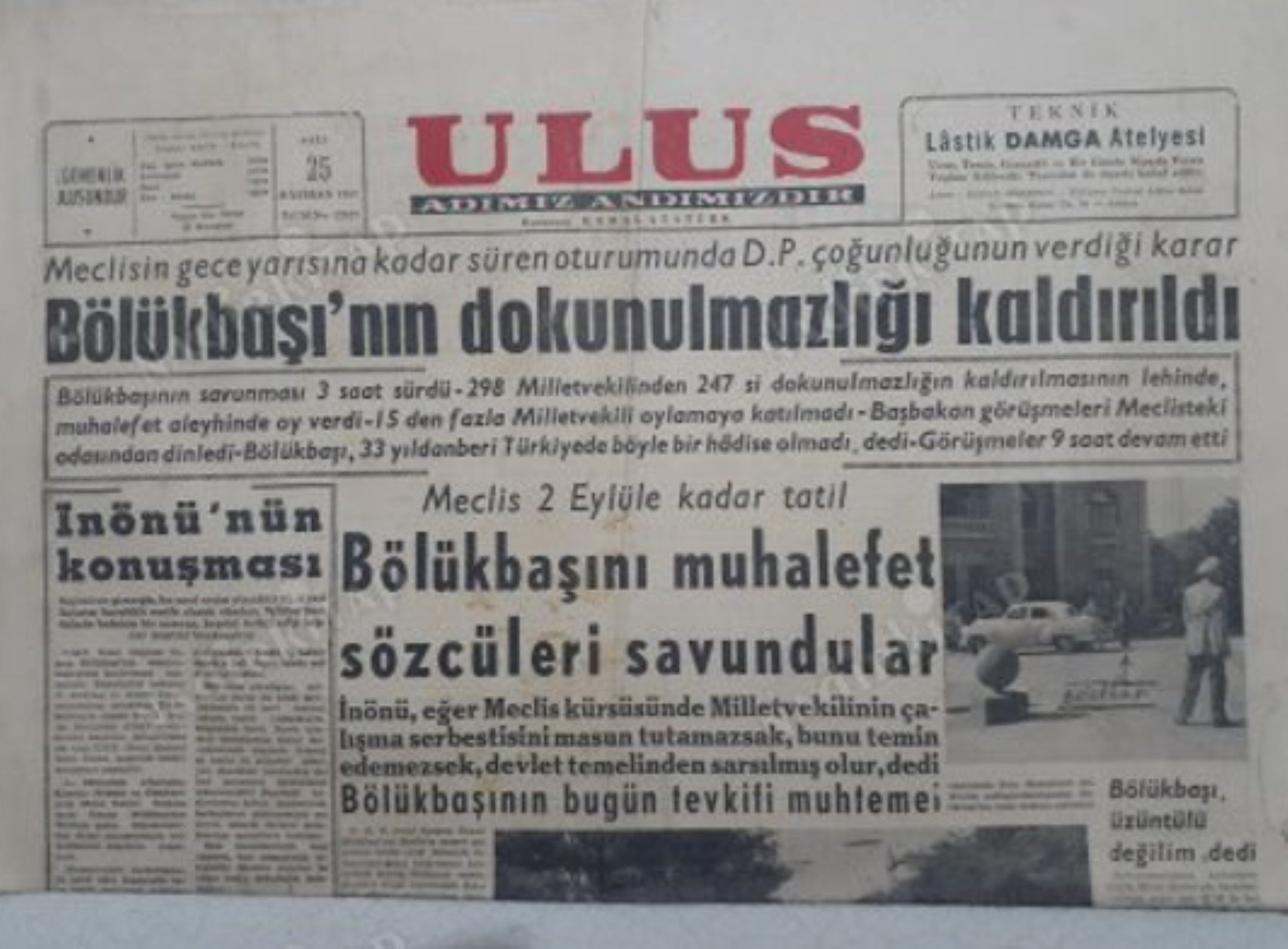
During the 1957 elections, Osman Bölükbaşı, the Chairman of the Republican Nation Party (Cumhuriyetçi Millet Partisi), was in prison. His legislative immunity had been lifted at the beginning of July before the elections, and he had been arrested. Since Bölükbaşı was re-elected as a deputy from Kırşehir, he took his parliamentary oath in front of the inmates in ward number 10 of the Ankara Central Prison to embarrass the government. The government insisted quite a bit on "not releasing him," disregarding the fact that Bölükbaşı had regained his legislative immunity. However, the court released Osman Bölükbaşı a few months later on the grounds that the elected deputy had legislative immunity. An analytical article on the lifting of Bölükbaşı’s immunity, his arrest, and the judiciary releasing the elected deputy despite the government's reluctance after he was elected deputy would be appropriate.
TWO IMPORTANT CHANGES IN LAWS
As Fatih Yaşlı pointed out in his article titled "History repeating itself as Menderes falls," the government had made two critical legal regulations before the early general election decision. One of these was the phrase "publications that could shake the political and financial reputation of the state," which could be easily abused in the press law.
The second regulation was made in the Law on Meetings and Demonstrations. According to the regulation, the open-air activities of political parties were limited only to the election period. With this, the opposition was effectively banned from engaging in politics. Even provincial and district congresses could not be held outside of the central organization, and they were subjected to police raids on the grounds that they were meetings contrary to the law on meetings and demonstrations.
FREEDOM OF THE PRESS - LAW ON MEETINGS AND DEMONSTRATIONS
The DP passed new laws to bring the press under control. Metin Toker was arrested in February 1957. The government banned all demonstrations. The law on meetings and demonstrations was amended. Political parties became unable to carry out their activities. Political meetings and demonstrations were made almost impossible. Even the holding of local congresses of opposition parties was prevented. Republican People's Party provincial and district administrators were prosecuted whenever they engaged in any activity on behalf of the party. The law resorted to was the law on meetings and demonstrations. Party activities were raided by the police on the grounds that they were illegal meetings.
The first politician to whom this law was applied was CHP Secretary General Kasım Gülek. Every step Gülek took was followed by the police. Gülek had set out on a Black Sea tour in June 1956.
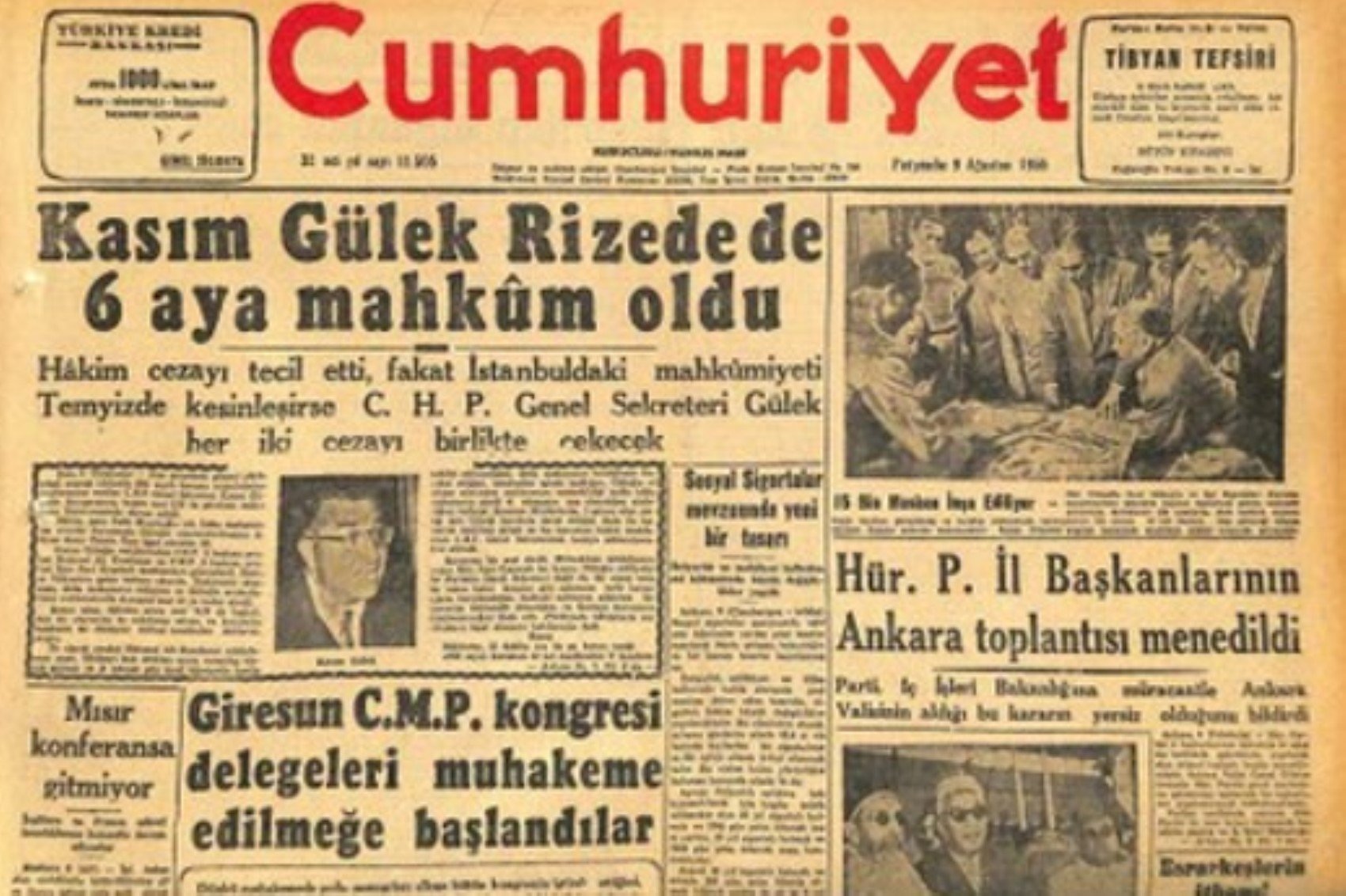
According to the government, Gülek holding a press conference with journalists on the ferry was an illegal gathering act. During this trip, Gülek was detained multiple times for opposing the law on meetings and demonstrations. In other words, the secretary general of the main opposition party could be detained, arrested, and tried for opposing the law on meetings and demonstrations because he held a press conference on a ferry. Gülek was sentenced to 6 months in prison by the Rize Criminal Court of First Instance in August 1956.
On August 30, 1956, members of the Freedom Party who wanted to lay a wreath at Anıtkabir were prevented from entering Anıtkabir. In June of the same year, a large-scale operation was carried out against the high judiciary. The Menderes Government retired high judges, including the First President of the Court of Cassation. The Dean of the Ankara University Faculty of Political Sciences, Prof. Dr. Turhan Feyzioğlu, was removed from his post. He was elected as a deputy from the CHP in 1957.
On the other hand, the winds of anti-communism continued to be fanned. Hikmet Kıvılcımlı’s Vatan Party received its share of this atmosphere. The Vatan Party was closed down towards the end of 1957 on the grounds that it was being directed and managed by communist individuals.
THE RADIO BROADCASTING ONLY ON BEHALF OF THE GOVERNMENT
The State Radio was completely closed to the opposition after the DP came to power. The radio was turned into a propaganda tool solely for the ruling party. For this reason, the Association of Those Who Do Not Listen to the Radio was established nationwide. That is, according to the radio broadcasts under the control of the government, there was "one Turkey." And there was an opposition Turkey that could not make its voice heard in any way through the radio, during the DP government years.
The government's justification for legitimizing this practice was also unbelievable. According to the government, propaganda for the ruling or opposition parties was not being conducted on the radio. Only news regarding state actions was being reported. When Menderes or a minister spoke on the radio, they were not explaining their actions as a Democrat Party member, but as a prime minister or minister. Not as a party member. This explanation model, which could be considered comical, became the official justification for the partisan radio broadcasting that continued for years.
According to Menderes, this practice was extremely democratic. It ensured equality between the parties.
THE GOVERNMENT'S PROPAGANDA METHODS
Throughout the 1950s, Turkey's populist right-wing hegemony parties had four classic propaganda cards: heroic nationalism, religious exploitation, the cliché of national will, and "doer-ism" (icraatçılık).
Meanwhile, contact with reactionism was always maintained. Said Nursi was invited to some groundbreaking ceremonies, he would put mortar on the foundations, and prayers would be said. He would participate in propaganda activities on behalf of the Democrat Party with the car gifted to him. While Celal Bayar ignored these, Menderes did not shy away from caressing reactionism—on the condition that it be utilized in the elections.
THE OBSTRUCTION OF OPPOSITION RALLIES
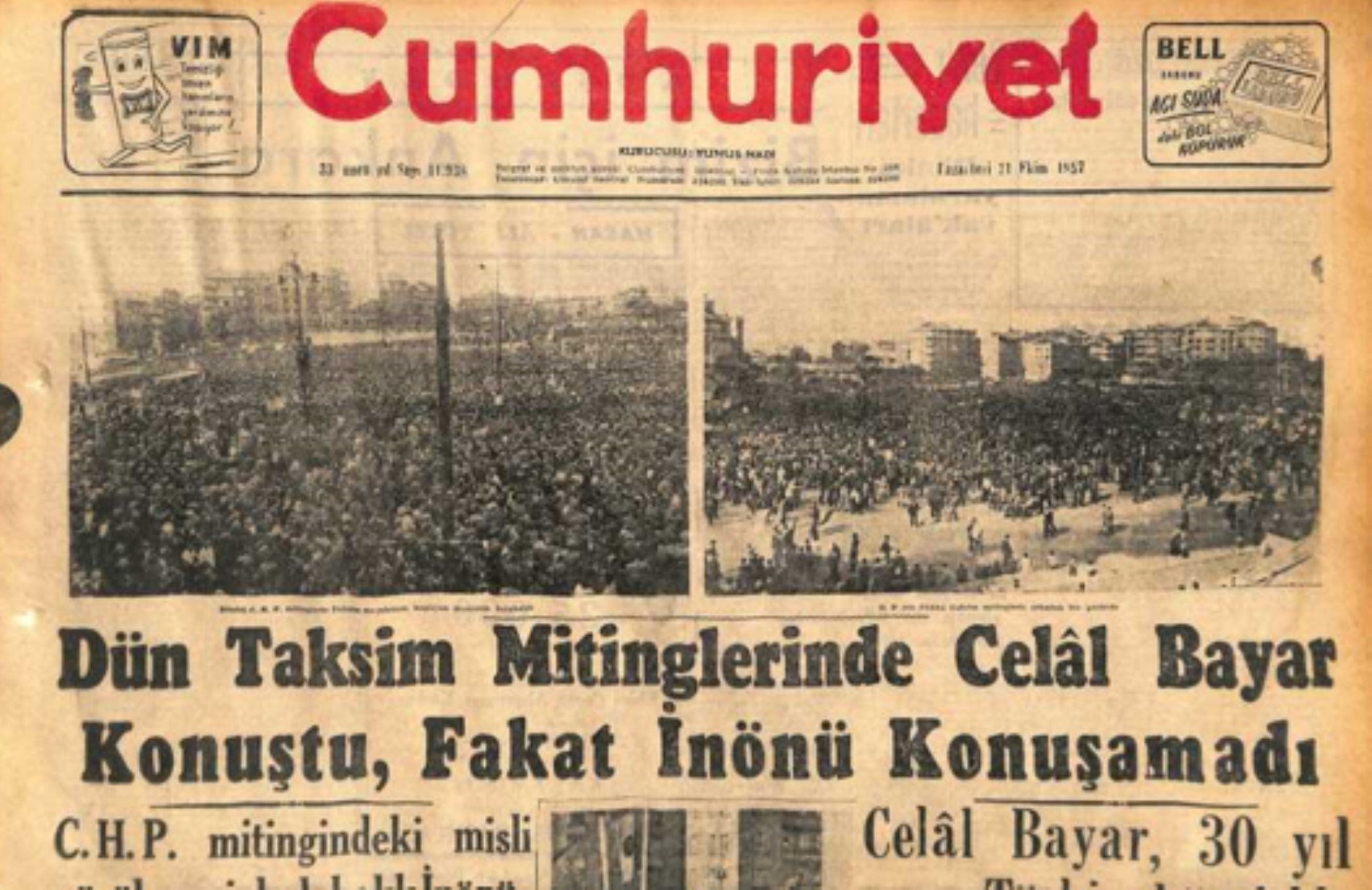
On October 20, the electricity was cut off in Taksim Square, where İsmet Pasha was to hold a rally. In the area where one hundred thousand people gathered, the opposition could not reach its own crowd. The chairman of the Republican Nation Party, Osman Bölükbaşı, was a candidate. But he was in prison. The carrying of photos of their imprisoned chairman at the rallies of the CMP members was prevented by the police.
Young people who wanted to hold a rally in Ankara Kızılay Square with pictures of Atatürk in their hands were prevented by the police and taken to the police station.
ACCORDING TO MENDERES, İSMET PASHA IS SICK
Prime Minister Menderes evaluates İsmet Pasha’s words, "there is a political crisis in the country," as follows: "The crisis is in İsmet Pasha's own head. Dear citizens, İsmet Pasha is sick. İsmet Pasha is afflicted with a kind of disease like Malta Fever, like Asian Flu. The name of that disease is 'daüliktidar,' that is, the disease of power."
Menderes continues: "They came to the parliament in the '54 elections with 30 people. The sedition of those 30 people engulfed the whole country. 30 people also betrayed us from within. (Here he refers to the founders of the Freedom Party). If we want political stability in this country, we must bring the DP to power with an overwhelming majority."
As can be seen, Menderes cannot even tolerate the existence of an opposition consisting of 30 deputies. He interprets the opposition as sedition and wants a larger majority.
MENDERES VIOLATING THE ELECTION LAW WITH RADIO BROADCASTING
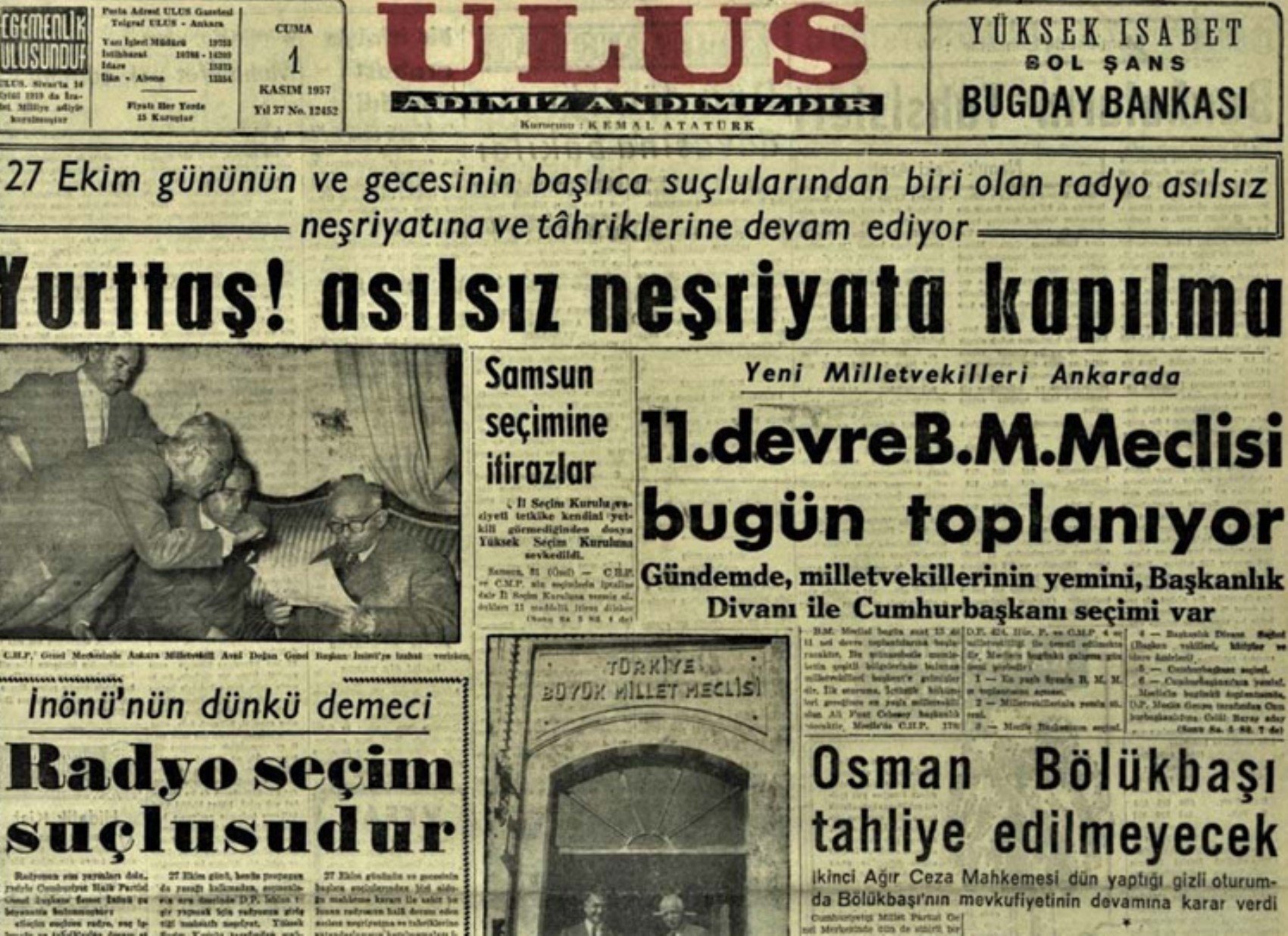
While the voting processes and bans were still ongoing, around 14:00, the State Radio, which was completely under the control of the government, began to announce the election results upon Menderes's instruction. According to the radio, the Democrat Party had won the election. Even the CHP leader had accepted defeat.
This was undoubtedly a manipulation by the government aimed at opposition party voters. Menderes was openly violating the election law.
To prevent the illegality being committed, İsmet Pasha called Fatin Rüştü Zorlu. After stalling for a while, he said that he had spoken with Adnan Menderes and that the necessary action would be taken. As can be guessed, Menderes continued the radio broadcast with the ambition of winning the election. What was done was contrary to the constitution, the laws, and the election law. The CHP had reported the illegal act to the Supreme Election Board (YSK). While the government continued the radio broadcast in violation of the election law, the YSK gathered to make a decision. Meanwhile, the broadcasts stating that the Democrat Party had won the election continued.
SERVING LIES TO AJANS PRESS
Meanwhile, Menderes signed off on another act that was a great illegality and even contrary to political morality. A statement as if it had been given by İnönü was served to Ajans Press. According to the news, İnönü was admitting that he had lost the election and was saying that we can elect at most 120 deputies. This false statement news, given as if from İnönü's mouth, was also published on the BBC. As can be seen, the DP resorted to every kind of election fraud to not lose power.
EVENTS IN ANTEP, MERSIN, AND OTHER CITIES
The 1957 Antep elections were very eventful. In Antep, it was initially announced that the CHP had won the province by a margin of 700 votes. I use this expression because in a province (which is also an electoral district), the one who finished the election ahead won all the parliamentary seats.
But the Democrat Party members objected. This time, it was announced that the Democrat Party had won by a margin of 1000 votes. According to the claim, there were uncounted votes in the villages. Upon this, the CHP objected to the Provincial Election Board again. The objection application was accepted. All minutes and documents related to the election were taken to the Antep Courthouse. The next day, the minutes would be re-examined and the final result would be obtained. But that night, a fire broke out in the Courthouse building. By an interesting coincidence. It must have been a plot by those who did not want the CHP to win. As a result, the very last election record was considered valid, and the DP won Antep. Upon this, events broke out in Antep.
There are similar events in other provinces as well. Prime Minister Menderes uses the Air Force to suppress the events. He has jets fly low over city centers. After the events are suppressed, a wide witch hunt is started, including CHP candidates. Parliamentary candidates are arrested. Including Ali İhsan Göğüş and Mehmet Barlas’s father, former minister Cemil Sait Barlas. They are tried while detained in Yozgat prison for 6 months. In the end, they are acquitted. Prof. Dr. Turhan Feyzioğlu, whom we know with the phrase "do not give sherbet according to the pulse," defends the detained CHP members in court.
Similar events are happening in Mersin. The atmosphere is tense on the grounds that the Democrats committed vote fraud. CHP member Mahmut Boytunç is killed. Events are breaking out in other cities as well. The government is able to suppress the events by taking extensive security measures in Istanbul, Ankara, Sivas, Giresun, Kütahya, Kayseri, and Çanakkale. The government intervenes in the events by having military aircraft fly low in many provinces where the events could not be brought under control, not just in Antep; this is a practice completely contrary to the principles of a democratic state of law. CHP leader İsmet Pasha criticizes the Democrat Party by saying, "even in war, military aircraft do not dive on civilians."
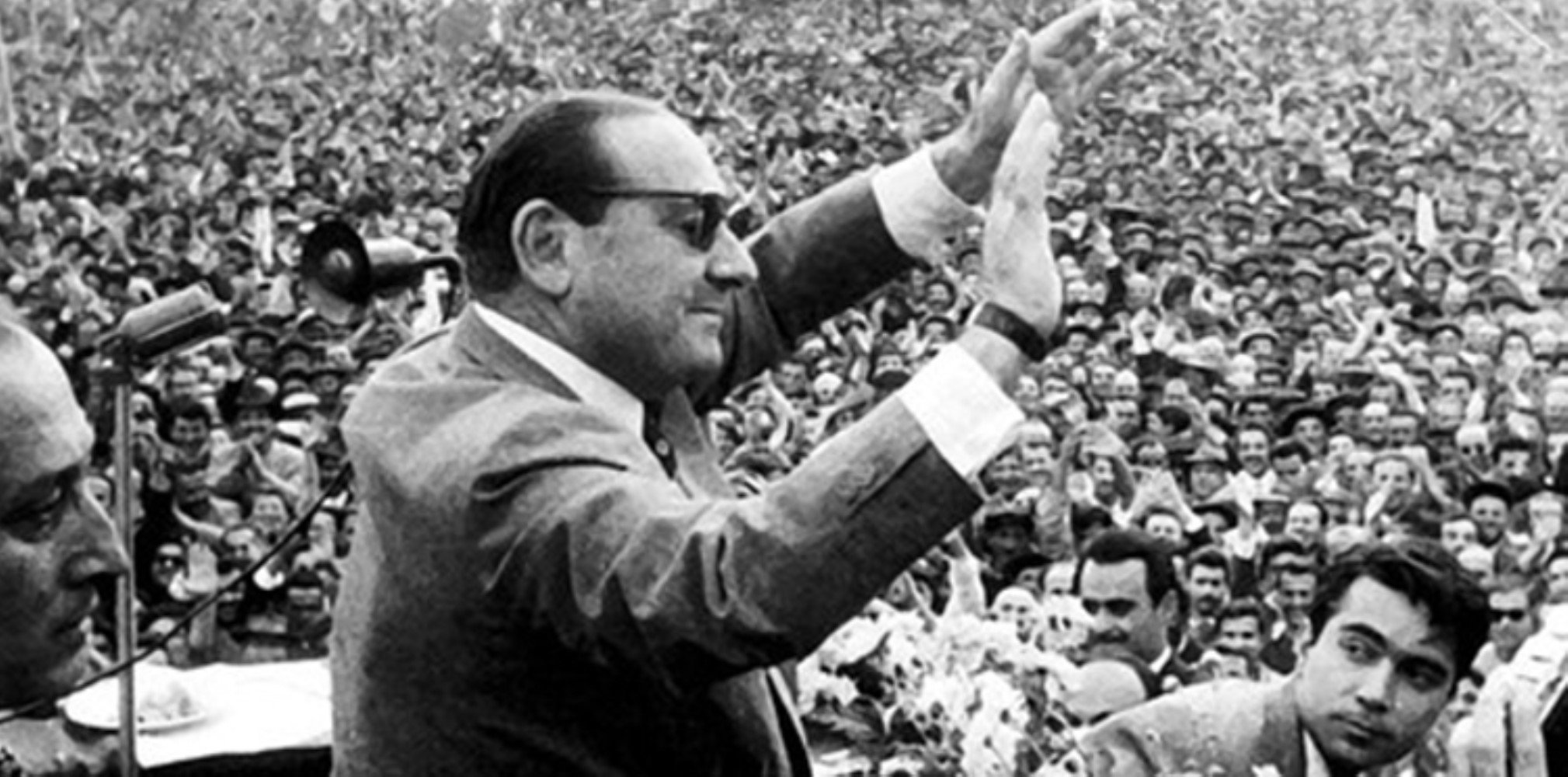
THE 1957 ELECTIONS AND THE POLITICAL ENVIRONMENT BEFORE AND AFTER
When the 1957 election results are evaluated, the Democrat Party receives 47.9% of the votes. Thanks to the election system, it wins 424 seats. The CHP, on the other hand, enters the parliament with 178 deputies despite receiving 41.1% of the votes.
When the votes of the Freedom Party and the Republican Peasant Nation Party are taken into account, the Democrat Party lost its majority at the general vote level. It was the unfair election system that ensured the continuation of the government. The Republican People's Party wins in these electoral districts by securing a majority in 18 provinces. The CHP had been able to win 31 seats in 1954; the main opposition party had been able to form a small group in parliament. Despite a 35% vote rate. In 1957, it reached 178 seats. Its vote rate increased from 35% to 41%. Despite an election environment where the opposition was kept under heavy pressure.
Since the government secured a majority under these conditions, it was having difficulty maintaining public order. There were de facto martial law conditions at the opening of the parliament's new legislative term.
The TBMM (Grand National Assembly of Turkey) opened on November 1, 1957. There were tanks on the streets during the opening of the parliament. The road leading to the TBMM was kept under a military cordon. The government tried to prevent a possible demonstration from the beginning by massing military units up to Güven Park. Under these conditions, the Democrat Party majority elected Celal Bayar as president. Bayar became president with the unanimous vote of the 413 DP deputies who participated in the voting. The total number of TBMM members was 630. The opposition parties did not participate in the presidential election.
EVALUATIONS
We know that the open society report cards of ruling parties since the 1950s have not been very bright.
The 1961 democracy period constitutes an exception to this thought of ours. What ensured this is not the democratic good intentions of the ruling parties. It is the skeptical attitude of the 1961 Constitution towards the parliamentary majority and the executive.
Under the guarantees of the Constitution and the election judiciary, political parties have been effectively protected against the partisan practices of governments.
The reason for this justified skepticism is that the party that came to power after 1950 did not take any steps to base political competition on representative justice and an open regime.
The Democrat Party, which further consolidated its position in power after 1954, handled the national will and democracy with a narrow logic.
With the anxiety of losing the next elections, it eliminated the conditions for political party activities, especially the main opposition party CHP, to compete with the government under the guarantees of legal opposition.
Although the speeches and statements of deputies for the parliament were within the scope of legislative irresponsibility and immunity, this guarantee was ignored, and opposition deputies were tried and convicted.
Freedom of the press was restricted as much as possible, and the opposition press was taken under government siege. The radio was used entirely by the government, and many journalists were arrested and convicted. Hüseyin Cahit Yalçın, Ahmet Emin Yalman, and Yakup Kadri Karaosmanoğlu are the first names that come to my mind.
With the amendment made to the law on meetings and demonstrations, it made it almost impossible for even the main opposition party to hold a press conference.
The secretary general of the main opposition party and the chairman of the Republican Nation Party were arrested and convicted.
Serious falsifications were made in the voter lists, opposition voters were deleted from the registries, and government supporters were registered multiple times in different electoral districts.
After the Antep elections, a fire was started in the Courthouse building, making it impossible to re-examine the minutes.
All the state's tools of oppression, including the Air Force, were used against the people who reacted to the government's heavy pressures. Parliamentary candidates were arrested and convicted.
The XI. Term of the TBMM was opened under de facto martial law conditions and in the shadow of tanks surrounding the Parliament. The presidential election (November 1, 1957) was held in an environment boycotted by the opposition.
When all these concrete facts are evaluated, the claim that a regime that liquidates all democratic institutions, except for the fact that elections are held in some way, represents the national will is unacceptable. The way the DP won the 1957 elections is severely flawed in terms of legitimacy.
Most Read

Striking picture for Özgür Özel's 'New Party'

The PKK opening and Özgür Özel’s path!..

How did the newspapers view Özgür Özel's farewell to the CHP?

He killed his wife by slitting her throat: Their children witnessed the moments

What did the CHP do?

Özel’s new party move in the world press

Fire at TUSAŞ engine factory in Eskişehir under control

The New CHP, against CEHAPE

From self-efficacy to despair

Kılıçdaroğlu's first message on Özgür Özel's new party announcement