



On October 4, Friday evening, I was invited to a meeting held at the Dutch Consulate General. The meeting was a book launch was the panel. The event was held on the occasion of the launch of the latest book published by Cemal Bali Akal, the doyen of the Spinoza circle in Turkey. had been organized. The book was published by Zoe Publishing. The publication details are as follows: Cemal Bali Akal, Portrait of Eternity: Spinoza and 17th Century Dutch Painting.
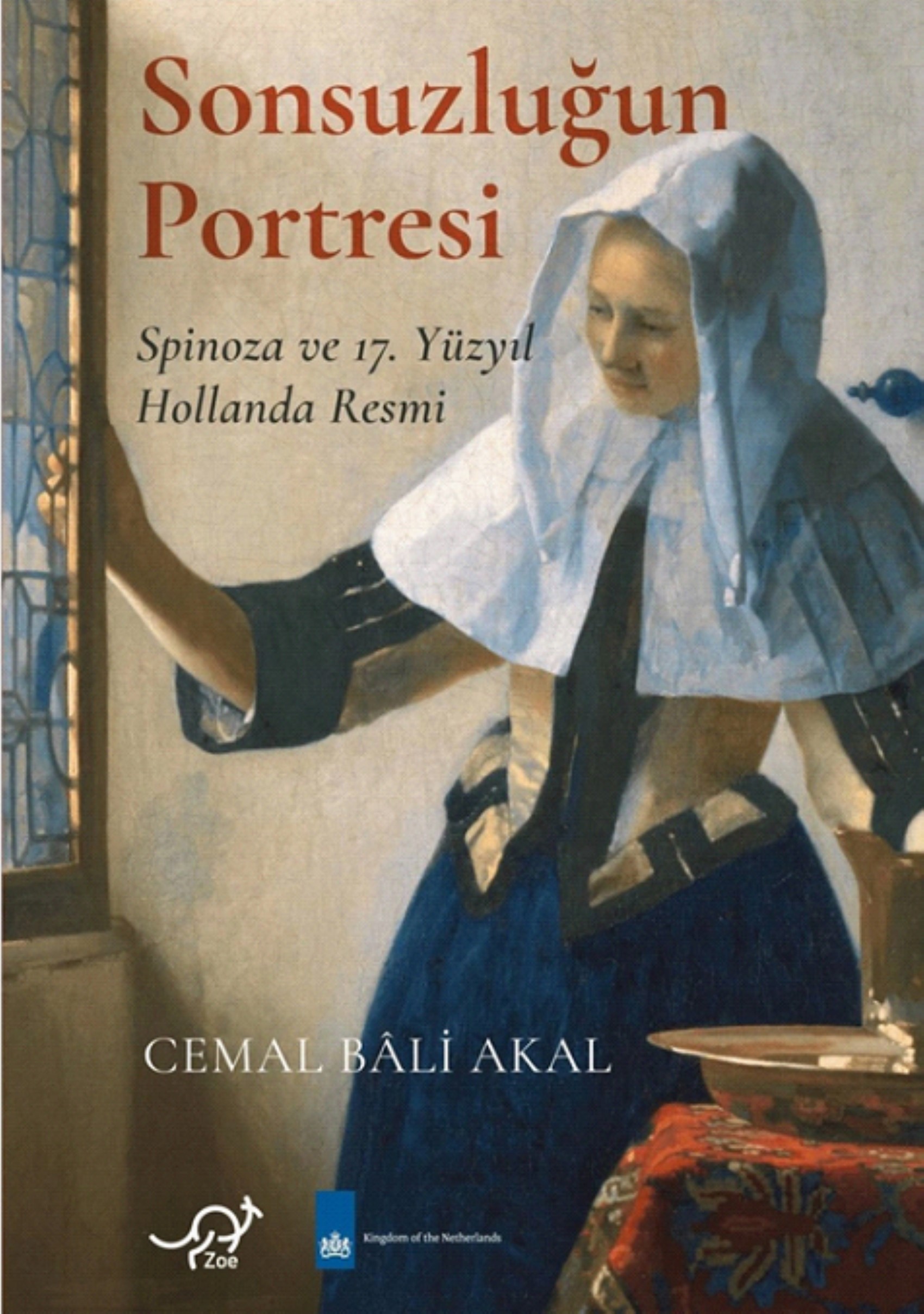
The venue where the meeting was held is very significant. It is the Union Church of Istanbul located in the garden of the Dutch Consulate General in Istanbul. This church is a chapel. It was built quite some time ago and is open for worship. Regularly Sunday services are held. In the pews where we sat, Turkish and English bibles were available for those attending the service.
The Consul General gave an opening speech. He gave a. His English made me think he might have stayed in the USA for a long time.
Cemal Bali Hoca spoke last. He was a bit unwell. An interesting guest had come from Argentina: Diego Tatian. Tatian is a faculty member at the University of Cordoba. His ancestors from Kozan, Adana to those parts had migrated; as you can see Tatian's roots might even trace back to the Kingdom of Cilicia. He is also the founder of the Cordoba Spinoza Studies Group. Cemal Bali it is understood that his relationship with the professor is quite old. The fact that Diego was invited, added a pleasant atmosphere to the meeting.
At the panel, on the art of painting I also learned some things: such as installation and light in painting.
THE CHAPEL IN THE CONSULATE GENERAL GARDEN
The Union Church Chapel was built in 1667 by the Dutch ambassador who came to Istanbul Justinus is within the land purchased by Colyer. The title used by the church since 1866 is as follows: “The Evangelical Union Church of Pera” the congregation is currently at this moment It has 141 members. As I learned from
Turan Akıncı's article on the Dutch Embassy Palace, the palace was built by architect Giovanni Berbarini in 1859. When the embassy moved to Ankara in 1944, the palace in Istanbul converted into a consulate general.
The chapel being in the Dutch Embassy's garden served as a religious sanctuary in Istanbul against the Catholic world. is related. Orthodoxy is already Eastern Christianity. Therefore, for Westerners, from the perspective of a separate world. They are in pursuit of reform in religion and reducing the power of the Papacy as an authority.
The chapel does not represent the Pope's authority, Of those who value the words of the apostles, a small place of worship.
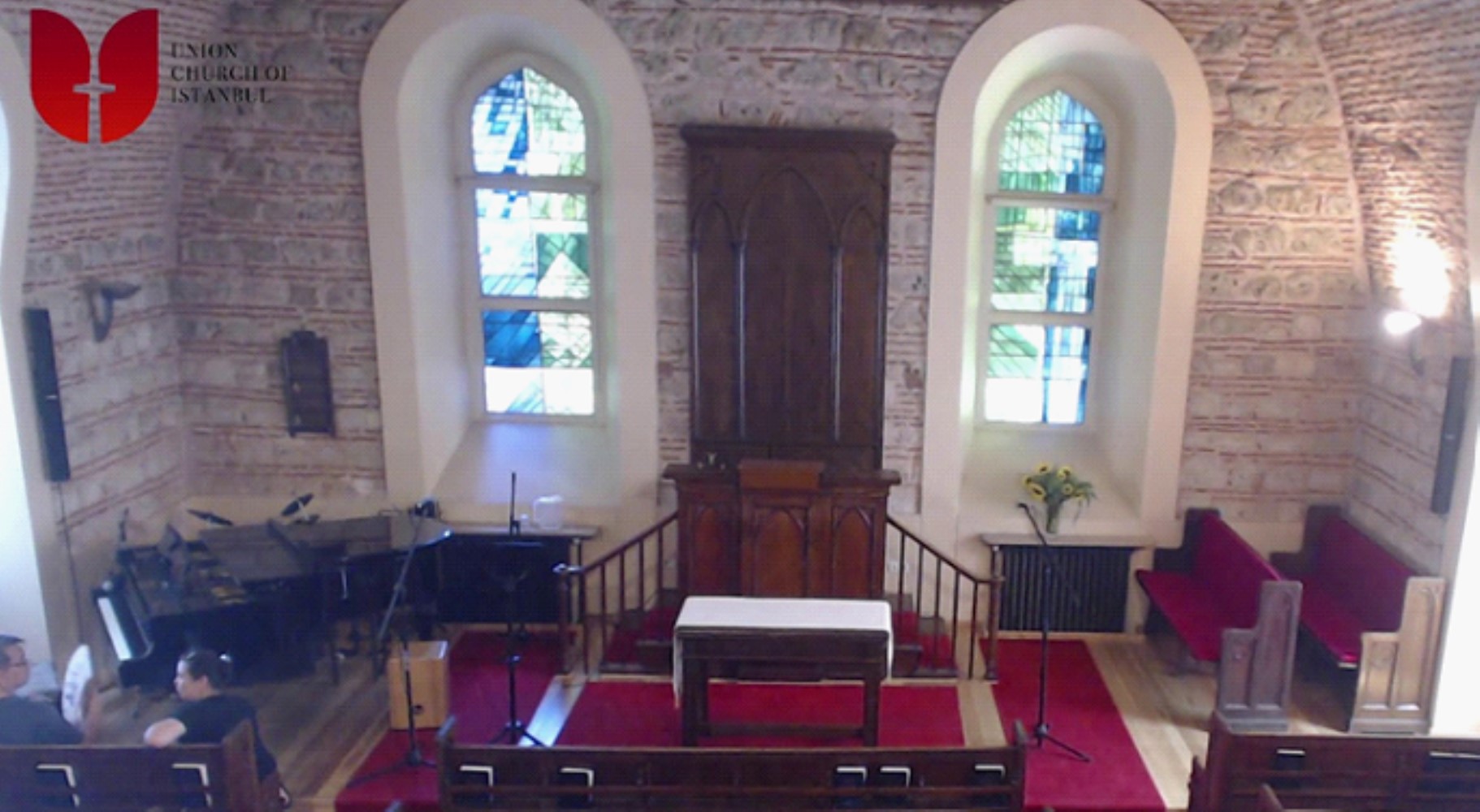
(The Chapel in the consulate garden)
THE DUTCH IN ISTANBUL
Realizing that it had reached the limits of its power, the Ottoman ruling class began searching for countries in the West with which it could form alliances against its traditional enemies (the Habsburg monarchy, the Holy Roman Empire), in its pursuit of has entered. The Netherlands and England, for example. The Netherlands was a confederation at that time.
17th-century Netherlands, is similar to England's situation in the face of Spain, France, and the Habsburg monarchy. Overseas trade and the effort to accumulate wealth are the first things that stand out. Distrust toward Catholic institutions and attempts to create autonomous structures from them, as well as initiatives to establish alternative church congregations, are noteworthy.
The Dutch's first diplomatic mission arrival in our country coincides with this Golden Age. This is significant. Like the Venetians and the French, they also wanted to acquire a permanent residence in Pera, they found a place for themselves and over time they constructed the building known today as the Dutch Palace.
THE ESTABLISHMENT OF THE DUTCH EMBASSY
The Dutch sent to our country the first mission led by Cornelius Haga had arrived. In the year 1612. During the reign of Sultan Ahmed I era this visit coincides with. To understand the period in terms of let us make a few reminders if you wish: The one who had the Blue Mosque built and in the Fatih Code of Laws order for the world that permitted the "fratricide" abolishing the decree the "eldest and wisest son" rule introducing and dying at a young age sultan. The Dutch's Ottoman the Venetian and French ambassadors were disturbed by their arrival in his domain; due to the possibility of them disrupting the political and religious status quo in Europe.
Grand Vizier Halil Pasha, viewed the Dutch as a potential counterweight against Spain and Habsburg Austria. potential as an ally must have seen it, so acted warmly toward the delegation, allowing it to transform into a permanent embassy. The issuance of the “irade-i seniye” (imperial decree) did everything in their power for it. In its early period, the mission was primarily concerned with increasing trade and rescuing Dutch citizens who had fallen into the hands of pirates and were sold in the slave markets of Istanbul. It was involved in this.
THE NETHERLANDS' GOLDEN AGE WHAT IS IT?
In the fields of thought and art, the term used to define an era, the Dutch Golden Age, coincides with an important process of transformation that took place in European history. This transformation is not merely social, not economic at the same time political and religious has taken place in the realm of thought. It has demographic, political, economic, and intellectual infrastructure.
At this point, all of these developments triggering a few factors to mention would be accurate: With the fall of Antwerp to Spain, wealthy Protestant merchants moved to Northern Holland began to emigrate. The primary reason was religion. Simultaneously, fleeing from the Inquisition, Sephardic Jews along with those from France the fleeing Protestant Huguenots also took refuge in a country, the Netherlands.
The Dutch established colonies in North America and the East Indies throughout the 17th century. From the slave trade, enormous wealth was acquired by the merchants.
It should be noted here that at that time, thousands of merchant ships registered to the port of Amsterdam existed. This is how the demographic, material, and spiritual infrastructure of the Dutch Golden Age can be defined.
A THINKER IN AMSTERDAM: SPINOZA
When Rembrandt completed his painting "The Night Watch", Baruch Spinoza (1632-1677) was a 10-year-old child in Amsterdam. Perhaps he even passed by the studio where the painting was being created.
While the painters' paintings depicting daily life captured the tastes of the Dutch bourgeoisie, during those same years, Spinoza, who had grown up in the Portuguese Jewish community in Amsterdam, was thinking things different from his community. God, creation, and on humans.
Spinoza God's by religions reward and punishing (possessing human characteristics) a as an entity he thought it was designed. According to him, such a God could not exist.
For this reason, amidst division and political transformations, the dominant religion and thought paradigms with came into conflict. Or rather, with what he said and with what he wrote both the Jews' as well as the reaction of Christians.
Spinoza's father was a merchant who was an administrator of the Amsterdam Synagogue and the Jewish school.
Time, space, and existence are God's self-manifestation forms (adjective) Spinoza, who thought that it was, in 1655 by his community for denying God and for belittling the Torah was accused. By the Calvinist Church Council and the Amsterdam Jewish community he was ostracized. He was excommunicated.
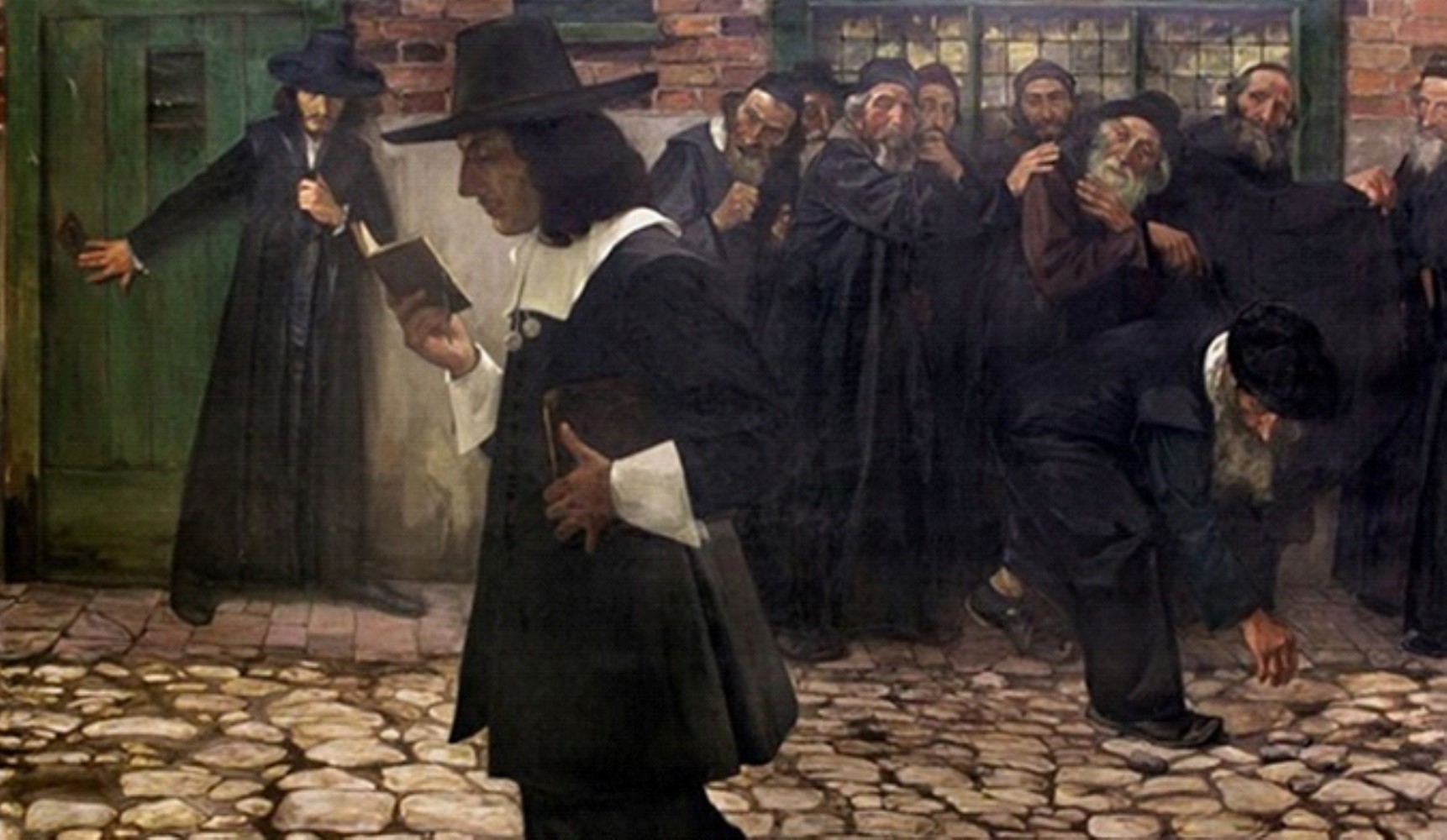
(Samuel Hirszenberg, Spinoza's expulsion from the Jewish community, 1907)
While Spinoza was being ostracized in Amsterdam due to his ideas, painters such as Rembrandt and Johannes Vermeer captured the colors of life, using light and shadow with masterful skill. they were reflecting.
Starting from 1652 lens grinding as a trade he began to earn his living. He moved away from Amsterdam. (1661) He lived in Rijnsburg. He wrote Ethics. Today, the house where he lived is a is a museum.
All of these phenomena—in my opinion— were the birth and rise pangs of the Enlightenment, which had become quite evident by the 17th century.
CONTEXT SHIFT IN PAINTING
This is also an era in the art of painting in which a major explosion occurred. Until this period painting and sculpture in Europe dealt with people and events mentioned in the Torah and the Bible.
From the 17th century onwards, daily life was depicted in painters' canvases in the finest detail began to take place. These paintings are, as everyone would admit, magnificent works of art. The ordinary, simple life on the brushes of the painters transformed into magnificent artistic products.
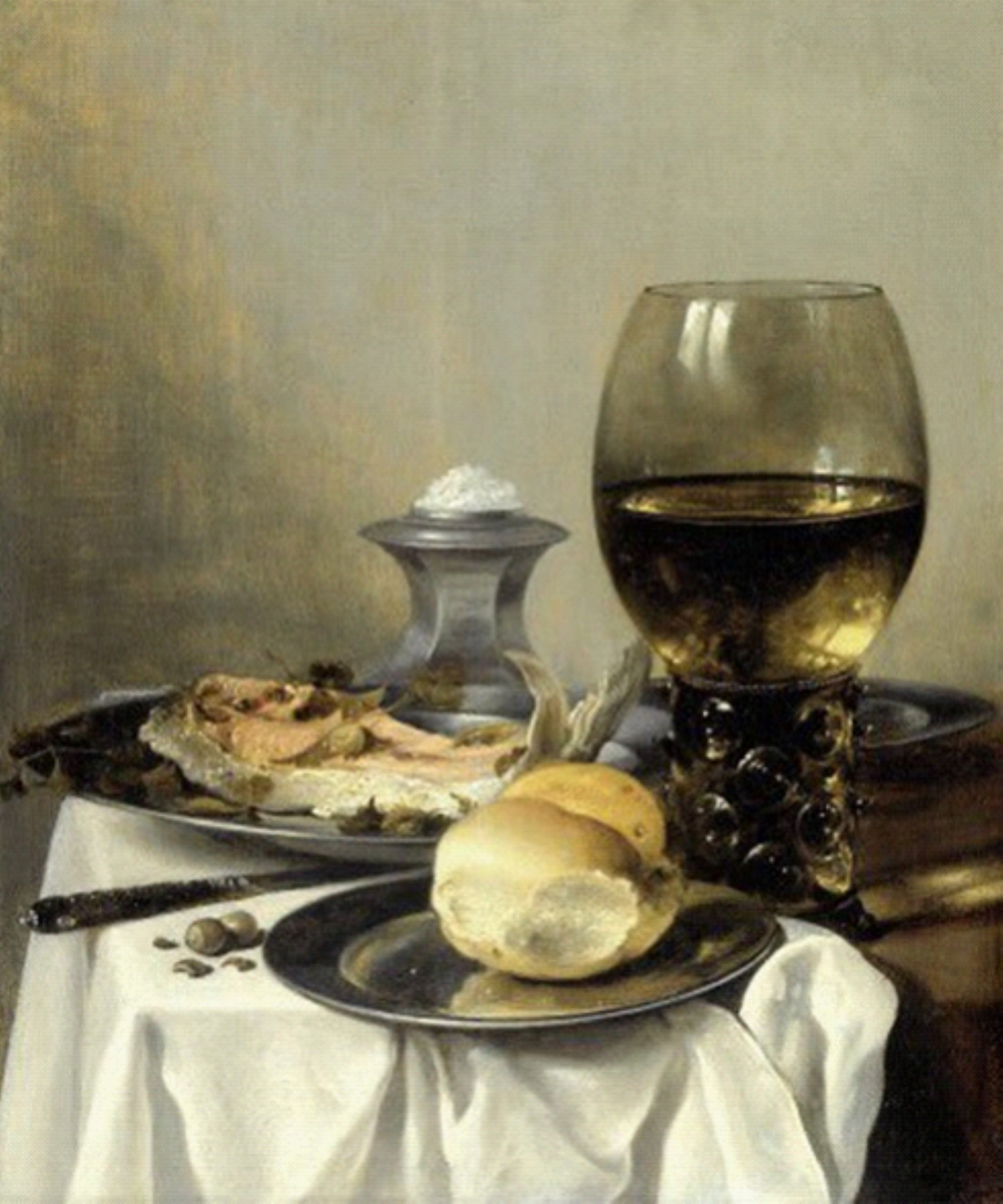
In the paintings of Rembrandt and Vermeer the daily life of Dutch cities is depicted as if the scene were unfolding right now is felt. The Night Watch, The Anatomy Lesson, Girl Reading a Letter at an Open Window like a woman.
A PAINTER OF THE GOLDEN AGE: JOHANNES VERMEER
Johannes, who lived his life in Delft Vermeer (1632-1675) is the painter of the Mona Lisa of the North, as it is known, (Girl with a Pearl Earring) painting. Vermeer's water-pouring, milk-pouring, letter-reading, harpsichord next to sitting women are present in his paintings.
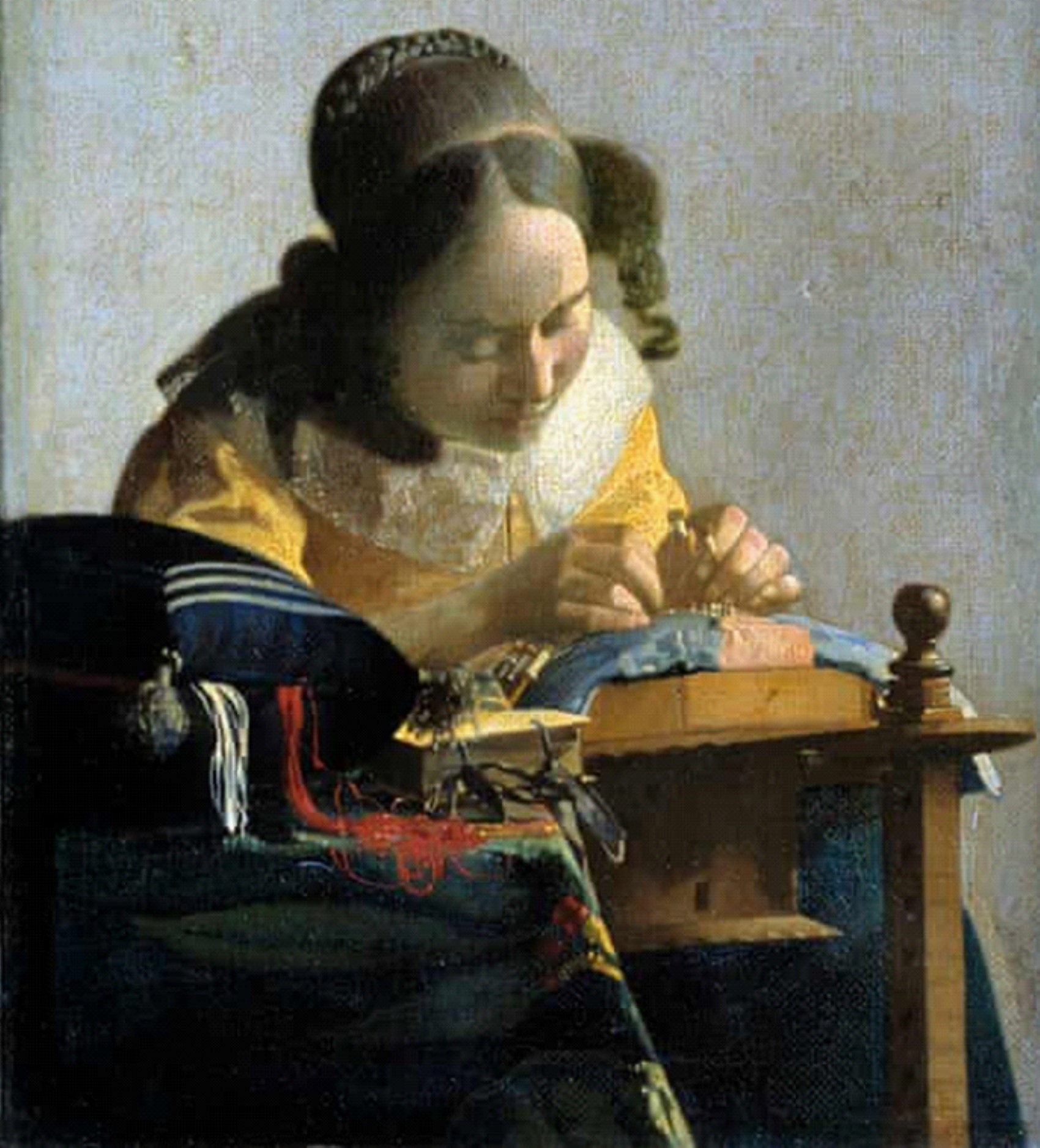
(A Vermeer painting: The Lacemaker)
Vermeer, in his short 43-year life, his livelihood lived through hardships. When he took his own life in a fit of madness, he left behind 11 children, a widow, and quite a lot of debt. It would only be understood later that he was one of the greatest painters of the 17th century.
IN THE GARDEN COCKTAIL
After the meeting in the consulate's backyard a reception was held. Presumably with the support of the Consulate. In terms of service and content, an excellent note a cocktail party I hosted was. The garden's lighting was also beautiful. With a catering firm that is a master of taste they worked with, circulated tiny presentations it was evident. It had been a while since I had the opportunity to attend such an event. It was a good thing.
FROM THE NIGHT REMAINING
Throughout the meeting, I saw the light reflected from the lenses polished in Spinoza’s workshop shining upon the faces of Vermeer’s women. This light I noticed in the Union Chapel was the light of eternity of Spinoza’s God.
Most Read

Striking picture for Özgür Özel's 'New Party'

Özgür Özel gives a dated response regarding the number of resignations

The PKK opening and Özgür Özel’s path!..

Forest fire in Antalya brought under control

How did the newspapers view Özgür Özel's farewell to the CHP?

He killed his wife by slitting her throat: Their children witnessed the moments

What did the CHP do?

Özel’s new party move in the world press

The New CHP, against CEHAPE

Fire at TUSAŞ engine factory in Eskişehir under control