



There are assessments in the public sphere regarding the government Ecevit formed at the beginning of 1978 that I do not find justified. This is the government known as the "Güneş Motel Government." It is the government that remained in office for 22 months, from the beginning of 1978 until the 1979 by-elections.
According to the allegations, Ecevit had committed an act outside of political ethics. According to this dominant view, produced and accepted as true by the Turkish right, Bülent Ecevit had formed his government through political bribery. The way Ecevit formed the government could not be reconciled with political morality. The CHP chairman had been able to come to power by satisfying a number of deputies with ministries. He had thus obtained power that the nation had not granted.
In the environment of massive misinformation in the virtual realm, there is more or less an unquestioning consensus on this issue. It must be stated immediately that the source of this discourse is Süleyman Demirel. I do not agree with this view. I will explain the reasons.
The primary reason for this superficial judgment is the hegemony of right-wing politics in Turkey. After right-wing politics came to power with a religious identity, the dose of this style increased recklessly. Let me recall some examples: İnönü was a draft dodger. Turkey had been governed by a Jewish-Masonic-convert alliance until now. Secularism is irreligion, as in these examples. We can multiply these examples quite a bit.
First of all, when we look at the composition of the government, the information that the Ecevit government was established only with independents who left the Justice Party (AP) is incorrect. The 42nd Government of the Republic, established under the leadership of the CHP, was formed with the support of independent deputies who left the Justice Party, the Republican Reliance Party (CGP), the Democratic Party (DP), and Şerafettin Elçi and Ali Rıza Septioğlu, who entered the Grand National Assembly of Turkey (TBMM) as independents. The independents were effectively a political party group. They had joined the coalition due to their shared ideas. As can be seen, the government consisted of five components.
Let us consider the 11 deputies who left the AP, who are mentioned most often in our political literature. These names were against Demirel forming the Nationalist Front government for the second time. They wanted a government to be formed with the CHP. First of all, this must be underlined. They left their party because Demirel was insistent on continuing with Türkeş and Erbakan. They voted in the same direction as the CHP in the motion of censure.
Now let us look at the course of events. In the 1977 elections, the CHP emerged as the first party, receiving 42% of the vote. The electoral system applied did not bring the CHP to power alone, and the number of deputies remained at 213. The CHP had come to the edge of power and stopped there. Ecevit made many mistakes from the very beginning with his usual idealism. First, he declared that they had won the election. This was a grave mistake. Afterwards, he asked the Justice Party to support the minority government he would form. Demirel replied, "Why should we give power that the nation did not give?" He completed his words as follows: He said that in politics, no one treats anyone to anything.
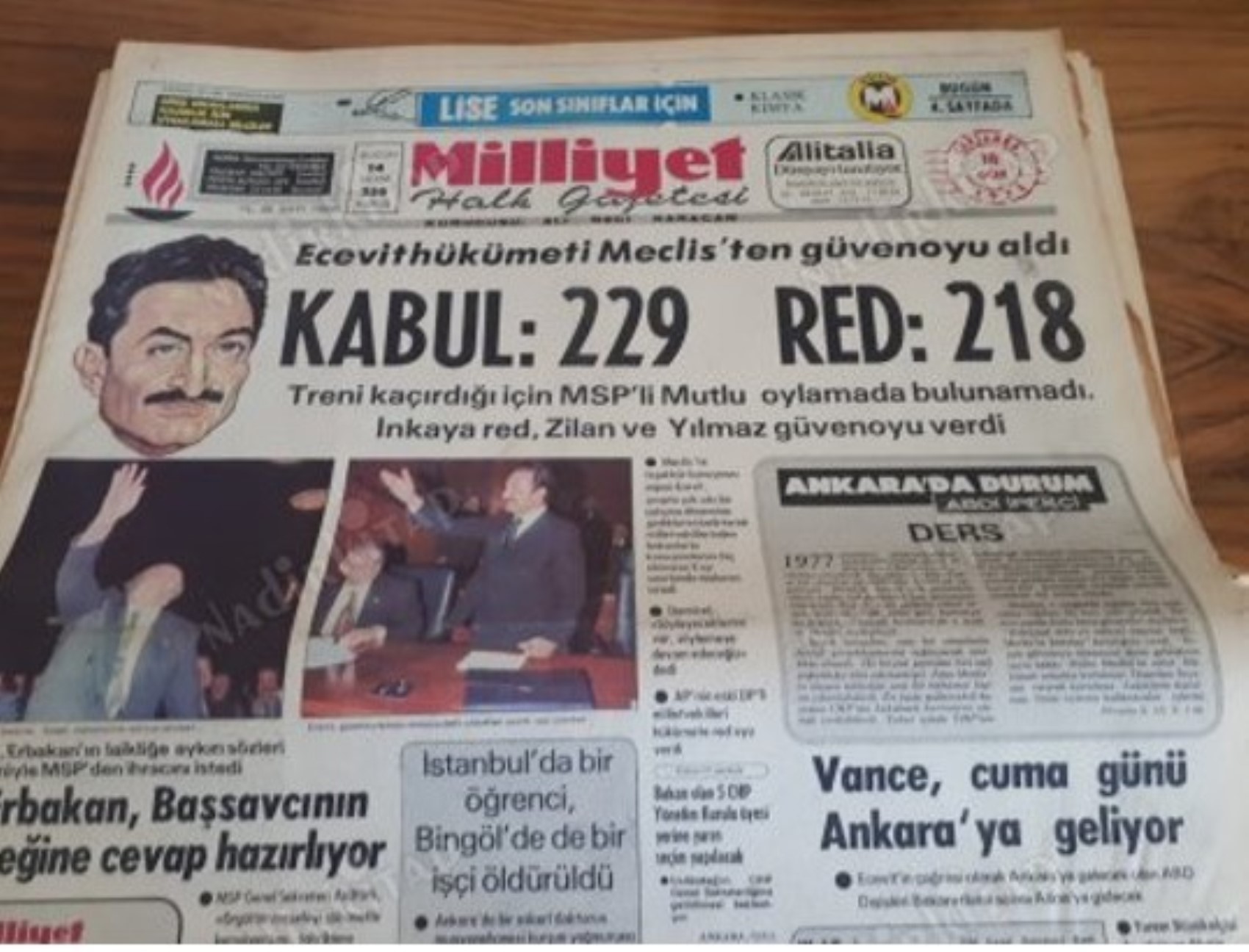
Ecevit was hoping that some sensible AP members would support him. The minority government he formed in early July 1977 under great reactions with these dreams was toppled by 229 votes of no confidence against 217. Ecevit's "Government of Hope" had fallen through. It was the turn of the realistic Demirel. Süleyman Demirel, the leader of the Second Party, formed the Nationalist Front government once again, minus Turhan Feyzioğlu's CGP. This time, he only had Erbakan and Türkeş by his side.
Demirel had formed the Nationalist Front for the second time by turning the 229 negative votes given to Ecevit into positive votes for his own government. However, politics is not just about numbers. It would be seen in a very short time that this majority was politically rotten.
The Demirel government was toppled by a motion of censure on December 31, 1977. Ecevit formed the new government with the support of the aforementioned alliance.
This much is true: This government was the largest cabinet in the history of the republic. It contained 10 state ministries. This government was also a front government. A front of those who were against the Demirel-Türkeş-Erbakan front.
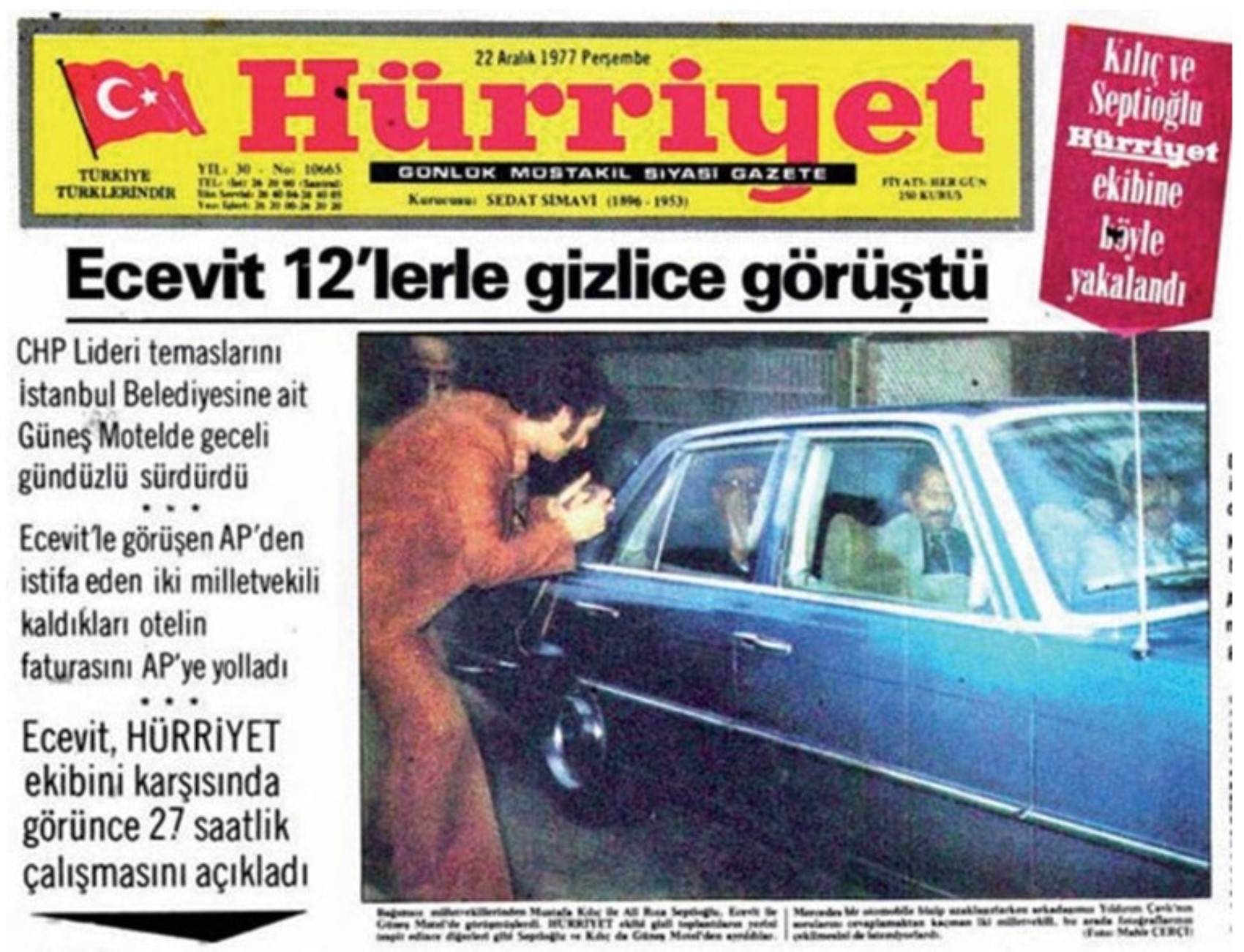
It is understood that the resigning group initially intended to pave the way for an AP-CHP government that would leave the MSP and MHP out, and that they decided to support the government Ecevit would form once it became certain that this path was closed due to Demirel's reticent attitude.
When the political careers and parliamentarianism of these resigning deputies are examined, it is seen that, with the exception of Tuncay Mataracı, the others were experienced politicians, and a vast majority of them had been members of the TBMM since 1965.
The resignations of these figures from the Justice Party cannot be attributed to "being seduced by the promise of a ministry." Most of these deputies already had sufficiently satisfying political careers.
The idea of giving ministries to the resigning Justice Party members came from Ecevit. They had no such demand. The reason for this decision by Ecevit is that the minority government he formed five months ago had been toppled.
Instead of forming a new minority government to be supported by independents from the outside, the way to place the government on a solid foundation was to make all of the CGP, DP, and independents members of the council of ministers. This attitude may seem exaggerated at first. But it is not politically wrong.
Most of these ministries were envisioned as state ministries. He had brought a state minister to the head of some state institutions at the general directorate level. In other words, all the parties and independents that entered the government were both providing support numerically and taking on political responsibility by undertaking ministerial duties. I do not see an ethical problem here.
The way to destroy the front Demirel formed with Türkeş and Erbakan was to keep the opposing front solid. Ecevit had to keep the front he opened solid and take measures against provocations from the beginning.
Although he later expressed regret for what he did, there was no other way for the CHP to form a government at the beginning of 1978. This was the way to save the country from the reactionary and fascist siege. The libertarian-democrat Demirel had no sensitivity on this issue. He was only concerned with not losing power to the CHP.
After being sabotaged quite a bit by the counter-guerrilla and after 22 months of extraordinary failure, Ecevit left the government and resigned. This is something else. The fact that two ministers (Mataracı and İşgüzar) were convicted in the Supreme Court (Yüce Divan) during the September 12 interim regime period is also something else. It should not be inferred from these words that they were innocent but the closed regime had them convicted. September 12 is a military regime. The National Security Council, which held the legislative power, made the referral decision. Let us not forget that incredible corruption allegations were made against some of the council members who made the referral decision afterwards, and that the ANAP government (Özal) protected them with the temporary Article 15 of the Constitution.
The point that needs to be expressed is this: In almost all periods in Turkey (Constitutional Monarchy, single-party, multi-party without exception), there have been ministers accused of corruption. The decision to refer or not to refer to the Supreme Court depends on the political power. As seen in many cases, the government does not sacrifice its minister. Even if the corruption is clear. You know that Turkey has seen files over time that far exceed the allegations against İşgüzar and Mataracı.
There is no suspicion in the establishment of the III. Ecevit Government. It is not politically wrong either. Ecevit had many flaws throughout his political life. Some were even at the level of being unconstitutional. For example, violating the secret ballot rule while the constitutional amendment (extending the term with the 5+5 formula) was being negotiated for Demirel. Forcing his own group and other political party groups within the government to vote by showing their votes.
Another was the way he prevented the candidacy of Dr. Sema Pişkinsüt, who wanted to be a candidate for the DSP chairmanship. Again, preventing a newly elected deputy who had received their certificate of election from taking the oath was also a grave mistake. These attitudes were wrong. But forming this government was right. It was unacceptable to leave the country to the Nationalist Front (MC) while he had 42% of the vote behind him.
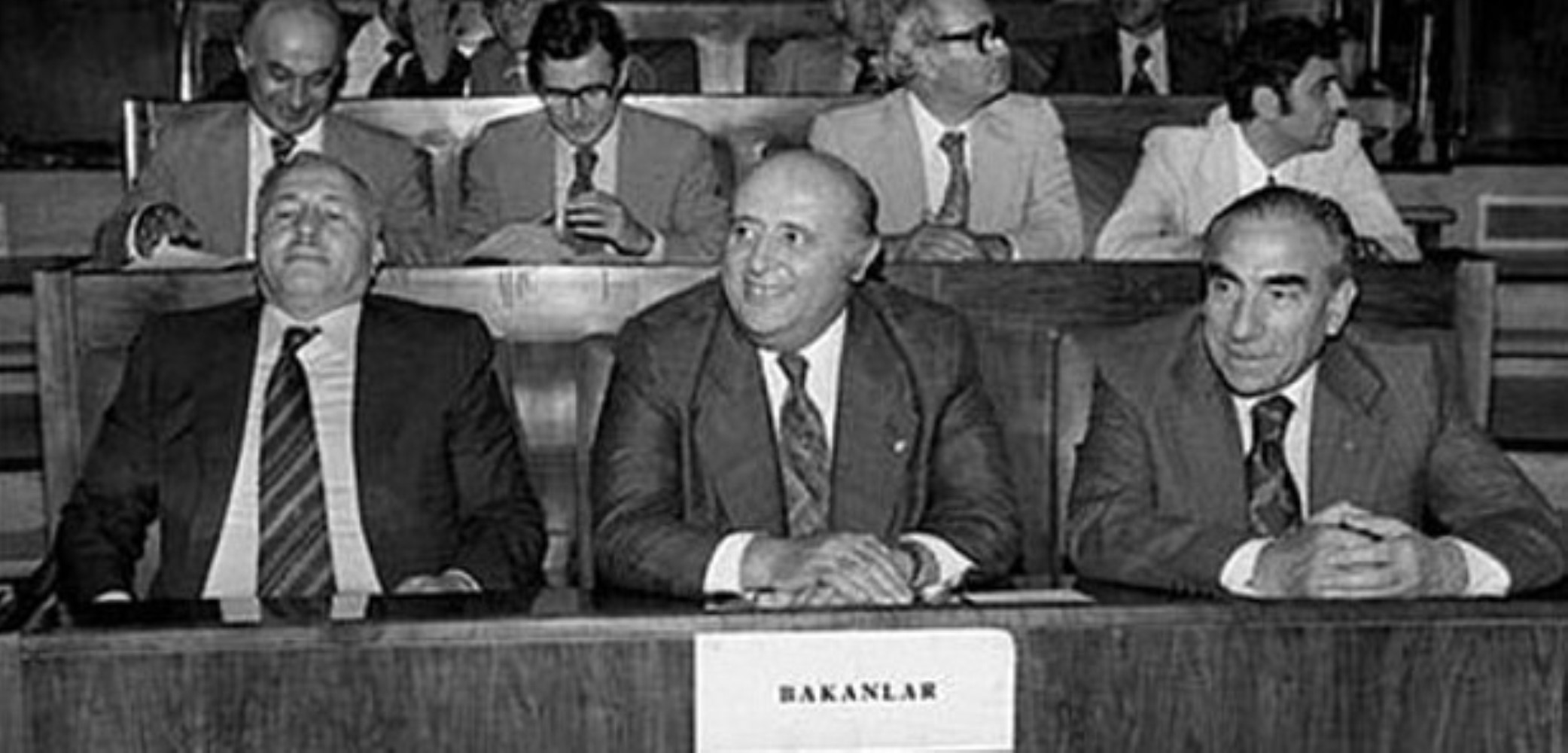
I have another piece of evidence to support my thoughts. After Ecevit resigned after the 1979 by-elections, Demirel could not attempt a new Nationalist Front. Even though the parliamentary arithmetic seemed suitable for this. The MHP and MSP had to support the Justice Party minority government from the outside.
Now I will show you a few examples of government formation from our political history. You decide on the aspect of suspicion.
The year is 1995. General elections were held. In these elections, the Welfare Party (RP) became the first party (21%). Mesut Yılmaz's ANAP (19%) and Çiller's DYP (20%), Ecevit's DSP (15%), and Baykal's CHP (11%) received votes. The MHP and HADEP remained below the threshold.
These results showed the necessity of a coalition. The most unwanted party was the Welfare Party. For known reasons. A formula that included both Baykal and Ecevit at the same time was also not possible.
The Turkish bourgeoisie was pushing for the two center-right parties to form a government—putting aside the competition between them—by leaving the Welfare Party out. In the end, Çiller and Yılmaz agreed on an ANAP-DYP coalition based on the principle of rotating prime ministership. The first prime minister was Yılmaz. The government received a vote of confidence with the abstaining votes of the DSP.
After a while, the Welfare Party went on the offensive from two directions. The first was the legal front. It filed a lawsuit in the Constitutional Court with the claim that the government could not receive a vote of confidence. The justification was as follows: Due to the abstaining votes cast by the DSP by participating in the session, the quorum for the vote of confidence remained below half plus one. For this reason, the Mesut Yılmaz government could not be considered to have received a vote of confidence. While this application was being discussed in the Constitutional Court, Erbakan launched an attack on another front. These were the TEDAŞ and TOFAŞ corruption investigations directed at ANAP. Demanding the referral of the relevant ministers to the Supreme Court. At the same time, he brought to the agenda the motions for referral to the Supreme Court against the DYP (Çiller) on the grounds that she used the discretionary fund improperly.
It had been revealed that Tansu Çiller used the discretionary fund arbitrarily for her party's election expenses. It was said that Selçuk Parsadan and some retired generals used this resource to help Çiller win the election. The press had referred to the event as the fraud of the century.
If the released ANAP group supported it, the possibility of Çiller being tried in the Supreme Court was increasing.
Erbakan's concern was to come to power by forming a coalition with one of these two parties for which he had prepared files. Meanwhile, before the Constitutional Court application was concluded, Mesut Yılmaz resigned from the prime ministership. The Welfare Party had cornered both parties well with these files.
Once again, the government was left in the middle. Remember what happened in the end.
Tansu Çiller's party, which the Welfare Party accused of corruption (on the verge of referral to the Supreme Court), entered the Refah-Yol government by signing a coalition protocol with the Welfare Party in a very cheerful atmosphere. Erbakan, who had been dreaming of the prime ministership for 30 years, was tasked by the president to form the government.
Still, the number of deputies of these two parties was not enough to form the government. The Great Unity Party (BBP) completed the number. Yazıcıoğlu would base his support on the justification of "not being an obstacle to the power of Muslims." There was a serious problem here too. On the point of political ethics.
The BBP had entered the parliament with the quota (7 deputies) provided to it by ANAP. Çiller, who was angry at the ANAP-BBP cooperation, had accused Mesut Yılmaz by saying, "You are letting murderers into the parliament."
The Erbakan government received a vote of confidence on July 8, 1996, with 278 votes in favor, 265 against, and 1 abstention. If the BBP members had not voted in favor, the Refahyol government would not have been able to receive a vote of confidence.
It is possible to explain the result as follows. In exchange for not being referred to the Supreme Court, Çiller supported Erbakan. The government was formed with the support of the party she accused of being murderers. I think it would be more accurate to explain the event here with a concept beyond ethics. The word that comes to my mind: blackmail. This means saying, "If you don't make me prime minister, you will end up in the Supreme Court."
Let's go back a little further. The year is 1975. When the first Nationalist Front was being formed, two ministries were given by Demirel to the MHP, which had 3 deputies. Nine Democratic Party members (Op. Dr. Bilgiç and his friends) resigned and gave a vote of confidence to the government. The voting resulted in 222/218 (in favor-against). As can be seen, if these balance changes had not occurred, the Demirel government would not have been able to receive a vote of confidence.
Here, the record of the Turkish right, which says that Ecevit formed a suspicious government behind closed doors at the Güneş Motel, is also like this.
Most Read

Striking picture for Özgür Özel's 'New Party'

The PKK opening and Özgür Özel’s path!..

How did the newspapers view Özgür Özel's farewell to the CHP?

He killed his wife by slitting her throat: Their children witnessed the moments

What did the CHP do?

Özel’s new party move in the world press

The New CHP, against CEHAPE

Fire at TUSAŞ engine factory in Eskişehir under control

From self-efficacy to despair

Kılıçdaroğlu's first message on Özgür Özel's new party announcement