



ABOUT THE CONTENT OF MY ARTICLE
While writing this article regarding Can Atalay’s parliamentary status, I utilized articles by professors Müzeyyen Gözden Atasayan, Tolga Şirin, Korkut Kanadoğlu, Kemal Gözler, Sibel İnceoğlu, and İbrahim Kaboğlu.
First and foremost, I must state that the Constitutional Court, in its decisions regarding Can Atalay, did not act as a super-appellate authority, nor did it perform a review of expediency. It issued decisions that would ensure the elimination of unconstitutionality stemming from the violation of fundamental rights.
As emphasized in the relevant decisions of the Constitutional Court, the normative spheres of Article 14 and Article 83 of the Constitution are different. The purpose of Article 14 is not to determine the crimes that constitute an exception to legislative immunity.
In my opinion, the legislative immunity defined in Article 83 cannot be invoked only in cases of “being caught in the act of committing a crime requiring a heavy penalty.” For example: If a member of parliament were to kill another member of parliament in the General Assembly. (Remember, this has happened in Turkey.)
THE MEANING OF CAN ATALAY’S IDENTITY FOR THE GOVERNMENT
Can Atalay has served as an attorney for the victims of many disasters for which the government is directly responsible. This, in itself, was something that greatly irritated those in power.
To mention some of these events: the Soma Disaster, the Ermenek Mine Accident, the Adana Student Dormitory Fire, and the Çorlu Train Accident.
In addition to these, Atalay took a stance alongside the Taksim Solidarity. This platform consisted of people who organized against the plan to destroy the Taksim Gezi Park, a special new feature in the city since the 40s. This was a civil, democratic, and legitimate situation in accordance with the law. It was a democratic, constitutional right. The government preferred to criminalize the citizens' “freedom of assembly and demonstration” instead of protecting it. Due to its own political plans.
While on the subject, I would like to make some reminders. When the Gezi Park protests began, the MHP was in the opposition. Devlet Bahçeli found the protests justified. He did not hold back in his criticism of the AKP government. According to the MHP of 2013, people were exercising their constitutional rights. I would like to remind you of two more people. Ali Babacan and Ahmet Davutoğlu, after joining the Nation Alliance, stated that they were not among those who signed the Gezi Case as complainants, and that they even tried to warn the prime minister of the time.
The matter spiraled out of control because the government increased the dose of violence. Instead of approaching the protests with moderation, the government chose to crush the platform. In my opinion, the essence of the event is this: The prime minister of the time saw these events as a serious threat to his “personal power.”
I would like to add one more note. Our political history shows that in many events, including the May 1, 1977 disaster, provocative groups that criminalize citizens' freedom of assembly and expression have immediately stepped in.
I can say that a similar scenario took place during the Gezi Park protests. Extreme left-wing organizations joined the protesters. In my opinion, in a controlled manner. I am sure that those who allowed this were involved in some “deep affairs.” Just as it was on May 1, 1977.
Thus, the government gained the opportunity to criminalize the events as an attempted uprising and a crime of attempting to overthrow the government. The rest is well known.
WHAT WAS THE GOVERNMENT’S REAL PURPOSE IN THE IDEA OF ELIMINATING GEZI PARK?
It is well known that the AKP government (the 61st Government at the time) had an agenda to erase the secular republican identity of Taksim. The way to do this was to make Ottomanism dominant through the square. When you go to Taksim today, you see this clearly. The rhetoric of the “ancestral legacy Artillery Barracks,” which the Republic had abolished, served only as a screen.
The AKP government intended to erect a shopping mall in Taksim Gezi Park under the guise of supposedly reviving the Barracks. This intention was to have a two-fold function. First, Gezi Park was built during İnönü’s presidency. In fact, its official name given by the municipality was: İnönü Park. With this project, the government would have erased İsmet Paşa’s name from one more place. The second aspect was to open a new rent area for pro-government capital.
The matter also had a physical aspect. To increase the momentum of the counter-revolution move that physically crushed the Taksim Republic Monument. By destroying the Gezi Park that the Republic had gifted to the people of Istanbul, to make the government’s ideology dominant in the area. To dwarf the monument symbolizing the Republican Revolution. (Pietro Canonica, 1928)
WHO BUILT GEZI PARK?
The person who brought Gezi Park to the people of Istanbul with great effort is Dr. Lütfi Kırdar. Kırdar was a successful bureaucrat of the single-party era. He served as the Governor of Istanbul during the years when Atatürk and İnönü were presidents. Kırdar was also the mayor by law. He had also served as a member of parliament from the CHP. Conservative circles value his DP identity after 1957. Dr. Kırdar is primarily a Unionist (İttihatçı). Then he became a governor, member of parliament, and minister of the republic.
Kırdar is the mastermind behind the “Equestrian İnönü” statue, which now stands in a corner away from view in Maçka Park. The statue was made by Prof. Rudolf Belling from the Academy. Dr. Kırdar was thinking of placing that statue at the entrance of Gezi Park. Its pedestal had also been built.
Kırdar’s distinguishing feature is that he was a successful single-party bureaucrat. There is nothing in him that the “religious right can claim.” Dr. Kırdar was in the wrong place at the wrong time. His unfortunate farewell to life is related to this. His death during the trial on Yassıada is being exploited by the ruling party, that is all.
CAN ATALAY’S INCLUSION IN THE GEZI PARK CASE
I believe that Osman Kavala, Can Dündar, and Can Atalay, who are being tried in this case, are the names that attract the most hostility from government circles. Kavala and Dündar for known reasons. Can Atalay, on the other hand, because of his fierce resistance to the government.
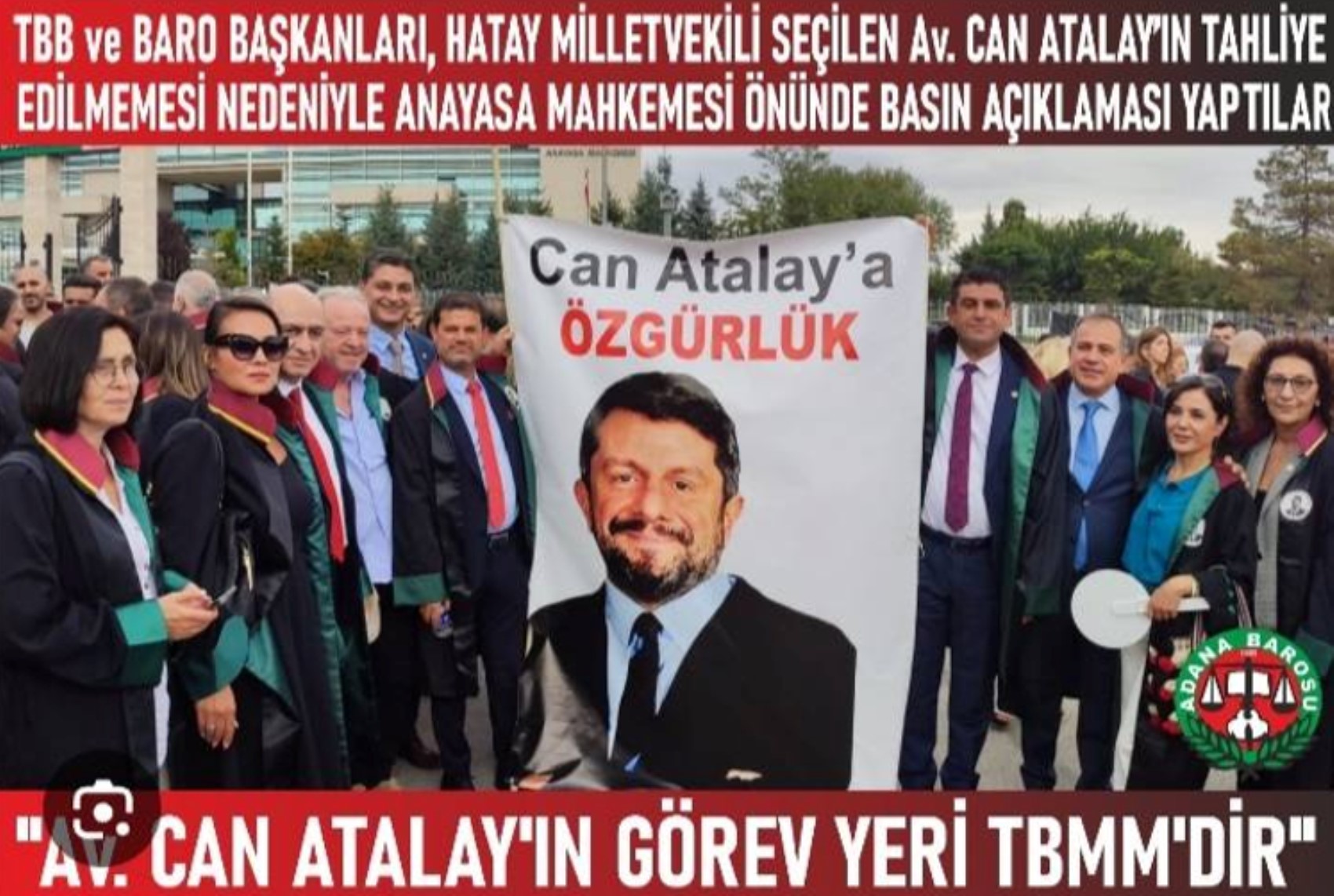
While Can Atalay was in the position of a defender of the Gezi Park platform, he suddenly became one of the defendants in the Gezi Park Case. Just like how İmamoğlu’s lawyer suddenly became a defendant and was arrested. Atalay was arrested in this case, tried, and convicted in the court of first instance shortly before being elected as a member of parliament.
As a result, Can Atalay, as a lawyer, stood by the victims in every disaster for which the government was responsible and undertook their defense. In the end, he himself was thrown into the case that criminalized the Gezi Park events, which was the greatest mass challenge to the government. He became one of those thrown into the TCK 312 bag. He was convicted in the case filed.
A DISSENTING OPINION THAT DRAWS ATTENTION IN THE DECISION
On April 25, 2022, the Istanbul 13th High Criminal Court sentenced Kavala to life imprisonment under TCK 312. It sentenced the other defendants, including Atalay, to 18 years for participating in an organized crime (fer’an zimethal). The convictions of Kavala and the other defendants are the subject of another article. Here, only Atalay’s situation is addressed. I am not interested in Atalay’s identity as a member of the Workers' Party of Turkey. I am interested in him being an elected member of parliament. The law of the elected is the law of the nation that gives him the mandate.
A remarkable point in this decision was that one judge from the trial panel dissented from the decision. The judge in question argued that there was no evidence in the file other than the wiretap records and that the wiretap decision given on June 18, 2013, was not based on the “crime of overthrowing the government,” and that the “wiretap decision was given” with the accusation of establishing an organization, and that “the wiretap permission had no connection with the alleged crime.” For these reasons, he voted for the acquittal and release of the suspects. He wrote his dissenting opinion in the dissenting opinion record.
The conviction decisions given by the 13th High Criminal Court were approved by the Court of Cassation. (September 28, 2023) As of this date, Can Atalay had been elected as a member of parliament. But he was under arrest in the case he was being tried in. This is the most important point in this matter.
HATAY MEMBERS OF PARLIAMENT ELECTED IN THE 28TH TERM OF THE TBMM
In the 28th Term of the TBMM, which was formed by the May 14, 2023 elections, the Hatay province is represented by 11 members of parliament: The distribution of seats among parties is as follows: AKP 4, CHP 3, İYİP 1, MHP 1, SP 1, TİP 1.
Let me remind you: Saadet Party Hatay MP Necmettin Çalışkan entered the Parliament from the CHP list. One of the parliamentary seats gifted by Kılıçdaroğlu was also from Hatay.
If we go back a little further, in the 27th Term, Barış Atay Mengüllüoğlu was elected as a Hatay MP from the HDP list on June 24, 2018. He joined the ranks of the TİP on October 11.
Barış Atay left his place to Can Atalay, who was being tried in the Gezi case, as the TİP had a high chance of sending an MP to the TBMM from Hatay. He himself became a candidate from Antalya. He could not be elected. Atalay was elected from Hatay. He was under arrest as of that date. There was no final judgment against him yet.
ANNOUNCEMENT OF ELECTION RESULTS AND ATALAY’S SITUATION
With the announcement of the election results in the Official Gazette, Can Atalay was endowed with legislative irresponsibility and immunity. The trial against him should have been stopped and he should have been released. Subsequently, he was expected to start his duty by taking the oath in the TBMM. But that did not happen.
In my opinion, the moment immunity begins is the moment the election results are officially announced. This view is also the view of Refik Koraltan (DP), one of the Speakers of the TBMM. In the 1957 elections, Osman Bölükbaşı was re-elected as a Kırşehir MP while under arrest. He had said that the decision to lift the legislative immunity given against Bölükbaşı belonged to the previous legislative term, and that because Bölükbaşı, who was elected as an MP in the 11th Term, regained immunity, the trial against him should be stopped and he should join the Parliament. And so it happened. After the 2023 elections, the same procedure should have been applied for Atalay. Three-quarters of a century later, the Speaker of the TBMM, let alone doing this, did the exact opposite. As in the cases of Mehmet Haberal, Mustafa Balbay, Enis Berberoğlu, and Ömer Faruk Gergerlioğlu, the person sitting in the Speaker’s chair of the Parliament adopted an attitude that prevented an MP elected from an opposition party from joining the TBMM.
Let us remember the developments: The Constitutional Court sent the decision it received on the grounds that the “right to be elected and engage in political activity and the rights to personal liberty and security” of the arrested MP Atalay were violated to the court of first instance “for the necessary action.” When we follow the subsequent developments chronologically, we understand the dimensions of the politicization in the judiciary. I also suggest you look at the appointments and promotions.
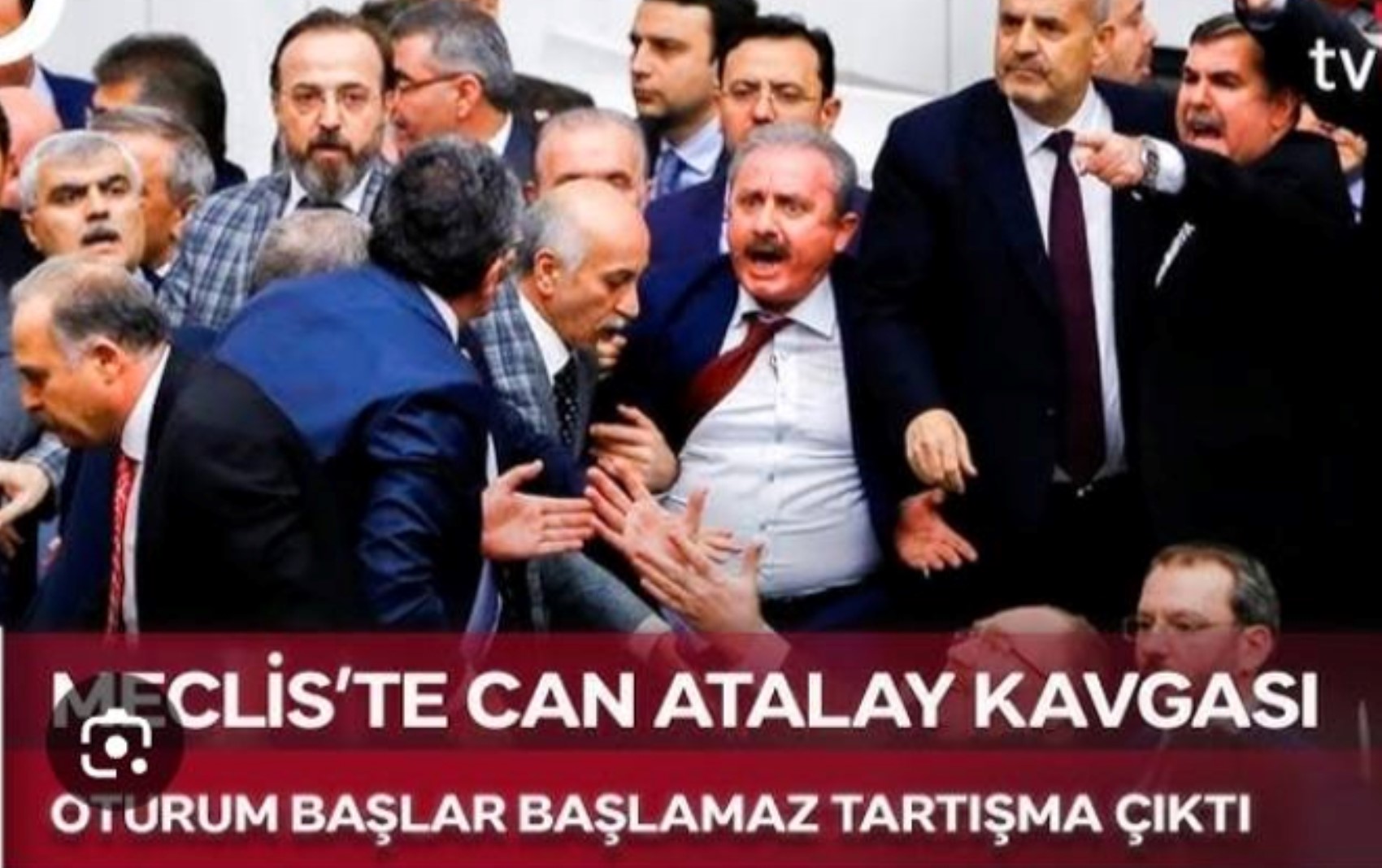
THE TBMM PRESIDENCY HAS A DUTY TO PROTECT THE LAW OF THE MEMBER OF THE LEGISLATIVE ASSEMBLY
The Grand National Assembly of Turkey is the name of the supreme will that founded the state and the republic.
The “Article 14 of the Constitution, the non-abuse of fundamental rights and freedoms,” which the relevant criminal chamber of the Court of Cassation showed as the basis for why Can Atalay should not benefit from legislative immunity, is related to this. For this reason, the normative sphere is different. The article in no way carries a meaning that would require the continuation of Atalay’s detention.
Furthermore, this article states, “The sanctions to be applied to those who engage in activities contrary to these provisions shall be regulated by law.” For these reasons, I find the decision made by the appellate authority regarding the “elected member of the legislative assembly” contrary to the principle of the rule of law. It is unacceptable that an elected MP is not released before a final judgment decision is made against them.
Membership in the TBMM has been a highly valued status since the First Parliament. Since 1920, the TBMM, while protecting its own member, is actually protecting its own legal personality.
Parliamentary membership has been carefully protected by the Speaker of the Parliament and the general assembly. The only exceptions are “treason and joining the enemy.”
Until the Democrats came to power in 1950, immunity files were handled entirely with judicial considerations. Files were mostly postponed until the end of the legislative term.
In the national struggle, early republic, and single-party periods, the practice of the parliaments was generally in this direction.
FROM 1961 TO THE PRESENT TBMM PRESIDENCY
The TBMM presidency is a position where there is no room for partisanship. Of course, the person sitting in this position is a party member. In all likelihood, this person belongs to the majority party.
From 1961 to 2002, TBMM speakers were chosen from among respected names that the opposition could also accept. The chosen names also tried to pay attention to their neutrality positions due to the constitution and parliamentary customs.
I can show you two example names on this subject: Ferruh Bozbeyli and Cahit Karakaş.
MPs elected to the parliamentary presidency minimize their relations with their own party due to the constitution, internal regulations, and customs. They took care to act above politics.
The AKP government has increasingly moved away from the established practices of the republican parliaments in this regard as well. The partisan presidential attitude that began with Bülent Arınç became even more evident during the İsmail Kahraman and Mustafa Şentop periods. It was carried to the peak during the Numan Kurtulmuş period.
Some of the attitudes and behaviors of AKP speakers are sufficiently meaningful in terms of understanding their understanding of neutrality. If you remember, Arınç had said, “We will elect a religious president.” And he was elected. As for İsmail Kahraman, as he has stated on various occasions, Kahraman is “openly” against secularism. This means saying I am against one of the founding principles of the republic. If Kahraman has a republic, it is at most a “theocratic republic.” A name with such an ideology has been brought to the presidency of the parliament that founded the republic. Mustafa Şentop, with the article he wrote, showed the success of interpreting the provision “a president cannot be elected for more than two terms as shown in the constitution” as “three or perhaps more.” Şentop also produced a very interesting concept in his article: “resetting the term of office.”
A brief look at the political career of the incumbent speaker Kurtulmuş is enough to understand how he got there. Until 2012, Kurtulmuş was a fierce AKP opponent. I recommend you take a look at the videos chronologically to see the difference between the opposition Kurtulmuş and the Kurtulmuş who closed his party and joined the government. Perhaps this is the politics that we don't quite understand.
Kurtulmuş’s TBMM presidency has been a period where the distance from the executive has not been maintained even in form. I have difficulty defining Kurtulmuş with the identity of TBMM speaker. He leaves an impression more like an AKP deputy speaker.
The Constitutional Court decisions regarding Can Atalay’s TBMM membership also bind him as the Speaker of the TBMM. He should have “immediately fulfilled” the requirements of the decisions. Instead, he joined the executive and government judiciary front. It is difficult to explain this situation legally. I think it is possible to understand the reasons for all of this from the stages of his political life.
Kurtulmuş, instead of protecting the law of the TBMM member that should be protected due to the Constitutional Court decision, has joined the front of expelling him from the Parliament.
On this subject, only one person was very aware of what the government was doing: AKP deputy speaker Bekir Bozdağ. In front of the Presidential Council, there was a letter that had come in a way contrary to the constitution, internal regulations, and parliamentary procedures. The expression that covered his face while he was reading this letter was fear beyond anxiety. Because he knew very well that the work they were doing was unconstitutional.
DID A CONSTITUTIONAL CRISIS REALLY HAPPEN?
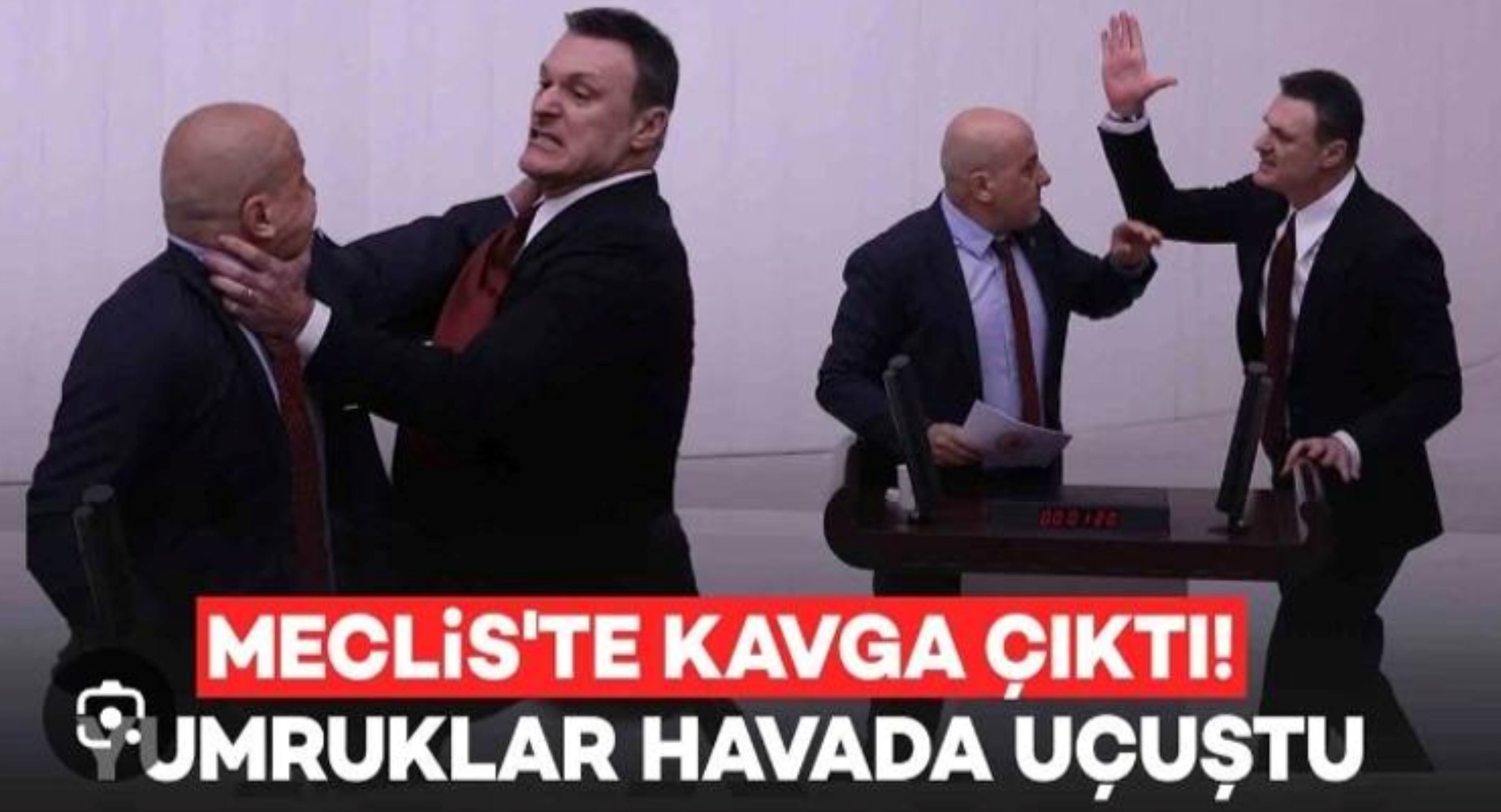
The Constitutional Court is not responsible for the “Constitutional crisis” that is said to have arisen between the AYM and the Court of Cassation. If there is such a crisis, the political government is responsible. The government, by positioning itself behind the Court of Cassation, has tried to create an atmosphere as if there is a jurisdictional dispute between two high courts. The AYM has made decisions within its authority. The appellate authority, on the other hand, has exceeded its authority.
DOES CAN ATALAY HAVE LEGISLATIVE IMMUNITY? OR NOT?
Can Atalay was elected as a Hatay MP in the elections held on May 14, 2023. He gained parliamentary immunity from the moment the election results were officially announced by the YSK. There are some different thoughts in public law about the moment from which the parliamentary status is gained. The view I am close to: it is not the moment the election certificate is created. It is not joining the parliament or taking the oath either. These are complementary procedures. The official announcement that the candidate has been elected is the moment the “elected MP” acquires “legislative immunity.” I think so.
As a result, the failure to release Can Atalay, who was elected as an MP in the 28th Term, is contrary to the principle of “the manifestation of the national will.” As of today, the legal situation is as follows: Hatay MP Can Atalay is in the hands of the executive in a way contrary to our Constitution and parliamentary law. This is a de facto situation. It has no legal basis.
READING OF THE CONSTITUTIONAL COURT DECISION
The decision to strip the parliamentary membership, which Bekir Bozdağ had read on January 30, 2024, was taken to the AYM by the TİP, CHP, and Atalay’s lawyers. On February 22, 2024, the Constitutional Court made the following decision with 10 votes to 4: “Stripping the parliamentary membership despite the violation of rights is null and void.”
The AKP Speaker of the Parliament and the AKP deputy speakers resisted to the end so that the AYM decision would not be read from the TBMM Presidential Council.
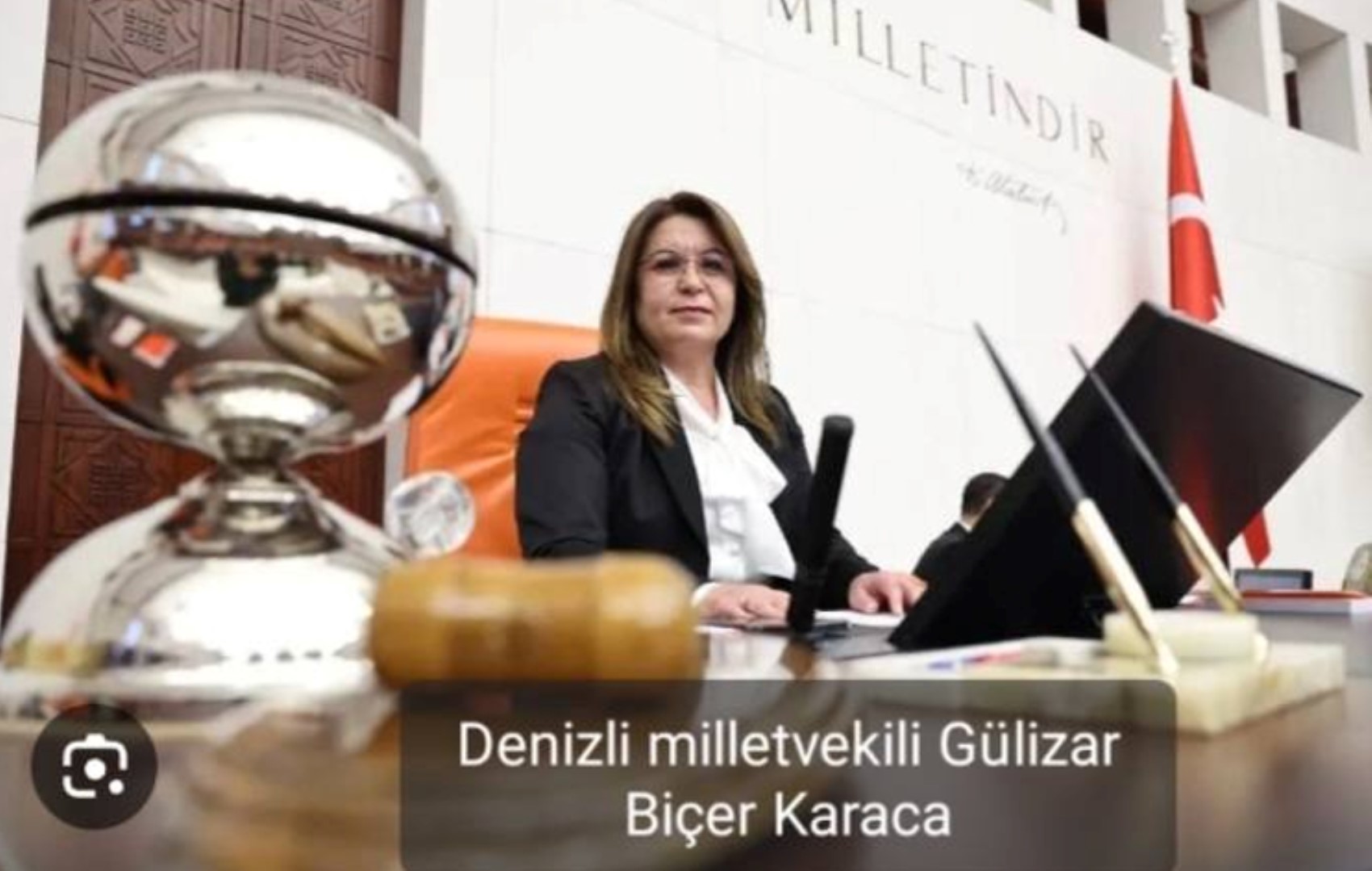
Numan Kurtulmuş did not take into account the CHP’s meeting calls with the agenda of Can Atalay’s parliamentary membership. However, “beautiful historical moments” also happen in the TBMM. Opposition parties also preside over the TBMM as deputy speakers according to the internal regulations. Thanks to this, the policy of not reading the decision, which the government carried out through Kurtulmuş and Bozdağ, was overcome by the CHP deputy speaker. CHP deputy speaker Gülizar Biçer Karaca had the decision made by the AYM regarding Can Atalay read from the TBMM Presidential Council on April 16, 2025. With the reading of this decision in the General Assembly, Atalay’s parliamentary membership was registered in a way that leaves no room for doubt.
IN MY OPINION, HOW MUCH HAS TURKEY REGRESSED?
In my opinion, the “file was walked around” to avoid implementing the AYM decision. Whereas, AYM decisions bind the legislative, executive, and judicial organs. One cannot say “I do not comply with the Constitutional Court decisions. I do not respect them either.” It didn’t stop there. A first in our republican history was experienced. The Chamber to which the file was last sent filed a criminal complaint against the members who voted in favor of the Constitutional Court decision. The fact that the event took on such an aspect shows where the judiciary in Turkey has come to in the “102nd Year of the Republic.”
The Turkish Constitutional Court is a “Supreme Court” that performs regime adjudication. The meaning of constitutionality review is this in my opinion. The AYM does not make a decision by replacing any judicial place. It makes decisions about decisions. Whatever the requirement of that decision is, the relevant authorities and bodies fulfill it.
In this event, the addressees of the decision are the TBMM Presidency, the Executive, the court of first instance, and the appellate court.
I have been thinking for quite some time that there is no legal security in Turkey. At first, I thought that we had regressed to 1876 because the powers of the legislative assembly were pruned in the transformation of Turkey’s political regime. As arbitrary arrests increased, I began to think that our situation had probably gone “backwards from the principle of legality.” This means “Pre-Tanzimat.”
Unfortunately, the final point I have reached is this: Since 2007, the political government seems to be in an effort to make the rights of the “nation’s elected deputies” stemming from the constitution almost dysfunctional. Since the adoption of the “1689 Bill of Rights,” the most important rights of a parliament member have been “freedom of speech and immunity from arrest,” and these rights are also among the fundamental principles of liberal democracy. These principles, which are carefully protected in all parliaments of the free world, have been increasingly trivialized over the last 20 years, and after the 2017 Constitutional amendment, they have been reduced to almost non-existent for the opposition segment. With the hope that the TBMM will protect its own law.
Most Read

Striking picture for Özgür Özel's 'New Party'

The PKK opening and Özgür Özel’s path!..

How did the newspapers view Özgür Özel's farewell to the CHP?

He killed his wife by slitting her throat: Their children witnessed the moments

What did the CHP do?

Özel’s new party move in the world press

The New CHP, against CEHAPE

Fire at TUSAŞ engine factory in Eskişehir under control

From self-efficacy to despair

Kılıçdaroğlu's first message on Özgür Özel's new party announcement