



ON BAYKAL'S POLITICAL CAREER
In this article, the background of Baykal's election as the fourth chairman of the CHP is examined, from 1995 to 2010 the ongoing ups and downs of the CHP leadership will be the subject of a separate article.
Baykal had certain advantages as is well known: handsome, charismatic and his oratory was strong. He had graduated from Ankara Law School, passed the assistantship exam at Mülkiye, completed his doctorate, and became an associate professor of political science.
With his academic background and powerful oratory, he was suited for was extremely suitable. Baykal would make a party leader, and he did.
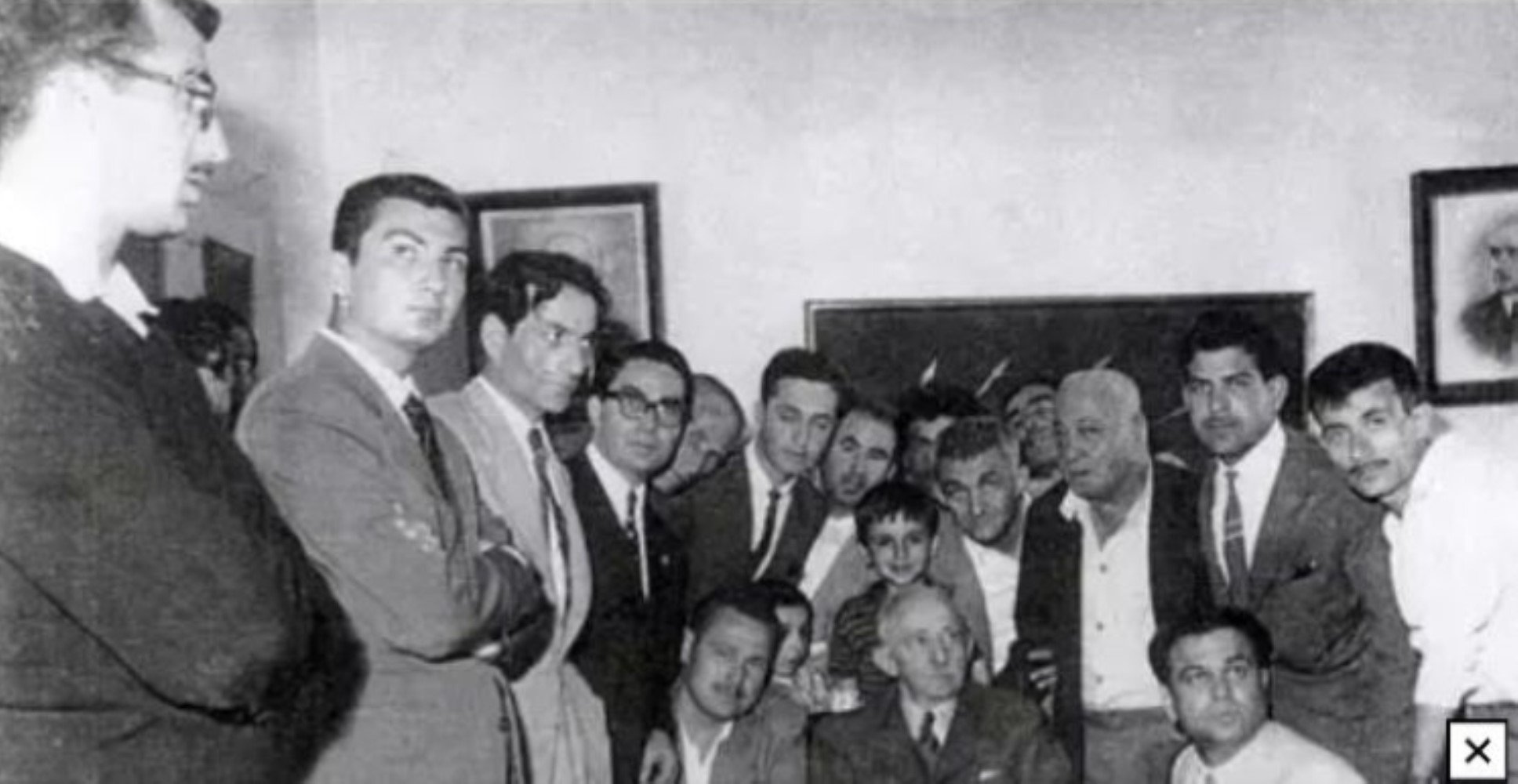
In a photograph taken at the CHP headquarters in the summer of 1960, we see Baykal among the university students visiting İsmet Pasha. Born in Antalya in 1938, Baykal was 22 years old at that time. Just 13 years after this photograph, Baykal (1973) was elected as a member of parliament.
He had been favored by Ecevit, accepted by the party elite, and the rising wave of the Left of Center had carried him to the Grand National Assembly of Turkey.
Before the September 12 coup, Baykal served as a minister twice in Ecevit's governments. However, he wanted more than what his political style, demeanor, and actions provided. was clear.
My estimation is that, even though he was taken under the wing of Bülent Ecevit and elected as a member of parliament, he did not think much of Bülent Bey. To put it another way, Baykal, of the party leader experience found it weak.
Ecevit, especially after the 1977 elections after in the party the strongest faction He saw that they were Baykal supporters. He understood that Baykal wanted the chairmanship seat. Because he himself had also traveled the same paths. To İsmet Pasha 18th. He had rebelled since the Congress and became the leader of the Ecevit supporters.
Coming from this path, on May 14, 1972, he toppled İnönü at the Congress and was elected as the third chairman of the CHP. The same thing happened to his own could have happened to him as well.
WHERE AND HOW DID I SEE DENİZ BAYKAL?
I only saw Baykal once. That was at Isparta Süleyman Demirel University. at an international symposium he organized. He had been invited as a guest of honor. The date must be 2008 . I also saw Andrew Mango at the same symposium. In the lobby of the hotel where we were staying, Mango's in his conversation I was one of those present.
Baykal gave a very impressive opening speech at this meeting. Why [was there] an academically oriented meeting I later understood that I was invited. The university rector, orthopedist Metin Lütfü Baydar, was elected as a CHP member of parliament for three terms.
There was no doubt that Baykal was a good speaker. Based on my observations, I can say that Baykal he enjoys being in the opposition he was enjoying this.
BAYKAL'S DOCTORAL AND ASSOCIATE PROFESSORSHIP THESES
Baykal in 1963 defended his doctoral thesis at the Ankara Faculty of Political Science. In 1961
to the academy two years after entering. In an article examining the doctoral and associate professorship theses completed at the Faculty of Political Sciences, it is noted that he began his doctorate in 1959. was written. A graduate of Ankara Law, Baykal immediately after graduation enrolled in a doctorate program at the neighboring faculty. Ms. Olcay was also at the Faculty of Political Science Finance Still an undergraduate student in the department. Baykal's doctoral thesis title: Political Elite Theory (Field: political science, defense date: 14.10.1963) His associate professorship thesis is dated 1968 and it would bear the title "Political Participation: A Behavioral Study."
At the same time, Mete Tunçay was also one of the young academics at Mülkiye in Ankara. In 1961, with a thesis titled "The Concept of Autonomy" he completed his doctorate, and Professor Mete, in 1966 "Left-wing movements in Turkey" and will become an Associate Professor. will be.
As can be understood from the dates, Baykal when he was accepted into the academy Mete Tunçay was an assistant who had completed his doctorate. By the associate professorship stage, Baykal, Mete Tunçay appears to have quickly closed the gap.
BAYKAL'S ACADEMIC CAREER WAS AN INVESTMENT IN POLITICS
Baykal's 1968 associate professorship thesis for the CHP that he conducted from a research project was produced. A practical and goal-oriented path. Both for recognition within the party and in terms of an academic career a quite useful approach.
Baykal's thesis in 1970 was published. As an AÜSBF publication.
In summary, in 1961 at Mülkiye as an assistant entering Baykal completed his doctorate in 1963 and became an associate professor in 1968. In 1973, he was an Antalya member of parliament. When he became Minister of Finance in the CHP-MSP coalition, he was 35 years old.
ECEVIT'S ACADEMIC CADRES AND BAYKAL'S PLACE WITHIN THEM
Ecevit, after 1968, against the "right-wing Atatürkism" line in the party launched a fierce offensive. This would lead to a split in the party. The Republican Reliance Party was born out of this ideological crisis. The movement initiated by Ecevit was a 'Left of Center' opening against elitism. Ecevit was an anti-elitist was actually elite. This created contradictions within itself.
The populist Ecevit discourse's content could not be filled in a very meaningful way. In this article, Ecevit's populism productive forces, means of production and at the level of class relations I will not touch upon his abstract diagnoses. In my opinion, Ecevit's leftism was idealistic.
But still, I cannot pass without mentioning it in one sentence. In the 70s, Demirel accused Ecevit of being a Marxist. was accusing. This was not true. If you ask me, Ecevit's mind was confused. When his words and writings are examined carefully, it can be seen that he said things close to the Second Republicanism theses that emerged after 1980.
At the 1972 Convention İsmet Pasha Ecevit, who brought an end to the era of, had established a broad delegation of academics that included Baykal. The party would win elections and reach out to the public through science.
This the staff was mostly recruited from the professors of the Ankara Law and Political Science faculties. I can immediately mention a few names that come to mind. Gündüz Ökçün, Haluk Ülman, Besim Üstünel, Turan Güneş, and Deniz Baykal. There are, of course, other names as well.
These names were elected as deputies and senators. They were appointed to ministerial positions in Ecevit governments. Baykal was elected as the deputy for Antalya in the 15th and 16th terms. He served as Minister of Finance and Minister of Energy did.
DURING THE SEPTEMBER 12 PERIOD BAYKAL
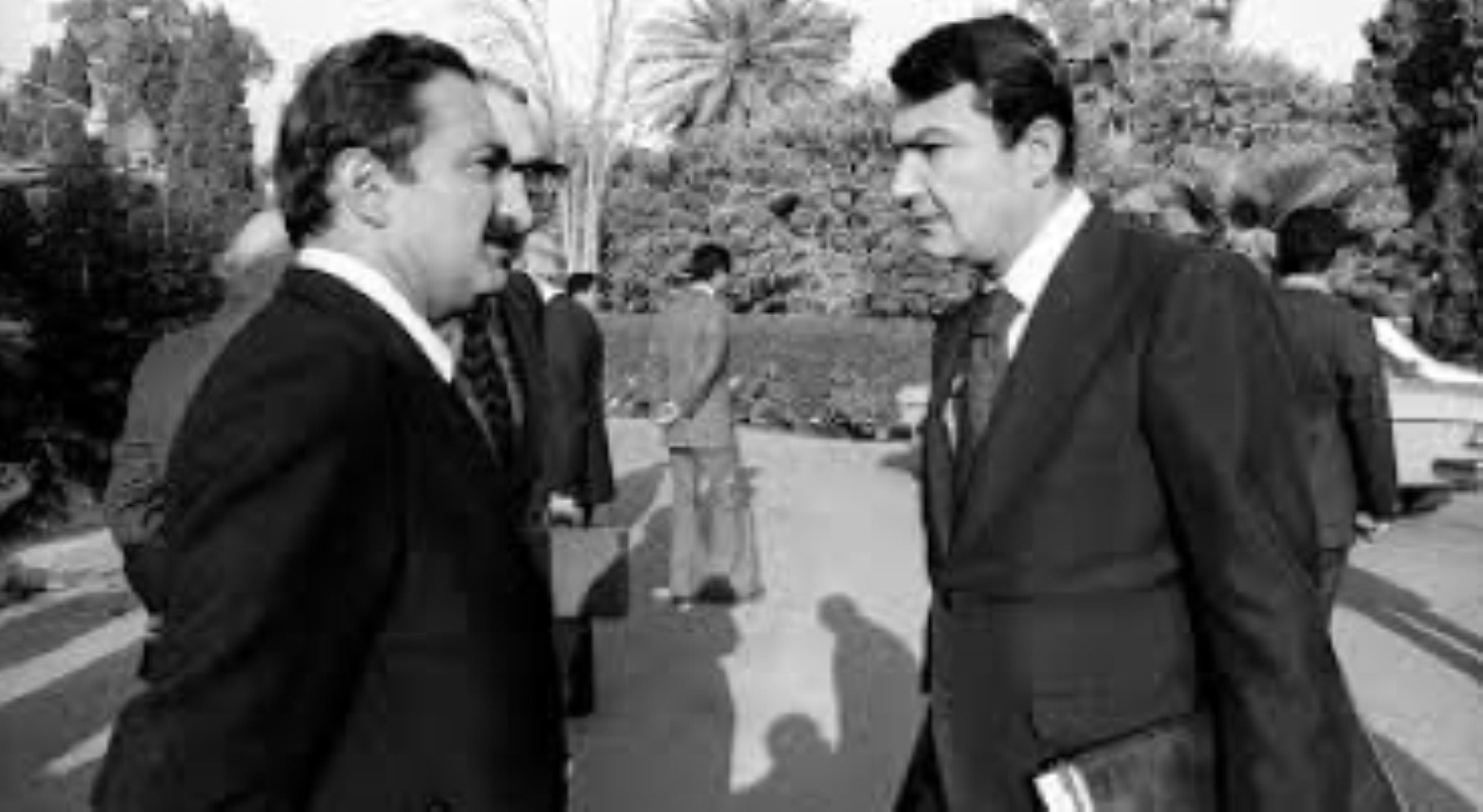
After the September 12 coup, Demirel and Ecevit were in Hamzakoy, while Erbakan and Türkeş were in Uzunada by the TSK (Turkish Armed Forces) were placed under "guarantee." This phrase was used in official statements. In fact, this expression political party leaders were interned, meaning they were being held in custody.
The politicians deemed dangerous by the National Security Council (MGK) were taken under surveillance at the Ankara Language School. Baykal was one of them. Regarding them public prosecution those against whom cases were opened remained there in detention. For example, Alparslan Türkeş. Baykal a few months later was released. The NSC administration regarding Baykal thought as follows I think he is "dangerous but has no crime to be charged with" release him but keep him under surveillance.
Ecevit during this period for his future political life including investment to the military regime defiance attempts. He made attempts to publish the Arayış magazine, to publish, to the foreign press giving statements, attempting to hold a press conference, failing to comply with the National Security Council (MGK) and Martial Law Command directives, and attempting to announce his resignation from the CHP chairmanship to the public via a declaration, among others.
Due to these actions, he also went to prison twice. For short periods. The junta gave Ecevit a short-term warning. was having the sentences handed down. He did not go any further.
Ecevit also, from the position of the leader imprisoned by the junta, did everything in his power to maximize the benefit. His letters which he had printed on prison-letterhead paper was writing. This was a political demonstration.
Demirel because he was smarter than all the politicians took to the trenches. The time's began to wait for it to come. Baykal would act just like Demirel.
AFTER SEPTEMBER 12 BAYKAL
When the September 12 coup took place, we saw Baykal adopt a Demirel-style attitude. Unlike Ecevit. This meant waiting for the time to come and for favorable conditions to emerge. to wait.
The 1982 Constitution had imposed a series of bans on the old political elite. The junta was intent on creating a reliable political elite. For this reason, the teams of Demirel and Baykal defined as an attempt to infiltrate politics, was met with a violent reaction by the National Security Council. Even under the existing legal order, they were sent to the not-so-new "Zincirbozan Exile."
Zincirbozan the letters that Demirel and Baykal sent to the presidency of the National Security Council (MGK) during their days of exile are significant in terms of Turkish democratic history. Both politician also Turkey's two-hundred-year-old rule of law struggle, after the Habeas Corpus Act behind a level indicated that it had fallen .
Nevertheless, the exile regime was successful. The parliament and the government, with the approval of the MGK, a was formed in this manner. Power was handed to Özal's party. (1983)
NATIONAL SECURITY COUNCIL DECISIONS AND THE ZİNCİRBOZAN EXILE
The NSC, the constitution and fundamental after enacting all the laws, it initiated the calendar for a return to multi-party political life. This meant the beginning of a period where there was relative freedom under military regime conditions.
The constitution contained categories of 5 and 10 year bans for former political cadres. The Council, only He had found a formula to save Turhan Feyzioğlu.
The group of politicians that Deniz Baykal was a part of (members of the Grand National Assembly of Turkey between 1977-1980) were banned from politics for 5 years had been banned. In practice, this ban only meant being unable to be a candidate or to be elected. It meant.
The implementation of the other bans was practically impossible. The National Security Council (MGK) sent the old politicians who tried to undermine the new regime to the Zincirbozan Military to its facilities. exiled.
This time the name of the practice would be "being subjected to mandatory residence" it would be. This was actually the Ottoman "nefy" (exile) was its punishment. In reality, however, military regime's sterile politics against the attempt of the old guard to infiltrate the sphere it was a junta precaution.
of the MGK Decree No. 79 gathered 16 former politicians in Zincirbozan. This was a kind of internment camp. (June 2, 1983)
Among these names were Süleyman Demirel, Sadettin AP members such as Bilgiç, İhsan Sabri Çağlayangil, Hüsamettin Cindoruk, Nahit Menteşe, Mehmet Gölhan, Ali Naili Erdem, and Ekrem Ceyhun along with AP members and Deniz Baykal, Süleyman Genç, Sırrı Atalay, Yüksel Çakmur, and Celal Doğan as well as CHP members too existed.
Baykal, the Zincirbozan exile was, by the military regime's own established transition process legislation, contrary that it was very solid legal arguments proving it with a petition-letter he wrote. He submitted it to the National Security Council.
In the petition, Baykal stated that decision number 79 was a de facto arrest, and that it was without an indictment, without a defense, without a trial, unlawful and unauthorized, and a decision made by an entity other than a judicial body. wrote. This decision and the Council's violation of the current constitution he said. He was extremely right.
Baykal his petition “in Europe 700 years ago Magna Carta and Habeas Corpus Act, guaranteed fundamental rights in 1983 Turkey were being violated,” he said, concluding.
FROM SEPTEMBER 12 TO 1992 POLITICAL PARTIES
I would like to start this heading with a memory that is very important to me.
My late father had voted for the Democrat Party and the Justice Party throughout his life. As you can understand, he had supported Menderes and Demirel. I used to get angry at my father. But as the years passed, I understood him very well. The issue was class a matter of consciousness.
The September 12 regime (which meant Kenan Pasha) because it stopped the bloody acts of violence and established public order had supported it. The violence had ended and their children without worry to their schools were able to go. The country's current totalitarian peace and an environment of security was being mentioned. The severe oppressive regime and lack of freedom in the country were not very important from my father's perspective.
The day came. The National Security Council shut down all political parties whose activities had been suspended. Including the CHP. Regarding the closure of the CHP my late father reacted in a way I never expected: 'Look, this just wasn't right, Pasha...' he said. He was angry at this decision by the Evren regime. 'That was Atatürk's party,' he said. He was referring to the closure of his own party (AP) closure was showing consent but did not find the closure of the CHP legitimate. There was loyalty to Atatürk in this reaction. As time passed, I understood this reaction of my father very well. I understood.
Ultimately, the CHP was also closed down became one of the parties. The Six-Arrow signs were removed, and provincial and district organizations were sealed.
The National Security Council with this brand new political actors, political parties could be created, it had thought. But this was contrary to the nature of politics.
Özal and General Sunalp became the politicians who benefited the most from this destructive decision. While the National Security Council (MGK) claimed they were completely erasing the past, power fell into the hands of Turgut Özal, a former MSP member and a follower of the Naqshbandi order. General Kenan and his associates approved this.
However, as the regime normalized, the political parties of the past began to emerge under different names and emblems. The National View (Milli Görüş) supporters founded the Welfare Party (Refah Partisi), the MHP supporters founded the Nationalist Work Party (MÇP), and the CHP supporters founded SODEP and the Populist Party (Halkçı Parti).
The CHP's third chairman, Ecevit, had Rahşan Hanım establish the DSP and closed the door to the others. The closed Justice Party was continuing its path under the caretaker chairmanships of Dr. Yıldırım Avcı and Hüsamettin Cindoruk. These figures were Demirel's loyal men. They were managing the party on his behalf.
Starting from 1987, in Turkish politics under new names continuing their activities, the old political parties (CHP, AP, MSP, MHP) SHP, DYP, RP, MÇP with their legal entities were present in the political arena. This front the architect of the regime, Evren, and those who benefited from him took positions against the ruling party, ANAP, and Özal. All dynamics in politics changed. The old guard entered the field. To overcome legal obstacles "fabricated" party names politics continued until 1991. The ANAP fell from power. Conditions changed even further.
Following the law that allowed the reorganization of closed parties, Demirel and Erbakan did not prioritize their former party names. The DYP, accepted the Justice Party emblem with minor changes. This was the 'Kırat' (White Horse). In other words, 'Demirkırat' (Iron Horse).
The National View (Milli Görüş) supporters were not interested in the re-establishment of the MSP. It was already well known who was who in that camp. The name and the emblem were not important. They were Islamists. One day, the Just Order they claimed they would establish. The transformation of the MCP into the MHP also happened very easily. The 'Başbuğ' (Leader) returned with ceremonies.
In 1991, Alparslan Türkeş and Aykut Edibali By forming an electoral alliance with Erbakan (under the Refah umbrella) they entered parliament, and then returned to their own parties.
But for the CHP members the situation was different. For this reason: In parliament de facto A party that was the CHP already existed. This was the Social Democratic Populist Party (SHP), of which Erdal İnönü was the chairman. This party formed the main body of the center-left. Ecevit, the third chairman of the CHP, by saying, "I am a democratic leftist. I am not a social democrat," was vetoing the negotiations for unity on the left from the very beginning.
In my opinion, Ecevit's issue was entirely emotional. The general during his chairmanship through delegate maneuvers trying to blockade him factions, especially towards Baykal the hatred he felt was the main reason for his attitude.
BAYKAL AGAIN IN PARLIAMENT (1987)
The 1983 elections resulted in the formation of a parliament that was authorized by the military regime. It was an election held with the fewest number of political parties in the history of Turkish democracy. an election was held. With these elections Under the tutelage of the Council with a double veto and thresholds, ANAP came to power. Or rather, was brought to power.
Thanks to the double-threshold veto system, international capitalism The ANAP of Özal, the representative of Turkey, took over power.
In Turkey, Özal, who was presented as a civil society advocate and liberal democrat, was extraordinarily opposed to the bans. was satisfied. However, all of the bans could have been lifted immediately together with the main opposition party, the Populist Party.
Özal, regarding the bans stemming from the temporary Articles 1 and 4 of the Constitution, called them "national of the will had decided” saying, and was positioning itself behind Kenan Evren.
Until 1987, the opposition political parties' struggle eventually the constitutional amendment lifting the bans was enacted. Özal, before the ballot boxes had even closed, called a snap election made the decision.
Deniz Baykal, on September 12, 1987, returned to the Grand National Assembly of Turkey (TBMM), from which he had been dismissed, with this election. He was once again a deputy for Antalya. This time party was the Social Democratic Populist Party. The party's name was intended to resemble the CHP and so, contrary to orthographic rules, it was written as Socialdemocratic Populist Party.
In the 'new politics' where the names and emblems of the old political parties could not be used, the two center-left parties, SODEP and the Populist Party, of the Constitution's Article 84 overcoming winding paths, they had merged under the legal entity of the SHP.
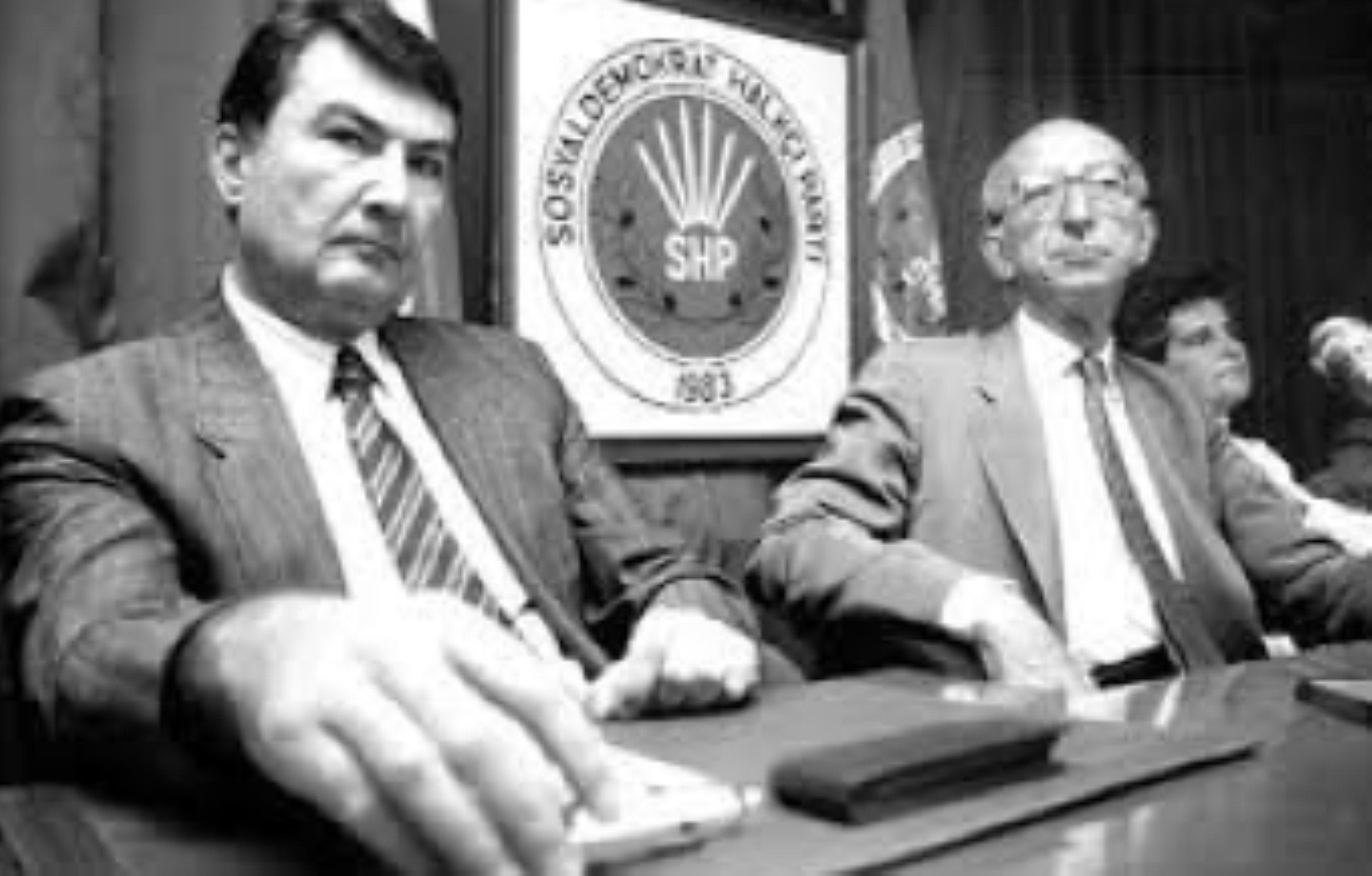
With the resignation of Aydın Güven Gürkan, Physics Professor Erdal İnönü had become the chairman of the SHP. Baykal was İnönü's chairman Antalya deputy of the SHP, which he was a member of, became.
Baykal from 1973 onwards considered himself worthy of the CHP chairmanship. This is certain. This time, the SHP chairmanship that he was the most suitable name for it, he must have thought.
Erdal İnönü met Baykal's ambition with democratic smiles of tolerance, not caring at all. A similar situation could certainly never be the case for Ecevit. What Baykal had truly wanted since the 1970s was the seat of the Gazi. Baykal,
the chairman's undermining. through factional politics, he first became secretary general. Afterward, he ran against İnönü three times. He lost.
İnönü, at the conventions, would say, “I am not that eager for it. If you want, I will leave” tone. The delegates were satisfied with Erdal İnönü’s tension-free chairmanship. They re-elected him again and again. Not Baykal.
For a very simple reason. The force holding the party together was the "İnönü" surname.
The situation had become crystal clear. Unless Erdal İnönü stepped down from the chairmanship, no matter what Baykal's charisma was, the Grand Congress, He was going to choose Inönü. Baykal party retains his power within the organization but chairman could not be elected.
CONDITIONS CHANGING - THE CHP IS BEING RE-ESTABLISHED
The referendum held in 1987 in Turkish politics had shifted many balances. Even though it was regarding the majority required to amend the constitution, a very important trump card Even though it provided an advantage to Özal. The AKP would later benefit from this opportunity and change the regime.
Despite this, in 1987, Özal thanks to an electoral system that extraordinarily distorted the justice of representation (36% of the vote for nearly 2/3 of the Grand National Assembly of Turkey members) In 1989 he ascended to Çankaya.
However, this situation created problems regarding the party he left behind. Eventually, the party leadership remained with Mesut Yılmaz.
Mesut Yılmaz, rightfully Özal's de facto presidential regime in order to bypass Demirel and İnönü by reaching an agreement with early general went to the election.
THE RE-ESTABLISHMENT CONVENTION
The first coalition in Turkey was formed in 1961. At that time, the AP and the CHP did not define themselves as right-wing or left-wing. The coalition was realized according to the protocol signed by İnönü and Gümüşpala.
Thirty years later, and after Turkish politics went through quite a few trials, these two deep-rooted traditions, this time under the identities of DYP and SHP formed a coalition. Demirel became Prime Minister, and Erdal İnönü became Deputy Prime Minister. (1991)
The most significant action of this government in terms of our political history is the reopening of all political parties that had been shut down throughout the history of the republic. the enactment of the law that allowed the re-establishment of the parties.
According to the law, the closed parties could convene with the members from their last grand congresses party authorized organs would be formed; in this way the dissolved party would regain its legal personality. The party's assets that were transferred to the treasury when it was closed would be able to reclaim it.
The CHP, based on Law No. 3821, on September 9, 1992, regained its legal personality.
Enthusiastic and the party's third chairman, Bülent Ecevit, only sending a congratulatory telegram to the convention was regrettable. With his message, Ecevit Republican People's Party it does not concern me was what he meant to say. However, it should have concerned him. Ultimately, the convention against Erol Tuncer was won by Baykal.
PRESIDENCY AND LOCAL ADMINISTRATION ELECTIONS
The law that allowed for the re-establishment of political parties that had been closed in 1992 gave Baykal and his team the opportunity to take control of the CHP leadership opportunity provided.
Baykal and İsmail Cem formed an alliance to organize a political focus around their own leadership. they wanted.
This project did not seem realistic at first. Even if the CHP were established despite the legal personality of the SHP, what could it achieve? This is another reality, but the center-left was shrinking instead of growing as it gave birth to new parties.
After the CHP was re-established With the deputies who left the SHP and joined the CHP, a small group was formed in parliament. Here, the term group refers to parliamentary law context. The party's first election experience was in 1993. presidential election took place. The CHP nominated İsmail Cem. This was, of course, a symbolic act aimed at proving the party's presence in parliament. The vote İsmail Cem received against Demirel in the third round only 27 would be.
The first election in which the CHP participated was the presidential election held following the vacancy left by Özal's death.
The CHP, which still had a small group, of the coalition partners DYP and SHP fielded İsmail Cem against their joint candidate, Süleyman Demirel. The result was determined in the third round. The distribution of the votes was as follows: Süleyman Demirel (244), Kamran İnan (94), Lütfi Doğan (47), İsmail Cem (27)
The CHP's first real election test was in 1994 local government elections. These elections the approaching Islamism danger very clearly in a way had shown. On the right and the left the division paved the way for Gökçek in Ankara and Erdoğan's election in Istanbul.
The general local elections held in March 1994 showed that the CHP, under Baykal's leadership, had fallen behind the SHP and the DSP. The CHP was the last-place party on the left. CHP He nominated Ertuğrul Günay in Istanbul and Korel Göymen in Ankara. Neither candidate was able to make an impact. The splitting of the votes led to the Welfare Party winning everywhere.
The results across Turkey let's take a look if you will: let's take a look if you will: DYP 21%, ANAP 21%, RP 19%, SHP 13.6%, DSP 8.8%, CHP 4.6%.
The situation was dire. They were losing everywhere. Following this, the SHP and CHP decided to merge under the doyen-arbitration of Hikmet Abi (Hikmet Çetin). The merger was to take place under Atatürk's Six-Arrow emblem.
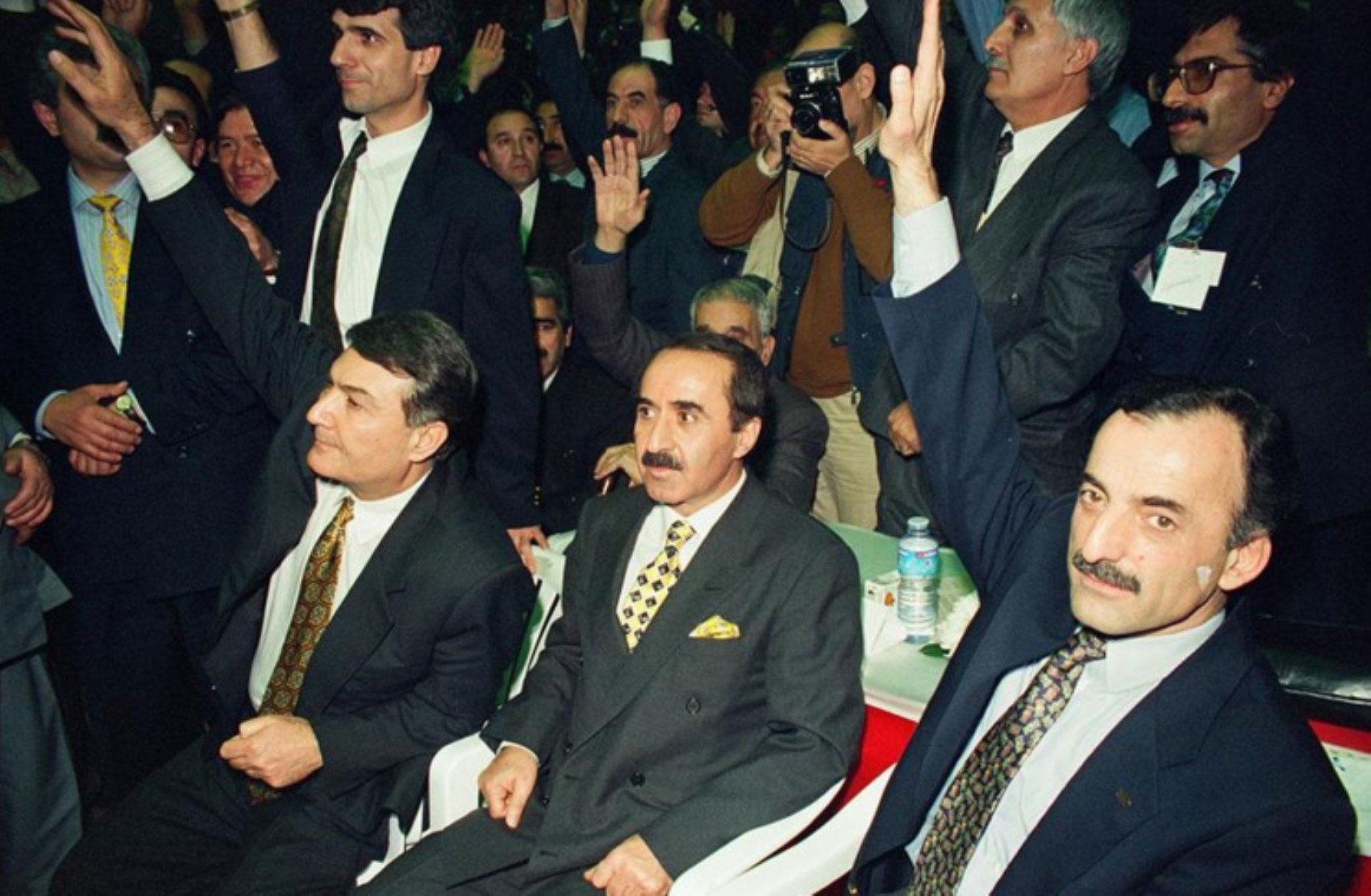
A few months later, at the party congress held to determine the new CHP party administration, there was a democratic but fierce competition. Baykal won the election. Once again he became the chairman of the CHP. Now there was only one party: the Republican People's Party (CHP), and the leader elected by the convention was Deniz Baykal.
However, it was evident that the center-left voters were not giving any special credit to Baykal's leadership. In the first general election (1995), the CHP under Baykal's management barely passed the threshold by a very small margin surpassing the threshold to enter the Grand National Assembly of Turkey: 10.5%. Voters who lean left gave the DSP, which gave the impression of an Ecevit Fan Club, put him ahead of Baykal. 14.5% I also voted for Ecevit in that election. When we look at the total vote nothing had changed. 25%. This meant that the CHP was even falling behind the 1969 election.
THE MURAT KARAYALÇIN FACTOR
After Demirel ascended to Çankaya, Erdal İnönü also announced that he would leave politics. This statement It meant that the pieces in the DYP and SHP had to be rearranged. Murat Karayalçın, who was elected
Mayor of Ankara from the SHP in 1989, drew attention with his successful municipal governance. was gathering on him. After Erdal İnönü, it was understood that there was a broad consensus regarding his election as the party's chairman. The effect of this positive atmosphere and Murat Karayalçın was elected the second chairman of the SHP. September 11, 1993. Karayalçın remained as chairman until the merger congress held on February 18, 1995. (SHP-CHP unification congress)
In the meantime, I would like to remind that the CHP formed a small group in the Grand National Assembly of Turkey (TBMM) with the deputies who left the SHP. Towards the end of the 19th legislative term with new memberships, the number of CHP deputies rose to 42.
1994 IN THE FACE OF ELECTION RESULTS THE MERGER OF SHP AND CHP
SODEP-HP in 1985 brought together by the merger the left was divided once again with the establishment of the CHP in 1992. On the left, Ecevit (DSP), who vehemently rejected proposals for unification, was frequently criticized and called a "divider".
Already unable to rise above 25 percent, the left was now divided not into two, but into three. Once again, the necessity of coming together was clearly evident.
Despite the 1994 results There was no refusal from the Ecevit front. Leaving him to his own fate, the SHP and CHP decided to merge. The decision was correct. The two parties were to come together under the legal entity of the Six Arrows.
Karayalçın and Baykal did not run as candidates at the merger congress in favor of Hikmet Çetin. "Brother Hikmet" managed the party until the first congress: February 1995-September 1995.
Between September 9-10, 1995 at the 27th Ordinary Congress, Baykal emerged victorious against Karayalçın.
The DYP-SHP coalition became the DYP-CHP coalition. The coalition of the on its left wing there had been significant changes, the chairman and the party's legal entity had changed. Baykal made Çiller call for early elections. The elections were held on December 24, 1995.
The parties entered parliament in the following order: Welfare Party (Refah Partisi) 21.8%, DYP 19%, ANAP 19.6%, DSP 14.5%, CHP 10.5%. The CHP fell behind Ecevit's party. It was able to become the last party to enter the Grand National Assembly of Turkey.
The CHP chairmanship that Baykal CHP had desired with great enthusiasm did not benefit the party, and the party was only able to enter parliament as the fifth-largest party.
TWO OBSERVATIONS REGARDING BAYKAL: Bahri Savcı AND WHAT I HEARD FROM METE TUNÇAY
The late Bahri Savcı was one of the legendary professors at Ankara Political Science. A constitutional lawyer and of the Human Rights Center is among its founders. Professor Rona Aybay also had been in the same circle at Mülkiye.
The year was 1961. Perhaps Professor Bahri was at that time a member of the Constituent Assembly member at the time. I suspect that the associate professor at the chair was Professor Mümtaz Soysal. I assume. They wanted to hire an assistant. The staff position and exam requirements were announced. According to what I heard from Professor Bahri, they had a candidate in mind that they wanted to hire.
Young Law Deniz Baykal from Antalya, a graduate, performed so brilliantly in his exam that they decided to hire him. Baykal practically crushed all his rivals. The story of his hiring as an assistant like this.
Although I am not certain with Ms. Olcay Akçakoca vacation and the whirlwind wedding event immediately after being accepted to Mülkiye could be.
The story I heard from Professor Mete Tunçay is an observation regarding his interest in politics from a very early period. Mete Tunçay, 1936,
Mete Tunçay 1936, Baykal was born in 1938. At that time, Professor Mete was a senior assistant who had completed his doctorate under the supervision of Yavuz Abadan. Baykal was still a novice at the School of Political Science (Mülkiye).
Professor Mete, regarding his young assistant friend who was pursuing a doctorate, did not view the keen interest he showed in politics favorably.
His political philosophy, political theory, political sociology studies, daily politics with warned him not to be so involved in. Very interesting. Baykal said, "Brother, politics is so enjoyable..." he said.
Let me finish with an interesting note, if you will. Professor Mete had said, "I had thought he would enter politics through Demirel's Justice Party." In these words, Baykal's interest in politics regarding his early period there was a sense of belittlement (disdain) present.
Professor Mete meant to say this: Baykal's political ambition for a career was so strong that in the first election (1965), from the Justice Party member of parliament to be elected opportunity had he caught the opportunity, he would not have hesitated to utilize this chance.
In conclusion, Deniz Baykal is the 4th chairman of the CHP. He achieved his goal. But we we could not see the party's success.
Most Read

Striking picture for Özgür Özel's 'New Party'

Özgür Özel gives a dated response regarding the number of resignations

Forest fire in Antalya brought under control

Houthis strike Saudi-owned tanker
4 drones shot down near US Consulate General in Erbil

Özel’s new party move in the world press
Famous director Ezel Akay and his brother have been detained
The new rule of the field: Attrition
'Papers with spells and curses' operation: 'Master, my spouse filed for divorce'
Key figure in Epstein files found dead at home