



THE DOMINANT POLITICAL ACTOR OF THE 1961 DEMOCRACY ERA: DEMİREL
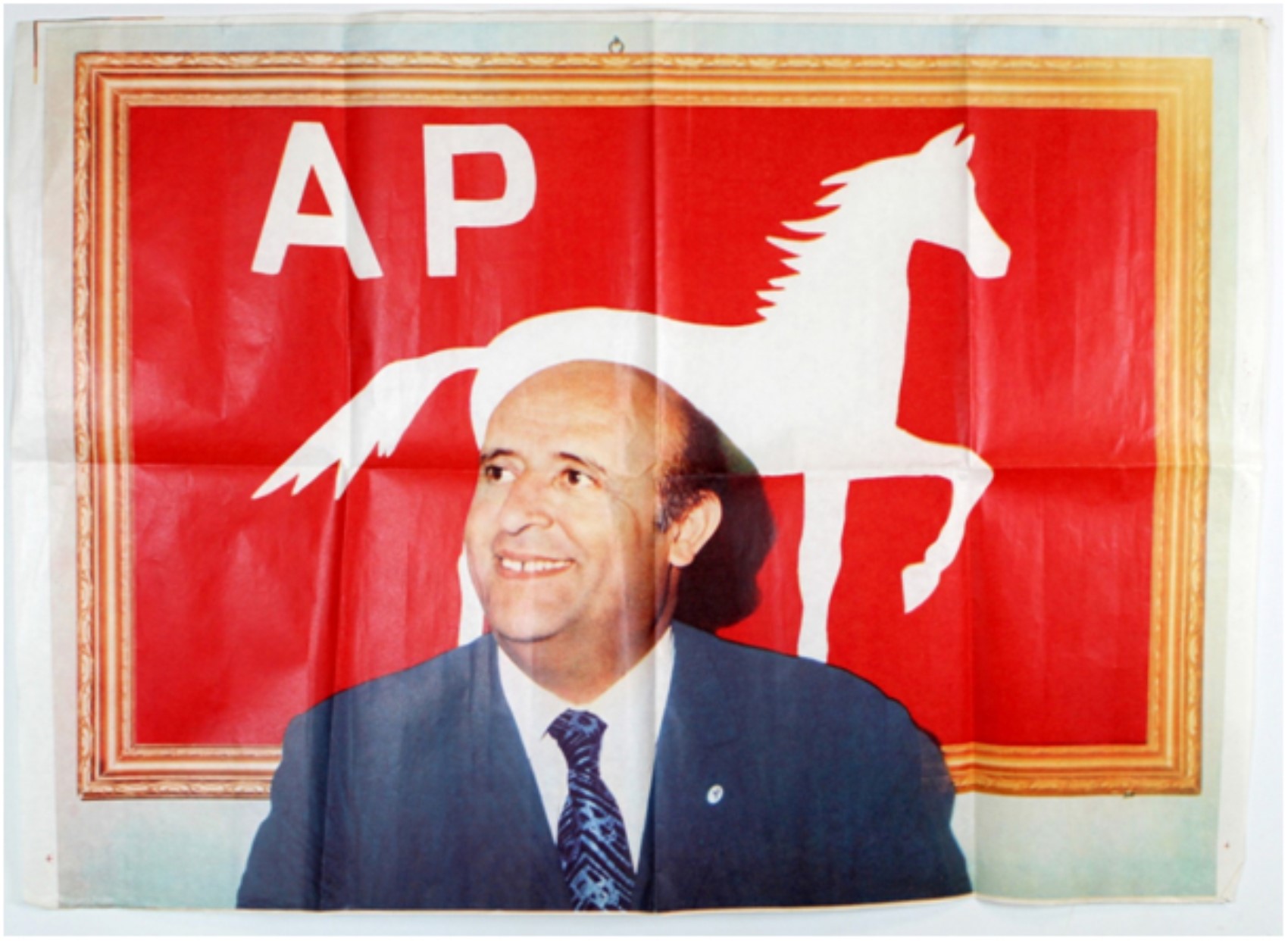
In this article, I would like to touch upon Süleyman Demirel's political journey from October 10, 1965, to the March 12, 1971 memorandum. We see Demirel in different roles in Turkish politics between 1971 and 1975. His return to the premiership would only occur in 1975. The Justice Party (Adalet Partisi) was by then a coalition partner in the Nationalist Front governments between 1975 and 1978. Between 1979 and 1980, he formed a minority government. For this reason, Demirel's power was limited. He was a conditional prime minister.
TWO EVENTS THAT PAVED THE WAY FOR DEMİREL
Demirel had two opportunities in politics. One in 1964, the other in 1993. In the first, the Justice Party Chairman, retired General Ragıp Gümüşpala, died suddenly at the Lido Hotel in Istanbul, in Ortaköy. Gümüşpala had come to Istanbul for the Senate 1/3 renewal elections. His death meant the party chairmanship became vacant.
In the second, Özal died. The presidency became vacant. As will be remembered, he had ascended to Çankaya in 1989 in a rather controversial manner. Although the ANAP vote had fallen by 1/5 (to 21.80%), he had been elected president by relying on his own parliamentary group. He also died suddenly after a long plane journey. In both cases, the vacant offices would be filled by Demirel.
THE JUSTICE PARTY'S FIRST ELECTION SUCCESS: 1963 LOCAL ELECTIONS
During Ragıp Gümüşpala's chairmanship, the party was successful in the general local elections, and the CHP fell to second place. In this election, where mayors were determined by general vote for the first time in Turkish history, the AP candidate had actually won in Istanbul. The AP candidate had run without resigning from his public office in time. This was a legal error. It was contrary to election law. The CHP's objection to the Provincial Election Board was justified. It was in accordance with the law. But after the election results were announced, the cancellation of the Justice Party candidate's mandate was not correct from the perspective of political ethics. For this reason, the CHP ended up in a position where it had taken the mandate of the candidate who had won the election from him through a political maneuver. The Provincial Election Board gave the mayoral mandate to the CHP candidate Haşim İşcan, who had finished second. İşcan was a well-known former governor. He became a very loved and respected mayor. But the way he was brought to office was a subject that AP members constantly kept on the agenda. He had not actually been elected.
In this first general local election held after the 1961 elections, similar results were obtained in other provinces. It was clear even in this first election that the AP was the largest party and the CHP was in decline. (1963)
1964 SENATE 1/3 RENEWAL ELECTION
In this election, it became clear that the Justice Party was growing at the expense of the New Turkey Party and the Republican Villagers Nation Party (June 7, 1964). The Justice Party was successful again in the elections held immediately after the death of Party Leader Gümüşpala at the Ortaköy Lido Hotel. It received around 50% of the vote. 1.38 million. Bilgiç, the deputy chairman responsible for the organization, began to act as party chairman. While the Justice Party won 31 senators, the CHP remained at the limit of 19 senators. The election was held in Group C provinces.
A COALITION: 1965 ELECTION GOVERNMENT
In 1965, Demirel went to the election by bringing all other parties together against İsmet Paşa. He was only the chairman of the AP. He was not even in parliament yet. The government under the presidency of Suat Hayri Ürgüplü was actually formed by Demirel. This was to be an election government. Prime Minister Ürgüplü was a Kayseri Senator. If Demirel had been a member of parliament, the government would have been formed under Demirel's presidency. Since he was not a deputy or senator, he was appointed Deputy Prime Minister in his capacity as the largest partner of the coalition. Until October 10, 1965, Turkey was governed by this government, from which the CHP was excluded. The elections resulted in Demirel's victory. Demirel became Prime Minister. Around the same time, I started at Defterdar Mehmet Bey Primary School in Anadoluhisarı Yenimahalle.
THE DEMİREL-CEMAL GÜRSEL RELATIONSHIP
After being elected chairman of the Justice Party, Demirel followed a very moderate policy. He gained the trust of President Cemal Gürsel. Not much time had passed between his election as party chairman in November 1964 (at the convention) and his appointment as deputy prime minister from outside parliament in the Suat Hayri Ürgüplü government.
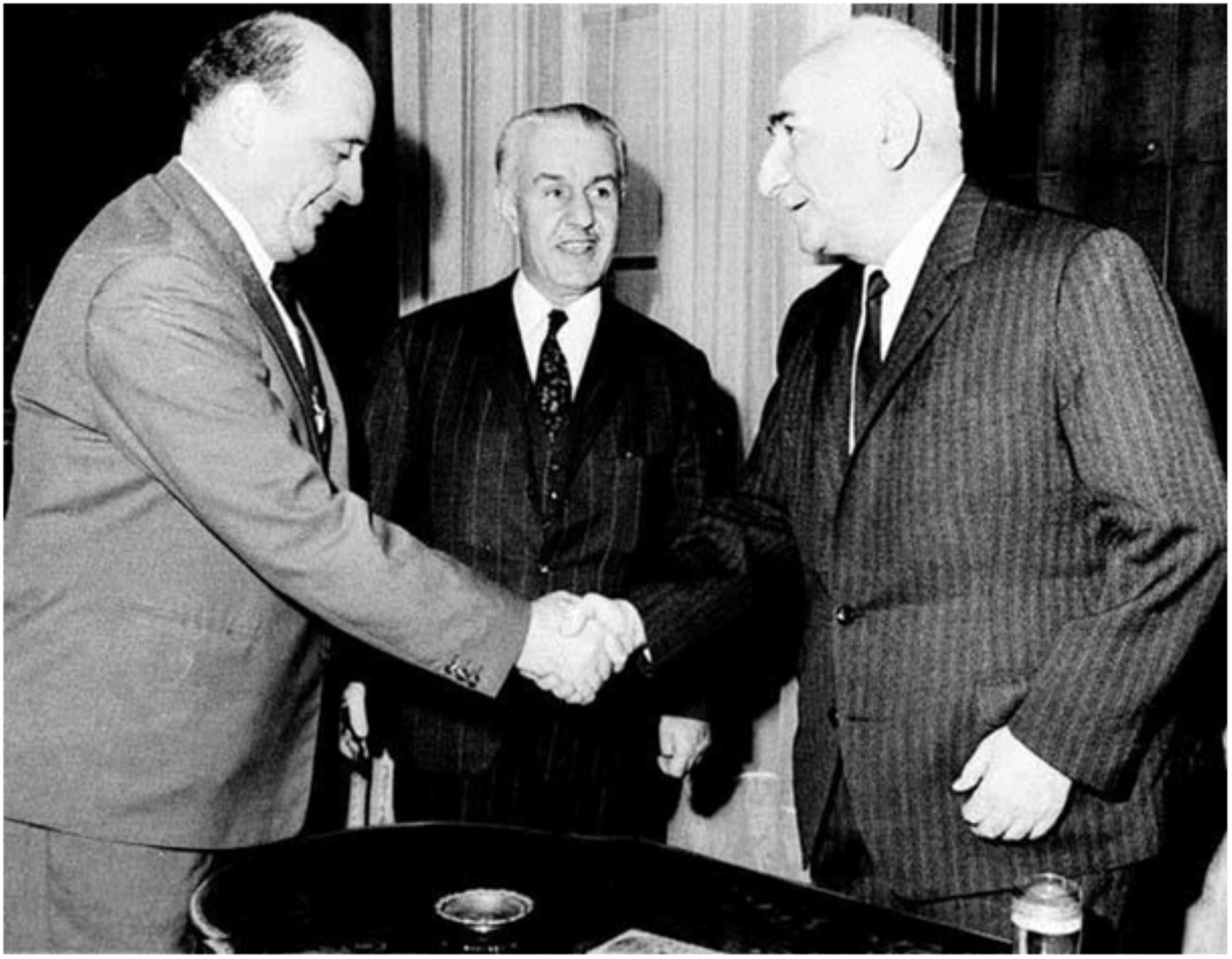
A very important image for me is Ürgüplü introducing Demirel to Gürsel. This young engineer would soon be Turkey's prime minister. When the Justice Party won the election in 1965, Cemal Gürsel would appoint him prime minister with great peace of mind.
After years that were quite turbulent politically, Gürsel was sure of one thing: He was not one of those narrow-minded "former" Democrats. It was clear he was not seeking revenge. He was seeking power. It was understood that the Democrat Party voter base would continue from where it left off in 1957. It was understood that the mass that united behind Menderes in the 50s would consistently maintain its line. Turkey's largest voter community had shown how it would behave from the constitutional referendum to the local elections (1961-1963).
Demirel's youth, his oratory, his engineering intellect, and his consideration of the "state power" field, which was embodied in the identity of Cemal Gürsel, were interpreted positively. This credit made it easier for him to sit in the prime minister's chair.
Demirel's attitude, which took into account May 27, the National Unity Group in the Senate, and the sensitivities in the army, became even clearer during Gürsel's illness and his being sent to the USA. In the new presidential election, Demirel chose the path of reconciliation with the status quo. Getting Sunay to ascend to Çankaya was actually a clever way found to neutralize the May 27 cadres against the "ballot box."
Demirel, having also received the approval of İsmet Paşa, brought Cevdet Sunay to the Çankaya mansion, which would provide him with the opportunity to work comfortably until March 12.
1965 GENERAL PARLIAMENTARY ELECTION
The agenda at the AP Convention held in November 1964 was the election of a new party chairman. Civil Engineer and former DSI General Manager Süleyman Demirel won the election by a wide margin against Sadettin Bilgiç. There were other weak candidates as well. Ord. Prof. Ali Fuat Başgil and Tekin Arıburun. Arıburun was the Air Force Commander close to the DP, whom the May 27 coup plotters had dismissed. Süleyman Demirel crushed his rivals. Prof. Aydın Yalçın, Prof. Orhan Oğuz, and Kamran İnan also became rivals to Demirel in the later periods of his political life. But they could not show any presence against him.
The result of the 1964 Congress was not surprising at all. We can say the same for the 1965 elections. Just as Özal won the 1983 elections, Demirel won 1965 in the same way. Demirel's superiority lay here. Organized capital, the big bourgeoisie, and the USA supported him. Just as they supported Özal in the 80s.
More importantly, with his performance at the Congress, he was far superior to his rival Bilgiç. He impressed the delegates. He drew a profile of a leader who would bring the party to power. The other candidate was presented as the candidate of the nationalist-conservative wing. Sadettin Bilgiç was an organizer, but he was reserved. He was doomed to be defeated against Demirel's dynamism.
NATIONAL REMAINDER SYSTEM AND AP POWER (1965)
In 1965, the National Remainder system (national remainder) helped small parties enter parliament. The Workers' Party of Turkey, the New Turkey Party, the Republican Villagers Nation Party, and the Nation Party were able to be represented in the Assembly in proportion to the votes they received. These small parties won a similar number of deputies. Most of the deputies won were from the national remainder region. The AP won 240, CHP 134, MP 31, YTP 19, TİP 14, and CKMP 11 seats. The vote percentages of the first two parties were AP 52% and CHP 28%. The Justice Party reached the majority to form the government alone with a representation of over 226 (the minimum number required for the government to receive a vote of confidence).
The result obtained in the 1965 elections was a great success for Demirel, despite the disadvantages of the election system applied. Menderes' legacy had remained with him. His vote rate had also increased. He was young. He was dynamic. He had left other parties on the right far behind. Demirel would now be the dominant political actor of right-wing populism until September 12.
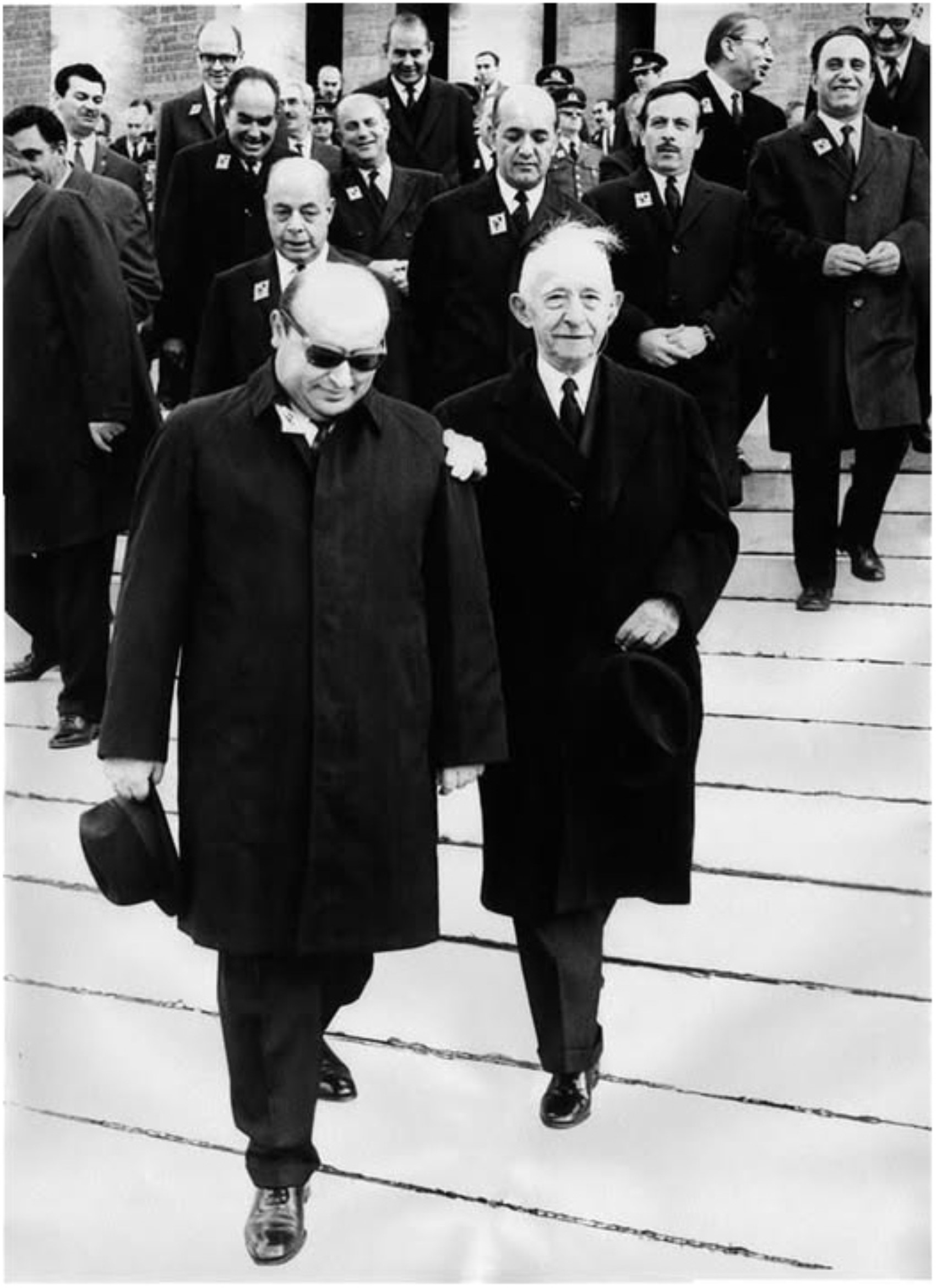
THE MEANING OF DEMİREL'S FIRST ELECTION SUCCESS
After Demirel became chairman, the Justice Party came to power alone with a large majority in the first elections it participated in. This success means that Demirel crossed a very important threshold in his political life.
Two concrete signs proving that an AP victory was very close had already emerged. The 1963 local elections and the 1964 Senate 1/3 renewal elections. The AP was constantly on the rise. Demirel's chairmanship boosted the party. It brought it to power alone.
ON THE 1966 SENATE 1/3 RENEWAL ELECTION
Before the 1965 elections (in 1964), the election system had been changed with the cooperation of all parties other than the AP. The D'Hondt system, a version of proportional representation, was abolished. The National Remainder system was adopted. The 1966 Republic Senate 1/3 renewal elections were also held with this method.
When the 1961 Constitution was being drafted, the constituent will had placed special importance on the Republic Senate. The Senate was to be an elite (select) assembly. It would oversee the National Assembly. The Senate was conceived as an assembly of calmness, balance, and moderation, an upper house. This model was not very successful. The constitution-maker had foreseen a procedure that constantly renewed the composition of the Senate with a beautiful thought. The elected members of the Senate (150 members) would be divided into three groups: Group A, B, and C provinces. And the Senate would be renewed by one-third every two years in turn. In 1966, Group B provinces were renewed. In the first election held in 1961, a simple majority system had been applied. Thanks to this, the Justice Party had won more senators despite receiving fewer votes across Turkey. The June 7, 1964 elections were held in Group C provinces. In these elections, the proportional representation system was applied with the amendment made on April 17, 1964.
Although the national remainder was applied in the 1966 Senate elections, the AP was again the most successful party. What interested me most in this election was the election of Agricultural Engineer Fatma Hikmet İşmen as a senator from Kocaeli (independent from the TİP list). The TİP had received 116,375 votes in the provinces where the election was held (3.8%). These votes were transferred to the Kocaeli province, and İşmen was elected senator.
The CHP was still stagnant. 29%. Due to the March 12 interim regime, the Senate elections were delayed. The turn for Group B provinces did not come. For this reason, İşmen remained in the Senate until 1975. Even though the TİP had been closed.
1968 LOCAL ELECTIONS (MUNICIPAL AND PROVINCIAL GENERAL ASSEMBLY)
The CHP continued to decline in these elections. The Middle-of-the-Road (Ortanın Solu) debate, which had been rising since the 18th Convention held in 1966, resulted in the break of Feyzioğlu's conservative interpretation of Atatürkism from the party.
There are two things that interest me in the 1968 elections: First, Op. Dr. Fahri Atabey (one of the defendants in the Baby Case) being elected Mayor of Istanbul from the Justice Party. Dr. Atabey was the chief physician of Zeynep Kamil Hospital. What personally interests me is that his signature is on my birth certificate in his capacity as Chief Physician.
The second issue is the cancellation of the memberships of AP members in 14 districts upon the objection of the CHP in the Municipal Council elections. For this reason, the CHP became the majority group in the Municipal Council, and the TİP rose to second place. I was truly surprised when I learned this. I didn't have the time to fully examine how this happened. But I am very curious. I will research it. In other words, the AP won the mayoral election in Istanbul but could not secure a majority in the municipal council.
It is also useful to remember this: There was no metropolitan municipality in Istanbul at that time. It was established in 1984. And the boundaries of the municipality did not coincide with the provincial boundaries. The local administration covering the entire province was the Provincial General Assembly. There were many small town municipalities outside the Istanbul Municipality.
The importance of Atabey being elected mayor was that he had been tried on Yassıada and acquitted. He was a physician who had been close to Menderes. He was an obstetrician. The Istanbul electorate elected him mayor. The CHP candidate in this election was Orhan Eyüboğlu. He was not elected. This result shows that Istanbul, which had supported the DP since 1950, continued the same line despite May 27.
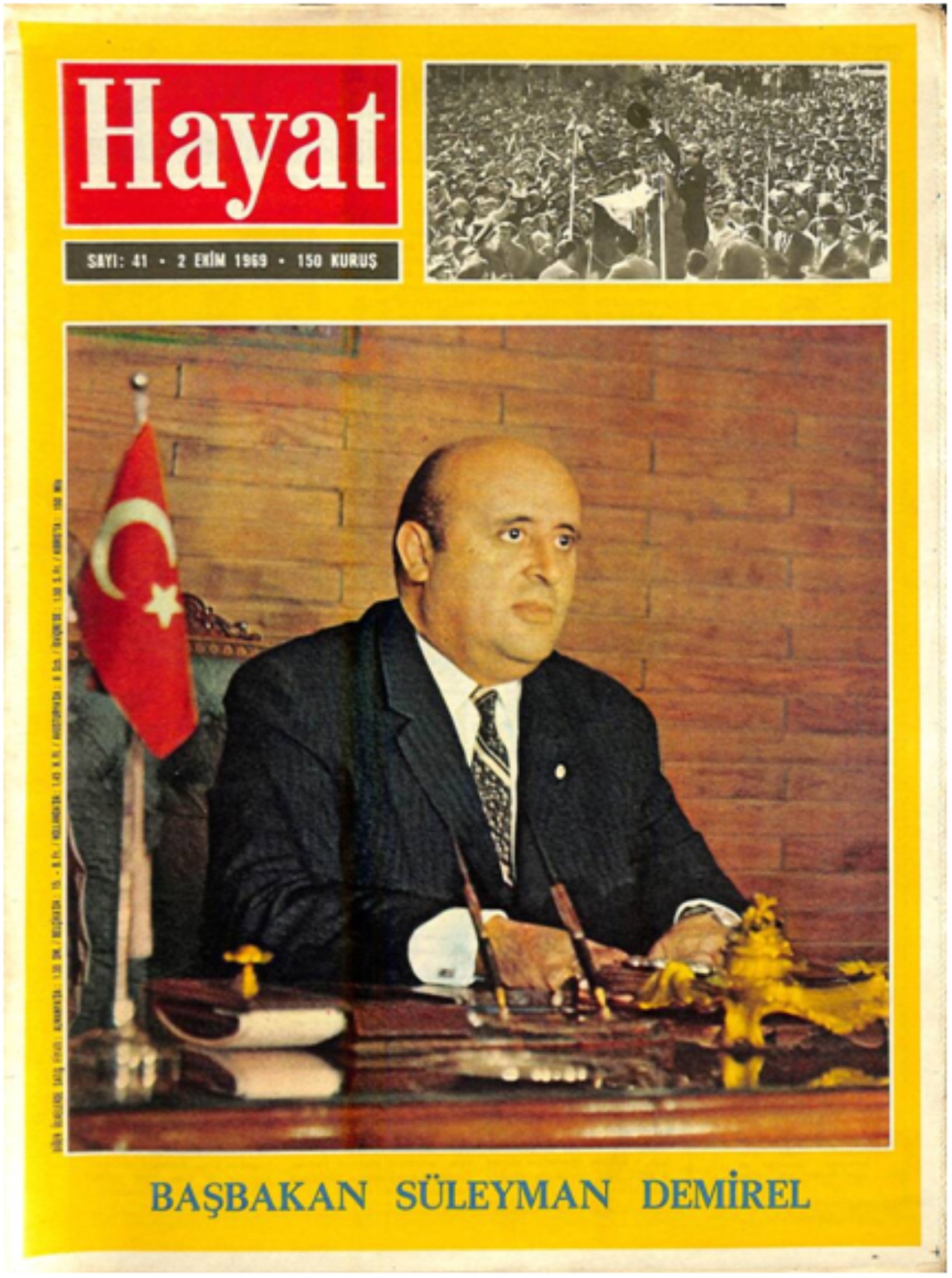
1969 GENERAL PARLIAMENTARY ELECTIONS
The most important thing to say about this election is probably the decrease in interest in the ballot box. Demirel's Justice Party finished the election ahead again. The point to be mentioned here is the fact that the election system had changed. Since the Constitutional Court canceled the D'hondt system with a threshold in these elections, all elections until September 12 were held with D'hondt without a threshold. A threshold was applied in the elections held after 1983. In 1969, a portion of the CHP electorate voted for Feyzioğlu's Reliance Party (Güven Partisi) - with the consideration that Atatürkism could not be leftism. It became easier for the Justice Party to win the election. Demirel achieved an easy election success by taking conservatism and anti-communism behind him.
In 1969, the distribution of deputies was as follows: Justice Party 256 (power alone), CHP 143, Feyzioğlu's Reliance Party 15, Unity Party 8 (a party appealing to Alevis), TİP 2 (Mehmet Ali Aybar and Rıza Kuas), MHP 1 (only Türkeş), and an important event: Necmettin Erbakan entered the Assembly as an independent deputy from Konya.
In these elections, while the TBP won eight seats with 254,000 votes, the TİP could only send two members to the Assembly with 243,000 votes.
THE ISSUE OF FORMER DEMOCRATS
Demirel had inherited the political legacy of the deposed Democrat Party. This was known to everyone. He had visited Bayar while he was in Kayseri Prison. It was clear that he intended to turn this into an authorization in the future.
Demirel did not want to share the DP pie with other politicians, other parties, or even former DP members. His behavior showed this. It can be said that he was successful in this with various maneuvers.
While İsmet Paşa sincerely wanted to lead the amnesty regarding the release, pardon, and restoration of political rights of the DP members, Demirel showed the army and some factions within the army as an obstacle. He always preferred to take things slowly. He benefited maximally from the fact that the former DP elites remained outside the political arena. Just as Özal would do to him in the future.
I think Bayar noticed this political cunning of Demirel very well. After a while, he gave up on Demirel. He took a position against him. In any case, the DP members were not in prison from the mid-60s onwards. They were only restricted from public rights.
After a while, some former DP members who found Demirel insincere founded the Former Democrats Club. The name of the club was "Our House" (Bizim Ev). This meant an anti-Demirel bloc. They acted together with Bayar. Bayar's daughter Nilüfer Gürsoy and Samet Ağaoğlu's wife Neriman Ağaoğlu had been elected deputies from the AP. They resigned from the party due to Demirel's attitude. This group would establish positive relations with the Democratic Party.
This cold-distant relationship of Bayar with Demirel continued until the Nationalist Front was established in 1975. What allowed the ice to melt was Bayar's instruction to the Democratic Party members to "help Süleyman." This was a very important decision on the right. The process that Bayar started with these words enabled Demirel to gather the right and come to power. The Democratic Party eventually dissolved. It fell apart.
But my opinion is that Bayar's view of Demirel was never fully positive. He would refer to him as "our water manager (DSI)." He was always suspicious of his loyalty. Considering Demirel's political maneuvers, Bayar was right. Despite this, it was again Bayar's historic decision that united the center-right around Demirel. The main motive here was not to give power to the CHP.
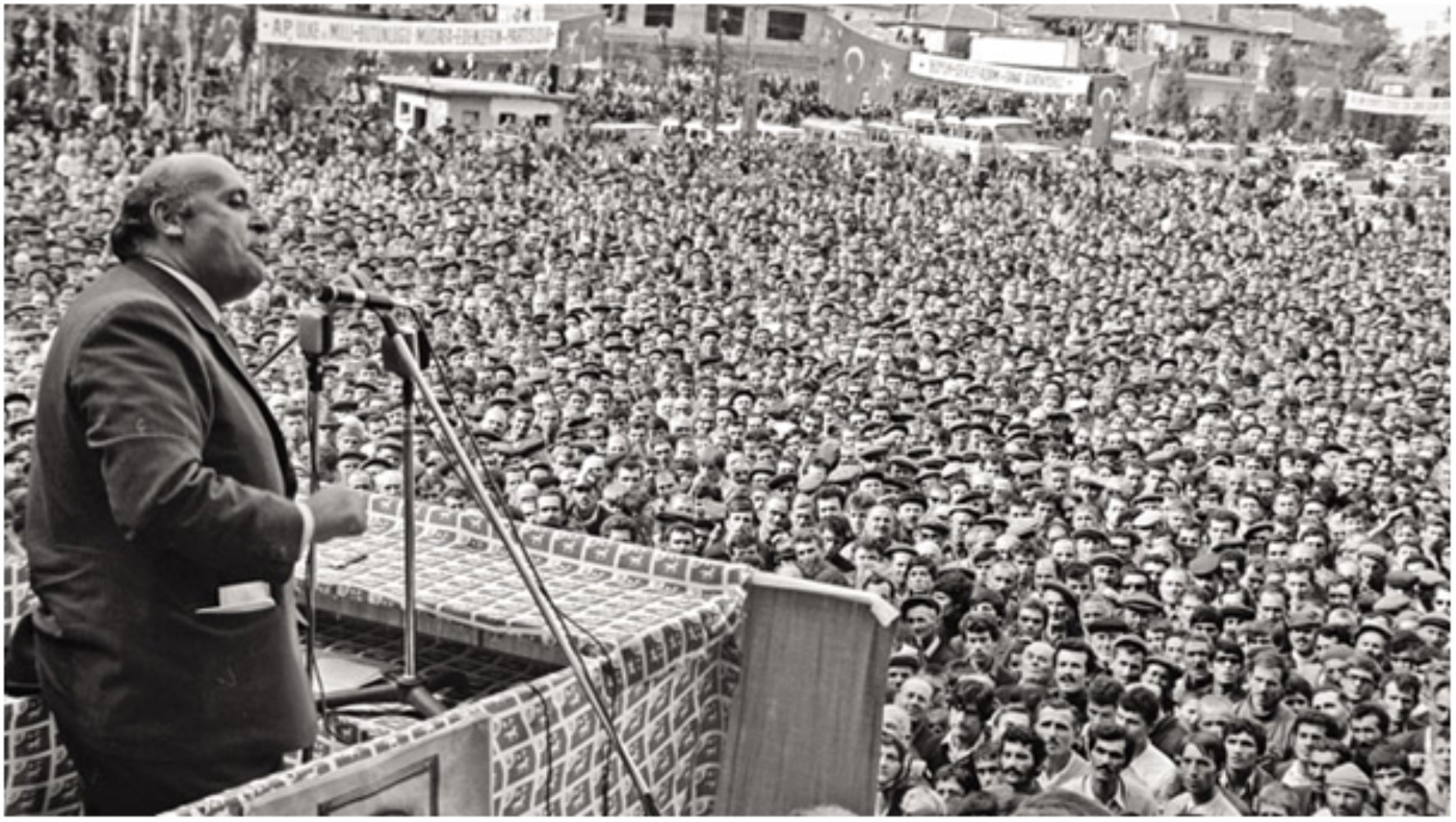
THE JUSTICE PARTY BECOMING A CENTER OF ATTRACTION IN ELECTIONS
In the 1965 elections, Demirel largely brought together the Democrat Party base that had dispersed in 1961. The reason for the shrinking of the YTP, CKMP, and MP is the birth of a new leader on the right: Süleyman Demirel.
There would be some developments that changed this situation after 1969. But Demirel's AP never lost its leading position on the right.
In the 1970s, the provincial capital and religious sensitivity that had been represented in the AP until then moved away from the party. They established their own organizations. This development caused the AP to finish the 1973 election in second place. But Demirel would show his ability to be a center of attraction on the right wing again in the 1977 election. The Democratic Party dissolved. The MSP shrank. The Reliance Party turned into a billboard party. On September 12, 1980, the Justice Party was a party that could have come to power if a general election had been held.
If September 12 had not happened, it was possible for Demirel to show his 1965 success in 1981. The 1979 by-elections, where Ecevit resigned from the premiership, show this. The CHP, which gained great momentum in the early 1970s, experienced forming a broad coalition government in early 1978. By toppling Demirel's Second Nationalist Front Government. This 22-month experience ended with deep disappointment and a heavy election defeat. The needle on the right had turned to Demirel again. If the 1979 by-election had been an early general election, Demirel could have come to power alone. We can also make your projection forward as follows: Instead of Özal's ANAP (1983), Demirel's AP (1981) could have come to power.
DEMİREL IN TERMS OF ELECTION SYSTEM AND REPRESENTATION LEGITIMACY
Demirel's attitude towards elections carries the general characteristics of the Turkish right. Its origin is the majoritarian national will of the Bayar-Menderes duo.
But the era had changed. There was an important factor that limited this way of thinking of Demirel: The 1961 Constitution. And the state powers redefined according to this constitution. Let us not forget that the 1961 democracy attached great importance to pluralism and guaranteed it constitutionally. Even the establishment of the Constitutional Court alone offered many opportunities to the opposition.
The "National Remainder system," which was accepted in 1964 with the cooperation of all other parties despite all the objections of the AP, had dealt another heavy blow to the majoritarian political logic. Demirel had declared his intention to abolish this system even before the 1965 elections. For the AP, the Workers' Party of Turkey was the most dangerous party. The AP applied to the YSK on the grounds that the TİP's organization was incomplete. According to election legislation, a party that did not complete its organization could not enter the election. The YSK rejected the application.
As can be understood from this, Demirel tried to prevent the TİP's representation in parliament from the very beginning. The TİP was not just any party. It was fighting against the Justice Party on a class basis.
Despite this, the TİP managed to enter the Assembly under the guarantee of the political parties law, election law, and the Constitutional Court. The TİP's political performance made Demirel and the AP group quite uneasy. Between 1965-1969.
Demirel's goal was to prevent the TİP and similar parties (including the Unity Party) from entering parliament. The AP wanted to come to power alone with a comfortable majority. It was uncomfortable with the representation of the socialist left.
Demirel partially achieved his goal. The Turkish Constitutional Court canceled the threshold provision of the election law that brought the D'hondt system with a threshold. This was actually a partial cancellation. The election was held with D'hondt again. But without a threshold. This meant a de facto electoral district threshold. The ruling party (AP) could have made another arrangement before the election. But it did not attempt to do so.
Demirel criticized the court's decision with arguments such as the judiciary putting itself in the place of the legislature. If Özal were in the same situation, he would have made all the maneuvers to get around the law. And he did. The ANAP government period went down in history with changes to the election law. Turgut Özal had sought ways to remain in power alone with almost 20%. For Demirel, legitimacy was as important as staying in power.
We can say that the AKP, which has been in power since 2002, no longer cares about the representation legitimacy-power link. If a comparison is to be made, Demirel was a politician who determined the right place to stop, compared to Menderes and Özal. The limit he set for himself was representation legitimacy.
Most Read

Striking picture for Özgür Özel's 'New Party'

Özgür Özel gives a dated response regarding the number of resignations

Forest fire in Antalya brought under control

The PKK opening and Özgür Özel’s path!..

How did the newspapers view Özgür Özel's farewell to the CHP?

He killed his wife by slitting her throat: Their children witnessed the moments

What did the CHP do?

Özel’s new party move in the world press

The New CHP, against CEHAPE

From self-efficacy to despair