



“REPUBLIC REVOLUTION” RECEPTION AT THE COMPLEX
A reception was held at the Presidential Complex on October 29. I must state with regret that I could not see the republican revolution that consigned the monarchy to history there. I saw something else.
First, let us count those who did not attend the invitation. The main opposition party CHP, the MHP, and the DEM Party. It is quite clear that each of the parties that did not attend has its own agenda.
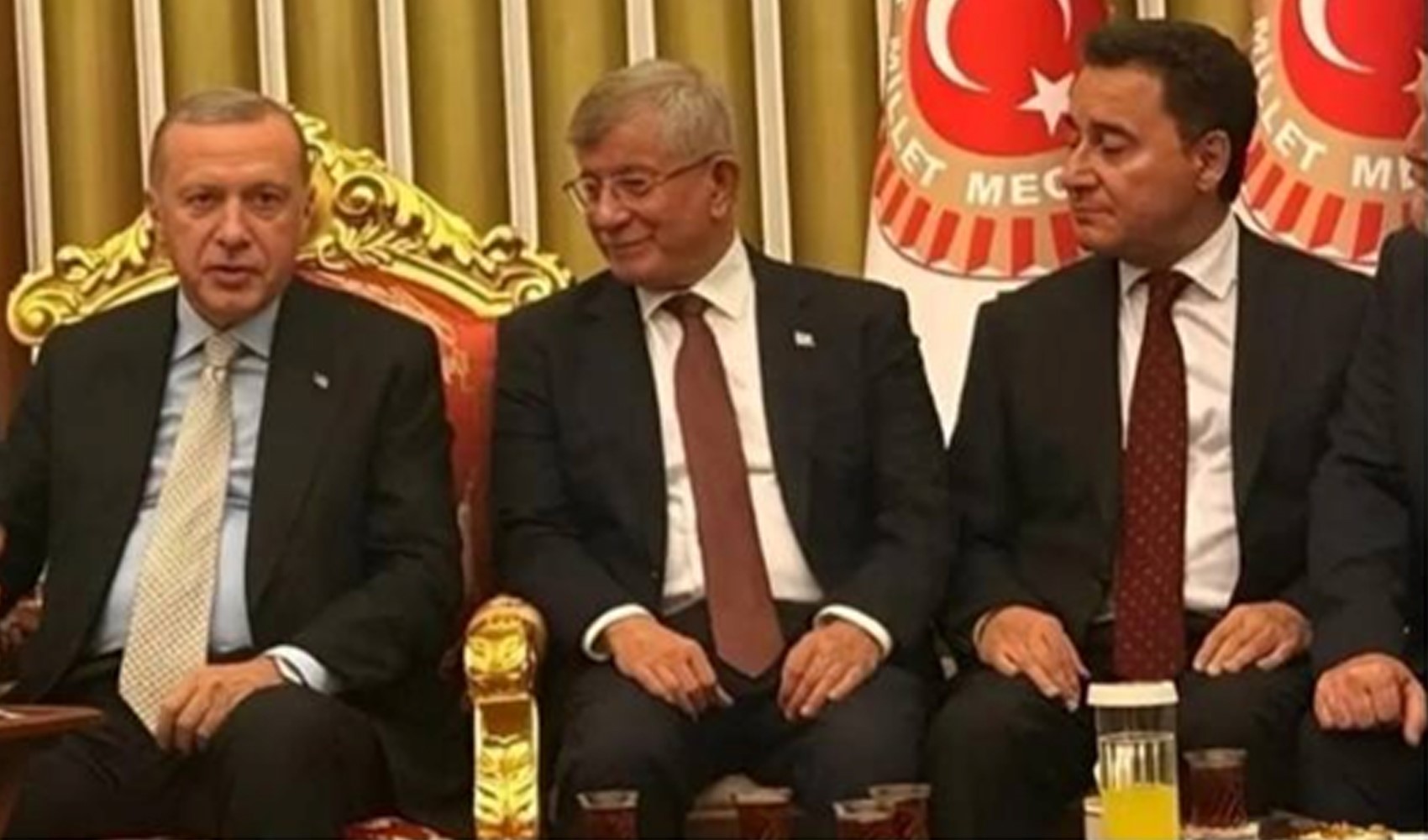
The guests sitting in the front row in the picture shared in the media consist of quite interesting names.
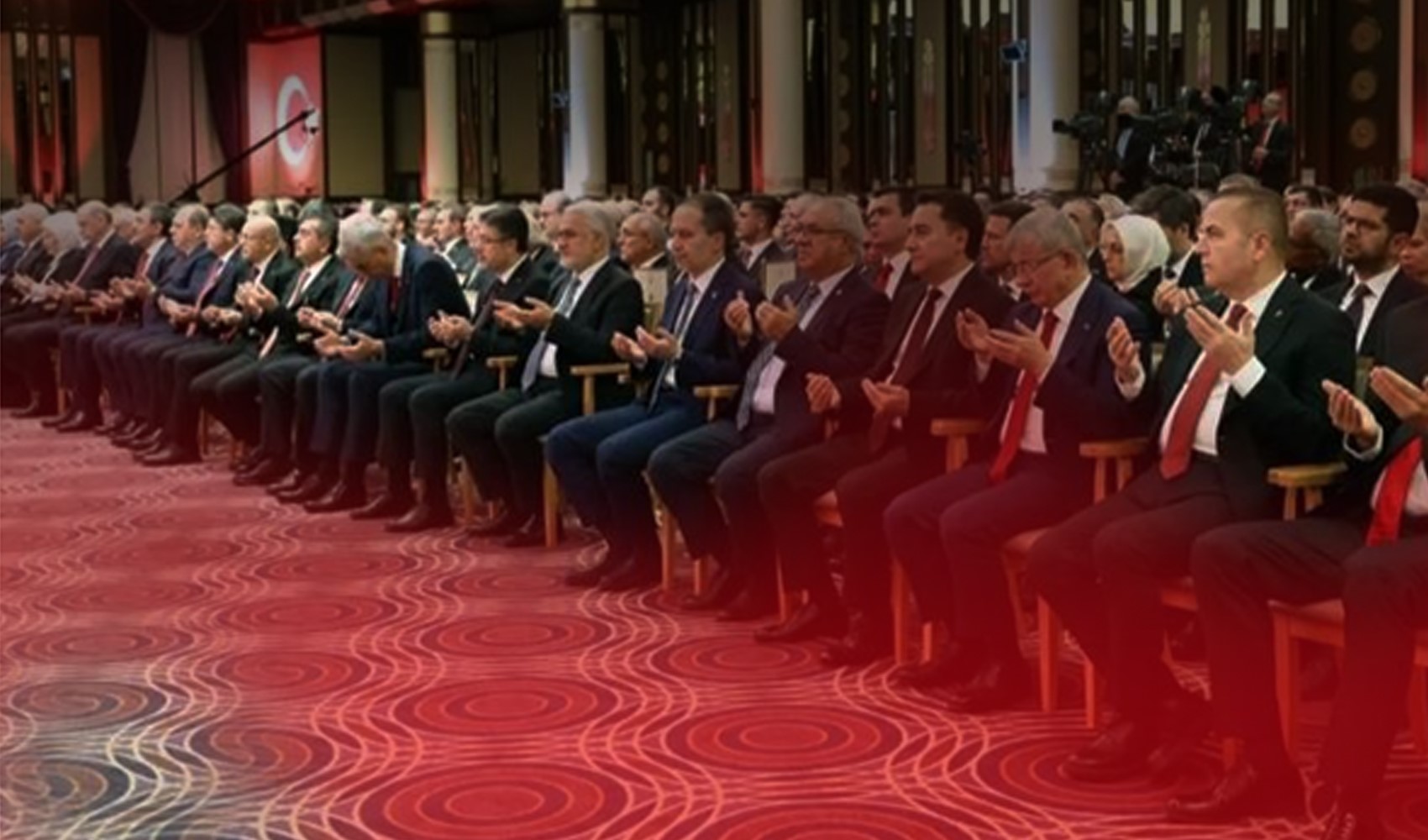
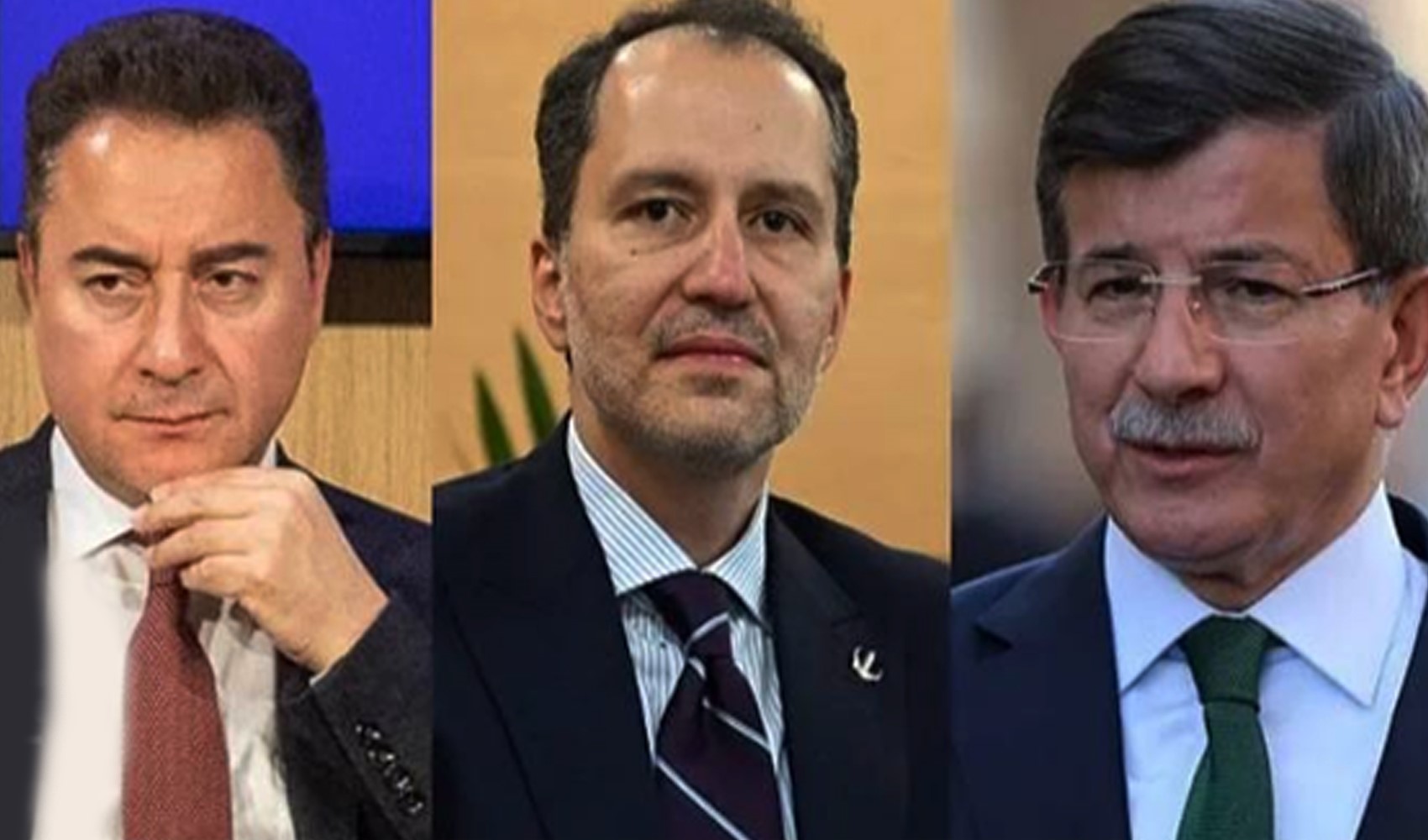
On the far right is Sinan Oğan, followed in order by Saadet Party Chairman Mahmut Arıkan, Future Party (Gelecek Partisi) Chairman Ahmet Davutoğlu, DEVA Party Chairman Ali Babacan, DSP Chairman Önder Aksakal, and in a position close to the President, the small but “decisive actors” of the People's Alliance, HÜDA PAR Chairman Zekeriya Yapıcıoğlu and YRP Chairman Fatih Erbakan. Two former prime ministers were also there. One is Tansu Çiller, who jumped to the prime ministry from Demirel's showcase, and the other is the last prime minister, Binali Yıldırım.
Now, if you wish, let us take a look at the political identities of those who attended the reception: Let us start with Sinan Oğan. Oğan was the candidate put forward by Ümit Özdağ's Victory Party (Zafer Partisi). He was Erdoğan's rival in the first round and his supporter in the second. It was incomprehensible why the 2.8 million votes he received in the first round were cast. Ümit Özdağ, on the other hand, said that he supported Kılıçdaroğlu in the second round with conditions that were put on record. The most important condition was that he be given the Ministry of Interior.
Mahmut Arıkan, who was elected chairman of the Saadet Party following the withdrawal of Temel Karamollaoğlu, was also there. Arıkan had been elected as a member of parliament for Kayseri from the CHP list. Then, in order, came “Davutoğlu, who imagines that politics needs him, and the others.”
Ali Babacan, who has recently been giving friendly images with AKP cadres, was also among the invitees. When Babacan left the AKP, I had imagined him as a new project of the USA for Turkey. I thought that global capital was fielding the “Islamist Babacan” this time. I followed the process. My thoughts regarding the initial phase of the event remain the same. But then the calculation changed. The USA decided to continue on the path with Erdoğan.
In recent days, Babacan attributes his break from the AKP to “moving away from its founding settings.” By saying “We even came together with the CHP,” he is actually keeping the door open to the AKP. I hope DSP Chairman Aksakal can explain to Bülent Bey what he was looking for there in the afterlife.
The chairman of the Kurdish-nationalist, federalist, Islamist, counter-revolutionary HÜDA-PAR, Yapıcıoğlu, was also in the front row. I find him sincere. He openly declares that he is against the “Atatürk republic” without beating around the bush. He says he sees Sheikh Said as a justified religious scholar in his cause. As you know, HÜDA-PAR had entered the Turkish Grand National Assembly by clinging to the skirts of the AKP. It is a party that the AKP can resort to with peace of mind when needed. Necmettin Erbakan's son, Fatih Erbakan, is now the chairman of the New Welfare Party (Yeniden Refah Partisi). He also has other calculations. I think his real plan is to liquidate Erdoğan, whom he sees as having betrayed his father, and to become the leader of Islamist politics.
At the left end of the front row were Binali Yıldırım and Tansu Çiller. It is normal for Yıldırım to be there as Erdoğan's “joker” on every issue. The “prime ministry office,” which had existed since 1838 when Sultan Mahmud II gave the title of Grand Vizier to Rauf Pasha, disappeared into history during his time. Binali Bey, in a sense, became the Tevfik Pasha of the Republic. The motive for the presence of one of our former prime ministers, Tansu Çiller, truly deserves a long article. Let it stay on the side for now.
It is, of course, appropriate for the Chief Rabbi and the Greek and Armenian patriarchs to be invited to the Republic reception. But the real underlying thought is not republicanism. It is an emulation of Ottomanism.
It is necessary to dwell on the meaning of the “Quran recitation” at the Republic revolution reception. But due to circumstances, I will not be able to write more. One point that comes to my mind and that I want to share with you is this: Which surah did Çiller participate in the prayer section with from memory? I am very curious, truly.
REASONS FOR THE SUCCESS OF THE PEOPLE'S ALLIANCE
The Nation Alliance had created great hopes among opposition segments. The result was a disappointment. Erdoğan took power once again. The People's Alliance also reached a sufficient majority in Parliament.
The reason for Erdoğan's success is that he managed the “conservative-right's” reflex of not bringing the CHP to power well.
To this, other internal and external factors must be added. I assume everyone has an idea about what I mean by internal and external factors.
Ultimately, Erdoğan won the second round of the election by using all public power and incorporating many actors into his ranks, from HÜDA-PAR to YRP, BBP, MHP, DSP, and Sinan Oğan. Oğan's transfer is not surprising when viewed from today. Thus, Erdoğan found the opportunity to consolidate his power by widening the gap in the second round. The opposition, which put everything on the line, could not go beyond 48%.
HOW SHOULD WE DEFINE THE 2017 REGIME?
First of all, let us note that the Constitution was changed “under the suspicion of unstamped ballots.” Because of Kılıçdaroğlu's obstruction, the opposition could not discuss the legitimacy of the referendum strongly enough. Yet the subject was extremely important. Turkey would later learn the consequences of this in a painful way.
Ultimately, in the words of Professor Kemal Gözler, a “neverland” system came into effect. Another expression of Gözler that complements this diagnosis has been “a state without a constitution.” I find both concepts extremely explanatory.
THE LACK OF COMPASS OF THE NATION ALLIANCE
As for the Nation Alliance, the fundamental issue was the lack of a compass and the absence of a real leader. The public could not see a real sense of leadership and defiance.
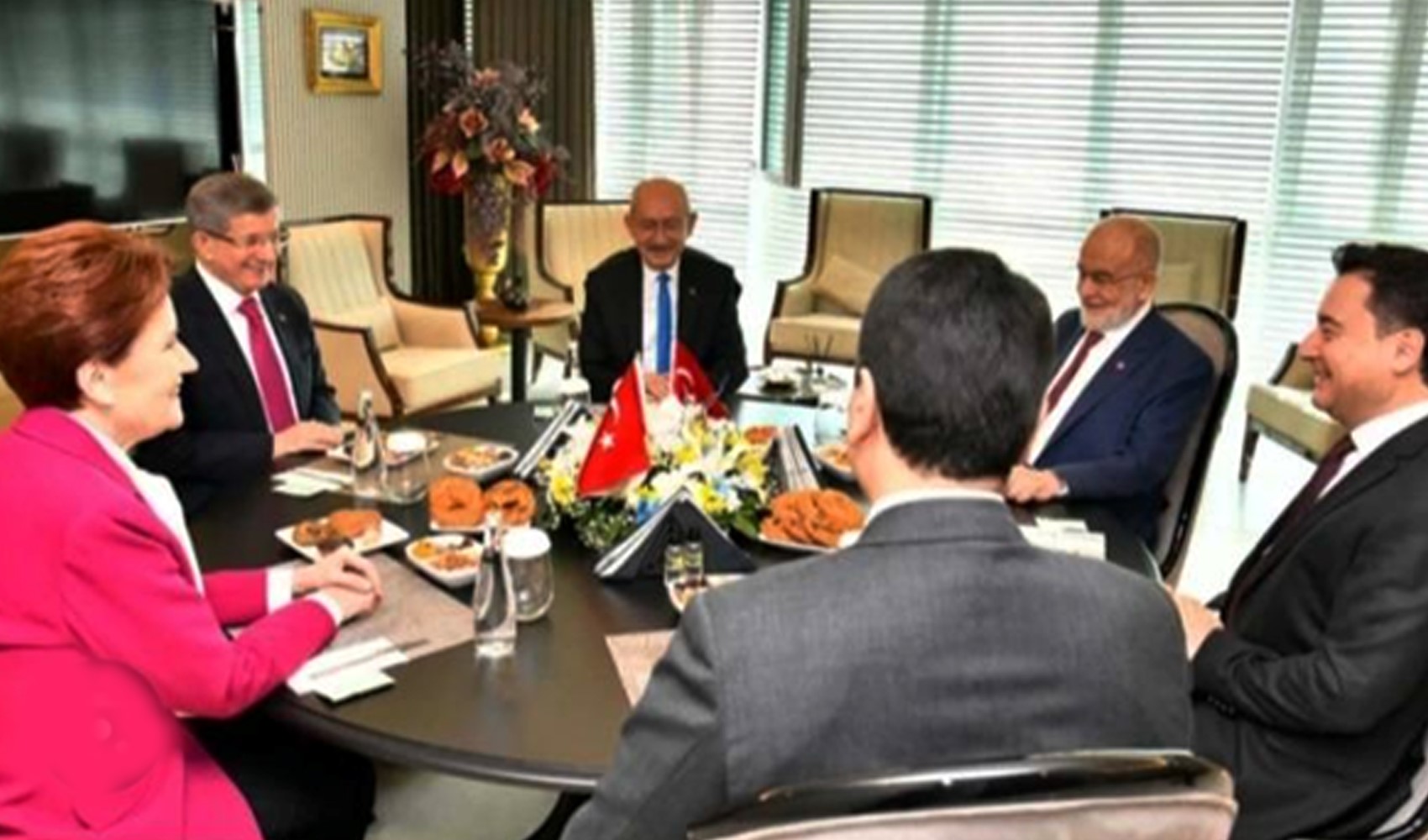
The “collegial” image of six party chairmen sitting around a table and talking did not mean anything. In the end, as it was expressed, the six of them “did not equal one Erdoğan.”
Those sitting around the table—with the exception of Temel Karamollaoğlu—always watched each other's backs. The alliance's projection for the future was not found credible. Kılıçdaroğlu's promises were ignored.
The “constitutional amendment” draft that the alliance commissions worked on for months was an academic text. The “strengthened parliamentary regime protocol” declared at the end of the studies did not attract much attention in the eyes of the public.
It was Kılıçdaroğlu who prevented the candidacy of İmamoğlu or Yavaş. When this was the case, the other actors at the table remained silent in order not to break the alliance.
Akşener's “rebellion” at the last minute was one of the biggest mistakes. She should have told Kılıçdaroğlu her opposition to him personally. Akşener's leaving the table and returning further increased the negative perception.
The alliance appeared as a delegation that accepted its crowded, aimless candidate even within itself “reluctantly.” The timing of the candidate's declaration—contrary to the views put forward—was very wrong.
Since 2022, broad public support had been provided that the election would be won if IMM President İmamoğlu or ABB President Yavaş were nominated. However, this was a projection. It could have turned out to be correct. It could also not have. If you remember, in the 1994 polls, Zülfü Livaneli appeared to be far ahead in Istanbul, and Erdoğan was shown in fourth place. The result was surprising.
A SITUATION ASSESSMENT: LOSING THE PSYCHOLOGICAL SUPERIORITY
The Nation Alliance wasted the psychological superiority it gained in the 2019 local government elections. It failed to manage it. In my opinion, İmamoğlu should have been announced as the alliance's candidate by early 2022 at the latest. After the cancellation of the election certificate, the government constantly sending inspectors to the IMM, making another conspiracy attempt every day, and the operation aimed at bringing a political ban like the “Fool Case,” İmamoğlu should have been announced as Erdoğan's rival. As the government's pressure and tripping increased, the masses whose trust in the Erdoğan administration had weakened could have been won over.
The opposition remained hesitant in fortification and attack. Their timing was always wrong. This is the fundamental reason why the election was lost. Perhaps these thoughts of mine are completely wrong. You may not agree with me at all. But I would like to remind you that even if a reverse result had been obtained, the executive would have been won by a razor's edge, and a majority would not have been achieved in the legislature.
Considering that the parties that united behind Kılıçdaroğlu remained in the minority in parliament, such a weak executive (Kılıçdaroğlu) would have shared the same fate as the grand coalition Ecevit formed in 1978, in the face of the reality that the AKP had completely “assimilated” the state apparatus.
If you remember, Ecevit's grand coalition was the largest in the history of the republic in terms of the number of members of the council of ministers, but the weakest politically.
In my opinion, the Kılıçdaroğlu administration, with seven vice presidents and no majority in parliament, could have fallen into a worse situation than Ecevit.
HOW WAS THE STRENGTHENED PARLIAMENTARY SYSTEM TO BE TRANSITIONED TO?
If you wish, let us now examine what the strengthened parliamentary system proposed by the Nation Alliance was. Was such a system applicable?
According to the proposed model, the presidency is transformed into a symbolic office. The prime ministry office is re-established, and a constructive vote of no confidence mechanism is introduced.
The six-party table commissions completed their work, which began at the end of 2021, in three months and shared it with the public as an alternative political system proposal on February 28, 2022.
According to the text signed by the party leaders with a ceremony, unlike the 1961 and 1982 constitutions, a model imitating the German government system was proposed, such as the ease of forming a government and the dependence of bringing it down on “forming an alternative government.”
In addition to this, the principle of the president elected by general vote leaving their party was introduced, and it was envisaged that the president's term of office would be for seven years and only once.
In the executive field, political responsibility would be with the “Council of Ministers and the Prime Minister” as it was in the past.
Parliamentary oversight methods such as oral questions and parliamentary inquiries were re-established, and the parliamentary inquiry was combined with the constructive vote of no confidence. The government would be formed by a simple majority (relative majority) and could be brought down by an absolute majority.
However, practices in the world showed that it was unthinkable for a president elected by general vote to be pulled to symbolic limits. Considering that Ahmet Necdet Sezer, who said “my powers are too many, take them off me” after being elected president, threw the constitution booklet at Prime Minister Ecevit, the general vote legitimacy had strengthened the presidency office even more after the constitutional amendment. Whoever was elected would use the same powers.
THE NATION ALLIANCE DEALT WITH FUTILE MATTERS
The text that the Nation Alliance parties came up with through long academic studies was completely contrary to the conditions of Turkish politics at that time.
To pass the 84-article constitutional amendment of the alliance through the TBMM, a qualified majority between 3/5 and 2/3 was needed. That too with the condition of a referendum.
As can be seen, it was not easy at all to return Turkey to the legislative-executive relations that have existed since the 1924 Constitution. “The one who took the horse had already passed Üsküdar, and the AKP (Erdoğan regime) had moved all the stones.”
Even if the Nation Alliance had won the 2023 presidential election, it did not seem very possible for it to reach a parliamentary majority that could change the constitution.
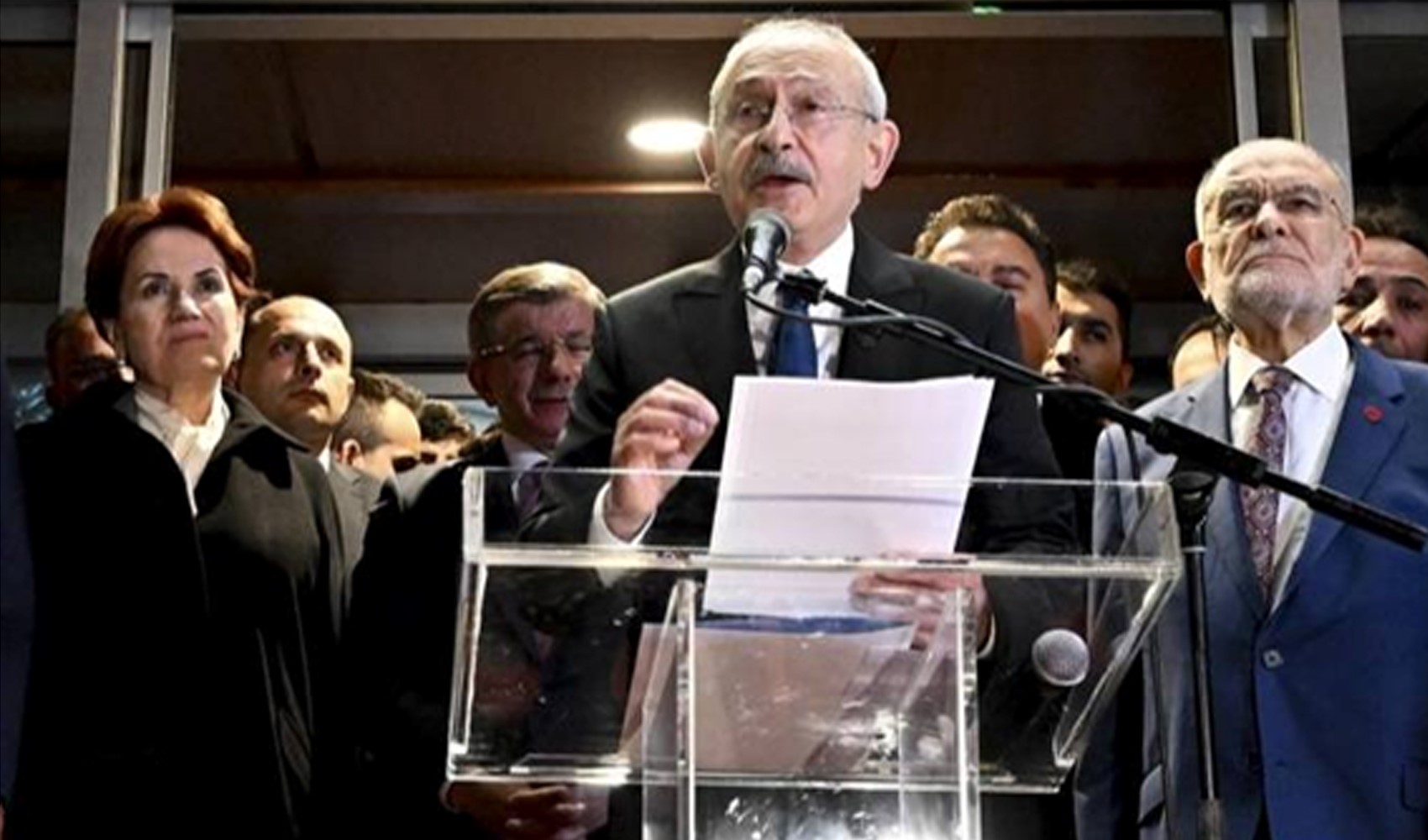
Let us remember those days if you wish: The presidential election had remained for the second round, but there was no second round for the legislative assembly elections. Everything had happened, and the People's Alliance had guaranteed its numerical superiority in parliament.
In the second round, all layers of Turkey's conservative right-wing majority voted for Erdoğan. Erdoğan was already counting on this. There are, of course, class, sociological, and historical reasons for Kılıçdaroğlu's loss. But sectarian identity should not be ignored. Turkish society is predominantly “conservative and Sunni.” I think this was the fundamental reason.
The fact that his candidacy was announced at the Saadet Party Headquarters to turn the tide to Kılıçdaroğlu should not lead to the conclusion that Sunni Islam reconciled with Alevism. Instead, it was interpreted as the betrayal of Erbakan's old men. This was the reason why Erbakan's son joined Erdoğan's ranks at the last minute.
WHAT WERE MY MISCONCEPTIONS ABOUT AKŞENER?
The name Meral Akşener came to the fore in the split that emerged as a reaction to Devlet Bahçeli's AKP opening. Akşener was adopted as the candidate on whom a consensus was reached in an environment where none of the factions had the power to take the leadership of the party to be established.
Akşener's election as party chairman did not mean undisputed leadership. By origin, she was a nationalist (ülkücü) who studied in the History Department of Istanbul Faculty of Letters. She had worked as a lecturer in the history of revolutions in Kocaeli. Meanwhile, she had done a doctorate at Marmara University. She was a candidate for mayor in Izmit and Istanbul many times. She could not be elected.
She became a member of parliament from the DYP. Her path was opened with Çiller. She served as Minister of Interior. When the Çiller era closed in 2002, she “returned to her essence.” She joined the ranks of the MHP. She stood out as an important person within the party elite. Akşener was the one who slipped through the competition of Ümit Özdağ, Yusuf Halaçoğlu, and Koray Aydın.
The IYI Party had not yet been tested with its election performance for the 2018 elections. The content of the alliance had not fully clarified either. Because it was established with the split of the MHP, it had a group in parliament. The IYI Party won 9% of the votes and 43 seats in 2018 and 2023. The Saadet Party and the Democrat Party also joined the alliance. The last ones to join the alliance were Babacan and Davutoğlu.
Kılıçdaroğlu's 2018 and 2023 presidential election projections did not hold. He failed. But one fact emerged. The IYI Party had split the MHP. Akşener, in terms of discourse, was closer to the secular voter than “Ekmelettin for Bread.”
In the 2019 local government elections, the AKP lost the metropolitan municipalities. Especially Istanbul and Ankara. This was a very significant shift in the ground. This result meant that if the ranks were kept tight enough, the Erdoğan regime could be destroyed.
For a long time, I thought that the AKP era would end with an “alternative that would emerge from the right.” Not with the CHP winning the election. At the root of my thought is this reality: In our three-quarter-century history of democracy, the Turkish people have never given the CHP a majority that could form a government alone.
Power has always remained in the hands of the center-right. The radical change in 2002 was the occupation of the “political center” by the religious right.
The AKP had made all the economic and political moves that would make the “return of the old right” impossible, had eliminated the “medium” where the DP-AP line would flourish again, and had also run a steamroller over it.
Akşener seemed to be aspiring to such a space on the right. Even though she was a former nationalist. I was of this opinion.
The CHP voter saw this. Even if the CHP were the first party in the legislative assembly elections, it was almost impossible for Kılıçdaroğlu to be elected president by receiving 51% of the votes.
Akşener had the following advantages: She gave the image of a frank, straightforward female politician. I realized later that she was something else. As the IYI Party chairman, her discourse was the opposite of the AKP's counter-revolutionary ideology. She had a republican, “moderate-secular” stance. When she said “Down with tyranny, long live freedom,” she meant to say that I am also against today's Erdoğan authoritarianism. This was what came out of her discourse. “Down with tyranny” meant owning the Young Turks, the national struggle, and being loyal to the founding values of the republic. Akşener had created such an image in my eyes.
This was the reason why many CHP members who reacted to the “Crypto-Kurdish-nationalist and Second Republican” names that Kılıçdaroğlu took into the CHP lists in the 2023 elections voted for IYI Party candidates.
But the facts about Akşener were not limited to these.
Akşener surprised me with her illogical swings. She disappointed me. Yet, she could have even emerged as the presidential candidate from the Table of Six.
She wasted this chance right from the beginning by saying “I am a candidate for prime ministry.” Prime ministry had become history in Turkey. The executive was the president alone. A person who says such a thing cannot have a political vision. Only her luck might have been good until that moment.
It was incredible that she called the retired admirals “silly” in an environment where the Montreux Straits Convention was being discussed. The admirals, like all citizens, had used their freedom of thought and expression. Instead of reacting to the investigation opened, she attacked the admirals. The views expressed in the declaration were extremely appropriate in terms of international law. They were right. Beyond that, there was such a thing as freedom of expression. It means that this was the limit of Akşener's academic knowledge and understanding of democracy. All these developments became evidence in my mind that she did not deserve the credit I had opened for her.
But still—as Ümit Özdağ said—I saw the possibility that the name Akşener could come to the fore in the end “under the appearance of being persuaded to candidacy.”
Ultimately, Kılıçdaroğlu, whom even his own base supported “reluctantly,” became the candidate. He lost once again and made others lose.
Expecting a break from the “conservative-right voter base” with a candidate like Kılıçdaroğlu was just a dream. The only reason for the Nation Alliance's loss was not Kılıçdaroğlu's irrational insistence. Meral Akşener, with her inconsistent behavior, became the other reason for the Nation Alliance's loss of the election.
WHAT WAS THE WEAKEST POINT OF THE NATION ALLIANCE?
The biggest weakness of the Nation Alliance was that there was no real alliance leadership. CHP Chairman Kılıçdaroğlu had become the leader who put forward the idea of an alliance. The fact that the CHP was the largest political party “at the table” only gave him a “primus inter pares” position. If you ask me, Davutoğlu and Babacan were not even satisfied with this.
The expectations of those who came to the table, especially by breaking away from the AKP, were far beyond what was estimated. In my opinion, Babacan thought he could be nominated as a presidential candidate. Just as Mesut Yılmaz once thought.
Babacan's expectation had a “ratio” within itself. Davutoğlu's expectations did not mean anything more than daydreaming.
Kılıçdaroğlu thought that his leadership—even if not officially declared—was accepted. According to him, when the time came, his candidacy would also be easily accepted without the need for much negotiation. Yet this was not true.
The public, on the other hand, saw the Table of Six as a “panel discussion team.” While the public wanted to see an alternative leader profile, a “crowded delegation” whose agenda it could not fully understand was busy with abstract matters.
Who was Erdoğan's real rival? This was not announced until the last moment. The opposition saw this as a strategic skill. They were putting forward meaningless arguments such as the candidate would be worn out. A leader was needed to take power. Not a negotiation chairman.
THE REAL AGENDAS OF AHMET DAVUTOĞLU AND ALI BABACAN
Ahmet Davutoğlu and Ali Babacan are people who have been in the executive cadres of the party since the establishment of the AKP and have undertaken prime ministry and ministerial duties, and are responsible for AKP policies.
Both of them have their own reasons for breaking away from the AKP. The fundamental issue is that their relations with Erdoğan have been excessively worn out.
Of these two names, Davutoğlu had been forced to resign from the prime ministry in a humiliating way, and the university he founded had been “confiscated.” Davutoğlu thinks he has a charisma that he does not possess. A strange situation, truly. Yet he owes his position in politics to Erdoğan. His dismissal from the prime ministry (in a way contrary to the Constitution) was due to his willingness to turn the prime ministry into an office “autonomous from the Reis.” This was a situation completely contrary to Erdoğan's understanding of leadership. Being forced to resign crudely resulted in an exaggerated defiance after a period of resentment. These developments indicate that he has a “political vision problem.” Yet Davutoğlu has no success that he can attribute to himself. There are troubles he has brought upon Turkey.
Davutoğlu owes his current situation to the members of parliament that Kılıçdaroğlu “treated” to the Future Party.
As of today, the weakest politician of the “New Way Group” is Davutoğlu. As is known, the New Way is a TBMM group. It has 21 members of parliament. The parties in the group are: DEVA, Future, and Saadet Party.
Babacan's situation is different. As I stated in an article where Babacan was the subject. Just as the USA supported Kemal Derviş and Erdoğan within the framework of its own global plans, I thought it wanted to put Babacan into play for similar reasons.
The USA gave Babacan a way for a while. It wanted to replace Erdoğan. But upon the change of global balances, it decided to support Erdoğan's authoritarianism. Until 2002, the Kemal Derviş wind had inflated the sails of Turkish capitalism quite a bit. Then it was quietly deactivated. Similarly, the Babacan factor also faded after a while.
Ultimately, the reason for both politicians joining the Kılıçdaroğlu team was to get ahead in an option without Erdoğan. Today, they are of no account if they do not have representatives in the TBMM. Public opinion polls show this.
Kılıçdaroğlu thought that a portion of the AKP voters could abandon Erdoğan and turn to the Nation Alliance, which included Babacan and Davutoğlu.
This was the reason why he allocated a quota of members of parliament to both parties from the CHP lists. None of these projections held. I even doubt that Babacan and Davutoğlu's voters (if any) voted for Kılıçdaroğlu in the presidential election. They only voted for the CHP in the lists where their own candidates were present in the parliamentary election.
MY THOUGHTS ON THE NEAR FUTURE
Babacan and Davutoğlu, who saw that they had no room for maneuver left in politics in the face of Erdoğan's attack on CHP municipalities and the legal existence of the CHP after the 2024 local government elections, turned their direction to the AKP.
The willingness of these two political figures to return to the AKP will be welcomed. Erdoğan will approve of this. Because he also needs it. A visa to return home means taking back what was captured by the other side.
As for Babacan and Davutoğlu, their joining Erdoğan's ranks is not about them “reforming themselves.” The real reason is this: “The end of the AKP with Erdoğan has been reached. The fact that Erdoğan is seriously ill is a harbinger of a post-Erdoğan period.”
Although Trump has built all his plans on legitimizing the “Erdoğan regime,” I do not find the possibility of this period ending for health reasons to be low.
In such a situation, it will be possible to see Babacan and Davutoğlu in the candidate pool that includes Hakan Fidan, Bilal Erdoğan, and Hulusi Akar.
Erdoğan's expectation from the Future and Deva parties is predictable. To support a constitutional amendment that will guarantee his own political future.
Erdoğan wants to handle this amendment in the TBMM. He can no longer risk a referendum. For this, he needs a 2/3 majority.
The return of these two former AKP members together with their groups would be meaningful if DEM support could be secured. DEM support is possible with the satisfaction of “Kurdish-nationalist” demands very close to federation and the release of Öcalan.
Such a decision means creating a very risky area for the conservative voter base. In this case, it is within the realm of possibility that the conservative voter will turn to another channel after the de facto civil war that has lasted for half a century.
Most Read

Striking picture for Özgür Özel's 'New Party'

The PKK opening and Özgür Özel’s path!..

How did the newspapers view Özgür Özel's farewell to the CHP?

He killed his wife by slitting her throat: Their children witnessed the moments

What did the CHP do?

Özel’s new party move in the world press

The New CHP, against CEHAPE

Fire at TUSAŞ engine factory in Eskişehir under control

From self-efficacy to despair

Kılıçdaroğlu's first message on Özgür Özel's new party announcement