



THE RETURN OF SÜREYYA ANDERİMAN AND HIS WIFE NÜKHET HANIM TO TURKEY
On October 10, 1959, a special plane sent by the Japanese government landed at Yeşilköy Airport. The plane brought the bodies of Turkey's Ambassador to Tokyo, Süreyya Anderiman, and his wife, Nükhet Hanım. Our Ambassador and his wife, Nükhet Hanım, had been found dead in the ambassadorial residence on the night of September 28.
According to the official statements of Japanese authorities, the couple had committed suicide. The first person to discover the incident was Colonel Ertuğrul Alatlı, the father of Alev Alatlı. At that time, Alatlı was serving as the military attaché in Tokyo.
The Japanese handled the situation with great care, doing everything necessary for the Turkish ambassador and his wife. After a grand ceremony attended by both Turkish and Japanese officials, they sent the bodies to Turkey on a special cargo plane.
THE TRAGIC ASPECT OF THE RETURN OF THE BODIES
Süreyya Anderiman was a very distinguished figure produced by our country. He served as the Chief of Cabinet for Atatürk and İnönü for 10 years and 8 months, and was a highly respected diplomat who was part of the Turkish delegations at the Yenice Conference, the Second Cairo Conference, and the San Francisco Conference.
In terms of temperament, he was an introverted, even shy person. How could such an event have occurred? According to one of the scenarios explaining the incident, Anderiman had killed his wife with a pistol and then committed suicide.
Now, they had returned to their homeland together on a cargo plane.
The incident was unbelievable. It was extremely distressing.
The idea of returning to the homeland in a coffin saddens me deeply. It moves me. I have always felt sorrow when I recall such events in our history. For example, Talat Pasha, Sait Halim Pasha, Enver Pasha, our Berlin Ambassador Kemalettin Sami Pasha, our Moscow Ambassador Vasıf Çınar, our Washington Ambassador Münir Ertegün, and our Paris Ambassador İsmail Erez, who was murdered by ASALA, are the first ones that come to mind.
The return of Anderiman and his wife to the country in this manner was a tragic and painful event.
The Japanese did not want to dwell too much on the incident. In Turkey, the event also faded from the agenda after a while amidst the tense political atmosphere of 1959.
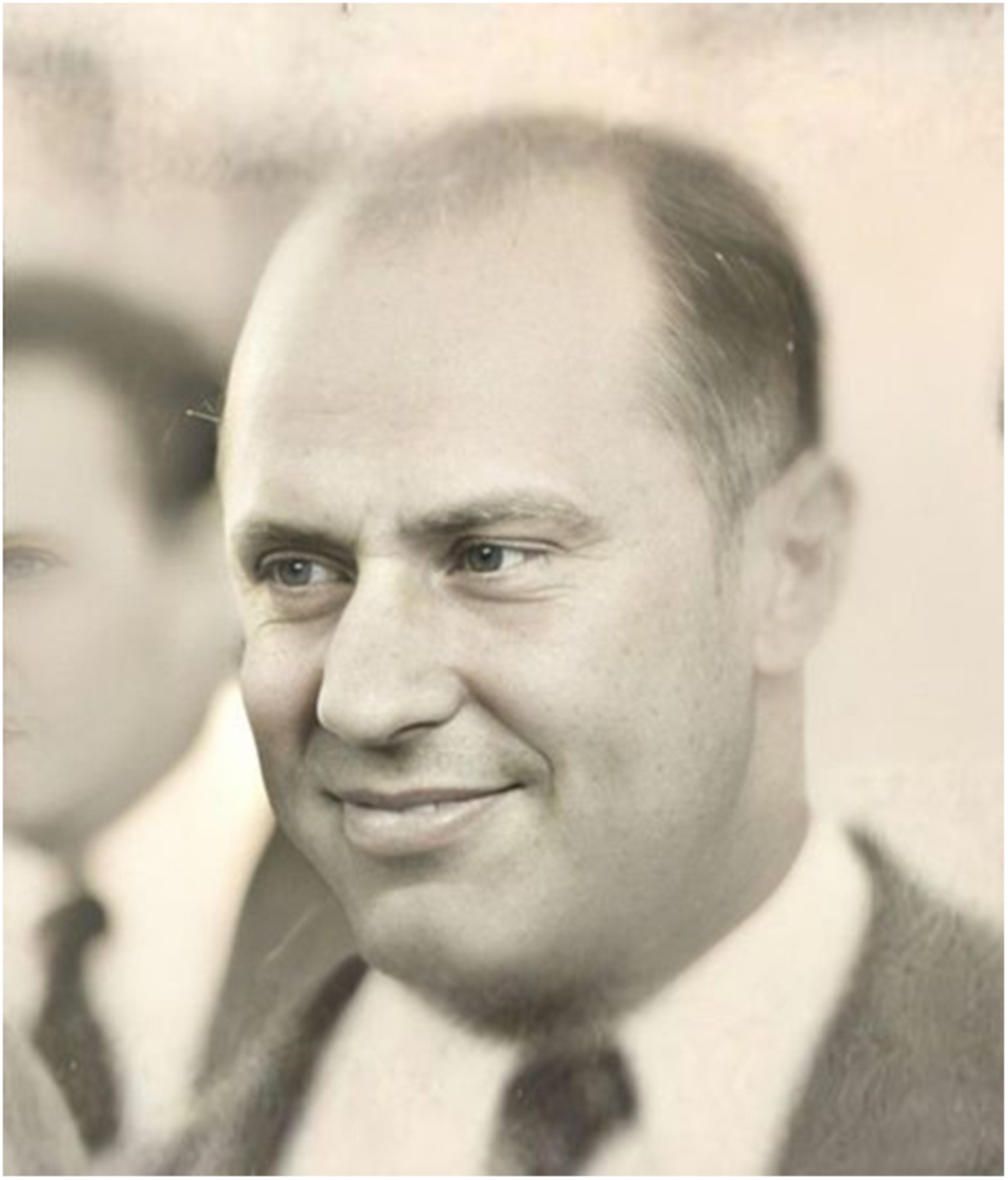
(Süreyya Anderiman: Atatürk’s Chief of Cabinet, Ambassador to Tokyo)
SELİM SARPER, HIS CLASSMATE FROM ROBERT COLLEGE
His classmate from Robert College, Selim Sarper, had been appointed Minister of Foreign Affairs after May 27. Although he stated that he would uncover the real reason for the incident, it was not brought to the agenda in the feverish atmosphere following the revolution.
I also do not recall it being the subject of any case file during the Yassıada High Court of Justice trials. Ultimately, a distinguished son of our country said goodbye to life along with his wife at a relatively young age (1900-1959).
WHAT WAS ERTUĞRUL ALATLI DOING IN JAPAN?
Ertuğrul Alatlı’s mission in Japan is often confused with the exile assignment of Muzaffer Özdağ (the father of Prof. Dr. Ümit Özdağ). As will be remembered, the radical group of 14 in the National Unity Committee had been purged and sent abroad with various duties. Alatlı is thought to be one of them. However, he is not. Despite being in contact with the radical wing, Alatlı was not in Turkey during the May 27 revolution. He was serving as a military attaché in Tokyo. Talat Aydemir was also in Korea that same year. The reason Alev Alatlı received education in Japan for a while is due to her father’s duty.
ON SÜREYYA ANDERİMAN AND HIS WIFE NÜKHET HANIM
Süreyya Anderiman had married Nükhet Hanım (Beler) in 1939. The wedding was widely discussed in the circles of the Turkish bourgeoisie, the diplomatic community, and the republican elite. Nükhet Hanım was the daughter of the famous businessman Aziz Beler, who was involved in international trade. She was a graduate of Dame de Sion. She was 16 years younger than Süreyya Bey.
The Anderimans were together everywhere in state service. They served for a long time in Oslo with the title of Minister Plenipotentiary.
Nükhet Hanım had become the “Ambassador’s Wife” in Tokyo. She was a young and beautiful woman who always attracted attention. The fact that the incident occurred shortly after Koraltan’s return caused suspicions to focus on the Speaker of the Grand National Assembly of Turkey (TBMM).
THE PRESIDENTIAL OFFICE OF THE CHIEF OF CABINET
The Presidential Office of the Chief of Cabinet (kalem-i mahsus) is an institution that has developed over time. Its place within the state organization is distinct.
If we look at the issue with a bit of a historical perspective, during Atatürk’s transition to Anatolia with his duty as the 9th Army Inspector, his aides-de-camp, First Lieutenants Hayati and Muzaffer Kılıç, were performing duties close to the “Chief of Cabinet.”
Throughout the National War of Liberation, they performed similar duties within the structure of the TBMM Presidency. Because Mustafa Kemal Pasha was the Speaker of the TBMM and the Commander-in-Chief, tasks such as organizing all kinds of correspondence (including encrypted communications) and the daily life of the TBMM Speaker began to be carried out by personnel recruited from the Army Inspectorate headquarters.
THE SITUATION OF HASAN RIZA SOYAK AND TEVFİK BIYIKLIOĞLU
As I have stated in various articles, the presidency in Turkey was born out of the TBMM presidency. The reason for this is the principle of parliamentary supremacy and the unity of powers. For this reason, the TBMM Presidency was the most important office of the Convention regime. It was the de facto presidency. This office transformed into the presidency. When the Speaker of the TBMM became the President, Tevfik Bıyıklıoğlu moved to the “Presidential Secretariat.” The distinction between the Secretariat and the Chief of Cabinet was established over time. Their job descriptions became more defined. Tevfik Bıyıklıoğlu and Hasan Rıza Soyak were the first secretaries-general.
When Bıyıklıoğlu was appointed as ambassador to Moscow, Hasan Rıza Soyak, who had been providing Chief of Cabinet services on all matters due to his relationship with Atatürk until then, was brought to the secretariat.
ANDERİMAN, ATATÜRK’S CHIEF OF CABINET
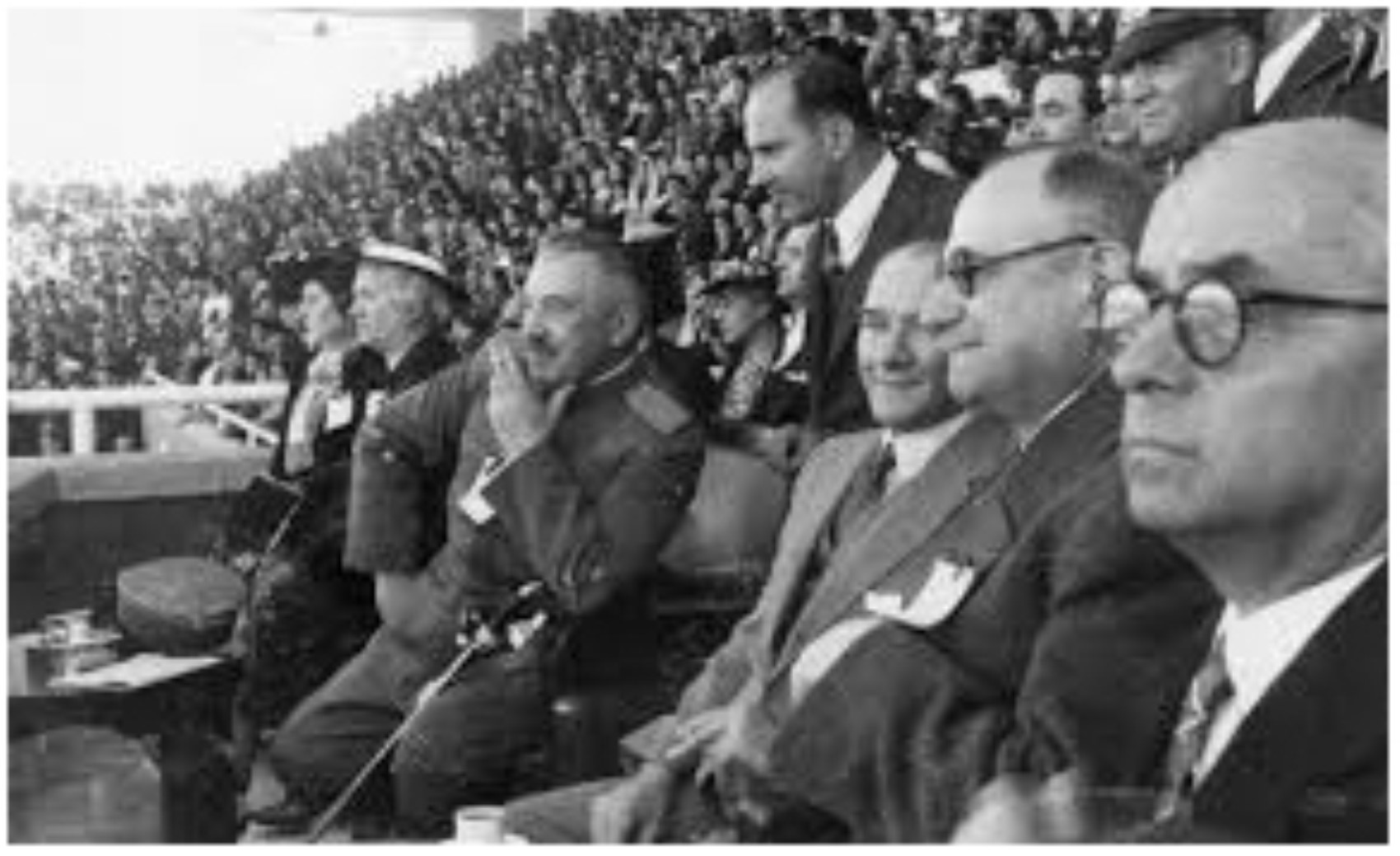
(Süreyya Anderiman, standing in the back row)
The appointment of the young, talented, and multilingual Süreyya Anderiman to the vacant “Chief of Cabinet” position occurred after these shifts in duties.
For me, Anderiman is the protocol man who watched the ceremonies from behind Atatürk at the Ankara Hippodrome on May 19, 1938, with a smiling expression. In that picture, the guest next to Atatürk is the Chief of General Staff of the Kingdom of Yugoslavia (Serb-Croat-Slovene). The others are Abdülhalik Renda and Bayar.
He is a figure who was mostly present in the photographs of the president and his entourage from the mid-30s until 1945 (the Atatürk and İnönü eras).
ANDERİMAN’S PLACE WITHIN THE BUREAUCRATIC ELITE
Süreyya Anderiman came from the Ottoman elite class. He was someone who had received a very good education. He was the son of Münir Pasha, the Commander of Hejaz. This was the reason he was born in Taif. (1900-1959)
After the Tanzimat, the children of the Ottoman elite usually received their education in French schools (preferably at the Mekteb-i Sultani).
For this reason, it is interesting that Anderiman studied at Robert College. It is recorded that he later studied engineering in Germany (Hanover). He entered the Ministry of Foreign Affairs of the young republic in 1926. It is noted in his biography that he finished the Faculty of Law in 1928. I believe he graduated from the Ankara Adliye Law School. After being accepted into the Ministry of Foreign Affairs as a career officer, he must have finished Law in the Ankara of the 20s by attending school in between.
After the re-establishment of Turkey-US relations, he was sent to Washington. It was the end of the Ahmet Muhtar Mollaoğlu era and the beginning of the Münir Ertegün era. He received a master’s degree in the US (Columbia University). Anderiman was a young diplomat fluent in English, French, and German.
When Hasan Rıza Soyak was appointed as the presidential secretary-general, he was “specifically” requested by Atatürk from the Foreign Ministry staff. He served as Atatürk’s Chief of Cabinet starting from December 22, 1934. This means the following: In the last four years of his life, Anderiman was one of the people closest to Atatürk. He is definitely present somewhere near Atatürk in the pictures.
For example, he is present in the pictures of Atatürk’s last arrival in Istanbul at Haydarpaşa Station, as well as in the Savarona pictures.
Anderiman’s Chief of Cabinet tenure coincides with a period when Atatürk was very intensely interested in language and history theses.
The organization of the History and Language congresses and the invitation correspondence for those coming from abroad (e.g., Eugene Pittard) must have all been done by him.
Bringing books from the university during the months Atatürk worked in Istanbul and ordering books from abroad were all among his duties.
If you wish, let this be a reminder through another picture: June 1, 1938, is the day the Savarona arrived. Atatürk is joyful. Prime Minister Bayar also came from Ankara that day. They board the ship together. There is a pleased but thoughtful expression on Atatürk’s face. The person behind him in this picture is Süreyya Anderiman.
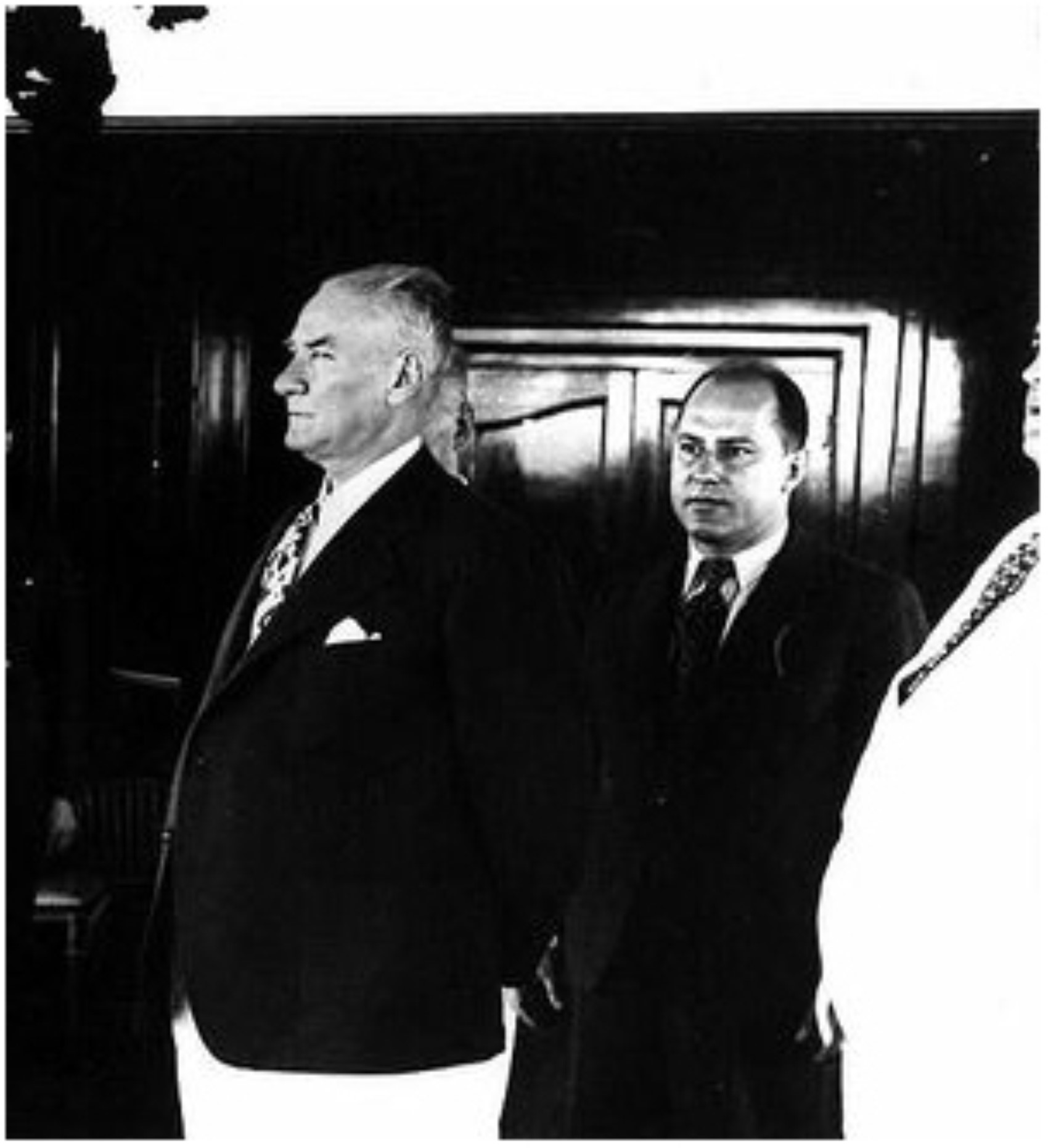
(Anderiman behind Atatürk on the day the Savarona arrived)
During the stages when the great Atatürk’s illness progressed, providing medicines (domestic and international) and being in constant contact with the attending and consulting physicians. Calling them immediately when necessary and having them brought to Dolmabahçe, and organizing the consultation of foreign doctors (e.g., Fissenger) should also be included in this.
The fact that he and Agop Dilaçar brought French books from Hachette in a hurry during Atatürk’s work on introducing Geometry terms into Turkish is also one of the stories told.
IMPORTANT MEETINGS ATTENDED BY ANDERİMAN
Süreyya Anderiman personally served as an interpreter in important meetings during the Second World War years. The first of these is the Yenice Conference, where Churchill came to persuade Turkey to enter the war on the side of the allies: January 31, 1943. We also see Anderiman in the pictures of the Second Cairo Conference: December 4-7, 1943. He personally served as an interpreter for the president in the meetings İnönü held with Churchill and Roosevelt.
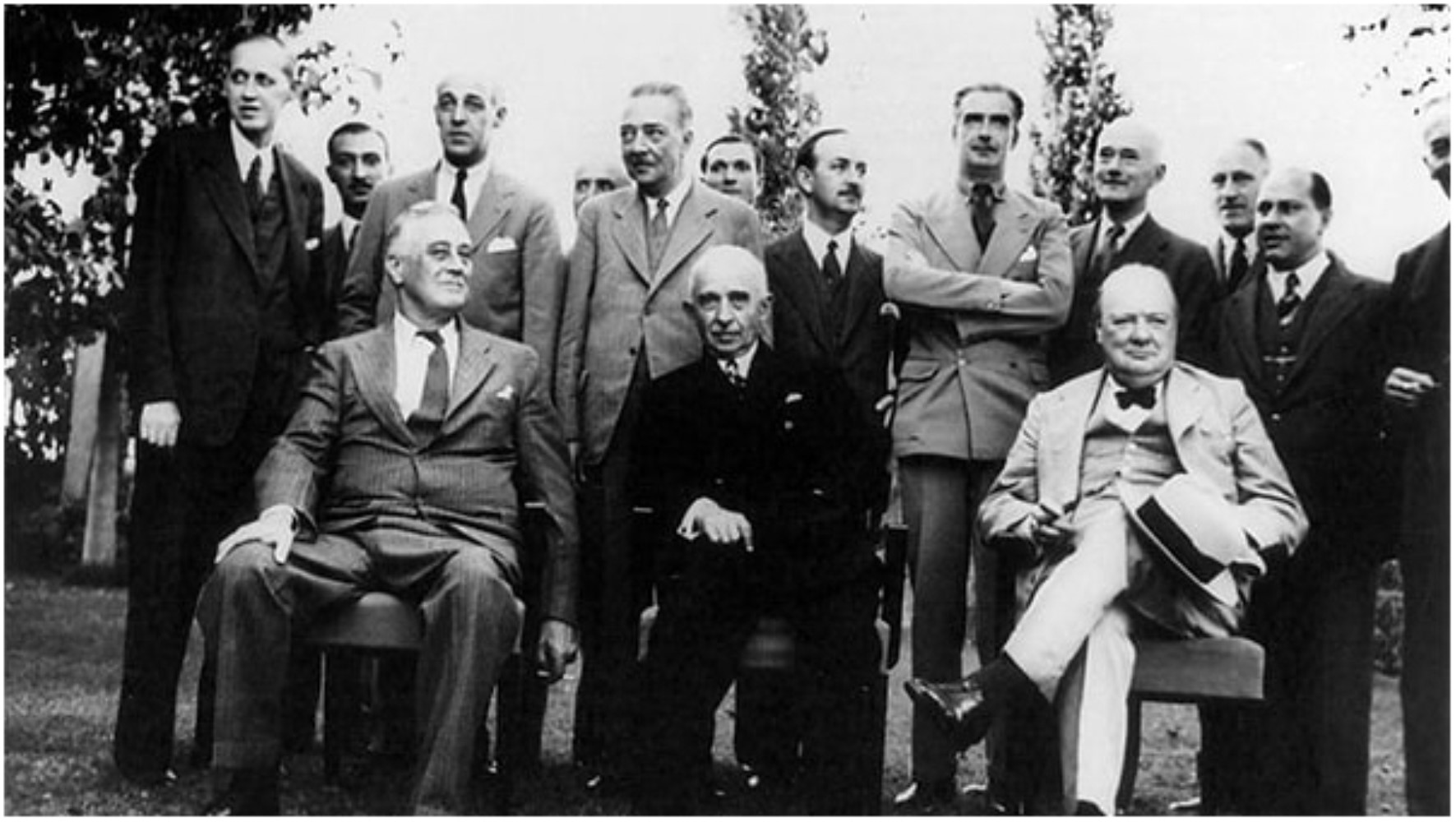
(Anderiman behind Churchill at the Second Cairo Conference)
HIS RECALL TO THE MINISTRY OF FOREIGN AFFAIRS STAFF AFTER 1945
Süreyya Anderiman was one of the members of the 12-person Turkish delegation that attended the San Francisco Conference together with Hasan Saka.
After the delegation returned from the conference, he was recalled to the Foreign Ministry staff. He was sent to Oslo with the title of Minister Plenipotentiary. He remained in this position from 1945 to 1957. In 1957, he was appointed as ambassador to Tokyo.
Japan, which had surrendered unconditionally, was being rebuilt in every sense. The Japanese empire was designed by the US as a constitutional monarchy. Like other countries, Turkey also established diplomatic contact with the new Japan. In the meantime, the transition to multi-party political life had taken place, and the Democrat Party had come to power.
The Menderes Government appointed Anderiman as ambassador to Tokyo, where we had been maintaining a representative at the level of chargé d’affaires for some time. (30.5.1957-28.9.1959)
THE TRAVELS OF THE DEMOCRATS
The Democrats had made İsmet Pasha’s white train the subject of their criticism. But they themselves traveled the whole world. When we examine the documents of the 50s, we witness the frequent overseas travels of the ruling party’s elite, deputies, ministers, and bureaucrats, especially to the US.
Going abroad on various occasions—in large delegations—was an aspect of the DP style of politics. The Savarona, which was called “very expensive, let it be sunk” by the DP members, was used quite a bit by the DP notables. President Bayar went on a trip to Pakistan with the Savarona. Our late prime minister Menderes was also a politician who loved “foreign contact.”
One might think that since the TBMM Presidency is not a political office, it should be the subject of fewer trips. But that was not the case.
TBMM Speaker Refik Koraltan also loved to go abroad by creating opportunities. At that time, Japan, which was under US occupation, had become a country of interest. After Turkey participated in the Korean War and was accepted into the North Atlantic Alliance, the Americans always welcomed the “travel requests” of Turkish administrators with pleasure. Perhaps Koraltan had gone to Japan with a travel opportunity provided by the Americans.
REGARDING REFİK KORALTAN
Refik Koraltan served as a parliamentarian for 40 years, starting from the First Assembly. (1920-1960) He had risen from being an administrative official to take his place within the CHP elite.
Koraltan was one of the founders of the DP. The Democrats made Bayar the president and him the Speaker of the TBMM.
Throughout their 10-year rule, the Bayar-Koraltan-Menderes status quo was maintained at the very top of the party hierarchy.
Koraltan was a politician famous for his womanizing. In fact, the term womanizing is an understatement. He was known and famous for his interest in the wives of party members and ministry bureaucrats that pushed the boundaries of courtesy/tolerance.

(The funerals in Turkey)
SPECULATIONS ON THE SUICIDE OF THE ANDERIMANS
Japanese official authorities reported the incident as suicide. But multi-faceted speculations were made about the incident. The most talked-about possibility was the exaggerated interest TBMM Speaker Refik Koraltan showed in Nükhet Hanım. Koraltan had come to Tokyo at that time.
Another was Koraltan’s insistence on wanting to meet with the Emperor of Japan. However, according to Japanese traditions, this was not possible. Upon this, Koraltan treated Anderiman like an incompetent ambassador who could not arrange the meeting. He insulted him. He even threatened him by saying that he was a CHP man and that he would have him recalled to the center as soon as he returned.
Ultimately, the reason for the Anderimans’ suicide remained a secret.
Most Read

Striking picture for Özgür Özel's 'New Party'

Özgür Özel gives a dated response regarding the number of resignations

Forest fire in Antalya brought under control

The PKK opening and Özgür Özel’s path!..

How did the newspapers view Özgür Özel's farewell to the CHP?

He killed his wife by slitting her throat: Their children witnessed the moments

What did the CHP do?

Özel’s new party move in the world press

The New CHP, against CEHAPE

Fire at TUSAŞ engine factory in Eskişehir under control