



On the structure of the third Ecevit Government
The 42nd government of the Republic was the third government formed by Ecevit. This government was a five-party coalition. The Republican Reliance Party (CGP), the Democratic Party (DP), independents who had left the Justice Party (AP), and independently elected deputies had joined the government.
This government, formed under Ecevit's leadership, remained in office between January 5, 1978, and November 12, 1979. It is often thought that the government was formed only with the CHP and independents who had resigned from the AP. This is incorrect.
Assessments regarding the formation of this government are mostly superficial. They are perception operations aimed at creating suspicion.
In my opinion, the reason this government was formed with this composition is that Demirel left Turkey with no options other than the Nationalist Front (MC). The fact that the II. MC was toppled within five months shows its rottenness, not Ecevit's intrigues.
There was no bargaining for ministries at the foundation of the government's formation. The issue of ministries was a secondary matter.
Although Ecevit said, "It was one of the biggest mistakes of my life," I do not share that opinion. What was wrong was not Ecevit's inclusion of independents in the government, but the way of governing. As a result, Prime Minister Ecevit could not determine a roadmap to put the country on the right track. He did not have the power to do so.
Demirel's insistence on the MHP and MSP
I am truly curious about one thing: Ecevit had made a proposal to Demirel as follows: Let the Justice Party form a minority government. We will support it from the outside. Or, let us form it and you support us, he had said. What could have been the real reason for Demirel not accepting any of these proposals and wanting to continue with far-right parties? What would the results have been if he had accepted one of these formulas?
Demirel's re-establishment of the Nationalist Front government (minus Feyzioğlu) further increased political tension.
The second MC was able to remain in office between July 21, 1977, and January 5, 1978. Its ability to govern Turkey under these conditions was low.
The government had created discomfort among the Justice Party cadres. The fact that they gave a vote of confidence due to party discipline did not explain everything.
This government, based on the idea of not giving Ecevit the opportunity to govern the country, would eventually be toppled. And with the support of deputies who resigned from the AP. The prevailing expectation was a government that included the CHP. Even so, Demirel had reversed the flow of the water by taking Türkeş and Erbakan with him.
Güneş Motel negotiations
The Güneş Motel negotiations were the result of the discomfort within the AP. The "11s" resigned from the Justice Party one after another. Ecevit's first meeting with the resigning deputies took place on December 22. The second was on December 30. Demirel's statement, "I will not resign. Let the CHP topple me the way it wants to," is characteristic of Demirel's identity. The government was toppled by a vote of no confidence on December 31, 1977.
Turhan Feyzioğlu and the Republican Reliance Party
First, let's address Turhan Feyzioğlu and the CGP. Feyzioğlu joined the Ecevit government. Why, one might ask? He had taken part in the Nationalist Front government in 1975 due to his hostility toward Ecevit. It is necessary to examine why he took part in this coalition. Despite his personal reservations, political conditions forced him to join this coalition.
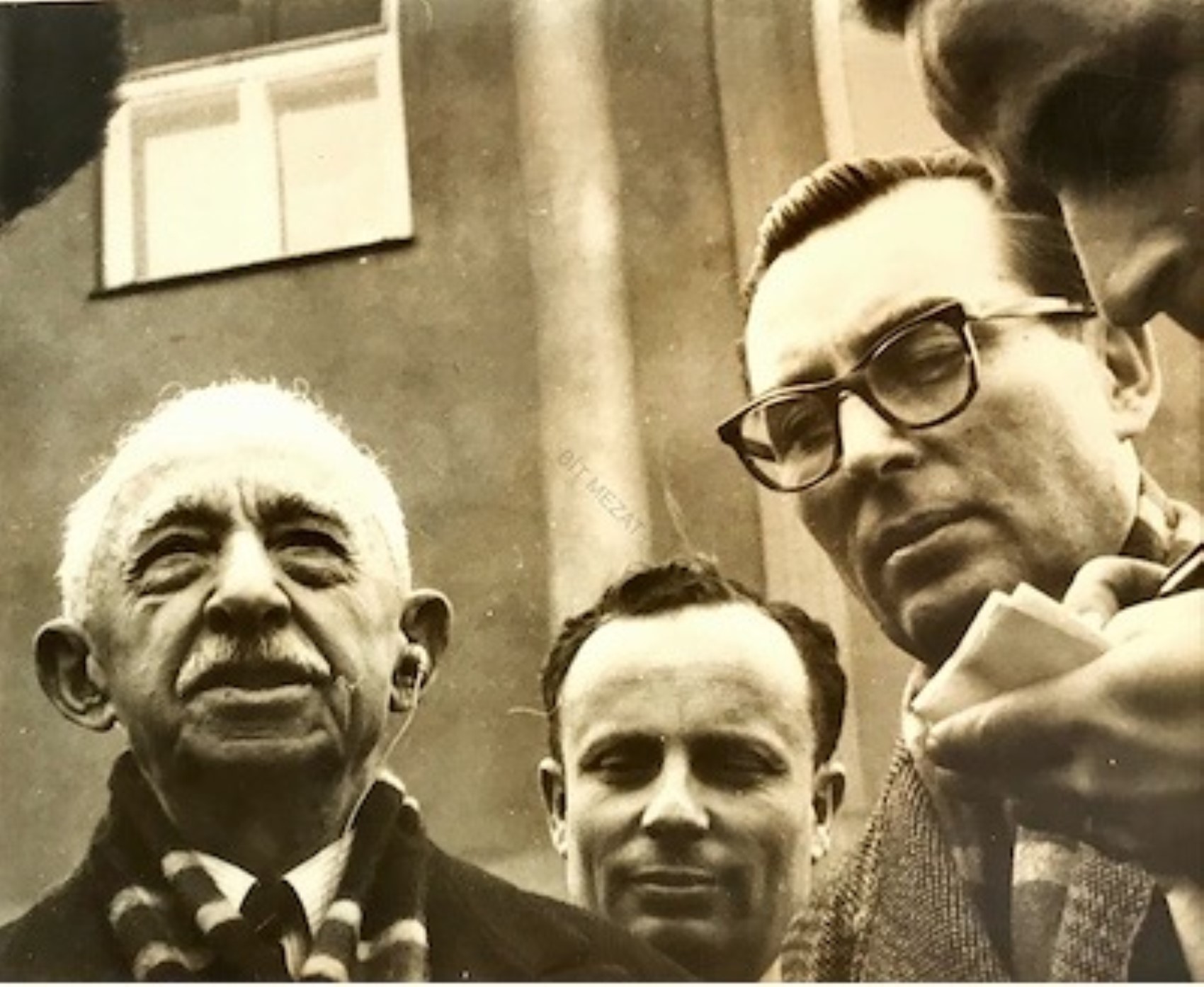
Feyzioğlu was one of two politicians shown as the heir apparent to İnönü in the 1960s. The other name is Nihat Erim. Both had brilliant academic backgrounds. Of course, according to the criteria of that time. For example, Feyzioğlu wrote and defended his doctoral thesis titled "Judicial Review of the Constitutionality of Laws" in two years. How can this be? It truly piqued my curiosity. This is the duration of a doctoral thesis. He became a professor at 33 and was elected dean of the Faculty of Political Sciences at a young age.
I think he was one of those who led the establishment of the Forum Magazine.
He became famous for his anti-Democratic Party remark, "do not tell people what they want to hear," and was suspended by the government. This opened his path to politics. He was treated like a golden boy by İnönü and was elected as a Sivas deputy in the 1957 elections. Since that date, he has always been involved in politics, served as a CHP representative in the Constituent Assembly, and later always served in the TBMM as a Kayseri deputy. During the May 27 period, he served briefly as Minister of National Education and was appointed rector of METU. Feyzioğlu had also served as a minister in İnönü governments (1961-1965).
Feyzioğlu's reasons for distancing himself from and approaching Ecevit
From the 18th Grand Congress (1966) onwards, Feyzioğlu parted ways with the "leftist wave" rising in the CHP, and a fairly large group followed him. According to him, the CHP could not be a leftist party. Leftism meant Marxism and class struggle. The CHP should be Kemalist. Not leftist.
He did not like Ecevit not only for ideological reasons but also for personal reasons. He probably saw him as an orator with superficial knowledge who had not received higher education.
His allergy to Ecevit and the left distanced Feyzioğlu from the CHP. It placed him in the position of leader of a center-right party that he defined as Kemalism.
The CGP, which he led, was a right-wing party in my opinion, with its rhetoric and politics, even though it defined itself as a center party. He was fundamentally opposed to the Ecevitism that dominated the CHP after 1972, his understanding of populism, and his leftism. We can even say that Feyzioğlu's political stance was based on anti-Ecevitism. More so than Demirel. In my opinion, Feyzioğlu's Kemalism was closer to Demirel's right-wing politics.
At the beginning of 1975, Feyzioğlu had joined the Nationalist Front government, which included the AP, MHP, and MSP. With the intention of taking a position against the rising Karaoğlan Ecevit wave and blocking his path.
He knew the Justice Party and Demirel. He had the opportunity to get to know Türkeş and Erbakan more closely. His sensitivities were the same as those of President Korutürk. It is not difficult to guess these.
Now, what had happened that he could meet on the same line with Ecevit, whom he was so opposed to? He had reached the point of acting together with him. The reason for this, in my opinion, is Demirel's insistence on governing with the MHP and MSP.
Feyzioğlu was a politician appreciated by the central elite. It would be more accurate to call this right-wing Kemalism. He had served as rector and minister. If he had seen a problem in terms of political ethics in the formation of the government, he would not have taken part in this government. The CGP had won three seats in the 1977 elections. With the participation of Ağrı deputy Mikail Aydemir in the Justice Party, the number of deputies had fallen to two. While the CGP's vote share in the previous election was 5.2% and the number of deputies was 13; in 1977, the vote share fell to 1.8% and the number of deputies to 3.
The Kemalist center party adventure that started with the Reliance Party in 1969 seems to have lost quite a bit of altitude with this result.
The main reason for this change of position by Feyzioğlu was not Demirel, but Türkeş and Erbakan. In the end, Ecevit had included Feyzioğlu, one of his harshest opponents for 10 years, in the coalition.
Chairman Feyzioğlu was appointed Minister of State and Deputy Prime Minister, and Van deputy Mehmet Salih Yıldız was appointed Minister of State. Feyzioğlu left the government on September 18, 1978, and Yıldız on June 21, 1979. Feyzioğlu left Ecevit to his own fate. He repositioned himself in a position not far from the AP. He would give a vote of confidence to the Demirel minority government in 1979.
Zehir Hafiye in the Ecevit Government
Let's come to the reasons for the Democratic Party's participation in the Ecevit government.
The Democratic Party is a faction that broke away from the Justice Party in 1970. The party was founded under the leadership of Ferruh Bozbeyli. Bozbeyli had been a deputy since 1961. He was elected Speaker of the TBMM in 1965 and 1969. The establishment of the party is based on two main reasons. The AP becoming the party of the big city bourgeoisie can be shown as the first reason, in my opinion. The AP had become the party of the comprador bourgeoisie, in the words of Doğan Avcıoğlu. The policies it implemented left provincial capital in the background. The Democratic Party was founded by appealing to provincial agricultural and commercial capital. This means it sits on the same class basis as the Democratic Party in the 50s. We can say the same things for the MSP. But the MSP's ideological stance was anti-secularism.
The Democratic Party could not repeat its success in the 1973 elections in 1977. Even chairman Ferruh Bozbeyli could not enter parliament. Demirel succeeded in uniting all factions of the right around the policy of not giving power to the CHP. At the beginning of 1975, the Nine Movement, led by Op. Dr. Sadettin Bilgiç, who listened to Bayar's call to "help Süleyman," broke away from the DP. They supported the Nationalist Front. After a while, they joined the AP. The group that had opposed Demirel since the 1964 congress had reunited in the Justice Party.
Those who would not come together with Demirel in any way continued their path with Bozbeyli. Result: The party suffered a defeat. Only Internal Medicine Specialist Dr. Mehmet Faruk Sükan could be elected as a deputy from Konya.
Dr. Sükan came from the Democratic Party era. In fact, his teacher who sent him to France for internal medicine specialization was Dr. Nihat Reşat Belger.
He first became a minister in the Suat Hayri Ürgüplü cabinet. Then he continued his path on the Demirel line. He served as Minister of Health and Minister of Interior. Until they parted ways in 1970.
Dr. Sükan is the politician who remains in our political history with the words he uttered during his years as Minister of Interior: "We are even tracking the breathing of leftists."
However, the situation had changed now. The Democratic Party had reached the point of being wiped out against Demirel. It was represented in Parliament by one deputy. And that was himself.
The Democratic Party was against the left. But it was also against Demirel.
The Democratic Party could very well have formed a coalition with Ecevit after the 1973 elections. Ecevit had already proposed this. He had thought of forming a government with the Democratic Party before the National Salvation Party. I think he would have preferred this option more. In all likelihood, Bozbeyli had rejected the proposal so as not to fall into the position of the party that brought Ecevit's leftism to power. Erbakan, on the other hand, was in pursuit of power at any cost.
Since the Democratic Party's opposition to Demirel outweighed everything else, it took part in Ecevit's large cabinet. Despite being against the left. Dr. Sükan was appointed Deputy Prime Minister and Minister of State.
In summary, it is possible to attribute the CGP and DP's taking place alongside Ecevit to several reasons.
First of all, it had become clear that the Turkish people had brought the CHP to the edge of power. This had created great excitement. Our hope, Ecevit, had found a response. Karaoğlan had left Demirel behind by an 8% margin. Turkey's ruling powers also wanted to give Ecevit a chance, despite having some reservations. Of course, on the condition that their interests were not touched.
The second issue is that during the MC governments, the state apparatus had been practically occupied by MHP and MSP cadres. Demirel had turned a blind eye to this in order not to fall from power. He was openly ignoring the nationalist violence, saying, "You cannot make me say that nationalists are committing crimes." Reactionary and fascist tendencies had filled the state cadres. President Korutürk and Turhan Feyzioğlu had drawn attention to this.
Feyzioğlu determined a position in the middle by not joining the II. MC. When it collapsed, he joined the opposing front.
The Democratic Party entered the Ecevit government. For this reason: To topple Demirel. To have a say in government policies, to have the power to object to the government from within on issues where they had reservations.
These are the main motives that led the CGP and DP to join the Ecevit government, in my opinion.
Deputy Prime Ministers of the government
The political parties that joined the government outside of the CHP were represented in power with deputy prime ministerships: Feyzioğlu and Sükan. There are two deputy prime ministers from the CHP. Hikmet Çetin and Orhan Eyüboğlu.
Who among the independents became ministers?
Now let's examine the group of independent deputies who left the Justice Party and joined the government as coalition partners.
First, let's evaluate Konya deputy Oğuz Atalay, who led the resignation movement from the Justice Party. He had been elected as a deputy from the AP for two terms before. He was against the coalition with the MHP and MSP. He resigned from his party, did not accept the ministry offer, and gave a vote of confidence to the Ecevit government.
An atypical identity who took part in the government is Şerafettin Elçi. Elçi had been elected as a Mardin deputy from the Justice Party list. When he was elected, he was most likely not even an AP member. We should count him as an independent deputy.
There is a point I want to remind you of. Since the Democratic Party era, we see that someone from the families that stood out in the East was definitely nominated. This was not to win partisans, of course. It was a policy of putting forward the notables, the Kurdish lords, and benefiting from them to win the election against the CHP. For example, Ahmet Türk was elected as a deputy from the Democratic Party in the 1973 elections. In 1977, Şerafettin Elçi became a deputy from the AP, and Ahmet Türk from the CHP. These elections do not show the party ties of the people concerned. It is more accurate to interpret it as the strategy of the party nominating the candidate to win the majority in parliament by benefiting from the local influence of certain people.
Considering the way Şerafettin Elçi is known to the public, it would not be correct to count him as an AP member. Şerafettin Elçi's AP deputyship is something like Suat Hayri Ürgüplü being elected senator from the AP list, or Halide Edip Adıvar being elected from the Democratic Party list.
Şerafettin Elçi became an independent deputy from Diyarbakır in 2011 with BDP support. I would like to remind you that the AKP government gave his name to the Şırnak Airport. He is a relative of Tahir Elçi. Şerafettin Elçi was considered among the moderates within Kurdish nationalism. I am not of that opinion. But that is a separate issue. Elçi was a member of the TBMM in the XVI and XXVI terms. He remained in prison for a long time after September 12. He received a 10-year political ban. He was also tried in the Supreme Court. While Mataracı and İşgüzar were convicted, Elçi was acquitted. The conviction decisions were given in other courts due to political accusations. He had been representing a wing of political Kurdish nationalism since the 1960s.
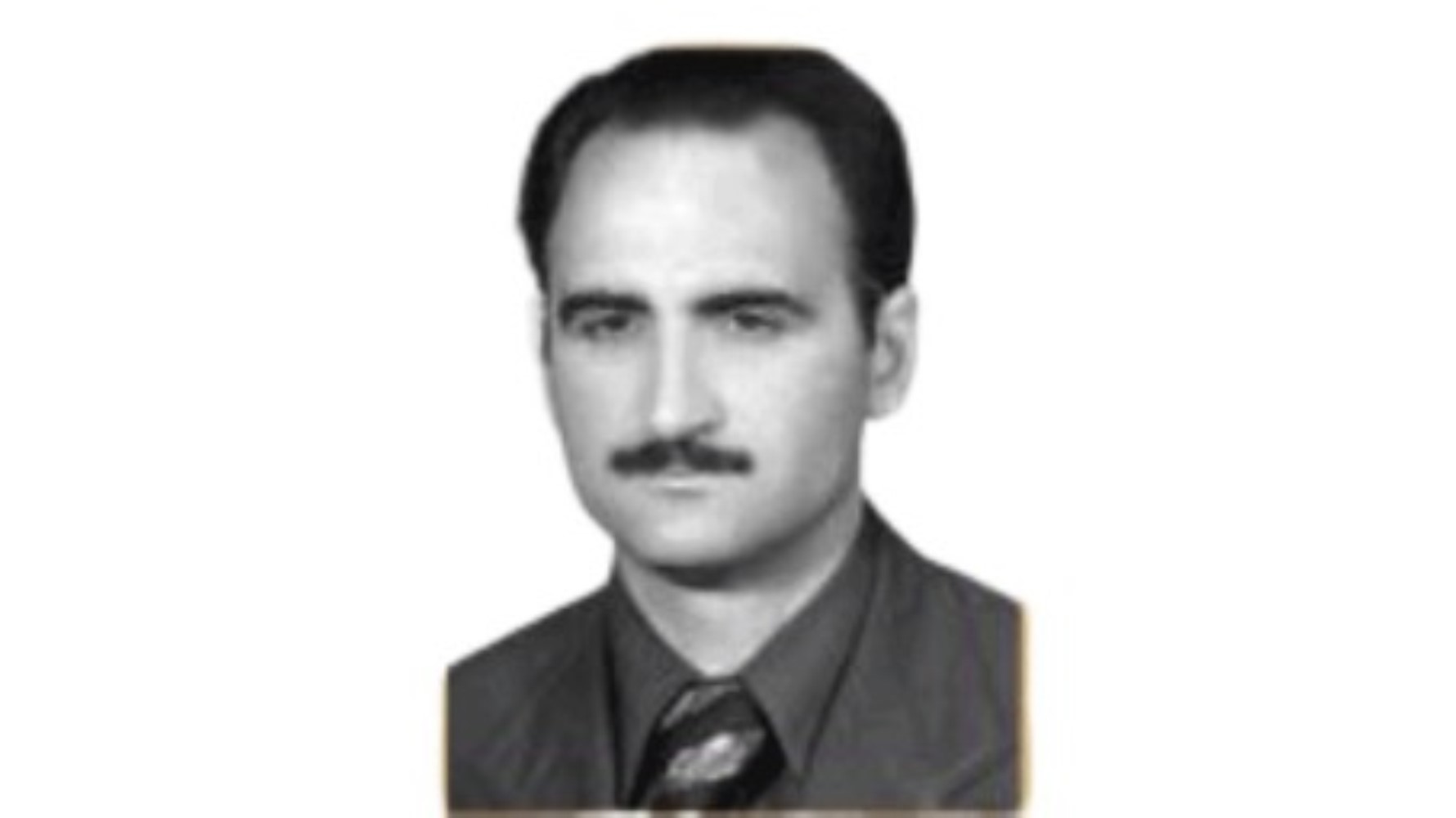
If I need to say a few things to explain his participation in the Ecevit Government, Ecevit made him Minister of Public Works. I am sure he had some thoughts within the framework of the underdevelopment of the East.
Şerafettin Elçi remained in the government until Ecevit resigned in 1979. He also has a book titled "From the Envoy of the East to the Supreme Court, Şerafettin Elçi."
In my opinion, a nationalist like Ecevit taking a representative of Kurdish nationalism into his government at that date must stem from the idea of maintaining a sensitivity.
Now let's address the other independents. Enver Akova was a mufti who graduated from the Higher Islamic Institute. He had been a Sivas deputy from the Justice Party since 1969. He was appointed Minister of State responsible for Foundations. When he lost hope in Ecevit, he left the ministry on May 31, 1979. He returned to the Justice Party upon Demirel's call.
Hasan Korkut had served as a Kırklareli deputy from the AP for two terms and was appointed Minister of State.
Ali Rıza Septioğlu is the son of Sheikh Sadin Septioğlu from Palu. His family had been sent to Adana during the May 27th coup plotters' decision to exile the landlords and sheikhs. Some Kurdish landlords were also subjected to forced residence in Mersin. Septioğlu was born in 1913. He had taken part in the Democratic Party since its establishment. This is significant. This means being a representative of the periphery stance against single-party policies.
He became an independent deputy from Elazığ in 1969. He wanted to be a candidate from the Justice Party. When he was not put on the list, he also became an independent candidate and was elected. He is very strong in his region. He left the government on June 18, 1979. He is also one of those who lost hope in Ecevit.
Demirel invited him to the AP. He accepted. When Demirel formed a minority government, he supported it. Ali Rıza Septioğlu was an Elazığ deputy in the 14th, 16th, 18th, 19th, and 21st terms. He was presiding over the TBMM as the oldest member during Merve Kavakçı's oath issue. I think he was last elected from the True Path Party.
His son Faruk Septioğlu became an AKP deputy in the XXII term.
Dr. Mete Tan was appointed Minister of Health. He is from a Democratic Party family. His father served as a DP Afyon deputy. What I mean is that he comes from a well-known family in Afyon. He worked in the Ministry of Health for many years. He served as president of the Medical Chamber. He was elected as a deputy from the Justice Party for two terms. I think Dr. Tan's appointment to the Ministry of Health was a correct appointment.
Güneş Öngüt, a lawyer from Afyon, was appointed Minister of Transport in the Ecevit government. He is also a former Justice Party member.
Orhan Alp is from Isparta, Demirel's hometown. He received engineering education abroad with a state scholarship. He is one of the most solid men among the AP members in this government. The other Minister of Health, Dr. Mete Tan, and Orhan Alp were appointed to the Ministry of Industry by Ecevit. I think these are two very correct appointments.
Ahmet Karaaslan, who served as a deputy for three terms, is from Pötürge, Malatya. He has a background as a civil administrator. He is one of those who left the AP. He was appointed to the Ministry of Reconstruction.
Hilmi İşgüzar, who was appointed Minister of Social Security, was elected as a Justice Party deputy from Sinop in 1965, 1969, and 1977. He graduated in forestry engineering and law. He resigned from the ministry due to allegations of abuse voiced by the CGP. He is one of the two ministers who were tried and convicted in the Supreme Court.
Tuncay Mataracı, who left the Justice Party and took part in the government, entered parliament for the first time in the 1977 elections. He is from the Mataracıs, one of the well-known families of Rize. He served as Minister of Customs and Monopolies. He was referred to the Supreme Court by the NSC on charges of bribery. He was sentenced to 43 years in prison. He was released in 1991.
Who were the CHP ministers in the government?
The CHP's ministers were the following names: Hasan Esat Işık, Neşet Akmandor (Minister of Defense), Mehmet Can (Minister of Justice), İrfan Özaydınlı and Hasan Fehmi Güneş (Minister of Interior), Gündüz Ökçün (Minister of Foreign Affairs), Ziya Müezzinoğlu, Besim Üstünel (Minister of Finance), Necdet Uğur (Minister of National Education), Lütfi Doğan (Minister of State, Religious Affairs), Teoman Köprülüler (Minister of Trade), Mehmet Yüceler (Minister of Agriculture), Deniz Baykal (Minister of Energy), Bahir Ersoy (Minister of Labor), Ahmet Taner Kışlalı (Minister of Culture), Alev Coşkun (Minister of Tourism), Ali Topuz (Minister of Village Affairs), Yüksel Çakmur (Minister of Sports), Mahmut Özdemir (Local Governments).
I would like to draw your attention to the fact that the CHP's most distinguished cadres took part in this government.
What were Ecevit's mistakes?
Ecevit had announced that the CHP had come to power from the party headquarters balcony before the June 5, 1977, election results were finalized. This was an incredible mistake. Ecevit was a man of emotion. He was not a man of calculation like Demirel. He was able to announce that he had won an unwon election - with excitement. And that, as someone who had had parliamentary experience since 1957.
Ecevit had psychologically convinced himself of power with the enthusiasm of emerging as the first party from the elections. This was a mistake. 213 deputies did not make 226. He formed the minority government under this psychology. He failed. He formed a government that it was clear would not receive a vote of confidence. With a hope. Maybe some Justice Party members would give a vote of confidence. There were certainly some AP members who thought Ecevit should form the government. But due to party discipline, they could not give a vote of confidence to a government formed by their biggest rival party immediately after the elections, and in an environment where open voting was held. Ecevit was able to expect this.
After the Ecevit minority government was toppled, he proposed to Demirel an AP minority government or an AP-CHP coalition under the prime ministership of someone other than the party leaders. Demirel rejected them all.
Ecevit must have perceived Turkey's political regime as a democracy at European standards, so his proposals remained abstract in the face of the realities of politics. He was openly defeated by Demirel at every step he took.
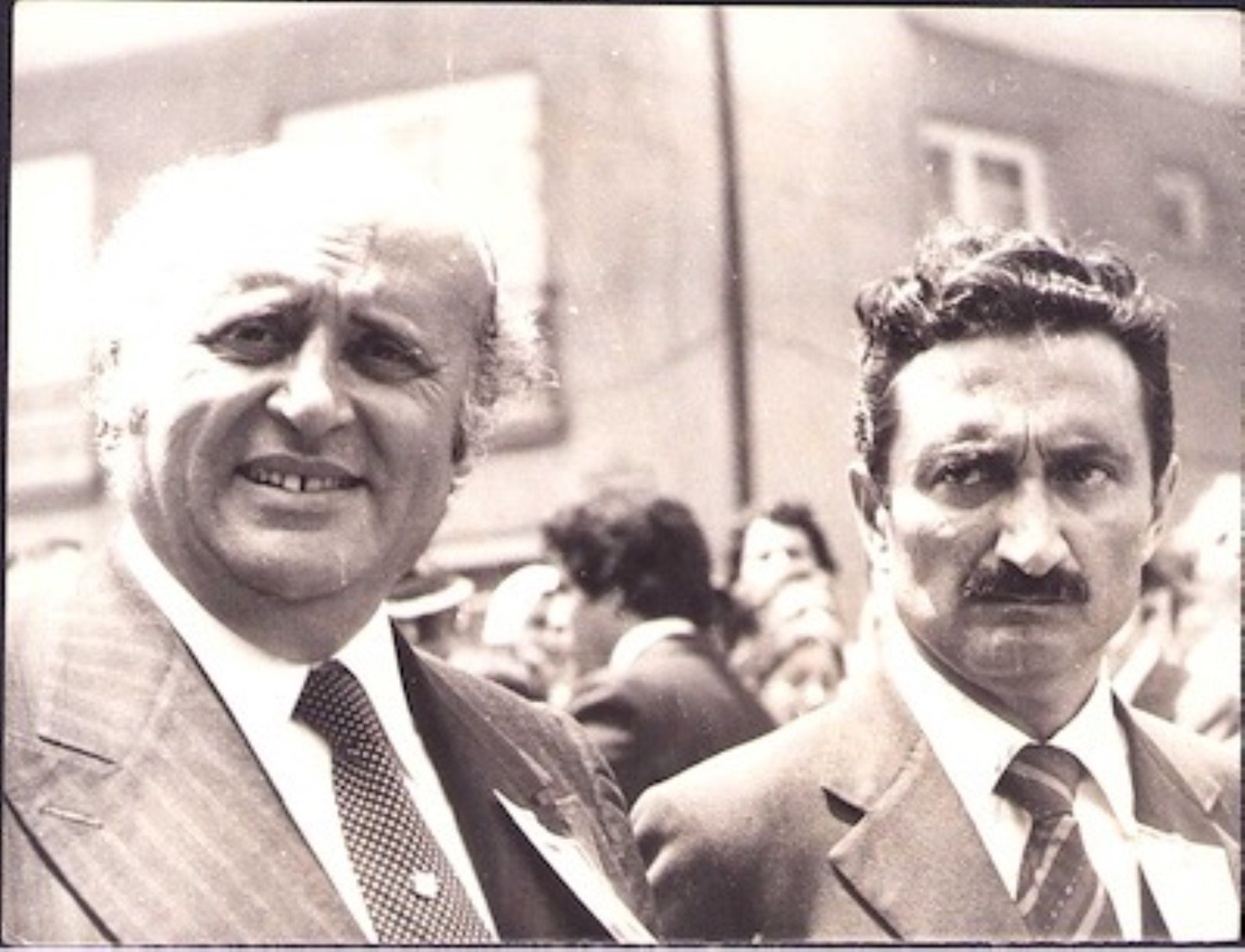
What should be the verdict on this government?
Ecevit believed that he had emerged from the 1977 elections with a great victory. The Turkish people felt as if he had brought him to power. The wrong steps he took stemmed from the excitement of taking power. The only problem was that the CHP had not reached 226 deputies. He thought that would be handled somehow too. Whereas the situation was not like that at all.
First, he fell into the dream that there would definitely be Justice Party deputies who would respond positively to this rising wave.
As someone who had been in politics since 1957, he could not see that this was against the nature of things. His forming a minority government was the product of this dream.
With a 5-month delay, a sufficient number of positive responses came from the AP to Ecevit's call. With the support of the CGP and DP, he succeeded in forming an opposing front government.
He started his duty under the salvos of "Demirel is the head of the government," "dubious government," "Çankaya government," "Güneş Motel government," and "bought deputies."
Ecevit believed that he could solve the country's deeply rooted problems in a "populist" way. In my opinion, he was not aware that he was facing a coalition of deeply rooted conservative forces.
The economy had worsened since the 1974 oil shock. The balance of payments was broken. All resources had reached the point of exhaustion.
The industrial bourgeoisie and public enterprises needed foreign currency to keep the wheels of the economy turning.
None of the measures taken could bring a sufficiently radical solution. Whereas the ministers he assigned to the government were very good in terms of their backgrounds. Like Besim Üstünel, Ziya Müezzinoğlu.
Inflation could not be reined in, and the cost of living was increasing. Under the leadership of DİSK, the working class was resisting to get a larger share of the national pie.
Even the middle-of-the-road Türk-iş had entered the atmosphere of working-class struggle so as not to be left behind. The labor-capital contradiction had sharpened. The capital class was not happy with this at all.
The real big issue was internal security and public order. Since 1975, the year the MHP first entered the government, idealist paramilitary groups, who said they dedicated themselves to the anti-communist struggle, had been continuing their actions. Their target was Marxist-Leninist organizations that expressed that a socialist revolution would soon take place in the country.
The violent actions, later defined as right-left conflict, could not be stopped by the government; they were escalating.
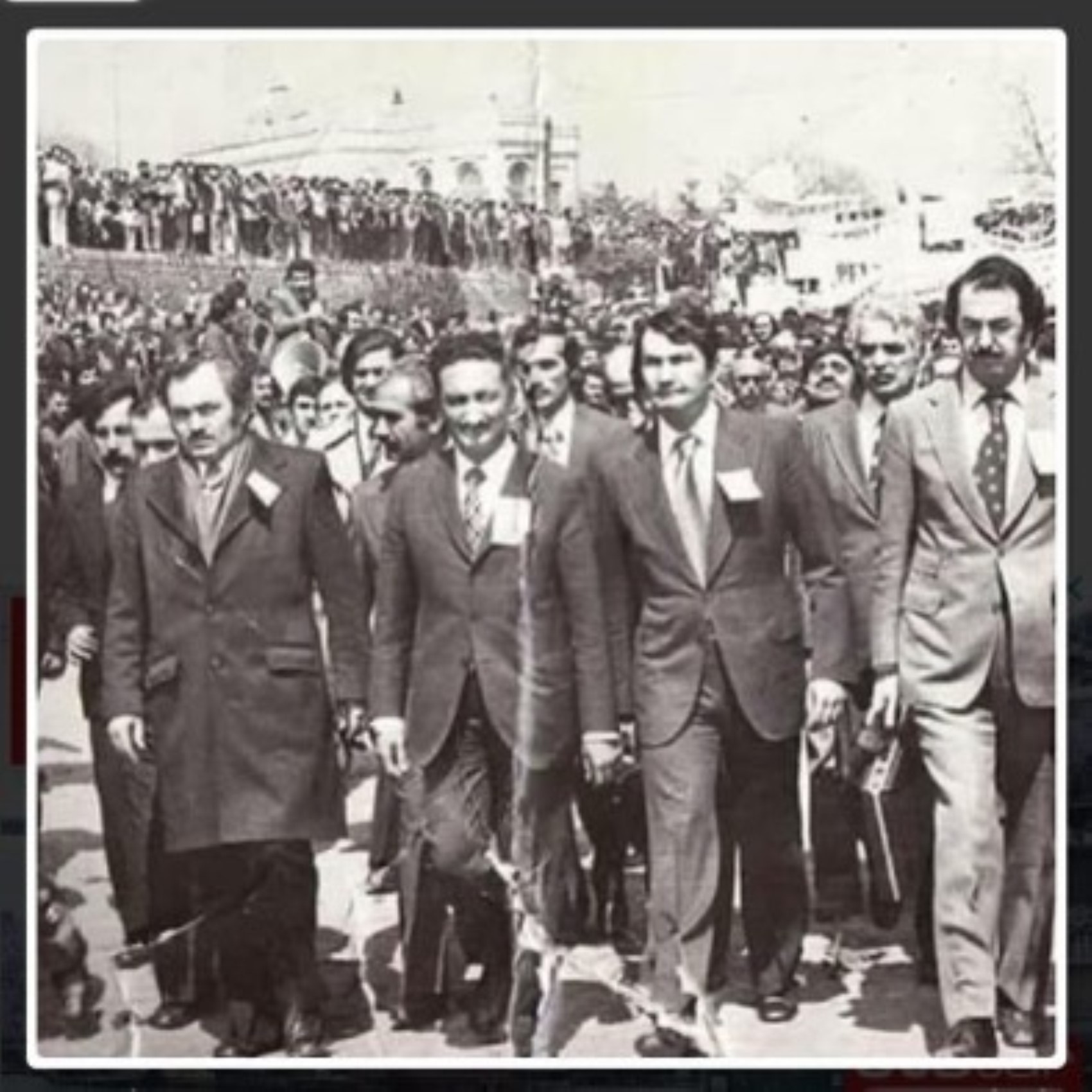
Let's look at the process a little closer if you wish: As soon as Ecevit started his duty, the March 16 massacre occurred at Istanbul University. This was a terrible event. Bombs were thrown at the students, and they were sprayed with automatic weapons from behind. Countless political murders were committed. Abdi İpekçi, Hamid Fendoğlu, Cavit Orhan Tütengil, Ümit Yaşar Doğanay, Bedri Karafakioğlu, Bedrettin Cömert, and Adana Police Chief Cevat Yurdakul, Orhan Yavuz, Necdet Bulut lost their lives in the attacks. Professor Server Tanilli was seriously injured and became paralyzed. He continued his life in a wheelchair until 2011. Those who want more detailed information can refer to the chronologies of the period.
The police were divided. Under the names of Pol-Der and Pol-Bir associations. Ecevit could not control either the police organization or the intelligence.
Izmir deputy Süleyman Genç had said: "It is the intelligence organizations that feed terrorism." Ecevit learned the true nature of these things much later. He understood that there was a Special Warfare Department (counter-guerrilla) organized by the Pentagon in Turkey. But he did not have the power to expose it. Even though he was in power.
There was a terrible civil war rehearsal in Kahramanmaraş. A massacre was carried out in Alevi neighborhoods. This event is a very good example showing what can be done with provocation in Turkey. Over 100 people were massacred. Days passed until the government could control the events. Ecevit had to declare martial law in 13 provinces. The army came out of the barracks.
In this highly divided political environment, martial law commanders and the chief of general staff did not act very willingly to ensure public order under Ecevit's command. They even ignored some requests. They constantly asked for more authority. For more authority. They would continue this attitude after Demirel came to power. Demirel would give this answer: "Do not expect Muğlalı laws from me."
The army was acting like a separate group, a party. Ecevit's "Martial law coordination meetings," which tried to emphasize the superiority of civil authority, were met with smiles.
TÜSİAD revealed with a series of newspaper advertisements in April 1979 that this patchwork government, which it supported reluctantly, did not have the ability to turn the wheels of Turkish capitalism.
If it were today, it is highly likely that the owners of this declaration would be arrested for inciting the public to rebellion. Ecevit met this declaration with displeasure. He did nothing but say he would complain to the prosecutor's office.
The situation had become clear. The capital class had withdrawn its support, which it had maintained reluctantly. Because Ecevit was not following a policy that would meet their expectations. The January 24 decisions would partially meet their expectations. Özal would continue these policies with the September 12 interim regime.
Not only the capital class, but other social segments were also squeezing Ecevit. Workers, civil servants, peasants.
The credit that the Turkish people had opened with great enthusiasm in 1977 had been exhausted. The 1979 by-elections showed that Ecevit's general vote support had halved. This result actually still did not provide a numerical majority that could topple the government. Demirel and Özal would definitely not resign in the same situation. And they didn't.
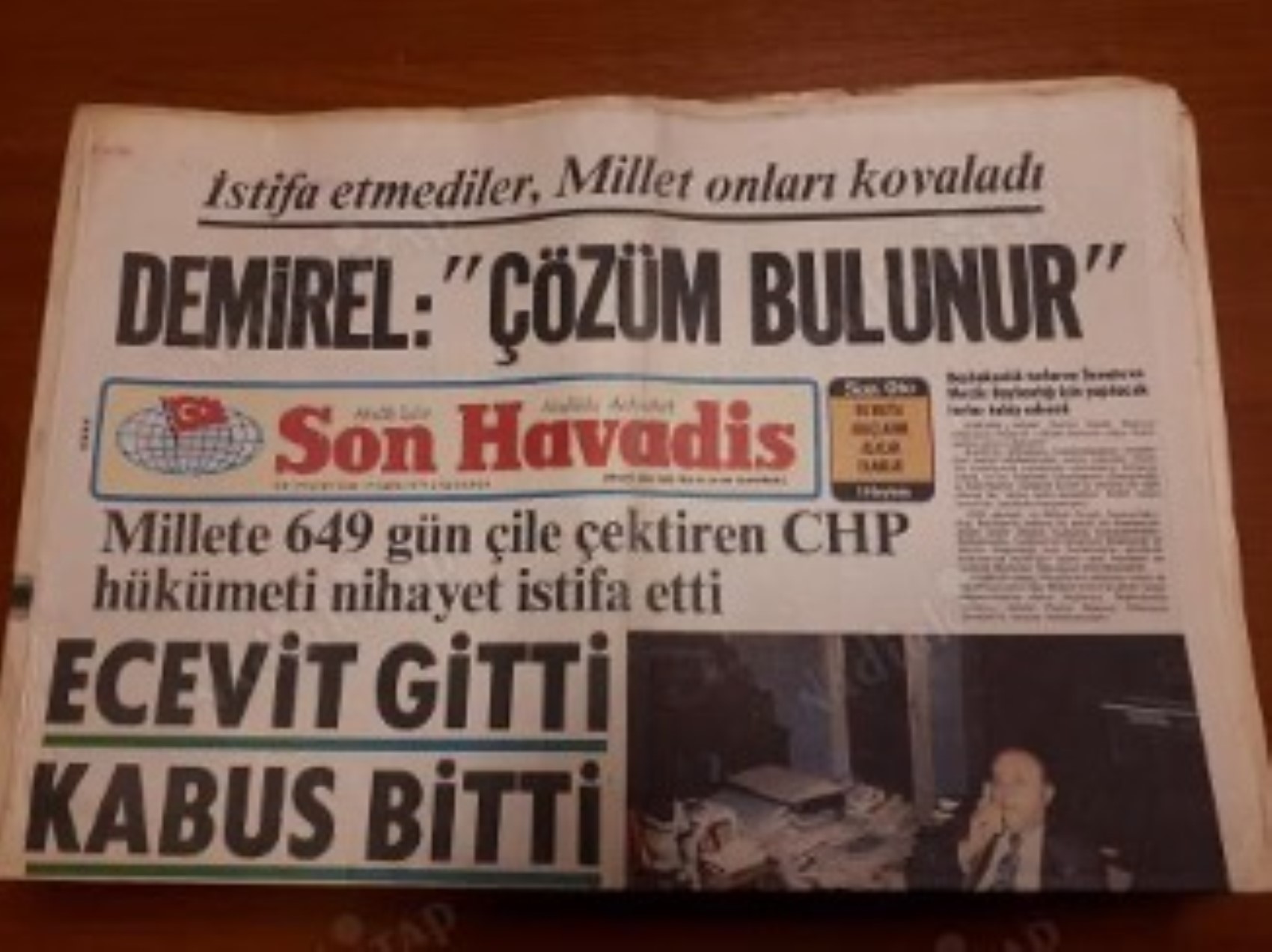
Ecevit, on the other hand, acted like a Western prime minister. He resigned. He even went further and said that the nation showed favor to the Justice Party and that the CHP was ready to support the minority government that the AP would form. Demirel formed the minority government. But not with the support of the CHP. With the support of Türkeş and Erbakan.
Ecevit had served as prime minister for 22 months. Constantly under siege. As Demirel said, "he had become the government but could not become the ruler."
Most Read

Striking picture for Özgür Özel's 'New Party'

Özgür Özel gives a dated response regarding the number of resignations

Forest fire in Antalya brought under control

The PKK opening and Özgür Özel’s path!..

How did the newspapers view Özgür Özel's farewell to the CHP?

He killed his wife by slitting her throat: Their children witnessed the moments

What did the CHP do?

Özel’s new party move in the world press

The New CHP, against CEHAPE

From self-efficacy to despair