



MILITARY PERSONNEL IN THE EARLY REPUBLICAN PERIOD
The approach that Atatürk completely removed the army from the political sphere after the 1924 revolution laws is generally accepted in the literature on the history of the revolution. I would like to state that I find this definition superficial. It is said that he secured the single-party state by keeping Fevzi Pasha as Chief of General Staff.
In my opinion, the army did not become non-political, but rather a supra-political institution. The proof of this is that Chief of General Staff Fevzi Pasha was not under the command of the government, but directly subordinate to the President. The institution that was removed from politics and included in the administration was the Presidency of Religious Affairs. Not the army.
I agree with these assessments: After 10 years of war (from the Balkan Wars to the Great Victory), the army had retreated to its barracks. Active-duty officers carried the pride of the National War of Liberation having ended in victory, even if their economic situation and salary scale were not extraordinary.
A vast majority had been present on the battlefield themselves. Let us note that until the 60s, many high-ranking officers were people who had fought in the First World War and the National Struggle. This is very important. There were even those among them who had been taken prisoner: as in the examples of Cemal Gürsel and Cevdet Sunay. Both had been taken prisoner by the British due to the provisions of the armistice.
The elite who founded the state largely came from the military sphere. To me, the determining element of the hegemony was the army. Even if it appeared silently in the background. The evidence I can put forward here is this: While the Grand National Assembly of Turkey (TBMM) debated the budgets of all state institutions, when it came to the army (defense budget), it would accept the budget unanimously with applause. The Assembly would take a decision to "send greetings to the army." I think the idea of the army's indisputability, alongside respect for the savior army, must be decisive here. Let me state that this is what I meant when I said above that the army was not outside the political institution, but above it.
The army's existence until 1950 can be explained by the presidencies of Atatürk and İnönü. During the Second World War years, the army waited vigilantly for a possible attack with active and reserve officer cadres consuming half of the expenditure budget and with the enormous number of enlisted personnel under arms (more than 1 million).
As we might guess, the active-duty cadres did not welcome the transition to multi-party political life as a very positive development. This meant moving away from the status quo they were accustomed to. Officers mostly interpreted the nascent democracy as chaos in state life. This development did not please them. They only watched the developments with a dissatisfied silence, thinking that İsmet Pasha must know something.
The main reason for this attitude was that the organizational logic of the military sphere was tied to order and discipline. To express it more clearly, the military mind is disturbed by chaos. It might even interpret it as anarchy. For an average active-duty officer, multi-party political life was seen as a choice that had to be endured on the path to contemporary civilization.
I would like to express this judgment by exaggerating it slightly: The army thought this way from the 1908 constitutional revolution until power was handed over to ANAP in 1983.
This process covers the long period of time from the 1908 Young Turk revolution, which was a petty-bourgeois revolution, to the date in 1983 when the bourgeois class fully took power with the elections.
COUP-PLOTTING TENDENCIES IN THE ARMY
It is possible to trace coup-plotting tendencies in the army back to the years of İsmet Pasha's presidency. The fundamental factor in the thought of staging a coup against İsmet Pasha was the limited upward mobilization in the army and the fact that officers' career expectations were not satisfied. To put it another way, the issue was in a narrow sense class-based. Fevzi Pasha's lack of vision had prevented the establishment of a merit-based hierarchical pyramid in the cadres. For this reason, when Fevzi Pasha was retired due to the age limit, a large segment of the officer corps was pleased. I can even say that Fevzi Pasha's retirement did not sadden anyone other than himself.
The idea of overthrowing İsmet Pasha with a coup found more supporters after the transition to multi-party political life. There were circles that wanted to take advantage of the—unjust—hostility Fevzi Pasha felt toward İsmet Pasha: Soldiers and politicians.
From his retirement in 1944 until his death (1950), Fevzi Pasha drifted politically. Many circles, from the Society for the Dissemination of Free Ideas to the Nation Party, wanted to benefit from him. First, he became a deputy from the DP. He left. He became the honorary president of the Nation Party. In my opinion, Fevzi Pasha was not someone who could grasp the dynamics of multi-party life. But that is not the issue now. Fevzi Pasha as a statesman could be the subject of another article.
There were many people around him who wanted to benefit from him. Extremist Democrat Party members and extremist Nation Party members.
The most accurate definition for these circles should probably be to call them "The Urgent Ones." These segments were not concerned with the idea of winning power by defeating İsmet Pasha at the ballot box. The only thing that interested them was the overthrow of İnönü. A careful investigation shows that many politicians were involved in coup plots against İnönü.
The idea of overthrowing İnönü with a coup was stronger within the Democrat Party than is thought. The transition to multi-party political life did not mean competing democratically under equal conditions. The same is true for today's Turkey.
The existence of parties often meant the birth of a new ground for struggle. This is the fundamental reason why anti-İnönü officers gathered in the Democrat Party, the Nation Party, and the Republican Nation Party.
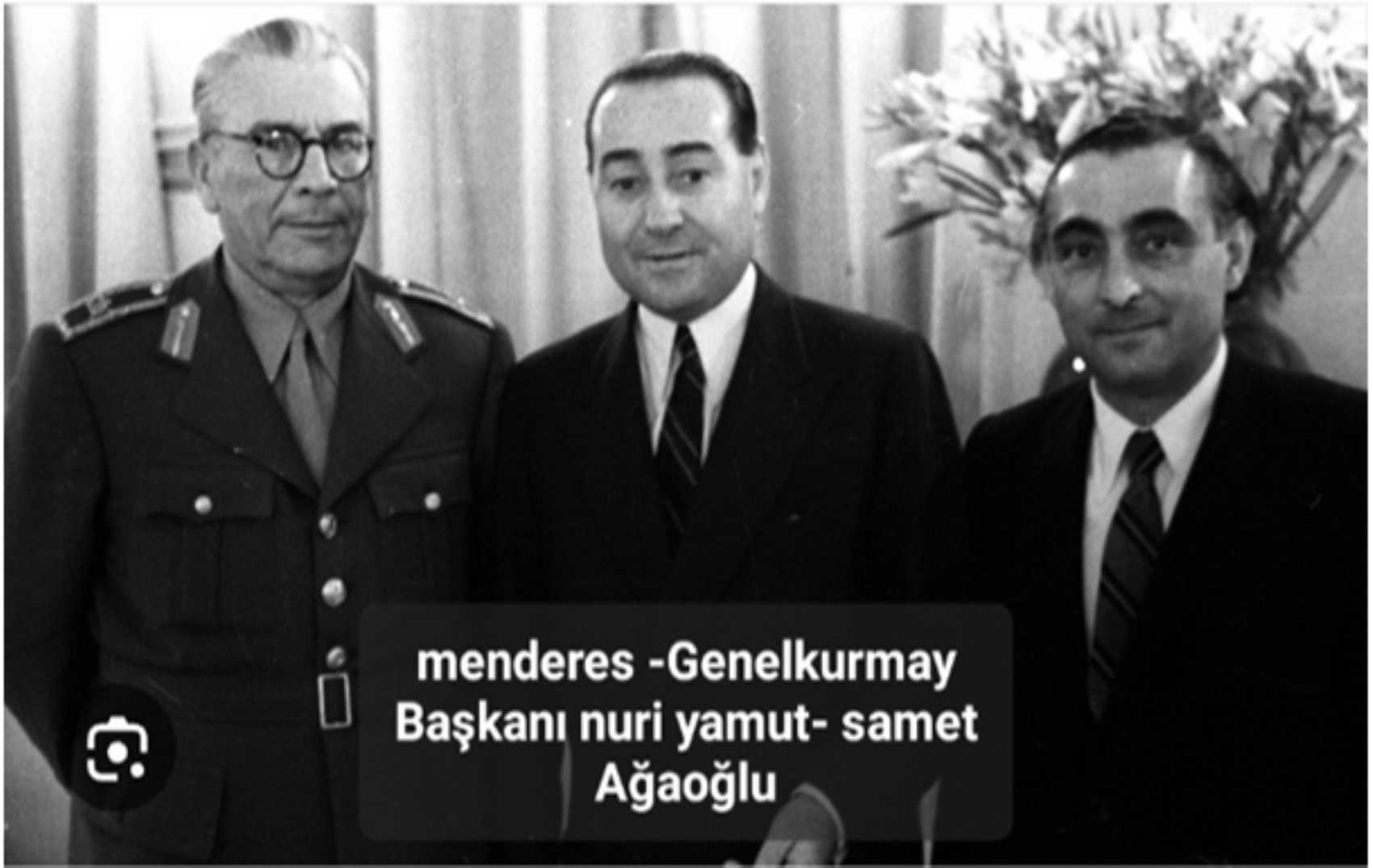
The Democrat Party government and Turkey's inclusion in the North Atlantic Alliance caused radical changes in the army's relations with political authority. Menderes treated the army like an apparatus at the disposal of the government. He completely purged the high command. He established a partisan military hierarchy loyal to himself. What I mean will be better understood when the lists of Chiefs of General Staff, force commanders, and army commanders of the DP government era are examined.
As soon as Menderes came to power, he sent the army to fight in Korea. Turkey fought against the Communists in Korea alongside (under the command of) the USA with a brigade.
The Democrats interpreted this situation as the army "entering the service of the national will." The Prime Minister had used belittling expressions such as "I can manage the army with reserve officers if necessary." These expressions were humiliating for an officer. Whereas army members saw themselves as the saviors of the homeland and the founders of the state. They were not pleased with this rhetoric at all. Menderes thought he could keep the army under control by satisfying the high command. But he was wrong. History has shown us this.
In my opinion, the officers thought that the Democrat Party government was playing with the army's pride. Multi-party life had seriously lowered their position within society and the state. Their salaries, status, and the treatment they received were getting worse.
While joining NATO increased the importance of the army (because it was reinforced by the USA in terms of weapons and equipment), professional personnel (officers) thought that the government was discrediting them.
INTELLIGENCE AND COUP-PLOTTING GROUPS IN THE 50S
When Alparslan Türkeş was appointed Undersecretary of the Prime Ministry by Cemal Gürsel after May 27, he was very surprised to see that there was an American intelligence office on the top floor of the Prime Ministry building. To tell the truth, I was not very surprised. The content of Turkish-American relations in the 50s makes this possible in my opinion.
The conclusion I draw from this is that the CIA Turkey desk was working in the Prime Ministry building of the Republic of Turkey. In the cold war environment of the 50s, since the CIA was working from the prime ministry building, it was impossible for the Turkish Army not to be bugged. The USA and the MIT, which worked in very close contact with it, were bugging the Turkish army. This was certain.
As for Türkeş, he had also received training in the USA as a cold war officer for a long time. In fact, when he returned, he made anti-communist programs on the radio. As a result, it was impossible for the USA not to be aware of the coup-plotting groups in the army. Perhaps it may have even paved the way for Menderes's downfall.
AYDEMİR’S PLACE IN EARLY PERIOD JUNTAS
Talat Aydemir was among the cadres who would later carry out May 27. I do not think these groups were numerous. I think the idea of overthrowing the government must have gained seriousness at the earliest after the 1957 elections. My thought is that there were active-duty cadres of colonel rank and below who were dissatisfied with the government. But if the government had not led society and politics into a dead end with its inept attitude, a "coup" would still not have been possible.
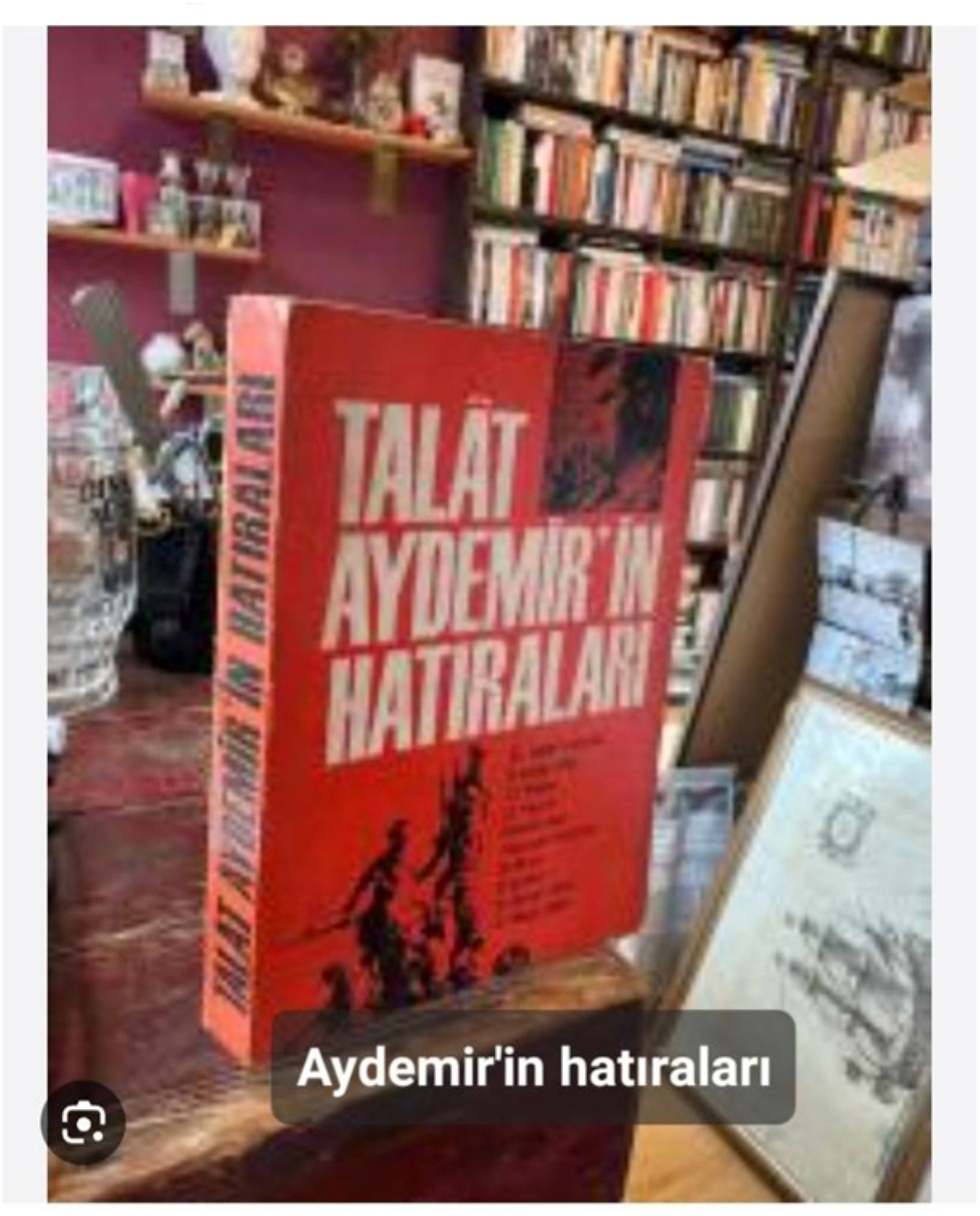
What Aydemir recounts in his "memoirs" points to the existence of a coup cell as early as 1956. Let me also recall the "Nine Officers" incident in 1959 in the meantime. In this incident, the trials resulted in "acquittal." But I think the tip-off was correct. It is interesting that the person presiding over the court was Cemal Tural.
These secret organizations, which mostly consisted of officers at the rank of colonel and below, remind me of the "Unionist" days. I would like to state this as well.
It was not easy for these groups to reach a power that could overthrow the government. Menderes was indifferent to the rumors he heard. Perhaps he was trusting Pentagon intelligence.
AYDEMİR’S FAILURE TO ENTER THE NATIONAL UNITY COMMITTEE
It is understood that Talat Aydemir was in close contact with many officers who were members of the NUC. The event he interprets as a misfortune in terms of his own personal history is this: Aydemir was assigned to the unit replacing the Turkish Brigade in Korea in June 1959. This unit was also a Brigade. The Turkish Brigade went to Korea by sea.
In the meantime, let me remind you that Kenan Evren and Madanoğlu, and even the father of my late teacher Bülent Tanör, Artillery Staff Colonel Cahit Tanör, also served in Korea.
As a result, when Aydemir returned from Korea, everything had happened, the government had been overthrown; the National Unity Committee had seized power. He had remained outside this process. Even though he was very eager.
Aydemir must have been overcome by a great sense of deprivation when he returned to Turkey on August 8, 1960. The Committee promoted him to Colonel on August 30. On September 12, it appointed him as the commander of the Army War College.
It is interesting that someone who had just become a Colonel was brought to the command of the War College. This was a quite important task. It seems the committee had deemed it appropriate to entrust such a critical task to him in the "new army" after the Eminsu incident.
THE NATIONAL UNITY COMMITTEE LOSING CONTROL OVER THE ARMY
The National Unity Committee constantly lost its authority against the army from the opening of the Constituent Assembly until the date the TBMM elections were held. The Armed Forces Union became dominant in the army. The basic goal of the AFU was to make it impossible for the NUC to carry out an operation against the rest of the army—similar to the 14s.
After the referendum, the NUC determined the conditions for the elections to be held and the TBMM to be opened through Round Table meetings.
However, the October 15, 1961 election results created disappointment in NUC and AFU circles. To tell the truth, it was met with anger. The words of the Committee's second man, General Fahri Özdilek, "Was it supposed to be like this?" are of a nature that explains exactly this state of mind.
The Armed Forces Union's October 21 protocol (the document signed at the meeting in the Istanbul War Academies where Aydemir was also present) had decided that the TBMM should be dissolved before it even opened.
Against this, the October 24 protocol (Çankaya Protocol), signed by political party leaders in the presence of Cemal Gürsel, NUC members, the Chief of General Staff, and army commanders, ensured the opening of the TBMM. The signing of this document prevented the Second Republic from stumbling just as it was being established.
The coup-plotting faction, which set out with the idea of dissolving the parliament before it even opened, retreated in the face of this picture. The Assembly opened. Gürsel was elected President. İsmet Pasha formed Turkey's first coalition government between the CHP and the AP. (November 10, 1961) This development realized the most democratic and most reasonable option among the possible scenarios.
AREAS OF TENSION DOMINATING THE COUNTRY
I am of the opinion that it would be correct to mention a few areas of tension that dominated the country from 1961 to 1965.
First of all, let us state that the execution of the death sentences given at the Yassıada High Court of Justice had provoked revanchist feelings in Justice Party circles. This is a very important issue.
For one thing, there was an open tension between the Armed Forces Union and the National Unity Committee starting from August 1960. Let us not forget this. Its source is the Retired Revolution Officers incident. (Eminsu) This tension became even more pronounced with the purge of the 14s. The army members (military sphere) who had remained outside the Committee reached the power to purge the Committee after a while. The reinstatement of Gen. İrfan Tansel to the Air Force Command in 1961 and the October 21 protocol can be shown as examples of this.
The other line of tension is between the Justice Party and the Armed Forces Union. I start this tension with the humiliating attitude of Refik Tulga, whom the military regime appointed as governor of Istanbul, at the funeral of Dr. Lütfi Kırdar. (1961), the death of former DP minister and deputy Tevfik İleri in prison and the events that occurred at his funeral (31.12.1961) escalated the tension. It intensified even further with the lifting of the immunity and arrest of AP Zonguldak deputy Nuri Beşer due to a speech in which he was alleged to have insulted the army and military families. Interestingly, Nuri Beşer was a unionist affiliated with the Türk-İş confederation. He had become a deputy from the AP.
A third tension will be added to this in the future. This can be defined as the events that occurred during the transfer of Celal Bayar from Kayseri to Ankara for treatment after being released for health reasons. It would increase the dose of the matter even more. Angry May 27 youth destroyed Justice Party buildings. As can be understood, the dose of the matter got completely out of hand during these events. Violence began. Reminder: It is said that AP General Administrative Board member, Civil Engineer Süleyman Demirel, resigned during these events by saying, "democracy and such will no longer come to this country for fifty years."
THOSE WHOSE MINDS REMAINED ON THE COUP: THE OCTOBER 21ERS
The October 21ers still had their minds on the coup. They were not accepting defeat. The War Academies protocol had been signed by 10 generals and 28 colonels. The basic idea in the document was to seize the administration of the country.
They were thinking that they could do what the National Unity members did on May 27. Strangely, they were of the opinion that "the elections did not fully reflect the national will." Of course, we do not know how the national will would be fully reflected.
The death of former DP minister Tevfik İleri on December 31, 1961, and the events at the funeral had further provoked the interventionist faction. The Justice Party members were not hesitant to escalate the tension. They were also after revenge. This situation further strengthened the October 21er faction.
Forces in favor of protecting the regime made attempts to calm the tension. Chief of General Staff Cevdet Sunay invited about 70 generals and colonels, including force commanders, army commanders, and school commanders, to a meeting on January 19, 1962, to discuss the latest developments and to gauge the pulse of the army. The meeting was named the "Expanded Command Council." Of course, the "Colonels' junta," led by Aydemir, was also inside this council.
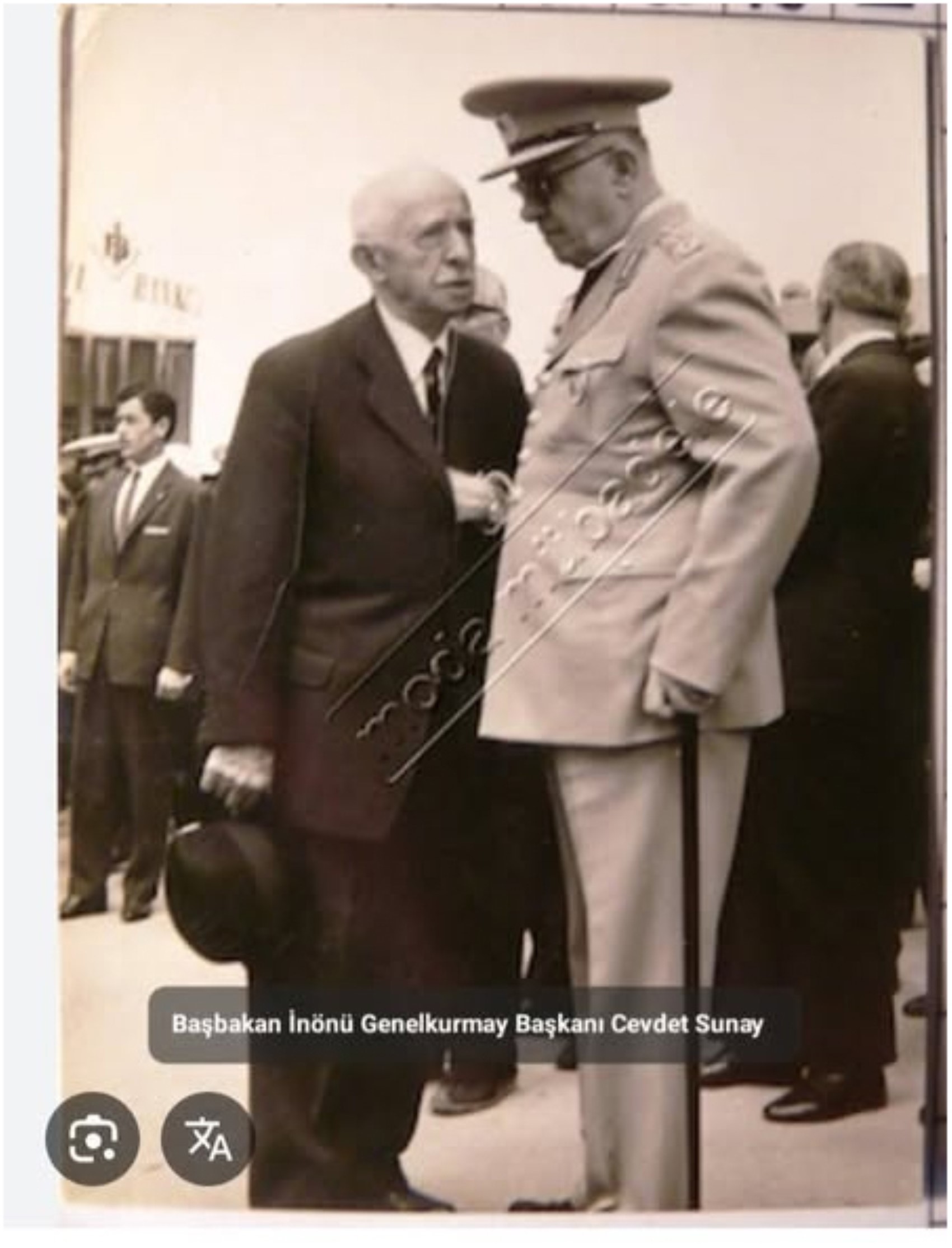
Sunay ended the meeting by emphasizing the army's "loyalty to the government." Cevdet Sunay, who did not like Aydemir's speeches during the meeting, turned to him on the way out and said, "you are very hot-headed." This was important. In my opinion, this expression meant an invitation to common sense for the Colonels' junta.
Force commanders also joined Sunay's will to protect the regime. In this context, the attitude of Air Force Commander İrfan Tansel is particularly important. Tansel had been removed from office by the NUC in August 1961 and reinstated due to pressure from the AFU.
Now, Tansel was taking a stand on the side of the regime in the Gürsel, İnönü, and Sunay front. This was followed by İsmet Pasha's radio speech in which he stated that he "would not allow revolution and revenge within the army."
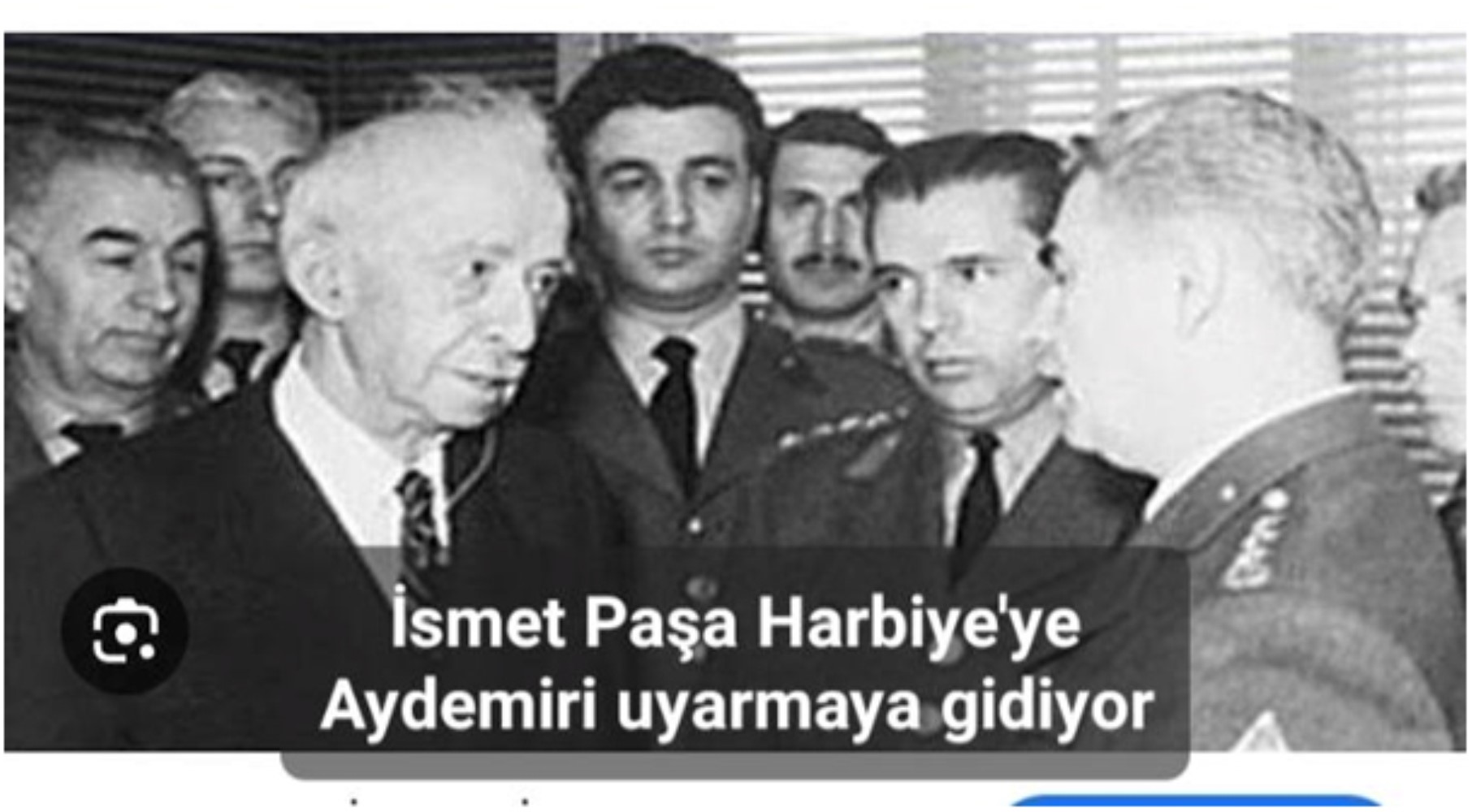
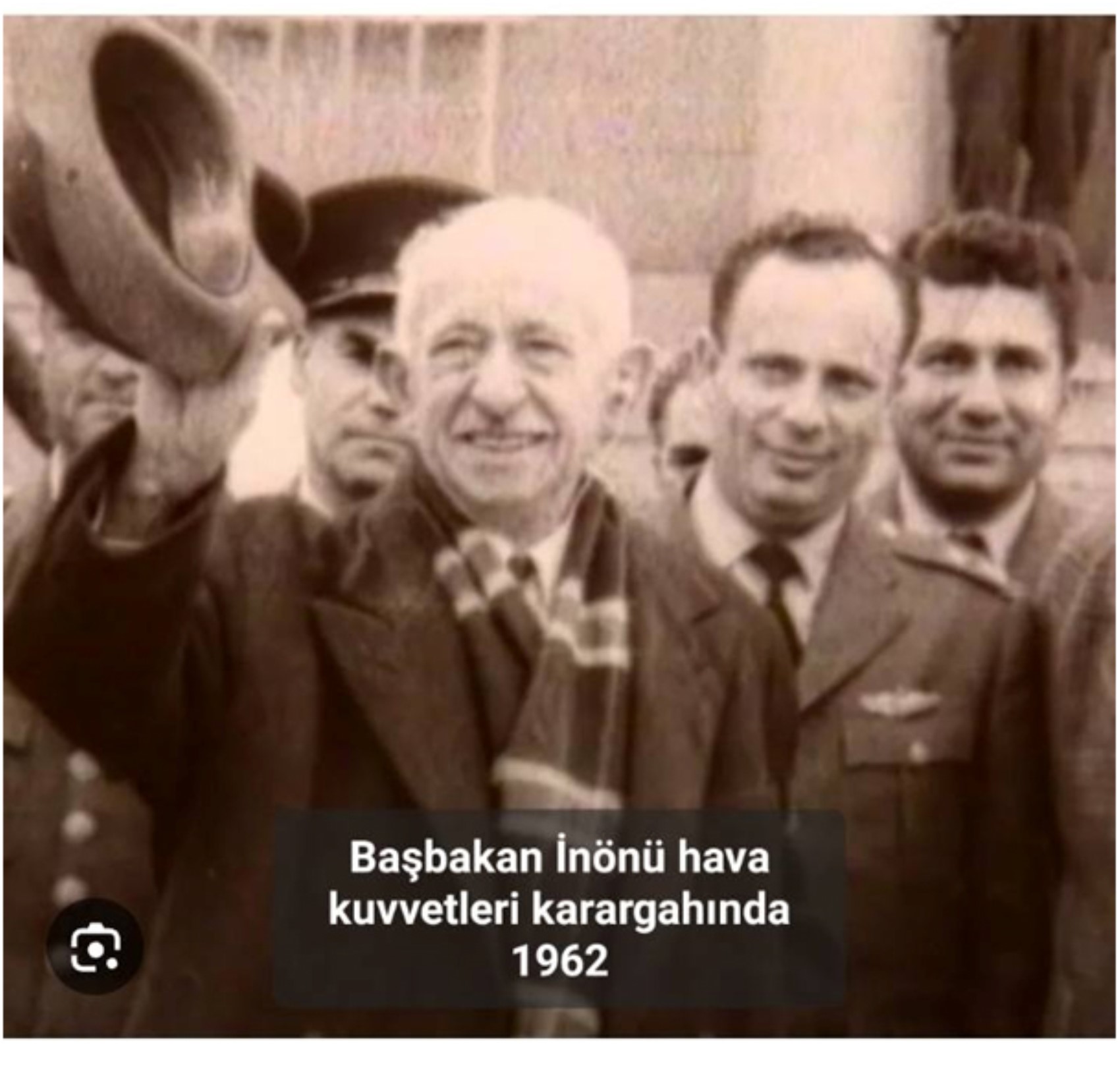
He even took one step further. He went to the War College on February 5, 1962. The visit increased İnönü's suspicions regarding Aydemir. He asked Sunay to have those "whose minds remained on the coup" assigned to passive duties. The Chief of General Staff personally notified Aydemir, Ünsalan, and Akkan at the General Staff headquarters on February 21 that he was changing their duty stations.
TALAT AYDEMİR’S POLITICAL IDEOLOGY
Talat Aydemir, in terms of his ideology, was close to the 14s who were removed from the committee and sent into exile on November 13, 1960. It is understood that his common point with the 14s was to establish long-term military rule. Alparslan Türkeş's political rhetoric during his membership in the National Unity Committee also shows this.
As far as I understand, they were longing for a corporatist state. They saw İsmet Pasha's transition to multi-party political life as the beginning of moving away from Atatürk's revolutions. If you ask me, they had no deep knowledge/background on any subject. They thought they could rapidly develop the country with an authoritarian administration.
WHAT MIGHT AYDEMİR HAVE RELIED ON?
In 1961, the army largely meant the Armed Forces Union. There was a sub-junta inside that left the generals out: The Colonels' Junta. The leader of these cadres was Talat Aydemir.
The May 27, 1960 revolution had taken place by bypassing the army's existing chain of command. The revolutionaries arrested the commanders loyal to Menderes. The committee-member officers did not even constitute one-thousandth of the army. Cemal Madanoğlu had ensured stability by putting Cemal Gürsel at the head of the Committee.
The May 27 Revolution had been brought to success with the right timing and the right strategic decisions. Especially Madanoğlu, Osman Köksal, and the commander of the First Army in Istanbul, Fahri Özdilek, were important names.
I think Talat Aydemir must have thought that he could succeed in a Colonels' Junta coup that left the generals out (by interning them if necessary).
Aydemir thought that if he mobilized the commanders of important units in Ankara and Istanbul, he could overthrow the İsmet Pasha government.
Aydemir could not reach the support he expected in either coup attempt. The coup plotters could not use the critical opportunities they had in their hands. Aydemir made wrong decisions one after another. The forces he gathered behind him dispersed.
FEBRUARY 21, 1962 COUP ATTEMPT
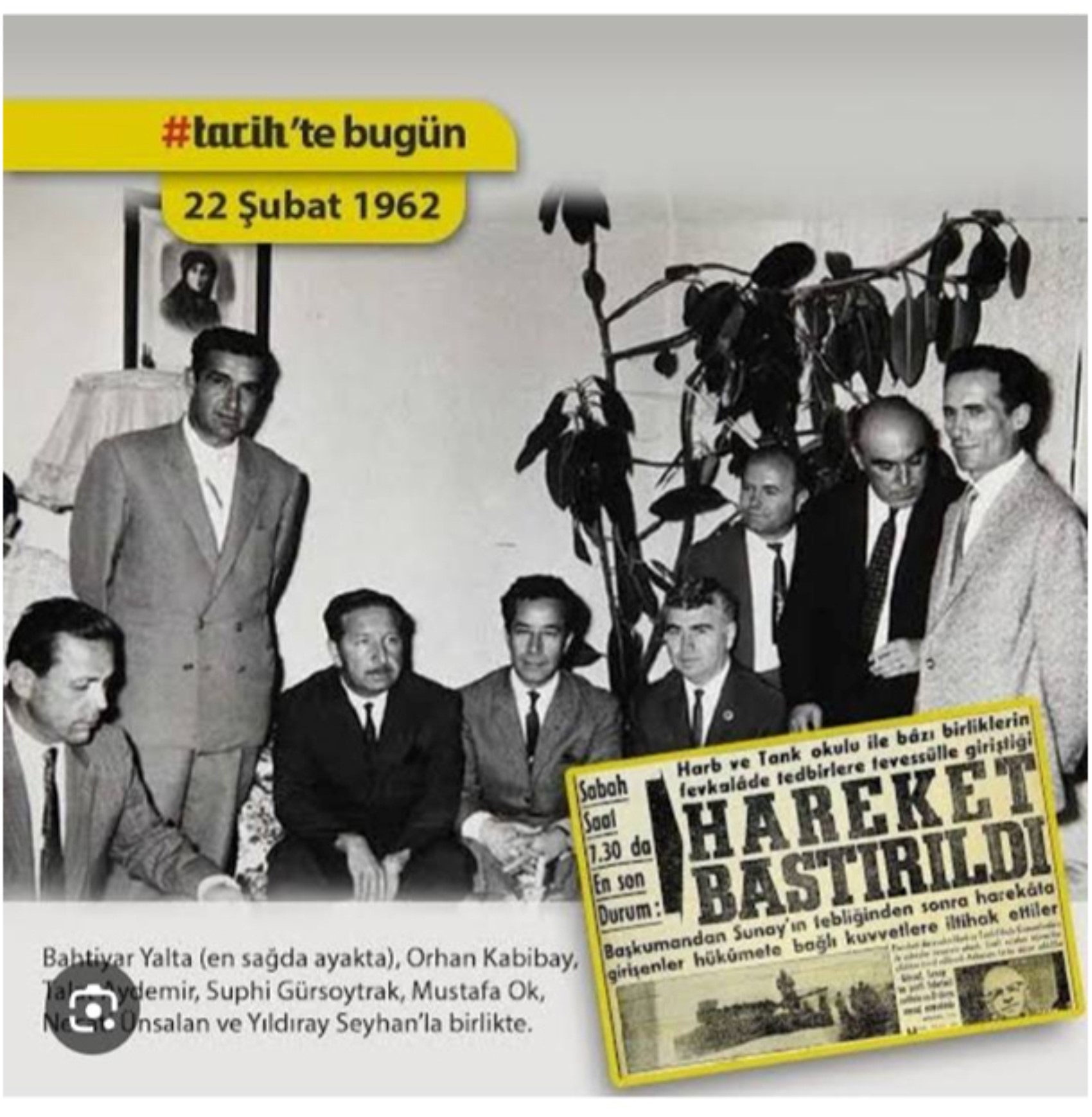
Aydemir, who was removed from office, made an agitational speech to the Army War College students in the Conference Hall together with his team. The coup had begun.
Militarily important units such as the War College, Gendarmerie Officer School, Armored Units School, Tank Battalion, and Armored Combat Training Center were involved in the February 21 coup attempt.
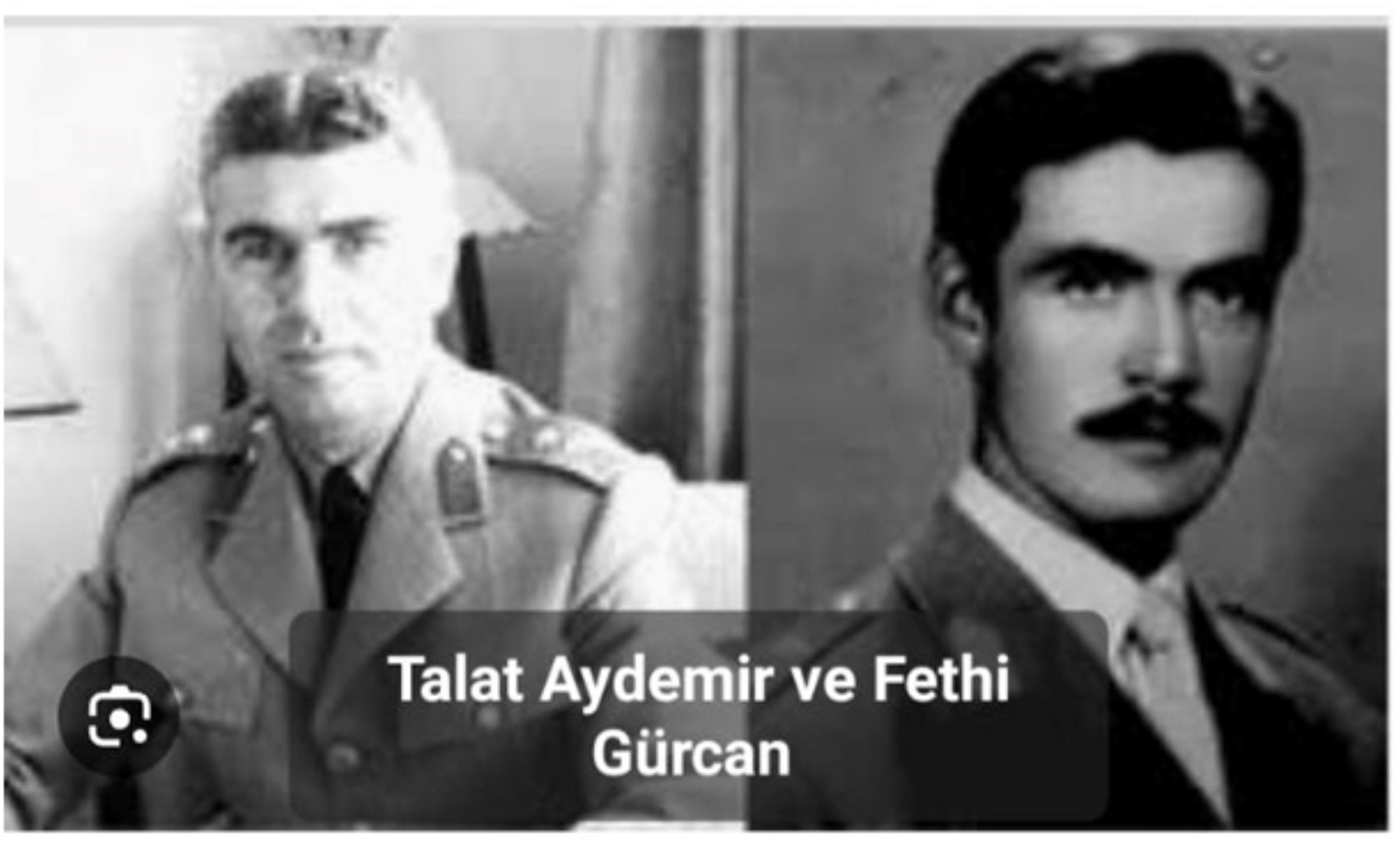
This picture shows that the Aydemir junta had come to the brink of overthrowing the İnönü government. In fact, all the state dignitaries who were in a meeting in Çankaya were saved just as they were about to be interned by the Guard Regiment commander, Cavalry Major Fethi Gürcan. Aydemir's overconfident attitude caused this.
Aydemir was so sure that the coup had succeeded that he gave an arrogant instruction to Fethi Gürcan like "let them go." This was the moment the fate of the coup changed. It is said that as İnönü was moving away from Çankaya, he said, "the War College commander has lost it for real now. He shouldn't have let us go from here."
Aydemir's friend Dündar Seyhan also says that Aydemir's wrong decision changed the course of Turkish history.
The Prime Minister, government members, Cemal Gürsel, and Sunay went to the Air Force headquarters. The Air Force, which supported the government, made harassment flights over the War College and the rebel units throughout the night. The flight pressure and bombing threat of the jets caused the coup plotters to dissolve.
İnönü did not accept any of the surrender conditions. He only made a commitment as the head of government if they surrendered without bloodshed. He also sent it in writing. The rebels would be retired and no criminal prosecution would be opened against them. Aydemir addressed the War College students and ended the coup attempt. With this speech, it became clear that the February 21, 1962 coup attempt had resulted in failure.
Aydemir and the main leaders of the junta were retired by a government decree on February 24. The students were pardoned and sent to their homes.
AFTER THE SUPPRESSION OF THE FEBRUARY 20-21, 1962 COUP ATTEMPT
After the February 21 uprising, İsmet Pasha made a speech on the radio evaluating the events. In his speech as Prime Minister, he used the expression that the War College students were deceived by the school commander Aydemir. The truth was of course like that. The War College students, who were pardoned and sent home on leave, left a wreath on the Taksim Republic monument with the words "The War College student is not deceived" written on it. They protested İsmet Pasha. Whereas İnönü could have referred all of them to a military court for participating in the coup.
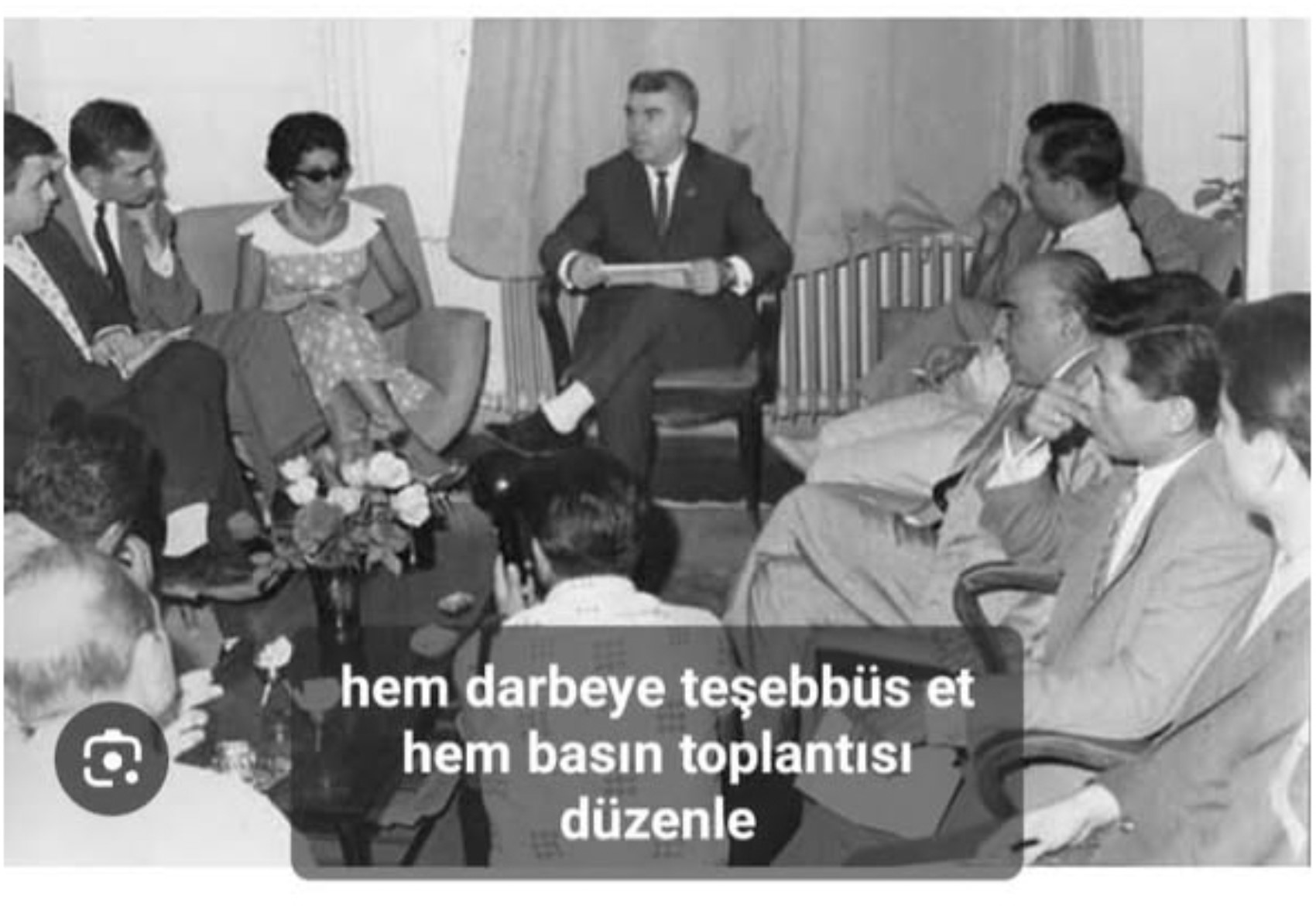
In this speech, İsmet Pasha defined Talat Aydemir and other junta members who led the action as "adventurers." Both of İnönü's judgments were correct. Aydemir was overly offended by this expression. He organized a press conference. He was acting more like a political party leader than the leader of a failed coup. He accused İsmet Pasha. Aydemir was arrested on charges of praising a criminal act. Meaningfully, he was placed in the same ward as Justice Party Zonguldak Deputy Nuri Beşer, who was being tried for insulting the army. The ward had been called "Hilton" since the 50s. İsmet Pasha issued the "Law on Certain Acts that Disturb Peace and are Contrary to the Constitutional Order and National Security" to show his determination to protect the regime. This law is known in our political history as the Measures Law.
After February 22, 69 officers and 4 non-commissioned officers, including Aydemir, were retired. The duty stations of many officers were changed. As he had committed in writing, İsmet Pasha brought the regulation pardoning the junta, which surrendered without bloodshed, to the National Assembly on April 30. The law passed the Senate on May 10. Upon this, the Justice Party members (rightfully) wanted the Yassıada prisoners to be pardoned as well. When the AP could not reach the result it wanted, it withdrew from the İsmet Pasha government. This is the most important political result of the Aydemir uprising.
SECOND COUP ATTEMPT: MAY 20-21, 1963
It is surprising that a colonel who had attempted a coup and had been pardoned and retired could attempt a coup again. Aydemir made a new coup attempt together with the cadres who maintained their effectiveness within the army and the War College students.
To understand this, it is necessary to review the political developments that triggered the coup.
First of all, the Justice Party's withdrawal from the coalition had disrupted the political status quo. İnönü had to form a weaker government: with the YTP and the CKMP.
This led to another instability. CKMP Chairman Osman Bölükbaşı left his party with a group of deputies. He re-established the Nation Party. The reason was the historical grudge he felt against İsmet Pasha. He was acting with a single motivation: not to give power to İnönü in any way.
Another important development was that the Justice Party was the one that strengthened the most among the parties against the CHP. Other parties were deeply disturbed by this.
The courage of the Justice Party members had increased. Everywhere, they were saying that they were a party that was the continuation of the Democrat Party. Expressing this was against the law. But nobody cared about this.
These developments were perceived as a challenge to the May 27 revolution and the army. Of course, it was. This invited new tensions. The CKMP passed into the hands of the 14s, who acted under the chairmanship of Alparslan Türkeş, in 1964. The CKMP would later turn into the MHP. The Justice Party's consolidation of the old Democrat Party voter base continued until Demirel's prime ministry.
İsmet Pasha, on the other hand, remained between two fires, having lost a little more of his power. "Angry voices" rising from the army and the pressure from the Justice Party for the pardon of Yassıada prisoners. The voices rising from the army meant the possibility of a coup.
İnönü sincerely wanted the pardon of the Democrats and the restoration of their political rights. But in such an environment, there was no possibility for this for now. The Justice Party members never believed in İnönü's sincerity. Until the İnönü-Bayar reconciliation in 1969.
Under these conditions, he did everything he could.
Many Yassıada prisoners were released for health reasons.
Deposed President Bayar, who was in Kayseri prison, was also brought to Ankara to be treated. On March 22, 1963. May 27 youth and army members were angered by this. The Justice Party Ankara Provincial Center was attacked.
Aydemir's second coup attempt should be evaluated in this context.
The second coup attempt took place shortly after Celal Bayar was released to be treated and brought to Ankara.
The fact that the uprising took place means that the military hierarchy could not dominate the army in 1963 Turkey.
In the end, the Colonels' Junta (some inside the army, some retired) decided to take action. It is interesting that Alparslan Türkeş, who had just returned to the country from abroad, sent news to İnönü that Aydemir would make a coup attempt. The operation began on the night of May 20-21.
The fact that Talat Aydemir could attempt a coup twice is meaningful. It is understood that there was a medium suitable for this. Especially in the second one, the fact that a retired colonel could lead an uprising that lasted two days shows that there was a serious command and control and intelligence problem within the army.
Although it looks like the visionary attempts of a coup-enthusiast colonel when viewed from today, Aydemir failed in both due to critical decision-making errors in the uprising. In both events, the main determinant that ensured the suppression of the coup attempt is that the Air Force took the side of the İsmet Pasha government.
THE TRIAL AND PUNISHMENT OF AYDEMİR AND HIS FRIENDS
After the second coup attempt, 151 retired and active-duty officers were arrested. In addition to these, former 14s who had just returned to the country, including Türkeş, Akkoyunlu, Özdağ, and Baykal, were also arrested. And around 1500 War College students.
The Ankara Martial Law Command established three military courts. The main defendants were tried in court number 1, the War College students in court number 2, and those who were accessories in court number 3.
The leadership cadre of the coup were tried in the Ankara Mamak Signal School Cinema Hall. The trials began on June 7, 1963. 151 defendants were tried in this court. Death penalty was requested for 14 defendants, 5-15 years of imprisonment for 75, and lighter prison sentences for the remaining defendants.
The court continued the trials until August 17. The verdicts were announced on September 5.
Aydemir and his friends were convicted under TCK 146/1. This was the article under which Adnan Menderes was also convicted: overthrowing the constitutional order. Death penalty was given for 7 people, life imprisonment for 27 people. Death penalty was given to Aydemir, Gürcan, Kırca, Dinçer, Baş, Deniz, and Güldal.
The War College students were tried in their own schools. 1293 students who were acquitted were given leave papers and sent to their homes. 1459 students had been tried in court. Of these, 75 received 4 years and 2 months, and 91 received 3 months of imprisonment. The relationship of all War College students, including those acquitted, with the school was severed.
CEMETERY OF FREEDOM (REVOLUTION) MARTYRS
6 people lost their lives in the May 21 coup attempt. 30 people were injured. I think these people lost their lives during the bombing of the Aydemir-supporting planes that took off from Eskişehir. 1 Air Colonel, 1 Infantry Major, the other names were airmen and infantry privates. Those who lost their lives were buried in the "Revolution Martyrs" cemetery in Anıtkabir by the decision of the Council of Ministers: May 23, 1963.
THE APPROVAL OF THE SENTENCES BY BEING DISCUSSED IN THE NATIONAL ASSEMBLY AND SENATE
The death sentences given to Aydemir and his six friends came to the TBMM for approval. Since the TBMM consisted of the Republic Senate and the National Assembly, it had to be discussed in both chambers. It is normal for Justice Party deputies and senators to vote in favor of ratification. There was only one motive for them. To take revenge for the Yassıada decisions.
According to the 1961 Constitution, two discussions were required in the National Assembly and the Senate for death sentences. Even before the discussions started in the assemblies, there were applications to the Petition Commission for the issuance of a special amnesty law. Of course, some names from the Senators, Türkeş and Madanoğlu, also tried to save Aydemir.
In the voting held in the Senate, 117 out of 185 members participated in the voting. 87 voted in favor of the execution of the sentences. 26 voted against. 63 members did not attend the meeting. Those who voted against: some of the natural senators and 1 CHP senator.
Natural senator Osman Köksal voted in favor of the execution of the sentence given to Aydemir and Gürcan. Osman Köksal was the commander of the Guard Regiment on May 27, and Fethi Gürcan on February 21. Cavalry Major Fethi Gürcan had asked for permission from the junta leader Aydemir to intern Gürsel, İnönü, and Sunay, who were in a meeting in Çankaya. While Osman Köksal made May 27 a success by interning Bayar, Fethi Gürcan failed. The risk taken in both events was great. One was successful. The other failed. Köksal's vote is correct in terms of revolutionary logic.
Natural Senator Osman Köksal voted in favor of approval for four of the death files that came to the Senate. Interestingly, the same Köksal was one of the nine NUC members who voted against the execution of the decisions given in Yassıada. Aydemir would be very offended by this attitude. He wrote a letter to Osman Köksal, reminding him of the first committee days they established in 1956.
In the meantime, a bill is being submitted: it bears the title "bill on the non-execution of death sentences." In the second round of voting in the Senate, Köksal, Küçük, Özgüneş, Özkaya, Acuner, and Aksoylu vote in favor of the execution of the sentences. The result is as follows: 118 members participate in the voting. 80 vote in favor, 29 vote against. The rest abstain.
The decisions for the execution of the death sentences given for Fethi Gürcan and Osman Deniz are sent to the National Assembly to be discussed again since they were given in the Senate. Voting is held there again. Only the decision given for Fethi Gürcan is approved.
EXPLANATION REGARDING THE VOTINGS HELD IN THE NATIONAL ASSEMBLY AND SENATE
The death sentences given in the Martial Law Court were voted on between January 29 and February 4, 1964. In the final round of voting held in the National Assembly, a decision was reached only for the execution of the sentences given for Talat Aydemir and Fethi Gürcan. The sentences of the other convicts were commuted to life imprisonment. The final voting result is as follows: 217 in favor, 47 against, 22 abstentions. As can be seen, a large number of deputies did not participate in the voting.
AYDEMİR’S FEELINGS AFTER THE APPROVAL DECISIONS
Talat Aydemir had been pardoned with Prime Minister İnönü's written commitment in his first coup attempt (February 21, 1962). He was hoping it would end like this this time too. But İnönü, after his US trip (President Johnson had invited him), asked the Minister of Justice to fulfill the requirements of the TBMM decisions. Aydemir was very offended by the natural senators who were his friends from the first junta organization. But the result did not change.
Cavalry Major Fethi Gürcan's sentence was executed on June 7, 1964, and Talat Aydemir's sentence on July 5, 1964.
A BRIEF EVALUATION
The fact that İsmet İnönü, who chaired three coalition governments between 1961-1965, remained at the head of the country's administration despite his decreasing support in parliament, was also the most important factor that saved the regime.
The sudden death of Justice Party chairman Ragıp Gümüşpala, the election of Süleyman Demirel as party chairman, and the results of the Senate 1/3 renewal elections had given serious signs that the government would change in the first general election to be held in Turkey. If it weren't for the Cyprus issue, the İsmet Pasha government could have changed a year earlier.
The execution of the death sentences of Fethi Gürcan and Talat Aydemir showed that the '61 democracy had the power to defend and sustain itself.
The policy of reconciliation with the army of the new chairman and Prime Minister Süleyman Demirel of the Justice Party, which came to power in 1965, was successful.
The army was partially satisfied after Cevdet Sunay was elected President. Until March 12, 1971, it did not raise its voice too much against the AP government, even if reluctantly. The AP also tried to act as if May 27 had never happened.
Most Read

Striking picture for Özgür Özel's 'New Party'

The PKK opening and Özgür Özel’s path!..

How did the newspapers view Özgür Özel's farewell to the CHP?

He killed his wife by slitting her throat: Their children witnessed the moments

What did the CHP do?

Özel’s new party move in the world press

Fire at TUSAŞ engine factory in Eskişehir under control

The New CHP, against CEHAPE

From self-efficacy to despair

Kılıçdaroğlu's first message on Özgür Özel's new party announcement