



FEBRUARY 17, 1959: THE PLANE THAT CRASHED AT GATWICK
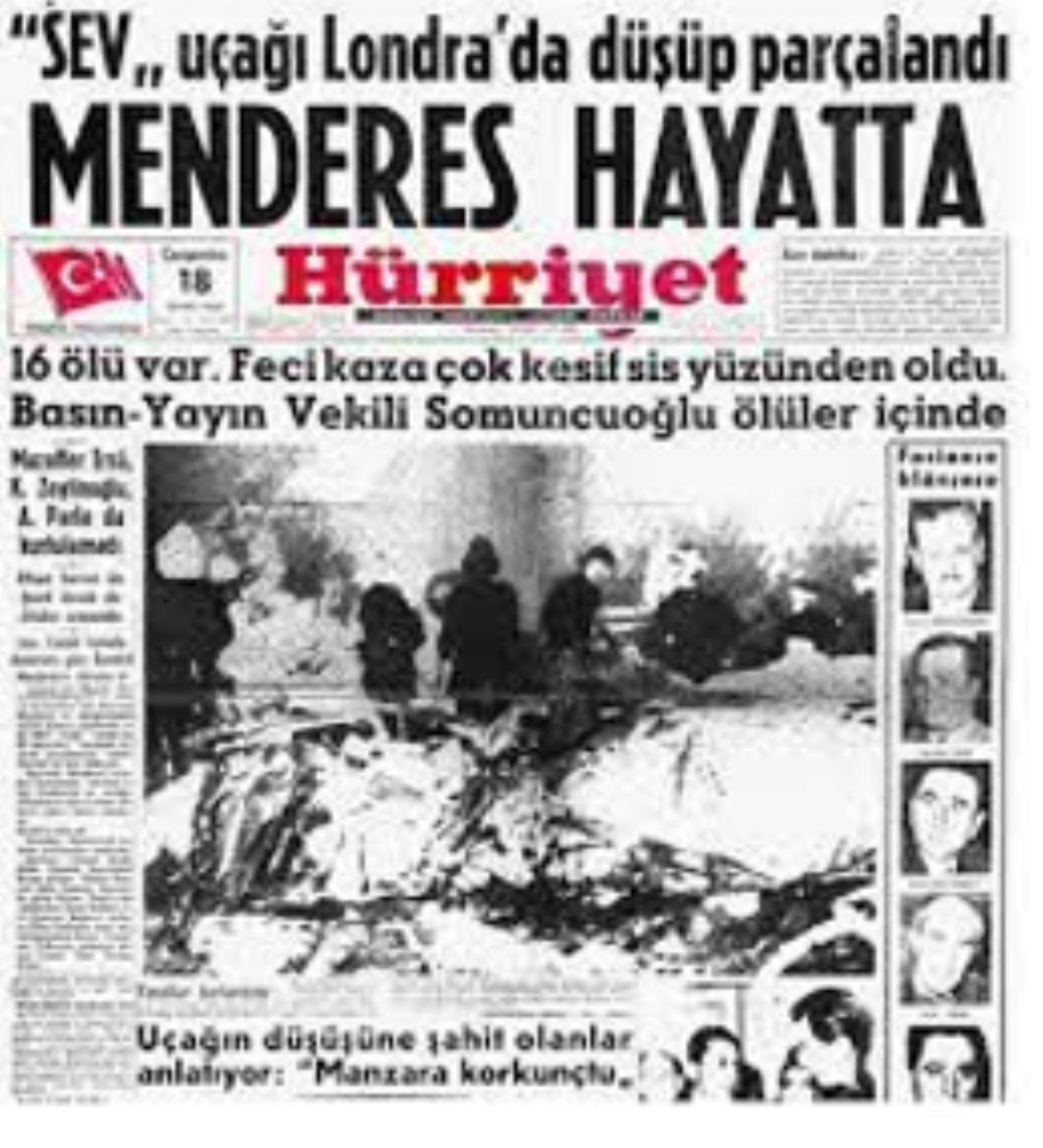
On February 17, 1959, the TC SEV aircraft departed from Ankara Esenboğa. It stopped at Istanbul Yeşilköy Airport. After refueling in Rome, it headed for London Heathrow Airport. The purpose of the journey was to sign the agreement that would establish the Republic of Cyprus. On this small plane were Prime Minister Adnan Menderes, several ministers, members of parliament, and Ministry of Foreign Affairs officials.
The captain pilot, having received a heavy fog warning in London, considered landing in Paris and staying there for a night. Then he changed his mind. When he arrived over London, the fog had thickened even more. For this reason, the Control Tower directed the plane to the nearby Gatwick Airport.
The pilot thought he was landing at the airport. However, the runway was 5 km away. The plane crashed into Jordon’s Wood, Newdigate, in the Surrey forest. The wings and tail broke off. The remaining tail section flipped over. The accident was first noticed by the employees of Newdigate Chaffold Farm. Tonny and Margaret Bailey, a couple living nearby, reached the crash site immediately.
Menderes survived because he was sitting in the tail section of the plane, in a group of four around a table near the left window. The survivors, who were saved because they were sitting in the rear of the plane, were:
Prime Minister Adnan Menderes, Sakarya MP Rıfat Kadızade, Çanakkale MP Emin Kalafat, Afyon MP Arif Demirer, Ministry of Foreign Affairs Secretary General Melih Esenbel, and Chief of Cabinet Şefik Fenmen.
Five of the flight crew and nine of the passengers lost their lives. The names of those who lost their lives were: Minister of Tourism and Press and Broadcasting Server Somuncuoğlu, Prime Ministry Chief of Cabinet Muzaffer Ersü, Ministry of Foreign Affairs Second Secretary İlhan Savut, Ministry officials Mehmet Ali Görmüş and Sedat Görmüş, Anadolu Agency General Manager Şerif Arzık, Akşam Newspaper photojournalist Burhan Tan, Minister of Public Works Kemal Zeytinoğlu, and one of the ministry's young diplomats, Güner Türkmen.
DEVELOPMENTS AFTER THE ACCIDENT
Margaret Bailey, who provided the first intervention to the survivors, was a nurse. It is understood from the accounts that Menderes could not recover from the shock for a long time. Melih Esenbel's statement also confirms Menderes' state of mind.
The bodies of those who lost their lives in the accident were brought to Turkey on February 22. Prime Minister Menderes arrived in Istanbul on the 26th. He rested for one night at the Park Hotel.
There are documentaries on the subject by Mehmet Ali Birand, Can Dündar, and Anadolu Agency. There is also archival information regarding the accident in BBC records. Menderes was one of the passengers who survived the accident with the lightest injuries, along with Melih Esenbel.
The conclusion I draw from the documentaries is this: Foreign Minister Fatin Rüştü Zorlu and members of the press had gone to London beforehand. Embassy staff were preparing to welcome the Prime Minister and the Turkish delegation. Among the officials was İlter Türkmen. His brother, Güner Türkmen, who would lose his life in the accident, was coming to London with the delegation.
After the accident, the United Kingdom government did everything necessary. The wounded were treated in hospitals. Those who lost their lives were sent to Turkey with a ceremony after their identities were determined.
MENDERES SIGNS THE LONDON AGREEMENT IN THE HOSPITAL
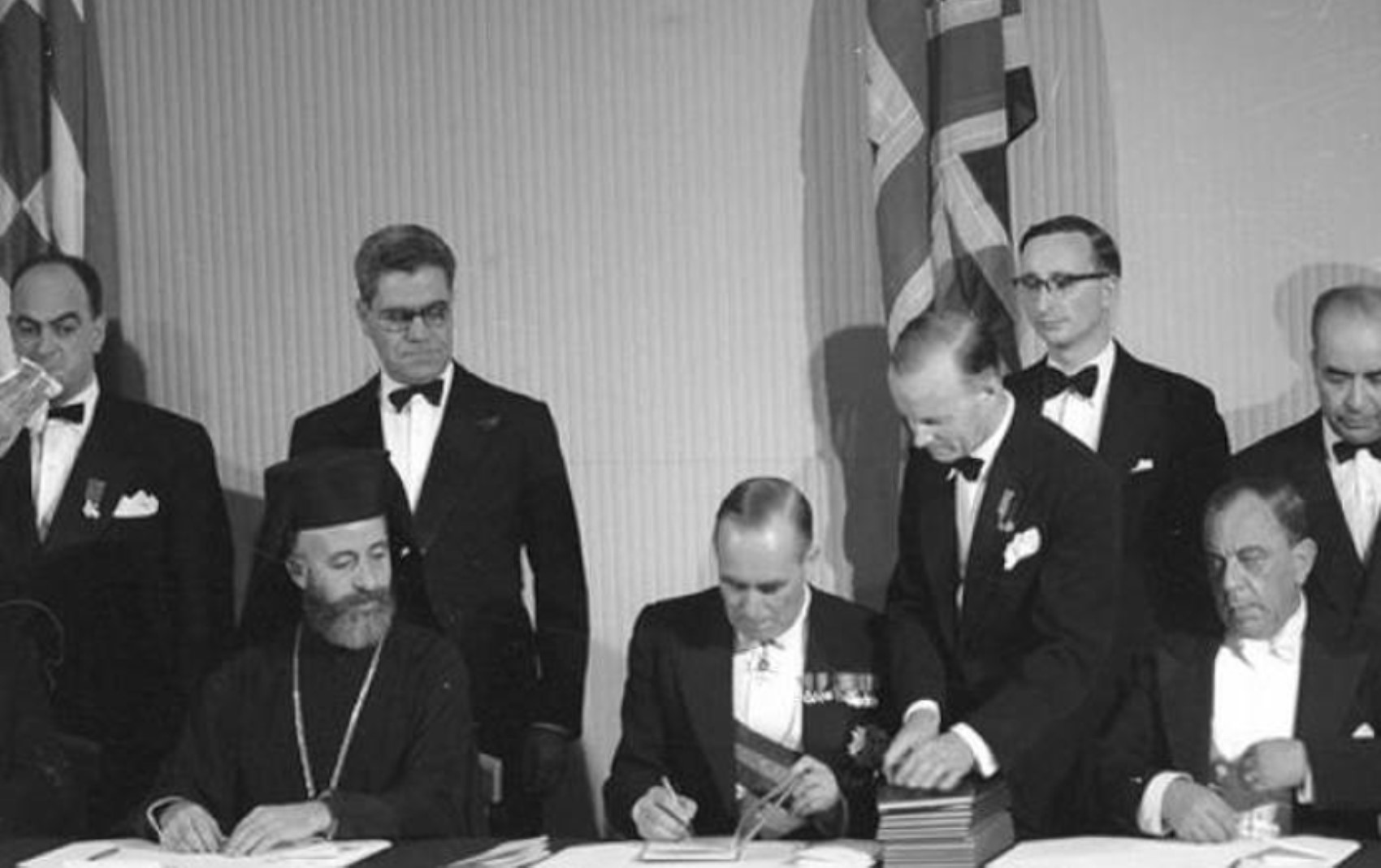
In addition to the three guarantor states (the UK, Turkey, Greece), the leaders of the two communities were also to sign the agreement. These names were Turkish Prime Minister Adnan Menderes, British Prime Minister Harold Macmillan, Greek Prime Minister Konstantinos Karamanlis, Greek Cypriot leader Makarios, and Turkish Cypriot leader Dr. Fazıl Küçük. Menderes signed the agreement in the hospital. For this reason, the agreement is also called the "bedside agreement." Menderes did not accept Makarios, who came to visit him to wish him a speedy recovery. Menderes had recently accused him of collaborating with EOKA and terrorism.
Discharged a few days later, Menderes visited the Bailey family, who had intervened to help them after the accident. He invited the family to Turkey. It is seen in the documentaries that the visit took place in a sincere atmosphere. It is understood that the Bailey family visited Turkey frequently after the event. Their daughter speaks Turkish. I think this means that this interest in Turkey continued.
CYPRUS IN TERMS OF GREEK CYPRIOTS AND GREECE
After the First World War, the acceptance of Cyprus as a Crown Colony did not create a problem for the Turks on the island. But there was a problem for the Greeks. They thought that the island historically belonged to them. The Turks and the British had come to the island later and brought them under their yoke. The goal of the Greeks was to make the island a part of the Hellenic union, like Crete.
To put it more clearly, the Turks on the island were happy to carry a British passport. But the Greeks were not. The British had replaced the Ottomans since 1878. For the Turks, the British presence on the island was a guarantee against the Greeks.
The Western world was approaching Greece, which had been crushed by German fascism, with sympathy. Greece had been occupied during the war years and had to struggle with hunger and poverty.
The Dodecanese, which had been in Italy's hands since Ouchi, were given to Greece by the decision of the allies because the people were Greek. Fascist Italy had been defeated and punished.
King Paul I had returned from exile, the civil war had ended, free elections had been held, and it had begun to take steps parallel to its neighbor Turkey on the path to becoming a part of the free world.
Turkey, with the Democratic Party (DP) coming to power, seemed very eager to be a part of this world. Parties with very similar ideological colors had come to power in both countries; they had become members of the same camp by joining the North Atlantic Alliance.
THE AGREEMENTS THAT ESTABLISHED THE REPUBLIC OF CYPRUS: LONDON AND ZURICH
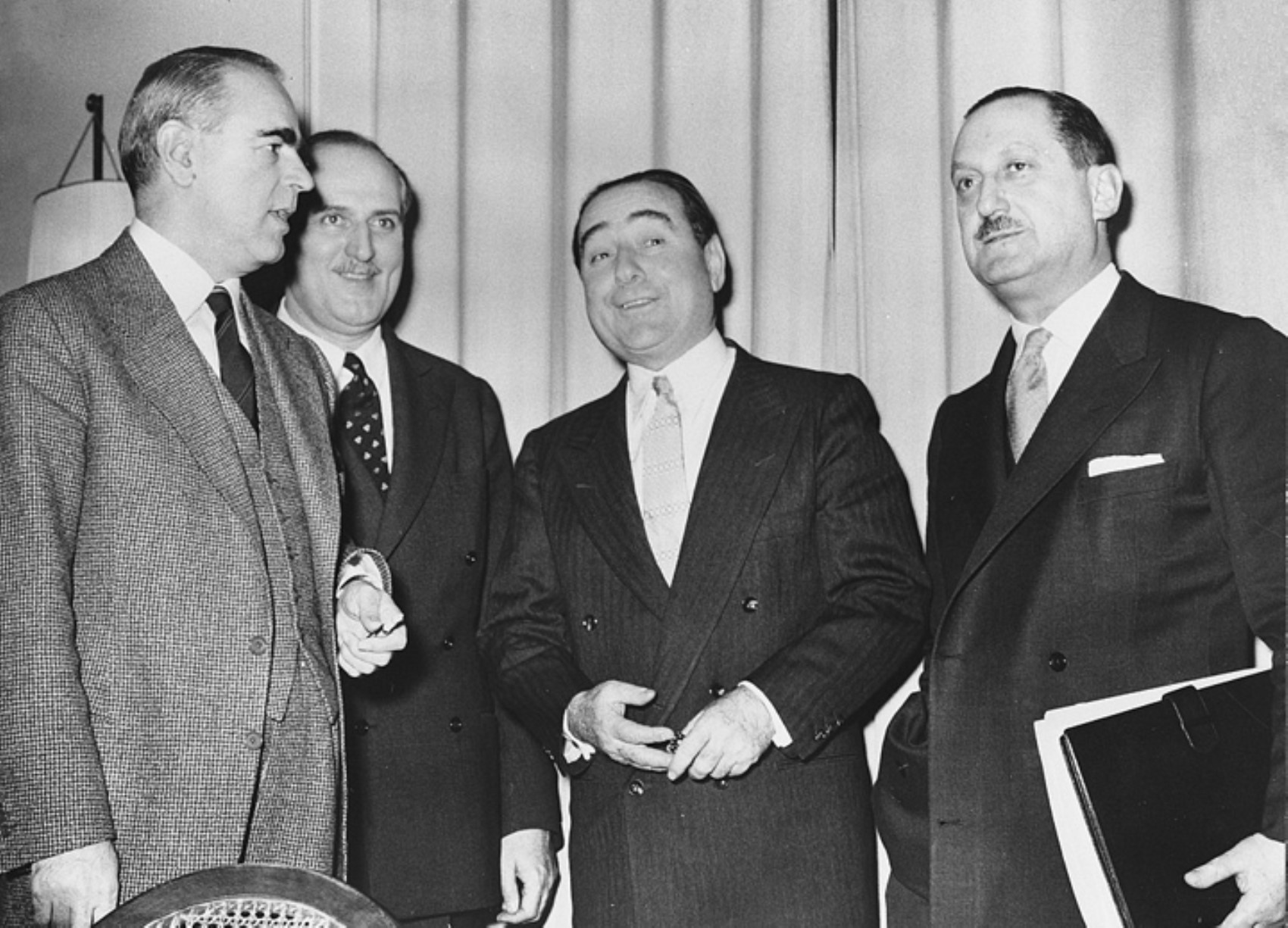
The Zurich Agreement was concluded on February 11 after negotiations attended by the prime ministers of the two countries, Menderes and Karamanlis, and the foreign ministers, Fatin Rüştü Zorlu and Evangelos Averof.
The parties accepted the agreement on the basis of an independent Republic of Cyprus. Menderes and Karamanlis played a major role in this result. It is said that Karamanlis told Menderes, "I am accepting this agreement for your sake." The prime ministers had even gifted each other wristwatches in memory of the day.
The state powers of the Republic of Cyprus and the administration of the communities were agreed upon. The constitution of the Republic stipulated that the Greek community would elect the President of Cyprus, and the Turkish community would elect the Vice President. The system was built on the veto rights of the Turkish community, which remained a demographic minority (due to distrust of the Greeks). The number of Turkish and Greek soldiers to be stationed on the island was determined.
The parties became the guarantors of this new state. By including the UK in the agreement, they would start the establishment process of the Republic of Cyprus together. The date was to be February 19, and the place was to be London. These developments were touted by the DP press as a great success for the government, and the government's economic failure was pushed into the background.
ENOSIS - EOKA - MAKARIOS
When the Second World War ended, for the Greeks, the end of the 400-year Ottoman and British yoke had finally arrived. The only problem was the Turkish minority on the island. In the 1946 census, it was understood that 80,540 (19.7%) Turks lived on the island against 361,199 (80.2%) Greeks. These figures were not an obstacle for EOKA to create a homogeneous Greek community on the island. The issue could be solved with ethnic cleansing.
There was a fierce anti-Makarios sentiment in Turkey that received support from the government. In Anatolia, donkeys were being named Makarios. While the situation was like this in Turkey, for the Greek Cypriot community, Makarios was a highly distinguished clergyman. While secretly supporting Grivas' EOKA actions, he was planning to resolve Enosis by spreading it over time. He was advocating a strategy that would ensure the island's peaceful annexation to Greece.
THE ESTABLISHMENT OF THE REPUBLIC OF CYPRUS UNDER US-NATO TUTELAGE
In the end, under the supervision of the US, three NATO members—the UK, Turkey, and Greece—along with the Turkish and Greek representatives of the island, agreed on the establishment of an independent Republic of Cyprus, with the UK withdrawing while maintaining its bases. The cold war environment had determined the infrastructure of the agreement. We must take into account that the US and NATO were the main determinants in this process. In addition to this coercion, it was important that the new status quo of the island also protected the interests of the UK.
TURNING THE PRIME MINISTER'S SURVIVAL INTO POLITICAL CAPITAL
The crash of the plane carrying Menderes and the Turkish delegation to England and the Prime Minister's survival were imbued with otherworldly meanings. It was exaggerated and exploited by the pro-government press.
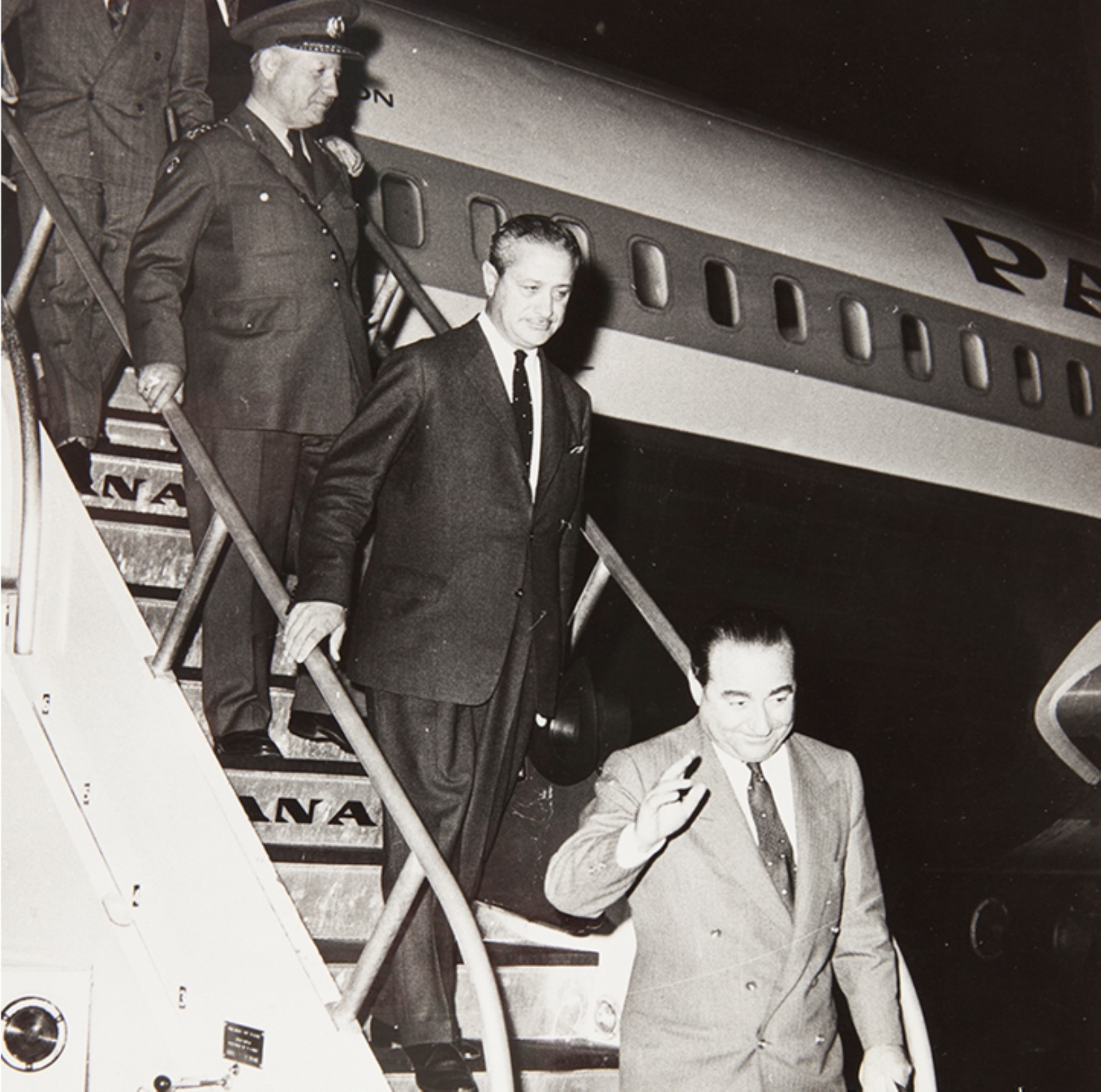
The footage of the welcome during the Prime Minister's return to Turkey clearly proves that the event was exploited politically to the fullest extent. Meanings similar to the miraculous survival of Prophet Abraham after being thrown into the fire by the pharaoh were attributed to Menderes' survival. Although the return could easily have been directly to Ankara, they landed in Istanbul Yeşilköy. The Prime Minister was welcomed in Istanbul with animal sacrifices. The convoy welcoming Menderes under the enthusiastic interest of the public could only reach the Park Hotel, where he would stay, hours later.
The next day, the preference was to go from Istanbul to Ankara by train. The train taking Menderes to Ankara was practically sanctified at every station it passed. When the locomotive reached the Ankara station, President Bayar and the leader of the main opposition party, İnönü, were also there. According to Metin Toker's account, while Bayar ignored İsmet Pasha, Menderes did not see İnönü among the crowd at first, but when he noticed him, he turned back and went to him, and there was a warm encounter. I would like to remind you, by the way, that Metin Toker was imprisoned by the DP government.
ON THE TWO PEOPLE WHO DIED IN THE ACCIDENT: TÜRKMEN AND ZEYTİNOĞLU
I would like to say a few words about the two people who lost their lives in the accident. The first name is Güner Türkmen. He was a young diplomat who had just joined the ministry. He was the brother of one of our foreign ministers, İlter Türkmen, and the son of the founder of the MIT, Mustafa Behçet Türkmen. His big brother was waiting for the delegation and himself in London. I have always found it very sad that Güner Türkmen said goodbye to life at such a young age in this way.
The second is the Minister of Public Works, Kemal Zeytinoğlu. The minister belonged to one of the well-known families of the Eskişehir-Kütahya region. He had received a very good education and had a doctorate in civil engineering. His memory continues to be preserved to this day in the mentioned provinces.
THE POLITICAL ENVIRONMENT AFTER 1957
After the 1957 elections, the Democrats increased their oppressive attitudes. In fact, the elections were held under extraordinary conditions. Political parties were only allowed to hold indoor meetings. Extremely harsh measures were being taken against opposition parties and members of the press. This, of course, stemmed from the fear of losing power. Members of the press were being tried to be convicted on flimsy excuses. Many journalists and MPs whose immunity had been lifted were sentenced to prison.
The government used the state's security forces, and even the army, against the people. One example: I would like to remind you that the air force was flown at low altitudes in Antep. It was also certain that there was tampering with the voter registries. Partisan village headmen (muhtars) were used in this work. As a result, the 1957 elections were held in an environment of complete inequality. In my opinion, the election was won in a dubious manner.
Names such as Metin Toker, Hüseyin Cahit Yalçın, Yakup Kadri Karaosmanoğlu, Cüneyt Arcayürek, and even Ahmet Emin Yalman were punished on charges of "insulting the moral personality of the government"; their convictions were upheld.
The government could have turned the Prime Minister's survival into a feast of national reconciliation and lowered the escalating political tension. But it did the exact opposite. It practically declared a mobilization to turn this event into political capital.
DP'S APPROACH TO THE CYPRUS ISSUE: NATIONALIST DEMAGOGY
Until the Cyprus events, the DP's political themes were limited to the oppression of the single-party years, religion, anti-communism, and the abuses of the CHP bigwigs. Now, a good new opportunity was being added to this. Conservative-nationalist demagogy was produced over Cyprus. For example, university youth were being excited with MTTB rallies. There was a symbolic enemy here: Makarios. The Archbishop of the Greek Orthodox Church of Cyprus. He was called the "black priest."
The 1957 elections had revealed one thing. The Democratic Party had now lost its majority at the general vote level. 48%. It owed its power to the simple majority system. If a proportional representation system had been applied in the elections, it could have lost power.
Meanwhile, there was something else important. On August 4, 1958, devaluation decisions had been taken. The Turkish Lira had lost 220% of its value against the US Dollar. The great development image of the early 1950s had been severely shaken in the face of severe inflation.
The DP needed a legitimacy apparatus to consolidate its own base. This had to be a topic that would occupy public opinion with nationalist demagogy. The Cyprus issue would serve exactly this function for the government. Ecevit also tried this in 1974, but he was unsuccessful.
In the end, the Democratic Party turned to a policy of consolidating the masses behind it by adopting the role of the ruling party that strongly defends the Turkish Cypriot community.
BLAMING THE SEPTEMBER 6-7 EVENTS ON LEFTISTS
In 1955, the DP tried an exaggerated operation. The September 6-7 events exploded in the government's hands. The disgrace created could only be partially remedied after long efforts. The DP thought it could protect the Turkish Cypriot community by experimenting with a provocation against Turkish citizens of Greek origin. This was an attitude completely contrary to the Turkish state tradition and political morality.
The DP government's response to Enosis actions with the September 6-7 plot was a complete disaster. It was certain that the intelligence organization was behind the event with the government's instructions. However, "the scale had been tipped badly." It was necessary to produce a fabricated formula that would satisfy public opinion. Finding this formula was not difficult at all: The events had been organized by communists. The martial law command did not delay in announcing the potential culprits. Around 60 intellectuals and artists, including Hasan İzzetin Dinamo, Asım Bezirci, Aziz Nesin, and Kemal Tahir, remained in custody for months.
WHAT SHOULD MENDERES HAVE DONE AFTER THE ACCIDENT?
Melih Esenbel, the Secretary General of the Ministry of Foreign Affairs, who survived the accident with minor scratches, says the following. When Menderes saw the front part of the plane on fire, he said: "What a calamity, what a tragedy... my friends are burning." Yes, what he saw was a disaster, a tragedy. He had survived this tragedy.
If Menderes, after surviving this disaster, had thought that life is actually hanging by a thread and had lowered the political tension, he would have been saved from the tragedy that awaited him. Instead of saying "I will not be a former prime minister," he could have said, "Anything can happen to us at any moment in life, we shouldn't be so attached to power." But unfortunately, he did not do that.
Most Read

Striking picture for Özgür Özel's 'New Party'

Özgür Özel gives a dated response regarding the number of resignations

The PKK opening and Özgür Özel’s path!..

Forest fire in Antalya brought under control

How did the newspapers view Özgür Özel's farewell to the CHP?

He killed his wife by slitting her throat: Their children witnessed the moments

What did the CHP do?

Özel’s new party move in the world press

The New CHP, against CEHAPE

Fire at TUSAŞ engine factory in Eskişehir under control