



The political balance sheet of the last two years
WHAT KEEPS THE GOVERNMENT STANDING?
In the last two years, which have seen presidential elections, parliamentary elections, and local government elections, what is the power that still keeps the government above 30% despite the pandemic, the earthquake disaster that devastated 11 provinces of the country, the mismanagement experienced after the earthquake, and inflation reaching rates unseen in the history of the republic?
This situation cannot be explained solely by the organization of religious communities, sects, and foundations. The support of the civil, administrative, and judicial apparatus of the state, which has completely become an instrument of the government, is also insufficient to explain this.
I think these lines from October 9, 2019, show the power that keeps the government standing in Turkey:
“ I don’t want to be responsable for destroying theTurkish- economy- and I will… Dont be tough guy. Don’t be a fool. I will call you later.”
DETERMINANTS OF THE FORMATION OF THE 28TH PARLIAMENT
The Grand National Assembly of Turkey held its first meeting on June 2, 2023. According to the Constitution, the total number of members of the TBMM is 600.
According to the Constitution, the TBMM was formed with the elections held on May 14, 2023, together with the presidential election. The elections were focused on the presidential election, which represents the executive branch alone, rather than legislative assembly elections. We know the reason for this: the new political regime is based on the supremacy of the executive branch. Not on the separation of powers.
The 2023 parliamentary elections had two determinants. The first was the incumbent Erdoğan's desire to be re-elected again and again, and the other was the desire of weak parties to enter parliament by clinging to one of the alliances led by the AKP or the CHP.
There was no need for ideological consistency to satisfy this desire. For this reason, we were able to see HÜDA PAR, which is mentioned in the same breath as Hezbollah, and Ecevit's DSP in the same frame.
Moreover, the last-minute transfer of the YRP, which continues the line of Necmettin Erbakan—who accused the AKP of Zionist collaboration—to the ruling bloc was significant. The votes of the New Welfare Party (Yeniden Refah Partisi), the fact that the votes from abroad were mostly in the AKP camp, and the transfer of Sinan Oğan were the determinants in the People's Alliance candidate winning the election.
The political status quo did not change.
THE STRENGTHS OF THE PARTIES REPRESENTED IN PARLIAMENT
On the first meeting day of the 28th Term Grand National Assembly of Turkey, the AKP, which won the executive power (presidency), did not have a legislative majority on its own. The AKP had 268 deputies, and its ally the MHP had 50 deputies. The conditional supporter YRP had won 5 seats.
The BBP, which entered the election alone within the alliance, could not send a representative to parliament. Party leader Destici probably did not like the ranking shown to him.
Erbakan's son did the right thing. He showed that his participation in the alliance was based on "mutual benefit." He concretely demonstrated that they had no other goal than to prevent the government from being lost to the CHP and to get his party into parliament.
By not being on the AKP lists, he maintained his autonomy. This was a distant cooperation. When it was successful, his position against the AKP and other right-wing parties strengthened.
It was already known that the DSP chairman had no goal other than being elected as a deputy. The couple looked very happy while the deputy badge was being pinned by his wife.
SINCE THE 2024 LOCAL GOVERNMENT ELECTIONS
In these elections, the CHP's vote was 38%, and the AKP's was 35%. The YRP had become the third party with 6.1%. Following them, the DEM Party with 5.7% and the MHP with 5% were lined up one after another.
The result obtained at the general vote level is important. The number of municipalities won and which provinces they are in could be the subject of another analysis.
The parties of Kılıçdaroğlu's "Nation Alliance" failed heavily in the local government elections. The "we are toppling the government" wind of the CHP after this result has long since died out.
Özgür Özel's call for "normalization" found a response with exploratory footwork. It was fended off. There can be no normalization in politics with the AKP. If politics normalizes, the AKP will fall from power. The AKP feeds on polarization. As a result, the government's goal is neither normalization nor democratization. It is only not to lose its position of power.
The latest election polls show that the CHP has the same vote share as the ruling party, at best. Despite all this wear and tear.
As of today, the data in front of me is as follows: AKP 30.2%, CHP 29%, MHP 9.2%, DEM 7.5%, YRP 5.1%, İYİP 4.4%, Zafer 4.2%, BBP 1.8%, TİP 1.5%, Saadet 0.8%.
DEMOCRATIZATION?
One would have to be naive to think that recent developments are related to democratization. A move involving the MHP and the AKP might have something to do with "politics." Establishing a direct link with developing a democratic social order based on human rights and fundamental freedoms would be wishful thinking. Since 2002, there has been no development in Turkey that would prove this opinion of mine wrong.
WHAT COULD BE THE POSSIBLE DEVELOPMENTS WITHIN PARLIAMENT?
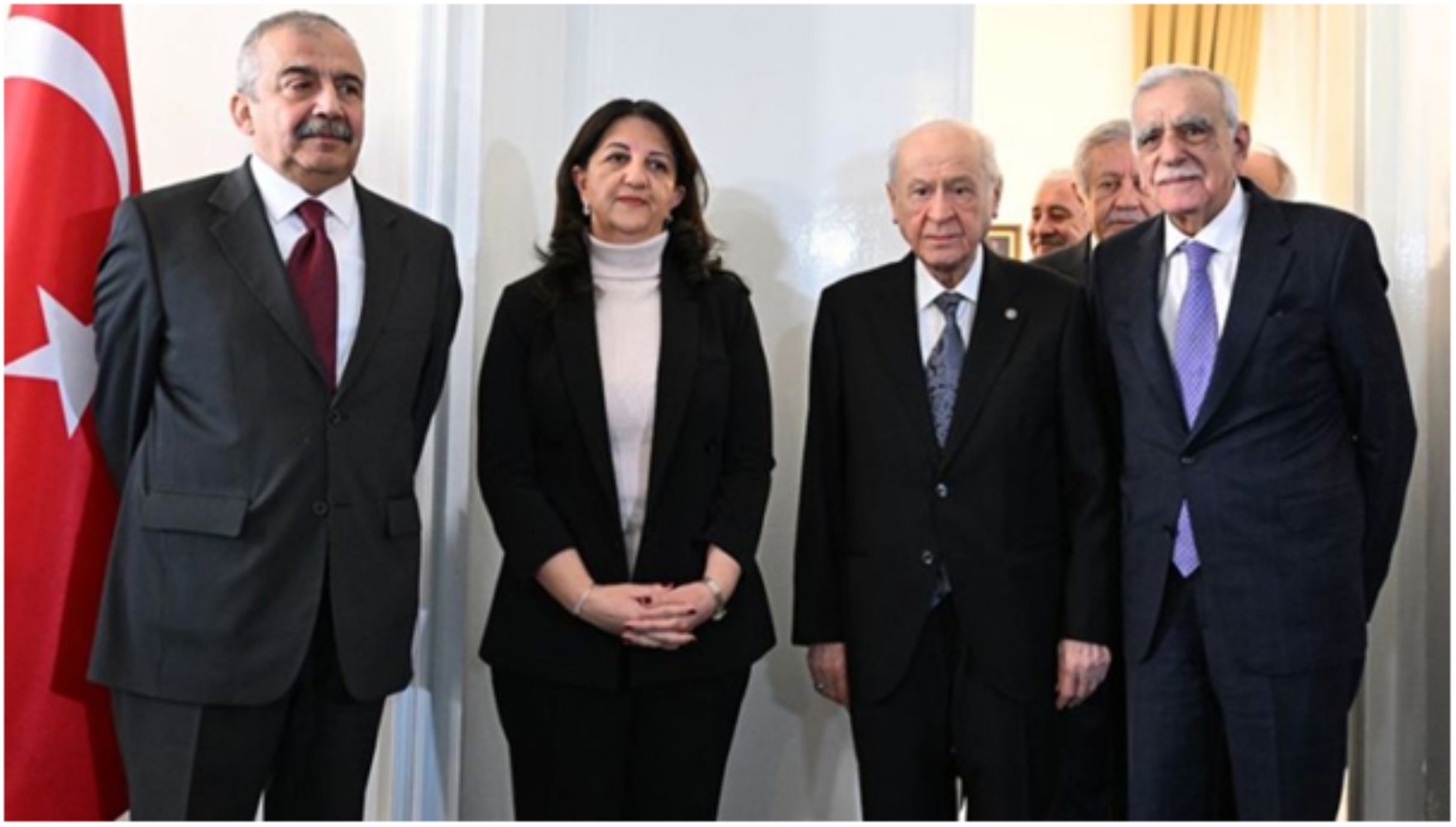
Devlet Bahçeli made an interesting move even before the Assad regime was toppled. The surprising developments that started with shaking hands with DEM Party members continued with the invitation of Öcalan to speak at the DEM group. The meaning of these became clear later.
When we consider this attitude together with Bahçeli's words that "very important developments will take place in our region," we understand better the role he has played in Turkish politics since 2002.
Bahçeli's new role is the search for a Turkey compatible with the new US-Israel-patented balances in the Eastern Mediterranean and the Middle East. It is to play a moderator role in this search.
Bahçeli, who spoke of abolishing the Constitutional Court for not closing the DEM Party, now seems to have taken on the role of a negotiator.
We do not know the exact nature of the negotiations. But there is one thing we know: that means sending delegations to the PKK (to İmralı), which carried out the first armed action against Turkey with the 1984 Eruh raid. This step has elevated the PKK to the position of a legitimate interlocutor that can be negotiated with.
It is inevitable that this process will sit on the agenda of a constitutional amendment aimed at Turkey's regime in the "murky environment of regional balances."
It seems very likely that these smiling visits will develop in the direction of changing the state's national, unitary character based on the Turkish War of Independence and Atatürk's revolutions.
There are only two parties that will take a position against these negotiations covering the "unalterable articles" of the state, including its secular character: the Zafer Party and the İYİ Party. And Cemal Enginyurt alone. I am not very sure about the CHP.
PARTIES IN THE STRATEGIC GAME
As of today, there are several important parameters in the strategic game being played. From the perspective of the AKP leadership, it is to keep the party in power and to have Erdoğan re-elected. And to achieve this, to carry out a constitutional amendment. Will the DEM Party accept this? Of course, it will. On the condition that their demands are satisfied. On the condition of guaranteeing and legitimizing the "peoples of Turkey" discourse, with a general amnesty at the forefront. On this path, the demands that will legitimize political Kurdish nationalism may be partial at first. The important thing is to find a solid ground to hold onto.
IS THERE A NUMERICAL INFRASTRUCTURE FOR CONSTITUTIONAL AMENDMENT?
This parliament has a composition that can amend the constitution by providing a 2/3 majority. Without resorting to a referendum. If one were to analyze the possibilities of this: first of all, every variety of Islamism is represented in parliament. Including fundamentalism. Although there are contradictions among themselves, they are allies, especially on the point of opposition to the fundamental qualities of the republic.
They can do such a move together if they reach the sufficient number. There are strong indications of this. The whole issue is the point that the MHP-DEM negotiations, conducted under the auspices of the AKP, will reach. In other words, there are two keystones: MHP and DEM.
The quorum for amending the constitution in the TBMM: 400/600. Let's take a look at the representation status of the parties, taking into account the changes in the seat distribution since the beginning of the term.
The AKP has 268 deputies. When the right-wing allies it carried within it left, the CHP fell from 169 to 130. There was a loss of 39 deputies. The MHP fell from 50 to 47. The number of members of the İYİP in the TBMM is 29; Akşener's failure led the deputies to new searches. At the beginning of the term, the number of deputies was 43. The DEM Party has 57 deputies. The Saadet-Gelecek parliamentary alliance has 20, and DEVA has 10 deputies. HÜDA PAR, which entered parliament from the AKP list, has 4, and the YRP, which entered the election with its own candidates, has 4 deputies. Let's not forget the 15 independent deputies who left their parties, except for DSP Chairman Önder Aksakal and DP's Cemal Enginyurt, and the 4 TİP deputies.
As can be seen, there is a heterogeneous community consisting of 380 deputies that the government can gather around it through various bargains. The conditions will, of course, determine the limit of what they can do with this number.
CAN THE GOVERNMENT RISK A REFERENDUM?
The government cannot risk a referendum for a constitutional amendment. Because the content of this referendum will be different from the previous ones. The 2007, 2010, and 2017 referendums were different in terms of their content and goals.
In the votes in question, the government had achieved results by taking the Sunni conservative majority behind it. Now it will try to achieve results in parliament. To avoid taking risks. Of course, if the MHP/DEM negotiations result positively for them.
THE REASON FOR THE OPPOSITIONAL ATTITUDE OF THE İYİ PARTY AND THE ZAFER PARTY
These two parties are not Ottomanist parties like the MHP. In the MHP, Turkism has evaporated, and the ideology of "imperial-Ottomanism" has taken its place. This new ideological positioning largely overlaps with the AKP's neo-Ottomanist nostalgia. Although the parties of Prof. Dr. Ümit Özdağ and Müsavat Dervişoğlu carry similar traces, the main vein is Turkism. For this reason, it is out of the question for them to take part in the MHP-DEM scene under the auspices of the AKP.
OPPOSITION TO THE AKP FROM THE RIGHT
There are two focal points on the right that appear to be in opposition to the government. One is the New Welfare Party, the other is the Saadet Party. The opposition of these parties is based on real ideological reasons. The other opponents are the hurt/resentful AKP members: the Deva and Gelecek parties. The possibility of these parties returning to the fold if conditions mature and their hearts are won over is not small at all. Davutoğlu and Babacan would not say no to an "honorable return" under suitable conditions.
DEVELOPMENTS ON THE ISLAMIST RIGHT: PREPARATIONS FOR A RETURN TO THE FOLD
Davutoğlu, who sees once again that he has no chance against Erdoğan and the AKP, seems to intend to find a place in the AKP ranks again by taking advantage of the turn of the conjuncture. When the examples of Numan Kurtulmuş, Süleyman Soylu, and Tuğrul Türkeş are remembered, Davutoğlu's return will not be that difficult.
WHAT WILL HAPPEN TO THE SAADET-GELECEK ALLIANCE?
The Saadet Party was founded on the basis of ideological-political opposition to Erdoğan. Erdoğan had suppressed or assimilated many rebellions, large and small, on the right, but the core cadre of Saadet is an exception to this.
There is also Constitutional Law Professor Serap Yazıcı, who was elected as an Antalya deputy from the CHP list, in the Saadet-Gelecek parliamentary group. Political developments and the conjuncture will determine what will happen to this group.
HÜR DAVA PARTY
The party that benefited the most from the People's Alliance was HÜDA PAR. The Hür Dava Party is an ummah-ist party. It has radical religious-Kurdish nationalist and federalist views. This party has not had any weight at the general vote level since 2014. It was 0.22% in 2014 and 0.64% in 2024. The places where it received the most votes were: Batman, Bitlis, Diyarbakır, Şırnak, and Bingöl. The vote share it received in the 2018 parliamentary elections was 0.31%.
In the 2023 elections, in exchange for supporting Erdoğan, the Hür Dava Party won 4 deputy seats. Party Chairman Zekeriya Yapıcıoğlu entered parliament from the AKP list in the second district of Istanbul.
It would be appropriate to say a few words about the Hür Dava Party: It never gave any credit to the policy of taqiyya that the AKP pursued until 2011. We heard words against secularism and the republican revolutions from the mouth of the party chairman right at the beginning of the legislative term. HÜDA PAR adopted a discourse that legitimizes the reactionary-feudal separatist movements in the first years of our Republic.
THE KEYS TO THE OPENING WERE AT THE IZMIR ECONOMIC CONGRESS
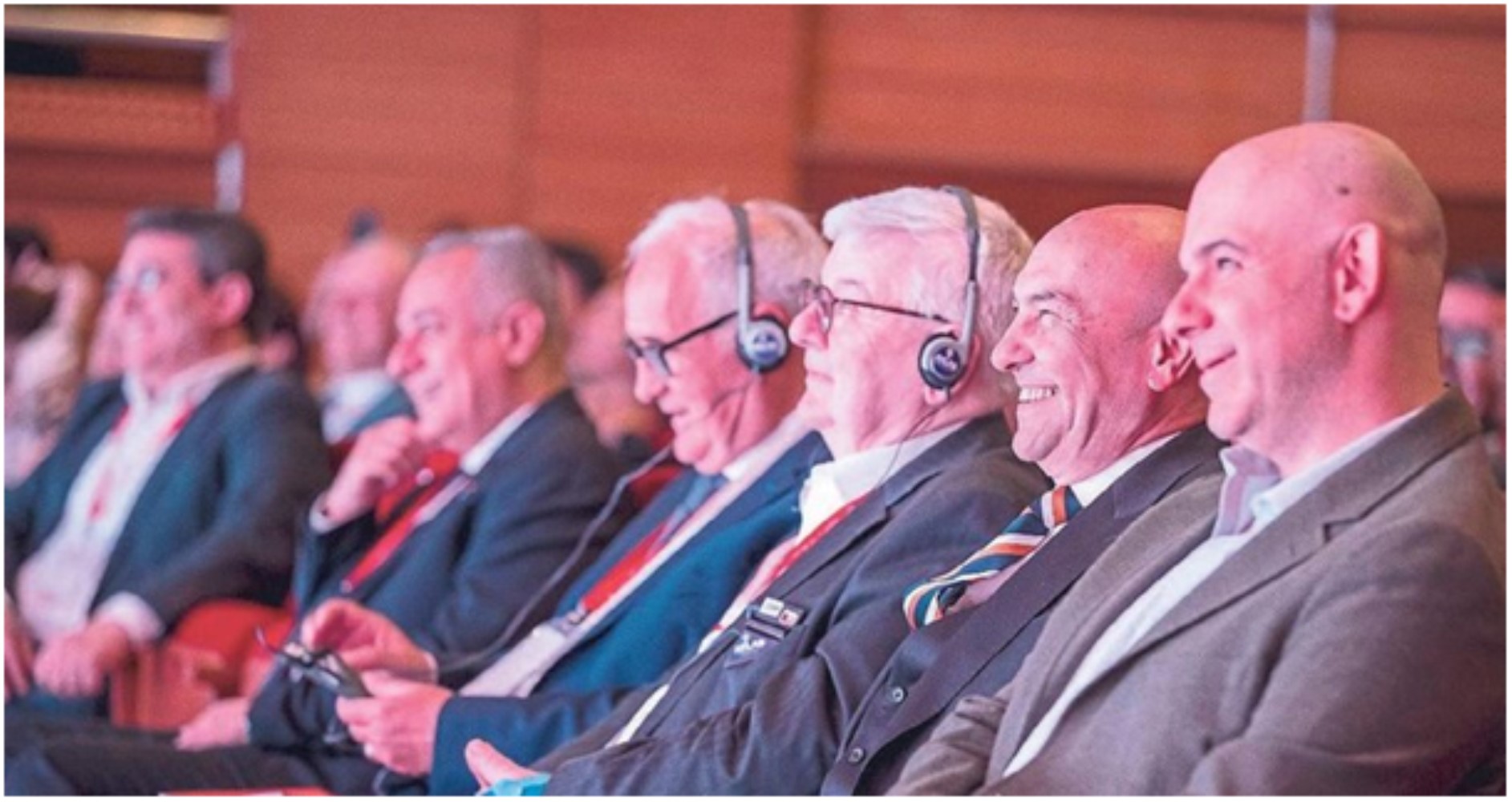
There is something I want to remind you of. Before the "what good did we see from the republic" statement, the DEM Party Deputy Speaker of the TBMM had made a strange speech at the 100th anniversary of the İzmir Economic Congress. (21.3.2023) In this speech, under the liberal smiles of the CHP members, he had uttered words criticizing the National Pact (Misak-ı Millî) and the Great Atatürk. At that time, I was only angry at this speech and the attitude of the CHP members. But I understand better now that the color of the business is completely different. I would like to share with you a comment about this event that I just saw on Ekşi Sözlük: "The rambling of a type who acts as a servant to imperialism under the name of socialism." Especially after the Revolution's statements that it puts itself in the place of God, the pieces have fallen into place better.
There was one more development besides this. I would like to remind you of that too. In this country, a public prosecutor had launched an investigation/inquiry into a mayor (September 9, 2022) who repeated the words of the Great Atatürk about Vahdettin in his Nutuk. When we think of the two together, the situation becomes even clearer.
What was grave was that before the prosecution took action, the MHP leader accused the mayor of indecency and exonerated Vahdettin. This attitude explained the true political color of the MHP as of today: Ottomanism.
WHAT HAS THE CHP DONE?
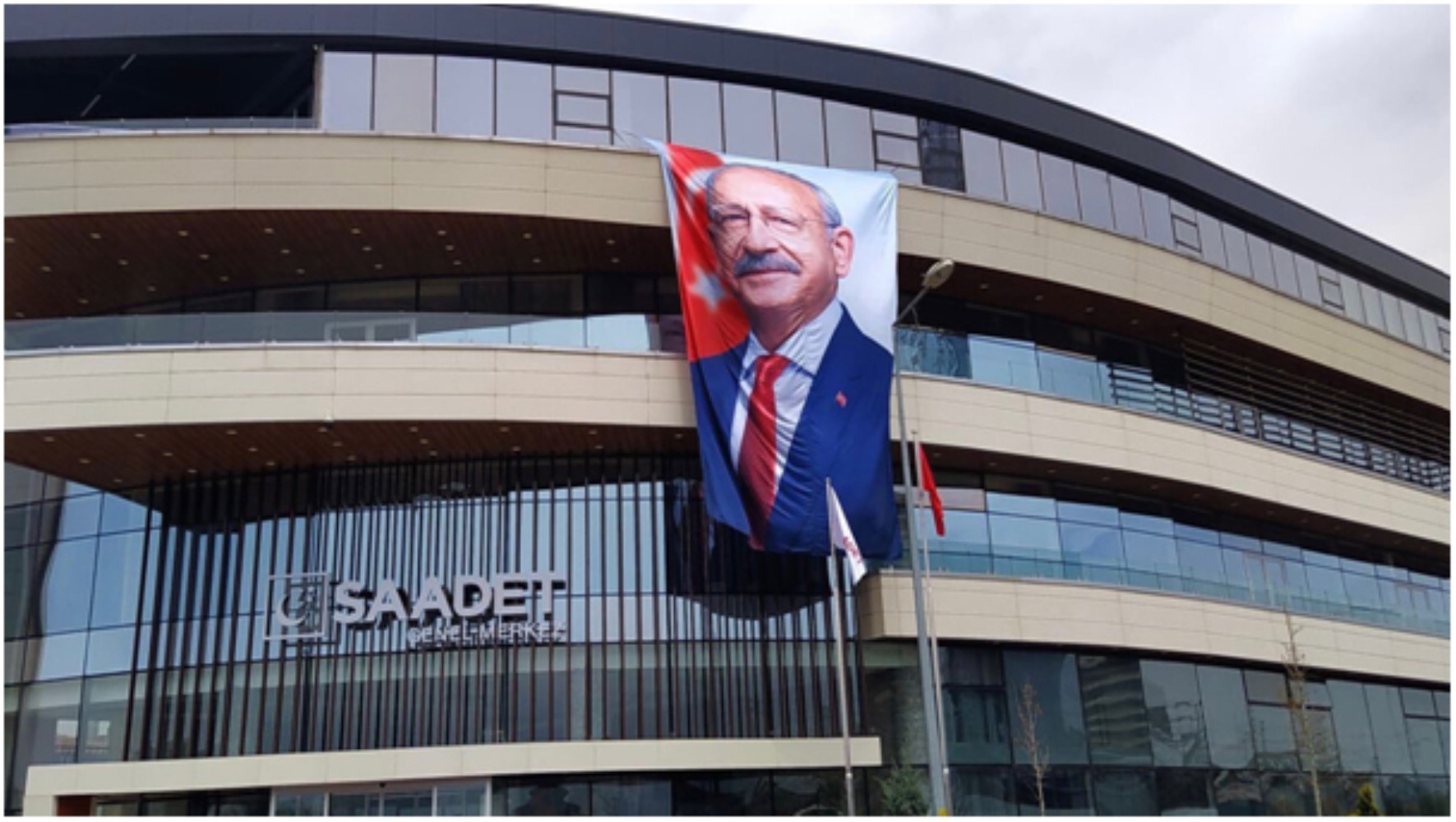
The previous Chairman of the CHP had put the Nation Alliance in the mood that it would come to power.
There were quite a number of İYİP, Gelecek, Saadet, and Deva Party candidates on the CHP lists. The party chairmen were also going to be appointed as Vice Presidents once power was won.
The CHP entered parliament with 169 deputies in the 2023 elections. After its right-wing allies returned to their homes, the number of deputies has now fallen to 130.
The current state of parliamentary arithmetic reveals that Kılıçdaroğlu's alliance with the segment that broke away from the AKP and moved to the opposition did not benefit the CHP, but harmed it.
THE SITUATION OF THE CHP IN THE FACE OF RECENT DEVELOPMENTS
The primary goal of the CHP management is not to be harmed by the process. On the other hand, not to stay out of it. There are, of course, reasons for this: The primary factor is the Kurdish reality. It is the anxiety of being able to keep the voter base that has permeability, especially in large cities. The other is not to come face to face with the power across the Atlantic, which is the main designer of the process.
I don't think the current management of the CHP is uncomfortable with being the party that the US keeps in reserve. They know this. They are even candidates for this role.
There are reasons for determining such a position for the CHP. These reasons are fundamentally structural. In the post-Baykal period, in the name of democratization, the party's deputy cadres and central organization have been made compatible with the Second Republicanism.
The Atatürk revolutions, which became symbolic after September 12, have completely faded. They have been reduced to the level of Atatürk pictures hanging in the headquarters of the founding party of the Republic.
A sincere question: What do the Six Arrows mean for the current CHP elite? I am seriously curious, to be honest.
The real reason for this awkward attitude taken against Atatürk's revolutions is the ideological-political erosion in the newly emerged cadres of the CHP.
And this erosion is not coincidental.
Most Read

Striking picture for Özgür Özel's 'New Party'

The PKK opening and Özgür Özel’s path!..

How did the newspapers view Özgür Özel's farewell to the CHP?

He killed his wife by slitting her throat: Their children witnessed the moments

What did the CHP do?

Özel’s new party move in the world press

The New CHP, against CEHAPE

Fire at TUSAŞ engine factory in Eskişehir under control

From self-efficacy to despair

Kılıçdaroğlu's first message on Özgür Özel's new party announcement