



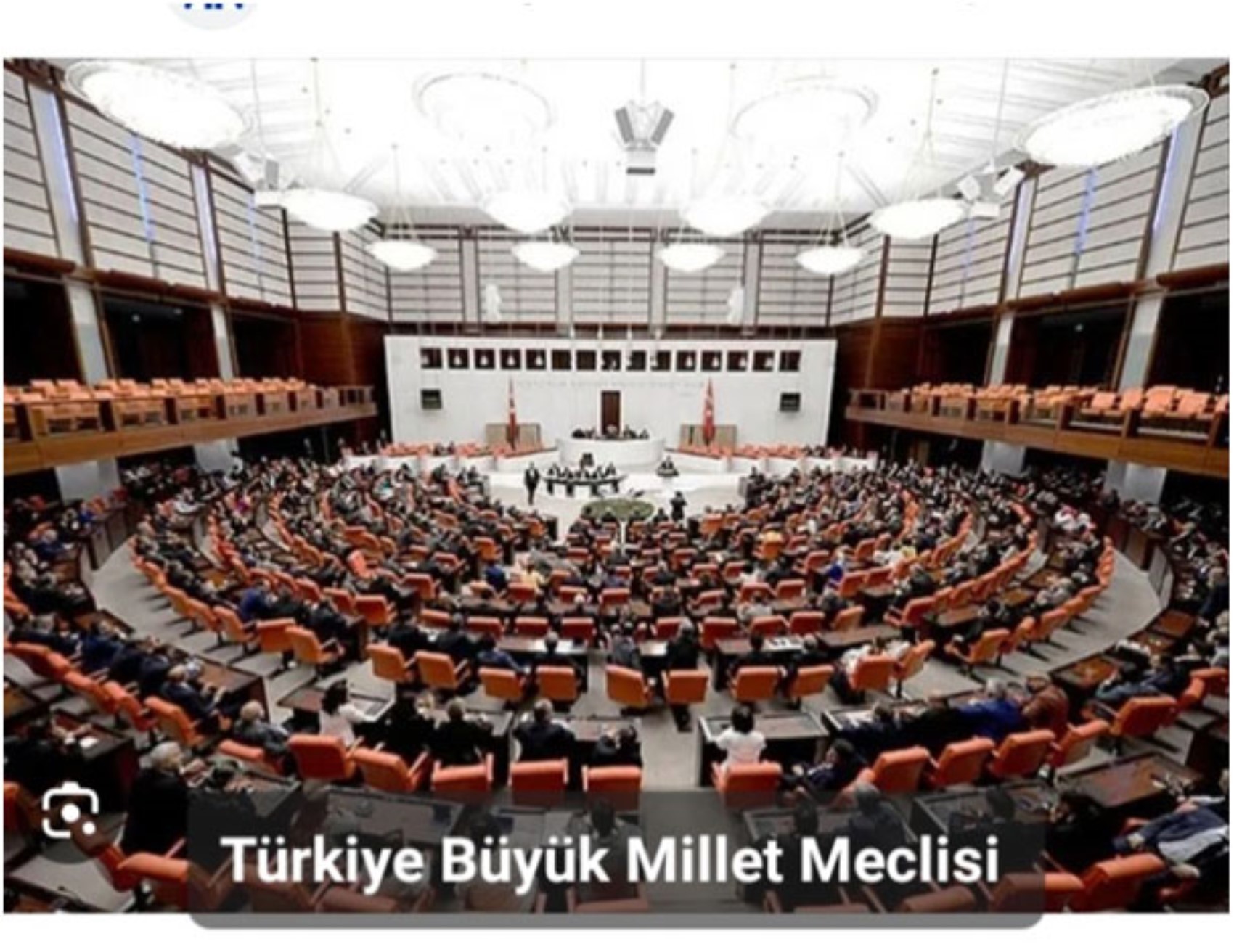
THE SPEAKERSHIP OF THE TBMM BEFORE THE AKP
Let us briefly look at what kind of office the Speakership of the Grand National Assembly of Turkey (TBMM) was until the AKP came to power.
First and foremost, the most important point to emphasize is that the founding will of the Turkish State is the Grand National Assembly of Turkey. The First Assembly governed Turkey with a Convention regime. In this regard, I recommend you take a look at my study titled State Powers and Administration During the First Assembly Period. The Convention is the reason for the situation where the Speaker of the Grand National Assembly of Turkey was also the head of the legislative assembly and the Council of Ministers (Executive Deputies). In short, the Convention means the fusion of powers and parliamentary supremacy.
The Speaker of the Grand National Assembly of Turkey maintained the position of de facto Head of State throughout the National War of Independence. While Mustafa Kemal Pasha was elected President of the Republic, Fethi Bey became the Speaker of the Grand National Assembly of Turkey. This is a very important choice.
Until the 1950s, the Speakership of the Parliament was held by political actors from Atatürk's closest circle, such as Kazım Özalp, Abdülhalik Renda, Kazım Karabekir, Ali Fuat Cebesoy, and Şükrü Saraçoğlu.
During the period when the Democrat Party was in power, the fact that the TBMM Speakership was held by Refik Koraltan, who had been a member of parliament since the first assembly, was also a meaningful choice. Koraltan served as a member of parliament for 40 years, from the First Assembly until 1960. This is an important detail. Entrusting the speakership of the parliament to him shows the importance given to the moral personality of the Grand National Assembly of Turkey.
I can say that this approach was related to the fusion of powers and parliamentary supremacy that continued until the 1961 Constitution.
The 1961 Constitution organized the Parliament as bicameral. The stronger wing was the National Assembly.
Throughout Turkish parliamentary history, due to customs and the parliament's internal regulations, the Speaker of the Parliament was always chosen from among names that both the government and the opposition could accept.
During the 1961 democracy era, Dr. Fuat Sirmen, Ferruh Bozbeyli, Sabit Osman Avcı, Kemal Güven, and Dr. Cahit Karakaş were elected as Speakers of the National Assembly, respectively. Sirmen, Güven, and Karakaş were CHP deputies, while Bozbeyli and Avcı were Justice Party deputies.
A deputy from the ruling party or the party that came first in the elections, to whom the opposition would not object, would be nominated for the TBMM Speakership. The opposition would also vote for this candidate. The Presidential Council and Deputy Speakers were distributed according to representation ratios. This was called the Gentlemen's Agreement.
Since the 1924 Constitution, the Speaker of the TBMM does not attend meetings of their own party group, nor do they participate in debates or vote in the TBMM General Assembly.
This is the guarantee and indicator of the impartiality of the Speaker of the Parliament. In accordance with parliamentary customs, the deputy speakers and members to be elected to the Presidential Council were chosen from among people who could set aside their political party engagement. This was the parliamentary law practice applied during the 1961 Constitution era. Then, like everything else, these procedures changed.
The Speaker of the TBMM is responsible for the management of the parliament. They are tasked with protecting the moral personality (dignity) of the TBMM. They are obligated to preserve the rights of the members of the TBMM. The Speaker of the TBMM protects the rights of all deputies, regardless of whether they are opposition or government supporters. The protection of parliamentarians is synonymous with the protection of the parliament.
I can say that all the names elected to the TBMM Speakership during the 1961 Constitution period were politicians who considered the Speakership position as autonomous from and above the party they belonged to. The two names I admire most are Ferruh Bozbeyli and Cahit Karakaş.
The September 12 interim regime dissolved the parliament. When elections were held again in 1983 and the Parliament convened, it is significant that the person nominated for the speakership by Özal, the chairman of the ruling party ANAP, despite all his lack of sophistication and insensitivity to parliamentary customs, was Necmettin Karaduman.
WHAT DID THE 2002 ELECTIONS PROVIDE?
The AKP came to power in 2002. It reached a parliamentary majority disproportionate to the percentage of votes it received. With 35%, it reached the threshold for changing the constitution. 363 seats. The total number of members of the TBMM was 550 as of that date.
If the AKP had reached this majority alone in the Turkey of 2026, it would attempt to change the constitution. At that time, it had to tread carefully. In 2002, 45% of the votes were left unrepresented, and only two parties entered the parliament: AKP (35%) and CHP (20%).
This was the result of the stable parliament goal of the September 12 generals. A very successful result indeed. The 10% national threshold set by the 'wardrobe Atatürkists' benefited the counter-revolutionaries. The AKP took over Turkey with the stability legislation of the National Security Council (MGK) administration.
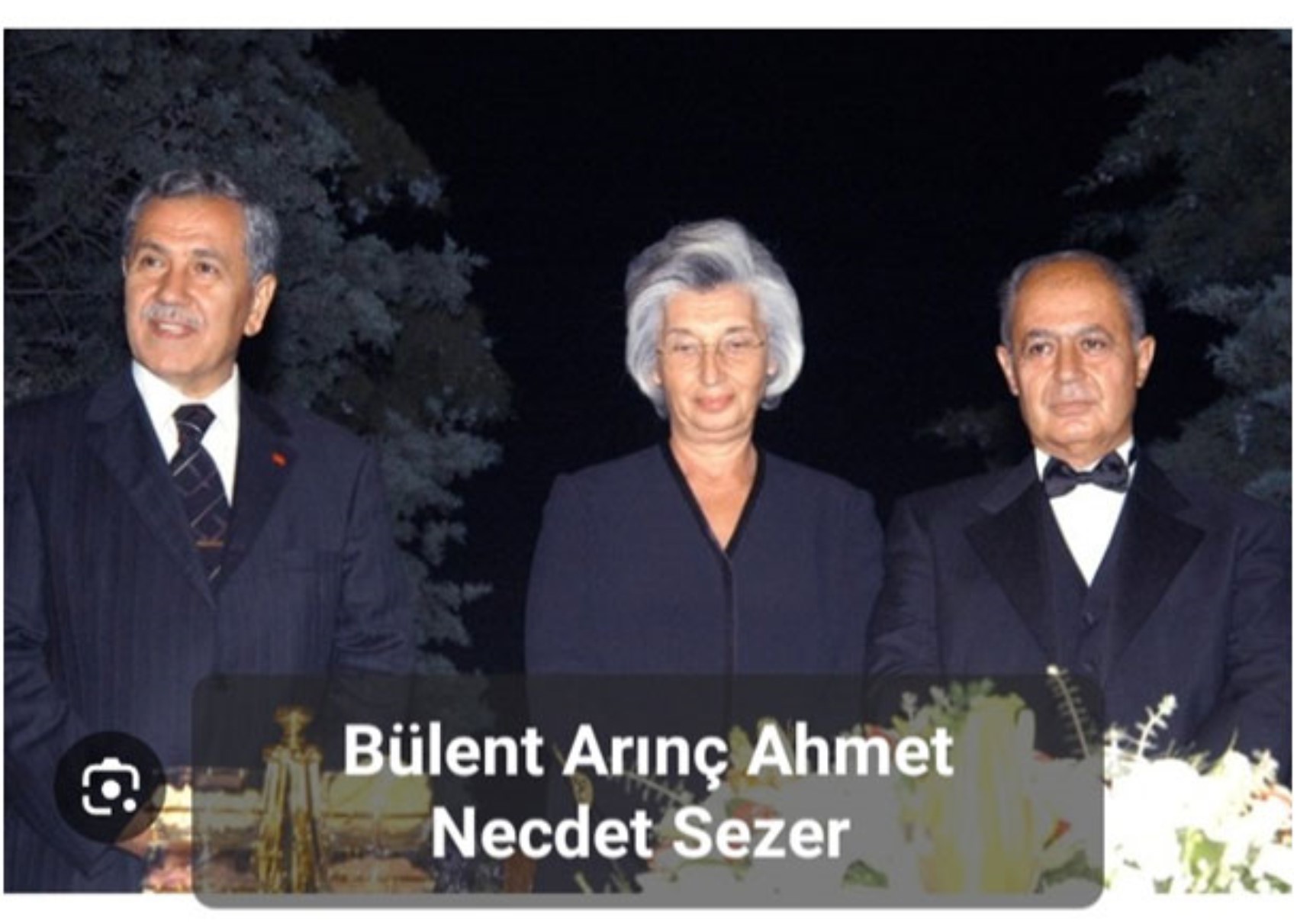
THOUGHTS ON BÜLENT ARINÇ'S SPEAKERSHIP OF THE PARLIAMENT
The first AKP Speaker of the Parliament was Bülent Arınç. Arınç is from Manisa. He graduated from Ankara Law School in 1970.
Bülent Arınç is one of the important names among the founders of the AKP. He left the Virtue Party (Fazilet Partisi), which was established under Erbakan's control, and joined the reformist movement.
To me, reformism in Islamism meant 'we want to work with international capital. Do not worry. As long as they give us the power'.
The de facto leader of the reformist faction was Erdoğan, who had been dismissed from the Istanbul Metropolitan Municipality (İBB) mayoralty. Note that I used the expression 'de facto', not legal leader. Because he had been banned from politics.
The lawyer from Manisa, Bülent Arınç, along with Abdullah Gül, Abdüllatif Şener, and Erdoğan, is one of the names who grew up within Erbakan's cadres but parted ways with him.
Arınç's election to the Speakership of the Parliament in the third round was the AKP's first gain. Arınç's Speakership of the Parliament continued until the end of the 22nd term. November 14, 2002 - June 3, 2007.
We can say that the period when Arınç was Speaker of the Parliament was the weakest period of the AKP despite its parliamentary majority. It would be correct to call this 'the period of settling into power with anxiety'. it would be correct to call it.
The first problem Arınç encountered during his speakership was Sezer's attitude of excluding his headscarved wife. This stance of Sezer was wrong. I never found the methods Sezer used to besiege the government rational. I have not been able to fully grasp what he understood by the concept of public space that he resorted to at state receptions.
Ahmet Necdet Sezer, whom we praised so much for paying the electricity bill for his son's wedding out of his own pocket and for stopping at red lights, made many mistakes in Çankaya. I must state that just as I did not agree with his understanding of law in many events, his practices put the counter-revolutionary cadres in a victimized and justified position.
I do not find his vision as a man of law realistic. His approach is formalist-positivist. But that is not our topic today. Perhaps I can write an article under this heading later.
The event that marked Arınç's speakership period is, of course, the 367 crisis.
In My Opinion, 'our neighborhood's' interpretation of 367 did not rest on a solid foundation. My professors Teziç, Batum, and Yüzbaşıoğlu interpreted the article of the constitution regulating the presidential election in a way that did not coincide with its justification. The CHP administration also took a stance in the same direction. Professors Hikmet Sami Türk, Kemal Gözler, and Ergun Özbudun did not agree with this view.
One of the justifications for the September 12 regime to legitimize itself was that the TBMM could not elect a president. For this reason, the 1982 constitution limited the election to four rounds. In my opinion, this was the most important point of the presidential election. The constitution-maker was forcing the Parliament to reach a result in the fourth round at the latest. There was also a serious sanction. If a new president could not be elected in four rounds, the legislative assembly would be renewed. This is not an act of dissolution. The parliament would renew itself.
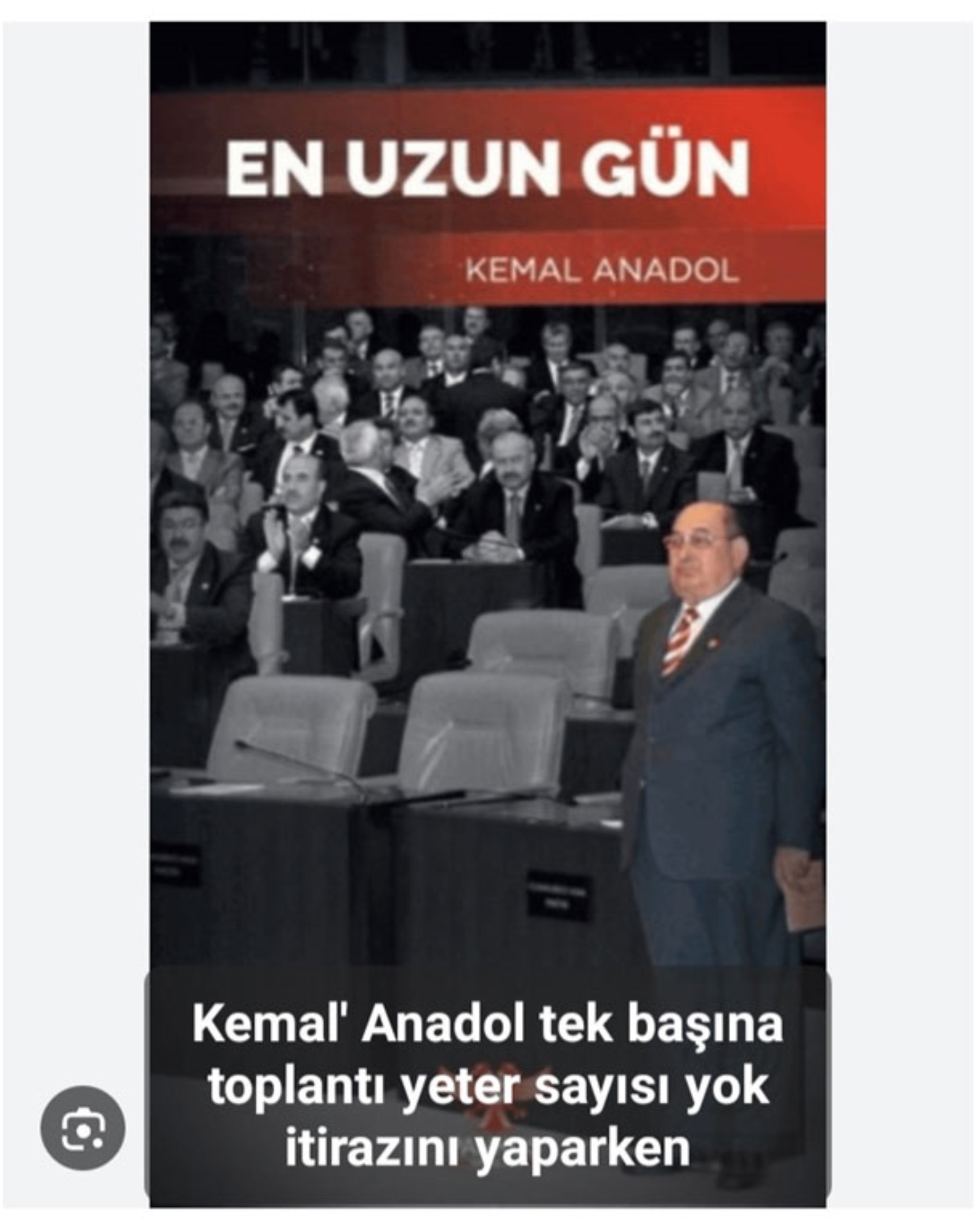
When Bülent Arınç opened the session with the agenda of electing a president, only Kemal Anadol from the CHP entered the general assembly and made a speech stating that there was no quorum for the meeting. At that moment, the number of members in the general assembly, including himself, was below 367. This speech, whose legal basis I do not agree with, has an important place in our political history.
After saying a few words that trivialized this objection, Bülent Arınç declared that the meeting quorum existed and started the election. The result of the first round showed that Abdullah Gül would be elected in the third round. The CHP filed an annulment lawsuit with the Constitutional Court (AYM) on the grounds that the election was held without a meeting quorum (quorum for negotiation).
The Constitutional Court's decision to annul the first round of the election constitutes one of the most important thresholds that brought Turkey to where it is today. The decision was reached by a majority vote and with different justifications.
The AKP (in those years) returned politically stronger every time it was defeated before the law. Then, by taking over the judiciary, it signed 'incredible practices'. There are countless examples of this.
The policy of besieging the AKP through constitutional judiciary determined the outcome of the 2007 presidential election.
Although the secular front, consisting of the CHP and the majority of constitutional judges, seemed successful in the 'first round', the process worked in favor of the AKP. When the crisis was taken to a general vote, it resulted in the victory of the AKP.
As a result, the 367 obstaclepaved the way for the election of the president by general vote, which the Turkish right had been advocating since the 1960s. With the constitutional amendment, Turkey's political regime changed radically.
I would like to give a brief summary of the development of the process. Since the president could not be elected, the TBMM elections were renewed. Before that, a constitutional amendment was made.
The presidential election procedure was changed. The meeting and decision quorum of the TBMM was made compatible with its own goals. The amendments were made with a 3/5 majority before the parliament was renewed.
The AKP increased its vote rate by over 10% in the 2007 elections: 46%. Number of deputies: 341. The referendum was to be held in the autumn. For this reason, the meeting quorum in accordance with the AYM decision was provided by the MHP, and Abdullah Gül was elected president. Gül became the last president elected in the TBMM. The next President would be elected by general vote. (2014)
In the referendum dated October 21, 2007, one of the most important changes in our political history took place.
Bülent Arınç did what was required of an AKP speaker throughout his tenure. He adopted an attitude that coincided with his party's power strategy. I would like to remind you that while Sezer's term was ending, he said, 'We will elect a religious President'.
The first practices of the AKP, which has maintained its power since 2002, correspond to the period when Arınç was the speaker of the parliament.
Since 2007, there has been a religious president at the head of the executive—as expressed in Arınç's words. Since the 2017 constitutional amendment, the executive has been in the hands of the AKP's chairman. The obligation to be non-partisan and impartial has also been eliminated.
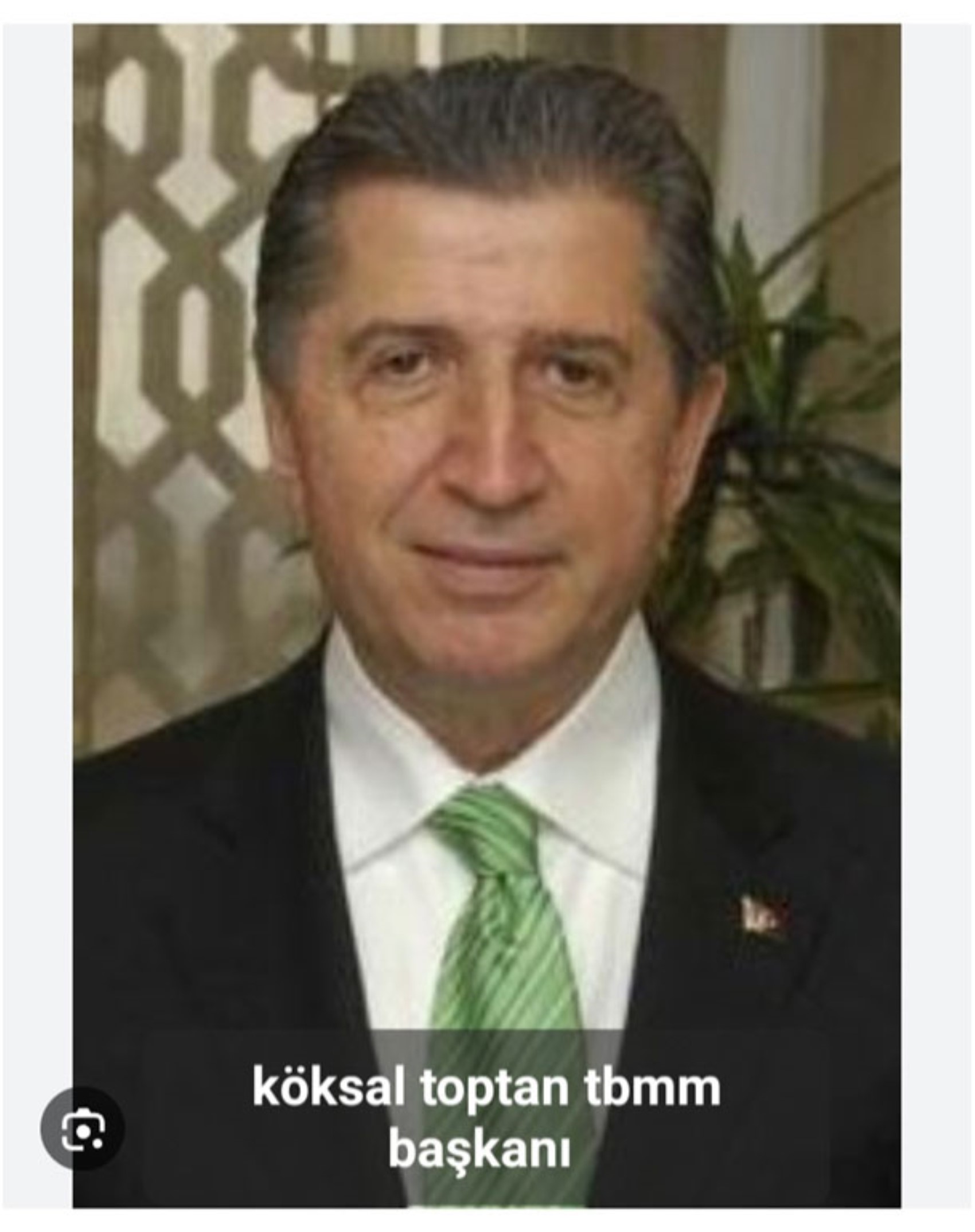
WHAT WAS THE REASON FOR KÖKSAL TOPTAN'S ELECTION AS SPEAKER OF THE PARLIAMENT?
The Speaker of the Parliament furthest from the Islamist identity during the AKP era is Köksal Toptan.
Köksal Toptan is of Justice Party origin. He has been a politician close to Demirel since the 60s. He is the child of a family from Rize that migrated to Bartın.
After Demirel ascended to Çankaya, he became a candidate for the chairmanship against Tansu Çiller.
If the political center in Turkey had not been occupied by the religious right, its place in politics would have been where the Democrat Party-Justice Party line stood.
He was nominated for tactical reasons after the 2007 crisis. When Köksal Toptan was elected Speaker of the Parliament, Abdullah Gül had not yet been elected president.
Toptan was brought to the speakership of the Grand National Assembly of Turkey with a high vote rate of 450 votes with the support of the CHP and MHP. This is meaningful.
Here, the opposition parties wanted to send the message: 'If you nominate a candidate like Köksal Toptan, we will support your presidential candidate'.
Toptan's election as speaker of the parliament in the first two years of the 23rd term shows that from the perspective of the AKP administration, he 'is not considered an A-class AKP member'. I think so too. The reason Toptan joined the AKP is because there was no possibility of doing politics elsewhere.
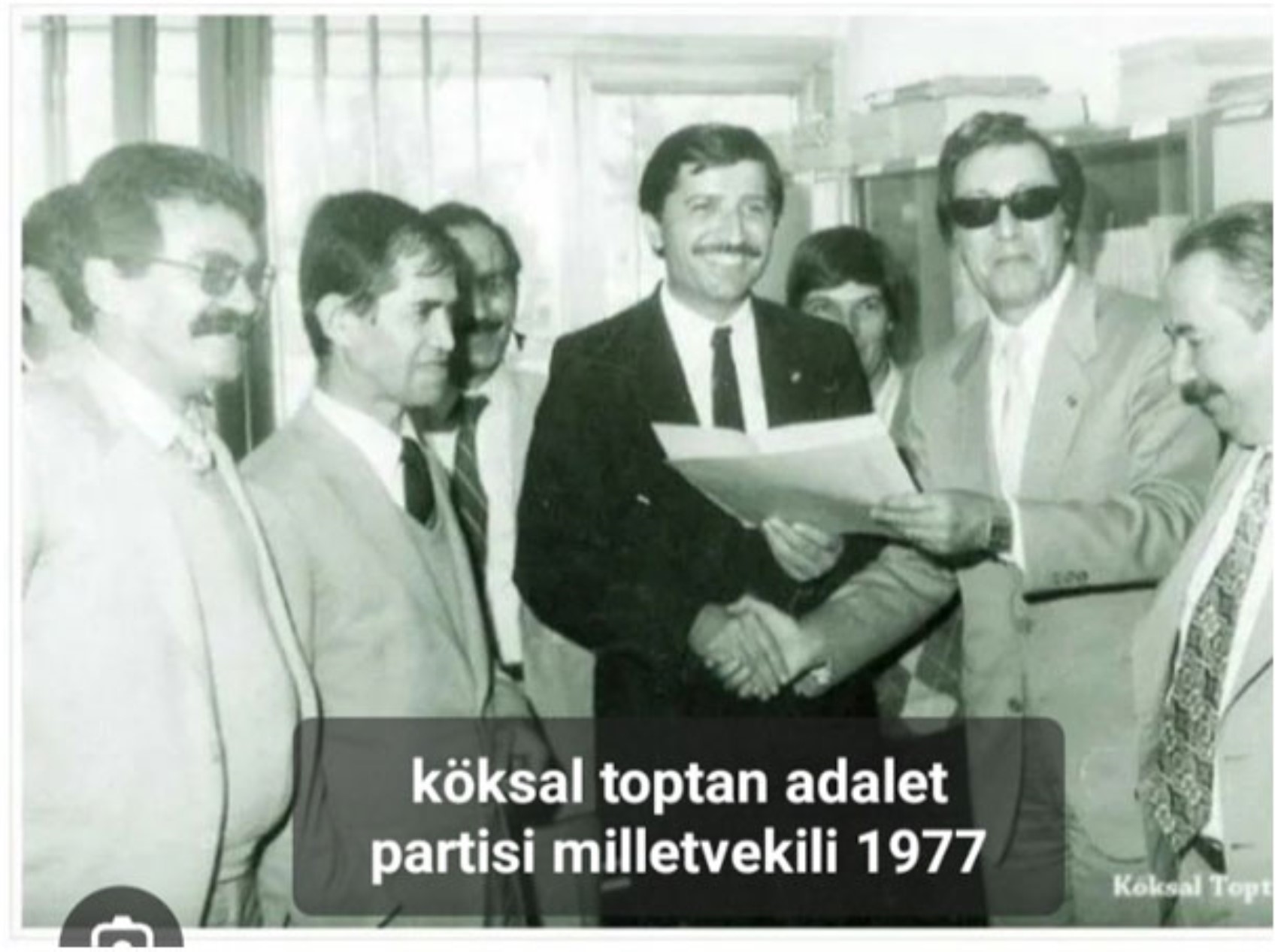
Toptan was elected as a deputy from the Justice Party starting in 1977, and from the True Path Party (DYP) after the political bans were lifted. From the 16th term to the 20th term. He served as a deputy for Zonguldak and Bartın. After the erasure of the DYP and ANAP, he joined the AKP. He was elected as a Bartın deputy in the 22nd, 23rd, and 24th terms.
The AKP's election of Toptan to the Speakership of the Grand National Assembly of Turkey was not a real political gesture. It was a step taken to neutralize the opposition that had been defeated in the 2007 elections.
THE EVOLUTION OF THE TBMM SPEAKERSHIP AFTER KÖKSAL TOPTAN
From Köksal Toptan until the date İsmail Kahraman was elected Speaker of the Parliament
(from 2007 to 2015), the names who came to this office are the transition period speakers of the AKP. Mehmet Ali Şahin, Cemil Çiçek, İsmet Yılmaz.
The names after İsmail Kahraman, Binali Yıldırım, Mustafa Şentop, and Numan Kurtulmuş, are the TBMM speakers of the presidential government system. Among these names, Binali Yıldırım should be evaluated differently. Yıldırım is the last prime minister. The other meaning of this is that the 100-year-old Council of Ministers (Executive Deputies) ended with his premiership.
I must state with regret that after the transition to the presidential government system, the TBMM ceased to be a democratic parliament where all colors of the national will are represented. TBMM General Assembly activities have been transformed into an institution that acts with the instructions of the hegemony party administration (under the tutelage of the executive). In this transformation process, the key office is the TBMM speakership.
WHAT DOES İsmail Kahraman'S SPEAKERSHIP OF THE PARLIAMENT MEAN?
Among the politicians the AKP brought to the speakership of the Grand National Assembly of Turkey, the name I find most antipathetic in terms of thought, attitude, and discourse is İsmail Kahraman. Kahraman is from İkizdere, Rize; he grew up in Karabük and studied law at Istanbul University.
İsmail Kahraman was brought to the speakership of the Grand National Assembly of Turkey during the period when the AKP became fully empowered against the army, judiciary, and university.
After the AKP's speakers of parliament who did not reveal their counter-revolutionary agenda (taqiyya practitioners), 'he drew attention with his attitude of not caring about the founding principles of the state'. His appointment to the speakership of the parliament should be evaluated in the context of the Islamist challenge.
As soon as the AKP emerged from the trauma of the 2015 elections, Kahraman was brought to the speakership of the parliament. (Term of office: November 22, 2015 - July 7, 2018). Let us also remember that Kahraman was the Speaker of the Parliament during the July 15 coup attempt.
İsmail Kahraman is a very good example of Eastern Black Sea conservatism. He is a concrete prototype of Islamist right-wingism.
There is a famous rumor in the religious segment. Atatürk had Rize bombarded to make them wear hats and had those who did not wear them hanged. I can say that this discourse dominates the background of Kahraman's mindset.
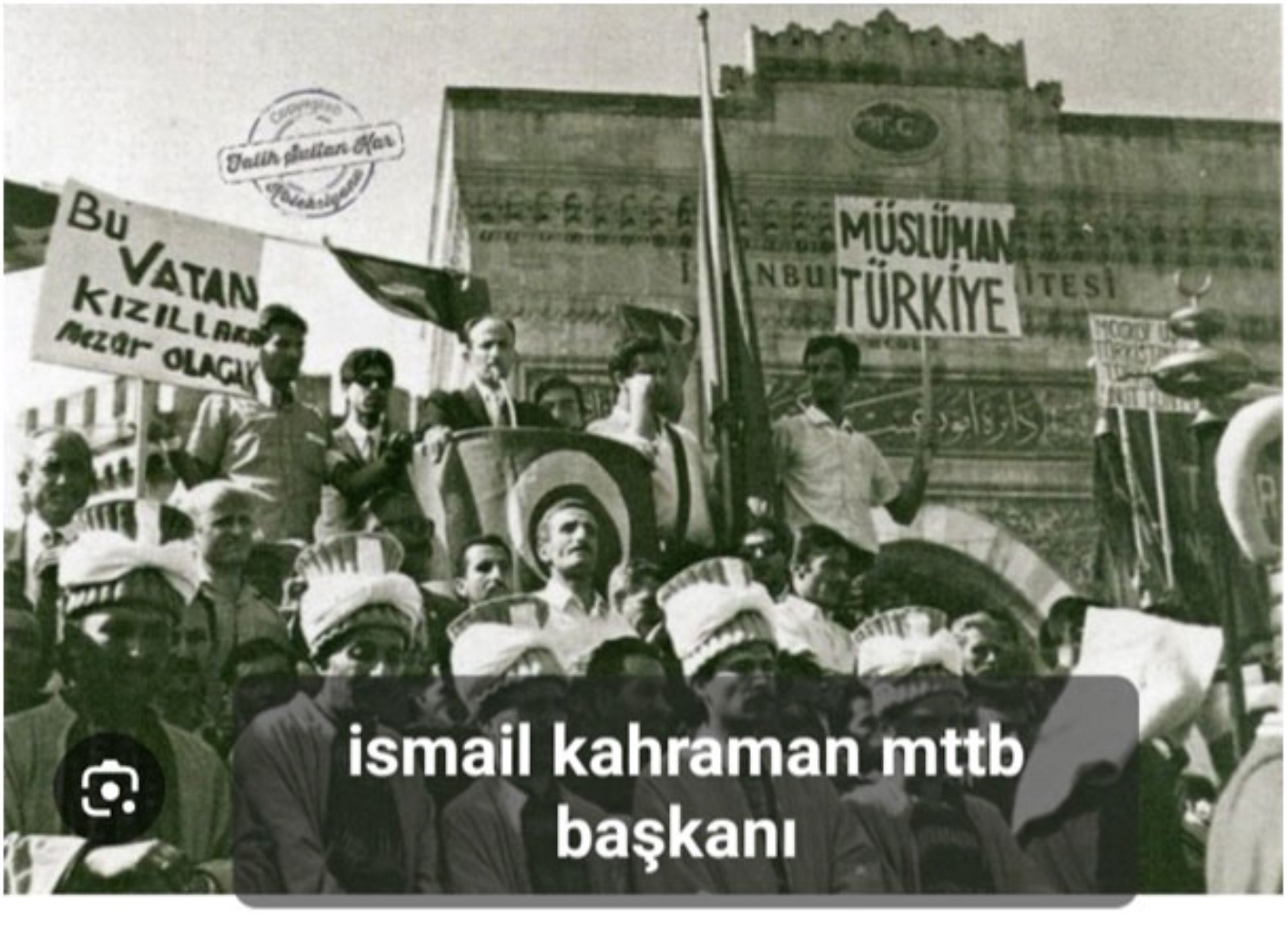
WHAT WAS THE FUNCTION OF KAHRAMAN'S MTTB SPEAKERSHIP?
The National Turkish Student Union (MTTB) underwent an ideological transformation in the early 1960s. The union first fell into the hands of the Idealist-Islamist alliance. Later, the Islamists became dominant.
Most of the cadres who dominated Turkish politics after September 12 emerged from the MTTB platform. While the September 12 generals were saying they would eliminate the left, they threw Turkey into the lap of reactionism. There is nothing surprising about this.
Some of the other organizations allied with the National Turkish Student Union are: Aydınlar Ocağı, İlme Hizmet Vakfı, Birlik Vakfı.
The MTTB has been extremely anti-communist since the incident of the destruction of the Tan Printing House. (1945)
The North Atlantic Alliance's guardian, the USA, included Turkey in the anti-communist green belt project in the 60s. The most fertile area to organize this project was conservative youth coming from the provinces to study in big cities. The MTTB student identity corresponds exactly to this.
US intelligence organized MTTB students against leftist student actions. With the support of the Justice Party Government. Probably the counter-guerrilla (Gladio) was involved in this.
In the 1969 Bloody Sunday events, reactionary-fascist violence was protected by security forces. This is the first mass terrorist act of the right wing against leftist youth. İsmail Kahraman was one of the MTTB administrators who organized these actions.
Erol Bilbilik wrote that the MTTB worked together with the security and intelligence bureaucracy against the left, and cited MIT Undersecretary Fuat Doğu as a source. He even stated that the MTTB's Committee of Forty took part in MIT's anti-communist structuring.
The MTTB was an organization that carried out activities on the axis of the thoughts of Necip Fazıl Kısakürek and Kadir Mısıroğlu. It was an anti-democratic structure—in essence, anti-secular—that demanded democracy as 'majoritarianism' and identified this with the national will.
Necip Fazıl's State of the Supreme Authority (Baş Yücelik Devleti) as a bedside book, and Mısıroğlu's books on Abdülhamit and Vahdettin as a 'correct historical narrative' Nothing else can be expected from an organization that sees these as such.
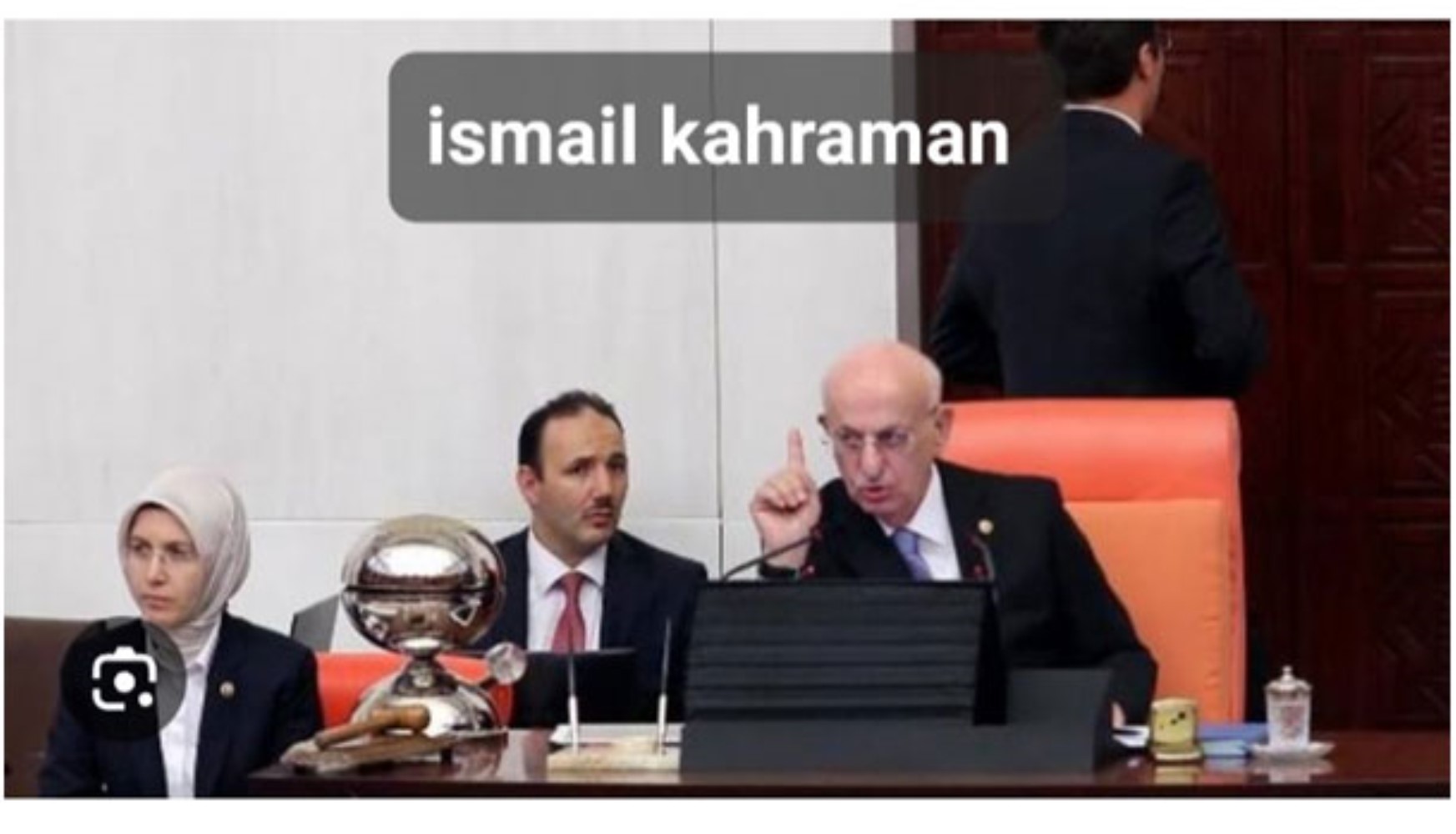
THE TIMING OF KAHRAMAN'S APPOINTMENT TO THE SPEAKERSHIP OF THE PARLIAMENT IS REMARKABLE
After graduating from Istanbul Law, Kahraman worked as a lawyer. After March 12, he joined Necmettin Erbakan's MSP cadres.
He was elected as a deputy from the Welfare Party (Refah Partisi) in the XX. and XXI. terms. He was brought to the Ministry of Culture in the Refahyol coalition government formed with the DYP. A very appropriate appointment in terms of goals, indeed.
After joining the AKP, his entry into parliament was in the XXVI. term. Kahraman served as TBMM speaker between November 17, 2015, and May 16, 2018.
He continued his duty until the transition to the 'Turkish-style presidential system' in 2018.
İsmail Kahraman is the first speaker of the parliament among the speakers of the parliament who openly declared that he was against the basic principles of the Republic.
In the speeches he made while he was TBMM speaker, he stated many times that the first four articles of the constitution should be abolished.
Starting with Arınç, AKP speakers of the parliament had expressed their opposition to the secular Republic by way of insinuation. Kahraman, on the other hand, expressed these views very openly in all the grounds he found the opportunity. He was making statements as if they were expressions independent of the ruling party, saying 'this is just my personal opinion'.
In other words, he was implying, 'I am against the Republican revolution, but these are my personal opinions, they have nothing to do with my identity as Speaker of the Parliament.' A very strange situation indeed.
Let us remember, if you wish: All the parties Kahraman was involved in had been closed on the grounds of being the focus of anti-secular actions.
The AKP was also found guilty by the Constitutional Court on the charge of being the focus of anti-secular actions. Since the decision was taken by a simple majority, the AKP was not closed, and the sanction of deprivation of treasury aid was applied. I could not establish a causal link between the proven crime and the sanction. Perhaps you can.
If the Ecevit government had not made the amendment requiring a 3/5 qualified majority to make decisions in political party closure cases, the AKP would have been closed (by a simple majority). İsmail Kahraman was brought to the speakership of the Grand National Assembly of Turkey from this party.
İsmail Kahraman's appointment to the speakership of the Grand National Assembly of Turkey took place after the 2014 elections, when Erdoğan was elected President by general vote.
Kahraman, who drew reaction with his statements against the basic principles of the republic during his speakership, persistently continued to act like the battering ram of the counter-revolution.
If you remember, Kahraman belittled the liberation of Istanbul with the words, 'We didn't fire a single bullet'. The implied meaning here was that Istanbul's evacuation was ensured in Lausanne by giving promises of 'abolishing the caliphate - surrender to Zionism - secularism'. He meant to say that the Kemalists made a secret agreement based on 'anti-religion'.
Kahraman's prominence in the AKP is after the army and judiciary were paralyzed by the Gülen organization.
Kahraman becoming TBMM speaker meant that the legislative and executive powers met on the counter-revolutionary line.
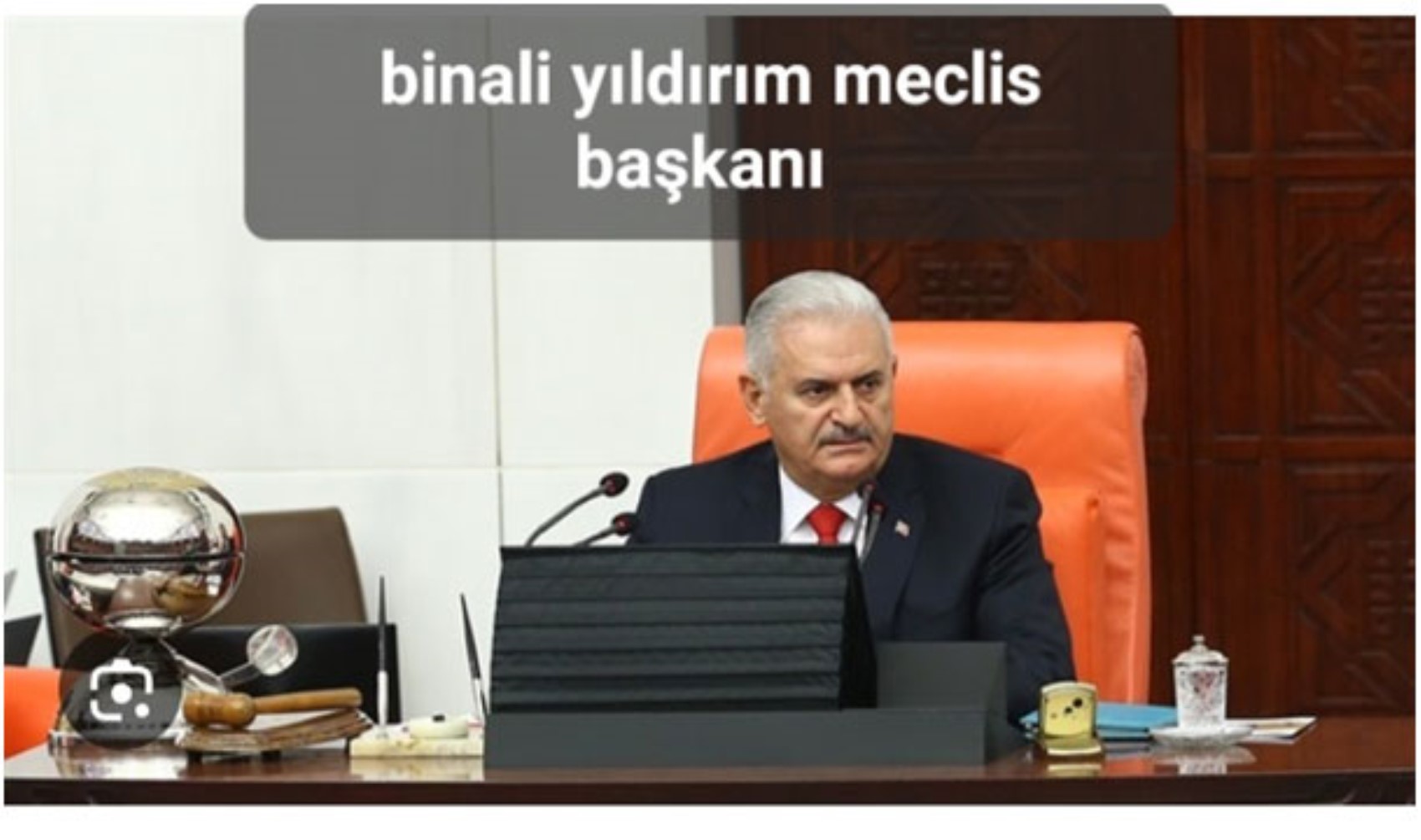
WHAT IS THE REASON FOR Binali Yıldırım'S APPOINTMENT TO THE SPEAKERSHIP OF THE PARLIAMENT?
Binali Yıldırım is the last prime minister of the Republic of Turkey. With Yıldırım's identity, a smooth transition to the presidential government system was possible. After the transition to the new system was completed, Binali Yıldırım was brought to the speakership of the Grand National Assembly of Turkey. This election had a dual aspect. First, a gesture was made to him. Second, the low-profile premiership role was converted into a speakership of the Parliament dependent on the 'new executive'.
Binali Yıldırım remained in the speakership of the parliament for a short time. He was the most trusted name among Erdoğan's cadres. For this reason, he resigned from the speakership of the Grand National Assembly of Turkey to be nominated for the İBB mayoralty.
Erdoğan had nominated Yıldırım to prevent the city of Istanbul, which holds Turkey's most important resources, from being captured by the CHP. Yıldırım's defeat against İmamoğlu constitutes the milestone of the anger against İmamoğlu that continues to this day.
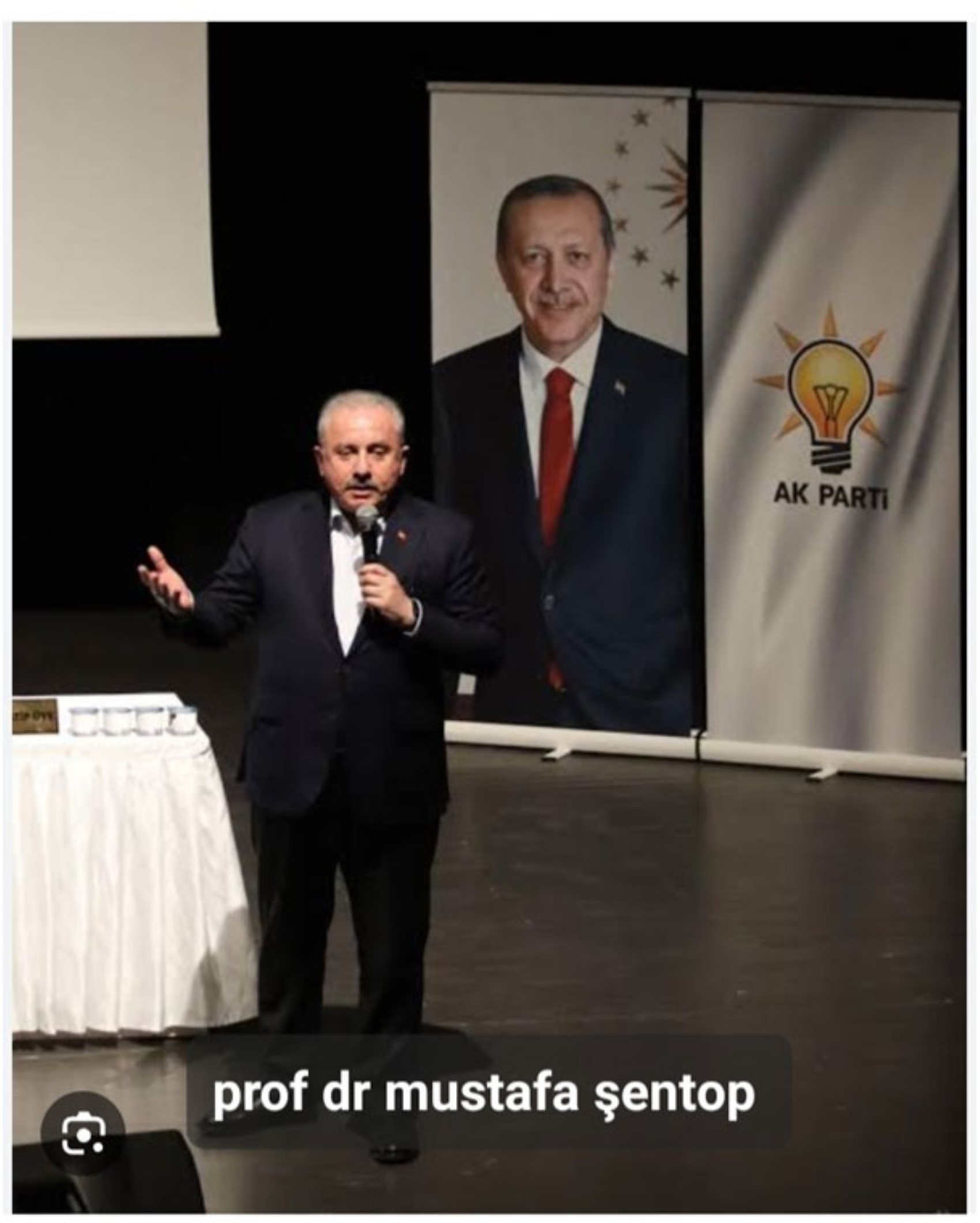
PROF. DR. MUSTAFA ŞENTOP'S SPEAKERSHIP OF THE PARLIAMENT
Mustafa Şentop had served as a deputy in the 24th, 25th, 26th, and 27th terms. On May 14, 2023—due to the AKP's candidacy limitation—he did not become a candidate again.
Prof. Dr. Mustafa Şentop is from Tekirdağ. He is a graduate of Tekirdağ İmam Hatip High School. He had a connection with the National View (Milli Görüş) through his father.
Şentop is a graduate of Istanbul Faculty of Law. He pursued his academic career at Marmara University. He is a public lawyer. His main field of study is Turkish legal history. He was trained by Mehmet Akif Aydın. His doctoral thesis is on the Institution of Kazaskerlik (military judgeship) in the Ottoman Empire.
As for how he entered politics, he was first elected as a deputy in 2011 (24th term of the TBMM). He had just become a professor at this date. As soon as he entered politics, he was elected to the AKP's MKYK (Central Decision and Executive Board). He became the Deputy Chairman.
He is currently a member of the Presidential High Advisory Board. He has been directly involved in the 'new constitution' activities that have never fallen off the agenda since 2011. He was a member of the Constitutional Reconciliation Commission between 2011-2013. He served as the chairman of the TBMM Constitutional Commission in the 26th term. (2016-2018) He played an active role in the transition studies to the presidential government system (2017), in the preparation of the legal infrastructure of the new system during the referendum process, and in the parliament's internal regulation harmonization studies.
He was brought to the TBMM speakership after Binali Yıldırım. Binali Yıldırım: July 12, 2018 - February 18, 2019. Mustafa Şentop: February 24, 2019 - June 7, 2023.
Erdoğan should not have been able to be a candidate in the 2023 presidential elections. Mustafa Şentop published an article to legitimize Erdoğan's candidacy. However, the constitution specifically imposed a ban on being elected for more than two terms.
In his article, Şentop was putting forward an argument like this:
With the 2017 referendum, the Government System in Turkey has changed. Since a new system has been established, the candidacy conditions have been redefined. Since Article 101 of the constitution has changed, the current president can be a candidate for the second time.
Şentop considers the 2018 election as the first election of the new system. Şentop was accused of serving Erdoğan's goals and was heavily criticized.
When I read the article, I could not understand how public law professor Mustafa Şentop reached this conclusion. Please read it too.
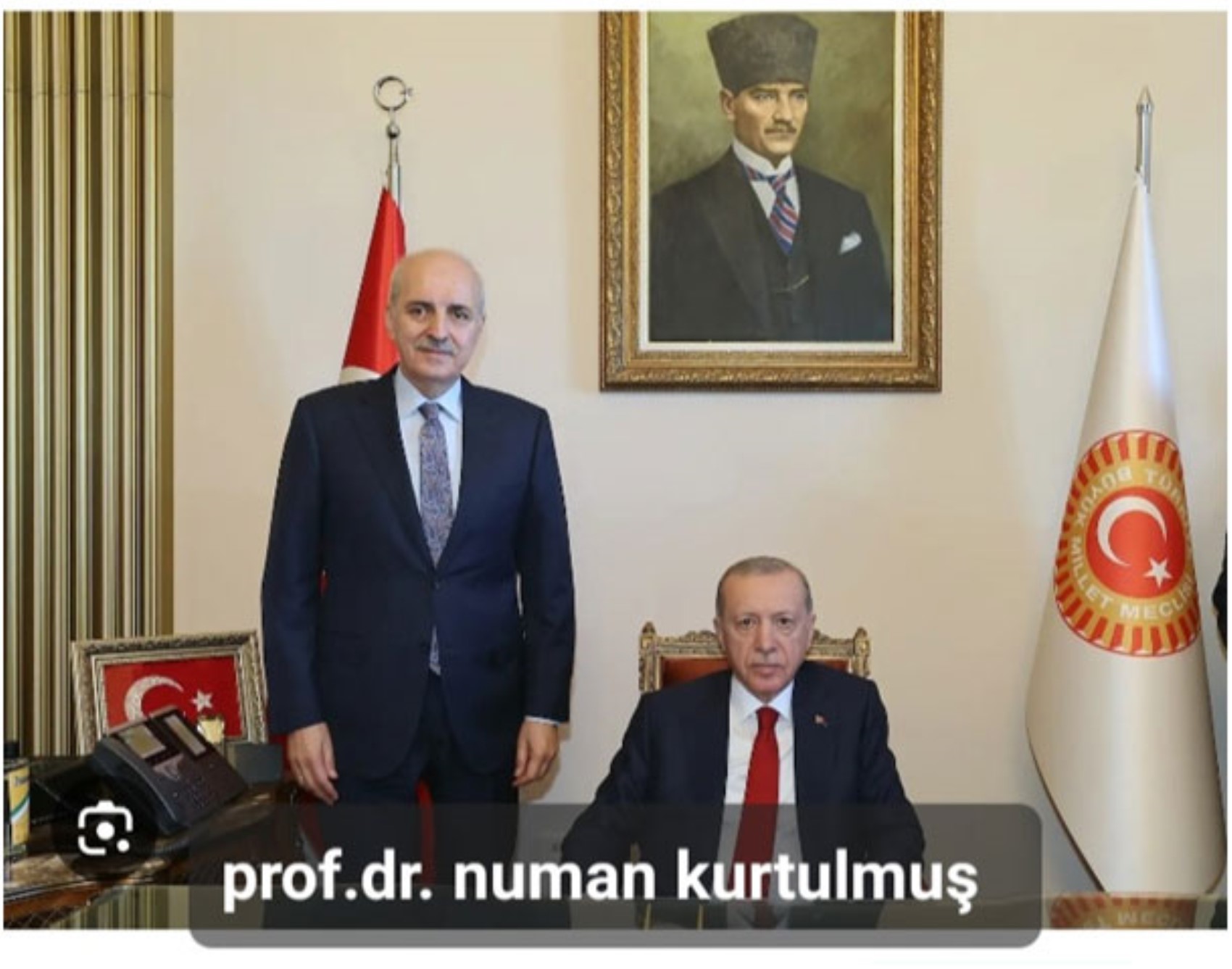
REMINDER NOTES ON PROF. DR. NUMAN KURTULMUŞ
The current Speaker of the TBMM, Numan Kurtulmuş, is one of the most effective names providing fortification to the new regime that the AKP is trying to build. He took over the mission of the AKP government's search for a new constitution from Prof. Dr. Mustafa Şentop. He has been an AKP deputy since 2015; he has been the TBMM speaker since June 7, 2023.
Numan Kurtulmuş was not in the reformist wing during the AKP's establishment process. For a while, he aspired to fill the space left by Necmettin Erbakan. Erbakan had been banned from politics in the Welfare Party case. He served as the chairman of the Felicity Party (Saadet Partisi). (2008-2011)
There, unable to compete with Erbakan's son Fatih Erbakan and the old-guard Erbakanists, he attempted a third way: the Has Party.
The message of Has Party leader Kurtulmuş, as in all National View parties, was a return to the principles of the 'Age of Bliss' (Asr-ı Saadet). The Has Party was based on a discourse of opposition to the Zionist-Masonic alliance. The Has Party was against the hegemony created by international capitalism.
Numan Kurtulmuş opposed Erdoğan for a while. He had adopted a very harsh discourse. He must have thought that a political party alternative to the AKP could be successful in this way.
When Kurtulmuş failed in his attempt, he decided to join the AKP. Kurtulmuş's Has Party attempt ended in a complete fiasco.
Erdoğan has tied many political actors who challenged him from the right to himself with a policy of transfer and reward. The Kurtulmuş case is one of these. Another example that immediately comes to mind is Süleyman Soylu.
Numan Kurtulmuş grew up in the MTTB environment. There are two points emphasized in his biographies. That his father was a pious medical doctor and his grandfather was a famous religious scholar.
He also pursued a career in the Labor Economics department at the Faculty of Economics, headed by Sabahattin Zaim. After being promoted to professor—with Erbakan's call—he entered active politics. He was in the Welfare-Virtue-Felicity parties starting from 1998.
After joining the AKP, he was brought to the positions of deputy chairman, deputy prime minister, and Speaker of the Grand National Assembly of Turkey.
Kurtulmuş's new mission is the chairmanship of the new opening commission established under the auspices of the Speaker of the Parliament. The point reached by the meetings started with the discourse of a 'Turkey without terror' is the marketing of the hundred-year-old counter-revolutionary coalition under the name of democratization. In my opinion, the 'Kürt Teali Cemiyeti' (Society for the Elevation of Kurds) and the 'İslam Teali Cemiyeti' (Society for the Elevation of Islam) are at the bargaining table, having become stronger.
In my opinion, the process continuing under Kurtulmuş's auspices aims for a regime that imitates the Ottoman constitutional monarchy, where secularism, which the Islamist right has been pursuing since the 1970s, is completely abolished. The power behind this new regime is the Pentagon. And the goal is not secret. As it has been pronounced since 2002, it is the Greater Middle East Project (BOP).
WHAT NEED DOES THE PRESIDENTIAL HIGH ADVISORY BOARD MEET?
I would like to examine the reason for Erdoğan's creation of an advisory board under the name of the Presidential High Advisory Board. The members of the board are former speakers of the parliament. The board was created by the president's decree No. 96 dated May 15, 2019.
After Erdoğan took the executive completely under his control, he began to care more about the speakers of the parliament being chosen from among people close to him. The expression 'closeness' is weak. People who have a relationship of loyalty with him were elected speaker. With these words, I am referring especially to the last three names.
As is known, the legislative assembly processes are determined by the 'majority' that forms the People's Alliance (Cumhur İttifakı).
The AKP chairman thinks of eliminating centrifugal forces that might emerge from the AKP before they even form by creating such a board from former speakers of the parliament.
He has tied politicians he thinks have a certain weight to himself with various methods. This is one example of that. I am of the opinion that he aims to increase his one-man authority by appointing these figures to such a Board.
IT IS NOT POSSIBLE TO SPEAK OF SEPARATION OF POWERS AND LEGISLATIVE IMMUNITY IN THE NEW TURKEY
When the AKP came to power, there was a separation of powers and judicial independence in Turkey. (Despite all its shortcomings) The most important innovation brought by the 1982 Constitution was the strengthening of the executive, which the Turkish right has persistently expressed for 50 years.
The executive has become a little stronger with every constitutional amendment. The legislative and judicial powers have regressed and weakened against the executive. It would not be wrong to say that the judiciary has completely lost its autonomy against the executive.
The balance established between state powers in the Republican constitutions has undergone radical changes with the amendments made from 2007 to 2017.
It would not be an exaggeration to say that the legislative power has been pruned and turned into a branch of the majority party in the parliament.
After July 15, 2016, membership in the legislative assembly suffered an extraordinary loss of status. If you carefully examine the profiles of the deputies who entered the parliament, especially by being elected from the AKP lists, what I mean will be better understood.
After the legislative immunities were lifted in a way contrary to the Constitution, membership in the Grand National Assembly of Turkey regressed to the weakest point in its history against the executive.
This grave development took place during the period when Kahraman, Şentop, and Kurtulmuş presided over the Grand National Assembly of Turkey.
After the unconstitutional constitutional amendment made on May 20, 2016, the immunity of all deputies who had a summary of proceedings (fezleke) against them was lifted with a single vote. The political consequences of this amendment have continued to this day. First, Selahattin Demirtaş and Figen Yüksekdağ were arrested. The HDP members who followed these names are: Sırrı Süreyya Önder, İdris Baluken, Çağlar Demirel, Leyla Güven, Musa Farisoğulları, and Dr. Ömer Faruk Gergerlioğlu.
The CHP names are as follows: Enis Berberoğlu, Bülent Tezcan, and Engin Altay. To give the issue a legal appearance and to gain legitimacy, the legislative immunities of some AKP deputies were also lifted. Opposition deputies were immediately arrested. But no meaningful prosecution was carried out against them.
Opposition deputies were handed over to the political power in a way contrary to the constitution. I think there is no need to say who led to this incredible result in terms of parliamentary law and with what words.
Members of the Grand National Assembly of Turkey (elected deputies) were arrested by security forces inside the parliament buildings. The TBMM speakers did not take any steps to protect the member of parliament. On the contrary, they adopted an attitude as if the requirement of the law was being fulfilled.
The most grave development on this issue recently concerns the legislative immunity of Hatay deputy Can Atalay. Atalay is a lawyer who graduated from Marmara Law. Atalay had taken a stance alongside the victims with his lawyer identity on all platforms against the AKP, and had undertaken their representation. Such as the Gezi Park trial defendants and the Soma Disaster.
Lawyer Can Atalay was thrown into the Gezi Trial bag. He was seated in the defendant's chair in the case where he was the defense counsel. He was arrested. He was elected as a deputy while the trial was ongoing.
Although Atalay acquired legislative immunity the moment he was elected, he was not released. His detention continues in a way contrary to the constitution, parliamentary law, and fundamental rights and freedoms. The Constitutional Court decision requiring his immediate release was read from the Parliamentary Presidential Council. Before the eyes of the Speaker of the Parliament, a deputy elected by the Turkish Nation has been completely deprived of the rights brought by being elected. The person responsible for this is directly the Speaker of the Grand National Assembly of Turkey, who does not protect the rights of the TBMM member.
WHAT IS THE POINT AIMED TO BE REACHED WITH CONSTITUTIONAL AMENDMENTS?
During the AKP era, the constitution was amended 12 times. A public vote was held in three of the amendments. Although almost three-quarters of the constitution has been changed in 22 years, the government is still not satisfied. What the AKP really wants is to change the 'basic principles of the Republic'.
The AKP has a problem with the articles of the constitution that cannot even be proposed to be changed. As of today, Turkey is an electoral authoritarian state. The next stage must be a totalitarian regime where elections appear to be held. It does not seem possible to interpret the moves made in any other way.
Most Read

Striking picture for Özgür Özel's 'New Party'

Özgür Özel gives a dated response regarding the number of resignations

Forest fire in Antalya brought under control

The PKK opening and Özgür Özel’s path!..

How did the newspapers view Özgür Özel's farewell to the CHP?

He killed his wife by slitting her throat: Their children witnessed the moments

What did the CHP do?

Özel’s new party move in the world press

The New CHP, against CEHAPE

Fire at TUSAŞ engine factory in Eskişehir under control