



THE ÖZAL-DEMİREL RELATIONSHIP SINCE THE 1960S
Özal and Demirel performed their military service during the atmosphere of the 1960 coup. Although younger, Özal had joined the military in 1959. He became a reserve officer in the Ordnance Corps.
Demirel, on the other hand, did not serve in the military despite being 36 years old because he was the General Director of the State Hydraulic Works (DSİ) under the Democrat Party. The Menderes government had requested a deferment of his service from the General Staff during every reserve officer call-up period.
Demirel was in Spain when the coup took place. The ambassador was Suat Hayri Ürgüplü. He consulted with him and returned to Turkey.
The coup plotters wanted to treat him like a draft dodger because they saw him as a man of the Democrat Party. It is even said that they wanted to handcuff Demirel. Türkeş claimed during the Nationalist Front (MC) governments that he was the one who prevented Demirel from being arrested and sent to the front. Even though this is Türkeş's account, I believe there must have been other dynamics behind it. I think someone else gave him strong advice. I believe the force that prevented "revolutionary violence" during Demirel's conscription (assignment to a unit) was a phone call from Masonic brothers. My intuition points in that direction, though I cannot prove it.
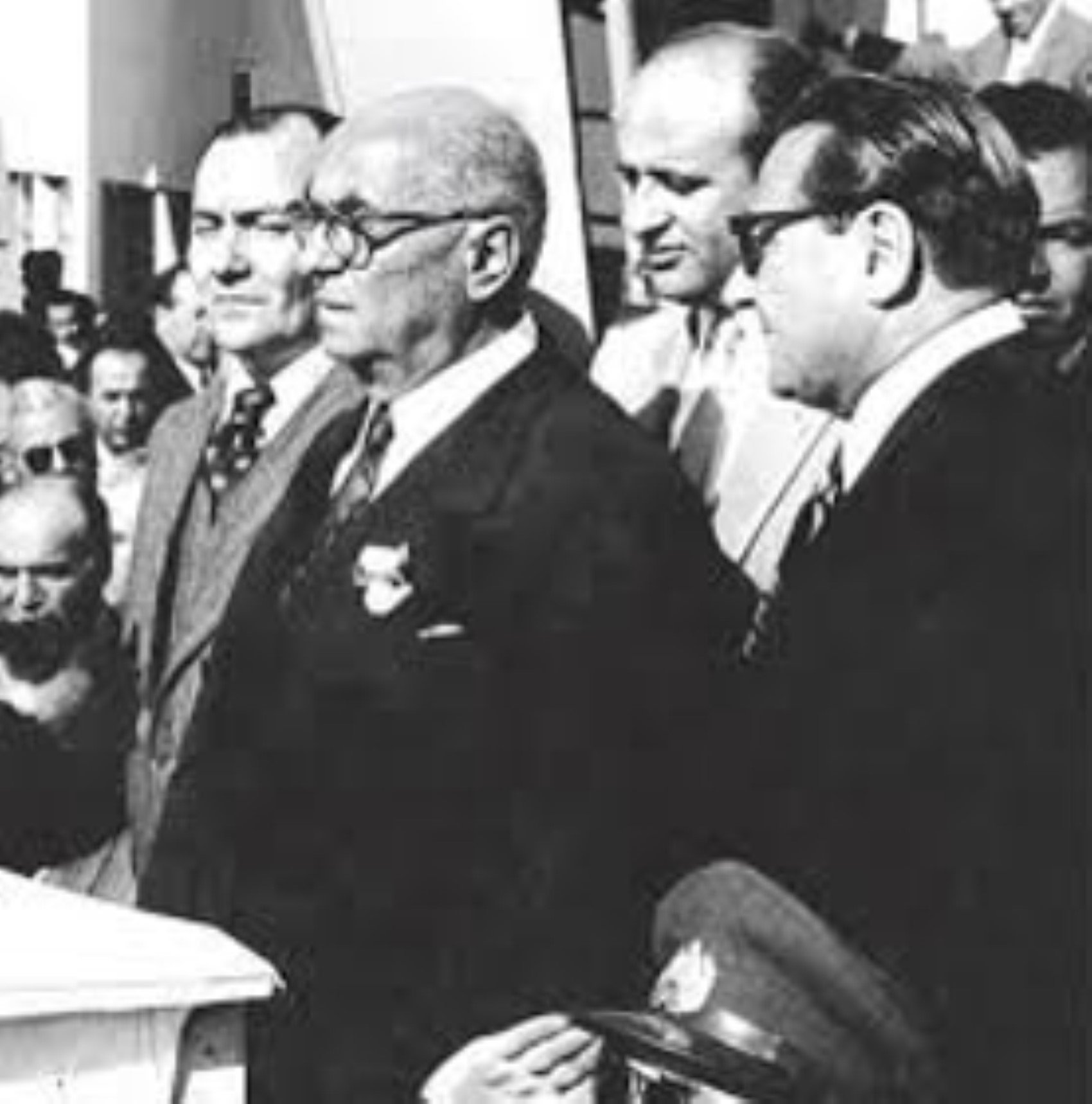
Once things calmed down, the regime applied to Demirel by the National Unity Committee changed. Demirel and Özal were assigned to the establishment of the State Planning Organization, upon the government's request and the General Staff's approval. I believe the "senior-junior" bond between Demirel and Özal developed here.
Turgut Özal was the one who followed the Demirel-Erbakan-Özal trio the furthest behind in terms of career. When Demirel became Prime Minister in 1965, he made Özal the undersecretary of the State Planning Organization. It is quite interesting that Özal, who had returned from America with great faith in the market, was brought to the undersecretariat of planning.
Özal was a high-level technocrat who had studied engineering at ITU and business/economics in America, though the content of the latter was not entirely clear. With this identity, he continued to work as an executive in large capital groups. He had last worked in the Sabancı group. Let us not forget that he also served as the President of the Metal Goods Industrialists' Union (MESS) in the meantime. I find these class connections of Özal significant.
Within the engineer trio of Demirel-Özal-Erbakan, it is Turgut Özal who is right in the middle of the capitalist world. He is actively inside this world. The others are related/connected.
THE CRISIS OF TURKISH CAPITALISM AND ÖZAL
In 1979, Demirel formed the Justice Party minority government following Ecevit's resignation. By the mid-1970s, capital had entered a deep crisis. Simultaneously, there was a severe public order problem. There was another important point: the trade union struggle had gained significant strength.
As a result of the rising trade union struggle since the 1960s, the income level of the working class had increased. Especially in sectors affiliated with DİSK, the share the working class received from the production process had grown at a remarkable rate. This situation had put the bourgeoisie, which desperately needed resources, into a bottleneck. It had become very difficult to keep the wheels of Turkish capitalism turning.
Prime Minister Demirel called Özal to duty. The call meant that the greatest technocrat of capitalism was being invited by political power. Demirel appointed him as the Prime Minister's Undersecretary and Acting Undersecretary of the State Planning Organization. This is the class basis for the January 24 decisions being taken and implemented by Turgut Özal.
TURGUT ÖZAL AS PRIME MINISTRY UNDERSECRETARY
The reason for the formation of the Demirel minority government was the high success shown by the Justice Party in the 1979 partial parliamentary and Senate elections, which reminded people of its successes in the 1960s. Ecevit resigned with a "democratic" attitude. He suggested many alternatives to Demirel. Demirel did not accept any of them. He formed the covert Nationalist Front (MC) government.
Since the 1974 oil shock, Turkish governments had been trying to cope with increasingly severe foreign trade deficits, balance of payments, and foreign exchange bottlenecks. Solutions were limited to satisfying IMF demands, debt rescheduling, and obtaining new loans.
Süleyman Demirel had also received a warning letter at the beginning of 1980. In this letter, the military side was demanding martial law and more authority. Demirel's response was: "General Muğlalı-style powers" cannot be granted in this era.
The letter in question had been delivered through President Korutürk. The addressees were the parliament and the government. It had not been disclosed to the public. The letter can be interpreted as a "light" version of the March 12 memorandum.
When the text is examined carefully, the army's intention to seize power is sensed. However, the fact that the economic situation was almost unmanageable left them in hesitation.
TURGUT ÖZAL'S PLACE WITHIN THE SEPTEMBER 12 REGIME
The National Security Council saw the September 12 regime as a task of bringing society under control. From the military's perspective, this was correct. But its main function was to save the bourgeois order.
The following statement made by Memduh Tağmaç on March 12 is also valid for September 12. General Tağmaç had said, "Social awakening has outpaced economic development." Like March 12, September 12 was also carried out to stabilize society. These words show the class basis upon which both interventions were built.
However, the capital's stability program could only be implemented under closed regime conditions. At the head of the stability program was the man of capital, Turgut Özal.
Turgut Özal was appointed as the Deputy Prime Minister in charge of the economy in the government that the National Security Council had retired Admiral Bülent Ulusu form.
This decision became one of the most important turning points in Turkish political history. Why? The highest-ranking bureaucrat of the Demirel government, which the junta had overthrown, had been brought into the government as a minister. The event was not complicated at all. A direct representative of the capitalist class had been brought to duty to manage the economy.
The junta would silence society, and Özal would try to refloat the economy with the "not-so-new solution basket of capitalist economics." Let us remember what was in this basket: trying to lower inflation with high interest rates, cutting consumption, suppressing wage incomes, and converting the working class's production power into export revenues.
INTERIM REGIME PRACTICES
The September 12 regime could only be carried out with a coalition of ruling classes. And so it was. The National Security Council, which was visible, was the visible part of the power bloc.
The functions of the National Security Council were to be as follows: To align the masses behind the military regime through the only broadcasting organ under state monopoly (TRT) and large public speeches. To constantly propagate Atatürkism. To try to ensure the legitimacy of the administration through this. To keep all kinds of social opposition (especially the left) under heavy pressure.
MGK Atatürkism was an ideological apparatus. It consisted of empty "wardrobe" Atatürkism. For this reason, it was a very weak apparatus. Even the phrase "Turkish Revolution" could not be used. The only official/sovereign value in circulation was Atatürk's principles and reforms. It was not clear what this was either. Boring, vulgar Kenan Evren speeches delivered in squares were listened to and applauded enthusiastically. With verses read from the Quran and empty words of Atatürkism, an attempt was being made to fortify the ideological superstructure of the MGK state.
The real function, however, was the pressure applied by the state. When we look at the number of people arrested during the September 12 period and their class origins, the scale of the pressure can be immediately understood.
ÖZAL'S IDENTITY FROM THE PERSPECTIVE OF THE NATIONAL SECURITY COUNCIL
While the National Security Council kept Demirel under surveillance on Güniz Street, Erbakan and his friends were being tried in the MSP case. After so much time has passed, I can say this: The MGK had no essential problem other than the campaign it carried out against the actors of the ruling elite class. They perceived the issue in the superstructure. The blockade carried out against Demirel, in particular, was, in my opinion, a struggle within the elites of the power bloc.
The Council's attitude towards Erbakan was related to the founding ideology. But despite this, it is very significant that the junta gave Özal the Deputy Prime Ministership and the responsibility of managing the economy. So, what does this show? That despite the Council's reservations above, the infrastructure is the determining factor.
The fact that the Council, on one hand, was trying the MSP, which Özal was a candidate for in 1977, while on the other hand giving him a very important task, points to where the real power in Turkey lies.
In the MSP case, Erbakan and his friends were eventually acquitted by the Military Court of Cassation after a long trial. The fact that the MSP case ended in acquittal is also significant. Let us not forget that the reactionism displayed at the Konya rally was shown as one of the justifications for the intervention. The segment that spent the September 12 days most comfortably was the Islamists. Those who spent them the worst were those tried in the DİSK case.
I interpret this situation as follows: It means that the MGK had no red line other than removing the party that had problems with secularism from the power sphere. It means that the MGK did not see Özal's being close to them—in non-economic areas—as an issue. Warning him in between was enough.
ÖZAL ECONOMICS AND NEOLIBERALISM
The real major partner of the ruling class alliance was the big capital class. The locomotive of this class in the interim regime government was Turgut Özal. The factors that made Turgut Özal indispensable in the very first hours of the September 12 intervention show who really held the hegemony.
For the military and civilian wings of the coalition, power was still not absolute. They were in need of each other. The function of the period between 1980-1982, when Özal implemented the January 24 prescriptions, was to gain resources and time for the faltering bourgeoisie.
Özal is the representative in Turkey of those who are against Keynesian economics. As is known, Keynes certainly cares about the market but preaches that "the wheels of the economy must be turned by the state." Özal implemented policies in the same line as Reagan in the USA and Margaret Thatcher in the UK. Republican Party in the USA, Conservative Party in the UK, ANAP in Turkey. This is called neoliberalism. Interestingly, neoliberalism has been defended by Neo-conservatives.
Neoliberals argued for the following: Leaving all economic relations to the market, withdrawing the state especially from the fields of education, health, and social security, and minimizing the allocation of public resources to these areas. These policies actually meant abolishing the social state. In my opinion, these practices were nothing more than Malthusian economics / Social Darwinism.
For this reason, Özal's policies are different from Demirel's and Erbakan's. Demirel was also, of course, a defender of bourgeois policies. But his was a bourgeois politics that considered class balances. The bourgeoisie is the pioneer but also considers and protects other classes. Kemal Karpat interpreted this situation as follows: "Demirel is the social democrat of right-wing politics."
In Erbakan's Just Order, there is an abstraction of an "Age of Bliss." There, too, there is a hegemonic class that manages the public treasury (Beytülmal). But within the framework of the principle of piety, dependent classes are protected. This is called justice. To express it in another way, in Erbakan's political economy, the consent of the lower classes is important. The reproduction of legitimacy is realized within the framework of Islamic principles.
In Özal's thought, there is no place for any of these concerns. Let us state this. There is no doubt that the most successful aspect of the September 12 regime was the depoliticization of society. While Council President Evren's speeches on Atatürkism were considered acceptable at the discourse level, the real dominant ideology was hidden in these words of Özal: "making a killing" (köşeyi dönme).
"Making a killing" meant that the classes positioned around the hegemony—with the deliberate ignoring of the power—evaluated opportunities to increase their wealth. During the two years Özal was actively in office, there were many dynamic liberal entrepreneurs who fulfilled the requirements of these expressions.
However, the Banker Kastelli disaster announced the collapse of Özal's policies. Özal, quite insensitively, rightly announced that those who wanted to earn a lot had to bear the consequences of the risks they took. This was capitalism.
ÖZAL'S TARIQAT CONNECTIONS
Turgut Özal has two brothers. Korkut Özal and Yusuf Bozkurt Özal. They were also engineers. It was Turgut Bey who brought his youngest brother Yusuf Bozkurt into politics. Korkut is one of the founders of the MSP. He served as a minister in the Bülent Ecevit government.
His mother was the teacher Hafize Özal Hanım. She was a follower of Sheikh Mehmet Zahit Kotku. Kotku is one of the founders of the İskenderpaşa Lodge.
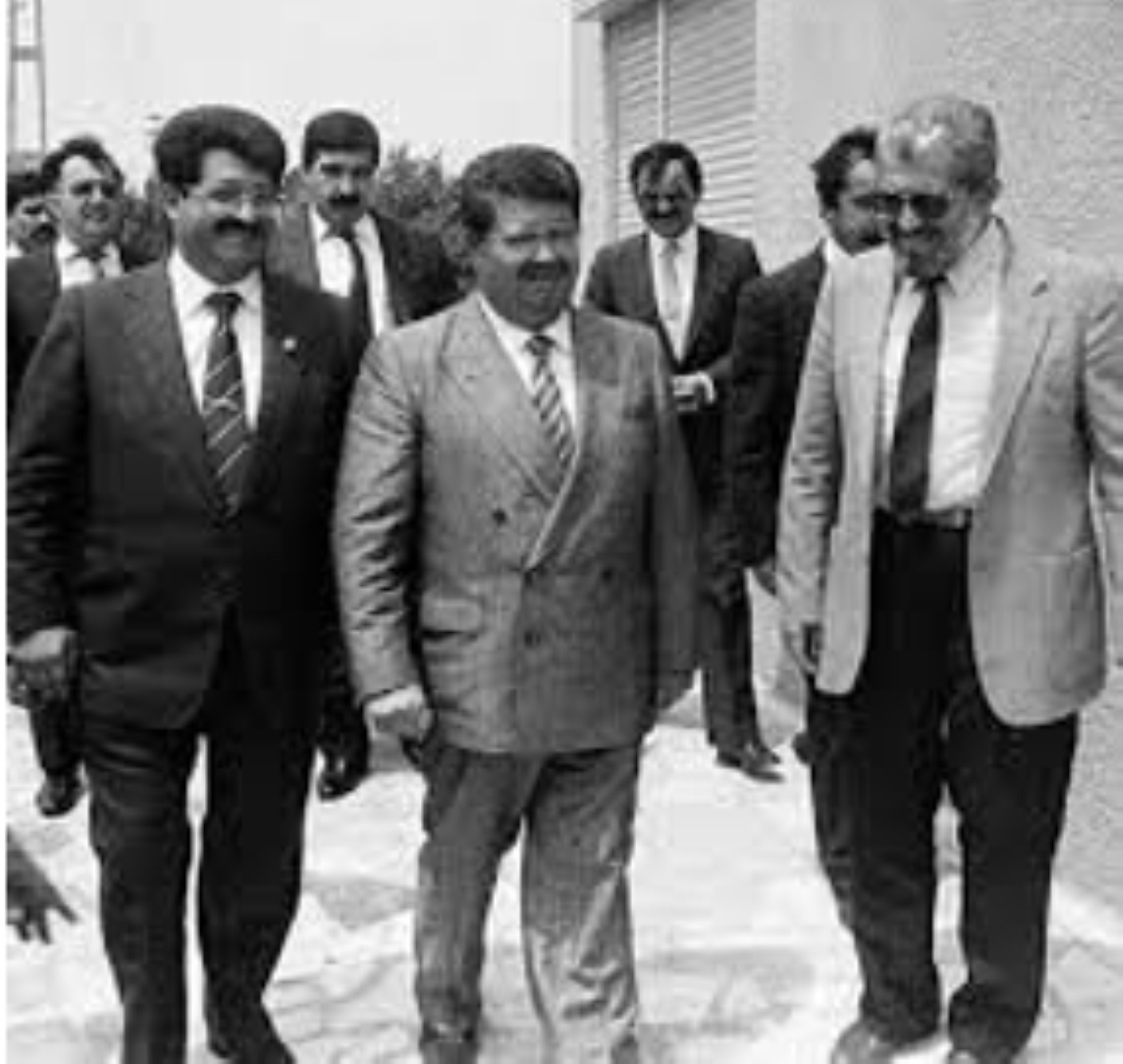
I will not use the term "follower" (müntesip) for Turgut Bey. He was a regular at that lodge. I use this word to mean that he did not have a deep engagement. Because in my opinion, Özal's tariqat connection remained behind his connection to the capitalist world. We cannot say the same for his younger brother Korkut. Let us not forget that Fevzi Çakmak also had a connection to the Küçük Hüseyin Efendi Lodge. Such tendencies have always existed on the right wing in Turkey. Going to a Sheikh—talking. Like receiving his prayer. Let us also remember the Arvasi story of Necip Fazıl.
TURGUT ÖZAL'S ENTRY INTO THE STERILE POLITICAL ARENA
Özal's departure from the government with Kaya Erdem after the Banker Kastelli incident is very significant in terms of Turkish political history. I interpret the event as follows: The most important actor of capital within the Ulusu government had benefited enough from the MGK administration. Now he was waiting for the conditions to arise where he could take power alone. Özal would soon establish ANAP with a team that included Kaya Erdem.
The Council—according to its own understanding—enacted the '82 constitution, the election law, and the political parties law. It built all the prerequisites for the order to be transitioned to. It disciplined Turkish politics. A transition to a multi-party system would be made under defined new conditions.
The words "democracy unique to us" by the Consultative Assembly President Ord. Prof. Dr. Sadi Irmak and Constitutional Commission President Prof. Dr. Orhan Aldıkaçtı meant this.
From the date he left office (1982) until the date he took power (1983), Özal did not fail in his respect for Kenan Evren. Even when he spoke against him, he chose to remain silent. In my opinion, he had correctly diagnosed Evren's naive side.
The most important feature of the new political order was the existence of fewer political parties. A parliament where a small number of political parties were represented and the strengthening of the executive were two basic preferences.
The MGK, in the end, handed over power to the ruling classes by solving all the issues that the right had been complaining about since the beginning of the 60s. They were actually aware of this. But I do not think they grasped the deep class meaning of the matter very well.
As a result, conditions were created where judicial oversight was weakened, the executive was strengthened, and the right-wing party that finished the election ahead with national and regional thresholds could come to power with a very strong majority. This is how the new era of democracy, where the executive was equipped with broad powers, began.
The National Security Council handed over the state to the ANAP government. This meant handing over the country to the politician who had managed it on behalf of the capitalist class under closed regime conditions for two years.
WHY THE SEPTEMBER 12 REGIME HAD TO HAND OVER POWER TO ÖZAL
As the September 12 regime was closing, it is seen that Turgut Özal began to play the role of the civilian/liberal option. After serving as the junta's deputy prime minister for two years. Even today, eulogies are made about Özal as a liberal democratic leader who overturned the junta's preference. This is an argument that finds many supporters on the right wing.
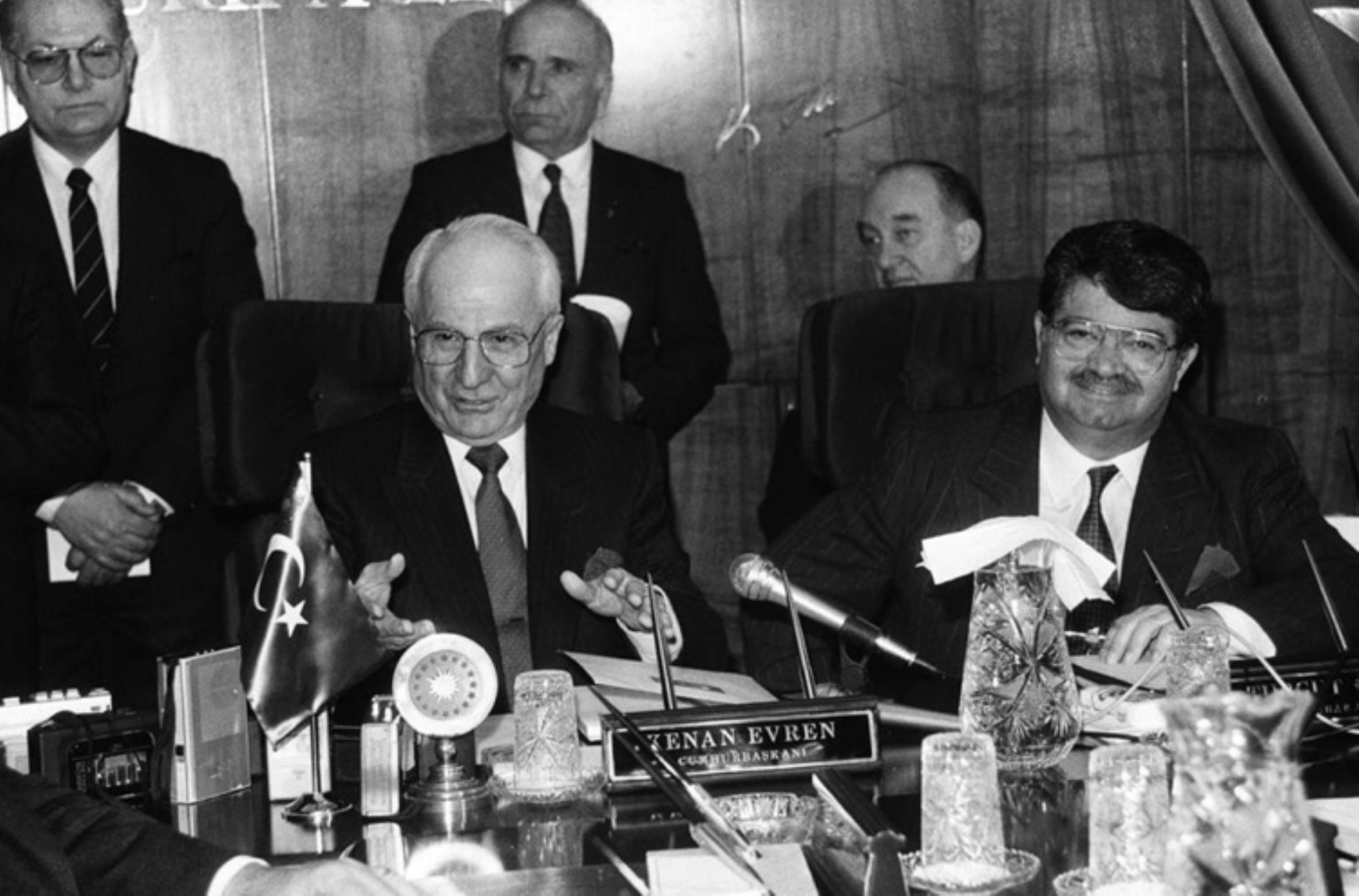
This approach—in my opinion—is a complete mystification. Why? Özal is the civilian leg of September 12 authoritarianism. And in a very essential way. Then, for tactical reasons, he withdrew and waited for suitable conditions to arise.
It is more accurate to evaluate Özal's situation as a political actor as follows. Özal was someone known within the right-wing political elite. He had been known since the 60s. He was known. But as a high-level technocrat. He was an engineer who understood the economy. He was eager to enter politics. But he had not found the right opportunity. He could not be elected as a member of parliament in the 1977 elections. He returned to his job as an executive in big capital circles.
He was called to duty by Demirel. September 12 could not find an alternative to him. Özal was so powerful that he even vetoed the appointment of Turhan Feyzioğlu as prime minister. Either the Council took a step back. Or Feyzioğlu withdrew.
It is interesting that the MGK administration wanted to make a political actor like Turhan Feyzioğlu prime minister. Feyzioğlu was actually a typical right-winger against all kinds of leftist thought. The views he put forward as Atatürkism were close to the Justice Party. Even though he was against Demirel. Since the mid-1960s, there was only one circle close to his views: the conservative-authoritarian high command within the Army. The fact that Özal did not let Feyzioğlu be brought to the prime ministry shows that the bourgeoisie was stronger than it was on March 12.
In the end, they had to approve Özal's entry into the elections as an option. The TV speech Evren made before the November 6, 1983 elections shows, in my opinion, that he was unaware of the real class character of the coup. The fact that a figure like Turgut Sunalp, who carried no signs of dynamism, was supported by the junta is indicative of this diagnosis.
The facial expression of Nationalist Democracy Party leader Turgut Sunalp Pasha reminded me of the Politburo members of the CPSU era. Throughout the historic debate program. Expecting such an option to be approved by the people was not very reasonable.
The Council administration thought it was keeping Özal's market-oriented option in reserve against the MDP. Whereas, they had put ANAP on the ballot as the only power option. I think they were not aware of this.
ÖZAL'S CHANGING ROLES: 1983-1993
Özal left the junta government where he was deputy prime minister in 1982. He returned in November 1983 as an elected/civilian prime minister. After a long preparation phase in the USA, he came back at the stage when the establishment of political parties was allowed. He had a project in his mind: To establish a party. While Demirel and his friends were sent to the Zincirbozan exile, Özal had received approval from Evren to establish a party. Evren had only one warning: Do not take the bigots into the party, Özal. Özal handled this warning with his own unique tactics.
The fact that Özal was accepted into the emptied political arena—with warnings of formalist Atatürkism—should be thought about. As a result, the Motherland Party won the election as a result of the elections held with the fewest parties in Turkish history. Kenan Evren gave the prime ministry task to Özal.
As I mentioned before, for Özal—on the road to power—the problem had been solved. The Demirel and Erbakan factors, which were obstacles to him within the political elite, had been deactivated. In an environment where the old elite was vetoed, it was not surprising that Turgut Özal won the election.
I will mention two surprising things at this very point. Kenan Evren's resentment at the MDP finishing the election last. His giving the task to Özal after a long wait that hinted that state power was in his own hands. In this event, Özal won Evren's heart with alaturka gestures.
The second surprising point was the cover of a post-election issue of Yeni Gündem Magazine when Özal won the election. Yeni Gündem was the magazine of old Marxist circles. Now they had rolled up their sleeves to establish a civil democratic republic together with the bourgeoisie. They published a cover declaring Turgut Özal the New Prince Sabahattin. This was an extremely wrong judgment. Özal was at most an alaturka marketeer.
The magazine had reduced the democracy problem in the country to a military-civilian dilemma. This circle had ignored the fundamental contradiction; it had made a similar line of reasoning for the AKP government.
In reality, Özal was September 12 itself. He was a politician who was a product of September 12. He was inside September 12. He was there before and after. He benefited to the end from the legal superstructure that the junta built to facilitate the work of the ruling classes. In my opinion, he took power without any difficulty at all.
His winning the 1983 and 87 elections is thanks to the election law enacted by the MGK. The law favored the first party in an exaggerated way with a double-threshold system. Özal changed this legislation in a way that would further distort representation justice.
Özal's party received 45% of the vote in 1983. In the election race held between three parties. ANAP's vote fell to 36% in 1987, to 35% in the 1988 referendum, and to 21.80% in the 1989 local government elections.
Between 1983-87, Özal defended political bans that would never be accepted in a liberal democracy. He adopted such a line in the referendum. The Motherland Party was defending the continuation of the bans on the basis of the "evil of old politics and actors." To Evren's discourse that "if there were demand for the old, light would rain on the flea market," Özal and his team interpreted the restoration of the constitutional rights of banned politicians as an "attempt to disturb Turkey's peace." Interestingly, the 1987 referendum was accepted with a majority of less than 1%.
The ruling party ANAP's vote rate fell to 21.80% in the 1989 local government elections. This meant 1/5. In a democratic country where there are politicians who believe in representation legitimacy, it would be expected for the prime minister to resign and go to early general elections after such a great failure. But in our political history, there has been no politician other than Bülent Ecevit who made this decision.
Although Özal was so unsuccessful in the general/local elections, he did not make this an issue at all. He ascended to the Çankaya Mansion with the votes of ANAP deputies. He even brazenly got out of it by saying, "local elections are one thing, TBMM elections are another."
THOUGHTS ON ÖZAL-DEMİREL-ERBAKAN BIOGRAPHIES
In Özal's biography, where his accumulation outside of engineering comes from is a bit ambiguous. He did not receive postgraduate education in the USA. He worked at the World Bank. He was in electricity production and market circles.
This provides a formation based on an ITU-origin engineer increasing his production and market knowledge. This is an experience gained within the economic growth that developed after the Second World War. To put it more clearly, it is the US experience.
When you examine the transcripts of the speeches Özal made, you see that his intellectual accumulation is not much different from an average right-wing citizen.
His perspective on Turkish history is standard right-wingism. I can even say that many of his interpretations did not go beyond the level of clock-room conversations.
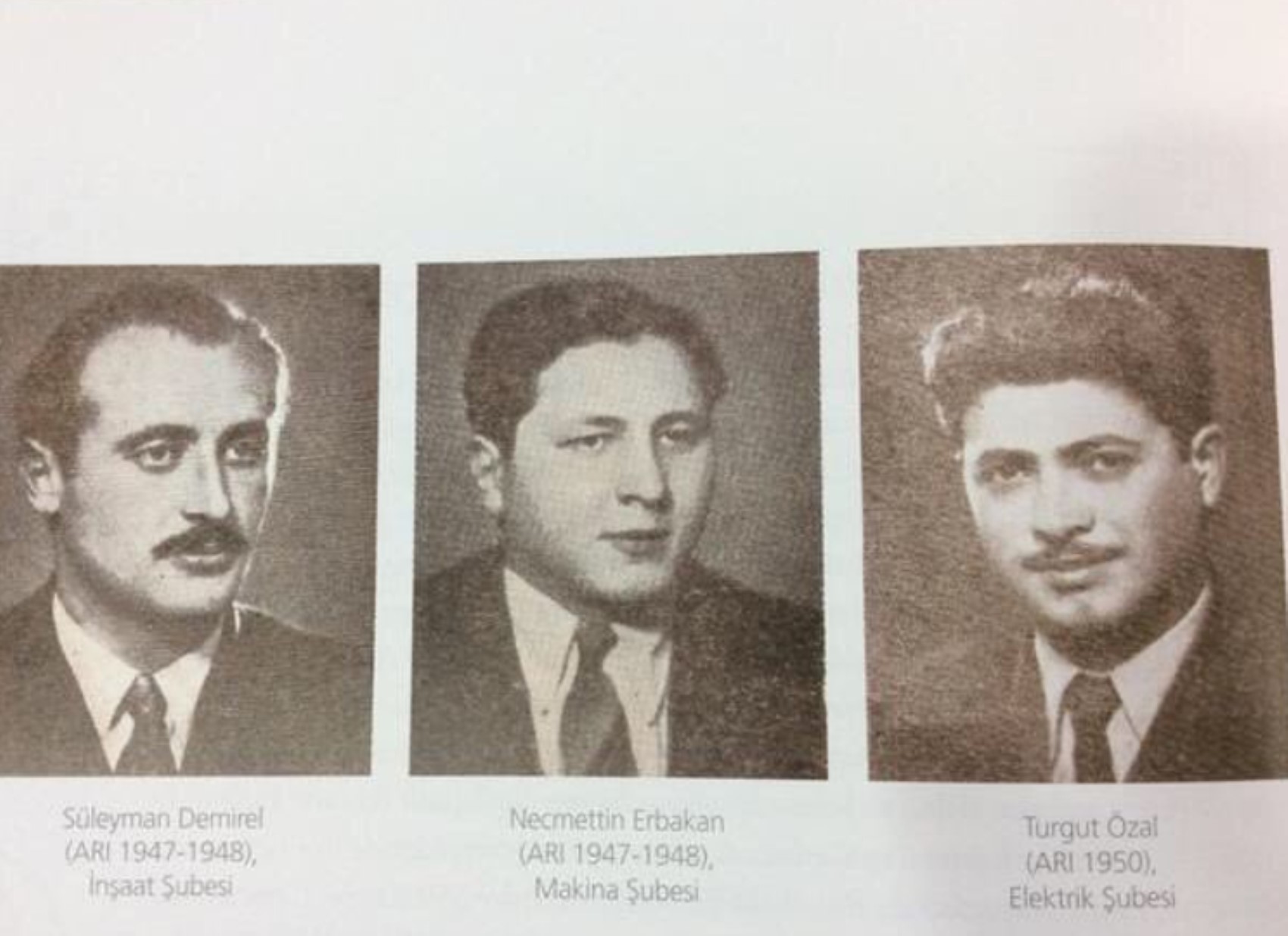
Among the politicians who graduated from ITU in the same generation, the only person with serious accumulation outside his professional field is High Civil Engineer Süleyman Demirel. Demirel was interested in social issues during his student years, and while his classmates were walking around Beyoğlu, he was reading classics in the library.
Demirel and Özal were influenced by American society in different ways. When Demirel saw the Hoover Dam, he saw dominating nature through water, abundance, and prosperity. He saw enrichment. Özal, on the other hand, saw the electricity market.
It is said that Erbakan is the brightest academically among this engineer trio. That is probably the case. Behind him must be the education he received at Istanbul Boys' High School. He received his doctorate and associate professorship in post-war Germany according to the "German system." He gave his doctorate in 1951. He became an associate professor at the age of 27 in 1954. I can say that his associate professorship thesis was an improved version of his doctorate. After becoming a professor, he became completely engaged in politics.
Erbakan has no accumulation regarding social units and history. He only has claims. The Erbakan corpus published in National View circles consists of popular publications. Erbakan and Özal's view of Turkish modernization bears the traces of Naqshbandi (İskenderpaşa Lodge) conversations.
Erbakan is against secularism. Özal does not care. He also connects thoughts and beliefs to the market. Demirel, on the other hand, despite right-wing populist concessions, has preserved the republican-secular core. He even realized the reactionary danger towards the end of his political career and embraced secularism more.
Demirel, Erbakan, and Özal are graduates of the School of High Engineering (ITU). Demirel is a civil engineer, Erbakan is a mechanical engineer, and Özal is an electrical engineer. All of them received high engineering diplomas. These three engineer politicians belong to the first generation of the Republic. Demirel was born in 1924, Erbakan in 1926, and Özal in 1927.
There is not much information about their relationships during their school years. They were all country boys with mathematical intelligence and were staying in the dormitory.
Özal's relationship with Demirel must have developed during his general directorship of the DSİ, during irrigation and electrification works.
I think the main determining factor here is the USA. Both went to America in the early 50s and got to know America from different aspects.
When they won the school, ITU was still the School of High Engineering. It was affiliated with the Ministry of National Education. It was converted into a university with its establishment law in 1944. It became autonomous after the 1946 Universities Law.
Among this trio, the one who is most disadvantaged in terms of class is Demirel. Özal was the child of a bank clerk and a teacher. Erbakan was the son of Mehmet Sabri Bey, who served as a deputy judge in Sinop. His mother also belonged to a powerful family.
There is nothing surprising about Erbakan being educated as a boarding student at Istanbul Boys' High School. This situation, which is extremely normal in terms of class. The same applies to Özal. Özal also has the class background to be able to win ITU.
Demirel, on the other hand, is the Engineering School student who comes from the very back of the race. He also closed the gap with his mind, intelligence, and diligence. Demirel was a peasant boy. His educational life had passed with difficulties until he won the free boarding state high school exams.
At the end of the forties, all of these young provincial engineer candidates were present at the conversation meetings of the İskenderpaşa community. The famous names of the community are Mehmet Zahit Kotku, Abdülaziz Bekkine, and Esat Coşan. Among these, the one who did not get too close to the community is Demirel. He even moved away after a while. The one who adopted the most secular Western life after entering public service is also him. Erbakan is a tariqat-supported political activist from the beginning. Özal, on the other hand, is a sympathizer.
Erbakan's engineering education, doctorate, and associate professorship stages are praised as extraordinary achievements. It is even told as a legend. It is always mentioned that he is the inventor of Leopard tanks—the designer of Devrim cars. I have not seen the published version of Erbakan's theses. I have seen the cover, content, and approval pages in the internet environment. There are a few studies written on it, I examined them. After becoming a professor, he seems to have completely left academic work and engaged in politics.
While Demirel was coming to the leadership of the Justice Party as a representative of secular capital, Erbakan's election as the Secretary General of the Union of Chambers and Commodity Exchanges of Turkey can be interpreted as the move of provincial capital to the center. A very important point: Erbakan's 1969 Justice Party candidacy and TOBB secretary generalship were blocked by Prime Minister Demirel.
Erbakan was elected as an independent member of parliament from Konya as the representative of provincial capital. He founded the National Order Party in 1970.
There is an important point that should be noted here. Erbakan was elected as a member of parliament from Konya with a very high vote rate. This result shows the organization of non-party Islamism as early as 1969.
Since the 60s, Islamism has relied on the agricultural and commercial bourgeoisie. Its ideology is also primitive merchant capitalism. The reason for this is structural.
Erbakan's "one hundred thousand tanks-one hundred thousand cannons" discourse has a relationship with Ottoman nostalgia. The National View has a nostalgic aspect that we can call medieval imperialism. The idea of industry also means establishing weapons superiority/challenging the West. Another ground on which Erbakan's thought is based is opposition to Jewish capital. This is actually what they call being against Zionism.
In the 1950s, while Demirel was the general director of the Menderes governments, Erbakan—despite the dominance of Masonic lodges in the pulpits in Islamist discourse—became a faculty member at the ITU Faculty of Mechanical Engineering and rose to professorship.
The May 27, 1960 coup created suitable conditions for Demirel to enter politics. May 27 liquidated the Democrat Party elite. Demirel and the Justice Party benefited from this vacuum. September 12 also deactivated the right-wing actors (Demirel, Erbakan, Türkeş) of the 1961 democracy. Özal also benefited from this vacuum. While Demirel appeared to reluctantly support the return of the Democrats to politics, Özal openly defended political bans. He tried to prevent the return of the old elite to politics.
OBSERVATIONS ON ÖZAL'S UNDERSTANDING OF POLITICS
Turgut Özal's attitude in the political arena carries the typical characteristics of the Turkish right. He is actually neither liberal nor democratic. His understanding of democracy is only at the level of formal conditions. This means nothing other than that elections are being held. Of course, elections must also be held with an election system that will keep him in power. I would like to remind you that Özal enacted an election law that would keep him in power in every election.
The reason is this. The Turkish right is not very concerned with principles such as representation legitimacy and justice in representation. What is important is to seize power.
Even in the most libertarian decisions Özal made, there was always a trick. For example, he had put a clause regarding the majority to change the constitution into the 1987 referendum package that lifted political bans. He had done this to be able to switch to the "Presidential" system in the future. This was the real reason for the Article 175 amendment. All referendums held after that date were conducted with the procedure envisaged in this amendment. This amendment played the most important role in the votes that changed Turkey's political regime. Özal's constitutional amendment projection was extremely logical. Of course, from the perspective of the right wing. The system was very simple. After passing the constitutional amendment with 3/5 from the parliament, we will somehow get the majority in the referendum. This infrastructure enabled the transition to the "Turkish-style presidential system." Özal had planned this for himself. It was destined for others.
The abolition of Articles 141 and 142 of the TCK was also, if you look at it, to abolish Article 163. In appearance, it was expanding freedom of thought and expression. The Cold War was already over. The Soviet system had collapsed. For the bourgeoisie, the threat of communism had disappeared. The main target was to abolish 163.
In summary, the Özal identity is an early-period example of Turkish right-wingism with a neoliberal appearance. The attitudes he took against political developments are more or less the same as the AKP. There is no contemporary understanding of democracy in matters of election, representation, law, and fundamental rights and freedoms.
The right represented by Süleyman Demirel, on the other hand, is at peace with the founding values of the republic. Despite having some reservations. In addition to this, he cares about social justice. He rejects savage capitalism.
Özal was not loyal to any of the founding values. He did not care about these values. The following words Prime Minister Özal said to the late Ord. Prof. Reşat Kaynar at an Atatürk Culture, Language and History High Institution meeting explain his thought structure/knowledge level very well: "This Atatürkism we call pragmatism, in my opinion, professor." This expression, which seems unimportant, actually means "I can interpret Atatürk's thoughts in a way that suits me."
My conviction is that Özal did not know the Turkish revolution. He had not grasped its importance. He also had no reading on the Turkish revolution. Whereas Demirel had even read Doğan Avcıoğlu's "Turkey's Order." The book had been published during his own first prime ministry years. Özal, on the other hand, was interested in other things. Engineering, calculation, and money. The only value he was attached to was capitalism.
IN THE FINAL ANALYSIS, WHO REPRESENTS WHAT?
Among these three engineers, the only political actor who is aware of the Atatürk revolutions is Süleyman Demirel.
The following words he uttered during his presidency are significant. They ask me what the republic is. "The republic is me, me..." Demirel served as prime minister many times since 1965. He was elected President upon Özal's death. Of course, he was a bourgeois politician. He was a representative of the capital class. But his class origin was Isparta's İslamköy. This is an important point that should be taken into account when interpreting Demirel. Demirel was a republican and knew the importance of secularism. He was the version of Celal Bayar who had received engineering education.
The shortest definition that can be made for Erbakan is that he is a counter-revolutionary. From Erbakan's thought, not democracy, but at most a Sunni version of the regime in Iran can emerge. His anti-imperialist discourse is an outward expression of anti-Semitism. He has archaic imperialist dreams of dreaming of the Ottoman Empire.
Erbakan is also a representative of the capital class. Only with one important difference. Not of metropolitan capital, but of Islamist provincial capital. This is at the root of the National View's Masonic capital discourse. In the National View, there is no opposition to the sovereignty of the capital class. There is the issue of who will own the capital. The National View (Erbakan thought) relies on a class society. It looks democratic at the tactical level. Its main goal is an authoritarian state based on religious foundations.
The third actor, Özal, is a right-wing populist politician who does not care about secularism. He is a profile between Demirel and Erbakan. Of course, not in all aspects. Özal was essentially the Turkey representative of "neo-conservative" policies that handle capitalism on a global scale. The claim that Özal made a revolution is a generally accepted claim. I do not agree at all. The revolution Özal realized was to liquidate the public from all areas. Public management was destroyed. Education, health, and social security were turned into services that must be purchased from the market. The share labor received from the national income was narrowed as much as possible.
Özal marketed this process to the Turkish people under the guise of fighting against status quoism. He was explaining his attitude as using the opportunity to be a global actor.
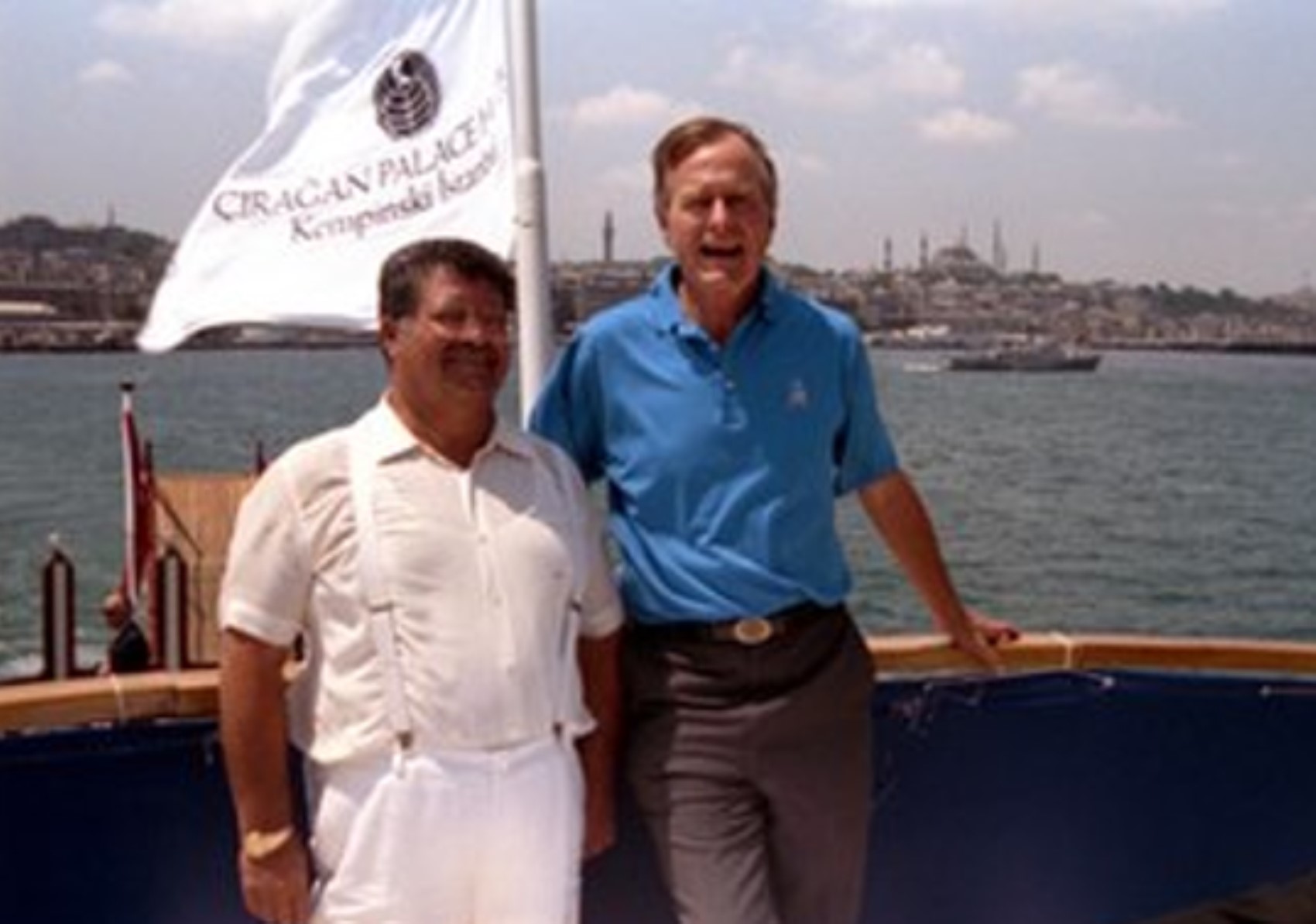
Özal truly believed that he would be a political actor on a global scale. Please examine the pictures taken during George W. Bush's visit to Turkey. The reason was that his political vision was narrow. He had no serious knowledge accumulation regarding social sciences and history. He did not care about these. He had the "I am an engineer, I am intelligent, I understand everything" air that I observe in some engineers. Demirel was not someone like that. In Demirel, there is the "I am an engineer, I am intelligent, I understand calculation and books, but I also read Tolstoy, sociology..." style. There is no need to be a leftist to develop the country. There are other ways. In the end, Özal entered everything that Demirel was afraid of due to the anxiety of losing our independence with dreams of playing big. He could not be successful in any of them. The place we have come to is today's Turkey.
Most Read

Striking picture for Özgür Özel's 'New Party'

Özgür Özel gives a dated response regarding the number of resignations

Forest fire in Antalya brought under control

The PKK opening and Özgür Özel’s path!..
Houthis strike Saudi-owned tanker

How did the newspapers view Özgür Özel's farewell to the CHP?

What did the CHP do?

Özel’s new party move in the world press

The New CHP, against CEHAPE
4 drones shot down near US Consulate General in Erbil