



A BRIEF LOOK AT THE HISTORY OF THE GRAND NATIONAL ASSEMBLY OF TURKEY
We are in the 28th legislative term of the Grand National Assembly of Turkey (TBMM). Given that the first assembly dates back to 1920, we are talking about a 103-year time span leading up to the assembly formed by the 2023 elections.
Since the transition to multi-party political life, our assemblies have been: 1946, 1950, 1954, 1957, 1961, 1965, 1969, 1973, 1977. From September 12 to the AKP era: 1983, 1987, 1991, 1995, and 1999.
If we accept the rise of the AKP to power as a milestone, we have 2002, 2007, 2011, and twice in 2015. A constitutional amendment was made in 2017. The system changed. Parliaments after 2018 do not possess the same powers as before. Therefore, the assemblies elected in 2018 and 2023 must be evaluated differently.
Since 1946, there has been a principle of general and equal suffrage. Since 1950, elections have been held under the administration of the Supreme Election Council (YSK). Although the election procedures for YSK members have shown changes over time, its status as the sole authority regarding election judiciary has remained unchanged.
One of the most important determinants in the formation of the parliament is undoubtedly the electoral system applied. Turkey has tried almost all electoral systems, with the exception of the single-member district system.
The applied electoral system significantly affects the distribution of seats in parliament. I would like to demonstrate how important the electoral system is with a few examples.
In 2002, the 10% national threshold enabled the AKP to come to power with 35% of the vote. Without the threshold, the AKP could not have come to power alone. If there had been a threshold in 1977, the CHP would have come to power alone. If there had been proportional representation in 1957, the Democrat Party would not have won the election. In 1987, if there had been no district thresholds, Özal's ANAP would not have won the election. It could not have come to power alone.
From May 14, 1950, until Turkey's political regime changed in 2017, it is possible to speak of four sub-periods in which a political party was dominant.
In terms of majorities formed in parliament, there were three terms for the Democrat Party in 1950-54-57, led by Menderes. Two terms for the Justice Party in 1965 and 1969, led by Süleyman Demirel. Two terms for the Motherland Party: 1983-1987, led by Turgut Özal. Since 2002, the AKP has held power in 2002, 2007, 2011, and 2015 (twice).
Since the executive's assumption of office after 2018 is not dependent on a vote of confidence, it is not correct to establish a direct causal link with the legislative assembly election.
Nevertheless, the majority of the AKP and its allies was secured in the Assembly in 2018 and 2023. But this is not a majority as in a parliamentary system based on a soft separation of powers. It means a majority that approves the political authority holding the executive in the legislative assembly.
Therefore, it is necessary to think and write about the balance and dynamics of the legislative and executive organs formed after 2018 using different concepts.
THE ASSEMBLY OF THE ANATOLIAN REVOLUTION: UNITY OF POWERS AND PARLIAMENTARY SUPREMACY
The epistemological break in legislative powers is the establishment of the First Assembly: April 23, 1920. This assembly constituted itself with Decision No. 1. This is the most revolutionary decision in terms of Turkish public law. The first assembly is an assembly that equates all state powers with the Grand National Assembly of Turkey.
The First Assembly, which I call the "Ankara Convention," was based on the principle of "unity of powers and parliamentary supremacy." The expression of an assembly "possessing legislative authority and executive power" stated in the 1921 Law of Basic Organization (Teşkilatı Esasiye Kanunu) has been decisive for our public law and political history.
The constitutional principles adopted by the first assembly were maintained until the 1961 constitution. The public law principle that we can call the supremacy of the legislature continued to leave its traces even after the 1924 Constitution.
Between 1921 and 1924, the powers of legislation, execution, and regime judiciary were in the assembly. For this reason, one cannot speak of a government autonomous from the assembly. The Council of Executive Deputies (İcra Vekilleri Heyeti) was acting on behalf of the assembly in executive matters. "Sovereignty" was gathered in the assembly in every sense.
With the proclamation of the Republic, the Presidency of the TBMM and the head of state (President of Turkey) were separated. The conditions for the establishment and continuation of the government approached a parliamentary government. But not in the full sense.
With the 1924 Constitution, the legislature appoints the executive with a vote of confidence and can dismiss it with a vote of no confidence.
THE PRESIDENCY SHIFTS FROM THE LEGISLATURE TO THE EXECUTIVE
During the National Struggle, the Presidency was represented by the Speaker of the Grand National Assembly of Turkey. With the Republican revolution, the Presidency was shifted to the executive. It was separated from the Grand National Assembly of Turkey.
It is significant that until May 27, 1960, the Grand National Assembly of Turkey elected the President of Turkey and the Speaker of the TBMM at the beginning of each legislative term, and their terms of office were for one legislative term: This means the Assembly elects both the legislature and the head of state.
During the period when the 1924 constitution was in force, the founding leaders were elected within this procedure: Atatürk-İnönü-Bayar.
THE FIRST TWO ASSEMBLIES: KEMALISTS IN PARLIAMENT
Atatürk had led the establishment of the Grand National Assembly of Turkey in his capacity as the leader of the defense of rights movement. Throughout his political life, he was either the speaker of the assembly or the president. He was elected President by the 1923, 1927, 1931, and 1935 assemblies.
The First Assembly was an arena-type, argumentative assembly. The deputies mostly represented the sensitivities of the district (electoral region) from which they were elected. The Kemalist party was struggling to establish dominance over the remaining factions of the assembly. The state of war and the idea of national salvation provided unity. As in the third extension of the Commander-in-Chief Law, it had been necessary to neutralize opponents by creating a de facto situation. Within the Second Group, those who argued that there was no longer a need for the commander-in-chief had emerged. The goal was to break the power of TBMM Speaker and Commander-in-Chief Mustafa Kemal Pasha. As Doğan Avcıoğlu very aptly identified in his work *Milli Kurtuluş Tarihi* (History of National Liberation) and *Türkiye’nin Düzeni* (Turkey's Order), it had become necessary to perform "revolutionism with conservative forces."
The Second Assembly is a period when both internal reckoning and revolutionary movements gained momentum. The *Nutuk* (Speech) is the end of this reckoning. (1927)
AFTER THE THIRD ASSEMBLY
For the assemblies of the 30s, my professor Tarık Zafer Tunaya wrote: The parliament had the atmosphere of a Provincial General Assembly. The heated debates in the First Assembly were left behind. Such parliaments are defined in political science literature not as participatory/argumentative, but as ratifying assemblies.
From 1920 to the 1935 Assembly, there were changes in the profiles of deputies. The first assembly represented the periphery. The Second Assembly had produced a list that observed the balances of the War of Independence leadership. From the Third Assembly onwards, the Grand National Assembly of Turkey consisted of people "approved" by the leader of the revolution.
In the Turkey of the 30s, there is mobility within the administrative-political elite. An elite can serve as a deputy and minister after high bureaucracy-governorship-ambassadorship. Then they can only be a member of the TBMM. Those who do not want to take an active political role can be elected as deputies. TBMM membership can also be through a by-election. Example: Rauf Bey being elected as a deputy in a by-election and then being appointed as the London ambassador. Fethi Bey resigning from the prime ministry (1925) and being appointed as the Paris ambassador. Then leaving the embassy and becoming a deputy in a by-election. And being appointed as ambassador to London again.
After 1927, it is a matter of being made a deputy rather than being elected as a deputy.
Retired generals and university professors can very well be deputies from provinces they are not very interested in. As in the examples of Enver Ziya Karal and Fuat Köprülü. Gestures are also made to some: figures like Kılıç Ali, Cevat Abbas, Nuri Conker, and Salih Bozok were made deputies by Atatürk for personal reasons.
Atatürk also had local sensitivities represented. Let us not forget that some families have been in the Grand National Assembly of Turkey since the first assembly. In this way, he was connecting the local notables to the Kemalist state/ideology and cadre. Peripheral actors (the sovereigns) were later represented in the Assembly through the Democrat Party. I would like to remind you that Menderes was a landed notable who had been admitted to the Assembly in the 1931 elections.
LEGISLATIVE IRRESPONSIBILITY AND IMMUNITY
Legislative irresponsibility and immunity are among the greatest guarantees of democratic political life. This is not a privilege granted to deputies.
It is a guarantee of legal untouchability provided to the representatives of social and political segments standing against the power. It is a protected area. Immunity actually protects the opposition. Its origin lies in the 1689 Bill of Rights. Important guarantees were provided here regarding the status of a member of parliament. Such as not being arrested, being free from prosecution, not being prosecuted for words spoken in parliament, and the right to be admitted to the king's presence.
These guarantees have existed since 1876. In the Second Constitutional Era, the legislative immunity of Lütfi Fikri Bey and İsmail Kemal Bey were the first examples to come to the agenda. Lütfi Fikri Bey would later also become the president of the Istanbul Bar Association.
From the moment it was established, the Grand National Assembly of Turkey has protected the law (parliamentary status) of its own members against prosecution.
The Grand National Assembly of Turkey has often told the prosecution authority to initiate proceedings after the deputy's term ends. This has been called "legislative immunity" (teşrii masuniyet). The basic principle has been the postponement of the trial, except for *in flagrante delicto* provisions.
In the single-party era, legislative irresponsibility and immunity was a principle applied with meticulousness. When the TBMM gave permission for judicial prosecution, there would definitely be a real legal basis.
Mostly, the decision would be due to issues with a judicial basis. For example, ministers with corruption allegations against them. The immunities of ministers referred to the Supreme Court (Yüce Divan) would be lifted. Such as the lifting of the immunity of Minister of the Navy İhsan Eryavuz in the Yavuz-Havuz case, Minister of Trade Ali Cenani Bey, and Suat Hayri Ürgüplü during the Second World War years. In the latter, Ürgüplü wanted to be referred to the Supreme Court himself and was acquitted at the end of the trial.
Deputy immunity was lifted with real legal justifications and exceptionally during the years when Atatürk and İnönü were presidents.
LEGISLATIVE IMMUNITY FILES AND RESULTS FROM THE FIRST ASSEMBLY TO 1950
To give some examples of legislative immunity files that came to the agenda from the First Assembly to the multi-party political life: Nazım Resmor, 1921, former Minister of Interior, member of the People's Communist Party (Halk İştirakiyyun Fırkası), was lifted due to the crime of attempting to overthrow the government. He was convicted. He was released in the general amnesty issued after the Battle of Sakarya. Mehmet Şükrü Bey (Koç) and Sheikh Servet Efendi were acquitted in the same case. (1921) In the single-party era, Tahsin Bey was convicted of inciting murder. (1925) Fikret Onuralp was convicted of the crime of extortion. (1928) Sadık Aldoğan, a deputy of the Nation Party, had his immunity lifted before the 1950 general elections on charges of insulting the moral personality of the government (24.3.1950). I could not learn the result of the file.
PRESSURE ON DEPUTIES BEGINS WITH THE DEMOCRAT PARTY
The lifting of legislative immunity by circumventing the constitution and laws for the purpose of putting pressure on opponents began with the Democrat Party. The record of Menderes governments in this regard is quite extensive. The most well-known event in our political history is the lifting of the legislative immunity of Osman Bölükbaşı, leader of the Republican Nation Party, and his arrest. Moreover, Bölükbaşı was tried for his words within the assembly.
While the trial was ongoing, the 1957 early elections were held; Osman Bölükbaşı was re-elected as a deputy from Kırşehir. TBMM Speaker Refik Koraltan said, "a re-elected deputy cannot remain in detention." Upon Koraltan's statement that "the deputy has regained immunity," he was released by the decision of the Criminal Court of First Instance. The trial in the mentioned case was stopped. Osman Bölükbaşı came to the Assembly, took his oath, and took his place in the XIth term parliament.
The DP government, especially after 1957, started a siege of referral to the judiciary against CHP, Freedom Party, and Republican Nation Party deputies for flimsy reasons. Let me give some examples of the lifting of immunity and judicial decisions taken in the 50s: Hüseyin Cahit Yalçın (CHP, 1952, accusation of insulting the TBMM, acquitted), Sırrı Atalay (CHP, 1956, insulting the moral personality of the government, acquitted), Osman Ali Şiroğlu (CMP, 1956, moral personality of the government, trial stopped), Kamil Kırıkoğlu (CHP, insulting the prime minister, trial stopped), Osman Bölükbaşı (CMP, 1957, trial stopped).
1961 DEMOCRACY AND LEGISLATIVE IMMUNITY
The years when the 1961 Constitution was in force (1961-1980) correspond to a period when parliamentarians had the highest protection rights. The reason for this is the Constitutional Court, which would protect the deputy against the ruling majority. Deputies are under the protection of the Constitutional Court against decisions to lift legislative immunity. A well-known example is the lifting of the immunity of TİP deputy Çetin Altan on the grounds that he made communist propaganda in an article he wrote in the *Akşam* newspaper. The Justice Party was in power. Süleyman Demirel was the Prime Minister. The Constitutional Court, finding this decision of the Grand National Assembly of Turkey not legal but political, canceled the decision to lift immunity.
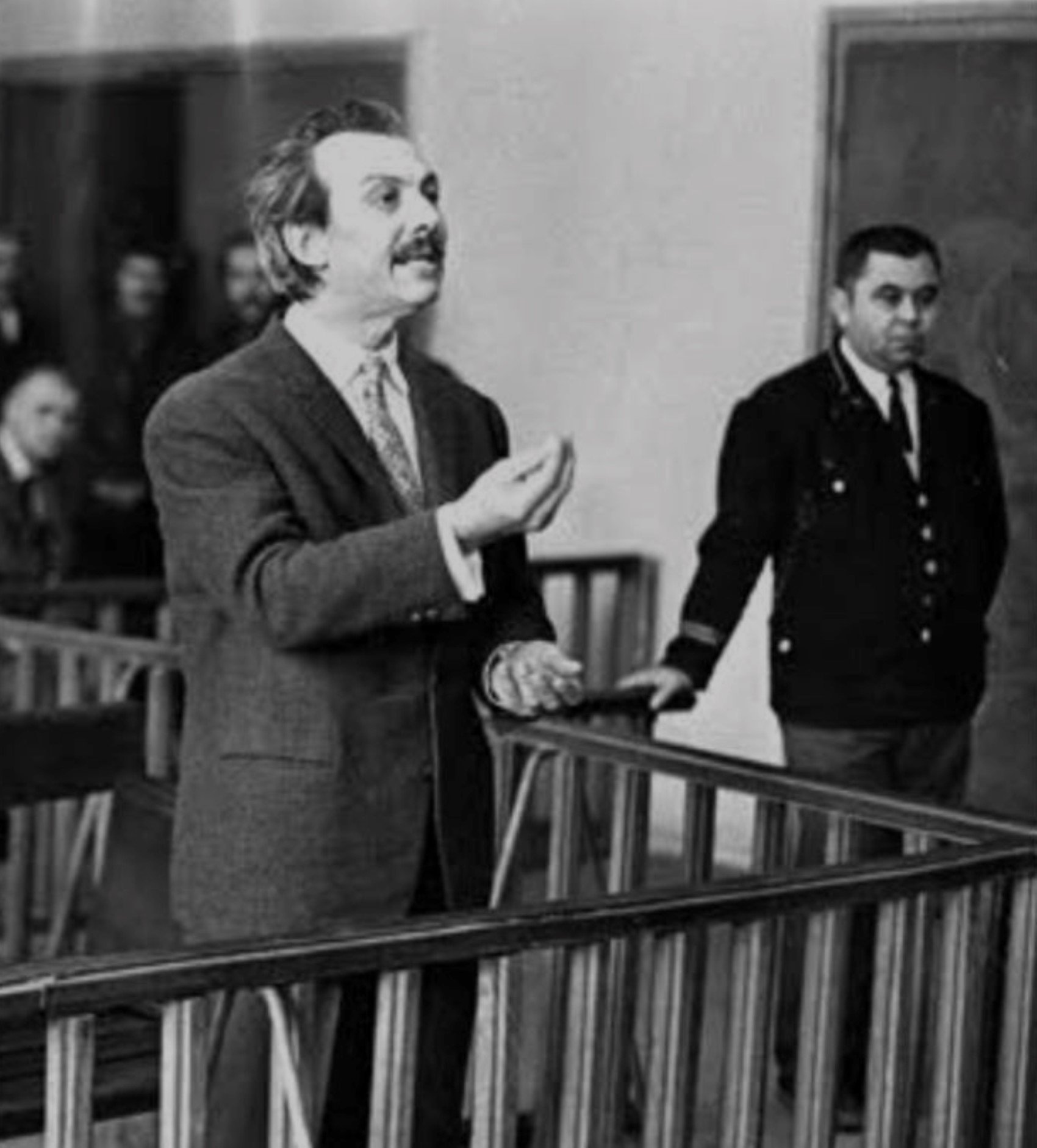
The first example is interesting. It was given about a Justice Party deputy: Nuri Beşer. The date is interesting. 1962, during the Talat Aydemir Uprising. Moreover, during the first coalition government that the CHP made with the AP. The immunity of AP deputy Beşer was lifted on the charge of "insulting the military forces of the State." And he was convicted.
In 1968, when the Justice Party was in power alone, the file regarding Hakkari Deputy Ali Karahan was based on the accusation of "Kurdism." His party is interesting, the New Turkey Party, which appeals to the DP base.
In the same period, many files regarding Natural Senators also came to the Assembly. These were former members of the National Unity Committee. Osman Köksal and Cemal Madanoğlu had not accepted natural senatorship. They were outside the Senate. Cevdet Sunay had appointed them as Quota Senators. The government was of the opinion that there were coup-plotting tendencies receiving support from these senators. These senators were in intense contact with *Yön* and *Devrim* magazines. Doğan Avcıoğlu was the theorist of these groups.
With the claim that they were organized under the name of the National Revolutionary Army, judicial prosecution was initiated in 1968 against senators Mucip Ataklı, Ekrem Acuner, Sezai Okan, and Şükran Özkaya (Natural senators). Their immunities were lifted. The Constitutional Court canceled the decisions.
In 1971, files regarding Ekrem Acuner and Osman Köksal similarly reached the TBMM. The decisions to refer to the judiciary were canceled by the Constitutional Court. Cemal Madanoğlu was also tried on charges of "attempting to alter, change, and abolish the constitution." He was acquitted. Madanoğlu and Köksal were quota senators at this date.
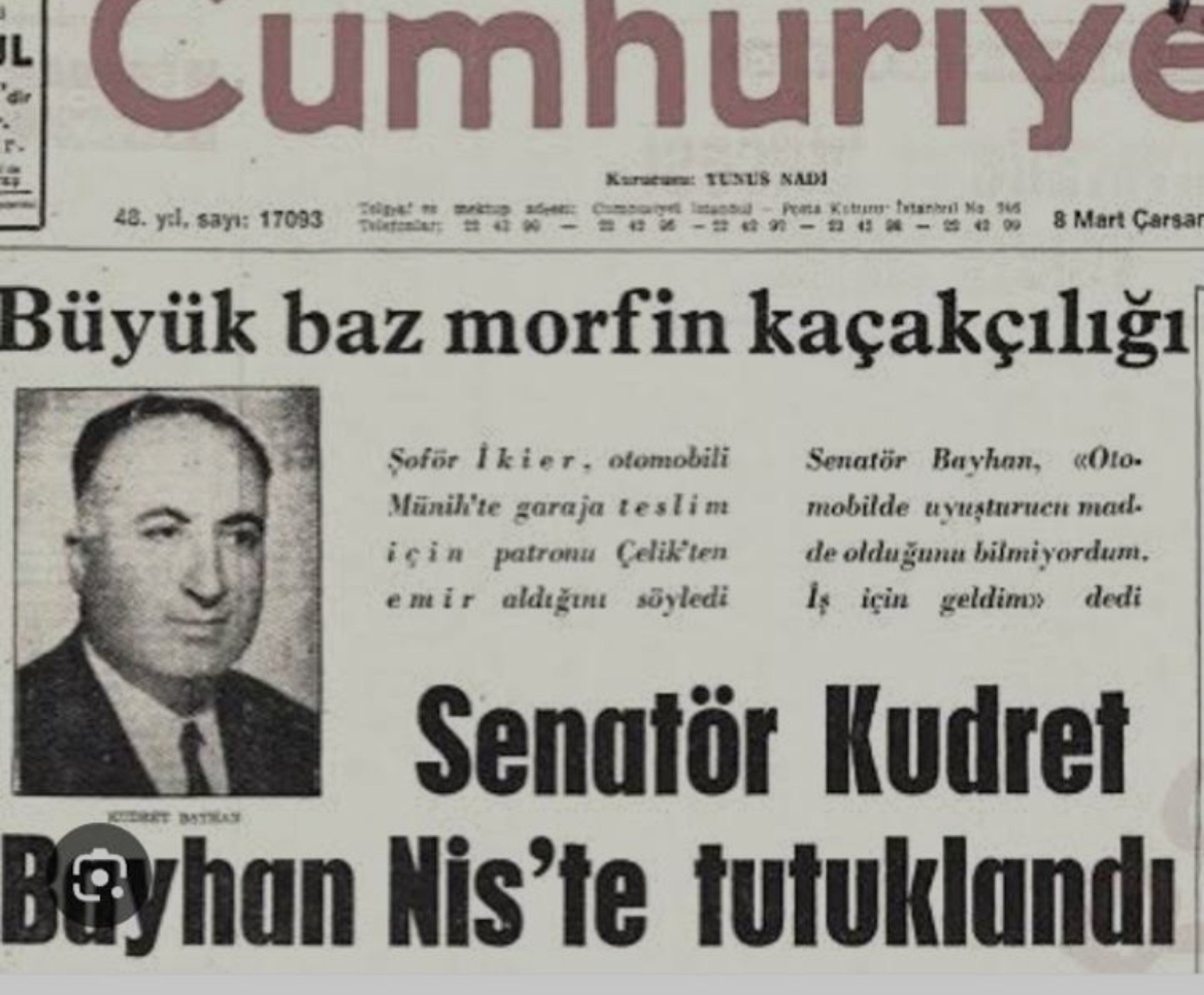
An extraordinary example from the 1961 democracy era is the one regarding Senator Kudret Bayhan. Bayhan was an MHP Niğde senator. He was caught while smuggling morphine base in France. He was being tried. When the subject reached the TBMM in 1973, his legislative immunity was lifted. Senator Bayhan was extradited to Turkey after serving a long prison sentence in France.
The 1961 Constitutional order protected the members of legislative assemblies (deputies and senators) against political power and the parliamentary majority through legal means. The applied electoral systems also allowed for the representation of small parties. Thanks to these two essential guarantees, the crushing pressure of the government on small parties and deputies could be prevented.
Despite the insincerity of the Justice Party governments, there were guarantees and balances of multi-party political life.
THE ISSUE OF DEP DEPUTIES
The lifting of the legislative immunities of DEP member deputies and their arrest are important events in Turkish parliamentary history. It took place during a period when Demirel was president and Tansu Çiller was prime minister. (1994)
The DEP members had entered the 1991 parliament under the HEP identity and from the SHP list. Erdal Bey thought that the Kurdish issue could be solved in parliament through representation. But the opposite happened. The HEP members adopted a discourse that legitimized the escalating violent actions of the PKK. In my opinion, many of the allegations were true. What was extremely wrong was the way the deputies' immunities were lifted and the way they were detained at the Assembly gate. This attitude was completely contrary to the principle of the TBMM protecting the dignity of its own members. The fact that the Grand National Assembly of Turkey was blockaded by the police before some of the DEP members were referred to the judiciary was not pleasant at all. The images were offensive in terms of legislative immunity and irresponsibility. Demirel's words "it was not chic" were expressed for this reason.
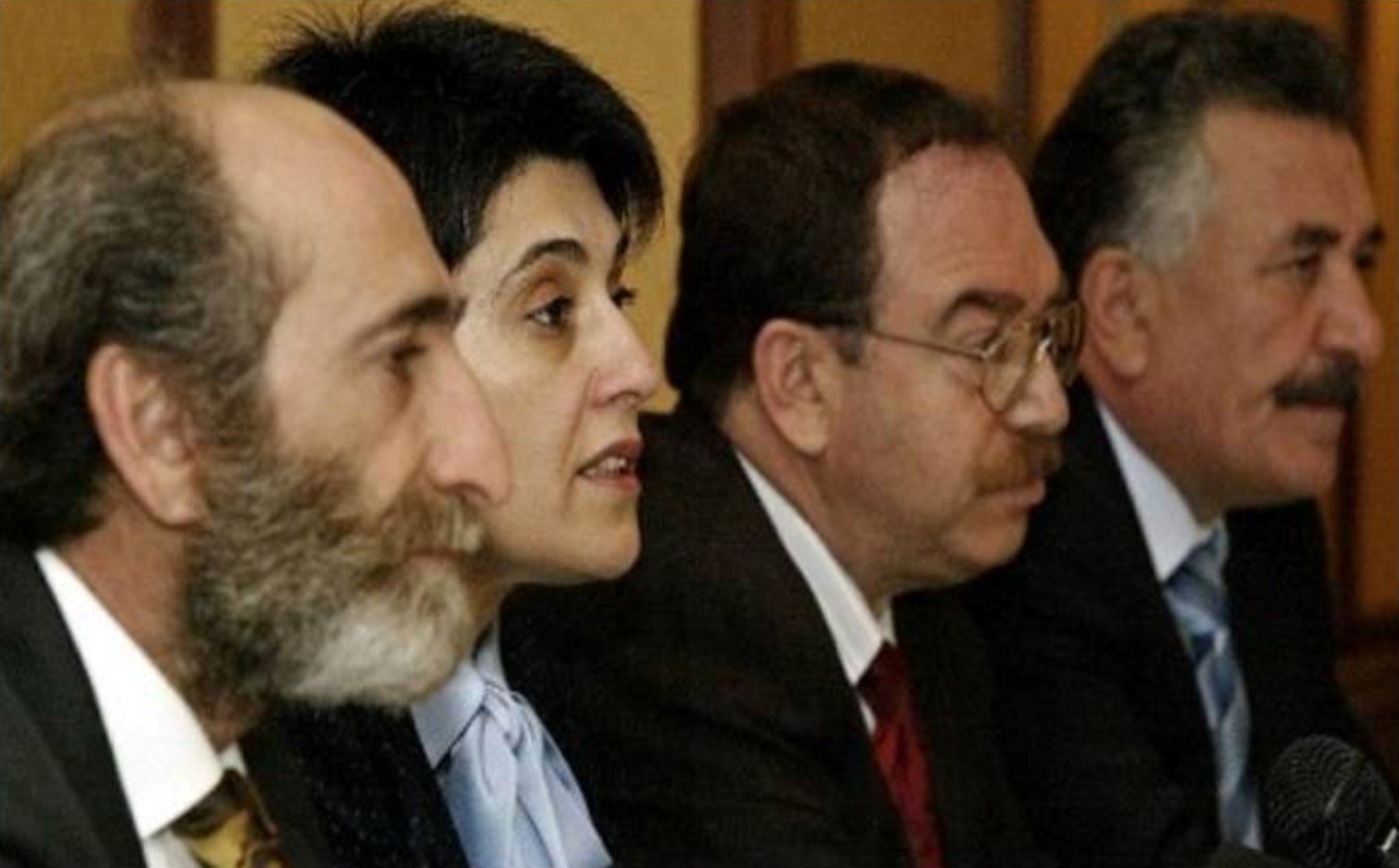
The DEP deputies who were convicted after their legislative immunities were lifted in 1994 are: Orhan Doğan, Sırrı Sakık, Mahmut Alınak, Hatip Dicle, Leyla Zana, Ahmet Türk, Selim Sadak.
IMMUNITY FILES AFTER 1994
If you wish, let's take a look at the legislative immunity lifting decisions that resulted in conviction or acquittal from 1994 to the present: Hasan Mezarcı, RP, 1994, conviction; Mehmet Ağar, DYP, 1998, establishing an armed organization for the purpose of committing a crime, conviction; Sedat Bucak, DYP, 1998, establishing an armed organization for the purpose of committing a crime, conviction; Mustafa Kalemli, ANAP, 1998, misconduct in office, acquittal; Kahraman Emmioğlu, DYP, smuggling, conviction; Sema Pişkinsüt, DSP, misconduct in office, acquittal; Murat Karayalçın, 1998, misconduct in office, acquittal.
PARTY LEADER-PARTY GROUP
Turkish history shows us this. The presence of a party in power with large majorities in parliament has not strengthened the Assembly, but has set it back. The Democrat Party, Motherland Party, and AKP era have been like this.
The Assembly came under the guardianship of ruling party leaders from 1950-1960, 1983-1991, and 2002 to 2017. As in the examples of Menderes, Turgut Özal, and partly Demirel. But the situation of the AKP majority against the AKP leader is very obvious. The Party group is weak against the party leader. No matter how large the party group is, it is powerless against the party leader.
The relative weakness of the parliament against leadership is also valid within the Atatürk era. Especially after the III. Assembly.
POWER GROUP ON THE RIGHT AND PARTY LEADER
During the Motherland Party government, the party's relationship with Özal broke over time after he became President. There were times when Menderes and Demirel could not dominate the party group. The Freedom Party and the Democratic Party were born from these divisions.
The conclusion that can be drawn from these developments is this: Although a member of the Grand National Assembly of Turkey is generally a dependent actor, that dependency is carried out with a bargain. The bond can break. Expectations determine the moment of breaking away from the party and the leader. Because there is nothing absolute in politics.
PARTY CHAIRMAN IN TERMS OF CHP DEPUTY
In recent periods—despite everything—the only party where the deputy is autonomous is probably the Republican People's Party (CHP). Because there is no leadership in the CHP. There have been people elected as chairmen of the party for quite some time. The chairman reflects an intra-party balance.
All deputies—more or less—see themselves as potential chairmen. The situation of not caring about the party chairman has existed since the Eighteenth Congress.
This situation I mentioned in the CHP starts with Ecevit's words "we are not palace servants." Rebellions have occurred during the terms of Baykal, Kılıçdaroğlu, and Özgür Özel. The state of challenging the chairman is dominant in the CHP. Even if it sometimes results in expulsion.
For example, the Mayor of Şişli was expelled from the party. But when the conjuncture changed, he returned. He became a deputy. The CHP is a party that allows these to happen.
Although Kemal Kılıçdaroğlu also did quite a bit of "cleaning" in the party, he was ousted from his seat by the man closest to him. In today's Turkey, such competition can only happen in the CHP. With the exception of socialist parties, of course.
TBMM AND EXECUTIVE AFTER 2002
The AKP came to power thanks to the 10% national threshold set by September 12. (2002) It secured a majority with the most unjust election in Turkish history. The total vote of the parties remaining below the threshold was 45%. The election threshold of the September 12 coup makers provided the AKP with a parliamentary majority close to 2/3 with a vote slightly above 1/3.
Between 2002-2007, the AKP was besieged by President Sezer, the judiciary, universities, and the army. With the end of Sezer's presidential term, the siege ended.
In terms of legislative-executive relations, there were legal possibilities in the '82 constitution that led us to these days.
When you look at the constitution, two things immediately catch the eye. First, the fact that the judiciary has clearly regressed against the executive. As a political preference, the consolidation of the power of the executive. Increasing the powers of the president within the executive. The intention of the constituent power was to appoint the "transcendent state power" as a guardian over the legislature, executive, and judiciary. But the result would not be like that at all. This is how the door that allowed the president to reach the executive power alone was opened. The National Security Council based the "constitutional design" on the assumption that someone like Kenan Evren would always sit in Çankaya.
For Turkey, the political milestone, in my opinion, was Özal's use of the constitution's possibilities to ascend to Çankaya.
Özal had tried the de facto presidency with Yıldırım Akbulut. Erdoğan, on the other hand, employed Davutoğlu and Binali Yıldırım. In the end, he liquidated both the prime minister and the government.
The presidency with increased powers would mean Özal's de facto presidency even in a parliamentary government. Özal immediately began to utter the words "the commander-in-chief is me."
In 2007, the block that tried to prevent a partisan from the AKP from ascending to Çankaya by relying on the Assembly majority with 367 was defeated at the ballot box. This situation led to the change of the method of electing the president. The constitution was changed. The president would now be elected by general vote. This change knocked down all the stones in Turkey and redefined the regime.
The politically irresponsible head of the executive became the sole executive under the name of the "Presidential Government System" by liquidating all other administrative and political elements of the executive. (2017)
2018 AND 2023 LEGISLATIVE ASSEMBLY ELECTIONS
In accordance with the 2017 constitutional amendment, the last two general parliamentary elections were held together with the presidential election. If the legislative assembly election had been held at different times as in the USA, different balances could have emerged within the regime.
As far as I remember, MHP chairman Dr. Devlet Bahçeli had been insistent on the legislative and executive elections being held at the same time while the system was being established. The reason for this must be the intention to form a coalition with the AKP under the name of an alliance.
We can say that he reached this goal more effectively than Türkeş's power within the Nationalist Front. We can call the MHP the "leading partner" in some issues recently.
Since the system has been redefined as executive-centered since 2018, legislative assembly elections have remained in the background. Elections take place around the election of a single person. That is the presidential election.
The reduction of the threshold to 7%, the increase in the number of political parties included in alliances, and positioning behind 50% + 1 have been the basic parameters of the bargains.
DE FACTO SHIFT OF LEGISLATIVE POWERS TO THE EXECUTIVE
The TBMM is historically the place where national sovereignty is manifested and concentrated. If I am not mistaken, one of the effective figures of the Second Group in the First Assembly had defined the Grand National Assembly of Turkey as the Kaaba of the nation. We cannot say this for today.
In the new period, a system has been established in which the law-making power, which is the most important power of the assembly, has faded.
The reason for this is the fact that the legislative power has been weakened. The executive has become equipped with the power to make regulations equivalent to legislation with Presidential Decrees in almost every field outside the field of public freedoms.
Since the majority is behind it in the assembly, it would be daydreaming to expect a legislative activity from the legislature that would change the will of the president. Such legislative activity has not been seen so far.
The alliance that won the presidential election has produced a legislative assembly that will consolidate the power of the executive. The legislature serves the function of fortifying the power the government has obtained in the executive.
In other words, the TBMM, which was the master of everything in 1920 "due to the unity of powers and parliamentary supremacy system," has turned into an assembly that approves the executive.
In the 1961 democracy period, when the principle of soft separation of powers was valid, to express it in the words of my professor Erdoğan Teziç, the executive was a derivative-secondary area of power. It was defined as a duty rather than being a state power. Now, the executive has turned into a power above the legislature.
Another point can perhaps be expressed more concretely by comparing it with the USA. There is a hard separation of powers in the USA. The legislature and executive cannot dismiss each other. In Turkey, both can decide to renew elections. In both cases, this means the will of the president.
In the USA, legislative assemblies (Congress) are partially renewed at certain intervals independently of the executive. This can change the balances in the legislative organ in favor of or against the executive.
The hard separation of powers in the USA cannot be compared with the application in Turkey. In Turkey, with a very apt expression by professor Kemal Gözler, a "neverland constitutional system" has been established.
THE TRANSFORMATION OF THE LEGISLATIVE ASSEMBLY INTO THE CHAMBER OF DEPUTIES (MEBUSAN MECLİSİ)
In Turkey, both the logic of the establishment of the legislative assembly and the institutionalization of democracy have developed on the basis of supervising the executive.
The 1909 constitutional amendments can be shown as a milestone here. From 1909 to 2017, the executive always came to office with the approval of the legislative assembly. The Chamber of Deputies (Mebusan Meclisi) or the Grand National Assembly of Turkey have been the authorities that commissioned and approved the executive.
Naturally, the government's remaining in office was dependent on a vote of confidence. From 1920 onwards, ministers (executive deputies) or the Council of Ministers as a whole (Council of Deputies) could be dismissed by the TBMM.
In the current state, the legislative assembly has been turned into an institution that can only submit written parliamentary questions. Parliamentary inquiry, parliamentary research, and general debate have been weakened.
The legislative assembly has no power against the president. Except for the decision to renew elections, there is no sanction it can apply against the executive. This result means that its powers, which have been strengthening since the *Kanunu Esasi* (Basic Law), have been completely pruned.
What does this situation correspond to in terms of public law?
My view is this: The Grand National Assembly of Turkey has regressed to the position of the Chamber of Deputies before the 1908 Constitutional revolution. There is also a regression in terms of the status of deputies. A TBMM member today—unfortunately—has approached the status of a member of the Chamber of Deputies.
OPPOSITION DEPUTY AND IMMUNITY IN THE AKP ERA
The attitude of the ruling party AKP towards the TBMM membership and constitutional rights of deputies elected from opposition parties, and especially from the CHP, is worrying. The content of the concepts of legislative immunity and irresponsibility has been completely eroded.
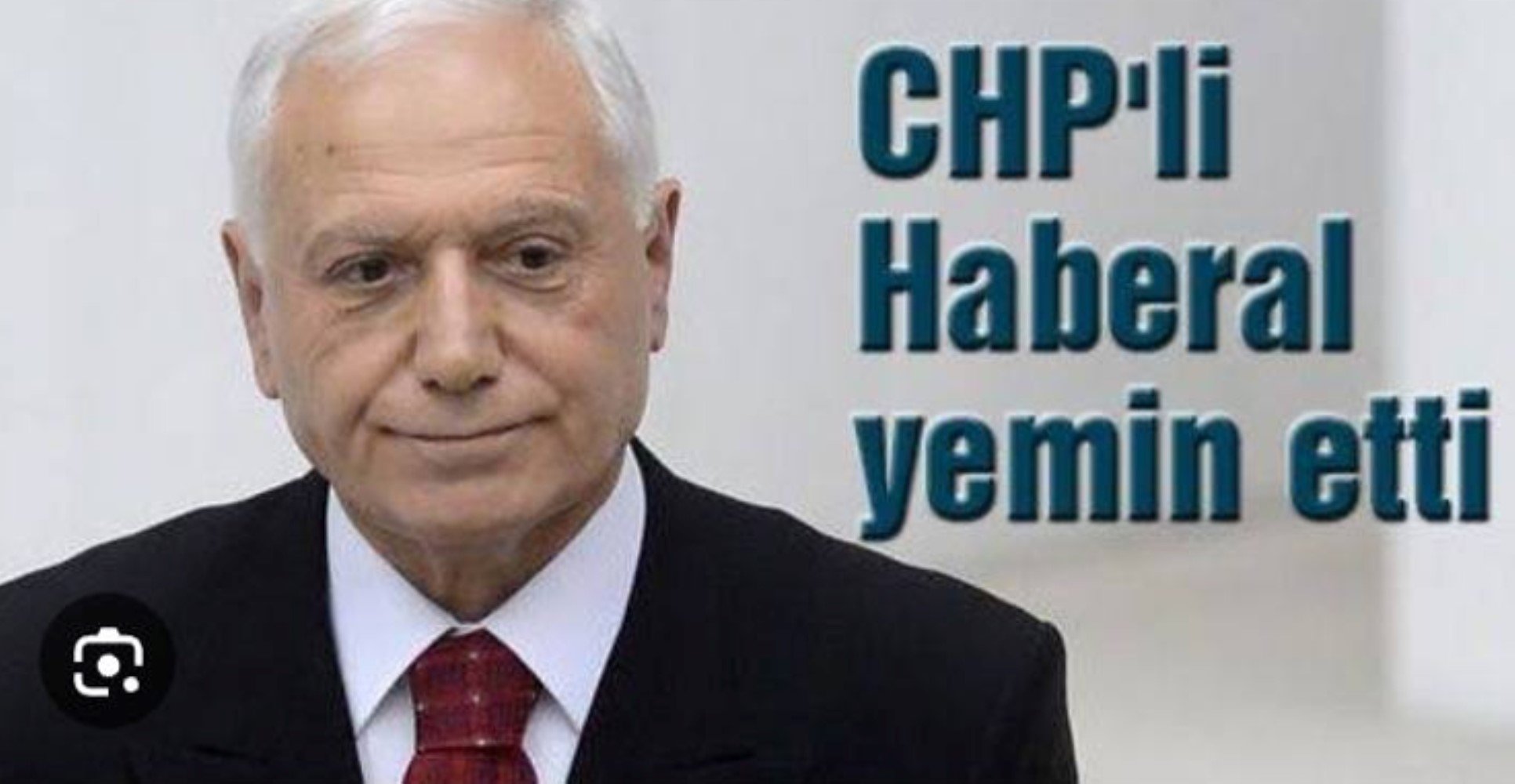
If you remember: There were some famous figures arrested with the Ergenekon and Balyoz conspiracies. These were elected as deputies from the CHP list. Like Mehmet Haberal and Mustafa Balbay. These names were elected as deputies while being tried. The trial should have been stopped and they should have been released. The elected deputies should have gone to the assembly and taken their oaths. The TBMM Speaker should have taken an attitude like Koraltan did in 1957. But he did not do so.
As in the cases of Tuncay Özkan and Engin Berberoğlu, the AKP lifts the immunity of an opposition deputy with an accusation such as espionage, coup-plotting, attempting to overthrow the government, or membership in a terrorist organization, and arrests them. It is known to us that the trial panel in Ergenekon and Balyoz-type cases was recruited from the Fethullah organization. The trials were continuing with the defendants in detention. Of course, with fabricated evidence. Even though the person being tried had acquired immunity when elected as a deputy, their release was constantly prevented. Let us remember: Haberal and Balbay's participation in the TBMM could only be possible with a delay of nearly two years for this reason.
The government, instead of preserving the law arising from the parliamentary membership of the person elected as a deputy, tries not to let them into the assembly. After 2007, this attitude has almost become routine.
In 2016, a temporary article was added to the Constitution. It was an apparently well-intentioned initiative. The CHP management was almost deceived by the government.
On this date, immunity was lifted for 810 files belonging to 154 deputies that had reached the TBMM Presidency. The collective lifting of immunities for once and in a way contrary to the constitution was a disaster. By supporting this, the CHP Chairman signed an unbelievable mistake in Turkish political history.
Selahattin Demirtaş participated in the 2018 presidential election from prison and finished the race in third place. This situation is an event that should be taken into account in the literature of Turkish political life.
After the incident of Kocaeli deputy Dr. Gergerlioğlu being detained in the TBMM, the most serious regression regarding deputy immunity is the prevention of the participation of Workers' Party of Turkey Hatay deputy Şerafettin Can Atalay in the assembly despite the Constitutional Court decision.
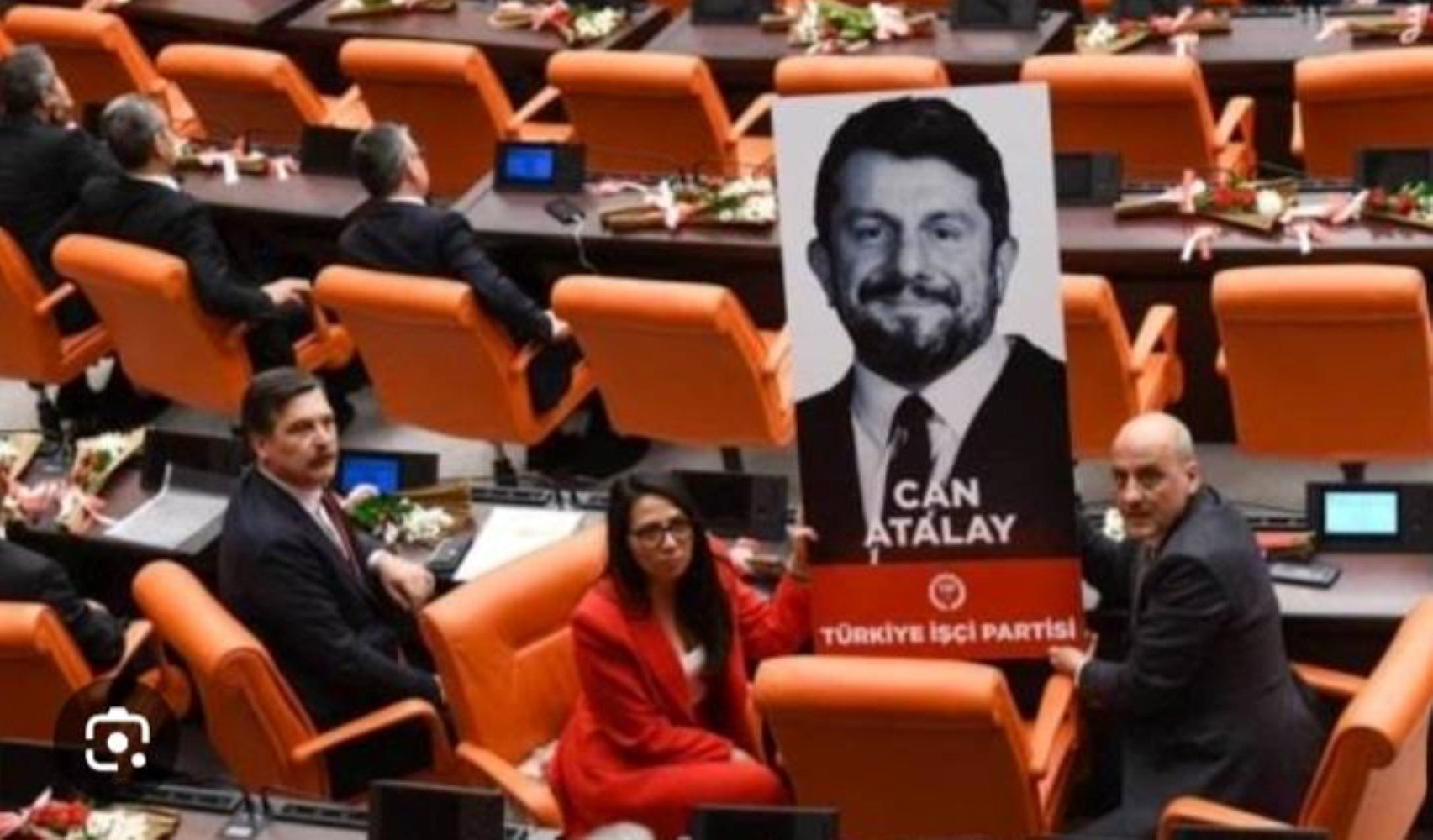
The attitude of the Court of Cassation (Yargıtay) on this issue has been worrying. The principles of the supremacy and binding nature of Constitutional Court decisions have been acted against. To express it more clearly, it would not be wrong to say that the government's attitude has remained behind 1957 and even 1909.
MY EXPECTATIONS REGARDING THE ASSEMBLY
Turkey's new regime is based not on the separation of powers but on the supremacy of the executive.
In today's Turkey, a member of the legislative assembly can be thrown out of the assembly and arrested with a setup. They can be tried for a long time. Even if high judicial bodies give decisions that require their release, they may not be released. How did Turkey come to this worrying situation?
The decisions of the constitutional judiciary that bind all state organs have been effectively eliminated. The most important development was regarding the status of legislative assembly membership.
Let us remember the scenes while the 2017 constitutional amendments were passing through the TBMM general assembly: The ruling party and its allies in the Grand National Assembly of Turkey were voting for these. The powers that had existed since the establishment of the TBMM—abolishing the government, removing the prime ministry, commissioning the government, dismissing it, interpellation motions, and supervising the executive with written-oral motions—would no longer exist. Instead, executive power was being delegated to a single person: The President.
I think the assembly majority was not aware of what it was doing while approving the constitutional amendment. All the balances that had been filtered through Turkey's historical experiences were eliminated.
Whereas, in our political history, the primary power has always been the Grand National Assembly of Turkey. Our assemblies did not even give the powers they took from Sultan Abdülhamid to Atatürk. See the 1924 constitution negotiations.
Today's political regime is in a different place from 1920, 1961, and 1982. It is the Grand National Assembly of Turkey that founded our state. The assembly that founded the state was also the main organ of the regime. It should be so again. This is my wish.
Most Read

Striking picture for Özgür Özel's 'New Party'

Özgür Özel gives a dated response regarding the number of resignations

Forest fire in Antalya brought under control

The PKK opening and Özgür Özel’s path!..

How did the newspapers view Özgür Özel's farewell to the CHP?

He killed his wife by slitting her throat: Their children witnessed the moments

What did the CHP do?

Özel’s new party move in the world press

The New CHP, against CEHAPE

Fire at TUSAŞ engine factory in Eskişehir under control