



REGARDING THE CONTENT OF THIS ARTICLE
In the CHP, the position of Secretary-General is an important role responsible for the party organization. During the single-party era, a figure trusted by Atatürk or Inönü would be appointed to this post. Often, the Minister of the Interior would serve as the party's Secretary-General.
After the transition to multi-party political life, the Secretary-General, like the party leader, began to be elected by the Grand Congress. This procedure provided the Secretary-General with significant political power. Later, the party bylaws were amended. The Secretary-General began to be elected by the Party Assembly. This was intended to ensure that the Secretary-General could work in harmony with the party leader. This procedure is still used today.
This article will examine the background of two prominent politicians who served as Secretary-General of the Republican People's Party and later ran for the party leadership against İsmet İnönü.
THE EMERGENCE OF NEW CADRES IN THE CHP IN THE 1950S
The early cadres of the CHP came from the National Struggle. These were military and civil service cadres. A third source consisted of intellectuals who had existed since the Constitutional Era. Some of them joined the Kemalist elite while the war was still ongoing, and others joined after the Great Victory. Examples include Yusuf Akçura, Ziya Gökalp, Ahmet Ağaoğlu, and Seyit Bey.
Gazi Pasha established a power bloc around himself by balancing these segments. This could also be considered an alliance. The fundamental reference point of this alliance was Gazi Mustafa Kemal Pasha. Gazi Pasha was the great savior of the Turks.
When İsmet Pasha made the decision to transition to multi-party life in 1945, he brought the petty-bourgeois elites to the forefront against the elites of the Democrat Party.
Some of these individuals were faculty members who had studied and earned their doctorates abroad. Others were part of the second generation of secular republican cadres.
I would like to provide some examples: Prof. Nihat Erim, Prof. Turhan Feyzioğlu, Prof. Turan Güneş, Altan Öymen, Bülent Ecevit, Kasım Gülek, Metin Toker, and Muammer Aksoy.
In the face of successive electoral failures, the idea that power could not be attained through the traditional elitist political approach began to prevail among the second generation of CHP members. A young faction with high expectations had emerged. However, the party's leadership cadre still came from the traditional elite. The conflict would arise between these two segments.
HOW DID KASIM GÜLEK BECOME SECRETARY-GENERAL?
The reason for Kasım Gülek's appointment as Secretary-General lies in the party bylaws. In 1950, the position of deputy chairman was abolished. The Secretary-General, like the Chairman, began to be elected by the Party Congress. In my opinion, this choice was not correct. Because the Secretary-General derived their political power from delegate votes, they functioned like a second chairman.
If someone other than İnönü had been the party chairman, a conflict between the chairman and the secretary-general would have been inevitable.
Later, the bylaws were amended. The secretary-general began to be elected by the Party Assembly. İsmail Rüştü Aksal, Kemal Satır, and Bülent Ecevit were elected in this manner.
This new method ensured a degree of harmony between the chairman and the secretary-general. Who would become the secretary-general began to depend on the balance between factions. The result mostly changed depending on the chairman's dominance within the party assembly.
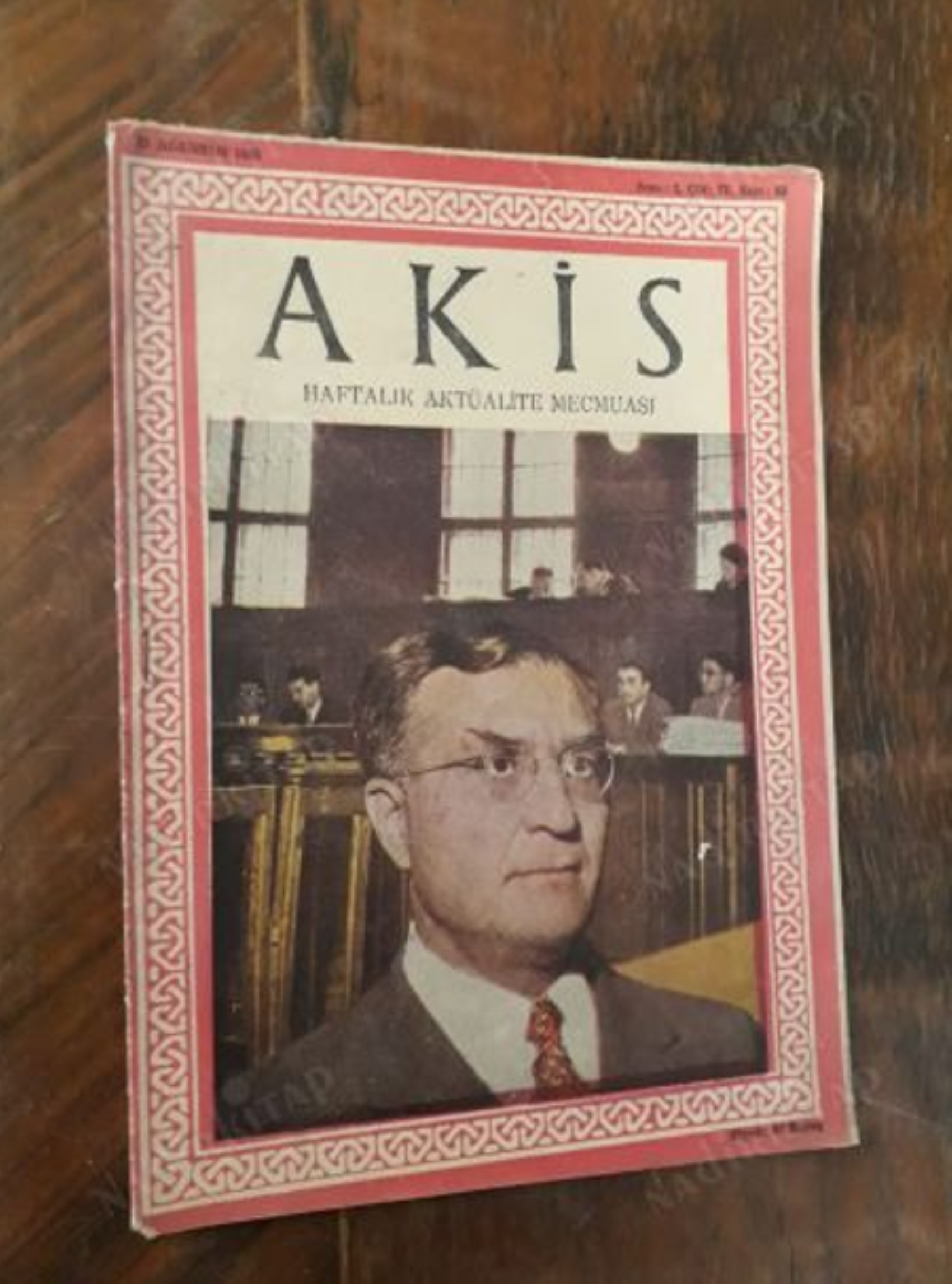
KASIM GÜLEK'S YEARS AS SECRETARY-GENERAL: 1950-1959
Kasım Gülek had served as a member of parliament and a minister during the single-party era. Despite becoming the party's secretary-general in the 1950s, he was unable to get elected as a member of parliament until 1957.
During the years when the DP (Democrat Party) significantly intensified its oppressive policies, he was sentenced to prison on the grounds that he had held a political meeting. The DP had restricted the freedom of assembly to the greatest extent possible, reducing political activities to the level of closed-door party meetings. The most bizarre story regarding Gülek's activities occurred when he chatted with citizens while traveling by ferry to Giresun; this was deemed a political activity, the ship was stopped in Sinop and pulled into the harbor, and the main opposition party's secretary-general was detained, arrested, and sentenced to one year in prison. (June 15, 1956)
In other words, toward the end of the 1950s, the secretary-general of the main opposition party could be arrested and convicted on the grounds of engaging in political activity. The formula found by the ruling power was to cite violations of the law on meetings and demonstration marches.
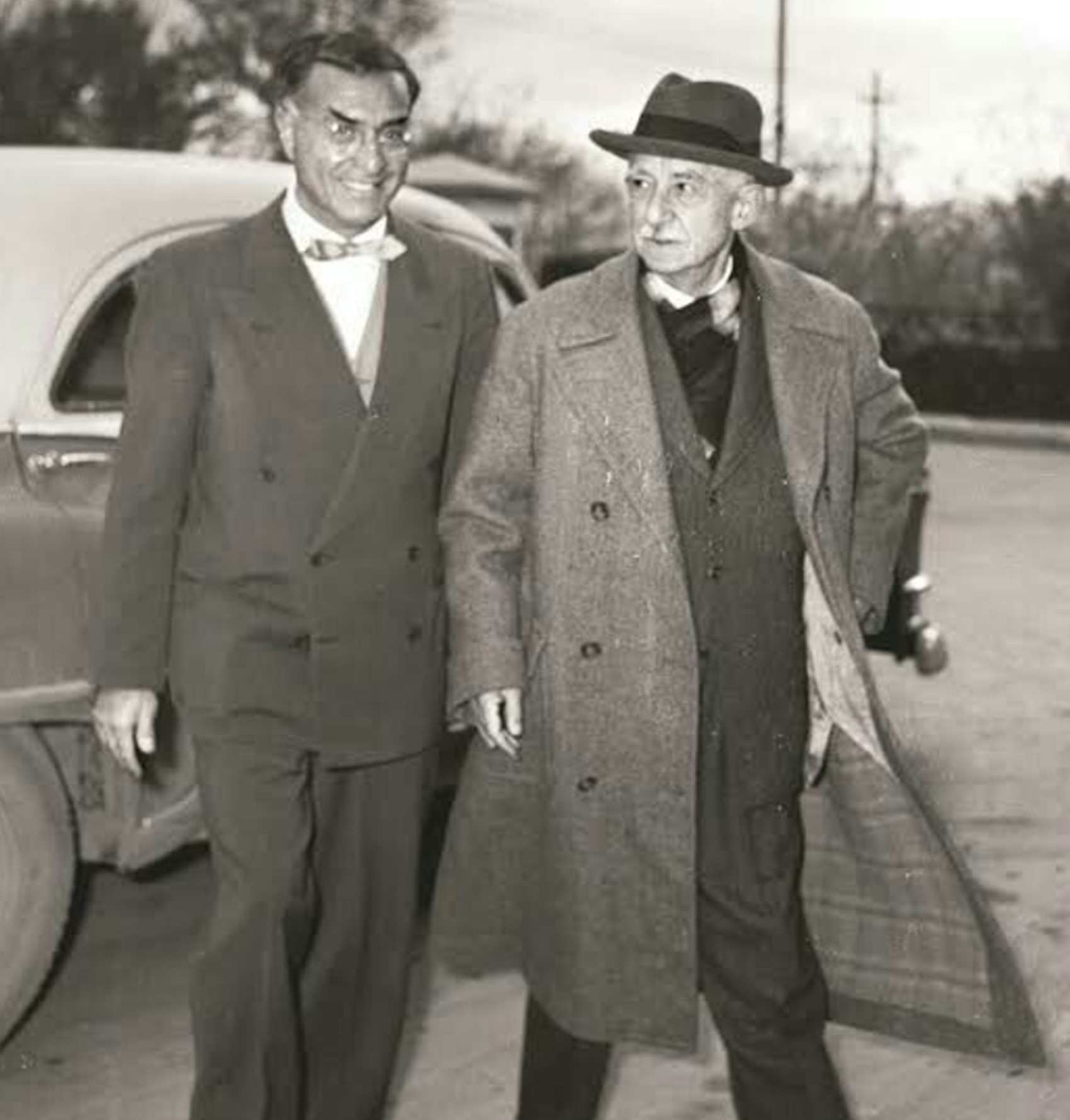
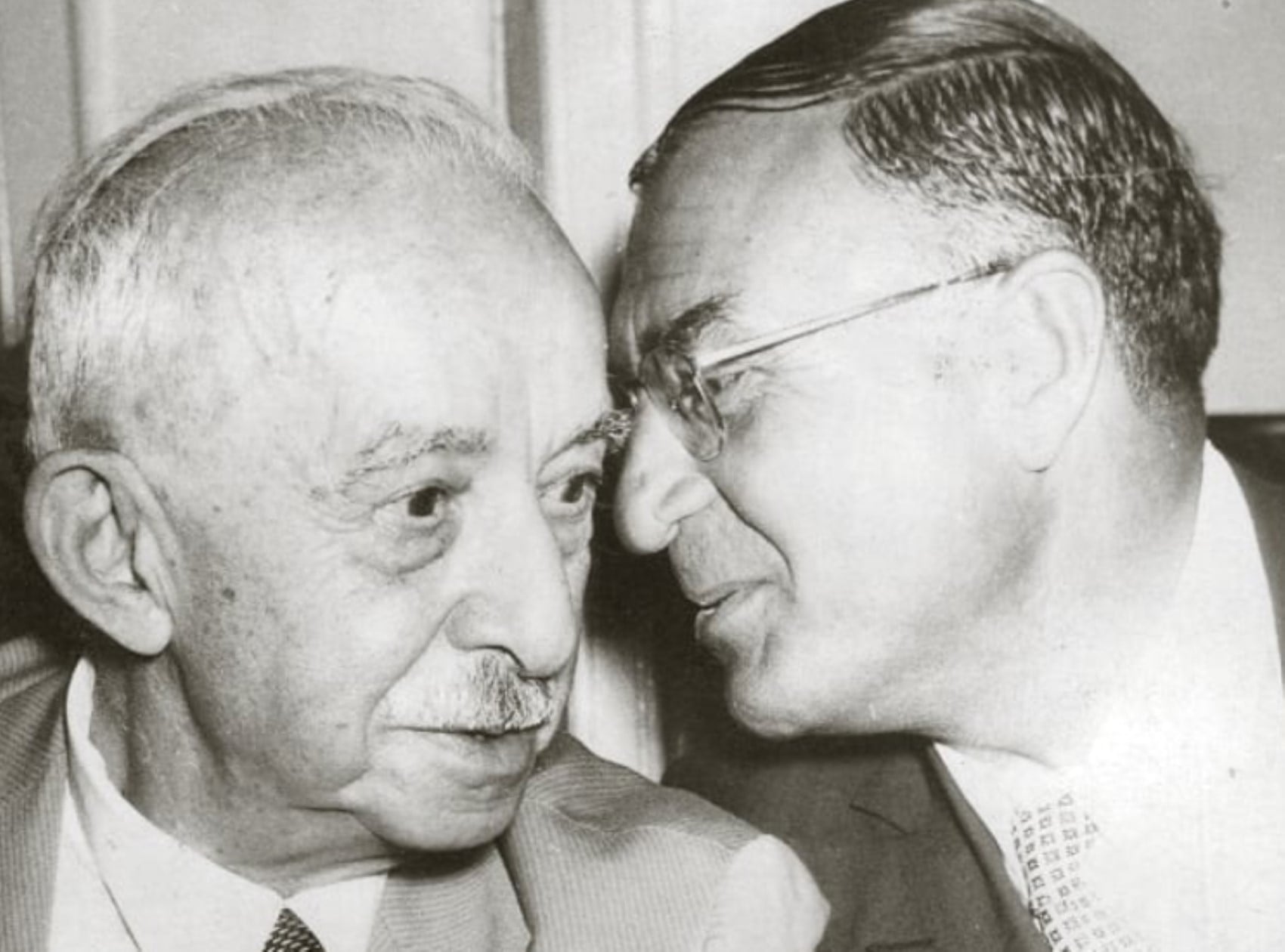
There are many photographs of Kasım Gülek alongside İsmet Paşa, the undisputed leader of the party. He was considered one of the strongest candidates for party chairman after Inönü. He was one of Inönü's protégés.
He had studied at Galatasaray High School for a time before transferring to Robert College, from which he graduated. He received his education and earned his doctorate in the United States.
During the years Kasım Gülek was CHP secretary-general, "US patronage in the Free World" was unquestionable. He held high prestige in NATO and in the newly forming Europe. He was a well-known figure.
Gülek presented the profile of a politician who favored the US and the North Atlantic Alliance on international platforms. This situation was consistent with Cold War balances. There were differences in tone between them; ultimately, however, both the government and the opposition were pro-US.
Gülek was seen by the DP electorate as being overly Western. When he ran as a candidate from Bilecik in the 1951 by-elections, DP members reproduced and distributed his graduation photos from Robert College. In the pictures, Gülek was wearing a gown. The DP members spread rumors that he was a priest. There was even widespread propaganda claiming he was uncircumcised. In the end, Gülek was not elected as a deputy.
Gülek was not a typical CHP elite. He had two striking characteristics: his education and the fact that his style as a politician was overly Western (American).
Before May 27, his relationship with İsmet Pasha had soured. Despite this, he entered the Constituent Assembly. He became one of the CHP representatives. He was elected as a deputy for Adana in 1961 and 1965. It would not be accurate to say he was engaged with any of the factions within the party. Despite all the objections against him, he was always a political actor within the party elite.
WHAT WERE THE CHP'S DEMANDS IN THE 1950S?
In the 1950s, the CHP remained under the crushing pressure of the DP majority. The DP government blocked every attempt by the CHP to become an alternative to power, using a majoritarian understanding of democracy. It linked this policy to the national will.
It restricted even the most fundamental areas of liberal democracy, especially regarding basic rights and freedoms. The DP's regulations made it almost impossible for parties to exercise their rights to hold meetings, demonstrations, and freedom of expression.
However, these freedoms are indispensable elements of a democratic regime. At its 14th Grand Congress (1959), held before the May 27 revolution, the CHP adopted very important principle decisions. These are known in our political history as the Declaration of First Targets. The declaration was announced to the public by Prof. Turan Güneş. The content of the declaration can be explained by a few basic principles: the rule of law, a democratic state, justice in representation, the administration's adherence to the law, and guarantees for the opposition.
WHY CAN'T THE PARTY COME TO POWER? WHAT IS THE CORE ISSUE?
The 1961 Constitution largely aligned with the expectations of the CHP at its 1959 convention. Only one thing was missing: the CHP could not come to power. Emerging as the leading party in elections was not enough. There has been no change in this situation since the elections of October 15, 1961. The CHP has never been able to come to power alone.
The fate of the governments formed by Inönü in the 60s and Ecevit in the 70s was similar: failure and an inability to govern.
The reasons and consequences of this perception are truly worth reflecting upon. The CHP was able to form coalition governments. The performance of these governments caused the image of the CHP to deteriorate in the eyes of the voters.
WHAT DID İSMET PAŞA SAY TO ABDİ İPEKÇİ?
Before the 1965 elections, İsmet Paşa gave an interview to Abdi İpekçi at Milliyet. In this interview, he stated that the CHP, as a statist party, was a party of the "left." Inönü's statement was fundamentally related to development economics.
The left had been defined by the Democrat Party government as a national security issue. It meant the danger of communism; being a leftist was synonymous with communism. It even meant treason.
The Democrat Party and the Justice Party used this theme extensively during the Cold War. The danger of communism was a very productive tool for the Turkish right. The function of being anti-left in politics to cover up everything was perfect.
Until the Soviet system collapsed, "Turkish-style McCarthyism" used these concepts to hide the class issue. There were communists. They were enemies of the state, property, and sacred values. It was necessary to be vigilant against these dangers. It was necessary to form a front around a libertarian party (libertarianism: meaning the defense of capitalism). Demirel's Justice Party was the perfect fit for this.
WHAT WAS INÖNÜ'S POSITION WITHIN THE PARTY IN THE 60S?
In the 1960s, the former National Chief Inönü, who had reached his 80s, was a political party leader who had been elected chairman at party conventions since 1946. (İsmet İnönü: 1883-1973)
Thanks to his historical charisma, he maintained his position as the party's undisputed chairman.
However, there were names considered worthy of the CHP chairmanship should the position become vacant due to natural causes from the mid-1950s onwards; the two most frequently mentioned among these were Prof. Nihat Erim and Prof. Turhan Feyzioğlu.
WHY COULD NO ONE RUN AGAINST INÖNÜ?
Inönü had been elected chairman after Atatürk at the first extraordinary convention of the CHP and was declared the permanent chairman and National Chief.
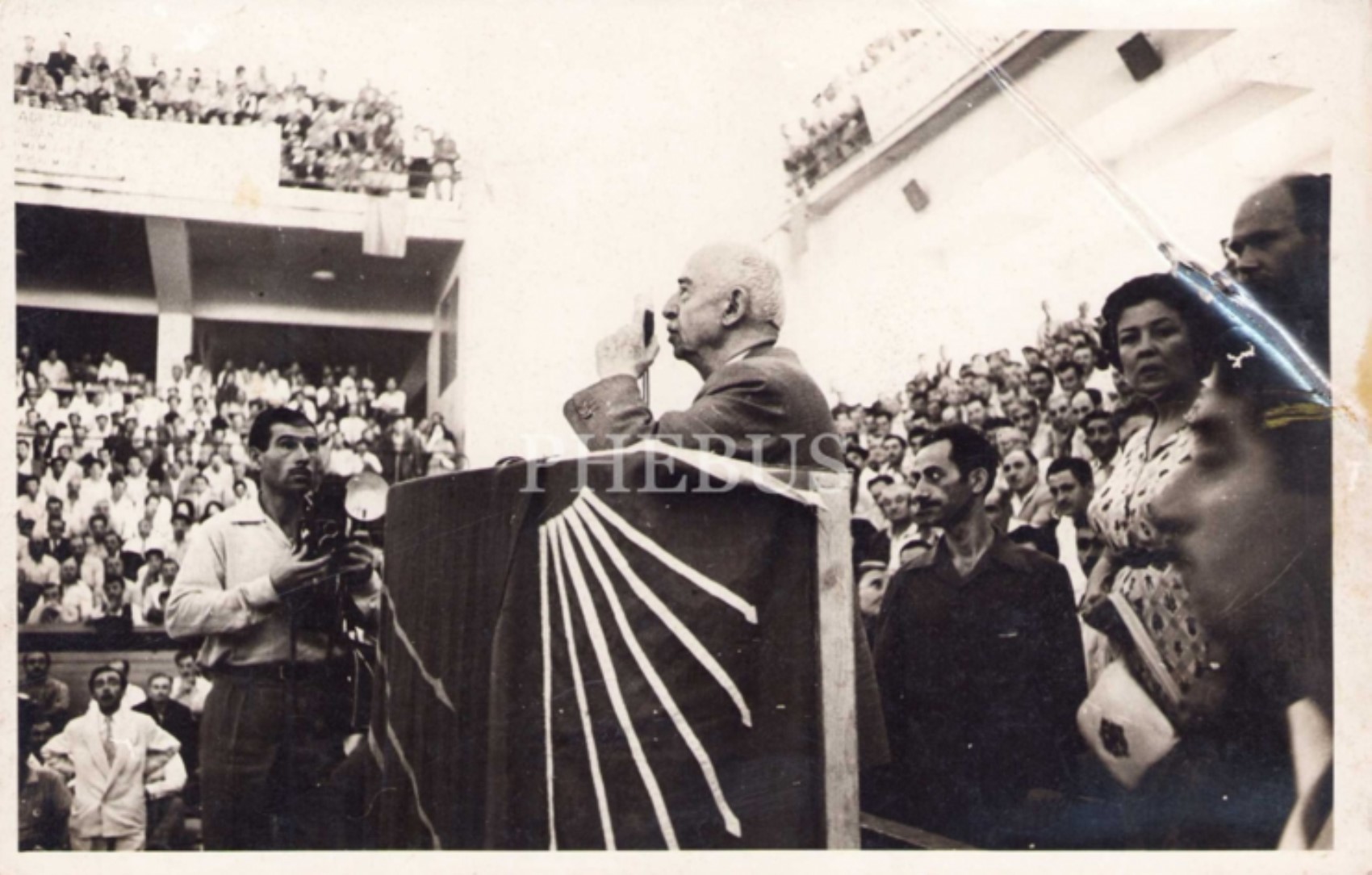
This status continued until 1946. In subsequent congresses, he was elected chairman by the votes of the delegates. No one would run against Inönü. Inönü was the second man. As long as Inönü did not step down or pass away, he was the chairman. Inönü was the hero of Lausanne and the commander of the Western Front. Even if not to the extent of Atatürk, he possessed a special charisma.
Candidacy for all other positions in the party was possible, except for the chairmanship. That belonged to İsmet Paşa. The fundamental reason for this was respect for Inönü's greatness.
Of course, there were those who considered themselves worthy of replacing İnönü. However, they were waiting for the CHP chairmanship to become vacant rather than challenging İnönü directly.
For this reason, Kasım Gülek's candidacy for chairman against İnönü at the 18th Grand Congress is significant in terms of Turkish political history.
Kasım Gülek had served as the party's secretary-general from 1950 to 1959 and had pursued a dynamic opposition policy. Gülek also possessed a certain charisma. He stood right next to İsmet Pasha as if he were the second chairman.
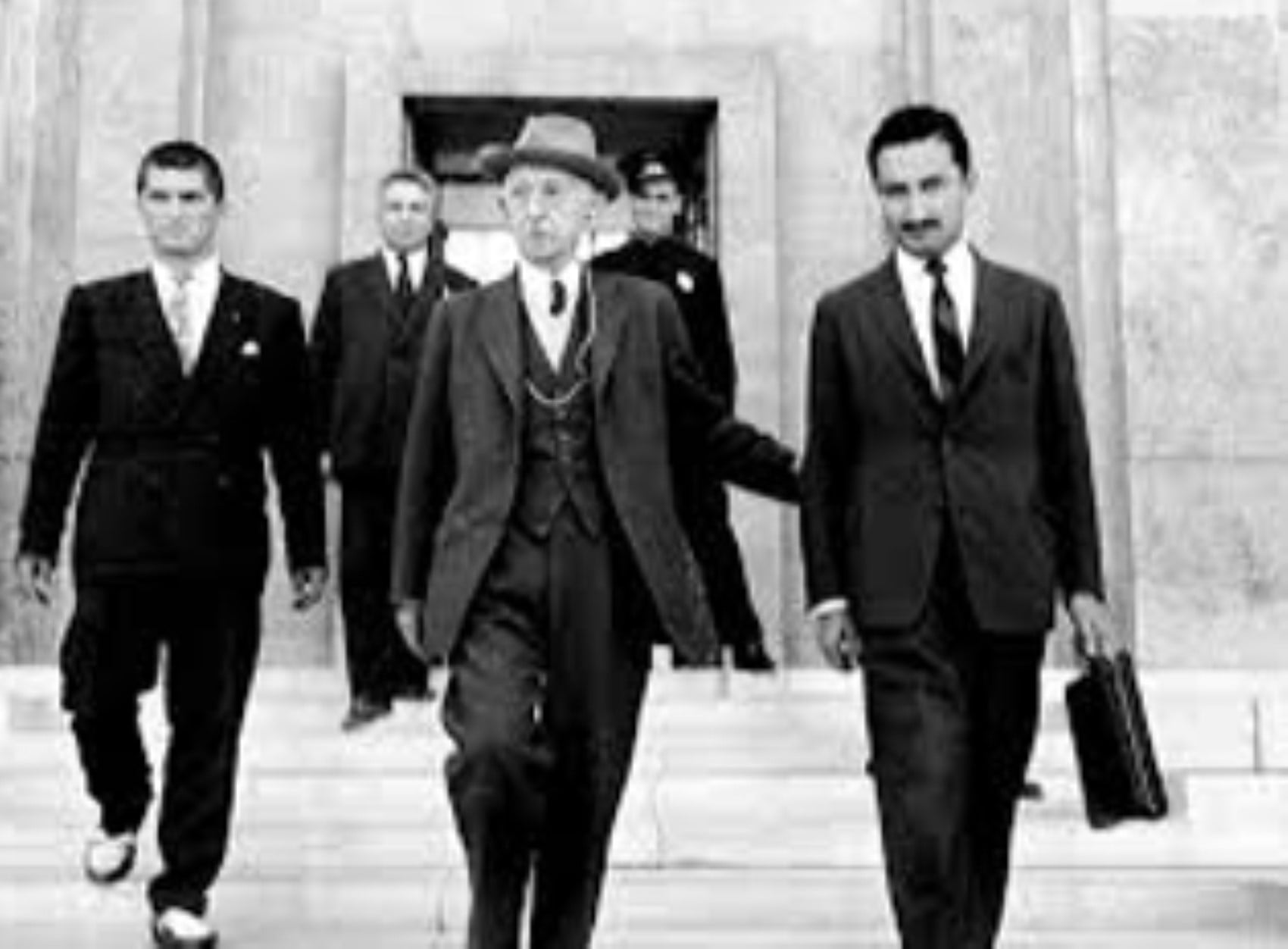
ECEVİT'S ENTRY INTO POLITICS AND HIS PARLIAMENTARY CAREER
Ecevit's entry into politics was somewhat coincidental. After Robert College, he and Rahşan Hanım went to London (in the late 40s). They found assistant positions at the Turkish Embassy's press attaché office. The couple lived on a limited income. Ecevit also went to the US twice on scholarships. His father was Fahri Ecevit, a forensic medicine professor who had also served as a member of parliament. His mother was a painter, Nazlı Ecevit. Nazlı Hanım had kinship ties to the Ottoman Palace through Tevfik Pasha. Until 1957, he worked as a colleague of Altan Öymen and Metin Toker at the newspapers Ulus, Yeni Ulus, and Halkçı. He wrote columns, which were mostly related to literature and art.
After Robert College, Bülent Ecevit attended language and literature programs at higher education institutions in Ankara and London but did not complete any of them. He did not have a higher education degree. This was always used against him by the right-wing. In fact, during the 2000 presidential election, Nazlı Ilıcak belittled him by saying, "Let's change the Constitution so that Mr. Bülent can become president."
In 1957, with the support of Metin Toker, he was elected as an Ankara deputy for the first time. Metin Toker had wanted him to be nominated in his place, as he wished to continue his career in journalism.
BÜLENT ECEVİT: CHP REPRESENTATIVE IN THE CONSTITUENT ASSEMBLY AND MINISTER IN İNÖNÜ GOVERNMENTS
Ecevit was elected as a member of parliament from the CHP at a young age during a period when the Democrat Party was increasingly ramping up its pressure: the 11th term of the Grand National Assembly of Turkey. He became a CHP representative in the 1961 Constituent Assembly. He was re-elected as a member of parliament in 1961 and 1965.
İsmet Pasha must have seen something special in Ecevit, as he appointed him as Minister of Labor. Trade unions had existed in Turkey since 1952 (even if they were 'yellow' unions like Türk-İş), but there was no right to strike. Ecevit is the politician who brought the right to strike to the history of the Turkish working class. The 1961 Constitution had introduced the rights to strike and lockout, but the law was enacted during Ecevit's tenure as minister. The Workers' Insurance hospitals also began to develop during Ecevit's ministry. For example, I have seen photographs of him at the opening of the Paşabahçe SSK Hospital.
The reason for Ecevit's growing charisma within the party was that he was a writer, a poet, and an effective speaker. His oratory skills were strong.
When he was elected as an Ankara deputy in 1957, no one could have predicted that he would one day topple İsmet Pasha to become the third chairman of the CHP. He was a young, hardworking deputy who was sensitive to social issues.
The history of Ecevit becoming an influential politician within the CHP chronologically overlaps with the practices of the 1961 democracy. This is connected to the dynamics of Turkey's social transformation.
DEMOCRATIC LEFT? OR SOCIAL DEMOCRACY?
In February 1961, two parties were founded. One was the Justice Party, which sought the rule of the capitalist class, and the other was the Workers' Party of Turkey, which claimed to represent the oppressed and exploited classes.
The CHP had to find a place for itself within this antagonism. The demagogic two-party system of the 50s was no longer functional. New actors and ideologies were on the rise in politics.
According to the CHP's young cadres, the party should have been a social democratic party, standing against capitalist parties. In the West, social democracy meant parties affiliated with the Second International that opposed the dictatorship of the proletariat. Their names could be social democratic or socialist parties. Their political stance was against Christian democrats, liberal democrats, and communists.
Social democratic parties had no fundamental issues with the achievements of bourgeois revolutions. They had issues with the order. This meant a difference in the paradigm of production and distribution.
In Turkey, however, there was no bourgeoisie or proletariat class that had emerged through its own dynamics. In a country where capitalism had not developed, neither liberal democracy nor social democracy was possible.
A group of young CHP members who gathered around Bülent Ecevit wanted to reinterpret the party's principles of statism and populism according to the 'conditions of the era.' Taking Turkey's socio-economic reality into account, they preferred the concept of 'democratic left' instead of social democracy. Ecevit, in particular, was insistent on this matter.
Bülent Ecevit would explain why this approach should not be expressed with the terms social democratic or socialist in his book 'Left of Center,' even though the CHP was a member of the Socialist International. In my opinion, Ecevit's distinction was exaggerated. The Turkish social democratic party was a party organized by waging a national war of liberation in an underdeveloped country. Emphasizing this would have been sufficient.
WHAT DOES 'LEFT OF CENTER' MEAN UNDER TURKISH CONDITIONS?
Ecevit's 'left of center' idea had various dimensions. First and foremost, the left of center added a new meaning to Populism, one of the party's Six Arrows.
While İsmet Pasha based the 'left of center' on populism, statism, and secularism in 1965, we do not see an emphasis on secularism in Ecevit's left-wing rhetoric.
This stance is consistent with the expression he put forward while forming a coalition with the MSP in 1974, stating that 'we must win over religious citizens to the regime.' Likewise, Ecevit's concept of 'secularism respectful of beliefs' during his DSP years shows that his understanding of the foundations of the Turkish revolution remained superficial. I would like to remind you that Ecevit also described the Ottoman state order as secularism. He mistook the religious autonomy in community statutes and the Ottoman millet system for secularism. These were grave errors for someone who would go on to chair the CHP. While on the subject, I cannot help but recall that Kılıçdaroğlu also made an incredible statement claiming that 'secularism is not in danger' at a time when secularism had been completely hollowed out.
In my opinion, Atatürk's populism was—when necessary, and indeed most of the time—'for the people, despite the people.' The notes in his Karlsbad notebooks demonstrate his radical revolutionary understanding. Ecevit's populism, however, is left-wing populism. The right-wing version of this was implemented very successfully by the Democrat Party in the 1950s.
THE 18TH CHP CONVENTION (1966)
The 18th CHP Convention was held between October 18-22, 1966. The convention's agenda was significant. It also yielded important results in terms of the search for new leadership.
It is useful to examine the process leading up to this convention:
The CHP expected to win the 1961 elections. Expectations were very high. The result was a disappointment: it could only receive 37% of the vote. This result meant 5% fewer votes than in the 1957 elections. It was thought that the three coalition governments that İsmet Pasha was forced to form in succession were established under the imposition of military tutelage. This could perhaps only be said for the first one. And even that is not entirely true. The National Unity Committee wanted to transfer power to the two major parties together. The government was formed with the Justice Party. In the others, Inönü sacrificed himself to save the regime. Inönü's last two governments were formed with parties other than the AP. In the last one, they practically forced Inönü to form the government. When the dates reached 1965, İsmet Pasha had practically wanted to tell Demirel, 'You form the government now.' Demirel was the newly elected chairman. He was not a member of parliament. This is the meaning of the government formed under the presidency of Kayseri Senator Suat Hayri Ürgüplü. This was an election government.
Elections were held in the autumn of 1965. Power was presented to Süleyman Demirel on a silver platter with the magnificent contributions of the USA. Although there were surprises such as the TİP entering parliament, the capitalist class had come to power once again.
Meanwhile, in the one-third renewal of the Senate, the National Assembly by-elections, and the local elections (1963), the CHP was always the party in decline.
In 1965, the electoral law was amended. All parties except the Justice Party (AP) supported the new law. The election was held using the 'national remainder system,' a system highly consistent with the principle of justice in representation. The goal was to prevent the rising Justice Party from gaining power alone. Despite this, the Justice Party, led by its new chairman Demirel, won the elections and reached a majority sufficient to form a government on its own.
In the summer of 1966, partial Senate and National Assembly renewal elections were held. The rise of the AP and the decline of the CHP became evident.
The CHP was not a party that could be brought to power by the broad masses of voters. It always emerged from elections as the second party. Demirel's golden years had begun. The public was not entrusting power to the party that founded the state and democracy. After the 1965 elections, the reasons for this began to be feverishly debated within the party. According to some, the cause was the ignorance of the public. A significant segment also believed the issue lay in the party's structure and rhetoric. Doğan Avcıoğlu had explained this situation in Turkey by stating, 'the people are following the enemies of the people.'
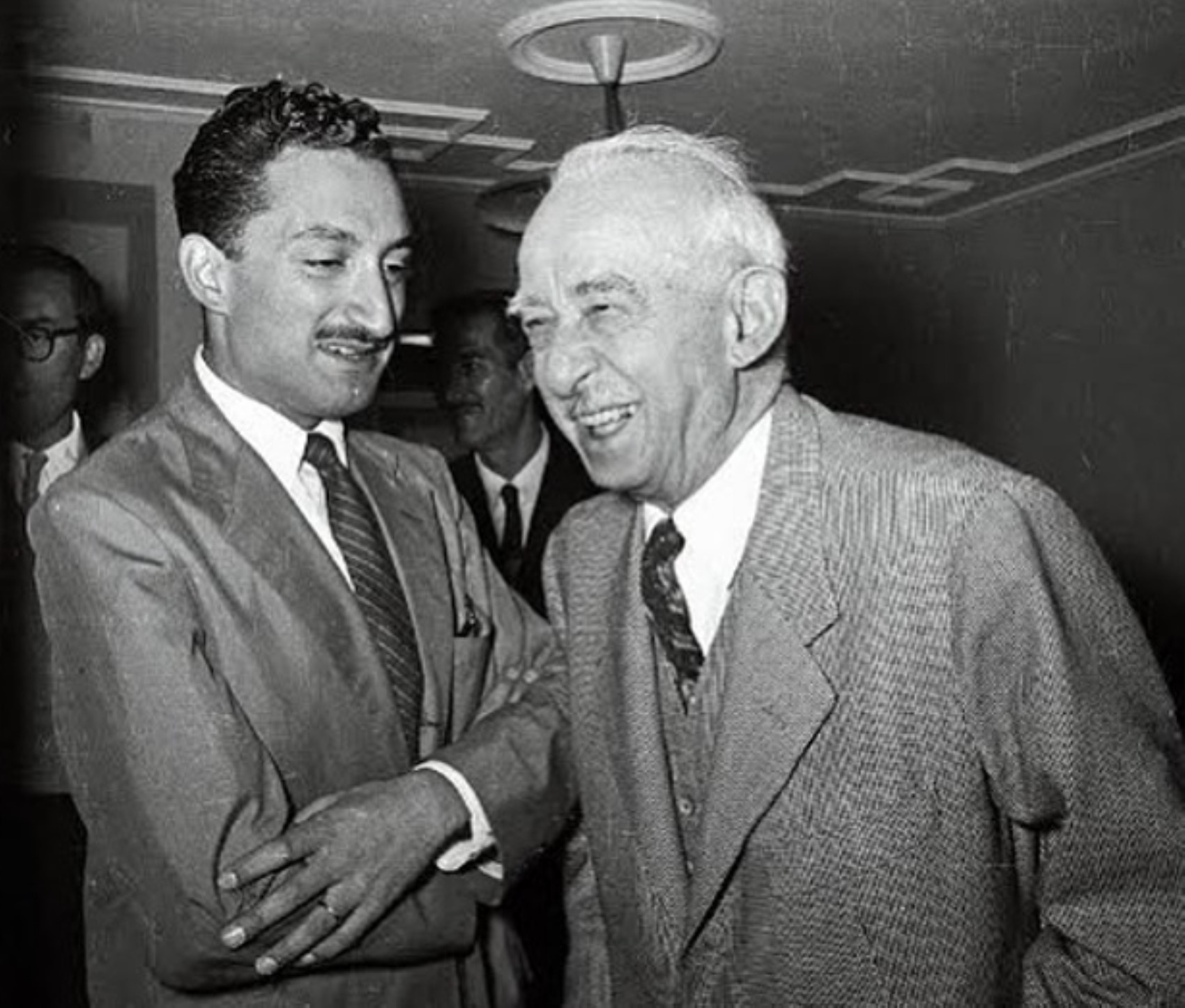
GÜLEK BECAME A CANDIDATE FOR CHAIRMAN AND ECEVIT FOR SECRETARY-GENERAL AT THE CONVENTION
Kasım Gülek and Bülent Ecevit, who are discussed in this article, became candidates for chairman against the 'Second Man,' Inönü (Gülek in 1966, Ecevit in 1972). Kasım Gülek's candidacy in 1966 was not realistic; it was a challenge. He lacked a meaningful cadre or delegate support. While the 230 votes (20%) he received were noteworthy, they did not represent Kasım Gülek's actual power within the party.
The conservative wing, unhappy with Inönü's support for the 'center-left' policy, cast their votes for Kasım Gülek because they had no other candidate capable of toppling Inönü. This was a protest vote. Kasım Gülek's years as secretary-general were in the past. At the same convention, Ecevit became secretary-general. He had supporters. The 'Ecevitists' now believed they had a roadmap to come to power.
Ecevit replaced Dr. Kemal Satır as secretary-general. Conservative Atatürkism lost its influence in the party administration. He further increased his power within the party organization until the March 12 interim regime.
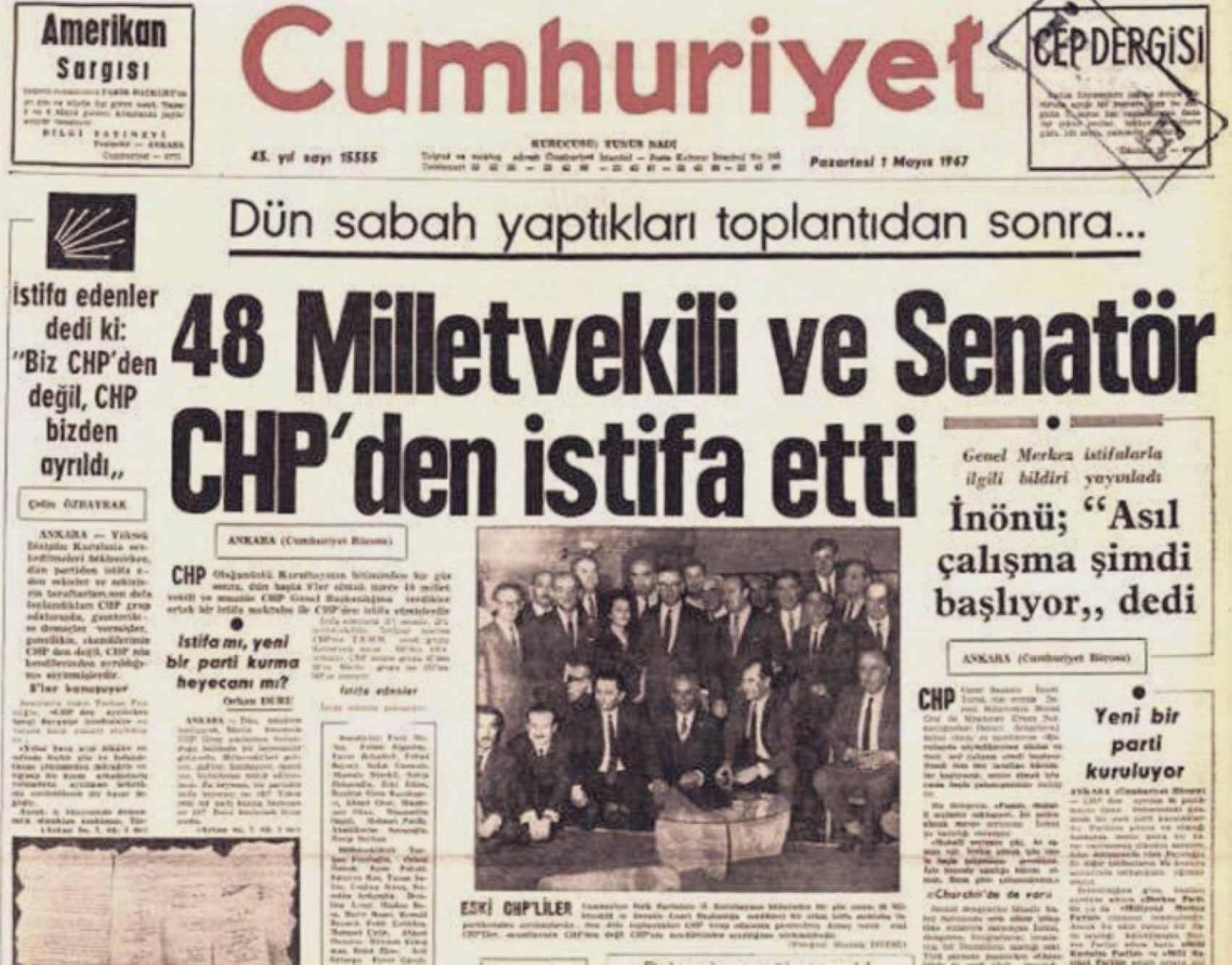
THE DEPARTURE OF CONSERVATIVE ATATÜRKISTS FROM THE PARTY
In 1967, a fairly large group of deputies and senators (a total of 48 parliamentarians) led by Feyzioğlu left the party after failing to block Ecevit's rise. They founded the Reliance Party (Güven Partisi).
Although these defections initially reduced the party in terms of numbers, they made it homogeneous in terms of direction. The 'Left of Center' became the dominant force within the party.
The fact that the faction that broke away from the CHP had little support in terms of the general vote would be seen in the 1969 elections (6.5%: 15 deputies).
At the 1972 Party Congress, held under the conditions of the March 12 interim regime, former secretary-general Bülent Ecevit ran against Inönü. Ecevit emerged victorious from the congress. A short time later, İsmet Pasha resigned from the party and his parliamentary seat. He became a natural member of the Senate of the Republic.
THE TEMPORARY EXPULSION OF KASIM GÜLEK AND NİHAT ERİM FROM THE CHP (1962)
İsmet Pasha formed three different governments between 1961 and 1965. During his governments, there were two coup attempts led by Talat Aydemir. The most important issue from a diplomatic perspective was Cyprus. Inönü was trying to create a balance both domestically and internationally.
During this period, Kasım Gülek and Nihat Erim, who disagreed with Inönü on the policies being implemented, were given a 'temporary expulsion from the party' penalty. (Penalty: temporary suspension for 1 year, inability to be a candidate, date: December 10, 1962)
WHAT DOES KASIM GÜLEK REPRESENT IN THE CHP?
Throughout his long life, Kasım Gülek held various positions within the party, including member of parliament, minister, and secretary-general. Although he tried to create an anti-elitist image within the party, Gülek was an elite, despite his atypical characteristics. His rivals in the 50s were figures from the same front but with different backgrounds.
When the "left-of-center" debate flared up between 1961 and 1965, Gülek drew closer to the conservative cadres. When the Ecevit faction gained power at the 1966 party congress, he left the CHP. However, he did not join the Reliance Party (Güven Partisi). He was also against the left, but for his own reasons.
THE APPOINTMENT OF KASIM GÜLEK AND NİHAT ERİM AS QUOTA SENATORS
Ecevit became secretary-general in 1966 (the congress was held from October 18-22, 1966). The Ecevit faction began to dominate the party. In the period leading up to the 1972 congress, Ecevit's team grew even stronger.
The conservatives gradually left the party. They interpreted Kemalism as Atatürkism. This was a status-quo-oriented, right-wing approach compatible with capitalism. Although they defined themselves ideologically as being in the center, their ideological and political position was "right-wing."
In military circles, this manifested as the March 12 and September 12 mentalities. Conservative Atatürkism provided ideological legitimacy and personnel for the interim regimes.
Kasım Gülek, like Nihat Erim, was appointed as a quota senator by Cevdet Sunay (November 13, 1969). Nihat Erim resigned from the CHP and his parliamentary seat to become the prime minister of the interim regime government. Cevdet Sunay appointed him as a quota senator (1971). In my opinion, the underlying rationale for these two appointments is the same.
18TH CONGRESS: ECEVİT AS SECRETARY-GENERAL
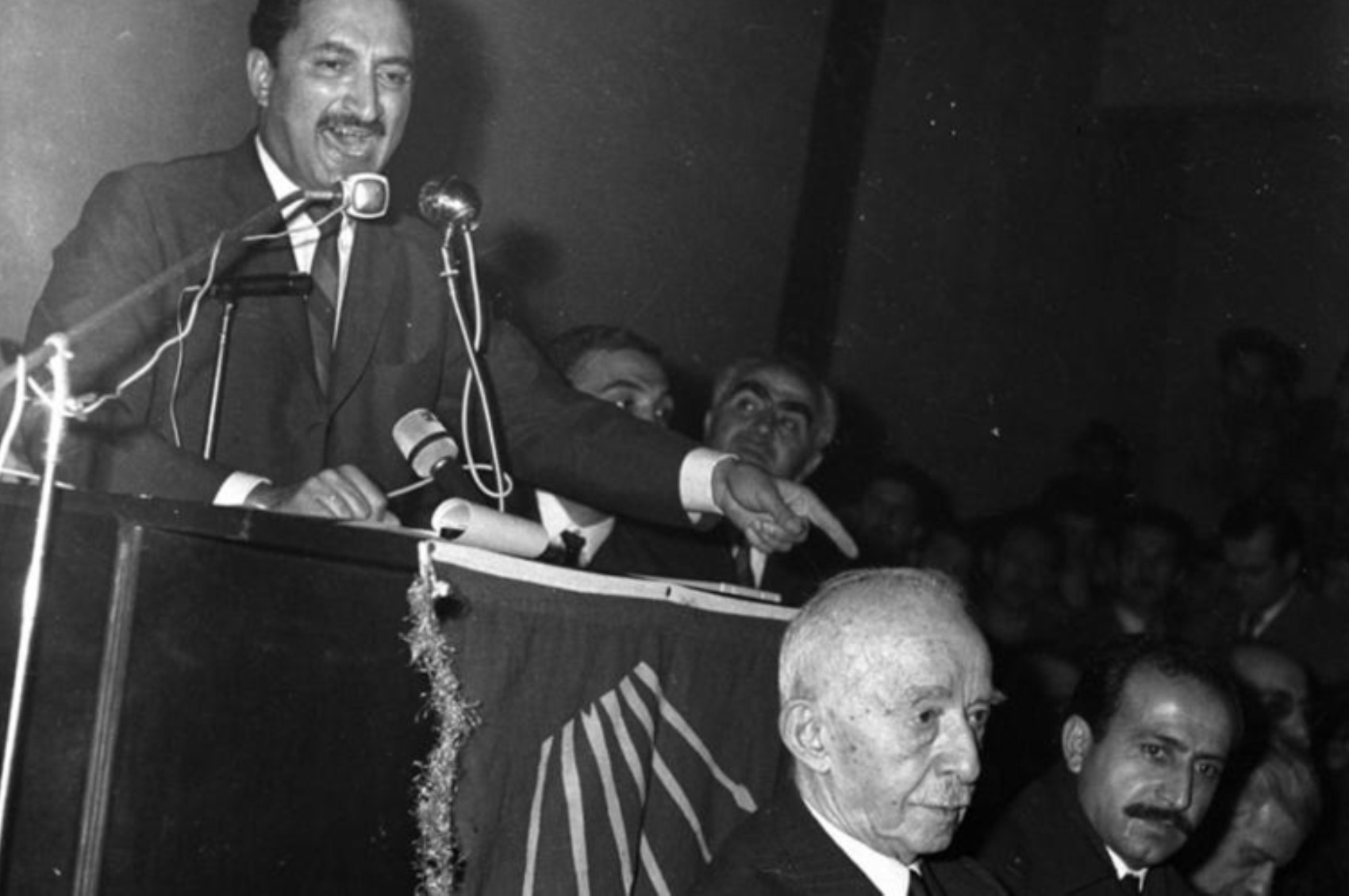
Bülent Ecevit was elected Secretary-General by the Party Assembly brought to office by the 18th Congress. He had managed to secure a relative majority. This result was achieved because the other factions were unable to take a unified stance among themselves.
The Ecevit supporters, who secured a relative majority at the 18th Congress, were young politicians compared to the conservatives, such as Orhan Birgit and Turan Güneş. They believed that power could be achieved through a different path.
To provide a brief summary of Ecevit's CHP career: he became an Ankara deputy in 1957. In 1966, the Party Assembly appointed him to the position of Secretary-General. Just six years later, he was the Chairman of the Republican People's Party, replacing İsmet Paşa.
Ecevit had become the party's third chairman as it emerged from the March 12 regime. While transitioning out of the March 12 interim regime, he brought young academics into his team, making them deputies and ministers. Many of these were faculty members from the Faculty of Political Sciences and the Faculty of Law, such as Ahmet Taner Kışlalı, Deniz Baykal, Gündüz Ökçün, Haluk Ülman, and Besim Üstünel. He believed that with their expertise, he could solve Turkey's problems. Under the leadership of the former Secretary-General (the new Chairman) Ecevit, the CHP became the leading party.
EXTRA-PARLIAMENTARY OPPOSITION - 'PRETTY' DEMOCRACY - DEMOCRATIC LEFT
In the 1965 elections, all parties except the Justice Party and the TİP (Workers' Party of Turkey) were disappointed. The terminology of 'extra-parliamentary opposition' and 'pretty democracy' had become dominant on the left. This attitude largely meant a disregard for the popular vote.
The events of 1968 became a turning point. For the right (the ruling powers), it was important to maintain hegemony in power by resorting to an authoritarian regime when necessary. On the left, the extra-parliamentary opposition and urban guerrilla movements that marginalized the TİP had become noteworthy.
The 'Left of Center' and the Ecevit supporters were opposed to both of these attitudes. On one hand, they defended parliamentary legitimacy; on the other, they stood against the authoritarian tendencies of the comprador bourgeoisie. They adopted a discourse that blended nationalism with the left.
While the right was dividing in the face of a governance crisis (AP, DP, MSP), the 'Left of Center' movement within the CHP had increased its strength. These were the specific conditions that would enable Ecevit to be elected as the CHP chairman under the circumstances of the interim regime.
Ecevit made the CHP the leading party in 1973 and 1977. However, his leftism could not transcend the limits of populism. Ecevit lacked the political tools to realize the 'system change' rhetoric he put forward on the campaign trail. This is the reason why the governments he formed ended in failure despite his relative electoral successes.
WHAT WAS THE REASON FOR ECEVİT'S RESIGNATION AS SECRETARY-GENERAL?
Ecevit viewed the March 12 Memorandum as a coup carried out against the rise of the 'Left of Center.' The Turkish bourgeoisie perceived him as a class threat, though he was not. Ecevit believed that the 'Left of Center' policy was the only way to prevent extreme left-wing movements. By extreme left, he meant the Soviet-backed activist socialist/communist movements present everywhere in the world, such as in Cuba, Latin America, and Africa.
The Turkish-style McCarthyism, skillfully managed by the DP in the 50s, continued in the 60s with the 'demagogic anti-communism' of the Justice Party. The CHP could have been the remedy for this. The 'left' of the CHP was nothing more than Turkish-style social democracy. This was, in essence, social democracy in an underdeveloped country.
Ecevit was sincere in his political beliefs and rhetoric. He could not fully analyze that the fundamental issue was the status quo (or, if you prefer, the forces of hegemony). His diagnoses remained superficial. His radical rhetoric was not realistic. This is what unsettled the bourgeoisie. This is the reason for the failure of the governments he formed.
WHAT WERE THE CONDITIONS THAT BROUGHT ECEVİT FROM SECRETARY-GENERAL TO CHAIRMAN?
During the March 12 interim regime, Ecevit's resignation as secretary-general and the appointment of Nihat Erim as prime minister were significant and meaningful. İnönü had supported Erim's premiership. According to Orhan Birgit, he had expected the premiership himself, just as he had in 1961. All these developments increased Ecevit's chances at the party convention. The resigned secretary-general, Bülent Ecevit, increased his power by taking a position against the junta and conservative Kemalism.
WHAT IS THE PLACE OF KASIM GÜLEK AND BÜLENT ECEVİT IN CHP HISTORY?
Kasım Gülek brought a change in discourse to the CHP in the 50s. But that was all. Nothing more. The DP remained in power for 10 years in the wake of the US. It followed a policy of taking advantage of Cold War balances.
The CHP also had no fundamental objection to these balances. Its opposition was shaped around demands for a democratic state of law.
In fact, these demands were the interests of the old ruling class (the petty bourgeoisie: the military and civil administrative elite class) that needed to be protected against the big bourgeoisie that had seized power. In other words, it was the modest interests of the republican elite that were at stake.
Thus, Kasım Gülek's secretary-generalship in such a political environment was nothing more than an "American-style PR populism." I use the concept of PR populism in the sense of public relations populism.
Ecevit's starting point, however, was based on self-criticism. Populism had to be something different. However, his accumulation of thought and his way of grasping the world could not result in a radical challenge to the capitalist order.
Although he insisted on the concept of democratic left, what he defended was social democracy. When Ecevit could not place "left-of-center" populism on a class basis in the Western sense, he could not go beyond the rhetoric of left-wing populism.
In conclusion, Ecevit's populism was more realistic than Kasım Gülek's PR populism. It was further to the left. But it lacked the power to make the target audience change course.
Most Read

Striking picture for Özgür Özel's 'New Party'

The PKK opening and Özgür Özel’s path!..

How did the newspapers view Özgür Özel's farewell to the CHP?

He killed his wife by slitting her throat: Their children witnessed the moments

What did the CHP do?

Özel’s new party move in the world press

The New CHP, against CEHAPE

Fire at TUSAŞ engine factory in Eskişehir under control

From self-efficacy to despair

Kılıçdaroğlu's first message on Özgür Özel's new party announcement