



BAYAR'S MINISTERIAL ROLES BEFORE BECOMING PRIME MINISTER
Before becoming prime minister, Celal Bayar had served as the Minister of Exchange and Settlement and twice as the Minister of Economy. The first instance occurred during the years of the War of Independence. Bayar’s second term as Minister of Economy began after 1932. This second term can be understood by taking into account the changing economic conditions in Turkey and the world.
MINISTER OF ECONOMY DURING THE WAR OF INDEPENDENCE
Bayar’s first term as Minister of Economy took place between 1920 and 1922. The first Minister of Economy of the Grand National Assembly (TBMM) government was Yusuf Kemal Tengirşenk. After he went to Moscow on May 11, 1920, along with Foreign Minister Bekir Sami Bey, the Assembly appointed Celal Bey as the acting Minister of Economy. This acting role lasted for quite a long time. One of the first issues that occupied him was the rights and security of the workers in the Zonguldak Coal Basin. During this duty, Bayar earned the trust of Mustafa Kemal Pasha. Upon the resignation of Yusuf Kemal Bey after his return to the country, he was elected as the Minister of Economy on February 27, 1921, this time as a full minister. He remained in office until 1922.
MINISTER OF EXCHANGE AND SETTLEMENT
In 1923, the Ministry of Exchange and Settlement was established to implement the exchange agreement concluded between the Turkish and Greek governments in Lausanne. Bayar held this ministry for a while. This ministry would later be transformed into the 'General Directorate of Settlement' affiliated with the Ministry of the Interior.
BAYAR WANTED TO MAKE IS BANK THE CENTRAL BANK
İş Bank was established on August 26, 1924. With the instruction of the president, Celal Bey became the founding manager. From its inception, the bank's management tended to have a say in both economic and political spheres. One of the concrete examples of this was that Bayar tried to ensure that the functions of the Central Bank were carried out by İş Bank, but İnönü did not approve of this.
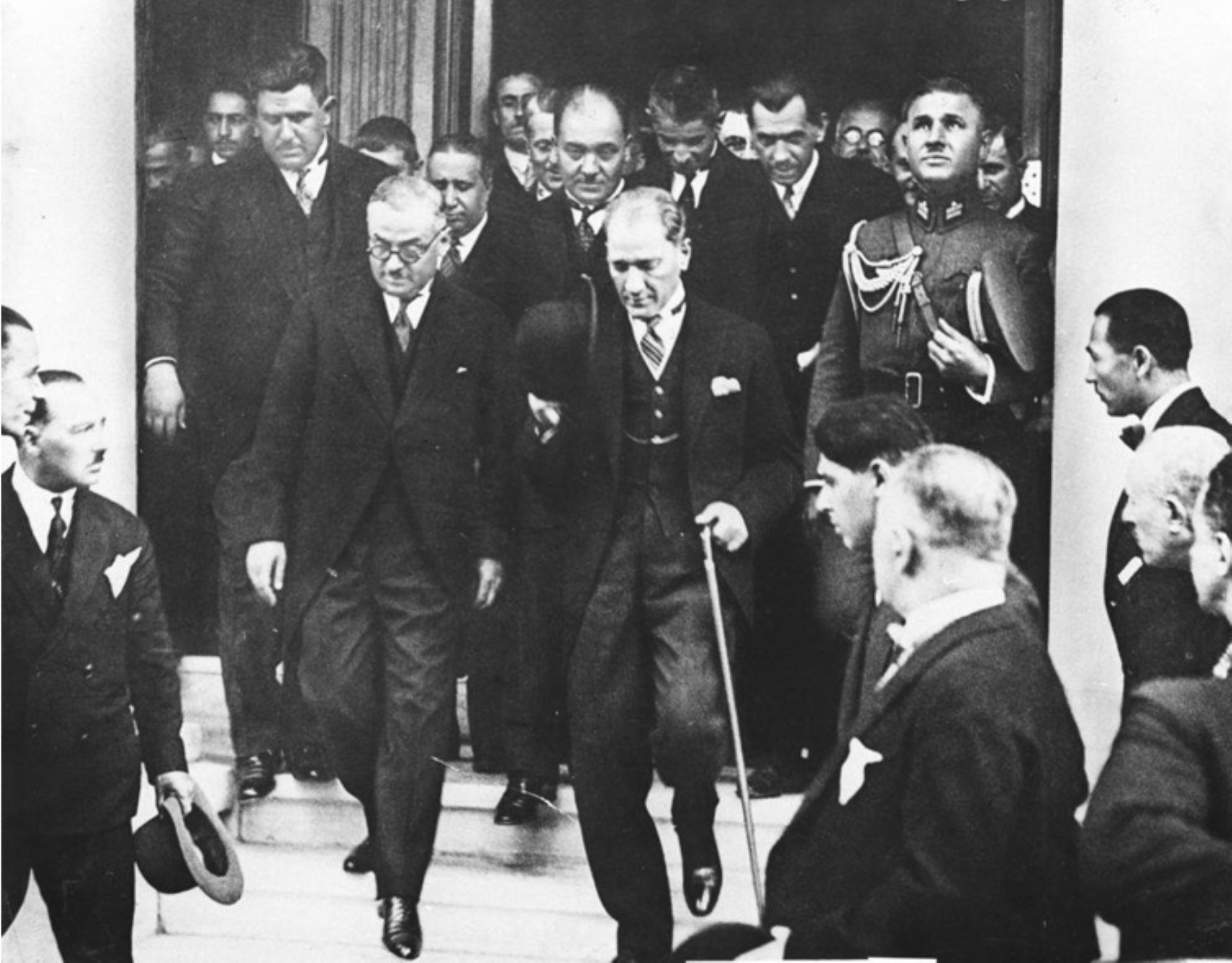
THE IMPORTANCE OF 1929 FOR THE TURKISH ECONOMY
This date marks the beginning of the installment payments for Ottoman public debts. The payments would continue until 1954. In the same year, restrictions on the customs regime would be lifted. These developments coincided temporally with the outbreak of the Great Depression, and the economic situation became more complex. A report titled “On Our Economic Situation” was submitted to the prime ministry in March 1930. State entrepreneurship and planned economic policy came to the forefront in Turkey.
ATATÜRK'S SEARCH FOR A WAY OUT: A DOMESTIC TOUR WITH AHMET HAMDİ BAŞAR
After the Free Republican Party (Serbest Fırka) experiment resulted in the party dissolving itself, Atatürk must have thought that the root of the issue was the economic policy being followed, as he set out on a long domestic tour, taking Ahmet Hamdi Başar with him. Başar was one of the advocates of liberal economics. He believed that the problems stemmed from the errors in the economic policy pursued by the government.
AFTER 1932, DESPITE İNÖNÜ, ECONOMIC MANAGEMENT IS WITH BAYAR
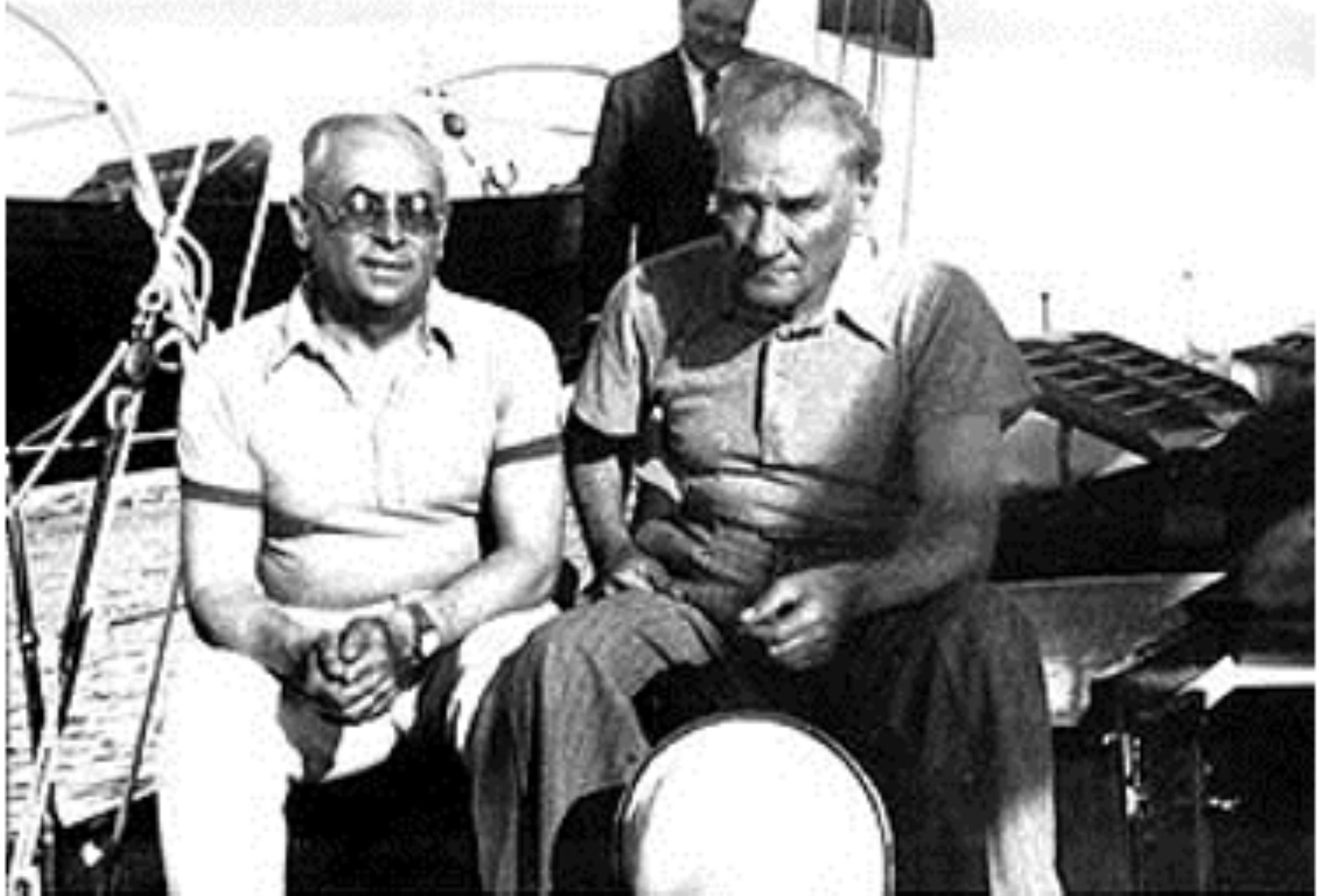
It would be accurate to say that the person who had the most influence on economic policy during the 1932-1938 period was not İnönü, but Celal Bayar. The reason for this is the presence of Atatürk.
Capital circles, seeing that statism was shifting toward collectivism during Mustafa Şeref Özkan’s term as Minister of Economy, were uneasy. The new market-oriented statism approach initiated with Bayar in 1932 alleviated their concerns.
Bayar served as Minister of Economy for five years starting from September 1932, and as prime minister from the autumn of 1937 until the beginning of 1939. Statism, in the sense he understood it, was defended by him personally; the plan texts were executed with his signature. The justifications and texts of economic laws came from his pen.
For this reason, it would not be wrong to call Celal Bayar the founder of the dominant understanding of statism. But naturally, in his own way, according to Bayar, statism emerged as a necessary result of the economic and political conjuncture and would serve as a lever for the country's rapid industrialization.
TRANSITION FROM PROTECTIONISM TO STATISM: 1929-1932
The restrictions regarding customs and finance accepted in Lausanne were being lifted in 1929. The Turkish government initiated an economic policy that protected domestic capital. This policy underwent changes and reached statism in 1932. What kind of statism was this going to be?
Bayar’s appointment as Minister of Economy at this date is not a coincidence. It was an appointment that relieved capital circles and defined the boundaries of the statist trend. Statism was not going to mean socialism. This is the meaning of Bayar’s appointment to the ministry. This is the reason why the Kadro journal ceased publication after a while and Yakup Kadri was appointed as ambassador to Tirana. Other names contributing to the journal were also given other duties in the public sector and were removed from the position of “giving direction” to the state.
PLANNED ECONOMY UNDER SOVIET INFLUENCE
In the early republican period, Foreign Minister Tevfik Rüştü Aras went to the Soviet Union three times (1926, 1930, 1937), and Prime Minister İnönü went once, in 1932. İnönü was even in the honorary box at the May 1st ceremonies. İnönü had carried out his trip with a large delegation. In addition to Foreign Minister Tevfik Rüştü Aras, Recep Peker, Ali Çetinkaya, Yunus Nadi, Mahmut Soydan, Yakup Kadri, Falih Rıfkı, Kazım Özalp, and some managers of State Economic Enterprises were in the delegation.
In the 30s, many thinkers and artists also went to the Soviets. İnönü was influenced by one thing in the Soviets: Planning. This did not mean being socialist. The state could be the pioneer of economic life. The economic successes of the Soviets led Turkish administrators to approach planning with sympathy. However, planning approaches varied from state capitalism to socialist public management.
TURKEY IS THE FIRST COUNTRY TO IMPLEMENT A PLANNED ECONOMY AFTER THE SOVIETS
After the Soviets, Turkey was the first country to implement a planned economy. This implementation brought with it debates on state intervention and the limits of freedom of enterprise.
SOVIET PLANNERS IN TURKEY UNDER THE CHAIRMANSHIP OF PROF. ORLOF (1932)
In 1932, a Russian planning board came to Turkey. The board chairman was Prof. Orlof. The board consisted of experts who worked on the five-year industrial plan in Russia. They were invited to work on the program to be organized for Turkey’s industrialization. Orlof and his team prepared a report on the industrial facilities that needed to be established and submitted it to the Ministry of Economy within the same year. Minister of Economy Bayar also added his own views and submitted the report to the Prime Ministry. The government began discussing the reports on December 16, 1933.
THE REASON BAYAR FOUNDED SÜMERBANK
The Industrial Facilities and Operation Report submitted by the Ministry of Economy was accepted on April 17, 1934, under the name of the First Five-Year Industrial Plan and was notified to Sümerbank, which would implement the plan. The bank had been founded by Celal Bayar on July 11, 1933.
HOW SHOULD STATISM BE DEFINED?
Statism is the operation of enterprises that produce goods and services for the economy by the public. Thus, statism can be defined as “the state’s intervention in economic life by engaging in business itself.”
HOW MANY TYPES OF STATISM ARE THERE IN THE CHP?
It is possible to summarize the understandings of statism in Turkey as follows: First, the planner statism of İsmet Pasha and his team under Soviet influence (they were influenced by the idea of planning, not by Bolshevism); second, the permanent—not temporary—statism advocated by the Kadro movement. This option is third-worldist Marxism. The last one is the view advocated by Bayar. This is called market statism. According to this understanding, the state will be in the market until individual enterprise power is reached. It will continue its support for private enterprise.
In his opening speech at the 5th İzmir Fair on August 22, 1935, Bayar explained the understanding of statism to which he adhered. With tools (incentives, participation, and credit) that were a continuation of the free-market policy applied before the 1930s, the capital sector was provided with the opportunity for expansion.
When Bayar said that if the country’s industrialization were left—only—to private enterprise, “a waiting period of at least two more centuries would have to be endured,” he was pointing to capital accumulation and the state’s pioneering role.
While the statism of İsmet Pasha and his team showed a more bureaucratic and authoritarian character, Bayar’s statism was accepted as a practical method forced by the economic conditions of that period.
There had always been a constant conflict in the CHP between the group advocating market statism and those advocating rigid planned statism. In these conflicts, it is seen that one of the two groups came to the fore from time to time. The reason why the planned statism faction led by İnönü appeared dominant stemmed from the party-state. But this did not mean an absolute hegemony. Atatürk’s interventions were mostly in favor of the Bayar team. The decisions taken and the implementations are proof of this.
THE MEANING OF İNÖNÜ PARTICIPATING IN THE FIRST ISSUE OF KADRO MAGAZINE WITH AN EDITORIAL
Kadro Magazine was established to create the ideology of the revolution. Of course, this also had an economic direction. The Kadroists also advocated statism. This was a left-leaning approach to Kemalism. We can interpret the Kadro movement as a third-worldist path of development using Marxist concepts.
Prime Minister İsmet Pasha had supported the launch of the aforementioned magazine with an article. In his article, İnönü was displaying an attitude contrary to the economic policy rather than that of a prime minister.
“It is the state that keeps even the freest institutions standing against harsh storms... there is so much for us to do that it is certainly the most reasonable thing not to distribute our resources to the parts that individuals can do,” he wrote. Bayar’s statism was based on free enterprise. He would say, “If the individual can do it, the individual will do it; where they cannot, state protection and encouragement will come.”
ATATÜRK HAD ALWAYS WORKED WITH İNÖNÜ, WITH A FEW MONTHS OF EXCEPTION
Atatürk had always worked with İnönü for 14 years and 8 months, with the exception of the 103-day Fethi Okyar prime ministry. Until he was considered on leave on September 20, 1937. He resigned on October 25 and left the duty. On the page dated September 18, 1937, of İsmet Pasha’s diary, which would later be published under the name “Notebooks,” the words “Decision to Withdraw” are written.
FOR WHAT REASONS DID ATATÜRK MAKE BAYAR PRIME MINISTER?
Celal Bayar describes his appointment as prime minister in an interview he gave to Mehmet Saray. This is also the last interview conducted with him: “Atatürk called me from Ankara to Istanbul. He accepted me at the Florya Pavilion. He said that İsmet Pasha had left the prime ministry and wanted me to take on this duty. He said he was pleased with my work regarding the country’s development. ‘Now, as prime minister, I want you to develop Turkey,’ he said.”
Bayar also makes a comment upon being brought to the prime ministry. Whatever happened between Atatürk and İsmet Pasha, the most decisive issue was the disagreement on statism. I also agree with Bayar—on this issue. But I have a caveat: Atatürk and İnönü had worked together for a long time. This also brought with it a relationship fatigue. Tensions were experienced between them from time to time. Economic policy was the straw that broke the camel’s back.
BAYAR’S VIEW ON İNÖNÜ
Celal Bayar’s term as prime minister is a short period of fifteen months. During this period, he was brought to this duty twice. By Atatürk and İnönü. He served as Minister of Economy between 1932-1937. Bayar is also Atatürk’s first and last civilian prime minister.
I cannot pass without mentioning an interesting judgment of Bayar here: It will serve as an answer to the question of how much İnönü understood about the economy. According to Bayar, “As a soldier, İnönü had the economic knowledge to understand only the matters given to him by the logistics department.” That is why he was looking at the economy from a ‘narrow’ framework.
ATATÜRK PRESIDING OVER THE COUNCIL OF MINISTERS
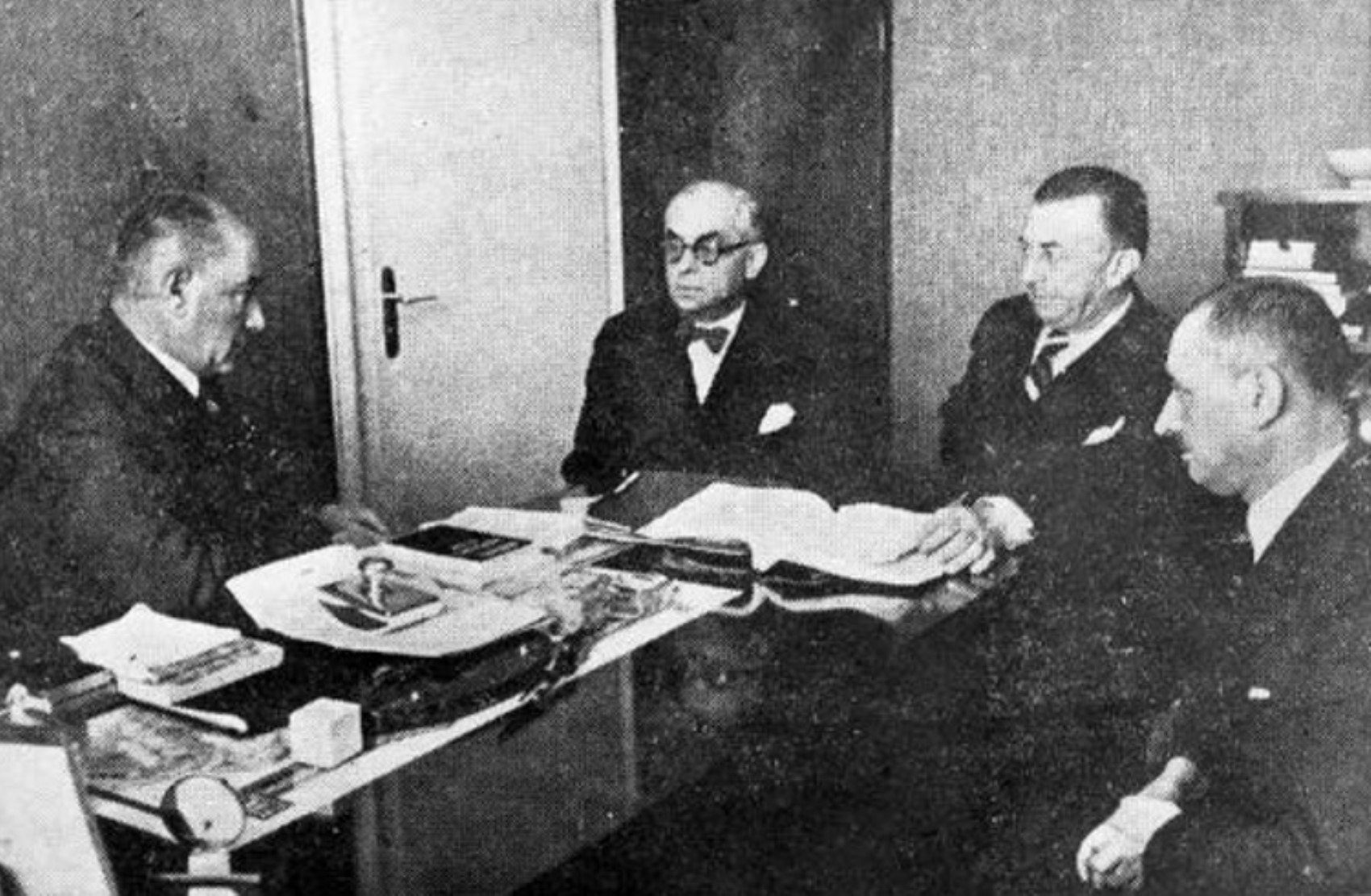
It was announced that İzmir Deputy Celal Bayar was “appointed as Prime Minister and tasked with forming the cabinet,” and it was declared that the Council of Ministers presented on the same day was approved. Subsequently, the Council of Ministers, gathered under the chairmanship of President Mustafa Kemal Atatürk, held discussions about the work of the new term.
Bayar had given a small party at his home on the evening of November 10, 1937. Atatürk and the new members of the council of ministers had been invited. Details regarding this invitation were covered in the press, and it was carefully emphasized that Atatürk said, “You have announced a brand new program to the nation. These are the issues I promised to the nation.” It is understood from these words that Atatürk expected a lot from Bayar’s economics.
DR. REFİK SAYDAM IS NOT IN THE BAYAR GOVERNMENT
In the Bayar government, while many ministers kept their places, Şakir Kesebir was brought to the Ministry of Economy, which was vacated by Celal Bayar. Dr. Refik Saydam, who did not want to take part in the cabinet, resigned from his duty for health reasons. Dr. Hulusi Alataş was brought in as the Minister of Health in place of Saydam. Dr. Saydam would later—in 1939—be appointed as prime minister by İnönü to replace Bayar. Saydam’s attitude meant, “If there is no İnönü, there is no me.”
ECONOMIC DEVELOPMENT AND INSTITUTIONS DURING THE BAYAR PERIOD
During the years when Bayar was Minister of Economy and Prime Minister, the growth rate of the Turkish Economy was around 10%.
During this period, in addition to investments, significant nationalizations were also carried out. These are the Mudanya-Bursa Railway, the Turkish Joint Stock Water Company, the İzmir Port Company, the İzmir-Afyon-Manisa-Bandırma Line, the Istanbul Port Weaving and Warehouse Joint Stock Company, the Aydın Railway, the Istanbul Telephone Company, the Ereğli Port, the Zonguldak-Çatalağzı Railway and Coal Mine Enterprises, the Oriental Railways, the İzmir Telephone Joint Stock Company, and the Istanbul Joint Stock Electricity Company.
These nationalizations did not constitute an obstacle to the entry of foreign capital; between 1934 and 1938, 32 new foreign firms started operating in Turkey. These actions also brought with them debates of “Nationalization? Statization? Expropriation?”
TWO INSTITUTIONS FOUNDED BY BAYAR: DENİZBANK AND THE SOIL PRODUCTS OFFICE
The first of the public banks established after Bayar became prime minister is Denizbank. Denizbank was established in 1937 with a law passed as “affiliated with the Ministry of Economy and having legal personality.” Another important institution founded by Bayar is the Soil Products Office (TMO). The office was established with the “Soil Products Office Law” dated June 24, 1938. In the first article of the law, it was stated that the office would be “subject to the provisions of the law regarding the organization, administration, and supervision of State Economic Enterprises.”
TRIP TO THE 1937 DERSİM REBELLION REGION WITH THE PRIME MINISTER
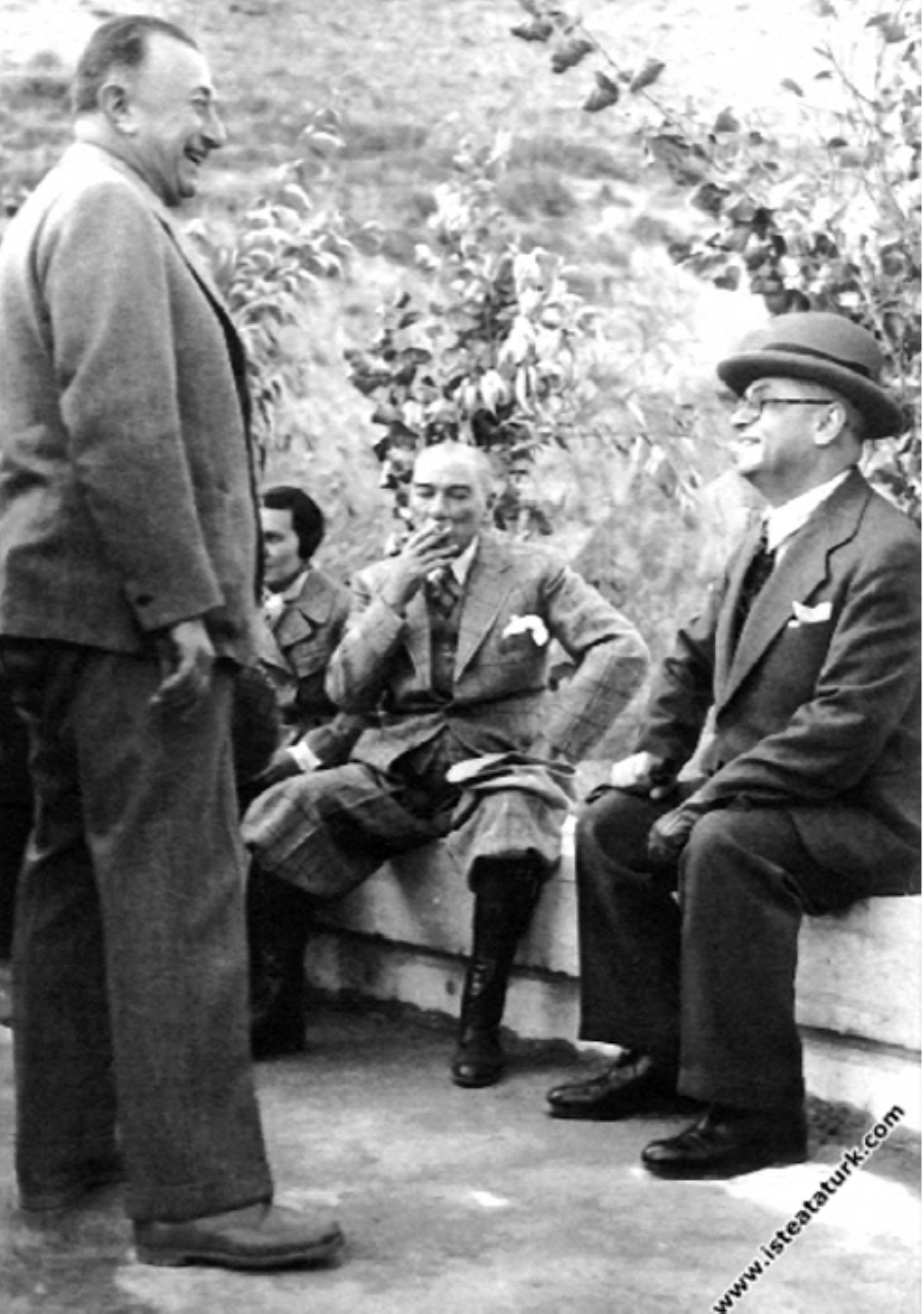
One of the first works Celal Bayar did as Prime Minister was to set out on a trip to Eastern Anatolia with Atatürk. During the trip, which started on November 12, 1937, and lasted for nine days, the team, which included the President and the Prime Minister, conducted inspections in eleven provinces. The picture taken on the Singeç bridge in Tunceli Pertek is an important and meaningful document in terms of republican history.
1938 GENERAL AMNESTY LAW
In 1938, the Bayar government passed a general amnesty law. With this law, the 150 personae non gratae, those for whom a decision of the Special Committee had been taken, and those convicted in the Independence Tribunals were pardoned. This is an important development. The regime pardoned its own opponents. Some of those pardoned were living abroad. While Refik Halit Karay, who lived in Lebanon, and Refii Cevat Ulunay, who lived in France, returned, Circassian Ethem, who lived in Jordan, did not return. The Minister of Justice of the period, Şükrü Saraçoğlu, explained the scope of the law as follows: “The first part of these are pardoned under strict records and conditions. The second part, after minor records, acquire the rights that normal citizens possess.” The General Amnesty Law was accepted in the TBMM on June 29, 1938. It entered into force by being published in the Official Gazette on July 16, 1938.
BAYAR’S APPOINTMENT AS PRIME MINISTER BY PRESIDENT İNÖNÜ
After İnönü was elected president, he gave the task of forming the government again to Bayar, who had submitted his resignation. Although they thought quite differently from each other in their approaches to country issues, I think it was a gesture for İnönü to give the task to Bayar. Because he managed the process after Atatürk’s death well. Bayar actually did not want to accept this duty. But he accepted it anyway. Later, he explained the reason for accepting the duty as both it not being appropriate and not finding it right to give an opportunity to those who wanted his relationship with İsmet Pasha to be open.
Some names who were not in the first government took part in Celal Bayar’s II. Government. Some at the request of İnönü. The new members of the cabinet were Minister of Justice Hilmi Uran, Minister of the Interior Refik Saydam, and Minister of Foreign Affairs Şükrü Saraçoğlu. Şükrü Kaya and Tevfik Rüştü Aras were not included in the government. This government of Bayar remained in office for 74 days.
HOW SHOULD WE EVALUATE CELAL BAYAR?
Celal Bayar is Turkey’s third president and Atatürk’s last prime minister. Let us remember that İnönü had been at the head of the government for 14 years. During the entire process of revolutionary movements, the prime minister was İnönü. Atatürk was pleased to see İnönü at the head of the state apparatus.
Nevertheless, he appreciated Celal Bayar, whom he had known closely since the period of the national struggle, as an economist. He had given Celal Bey important duties since the early times of the republic. The first institution of republican banking is Türkiye İş Bankası. It is extremely meaningful that the bank’s activities were started with the order of the Gazi and Bayar’s founding managership.
In the 30s, Turkey faced the consequences of the 1929 World economic depression. In the same year, installment payments for Ottoman public debts were also beginning.
The economic situation was not very bright. Turkey was rural and poor. Resources were limited. The reality behind Atatürk calling Fethi Okyar from the Paris embassy and having him establish the Free Republican Party lies in this. The Free Republican Party meant approving the organization of “liberal economics,” which was represented weakly within the CHP, with the identity of an opposition party.
Here, I would like to draw attention to two points that coincide with the economic and political conjuncture in the 30s. The first is that the principles of revolutionism and statism entered among the party principles at the CHP III. Congress (1931). In this way, the six arrows were completed. The party emblem was also accepted. Let us remember that in 1927, the CHP was a secular, republican, nationalist, and populist party. What these two principles accepted in 1931 mean has been debated since that date.
Another important development in the 30s is the rapprochement in Turkish-Soviet relations. The two countries became members of the League of Nations one after another. Prime Minister İnönü made a long visit to Russia. He went as far as Petrograd (Leningrad). Afterward, a team consisting of planning experts came to Turkey. In 1933, Marshal Voroshilov was next to the Turkish state officials in the Honorary Box at the 10th Year ceremonies of the Republic.
İnönü was influenced by the idea of planning the economy in the Soviets. This did not mean let us be socialist. Statism, which entered among the party principles in 1931, began to be understood as planned economic growth.
Meanwhile, a very important development was the appointment of Celal Bayar as Minister of Economy. This was the president’s wish. This preference can be evaluated at first glance as an appointment contrary to the government’s economic view.
Bayar had represented liberal economics since the liberation. In the eyes of the founding leader, he was a very successful economist. His presence in the government as Minister of Economy starting from 1932 was a balancing element that Atatürk placed against bureaucratic statism. The fact that the Gazi was the party leader and president partially eliminated the tensions in the Prime Minister İnönü-Minister of Economy Bayar relationship.
In my opinion, the fundamental factor in the Atatürk-İnönü togetherness coming to the breaking point was economic policy. It would be correct to interpret the appointment of Minister of Economy Bayar, who was waiting one step behind within the government, to the prime ministry in this way.
Bayar was a politician who adopted bourgeois political economy. But he came from the Committee of Union and Progress. This meant the state. Since the constitutional period, importance had been given to the development of the bourgeoisie in the management of the “National economy.” Bayar came from within this circle. National economy, national bourgeoisie. However, it was almost impossible to get results in a short time with the society’s own internal dynamics.
The other two versions of statism were bureaucratic interventionism and uninterrupted statism inspired by Marxism: Aydemir’s Kadro circle. It was “market statism,” led by Celal Bayar, that sidelined these options.
The position the founding leader provided to Bayar as Minister of Economy in 1932 was reinforced by his appointment to the prime ministry in 1937. The official interpretation of statism was now market statism; its implementer would be Bayar.
This option, which was interrupted due to İnönü being elected president and the war years, was revived with the establishment of the 46 democracy. Throughout the 50s, the “power of the public” always made its presence felt.
Most Read

Striking picture for Özgür Özel's 'New Party'

The PKK opening and Özgür Özel’s path!..

How did the newspapers view Özgür Özel's farewell to the CHP?

He killed his wife by slitting her throat: Their children witnessed the moments

What did the CHP do?

Özel’s new party move in the world press

Fire at TUSAŞ engine factory in Eskişehir under control

The New CHP, against CEHAPE

From self-efficacy to despair

Kılıçdaroğlu's first message on Özgür Özel's new party announcement