



A BANQUET AT THE AMCAZADE HÜSEYİN PASHA YALI
In the spring of 1700, an important guest was being hosted in a newly built seaside mansion on the Bosphorus. This was the envoy of the Nemçe, that is, Habsburg Austria. The yalı (waterfront mansion) was in Anadoluhisarı. It is the place known as the Red Yalı, the Meşruta Yalı, or the Amcazade Hüseyin Pasha Yalı.
Just two years earlier, Prince Eugene had defeated the Ottomans at the Battle of Zenta, and the commanders and viziers, including Grand Vizier Elmas Mehmet Pasha, had fallen on the battlefield.
Amcazade Hüseyin Pasha (the nephew of Köprülü) was now busy establishing peace. And he was doing it using somewhat European methods.
This reception symbolized a break from Ottoman diplomacy in many respects. Giving a reception for an envoy, sitting together, and dining meant accepting equality with the infidel.
Amcazade Hüseyin Pasha had foreseen a different operational plan before the Zenta defeat and had been proven right. Now, he was trying another path for the survival of the Ottoman Empire. This was not war. It was the path of peace.
THE ZENTA DEFEAT AND ELMAS MEHMET PASHA
Zenta is a small town in the Vojvodina region of the Republic of Serbia today. It is also the region where a battle of extreme importance for Ottoman history took place.
Those who remained on the battlefield—Grand Vizier Elmas Mehmet Pasha, Koca Cafer Pasha, Anatolian Beylerbeyi İbrahim Pasha, Rumeli Beylerbeyi Küçük Cafer Pasha, the beylerbeyis of Diyarbakır, Adana, and Maraş, and numerous sanjak beys—perished under Austrian artillery fire.
As the army was crossing the Tisa River, it was ambushed by the Habsburg army led by Prince Eugene. Four viziers of the divan, 30 Janissary aghas, and over 20,000 Janissaries lost their lives due to artillery fire in the narrow area at the bridgehead. Some drowned by falling into the river along with the destroyed bridge. September 11, 1697.
Elmas Mehmet Pasha's seal of the grand vizierate fell into the hands of the Austrians. It is currently on display at the Vienna Museum of Military History. It is not even known where Grand Vizier Elmas Mehmet Pasha, known for his handsomeness and bravery, was buried. He was 36 years old when he fell on the battlefield.
Sultan Mustafa II fell into a depression after the war and shut himself in the palace upon returning to Istanbul. The state, along with many pashas, had lost 87 cannons, 15 thousand cattle, 7 thousand horses, and thousands of camels. In addition, a treasury amounting to 3.5 million guilders had fallen into the hands of the Austrians. The loss of the grand vizierate seal to the enemy had been a severe trauma for the Ottoman state.
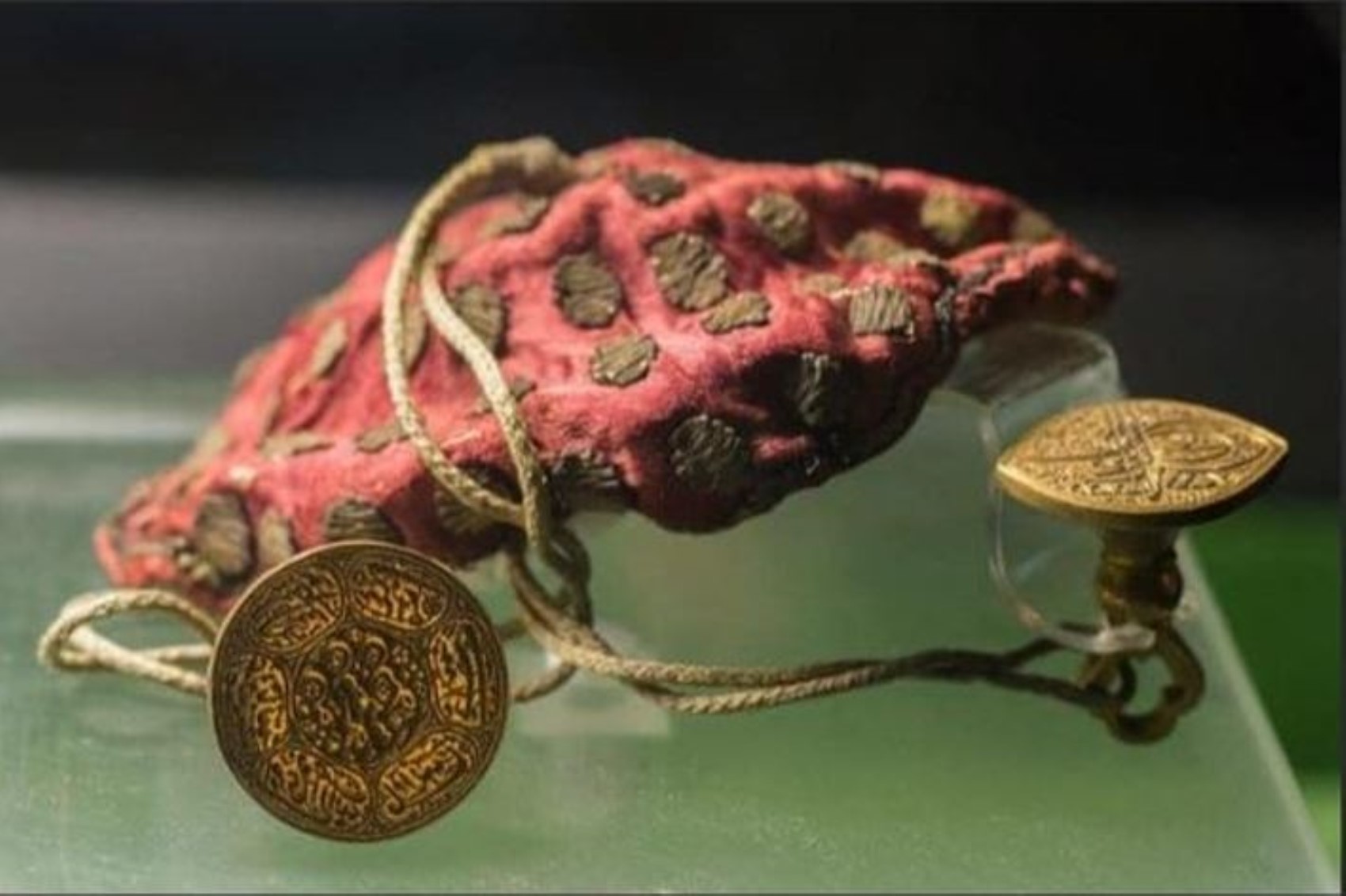
(Grand Vizier Elmas Mehmet Pasha's seal: Vienna Museum of Military History)
WHAT WAS DISCUSSED IN THE WAR COUNCIL
The failure of the Second Siege of Vienna and the execution of Grand Vizier Kara Mustafa Pasha in Belgrade were a total trauma for the Ottoman state. A situation assessment was made regarding the future of the Sublime Porte. Sultan Mustafa II, who ascended the throne in 1695, decided to go on a campaign at the head of the army like his ancestors. He thought that the defeat was incidental and that he could fix the situation "personally." He set out for Nemçe to lead the Imperial Army to victory.
When the war council was convened, a debate arose regarding the direction of the attack. Belgrade governor Amcazade Hüseyin Pasha objected to the plan. It is rumored that when the war plan he opposed was accepted, he said with agitation: "Woe to the state of the House of Osman."
The decision was to cross the Tisa River and carry out a flanking maneuver through Central Hungary. In the end, it was painfully understood that the plan was very wrong. The army was routed at Zenta. A while later, Hüseyin Pasha was brought to the grand vizierate.
THE GRAND VIZIER LYNCHED ON THE BATTLEFIELD
At Zenta, during the crossing of the Tisa River, Grand Vizier Elmas Mehmet Pasha, who was at the head of the Ottoman Army that was ambushed, had some of the pontoons of the bridge removed to prevent the Janissaries from scattering. Defterdar Sarı Mehmet Pasha describes the event in Zübde-i Vekayi as follows: "The Pasha, acting with reckless bravery, descended from the rampart with a naked sword and said, 'I will fight to the death. Where are you going without fighting when the army is breaking, you cursed ones,' and after striking down a few Janissaries with his sword," the imperial soldiers, thinking that they were facing disaster because of his river crossing plan, "the soldiers became resentful of him and were thirsty for a spoonful of his blood. Watching for this moment, they cursed him, saying, 'It is your poor judgment, you wretch, that led us through these straits and brought us to this disaster; it is better to speak with your corpse than with your living self,' and the Janissaries drew their swords and tore him to pieces."
The meaning of these words is this: The Grand Vizier was lynched by the imperial soldiers.
TWO MONTHS OF PEACE NEGOTIATIONS IN A TENT
Karlowitz is a small settlement on the Danube River with a pier and a Serbian population. It is important for our history. It is the place where the peace treaty that ended the series of wars that Europeans call the Turkish Wars was signed.
Grand Vizier Amcazade Hüseyin Pasha had been present at the Siege of Vienna with Merzifonlu Kara Mustafa Pasha (his uncle's son-in-law). He had seen the disaster in Vienna and Zenta. For this reason, he wanted to make radical changes in state administration.
The war had been going on for 16 years. He discussed the situation with the state dignitaries and the sovereign. In fact, he wanted the "political-military-economic reality" to be understood. He tried to convince the commanders, viziers, and the ulema that the way to eliminate the dissatisfaction of the public, in the face of unbearable taxes and the emptying of villages, was peace. War no longer meant spoils and territorial gain; on the contrary, it meant huge military costs and material and human losses.
After negotiations with Crimean Khan Selim Giray, Sheikh ul-Islam Feyzullah Efendi, the Kazaskers of Anatolia and Rumeli, the Janissary Agha, and the Kul Kethüdası, a decision for a policy of peace was taken. Sultan Mustafa II, who had decided to fight like his ancestors a few years earlier, was also convinced.
England and Holland had not joined the Holy League that was at war with the Ottomans. Through the mediation of the envoys in Istanbul, the British envoy William Paget and the Dutch envoy Jacques Colyer, the parties were persuaded to discuss peace.
The Ottoman negotiators/plenipotentiaries were determined as Reis ül-Küttab Rami Mehmet Efendi (later grand vizier and pasha) and Divan-ı Hümayun interpreter Alexandre Mavrokordato Efendi. Mavrokordato participated in the negotiations in the capacity of a confidant of state secrets and ambassador. In principle, the plenipotentiaries would defend the "Ala halihi" situation—which means that whatever the current status quo is, it should be the precondition for the transition to peace.
After the final situation assessment was made in Edirne, Grand Vizier Amcazade Hüseyin Pasha sent the negotiators to Karlowitz in advance.
He followed them with a large army via Sofia to Belgrade. Negotiations began in such an environment.
All member states of the coalition were against the Ottomans. Austria was represented by Count Wolfgang von Öttingen, Count Leopold von Schlick, and Luigi Marsigli; Poland by Count Stanislos Malachowsky; the Republic of Venice by Carlo Ruzzini and Lorenzo Fondra; and Russia by Prokopiy Bogdanovich Voznitsyn.
First, a procedural debate arose regarding how the meetings would be held. It was agreed to meet in a large tent with four equal entrances. The preparation of the tent was carried out by Rami Mehmet Pasha.
In an engraving made about the negotiations, it is seen that although the meeting was around a table, the two Ottoman representatives were sitting cross-legged on a divan. The Ottomans were not sitting on chairs and were participating in the negotiations on their own terms.
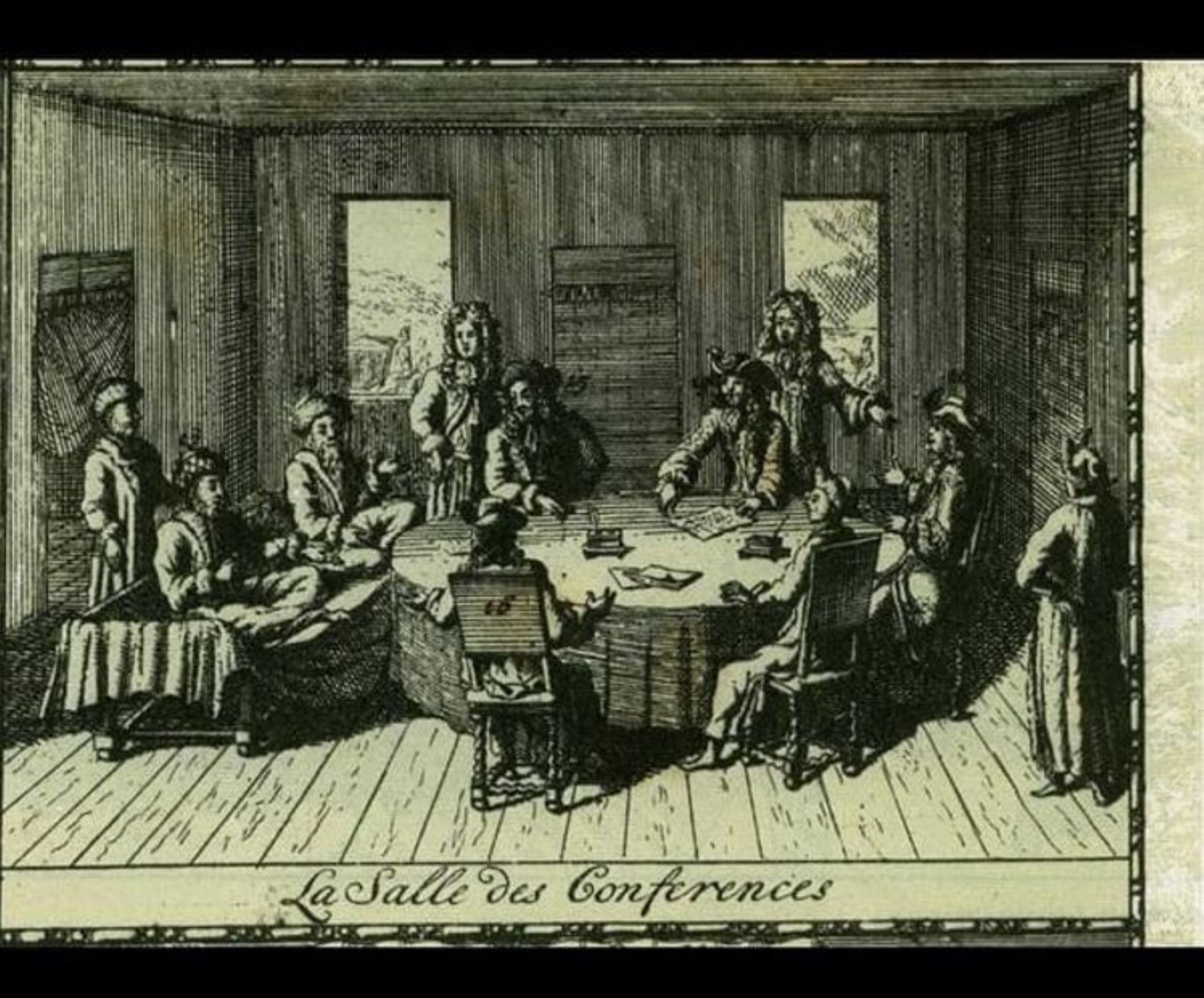
(Seating arrangement in the Karlowitz negotiation tent)
The Holy League had been established in 1684 after the defeat at Vienna. At the beginning of the negotiations, the principle was "the last line you hold is yours." Status Quo post bellum: In Ottoman parlance, "ala halihi."
It is understood that British envoy Paget mediated when the negotiations reached a breaking point during long border disputes.
The talks lasted two months. The meetings, which began on November 13, 1698, lasted two months. They were signed in the tent on January 26, 1699.
In the end, it was accepted that 160,000 square kilometers of territory, which were effectively in the hands of the alliance, were lost.
Peace could not be made with Russia at Karlowitz. A two-year truce was settled for. A separate peace was made in Istanbul the following year (1700).
Until the result was obtained, the Ottoman delegates did not show timidity or hesitation at the table. In fact, the Grand Vizier coming to Belgrade with an army behind them while sending the plenipotentiaries to negotiate peace meant that the second option was also accepted if necessary.
The agreement was not received in a very positive atmosphere in Vienna, Warsaw, and Venice. It was interpreted as giving too many concessions to the defeated Turks.
The agreement was examined by Defterdar Sarı Mehmet Pasha in Zübde-i Vakayiat and by Reşat Ekrem Koçu in his work titled Ottoman Treaties 1300-1920.
SITTING AT THE SAME TABLE WITH THE INFIDEL
The agreement had been signed by the parties. But Nemçe (Austria) cared about the text containing the will of the Ottoman sultan. For this, Öttingen, who represented Austria in the negotiations, came to Istanbul. He had probably brought the text bearing the signature of the King of Nemçe with him. When peace was finalized, a new development occurred that was rarely seen in Ottoman history. This was a European thing. Giving a reception for a guest.
Köprülü's nephew, Amcazade Hüseyin Pasha, hosted the Austrian envoy with a banquet at his newly built yalı. Date: April 29, 1700.
It is necessary to examine this event that took place at the Anadoluhisarı Amcazade Hüseyin Pasha yalı.
This was a new attitude for an imperial state governed according to the Dar al-Harb - Dar al-Islam understanding. The Austrian envoy was welcomed with a flamboyant ceremony. He was taken to dinner. This meant sitting at the table with the infidel.
In the past, the Ottoman sultan did not consider European kings as his equals.
The acceptance of envoys into the presence was also done in a way that made them kneel (almost prostrate). Especially in the classical centuries, the kneeling ritual was very important. This meant, "I have accepted you into my presence by favor and grace."
This was not hospitality. The envoy would be unsettled by Ottoman splendor. The tension of the audience that began at the Sublime Porte would turn into fear along the route of the Fountain of Politics. One might encounter an execution or two. The purpose of this was to announce the greatness of the Ottoman Empire to Europe.
Now the situation had changed, and the envoy of a state that had been at war for many years was being hosted with a reception. This was a new attitude that was quite contrary to Ottomanism. Behind this were the defeats of Vienna and Zenta. Ottoman diplomacy seemed to have stepped into a new world.
When the treaty is examined, although it appears to be generally against the Ottomans, it cannot be considered a complete victory for the alliance. Although there were large territorial losses, a stable period began for the Ottomans.
After peace was achieved, intense diplomatic traffic was seen. Austria sent an envoy in 1700. The envoy stayed in the Capital for nine months. The second envoy was also in Istanbul until 1702.
Venice appointed Lorenzo Sarenzo as envoy in June 1699. The envoy did not return. He continued to stay in Istanbul as the Venetian Bailo. Poland sent Rafael de Vioniera.
Russia sent a delegation to Istanbul headed by Emelyan Ignatyevich. The delegation stayed for five months. They returned after signing a peace treaty.
Karlowitz is the first treaty made with an international alliance in Ottoman history. On one side was the Holy Alliance, and on the other was only the Ottoman State.
The Ottoman plenipotentiaries tried to divide the alliance during the negotiations. They partially succeeded in this, too. They balanced the superiority of Austria (Nemçe) with Poland, Venice, and Russia.
THE KÖPRÜLÜ FAMILY AND AMCAZADE HÜSEYİN PASHA
Amcazade Hüseyin Pasha is the son of Köprülü's brother, Hasan Agha. The grand vizierate remained under the responsibility of Amcazade for nearly five years.
The origin of the Köprülü family dates back to Köprülü in Macedonia. Köprülü was a place attached to the Berat sanjak.
In 1656, Valide Turhan Sultan, the mother of Mehmed IV, had handed over the state to Köprülü. Köprülü saved the state, which was facing a severe crisis, from the deadlock.
After him, his son Fazıl Ahmet Pasha and his son-in-law Kara Mustafa Pasha were also brought to the grand vizierate.
THE MEANING OF THE AMCAZADE YALI FOR ME
When I was a child, as I passed in front of the yalı, I would see many summer houses built with simple materials in miniature sizes in its garden. I found it very strange. It turned out that each of these people was a trustee of the Amcazade Foundation.
Fuat Köprülü, one of the founders of the Democrat Party and Minister of Foreign Affairs, is from this family. Well-known media figures Banu Güven and her cousin Mehveş Emin also belong to this family. It is said that there are 130 people who have rights according to the foundation deed. One learns what ownership is as one grows up.
In the yalı, besides the Nemçe (Austrian) envoy, the Polish envoy, the Russian envoy, the Iranian envoy, and Sultan Mustafa II were hosted over time.
At the beginning of the 20th century, Pierre Loti, the wife of the French envoy Madame Bompard, and the wife of the British envoy Lady Lowter made quite an effort to save the yalı. The students of the Sanayi-i Nefise Mektebi (Academy) prepared a catalog by copying the colorful gilded embroideries. When the World War and the Turkish War of Independence intervened, everything was interrupted.
In 1947, a renovation project was carried out to save the yalı from collapsing, and it was restored by Topkapı Palace architects. With limited means. At that date, the only part of the yalı that remained standing was the Selamlık (Divanhane). It is still the same today. High architect Cahide Aksel Tamer from Topkapı Palace prevented the yalı from sliding further into the sea with steel beams and published her work in the 1947 issue of Arkitekt Magazine.
My father and I used to go out to hunt for picarel in front of the yalı. For my late father, the front of the Red Yalı was just a productive picarel bed. I cannot pass without making a note here. Picarel is one of the bottom fish of the Bosphorus. It can only be caught with bait. The rock on which the yalı sits creates a sheltered area for picarel. There is always a slight current in front of the yalı. For this reason, one person needs to be on the oars. There must be synchronization between the person trying to catch the fish with a fishing line and the person on the oars.
Just beside this picarel oasis, from the windows of the divanhane of the yalı rising up—a few centuries ago—sounds commensurate with the peace that had not yet been fully accustomed to were rising. What days my late father's favorite picarel region, the Red Yalı, had lived through.
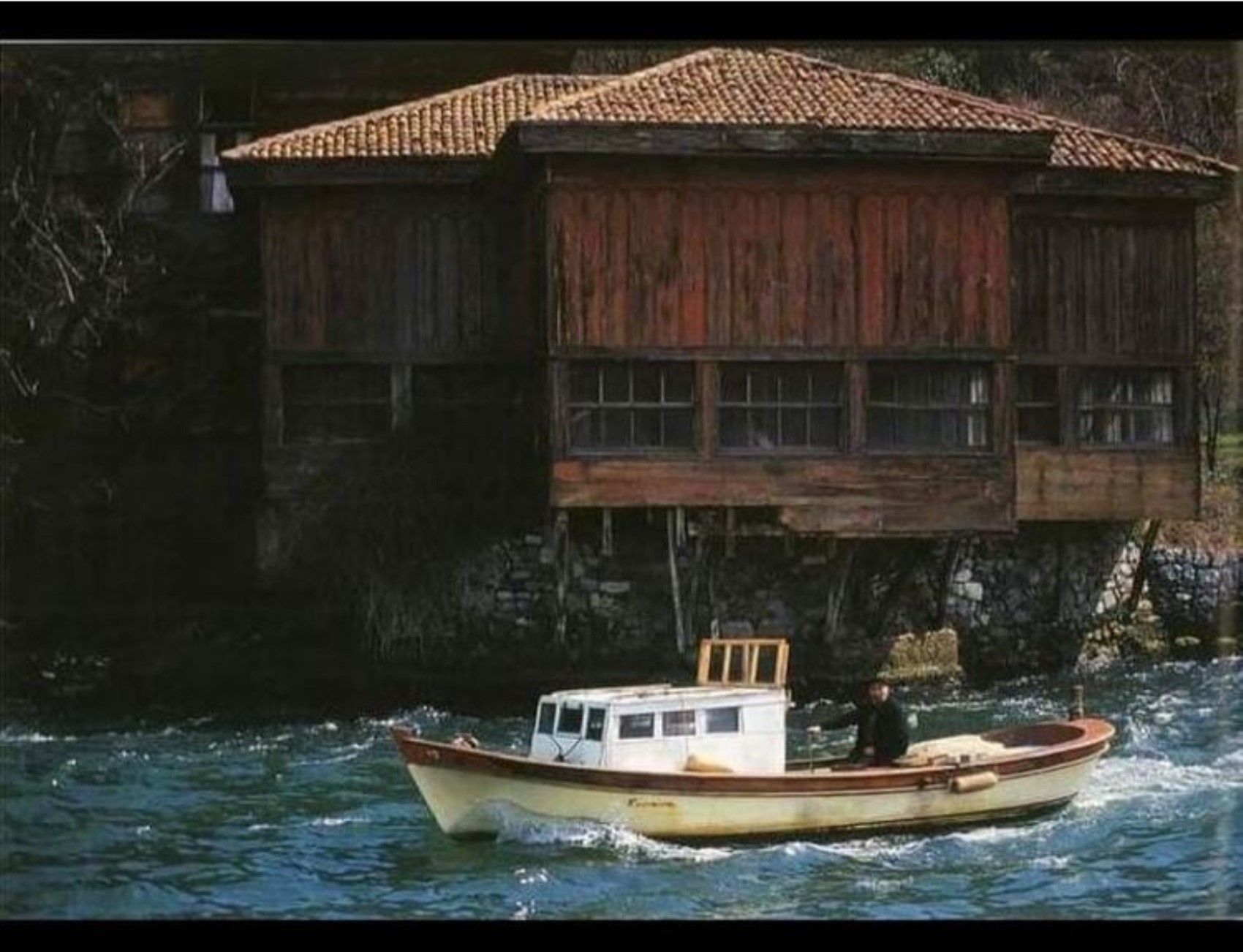
Image source: Levent Civelekoğlu (Archaeology Turkey)
THE CURRENT STATUS OF THE YALI
The dispute between the foundation trustee, the Foundations Administration, and the Istanbul Metropolitan Municipality (İBB) regarding the yalı and its land continues. Ağaoğlu—from the board of trustees—rented the yalı for 25 years in 2007 to restore and operate it, while the İBB assembly included the land of the yalı within the scope of green space.
More than three centuries have passed since the Karlowitz peace was celebrated with a banquet. The Divanhane of the yalı is still standing. It is waiting for the right decision to be made about it.
Most Read

Striking picture for Özgür Özel's 'New Party'

The PKK opening and Özgür Özel’s path!..

How did the newspapers view Özgür Özel's farewell to the CHP?

He killed his wife by slitting her throat: Their children witnessed the moments

What did the CHP do?

Özel’s new party move in the world press

The New CHP, against CEHAPE

Fire at TUSAŞ engine factory in Eskişehir under control

From self-efficacy to despair

Kılıçdaroğlu's first message on Özgür Özel's new party announcement