



Dear tango lovers and those who have given their hearts to tango, today is World Tango Day…
First of all, happy World Tango Day!
It is the dance of freedom, of revolution;
Of sorrow, of rebellion;
Of love, of passion;
Of grace, of nobility;
Of multiculturalism, of universality;
Of gender equality;
TANGO is the dance of resisting bans and oppression…
Born in Argentina, raised in Europe, and identified with the history of the Republic in our country, this magnificent dance was accepted as a WORLD HERITAGE by UNESCO in 2009, and December 11 was declared World Tango Day.
So, why December 11?
Because December 11 is the birth date of the legendary tango name Carlos Gardel…
He was born on December 11, 1890; he was the person who shaped tango music and dance with the tango pieces he wrote and sang, adding romance to the lively rhythm of tango. Initially accepted as a subculture, a street music, and despised and rejected by members of high society, tango was carried into elegant and sparkling dance halls thanks to Gardel's naive personality, velvety voice, and emotional compositions, and was embraced by elite circles as well. The films he starred in, parallel to Carlos Gardel's own fame, paved the way for tango to achieve worldwide renown.
Tango music came to life with Gardel; and Gardel accepted tango as his life.
When the French-born Argentine artist was asked “Where is your true homeland” during a tour of Spain in 1927, he replied, “My homeland is tango.”
On June 24, 1935, the plane he boarded for a tour crashed in Colombia, and Gardel and all the orchestra members died in the fire. In his short life of 44 years, Gardel managed to fit 770 songs, 514 of which were tangos.
'Adios Muchachos' is known as the last piece Carlos Gardel sang before the plane crash in which he died. It is very poignant that the piece means 'Goodbye Friends'. Out of respect for the master, no one in Argentina dances to this tango!
***
TANGO is multicultural, it is colorful…
The Cuban-origin music habanera, the striking dance of Andalusian culture Flamenco, the tarantella of Southern Italians, the candombe accents belonging to Africans brought as slaves to Uruguay, the polka of the Czechs, the mazurka of the Poles, the Hungarian czardas, the powerful marches of the Germans, and the emotional chansons of the French form the rich musical infrastructure of tango. In fact, in later years, even Chopin's waltzes and Verdi's operas would become tango pieces…
Tango is the name of the dance that brings together the continents of America, Europe, and Africa; where the fast, staccato, sharp rhythm of the Milonga meets the comfortable, wavy sway of the waltz; where the powerful beats of the drums embrace the melancholic melody of the bandoneon…
It is multicultural and colorful, but it is a dance where the leading role is crowned by black and red.
While black symbolizes the masculine, tough, and macho male character; red is the reflection of the rebellious and free woman, exuding pure sensuality…
The man is the one who 'leads', who provides direction, but he is only as successful as the extent to which he can highlight the woman's magnificent aesthetics. The woman is the 'follower', but she is also the one who inspires the man, meaning she manages him without letting it show.
It is close and provocative, yet equally distant and measured. It is the integration of two bodies, but it is also performed in a flow where the woman's feminine and the man's masculine characters are dominantly reflected…
Tango is miraculous… Two people who have never met, who have never danced together before, dancing in harmony and synchronization as if they had been working on a choreography together for years—what is this if not a kind of magic?
But above all, it is freedom.
Anarchist writer and activist Emma Goldman says: “If I can't dance, I don't want to be part of your revolution.”
Because revolutions are made for freedom… Where there is no freedom, one cannot speak of revolution, development, or civilization… Perhaps the secret of the passion that rebellious-spirited, activist women have for tango is hidden in this sentence.
For our country, tango also means revolution, freedom, civilization, gender equality, and modernization:
To represent the new image of the Republic of Turkey, tango was given a prominent place, especially in the celebrations of the anniversary of the founding of the republic, and this music was adopted as the musical expression of Turkey's modernization process.
The piece 'Mazi Kalbimde Bir Yara' (A Scar in My Heart from the Past), with lyrics by Necdet Rüştü Efe, composed by Necip Celal Andel, and sung by Seyyan Hanım, is the first tango with Turkish lyrics to be recorded on a record. The year is 1932. Today, this piece is still listened to with great appreciation…
Composition by Necdet Koyutürk – “Papatya Gibisin” (You Are Like a Daisy)
Compositions by Hasan Fehmi Ege – “Ayrılık Belki Ölümden Beter” (Parting Is Perhaps Worse Than Death), “Sana Nerden Gönül Verdim” (Why Did I Give My Heart to You)
Composition by Necip Celal Andel – “Sevdim Bir Genç Kadını” (I Loved a Young Woman)
These are the jewels of our Turkish tango history…
Tango singers such as Seyyan Hanım (Oskay), Afife Hanım, Birsen Hanım, Şecaattin Tanyerli, and Celal İnce are among the first to write their names in our history in golden letters…
However, I don't know how many of us know that our 'Art Sun' (Zeki Müren) also sang tango!
For example, I recommend you listen to the piece 'Sevgiden Usanmadı Gönül' (The Heart Never Tired of Love), composed by Hasan Fehmi Ege, sung by Zeki Müren.
Hasan Fehmi says this about Zeki Müren: “He interprets my tangos so well that he adds things I didn't write in the notes while composing, and he adds a new color to the tango.”
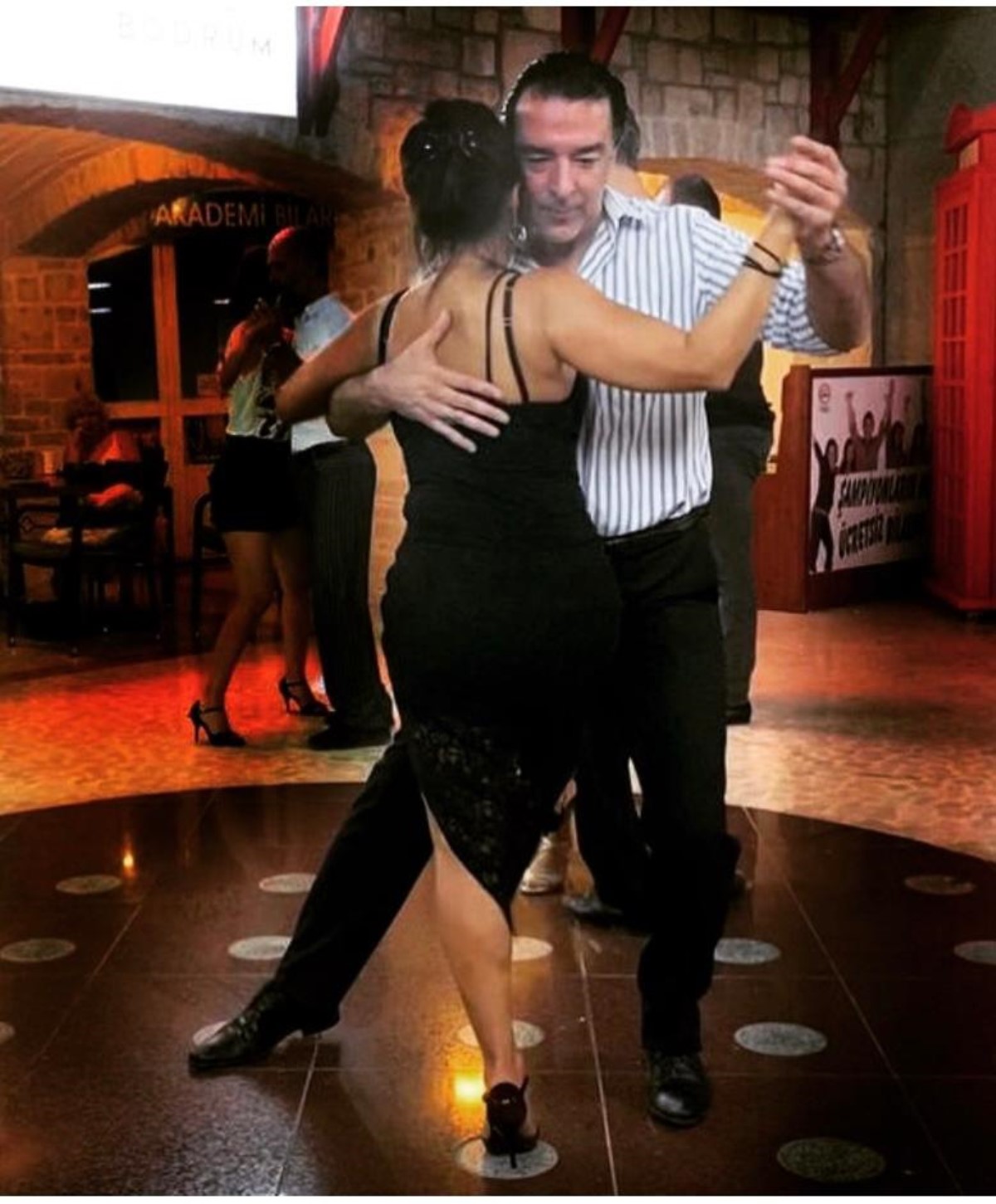
So, how many of us know that Atatürk sang tango?
One night, Hasan Fehmi Ege had finished his work at the venue where he worked in Istanbul and was about to return home. A few police officers entered the hall and asked sternly, “Who is Fehmi Ege?” Fehmi Bey said, “It is I, sir,” with fear. When they said, “You are coming with us,” he became even more excited. They set off in silence; Fehmi Ege was confused and unaware of where he was going. They arrived at the Pera Palace in Tepebaşı, and when they entered, they said, “Please, sir, the Gazi (Atatürk) has summoned you.”
He came face to face with the Great Ata in the ballroom; the orchestra was playing the tango 'Mehtaplı Bir Gece' (A Moonlit Night) at that moment. Atatürk asked, “Did you compose this tango?” He said hesitantly, “Yes, sir.” “Come on then, play it with your violin now, let's all sing it together,” he said.
Fehmi Bey was still very excited. Atatürk put one hand on Hasan Fehmi Ege's shoulder and sang the tango 'Mehtaplı bir gecede görüp sevmiştim onu' (I saw and loved her on a moonlit night) accompanied by his violin, and had the whole hall sing it.
Nothing helped the Republican administration, which was trying to find ways to bring men and women together in daily life, as much as tango. The Turkish society, which had not yet created its own urban entertainment tradition and dance, easily embraced tango. From its early years, republican balls, official invitations, engagements, and weddings were not opened without tango.
Turkey is also the only country where Gerardo Mathos Rodriguez's famous tango work, La Cumparsita, is played at almost every wedding.
***
Tango, which was born in the second half of the 1800s and spread to Europe from the beginning of the 1900s,
experienced its Golden Age starting from the 1930s until 1950. From the mid-20th century onwards, it was suddenly subjected to state bans. Military coups also dealt a blow to tango.
Tango lyrics were censored, coming together for dance was defined as an organizational act, famous tango cafes and cabarets were closed one by one, orchestras were disbanded, and tango artists became unemployed… American record companies also declared a commercial war against tango in a sense, and the public was directed towards rock 'n' roll and swing.
Parallel to losing its popularity in the world from the 1950s onwards, tango also lost its importance in Turkey… The name that brought tango back to life and broke new ground in the world is Astor Piazzolla. He is the founder of Tango Nuevo. During the same periods, the name that continued to keep tango alive in our country is Turkey's first and most important bandoneon musician, Orhan Avşar. With the orchestra he founded, he continued to play Argentine tango pieces in our country.
Tango began to revive in the world from the 1980s onwards. Tango, which was suppressed by juntas and fascist regimes in Argentina, was this time supported to spread to the whole world as a symbol of national culture. The popularity of tango as a dance in our country, which is generally adopted as a romantic song genre, began in the 1990s.
One of the names who had great effort in keeping this love alive and spreading it is Serdar Sungar. Sungar, who has brought tango lovers together with the Milonga nights he has organized uninterruptedly for nearly a quarter of a century at the Armada Hotel, has played a major role in Istanbul becoming one of the capitals of tango.
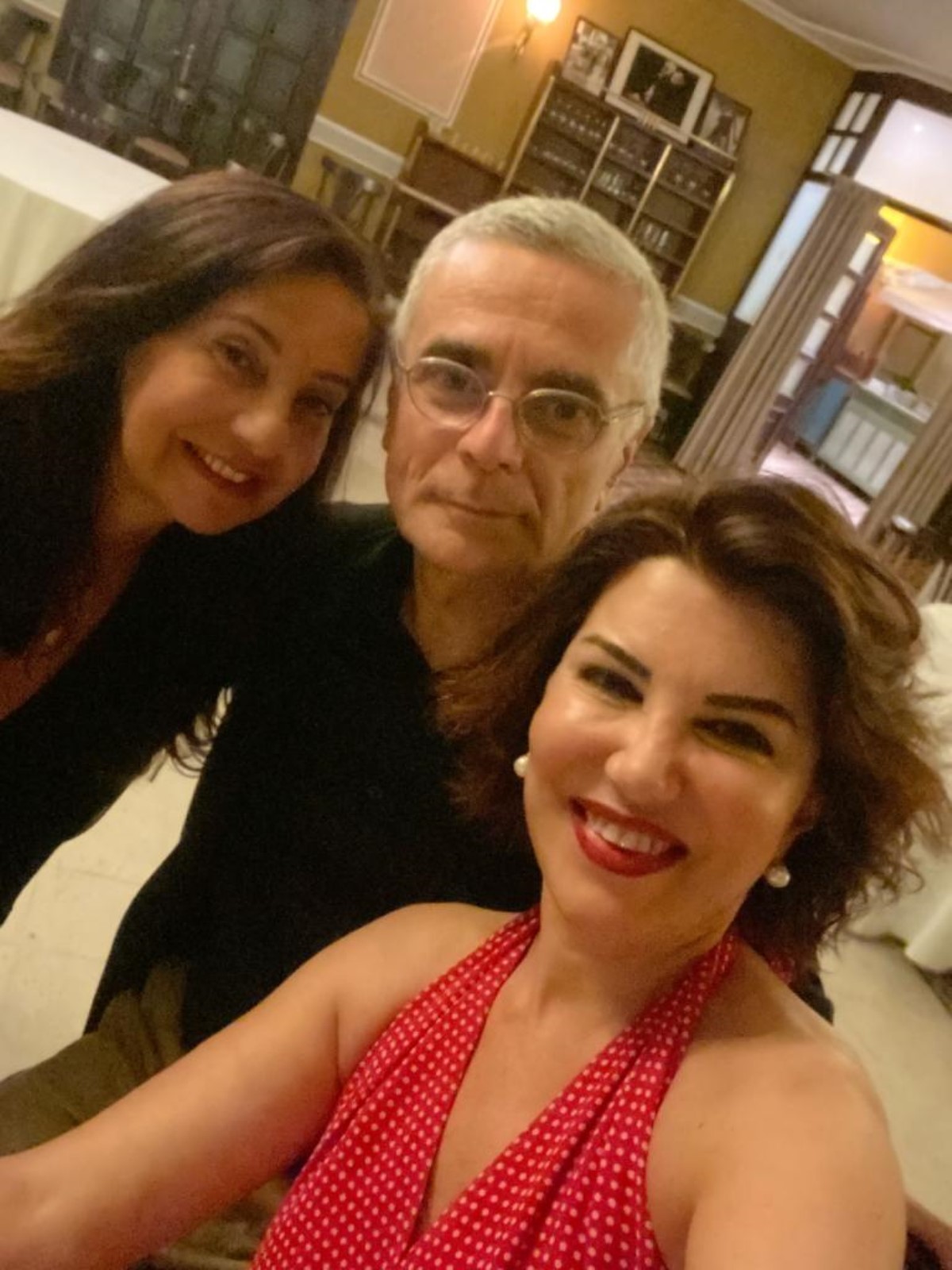
(Serdar Sungar, in the photo above, with his wife and Sedef Kabaş)
With the wish that tango will be loved more in our country every day, embraced by all segments, and that enjoyable milongas will be organized in every city of ours, happy December 11 World Tango Day…
World Tango Day – December 11, 2023/ Armada Hotel
Most Read

Striking picture for Özgür Özel's 'New Party'

Özgür Özel gives a dated response regarding the number of resignations

Forest fire in Antalya brought under control

The PKK opening and Özgür Özel’s path!..

How did the newspapers view Özgür Özel's farewell to the CHP?

He killed his wife by slitting her throat: Their children witnessed the moments

What did the CHP do?

Özel’s new party move in the world press

The New CHP, against CEHAPE

Fire at TUSAŞ engine factory in Eskişehir under control