



STONE IS HEAVY IN ITS PLACE-157. LET US NOT FORGET, LET US NOT LET BE FORGOTTEN
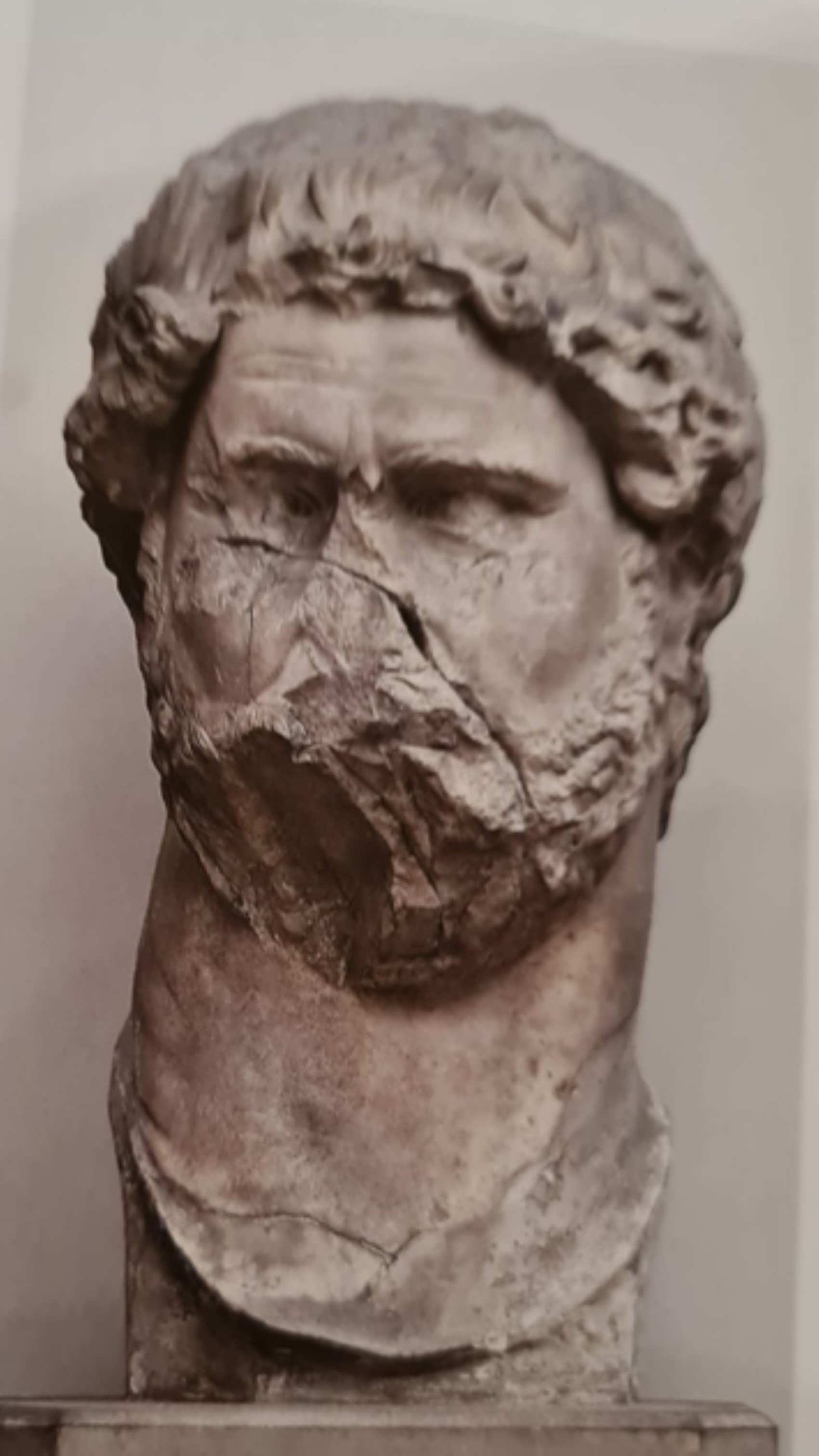
(The head of the Roman Emperor Hadrian statue.)
Anatolia possesses many historical artifacts that have survived due to their proximity to the present day. All of these are a legacy left to us by humanity and the past.
The mystery-filled structures of Urfa-Göbeklitepe, the houses of Konya-Çatalhöyük entered through the roof, the gold of the Lydians, the Pergamon of the Hellenes, and the Ephesus of the Romans carry the unique remnants of civilizations that existed in Anatolia.
In many places, time has left traces in the layers of the soil.
These traces also tell of cultures reflected in stone.
This reflection introduces us to many great people and leaders who lived in these lands, founded cities, and developed them.
One of the most striking of these is Hadrian (Hadrianus), who ruled the civilized world of that time and was the Roman Emperor between 117-138 A.D.
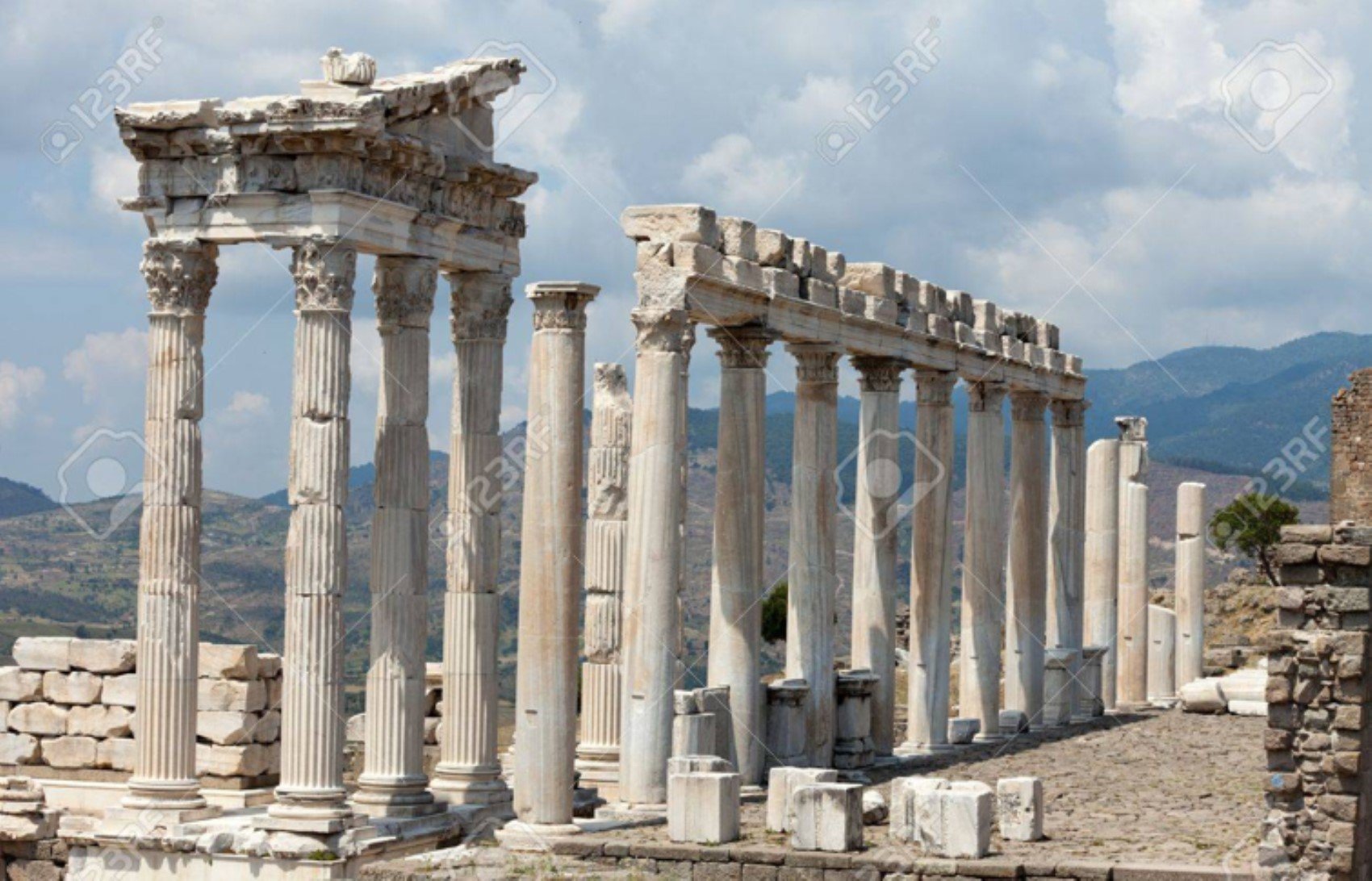
(Temple of Trajan on the Pergamon Acropolis)
Hadrian, who took over the administration from Emperor Trajan, tried to provide an environment where different peoples could live as a unified society under Roman rule within the imperial borders, rather than expanding the country's borders.
Except for the rebellion of the Jewish people, which he suppressed with violence, there was no major war or turmoil in the Empire.
Just as he founded many cities, Hadrian built monumental structures in many places from Rome to Athens, and from Pergamon to Alexandria.
The "Serapion" or "Temple of the Egyptian Gods," which the locals today call the "Red Basilica" (Kızılavlu), which he had built in Pergamon, is an incredible complex of structures with its thick brick walls, height, and long tunnels covering the Selinos stream.
With its striking structure and location, it shows that Egyptian culture extended as far as Western Anatolia.
Or perhaps Rome and Hadrian wanted to appear to respect and adopt the gods of the Egyptians in order to seize the abundance of the Nile valley.
For the rulers, appearing like the local people, acting as if they have accepted the beliefs of the poor or the oppressed, is the easiest way to exploit and plunder them.
On the other hand, Hadrian was mature enough to refuse to have the magnificent-looking temple, which began construction on the Pergamon Acropolis in the name of his predecessor Emperor Trajan, built in his own honor and name.
The powerful think that the more modest they appear, the more legitimacy they gain!
Hadrian is a person who lived with benevolence and cruelty, curiosity and arrogance together.
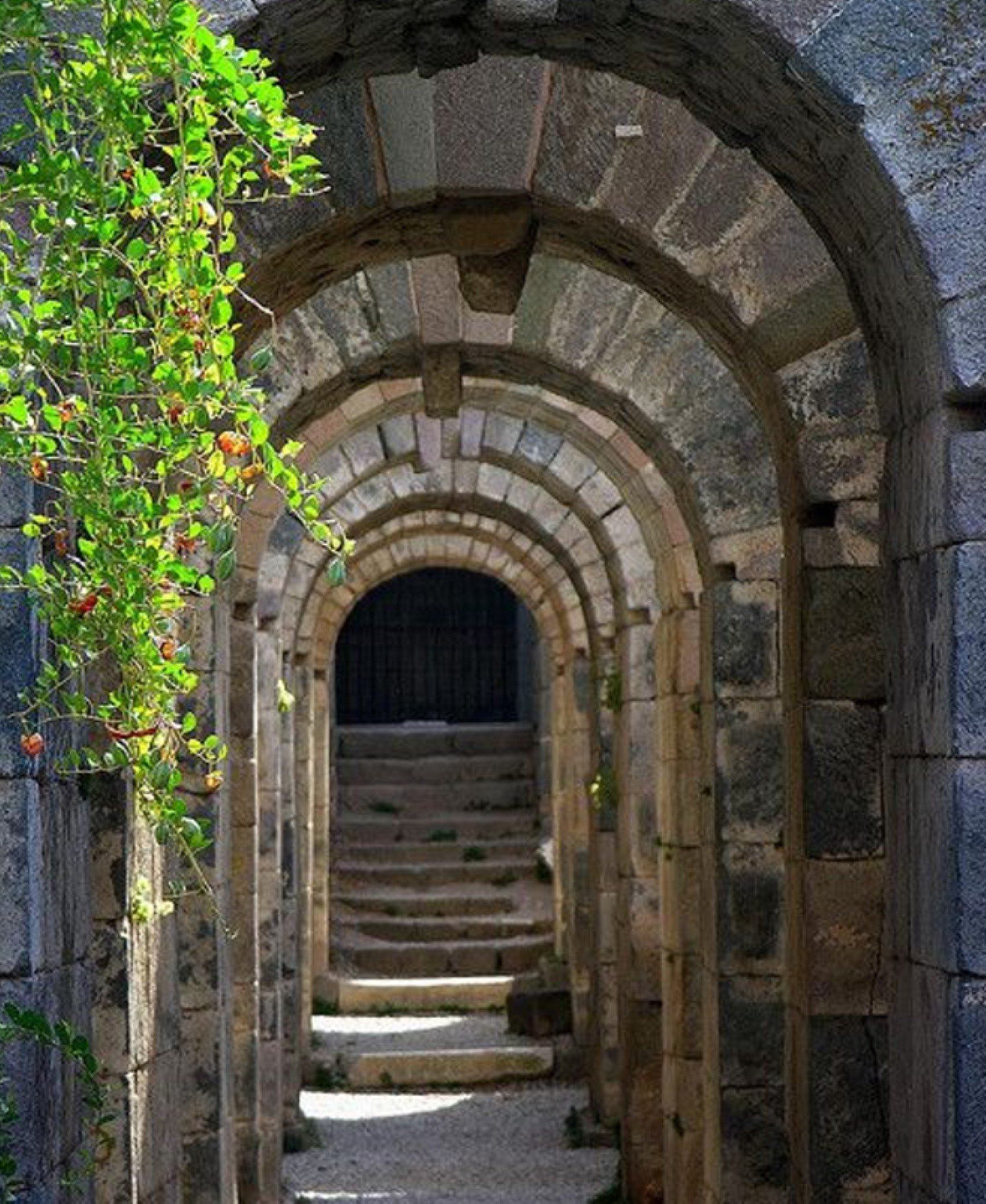
(Vaults supporting the Temple of Trajan)
***
The delicate Temple of Trajan, built with great care in a position on the Pergamon Acropolis that could be seen from very far away, could not escape the wrath of Christian fanatics who were hostile to statues and the Umayyad Arabs over time; it was demolished and destroyed.
A part of it was buried under the soil, and its pieces became stones in the walls of the castle ramparts.
It slept for years in the arms of the Pergamon wind.
Among the magnificent works of Bergama, which were looted through smuggling and dubious permits from 1864 to 1878 and 1886 in the late 19th century, were the works belonging to this temple that were unearthed by excavation.
In 1879, during the excavations carried out at the site of the Temple of Trajan, two large heads of two magnificent statues were found by an engineer named Carl Humann, thieves disguised as archaeologists like Aleksander Conze, and the gang they established with the support of the German State.
This was the place where the vaults supporting the plane on which the temple was built had collapsed.
The German smugglers were digging and tearing up everywhere on the Bergama Acropolis to find artifacts.
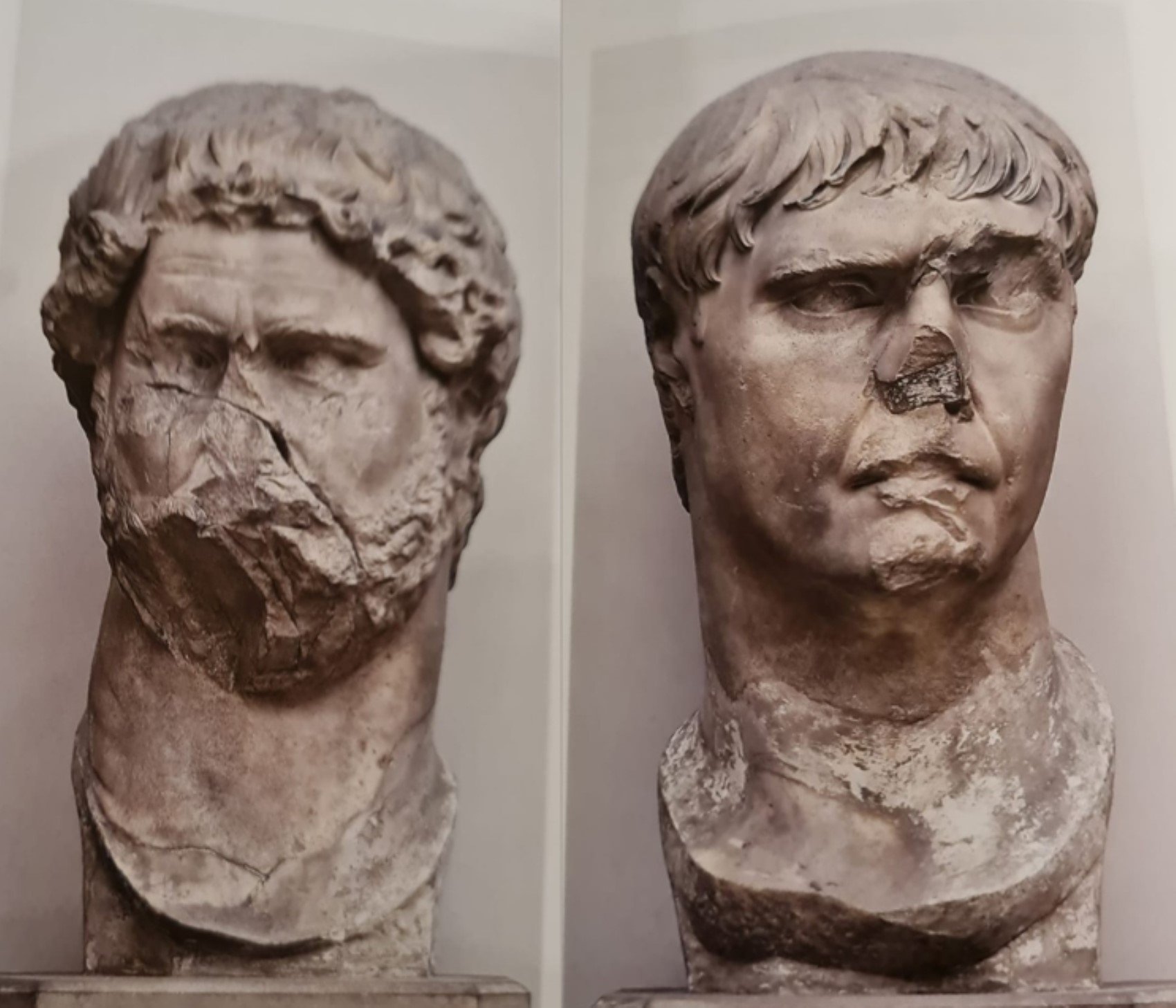
(Abducted Hadrian) (Abducted Trajan)
One of the heads found belonged to Emperor Trajan and the other to Hadrian.
The height of the giant head was 73 cm, its width 42 cm, and its depth 47 cm.
A huge head the same size as Trajan's head.
It likely belonged to the body of a 5-meter-tall statue of Hadrian.
The people of Pergamon had made such large statues to elevate these two great emperors to the level of gods and had placed them inside the temple they built on top of the Acropolis.
The face of the Hadrian statue has a stern expression and a noble appearance.
The chin, mouth, and nose of the portrait were shaped with distinct emphasis.
He had a short beard, and his eyes were almond-shaped.
He had distinct wrinkles on his forehead and the bridge of his nose. This showed him as a mature man.
His hair was short and curly, as if stuck to the top of his head, descending towards the forehead in spiral-shaped curls. These curls took on a round shape above his temples.
It clearly carried the style and manner of the Pergamon/Bergama School of Sculpture, which left its mark on world art history, gave emotion and action to stone and marble, and was the grandfather and inspiration of Medieval Baroque and Gothic art.
The marble head of Hadrian found during the excavations is dated to 138 A.D.
The left temple, mouth, chin, and nose of the statue's head have been damaged.
Either fanatical Christians or savage Umayyads caused the damage, or a careless pickaxe in the hands of smugglers broke it while it was being unearthed, or it fell and broke on the road, or it was damaged by the bombs of World War II.
Now, the great Emperor Hadrian is a prisoner in the Berlin Museum/Prison, just like the pieces of the Zeus Altar and other Bergama Statues. Identification number: “SMB, AvP VII 282”.
This Museum/Prison, which is a building built on a swamp inside a river in Berlin and sinking a little more every day, is closed until 2037.
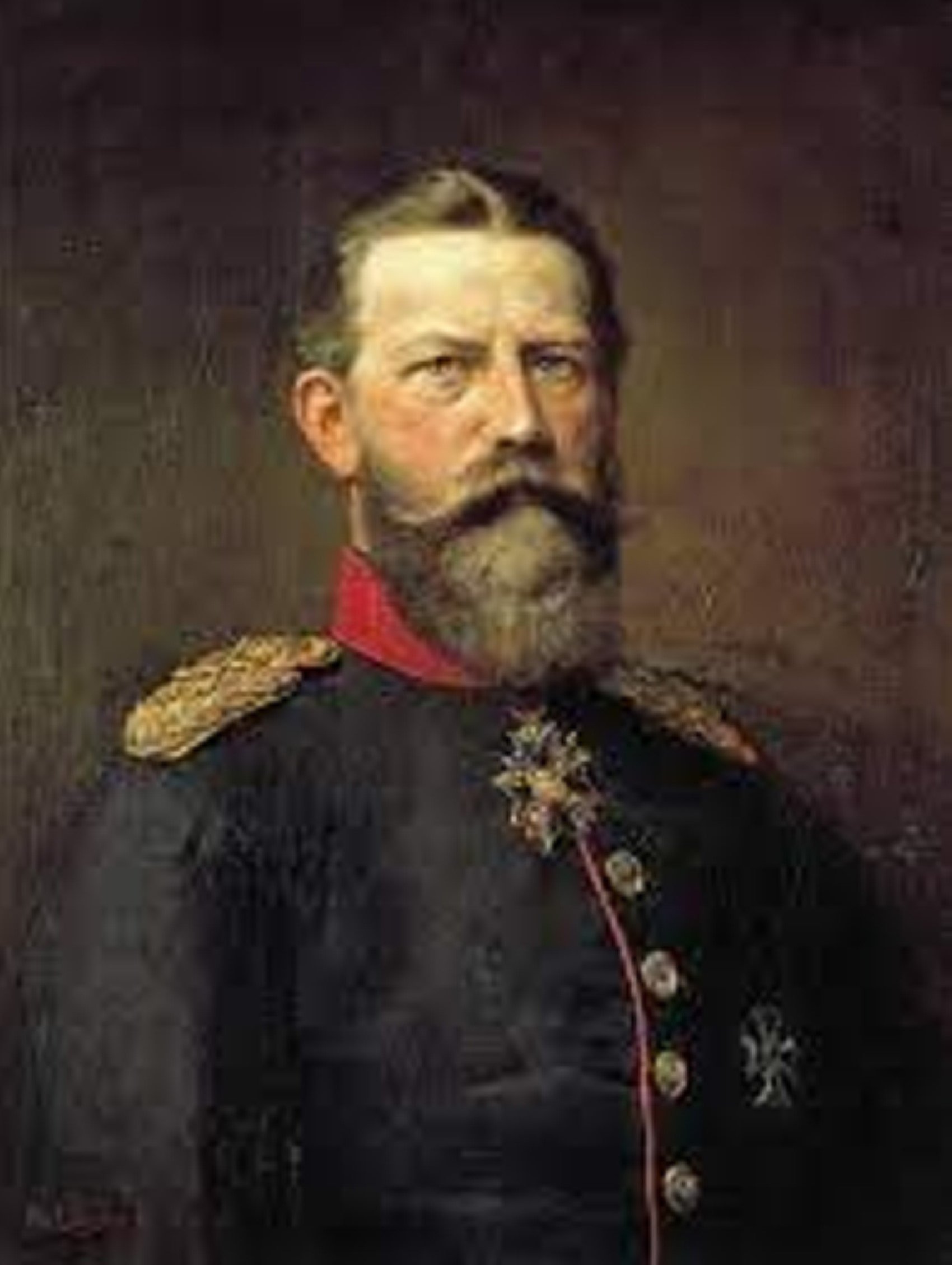
(The patron of the gang that robbed Bergama, the Prussian/German Prince and King Frederick III)
This work found in 1879, the giant head of Hadrian, was smuggled to Germany in 1880.
Those who took them from Bergama to Germany are the organized smuggling network headed by Carl Humann, Aleksander Conze, Ernst Curtius, and Prince Frederick III.
These thieves, who were in search of identity and stole the treasures of Bergama under the guise of science, should never be forgotten. Nor should those who backed them!
These works are only free in the lands to which they belong. Bringing them back home is a debt of humanity.
Respect to Hadrian!
THE ZEUS ALTAR AND BERGAMA ARTIFACTS DO NOT BELONG TO COLD AND FOGGY BERLIN, BUT TO BEAUTIFUL BERGAMA. THEY MUST DEFINITELY COME BACK, THEY MUST RETURN HOME!
(Source: Pergamon Panorama der Antiken Metropole: Eine Ausstellung der Antikensamml und der Staatlichen Museeen zu Berlin (2011): Compiled by: Ralf Grussinger, Volker Kastner and Andreas Scholl. P.573/// http://www.my-favourite-planet.de/english/middle-east/turkey/pergamon/pergamon-photos-01-014.htm////Stone is Heavy in its Place-153)
Sefa Taşkın
27.04.2025
Karşıyaka/İzmir
Most Read

Striking picture for Özgür Özel's 'New Party'

The PKK opening and Özgür Özel’s path!..

How did the newspapers view Özgür Özel's farewell to the CHP?

He killed his wife by slitting her throat: Their children witnessed the moments

What did the CHP do?

Özel’s new party move in the world press

Fire at TUSAŞ engine factory in Eskişehir under control

The New CHP, against CEHAPE

From self-efficacy to despair

Kılıçdaroğlu's first message on Özgür Özel's new party announcement