



The unique and beautiful Altar of Zeus in Bergama/Pergamon, one of the most important historical sites in Anatolia, was taken to Germany between 1864-78 through blatant smuggling, and between 1878-1886 through dubious permits.
Would the German theft network led by engineer Carl Humann, which smuggled countless historical artifacts from Bergama to Berlin along with the Altar of Zeus, ever leave behind such a beautiful statue as the one in the picture?
After the German Imperialism of that time satisfied its own historical curiosity, fulfilled its sense of ownership, and convinced itself of how noble it was, it locked this beautiful woman's bust/statue in the Berlin Museum, which resembles a thick-walled prison in the middle of a river, surrounded by water.
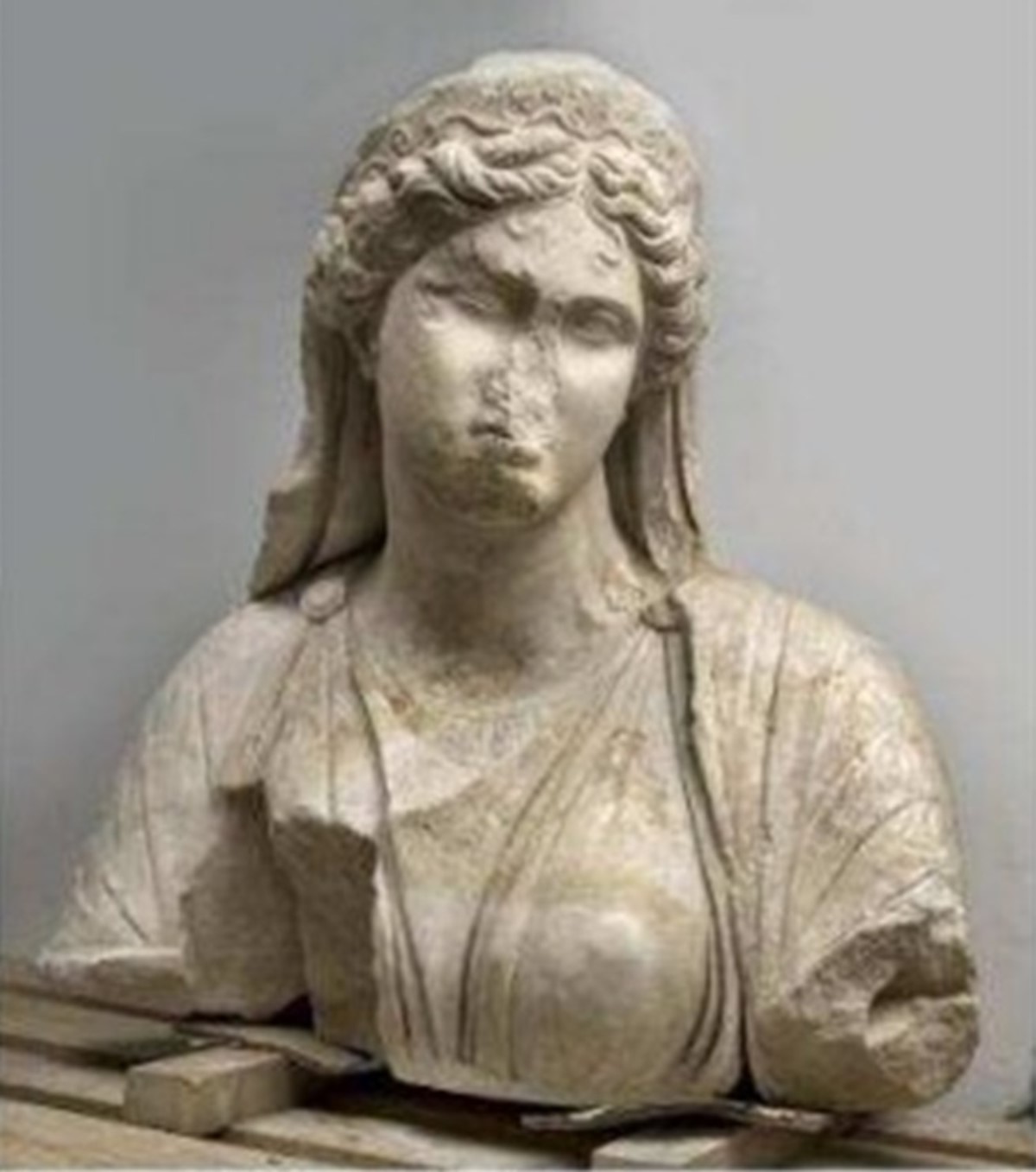
Art historians report that this statue may be the image of one of the queens of Pergamon, who ruled over Western Anatolia in the Hellenistic Period, in the 3rd-2nd century BC.
It is also thought that this beautiful lady, whose appearance is surrealistically unique, could be one of the noble women of the city.
Unlike the kings, no identified statue or bust of any of the Queens of Pergamon has been found to date.
Yet, Queens such as Satyra, Antiochis, Apollonis, and Stratonike lived on the windy Acropolis of Pergamon.
Apollonis from Cyzicus/Erdek was the mother of King Eumenes II, who completed the construction of the beautiful Altar of Zeus, and Stratonike from Cappadocia was his wife.
This magnificent marble work is dated to the 2nd quarter of the 2nd century BC, likely to the time of the King of Pergamon, Eumenes II (197-159 BC).
To the period when Apollonis and her daughter-in-law Stratonike were the ladies of the Pergamon palace.
They were extraordinary women who assisted their king sons and husbands in the administration of the country.
Perhaps this elegant bust belongs to one of them.
It was said in the gossip of Rome, which was a dull city at the time, that the Queens of Pergamon wore gold-embroidered garments!
The wealth and brilliance of Pergamon were eye-catching!
The hair of this noble lady, which is likely not just a bust but the upper part of a statue, has been carved strand by strand onto the marble. It wraps around her forehead like a crown.
She has covered her head with the shawl she draped over her back like a veil. Her garment, which tightly hugs her body, also reveals the beauty of her physique.
The fact that she tilts her head slightly to the left gives a completely different air to the lady's appearance.
Innocence?
At the end of the 19th century, an organized smuggling network led by a German engineer named Carl Humann found the statue of this uniquely beautiful lady from Bergama on the Bergama Acropolis, on the terrace where the Altar of Zeus is located, at the northeast corner of the Altar.
Next to it was another marble female statue head, described as a “seductive elegance, beautiful woman's head.”
These marble works were unearthed by digging. They were torn from the bosom of Bergama.
In other words, if they had not been dug up, removed, smuggled, or taken abroad through dubious means, they would have slept under the ground until the Republic of Turkey unearthed them in the near future.
They would be in their homeland, in Bergama, not in foreign soil in Berlin.
The dimensions of the beautiful woman's statue are 65 x 68 x 47 cm. The height of her face from chin to hair is 20.5 cm.
The year it was found in Bergama is not reported in today's Berlin Museum/Prison records. Information regarding its removal is not provided.
It was likely either smuggled or taken abroad with a dubious permit as well.
Museum/Prison Number in Berlin: “AvP VII 87”.
Again, without any shame or embarrassment, German authorities called it “Prussian (the former name of Germany) Cultural Heritage,” just like the Altar of Zeus.
By the command of imperialism, Bergama marble suddenly became Berlin stone!
What an absurdity!
Should you laugh or cry?
THE ALTAR OF ZEUS AND THE ARTIFACTS OF BERGAMA DO NOT BELONG TO COLD AND FOGGY BERLIN, BUT TO BEAUTIFUL BERGAMA. THEY MUST DEFINITELY COME BACK, THEY MUST RETURN HOME!
(Source: http://www.smb-digital.de/eMuseum, Database-Antikensammlung), https://www.deutsche-digitale-bibliothek.de/item/PGPPNZZACCVUYJKDIAYRBZLOEQYQTDWS=
Most Read

Striking picture for Özgür Özel's 'New Party'

Özgür Özel gives a dated response regarding the number of resignations

Forest fire in Antalya brought under control

The PKK opening and Özgür Özel’s path!..

Houthis strike Saudi-owned tanker

How did the newspapers view Özgür Özel's farewell to the CHP?

What did the CHP do?

Özel’s new party move in the world press

The New CHP, against CEHAPE

4 drones shot down near US Consulate General in Erbil