



A STONE IS HEAVY IN ITS PLACE-160. LET US NOT FORGET, LET US NOT LET BE FORGOTTEN.
“While boasting of his bravery, the Copt reveals his theft.”
“This expression is used in Turkish for situations where a person, while trying to boast or criticize someone else, inadvertently reveals their own flaw, mistake, or crime.”
It is a concise idiom used to mean “giving oneself away.”
It is generally used to describe people who, while trying to present a behavior as a virtue, actually expose their own wrongdoing or defect.
If this old-language saying is translated literally, it means, “The Copt, while describing his bravery, tells of his theft.”
The word “Copt” is an expression used for an individual of the Christian community of Egypt, which was under Ottoman rule at the time, referred to as Copts.
These remarkable words belong to Koca Râgıb Pasha.
Koca Râgıb Pasha (1757–1763) was an Istanbul-born Ottoman statesman and divan poet. He also served as Grand Vizier.
He is an important figure, especially in the reform movements after the Tulip Era and in the simplification of literature.
Koca Râgıb Pasha is known for his simple, concise, and meaningful poems. He generally wrote informative, advisory, didactic, and realistic couplets.
***
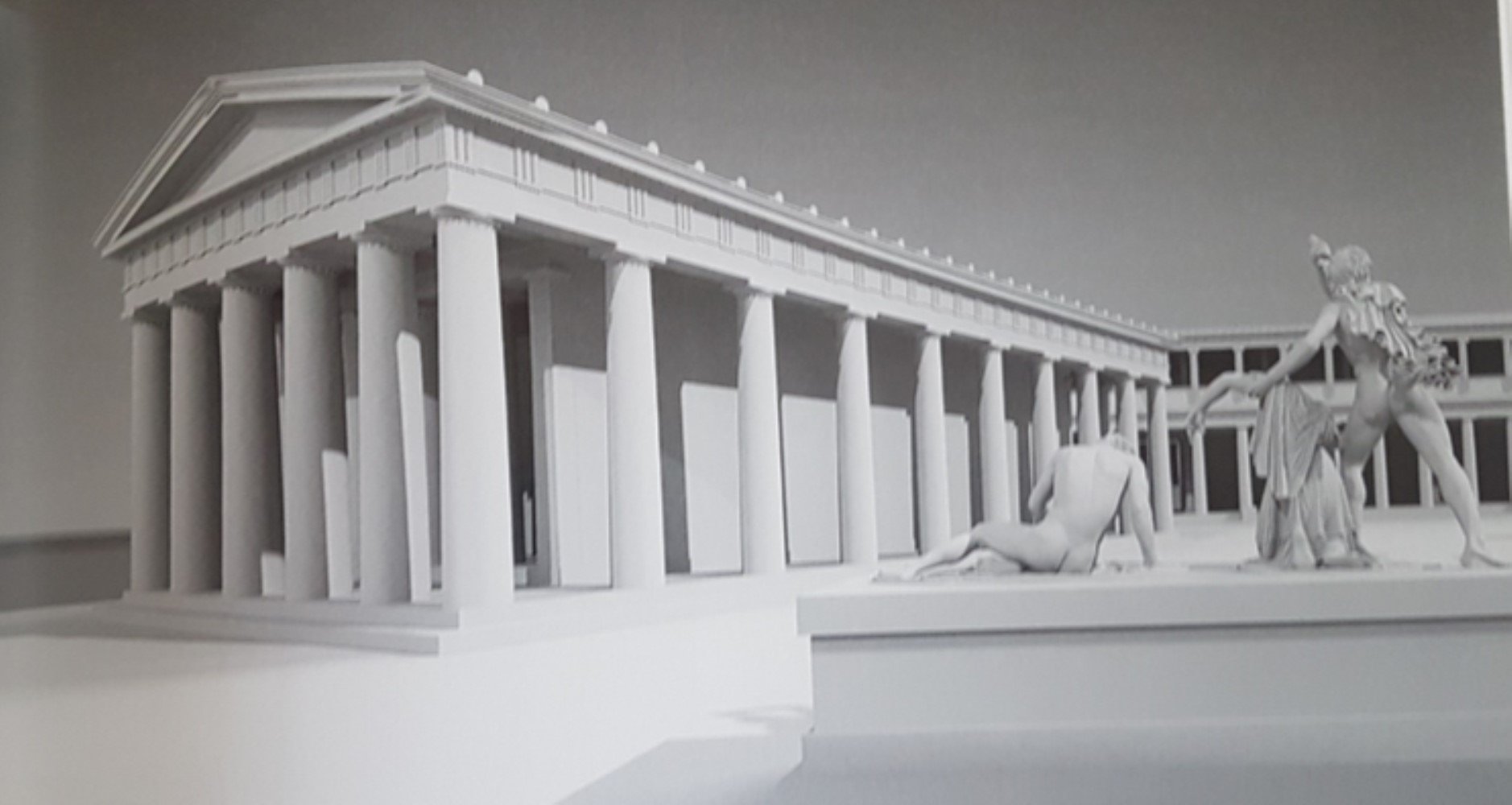
(The Galatian monument erected on the Pergamon Acropolis and the Pergamon Library - Reconstruction)
So, what is the relationship between this expression and our saying, “A stone is heavy in its place”?
Let us go back a bit!
In the 4th century BC (2500 years ago), the Galatians (Celts), a people likely living in Central Europe, scattered in all directions under the conditions of that day.
The Greeks still call France “Gallia.” There are lands named “Galicia” on the Poland-Ukraine border and in the northwest of Spain.
It is even claimed that the name Portugal comes from “port of the Gauls.”
Today, on the island of Britain, there is a country called Wales, which is part of the United Kingdom. It is known that Celtic (Galatian) communities who speak their own unique languages live there, as well as in Ireland and Scotland.
The Galatians, who scattered in all directions, also arrived in Anatolia around 278 BC.
They settled in the central part of Anatolia, in the Ankara-Eskişehir region. Later, this place was named “Galatia.”
It is said that they gave their name to the “Galata” district of Istanbul, where they likely stayed for a while on their way.
The Galatians, who were large-bodied, mostly red-haired, and fought to the death alongside their wives, soon forced the Anatolian peoples to pay tribute.
During that period, after the death of Alexander the Great of Macedon, who conquered lands stretching from Greece to Afghanistan and Egypt, Pergamon, which established a wealthy kingdom in Western Anatolia during the power struggle among his commanders, was also getting its share of these tributes.
From time to time, it refused to pay these tributes and entered into conflicts with the Galatians.
The Pergamon Kingdom, ruled by the Attalid dynasty of Western Black Sea origin, marched on the Galatians who were causing them trouble after it became sufficiently powerful, and defeated them.
However, the Pergamenes were so impressed by the fighting spirit of the Galatians and their solidarity among themselves that they had their statues made and erected a monument consisting of these statues in the city center.
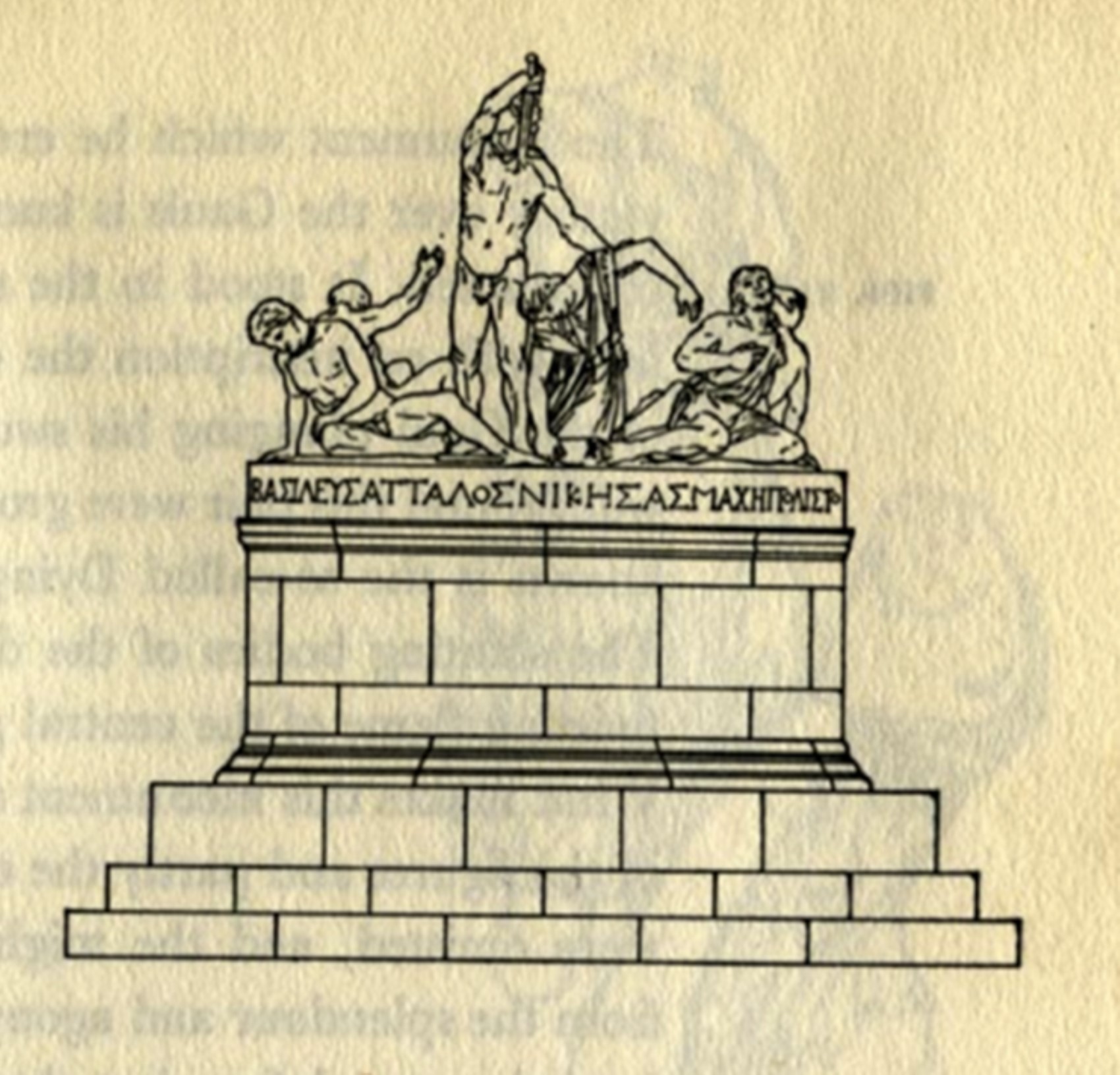
(The Galatian monument erected on the Pergamon Acropolis - Drawing)
At the center of this monument was a statue of a Galatian warrior and his wife; realizing he would be defeated in battle, he first killed his wife, with whom he fought, to avoid surrendering and falling into the hands of his enemy, and then plunged his sword into his own neck.
Statues of wounded, dying, and helmeted Galatian soldiers also surrounded this magnificent composition.
It is reported that the monument was made in the 3rd century BC by Epigonos, the sculptor of the Pergamon royal court.
The emotional intensity and realism in the statues are at a surprising level.
The pain, honor, and acceptance of defeat of the warriors are depicted in the work in a very impressive way.
Muscle structures, scars, and facial expressions are given in all their details.
The enemy Galatians are not reflected as barbarians, but as honorable and tragic figures.
The stance of these statues, which have a dynamic composition, is mobile and in a spiral form.
This monument and the statues are among the most unique examples of the sculpture technique created in Pergamon/Bergama, which would influence Baroque and Gothic art in later ages and bring movement and emotion to stone.
At the same time, with the story it tells, this monument was made with an understanding that respects and exalts the enemy it fought and defeated.
In a sense, a political and ideological stance.
This approach is also called “Pergamon Humanism.”
A subtle perspective! But inclusive!
The understanding of “Kill the brave man but do not deny his due!” is reflected in a very elegant way.
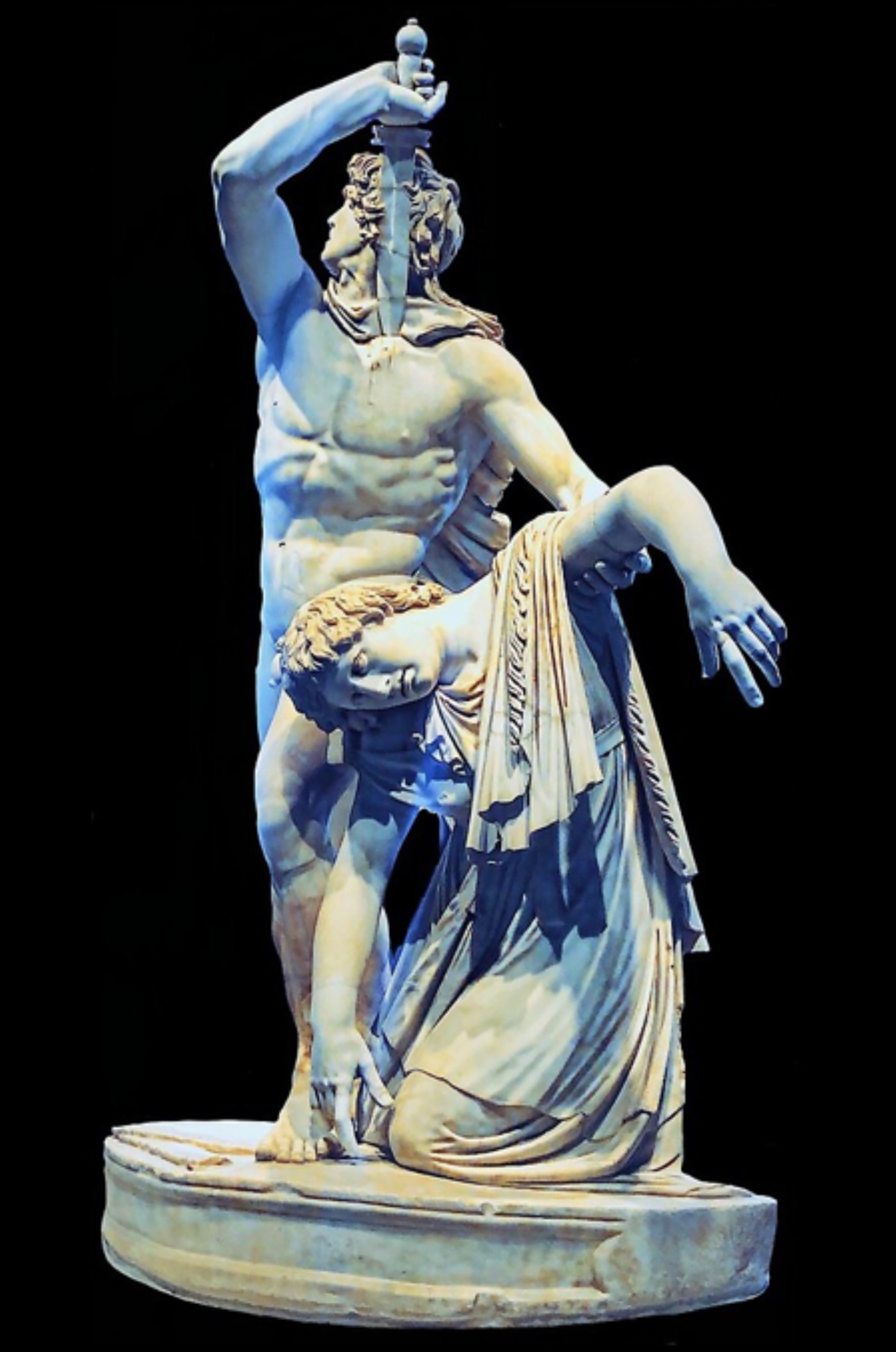
(The Galatian Warrior who kills himself and his wife)
****
For years, these statues conveyed the idea of peace and mutual understanding to people on the Pergamon Acropolis, on the City Hill.
In later years, in 133 BC, the city and the country fell into the hands of the Romans.
Nero, who was the emperor of Rome between 54-68 AD, who was also said to have “burned Rome,” and who was known for his erratic behavior, which was governed first by a republic, then by an empire and a dictatorship, also caused great damage to Pergamon, one of the jewels of Anatolia.
Wolfgang Radt, who directed the archaeological excavations in Bergama between 1971-2005 on behalf of the German Archaeological Institute (DAI) affiliated with the German State, explained the subject in his book “Pergamon,” written in 1988, and made an interesting and astonishing notification.
With the translation of Suzanne Tammer, who translated the book into Turkish:
“When the Roman Emperor Nero... ordered the bringing of works of art from all over Asia and Greece for the beautification of Rome and his new palace, the Domus Aurea... (in 64 AD), all the statues in Delphi and Olympia (in Greece) were taken. The statues from Pergamon, which reminded of the victories the Pergamon kings won against the Galatians, were also taken.”
“It was of no use that Pergamon tried to resist this art theft by using force.”
(Es half nichts, dass Pergamon sich diesem Kunstraub mit Gewalt widersetzte.)
However, Soranus, the Roman Governor of Asia, did not harm the Pergamenes who opposed Emperor Nero’s art agents. He was an honest man in these matters, but he later paid for this stance with his life in Rome.
In other words, the Roman Emperor Nero had the Galatian statues of Pergamon taken away despite the resistance of the Pergamenes.
So, the Pergamenes had opposed this abduction.
There were also Romans who thought like the resisting Pergamenes and did not consent to the abduction of the works; later, Nero had them killed.
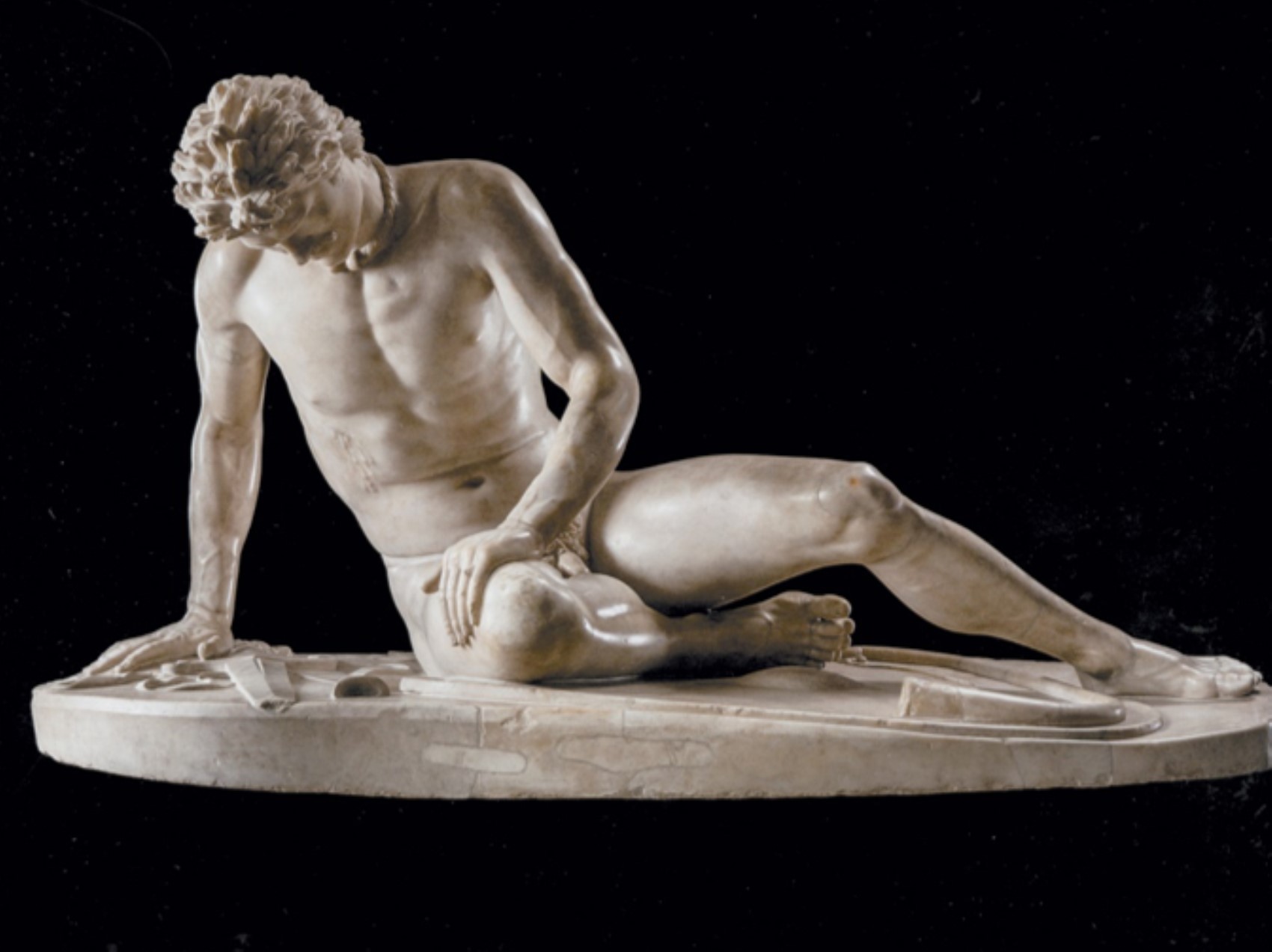
(Dying wounded Galatian warrior)
***
It is claimed that these stolen, unique marble statues, which remained in Rome for centuries and decorated the palaces of the nobles, were actually made of bronze; and that those currently available are their marble copies!
Is it a lie or the truth?
Were the ones abducted the bronze originals of the statues, or their marble copies?
Who could have made a marble imitation of a bronze statue by a magnificent sculptor of the ancient age like Epigonos later on?
Most likely, the Galatian statues taken from Pergamon to Rome are the marble originals shaped by the hand of Epigonos.
These statues, which were found in the 17th century in the garden of the Villa Ludovisi in the Roman countryside, are still in Rome today.
Villa Ludovisi is a magnificent country house built in the same century by Cardinal Ludovico Boncompagni Ludovisi on Rome’s Pincio Hill.
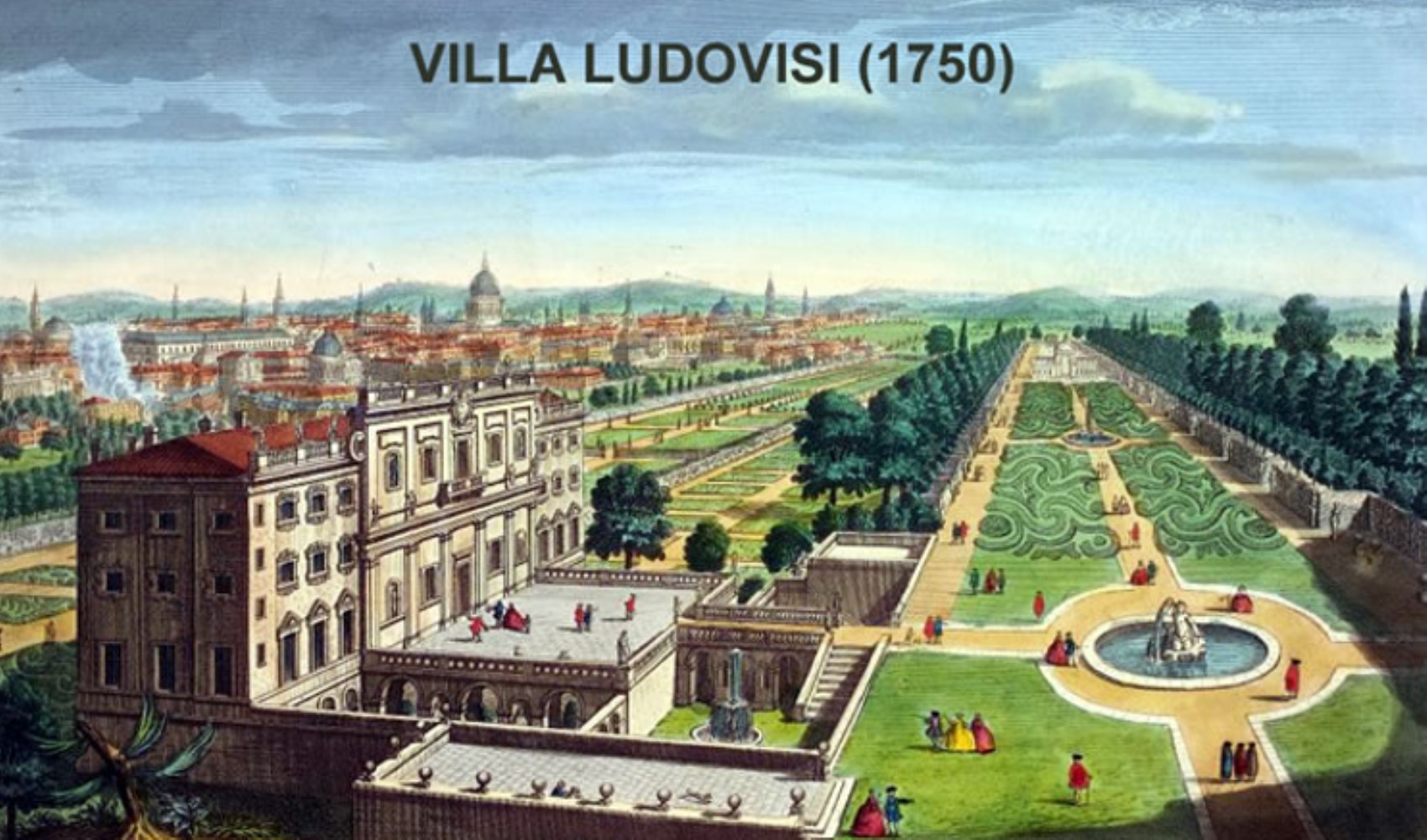
The “Galatian Killing Himself” statue, one of the pieces of the Pergamon Galatian monument, is currently on display at the Palazzo Altemps / National Roman Museum in Rome.
The “Dying Galatian Soldier” and “Helmeted Galatian” statues are located in the Capitoline Museums (Musei Capitolini) in Rome.
The other two statues that should be there are missing.
Perhaps they are hidden in a rich person’s private collection.
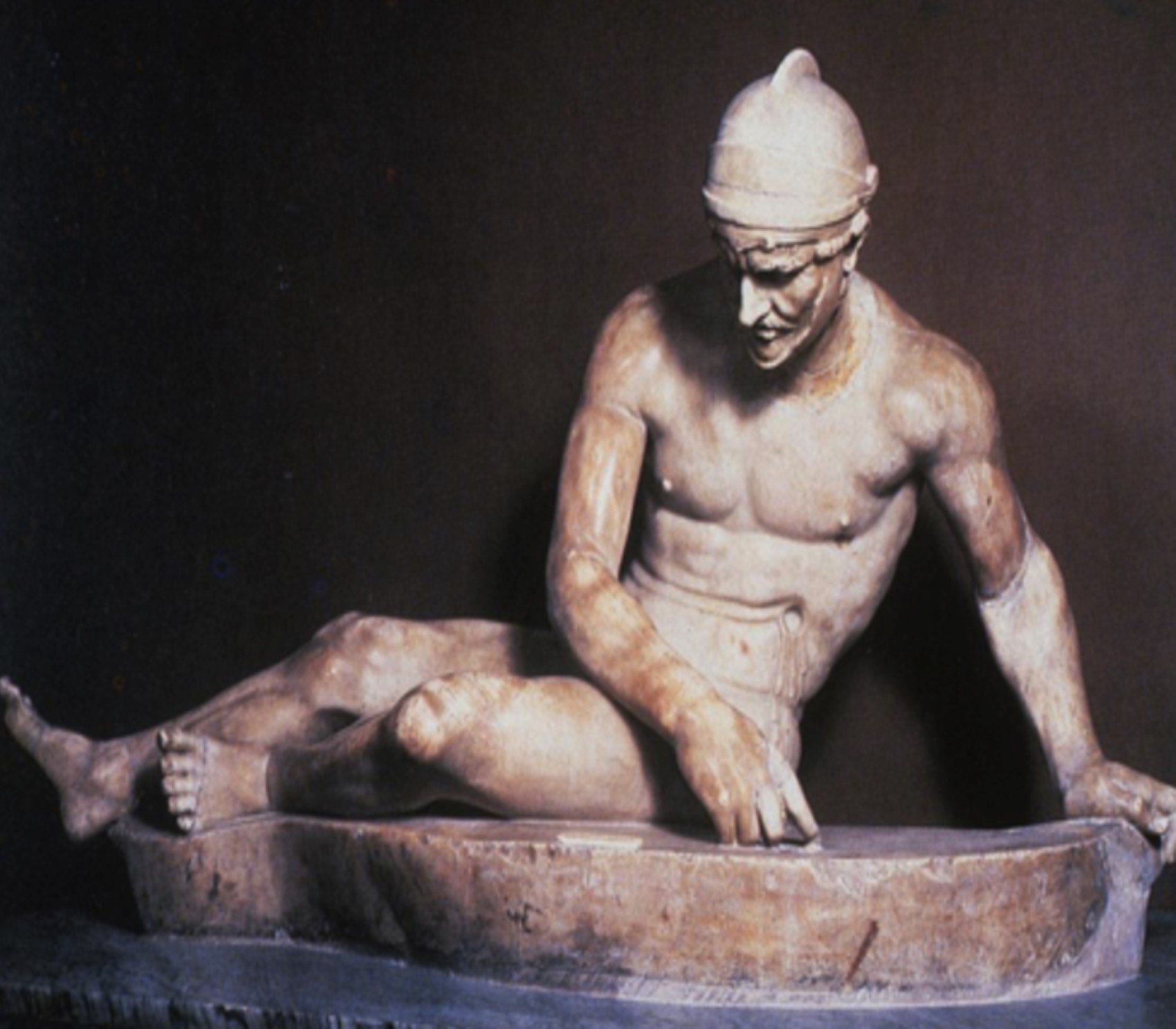
(Dying helmeted Galatian warrior)
***
Regarding the taking of these magnificent statues from Bergama to Rome, the assessment made and the words used by the Pergamon expert, German archaeologist Wolfgang Radt, who lived and excavated in Bergama for many years, are entirely appropriate.
Who would not want to sign under it?
“The Roman Emperor Nero used his imperial power to take the Bergama statues to Rome. This situation is an ‘art theft’ (Kunstraub).”
The thieves are the agents of the Roman Emperor Nero.
This is what Wolfgang Radt says; he is telling the truth!
However, the same Radt, while providing some information about the taking of the Zeus Altar pieces and statues, which were smuggled from Bergama to Berlin at the end of the 19th century, and the actions of Carl Humann, who was the master of this business, does not define this as “theft” or this business as “smuggling.”
To this day, no such statement by Radt has been heard.
As a scientist, it is astonishing that he does not oppose the term “Preußischer Kulturbesitz” (“Prussian Cultural Heritage”) used for Bergama works in the records of the collapsing Pergamon Museum/Prison on an island sinking into the mud on the Spree River in Berlin — even though he knows that this business is a “theft.”
Yet science is pure, clean!
***
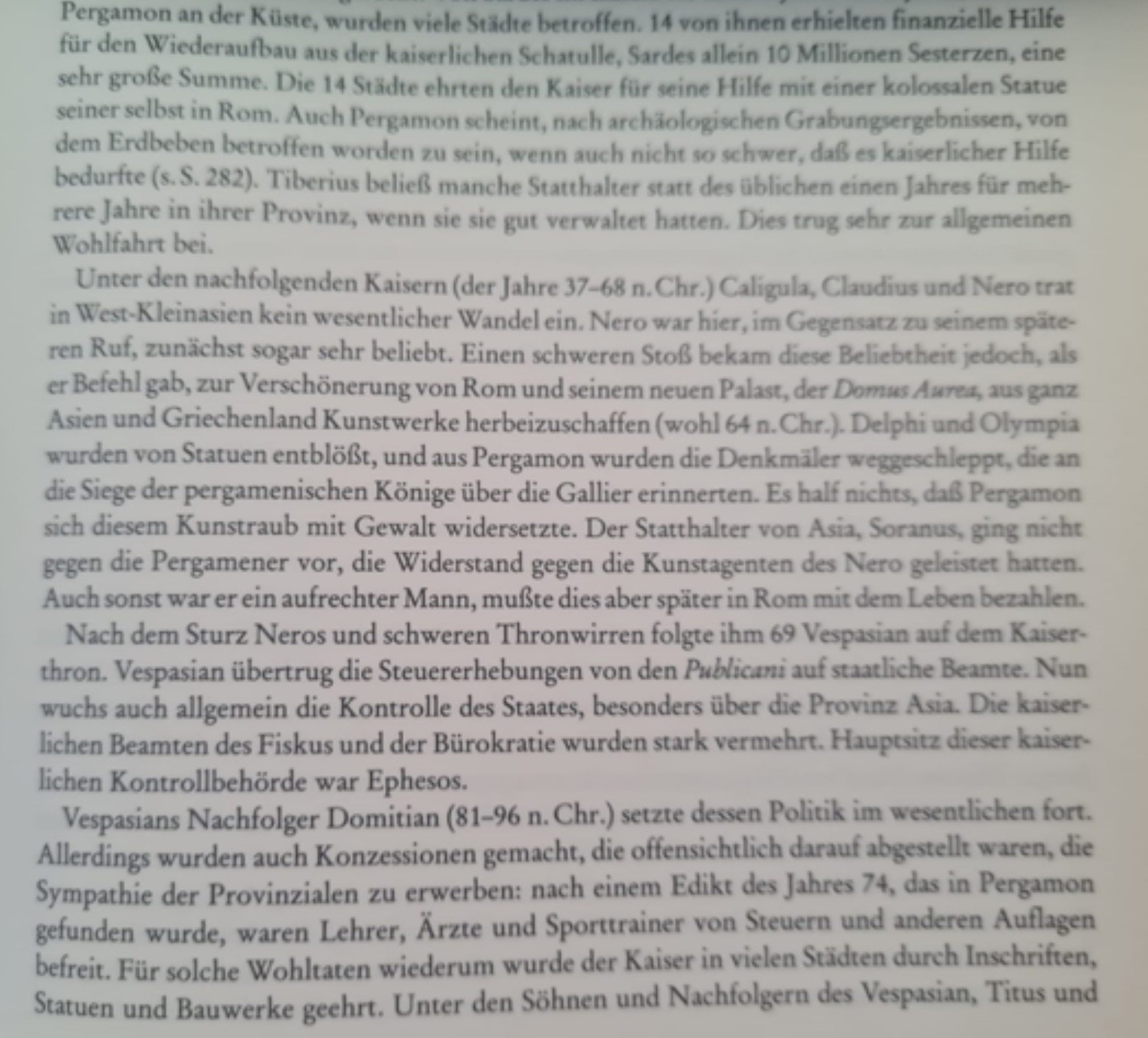
(German text where W. Radt calls Roman smugglers thieves)
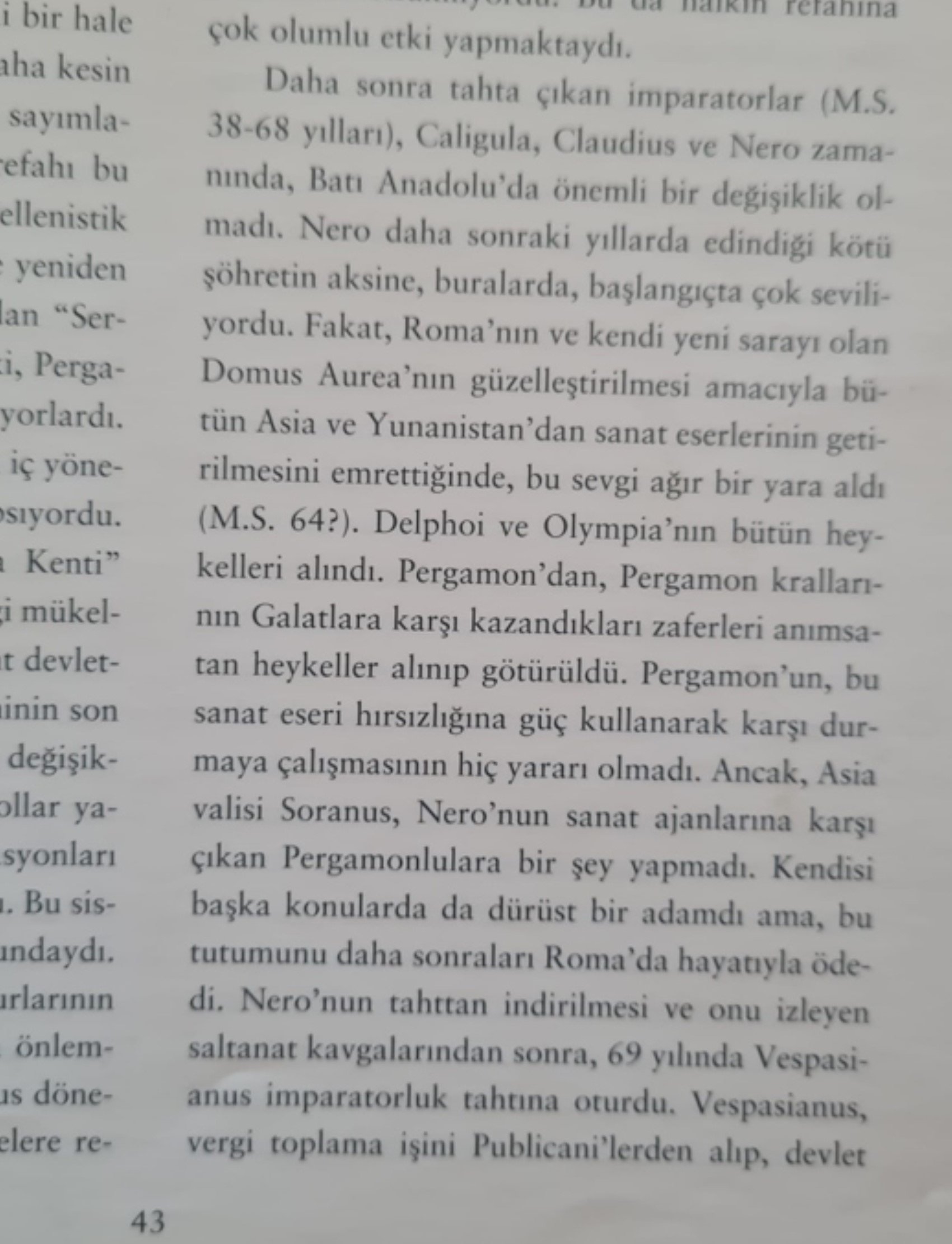
(Translation of the German text where W. Radt calls Roman smugglers thieves)
Or is the saying that Koca Râgıb Pasha said 300 years ago correct?
“While boasting of his bravery, does the Copt reveal his theft?”
When Wolfgang Radt, who is considered a contemporary Pergamon scholar, calls the Roman Emperor Nero, who stole the Galatian statues of Pergamon, a “thief,” why does he ignore the German thief Carl Humann, who robbed Bergama in the 19th century?
He does not raise his voice against the looting of Bergama, where he worked for years, breathed its air, and drank its water!
This is not right!
European and German intellectuals must now raise their heads, and including those in Turkey, they must slap this theft in the face of the colonialist-imperialist mentality.
They must face the fact that they could not protect the Zeus Altar of Anatolia and that they locked it up in a museum/prison in Berlin that is sinking into the river on swampy ground.
This is what befits being a scientist and an intellectual!
THE ZEUS ALTAR AND BERGAMA WORKS DO NOT BELONG TO COLD AND FOGGY BERLIN, BUT TO BEAUTIFUL BERGAMA. THEY MUST DEFINITELY COME BACK, THEY MUST RETURN HOME!
(Source: Pliny: Naturalis Historia, Book 34 /// Wolfgang Radt (1998): “Pergamon, Geschichte und...”, p. 47 /// Wolfgang Radt (2002): “Pergamon, Antik bir kentin..” p. 43 /// Sefa Taşkın (1995): Pergamon Humanism) /// Sefa Taşkın (1997): Aegean Winds)
Sefa Taşkın
06.07.2025
Karşıyaka-Dikili/İzmir
Most Read

Striking picture for Özgür Özel's 'New Party'

The PKK opening and Özgür Özel’s path!..

How did the newspapers view Özgür Özel's farewell to the CHP?

He killed his wife by slitting her throat: Their children witnessed the moments

What did the CHP do?

Özel’s new party move in the world press

Fire at TUSAŞ engine factory in Eskişehir under control

The New CHP, against CEHAPE

From self-efficacy to despair

Kılıçdaroğlu's first message on Özgür Özel's new party announcement