



HEAVY IS THE STONE IN ITS PLACE-166. LET US NOT FORGET, LET US NOT LET BE FORGOTTEN!
The Gaziantep-Zincirli robbery is a concrete indicator of how Anatolia's historical artifacts were plundered and the dark relationships that occurred during this process.
Representatives of imperialism systematically smuggled Anatolia's historical treasures at the end of the 19th century to polish their own cultures; in this process, they succeeded in exploiting the local collaborators they found and their weaknesses.
The main actor of the Zincirli robbery, which coincided with the same period as the removal of the Pergamon Altar to Germany, was again the German engineer Carl Humann, just as it was in Pergamon.
The relationship between Carl Humann and Osman Hamdi Bey, the Director of the Imperial Museum of the Ottoman Empire, during these processes is noteworthy.
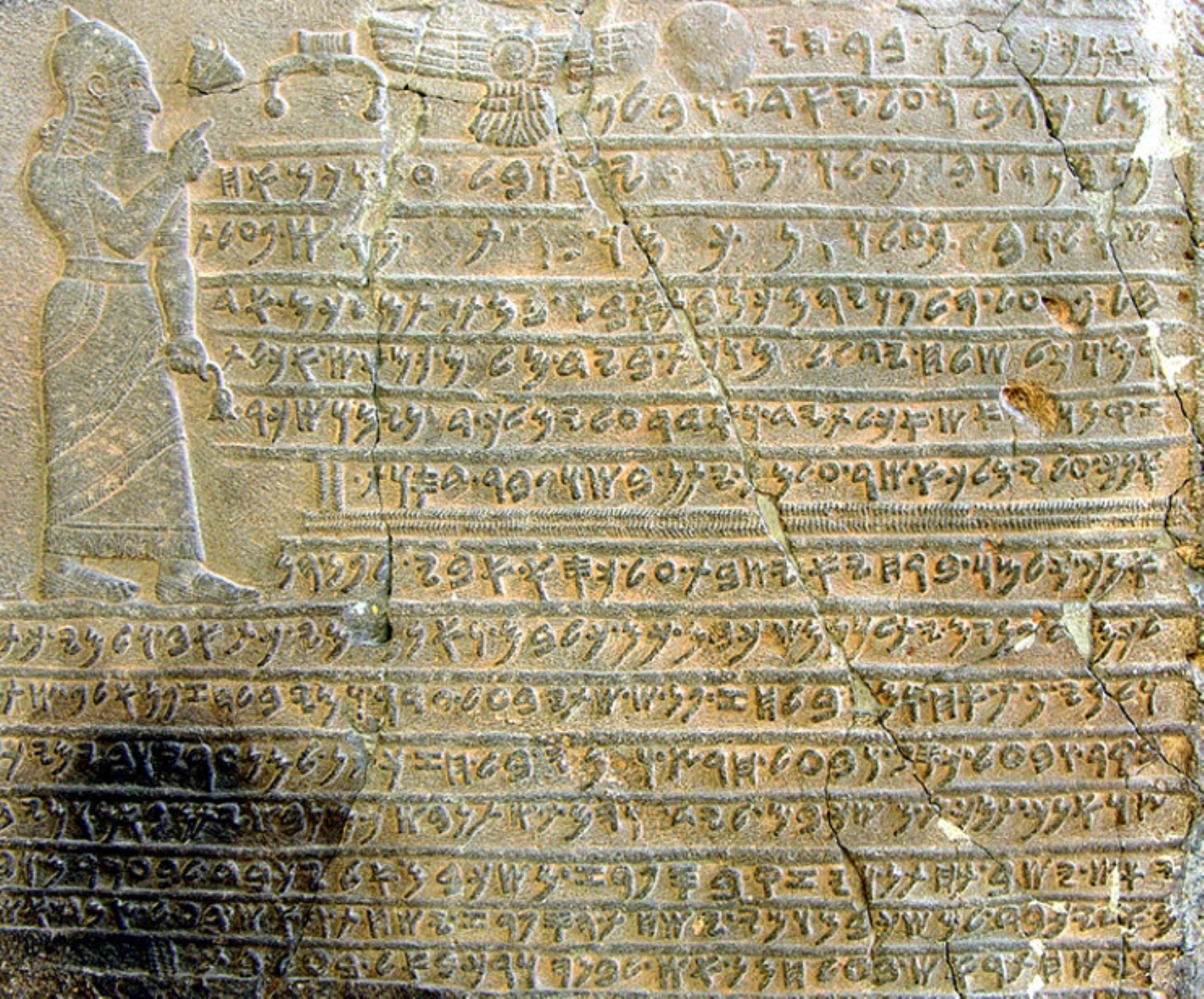
(The stone inscription of King Kilamuwa, written in the Phoenician language, found in Gaziantep-Sam'al/Zincirli and taken/smuggled to Germany by Carl Humann. Registered in the Berlin Pergamon Museum/Prison under the number "KA-24".)
When the chain of plunder extending from Pergamon to Berlin is examined, it can be traced through documents how the two names met on a line of "friendship" and "authority."
The broad initiative granted to the Director of the Imperial Museum of the Ottoman Empire by Article 32 of the 1884 Antiquities Regulation (Âsâr-ı Atîka Nizamnâmesi) was significantly decisive in the removal of the Gaziantep-Zincirli artifacts outside the Ottoman Empire.
The structure of the smuggling activities carried out by Carl Humann, the permits he obtained, and the relationships he established with Osman Hamdi Bey are controversial.
According to Prof. Rüstem Aslan, "After Osman Hamdi Bey became director, while archaeological studies (understanding the past and uncovering historical artifacts) in the Ottoman Empire were controlled more strictly than in the previous period, facilitative changes were made (in the realization of historical artifact excavations and their removal abroad)."
"There is no longer a need for the Sultan's permission to issue an excavation decree. The Director of Museums, Osman Hamdi Bey, can be sufficient." (Rüstem Aslan. Osman Hamdi Bey and the Troy excavations. KUBABA. Issue: 14. P.24. 2009)"
This situation is an important turning point for our historical artifacts.
It is known that the Troy robber, the famous German archaeologist Heinrich Schliemann, who smuggled the unique artifacts known as Priam's Treasure abroad, also encountered the Ottoman Museum Director Osman Hamdi Bey from time to time.
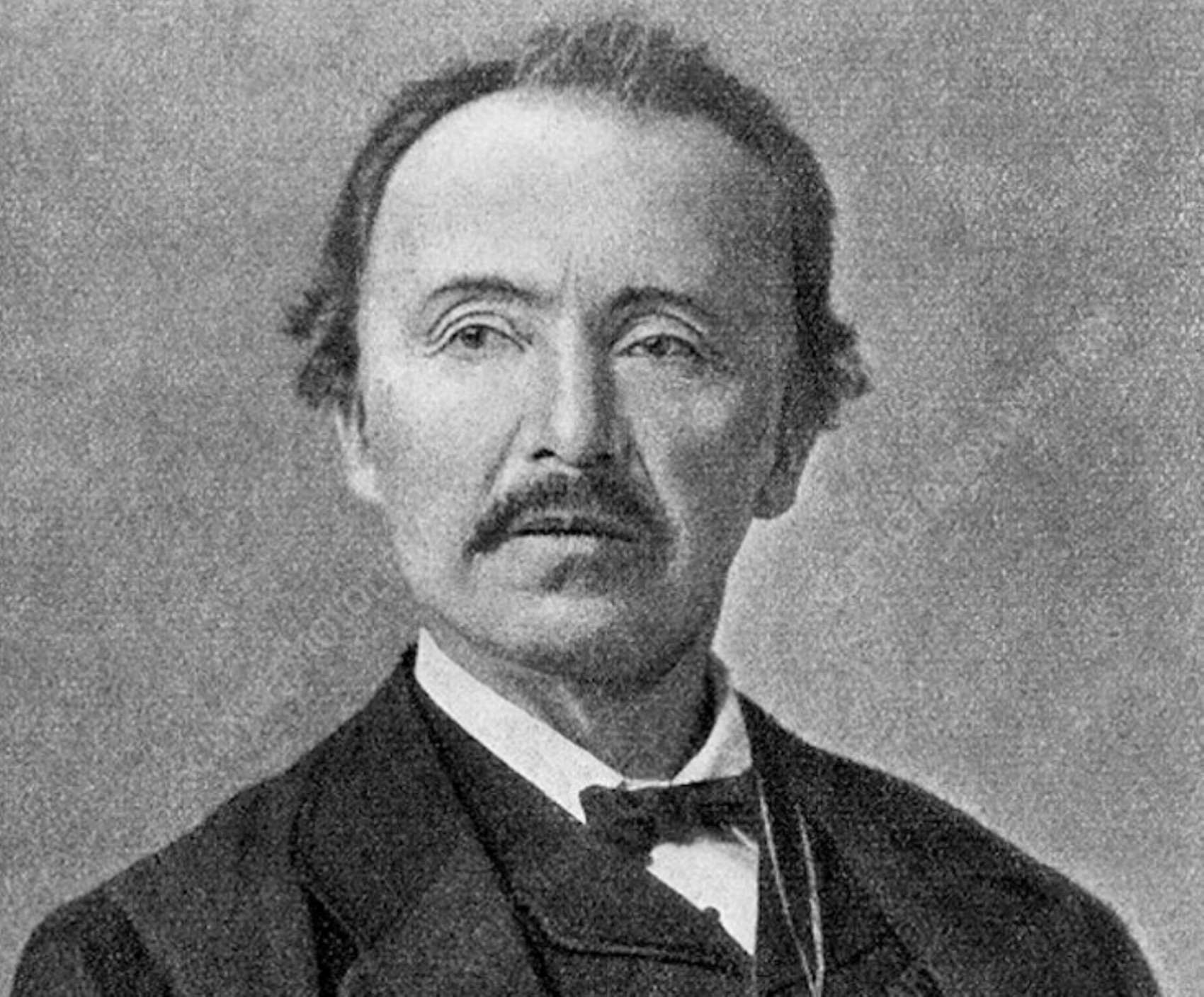
(Another German archaeologist thief who smuggled the Priam treasure of Troy: Heinrich Schliemann.)
In a letter H. Schliemann wrote to his archaeologist friend Frank Calvert on October 10, 1889, regarding the continuation of the Troy excavations and plunder:
"As you know, there is no longer a need to obtain a decree (excavation permit from the Sultanate-Ministry). Osman Hamdi Bey's permission can be sufficient. I met with him in Paris. He promised (me) (for the permit) on September 25," he says. (Rüstem Aslan p.24)"
Again, according to Rüstem Aslan: "Francis Henry Bacon, who was conducting excavation work in Assos, Çanakkale, is not satisfied with the attitudes of the Director of the Imperial Museum, Osman Hamdi Bey.
Bacon writes in his diaries: ... Hamdi Bey is a Turk under European influence. He was educated in Paris and has a little bit of archaeological knowledge. He is in expectation of a bribe and does not do business for less than 300 dollars." (Francis Bacon. Assos days. An archaeological expedition to Asia Minor American Schools of Classical Studies. Athens. 47. Quoted by: Rüstem Aslan. P.24)
The assessment of researcher Cevdet Yurtsever regarding Pergamon, Troy, and Zincirli is harsh:
"When Osman Hamdi became the Director of the Imperial Museum, the German excavations in Pergamon were also continuing."
"The large number of artifacts found needed to be protected and claimed."
"It was in those days, on October 13, 1887, in the report he submitted to the Ottoman Ministry of Education as Museum Director, that Hamdi Bey stated that the artifacts found in Pergamon were worthless stone fragments the size of 'eggs' and 'walnuts,' and he pressed his seal and signed the document stating that it would be appropriate for the 1917 pieces of artifacts found to go abroad to Germany." (BOA, MF.MKT, 92/39. Cezmi Yurtsever. "Osman Hamdi and Archaeological Robberies". https://www.academia.edu/113906725/OSMAN_HAMD%C4%B0_VE_ARKEOLOJ%C4%B0K_SOYGUNLAR)
***
The robbery Carl Humann carried out in Gaziantep-Zincirli follows a similar model.
Archival documents reveal step by step how Anatolia's ancient stones were moved to Berlin museums through the minimization of the value of the artifacts, the excuse of transportation costs, and various diplomatic maneuvers.
The close friendship between Osman Hamdi Bey and the German Carl Humann (1839–1896) most likely began when Hamdi Bey became the Director of the Ottoman Museums (Müze-i Humayun) in 1881.
Carl Humann, who was actually an engineer, was a person who was also interested in the historical artifacts in the surrounding area — in the context of the tasks given to him — during the road and map work he did in Ottoman lands and Western Anatolia starting from the late 1860s.
In addition to engineering, he was also curious about archaeology. When he came to Anatolia and saw the richness of historical artifacts, he established contact with important archaeologists such as Ernst Curtius and Alexander Conze, who were working in the Prussian State (the predecessor of today's Germany) at that time.
As a result of the excavations he carried out in cooperation with the German State, through theft and dubious permits, Carl Humann (1839–1896) had taken the pieces and statues of the Pergamon Altar to Berlin, and continued to take them.
The 1874 Regulation, which provided convenience to the Germans but was not applied, was put into effect in 1878; apart from those secretly smuggled from Pergamon, permission was granted for one-third of the remaining artifacts to be taken to Germany, and later — especially with the pressures of the then-Prince and later Emperor of Prussia, Frederick III, and in the desperation of the Ottoman defeat in the "93 War" of that period — the remaining two-thirds were also allowed to be taken to Germany.
Ordinary artifacts with no historical value were left to the Ottomans.
From then on, the higher authorities that would decide on excavation permits and the fate of historical artifacts found in excavations looked to Osman Hamdi Bey's approval.
Naturally, Carl Humann, who smuggled thousands of historical artifacts from Pergamon to his country, would frequently encounter Osman Hamdi Bey, who was responsible for the remaining and protection of historical artifact findings within the country.
With the 1884 Antiquities Regulation, prepared by a group headed by Osman Hamdi Bey, the removal of artifacts abroad was ostensibly prohibited; however, Article 32 of the Regulation granted Hamdi Bey a broad initiative, that is, the authority to give an opinion and approval, for these artifacts to be taken abroad.
Osman Hamdi Bey was in a very important, decision-making position on this matter.
The person who organized all these affairs on behalf of the Germans was the cunning Carl Humann.
Therefore, it is clear that the paths of Humann, who managed the sharing of Pergamon artifacts on behalf of the Germans in this process, and Hamdi Bey, who was brought to the Ottoman Museum Directorship in 1881, crossed in those days.
Carl Humann was the person who mediated the excavation permits carried out between Germany and the Ottoman Empire and the transportation of the artifacts to Berlin, in addition to the excavations he conducted. Osman Hamdi Bey was the most important interlocutor of this process.
Their closeness had both an official (museum director–excavation head) and a personal friendship dimension.
They were close enough to address each other by their first names. (Funda Berksoy, Osman Hamdi Bey's Turkish Street Scene and Late-Nineteenth-Century Power Relations between the Ottoman and German Empires. P.61. https://www.degruyterbrill.com/document/doi/10.1515/zkg-2025)
While Carl Humann recognized Osman Hamdi, who had been educated and lived in Europe, as a "cultured and visionary museum director," Osman Hamdi described Humann as a "disciplined, honest archaeologist and engineer."
From the correspondence between them, it is understood that they acted in a common attitude on many issues.
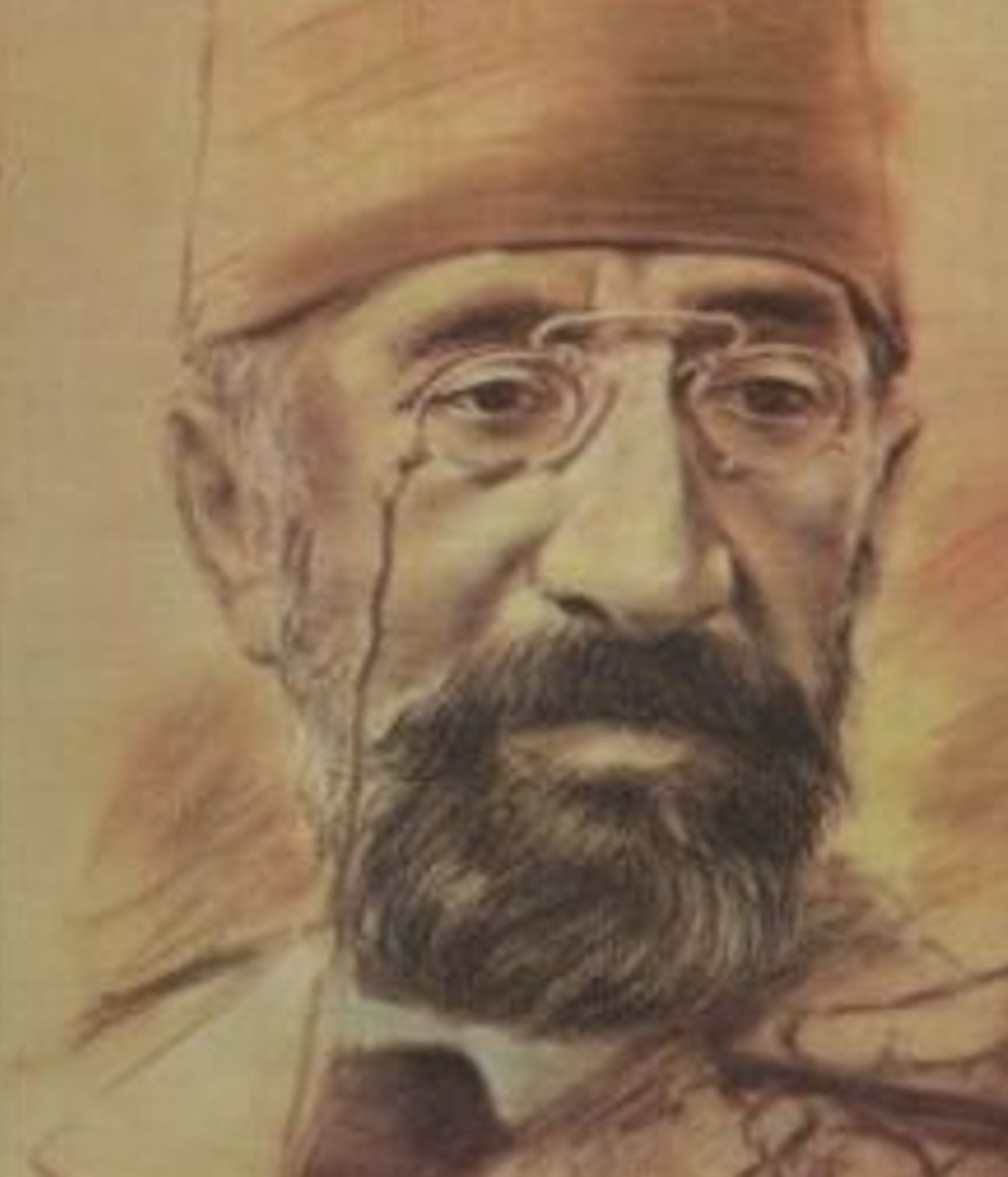
(A self-portrait by Osman Hamdi Bey, located in his house in Gebze-Eskihisar today.)
***
The German State-backed plunder team, led by C. Humann, who was very pleased with the Pergamon robbery, attempted to use the close relationships he established with Osman Hamdi Bey to excavate in Gaziantep–Zincirli, a paradise of historical artifacts, and to possess these unique works.
His opinion and decision were the opinion and decision of the State.
But he was still definitely in close contact with higher authorities as well.
Osman Hamdi Bey needed to help the Germans to excavate in Gaziantep-Zincirli and to seize the artifacts that emerged.
German Imperialism had set its eyes on the stones of Zincirli once!
In the swampy Berlin Museum/Prisons, a place had probably been prepared for them among the artifacts smuggled until that day.
From the research conducted by Prof. Dr. Funda Berksoy at Marmara University based on the Ottoman State Archives and the information she published and provided in 2025, the situation can be followed in a pathetic way.
The letter C. Humann sent to archaeologist Alexander Conze on June 17, 1887, which Berksoy revealed, sheds light on what happened.
Conze was both Humann's closest companion in the Pergamon robbery and the director of the German State Berlin Collection of Antiquities.
They worked together on many issues due to their jobs.
While C. Humann was informing A. Conze that sarcophagi and inscriptions, which were quite important pieces in his own opinion, had been discovered in Izmir:
"If conditions are favorable (!), I hope to give half of the findings to them (the Ottomans), as Osman Hamdi Bey has done (accepted) before," he was saying. (Funda Berksoy, p.62)
What Humann hoped for was to smuggle the unique artifacts of Western Anatolia as well.
The henchmen of German Imperialism were not getting enough of robbery.
For this, C. Humann was providing information to the Berlin center about Hamdi Bey, whom he knew well, and explaining the method of how he could be persuaded to seize the artifacts:
"Giving him a gift is a difficult task; at least according to what Testa (a foreign interested party) told, he once brought him a silver tray and he refused it."
"He does not accept from anyone else the few hams and a barrel of wine that I bring him as a gift every year."
"Hamdi is a very ambitious and determined person. In the last report I gave him, I praised him as much as I could."
"If you want to do a favor, order a painting for the National Gallery (in Berlin) between 5 and 15,000 marks (1 German mark in those years is 10–22 euros today)."
"He would like this."
"Do not even think about offering an amount of money between 1,000 and 2,000 marks; because he knows very well how valuable many of the things he gave us willingly or by ignoring them are..."
According to Carl Humann's confession (!) or slander (!); so Hamdi Bey was turning a blind eye to some artifacts being given to the Germans even though he knew how valuable they were.
The robbery officers of German Imperialism were discussing in their correspondence how to get the support of the Museum Director, the most authorized and powerful person of the Ottoman Empire on these issues.
Meanwhile, C. Humann did not neglect to draw the personality profile of Hamdi Bey:
"He was ambitious and determined. There were things he liked: He was knowledgeable."
"Painting was Hamdi Bey's greatest passion, and he very much desired his paintings to take their place among the works of famous painters in the Berlin museums."
"He wanted to show his artistic talent to the whole world!"
"He hoped that he would thus enter among the great painters of Europe." (F. Berksoy, p. 63-64)
***
The relationships and meetings between them were continuing.
At the beginning of his letter dated August 25, 1887, which Carl Humann wrote in French (Hamdi Bey had been educated in France), he was providing detailed information about the work in Menderes Magnesia (Aydın-Germencik), the Temple of Artemis excavated there, and the reliefs discovered.
During this process, Carl Humann would take/smuggle many artifacts from Magnesia and Miletus to Berlin secretly or with dubious permits.
In this letter, Humann was also informing Hamdi Bey that various awards could be offered to him. Among these was the transaction mentioned above — the purchase of one of his paintings.
C. Humann was acting extremely generously towards Hamdi Bey on behalf of the German State:
"As I mentioned before, Western institutions preferred to praise Osman Hamdi Bey for his work in archaeological excavations to persuade him to cooperate with them."
Now, "Ten different ideas are passing through my mind:
"Would you like an elegant ceramic set specially produced for you by the porcelain factory, which is an art institution affiliated with the (German) Ministry of National Education?"
"Would you like the National Gallery of Modern Painters (in Berlin) to exhibit one of your paintings?"
Would you prefer to receive a gift personally selected by His Royal Highness the Crown Prince (Frederick III), who is the patron of the (German) Royal Museums?
"Books, collections, all the plaster casts of the museum, or something different? What else do you desire?"
"Ah, do not be angry with me; my intention is not to give you a tip (bribe). Do not scold me, do not curse at me."
"I ask you as a friend (!): Do not act like an example of virtue."
"Write to me and accept something; because if you refuse them all, no one will honor or thank you."
"You can write to me sincerely; I swear that I will send your letter back to you as soon as I read it and I will not mention this to anyone..."
"Now we are talking as a friend; let's see if you will refuse me?" (F. Berksoy, p. 63-64)
Humann, who had set his eyes on Gaziantep's historical artifacts, was suggesting to the Ottoman Museum Director, that is, his State, to be unvirtuous (that is, without virtue).
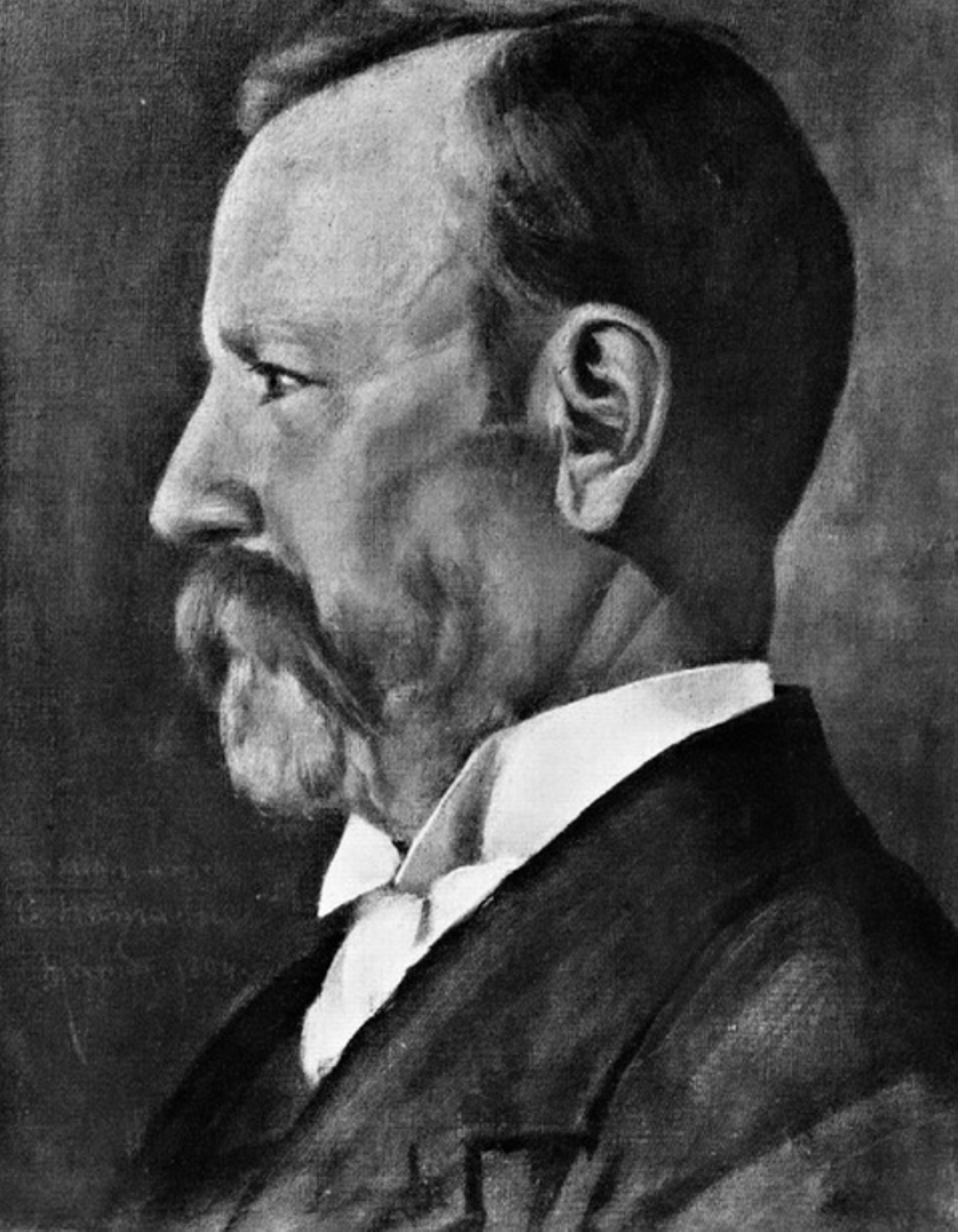
(A portrait of his "friend" Carl Humann, painted by Osman Hamdi Bey himself in 1894 with oil on canvas. It is not known where the painting, which was previously in the family collection, is now.)
***
At the same time, this man, who was also a Pergamon thief, was clearly offering a bribe in the form of a tip to the Ottoman Museum Director and the most authorized person who could decide whether the artifacts in Anatolia would be taken abroad, and furthermore, he was stating that he would not tell anyone about this.
If said politely, perhaps it could be said as follows:
"Humann's insistence on the idea of giving an award to Osman Hamdi Bey; his enthusiastic descriptions of new archaeological findings in both of his letters and his proposal to return Osman Hamdi's letter if he accepted the award, was nothing more than Humann's desire to get Osman Hamdi's support/help for his own archaeological projects (that is, the artifacts he would steal (his humility!))."
This was an attempt to establish a "give-and-take relationship" in addition to clearly asking for support.
German Imperialism wanted to insistently continue the Anatolian robbery in Gaziantep.
In this direction, Germany approved the "tip" that C. Humann offered him with different options in the letter he sent to Osman Hamdi Bey on August 25, 1887; Humann's idea of (politely) ordering (buying) a painting from Hamdi Bey for the National Gallery in Berlin.
The German State, with Humann's suggestion, was going to buy a painting by Osman Hamdi Bey.
Let's see if Hamdi Bey, who is understood to be the Ottoman Museum Director and an ambitious painter, would accept this proposal?
***
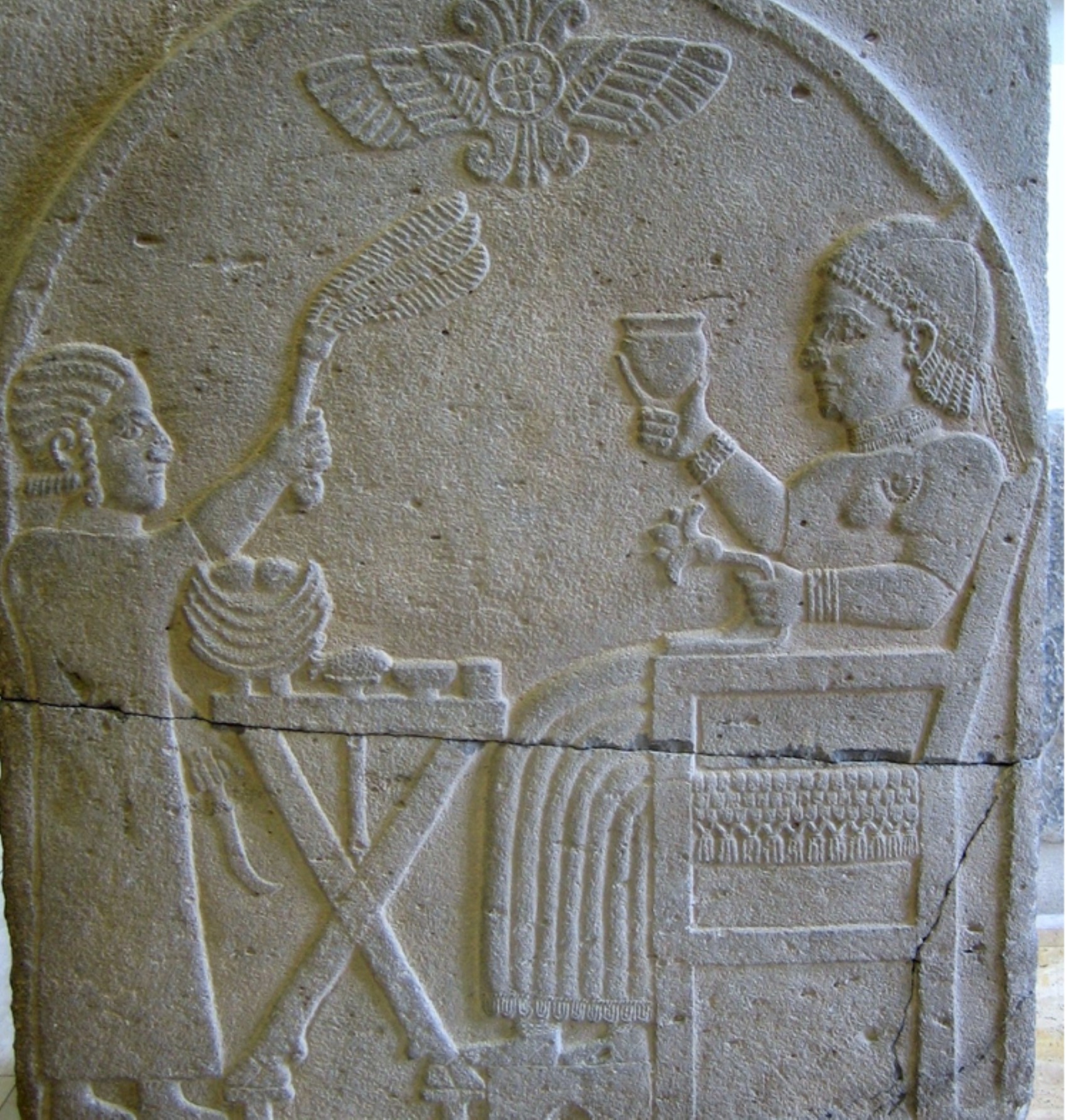
(One of the stone steles at the Sam'al city gate, taken/smuggled from Gaziantep Zincirli. Berlin Near East Museum/Prison)
Three days later, on August 28, 1887, Osman Hamdi Bey sent a reply letter to Humann:
"He stated that he appreciated the German government's desire to honor him because the work done by the Germans in the Pergamon region (that is, the theft of the Zeus Altar and Pergamon statues) had been carried out under the auspices of the Ottoman Imperial Museum (that is, Osman Hamdi Bey), but that such an award was not necessary for this help."
In the letter he wrote to Humann, Osman Hamdi Bey does not hesitate to say that he sponsored the Pergamon robbery, but he was politely refusing the proposed bribe.
Of course, this would befit an Ottoman statesman!
However, it did not happen like that afterwards!
Humann, who was in need of Hamdi Bey's support in the Gaziantep–Zincirli excavations, must have been very persistent (!), that "in the end, Hamdi Bey accepted the offer for one of Humann's paintings to be included (purchased) in the Berlin National Gallery collection." (Funda Berksoy, p. 63)

(Osman Hamdi Bey's approval letter regarding the giving of the artifacts found in the excavations in Gaziantep Zincirli in 1888 to Carl Humann in exchange for transportation costs. State Archive: Ottoman State Document: BOA. MF.MKT. 100/74).
***
Prof. Funda Berksoy continues to convey the situation with her own interpretation:
"From the same (letter dated August 28, 1887), it is understood that Osman Hamdi is very eager to be accepted as a painter in Germany."
"It means the broad authorities Osman Hamdi Bey has in the Ottoman country are not enough for him; he also wanted to be recognized as an artist in Europe!"
Hamdi Bey was writing the following to Humann in this reply letter:
"Although I was completely frank when I said that the Berlin Museum had no debt of gratitude to me (!) and that I would never accept a gift from this institution, my dear friend Humann, I must sincerely confess to you that if one of my paintings were deemed worthy of the honor of being placed in the Berlin National Gallery of Modern Painters, my artistic pride could not imagine a greater compliment than this."
"I have long desired for my modest talent to be recognized in Germany, and I thank you with all my sincerity [for the opportunity you have offered me]."
"Although my paintings have been exhibited in many places such as London, Paris, Vienna, St. Petersburg, and America, not a single one of my paintings has been exhibited in Berlin."
"[I welcome this opportunity with great excitement] and while waiting for your reply, I am keeping a painting that I am about to finish at home; I plan to send this painting to a place deemed appropriate. One of my best." (Funda Berksoy, p. 63–64)
The smuggler C. Humann's persuasion attempt for Osman Hamdi Bey to sell a painting to the Germans had yielded results!
Thus, a new wound had been opened on the noble Anatolian lands.
And C. Humann gave the great (!) good news.
In the letter he sent to the General Directorate of Berlin Royal Museums on December 23, 1887, Humann stated that the purchase of the painting was finalized.
That is, Hamdi Bey had accepted to give (or sell) a painting to the Germans.
Also in this letter, Humann wrote that Osman Hamdi was pleased with this situation and that the artist conveyed his deep gratitude to Museum General Director Richard Schöne and Sculpture and Plaster Cast Museum Director Alexander Conze.
Deep gratitude (!)
The Director, who sat in the position to approve the Germans' Gaziantep robbery, was offering his "deep" gratitude to those who committed this robbery for a painting they would buy from him.
Afterwards, it is seen that Hamdi Bey took action for the excavations the Germans wanted to do in Zincirli to be permitted!
In the letter he wrote to Humann on February 14, 1888, he brought up the subject of the excavation that Humann had long planned in Zincirli (Gaziantep–İslahiye). (Funda Berksoy, p. 63–64)
He reminded that the Germans wanted to make an attempt to excavate in Gaziantep.
Meanwhile, Hamdi Bey had not yet finished the painting he would sell to the Germans and planned to send to Berlin.
According to Prof. F. Berksoy, some expressions in this letter of Hamdi Bey show that the German State's purchase of Hamdi Bey's painting titled "Turkish Street Scene" might be related to Humann's Zincirli excavation project:
Hamdi Bey said:
"If your request for permission for Zincirli has reached the Ministry (in Istanbul) —I can learn this tomorrow— I believe we can get the permission next month (!). I assure you that I will ensure that this matter is handled quickly."
The times were changing!
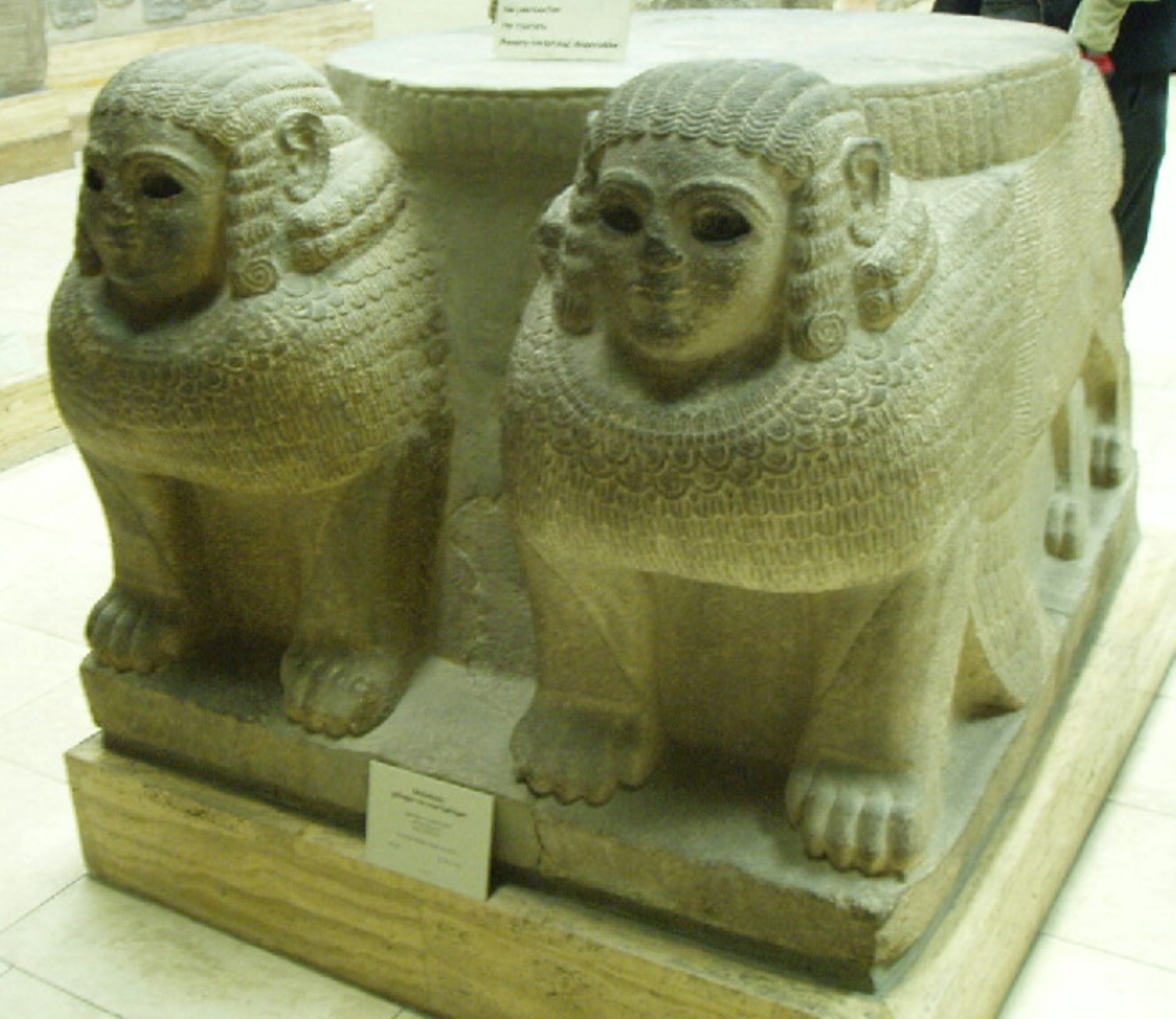
(Double Sphinx found in Gaziantep-Zincirli, which could not be taken/smuggled to Germany. In the Istanbul Archaeology Museum)
***
Osman Hamdi Bey has been known in our country more for his artist personality and museology than for the decisions he made regarding the removal of our historical artifacts abroad and his relationship with the German Carl Humann.
His works have been discussed with praise, and he collected the artifacts he found in excavations and the artifacts found in the Istanbul Museum he developed. The attention about him in our country has focused on these features.
The innovations he made have been considered important and valued.
One of the leaders of Turkish archaeology, Ord. Prof. Arif Müfit Mansel (1905-1975), also has positive views on this matter:
"We know that the 1884 Antiquities Regulation created great dissatisfaction among the archaeologists of that period, that it was even compared by some to the 'Draconian/strict' laws of Ancient Athens, that the removal of historical artifacts outside the Ottoman Empire could not be completely prevented due to the interventions of the Palace, but that at least some of them were gained for the Ottoman Museums," he says.
"For this reason, we can attribute the negative views of some foreign archaeologists about Osman Hamdi Bey to the anger felt towards the Antiquities Regulation," he adds. (Rüstem Aslan p.25)
Another distinguished archaeologist, Prof. Mehmet Özdoğan, is of a similar view:
"The accusations made against Osman Hamdi Bey by Schliemann, Calvert, and Bacon and some archaeologists of that period are prejudiced and wrong."
"However, he reports that nearly a century has passed since these events, that archaeology has gone through very important stages both in terms of theory and conservation, and that Osman Hamdi Bey took important steps towards conservation, aimed at chauvinism or religion, with a worldview beyond the age in Turkey, where all institutions and concepts trying to reshape and modernize society were taken as they were from the West." (Rüstem Aslan p.25)

(Bust and honorary plaque of Osman Hamdi Bey, made by Yervant Voskan and located in the Istanbul Archaeology Museum)
***
Although Osman Hamdi Bey is known in our country more for his artist side and museology activities, the fact that he was in the most important position of the state on this issue during the most critical period when historical artifacts were removed from Ottoman lands should not be overlooked.
The historical process in that period, when historical artifact smuggling reached its peak, should be carefully examined, lessons should be learned, and the interventions made to the cultural heritage of these lands should not be forgotten.
In this context, how white and how black is Osman Hamdi Bey?
History loads the weight of the responsibilities everyone has onto their shoulders.
The Gaziantep and Pergamon robberies are symbols of the systematic plunder directed at Anatolia's cultural existence. Research and documents on this subject will continue to be examined.
To be continued in the next article.
GAZIANTEP AND PERGAMON ARTIFACTS DO NOT BELONG TO COLD AND FOGGY BERLIN, BUT TO BEAUTIFUL ANATOLIA. THEY MUST DEFINITELY COME BACK, THEY MUST RETURN HOME!
(Sources: Rüstem Aslan. Osman Hamdi Bey and the Troy excavations. KUBABA. Issue: 14. P.24. 2009). /// Funda Berksoy, Osman Hamdi Bey's Turkish Street Scene and Late-Nineteenth-Century Power Relations between the Ottoman and German Empires. https://www.degruyterbrill.com/document/doi/10.1515/zkg-2025, p.62. /// (Oğuz Satır & Ali Çifçi, The “Worthless Stones” of Zincirli: Osman Hamdi Bey and the German Excavations of 1888–1902, DergiPark /// Francis Bacon. Assos days. An archaeological expedition to Asia Minor American Schools of Classical Studies. Athens. 47. Quoted by: Rüstem Aslan. P.24 /// Cezmi Yurtsever. “Osman Hamdi and Archaeological Robberies”. https://www.academia.edu/113906725/OSMAN_HAMD%C4%B0_VE_ARKEOLOJ%C4%B0K_SOYGUNLAR. (BOA, MF.MKT, 92/39 /// Yaşar Yılmaz Osman Hamdi Bey’in Öteki Yüzü. Korpus Yayınları. 2023)
Sefa Taşkın
Bergama/Izmir
23.11.2025
Most Read

Striking picture for Özgür Özel's 'New Party'
Özgür Özel gives a dated response regarding the number of resignations

Forest fire in Antalya brought under control

The PKK opening and Özgür Özel’s path!..

How did the newspapers view Özgür Özel's farewell to the CHP?

He killed his wife by slitting her throat: Their children witnessed the moments

What did the CHP do?

Özel’s new party move in the world press

The New CHP, against CEHAPE

Fire at TUSAŞ engine factory in Eskişehir under control