



A STONE IS HEAVY IN ITS PLACE-169. LET US NOT FORGET, LET US NOT LET BE FORGOTTEN!
The great historical artifact robbery that took place in Gaziantep at the end of the 19th century is one of the most striking examples of the plunder of cultural assets in our country.
Thieves disguised as archaeologists, used as pawns by German imperialism, managed to take dozens of Anatolia's historical artifacts abroad without a second thought.
Of course, with the help of collaborators they found within our country.
The heroes of this type of theft, which coincides with the smuggling of the Pergamon Altar and its statues to Germany, to Berlin, are the same.
The engineer named Carl Humann, who came to our country under the pretext of building roads, is the ringleader of this dirty business.
He travels Anatolia inch by inch, collecting whatever he finds. The financial gang he formed in Berlin provides him with the money he will use for excavation work.
German state-backed so-called scientists, and German state officials such as Ambassadors and Consuls, are parts of this organized smuggling network.
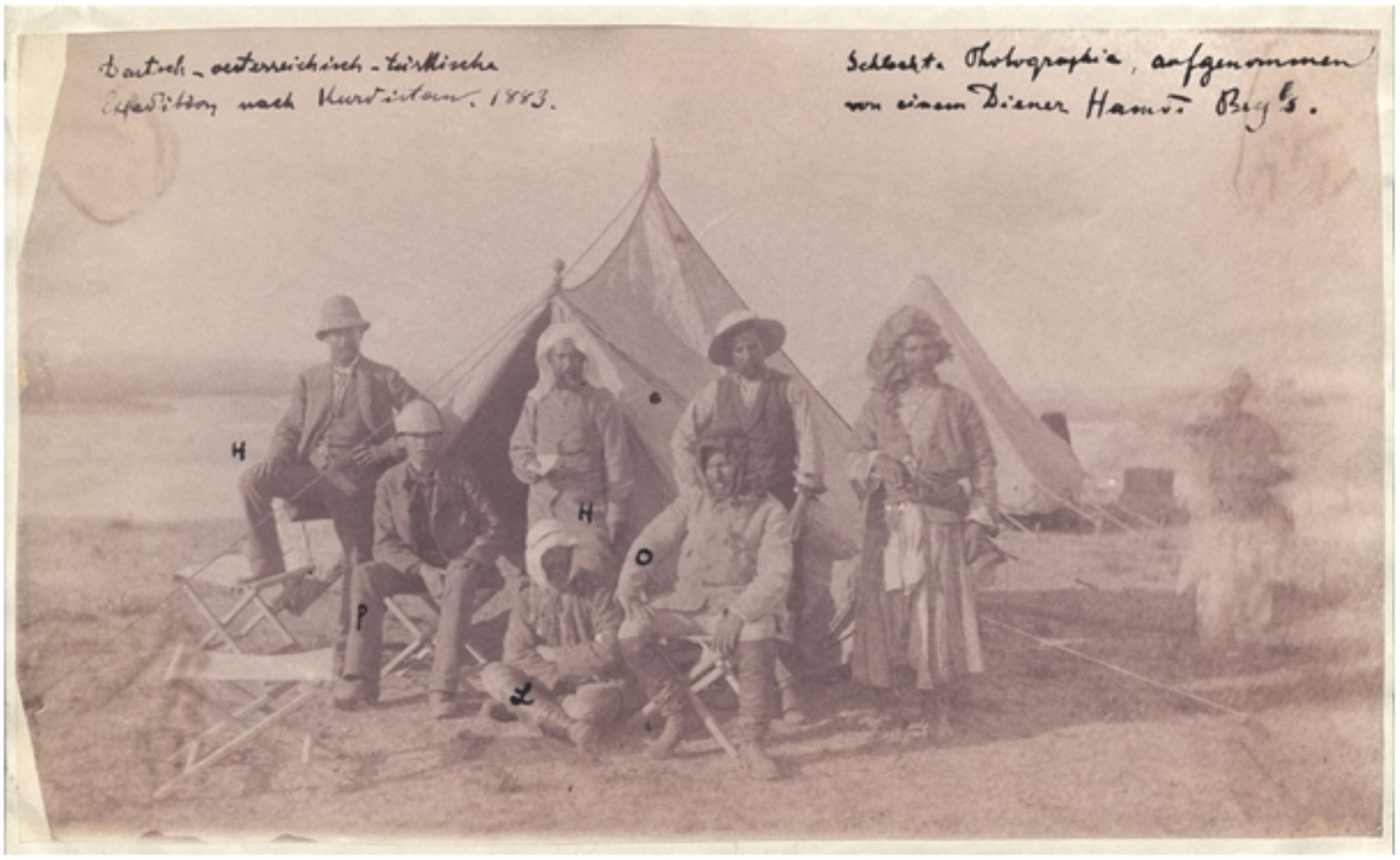
(The team that initiated and carried out the Gaziantep robbery. Carl Humann, Otto Puchstein, Felix von Luschan, Osman Hamdi, and Yervant Osgan near Mount Nemrut-1883. Photo and caption: F. von Luschan)
***
This network stole some of the unique beauties made of marble produced in the lands of Pergamon, Gaziantep, and Çine-Aydın directly, and took others abroad with dubious permits.
Initially, between 1864 and 1878, Carl Humann secretly smuggled the pieces of the Zeus Altar to Germany with sleight of hand, especially in Pergamon, despite the restrictive Regulation issued in 1869.
Sultan Abdülaziz and his bureaucracy did not implement the Antiquities Regulation (Asâr-ı Atîka Nizamnamesi), which was issued in 1874 under the guidance of German pawns like Philipp Anton Dethier, who was brought to the Ottoman Museums Directorate under pressure from the German State, and which could help them take artifacts abroad.
In the atmosphere of the Treaty of Berlin, which resulted from the Ottoman defeat in the Russian War (the 93 War) that broke out as soon as II. Abdülhamit became sultan, and the Russian Army reaching the gates of Istanbul; while the Ottoman Empire was losing many territories such as Romania, Bulgaria, and Cyprus, the removal of Pergamon artifacts abroad was permitted in exchange for small donations under the special pressure of Friedrich III, who would later become the German Emperor.
With Osman Hamdi Bey, who was brought to the Directorate of the Imperial Museum (Müze-i Hümâyun) in 1881 upon the death of P.A. Dethier, the loosened reins were completely broken.
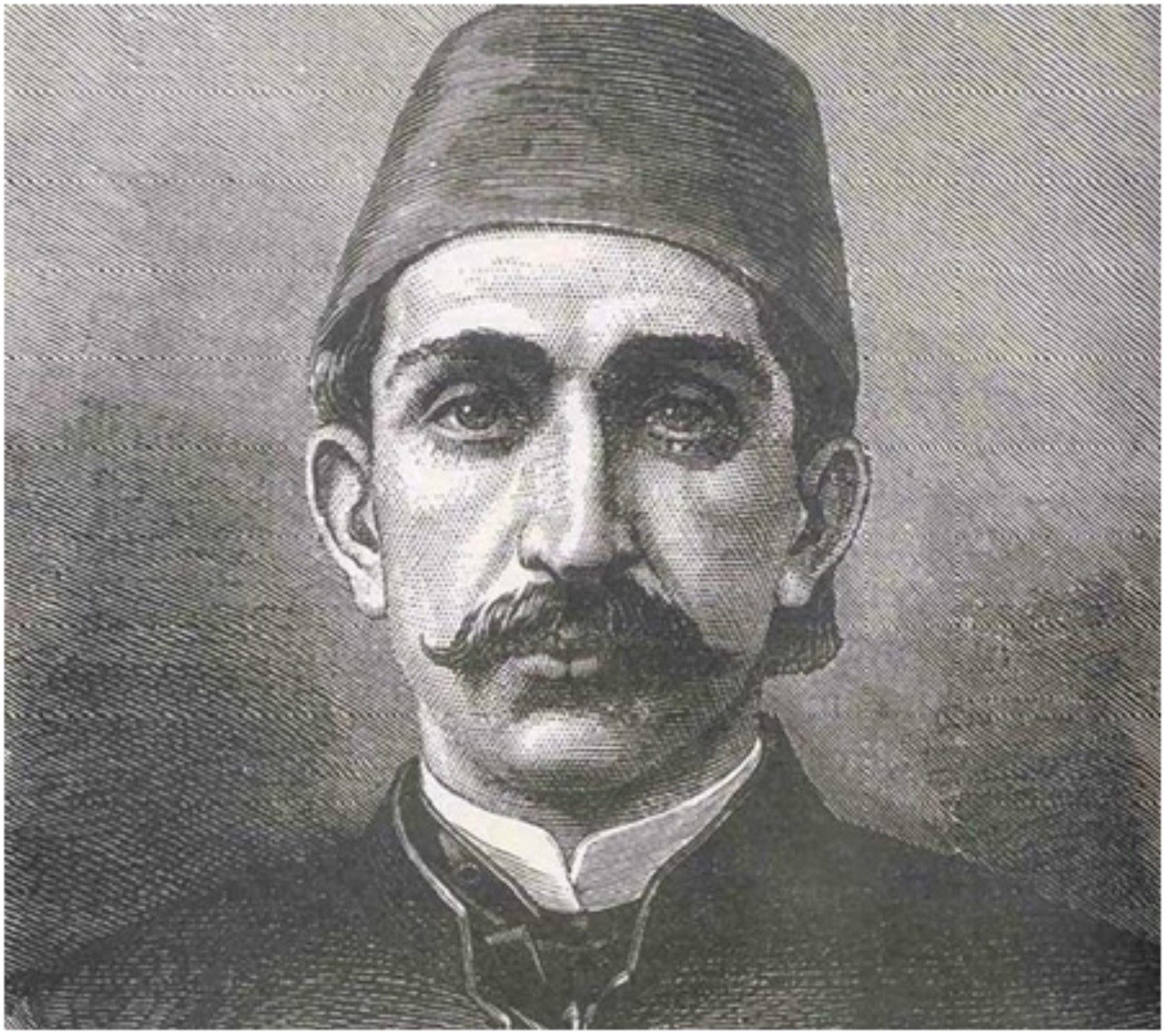
(II. Abdülhamit. Portrait from his youth)
***
The 1884 Antiquities Regulation, issued by a group that included Hamdi Bey, ostensibly introduced stricter measures against the removal of historical artifacts abroad, but the new Regulation had a 32nd Article that was truly absurd.
With this article, except for some trivial reservations, the removal of historical artifacts abroad was left to the approval of the Ottoman State's Museum Director, Osman Hamdi Bey.
Hamdi Bey, the son of one of the Ottoman Grand Viziers, İbrahim Ethem Pasha, was almost the sole decision-maker regarding our historical artifacts.
Until high-level Ottoman state officials, who were uncomfortable with his inappropriate actions, began to be more careful about these matters, Hamdi Bey had acted as if he were running wild in an empty field.
He gave foreigners whatever historical artifact they wanted, and did not give what he did not want.
During this process, he established increasingly close and interesting relations with the Anatolian robber Carl Humann.
Director Hamdi Bey, who was also a painter, fell into the trap of German imperialism with the desire to become famous in Europe as well.
He made the mistake of selling his painting, which he titled "A View of a Turkish Street," to the German State-owned Picture Gallery in Berlin, upon the persistent suggestion of C. Humann, the robber of Pergamon and Gaziantep!
C. Humann knew that this transaction would facilitate the Germans' smuggling operations. The painter was the highest-ranking official responsible for historical artifacts in the entire Ottoman Empire.
What followed unraveled like a ball of yarn.
Crate after crate of historical artifacts were transported from Pergamon, and immediately after from Gaziantep, to Berlin.
Of course, some token artifacts were left in Istanbul.
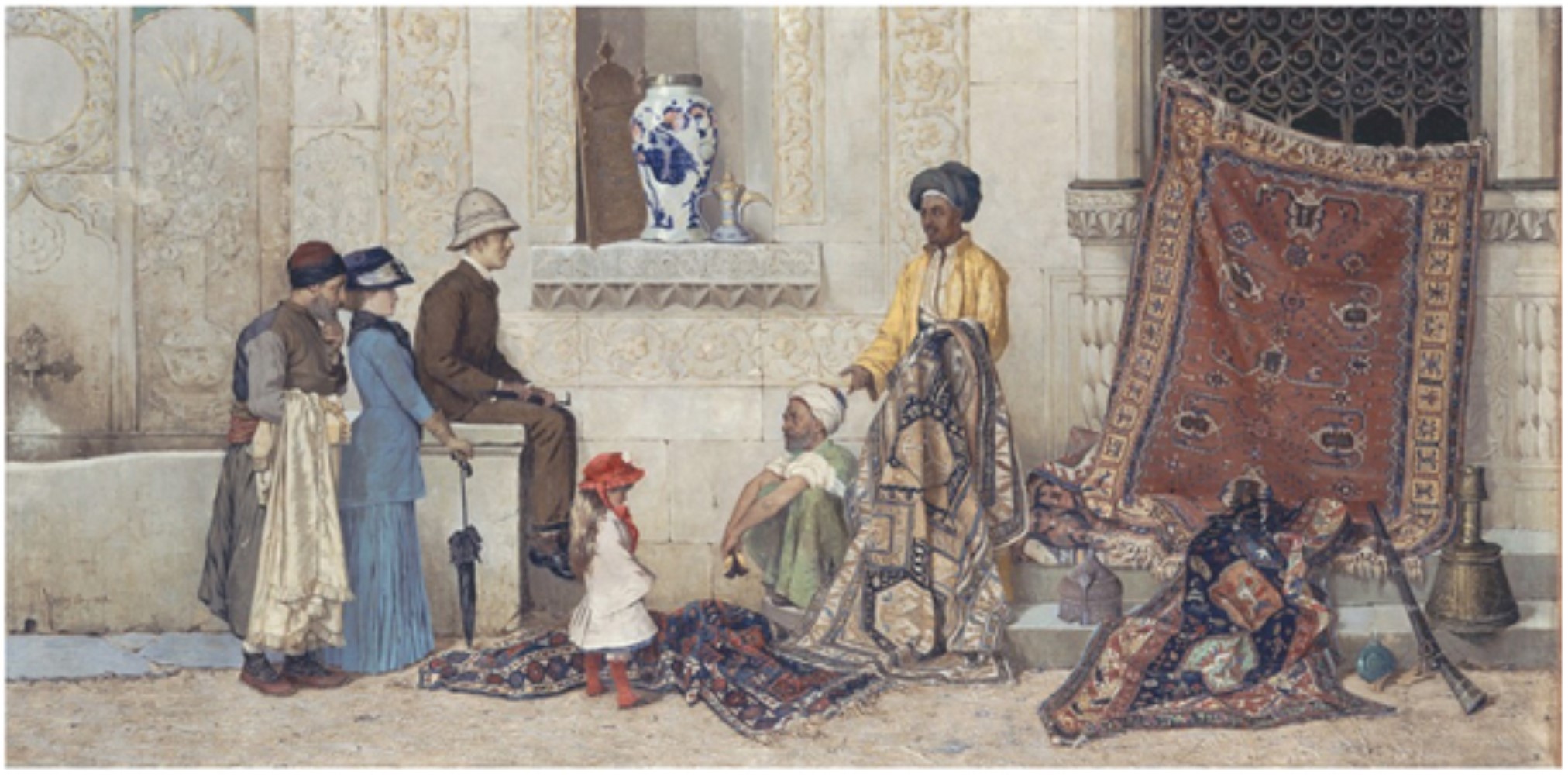
(The painting titled "A View of a Turkish Street" by Osman Hamdi Bey, purchased by German Museums.)
***
Carl Humann soon seized the historical artifacts in Zincirli, Gaziantep, which were discovered by Osman Hamdi Bey in 1883.
Humann began excavations on March 23, 1888, with the permit he received with the intense support of Hamdi Bey, which would continue thereafter, and then began to take the stones of Zincirli, dating back to the 10th–7th centuries BC and decorated with magnificent pictorial reliefs, to Germany, visibly or invisibly, with or without permission.
With the "Second" excavation permit obtained on January 27, 1890, and the "Third" in April 1891, he took to Berlin the artifacts found in and around Zincirli, which bore the traces and cultural characteristics of the Sam'al Kingdom established here after the collapse of the Hittite State at the end of the 12th century BC.
Osman Hamdi Bey was always by his side against the obstacles raised by official authorities in Istanbul and Gaziantep.
What a painting sold to the Germans or known and unknown gifts from the Germans could achieve!
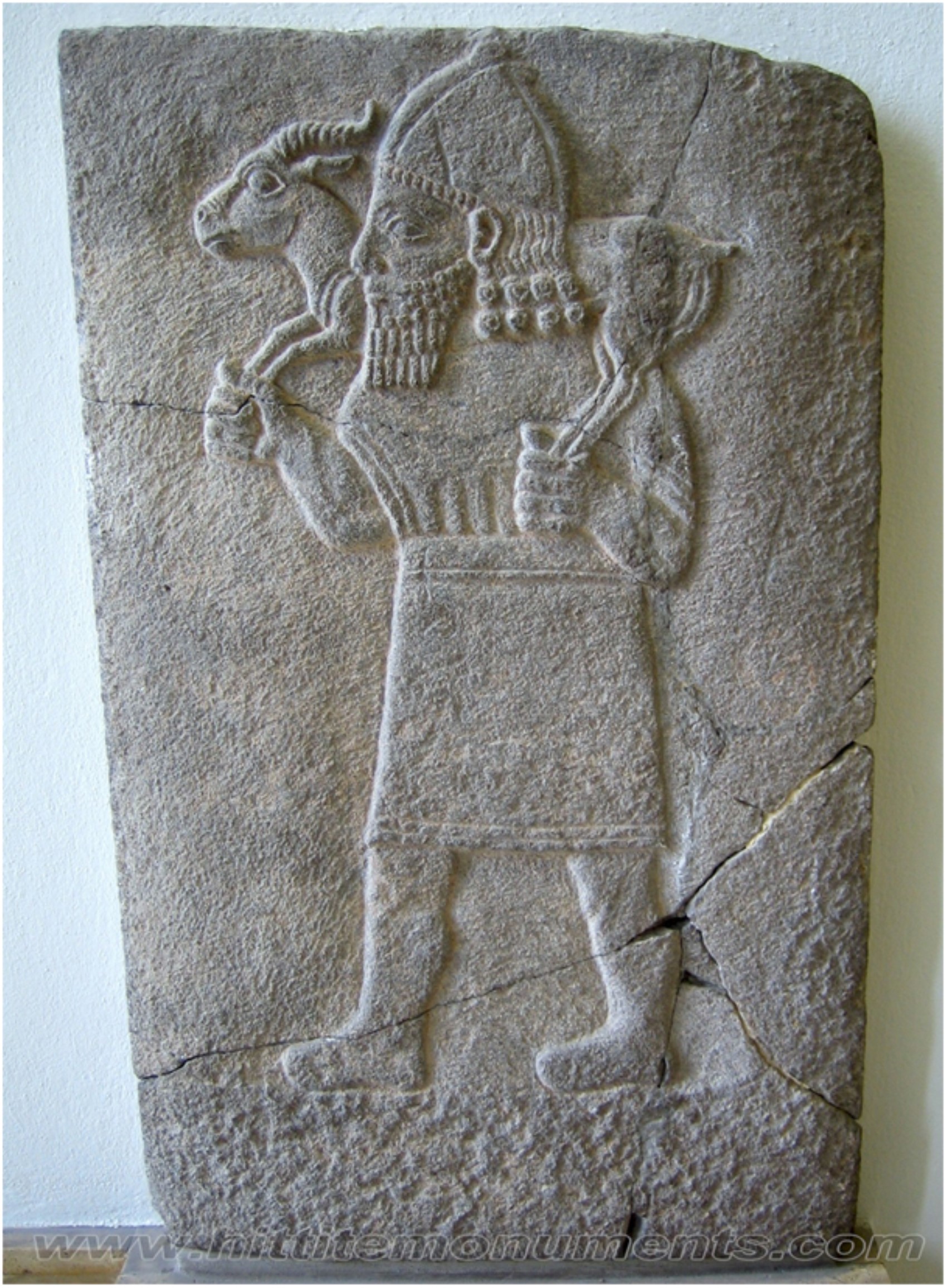
(Found in Zincirli. An Antep resident carrying his sacrificial goat, smuggled to Berlin. Berlin Vorderasiatisches/Near East Museum)
***
In this environment, the Gaziantep robbery continued unabated.
Assoc. Prof. Oğuz Satır and Assoc. Prof. Ali Çifçi from Marmara University report the Gaziantep plunder from the writings of Felix von Luschan, the deputy of Carl Humann in Zincirli who played a leading role in the smuggling of Pergamon and Gaziantep artifacts to Germany, and Ralf-Bernhard Wartke (1948–2024), a museum researcher who worked at the Berlin Vorderasiatisches Museum (Near East Museum) and served as an organizer and manager:
“The “Fourth” excavation period in Zincirli began on March 20, 1894, and ended on June 28.
During this period, priority was given to transporting the large reliefs and statues unearthed in the previous “Third” season to Berlin.
Emperor Wilhelm II (reigned between 1888–1918) provided financial support for the excavations carried out in this season (von Luschan, 1898).
The letter the Emperor wrote on April 17, 1893, to the Orient-Comité (the financier of C. Humann's gang in Berlin) shows that he personally contributed 25,000 marks to finance the “Fourth” excavation (Wartke, 2005).”
In other words, the great German Kaiser/Emperor was also among the financial sources of the Gaziantep-Zincirli robbery.
“Although the “Orient-Comité,” Carl Humann's fundraising gang in Berlin, had planned a new excavation in Zincirli in the autumn of 1891, the start of the excavation was delayed by three years.
The existing financial support from the Imperial Museums in Germany had not been sufficient to finance the Third excavation and the extraction of the artifacts underground (Wartke, 2005).
Until that day, the first three excavations had been carried out solely with the funds and support of the Orient-Comité.
However, in 1894, the cooperation between the German Imperial Museums and the Orient-Comité ended, probably due to economic reasons or some reasons (perhaps a dispute over sharing).
Due to the lack of (so-called) operating funds and aid from the German Empire, the Orient-Comité could no longer support field work in the Near East.”
Or the imperialists' financial institutions were changing shifts!
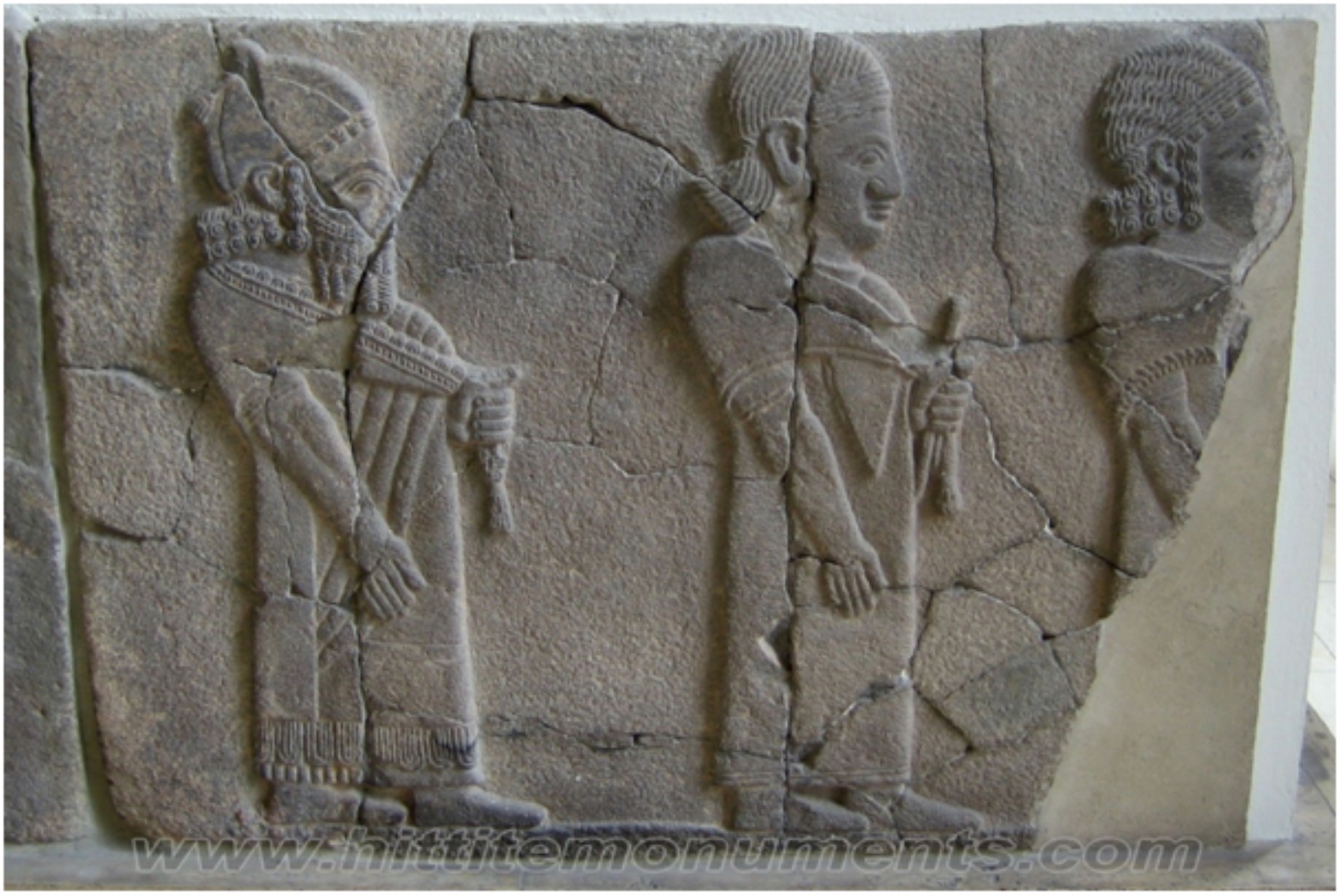
(Found in Zincirli. Antep residents smuggled to Berlin at a ceremony. Berlin Vorderasiatisches/Near East Museum)
***
“From 1898 onwards, another organization called the “Deutsche Orient-Gesellschaft” stepped in for the excavations in the region.
This association was founded by industrialists and bankers James Simon and Franz von Mendelssohn, supported by German Emperor Wilhelm II, and was an organization that patronized and encouraged the smuggling of historical artifacts in the Middle East.
The money barons of German capitalists had found an important new cultural treasure in Anatolia to find roots for their culture, which had no past.
The Pergamon plunder was already coming to an end anyway.
The Gaziantep finds were 700 years older than the Pergamon artifacts. They offered unique data on what happened in these lands after the Hittites, who dominated Anatolia for 600 years before the Hellenes, and on the art and culture of that period.
German elites and the State of those elites would acquire a past for themselves with this cultural data, and build a future on top of it.
The new source of money for the Gaziantep robbery, the “Deutsche Orient-Gesellschaft,” unlike the “Orient-Comité” – with the generous support of the German Empire – was giving the finds obtained from the Zincirli excavations to German museums for free (Wartke, 2005).”
So, the “Orient-Comite,” which gave money for excavations before, was selling the artifacts from the excavations to German museums!
They were after not only cultural but also commercial gain thanks to the Gaziantep artifacts!
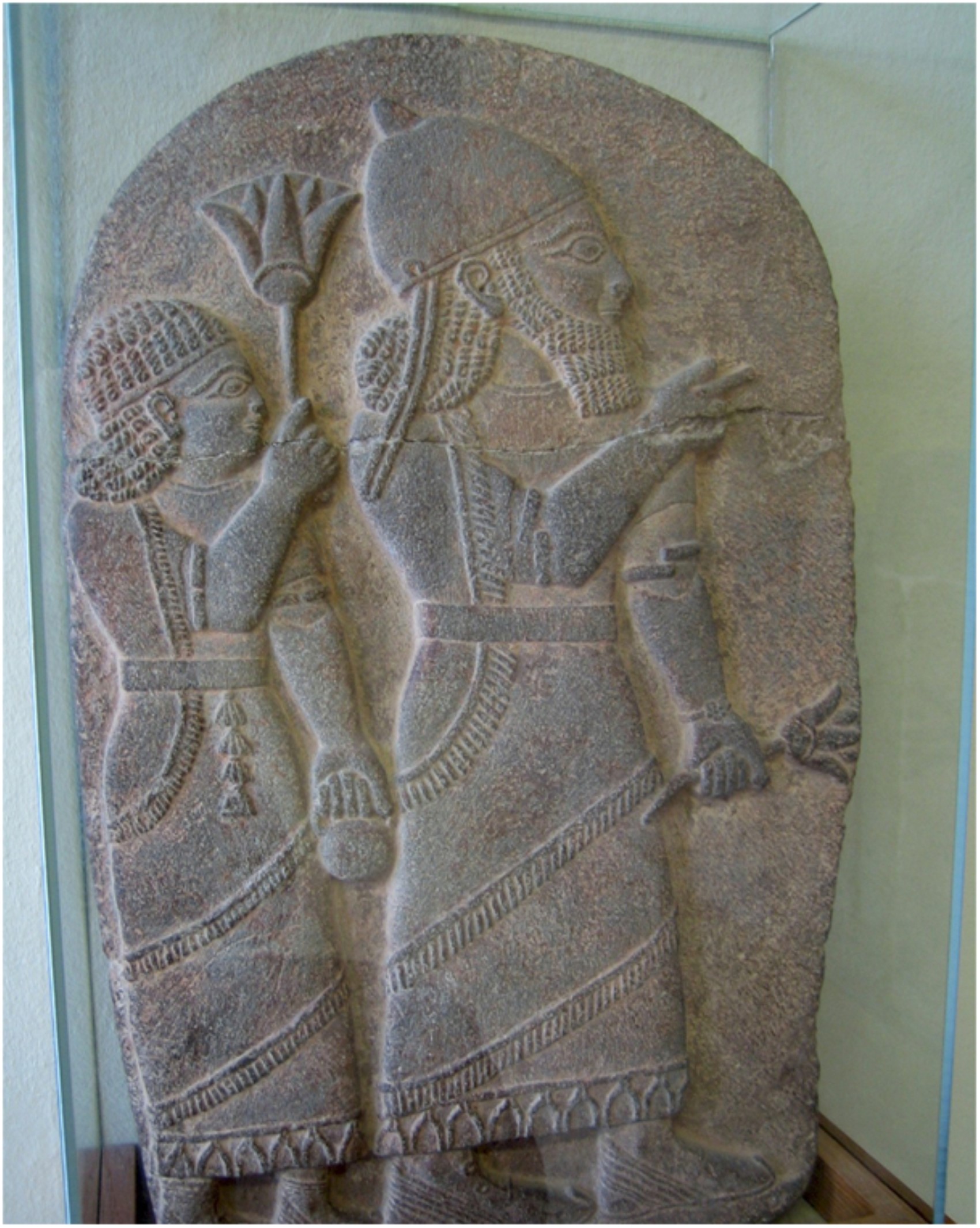
(Found in Zincirli. Antep residents smuggled to Berlin. Berlin Vorderasiatisches/Near East Museum)
***
“The application to obtain permission for Carl Humann to start new excavations was made in October 1893, and permission was granted for one year on March 5, 1894.
The removal of historical artifacts to Germany with Hamdi Bey's protection from the previous excavation must have caused quite a stir in the upper echelons of the Ottoman Empire, as this time the new excavation permit contained very detailed new conditions.
In the permit document, articles 17, 19, 20, and 21 of the Antiquities Regulation were emphasized, and it was stated that the excavations should be carried out in a way that would not damage castles, military fortifications, or official buildings, and that the excavation area should be limited to a 10-kilometer radius.
In addition, if there was private property in the excavation area, it was mandatory to carry out the excavation with the permission of the owner of this property.
Moreover, if the excavation was not started within three months from the date of the license, or if the excavation was stopped for two months without justification, the permit would be canceled.
However, the most remarkable aspect of the new permit was the emphasis on articles 11 and 12 of the regulation, which stated that the excavation team could only take drawings and molds of the artifacts unearthed in the excavation and that the artifacts belonged to the Ottoman Imperial Museum.”
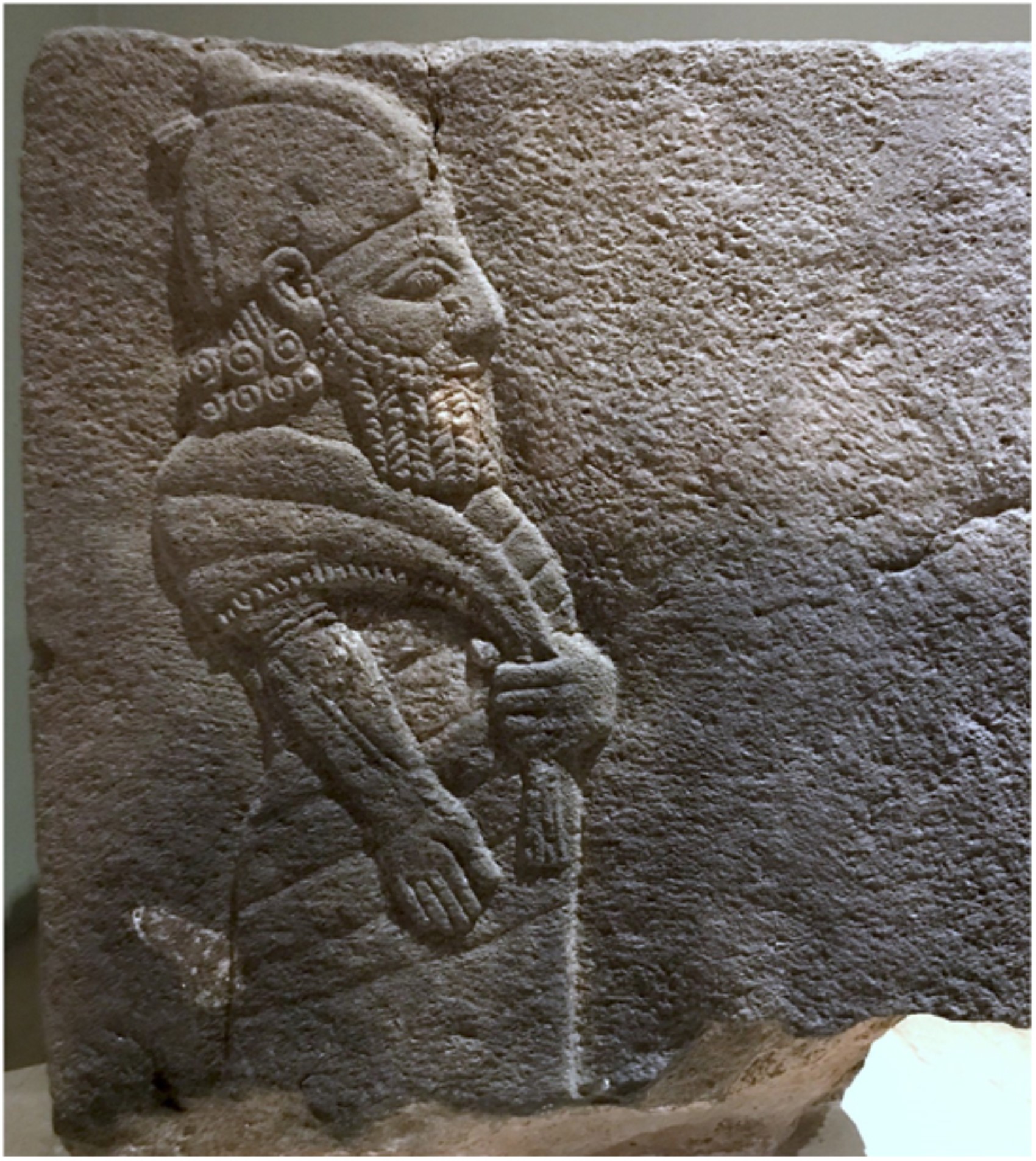
(Found in Zincirli. An Antep gentleman smuggled to Berlin. Berlin Vorderasiatisches/Near East Museum)
***
“During the “Fourth” excavation period, new palace structures were unearthed in the western part of the Zincirli mound.
In the section called the North Hall, various reliefs were found, including the orthostat (pictorial relief stele) depicting the Sam'al King Barrakib (733–713 BC) with his scribe.
The artifacts unearthed during this excavation were sent to the Port of İskenderun, as before.”
Ahmet Bedrettin Efendi, who had been an excavation supervisor in the Zincirli excavations for years, had left his post, and Mistakidis Efendi, an Ottoman citizen and a Greek from Adana, had been brought in his place.
Mistakidis Efendi was also doing transportation, port-customs, and brokerage business in the İskenderun–Adana–Aleppo region.
“On June 19, 1894, Mistakidis Efendi, the new representative of the excavations in Zincirli, sent seven crates of artifacts from Zincirli to the İskenderun Customs Office.
However, the Customs Administration had not been informed of this situation. It asked the Ministry of Education what should be done with them.
Then, 21 more crates arrived from Zincirli to the İskenderun Customs Directorate, and the Customs Office again asked for information from the Ministry of Education.
Although there is no information in the records about the fate of these 21 crates, the Inspection and Approval Committee of the Ministry of Education requested that the first seven crates be sent to the Directorate of the Imperial Museum (Müze-i Hümâyun) in Istanbul.
It is known that Mistakidis Efendi sent a total of 28 crates of excavation finds to the Port of İskenderun and that only seven of them were ordered to be sent to Istanbul. (Oğuz Satır and Ali Çifçi: The “Worthless Stones” of Zincirli: Osman Hamdi Bey and the German Excavations of 1888–1902, DergiPark, p. 235)
The rest?
Crate after crate of historical artifacts?
Off to the ships, off to the bitter homeland Germany!
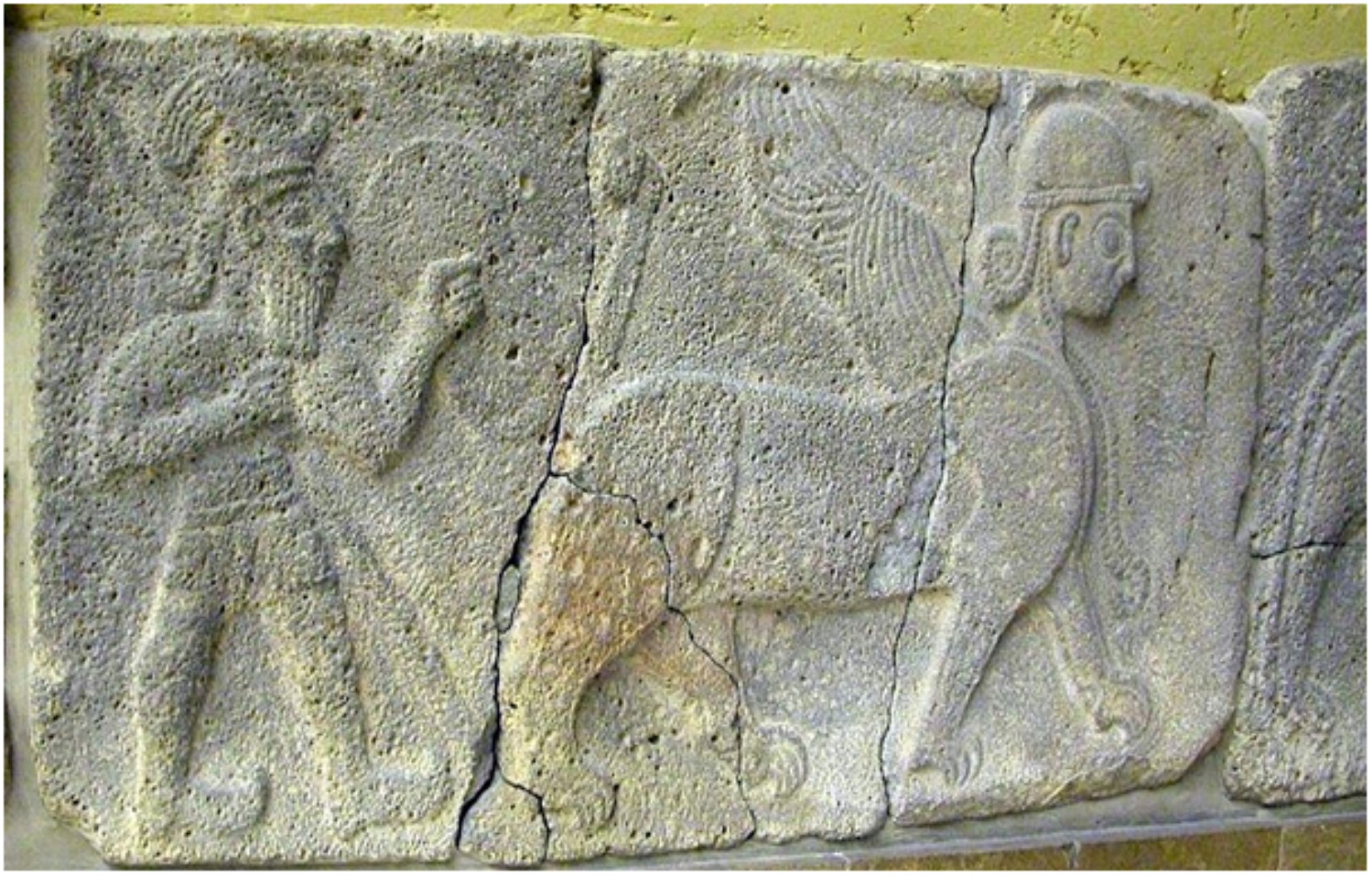
(Found in Zincirli. A relief smuggled to Berlin. Berlin Vorderasiatisches/Near East Museum)
***
“The next preserved document regarding Zincirli is a letter written by Hamdi Bey to the Ministry of Education on November 1, 1895, stating that the “Fourth Class Order of the Medjidie” was awarded to Mistakidis Efendi for his superior services in the Zincirli (Gaziantep), Hisarlık (Troy), and Ayasuluk (Ephesus) excavations.”
Bravo to Mistakidis Efendi! He sent 21 crates full of historical artifacts to Germany!
The reward should not be just a letter!
Of course, the painter and Museum Director Osman Hamdi Bey is aware of these!
A new excavation application dated August 24, 1901, regarding Zincirli appears again in the archival documents.
“We are not satisfied,” say the German smugglers! A little more!
We haven't fully connected our cultural roots to the soil yet!
“Although there is no further information on this subject in the Ottoman State Archives, Felix von Luschan, who conducted the excavations, states in his own excavation notebook that all important artifacts unearthed during the excavation process were moved.
However, it is not clear where and how these artifacts were taken!
It is understood that the artifacts excavated at the end of this period were somehow taken to Germany.
There is no information in the archives about what role the Ottoman Imperial Museum and Director Hamdi Bey played in this process.” (Oğuz Satır and Ali Çifçi. p. 237)
The records said so politely!
Osman Hamdi Bey's painting has been hanging on the wall of the Berlin Art Gallery ever since.
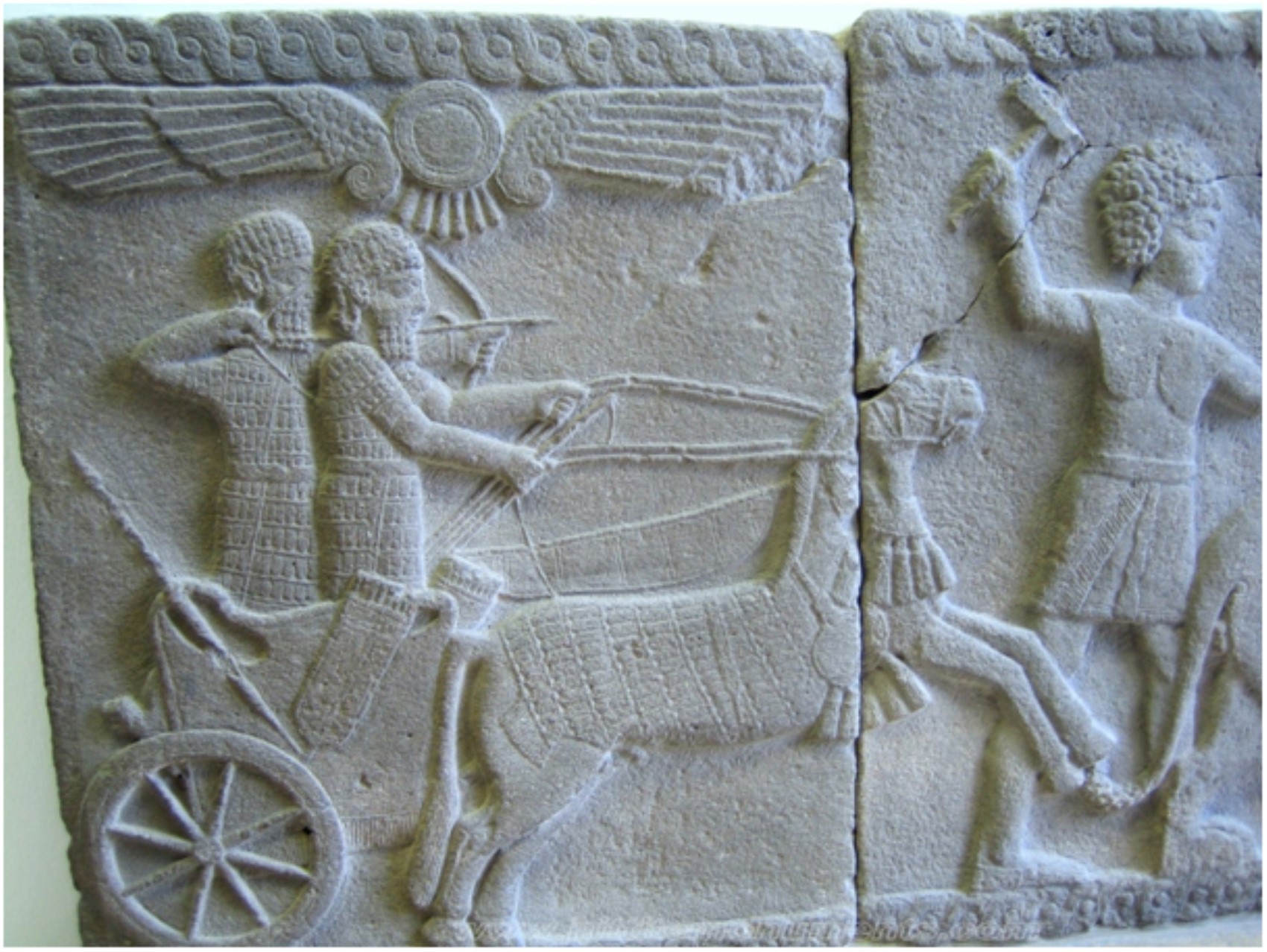
(The first part of the relief showing the famous lion hunt, found in Sakçagözü, cut and shaved, and smuggled to Berlin. Berlin Vorderasiatisches/Near East Museum)
According to the documents examined by Dr. Oğuz Satır and Dr. Ali Çifçi: “The purpose of the last excavation at Zincirli Mound was to complete the excavations and to review and organize the areas previously excavated between 1888–1902.
On August 24, 1901, the German Embassy in Istanbul requested another six-month permit to complete the excavations in Zincirli.
This permit would allow the archaeologists to prepare the documents related to the excavation for publication and to read and photograph the inscriptions found during the excavations.
Since Carl Humann had died in İzmir (Smyrna) on April 12, 1896, Felix von Luschan was now in charge of the Gaziantep excavations.”
***
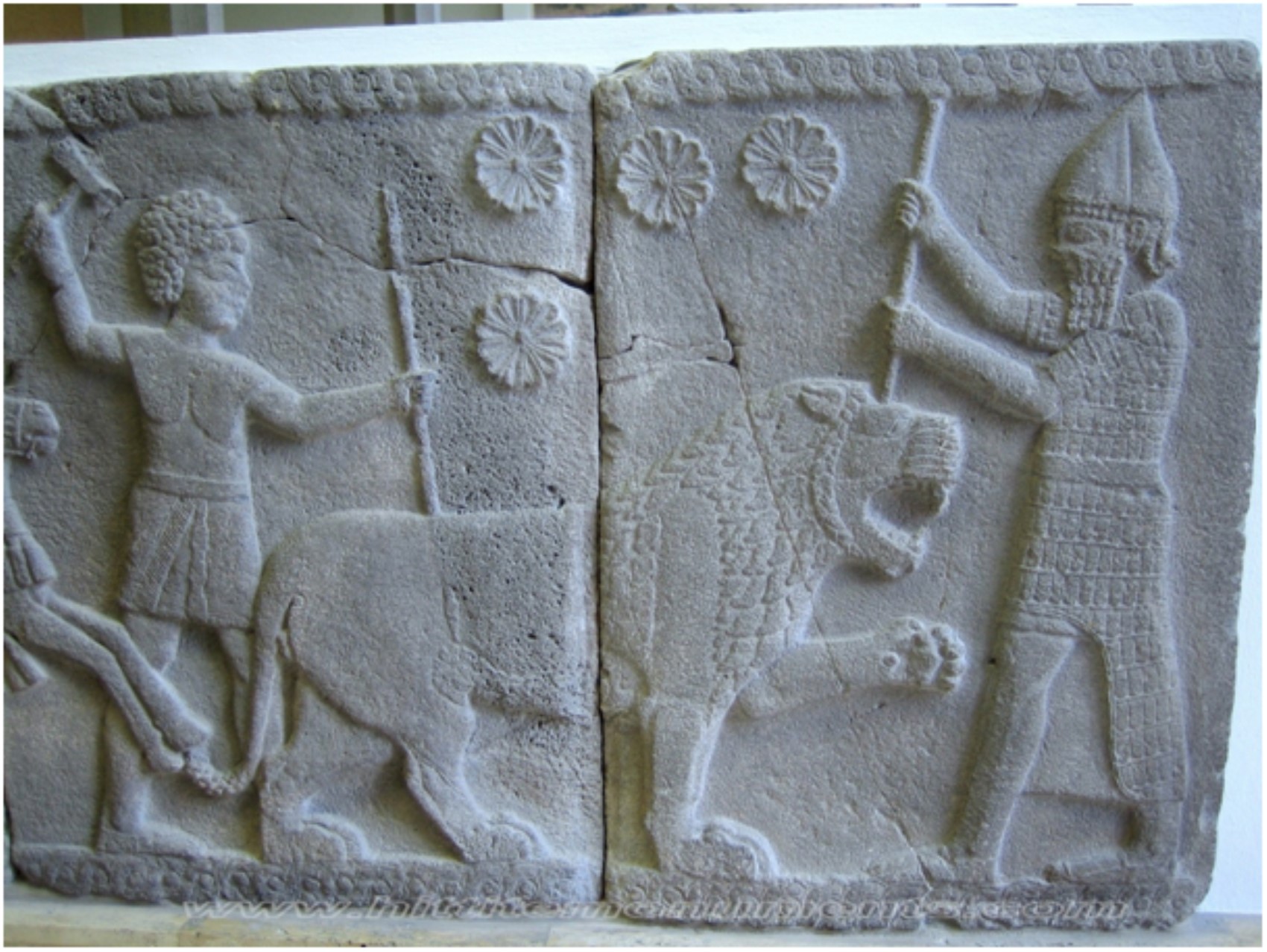
(The second part of the relief showing the famous lion hunt, found in Sakçagözü, shaved and smuggled to Berlin. Berlin Vorderasiatisches/Near East Museum)
***
So, who was Carl Humann, who had made great discoveries according to himself and the Germans, but was responsible for such a great robbery before history? How were his actions received in Germany?
Carl Humann was born on January 4, 1839, in the Ruhr basin, in the town of Steele, a suburb of the then-Prussian city of Essen.
This region, which was a center of coal mines, was one of the first places where industrialization and capitalism developed in Germany.
Humann grew up in an environment shaped by industrial-craft culture.
His family was a middle-class family with a technical-professional tradition; he developed in a social environment focused on practical skills, not the academic elite.
This background determined the discipline of measurement, drawing, and engineering seen in Humann's later work.
He received his engineering/technical education in Berlin, at the Bauakademie (Berlin Building Academy) of the Prussian State.
This school trained field-oriented engineers in the 19th-century Prussia on roads, bridges, infrastructure, measurement, and planning.
Carl contracted tuberculosis at a young age. His lungs were permanently damaged.
His doctors recommended that he move away from the cold German climate.
He came to Ottoman lands, to his brother Franz Humann, also an engineer, who was doing measurements, examinations, and limited operations in the ancient Heraion (Temple of Hera) area on the island of Samos.
His going to Anatolia was not just a career choice, but a physical necessity.
Samos, as the island of Pythagoras, the great mathematician of the ancient age, well known during Europe's Enlightenment period, was also a place known for its historical ruins.
Carl Humann's curiosity about historical artifacts, who had no academic training in archaeology, must have been triggered here.
The ruins he encountered while working on the Ottoman Empire's railway, bridge, measurement, and mapping projects in Palestine, İzmir, and Pergamon between 1863–64 increased this curiosity.
Especially the reliefs and architectural ruins on the Pergamon Acropolis deeply affected Humann.
In this context, he played a leading role in the outright smuggling of the Pergamon Zeus Altar and its statues between 1864–1878, and the Gaziantep artifacts between 1883–1896 with smuggling and dubious permits.
He was an intelligent and alert person who managed to use an important statesman like Osman Hamdi Bey, the Director of Ottoman Museums, for his own interests.
German imperialism also knew how to use such a pawn.
Humann achieved superior success according to the German State and related circles in transporting unique historical artifacts from around Pergamon, Aydın, and Gaziantep to Berlin.
However, he could not see the end of the robbery there.
Carl Humann died in İzmir (Smyrna) on April 12, 1896.
His apprentices continued, and are continuing, the plunder.
It is known that the cause of Carl Humann's death was long-standing health problems; especially cardiovascular diseases.
His funeral was buried in the Catholic Cemetery in İzmir-Gürçeşme. When this cemetery was closed in the 1950s, Carl Humann's bones were buried in the garden of the Aya Vukla Church in İzmir-Basmane, which was used as a warehouse for the Archaeology Museum in those years.
With the will he left, he wanted his grave to be built in the place where the foundations of the Zeus Altar were found on the Pergamon Acropolis.
In 1967, this will was realized, and his bones were placed in a grave built to the south of the Zeus Altar. They are still there.
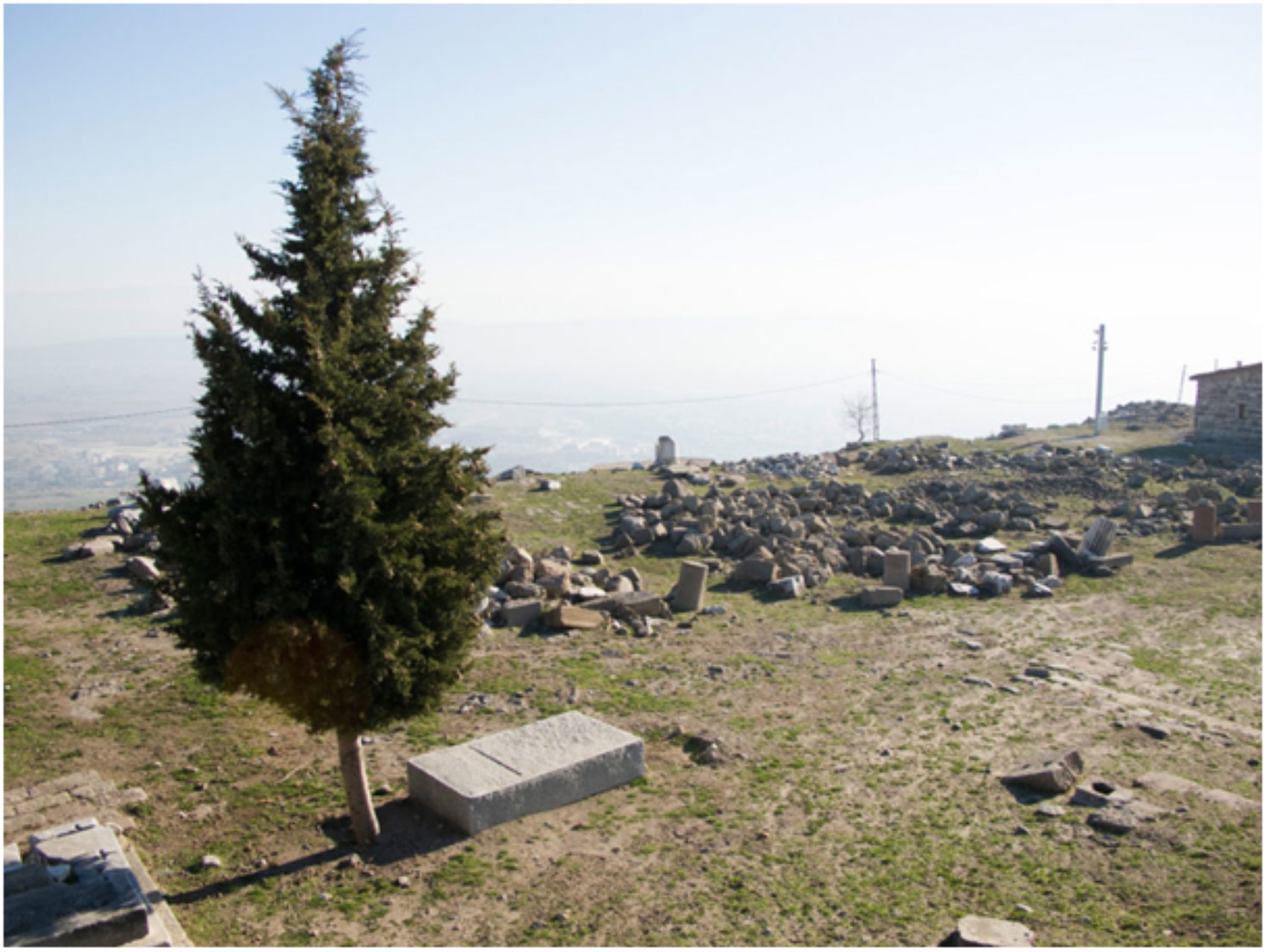
(Carl Humann's grave at the foot of the Zeus Altar foundations in today's Pergamon)
***
Carl Humann, who made German imperialism, which was looking for cultural roots for itself, happy especially with the Pergamon and Gaziantep artifacts, was honored many times in Germany both while alive and after his death.
The smuggler of Anatolian artifacts was awarded an honorary doctorate from the University of Greifswald in 1880.
In 1884, he was appointed as a manager/director at the Berlin Royal Museums, and was assigned and sent to Smyrna/İzmir.
He had now become the German State's trusted man.
In 1890, the city of Steele in Essen, where he was born, declared him an “Ehrenbürger” (honorary citizen).
“He” was the man who found the magnificent Zeus Altar and brought it to Berlin.
In Berlin, which entered a prestige race with metropolises like Paris and London, he was placed at the center of the “Pergamon” project, which would be a rival to them.
Humann's portrait bust, made by sculptor Adolf Brütt in 1901, was finished in time for the first opening of the Pergamon Museum/Prison and stands in one of the halls of the Museum/Prison today.
A copy of the bust is also exhibited at Kaiser-Otto-Platz in Essen-Steele.
At the same time, the name Humann was made permanent by being given to public spaces in Steele, where he was born, and in Berlin.
A school called Carl-Humann-Gymnasium was opened in Steele in 1935. A street was named Humannstraße (Humann Street).
There are place names such as Carl-Humann-Grundschule (Carl Humann Primary School) and also Humannplatz (Humann Square) in Berlin.
Humannstraße (Humann Street) in Hamburg-Nienstedten is also one of these examples.
In addition, in the context of institutional “heritage management,” his “memory” is tried to be kept alive within the framework of the organization called “Carl-Humann-Stiftung,” founded in 1958.
However, in recent years, content about Humann is not only commemorated in the line of “heroic explorer”; it is also mentioned in exhibitions/events that discuss the archaeology–politics relationship.
For example, in the exhibition centered on “Archäologie und Politik” opened at the Ruhr Museum in 2010, Humann's (robber and plunderer) behavior and position were opened for discussion in this context.
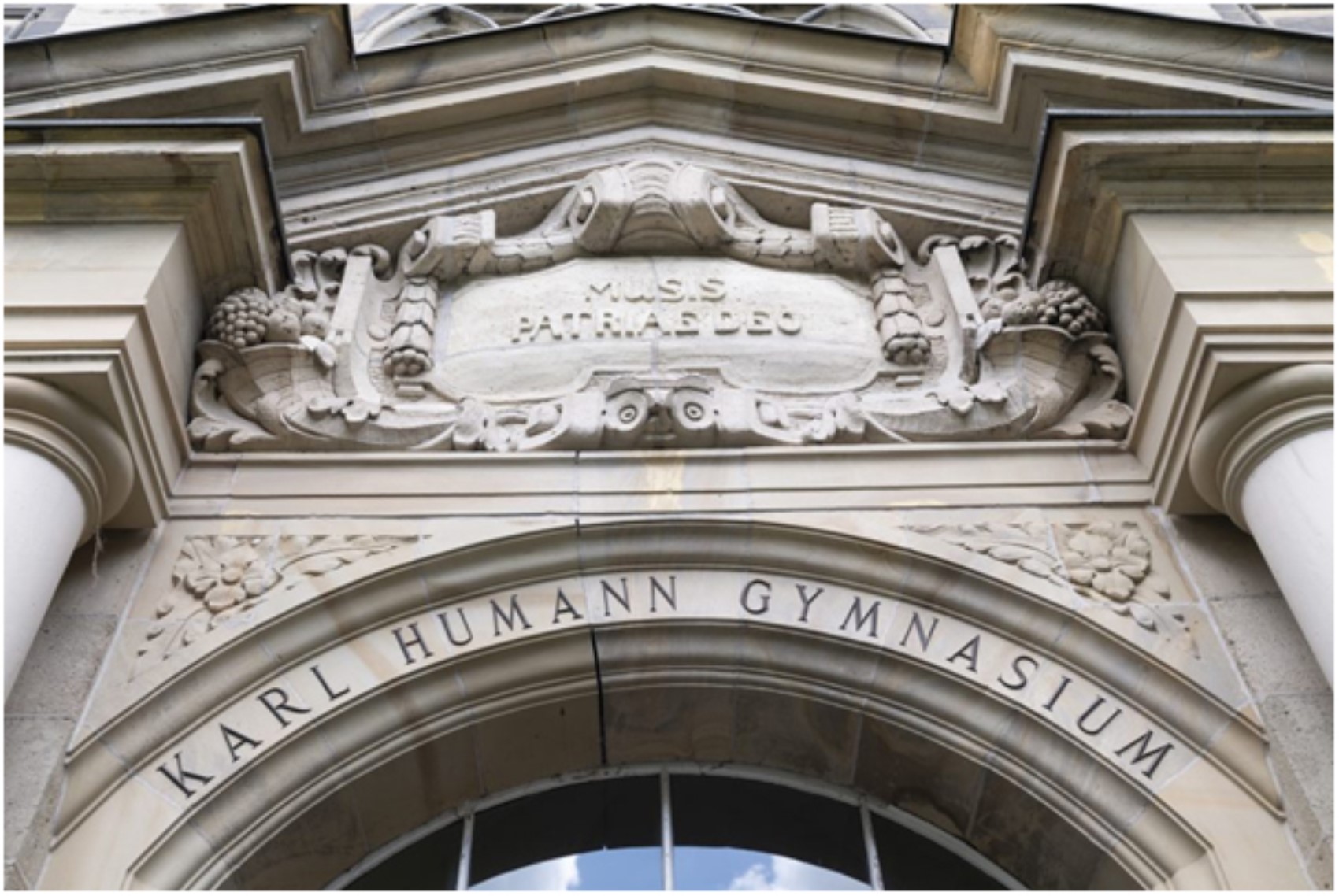
(Carl Humann High School in Essen, Germany)
***
After Carl Humann's death in 1896, the Gaziantep plunder, like the Pergamon robbery, continued.
The elements of German imperialism had gotten used to it once, the order of plunder would continue.
The head of the excavation in Gaziantep was now Felix von Luschan, who had trained under Humann.
Felix von Luschan (1854–1924) was born in Hollabrunn, Lower Austria; he came from a middle-class family, from an environment in contact with the bureaucracy of the Austrian Empire. Of course, his native language was German.
Although Felix Luschan did not carry the title “von” in the early stages of his career, he had acquired this “von” name, which symbolized state service and academic prestige as much as nobility in Germany, thanks to his scientific and museum services.
His wife, Emma von Luschan, was a name associated with art, ethnography, and collecting circles.
Her husband was finding historical artifacts in the Gaziantep excavations and having them transported to Germany, and his wife was collecting! Maybe brokerage too!
They were social people. Luschan's house in Berlin functioned as an intellectual meeting (or bargaining) place for the scientists and museum directors of the period.
He worked on skull measurements and typologies in the field of physical anthropology. He used racial classifications, which was the common approach of his time.
Maybe he did the same things in Gaziantep. Besides finding historical artifacts, he divided the local people according to their skulls!
Isn't another “serious” job of imperialism, according to itself, to divide society in order to easily manage the countries it enters?
With his death in 1924, he could not reach the political rise of the fascist Nazis, but some of his views paved the way for the racist Hitler's ideology.
Today, these studies of his are accepted as scientifically invalid and ideological.
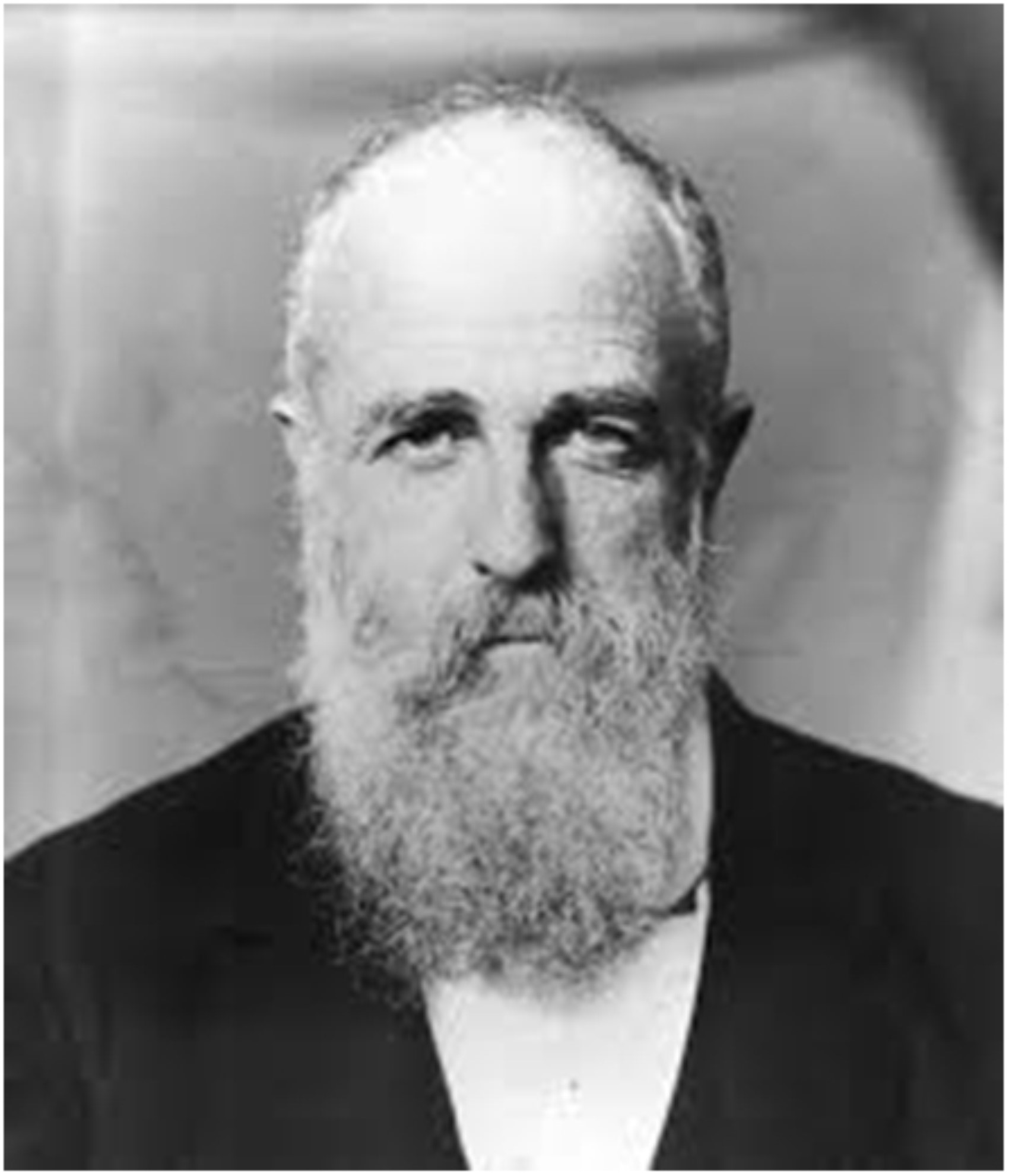
(Felix von Luschan, one of the Gaziantep robbers)
***
Felix von Luschan, who was such a personality, had trained under the smuggler Carl Humann as an archaeologist (excavation scientist), anthropologist (human scientist), and ethnologist (race scientist), and had become the new chief representative of German imperialism in Anatolia.
He was digging, finding, and taking it away by covering the minaret.
Along with the excavation work he did, he had learned from Carl Humann how things would work in Istanbul and Zincirli.
The application made by the Germans in 1901 to excavate in Gaziantep-Zincirli was forwarded to the Ministry of Education through the Ottoman Empire Ministry of Foreign Affairs.
The application was discussed in the Tanzimat Department of the Meclis-i Vükelâ (Council of Ministers), with the approval of the Directorate of the Imperial Museum, Osman Hamdi Bey, and the permit proposal of the Ministry of Education. After receiving the Sultan's approval, permission was granted to the Ministry of Education to issue the license.
Osman Hamdi Bey's interlocutor from Humann was now von Luschan, the new boss of the region.
However, the German team encountered various problems during their last excavations at Zincirli Mound.
The excavation tools and the excavation house they used in previous periods had been destroyed, and even an attempt had been made to seize von Luschan's letters at the Belen (Beylan) Post Office.
It means the local people and officials were seeing what was happening, the smuggled artifacts, and were making obstacles! The Anatolian people were not surrendering easily!
When Von Luschan and his team arrived in Zincirli after the permit was obtained, they could not find the materials they had used before, including the railway equipment used to transport the excavation soil.
The region was already simmering, especially due to Armenian actions in Maraş.
According to the researcher R. B. Wartke, who recorded the Zincirli events, the excavation house and its contents were probably destroyed during the disturbances in the region in 1901.
However, the correspondence in the Ottoman State Archives does not confirm this.
It seems that von Luschan, by filing a complaint with the Ministry of Foreign Affairs, stated that he had entrusted the excavation house and equipment to a man named Halil Efendi after the 1894 Zincirli excavations, but that he could not find them when he returned, and therefore demanded compensation.
It was stated that the entrusted goods and property consisted of 7 barracks, rails and wagons on the railway laid for transport, a blacksmith workshop, many wheelbarrows, pickaxes and shovels for 300 workers, a pharmacy, and other excavation tools, and a darkroom for taking photographs (March 10, 1902).
Most of these were devices such as rails and transport wagons brought in the previous excavation period to speed up the work.
The Ministry later instructed the Governor of Adana to investigate these claims.
When questioned by the İslâhiye District Governorate, Halil Efendi denied these claims. He had already moved from Zincirli village to the Pazarcık district of Maraş a few years ago.
Halil Efendi said that the items were left under the supervision of Gökçan Ağa, who resided in Zincirli and had since passed away, and that the Ağa had delivered them to “Trappist (a silent and very conservative movement within Catholicism in Christianity) clergyman Beraytin Efendi” in Şeyhli (İslâhiye district) with von Luschan's “written order.”
Halil Efendi also stated that the land where the excavation was carried out belonged to him and that von Luschan made these accusations to avoid paying the money that should have been paid to him in accordance with the article of the Antiquities Regulation regarding payments to landowners.”
The Anatolian people knew how to defend themselves against the accusations of the German robber.
Of course, German imperialism was as pure as the driven snow!
The situation (complaint) was reported to the Adana Governorship and then to the Ministry of Interior.
On September 23, 1902, the Ministry of Interior forwarded Halil Efendi's statement and the relevant documents to the German Embassy through the Ministry of Foreign Affairs.” (Oğuz Satır and Ali Çifçi. p. 235)
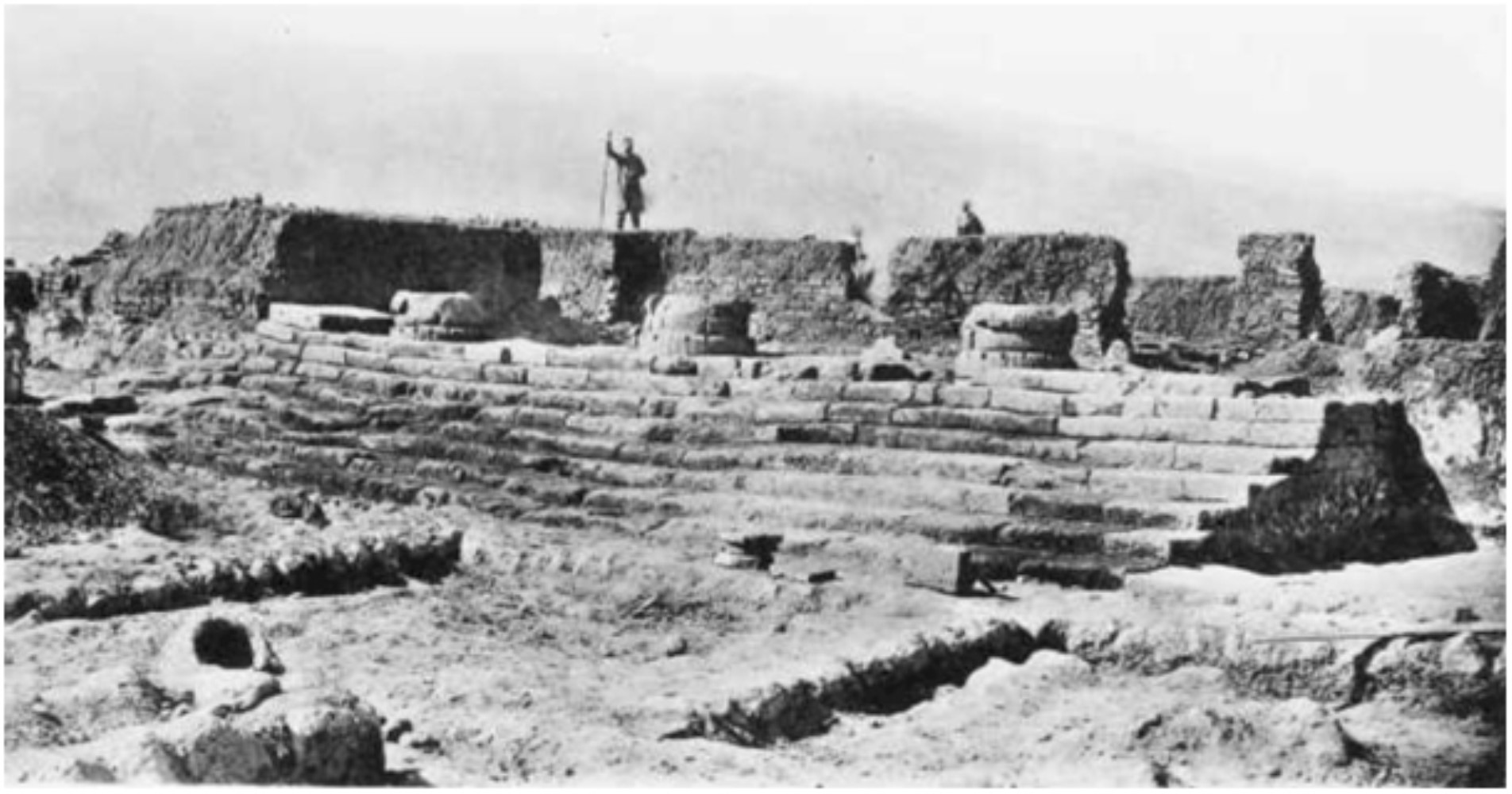
(von Luschan excavating and robbing Zincirli. 1902)
***
As mentioned above, “more problems had arisen when the post office manager of the Aleppo province of the Ottoman Empire in Beylan (today's Belen district of Hatay province) seized a package containing letters written by Luschan to the consul general in İskenderun during the excavations.
This package had been opened on the grounds that it did not contain stamps.
A fine was imposed for each letter, and the postman who brought the package was released after being detained for two days.”
It means this post office and its manager were also causing problems for the German excavation team!
The removal of crate after crate of historical stones by foreigners was certainly hurting the patriotic officials!
What do they know about who bought Osman Hamdi Bey's painting titled “A View of a Turkish Street” and where it is now?
“Then a new post office was opened in Hassa (between Zincirli and İskenderun), and von Luschan was informed that he should deliver his letters there from then on.”
An order must have come from above: “Facilitate the work of the plundering Germans in Gaziantep as you do in Istanbul”!
“Following these events, the ‘racist’ von Luschan complained about the situation first to the German Embassy, and then to the Ottoman Ministry of Foreign Affairs.”
Local officials were also cutting work for the noble German smugglers!
One way or another, Gaziantep was resisting!
“The Ministry of Foreign Affairs again asked the Ministry of Interior to investigate von Luschan's claims.
The first response came from the Aleppo Governorship, and the Governorship conveyed the information that the letters in question were only held at the Beylan Post Office because they were unstamped, and that the package was sent after it was confirmed that it came from the excavators in Zincirli.
The Ministry of Post and Telegraph was responding in a similar way.”
It seems the pawns of German imperialism were asking for an account, and local Ottoman officials were protecting each other against the accusations of German plunderers!
“Despite all these difficulties they encountered, the Germans' last excavation in Zincirli began on January 3, 1902, under winter conditions and continued until June 13.
Work was completed by the end of May, except for the cleaning and removal of the artifacts.
(In the Zincirli excavation area) A building complex was unearthed in the areas called buildings K and J, and to the south of Hilani II and Hilani III (the entrance gates of the Sam'al/Zincirli palace).
Meanwhile, although the last excavations were carried out in 1902, von Luschan wanted to continue the excavations in Zincirli and especially to investigate the ground layers of the mound, to determine whether there was anything underground. However, he (fortunately) did not find the opportunity to excavate in Zincirli again.
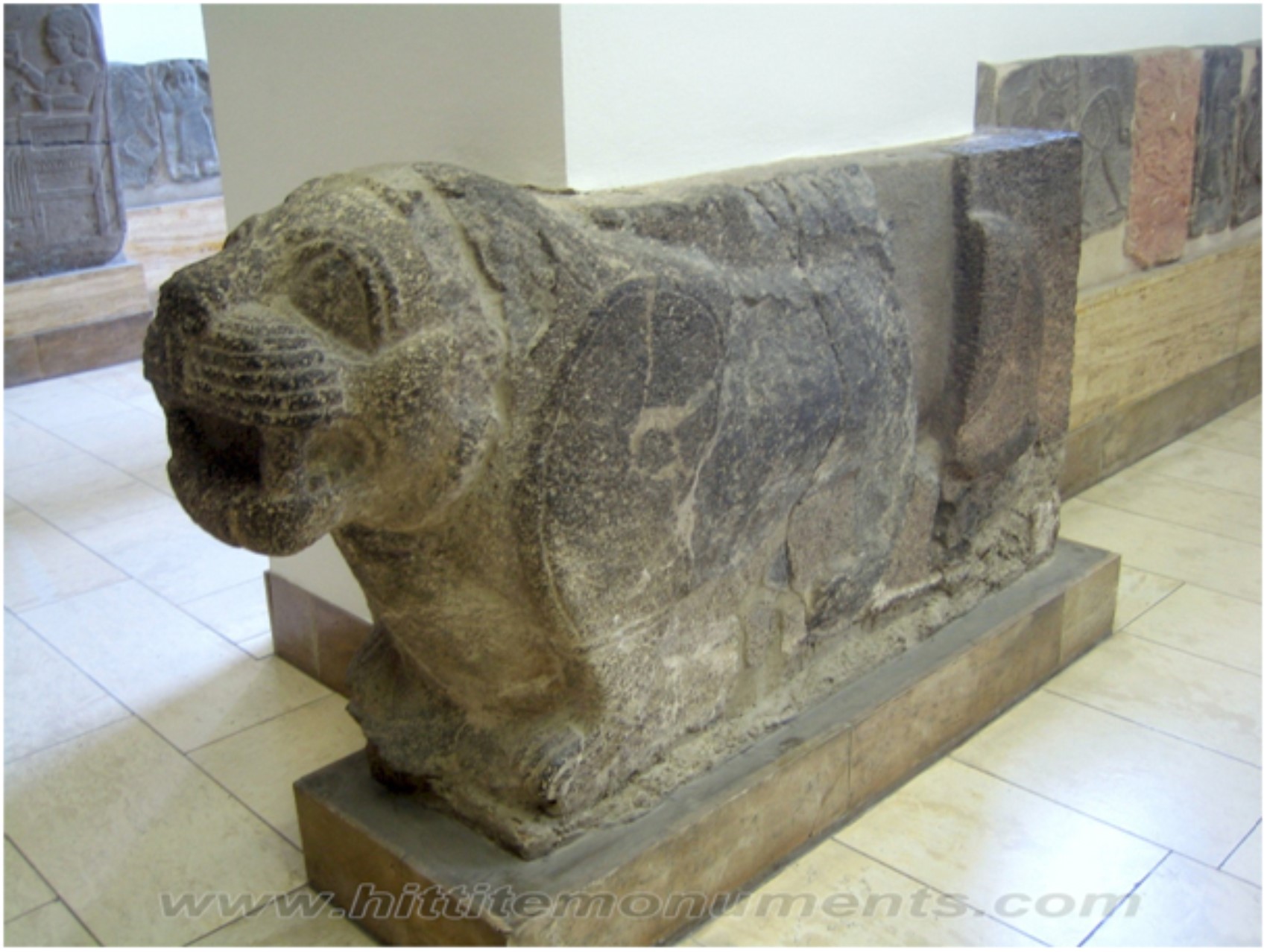
(Found in Zincirli. A Gaziantep lion statue smuggled to Berlin. Berlin Vorderasiatisches/Near East Museum)
As in previous excavations, he wanted to take some of the artifacts seized in this last excavation season to Berlin, Germany.
In Istanbul, Osman Hamdi Bey, while evaluating this request, stated, as in previous requests, that most of the requested artifacts consisted of black, heavy stones and unimportant statues (as the sole selector to higher authorities).”
For some reason, according to O. Hamdi Bey; “These statue-like reliefs and stone inscriptions unearthed in Zincirli, which shed light on the history of Anatolia and the region, were “unnecessary” for the Ottomans.”
Except for the tokens kept in Istanbul, these stones, each of which is a treasure of history, were dirty, black, filthy stones!
Throw them away!
“In addition, Hamdi Bey was reporting that there was not enough budget for the transportation of the artifacts to Istanbul and that it would be appropriate to give some of the unimportant artifacts to Germany in exchange for them covering the transportation costs.”
Give and get rid of it!
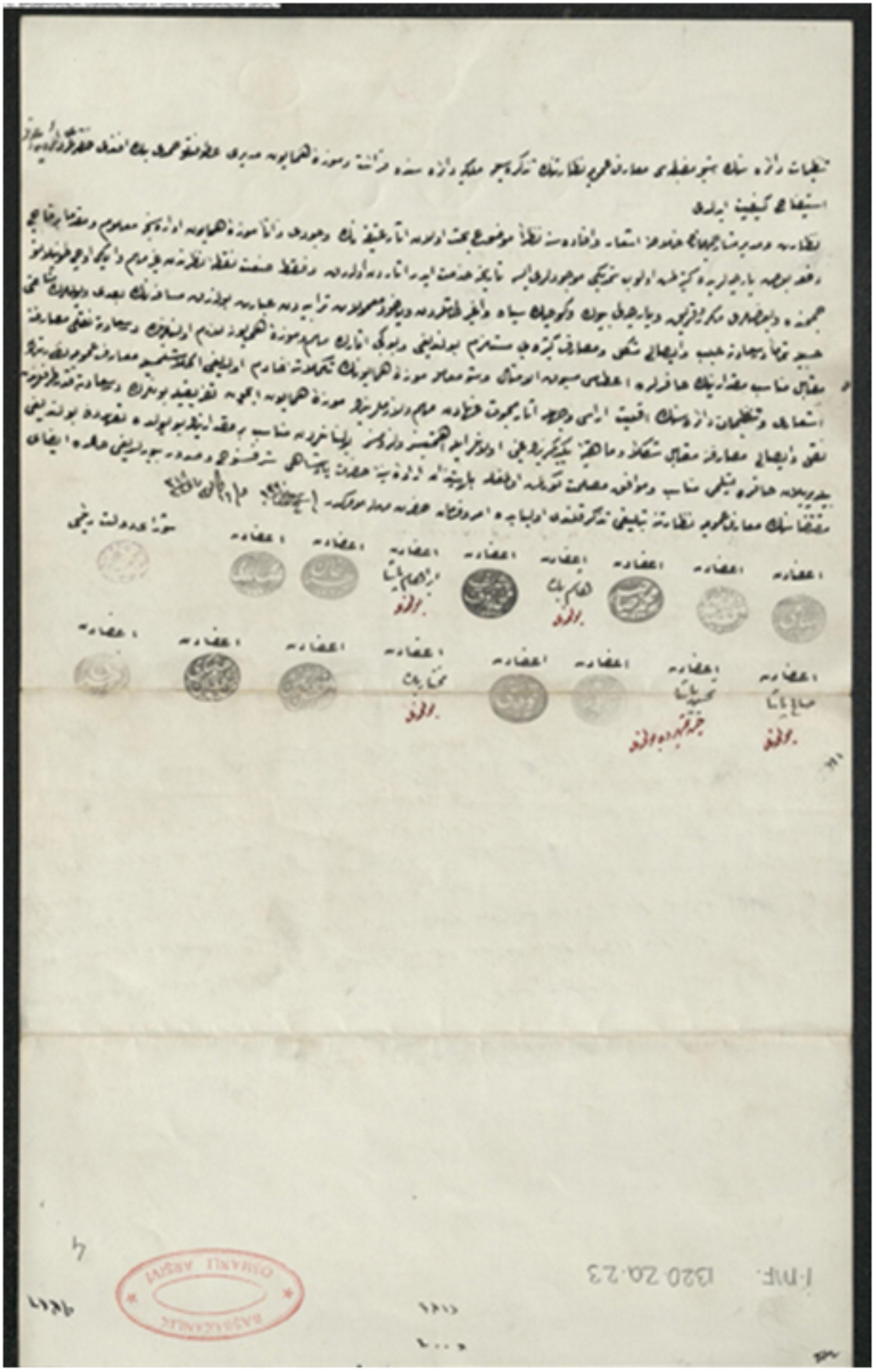
(The official decision letter of the Tanzimat Department of the Meclisi Vala (State Council), which did not allow the transportation costs of the artifacts found in the last excavation period in Zincirli to be given to C. Humann. However, this decision was changed at the meeting held in the Civil Service Department with the effort of Osman Hamdi Bey, and these artifacts were given to Humann in exchange for covering the transportation costs. (BOA.İ.MF. 8/53.. Oğuz Satır and A. Çifçi p. 226)
***
The opinion of the Ottoman State's Museum Director Osman Hamdi Bey, which he reported to the higher authorities, that the Gaziantep artifacts were “black, heavy stones and unimportant statues,” was “sent to the Meclis-i Vâlâ (the highest advisory council) to be forwarded first to the Ministry of Education and then to the Sublime Porte (Grand Vizierate).”
It must not have found this opinion appropriate, as “the Tanzimat Department of the Council of State (Court of Cassation–Council of State) opposed the previous practice of exchanging artifacts in return for transportation costs.”
So Hamdi Bey was also sending artifacts abroad with a method called exchange!
The Department asked both von Luschan and the Imperial Museum (Osman Hamdi Bey) why, if the artifacts were worthless, the Germans wanted to transport them first to Istanbul and then to Berlin with great expense and trouble.”
Let's see!
“(Since no convincing answer could be obtained) The Tanzimat Department reported that instead of this (sending the artifacts directly to Germany with an exchange or other cover), all artifacts should be brought to Istanbul using the budget of the Imperial Museum (Ottoman Museums Directorate).
Unnecessary and duplicate pieces could be sold at auction in Istanbul to cover transportation costs without the need for German aid.
If there was not enough money to transport everything to Istanbul at once, it could be decided to send the artifacts piece by piece.
Thus, the Department was opposing the idea of the Germans and the Ottoman Imperial Museum (i.e., Osman Hamdi Bey) that these artifacts were “vulgar and worthless.” (O. Satır, A. Çifçi, p. 235)
The robbery was so obvious that the irregularities and arbitrariness were clearly visible!
And why shouldn't the money of the great Ottoman State be used for transportation?
In these years, the Sultan was II. Abdülhamit, and the Grand Vizier was Said Halim Pasha.
“Ottoman Museum Director Osman Hamdi Bey was invited to attend an evaluation meeting held at the Civil Service Department of the Council of State (Court of Cassation–Council of State) on November 4, 1902.”
Things had gotten complicated.
A part of the state was asking Osman Hamdi Bey for an account:
“Come, let's understand!”
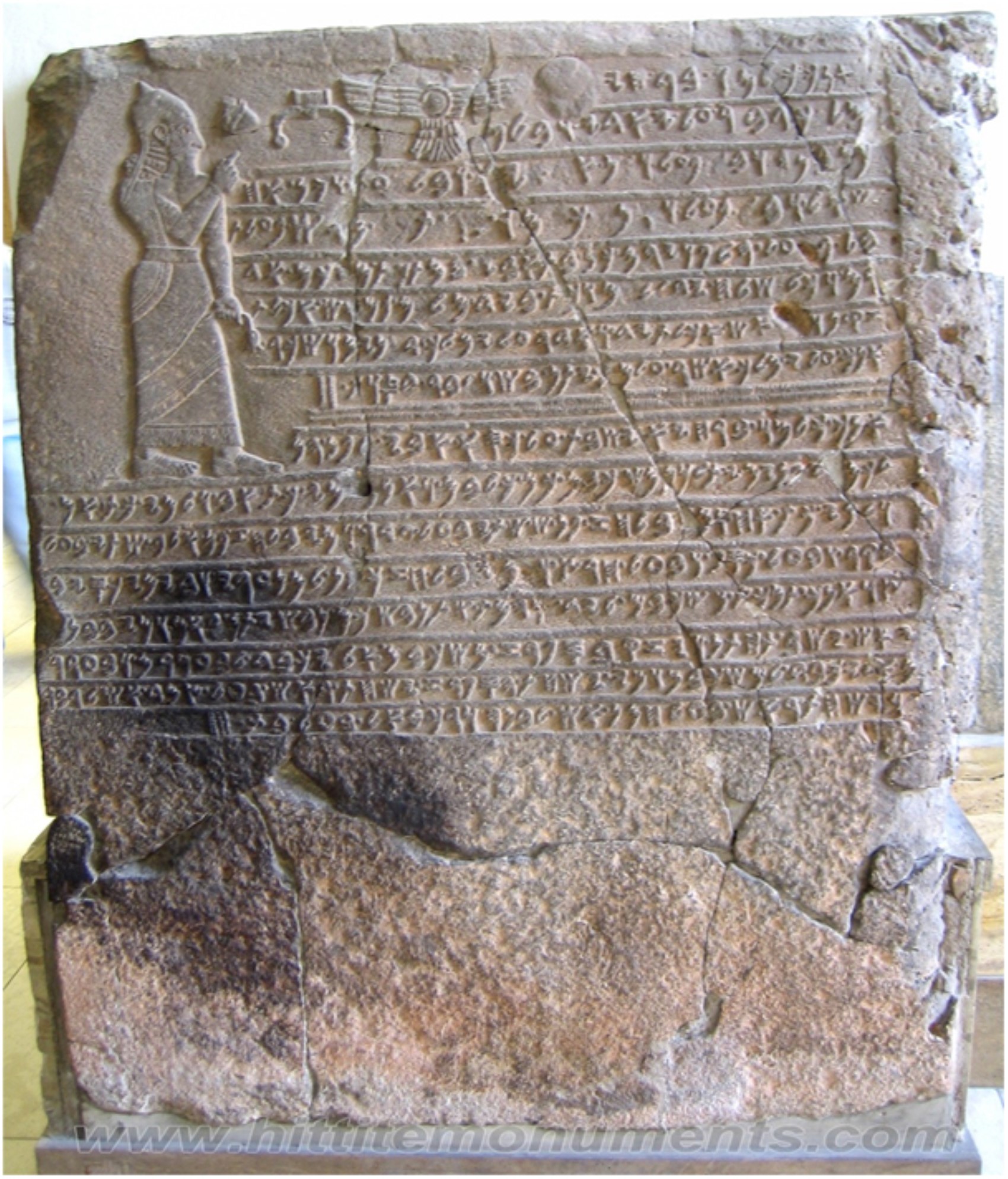
(Found in Zincirli. The King Kilamuwa inscription related to the history of the Gaziantep region, smuggled to Berlin. Berlin Vorderasiatisches/Near East Museum)
***
“At this meeting, Hamdi Bey said that the artifacts found in the excavations carried out by the Germans in Zincirli between 1888–1902 had been brought to the Museum in Istanbul before, and that despite having historical value, the artifacts found in later excavations (as he had reported many times before) had no artistic importance, consisted of heavy stones weighing 2–3 tons, and were generally broken, fragmented, and lacked original features.”
Hamdi Bey was persistent in his attitude. He was adamant!
He saw no harm in giving the Gaziantep artifacts to the Germans!
“He was saying that it was very difficult and costly to transport them to Istanbul due to the bad roads and long distances in Anatolia.
He argued that the practice of the German excavation team bringing the artifacts to Istanbul, as in previous excavations, examining them here, preserving those deemed important and necessary for the Museum, and giving an “appropriate amount” of the remaining artifacts to the Germans in exchange for transportation costs should be continued, and that this would serve the development of the Imperial Museum (whatever that means!).
Moreover, although the last excavations were carried out in 1902, von Luschan (the apprentice of the head of the thieves, Carl Humann) was saying that he wanted to continue the excavations in Zincirli and especially to determine the stratigraphy (historical layers underground) of the mound (the hill where the artifacts and the ancient city are located). He should be helped.”
Osman Hamdi Bey's view (probably due to his love for historical artifacts) that the Germans should be helped was fixed!
With such an open attitude of partisanship, he was not afraid of anyone.
“However, the German apprentice smuggler von Luschan would not find the opportunity to excavate in Zincirli again.
Although some representatives of the Civil Service Department continued to oppose giving the artifacts to the Germans, an agreement was finally reached to separate the important and necessary artifacts for the Museum and give the rest to the Germans in exchange for transportation costs.
However, it was stipulated that the Museum (i.e., Hamdi Bey) should carry out the examination procedures in Zincirli instead of taking everything to Istanbul.”
Did Osman Hamdi Bey comply with this condition, I wonder?
“Following this decision, the Sultan's approval was requested, and the decision was published on February 21, 1903.” (O. Satır, A. Çifçi, p. 239)
This decision, which went through so many stages, was finally approved by Sultan II. Abdülhamit!
The Germans and Osman Hamdi Bey had won once again.
How greedy imperialism was, and how easily some of the country's intellectuals (!) gave up the soil and stone of the homeland!
“Unlike previous seasons, the artifacts from the last season were donated free of charge to the Berlin Museums on May 23, 1903, by the “Deutsche Orient-Gesellschaft” (German Oriental Society), which financed the excavations.”
Whose property were they donating to whom!
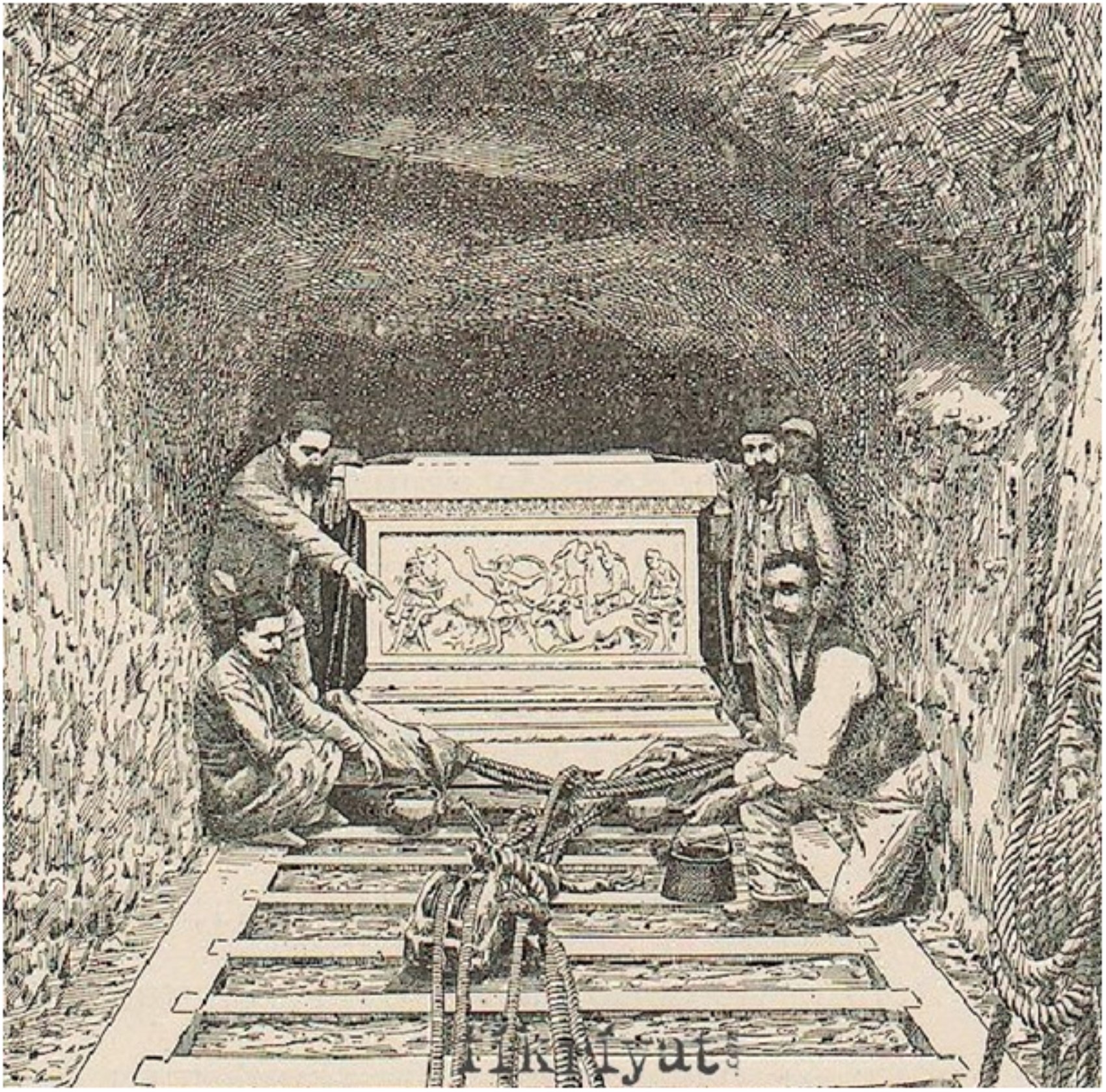
(The artifact known as the Alexander Sarcophagus, which Osman Hamdi Bey found in Sidon-Lebanon and brought to Istanbul. Representative picture)
***
Documents in the Ottoman State Archives reveal that Osman Hamdi Bey played an important role in the transfer of artifacts from Zincirli to Germany.
However, Dr. Yıldıray Yıldırım from Bayburt University thinks a little differently about this.
This view also reflects the perspective of many people related to the subject in our country.
Y. Yıldırım reports for our artifacts taken abroad; “During the procedures (application, permit, excavation, sharing of artifacts, and taking them abroad), the opinions of the Ministry of Education and the Directorate of the Imperial Museum, which is affiliated with it, were taken within the framework of the (1884 Antiquities) Regulation, and the licenses were given accordingly.”
So things are “legal”!
“Although it is seen that Carl Humann and Felix von Luschan, who took over the excavation after him, resorted to different ways to get rid of the restrictions of the Regulation, he states that it is understood that the statesmen acted within the framework of the regulations in the procedures related to the subject in both cases and showed great sensitivity in this regard.”
In other words, despite the trickery done by the German von Luschan, the high-level Ottoman statesmen, including the Director of the Imperial Museum Osman Hamdi Bey, did their duty properly!
Still, he cannot help but emphasize that “it could not be prevented that many artifacts found as a result of the excavations were taken abroad.”
“However, he argues that the exit of the artifacts in this process was not in the form of smuggling, looting, or plunder, but took place with the approval of the Sultan within the framework of the 32nd article of the Regulation, which left an open door on this subject.”
As if Hamdi Bey did not have that article put into that law and did not use it emphatically!
“He does not refrain from saying that the political, economic, and social conditions in which the country was in also paved the way for these artifacts to go abroad, and caused the 32nd article of the Regulation (which gives Osman Hamdi Bey great initiative for the removal of artifacts abroad) to be used intensively by the Germans. (Yıldırım Yıldıray, Zincirli Mound [Sam’al] Excavations Conducted by the Germans and the Practices of the Ottoman State in This Process, DergiPark, Year: 2024, Issue: 23, p. 109).
“In other words, he says that Osman Hamdi Bey cannot be solely guilty in the taking/smuggling of Anatolian artifacts abroad.”
He is of course right about this!
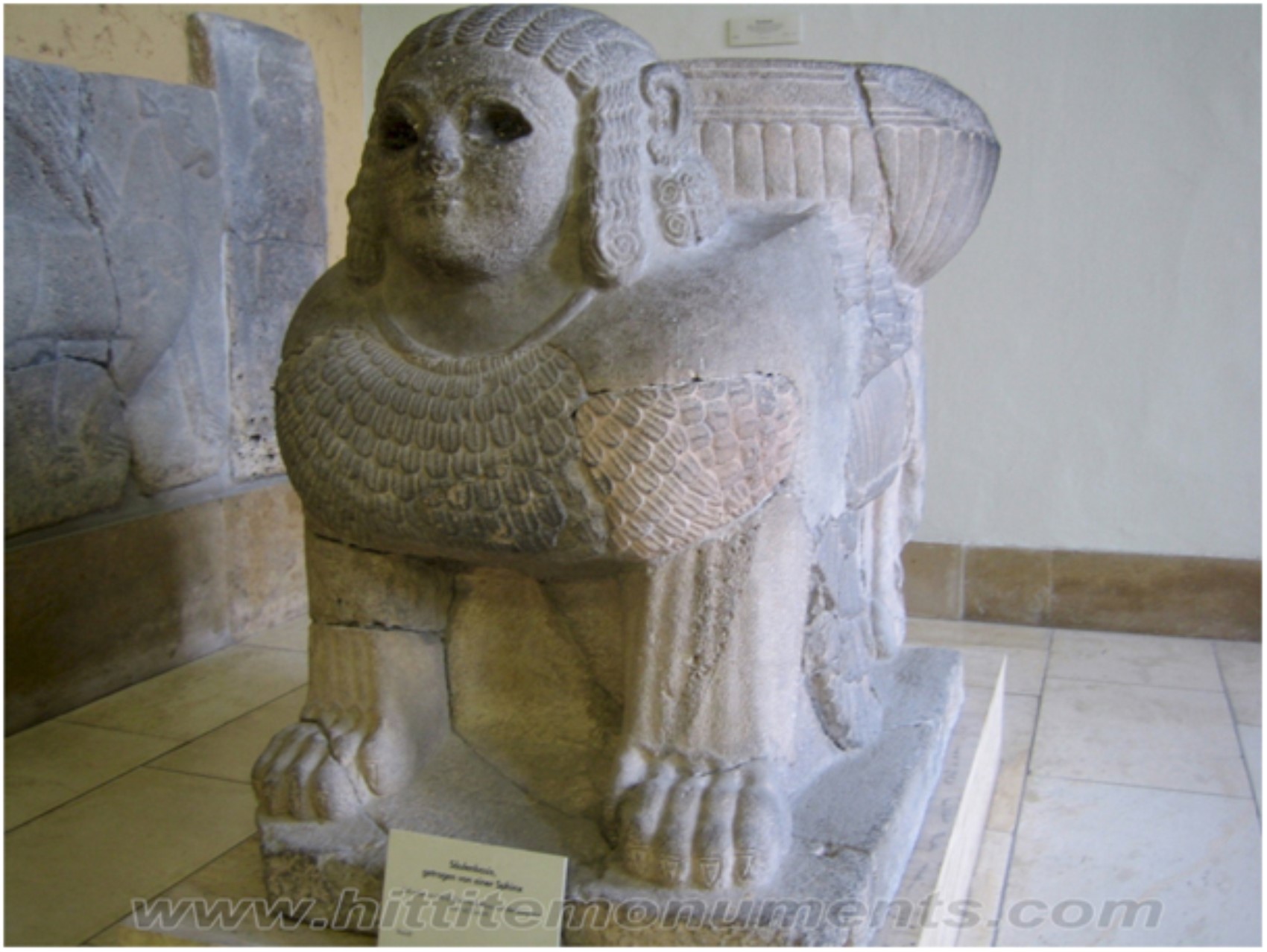
(Found in Zincirli. A sphinx statue smuggled to Berlin. Berlin Vorderasiatisches/Near East Museum)
***
Viewed from this perspective, is Osman Hamdi Bey a “scapegoat” in the Anatolian plunder; in the Pergamon and Gaziantep robbery?
In the context of being an intellectual, artist, and statesman that formed his personality, did Osman Hamdi Bey have no positive aspects, no behaviors beneficial to the state and society, in the face of all the negativity he reflected?
That he did not fully protect the interests of the state, that he turned a blind eye to the looting of Anatolia's historical artifacts, that he paved the way for their exit, that he opened the door to robbery with a hidden article he had put into the 1884 Antiquities law, that he cooperated with foreigners, especially the Germans, in this direction, that he did not carry his beautiful painting ability to a universal dimension and to some extent repeated Western Orientalism, and that he used this situation for his personal gain are the main accusations directed at him.
It is also clear that he was a “pasha's son” who was disconnected from the reality of the country, obsessed with French-German culture, and lived a European-style “pasha” life.
It is also clear that he was one of the important captains of the sinking Ottoman State ship (neither inside nor outside)!
However, along with all these negative determinations, what he added to our administrative, social, and cultural life cannot be ignored.
Osman Hamdi Bey (1842–1910) is also a versatile, interesting figure who created deep-rooted and permanent transformations in the fields of archaeology, museology, protection of cultural assets, fine arts education, and law in the Ottoman State.
He ensured the institutionalization of archaeology in the Ottoman Empire. He is considered the first Ottoman archaeologist. He took systematic steps to bring archaeology under state control.
He played a leading role in the issuance of the 1884 Antiquities Regulation.
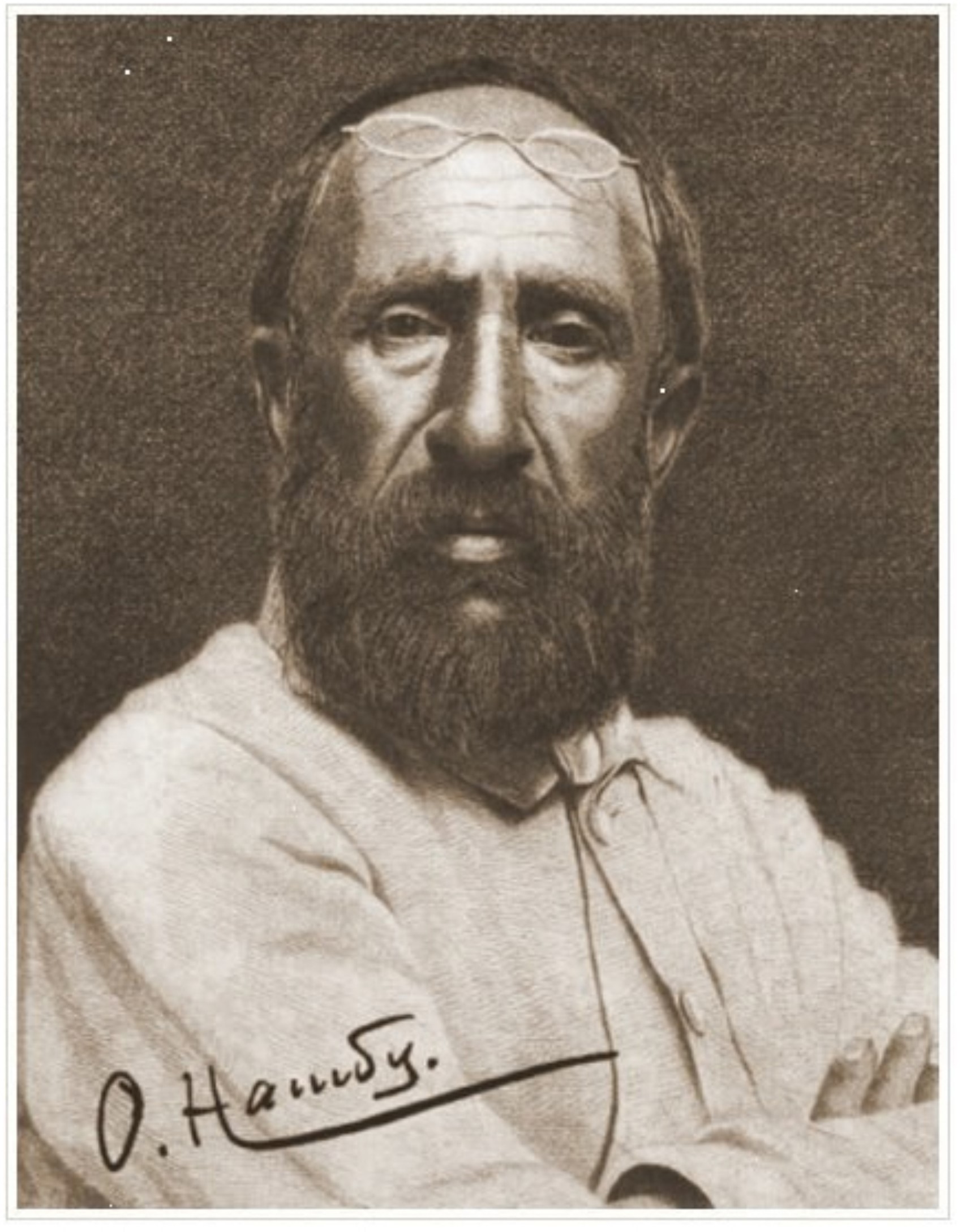
(Self-portrait by Osman Hamdi Bey)
With this regulation, the previously issued 1869 and 1874 Regulations were improved; the removal of antiquities abroad was prohibited, and it was ruled that the found artifacts belonged to the state. This is the first modern legal text aimed at protecting cultural assets in the Ottoman Empire.
However, with the 32nd article he had put into this Regulation, he did a perhaps conscious but terrible act, such as taking the approval for giving the found historical artifacts, especially to the Germans, into his own initiative, and this paved the way for the robbery of Anatolia's historical artifacts, especially in Pergamon and Gaziantep.
Osman Hamdi Bey tried to transform the Imperial Museum (Ottoman Imperial Museum) into a contemporary museum and became the founding director of the Istanbul Archaeology Museum.
With this initiative, the Museum was removed from being a warehouse where artifacts were accumulated, and it gained scientific classification, display, and cataloging principles.
The main building of today's Istanbul Archaeology Museum was built during his period.
The main building, whose architecture was done by Alexandre Vallaury, a French-born Levantine born in Istanbul, was opened on June 13, 1891, and the current campus was formed with additions made in 1903 and 1907.
Unfortunately, there is no record of the cost of the first main building (perhaps we couldn't find it)!
It is reported that the cost of the later additions amounted to 20,000 Ottoman liras (approximately 20 thousand dollars).
Thus, museology in the Ottoman State gained a scientific and public character for the first time.
Although Osman Hamdi Bey was not an archaeologist, the magnificent Alexander Sarcophagus he unearthed in his excavations in Sidon (Lebanon) (1887) is considered a world-class artifact.
The work, discovery, and excavations he carried out with the Germans Carl Humann and Felix von Luschan on Mount Nemrut and in Gaziantep-Zincirli are pioneering in terms of Turkish archaeology in Anatolia.
Of course, along with these behaviors, the result of the decisions he made regarding the Gaziantep-Zincirli excavations and finds; was a robbery, a plunder, a complete disaster.
Osman Hamdi Bey is also considered the founder of the Sanayi-i Nefîse Mektebi (Academy of Fine Arts), which was opened in 1882 by the order of II. Abdülhamit.
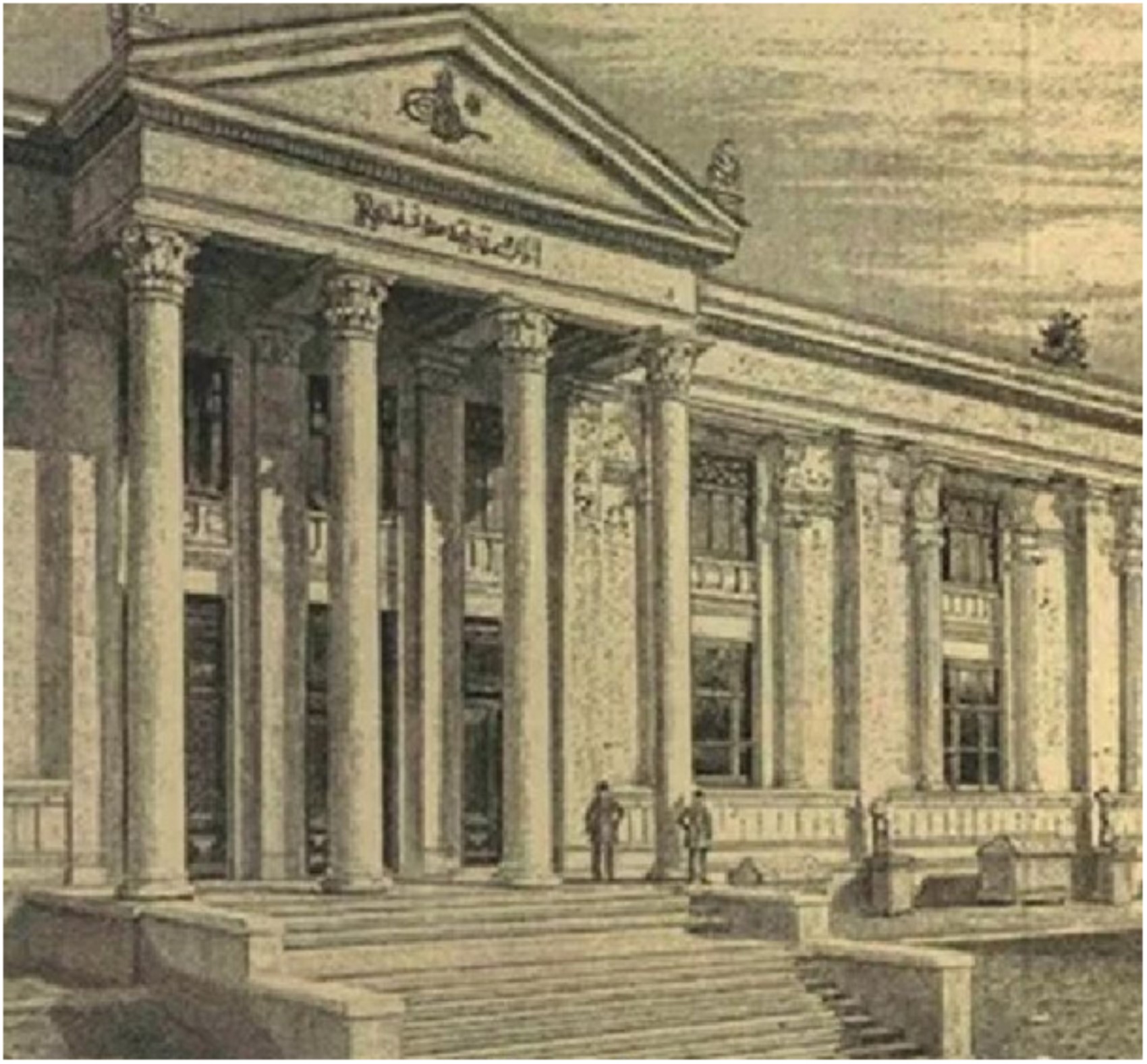
(Istanbul Archaeology Museum, which Osman Hamdi Bey led the construction of - Today)
This school is the first academic educational institution in the country in the fields of painting, sculpture, and architecture.
Thus, he ensured the acceptance of painting and sculpture as “legitimate” arts in the Ottoman Empire, which was ruled by the “Caliphate.” This phenomenon is of great importance in terms of starting the teaching of art with a contemporary education outside the madrasa.
In his works such as “The Tortoise Trainer,” “The Weapon Dealer,” and “Woman with Mimosas,” he addressed the “tradition–modernity conflict,” “bureaucratic sluggishness,” and “east–west relations” with a symbolic language, and critical and intellectual content appeared at this level for the first time in Ottoman painting.
This attitude directed Ottoman intellectuals, artists, and officials to the fields of museology and archaeology.
These are Osman Hamdi Bey's good deeds. Of course, they cannot be underestimated!
However, when the Gaziantep robbery and the previous Pergamon smuggling, which we have been covering for five voluminous articles, are considered, it is clear that the “sins” of Hamdi Bey have no count.
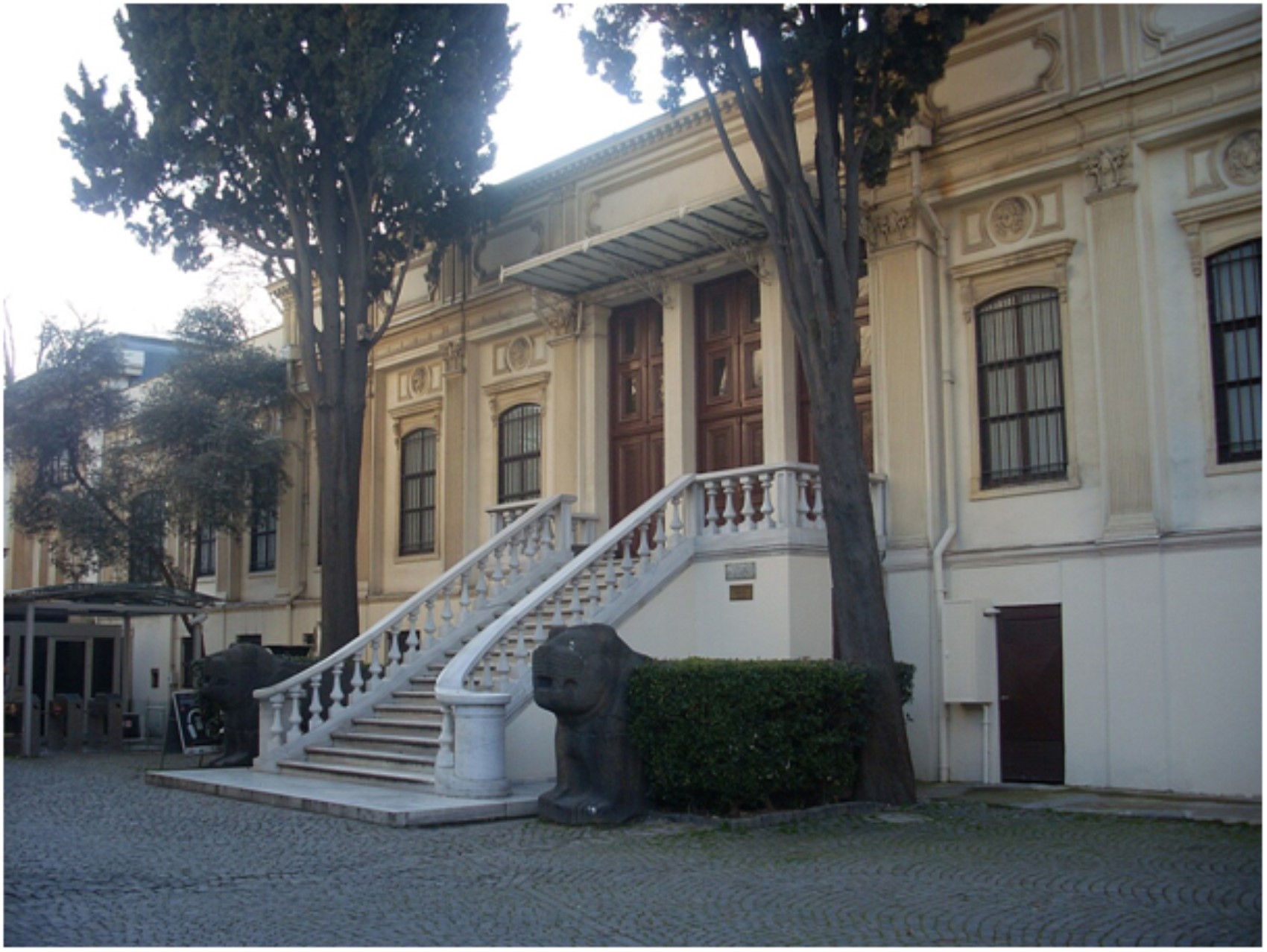
(Istanbul-Sanayii Nefise Mektebi. Today the Museum of Oriental Antiquities).
***
What happened regarding the Gaziantep robbery, this smuggling, is interestingly linked to the paintings of Osman Hamdi Bey, the Director of Ottoman Museums.
His painter personality, his desire to announce his painting ability to the world, and his effort to sell his paintings cause this connection to be established not spontaneously, but necessarily.
In this case, the determinations made by Prof. Funda Berksoy from Mimar Sinan University stand out (Funda Berksoy, Osman Hamdi Bey's Turkish Street Scene and Late-Nineteenth-Century Power Relations between the Ottoman and German Empires):
“In his letters to Wilhelm von Bode (who would later have his name given to a section of the Berlin Museum/Prison), one of the Department Directors of the Berlin Royal Museum, the German art historian Wilhelm Vöge, who came to Istanbul in 1898 to acquire (buy and smuggle) some artifacts, was recommending the purchase of a painting from Osman Hamdi to speed up official formalities.
Theodor Wiegand, who helped W. Vöge's efforts, was also recommending the purchase of Osman Hamdi's paintings in a report he sent to Germany (in this context).
A parenthesis needs to be opened here for T. Wiegand (1864-1936).
Wiegand is considered the most influential institutional figure of German Anatolian archaeology after Carl Humann.
Although he did not excavate in Pergamon and Gaziantep, it is seen that he played a direct and decisive role in taking the artifacts found in places where he excavated, such as Miletus, Didyma, Priene, Magnesia, and Samos, abroad – especially to Berlin. (https://digi.ub.uni-heidelberg.de/diglit/wiegand1911)
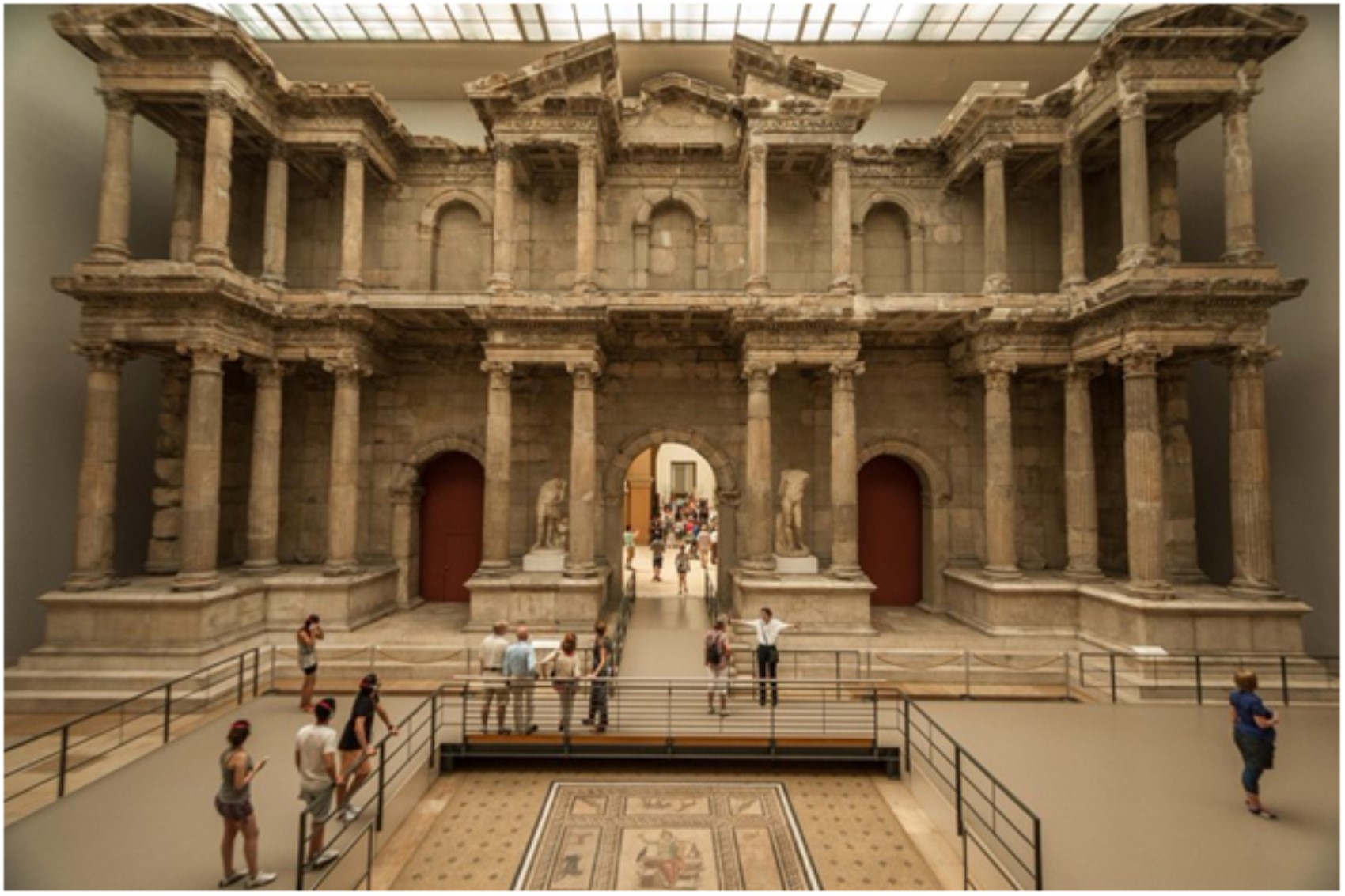
(The Miletus (Söke-Aydın) Market Gate smuggled to Berlin by the gang led by T. Wiegand. It is molding in the Berlin Pergamon Museum/Prison, which is sinking into the swamp)
He is the chief architect of the historical artifact smuggling from these ancient cities. The smuggling of Miletus' famous “Market Gate” to Berlin is his most ominous feat.
Wiegand is also a key name in the planning of the Pergamon Museum/Prison (Pergamonmuseum) in Berlin and the shaping of its collections.
He had conceived the eerie structure, where the Zeus Altar is located; which is sinking a little more every day into the river it was built on, not just as an exhibition building, but as an “imperial showcase.”
This huge structure, reminiscent of Hitler architecture, became one of the gilding elements of German imperialism, which was placed on a rootless culture.
Theodore Wiegand was one of the main defenders of the idea of dismantling the Pergamon artifacts from their locations and reassembling them in Berlin.
After 1933, he worked in harmony with the fascist Nazis and became one of the main tools used by the Hitler State regarding historical artifacts.
He was honored by the fascist German State.
After Carl Humann's death, he was commissioned by Berlin for the documentation, measurement, and re-planning of the smuggled Pergamon artifacts.
Wiegand, of course, would encounter Osman Hamdi Bey in the Ottoman bureaucracy while doing these jobs.
He had seen the so-called difficulties of the 1884 Antiquities Regulation regarding the removal of historical artifacts abroad as practically surmountable regulations.
And he was right!
In this period, restrictions on German excavations were often relaxed thanks to diplomatic relations, concessions, and technical–financial power.
And the unlimited approval authority in Osman Hamdi Bey's hands thanks to this law helped this relaxation!
As a matter of fact, according to Prof. Funda Berksoy, “The report Theodor Wiegand sent to Berlin (to facilitate the work of the German State smuggling network members Wöge and Bode) clearly revealed that Osman Hamdi's sale of paintings to the Germans was an integral part of the relations established between the two countries regarding archaeological excavations.”
Wiegand was saying the following about Osman Hamdi, who caused them problems in one matter:
“As before, (Osman Hamdi) acted in a quite funny way, as if he didn't want to cooperate... Therefore, we completely bypassed him and communicated directly with the Sultan (II. Abdülhamit). This time we must show these people that we are not docile sheep to be ordered. We will no longer tolerate being deceived and, more importantly, being forced to buy oil paintings of questionable quality at exorbitant prices.” (F. Berksoy, p. 61–62)
Can the pawns of imperialism ever be docile sheep? Can they bow to the desires of Ottoman bureaucrats? Behind them is the European giant Germany.
If the Director is causing problems, there is the Sultan who is greater than him!
It seems that German smugglers were looking for ways to bypass Osman Hamdi, who (for some reason) caused them problems from time to time, probably for their own interests, and while expressing this, they were also revealing the situation of the Ottoman Museum Director.
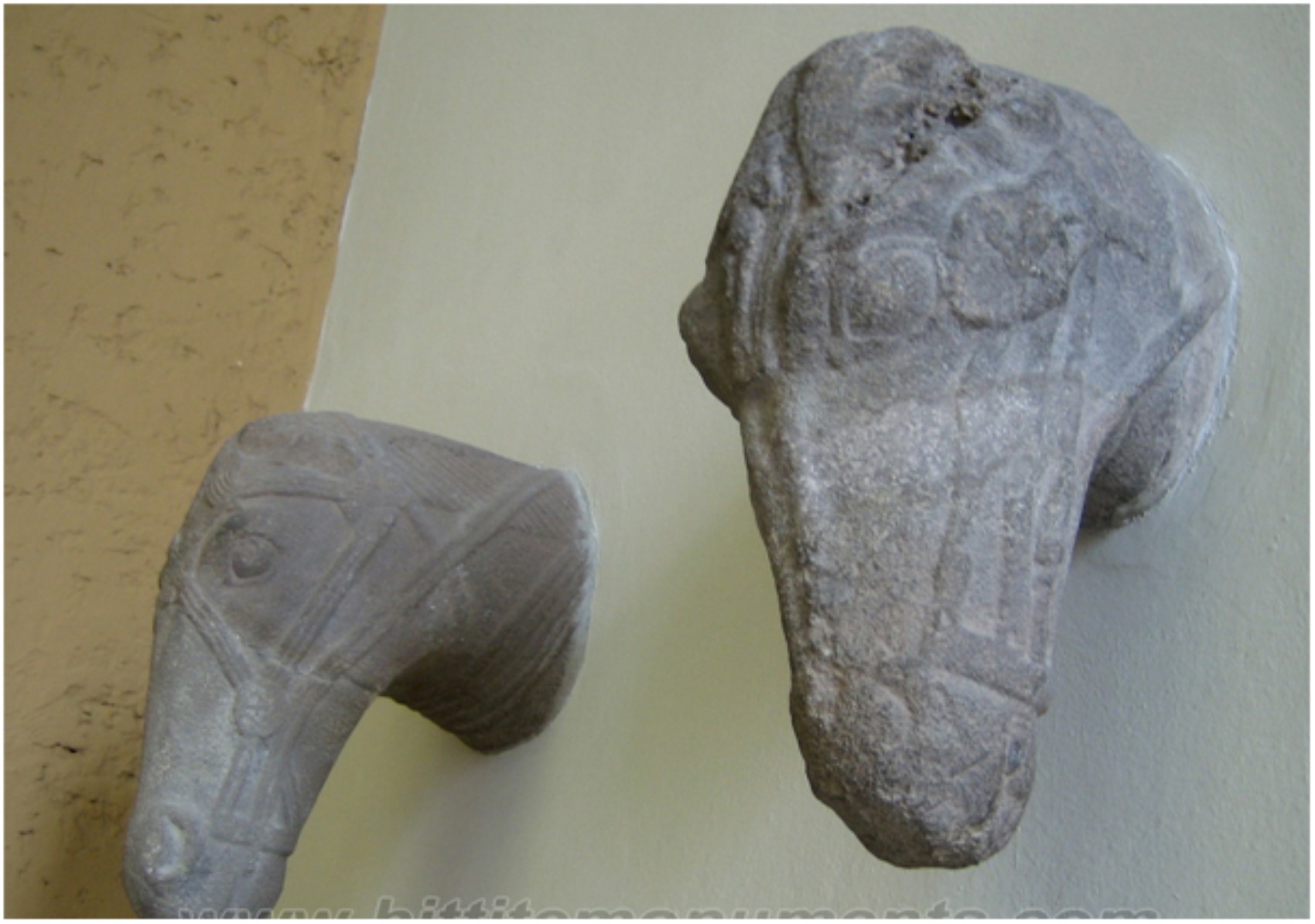
(Found in Zincirli. Gaziantep horse heads smuggled to Berlin. Berlin Vorderasiatisches/Near East Museum)
***
It is sad that Hamdi Bey's colorful, meaningful, but controversial paintings in terms of form and intent are discussed in the removal of our historical artifacts abroad.
It can be suggested that there may be psychological factors in these complex behaviors of his, beyond what is reflected outward.
The fact that he appears to use painting as a means of psychological relief, in addition to his desire to introduce his painting ability to everyone, does not change the fact that the artifacts were taken abroad and smuggled with his own approvals.
It cannot be thought that the tremors in Osman Hamdi's life did not affect his mental state.
It is noteworthy that his father, İbrahim Ethem Pasha, was raised in Istanbul as a child who was probably orphaned and named İbrahim Ethem in an environment where the Ottomans massacred the people of Chios, who participated in the rebellion that led to the establishment of the independent Greek state in the Peloponnese in 1821.
Thanks to the good education he received and the attitude he displayed, this child rose to the Grand Vizierate in the Ottoman bureaucracy.
It is possible that the life story of İbrahim Ethem Pasha, known by the nickname “Sakızlı” (from Chios), left deep psychological effects on his son Osman Hamdi when it was talked about in Ottoman public opinion.
Osman Hamdi's being sent to Paris for law education at a young age, probably being captivated by the bohemian life there and joining the world of painters, returning without studying law, his different lifestyle, and the impressions he received there must be another indicator of his confusion.
Marrying two French ladies, being so interested in the outside world as to write most of his letters in French, and attempting to paint pictures that try to see the Ottoman Empire through the eyes of Europeans with different nuances may show his complex spiritual universe.
The path that the personal consequences of such a blurred life line will lead to is a cliff:
Researcher Yaşar Yılmaz, the author of a book about the Gaziantep-Zincirli artifacts being taken with the special effort of Osman Hamdi Bey, states that “due to Osman Hamdi Bey's relationship with usurious money changers and the (Galata) banker-usurer (İzmir Levantine) Baltazi family, he was in need of unbalanced spending, and despite receiving a salary from at least eight places, he constantly needed money due to reasons such as two mansions, working staff, and his love for gambling.” (https://www.milliyetsanat.com/haberler/diger/osman-hamdi-bey-in-sasirtan-yuzu/16436)
Yaşar Yılmaz adds: Because he is the son of a Grand Vizier, he becomes the Director of the Imperial Museum (Müze-i Hümayun) with the Sultan “bestowing a high rank,” that is, giving Palace support from above without considering merit.
Even before he was brought to the museum directorship, the powerful, invisible hands of the sultanate period placed him in high-paying positions. In 1895, Osman Hamdi Bey was granted the right to build and operate a funicular line between Istanbul Kabataş and Taksim so that he could earn more, and was exempted from the tithe tax for 10 years to grow hops (Ömer grass) used in beer production with a French partner. He acquires large lands in Sakarya. (Yaşar Yılmaz. The Other Face of Osman Hamdi)
Journalist Necati Doğru also mentions the weak sides of Osman Hamdi such as “obsession with fame, obsession with gambling, obsession with women, obsession with money,” based on Yaşar Yılmaz. ( https://www.yenivatan.at/osman-hamdinin-gercek-yuezue-soehrete-dueskuenluek-kumara-dueskuenluek-kadina-dueskuenluek-paraya-dueskuenluek-sonuc-isbirlikcilik/? doing_wp_cron=1769196534.8633399009704589843750)
These are descriptions that do not suit an Ottoman and Turkish high state official at all!
And if the chaotic political conditions of the period he lived in as a statesman are added to these, it is understood how Osman Hamdi's psychology fell into a swamp.
However, none of these have had consequences as heavy as the damage his decisions and actions, which led to his personal wealth, caused to Anatolia.
Even though he did so many “good deeds” in these processes!
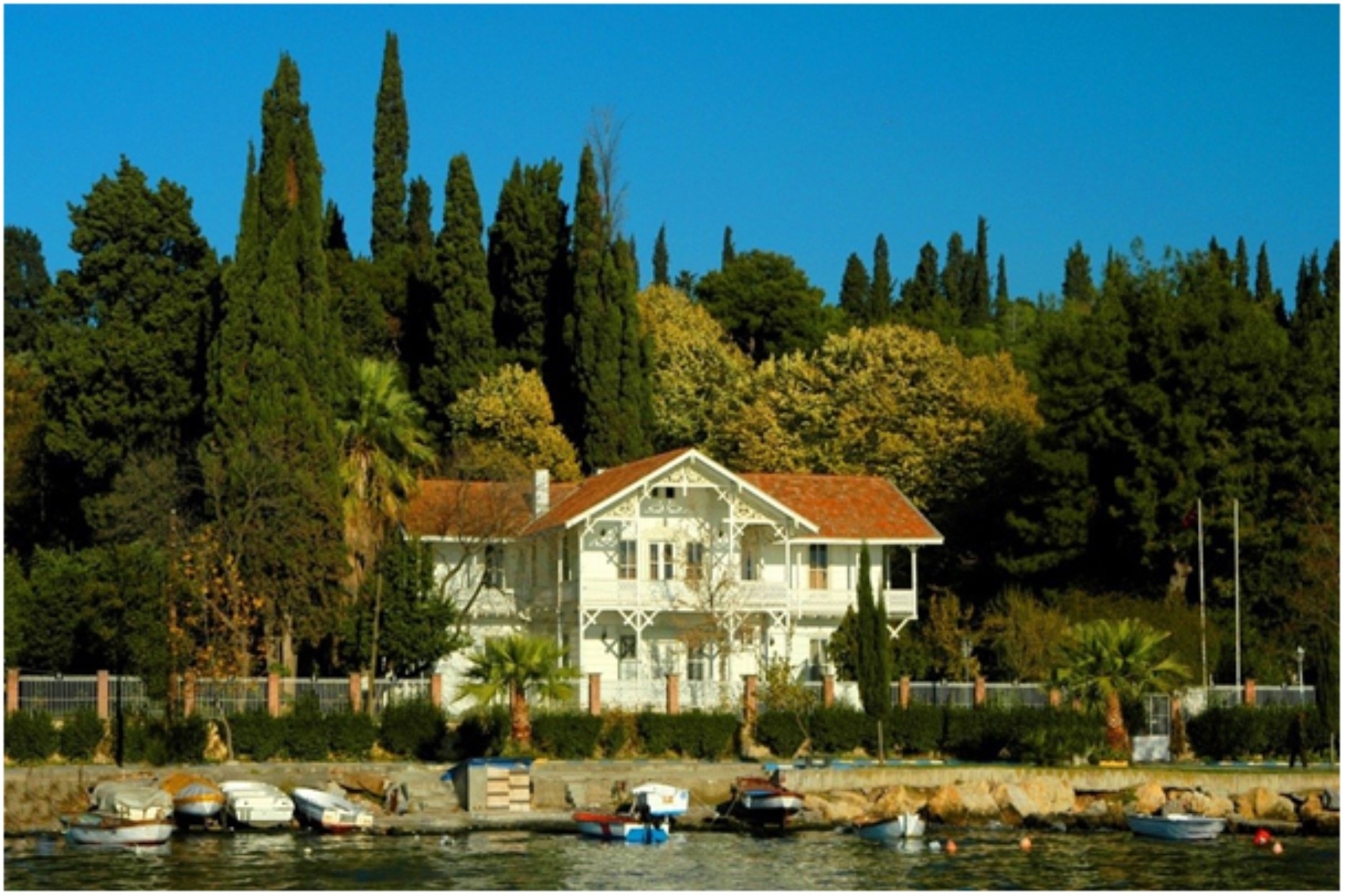
(Osman Hamdi Bey's mansion in Kocaeli-Gebze. It is used as a museum today.)
***
The closeness and cooperation between the Ottoman Museum Director Osman Hamdi Bey and Carl Humann, the main actor of the German State's taking of Anatolian historical artifacts to Berlin, in the Gaziantep robbery and the intensification of the Pergamon plunder, is evident.
Hamdi Bey became the director of the Ottoman State Museum (Müze-i Hümâyun) in 1881 and held this position until his death in 1910.
Carl Humann also continued historical artifact smuggling without interruption from the year 1863–64, when he came to Anatolia, until the year 1896, when he died.
This situation is clearly reflected in his 1893 letters, where Hamdi Bey tells Humann about the death of his brother and shares his excitement about the birth of his daughter Nazlı.
They are so close that Hamdi Bey even drew a portrait of Carl Humann, whom he hosted in his own home in 1894. (O. Satır, A. Çifçi, p. 240)
According to Assoc. Prof. Oğuz Satır and Assoc. Prof. Ali Çifçi, this close friendship played an important role in the fast and easy management of the Zincirli excavations and especially in the transportation of the excavated artifacts to Germany.
Carl Humann is Germany's man in the Ottoman country regarding historical artifacts, with the connections he established, which can be called an organized smuggling network.
Hamdi Bey is also one of the main authors of the 1884 Antiquities Regulation, which prohibits the removal of archaeological artifacts abroad and prevents the flow of artifacts from Ottoman lands to Western countries. And this law gave him the authority to use almost unlimited initiative in this regard.
For this reason, according to many researchers other than Carl Humann, such as the American Renata Holod and Robert Ousterhout; foreign archaeologists who wanted to excavate in the Ottoman Empire and take archaeological finds to their own countries always tried to establish good relations with Hamdi Bey.
They tried to get into his good graces by buying his paintings, exhibiting them in important international art exhibitions, giving him honorary doctorates, or trying to establish close friendships with him and his family.
For example, Oxford University awarded Hamdi Bey an Honorary Doctorate of Law in 1913 upon the initiative of Sir Arthur Evans, Sir William Ramsay, and David G. Hogarth.
He also received an honorary doctorate from the University of Pennsylvania. (O. Satır, A. Çifçi, p. 240)
Hamdi Bey's paintings were purchased by the French through the efforts of Léon Heuzey, Curator of Oriental Antiquities at the Louvre Museum, and by the Americans through the University of Pennsylvania.
Similarly, upon the recommendation of the rector of the University of Liverpool (Sir F. Chatillon Danson), his work titled “A Young Emir Working” (1905) was purchased by the Walker Art Gallery in England. (O. Satır, A. Çifçi, p. 241)
The Germans who carried out the Zincirli excavations also supported Hamdi Bey's art career. In 1891, they exhibited three of his paintings at the International Art Exhibition in Berlin and gave him a certificate of honor for his contributions to art.
This situation is far beyond Osman Hamdi Bey being a good painter and producing distinguished works!
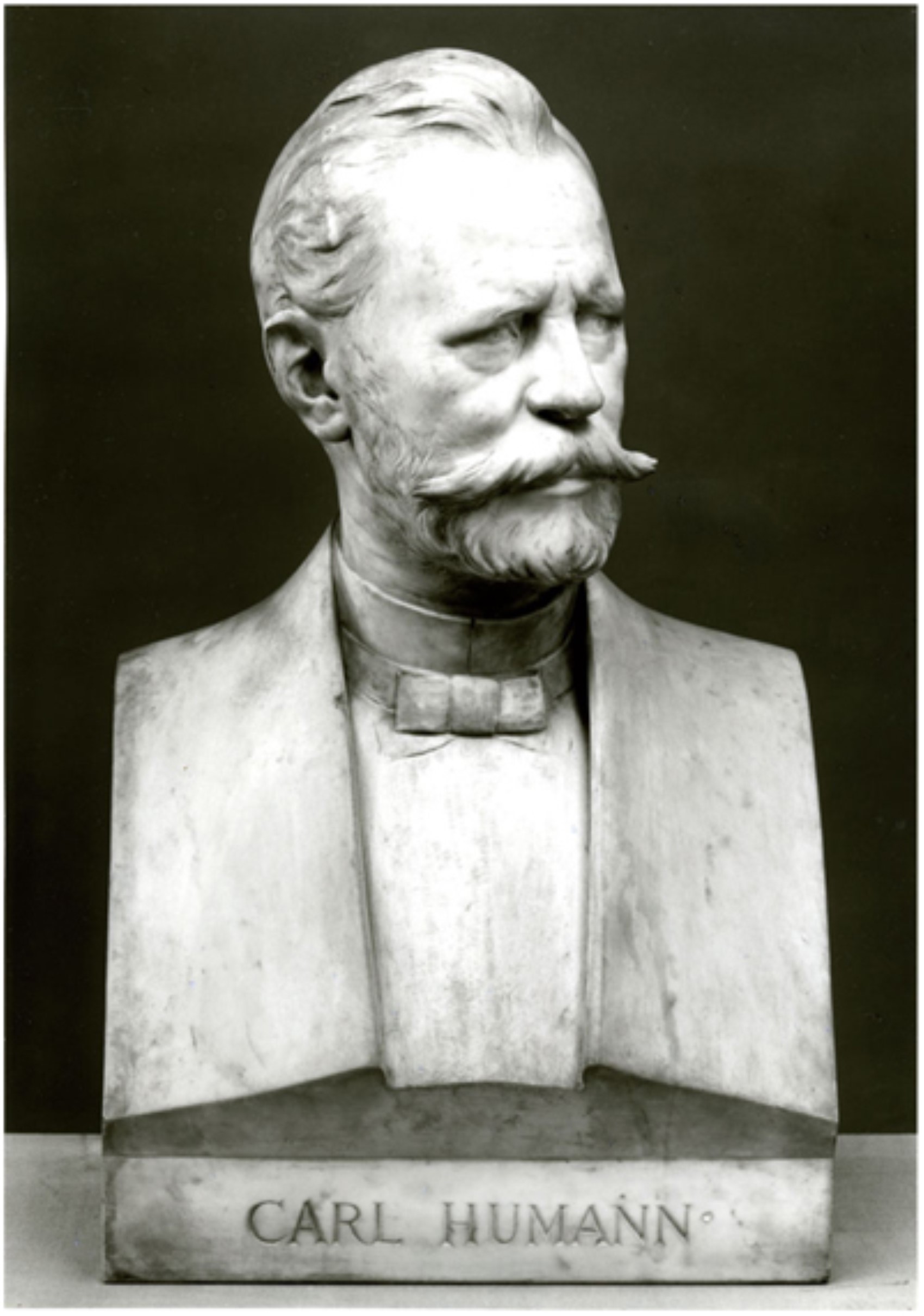
(Carl Humann's bust made by Adolf Brütt, located in the Berlin Pergamon Museum/Prison, an honor according to the Germans.)
***
The last act of the Gaziantep-Zincirli excavations reveals the flow of the general robbery; the damage done to these artifacts in addition to the smuggling of historical artifacts.
In addition to the application he made to obtain an excavation license in 1902, Felix von Luchann, the apprentice who replaced Carl Humann upon his death, had also made other applications for both excavation permits and the transportation of the artifacts unearthed from the excavations to Germany.
The Ottoman archival documents examined by Assoc. Prof. Oğuz Satır and Assoc. Prof. Ali Çifçi show that Osman Hamdi Bey constantly tried to fulfill the requests of Luschan, as well as Humann, regarding the artifacts unearthed from Zincirli.
“There is no evidence that Hamdi Bey made a strong effort to keep the artifacts from the Zincirli excavations in his hands.
On the contrary, it is understood that he constantly supported the idea of giving historical artifacts to the German team.
He underestimated the value of the artifacts and was always an advocate that it was reasonable to give them to the Germans in exchange for costs.
While articles 3 and 8 of the 1884 Antiquities Regulation state clearly that the artifacts are Ottoman property and prohibit the removal of antiquities abroad, article 32 provided a legal basis for their transfer abroad.
This article was frequently cited in correspondence regarding the Zincirli excavations, and Hamdi Bey supported the removal of the artifacts abroad in accordance with the provisions of this article. Because the authority to approve the removal belongs to him.
Moreover, while articles 11 and 12, which emphasize that only pictures and molds of these artifacts could be taken by foreigners, were included in this law!
Also, it is noteworthy that there is no information about the small finds obtained from the excavations in the correspondence within the State and with the Germans.
It is seen that small finds are considered unimportant and are not even mentioned.
Again, there is no information in these letters and archival documents about the transport of artifacts collected from Zincirli Mound and its surroundings to Germany.
While only a few of the artifacts unearthed from the excavations were transported to Istanbul after a long journey under difficult conditions, the majority were taken to Berlin.
However, it is also obvious that the artifacts unearthed from the excavations, especially the large reliefs, were generally not suitable for such a long journey.
For this reason, the backs of the thick relief blocks obtained in the excavation were turned into thin plates by stonemasons to facilitate their transport.
Of course, this practice sometimes led to the fragmentation of the artifacts.
For example, the orthostat with hunting scenes, which was purchased (somehow) from Sakçagözü in 1883 and taken to Berlin, was shaved and thinned by stonemasons.
This relief consisted of three parts, and during the thinning of the third relief, a crack in one of its corners broke, and the third relief was divided into five parts.
Not only were the backs of the reliefs carved for their transport, but they were also divided into parts to reduce their weight.
For example, the large double sphinx base unearthed in the Fourth excavation season was divided into two parts, and a newly discovered gate lion was divided into five parts and placed in crates to be transported.
However, in all these developments, (as Osman Hamdi Bey had a large and unacceptable share), it should be noted that the close relations between the Ottoman Empire and Germany in the last quarter of the 19th century also played a role in the easy export of these archaeological artifacts, especially in obtaining the approval of the Council of State (Court of Cassation-Council of State) and the will of Sultan II. Abdülhamid.” (O. Satır and A. Çifçi, The “Worthless Stones” of Zincirli: Osman Hamdi Bey and the German Excavations of 1888–1902, DergiPark, p. 240-241)
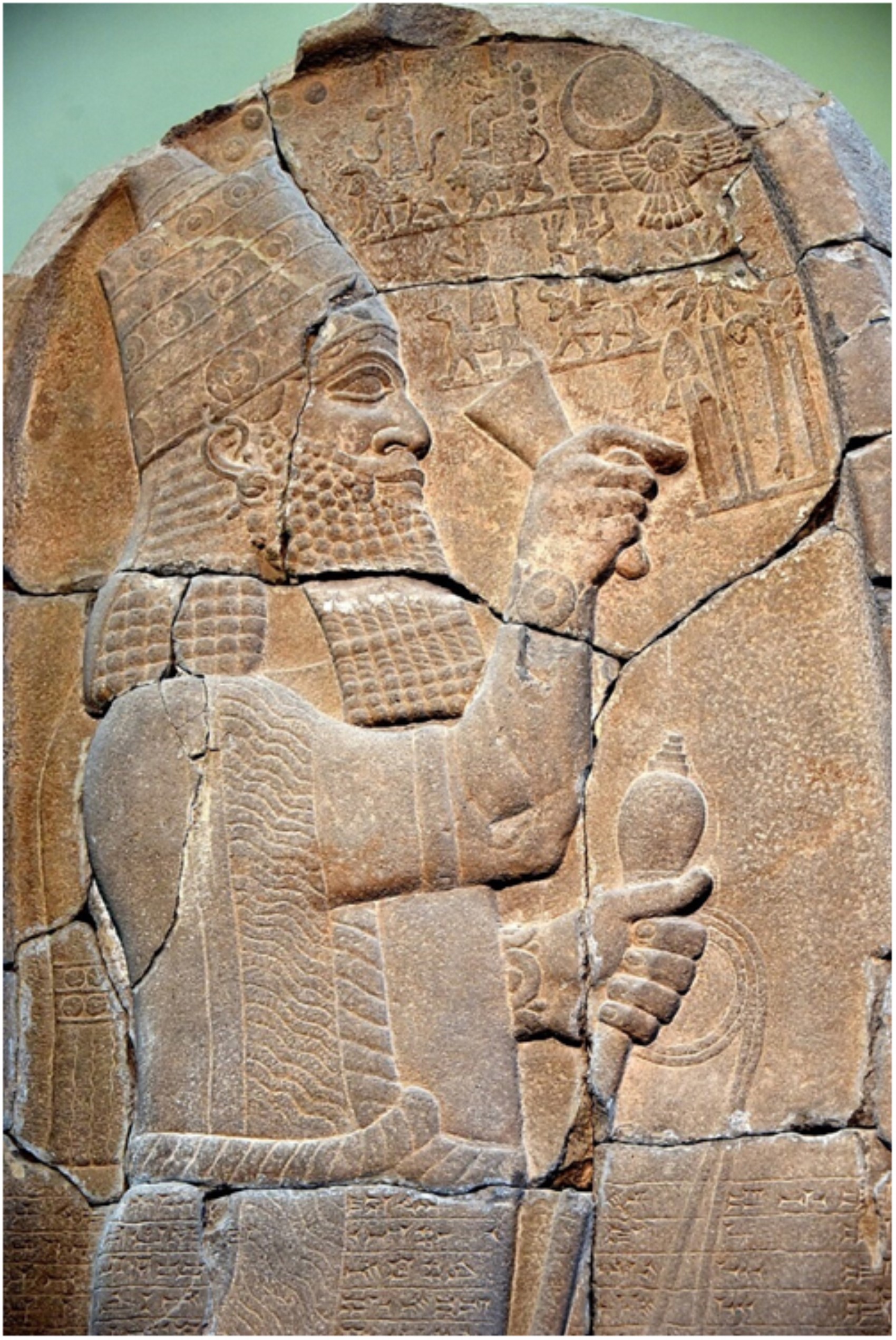
(Found in Zincirli. A relief smuggled to Berlin. Berlin Vorderasiatisches/Near East Museum)
***
The Gaziantep–Zincirli and Pergamon examples clearly reveal how cultural heritage was systematically looted in the last period of the Ottoman State in line with the needs of the rising imperialist world system; and how this looting was legitimized not only with the discourse of “archaeology” or “science,” but especially with the political, diplomatic, and financial power of German imperialism.
This process is a result of the destruction created in semi-colonial geographies by the need of industrialized centers to create historical and cultural roots for themselves, rather than individual initiatives.
Although Osman Hamdi Bey is a figure who took important steps in the name of modernization in the fields of archaeology, museology, and fine arts, it is seen that he became an internal part of this structure due to his use of the broad powers he possessed in harmony with imperialist interests, his practical transformation of the areas left open by the 1884 Antiquities Regulation into an “exchange and export” mechanism, and his approvals for the transportation of Gaziantep and Pergamon artifacts to Berlin.
The smuggling activities carried out by Carl Humann and his successors could not have been realized on this scale without imperialist state policies, Ottoman–German political rapprochement, and the cooperation of the local bureaucracy.
For this reason, the plunder in question cannot be reduced to either foreign archaeologists or a single Ottoman bureaucrat; on the contrary, it is a concrete result of the structural logic of imperialism, which also transforms cultural heritage into a tool of capital and legitimacy.
While looking at this heritage today, neither “heroizing,” nor entirely “denigrating,” nor “exonerating” approaches are sufficient; what is essential is to reveal with all clarity how, by whom, and within which interest relations Anatolia's cultural assets were lost in the age of imperialism.
THE HISTORICAL ARTIFACTS OF GAZİANTEP AND PERGAMON, THE ZEUS ALTAR, DO NOT BELONG TO COLD AND FOGGY BERLIN, BUT TO ANCIENT GAZİANTEP AND BEAUTIFUL PERGAMON. THEY MUST DEFINITELY COME BACK, THEY MUST RETURN TO THEIR HOMES!
Note: With this fifth article, we have completed our articles regarding the Gaziantep Robbery for now. The other four articles can be reached from our “https://12punto.com.tr/yazarlar” page)
Sefa Taşkın
25.01.2026
Karşıyaka/İzmir
Most Read

Striking picture for Özgür Özel's 'New Party'

The PKK opening and Özgür Özel’s path!..

How did the newspapers view Özgür Özel's farewell to the CHP?

He killed his wife by slitting her throat: Their children witnessed the moments

What did the CHP do?

Özel’s new party move in the world press

Fire at TUSAŞ engine factory in Eskişehir under control

The New CHP, against CEHAPE

From self-efficacy to despair

Kılıçdaroğlu's first message on Özgür Özel's new party announcement