



DIARIES OF CYANIDE FROM BERGAMA-8.
Even the deaf sultan must have heard by now what environmental pollution has brought upon the world and Turkey.
Fossil fuels; coal, oil, gas, organic waste; especially the decay of animal manure are destroying the atmosphere.
Soon, there may not even be air left to breathe.
The problems created by climate change; tornadoes, storms, floods, and drought are causing disasters all over the world and taking lives.
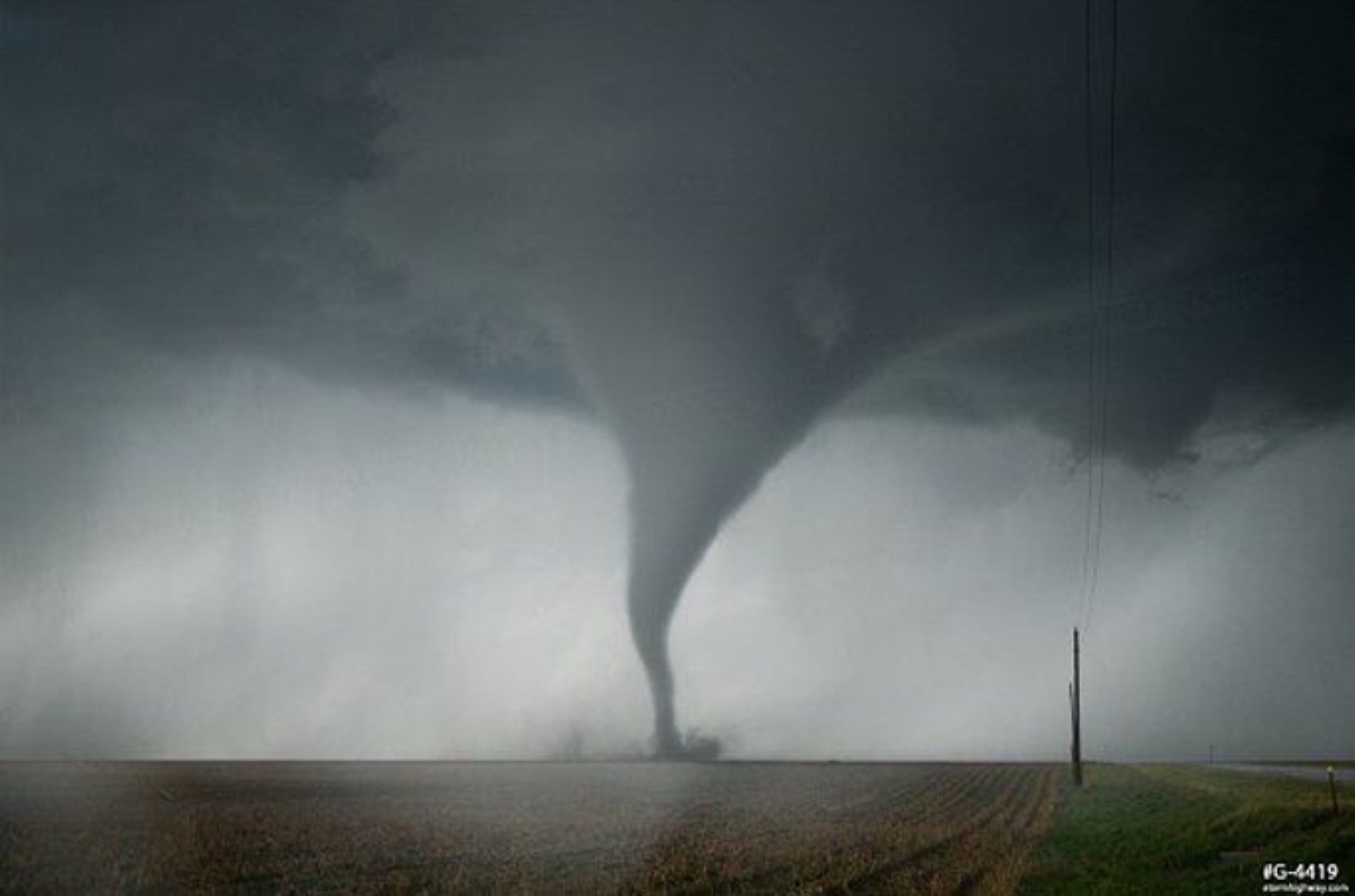
In this context, for a handful of gold, "Cyanide Gold Mines" are piercing the earth and sowing poison.
Trees are being cut down, forests are being destroyed.
Our country is also within this poisonous circle.
The environmental disasters experienced in Erzincan, Fatsa, Şebinkarahisar, and many other places are harbingers of the future—not just possible, but inevitable disasters.
How did this cyanide and arsenic gold business start in Turkey?
How did the poison-peddling companies swarm over our country?
What did they do?
How was this situation first noticed?
Who resisted, who ignored or was made to ignore it, who didn't understand, who didn't care?
***
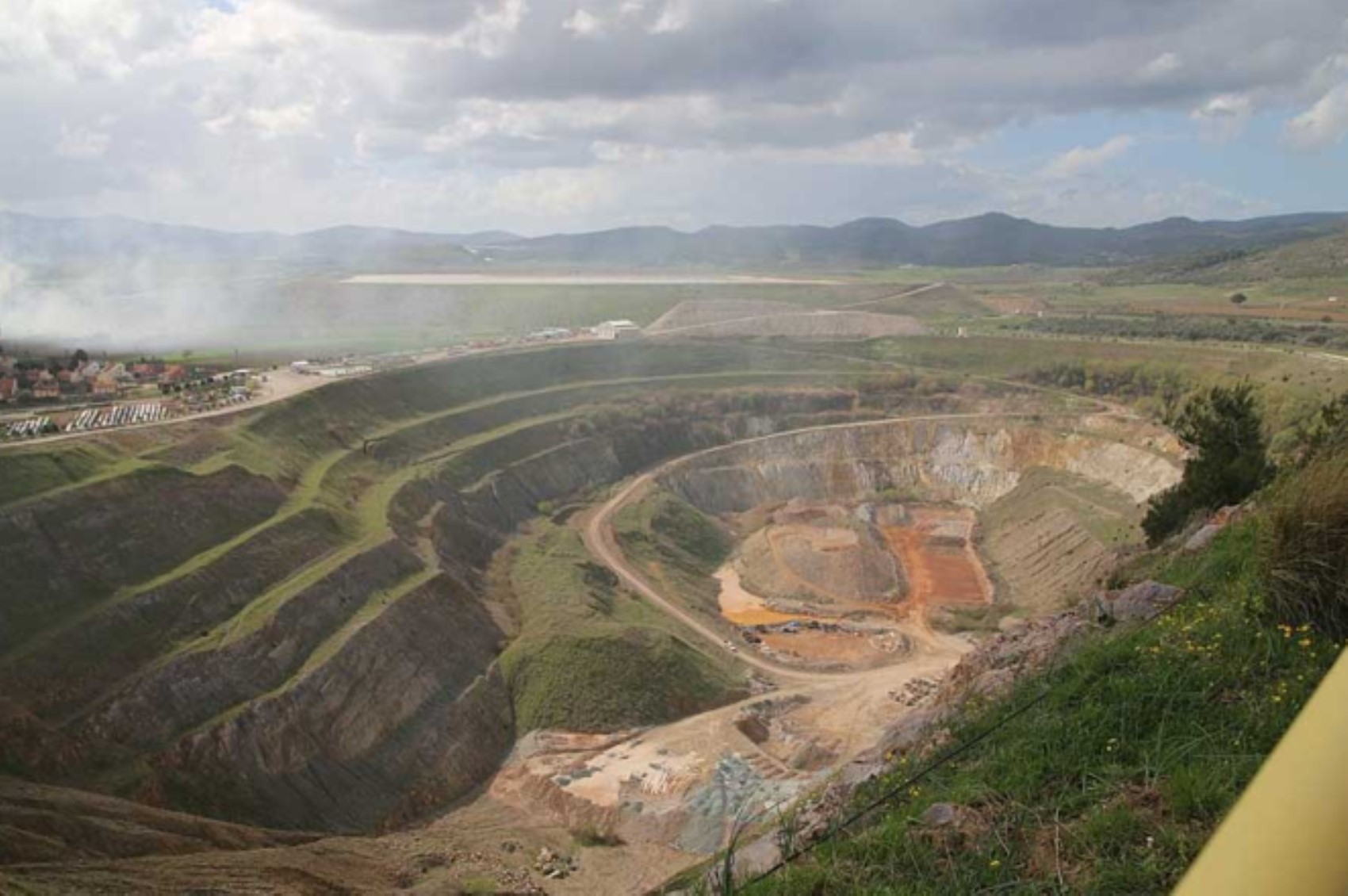
(Two toxic waste dams at the Bergama-Ovacık Cyanide Gold Mine are full, and there is an attempt for a third)
Atatürk’s young Republic, with a law enacted in 1926, legislated that underground wealth and mines located within the borders of Turkey belonged to the Republic of Turkey.
Private companies and individuals were allowed to start mining operations with state permission, and foreign capital was permitted to a certain, limited extent.
With the Mining Law enacted in 1986 during Turgut Özal’s Prime Ministry, the doors were opened wide for foreign companies to explore and operate mines in Turkey.
In fact, in 1989, the then-Minister of Energy, Ersin Faralyalı, was inviting foreign "cyanide gold companies" to our country with great appetite and issuing circulars to relevant institutions to assist them.
In this context, in the same year, 1989, the multinational company Eurogold, a German-French-Australian (US) partnership, bought the "gold exploration license" in Bergama from our famous holding company Eczacıbaşı and began drilling in the region.
How much gold was there, I wonder? How far did the gold-bearing veins extend?
The first step was taken in the village of Narlıca, located 10 km from Bergama and 2-3 km from the İzmir-Çanakkale highway. This was the foothills of Geyikli Mountain, extending to the Kozak plateau.
The edge of the fertile Bakırçay Plain.
Of course, those doing the drilling with large drilling machines were the European and American technicians of the cyanide company.
They were pumping water into the drilled earth, then the water would come back, and dirty water would flow in streams from the sloped ground. A foul odor was spreading around.
***
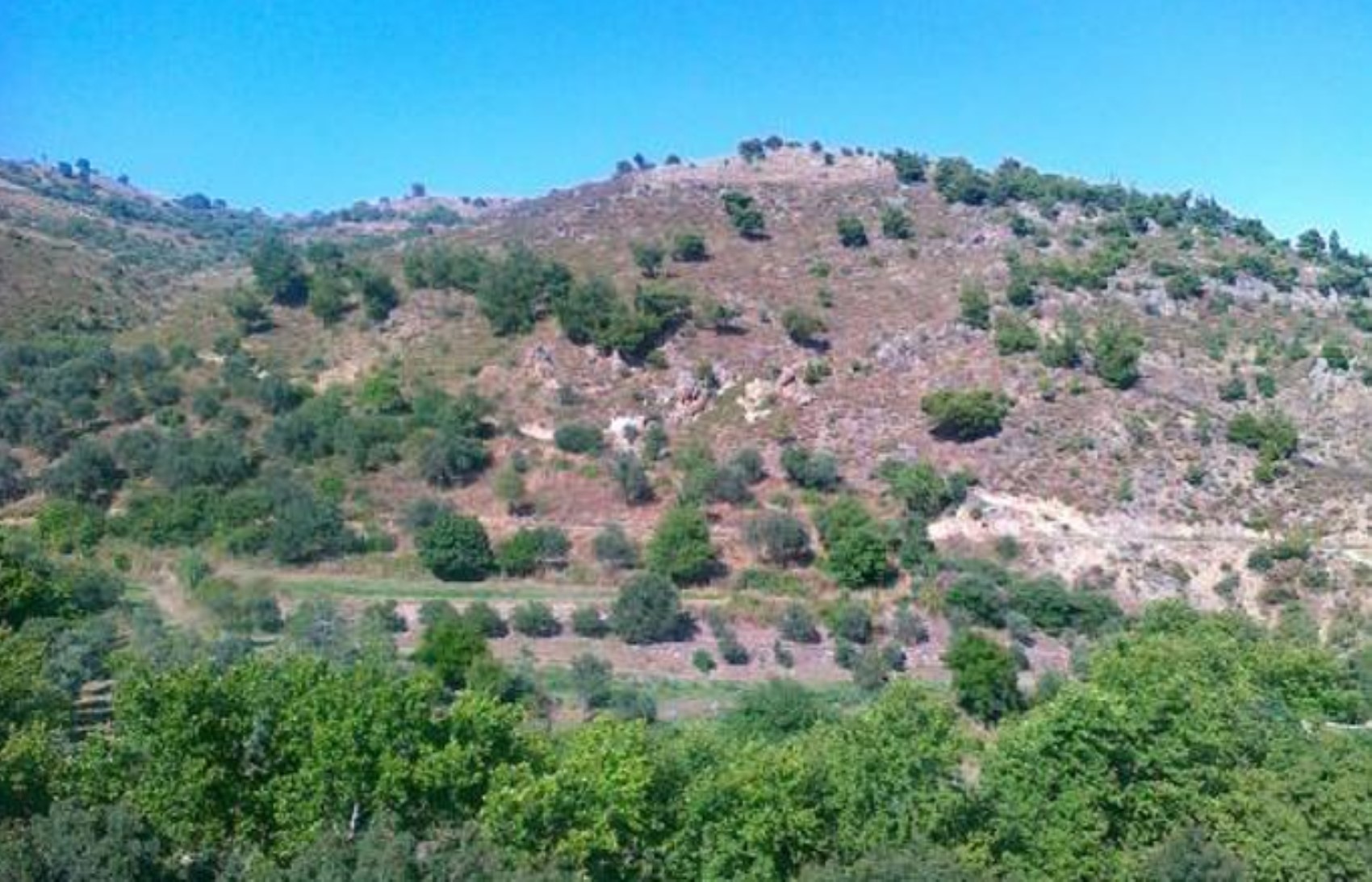
(Around Bergama-Narlıca Village)
Initially, some villagers were aware of the damage this gold mine would cause to the environment and themselves, while others were not.
The general trend in the 17 villages that could be affected by this toxic mine was confusion.
On one side was the fear of poison, on the other, fear of the State, and on another, a bunch of promises.
Cyanide and arsenic would kill. One could not oppose the State. The cyanide-users were waiting above them like birds of prey.
When producer İsmail Ergöçmen, who came to the region for a TV shoot from Ankara TRT, asked the villagers their thoughts on the mine, they generally said, "If it's for the best, let it happen; if not, let it not!"
Of course, there was no limit to the propaganda the foreign cyanide company Eurogold conducted on the villagers, or the promises they made about how they would become rich through the gold mine.
The foreign cyanide company Eurogold was sparing no effort to convince the people of Bergama.
The organization then known as EGE TV, owned by Cem Bakioğlu, the owner of packaging factories in İzmir who broadcast to the region from İzmir, and managed by a journalist named Erol Yaraş, was defending the poisoners with all its might.
This German, French, Australian-disguised American company was resorting to every possible means to ensure the realization of the operation in Bergama, which would pave the way for "Cyanide Gold Mines" that would spread poison to Turkey.
So-called scientists with a sophisticated air, TV presenters posing as Atatürkists, extremely famous columnists, and even a retired ambassador from Cyprus were active to ensure we didn't miss the "golden" bird of fortune that had landed on our country.
We were going to be rich as a country, after all!
How wonderful!
The general organizer of the widespread propaganda campaign launched for "Cyanide Gold" was Betül Mardin from Istanbul.
Betül Mardin, a child of an Ottoman family whose roots extended to Hz. Hussein, the grandson of the Prophet Muhammad, was the older sister of the American-Turkish record producer Arif Mardin. She had been married to the famous theater actor Haldun Dormen for a time.
In those years, Betül Mardin was accepted as the "Diva" of "Public Relations" in Turkey, and it was said that she brought and taught "PR" to Turkey.
In this context, everything was being done to establish "toxic gold mining" in Turkey.
The poison-peddling company was aggressive!
The gold smelled like sweet "cyanide"!
The scent of gold, the way to make easy money had been found!
Even before obtaining an operating license, they were offering villagers three, five, or ten times the value of the lands they planned to build facilities on.
According to the testimony of Polat Bektaş from Çamköy: "During the Ramadan Feast, they distributed food like flour and sugar to the houses."
According to what Adnan (Hoca) Öner recounted: "One day they came to the village coffeehouse in Ovacık, they said, 'We want to build you a mosque.' I stood up and said, 'Our village has a mosque, we don't need another one.'"
The purpose of the propaganda directed at society was to persuade the local people: As long as there is no outcry. As long as they agree to the toxic mine.
The peasant class was fatalistic anyway, they would bow their heads easily!
And they wouldn't refuse small or large favors!
Of course, some of the villagers believed the promises offered.
Directing public attention to "cyanide" was a major threat to this multinational poison-peddling company.
***
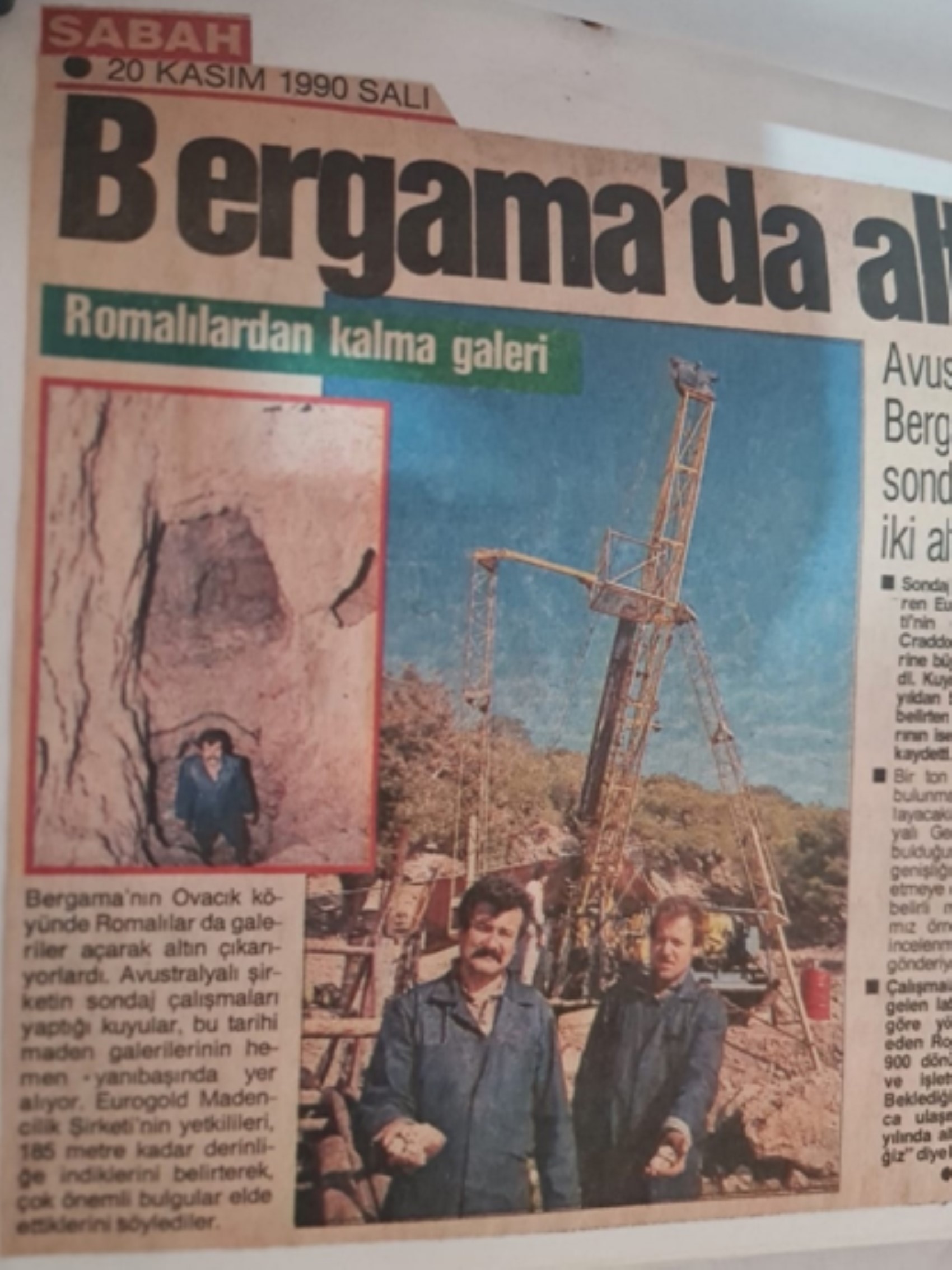
(A drilling news report in Bergama dated November 20, 1990)
In such an environment where debates were heating up, the situation in Narlıca, an Alevi-Çetmi (Çepni) village among the villages right next to the mining area, was a bit different.
Men whose language they didn't understand had come to the village with huge machines, accompanied by an interpreter, without even greeting anyone.
They had also built a makeshift ore examination hut near "Ovacık Village," which was within the borders of the mine.
The bad smell spreading to the environment and the dirty water flowing during the drilling had unsettled the villagers.
It had already been well heard in the region that a "gold mine would be operated" and "cyanide poison" would be used.
Encouraged by the villagers, Narlıca Village Headman Haydar Eftal and the members of the Council of Elders, concerned about the use of cyanide in the drilling, informed the Bergama Municipality, which had drinking water wells there.
The municipality officials saw the situation and warned the foreign miners, but they didn't even pay attention.
They showed the permission documents given by the State, which they held "like a shield."
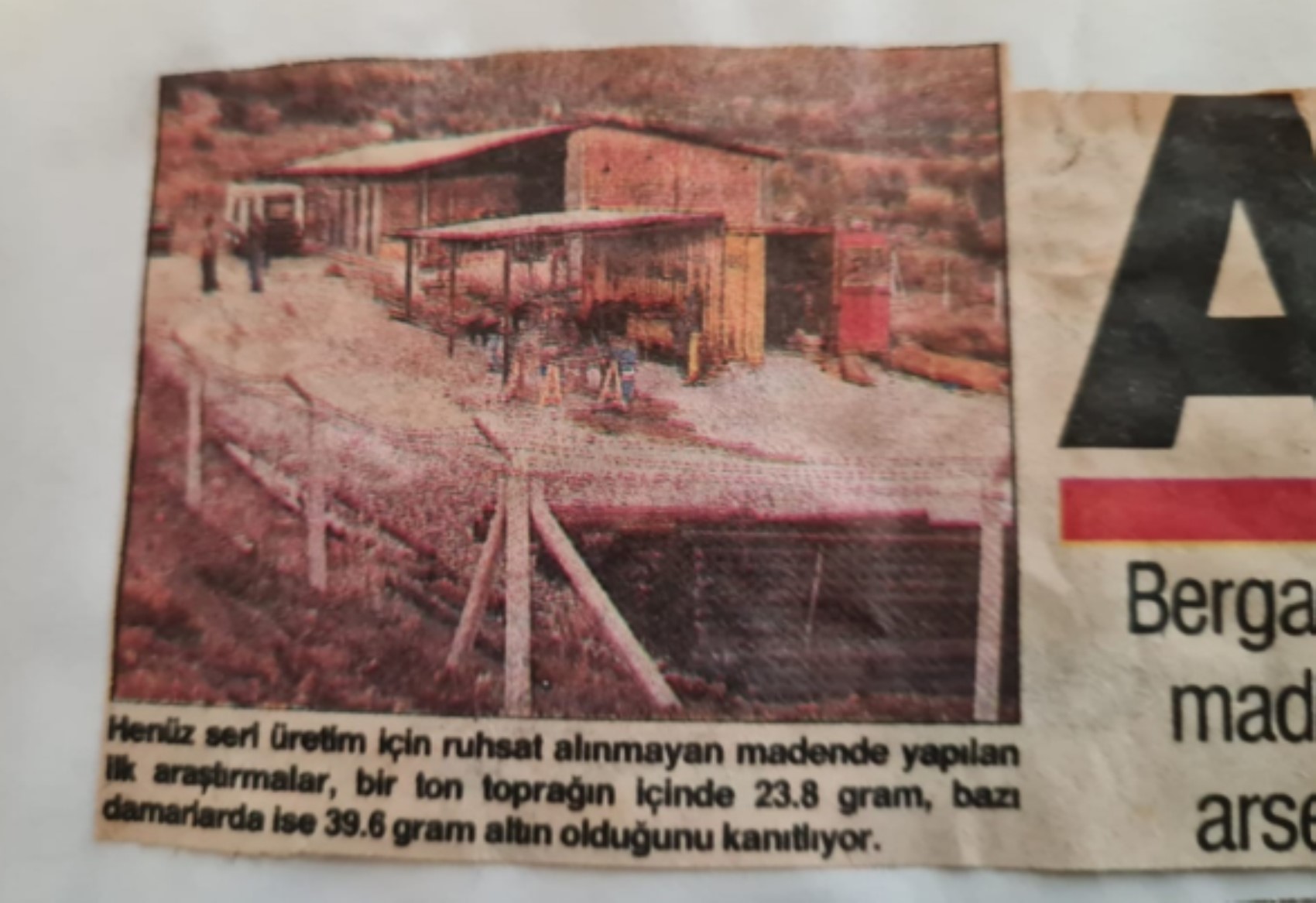
(The cyanide company's ore examination hut in Bergama-Ovacık in 1990.)
As a result of the internal evaluation made by the council members at the Bergama Municipality, the municipal officials verbally informed the local State authorities about the situation.
After all, part of the city's drinking water was supplied from deep wells in the village of Narlıca, where the drilling was taking place.
There was no Metropolitan Law at that time; the village was outside the municipal boundaries.
The young communication officers assigned by the Municipality, Özcan Durmaz and Nail Çetin, conveyed the situation to the press.
The country needed to hear what was happening in the region, and the public needed to be aware of what this toxic mining wanted to do in Bergama. At that time, Uğur Dündar’s team, who were shooting for TRT around İzmir, was reached and invited to Bergama to look into the matter.
The team came to the village, received information about the situation, and did some filming.
Seeing that journalists were gathering news, the drillers, consisting of foreigners, left the village in a hurry.
Evil fears the light and society!
When it was learned that they had rented a house on the beach in Dikili, a resort town on the coast near the village, Uğur Dündar’s TV team went to this house and wanted to interview the foreign miners.
The young journalists were following the story and wanted to expand it.
There was an interesting situation at hand: Gold, foreigners, cyanide, environmental pollution: A perfect subject for journalism!
The TV crew went to Dikili, but the interview was refused.
The foreign technicians did not want to talk.
Perhaps a word against their bosses might have slipped out. Or they had received such instructions by phone.
Yet, what were they afraid of!
Their bosses had come all the way from Europe and across the ocean to bring "civilization" to the region!
Everything could be bought with gold!
The journalists, however, just wanted to report the news.
Or were the men of "Eurogold," the Turkish branch of the "Cyanide Octopus" that wraps its arms around and poisons the world, doing or wanting to do something secretly that could not be accepted!
Then, the foreign drillers, along with their local guards, drew weapons on the TV crew who insisted on an interview.
So the cyanide-users were prepared for any situation.
Things got chaotic!
To prevent the incident from growing further, with the intervention of the municipal officials, the situation calmed down, and Uğur Dündar’s news team left Dikili.
The next day, it was heard that the foreign drilling team had left the region.
Drilling work in the village had stopped.
The villagers, who thought they had repelled the cyanide-users through their efforts and were protecting their land, were happy.
When the TV crew left the region, they waited excitedly for the footage and the news to be broadcast on TV.
After all, their voices would be heard.
There were very few TV channels at that time, and TRT was the main channel.
The "Hodri Meydan" news program that Uğur Dündar made for TRT was among the most watched and interesting programs in the country due to its difference and authenticity.
However, this incident, which would be the beginning of the "cyanide gold" event that would cause many problems for Turkey, was not featured in either the TRT news or Uğur Dündar’s program.
It seems the news center did not see it as newsworthy!
Yet, the region had started to boil over!
Was piercing the earth the same as piercing the homeland?
History does not have a goldfish memory. It does not forget what happened immediately.
Just recently, look at where the death journey of the workers who died in the Erzincan-Çöpler "Cyanide Gold Mine" began.
Let us not forget the negative experiences, and let us not let them be forgotten.
It will come around and appear before us again!
(Source: Banu Aysu Koçer (12.2007): Eight Karats of Justice: Analysis of the Grassroots Resistance Movement Against Goldmining in the Villages of Bergama, Turkey: University of Tennessee – Knoxville (12.2007). Sefa Taşkın (1998): Siyanürcü Ahtapot: Sel Yayıncılık)
Sefa Taşkın
08.12.2024
Bergama/İzmir
Most Read

Striking picture for Özgür Özel's 'New Party'

Özgür Özel gives a dated response regarding the number of resignations

Forest fire in Antalya brought under control

The PKK opening and Özgür Özel’s path!..

How did the newspapers view Özgür Özel's farewell to the CHP?
Houthis strike Saudi-owned tanker

What did the CHP do?

Özel’s new party move in the world press

The New CHP, against CEHAPE

From self-efficacy to despair