



CYANIDE DIARIES FROM BERGAMA-24
The saying 'God gave it, let it roam' is a subtle folk irony that targets the moment when the belief in fate is combined not with responsibility, but with recklessness.
It describes people spending what has been entrusted to them—land, property, authority, power—without careful consideration, and then blaming the resulting damage on fate and divine providence.
This expression criticizes the mindset that replaces labor and reason with fatalism; it reminds us that the primary responsibility belongs to the human being.
Because God may have given it, but letting it roam—that is, making the wrong decision or leaving it unchecked—is a conscious choice.
In this respect, the saying is not a defense of fatalism, but a powerful social warning that advocates for the ethics of accountability and the guidance of reason.
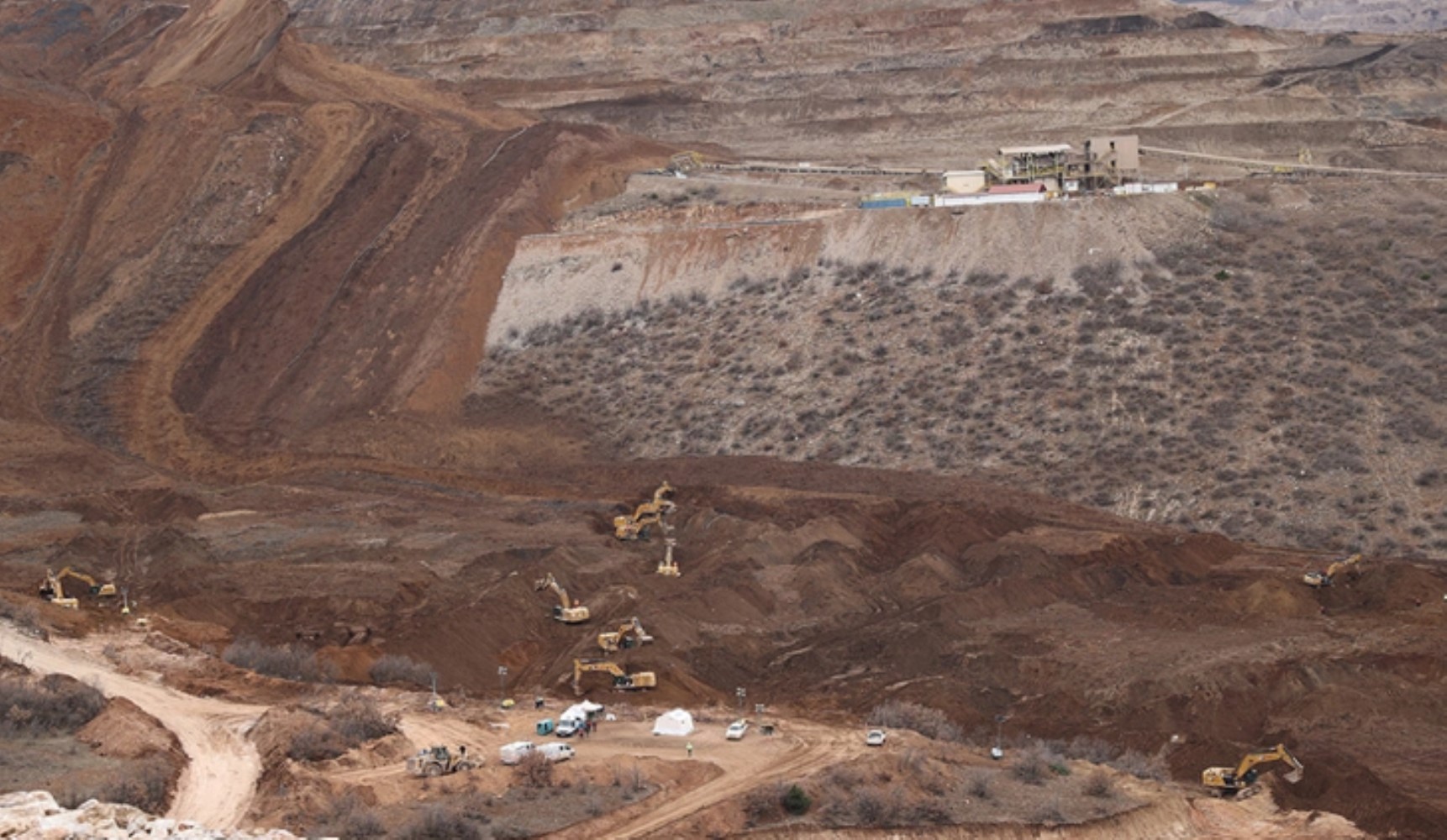
(Construction machinery searching for workers trapped under toxic soil following the disaster at the Çöpler cyanide gold mine in İliç, Erzincan)
***
The socioeconomic situation that aligns with this folk saying can be seen in cyanide-based gold mining in our country.
The process, which previously progressed under strict public and civil oversight due to public sensitivity and the attention of scientific and legal circles, can now lead to major destruction. New disasters are at the door.
The 'Cyanide Octopus,' which first managed to silence the relevant state units with the fairy tale that it would 'make Turkey rich in the 1990s' and then, together with its local collaborators, silenced public opinion through fake regulations reminiscent of conspiracies in American films, is now tightening its grip on Turkey.
The saying 'God provides, let it roam; God will protect' is addressed in this article not merely as a folk proverb, but as a symbol of an approach to governance, lack of oversight, and irresponsibility that has taken shape in Turkey, particularly through cyanide-based gold mining.
For a extremely limited amount of gold—the exact quantity of which is unknown and, according to current laws, will never be known (because the gold extracted is recorded based on the producer's declaration)—the earth is excavated using cyanide; tons of poison, primarily arsenic, are left behind in nature.
Even if there is 1 gram or less of gold per ton of soil, the location is considered a 'mine,' and after the gold is extracted with cyanide, the remaining environment becomes tons of toxic soil where not even grass can grow.
When you add to this the disaster in İliç, Erzincan, where nine people lost their lives, the streams in Ordu-Fatsa contaminated with poison, and the project and implementation errors experienced in the Kelkit Stream along the Giresun-Şebinkarahisar line, the narrative of 'wealth to be attained' turns into a poisonous fairy tale.
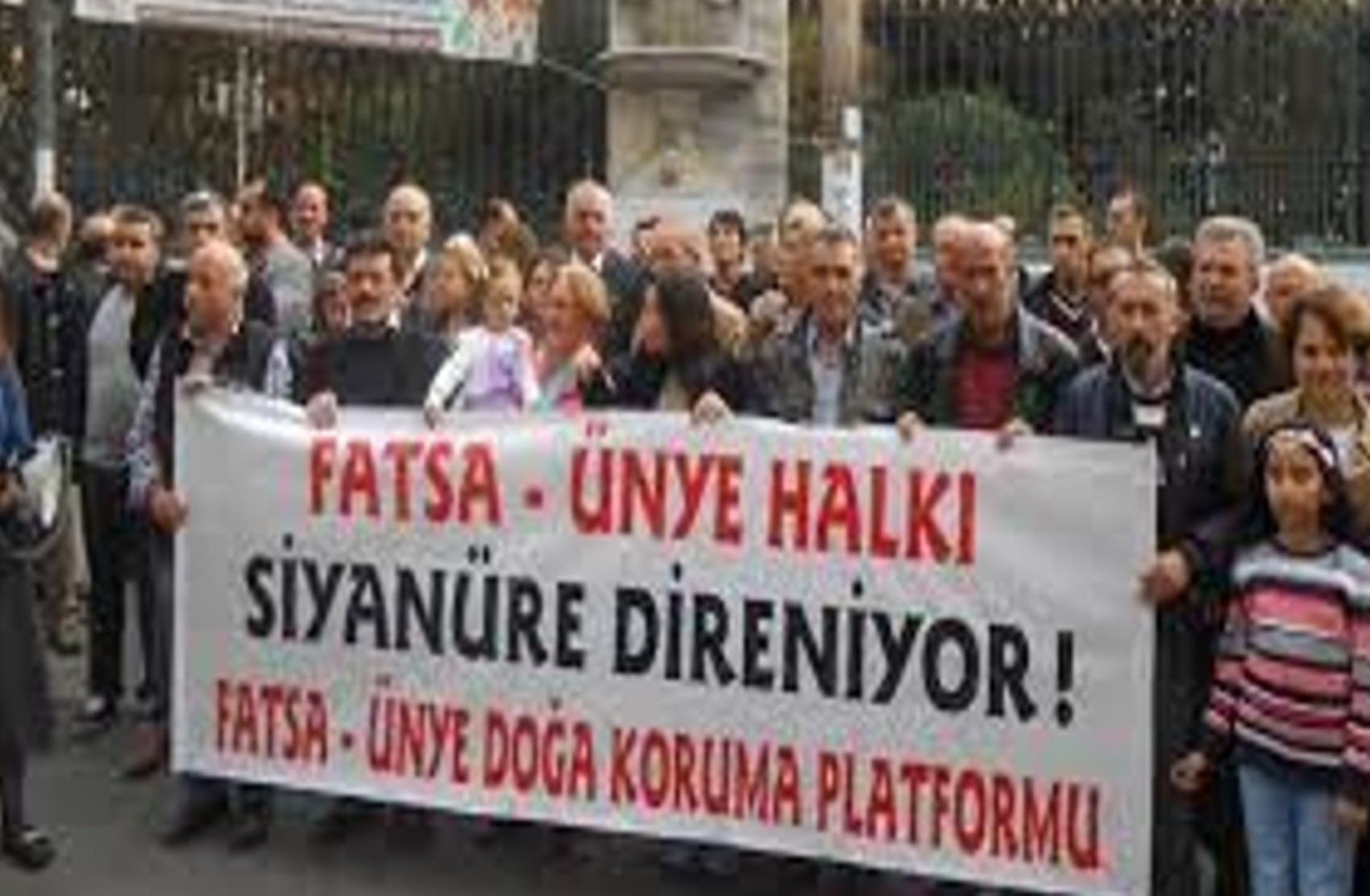
(The public opposing the cyanide mine in Ordu-Fatsa)
***
Of course, this point was reached step by step over thirty years. Now, there is a desire to move forward with even larger strides.
.
However, social, scientific, and legal objections have always existed, still exist, and will continue to exist.
Human beings are not silent sheep extending their necks to be slaughtered.
In this context, the companies of the 'Cyanide Octopus,' which first attacked the soil of Bergama through foreign, multinational corporations and poisoned the world's blood, faced not only social resistance but also the opposition of distinguished scientists from Turkey and Europe.
During this process, the villagers of Bergama and environmentalists, who managed to draw the attention of the national public with their peaceful actions, were subjected to attempts at intimidation and the undermining of their resistance by the cyanide companies and their supporters. They were confronted with rhetoric such as 'you are opposing the country's enrichment,' 'are we to be the poor guardians of our rich mines,' 'there are agents among you,' 'this mine has no harm at all,' and 'we will hire the workers for the mine from your village.'
Today, the same deceptive tune continues in gold mines that are being operated or are intended to be operated in many parts of the country.
In this situation and under these conditions, the villagers and environmentalists in Bergama, who could not make state officials listen to their concerns and words, had two branches to hold onto: science and law.
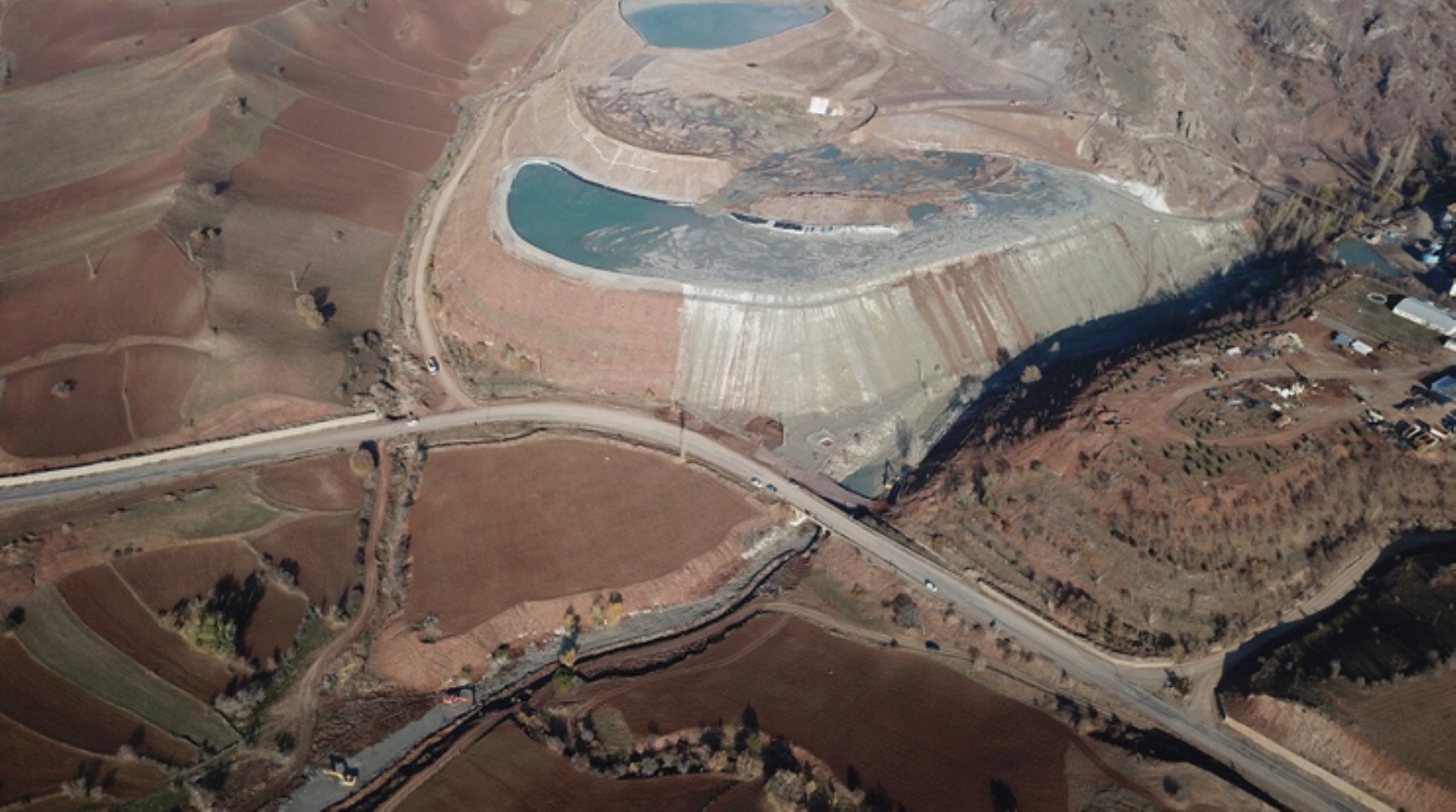
(Toxic water overflowing from a toxic waste dam at the cyanide mine in Şebinkarahisar, Giresun, is mixing into the streams)
What else could people do!
They were farmers who produced cotton and corn in the Bakırçay Plain and harvested olives on the hillsides.
Unable to cope with the determined stance of the villagers, the multinational Eurogold company—with Canadian-disguised German, French, and Australian-looking American capital—experienced a serious crisis in 1992.
This company, one of the powerful arms of the 'Cyanide Octopus' in the world, is the guide and pathfinder for the toxic companies operating in Turkey today.
When the so-called Environmental Assessment Report, which it had prepared by a professor who loves publicity like Prof. Dr. Orhan Uslu, received widespread criticism, the cyanide-using Eurogold company was forced to make changes to the Bergama–Ovacık project.
Engineering chambers and the scientific community were scrutinizing the project, tearing its flaws to pieces.
Muzaffer Tunçağ and Sadrettin Uçkun from the Chamber of Civil Engineers, and Professor Gürel Nişli and Ertuğrul Barka from the Chamber of Chemical Engineers were making bold assessments on this issue and presenting scientific data to the villagers.
***

(The previously closed Balıkesir-Balya gold mine is being attempted to be reopened once again. The grandmother opposes it. Cyanide and human life are cheap: Gold is expensive)
In this environment, the Eurogold company, wanting to fend off the criticisms, began to tinker with the project they had designed and change it.
The thickness of the 50 cm clay layer to be placed at the bottom of the dam—intended to supposedly prevent the highly toxic, cyanide-compound, and arsenic-laden waste left over after the soil/ore was treated with cyanide and the gold extracted from it from leaking into groundwater and spreading into the environment—was increased to 150 cm.
Supposedly, this would more strictly prevent the toxins from seeping into the soil; however, when viewed with a critical eye, this change showed that the project was inadequate from the start.
Why hadn't they thought of that before! This meant that there were serious errors in the project right from the beginning.
What the errors made in such operations would cost would be clearly seen in the coming years.
This situation made the villagers' protests even more intense. And they were right to be!
This remedy was not enough either. The protesters' objections led the cyanide users to turn to new deceptive measures.
Meanwhile, some public officials, influenced and even emboldened by the villagers' resistance, began to pressure the cyanide company due to its inadequacies.
This time, the foreign company proposed covering the base of the tailings dam with a plastic liner called a 'geomembrane' to prevent toxins from mixing with groundwater.
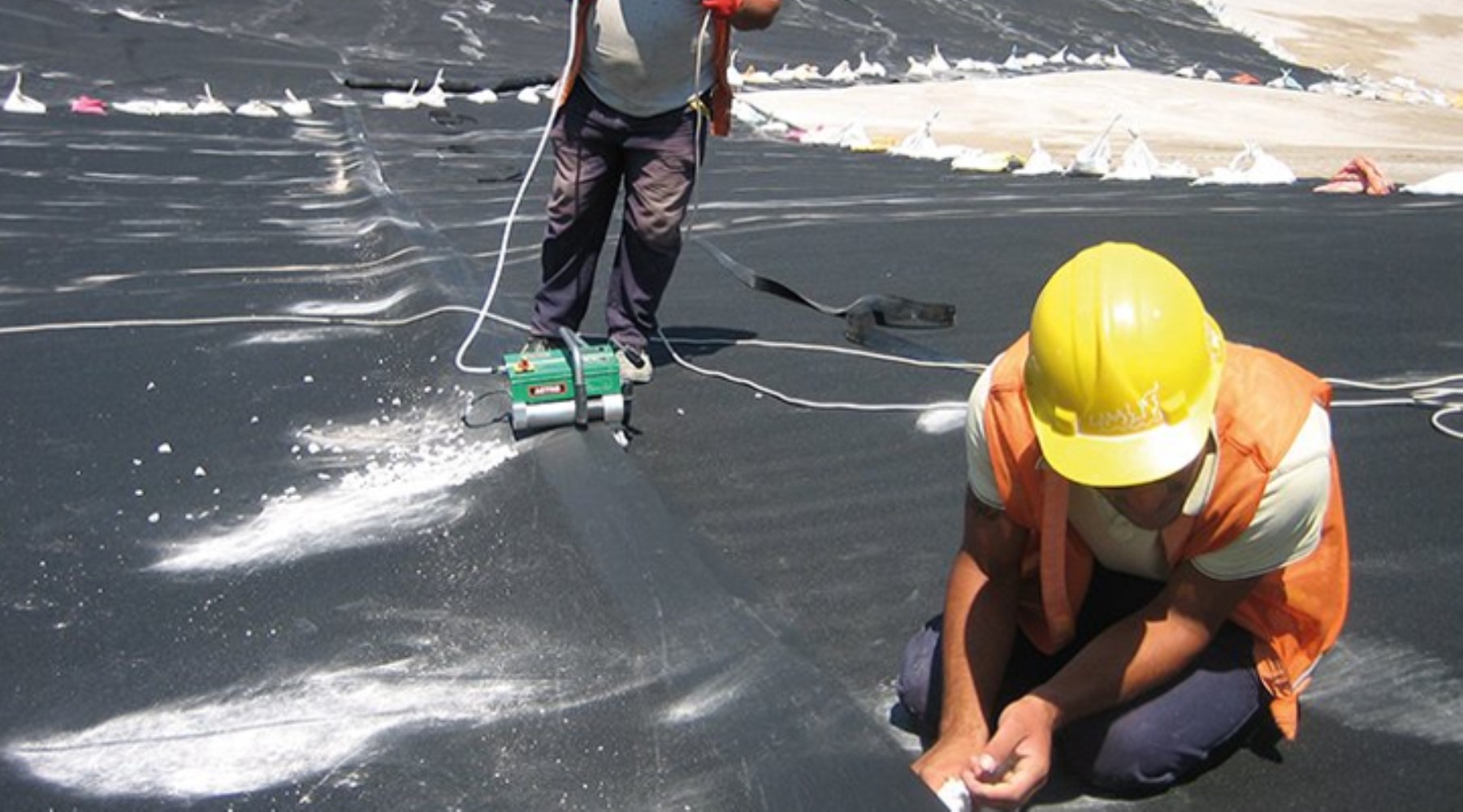
(Laying a geomembrane in the toxic waste pit)
Subsequently, the clay layer was reduced back to 50 cm.
However, according to information obtained by environmentalists, this method had been applied at the Summitville gold mine in Colorado, USA; despite the ground being covered with a plastic liner, it could not prevent tons of toxins from spreading into the environment.
(Burden Gilt, Mineral Policy Center, 06/1993, p. 22; Rick Young, New York Times, 14.08.1994).
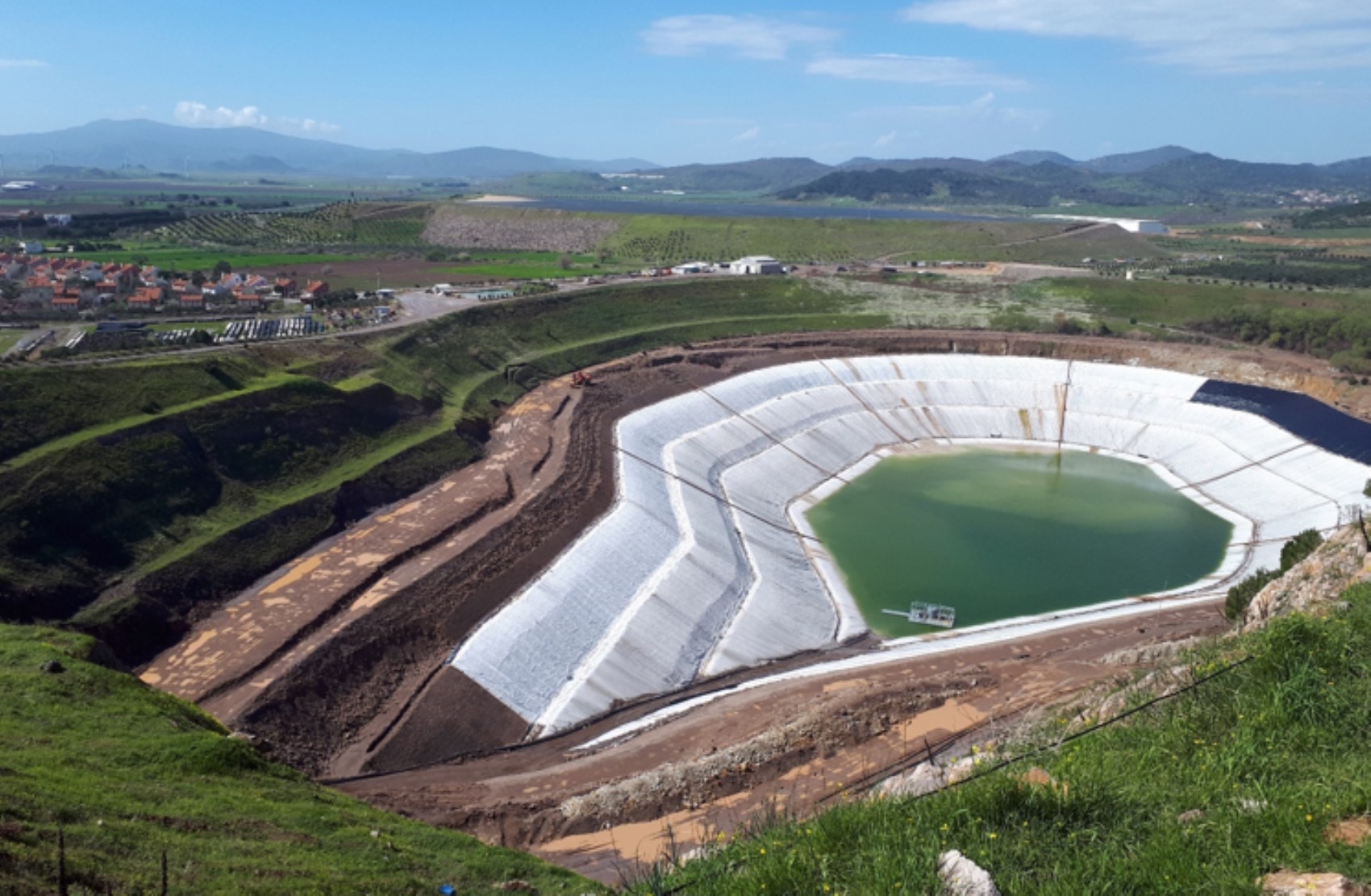
(One of the cyanide dams in Bergama-Ovacık)
The cyanide gold extraction method, presented as the world's most advanced technology, had left the cyanide company bewildered by the harsh criticism it faced in a so-called 'underdeveloped country (!)' like Turkey.
John Mc Crodock and his team, who wandered around Bergama with the air of a British governor in India, attempting to bring poison while claiming to 'bring civilization (!)', were unable to cope with the 'scientific resistance' they encountered here.
This phenomenon was perhaps the first effective scientific resistance developed against the methods of imperialism in Turkey.
Science reflects the truth; truth makes change inevitable.
***
Research conducted within this framework showed that scientists who came together at the Chambers of Engineers in İzmir and the Ege University Environment Center had reached a common conclusion: Cyanide gold mining was incompatible with the natural and social conditions of Bergama.
These views were clearly expressed in 1993 during a panel on the subject, which was held as part of the 57th Kermes—a local festival organized in Bergama during the spring months—and which drew great public interest.
Agricultural Engineer Prof. Ümit Erdem emphasized that agriculture, tourism, thermal resources, and textiles, which give life to Bergama, are indispensable lifelines for the people of the Bakırçay Plain. What was the need for gold!
At the same meeting, Public Health Physician Prof. Fethi Doğan drew attention to the warnings issued by the World Health Organization (WHO), affiliated with the United Nations, regarding such operations. According to the WHO, life within a 30-kilometer radius around these mines is at serious risk, and an additional 20-kilometer area is also considered a danger zone.
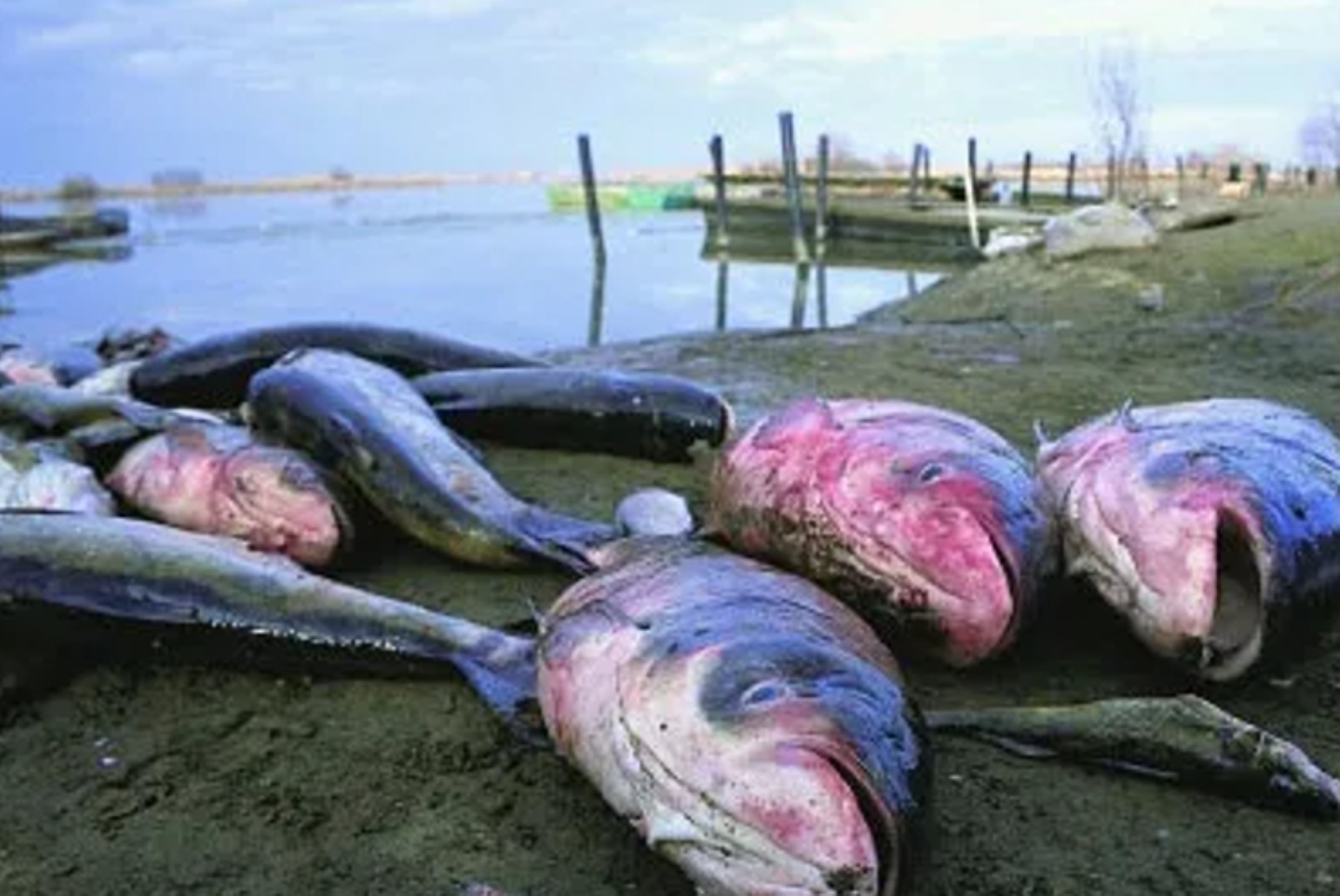
(Environmental disaster at the Summitville cyanide gold mine in Colorado, USA)
Chemistry Professors Gürel Nişli and Emür Henden stated that the chemical effects of the cyanide to be used in the operation and the heavy metals to be left in the tailings dam would last for years, or even decades. They pointed out that these toxic substances would have permanent and chain-reaction consequences on the environment.
Geologist Prof. Şevki Filiz emphasized that without a comprehensive hydrogeological study on groundwater, it would never be known in which directions and how far the toxins leaking from the waste pond would reach. According to him, it was even possible for these waters to reach the opposite coast of the Aegean Sea, or even the island of Lesbos, over time.
The risks expressed here are not unique to Bergama today.
They represent a common danger for all regions where cyanide gold mines are currently operating or planned to operate, including İzmir, Uşak, Eskişehir, Artvin, Erzincan, Sivas, Çanakkale, Balıkesir, Gümüşhane, Giresun, Niğde, Kırşehir, Konya, Kayseri, Ordu, Bilecik, Hatay, and Ankara.
These dangers are being experienced today; as long as the same mindset persists, they will continue to be experienced tomorrow.
At this point, it has become painfully clear how justified the warnings issued years ago by our patriotic scientists and engineers were.
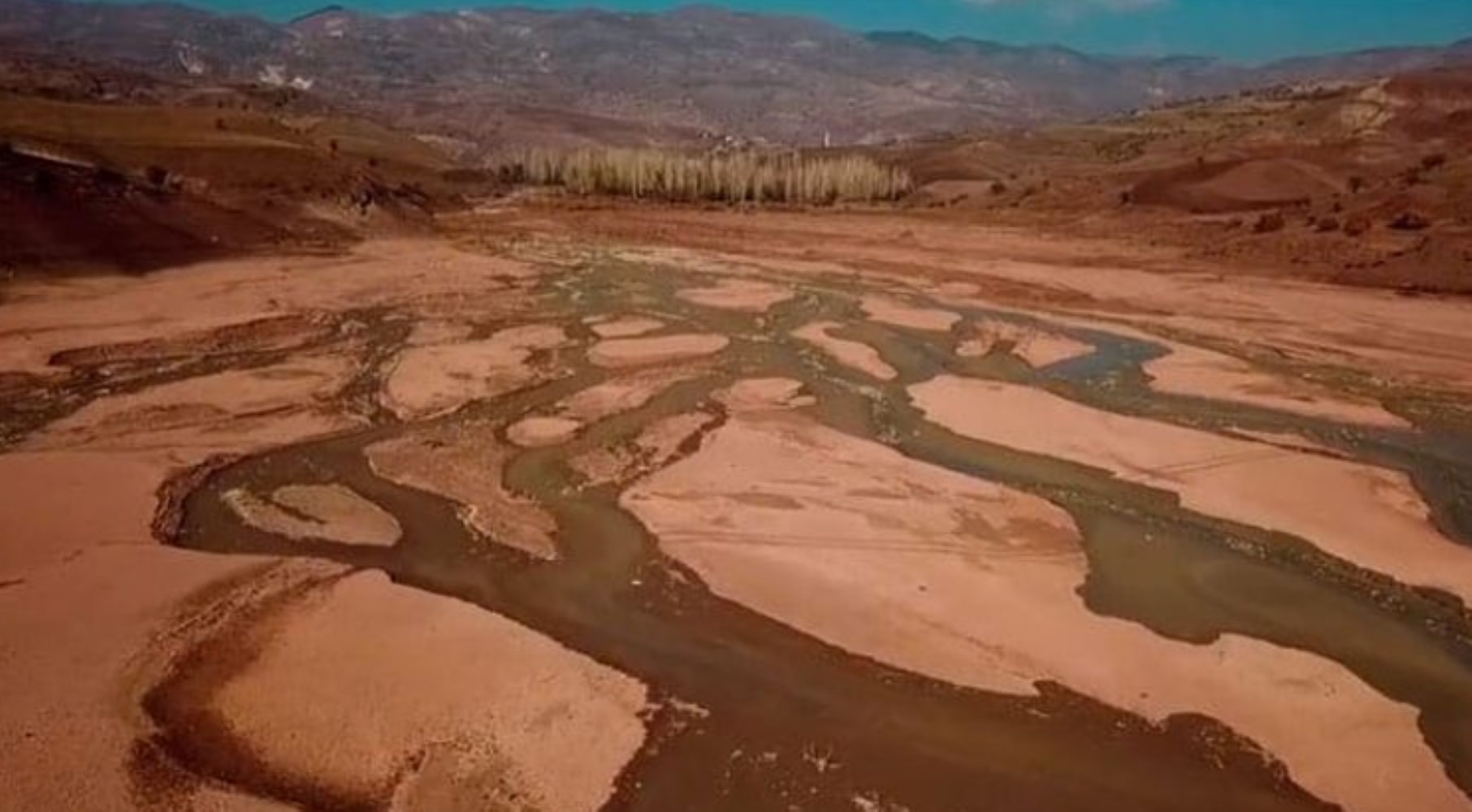
(Şebinkarahisar: Toxic streams)
***
During this process, the inconsistent propaganda carried out by the cyanide-using company, the distrust created by attempts to profit from the protesters, and the deep suspicions regarding the "cyanidation" method made the opposition to this project even more resolute.
The resistance was justified.
This reaction was not an emotional reflex; it was a defense of life based on scientific foundations. People were trying to protect their most fundamental right: the right to life.
Faced with social resistance and the strong support provided by scientific circles, the cyanide-using company was forced to pause for a while.
They try to brush off every scientific objection with superficial answers, but the real questions remain unanswered:
What was to become of that poison called 'cyanide'?
Where were those deadly 'heavy metals' going to go?
The risk of death stood there as a stark reality.
In this atmosphere, the Ministry of Environment was forced to seek support from the Bergama Municipality—the center of knowledge, experience, and resistance—during its work on preparing the Environmental Impact Assessment (EIA) regulation, which it deemed mandatory for businesses that could cause environmental pollution, as well as on the format and content of public participation meetings.
Suspicion toward the cyanide-using company Eurogold persisted within certain state units interested in what was happening in Bergama. For this reason, although the company appeared to have retreated for a while, it was, in reality, under heavy pressure.
However, the black propaganda they conducted to achieve their polluting goals knew no bounds.
They had money. They had the press. They had politicians...
Environmentalists were being declared 'traitors' who were hindering the country's development.
Who would want to be branded with such a label?
Yet, what was actually happening was this: A handful of villagers and environmentally conscious individuals were simply defending their homeland.
"We are not against gold, we are against cyanide," they said.
"If you want the gold this much, eliminate the cyanide, get rid of it, and take the gold."
"Is there no other method besides cyanide?"
"If not, research it, find new methods; are you not capable of that?"
However, would the "Cyanide Octopus," which has wrapped its arms around the world and is preparing to take over Turkey, ever give up on cyanide—a system of investing one to reap a thousand—to obtain gold?
Of course not. They were completely arrogant and unyielding!
In reality, they were representatives of a power that considered itself the owner of the world: Imperialism.
There was nothing they wouldn't do to convince environmentalists.
The former Ambassador to London during the Makarios era was brought around, this time as an envoy for the cyanide proponents, to persuade people by visiting door-to-door, starting with the headquarters of political parties.
***
During this process, the issue of "cyanide treatment" before the waste was released into the pond or dam—purifying the waste of cyanide before releasing it into nature—began to be discussed.
It was claimed that with a method called "detoxification," cyanide gas could be treated before being released into nature along with the waste.
According to this method, the cyanide in the water would be broken down and neutralized before it could mix with the air.
The possibility of technically escaping cyanide—that is, death—naturally created excitement in Bergama.
Because no one was against gold; what was being opposed was cyanide, heavy metals, and the release of these poisons into nature.
If gold mining would not harm anyone, would not poison nature and humans, and would contribute to the country's development, who could object to that?
For this reason, the public was expressing a clear and explicit demand:
"Yes to gold, no to cyanide!" "No to the poison of gold!"
These words were echoing in meetings and in public squares.
However, supporters of cyanide chose to blame the people of Bergama for every objection raised against the gold mine.
According to them, environmentalists were against the country's development; they were scaring off foreign capital. Going even further, accusations such as "hostility toward foreign capital" and "falling for the games of foreign powers" were voiced.
According to this narrative, "opposing foreign capital" was unacceptable!
The same circles are now using the phrase 'domestic and national'.
In fact, Ahmet Gürel, one of the Turkish executives of the multinational cyanide-using company Eurogold, which practically waged a war to operate the Bergama mine, must have been unable to find any other justification, as he claimed that the anti-cyanide protests were instigated by Greece.
As 'proof' of this, he pointed to the 1991 visit to Bergama by the Mayor of Mytilene, Notis Panagiotis, in solidarity against cyanide.
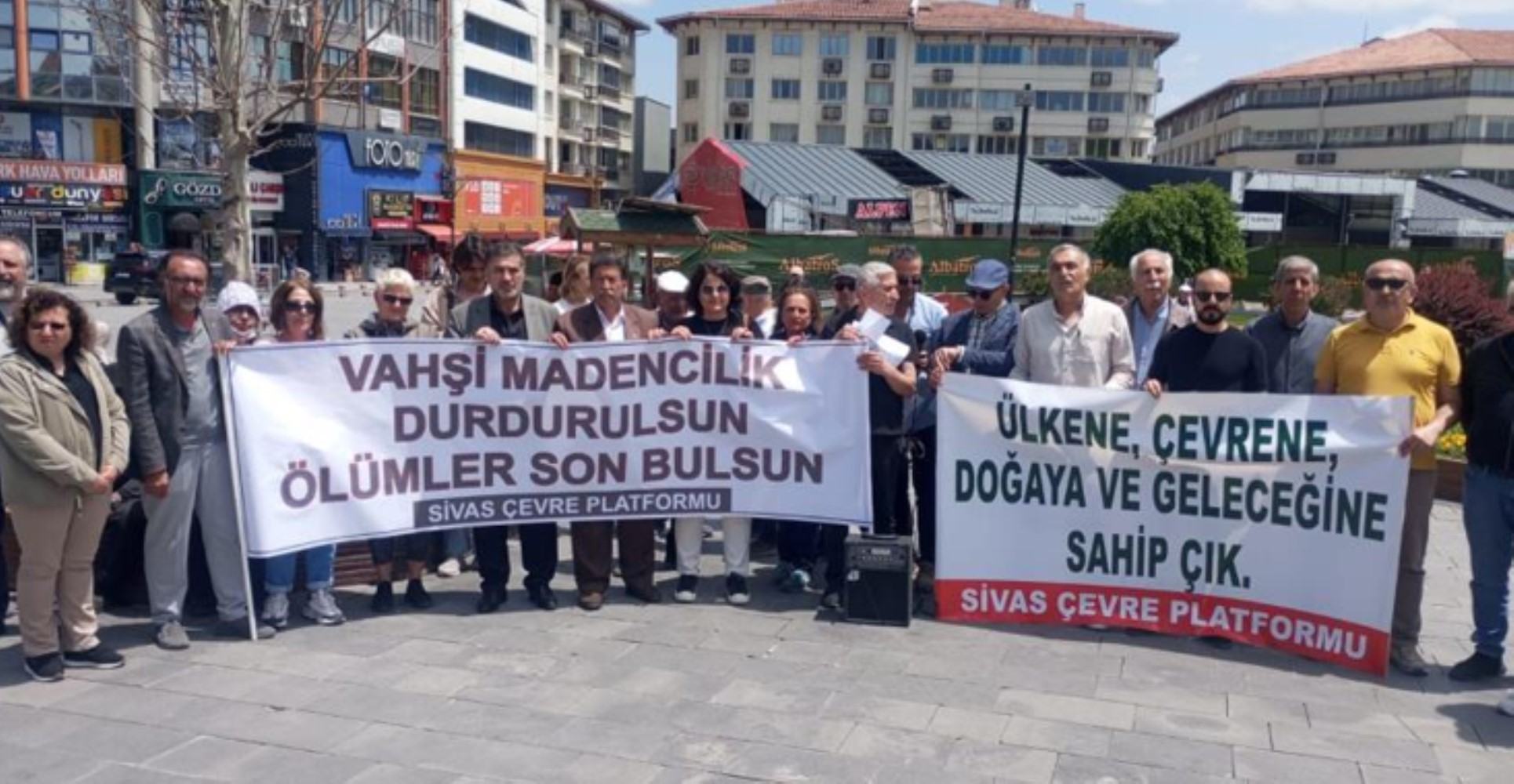
(A stance against wild mining in Sivas.)
In the following years, such lies would take other forms; this time, it would be claimed that the German state was using environmentalists to prevent Eurogold, one of whose partners was a German company, from extracting gold in Bergama.
The games of imperialism never end.
Every path is permissible to achieve the goal.
Money opens every lock.
Cyanide companies coming from different countries know very well how to join forces to poison the lands of other nations.
However, the solidarity of people living in different countries against death—for instance, the Mayor of Mytilene's visit to the Bergama Municipality—does not suit them at all.
Indeed, some time later in Greece, the people of Olympiada near Thessaloniki would also wage a struggle for life against another arm of the 'Cyanide Octopus,' with thousands participating. In fact, one person would lose their life in the clashes.
They would ask for help from Bergama in their resistance against the cyanide-leaching gold mine they wanted to operate on their land, and they would strengthen their struggle with the knowledge and experience they gained from Bergama.
However, the language of the cyanide proponents and their supporters in Thessaloniki would not change this time either; it would be claimed that the resistance of environmentalists in Greece was incited by Turks, and those leading the protests would be accused of being 'Turkish agents'.
Yet, ants have brothers!
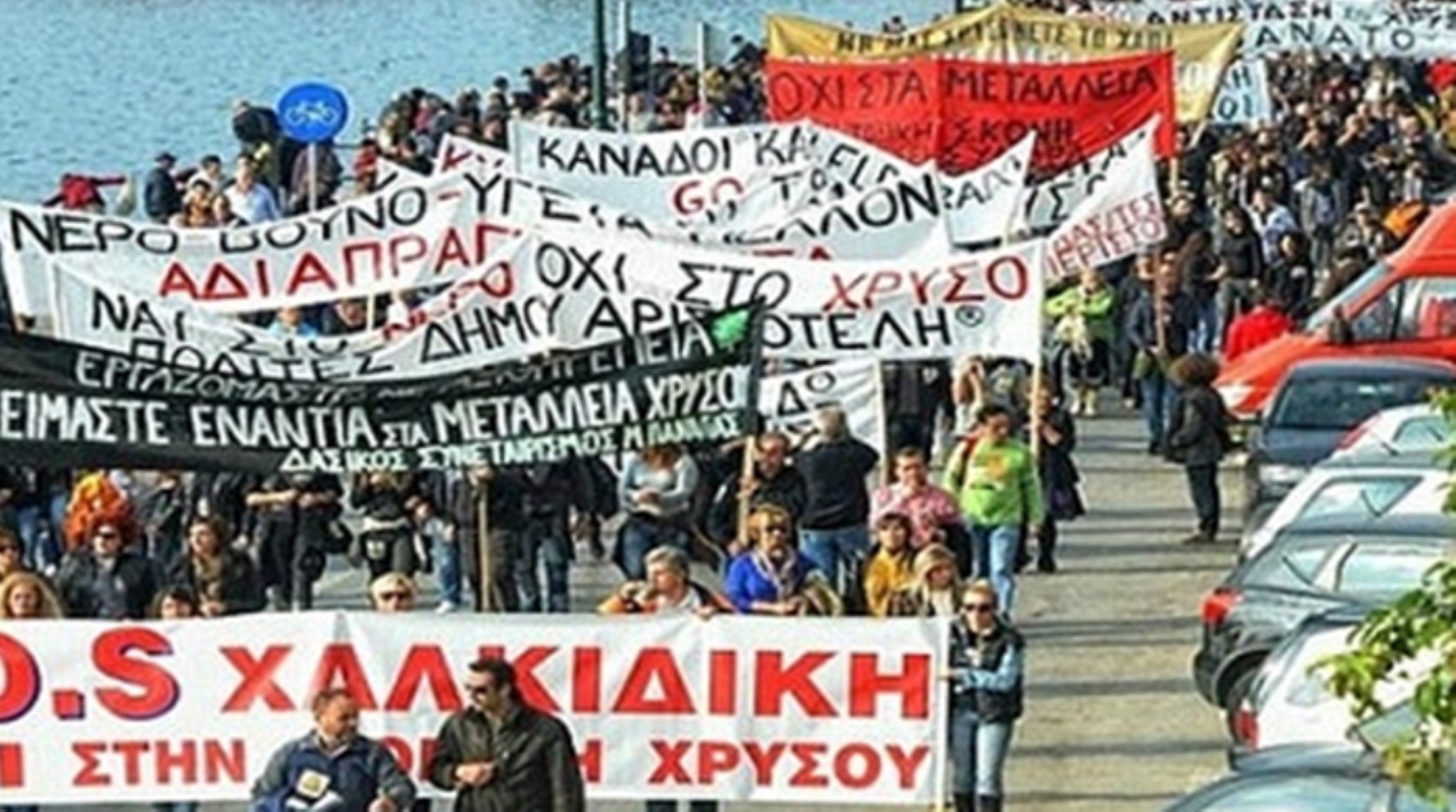
(The large march held in Thessaloniki against the cyanide-leaching gold mine in Olympiada, Greece)
Wherever it may be in the world, a human is a human; and death is death everywhere.
***
The people of Bergama, who were kept under heavy pressure not to oppose the extraction of toxic gold, began to think that if a treatment plant were built and all toxins were truly treated, they could be cleared of the accusations of 'treason' leveled against them.
People were saying, 'It will be a bit of a struggle, but it is worth enduring for the sake of the country's interests.'
Initially, this proposal appeared as a glimmer of hope.
It was believed that if a 'treatment plant' were built, everyone would be able to breathe a sigh of relief.
However, what the people of Bergama understood by 'treatment' was extremely clear:
That no cyanide, cyanide compounds, or any pollutants—from heavy metals to sulfates, from nitrates to all other toxic substances—should be released into nature or the waste pond.
This was a demand that was technically impossible but morally innocent.
At the same time, it was a conscious stance aimed at delaying the opening of the mine for operation as much as possible. The protesters wanted the process to drag on in order to gather more strength and intimidate the toxic companies.
The cyanide-using company Eurogold vehemently opposed the proposal to 'purify the cyanide' and the project called 'detoxification,' which were put forward as the technical response to the public's demand of 'we do not want cyanide.'
The company's Scottish manager, John McCrodock, a tool of the British Empire, was practically livid at this demand; he stomped with rage.
Eurogold's defense was ready:
“In gold mining conducted in developed countries, including the USA, Canada, Australia, and the European Union, in climates where evaporation is higher than precipitation, toxic process waste is sent to a waste pond and left for natural degradation.
In contrast, in climates where precipitation is higher than evaporation, this waste is subjected to chemical degradation and then discharged into receiving environments such as streams and lakes. According to existing historical records, Bergama's climate falls into the first group; that is, evaporation is significantly higher than precipitation.” (V. A. Oygör, footnote 12. https://alivedatoygurmadencilik.wordpress.com/2018/01/06/ovacik-altin-madeni-bugunlere-nasil-geldi)
According to the cyanide users, if the situation was this clear, where did this public demand come from?
The method applied everywhere in the world was to be applied in Bergama as well; it was merely a matter of implementing the same polluting system here.
With these debates, operations at the mining site and within the bureaucracy slowed down significantly.
The land purchased by the cyanide-using company in the villages of Bergama Ovacık, Çamköy, and Narlıca, which it had surrounded with barbed wire, fell into silence.
Eventually, the Cyanide Octopus decided that John McCrodock had failed in executing this toxic project and dismissed him from his post.
The Scottish manager, who attempted to bring a "toxic civilization" to Bergama, packed his bags and left Turkey.
This was the first concrete victory won by Bergama environmentalists against imperialism.
***
Before long, the cyanide-using company recovered.
The company was stubborn; it was not going to build a "treatment facility."
A few years passed in this uncertainty.
At the end of this period, the company management changed. J. Ashley, a young Englishman, was appointed to replace John McCrodock.
Whatever happened, it happened during this time; the company seemed to have changed its mind this time.
The Cyanide Octopus; the cyanide companies had a cake like Turkey in front of them.
Could they ever give up on this poisonous cake!
Bergama was the first threshold. If they crossed it, the path ahead was clear: the vast Anatolia!
As soon as the new manager of the poisoner Eurogold, J. Ashley, landed in Izmir, he called the Mayor of Bergama from the airport and gave him the "good news" (!):
The cyanide-using Eurogold had now agreed to build a "treatment plant."
You wanted it, didn't you? Well, here's your treatment plant!
Supposedly, this was their way of accepting the public's demand!
And the public was expected to stay silent!
The Englishman J. Ashley submitted a project to the Ministry of Environment, claiming he would remove cyanide from mining waste under the name of 'chemical treatment'.
The patent name for this project was the 'INCO Detoxification Project', or simply the 'INCO-SO² method'.
The essence of the method relied on using sulfur dioxide (SO²) to eliminate cyanide from the waste. Technically, this was called 'chemical degradation'.
This development soon resonated within the scientific community in Turkey as well.
Muharrem Köse, one of the experts from the MTA (General Directorate of Mineral Research and Exploration) Department of Mineral Analysis and Technology, was among the first to evaluate this method.
Prof. Emür Henden, a chemist from Ege University who closely followed the Bergama process, submitted a comprehensive and negative report regarding the project to the Ministry of Environment.

(Prof. Emür Henden from Ege University)
Dr. Güner Ünalan, Deputy General Manager of the General Directorate of Mineral Research and Exploration (MTA), also expressed serious doubts about this method in a letter sent to the TMMOB İzmir Provincial Coordination Board Secretariat dated August 7, 1992.
Based on experiences gained from small-scale cyanide destruction processes conducted at pilot facilities for the cyanide gold mine intended to be established in Arapdağı, İzmir–Karşıyaka, G. Ünalan emphasized that the method was problematic.
As a state official, he issued the following warning: "Regardless of how good a treatment facility established under our country's conditions may be, its efficiency and harmlessness must be documented in a way that leaves no room for doubt, and it must be continuously monitored."
Indeed, the Arapdağı gold mine would later be transferred to the Anglo Tur company, the Turkish extension of the South African Oppenheimer family, and subsequently to Metro Holding, famous for its buses and owned by businessman Galip Öztürk—who was detained and arrested in a police operation on allegations of threatening rival businessmen; however, its license and operating permit would be revoked with the approval of the Council of State. (https://www.patronlardunyasi.com/agar-bir-ayda-halletmis)
Moreover, this mining area was right next to İzmir–Karşıyaka.
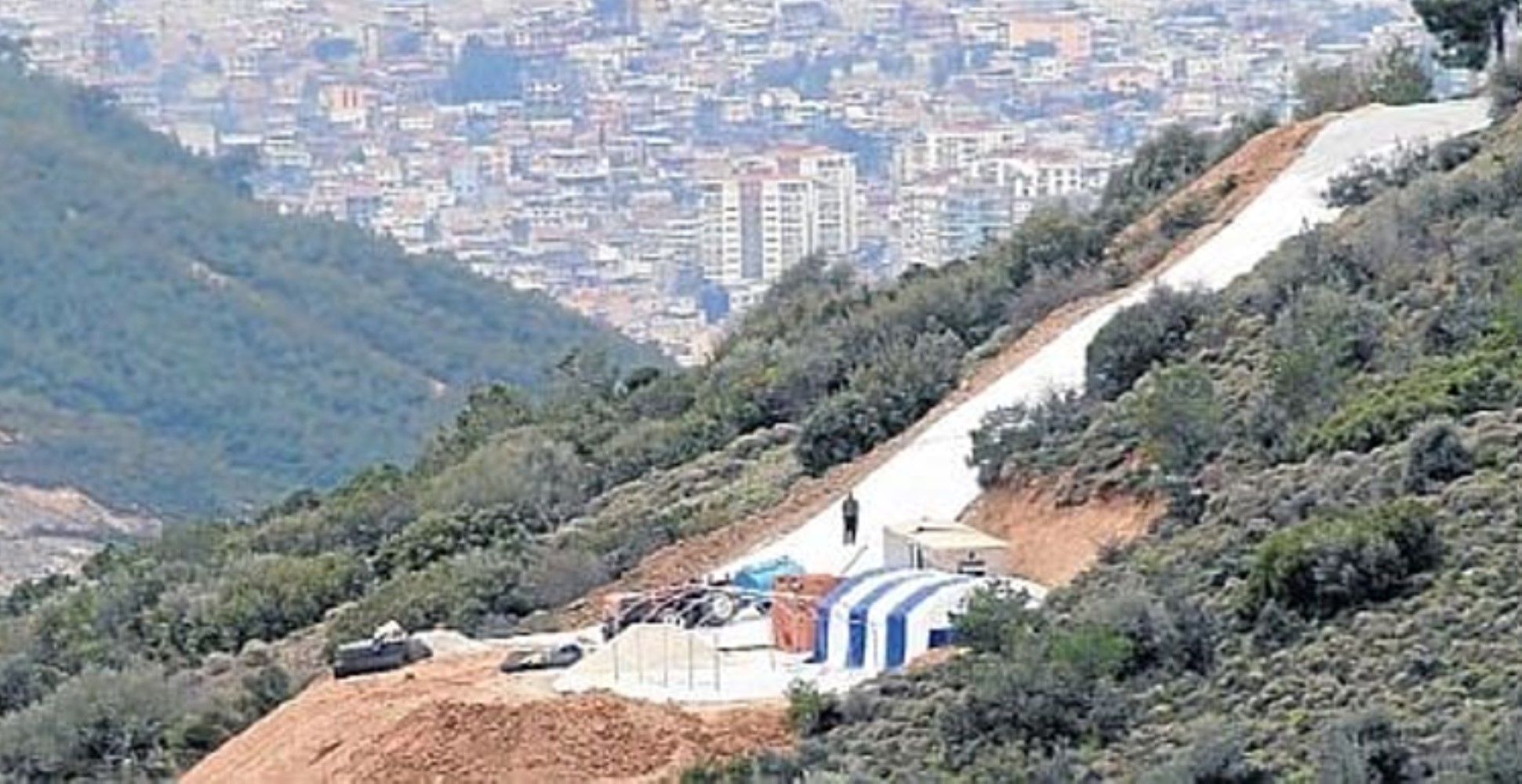
(The cyanide mine in İzmir-Karşıyaka-Arapdağı whose operation was cancelled)
In line with these views, Prof. Friedhelm Korte from the Technical University of Munich, considered one of the founders of the science of "eco-chemistry" or environmental chemistry, who also served as a consultant in the preparation of Turkey's Environmental Law, examined the project on behalf of the people of Bergama and made the following clear assessment:
"It is impossible to make a sound assessment based on the information provided regarding the effects of the project."
According to Korte: "There is nothing that cannot be done in a laboratory."
However, what happens if you attempt to do something that can be done in a laboratory out in the open air, in the midst of thousands of living beings?
Playing with poison is no joke.
From this point on, the issue of "cyanide treatment" gradually turned into a story, or even a fairy tale.
Time was being dragged out with claims that "the cyanide has been treated, it will be treated"; meanwhile, the Eurogold company was doing nothing more than marketing this detoxification project to appease the public pressure forming against it.

(Prof. Friedhelm Korte, founder of the science of Environmental Chemistry)
***
Prof. İsmail Duman from Istanbul Technical University put an end to the debate:
"In engineering, especially in environmental science, treatment means releasing what you have treated into the receiving environment. However, to be able to do this, the treated water must improve the existing quality of the stream, lake, sea, air, or soil."
"If treatment is planned in these projects, let them release what they have treated into the environment and we shall see. If it is being treated, why is it being stored in a dam?"
According to Duman, "with this method, the cyanide in the water can dissolve and decompose into carbon (C) and nitrogen (N) components. However, this is a very long process."
It takes 276 days for half of the cyanide mixed into the air to disappear.
Someone will inevitably inhale the poison that remains in the air for such a long time.
More importantly, it is technically impossible to treat the semi-solid, semi-liquid cyanide sludge that remains after the gold has been extracted.
When gold is extracted, cyanide combines with heavy metals found in the sludge to form new toxic compounds, and it is impossible to separate this mixture.

(Prof. İsmail Duman from ITU)
The 'INCO–SO²' method only converts the free cyanide in the sludge into more stable sulfocyanides and thiocyanates (cyanide compounds). However, each of these is a poison in its own right.
In other words, cyanide and cyanide compounds in mining waste can never be completely destroyed.
Moreover, this method introduces new pollutants into the mining site that were not previously present, such as new cyanide compounds, sulfuric acids, nitric acid (aqua fortis), nitrates, and ammonia.
There is no way to eliminate any of these substances in the waste pit.
Furthermore, the geomembrane (plastic liner) planned to be laid on the ground to protect groundwater will eventually be degraded by these chemicals.
As if the cyanide in the waste pit were not enough, this method also adds sulfur to the process.”
What a frightening picture!
Meanwhile, as the public continued their protests against toxic facilities, the issue of cyanide gold mining and "cyanide treatment" continued to be heatedly debated in scientific circles.
On August 26, 1994, a meeting was held in Burhaniye, Balıkesir, to address the issue of treatment.
Hosted by eco-friendly tourism operator Birsel Altın Lemke, Prof. F. Korte, Eurogold Manager J. Ashley, and company board member Norman Hardy came together at this meeting.
It was understood once again here that the "INCO–SO²" method had been tested on a limited scale in the western part of Canada, in the British Columbia region; however, its effectiveness had never been definitively proven.
In fact, according to some sources, Eric Devust, one of the INCO executives, had burned his hands during the implementation of this method.
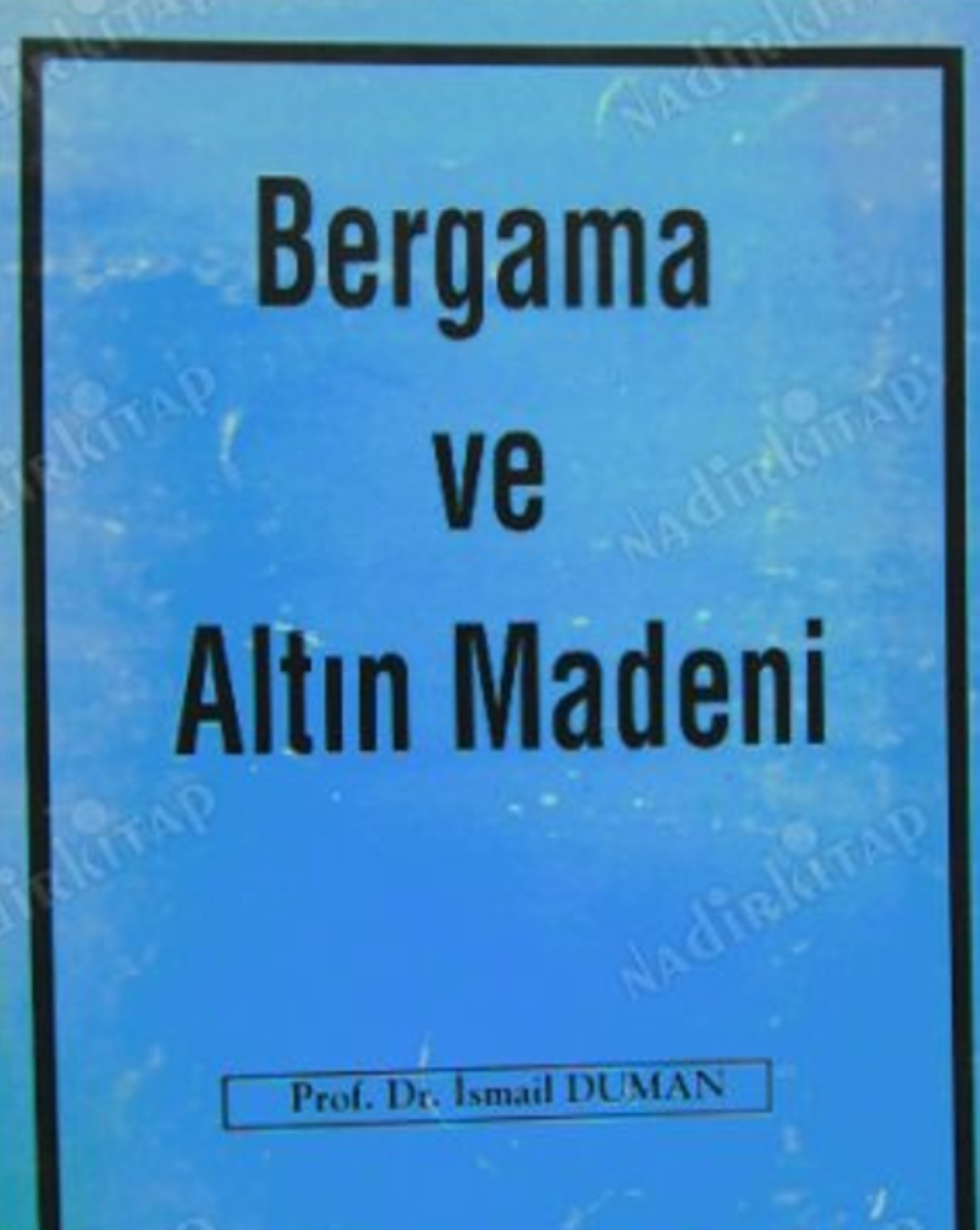
(A booklet in which Prof. İsmail Duman's views were recorded)
***
This project, which the cyanide-using Eurogold company presented with much fanfare, was not the treatment plant that the people of Bergama and the public, who were following all these debates with great attention, had expected or demanded.
Indeed, the villagers did not call this facility a 'treatment' plant, but openly referred to it as a 'pacification' plant.
For some, it was nothing more than a deception from start to finish.
Environmentalists initially voiced the demand that 'cyanide should be treated' in order to get rid of the cyanide scourge; however, in light of in-depth information obtained from patriotic scientists, they realized that such a facility would create much larger and more permanent toxic problems than it would eliminate, and their opposition to this initiative seriously disturbed the cyanide company and its supporters.
These circles, along with their paid hacks, tried to portray this stance to the public as 'the inconsistency of environmentalists'.
(V.A. Oygör, one of the employees of the foreign Eurogold company and a defender of cyanide-based gold mining, accepted a newspaper statement as a commitment.)
Geologist Vedat Ali Oygör, who first served as a civil servant and later became one of the employees and most ardent defenders of the cyanide-using Eurogold company, felt the need to express his discomfort with the following words:
'Bergama Mayor Sefa Taşkın made a commitment in an interview with journalist Muzaffer Oktay, with words to the effect of, "If the company accepts chemical treatment, we will not oppose this project." Despite this binding (!) statement, which also appeared in the media, he did not keep his word later.'
(V. A. Oygör, footnotes 9 and 12)
What kind of commitment or binding agreement was there to begin with?
It seems the cyanide company was expecting the result it desired from the protesters: surrender!
Despite this, the cyanide company did not back down from the step it took regarding the treatment plant; this time, it increased its pressure on the Ministry of Environment.
The Ministry then sent the treatment plant project in question to Dokuz Eylül University in İzmir for review.
For some reason, certain public officials always manage to find so-called scientists to validate the wrong decisions they intend to make.
During this period, Prof. Orhan Uslu—who had previously faced intense public criticism while working at Ege University for preparing a dubious Environmental Impact Assessment report on behalf of Eurogold—had transferred to the Department of Environmental Engineering at the Dokuz Eylül University Faculty of Engineering, where he was a professor. The department chair at the time was Prof. Dr. Füsun Şengül.
This project, which many scientists had directed serious criticisms toward and which environmentalists in Bergama openly labeled a 'pacification plant,' received a report from Dokuz Eylül University on August 21, 1995, stating that it was 'fit for purpose.'
It was striking that Prof. Orhan Uslu, whose impartiality had already been a subject of debate due to his reports providing positive opinions for the cyanide gold mine in Bergama, was once again at the center of this process.
Then again, the opposite would have been a surprise!
Prof. Dr. Orhan Uslu and Prof. Dr. Füsun Şengül would pass away in the following years.

(Prof. Orhan Uslu, one of the defenders of cyanide gold mining in Turkey)
***
Eurogold, the Turkish branch of the 'Cyanide Octopus,' which presented its so-called 'treatment' facility to the public all dressed up like a fresh bride, failed to convince the broader public; however, it did succeed in convincing Murat Sungur Bursa, known as the Deputy Undersecretary of the Ministry of Environment of the Republic of Turkey and the high-ranking official who approved the Bergama-Ovacık project.
Moreover, they now had a document in hand that would serve as the basis for a dangerous decision to be made for this facility—a facility that the high court, the Council of State, would later determine 'has no public interest in its operation': the 'positive' report from Dokuz Eylül University.
The warnings from scientists such as Prof. İsmail Duman, Prof. Emür Henden, Prof. Şevki Filiz, and Prof. Gürel Nişli, who opposed this method with clear scientific data, as well as those from the Chambers of Engineers, were ignored and disregarded.
(Poison flows: Some watched, and still watch. Erzincan-İliç)
Murat Sungur Bursa would thus go down in history as the state-appointed technocrat who inflicted cyanide gold mining upon Turkey.
The signature placed by this technocrat paved the way for consequences that would disturb the peace of tens of thousands of citizens across the country.
Murat Sungur Bursa's signature was on the approval received from the Ministry of Environment of the Republic of Turkey in exchange for the commitment letter provided by the cyanide-using company.
However, placing all the responsibility on a single name would also leave the truth incomplete. Murat Sungur Bursa was a technocrat, but he was also a servant following orders.
The question of who gave the instruction to the deputy undersecretary to 'get this done' still remains.
Servants following orders often obey their masters!
Fortunately, recorded history forgets nothing.
It should also be noted that the then-Minister of Environment, Rıza Akçalı, did not sign this document, stating that 'this is a technical issue'.
Interesting!

(The then-Minister of Environment, Rıza Akçalı)
Faced with this situation, the cyanide-using company Eurogold was extremely happy.
On paper, it had managed to bypass the State.
The Ovacık Cyanide Gold Project, which it was trying to force upon the public, now also had official state approval.
What more could be said?
Eurogold had, so to speak, taken double precautions:
On one side, a plastic layer/geomembrane; on the other, a treatment plant.
Was there any place left for the poison to escape?
This was the language of the company and its supporters:
The problem was not the project, but those who objected to it.
Environmentalists were malicious; there were surely 'foreign powers' behind them who did not want the country's development.
This rhetoric, this 'slander,' was ruthlessly directed at the character of environmentalists and systematically circulated.
Now, the cyanide users also had the support of the State behind them.
The thousand-year-old State, founded on the principle of 'let the people live so that the state may live,' was forced to stand against the public and defend and protect the Cyanide Octopus.
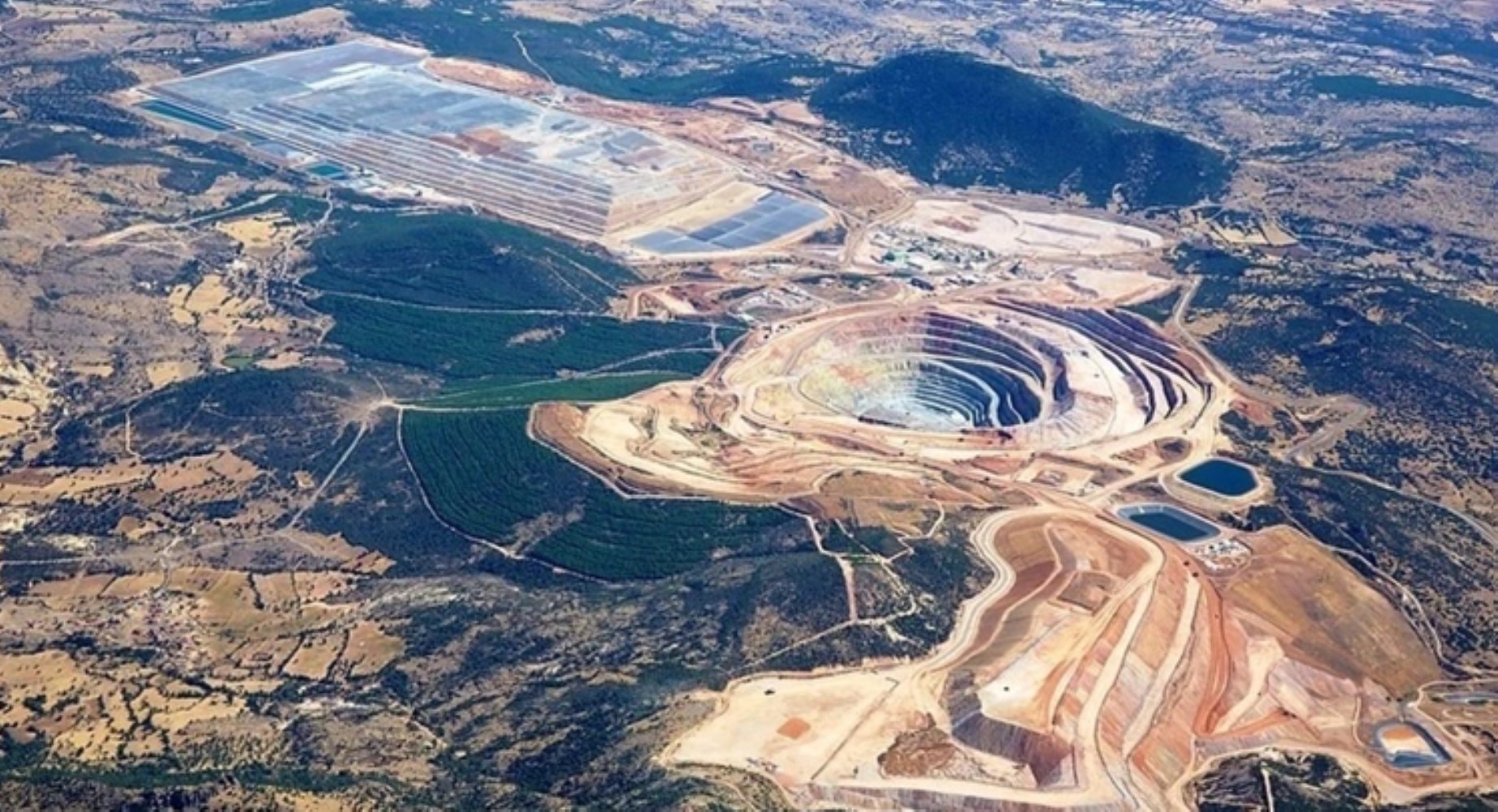
(There is no waste pond or anything of the sort in Eşme, Uşak. Almost every process is carried out in the open air. The mine is advancing toward the Uşak city center. That is the situation. Even the sight of it is terrifying. The operator is the TÜPRAG company, which is owned by foreigners.)
***
It was in the midst of such a tough struggle that the environmentalists of Bergama tried to protect their lands against the poison of imperialism.
They stood against the project that was being forced upon them through peaceful but determined mass protests, scientific data, and legal challenges.
How civilized the environmentalists were, and how savage the puppets of imperialism were!
At the Bergama-Ovacık cyanide gold mine, whose very existence posed a major threat and danger, the poisoning company was forced to take many strict measures it never wanted to implement.
The cost of the gold it would obtain—and did obtain—using poison increased and increased!
***
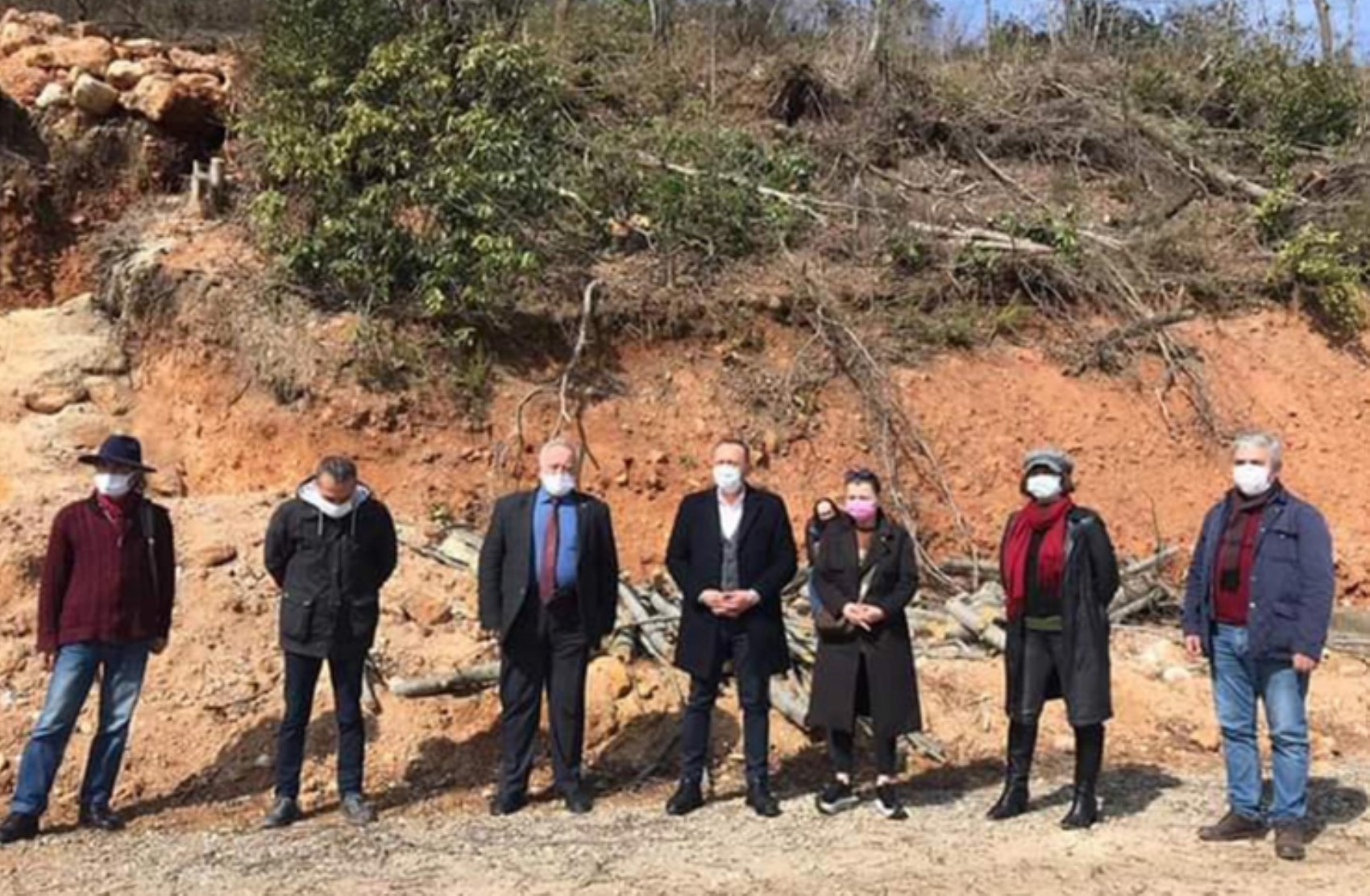
(The stance of those opposing the cutting down of trees in Fatsa: Reaction! No one is alone.)
So, what is the situation across Turkey today?
What is happening in the cyanide gold mines that are currently operating or being prepared for operation in İzmir, Uşak, Eskişehir, Artvin, Erzincan, Sivas, Çanakkale, Balıkesir, Gümüşhane, Giresun, Niğde, Kırşehir, Konya, Kayseri, Ordu, Bilecik, Hatay, and Ankara?
How many of the measures achieved in Bergama at a great cost are being implemented in these fields?
Or is the prevailing approach everywhere as follows:
'God provides, let it roam; God will protect.'
Looking at the disasters that follow one another, unfortunately, the picture confirms this.
At this point, the example of cyanide gold mining clearly shows how the 'God provides, let it roam; God will protect' mentality produces devastating consequences for nature, society, and the future.
When the warnings of science, the boundaries of the law, and the public's right to life are disregarded, what remains are contaminated soils, poisoned waters, and a lasting sense of distrust.
The struggle waged in Bergama is not merely a local resistance.
That struggle should be read as a historical objection raised by reason, responsibility, and the ethics of accountability against fatalistic negligence.
Bergama did not resist against gold; it resisted against forgetting.
It is often thought that where science falls silent and the law bends, fate speaks.
Yet, it is not fate that is written into history, but acts of defiance.
(Detailed sources: From Sefa Taşkın's book 'Siyanürcü Ahtapot' [The Cyanide Octopus]: Sel Publishing: 1998).
Sefa Taşkın
12/21/2025
Bergama/Izmir
Most Read

Striking picture for Özgür Özel's 'New Party'

Özgür Özel gives a dated response regarding the number of resignations

The PKK opening and Özgür Özel’s path!..

Forest fire in Antalya brought under control

How did the newspapers view Özgür Özel's farewell to the CHP?

He killed his wife by slitting her throat: Their children witnessed the moments

What did the CHP do?

Özel’s new party move in the world press

The New CHP, against CEHAPE

Fire at TUSAŞ engine factory in Eskişehir under control