



A STONE IS HEAVY IN ITS PLACE-164. LET US NOT FORGET, LET US NOT LET BE FORGOTTEN.
History is the story not only of the winners but also of the lost.
Civilization is sometimes measured by the weight of a stone.
When this stone is removed from its place, not only is a structure silenced, but the voice of a civilization is as well.
At the end of the 19th century, it was a time when imperialism occupied not just lands, but cultures as well.
Every frieze, every relief, every statue moved from Pergamon to Berlin is a silent witness to this occupation.
The question that must still be asked today is this: Who “carried” whose stone to where?
Where did they stick it?
This article, like others on the subject, is a story of cultural looting, exploitation, and a memory that resists oblivion.
It has been penned to keep that memory alive.
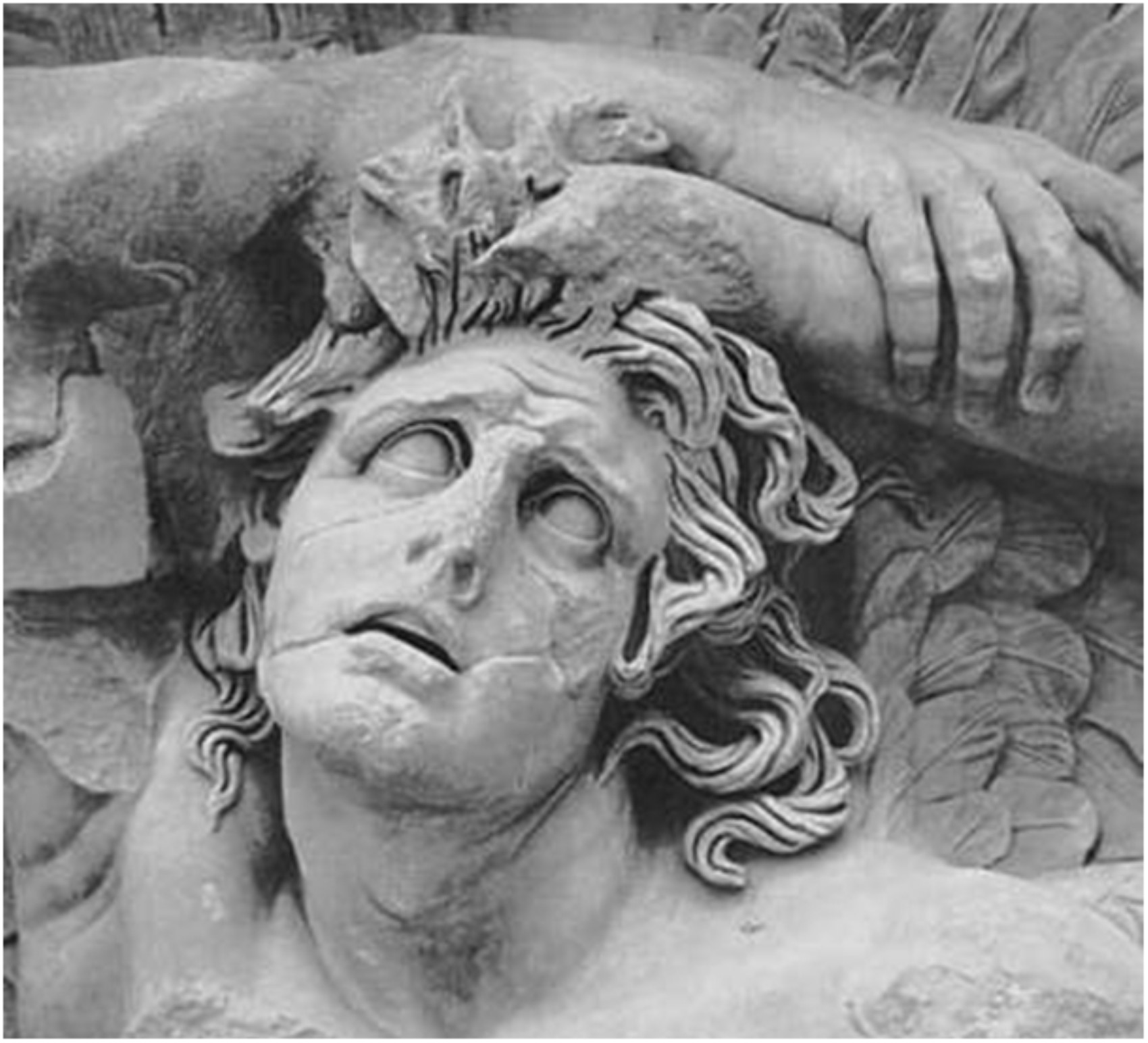
(One of the friezes from the Pergamon Altar of Zeus, currently in the 'prison' of the Berlin Museum)
***
The Altar of Zeus and the Pergamon statues, which were smuggled from Pergamon to Berlin between 1864 and 1886 with dubious permits, had existed silently for centuries in the lands where they were produced, even if they had suffered much damage over time.
Some were destroyed, broken, shattered, discarded, or turned into lime by cruel Christians incited by fanatical priests like John of Ephesus.
Others were used as reinforcement stones in fortress walls by Byzantines seeking protection from Arab/Umayyad raids.
Some were ruined during the burning and destruction of Pergamon in Arab/Umayyad attacks.
The Umayyads put the people of Pergamon to the sword, including women and children. They left no stone unturned in the city.
These are historical events.
At that time, the concept of “historical artifacts” and their protection did not exist. The aesthetic understanding was also different.
Christians wanted to erase the traces of paganism/polytheism, and the Umayyads were looting the lands of other countries in the name of “proselytization.”
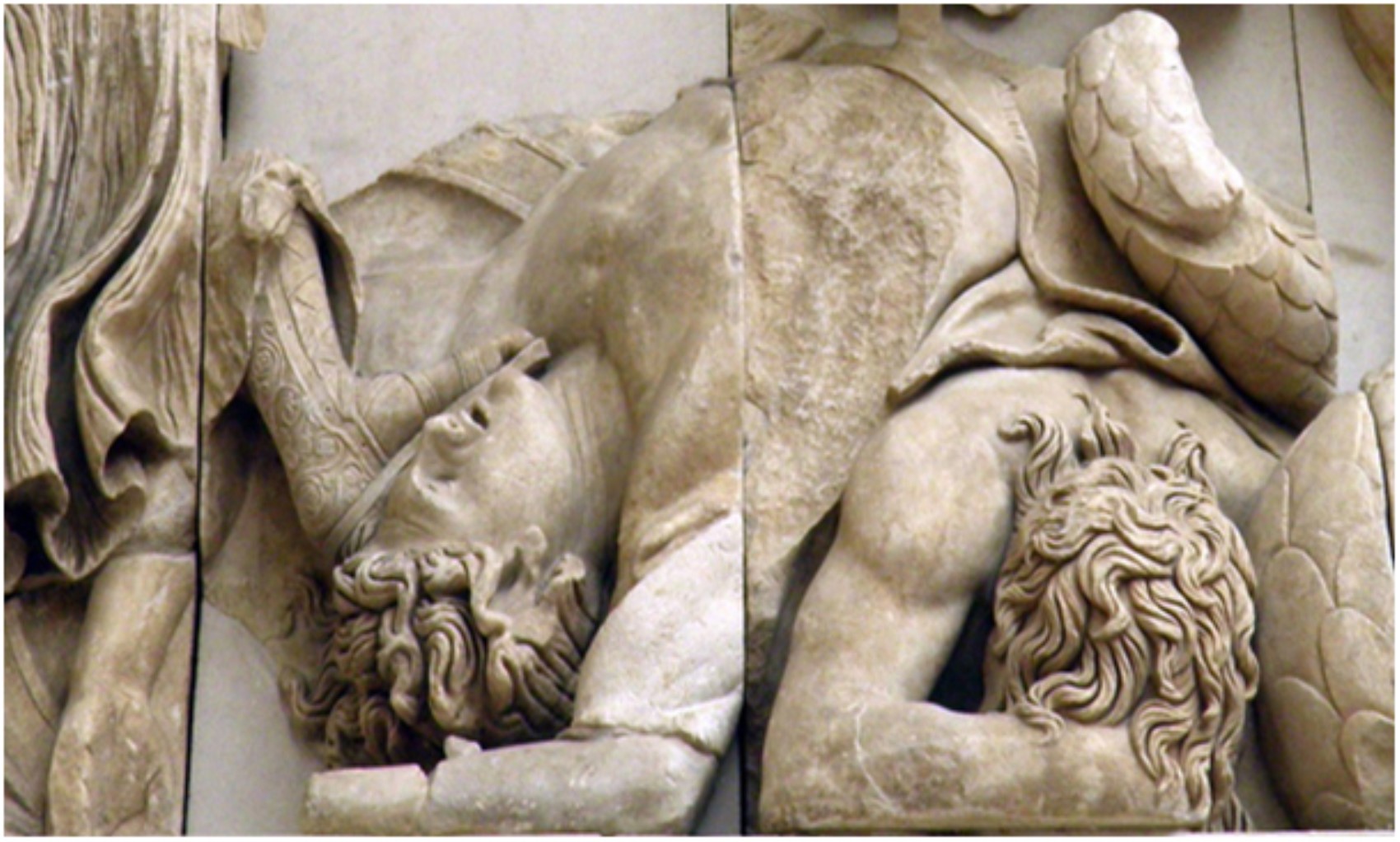
(The death of two giants from the magnificent statue-like reliefs of the Pergamon Altar of Zeus. Berlin Museum/Prison)
***
The historical artifacts of Pergamon experienced their real threat of extinction and the potential damage they suffered when they began to be torn from Pergamon, the lands where they were produced, and after they were taken to Germany, to Berlin.
Who knows what great damage the marble statues and inscriptions suffered while being excavated from underground and pried from city walls by the unskilled and inadequate men of the German smuggler Carl Humann, who was disguised as an engineer?
Did those greedy thieves care!
The nouveau-riche German Imperialism was looking for a cultural identity for itself.
Carl Humann was in a hurry to smuggle the Pergamon artifacts as soon as possible.
Of course, he also had his reservations!
What if stricter measures were taken to prevent this smuggling! What if they were stopped!
The Ottoman Empire had already noticed this robbery and was hoping to put an end to this situation with the regulations it issued one after another.
While being transported by oxcarts from Pergamon to the Dikili pier, while being taken by boats from Dikili to İzmir, and while being shipped from İzmir to Berlin, who knows what happened to the friezes of the Altar of Zeus and the Pergamon statues on those boats and ships?
The organized smuggling ring led by the gang leader named Carl Humann, supported by the German State, tore the treasure of historical artifacts they had seized from the lands where they were produced without batting an eye, putting them at a thousand risks, and smuggled them to a culturally rootless Europe.
Then, terrible things happened to the Pergamon artifacts in Berlin, where they were taken!
They remained under the bombs of World War II. The Museum where they were imprisoned was worse than destroyed. The artifacts were moved to the zoo's warehouses.
Who knows how well the statue-like reliefs of Zeus and Apollo, and the statues of Athena and Poseidon, fit in among the giraffes, bears, and foxes!
***
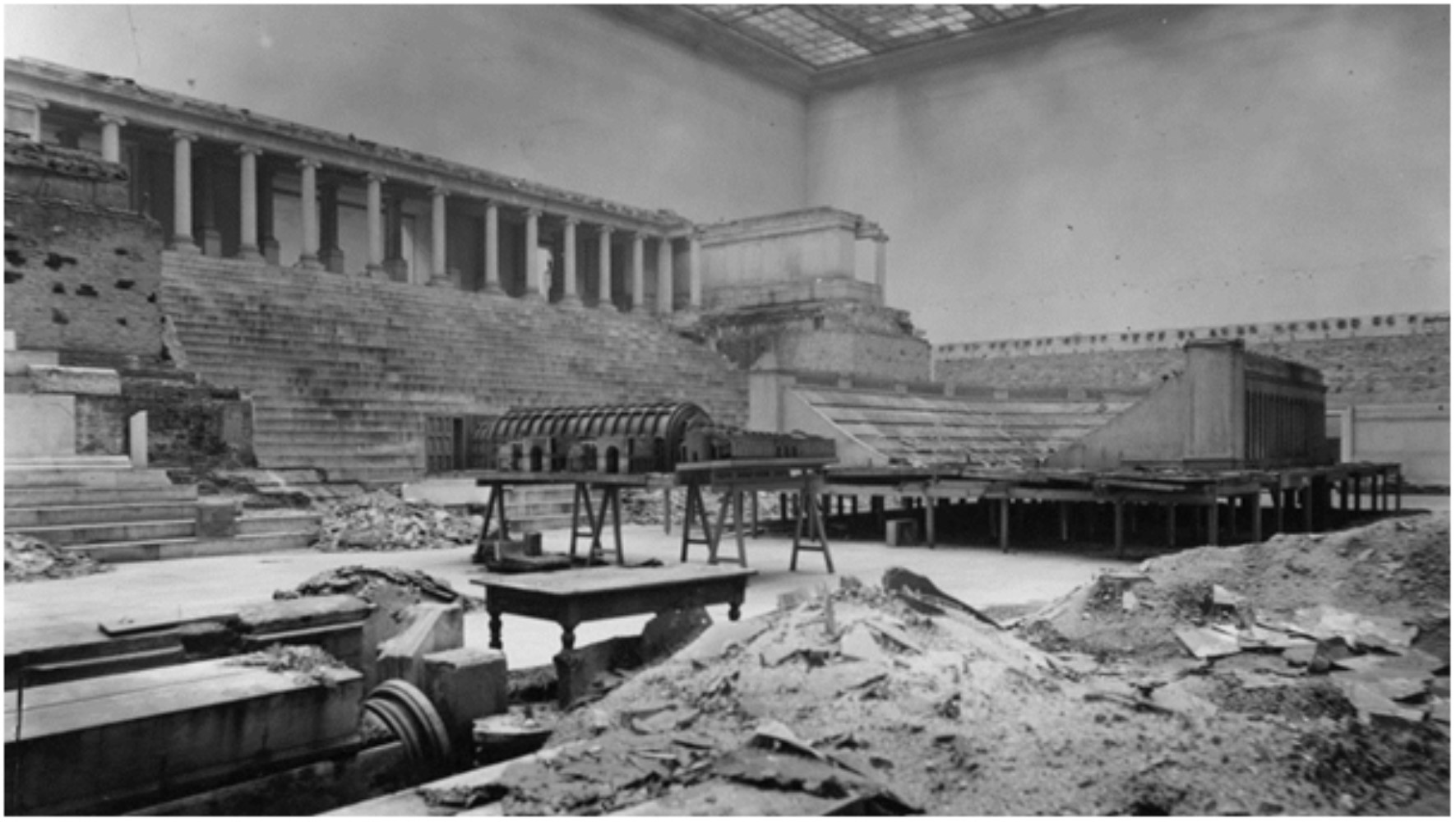
(The state of the Altar of Zeus and the Berlin Museum at the end of World War II, in 1945.)
The pictures of the Berlin Museum/Prison remaining from those days are heartbreaking. The building where it is claimed our artifacts are protected is no different from a ruin.
And our artifacts? The Anatolian marbles? Those damaged by bombs? What happened to them?
After the war, the Soviet Army, which took Berlin from the hands of the fascist Hitler, arrived and seized the Museum/Prison.
They loaded the Pergamon artifacts into wagons. They transported them by train to St. Petersburg (then Leningrad).
The Pergamon pieces stayed in St. Petersburg for 13 years. Who knows where and under what conditions?
Were they kept in crates, or were they left here and there? Were they accepted as war booty?
Should we call it exile, or captivity?
In 1958, they were sent back to Berlin by a political decision.
The Soviet Union officially returned the artifacts, including the Pergamon Altar, to the government of East Germany (DDR) at the time.
According to information provided by Italian jurist Prof. Andrea Gattini, the artifacts were received by Prof. Wilhelm Unverzagt, who had been the director of the Berlin Museum/Prison since 1931.
However, among those received, look at this, three crates full of artifacts that were taken to St. Petersburg in 1945 were missing. They had not been sent back or had disappeared.
Even though Prof. Unverzagt must have noticed this, he must have remained silent or been silenced in some way. The famous scientist did not make a sound.
Coincidentally, exactly one year later, he was awarded an honorary prize by the East German Government.
Afterward, the arriving artifacts were placed in the Berlin Museum/Prison, which was repaired after being destroyed in the war, and the Altar was recreated; its reconstruction was carried out.
The German authorities, who are passionate about keeping records and archiving, must have taken photographs of the Pergamon artifacts since the day they smuggled them.
They shared very few of these with the scientific world and the world public.
Moreover, they never provided any information or data to the Republic of Turkey.
They did not open their archives. They hid the inventory they created. They did not disclose all the documents and photographs to the public! They did not translate their publications into Turkish!
After all, the Turks wouldn't understand these anyway!
Moreover, they were shouting from the rooftops that they had bought them.
***
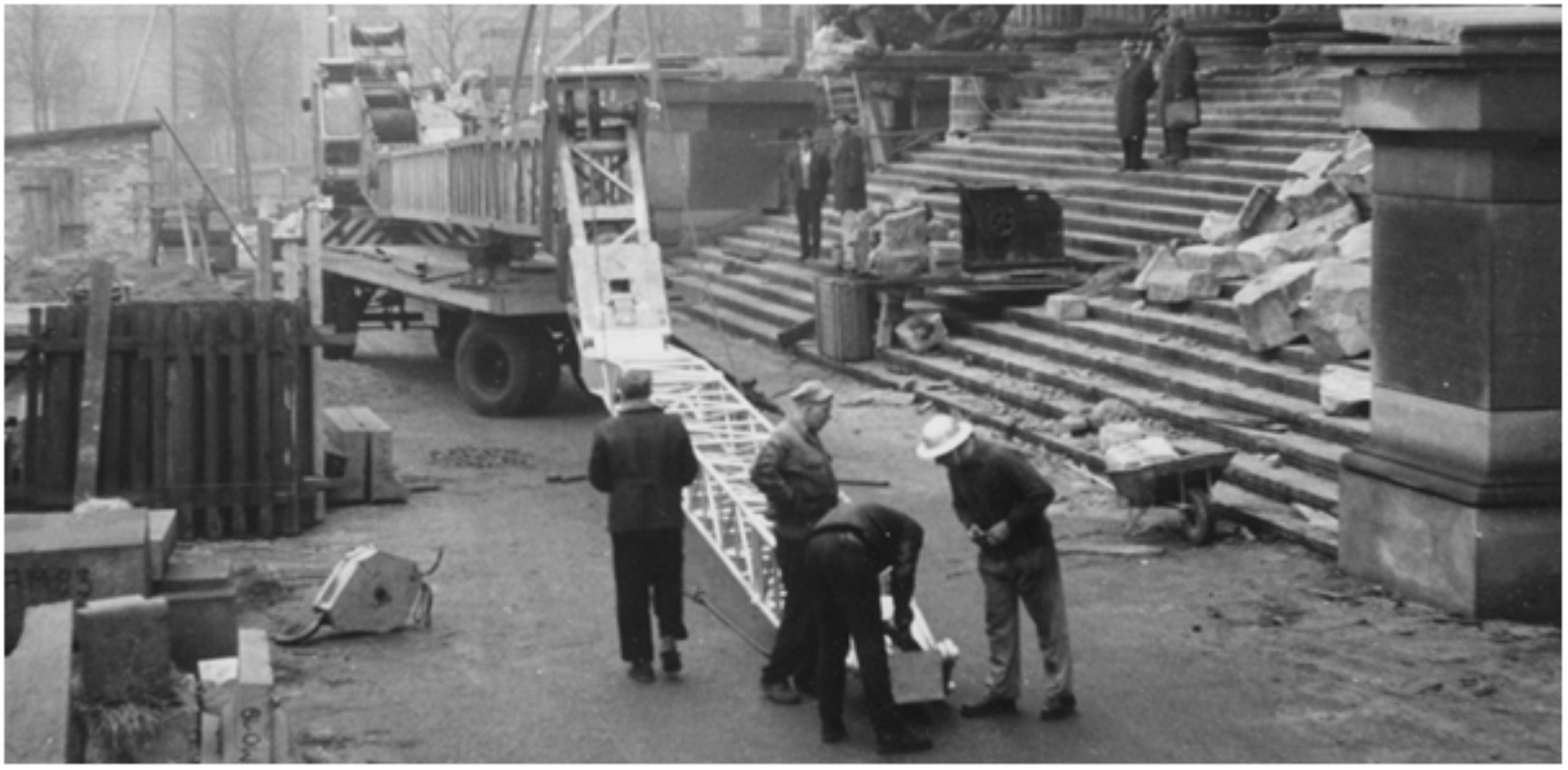
(Pergamon artifacts brought back from Russia in 1958 and placed in the Berlin Museum/Prison)
To place the marble reliefs back in their places on the walls of the Zeus Altar, which was recreated in the repaired Museum/Prison, they made use of the previous photographs and drawings of the Altar that they had in their possession.
They must have cataloged the pieces of the Zeus Altar one by one.
When mounting these artifacts back in their places, of course, those destroyed by bombs and lost on the roads could not be put in their known places.
Their places couldn't remain empty either!
One way or another, the world public had recorded their previous state and knew them!
The German authorities couldn't say “they were ruined by bombs, lost on the roads” either!
What to do!
Making imitations of the lost parts of the Altar by looking at the photographs they had and putting them in their previous places was a solution!
How?
The photograph taken in 1959 is a striking example of this.
In the photograph, it is seen that the pieces of the Zeus Altar that returned from Russia, the friezes, are being assembled in the Museum/Prison and placed in their known locations.
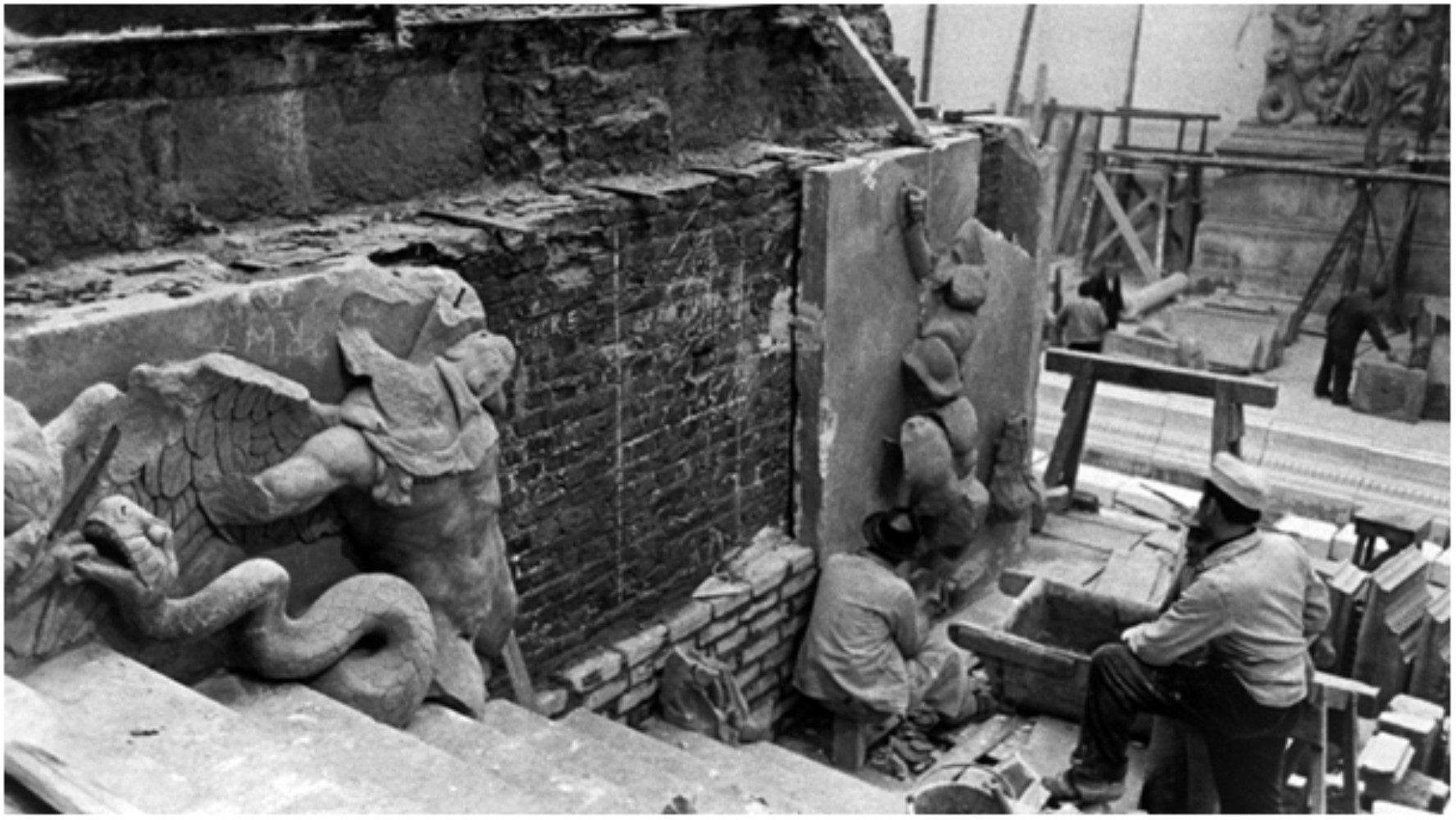
(Pieces of the Zeus Altar are being repositioned in the Berlin Museum/Prison.)
While building the southern flank of the stairs of the Zeus Altar, the clay imitation (cast) that was likely manufactured by looking at old pictures on the clay plate (frieze) is clearly visible.
Yet the originals of these were marble!
Where are the originals? Gone!
Dozens of friezes and statues like this must be “gone”!
If it is said, “Such a situation never happened, the friezes were not lost, these are not imitations but the originals,” then I challenge you!
This situation can be determined one by one today with modern techniques and electronic tools.
The damage suffered by the artifacts taken to Berlin as a result of the German smugglers' handiwork, either in Berlin or on the roads, can be brought to light.
All of these are indicators of the damage done to the Pergamon artifacts in Berlin in the name of protecting historical artifacts.
This situation is more than a cultural crime; it is a crime against humanity.
Time does not forget the wrongs committed!
An apology must be made to Pergamon and to humanity.
THE ZEUS ALTAR AND THE PERGAMON ARTIFACTS DO NOT BELONG TO COLD AND FOGGY BERLIN, BUT TO BEAUTIFUL PERGAMON. THEY MUST DEFINITELY COME BACK, THEY MUST RETURN HOME!
(Sources: https://www.preussischer-kulturbesitz.de/en/priorities/provenance-research-and-issues-of-ownership/wartime-losses/cultural-assets-relocated-to-russia-as-a-result-of-the-war.html?
Andrea Gattini, Restitution by Russia of Works of Art Removed from German Territory at the End of the Second World War. EJIL, European Journal of International Law. 1996. p. 79. Footnote 41. /// I thank my dear friend Prof. Ülgen Zeki Ok for alerting us to this situation.)
Sefa TAŞKIN
12.10.2025
Karşıyaka-Bergama/İzmir
Most Read

Striking picture for Özgür Özel's 'New Party'
Özgür Özel gives a dated response regarding the number of resignations

The PKK opening and Özgür Özel’s path!..
Forest fire in Antalya brought under control

How did the newspapers view Özgür Özel's farewell to the CHP?

He killed his wife by slitting her throat: Their children witnessed the moments

What did the CHP do?

Özel’s new party move in the world press

The New CHP, against CEHAPE

Fire at TUSAŞ engine factory in Eskişehir under control