



We are living in an era where the effort to turn every entity into money is intensifying.
In this environment, money is seen as the most important value.
While the great poet Shakespeare said of gold, which replaced the currency of ancient times, "It is the whore of humanity," the great philosopher and revolutionary Karl Marx said, "Gold buys everything."
Individually, the phenomenon called prosperity or well-being is measured by the abundance of objects purchased.
Those with money can access everything.
The saying "Money cannot buy happiness," which was the subject of a song in the 1970s by Suat Sayın, who composed music in the genre known as Arabesque in our country, carries no meaning other than being a longing in our day, where money is almost worshipped.
No one is content with "a morsel and a cloak" anymore.
The capitalist system, which thinks of nothing but profit, breathes through the circulation of money.
On the other hand, in terms of the general economy, everything purchased is expected to be a means to purchase something else.
Everything purchased is used as an element of power and dominance.
In this context, "nature's stone and soil" are seen as raw materials that will make money.
This is why there are attempts to obtain gold and silver by mixing soil and crushed rocks with cyanide and sulfuric acid, poisoning them in the process.
The environmental disasters and loss of human life experienced in İliç, Erzincan, and Fatsa, Ordu, are all for the sake of more money.
The fact that drinking water, the most natural human necessity, is seen not as a source of health but as a source of profit, and is bottled and turned into a commodity, is a terrifying manifestation of the point capitalism has reached.
The sacrifice of historical assets like Bergama-Alianoi and Şanlıurfa-Halfeti, and unique natural environments like the Black Sea valleys, to short-lived irrigation and energy dams is another indicator of the dimensions this situation has reached.
For years, many environmentally conscious people in our country have been waging long-term struggles to ensure such initiatives do not harm nature.
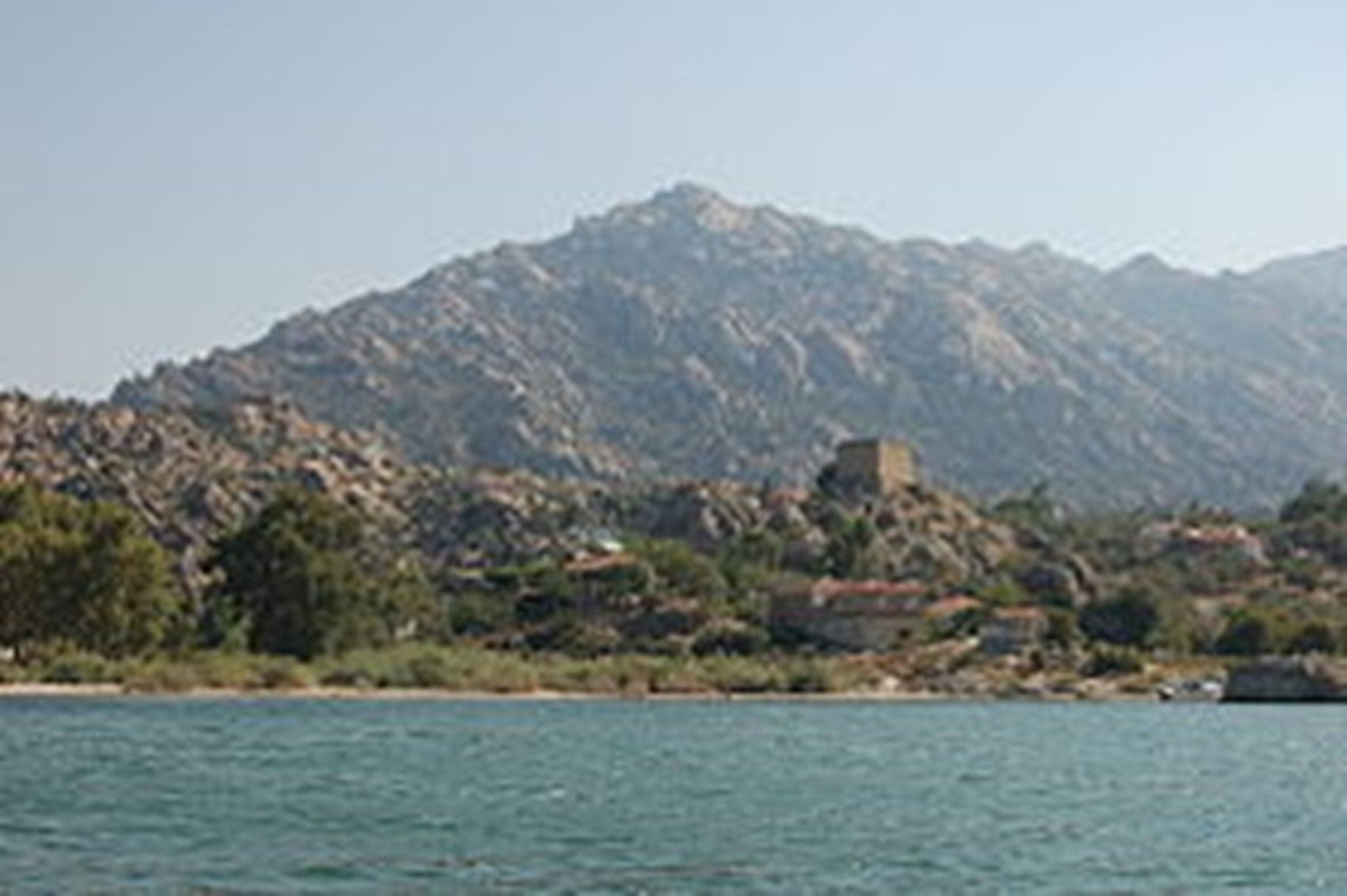
(Beşparmak-Latmos Mountains and Lake Bafa)
***
The latest example of initiatives that will increase the damage caused and to be caused to the environment is taking place in the historical Latmos Mountains, which we call Beşparmak, located between the provinces of Aydın and Muğla, and which currently has its back to Lake Bafa.
The Turkmen nomads who settled on this mountain, which truly resembles fingers with its many pointed peaks when viewed from afar, called the Latmos Mountains of antiquity the "Beşparmak (Five Finger) Mountains."
This region, which is one of the most unique geographical and historical heritage sites in Anatolia due to its location, is distinct enough to be a "National Park" that must be protected with its nature.
The "Sweetgum" (Sığla) trees around Lake Bafa, from whose trunks liquid used in cosmetics and pharmacy is obtained, are the endemic plants of this place, specific to this area.
The Beşparmak/Latmos Mountains, which also contain pine nut trees and are generally covered with maquis, are a home for wildlife. It is even reported that the "Anatolian leopard," which is said to be extinct, exists in this vicinity.
These assets are natural values that must be protected in our increasingly polluted world and country.
***
In ancient times, the Aegean Sea entered towards the land where the Büyük Menderes River flowed into the sea, forming an inner bay on the edge of the Latmos Mountains.
On the capes of this bay, opposite the island of Samos, the famous cities of Priene and Miletus, by their modern names, were founded.
The sediments carried by the Büyük Menderes into Anatolian lands eventually closed the mouth of this bay, and the inner bay turned into the lake we call Bafa today.
The Latmos Mountains, opening to the sea, water, and the Anatolian plateaus, became a home for people for thousands of years due to the convenience of their location.
In recent years, German archaeologist Anneliese Peschlow, who has been conducting excavations in the region, found ancient pictures drawn on rocks on the mountain dating back to 6000 B.C.
In the 170 pictures she recorded, she identified about 500 human figures, in addition to many ornaments, signs, and symbols. Among these, animal pictures were almost non-existent.
The presence of shapes resembling humans, symbolizing men and women together in these pictures, was thought to indicate the existence of family life in that region during that period of prehistory.
So, people had abandoned nomadism and moved to a settled life.
They were not individuals, but members of a community.
The fact that these drawings on the rocks of the Latmos Mountains show such a social situation is a unique phenomenon.
Examinations conducted to date report that these unique rock paintings were made with a type of red paint obtained by mixing iron oxide found on the mountain with water.
Traces from such ancient times, from 6000-5000 B.C., 8000 years ago, are very rare on the Aegean coast.
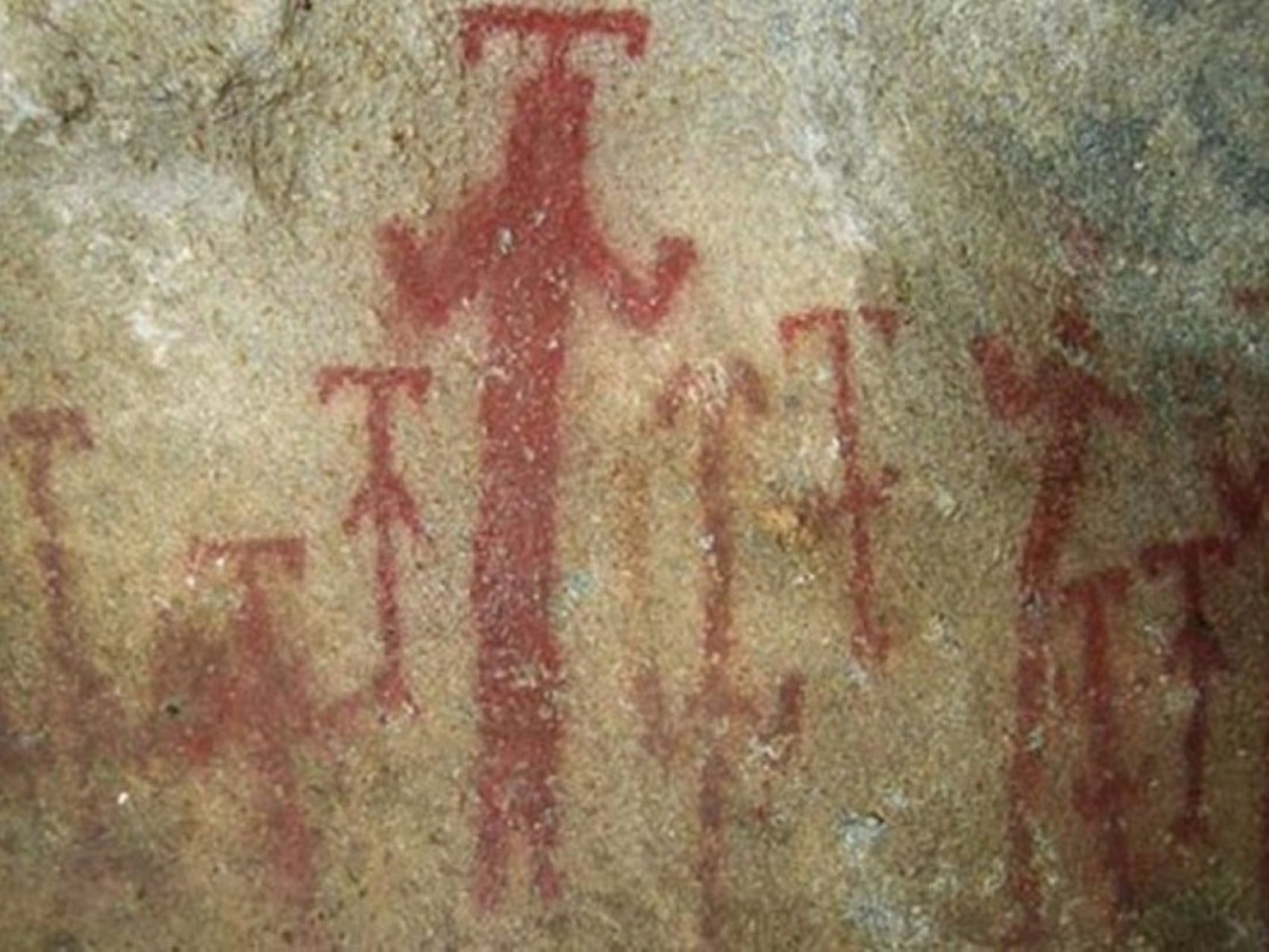
(Prehistoric rock drawings in the Latmos Mountains)
***
Along with these, in the eastern part of the Latmos Mountains, in the region between the modern cities of Koçarlı and Milas, hieroglyphic inscriptions carved into rocks, also discovered by archaeologist A. Peschlow, bring another period of Aegean history to light.
In the section of the Latmos Mountains called Suratkaya, inscriptions carved onto a rock formation that also has a very interesting appearance help illuminate a period of Western Anatolian history that has remained in the dark.
These hieroglyphic inscriptions, found at the location called Suratkaya, which dates back to approximately 1300 B.C. and is located 1000 meters above sea level, carry an interesting uniqueness in this context.
It is thought that the rock inscription written in hieroglyphs in Latmos contains the names of kings, lords, and noble people who spoke the language of the Luwians, one of the oldest peoples of Anatolia, or a similar language, and had Luwian names, who existed in these lands in Western Anatolia during those years.
According to another approach, these pictorial writings were drawn by the hunters of that era who roamed the area.
Scientists such as John D. Hawkins, A. Peschlow-Bindokat, Susan Herbordt, Rotislav Oreshko, and Ilya Yakubovich are trying to decipher and interpret the meaning of the signs and expressions in the Suratkaya inscription.
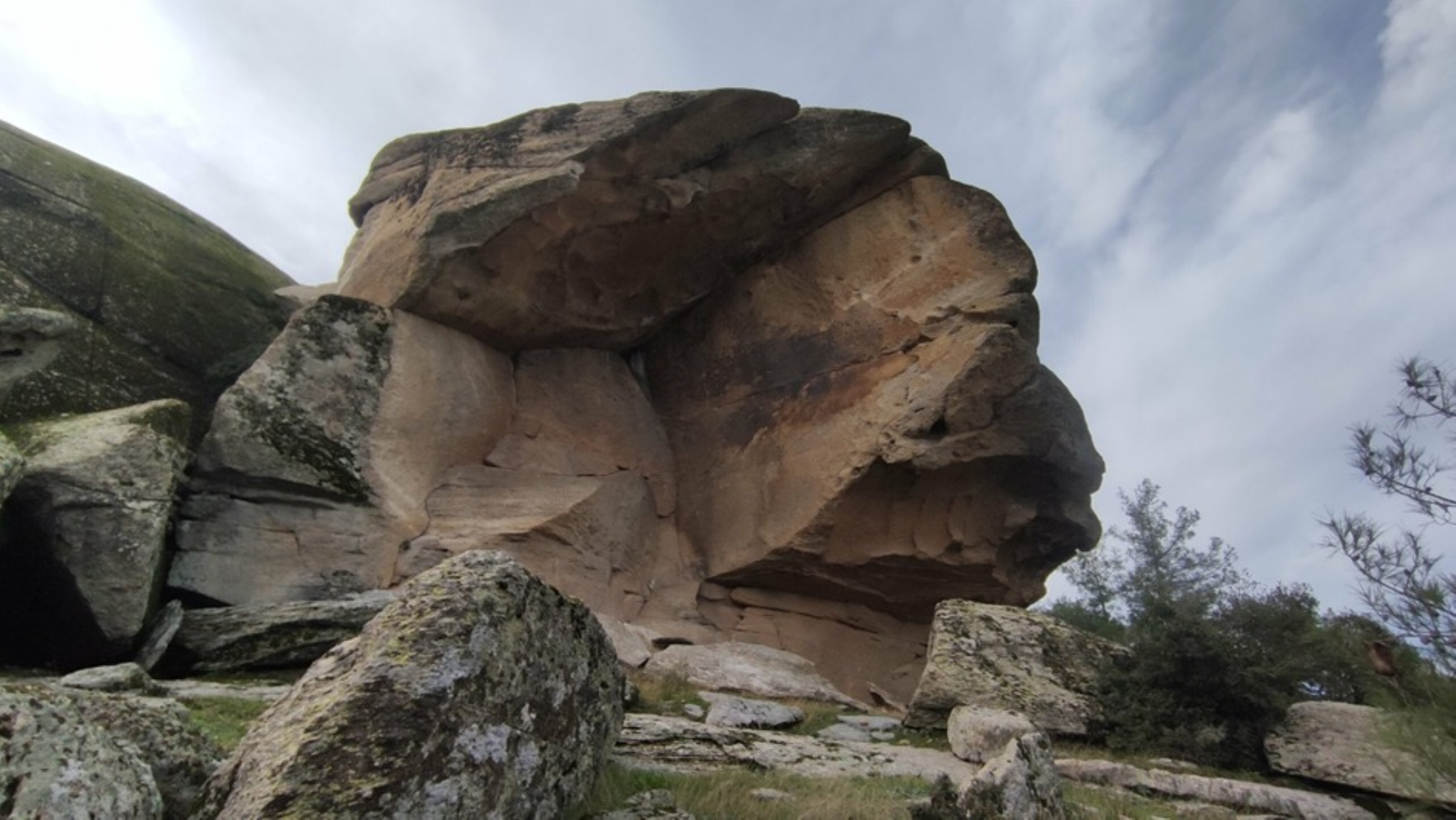
(Latmos-Suratkaya with Luwian/Anatolian Hieroglyphs)
***
2400 years ago, the lands of this region belonged to the Kingdom of Mira.
The people of this country were neither Roman nor Greek. They were the indigenous people of Western Anatolia.
This local kingdom was an administration affiliated with the Hittite State, centered in Hattusa (Boğazköy-Çorum) in Central Anatolia, which ruled Anatolia with an oppressive, imperial power.
The people of Mira had suffered greatly from the cruel Hittite administration.
Tarkaşnawa, the grandson of Kupanta-Kuranta, whose name is thought to be mentioned in the Latmos-Suratkaya inscriptions, likely marked the northern border of the Mira Country, of which he was king, with the hieroglyphic inscription he had carved into the Karabel pass near Kemalpaşa, İzmir.
In fact, the name "Kupanta-Kurunta" can be associated with the "Deer God" in the religious belief of the indigenous Luwian people, and the name "Tarkaşnawa" with being the "Owner of a Donkey and Mule Caravan."
The 8000-year-old drawings in the Latmos Mountains and the 4000-year-old pictorial writings in Suratkaya and the Karabel pass in İzmir are among the oldest known prehistoric and historical remains and documents on the Aegean coast today.
It is clear that all these visual and written traces are decisive in understanding the unknown history and culture of Anatolia.
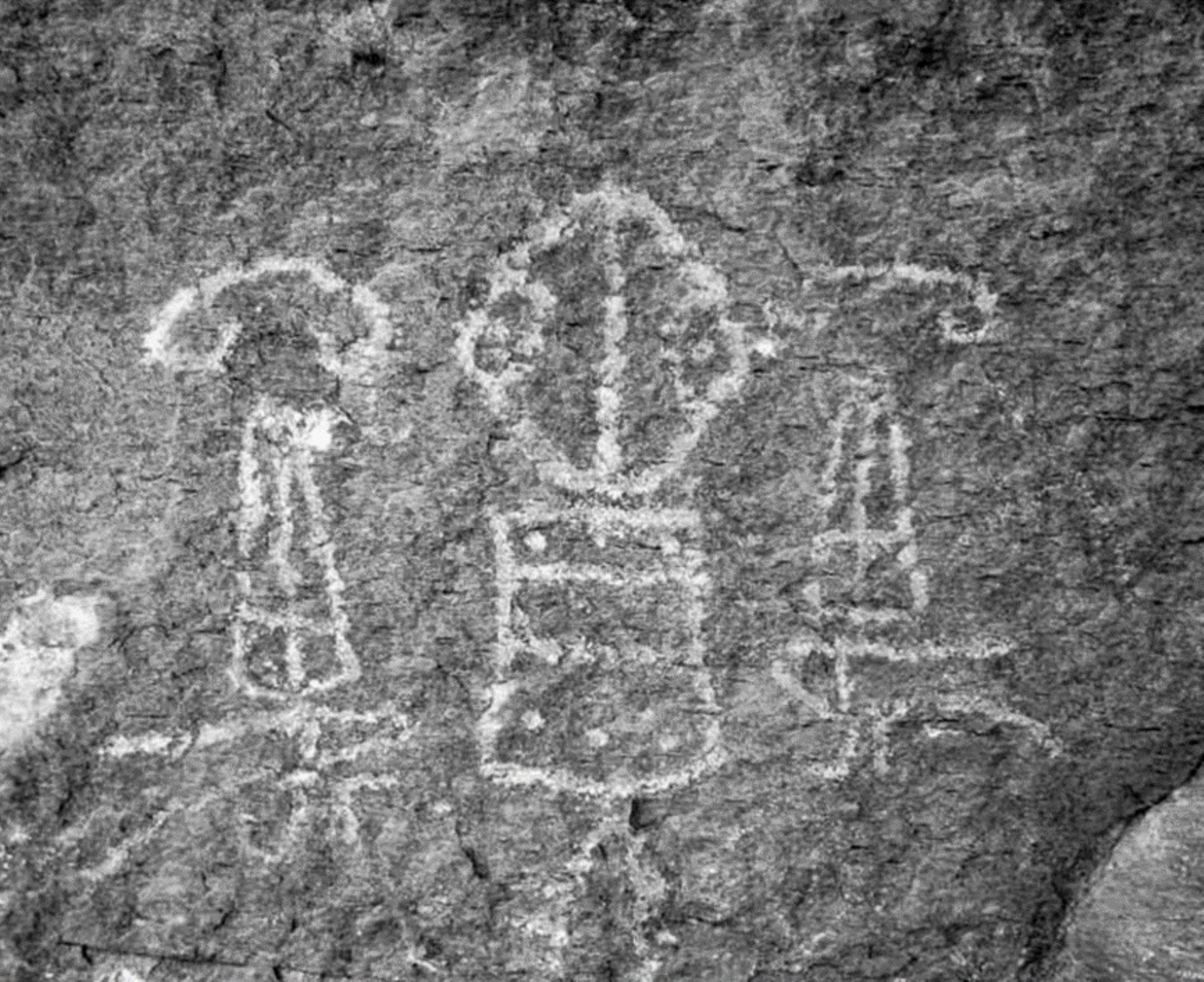
(Latmos-Suratkaya Luwian/Anatolian Hieroglyphs)
***
While we have such a valuable and unique heritage remaining from the past, and while transforming the region that carries this heritage into a legally protected natural park is a requirement of reason and human responsibility, this region is also under the attack of "greed for money."
The Latmos Mountains, especially the area where the "prehistoric rock paintings" are located, are now surrounded by stone quarries.
Many companies have swarmed into this historical region like locusts to extract substances called "quartz, quartzite, feldspar, kaolin" from the soil in these quarries, which are considered minerals.
These substances are used especially in the glass, ceramic, and paint industries.
These are the basic materials for the bathroom fixtures we know; the making of porcelain, toilet bowls, bathtubs, and wall and floor ceramics.
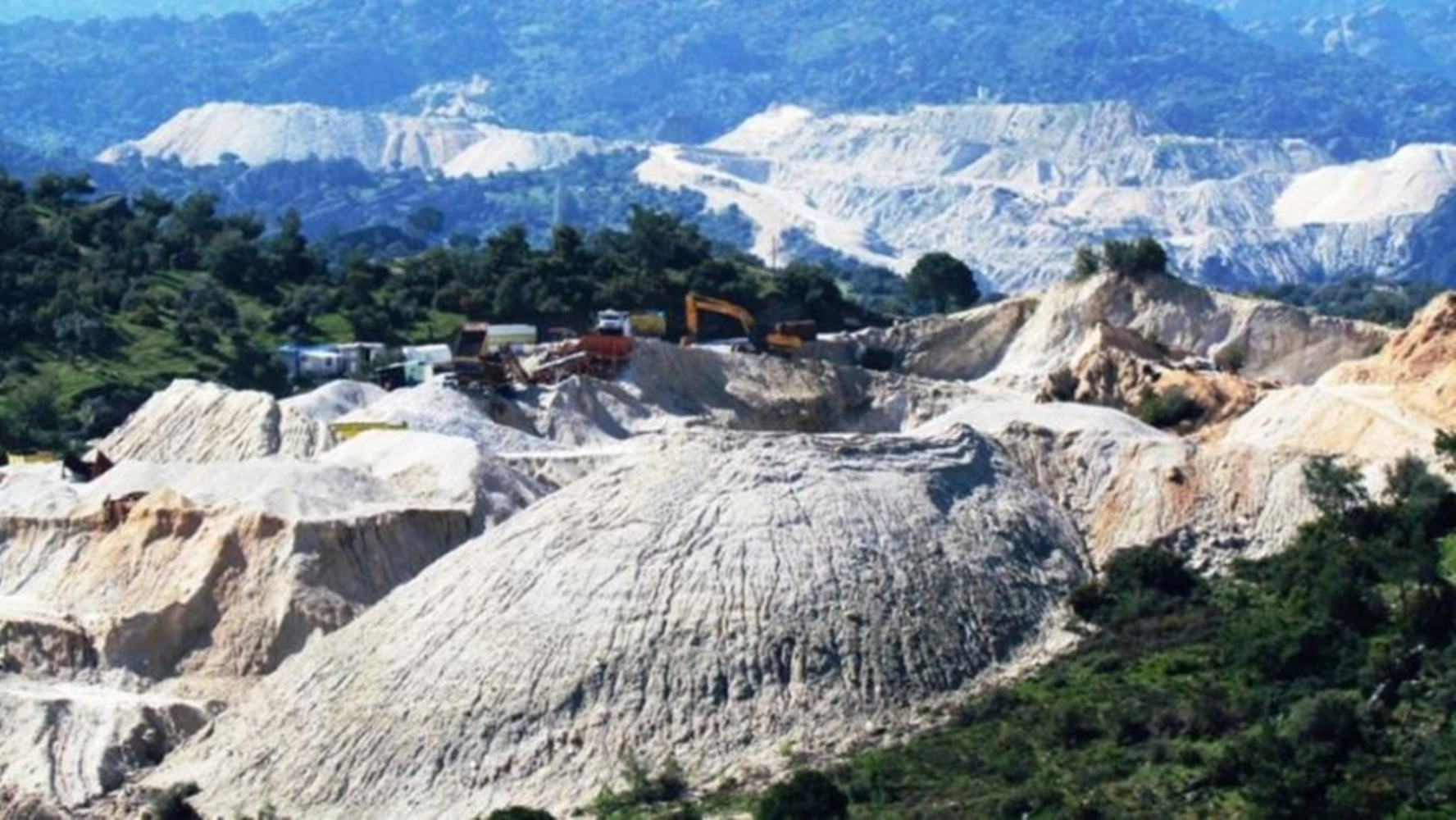
(Ecological destruction/nature devastation in the Beşparmak/Latmos Mountains)
Large mining companies such as Polat, Eysim, Esan, Kormat, and Kale are the ones besieging the Latmos Mountains.
Protecting the magnificent prehistoric paintings in this region and the very old written documents of the Aegean that have managed to survive to the present day in Western Anatolia is a great responsibility.
And it is necessary and mandatory for humanity and our country.
As this is the case, it is clear that these substances, which are found in this region and used to make bathroom and toilet fixtures, and which are abundant in nature, can be obtained from other places.
In this segment of universal history we are living in, protecting these unique values is the debt of today's people and "Public Administrators, the State" to the World that created them and on which they live.
The 8000-year-old prehistoric rock paintings and the 4000-year-old very, very old historical inscriptions of the Aegean, this unique and unparalleled heritage of humanity, should not be sacrificed for "bathroom and toilet tiles."
It should not be forgotten that it is the values of this land, of this world, that make a person both wealthy and powerful.
Sefa Taşkın
23.06.2024
Bergama-Dikili-İzmir
Most Read

Striking picture for Özgür Özel's 'New Party'

The PKK opening and Özgür Özel’s path!..

How did the newspapers view Özgür Özel's farewell to the CHP?

He killed his wife by slitting her throat: Their children witnessed the moments

What did the CHP do?

Özel’s new party move in the world press

The New CHP, against CEHAPE

Fire at TUSAŞ engine factory in Eskişehir under control

From self-efficacy to despair

Kılıçdaroğlu's first message on Özgür Özel's new party announcement