



CYANIDE DIARIES FROM BERGAMA-21
Myths are among the oldest products of human thought in history.
They do not merely recount the legendary tales of ancient gods and heroes; they also interrogate human nature, social order, the mysteries of the universe, and moral principles.
In this respect, myths/mythological stories are not just remnants of the past, but deeply meaningful narratives that also speak to the people of today.
For example, in Hellenic narratives, Narcissus is a young man known for his extraordinary beauty. However, he is arrogant and narcissistic.
Many fall in love with him, but he loves no one.
To punish this arrogance, the gods make him fall in love with his own reflection in the water.
Unable to reach his own reflection, he withers away and eventually turns into the 'narcissus' flower.
The lesson to be learned from this story is that extreme egocentrism detaches the individual from reality and drives them toward loneliness.
The modern diagnosis of "narcissism" also stems from this narrative. "Self-admiration" corrodes both individual and social relationships.
In another Greek myth, Icarus ignores his father's warnings and flies too close to the sun, causing his wax wings to melt and leading to his fall.
The message this story gives us is that immoderate self-confidence and turning a deaf ear to warnings can have destructive consequences. It must not be forgotten that science, technology, and power have their limits.
Although mythological narratives may seem imaginary, they touch upon realities.
The warnings to be drawn from extraordinary stories can serve as a compass for an individual both in knowing themselves and in establishing relationships with society.
Engaging with mythology means looking not only at ancient gods and deities but also at the gods, monsters, and heroes within ourselves.
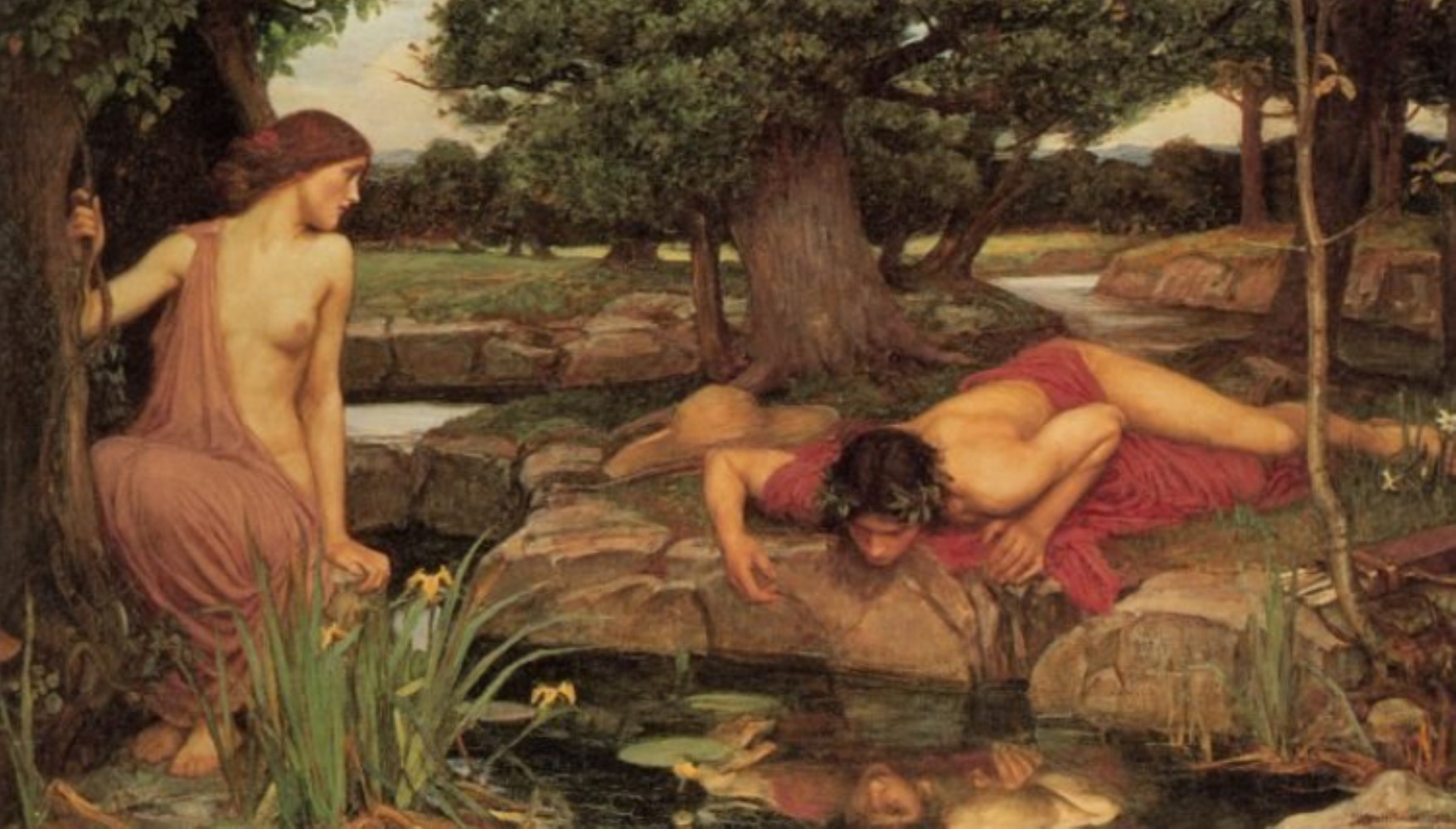
(Narcissus and Echo. John William Waterhouse (1898) Representative Painting)
***
Some legends, also told to children, are well-known and frequently recounted.
The story takes place in the land of Phrygia, which was located in the western and central regions of Anatolia in ancient times.
At that time, Phrygia covered approximately the areas around present-day Afyonkarahisar, Eskişehir, Kütahya, and Ankara.
The Phrygians, of Thracian origin, arrived and settled in Anatolia starting from 1200 B.C. and spread as far as Manisa.
They experienced their golden age in the 8th century B.C. (2800 years ago).
Their capital was Gordion, near the Polatlı district of Ankara.
You know, the Gordion of Alexander the Great, who is said to have cut the so-called unsolvable knot there with a single stroke of his sword.
Midas was the most famous king of Phrygia.
He was both a real Anatolian king who lived in history and a mythological figure who became the subject of some of the most universal cautionary tales in human history.
Let us see what Midas's stories—tales passed down from generation to generation that most people know but ignore—can tell us, and how they might warn us or encourage us to think differently!
Let's refresh our memories!
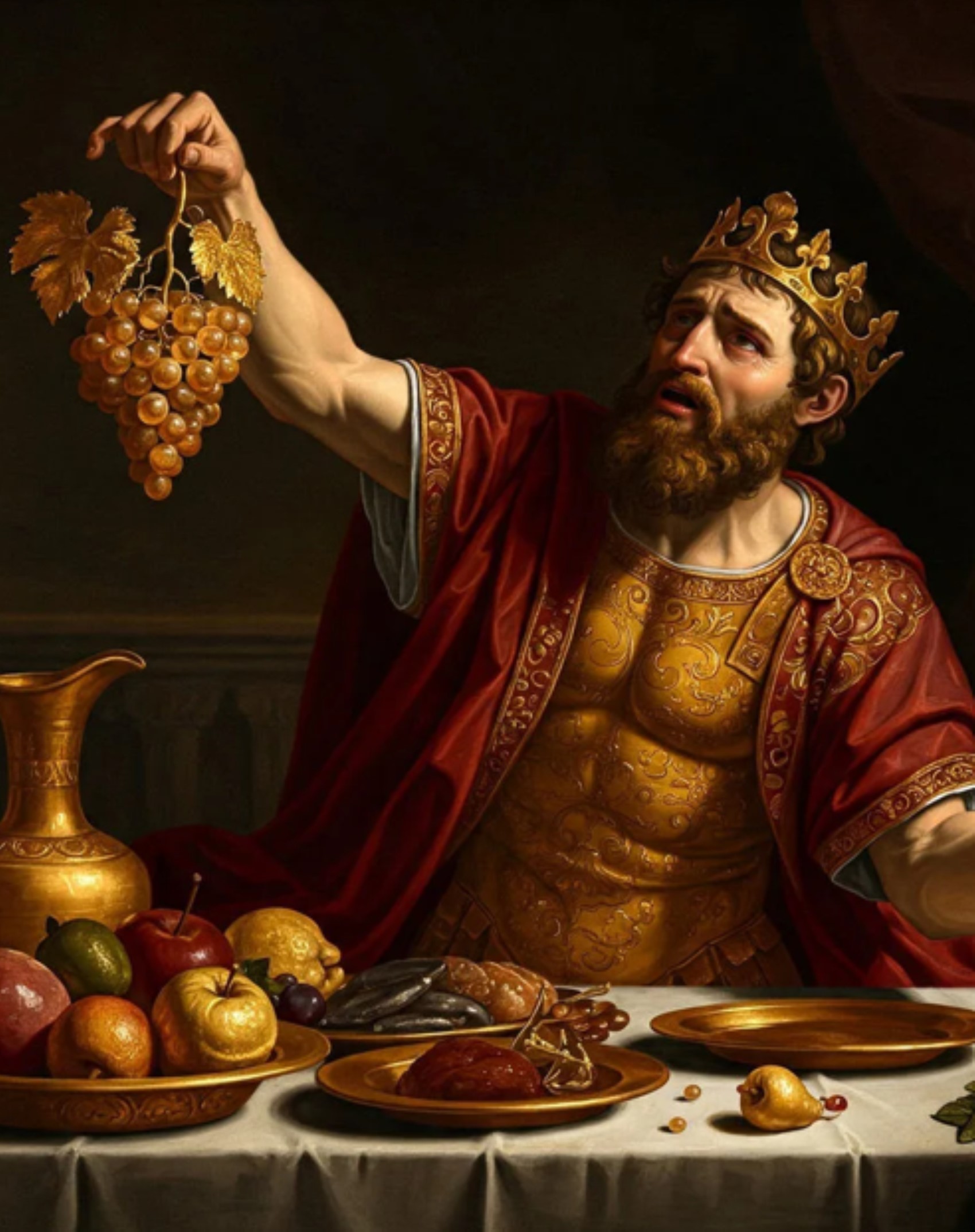 (Midas's golden touch turning fruit into gold. A modern AI-generated illustration)
***
One day, King Midas of Phrygia hosts and entertains Silenus, the tutor of the god Dionysus, whom he found in a drunken state.
In the Aegean religion of antiquity, Dionysus was worshipped as the god of art, grapes, wine, and ecstasy.
Silenus was also a mythical creature, an elderly satyr (a mythological wild forest being) with the upper body of a human and the lower body of a goat.
Mythology also introduces him as a wise figure.
Silenus is seen as one of the first nature philosophers:
He suggests to humanity that they should "realize their mortality and unite with nature."
It is said that Silenus most likely raised the god Dionysus in the countryside of the ancient city of Nysa (Nysa ad Maeandrum), near the present-day Sultanhisar district of Aydın.
He does not just "raise" him; he teaches him to transcend the limits of consciousness and to feel nature as a sacred entity.
Pleased with Midas's hospitality, Dionysus asks the King of Phrygia to make a wish in return.
Who could say no to such an offer!
And of course, King Midas too!
However, Midas is greedy and demands that everything he touches turns into gold.
The god Dionysus grants this wish.
At first, Midas is delighted.
The kingdom is not enough, the wealth he possesses is not enough; how wonderful, he will become even richer!
Thus, every stone, object, and even the flowers Midas touches turn into gold.
What splendor!
However, he soon realizes that this power is harming him.
The food, the drink, everything he needs turns into gold. Bright yellow!
Yet, if you threw gold to dogs, they wouldn't eat it!
The great King begins to writhe in hunger and thirst.
One day, when he hugs his beloved daughter, it happens!
In an instant, before his very eyes, she freezes and turns into a lifeless golden statue.
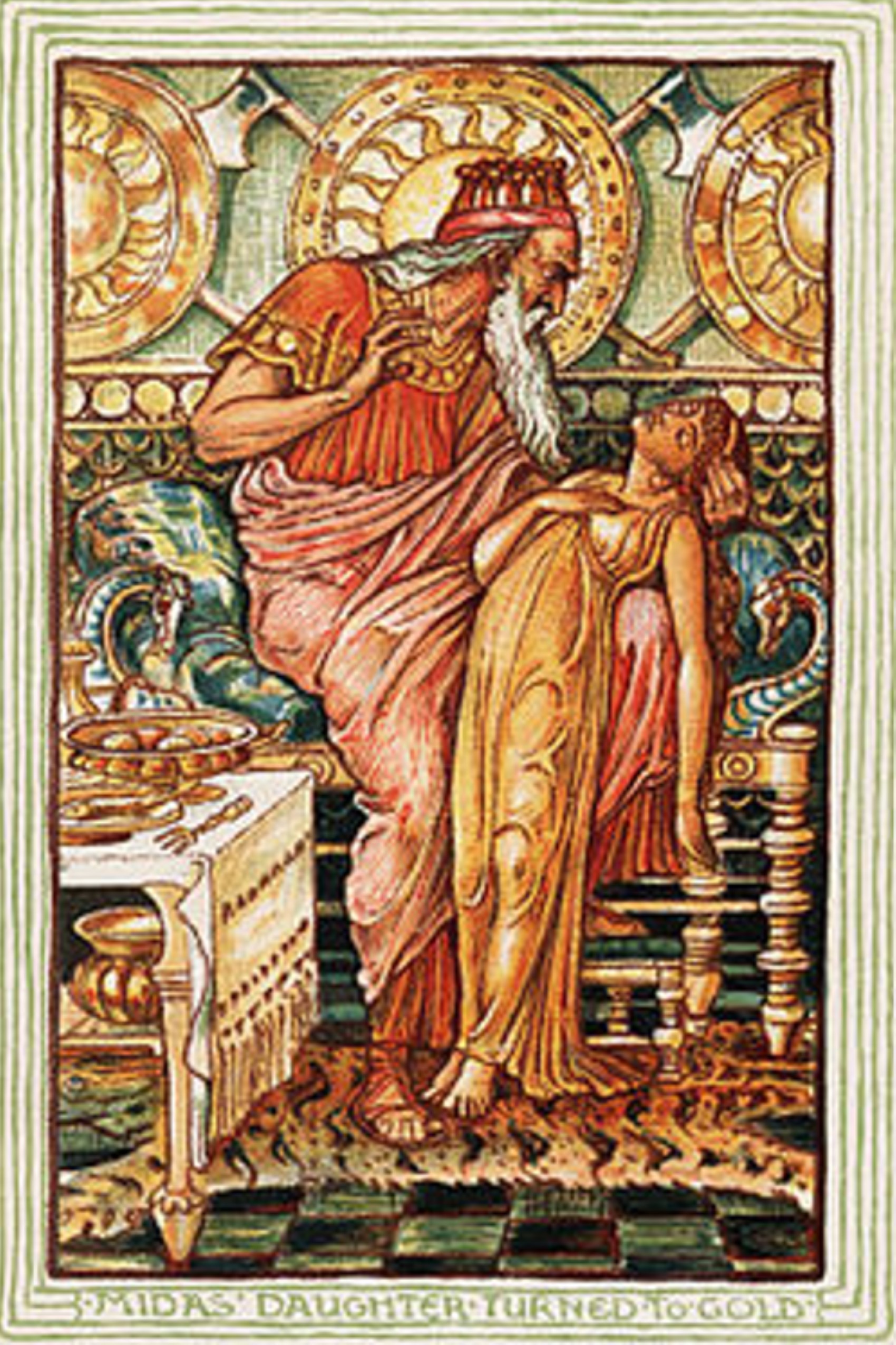
(King Midas and his daughter who turned into gold. Walter Crane (1893) Representative image)
His daughter's warmth, smile, voice, and affection are gone. In their place stands a cold, shining heap of gold.
King Midas, albeit late, realizes with great regret what he has done.
He runs, goes, and begs the god Dionysus: "Save me from this cursed gold!"
Dionysus smiles and nods at Midas, as if to ask if he understands. He pities the king's desperate state and sees that he has learned his lesson.
To be freed from this deadly curse of gold, he tells him to bathe in the Pactolus River (modern-day Sart Stream) near Sardis, located close to Salihli, Manisa.
Midas goes to the river, enters the water, loses that "cursed" power, and returns to his former self.
According to the legend, the sands of the river have shone like gold ever since that day.
While this is a moral tale, it also alludes to the fact that gold particles were found among the pebbles of the Pactolus (Sart) River near Sardis, where the first gold coin in history is said to have been minted.
Perhaps these accounts also contain an indirect reference to Sardis, which is accepted as the place where the first gold coins/money were produced.
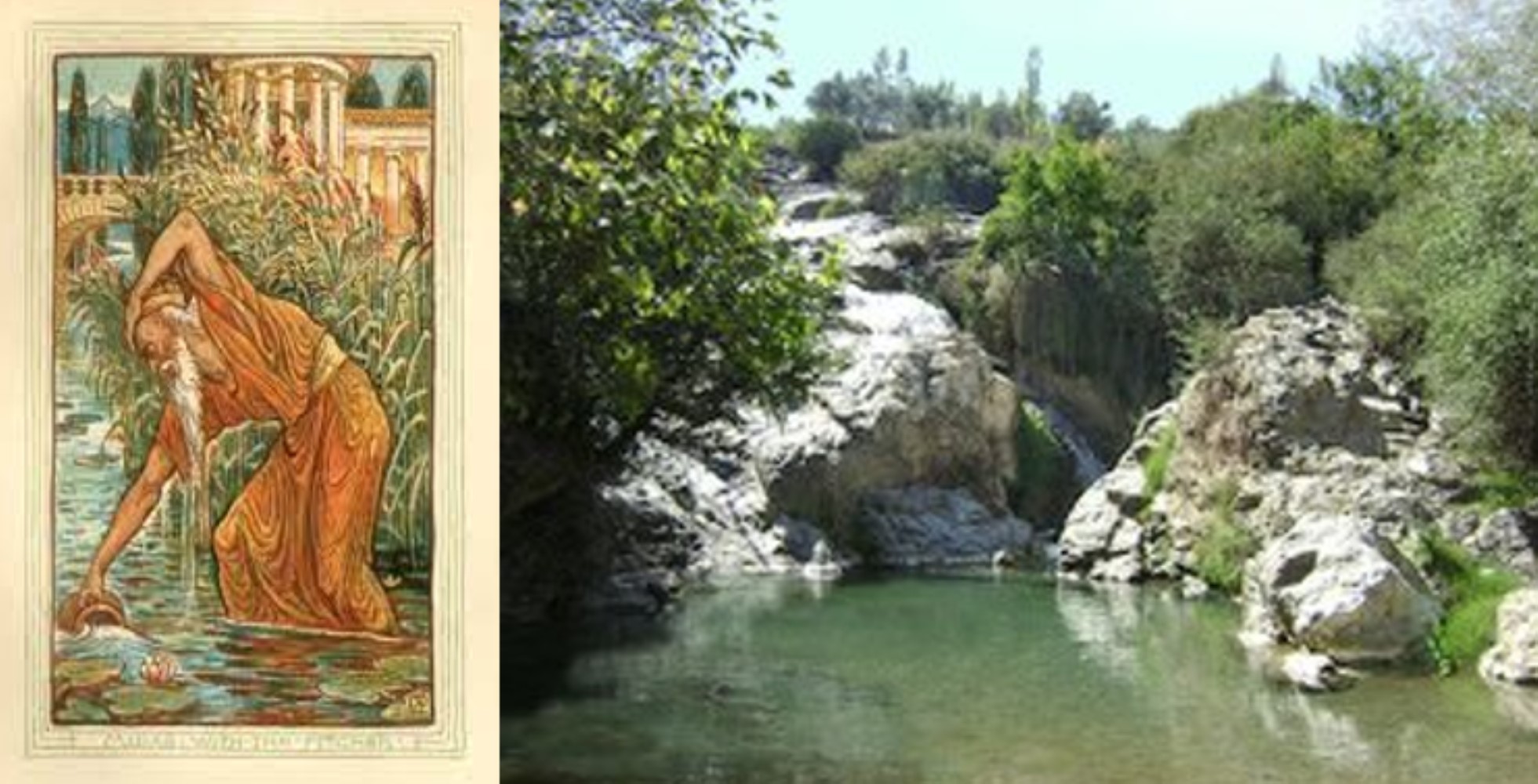
(Midas cleansing himself in the Pactolus River by Walter Crane (1893). Representative image and the modern-day Pactolus/Sart Stream)
***
However, Midas's test is not limited only to "touching"; in another legend, he is tested this time by "hearing."
According to mythology, one day Midas serves as a judge in a musical contest between Apollo, the god of light and prophecy, and Pan, the goat-footed god of the fields and shepherds.
He prefers the wild sound of Pan's flute over the perfect melody of Apollo's lyre.
Apollo is enraged by this decision; because Midas has opened his ears not to beauty, but to his own interests, his lust, and the noise.
Upon this, the god gives Midas an exemplary punishment: he turns his ears into "donkey" ears.
Now, Midas is the owner of hands that can turn everything into gold, but ears that cannot hear the truth.
Those ears are the symbol of a human who ignores the words of the wise Silenus and the warnings of Dionysus, choosing instead to listen only to the sound of gold.
The King tries to hide his shame from others; his barber cannot bear the secret and whispers it to the earth: “King Midas has donkey ears!”
The wind carries that secret everywhere.
This second Midas story describes the human tendency to hide the truth and suppress the voice one does not want to hear.
It is the completion of eyes blinded by gold with ears that can no longer hear the truth.
In today's world, too, self-interest, political and economic benefits are once again enlarging those great ears of Midas.
Not hearing the truth is as great a blindness as not seeing it.
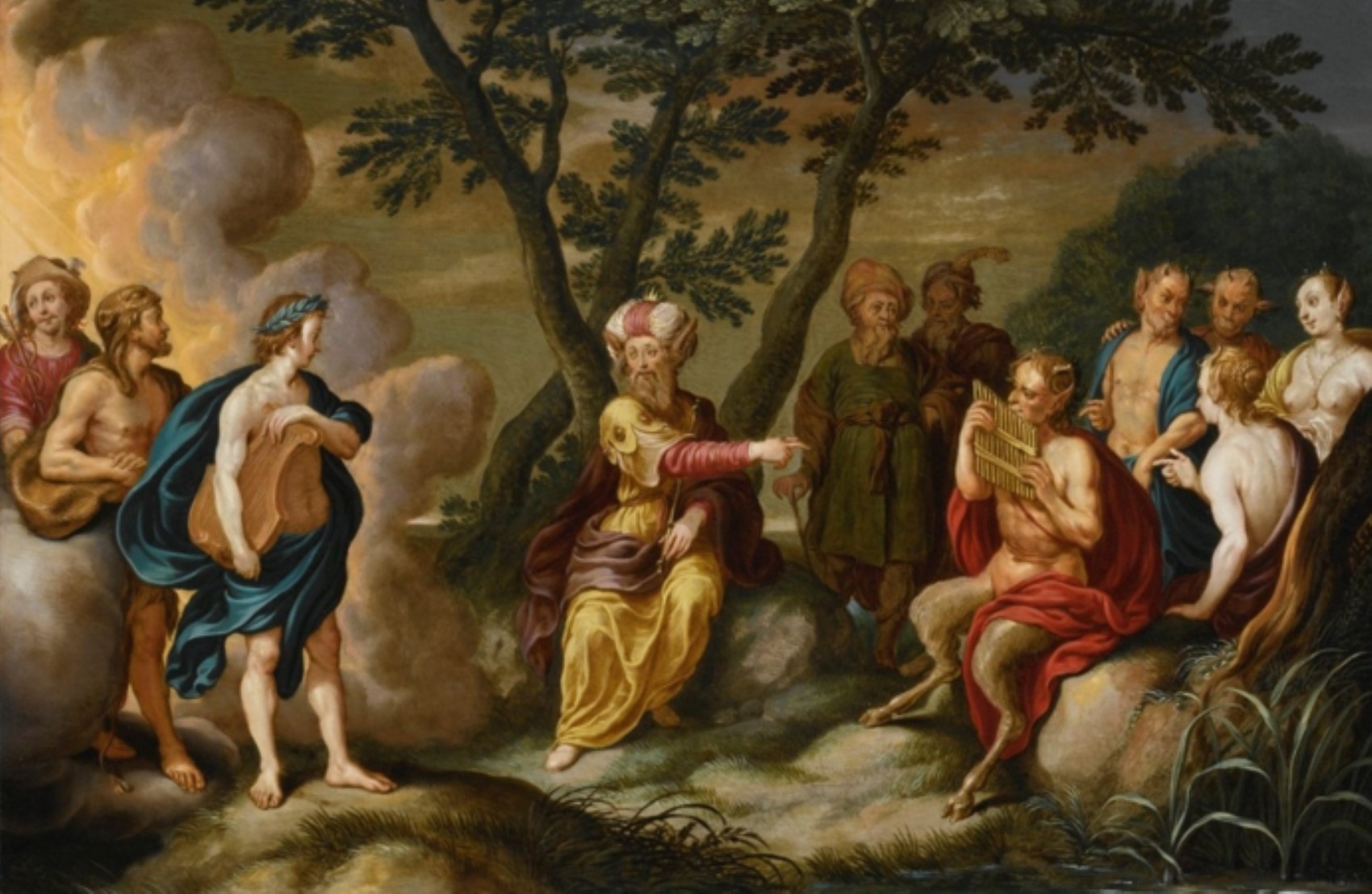
(Midas acting as a judge in the contest between Apollo and Pan. Hans von Aachen (1590-1600) Representative image)
****
So, can what this legend tells us help us draw inferences about the socio-economic environment we are experiencing today?
Do the environmental catastrophes that savage capitalism, which has reached the point of almost worshipping gold, is dragging humanity toward, have any similarities to what happened to Midas in these stories?
Could it be a coincidence that this form of capitalism, which is trying to extract gold from ore-bearing soil using cyanide and sulfuric acid all over Turkey and the world—causing great harm to nature and humanity in the process—reminds us of what Midas experienced?
“In the story, Midas wants everything he touches to turn into gold; he wants to possess everything.”
“The capitalist system, especially savage capitalism, aims for constant growth and profit increases in every sector. Its desires and behaviors have no limits.”
“Midas’s granted wish turns into a disaster in a short time.”
“The overproduction, resource consumption, and environmental damage caused by savage capitalism lead to irreversible crises.”
This narrative might lead one to think that the drive of this economic system to increase wealth without limit has become a force that threatens humanity's living space, a situation that is being concretely experienced today through ecological destruction and the climate crisis.
This legend is not merely a tale of the past; it carries profound symbolic meanings for today's world, especially for the modern capitalist system.
The system, which strives to obtain and hoard gold out of a greed to sustain its existence and limitless wealth, is the primary cause of the pollution and negative consequences brought about by cyanide-based gold mining worldwide.
The worship of gold and the desire to increase one's power—Midas's wish to 'turn everything into gold'—aligns perfectly with the logic of limitless production and consumption inherent in modern savage capitalism.
The capitalist system encourages the commodification of nature, labor, time, and even human relationships.
Just as Midas lost the essence of life by turning his food and loved ones into gold, the modern order's tendency to measure everything by market value severs humanity's connection to meaning.
Much like Midas's donkey ears, it fails to hear the voice of universal beauty, turning instead to coarseness; it does not hear the cries of resistance or the opposition of people against destruction and extinction.
Its massive antennas, satellites, and myriad communication tools are like the ears of Midas.
This situation fits perfectly with the problems caused by the 'cyanide octopus'—a term representing the sum of toxic gold companies—that has been unleashed upon the world.
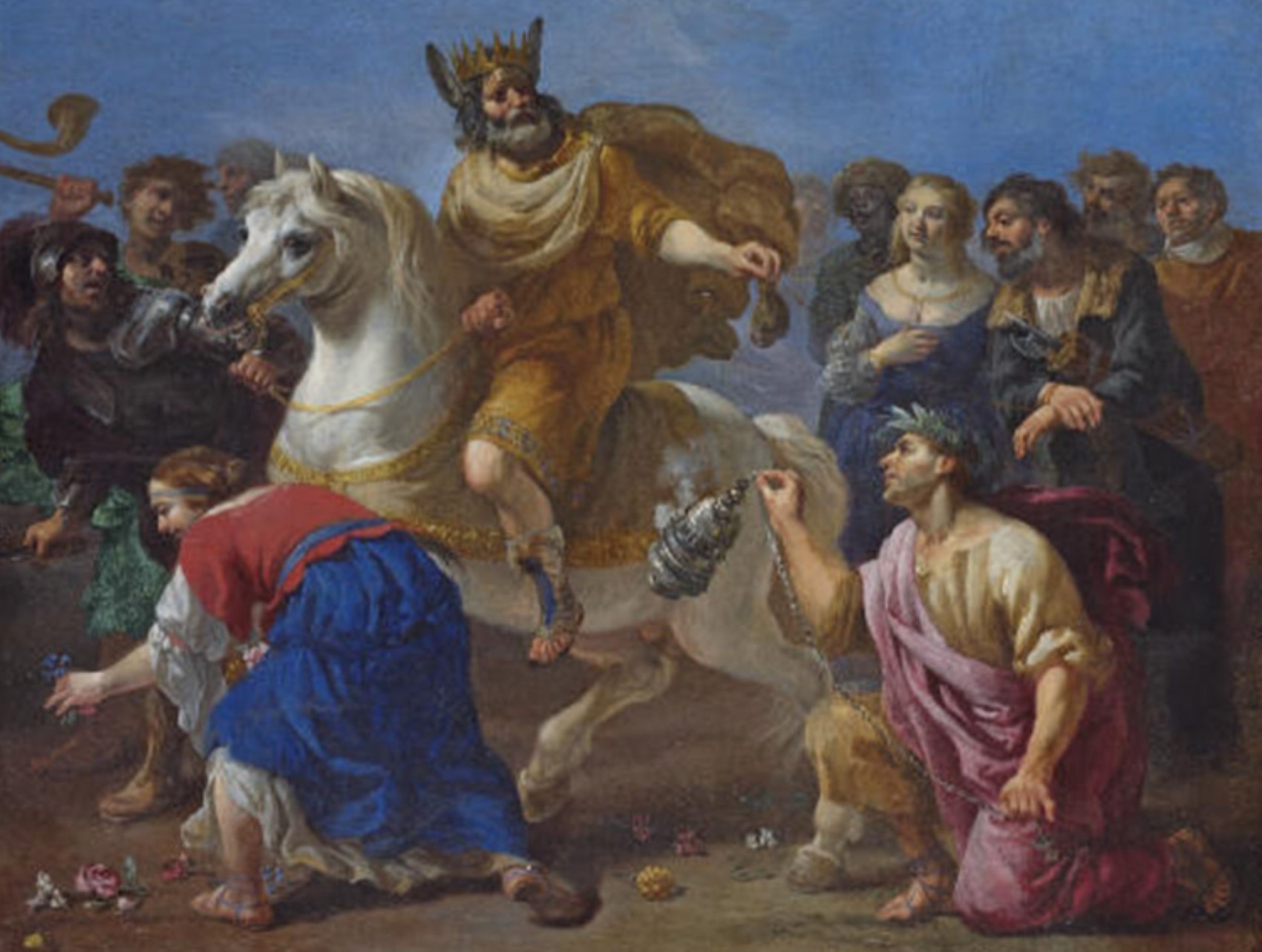
(King Midas with Donkey Ears. Laurent de La Hyre. 1640-50. Representative image)
***
For today's savage capitalism, gold is everything.
The value of everything is measured by it.
For major capitalists, it is also the final fortress to take refuge in during difficult times.
Even for the states they govern!
Even for middle- and low-income people who want to protect their small savings against the monetary fluctuations and inflation created by the system!
Midas's food, water, and even his daughter when he touched her, all turned into gold.
In the wild capitalist market order, vital values such as nature, health, education, housing, and fundamental rights have become tradable "commodities."
The life process has been surrendered to market logic.
Midas had lost the meaning of life along with the identity of his beloved daughter.
Wild capitalism hollows out the human experience by commercializing it. Relationships, values, and nature become things that can be bought and sold.
The commodification of nature and human values is the situation Midas fell into.
Beyond a physical transformation of the environment, it also represents a moral decay.
Greed has become something malevolent.
The "golden touch" of the capitalist system causes what is precious to drift away from its essence.
When nature, labor, and human relationships are transformed into commodities, a void of meaning and a loss of direction are inevitable.
Everything is money, everything is gold—much like the money offered to the families of the eight citizens who died at the cyanide-leaching gold mine in Erzincan-İliç, which they are trying to reopen despite the horrific disaster it caused.
Even a "life"!
A human being is just a number!
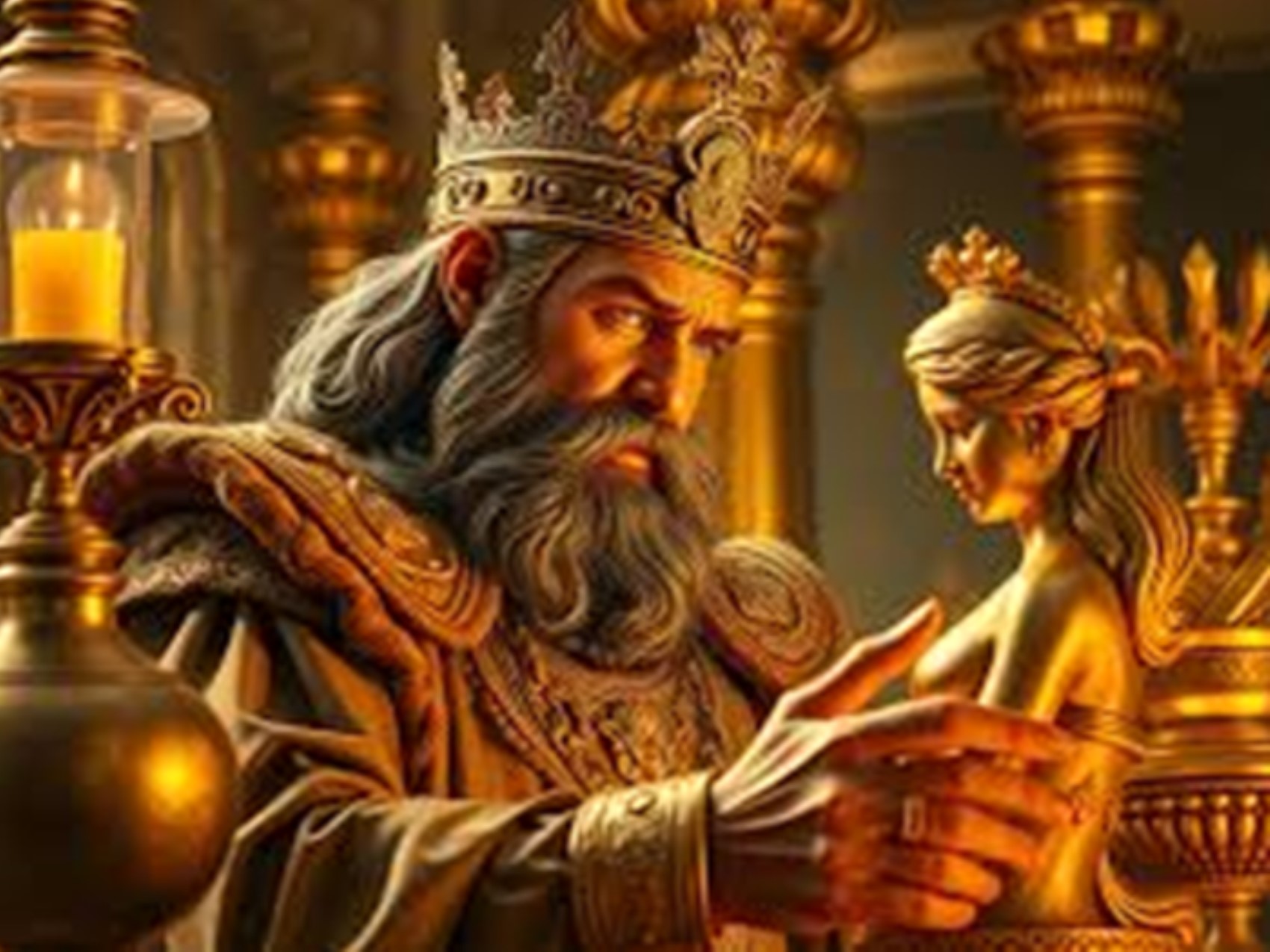
(Midas's daughter turning into gold at his touch. A modern illustrated interpretation by Artificial Intelligence (AI))
***
The fact that Midas went to the god Dionysus to get rid of this cursed gold affliction, and that the god sent him to a river to be purified, also points to a metaphor.
Trying to cleanse oneself from a filthy situation one has become entangled in means resorting to the purity of a flowing stream from those times (as opposed to the ones today, which are, of course, very polluted).
In this context, savage capitalism today also dons new masks from time to time, appearing environmentally friendly or socially responsible.
During moments of crisis, it attempts to cleanse itself with concepts such as "green capitalism," "social responsibility," "ethical investment," and "eco-friendly mining."
It attempts to decorate the pollution it has created.
Following economic, environmental, and social crises, the system constantly tries to reproduce itself under the guise of "reform."
Al Gore, who served as Vice President to U.S. President Bill Clinton from 1993 to 2001 and who engaged in performative environmentalism and climate action, receiving the Nobel Peace Prize in 2007, is a high-society figure who symbolizes such behavior.
Prince Philip, Duke of Edinburgh, husband of Queen Elizabeth II of the British Empire on which the sun never sets, was the first president of the World Wide Fund for Nature (WWF), which is touted as a "nature conservation advocate."
Yet, this supposed defender of nature was also known as a hunter of animals. In 1961, he even attempted to hunt a tiger in India. (www.hindustantimes.com/world-news/prince-philip-s-4-royal-visits-to-india-and-a-tiger-controversy-101617991603677.html)
Of course, there is also fake gold!
However, it is evident that all of this is, more often than not, nothing more than the system repackaging itself rather than a genuine transformation.

(Prince Philip, husband of Queen Elizabeth II of Great Britain)
***
In this context, the initiatives undertaken by cyanide-using companies—a branch of savage capitalism—to extract toxic gold are a scourge upon humanity!
The problem lies in the perspective toward humanity and nature, and the attitude adopted.
Production for profit, or production for need?
Toxic gold, or nature and humanity?
It is necessary to change not only the results but also the causes.
Midas's symbolic 'washing and purification in the river' today occurs through systemic transformation.
All gold mines using cyanide in the world and in Turkey must be closed.
If gold is so necessary, investors should spend all their energy finding methods that do not harm nature or humans and do not pollute the environment to extract the small amounts of gold in the soil.
If necessary, all their wealth!
For the good and existence of humanity, the fundamental intellectual and practical rule is to aim to know the unknown and to implement what is known.

(Cyanide gold mine. İvrindi, Balıkesir. 2005)
***
'Midas's Golden Touch' heralds the cry of a planet that savage capitalism has turned into gold ore.
If the value of everything is measured by the "market," in the end, nothing will have any meaning.
While greedy gentlemen are busy poisoning the land to collect gold, society loses its soil, its water, its relationships, and its conscience.
Just as Midas lost his most precious possession, his daughter, humanity is losing its future generations to the insatiable appetite of this savage capitalism.
King Midas is capitalism itself.
Gold is the greed for profit.
His daughter is the future of humanity.
And the river is still waiting for a purification from us.
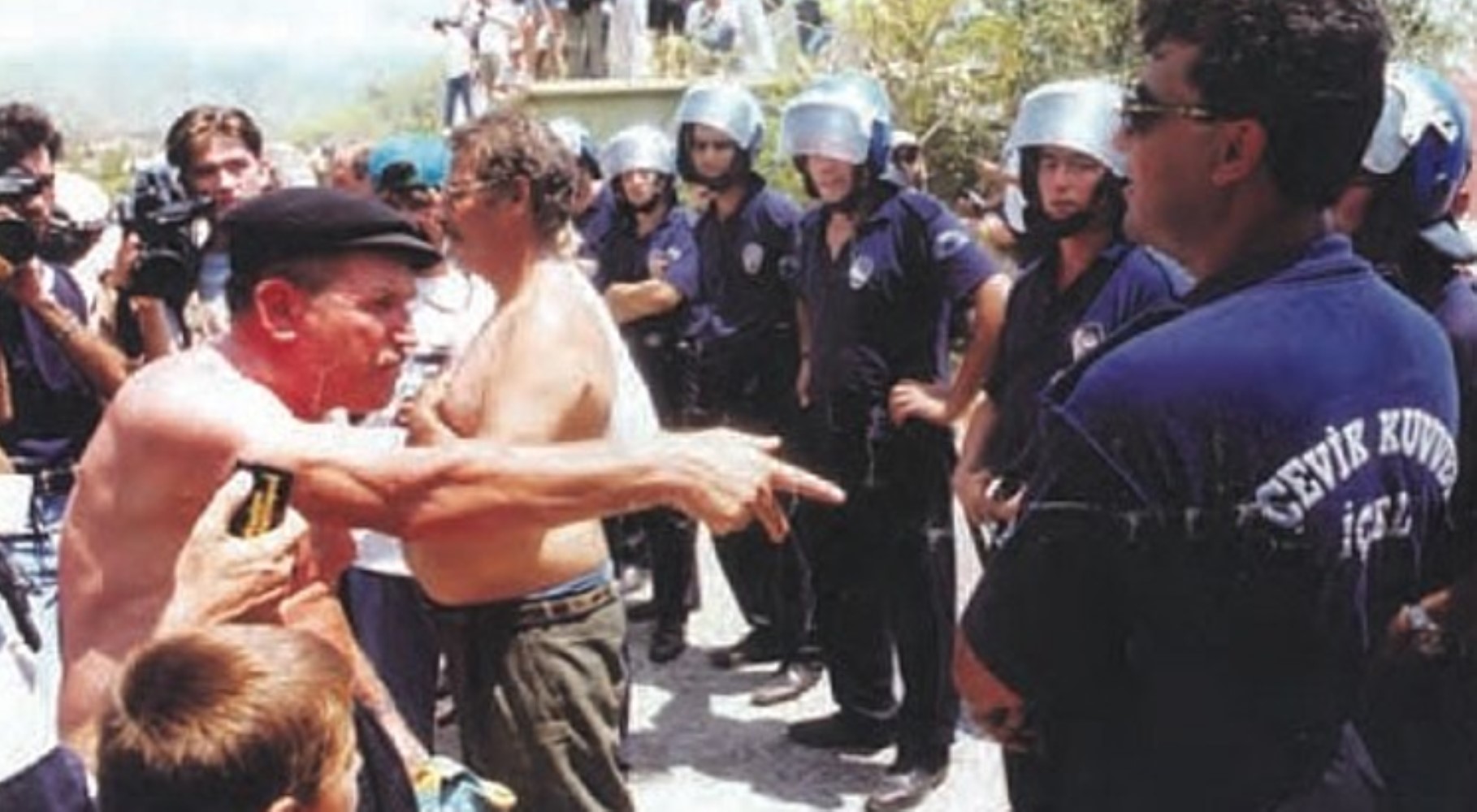
(The villagers in Bergama who resisted cyanide gold mining were modern-day Prometheuses trying to stop Midas's curse on their own lands.)
***
The legend of Midas is a warning from thousands of years ago to the world of today.
The entire world is heading toward a planet that is "turning into gold but becoming uninhabitable."
True wealth lies not in what we can turn into gold, but in how much we can protect humanity and nature.
The end of Midas could be a mirror for a civilization.
As long as humanity refuses to look in the mirror and ignores the warnings, the curse of gold will turn into a multiplying force.
When we poison every inch of soil to obtain gold, when we attempt to turn everything we touch into gold, there will be no world left to live in!
Perhaps our ears will grow long like Midas's!
Sefa Taşkın
10/19/2025
Dikili/Bergama/Izmir
Most Read

Striking picture for Özgür Özel's 'New Party'

The PKK opening and Özgür Özel’s path!..

How did the newspapers view Özgür Özel's farewell to the CHP?

He killed his wife by slitting her throat: Their children witnessed the moments

What did the CHP do?

Özel’s new party move in the world press

Fire at TUSAŞ engine factory in Eskişehir under control

The New CHP, against CEHAPE

From self-efficacy to despair

Kılıçdaroğlu's first message on Özgür Özel's new party announcement