



In recent days, there have been those who criticized the trip made by the Mayor of Istanbul Metropolitan Municipality to Rome with a large delegation.
There were those who called it "waste," and those who did not find it "innocent"!
Moreover, they did so without considering that today's Istanbul was historically founded as "New Rome" instead of Rome, which is the capital of Italy today!
They did so without thinking that such trips are necessary, even mandatory, for cities, administrators, and people to come together and bond.
Unfortunately, in our country, trips made by municipal institutions—either directly or through their companies—are unfairly singled out.
Yet, other state institutions follow the same path!
It is forgotten that beyond the "vacation" aspect for officials and guests, these trips increase their "knowledge and experience."
Who knows more: the one who lives (reads) a lot, or the one who travels a lot?
The time has come, and is even passing, to accept that approving the necessity of expenditures made in this direction is an element of modernity.
Isn't living with one's head in the sand something peculiar to "ostriches"?
***
One way or another, the world is changing—negatively in some areas and positively in others.
However, the "unstoppable flow of history," despite occasional pauses, and the phenomena called "social progress" determine the lives of countries in today's world where borders are difficult to maintain.
On the other hand, with the effects of new technological inventions and applications on individuals and society, countries are both rapidly differentiating compared to before, and existing structures and traditions belonging to the past are turning into historical heritage.
The world is shrinking with wide roads, bridges, airports, and ports.
Fast planes, trains, large ships, and various types of transport and passenger vehicles provide people and goods with the opportunity to reach and travel to more places.
Cultural centers, sports complexes, and social areas; their meticulous architectural structures reveal the talent of designers.
Magnificent and meaningful historical structures and ancient ruins in different countries are presented to people's attention.
The concept of "UNESCO World Cultural Heritage" is spreading rapidly.
"The Internet," "artificial intelligence," "social media," and "websites" are increasingly becoming indispensable to individual life, beyond social necessity.
Such developments are triggered not only by the "Public power, the State" of countries but also by the "motive of large global companies to earn more profit."
Of course, while this environment pulls some segments to a higher standard of living, it cannot cover up the poverty of many social strata.
Social migrations caused by wars, lack of personal safety, and poverty are becoming the most jarring phenomena of the historical period we live in.
Of course, humanity will one day solve these problems too!
***
Turkey and the people of Turkey are also trying to keep up with developments in such an environment.
Both general and local governments are striving to meet the needs of society and individuals, and even to guide them, with existing resources and despite frequent intentional or unintentional mistakes.
It is also clear that large capital owners are anxious to make the investments they undertake with a profit motive appealing to the society that is their customer.
In our age, "aesthetics" is gaining more and more meaning.
The general, local, and private sectors naturally need practitioners to realize these.
***
It is known that our country has significant accumulation in science and technical subjects, as well as talented designers and engineers.
"Private Capital" owners who will give them work can easily find, train, and evaluate the personnel they can utilize in this direction.
They can implement large projects.
The "State," which holds the great power of the public (in its current one-man-centric organizational form), can also embark on large investments in line with its own political stance and preferences, without any intention of being participatory.
***
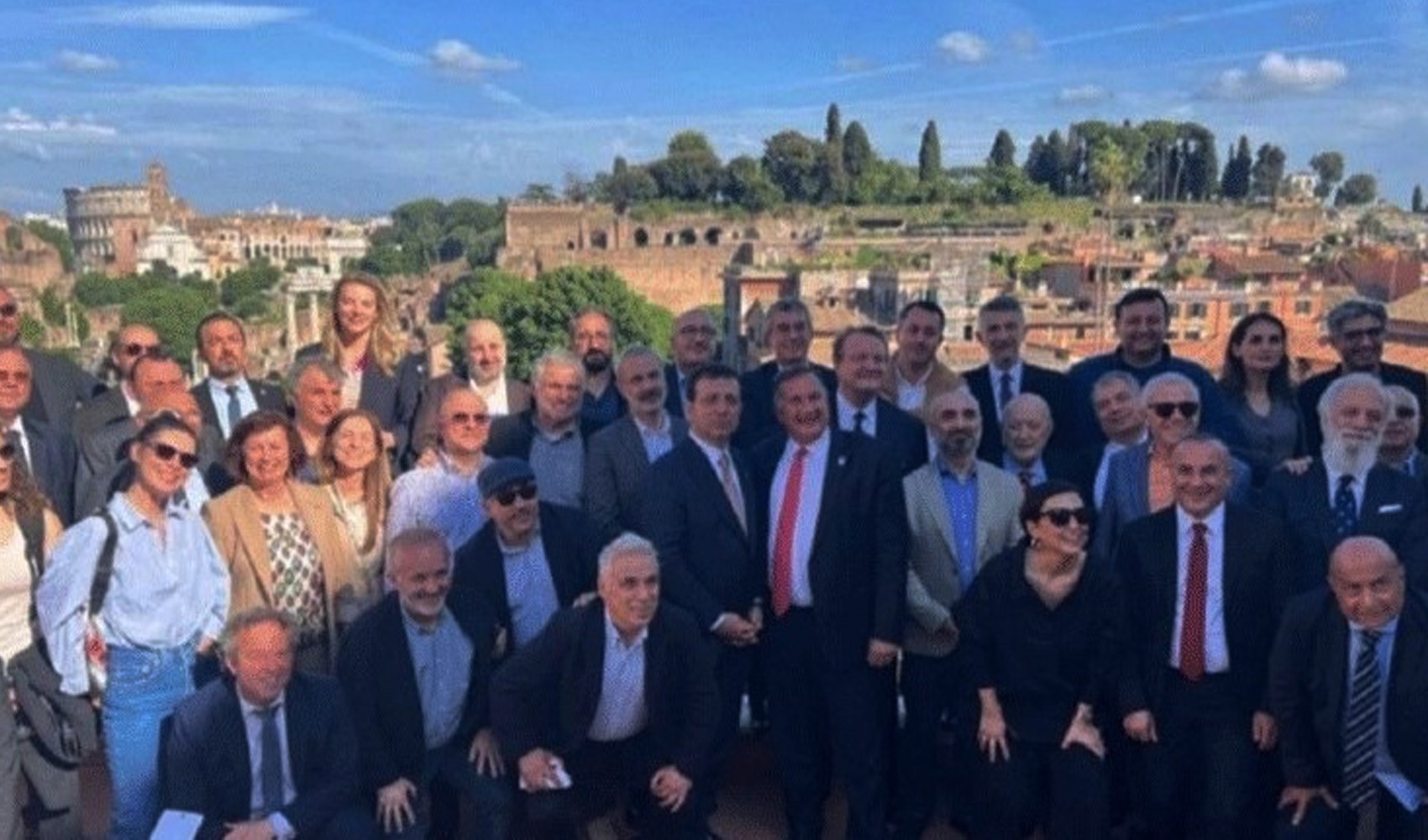
Istanbul Metropolitan Mayor Ekrem İmamoğlu and his guests in Rome.
Local governments, as part of the public, can also behave similarly to the attitude of the State, which makes decisions with a one-man-centric stance.
However, the "Municipal Institution," which is under the oligarchic imperial authority of the "Municipal Council, Executive Committee, and Mayoral Office," can engage in operations that gain general appreciation and acceptance with fewer resources but through talented and capable Mayors.
The fundamental solution to this lies in truly realizing "Participatory Democracy" in its essence, not just in name.
This concept must certainly be developed by discussing, experimenting, and codifying it, rather than chewing it like gum and emptying its meaning.
In this process, the determination of "Mayors and Council Members," who are the elements of directly elected Mukhtars and Representative Local Democracy, becomes important.
It is expected that the officials in the "selector" position, in addition to social pressure, ensure that the candidates they first appoint to this duty and then present to the public's choice have a certain level of knowledge, experience, and sophistication.
However, in the steps taken in this direction, factors such as loyalty to the center and populism can lead to those without managerial experience coming to these positions.
Moreover, after taking office in municipalities, the detail of municipal laws, the complexity of urban problems, and the determination of requirements and priorities in service make it mandatory for "decision-makers" to broaden their horizons, renew themselves, and increase their knowledge and experience.
In fact, high-level municipal officials also need to be included in this category in this process.
Information and consultancy received from the outside may not always be sufficient and efficient.
For this, of course, the individual effort of the "elected" is also required.
In addition to this, it should be a condition in urban life for political institutions and society in general to support the initiatives of the city's "elected administrators and decision-makers" to improve themselves!
***
Of course, there are well-educated, knowledgeable, and sophisticated people who have served in Local Governments.
However, in a world where visuality is increasingly instructive and decisive in many things, "seeing on-site" what exists, development, and change is extremely important.
By visiting different countries and cities, and by observing and seeing the situation there, every "decision-maker" can draw positive conclusions for their own environment.
They can increase their personal knowledge and experience accumulation.
This situation will undoubtedly produce beneficial results for the city, society, and individuals in the environment where they live.
Members of the press, who provide social communication, reflect news, and have consciousness-forming functions, are also subject to this assessment.
For these reasons, provided that it does not go to extremes, one should not resent or condemn Mayors, Council Members, and Press Members for going abroad with "public resources."
In fact, it would be correct to allocate appropriate budgets for this in municipal budgets and to increase the allocation.
For example; there should be no Mayors, Council members, or the Press Members following them in Kayseri who have not seen Paris; in Diyarbakır who have not seen Vienna; in Konya who have not seen Tabriz; in Trabzon who have not seen Moscow; in Bursa who have not seen Skopje or Sarajevo; or in the Coastal Aegean and Mediterranean Cities who have not seen Athens or Rome!
These should not be perceived as unnecessary journeys, individual vacations, empty travel, or trips that will provide guided relationships by the relevant parties!
One should not begrudge the expenditures to be made.
The economic difficulties the country is going through and individual and social political reactions should not weaken this approach!
Negative speculations made on this subject should be condemned!
Those who organize these trips should, of course, not have negative intentions!
Turkish Language Association: Gives the equivalent of the proverb "He who travels a lot knows more than he who lives (reads) a lot" as: "He who travels a lot, sees many places, learns many things; he who lives a lot, reads a lot, cannot know what he knows."
Of course, with "decision-makers" and "administrators" who read a lot and gain knowledge and experience by traveling a lot, national development can rise more quickly.
The positive return of gaining "knowledge, experience, and sophistication" to society and cities will certainly happen!
Sefa Taşkın
02.06.2024
Bergama/İzmir
Most Read

Striking picture for Özgür Özel's 'New Party'

Özgür Özel gives a dated response regarding the number of resignations

Forest fire in Antalya brought under control

The PKK opening and Özgür Özel’s path!..

How did the newspapers view Özgür Özel's farewell to the CHP?

He killed his wife by slitting her throat: Their children witnessed the moments

What did the CHP do?

Özel’s new party move in the world press

The New CHP, against CEHAPE

Fire at TUSAŞ engine factory in Eskişehir under control