



HEAVY ON THE STONE-147. LET US NOT FORGET, LET US NOT LET THEM BE FORGOTTEN.
Once upon a time, molasses, grape must, and wine were served in these vessels!
Under the deep blue sky of the Aegean!
Yet, two ceramic vessels stolen from Bergama have been placed in the Berlin Museum/Prison in Germany.
Such utensils, decorated with motifs of men, women, branches, and leaves, were called "skyphos" in antiquity.
"Skyphoi" were ornate drinking vessels with low bases and handles on both sides of the rim.
Produced in the famous ceramic kilns of Pergamon and darkened by fire, these vessels clearly demonstrate the influence of the Sculpture school, which brought a new perspective to the art understanding of Pergamon/Bergama, the city, and humanity.
On one of the 7.4 cm tall vessels, the male and female motifs are clearly in an act of interaction. On the other, there are likely grape clusters among vine branches and leaves.
Perhaps they were putting the wine and molasses they made from Pergamon/Bergama grapes inside them.
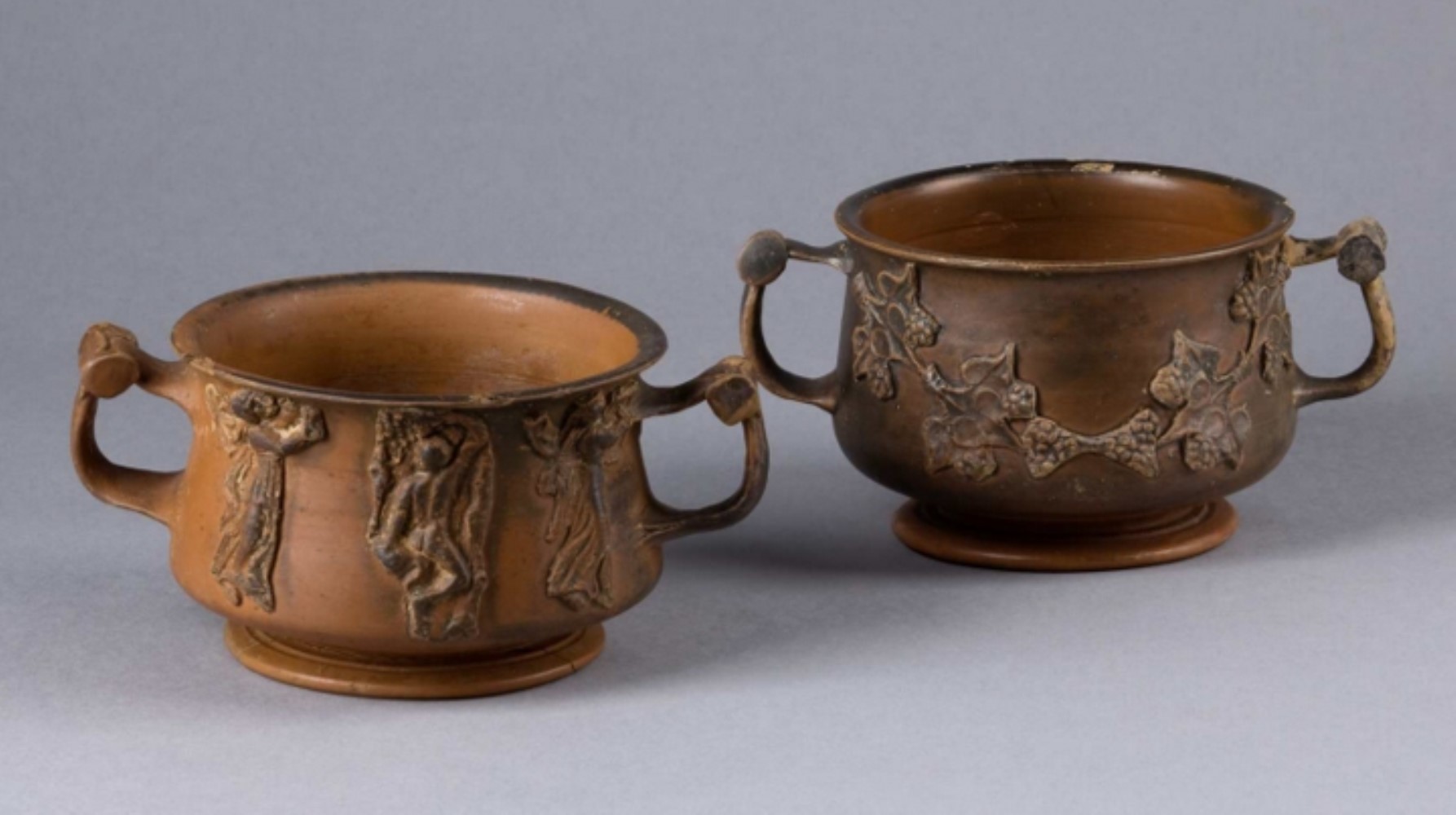
The ceramic vessels are dated to the 2nd half of the 2nd century BC.
To the brightest days of the city of Pergamon!
Look at the irony: the clever German state officials snatched these beautiful vessels, which were likely used by noble people in Pergamon at the time, as soon as they saw them.
Berlin Museum/Prison officials purchased them in 1966 in the city of Frankfurt am Main from a smuggler who had stolen (!) them from Bergama. How about that!
And not a hundred years ago, but recently.
Knowing full well that they were brought to Germany as a result of theft.
They added them to the Museum/Prison's collection of smuggled artifacts, which they call "antiques," with the code number "Iden 1966.11."
After the great plunder of the Zeus Altar they committed in the 19th century, they continued to collect smuggled artifacts even in 1966.
It never "crossed their minds" to return them to the place where they were made; to Turkey, to Bergama.
They thought they were protecting them.
How can an object or work obtained through theft not be returned when the owner is known, but instead be pocketed? And then they say, "It is mine, I am protecting it."
How curious they were to seize the values of others, to seize stolen goods.
Moreover, they called them "Prussian (the old name of Germany) Cultural Heritage," making this absurdity comical.
Or perhaps they confessed their crimes!
What kind of development is this, what kind of advanced culture is this?
The bones of the great German cultural figures—Mozarts, Beethovens, Goethes, Marxes—must be aching in the face of this boorishness.
THE ZEUS ALTAR AND PERGAMON ARTIFACTS DO NOT BELONG TO COLD AND FOGGY BERLIN, BUT TO BEAUTIFUL BERGAMA. THEY MUST DEFINITELY COME BACK, THEY MUST RETURN HOME.
(Source: http://www.smb-digital.de/eMuseum, Database)
Most Read

Striking picture for Özgür Özel's 'New Party'

The PKK opening and Özgür Özel’s path!..

How did the newspapers view Özgür Özel's farewell to the CHP?

He killed his wife by slitting her throat: Their children witnessed the moments

What did the CHP do?

Özel’s new party move in the world press

The New CHP, against CEHAPE

Fire at TUSAŞ engine factory in Eskişehir under control

From self-efficacy to despair

Kılıçdaroğlu's first message on Özgür Özel's new party announcement