



STONE IS HEAVY IN ITS PLACE-173. LET US NOT FORGET, LET US NOT LET BE FORGOTTEN.
What hasn't this country been through!
In the late 19th century, German Imperialism plundered and carried away the unique treasures of the one and only Anatolia. It hollowed out both what was under the soil and what was above it.
Whatever the USA is in the Middle East today, Germany was that in Europe back then.
Following the decisive defeat of the French by the Germans near the city of Sedan in eastern France in 1871, the German Empire was established under the leadership of Otto von Bismarck with the "Blood and Iron" (Blut und Eisen) policy he pursued.
Subsequently, German expansionism, turning its eyes to the East, began to replace traditional powers like Britain and France in the Ottoman Empire.
The Berlin-centered imperialist expansion over the Ottoman Empire was based on a strategy of "peaceful infiltration" rather than a direct colonial occupation. In this direction, the weight of German capital was concentrated in critical segments of the Ottoman state structure and geography.
During this process, German imperialism gradually entered the Ottoman State as well, penetrating many state institutions.
Naturally, there was also the Ottoman desire to catch up with Europe in form, seeing that it had fallen behind the rapidly developing industry and capitalism in Europe.
However, the Ottoman Empire had not been able to enter the path of reaching capitalism, which was a more advanced production relationship for that time.
The branch where the Berlin administration established its earliest and most permanent influence in the Ottoman Empire was the Ottoman army.
After the defeat in the 1877-1878 Ottoman-Russian War (the 93 War), Sultan Abdulhamid II invited experts from Berlin to modernize the army.
The military delegation led by Colmar von der Goltz (Goltz Pasha) completely reshaped the curriculum of Ottoman military schools (Mekteb-i Harbiye) according to the Prussian (the former name of Germany) model.
The young officer generation of the period, including the Young Turks who were opposed to Abdulhamid, grew up with German military discipline and admiration.
The Ottoman army's need for weapons, rifles, and ammunition was almost entirely tied to German firms.
Mauser rifles and Krupp cannons became the standard equipment of the Ottoman army. This situation created a massive market for German capital.
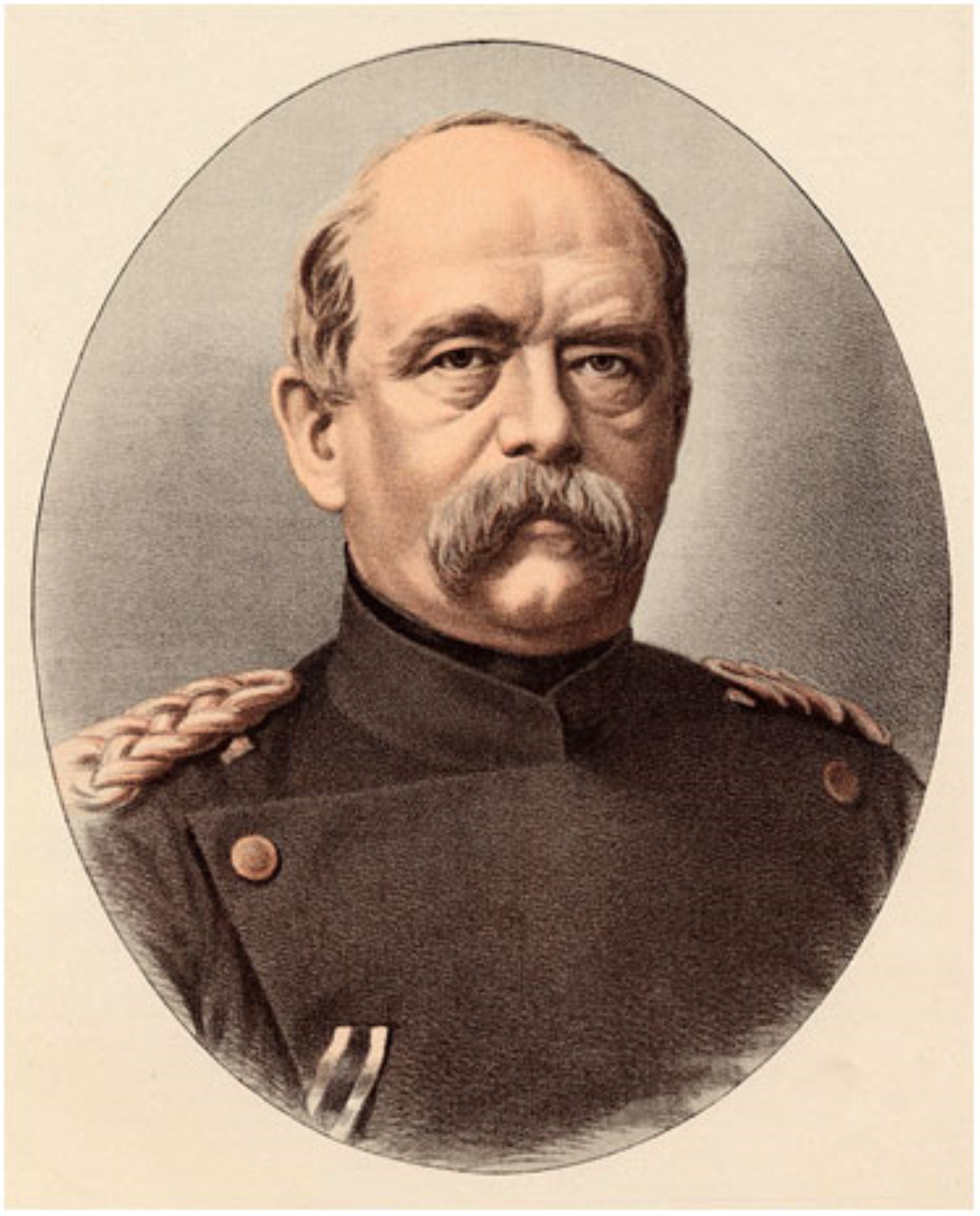
(Bismarck)
***
During this process, relevant German circles focused on strategic infrastructure projects to economically bind the Ottoman geography to themselves.
The Baghdad and Hejaz Railways initiative is the symbol of the largest German capital venture in the Ottoman Empire.
This project, carried out with the financing of Deutsche Bank, aimed to connect Berlin to the Persian Gulf. Through this, the German State aimed to strike a blow to the British control of the Suez Canal and reach the oil fields of Mesopotamia.
With the agreements made for this work, all mining exploration and archaeological excavation rights in a 20-kilometer area on the right and left of the routes where the railway lines passed were given to German companies.
This meant handing over the control of agricultural and underground resources to German capital.
And the looting of historical artifacts as well!
German capital also had a say in Ottoman finance by making its weight felt within the Public Debt Administration (Düyun-u Umumiye), which managed Ottoman debts, and in port operations, for example, the Port of Haydarpaşa.
The influence of German circles was not the same everywhere in the Ottoman geography; it was concentrated on specific logistical lines:
Istanbul and the Straits were now their political and military headquarters.
Emperor Wilhelm II's visit to Istanbul and the close diplomatic relations established there made the capital the center of German influence.
Regions where the railway line passed, such as Eskişehir, Konya, and Adana (Çukurova), became the entry gates for German commercial goods and collection centers for raw materials—especially Çukurova cotton.
With the importance of oil gaining traction towards the end of the 19th century, the Mesopotamia and Mosul-Baghdad Oil Regions turned the eyes of the Germans to this region. The railway project was specifically routed through this line.
Education and cultural diplomacy were also used as tools to make the influence over the Ottoman Empire permanent.
German archaeological circles and scientific delegations obtained large-scale excavation permits on Ottoman lands, especially in Pergamon and Mesopotamia, and transported historical artifacts to Germany.
To provoke the Muslim population in British colonies, the "Pan-Islamism" (Islamic Union) policy, which Abdulhamid II deemed necessary for the survival of the Ottoman Empire, was supported.
In fact, Emperor Wilhelm II crowned this search for influence by declaring "I am the friend of 300 million Muslims" at the tomb of Saladin in Damascus.
How much it resembles what the USA is doing in the region today!
The eyeing and seizing of Anatolia's historical artifacts by the wealthy German bourgeoisie, who were looking for cultural roots for themselves, accelerated during this process.
German archaeological imperialism became intertwined with this policy.
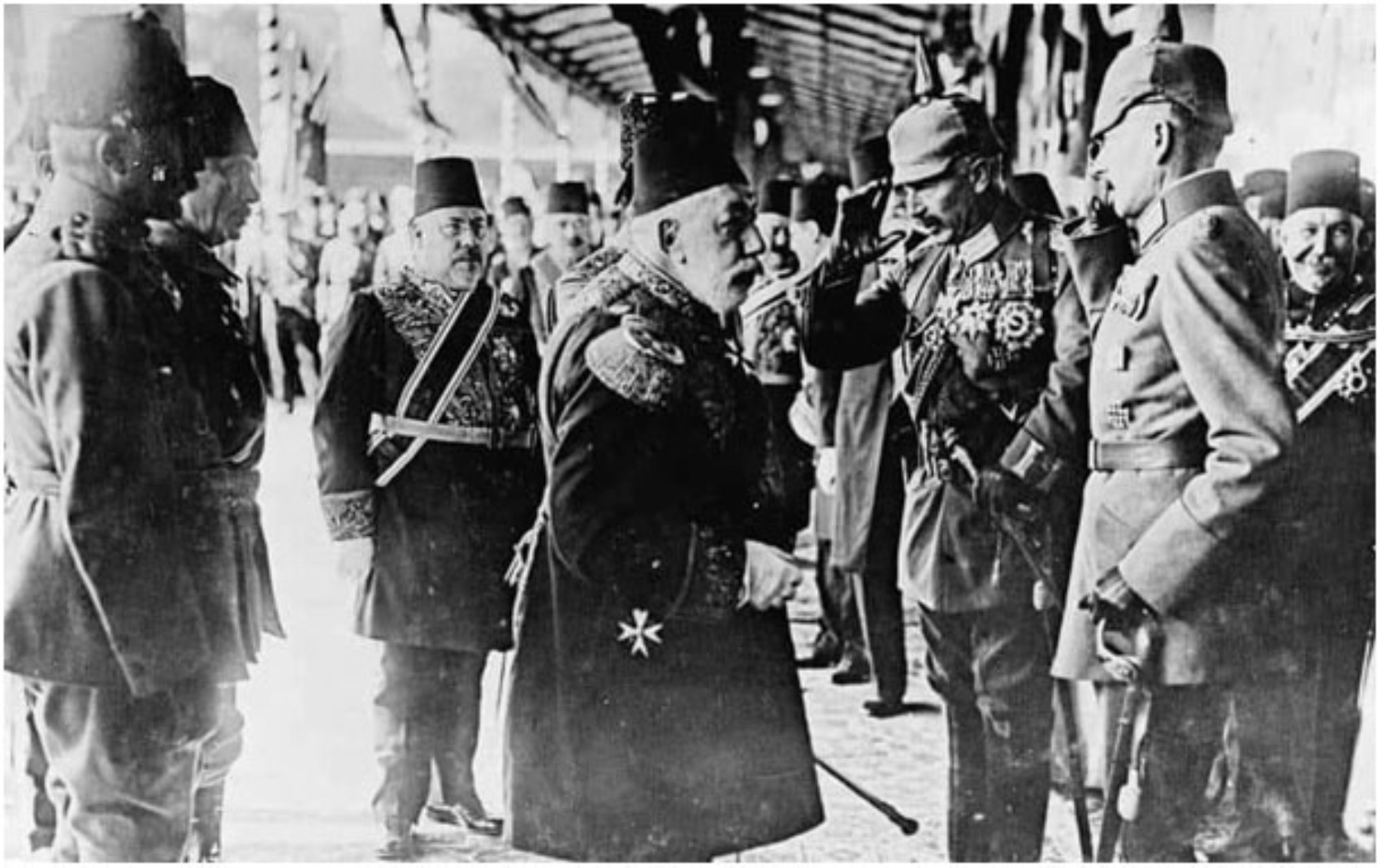
(Wilhelm II's trip to Istanbul)
***
During the reign of Sultan Abdülaziz, who ruled between 1861 and 1876, the Tanzimat reforms gained momentum in the Ottoman Empire, steps towards Westernization were taken, and serious support was given by the palace to cultural/artistic activities (such as museology, exhibitions, and operas).
In fact, Sultan Abdülaziz is the first and only Ottoman sultan to travel to Europe in 1867 and see the great museums there (Paris, London, Vienna) in person.
This trip was one of the greatest sources of inspiration behind the idea of establishing a modern museum in Istanbul (Müze-i Hümâyun).
However, Abdulaziz and the Ottoman State saw that agents disguised as European archaeologists were running rampant within the country's borders, and in this regard, they issued the first political regulation in 1869, the 1st Regulation (Law) on Antiquities (Asar-ı Atika).
In parallel with this, the first museum organization of the Ottoman Empire was officially established in 1869 under the name "Müze-i Hümâyun" (Imperial Museum) with the guidance of Sultan Abdülaziz and the efforts of the Minister of Education (Maarif Nazırı) Saffet Pasha.
Edward Goold, a British national living in Istanbul, was brought in as the director of the museum. Goold was a teacher at Galatasaray High School (Mekteb-i Sultani) but did not have deep expertise in archaeology.
When Goold could not show much presence, he was dismissed, and in 1871, Terenzio Schiavon, an Italian art historian and restorer of Maltese origin, was brought to head the museum, but he also passed away the following year.
A new director was needed for the Imperial Museum.
Ahmed Vefik Pasha, who became the Ottoman Minister of Education in 1872, was a personality who attached great importance to museology activities.
He wanted to revive the Imperial Museum, which had been suspended or neglected for a while, in a more institutional and professional manner with the encouragement of Sultan Abdülaziz.
According to the Pasha, an expert was needed for this job who could carry out this institutionalization, knew European scientific circles, and knew Istanbul well.
And on the stage, there were the Germans with their political and cultural effectiveness.
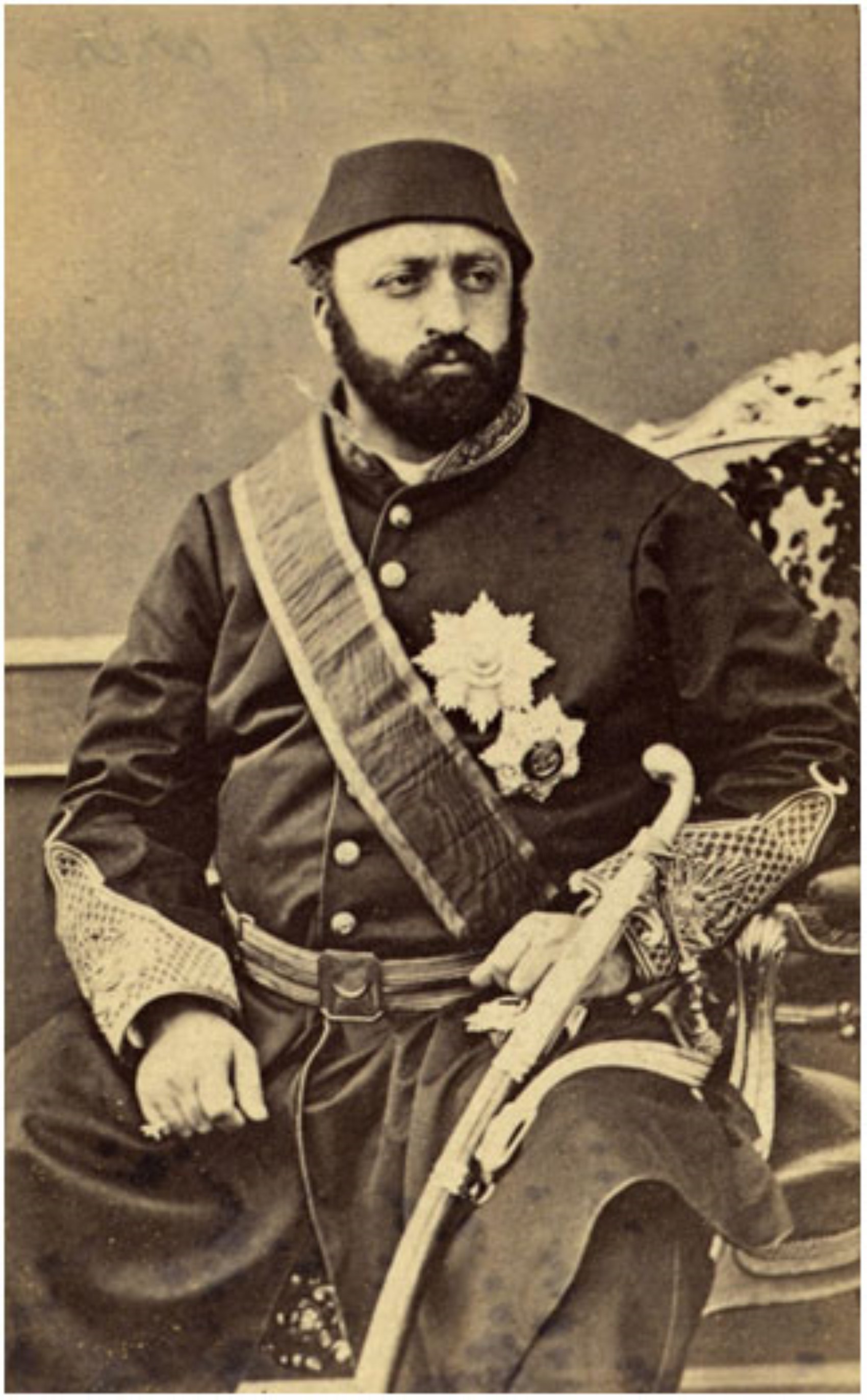
(Sultan Abdülaziz)
***
Ahmet Vefik Pasha identified Philipp Anton Dethier, who was only 68 years old, had a doctorate in history from the University of Berlin, had come to Istanbul after 1847, and had lived in the city for more than 20 years, as the most suitable candidate for this task.
During his time in Istanbul, Dethier had very close relations with influential foreign diplomats, ambassadors, and bureaucrats who directed the political life of the period, and of course, with the German State.
Foreign nationals serving in the Capital at that time were potential apparatuses of their imperial states.
The recommendations, perhaps pressures, that this powerful circle made to the Ottoman palace had created a serious support network for P.A. Dethier to be brought to a critical position like the Museum Directorship.
Now, at the head of the duty of protecting the historical artifacts and cultural assets inherited by the vast Ottoman country, there was a German who was very eager to take these works abroad, to smuggle them, and who was a subject of interest groups.
The 1st Regulation on Antiquities issued in 1869 was not very detailed, but it strictly prohibited the removal of historical artifacts abroad and imposed heavy sanctions.
This situation was not at all pleasing to the imperialist looters.
German Imperialism, which was in global competition with England and France, who were looking for a cultural past for themselves by acquiring historical artifacts, wanted to show the glory of being a great empire by exhibiting works belonging to the world's most deep-rooted civilizations in the great museums of their capital, Berlin.
They wanted to dig greedily, take, and carry away the works of Anatolia.
For this, ethical justifications and typical imperialist legitimization tools had already been prepared:
"The Ottoman Empire does not know the value of these works, it cannot protect them; we are taking them under protection in the name of humanity."
So what needed to be done then?
Change the law: Who will change it?
***
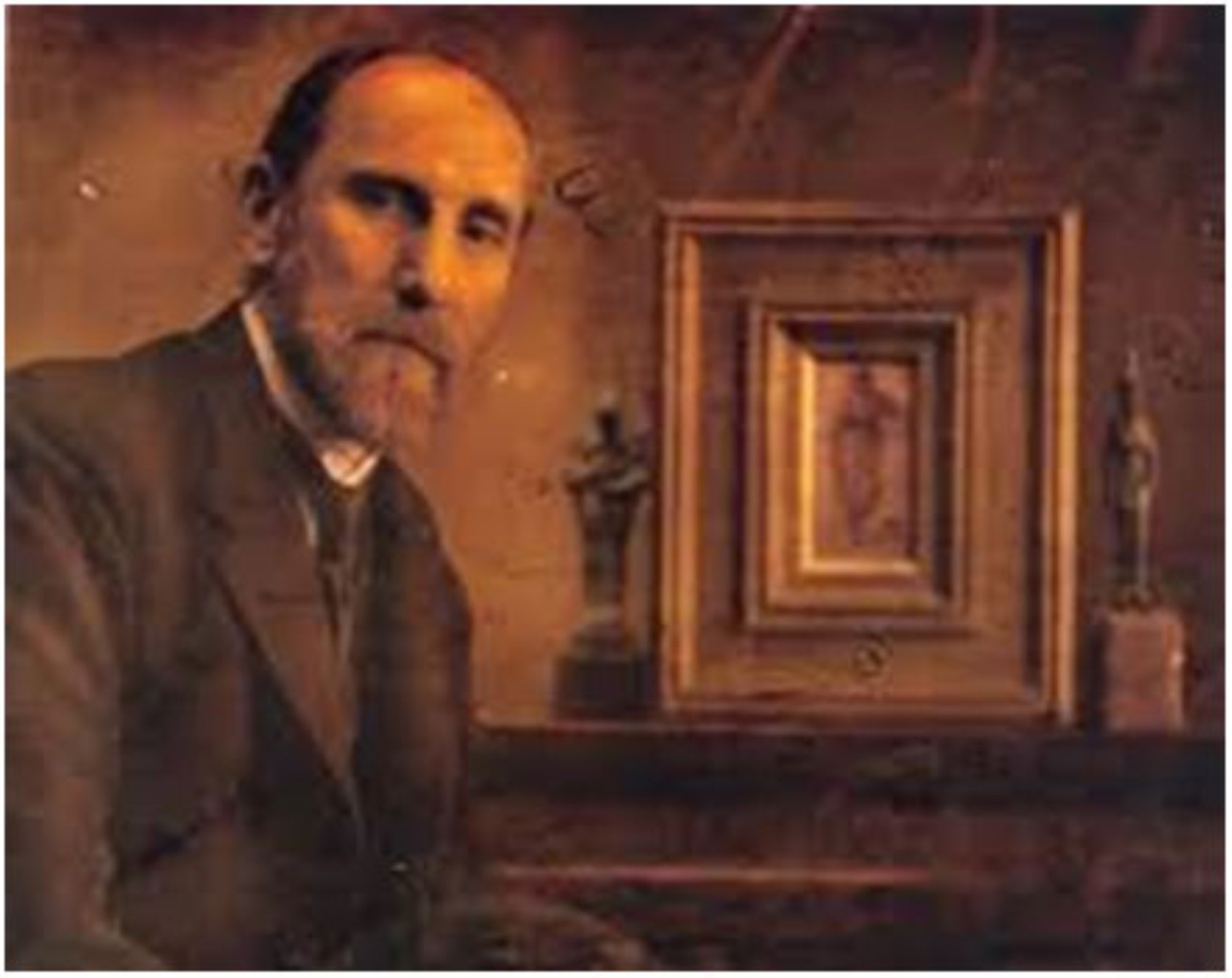
(P.A. Dethier)
Of course, the Ottoman Empire's Imperial Museum Director, the person who understood this business best in the Capital: Philipp Anton Dethier.
The new law prepared by Dethier, with the 2nd Regulation on Antiquities issued in 1874, gave foreigners the opportunity to conduct historical artifact excavations and take the unearthed works abroad under certain conditions.
With this law, 1/3 of what was found in excavations would be given to the landowner, i.e., the Ottoman State, 1/3 to the Ottoman State again as a right, and 1/3 to the excavator, i.e., in a way that could be taken abroad.
The most important reason for wanting this law to be issued was to legitimize the illegal historical artifact smuggling and the actions of a German engineer named Carl Humann, who had been plundering Pergamon since 1864.
However, Sultan Abdülaziz did not implement this law, despite the pressure from Prince Frederick III, who would later become Emperor for a while, and his British wife; he did not allow excavations and the removal of artifacts abroad.
Abdulaziz, who resisted these robbers, was deposed on May 3, 1876, and was likely murdered on June 4, 1876.
According to some commentators, this situation is associated with Abdulaziz's resistance to the pressure of foreign powers; however, there is no definitive data to prove this.
Abdulhamid II, who became sultan after the short-lived reign of Murad V, declared the Constitutional Monarchy on December 23, 1876. The Kanun-ı Esasi, the first constitution of the Ottoman Empire, came into effect, and the first Chamber of Deputies (Meclis-i Mebusan) was opened.
The war ended with the treaty signed at Aya Stefanos-Yeşilköy on March 3, 1878, after the Ottoman Army suffered heavy defeats in the war with the Russians during this period and the Russians reached the gates of Istanbul.
This treaty was reorganized at the conference held in Berlin between June 13 and July 13, 1878, with Germany taking the lead.
German Chancellor Otto von Bismarck presided over the conference. Behind him were Emperor Wilhelm I and his son Prince Frederick III.
With the treaty, the loss of Bulgaria was finalized. The independence of Serbia, Montenegro, and Romania was recognized, the administration of Bosnia-Herzegovina was left to Austria-Hungary, and Britain took Cyprus.
Of course, the implementation of the 2nd Regulation on Antiquities, which was issued in 1874 but not put into effect, which Prince Frederick III and his British wife insistently followed, fell to the Germans.
Thus, the smuggling of historical artifacts taken to Berlin by the smuggler disguised as an engineer named Carl Humann would be legitimized, the way for the robbery would be opened, and the plunder could continue.
It would be shown to the whole world how highly cultured the German Empire, whose roots went back to swamps and forests, was.
Buying nobility was an old European tradition.
Dubious permits were obtained, and the systematic smuggling of artifacts in Pergamon continued to increase.
Already by that day, many pieces/friezes and statues of the Pergamon Altar of Zeus, which could be considered the eighth wonder of the world, had been taken to Berlin by C. Humann and the German state's skillful organized theft networks.
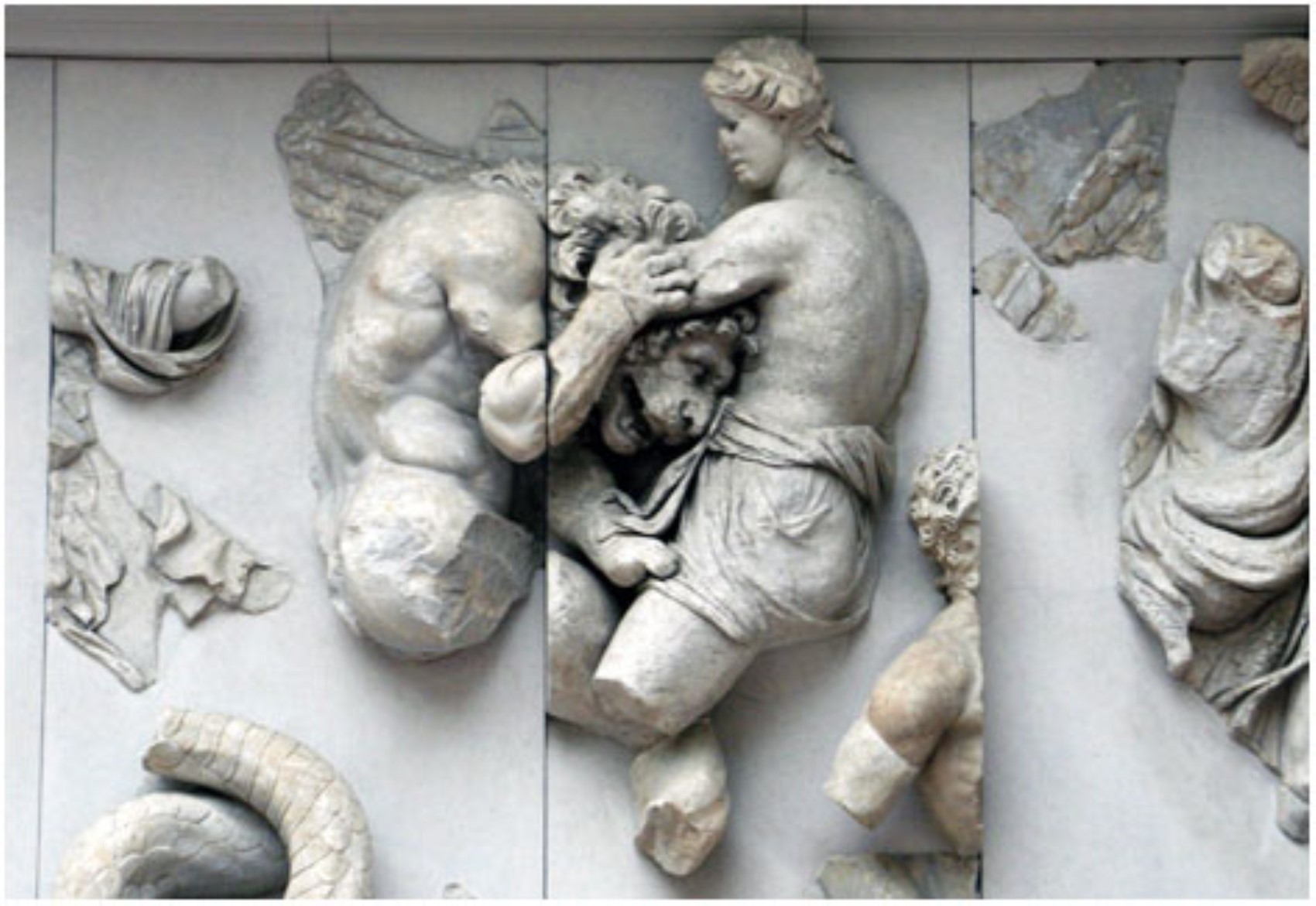
(Aither-Upper Universe from the friezes of the Altar of Zeus smuggled to Berlin. In the Berlin Museum/Prison.)
***
In the excavations, a magnificent male statue 215 cm tall was found on the north side of the plane where the Altar of Zeus was located on the Pergamon Acropolis in those years. It was dated to 150-130 B.C.
The person in this statue was considered by archaeologists to be a copy of the Zeus Ammon statue made in the 4th century B.C.
The two small goat horns on his head caused him to be mentioned together with Ammon, an Egyptian god, and Zeus.
In Egyptian mythology, Amon was the chief god of the kingdom; when he merged with the Sun god Ra and took the name Amon-Ra, he rose to the position of 'King of the Gods'.
When the Ancient Greeks encountered the Amon cult in Egypt, they matched his "King of the Gods" feature with their own chief god, Zeus. Thus, a hybrid god, Zeus-Ammon, emerged.
In Zeus-Ammon statues, curled ram horns inherited from Egypt's Amon were added to the head of the classic, bearded, mature, and powerful Greek god Zeus figure.
When Alexander the Great of Macedon, who drove the Persians/Iranians out of Anatolia, which they had occupied for about 200 years, conquered Egypt, he visited the temple of Zeus-Ammon and was declared "Son of Zeus-Ammon" by the priests.
Alexander used this title to the fullest to prove his sovereignty in wealthy Egypt; even on the coins minted after his death, Alexander was depicted with the ram horns of Zeus-Ammon on his head.
The political developments in Anatolia in the post-Alexander the Great period played a significant role in the rise of Pergamon as a city and civilization. It had gained great prestige in the city.
However, throughout history, Pergamon had intense commercial and cultural relations with Egypt. In fact, during the Roman period, Emperor Hadrian would have the magnificent "Serapion" or "Temple of Egyptian Gods" with red brick walls, which is called the Red Courtyard today, built in the city.
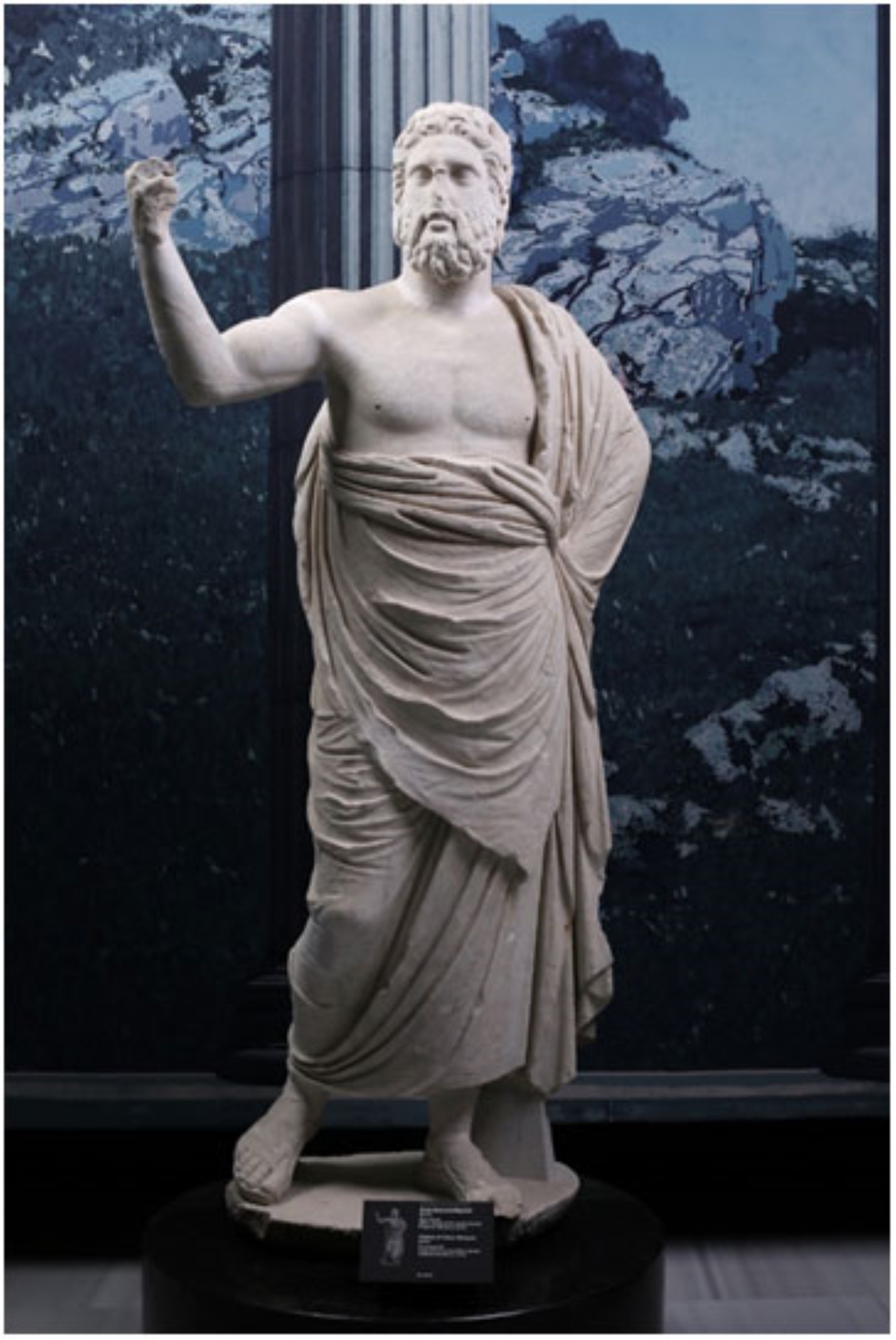
(Zeus Ammon statue - First smuggled, now in the Istanbul Archaeology Museum)
***
It was also thought that the 2.15-meter-high marble male god statue could be a statue of Dionysos Tauros or Zeus-Sabazios, who was the companion of Cybele, the Mother Goddess of Anatolia, in addition to Zeus-Ammon.
Zeus-Sabazios, on the other hand, was a Greek-Anatolian synthesis born from the blending of Sabazios, the chief god of the Phrygians who migrated from Thrace to Anatolia, with Zeus in the Hellenistic period. Due to the enthusiastic (ecstatic) nature of his rituals, he was also associated with Dionysos, the Greek god of wine and artists.
In the Hellenic belief of that period, the belief in Zeus, the greatest God, could be combined with local gods and called that way: Zeus Ammon, Zeus Sabazios, etc.
What a magnificent synthesis still exists in this Anatolian culture!
As a result of these scientific evaluations, the approach that this magnificent statue found right next to the Altar of Zeus might be holding a lightning bolt in its broken right hand caused the view that it was Zeus Ammon to prevail.
Since very ancient times, since the Hittite era, the symbol of the greatest Male God of Anatolia was the "lightning" as well as the "bull". Both showed how "powerful" he was: The bull on the ground, the lightning in the sky.
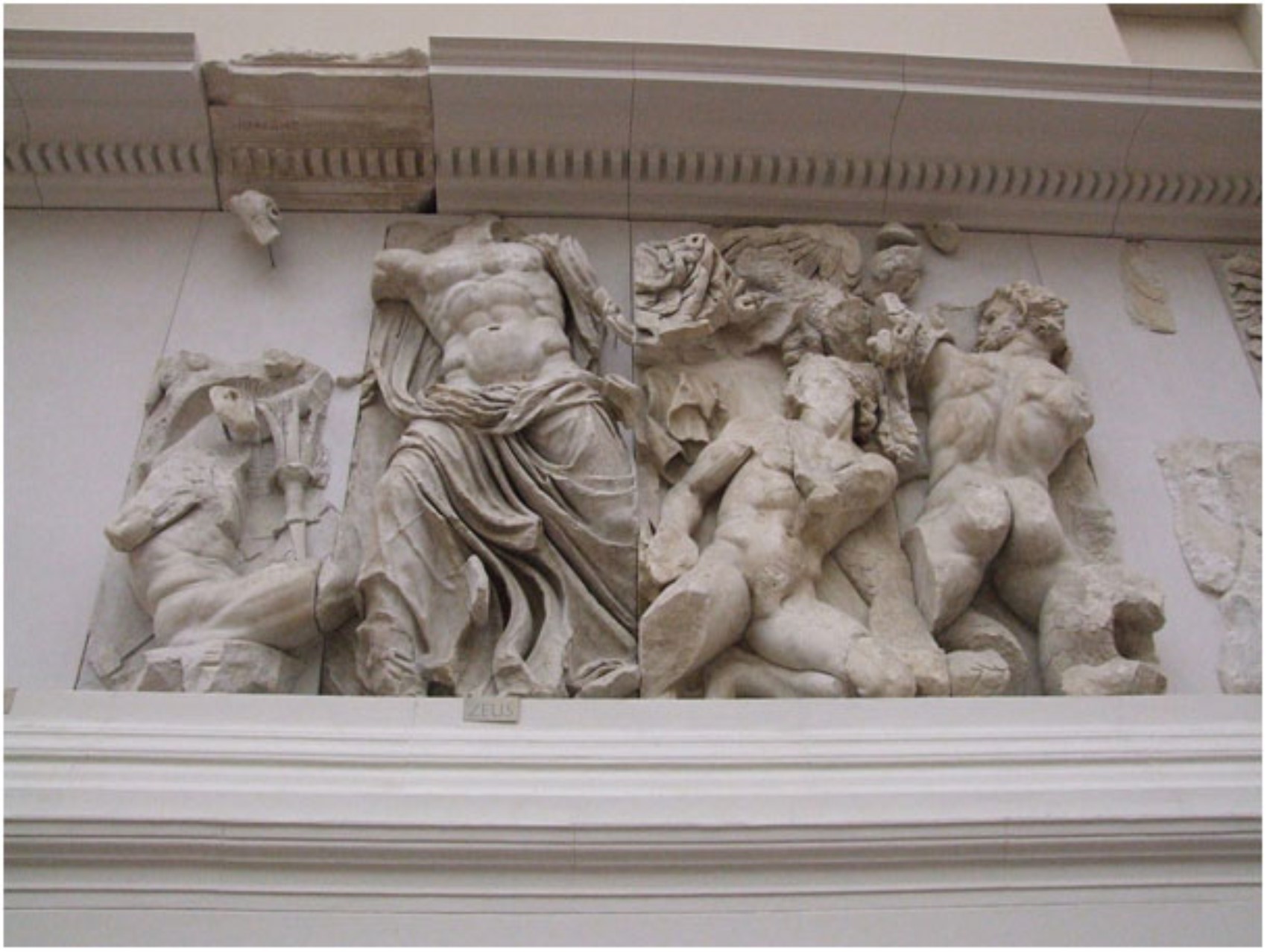
(One of the friezes of the Altar of Zeus smuggled to Berlin. Zeus's battle with Porphyrion, the leader of the Titans/Giants. In the Berlin Museum/Prison.)
***
And the plunder was becoming official!
At the end of the 19th century, in accordance with the 2nd Regulation on Antiquities issued after the 93 War/Ottoman-Russian War with the pressure of German circles, the Germans would take 1/3 of the findings from the excavations, and the organization of this would be done by P.A. Dethier, the Director of Ottoman Museums.
Dethier, who supposedly worked on behalf of the Ottoman State and ate Ottoman bread, constantly advised the state on the worthlessness of these stones and helped the robbers.
Along with him, W. Heinze, the Izmir Manager of the Ottoman Bank, who was of Göttingen origin, also determined which works, i.e., which 1/3, would be given.
Anatolian lambs were being handed over to European wolves! How insatiable they were!
This taking away also smelled heavily of suspicion.
According to this "1/3 law", the Zeus Ammon or Zeus Sabazios statue was taken to Berlin in 1879 by the hands of German officials who were plundering the Ottoman Empire from within, under the pretext that it fell to their share.
Of course, the logic and action were clear: Magnificent statues to Berlin, flat stones to Istanbul!
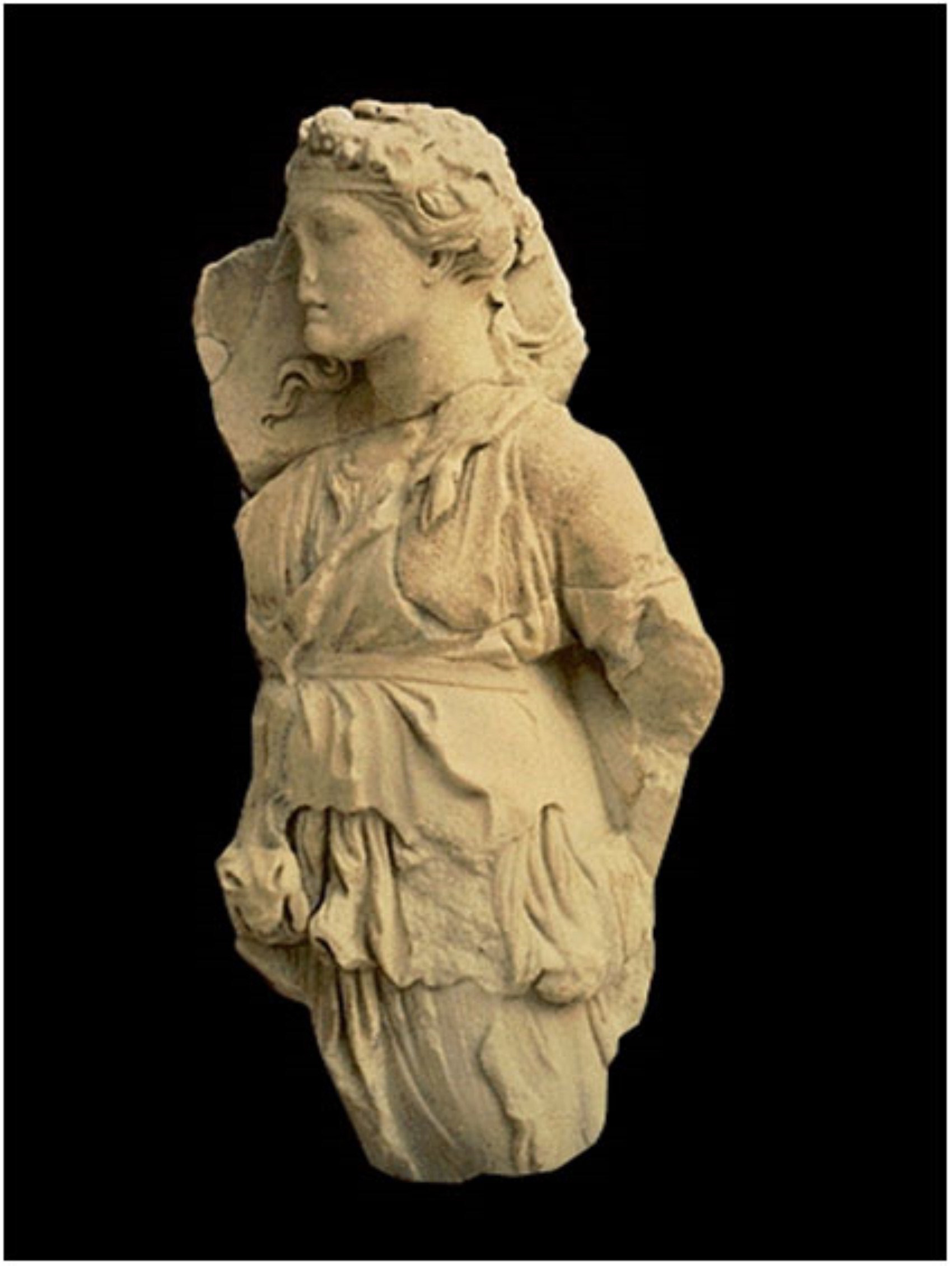
(Dionysos from the Telephos friezes of the Altar of Zeus smuggled to Berlin. In the Berlin Museum/Prison.)
***
P.A. Dethier died in 1881.
Osman Hamdi Bey, the son of İbrahim Ethem Pasha from Chios, was brought to the Ottoman Museum Directorship in his place.
Although the administrators changed, the smuggling of artifacts and controversial permit practices continued.
Osman Hamdi Bey's practices are criticized by some researchers for indirectly contributing to the transportation of Anatolian artifacts abroad.
But time shows that Osman Hamdi Bey would not make one miss Dethier!
In this context, what was going was going, and the looting continued.
German imperialism was pushing; "more, more".
Honest officials within the state and patriotic intellectuals writing in the Servet-i Fünun newspaper, such as Mehmet Vahit Bey, were saying, "be careful".
To resolve the legal irregularity in this regard, the State asked Osman Hamdi Bey, the Director of Ottoman Museums, to issue a new law.
With the 3rd Regulation on Antiquities issued on February 13, 1884, it was aimed to emphasize more strongly that antiquities were state property, to ban unauthorized excavations, to try to limit the smuggling of historical artifacts, and to bring foreign archaeological delegations under control.
This was a positive situation.
However, there was a 32nd Article of this Regulation that was a real piece of work:
"All antiquities found in excavations belong to the State. However, if the Director of the Imperial Museum (i.e., Osman Hamdi Bey) deems it appropriate, he may gift some of them to the excavator with the permission of the Ministry of Education." "If a large number of similar artifacts of the same type are found in excavations, some of them may be left to the excavation team, that is, they can be taken abroad."
Was this a very elegant (!) cover?
In other words, with this law, all measures taken against taking historical artifacts abroad were wiped out in one fell swoop, and with this provision open to all kinds of suspicion, Osman Hamdi Bey became the sole selector, the sole giver.
What was taken with one hand was given with the other!
Meanwhile, in the same year, the magnificent Late Hittite State artifacts they found in Gaziantep-Zincirli together with the Pergamon excavator Carl Humann were taken/smuggled to Berlin within the framework of the close friendship between Osman Hamdi Bey and C. Humann.
At the same time, the robber C. Humann, who sensed and evaluated well this passion of Osman Hamdi Bey, who painted pictures similar to the paintings of European orientalists and had the desire to be a painter of European stature, had managed to get the German State to buy a painting by the Ottoman Museum Director, who had great powers; these relations facilitated his carrying out the plunder of historical artifacts in Gaziantep and many other Anatolian districts.
Cunning is one hand of robbery!
Was Anatolia's priceless heritage being lost in exchange for a painting?
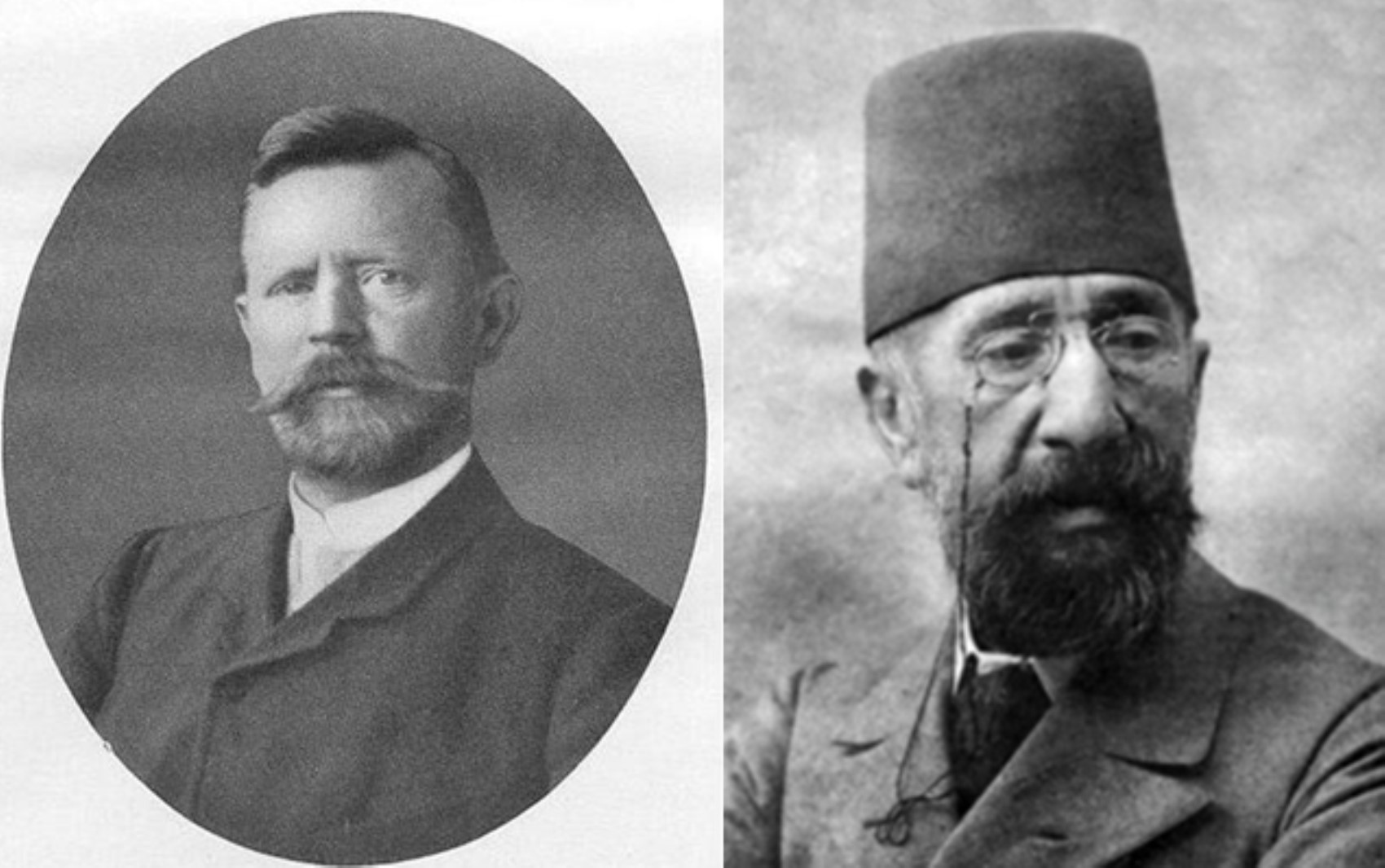
(Carl Humann and Osman Hamdi Bey)
***
Thus, the smuggling of Pergamon artifacts to Berlin under the management of C. Humann continued under the supervision of Hamdi Bey, who became the Museum Director in 1884.
Until 1886, permission was given for the removal of some pieces of the Altar of Zeus, supposedly only a small part of which remained in Pergamon.
Meanwhile, upon the insistence of the Germans to take a few newly found pieces of the Altar of Zeus in 1885, supposedly to integrate the works, Osman Hamdi Bey demanded the return of some statues previously taken to Berlin in exchange for this piece.
The rumors about the removal of Pergamon artifacts abroad with or without permission must have been so loud that the painter Hamdi Bey, who turned a blind eye to the removal of many works abroad, took such an attitude.
Maybe someone was saying, "shame on you!"
Maybe someone was saying, "look, this will end badly."
Despite all these proven experiences and the irreparable damage Osman Hamdi caused to the country, he would be presented to the public as a reputable person by his protégés until today.
***
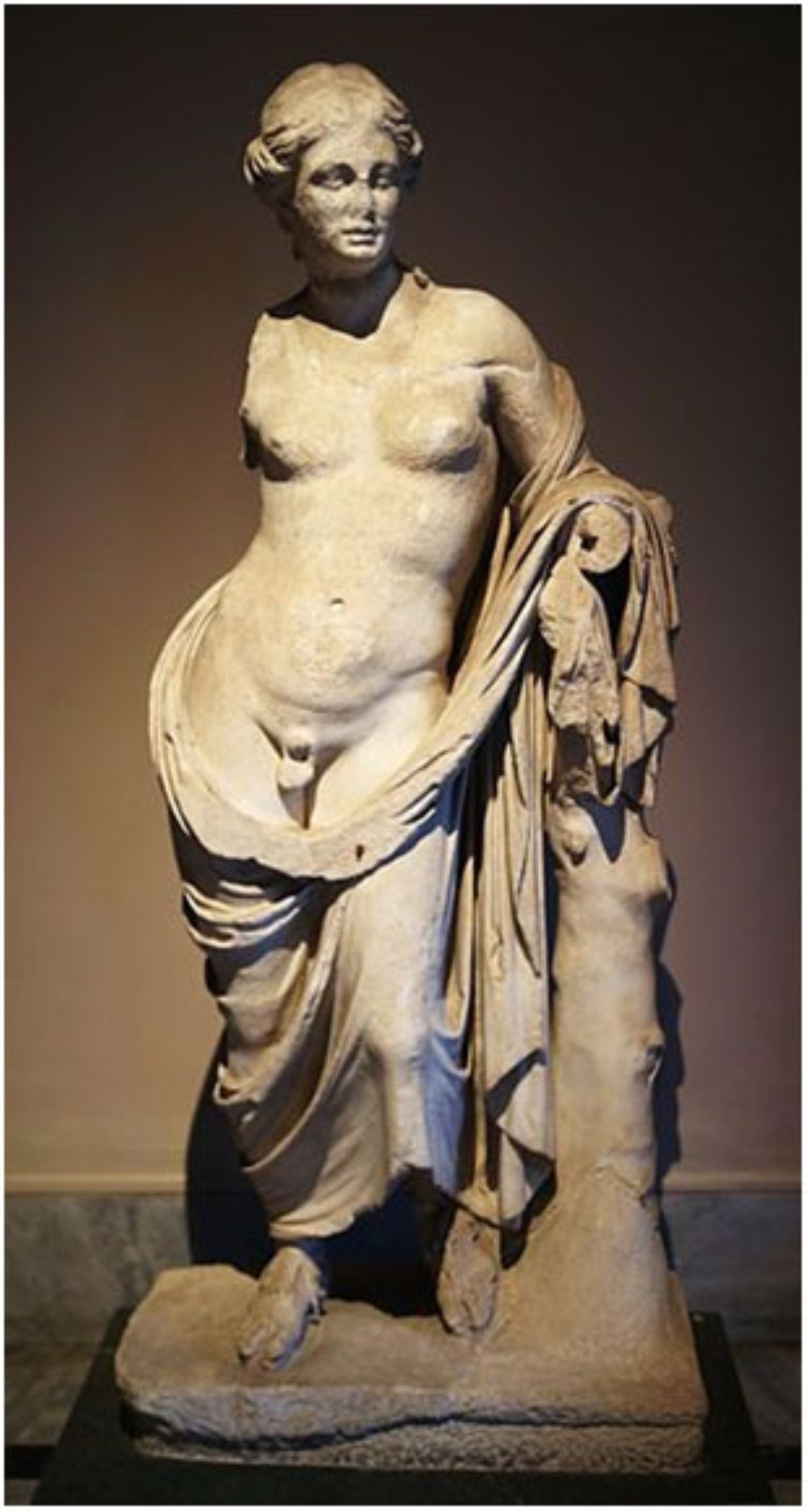 (Hermaphrodite statue. First smuggled, now in the Istanbul Archaeology Museum)
This situation continued until 1906.
In 1906, when nationalist attitudes strengthened, the removal of Pergamon artifacts to Europe with so-called permits was strictly prohibited under the influence of the Young Turk Enver Pasha.
The Germans, who wanted to take the remaining pieces of the Altar of Zeus in Pergamon with incredible passion, agreed to Hamdi Bey's proposal to return some statues in exchange for them.
They shouldn't have offended the Ottoman Museum Director who had been helping them in Pergamon and Gaziantep for so long.
Anyway, they had dozens of statues and thousands of historical artifacts they had taken to Berlin in their hands.
After all that has happened, one inevitably thinks of unprovable bad things!
In this context, the German authorities sent a Hermaphrodite statue, a headless and footless dancing woman statue, and the Zeus Ammon statue we mentioned back to Istanbul (not to Pergamon, where they smuggled them from).
Considering the enormous collection taken to Berlin, a few statues sent back home are not enough to overshadow the magnitude of the loss.
Had the elements of the German State sent Zeus Ammon and Hermaphrodite to Istanbul as a souvenir (!) instead of the Pergamon statues and unique Altar of Zeus pieces they smuggled?
In mythology, Hermaphrodite is defined as a being that carries both male (Hermes) and female (Aphrodite) organs in one body.
Look at the irony!
By sending this statue, the Germans must have known, of course, that the Turks would not find such-looking statues very suitable for their own culture.
They made a plaster copy and kept it for themselves.
It is with such shenanigans that the Altar of Zeus and the Pergamon statues, which are a part of the city of Pergamon, are captive in Berlin.
Zeus Ammon and Hermaphrodite are in the Istanbul Archaeology Museum.
They can be visited.
As a sign of these disgusting relations, how good it would be if the Ministry of Culture of the Republic of Turkey and the Istanbul Archaeology Museum also sent Pergamon's statues to Pergamon's modest museum!
THE ALTAR OF ZEUS AND PERGAMON ARTIFACTS DO NOT BELONG TO COLD AND FOGGY BERLIN, BUT TO BEAUTIFUL PERGAMON. THEY MUST DEFINITELY COME BACK, THEY MUST RETURN HOME
(Source: http://www.my-favourite-planet.de/english/middle-east/turkey/pergamon/pergamon-photos-02-019.html.-.... I thank the Istanbul Museum Directorate for the kindness of sending us a photograph of the Zeus Ammon statue in the Istanbul Archaeology Museum.)
Sefa Taşkın
14.06.2026
Karşıyaka/Dikili
Most Read

Striking picture for Özgür Özel's 'New Party'

The PKK opening and Özgür Özel’s path!..

How did the newspapers view Özgür Özel's farewell to the CHP?

He killed his wife by slitting her throat: Their children witnessed the moments

What did the CHP do?

Özel’s new party move in the world press

Fire at TUSAŞ engine factory in Eskişehir under control

The New CHP, against CEHAPE

From self-efficacy to despair

Kılıçdaroğlu's first message on Özgür Özel's new party announcement