



THINGS ARE HEAVY IN THEIR PLACE. LET US NOT FORGET, LET US NOT LET BE FORGOTTEN
What is happening in this world!
The dirty veils pulled over the truth are being torn away one by one!
This ancient Anatolia has been the bed of a great Imperialist plunder that has been forgotten, unspoken, and ignored for years.
It has been peeled like an onion.
As if it were not enough that its natural resources, manual labor, and intellectual power have been exploited for years, its historical artifacts have sometimes been stolen one by one, and sometimes smuggled in bulk.
And how insatiable the appetite of Imperialism has been!
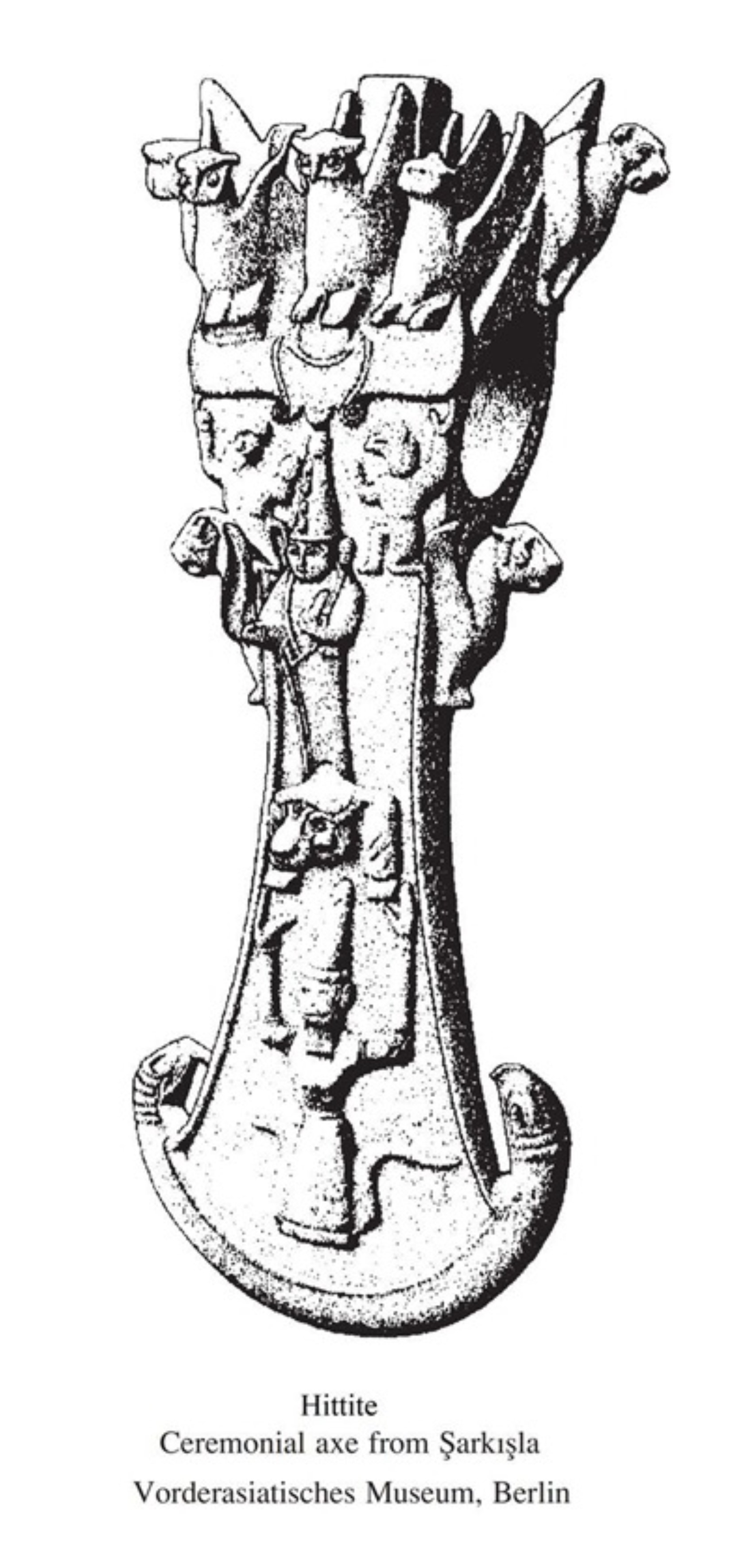
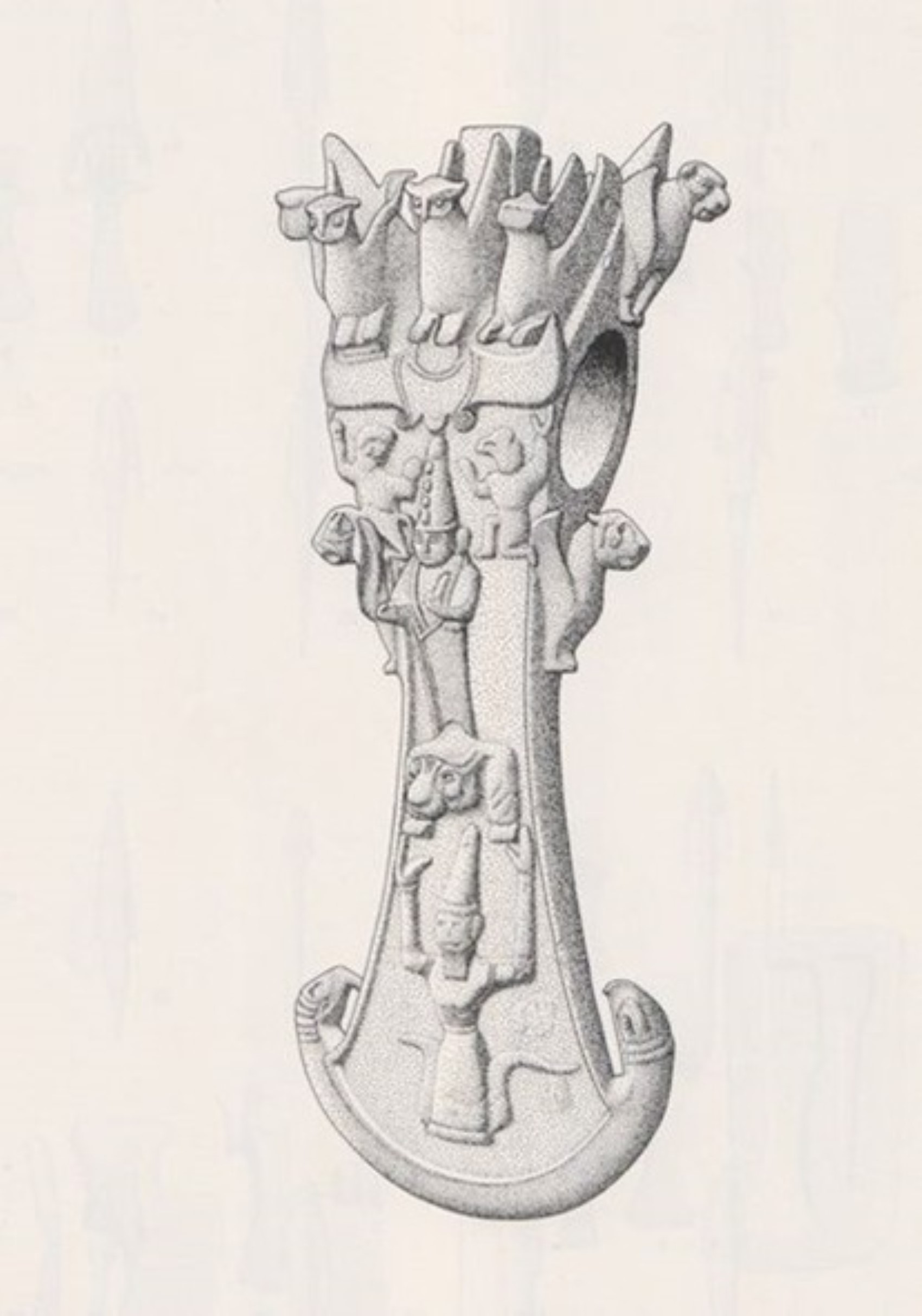
(The Hittite Ceremonial Axe of Sivas and its record found in the Berlin Museum/Prison).
In this context, as our insistence on demanding the return of our historical artifacts that have been smuggled, stolen, and taken abroad continues, and as these demands become more widespread, new documents and new situations are emerging.
The information and data reflected to the public are increasing.
Among these, those discussed in recent days once again define the depth of the theft and the centers of smuggling!
Discussions in this direction also expose the shamelessness of foreign states that hide our historical artifacts they have obtained in their museums/prisons and warehouses.
How European and US Imperialism and their puppets have plundered our country is once again being revealed.
***
Smugglers, encouraged by archaeologist-disguised robbers and rootless wealthy collectors abroad, have continued to smuggle historical artifacts from Anatolia after the Republic, just as they did during the Ottoman period, and they still do.
The new situation that has come to light from the information provided by Deniz Karakurt, a lecturer at the Sivas-Şarkışla Aşık Veysel Vocational School, and his colleagues, which has also been reflected in the press, is thought-provoking.
The smuggling adventure of the “Hittite Ceremonial Axe,” which was reported to have been found in 1940 around the Dövlek (Döllük) village of Sivas's Şarkışla district, is very interesting.
The unique artifact in question is now located in a dungeon called the “Vorderasiatisches Museum” (Museum of the Ancient Near East), which is in a section on the lower floor of the Pergamon Museum/Prison in Berlin, Germany.
In addition to the “Axe,” it is seen that other artifacts smuggled from Sivas are also in these smuggling centers called museums in Berlin and other parts of the world.
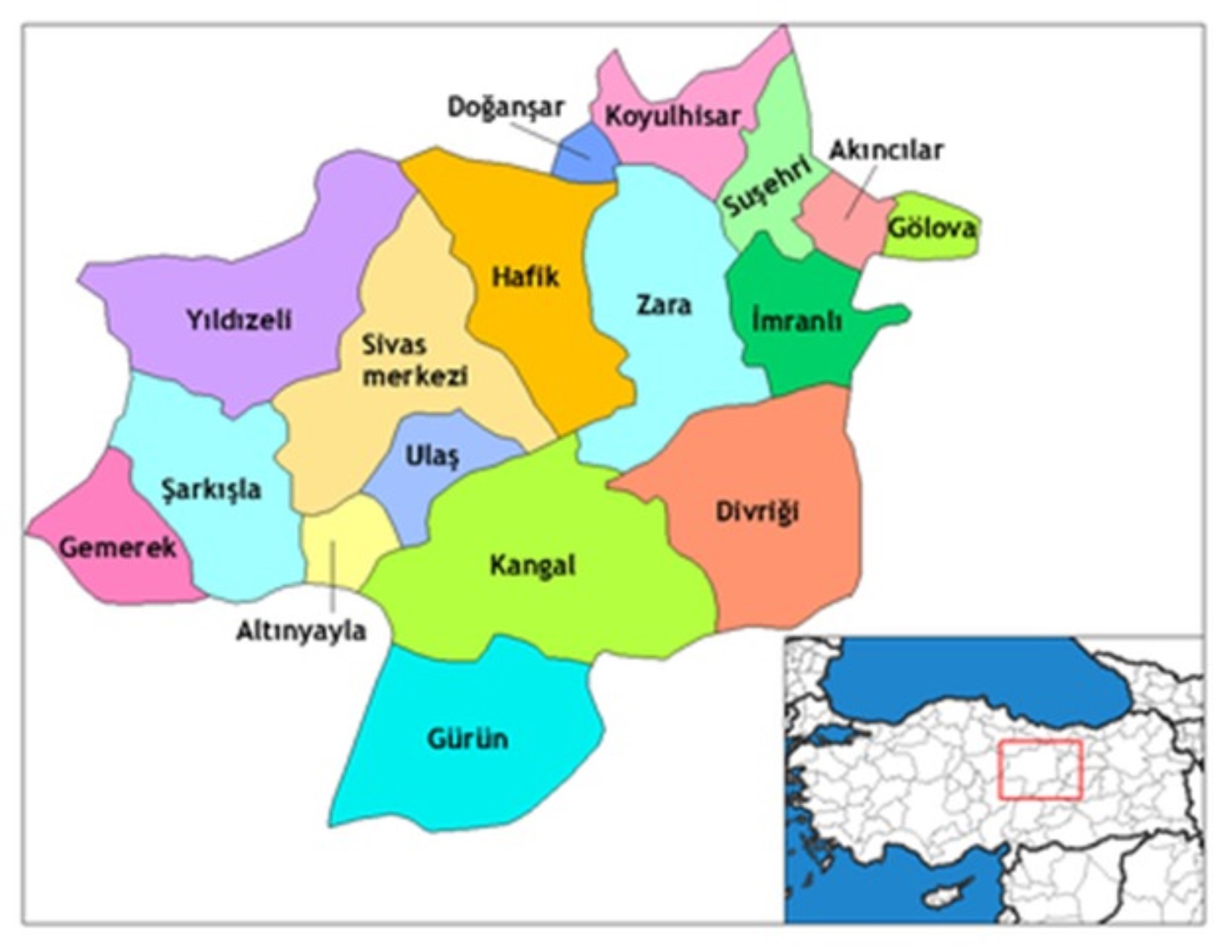
(Anatolia-Sivas province, Şarkışla/Altınyayla/Yıldızeli districts)
The Şarkışla-Dövlek Village, where the “Hittite Ceremonial Axe” is stated to have been found, is near other important historical Hittite cities to the west of Sivas province.
To its east are the Hittite settlements of “Sarissa” (Kuşaklı-Altınyayla), and to its north are those of “Samuha” (Kayalıpınar-Yıldızeli).
In the 2nd millennium B.C., the Hittites established an administration based in Hattusa (Boğazköy-Çorum) that ruled over Anatolia and brought many peoples speaking different languages under their sovereignty. Including the Sivas region.
History records that the Sivas province and its surroundings, called the “Upper Land” (Katteran Utne) by the Hittites, were occupied along with these cities by Black Sea communities called “Kaska” in the middle of the 14th century B.C. during the time of King Tudhaliya III, and that Samuha, one of the largest Hittite cities, was transformed into an important religious center, especially in the 13th century B.C. during the time of Hittite King Muwattali II.
It is no coincidence that the extraordinarily beautiful “Hittite Axe” and the magnificent artifacts that will be mentioned below, which will guide the understanding of Anatolian Culture, were found in this region with very old historical traces.
These are the values that form the foundation of Anatolian culture.
***
According to Assoc. Prof. Halil Tekin from Hacettepe University, the registration number of the Hittites' “Bronze Ceremonial Axe” in the inventory book of the “Vorderasiatisches Museum,” which is part of the Pergamon Museum/Prison in Berlin, is 15652.
Furthermore, the registration number of a “Bronze Bowl” found with it is 15653, and those of two “Flat Axes” are 15654 and 15675.
In other words, these stolen artifacts are in Berlin along with the Pergamon Altar of Zeus.
The axe came into the possession of the Museum/Prison in 1956 through purchase (!).
Meaning someone, or some people, stole it, smuggled it, and sold it to Germany, to Berlin!
This unique artifact, reported to have been found in Sivas-Şarkışla in 1940, is estimated to date back to the Hittite period of 1460-1190 B.C. It has a 3500-year history.
According to this data, it is understood that an incredible robbery took place in Sivas province with the emergence of the “Hittite Axe” in the Pergamon Museum/Prison.
The tentacles of this robbery, which was noticed in Germany by Turkish officials, extend as far as England and the USA.
***
One of the findings, which is thought to have been seized in the same region and in the same years during the robbery, remained in Turkey, in Ankara.
A statuette made of bronze, 12 cm high, with a cap on its head and a short skirt, was registered in the “Inventory of Natural and Cultural Assets of the Republic of Turkey” with the number 8825.
It is called the “Dövlek/Döllük Statuette.”
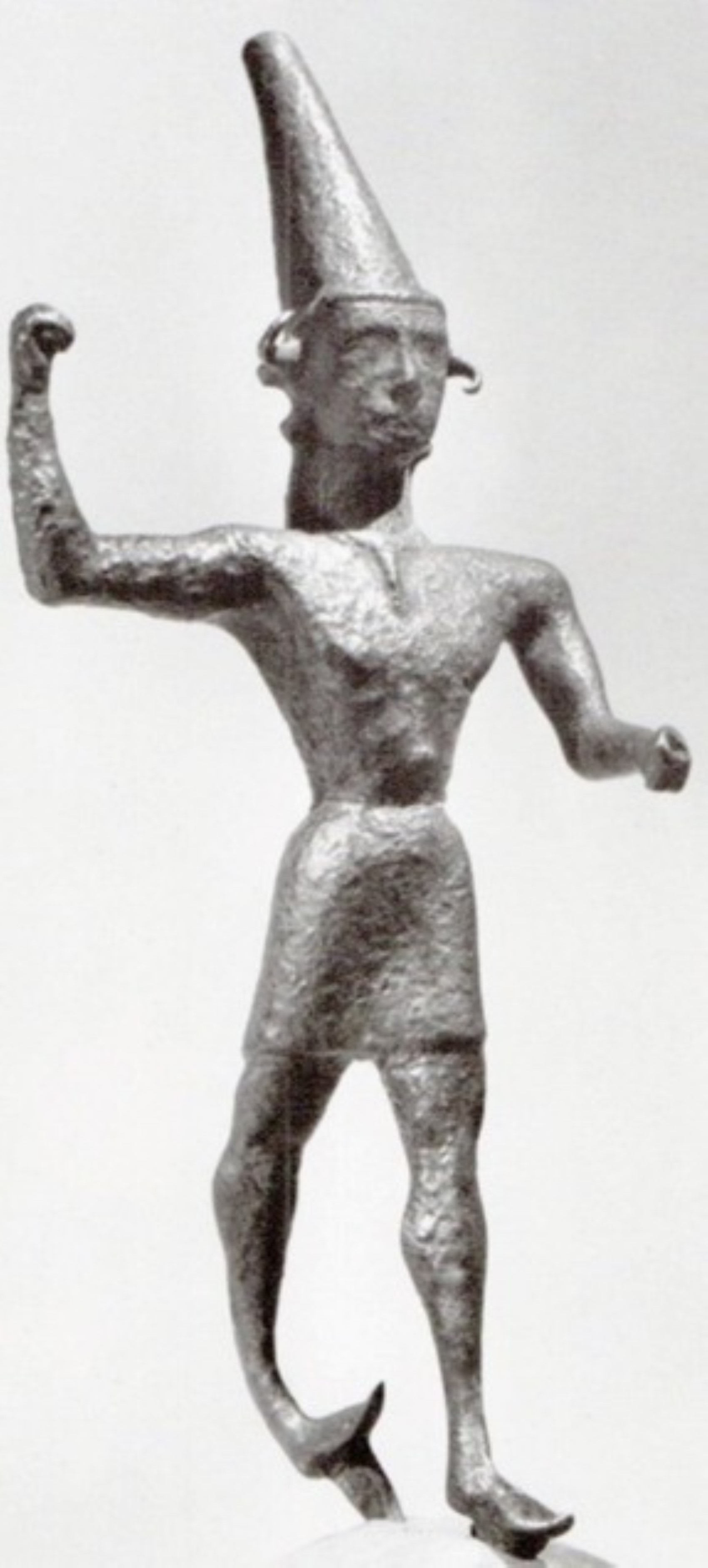
(Dövlek Statuette made of bronze from the Hittite period exhibited at the Ankara Museum of Anatolian Civilizations)
Prof. Nimet Özgüç wrote in an article she wrote in 1949 that Hittite artifacts were found around the Dövlek/Döllük village of Şarkışla district of Sivas province in 1940 and that these were delivered to the Ankara Museum of Anatolian Civilizations through “purchase.”
Now it is there, safe.
However, “it” is also a part of the illegal Sivas excavation and findings. Somehow it could not be taken out/smuggled abroad!
The thieves who probably secretly unearthed and stole the artifacts perhaps could not agree among themselves and sold them to different places!
In other words, the smuggled “Hittite Ceremonial Axe” and the Şarkışla artifacts in the hands of the Republic of Turkey in Ankara were likely seized in the same major robbery.
***
Along with these, it is probable that the Hittite artifacts exhibited in New York's famous Metropolitan Museum, which are recorded as having originated in “Central Anatolia” and are dated to the 14th-13th century B.C., are also part of the Şarkışla robbery.
They are all works of the same region, the same history, the same art style, and similar craftsmanship.
In this context, the “deer-head shaped silver drinking vessel,” “golden Sun Goddess with a child in her lap,” “silver seated woman statuette,” and “winged goddess statue made of gold and silver” shamelessly exhibited in New York, USA, may also be artifacts smuggled in the Sivas robbery.
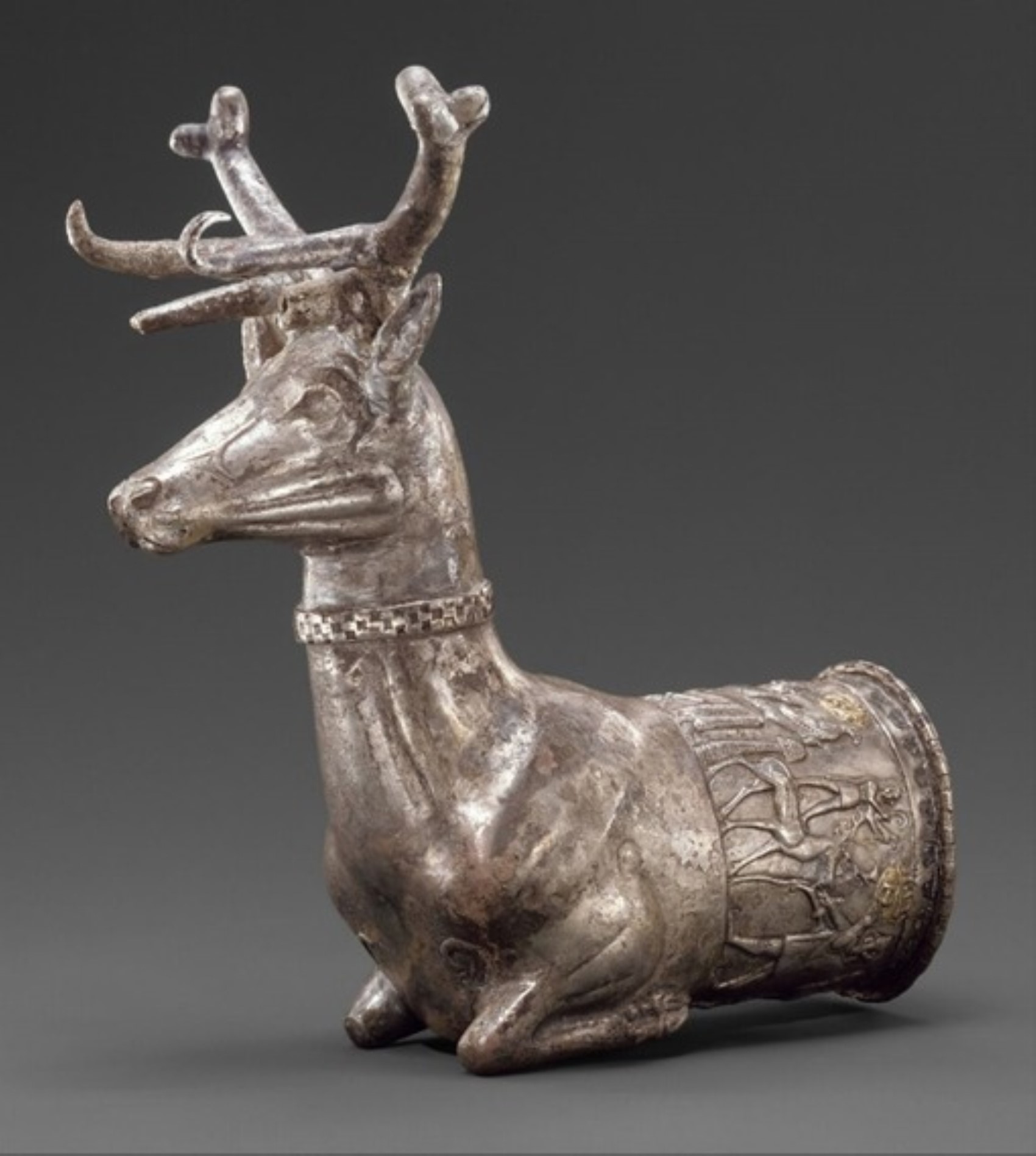
(Deer-headed drinking vessel, one of the magnificent Hittite artifacts reported to be of Central Anatolian origin in the New York Metropolitan Museum, USA)
It is known that the signs on the “deer drinking vessel” are pictorial writings also called “Luvian hieroglyphs” unique to Anatolia; and that the “Deer” was worshipped as a “god” under the name “Kurunta” by the Luvians, who were one of the oldest peoples of Anatolia and close relatives of the Hittites.
These writings are of great importance in understanding very ancient Anatolian history and belief.
So important that they are the keystone!
These unique artifacts of great historical importance were donated (!) in 1989 to the New York Museum by an American wealthy man named Norbert Schimmel, who was born in Germany/Berlin, known as a collector, and who had historical artifacts collected from smugglers all over the Middle East.
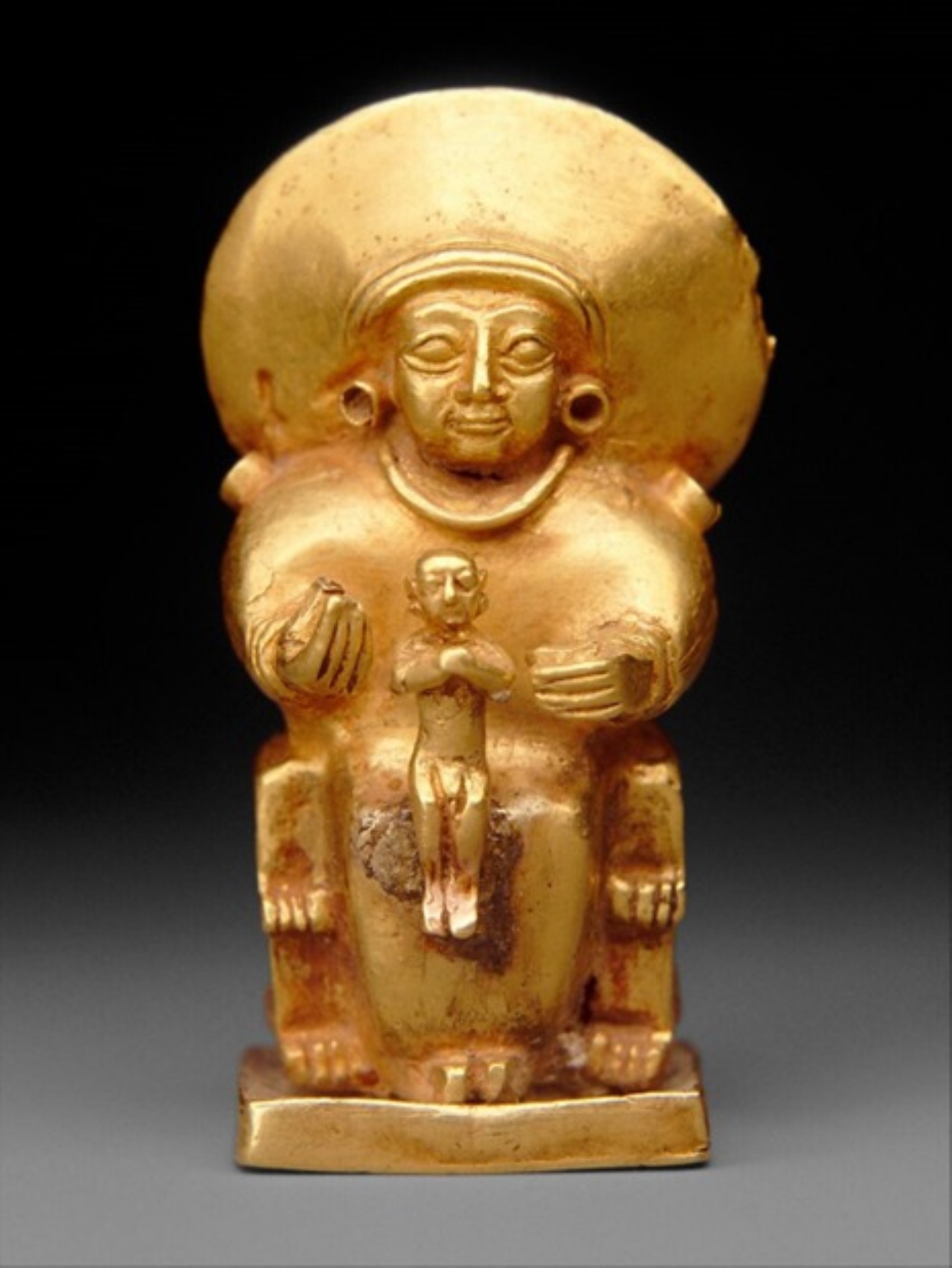
(Sun Goddess with a child in her lap, one of the magnificent Hittite artifacts reported to be of Central Anatolian origin in the New York Metropolitan Museum, USA)
According to the information provided by Assoc. Prof. Halil Tekin: (The thief) “The Hittite artifacts in Schimmel's Collection and the “Şarkışla Ceremonial Axe” belong to the same time period. It is highly likely that they were unearthed together as a “collective find.”
In other words, the “Hittite Ceremonial Axe,” which was determined to be in the “Vorderasiatisches Museum” section of the Pergamon Museum/Prison in Germany, and the Hittite artifacts that were in the hands of Schimmel, the encourager of smugglers, and then supposedly donated to the famous New York Metropolitan Museum Prison, were taken from the same region, Central Anatolia.
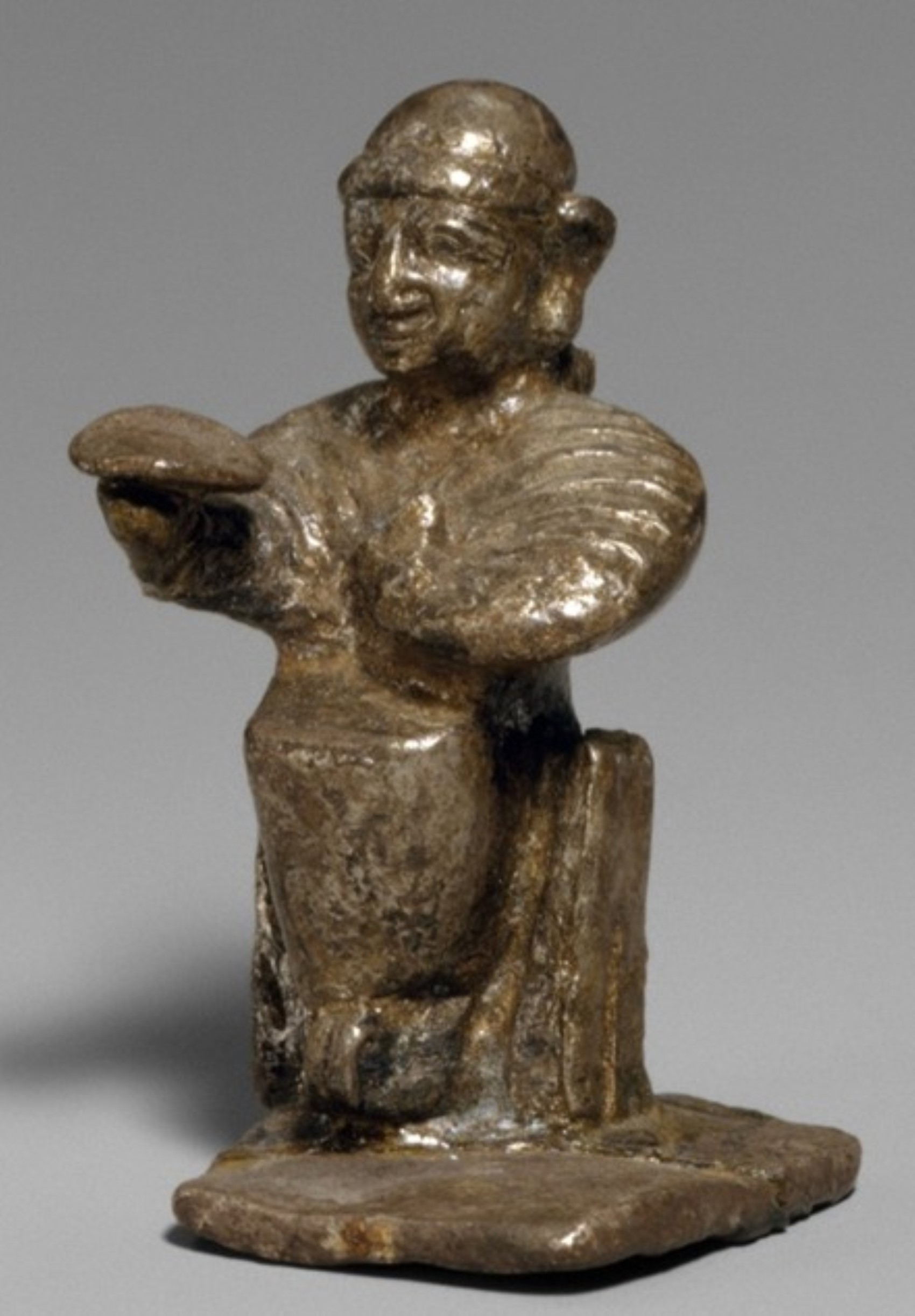
(Seated woman statue made of silver, one of the magnificent Hittite artifacts reported to be of Central Anatolian origin in the New York Metropolitan Museum, USA)
It's not over yet!
There is likely another unique historical artifact from Sivas in the USA.
The magnificent artifact in the shape of a clenched fist made of silver, with human figures playing musical instruments at a religious ceremony on it, called the “Boston Rhyton, drinking vessel,” exhibited in the Boston Museum of Fine Arts/Prison, can also be added to this group of smuggled items.
It is reported that this artifact was also donated (!) to the Boston Museum/Prison in 1976 by a smuggler named Mohammad Yeganeh, who is associated with London.
It is highly probable that all these “cultural assets,” manufactured 3300 years ago from the 14th-13th century B.C., were seized and smuggled from Sivas, Central Anatolia, in the context of their manufacturing styles and period, just like the “Hittite Axe” found in Sivas-Şarkışla and the Hittite artifacts in New York and Boston.
In other words, the Hittite period artifacts found in the 1940s around Şarkışla, either collectively or one by one through illegal excavations, passed into the hands of thieves like Norbert Schimmel, an American of German origin disguised as a collector, through the hands of smugglers, and from him, they passed to the Museum/Prisons where they are kept today.
Smuggling like a movie!
International smuggling networks are not idle, neither yesterday nor today!
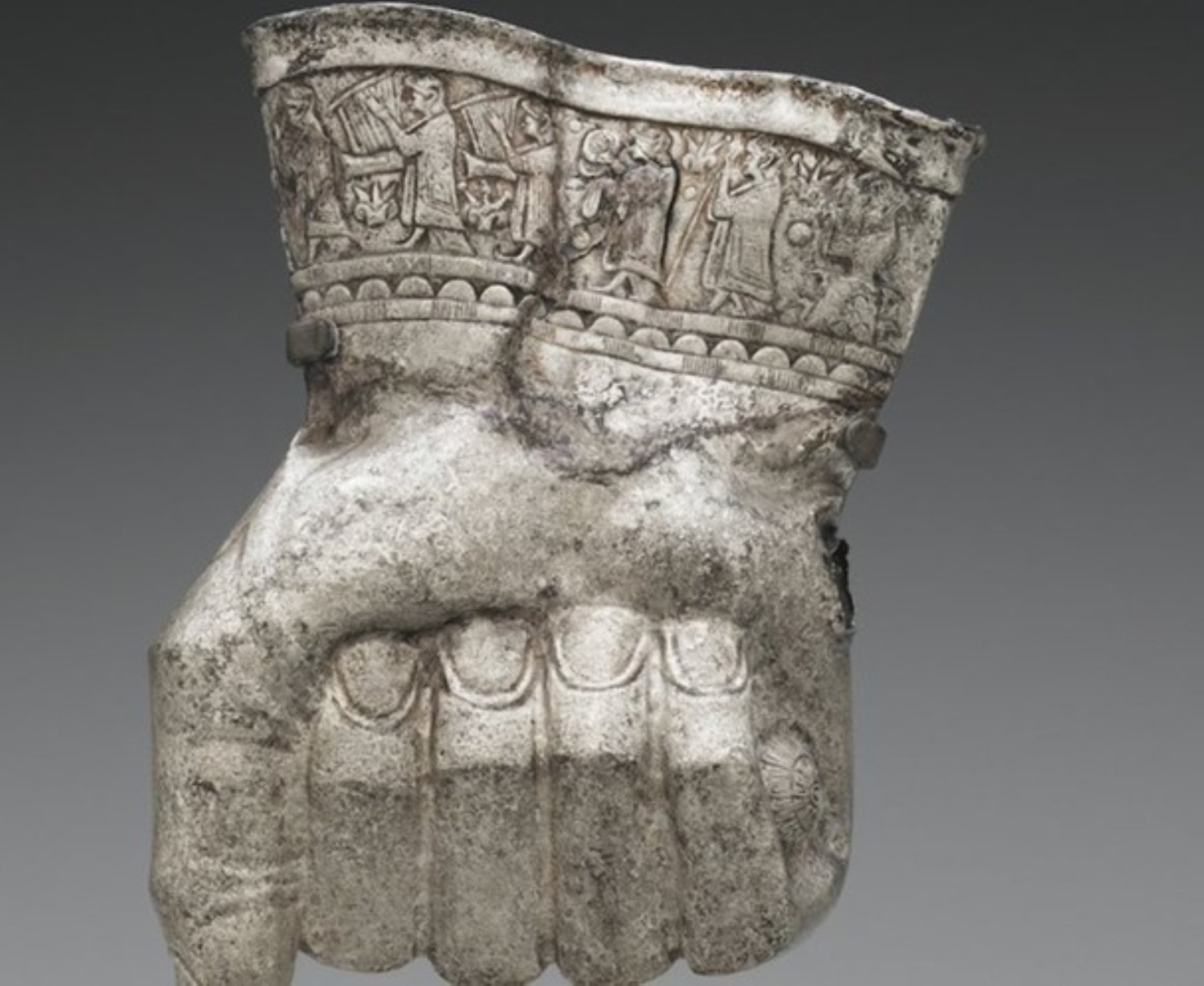
(Fist-shaped drinking vessel smuggled from Central Anatolia in the Boston Fine Arts Museum, USA)
***
Deniz Karakurt, who traced the “Hittite Ceremonial Axe,” which is a part of this robbery that remained in the dark and was forgotten for many years, and found it in the “Vorderasiatisches Museum” section of the Pergamon Museum/Prison in Berlin, reports that information and pictures about this artifact are available at Cambridge University in England.
An old photograph depicting the “Hittite Axe,” which was noticed in London, was also recorded in the USA. The photograph is in the antique collection of the German-American Norbert Schimmel, the king of smugglers in New York.
Among these findings, while it is seen that the Hittite Statuette found in the same region, Sivas-Şarkışla, in the same years was sold to Ankara, to the State, it is not at all surprising that the traces of Hittite artifacts of the same quality and characteristics found in the same region appear in Berlin, London, New York, and Boston!
Evil is also universal!
Smugglers, by unknown means, took the Hittite artifacts abroad, sold them among the wealthy, and distributed them.
Perhaps because they couldn't smuggle it, or so as not to be rude (!), or because they didn't like it (!), they sold one, the “Dövlek Statuette,” to the Ankara Museum of Ancient Civilizations (!).
***
German Prof. Kurt Bittel, who was in Turkey in the 1940s when this robbery took place and who worked as an archaeologist, lectured at the university, and was respected as a scientist in Anatolia in those years, provided important information on this subject.
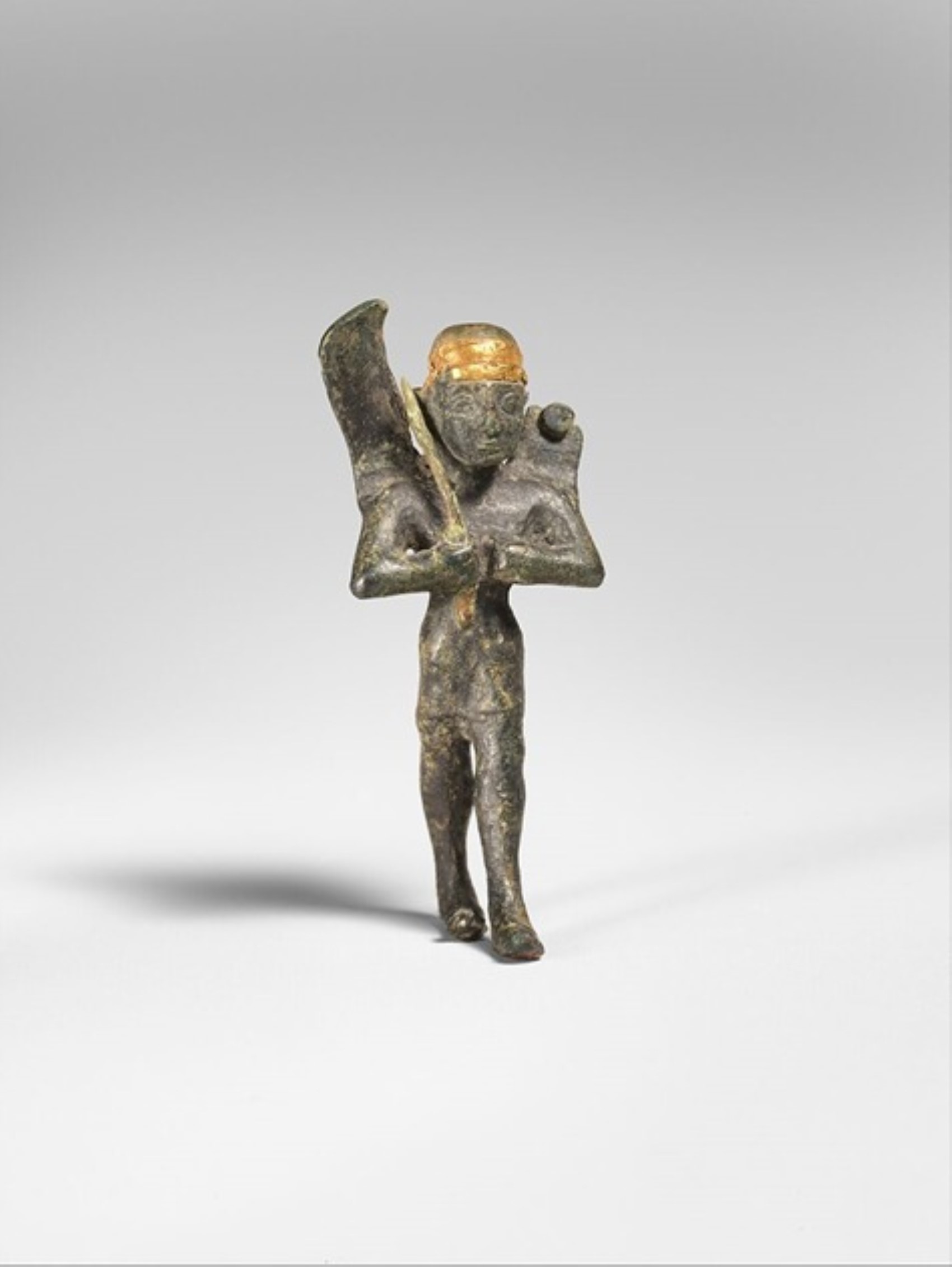
(Statue of a winged goddess made of gold and silver, one of the magnificent Hittite artifacts reported to be of Central Anatolian origin in the New York Metropolitan Museum, USA)
He testified and made statements about the Hittite Axe seized in Şarkışla, which was recorded as Heidelberg Academy of Sciences Linguistics History Department Meeting Notes in Germany in 1976.
In a journal published by the British Cambridge University in February 1981, the “Hittite Ceremonial Axe” was described in detail in a record kept by the great Hittite and Luvian scholar Prof. J.D. Hawkins, based on information provided by Prof. Kurt Bittel in 1975:
“Among the bronzes (historical artifacts) known to have come from Şarkışla, a unique piece carries figures of cultic importance and has the same heavily embossed scenes on both flat sides. The axe was cast as a single piece. The individual figures adorning it mostly resemble familiar works of the Hittite Imperial period. A mountain man with a cap carries a god standing on a lion. Above him, kneeling griffin men (mythological creatures with eagle wings and lion bodies) support the sun disk and winged lions and griffins. Other inventory texts mention such ornate axe-shaped rhytons/drinking vessels that existed in the Hittite cult, but this is the only “Ceremonial Axe” that has survived to the present day.”
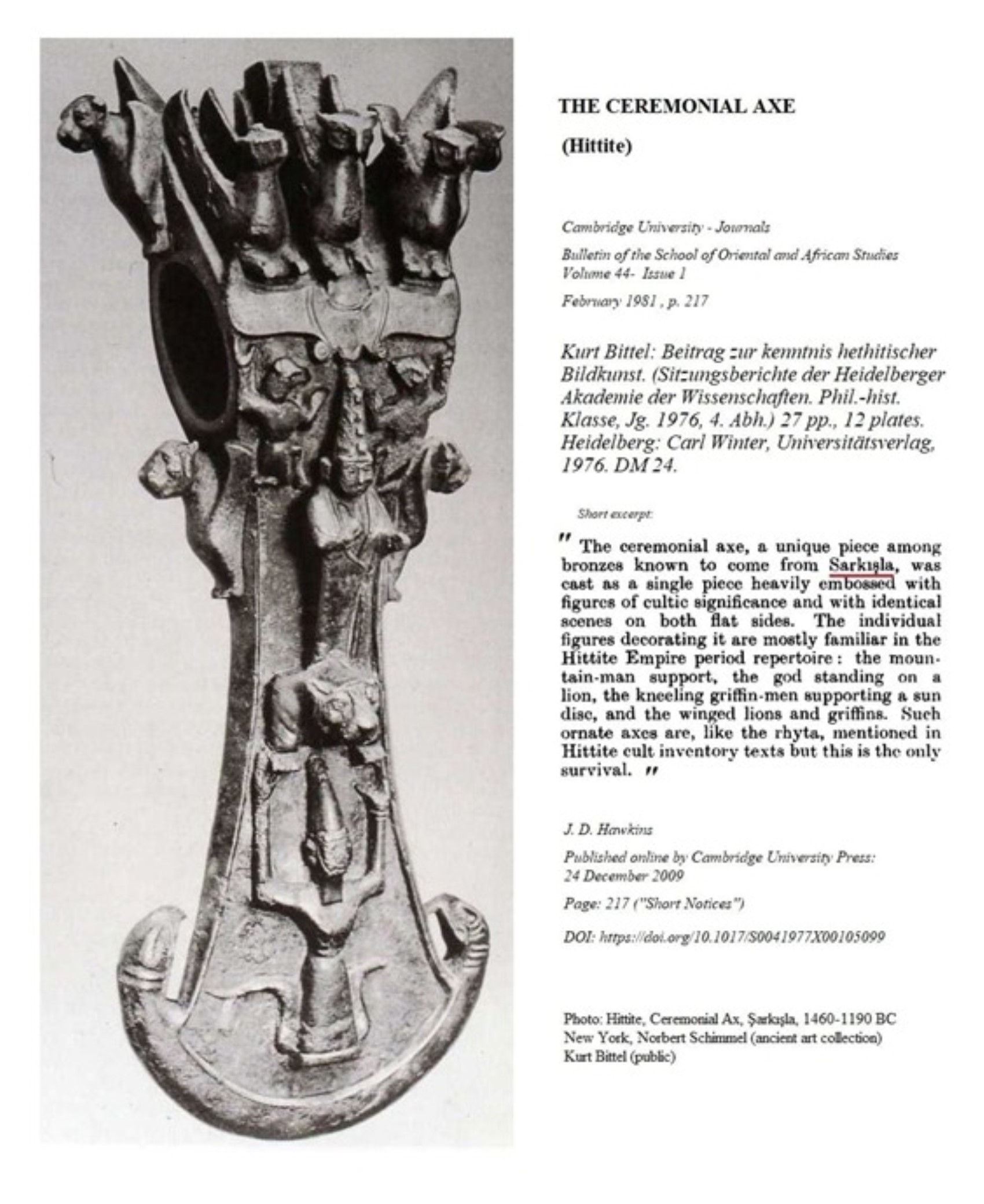
(Cambridge University Publication on the Hittite Ceremonial Axe-2009)
In other words, it is one of a kind!
It provides so much important information about Anatolian culture.
Prof. Dr. Hayat Erkanal also has a drawing of the “Axe” in his doctoral thesis, which he did in Germany alongside Kurt Bittel in 1975.
Presumably, when the thieves sold the “Axe” to the Pergamon Museum/Prison in Berlin in 1956, German officials received information from Prof. Kurt Bittel about whether it was related to the Hittites and Şarkışla.
***
Prof. Bittel is a well-known scientist who worked and directed excavations in Yozgat-Alişar, Troy, Bandırma-Daskyleion, Eskişehir-Demircihüyük, and Boğazköy-Yazılıkaya in Turkey in the last century.
His name appears in the delivery records of the Berlin Pergamon Museum/Prison regarding the “Axe” (presumably in the context of testifying that the artifact came from Şarkışla).
Although this situation leads to speculation that he paved the way for the smuggling of the “Axe,” there is no direct information confirming this.
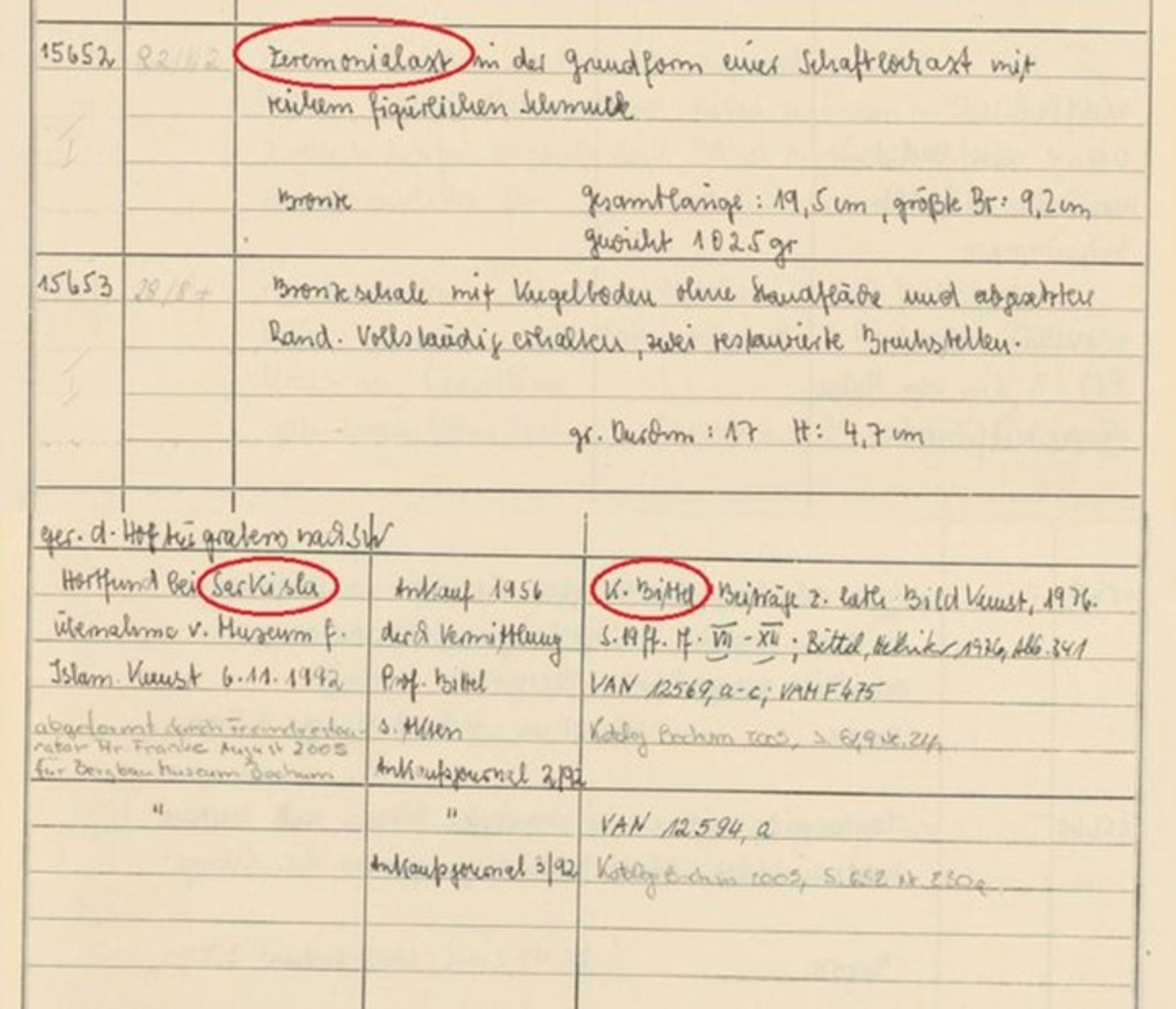
(Kurt Bittel's testimony that the Hittite Axe was found in Şarkışla and the Berlin Museum/Prison. Akkurt/Tekin.2024)
***
On the other hand, it is worth repeating that the “Vorderasiatisches Museum in Berlin,” where the “Hittite Axe” and many Anatolian artifacts are located, is a part and section of the Pergamon Museum/Prison, a huge, eerie-looking building where the Zeus Altar of Pergamon, which was stolen and taken to Germany under suspicious circumstances, and thousands of artifacts are imprisoned.
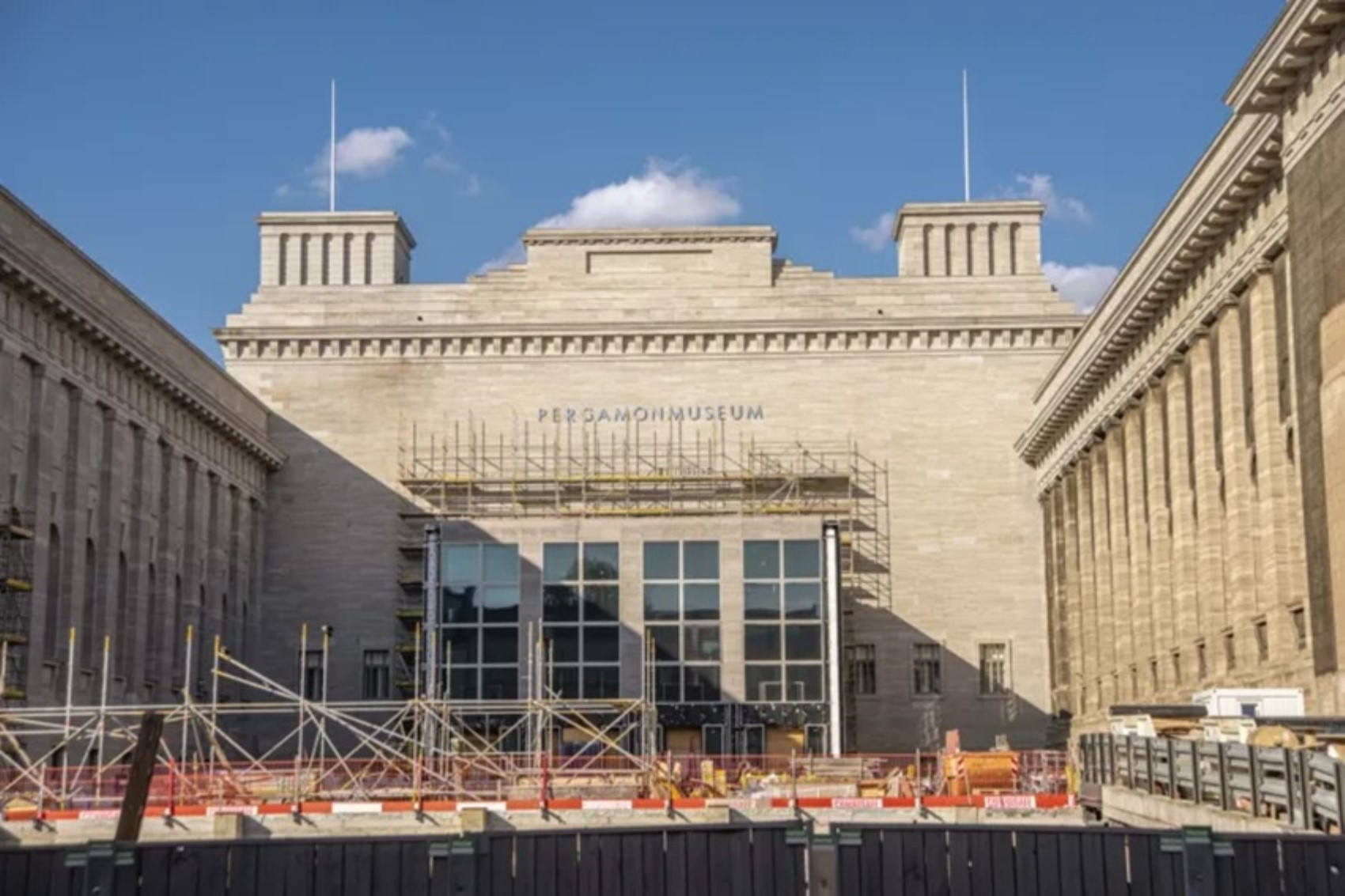
(The collapsing Pergamon Museum/Prison, which also houses the Sivas Axe-Berlin-2023)
In this context, it is clear that the stolen “Hittite Axe” in question is kept in the Pergamon Museum/Prison along with other artifacts smuggled from Anatolia.
The fact that this metal artifact, which is prone to decay, is kept in a place like a warehouse on the lower floor of the building, which is in high humidity that we can call a “dungeon,” in order to protect it, is a separate situation.
Furthermore, it cannot be ignored that this Museum/Prison was built on a swampy island in the middle of the Spree river passing through Berlin, that its foundation continues to collapse and even slide, and that many artifacts are rusting and decaying, as stated by Berlin officials.
It is obvious that our smuggled and stolen artifacts, which are exhibited with ostentation and propaganda, are not well cared for or protected.
In this context, the claim that “the Pergamon Altar of Zeus was taken to Berlin to be protected” is a lie!
For this reason, it is known to the world public that the Museum/Prison, which is collapsing due to humidity, was closed to visitors in 2014 for repairs, and although it was announced that it would reopen in 2019 and 2023, the repairs could not be managed, or the damage must be so great that the closure period has been extended until 2037.
Perhaps this date will be pushed back even further!
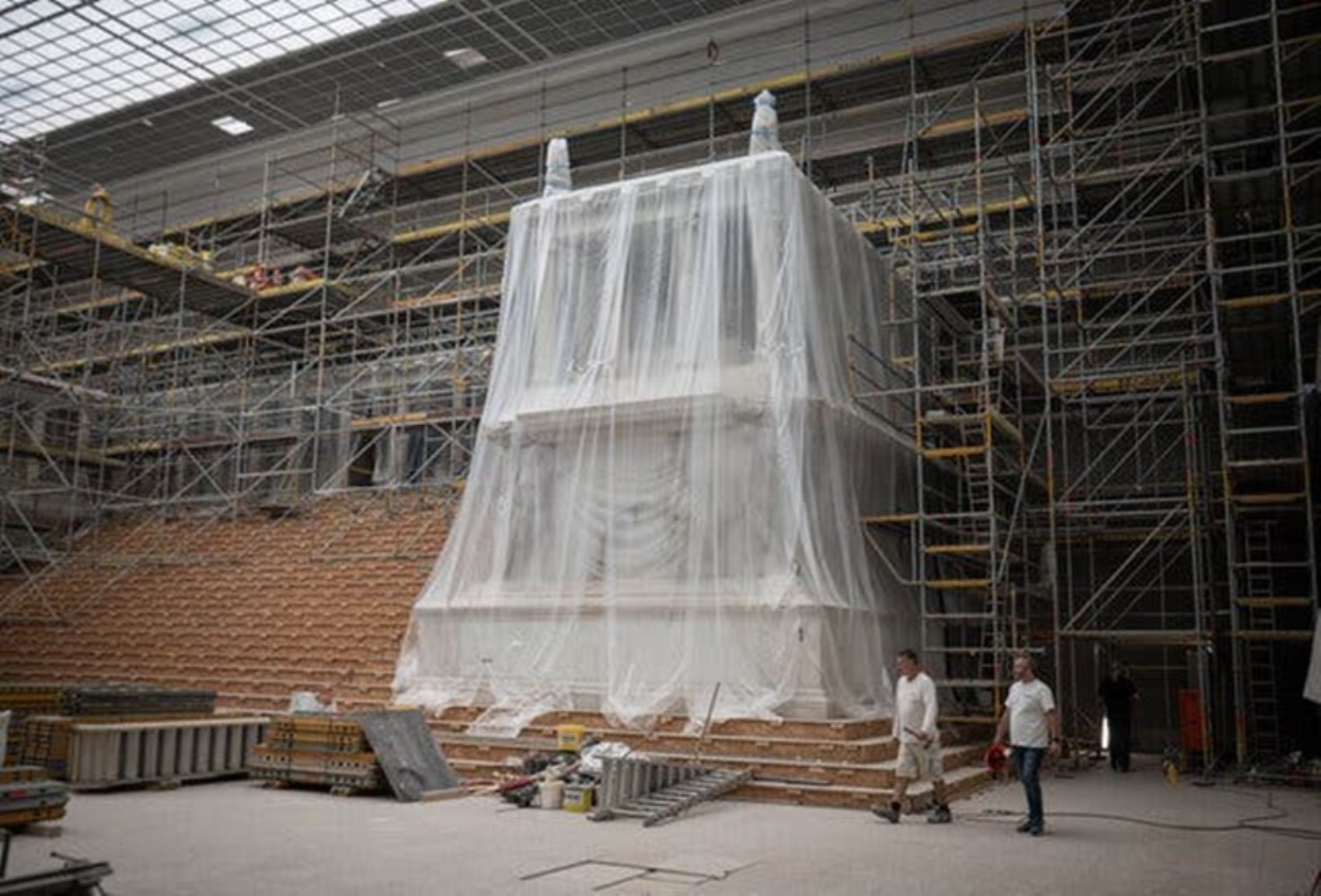
(The collapsing Pergamon Museum/Prison, which also houses the Sivas Axe-Berlin-2023)
In other words, this Museum/Prison is now closed.
Visiting the Zeus Altar and many artifacts, which were dismantled like a puzzle, has been banned.
Construction workers are walking around inside!
They are already telling those who want to visit that they can see the Hittite Axe “when the repairs are finished”!
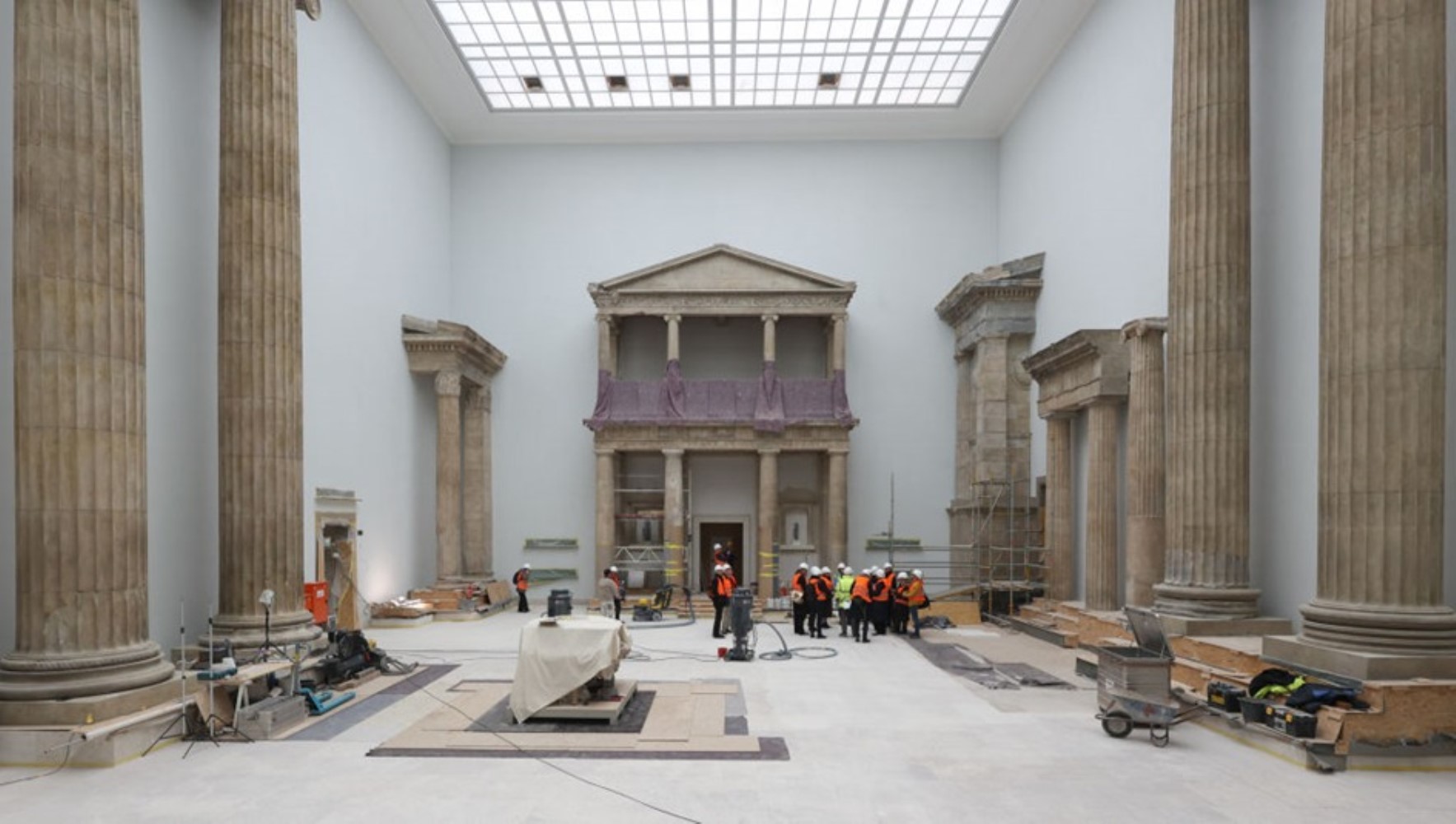
(Restoration/repairs are supposedly being done in the Berlin Museum/Prison, which was built on a slippery riverbed and is collapsing-2023)
Look at this: They are hiding the artifacts of Anatolia and Pergamon from their true owners!
***
Historical artifact smuggling is not an archaeological event.
It is theft! It is a crime!
It is the robbery of the history of a city, of a country.
Those who protect the theft and those who hold the stolen artifacts are accomplices to this crime!
The Pergamon Museum/Prison in Berlin is the place where thousands of historical artifacts that were taken abroad as a result of “theft,” whether they are called “stolen, gifted, donated, or purchased,” are hidden.
Along with the Metropolitan Museum in New York, the British Museum in London, the Louvre Museum in Paris, and the Fine Arts Museum in Boston, it is one of the largest smuggling centers in the world.
“There is no ifs or buts about it”!
When you enter the data-base of the Museum/Prison on the internet, it is seen that 2496 Pergamon artifacts, excluding the Zeus Altar, and 9543 antique artifacts were smuggled and placed in the Pergamon Museum/Prison.
Furthermore, these are unhesitatingly called “Prussian Cultural Property/Heritage (Preußischer Kulturbesitz)” in Germany's Berlin records.
As understood from the data regarding the Hittite Axe, perhaps thousands more smuggled artifacts whose records are not disclosed are waiting/rotting in the humid warehouses of this building.
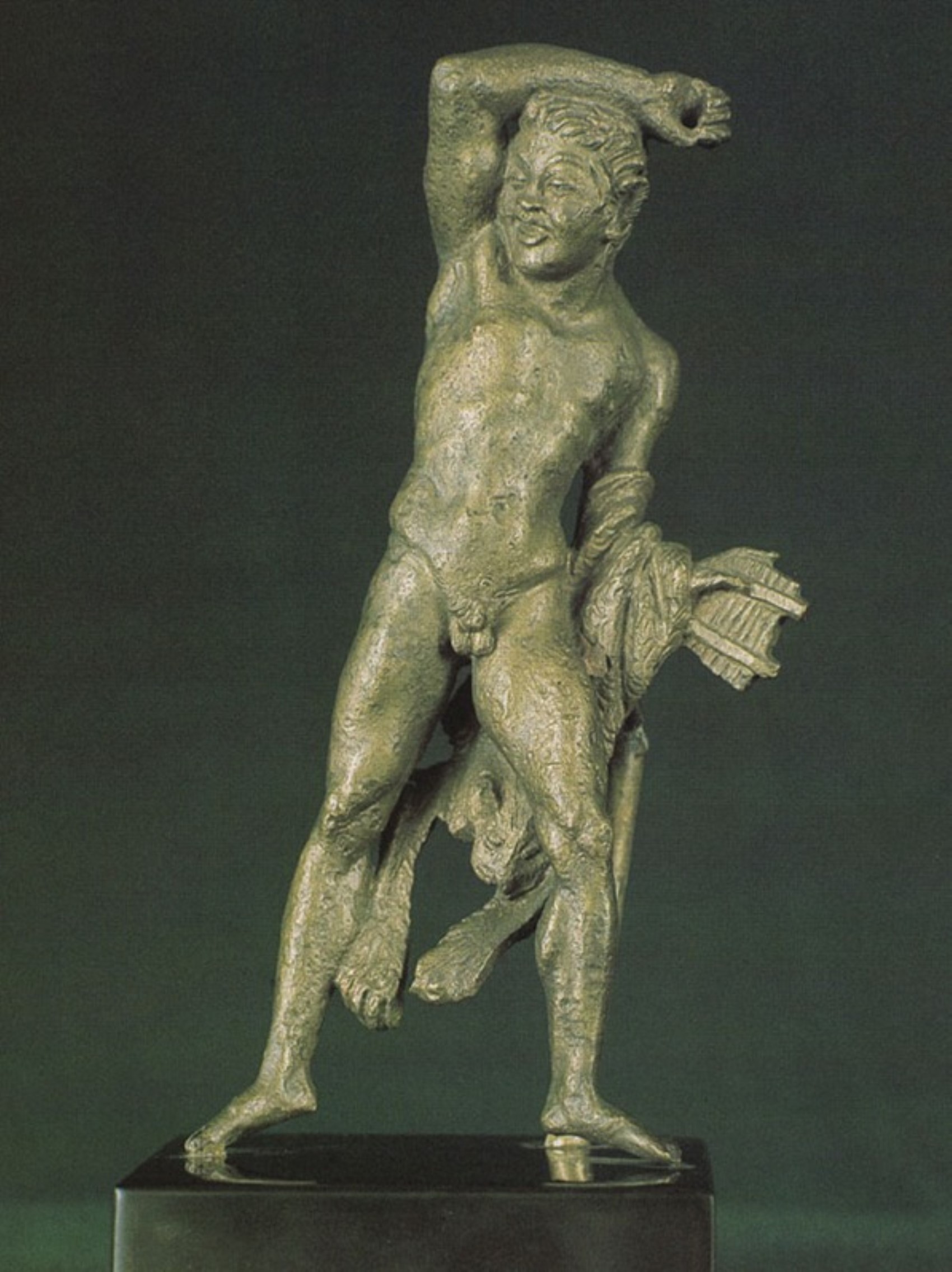
(The “Bronze Satyr,” considered the most valuable statue stolen from Pergamon, which is likely slowly being covered with a greenish layer of patina and corroding due to the humidity in the Berlin Museum/Prison inside the river)
***
Regardless of the reason, such as “theft, smuggling, gift, donation, purchase,” the Hittite Axe and all Anatolian artifacts like the Zeus Altar held in the Berlin Pergamon Museum/Prison must be returned immediately.
Other unique Hittite artifacts in the New York, Boston, and Berlin Museums, which have clear indications of being related to the Hittite Axe smuggling, are also included in this.
Our historical artifacts must return to the lands where they were made.
Social awareness on this issue must increase.
The efforts and meticulousness shown by the Smuggling Department of the Ministry of Culture of the Republic of Turkey to bring back our smuggled historical artifacts are very valuable and commendable.
***
Along with all this, our universities, archaeologists, and historians who remain silent on these issues must also engage in self-criticism and question themselves.
They should not bury themselves in their own areas of interest, they should share their knowledge in every way, discuss it, and make enlightening statements to the society.
They must raise their voices like Deniz Akkurt, Halil Tekin, and Nezih Başgelen.
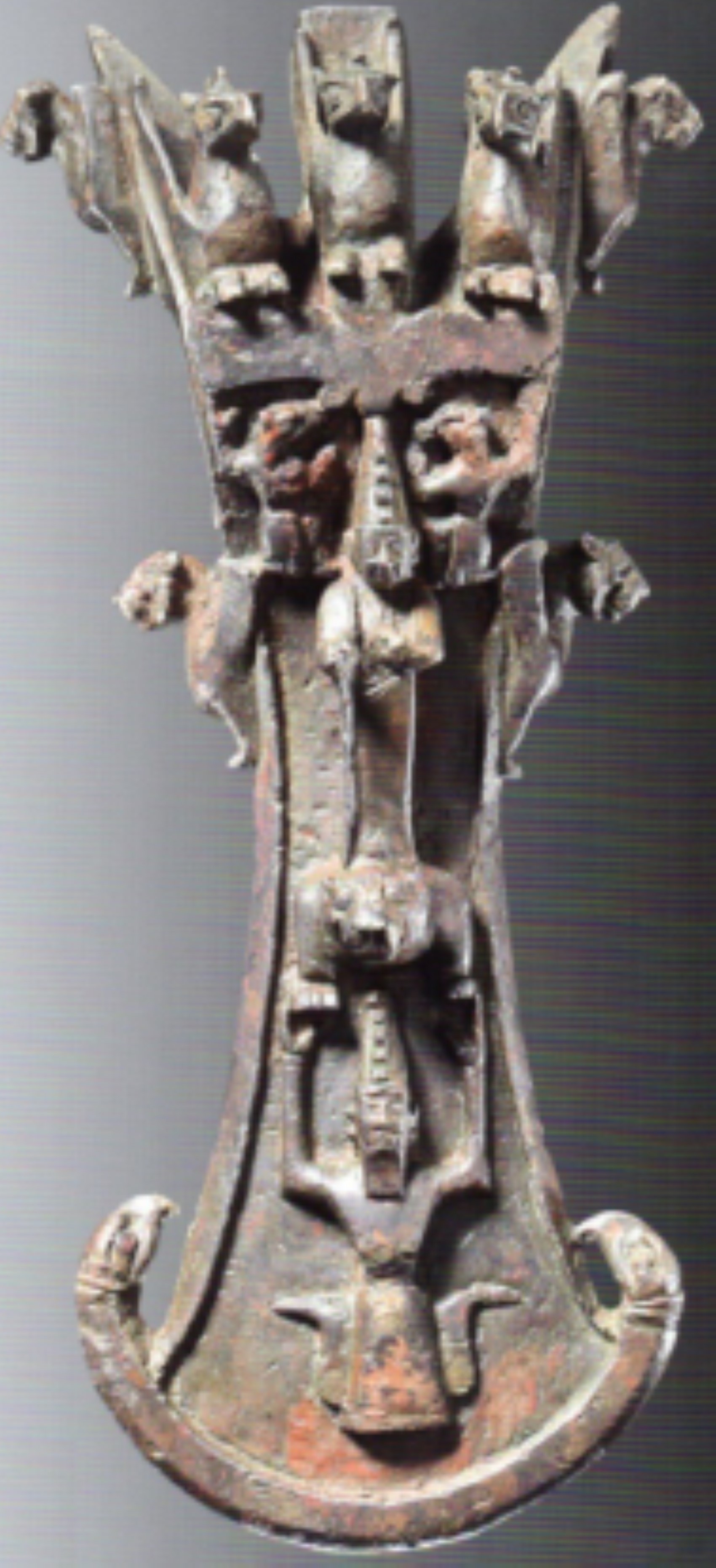
(Hittite Ceremonial Axe belonging to Sivas-Şarkışla. Now in the Berlin Museum/Prison.)
They must even “shout it from the rooftops.”
They must join the civil behavior of the people of Pergamon since 1989; the cries that “The Zeus Altar must return to its home, to Pergamon,” without any ifs or buts.
Who is there to fear or be intimidated by!
Look at where these cries are reaching and what truths they are leading to be revealed.
It is time to claim Anatolia's historical artifacts both at home and abroad.
THE ZEUS ALTAR OF PERGAMON, THE AXE OF SIVAS-ŞARKIŞLA, AND ALL ARTIFACTS SMUGGLED FROM ANATOLIA DO NOT BELONG TO COLD AND FOGGY BERLIN, LONDON, NEW YORK, OR BOSTON; THEY BELONG TO BEAUTIFUL PERGAMON AND ANATOLIA. THEY MUST DEFINITELY COME BACK, THEY MUST RETURN HOME!
(Source: Deniz Karakurt. Sivas-Kızılırmak Newspaper. 15.11.2021 and www.anlatılanötesi.com.tr 010.07.2024///Halil Tekin. Cultural and Natural Heritage Monitoring Internet Platform.21.07.2024/// J.D.Hawkins Ceromonial Axe. Online.Cambridge University Press.p.217///www.mfa.org///www.metmuseum.org)
Most Read

Striking picture for Özgür Özel's 'New Party'

Özgür Özel gives a dated response regarding the number of resignations

Forest fire in Antalya brought under control

The PKK opening and Özgür Özel’s path!..

How did the newspapers view Özgür Özel's farewell to the CHP?

Houthis strike Saudi-owned tanker

What did the CHP do?

Özel’s new party move in the world press

The New CHP, against CEHAPE

From self-efficacy to despair