



THE GAZIANTEP HEIST-4
STONES ON THE ROAD TO HELL!
A STONE IS HEAVY IN ITS PLACE-168. LET US NOT FORGET, LET US NOT LET BE FORGOTTEN!
The value of our historical artifacts smuggled from Gaziantep–Zincirli and its surroundings is understood much better today in terms of Anatolian history.
The historical ruins and inscriptions found in Zincirli offer unique information regarding the formation, evolution, and intermingling of cultures that existed on these lands, particularly between the 10th and 7th centuries B.C., even though the region's history dates back to much earlier eras.
The administrative footprint of the Hittite Empire, which established the first political union in Anatolia in the 2nd millennium B.C., extends as far as Zincirli.
This footprint deepens with the script and belief system of the Luwian culture, which is thought to have influenced the Hittites and eventually replaced them.
In the first half of the 1st millennium B.C., different Semitic (ancestors of the Arabs) communities such as the Phoenicians and Arameans appeared on the scene in the same geography.
The resulting picture reveals a multi-layered cultural continuity that has persisted on these lands for centuries.
Archaeological research has determined that the city at Zincirli Höyük, which bears the Aramaic name Sam'al (Til Barsip) and was established on a hill on a plain leaning against the Amanus Mountains, was surrounded by double walls, and that administrative and religious structures were located within these defense systems.
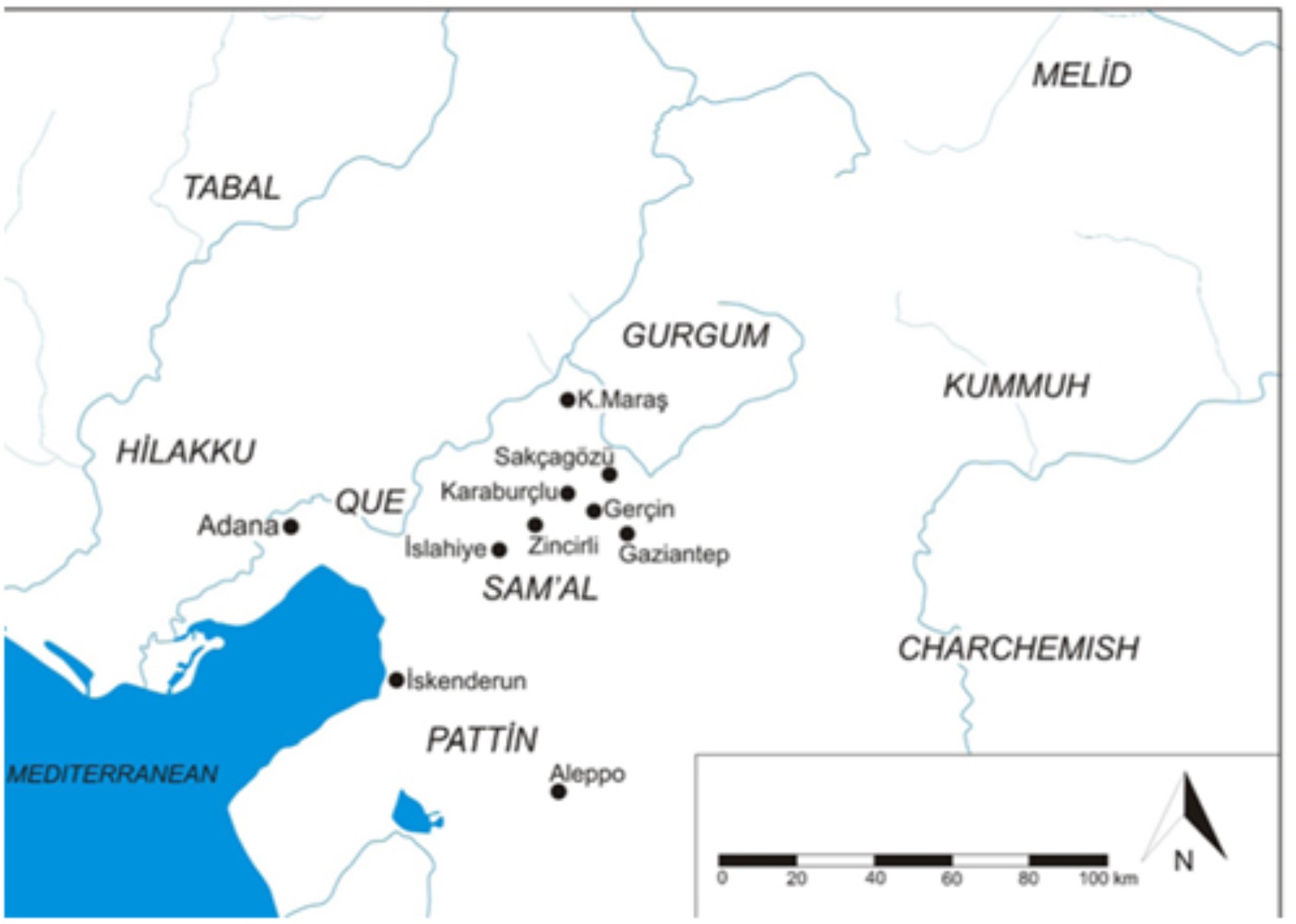
(Gaziantep-Zincirli and its surroundings-first quarter of the 1st millennium BC)
***
Zincirli Höyük was discovered in 1883 by the team of Carl Humann, a thief disguised as an archaeologist who had smuggled the Zeus Altar of Pergamon and its unique statues to Germany along with Osman Hamdi Bey, just two years after Osman Hamdi Bey was appointed Director of the Müze-i Hümâyun (Imperial Museum) in the Ottoman Empire.
Osman Hamdi Bey and Carl Humann had likely climbed Mount Nemrut, where historical artifact remains were reported, separately to examine the works there; they then met near Mount Nemrut. On his way back, acting on reports of the existence of ancient artifacts, Hamdi Bey stopped by the town of Zincirli in Gaziantep, likely accompanied by German archaeologists Otto Puchstein and Felix von Luschan. (Oğuz Satır and Ali Çifçi: The “Worthless Stones” of Zincirli: Osman Hamdi Bey and the German Excavations of 1888–1902. Dergi Park, p. 215).
Here, in addition to the artifacts scattered on the surface, Hamdi Bey realized through the test pits he dug that the ground beneath was also full of historical artifacts.
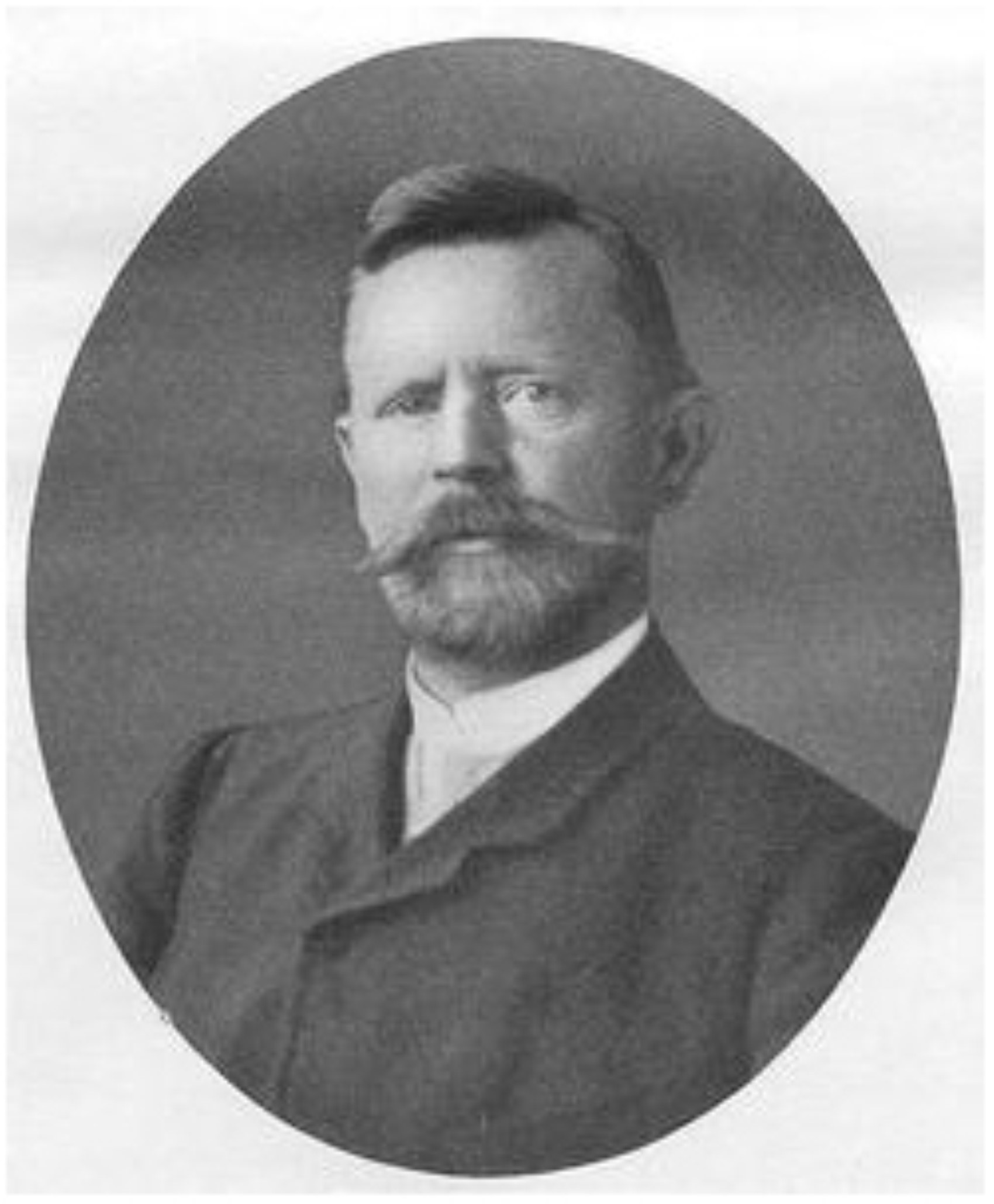
(Pergamon and Gaziantep robber Carl Humann-How arrogant he is!)
And of course, the Germans with him!
Meanwhile, Carl Humann, who was also continuing the looting of Pergamon, was busy smuggling out the magnificent marbles of Pergamon with sleight of hand and dubious permits.
It is highly probable that Osman Hamdi Bey met Humann during this process.
Osman Hamdi Bey, an interesting and colorful personality known for his statesmanship, museology, archaeological excavations, and painting, became almost the sole authority on the excavation and exportation of historical artifacts by being part of the team that prepared the 1884 Regulation on Antiquities (Asâr-ı Atîka Nizamnâmesi).
It was believed that he was the only one who understood these matters in the Ottoman Empire of that period! Moreover, his closeness to Sultan Abdulhamid II was well-known due to his father, Sakızlı İbrahim Ethem Pasha, who had previously served as Grand Vizier.
Under these circumstances, it was impossible for him not to be aware of the smuggling of the Pergamon Altar of Zeus.
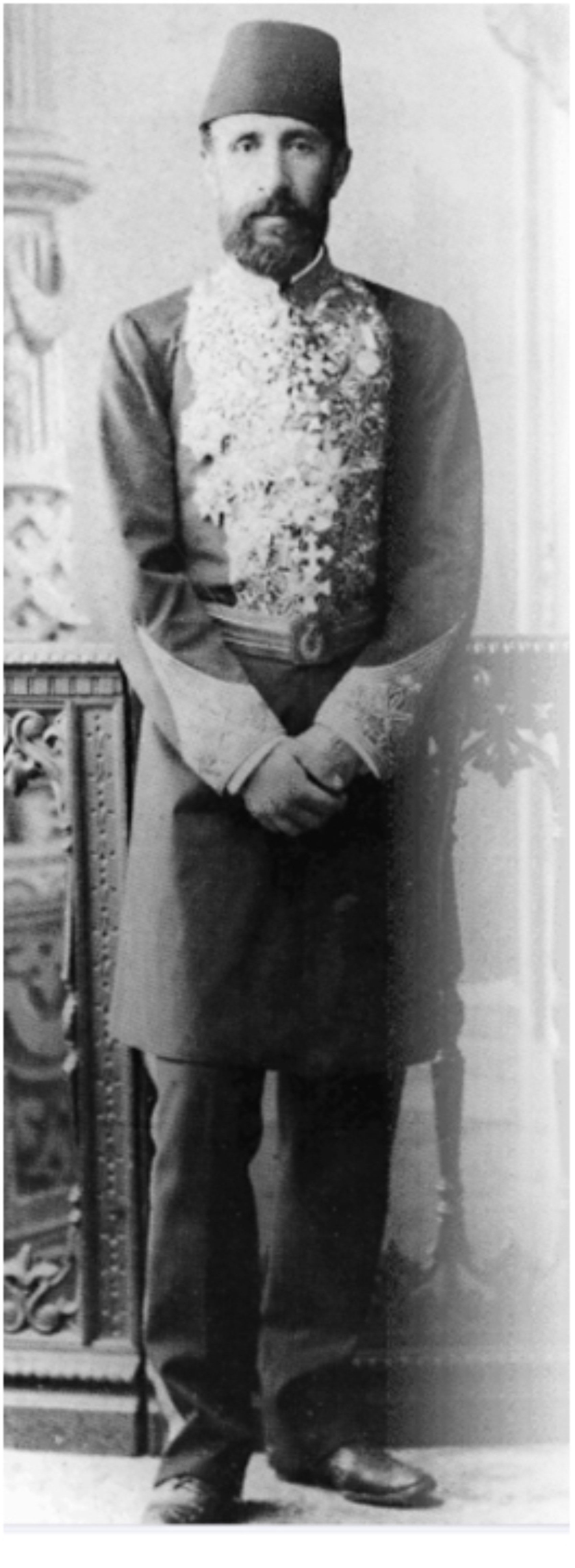
(Osman Hamdi Bey, son of Grand Vizier İbrahim Ethem Pasha)
***
Carl Humann, who carried out the Bergama robbery with the open andcovert and covert supportof the Prussian/German State, was aware of theexistenceof the treasure of historical artifacts in Gaziantepand its value.of course, he had learned it thanks to the surface researchconductedbyOsman Hamdi Beytogether with the Germans. Excavationsat Zincirli and
the theartifacts to be excavated were, one way or another, to be taken to Germany through the initiative of Carl Humann in Berlin, andwiththe support offamous figures in the field who were sympathetic to such endeavors, such as Adolf Erman, Alexander Conze, Eberhard Schrader, and Ernst Curtius, the excavations in Gaziantep and thetransportsmuggling activities, a structure called the "Orient-Komitee" was established to provide support and financing.
Over time, this committee, together with C. Humann, began to operate like an organized smugsmuggling organization.It began to work.
On one hand, the committee, for this busiwhile looking for resources, and whilecrying, Carl Humann also deepened his relations with Osman Hamdi Bey, whom he hadknown previously.
They had met due to the Pergamon artifacts, climbed Mount Nemrut together in 1883, anddiscovered Zincirli; the following year, in 1884, the new Asar-i Atika (Antiquities) Regulation, which placed Osman Hamdi Bey in an “approving and decision-making” position, was enacted.the Asar-ı Atika (Antiquities) Regulationhad been put into effect.The Asar-ı Atika (Antiquities) Regulation had been put into effect.
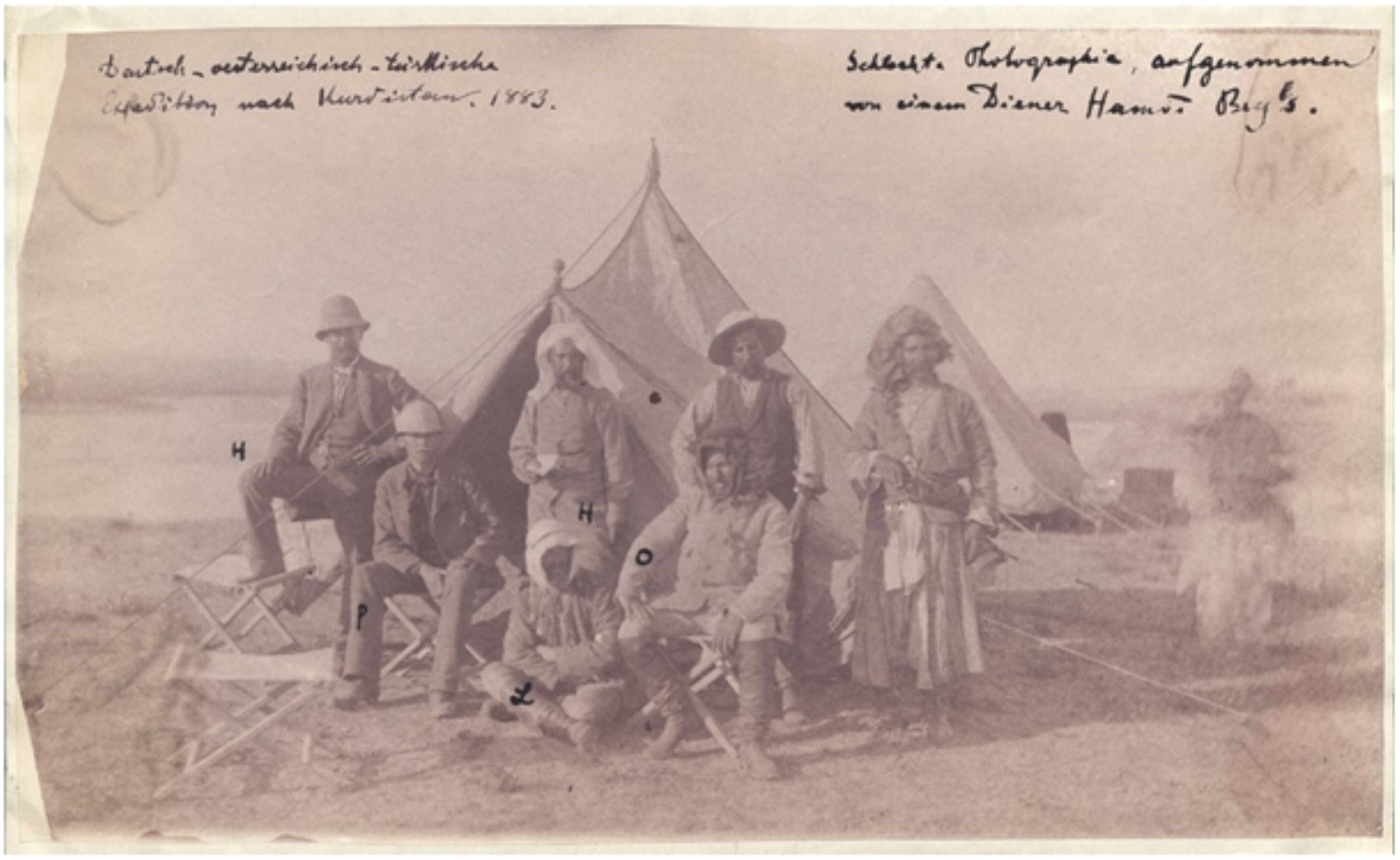
(Carl Humann, Otto Puchstein, Felix von Luschan, Osman Hamdi, and Yervant Osgan near Mount Nemrut-1883. Photo and caption: F. von Luschan. From the German State archives in Berlin.)
On this matter, the reins of the State were now completely in Hamdi Bey's hands.
Schliemann, the thief of Troy who was passionate about plundering Anatolia, claimed that he met with Osman Hamdi Bey in Paris; Troy–excavations in Çanakkalepermission to do ithe had received his wordopenlyandclearlywas reporting ((Rustem Aslan. Osman Hamdi Bey and the Troy excavations. KUBABA. Issue:14. p.24. 2009).
Another foreign architect–archaeologist, American Henry Bacon, described Osman Hamdi Bey as apublic official who wasexpecting a bribeand would not take on any workfor less than300 dollars. (Henry Bacon, Assos Days, p. 47; cited by Rüstem Aslan, p. 24).
Were these slanders spread by foreigners who wanted to conduct excavations in Anatolia but could not obtain permission and faced difficulties,or were they signs of corruption in this field? In anycase, Carl Humann, regarding the work he would do in Gaziantep,
wasfaced withthe robberythat the necessary permission forpassed through the doorofOsman Hamdi Bey had nowunderstood very well.
Relationships had been developed, almost like two close friendshad beenreached.
Carl Humann, likely due to the tolerance showntowardthe smugglingin Pergamon and in exchange for the permit he wanted to obtain for Gaziantep,offered to give Osman Hamdi Beymany gifts.ti (!)(Funda Berksoy, Osman Hamdi Bey's Turkish Street Scene and Late-Nineteenth-Century Power Relations between the Ottoman and German Empires. pp. 61-64. https://www.degruyterbrill.com/document/doi/10.1515/zkg-2025)
Osman Hamdi Bey initiallysupposedly turnedthese down,but his ambition to become a famous painter in Europesuccumbed tothefallen.
He had agreed to sell his orientalist painting titled “A View of a Turkish Street” to the Berlin National Gallery, that is, to the German State, through the mediation of Humann; and the Germans had gladly purchased it.He had agreed to sell his orientalist painting titled “A View of a Turkish Street” to the Berlin National Gallery, that is, to the German State, through the mediation of Humann; and the Germans had gladly purchased it.

(The painting titled "View of a Turkish Street" purchased by German museums, by Osman Hamdi Bey. 1887–1888, painted with oil on canvas. 60 × 122 cm in dimensions.In the Berlin State Museum, at the Alte Nationalgalerie, Code: Inv. no. A I 420)
Who knows, during theacquisition process, how much effort C. Humann’s “Orient-Komitee” gang in Berlin must have expended.was!
The banana was at the end of the stick!
From then on, Osman Hamdi Bey practically mobilized in Istanbul so that the Germans could conduct excavations in Gaziantep,and he even personally motivated them:“Come on, what are you waiting for;
apply for the permit,”he was saying.he was saying.
“The permit forexcavation inZincirli was granted to Carl Humann on March 23, 1888, in accordance with the 1884 Regulation onAntiquities(Asâr-ıAtîka Nizamnâmesi).”
In any case, the authority to “grant approval” belonged personally to Osman Hamdi Bey.
“This permit was given to Carl Humann on March 29, 1888, conveyed by the German Ambassador to Istanbul, Joseph M. von Radowitz.”“The permit was for one year, and Ahmet Bedrettin Bey was appointed as the supervisor for the excavations on behalf of the Imperial Museum (Müze-i Hümâyun).”
“The permit was for one year, and Ahmet Bedrettin Bey was appointed as the supervisor for the excavations on behalf of the Imperial Museum (Müze-i Hümâyun).”on behalf of the Imperial Museum (Müze-i Hümâyun)as supervisor for the excavationswas appointed”.(Oğuz Satır and Ali Çifçi: The “Worthless Stones” of Zincirli: Osman Hamdi Bey and the German Excavations of 1888–1902. Dergi Park, pp. 217-218).
***
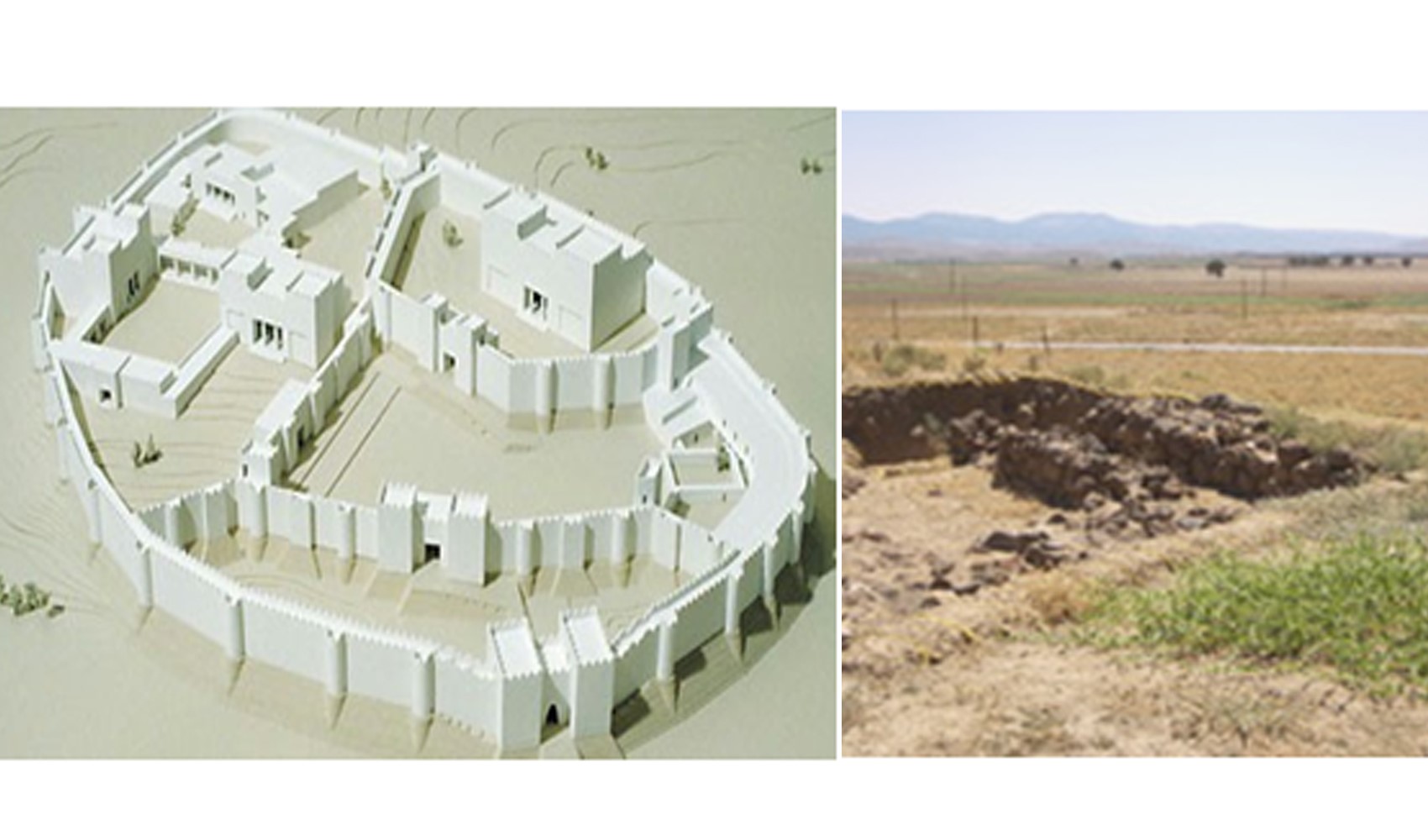
(A model of Sam’al-Zincirlimade in Berlinfrom the 1st millennium B.C.And a model of Zincirli Hthe villagetheexcavated state of the village today)the
the excavations carried out for the robbery in Gaziantep,byAssoc. Prof. Dr. O. from Marmara University from Marmara Universityğuz Satır and Doç. We follow the valuable information compiled by Dr. Ali Çifçi regarding this subjectfrom Ottoman archival documents and Germansmugglers' correspondence:
“The first excavations at Zincirli began on April 9, 1888, and continued until July 22, 1888. Theexcavations, thfrontwas famously directed by C. Humann and his assistant F. von Luschan. It was managed.
Humann, at the beginningwas made possibleby using many workers to speed up the excavations; new findings and (previous developmentsknown reliefs (from work) in a shorttime to bringout.”
“His goal was to send these works to Germanyto be shipped to transport them to the Port of İskenderun.”
“Furthermore, near Zincirli (at first glance became important workssuspected to be) Sakçagözü, he also wanted to conductexcavations; however, unfavorable climatic conditions, inadequate equipment, and malaria prevented a comprehensive and planned excavation.”
“Workbegan in an area close to where Osman Hamdi Bey made his first test drilling in 1883, and in a shortregiontimeimportant findings were unearthed inthe area.”
“On the third day, a new relief of the Assyrian KingEsarhaddon (680–669 B.C.)was discovered.Humann described the finding of this stele,(the image on the relief) informed Osman Hamdi Bey with a letter that also included its drawing.”
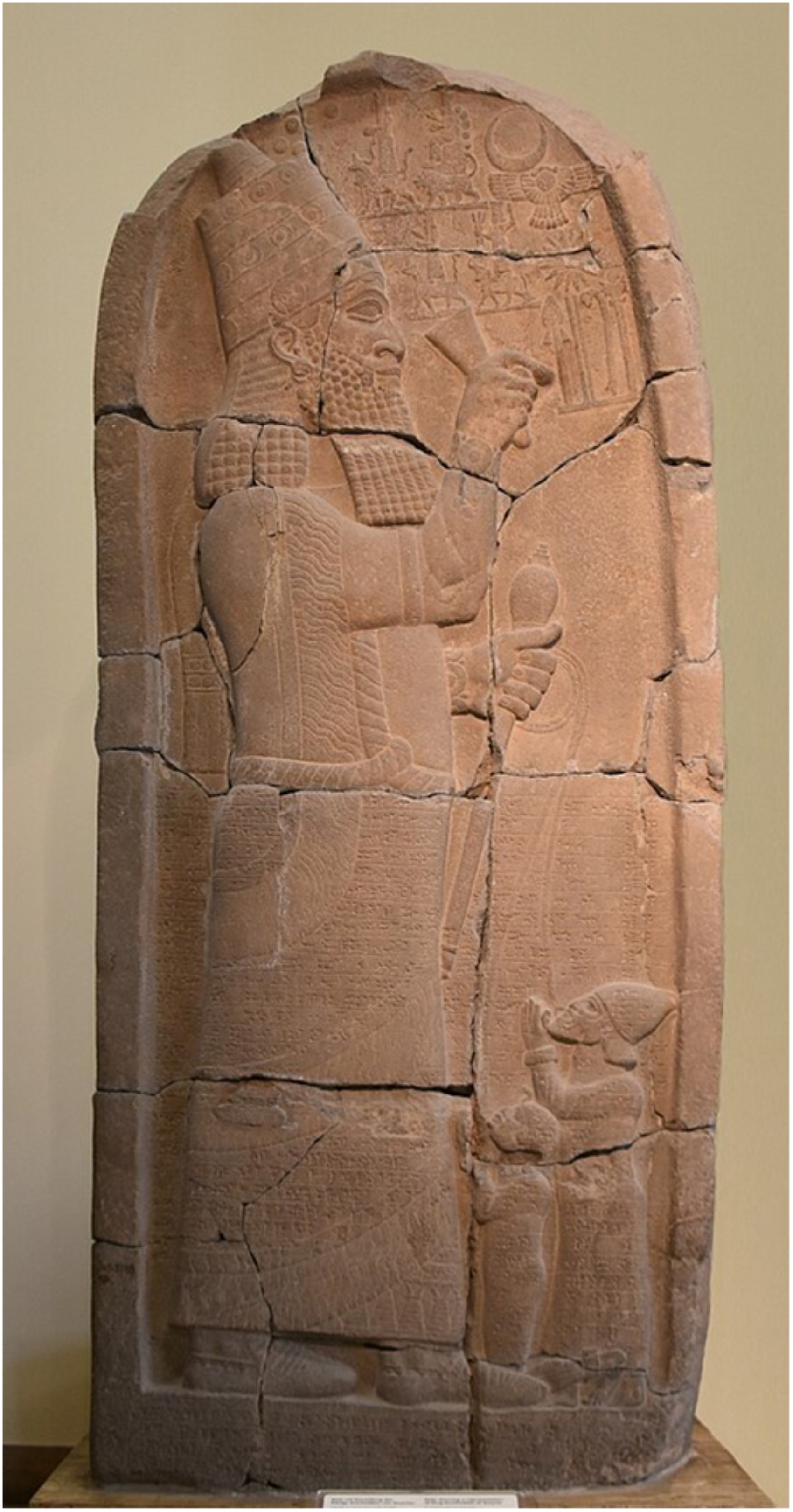
(Found in Zincirliand takento Germany,the relief containing the image of the Assyrian King Esarhaddon (reignfrom680-669 B.C.)is a significant artifact.stone)
“In addition to this stele, this first excavation during which 40 illustrated stones,(a large castle gate with illustrated reliefs on it) and hillsettlementAt the side of thefire, an inscriptioncalled the Panamuwa II stele, containing Aramaicinscriptions, wasrecovered.”
“At the end of theexcavations, the findings were pulled by oxenwith the cars that first to Islahiye, and thenvia the Belen Passage were transported to the Port of Iskenderun.”
***
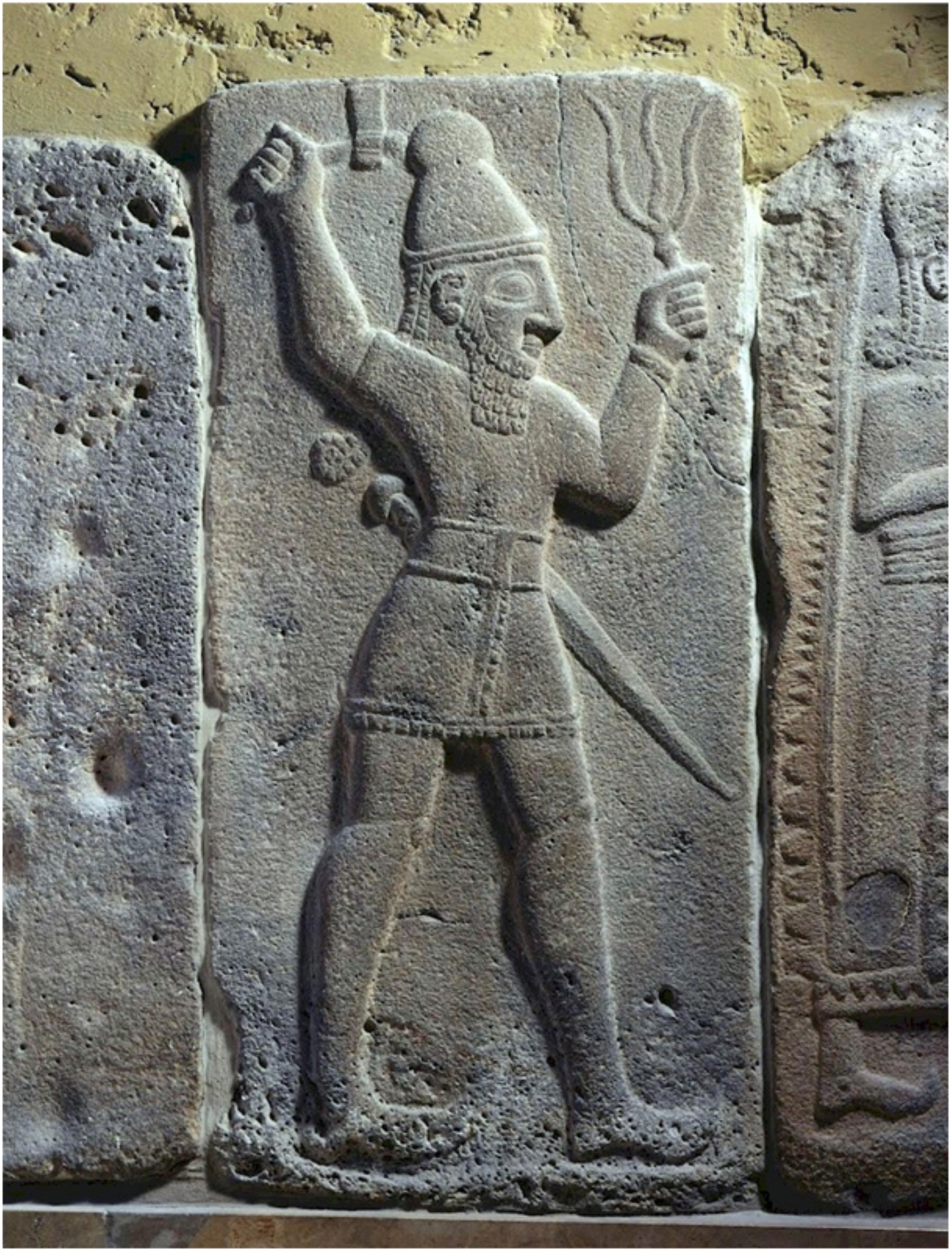
(From the stones that went to Germany (!). The Luwian Storm/Sky god Tarhunz, with a lightning bolt in one hand and an axe in the other. Berlin Vorderasiatisches Museum/Near East Museum)On May 22, 1888, Osman Hamdi Bey, in coordination with Humann,arranged for the transport of the artifacts found in Zincirli
to Istanbul.However, the process was interrupted,and the artifacts were instead shipped to Berlin.applied to the relevant authorities forit.”
“About a month later, on June 18, in order to ensure that the artifacts excavated in Zincirli were not prevented from being transported to İskenderun,the IslahiyeDistrict Governorshipwas informed.”
Ask Humann should not have been removed!
“Immediately afterward, on June 30, the request to allow Humann to take some of the artifacts to the Berlin Museum, and in return, for him to cover the costs of the shipment to be made to Istanbul, was conveyed to the Ministry of Education.”“On August 10, 82 crates containing artifacts obtained from the first excavations in Zincirli were sent to the Istanbul C ustoms.”
“On August 10, 82 crates containing artifacts obtained from the first excavations in Zincirli were sent to the Istanbul Cthereached the destination.”
Of course, according to the 1884 Regulation, these crates were sent abroad ifor them to be removed,according to the regulations,the approval of Osman Hamdi Bey was required.
“At Humann’s request, this approval was requested from Osman Hamdi Bey.”
In fact, it was he himselfwho spearheaded the start of these excavations.
“Ottoman Museum Director Hamdi Bey prepared a detailed report on the artifacts found during the Zincirli excavation.”
“In this report dated July 22, 1888, a committee of three people headed by Humann, the Asâr-Horseexcavations in Zincirli in accordance with the Asar-ı Atika Regulationthat he conducted; 60–70 thousand francs (17-20 kg of gold) were spent to uncover 89 "carved stones" andit was stated that they were unearthed.”
“In his report, Hamdi Bey stated that the reliefs found during the excavation werewith great difficulty, first to İskenderun, and then transported by steamship to Istanbul; that the Germans demanded a portion of the artifacts in exchange for these expenseswas what he stated.”
“Furthermore, he claimed that these reliefs were “ordinary black basalt stones,” that they held no artistic value, that they were very similar to one another, and that the Germanshad taken them withgreat dipersonal sacrificesand claimed that they brought them to Istanbul throughefforts.”
“In conclusion, Hamdi Bey, based on Article 32 of the Asâr-ı Atîka Regulation, saw no harm in giving “5–10 of the” artifacts to Humannstated that it was not found.”
“Although Article 8 of theregulation prohibited the removal of artifactsabroad, Article32 provided (alleged) exceptions for suchtransfers under certain conditions.”(Oğuz Satır – Ali Çifçi, The “Worthless Stones” of Zincirli, p. 230–231)
While theseoperations wereongoing, Hamdi Bey acted as if he were thehigh-ranking official of the OttomanState on this matterwas a civil servant of the German State.
He kept saying, let's give them, let's send the stones of Anatolia to Berlin.
That Berlin which would turn into hell under the bombs in 1945; the works were placed insidethe structureknown as themuseum; this structurewould become a ruin; upon this structure fellit will be understood that the land on which it was built is a swamp, and in the 2010s remedies were sought so that the workswould not rot and sink into the water.What an unacceptable situation!
What a
sadstate of affairs!
Of course, the painting titled "Turkish Street" that Hamdi Bey sold to the German state has been on display for visitors on the walls of the Berlin Museum for many years.it is trembling!
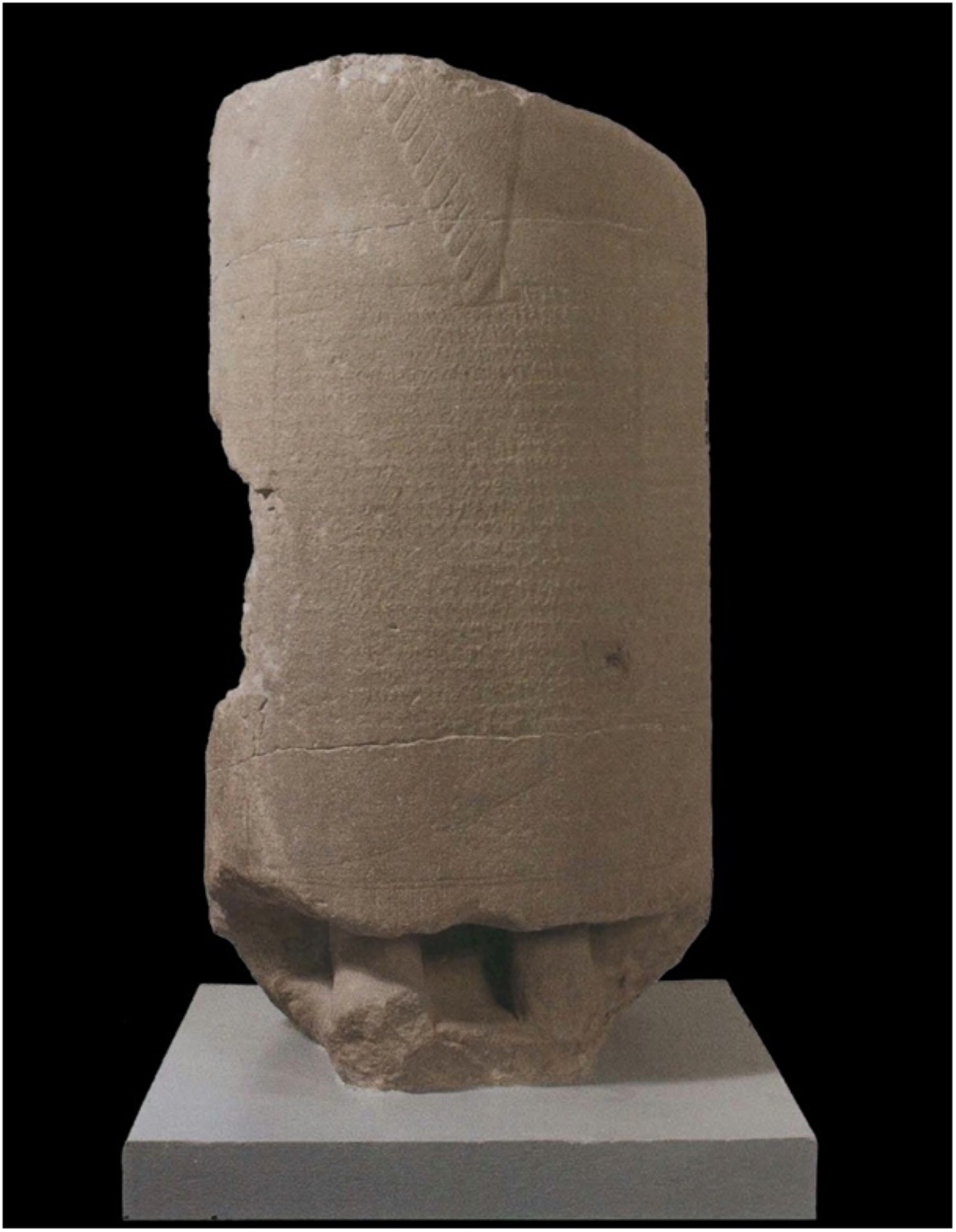
(The inscription of King Panamuwa II of Sam'al, located at the Tahtalı Pınarlocality on the road to Zincirli-Gerçin)
.***
“(Since there must not have been any significant objection from the Ottoman Empire at this stage) on August 13, Humann, regarding the findings he discovered during the excavations and planned to taketo Berlinthe works, in exchange for the shipping costs incurred to bring them to Istanbul,requestedonce again from the Ministry of Education (Maarif Nezareti—theMinistry of National Education—).
Imperialismwas not satisfied with what it had already taken.
Takwas worse than a rabid dog!
They were not only smugglingAnatolia's historical artifacts, either secretly or openly,but theywere alsotrying to effectively seize our artifacts by using the transportation costs from Gaziantep to Istanbul as an excuse.
As if the Ottoman Empire had forced them to conduct the excavations!
“This demand upon which the Ministry of Education, the approving authoritywas Osman Hamdi Bey, so he asked him personally what should be done!”
The lambwas being handed over to the fox!
How broada scope of authority Osman Hamdi Bey had!
“Of the Ottoman Empire the country's historical heritageentrusted to Müze-i Hümâyun Director Hamdi Bey submitted to the Ministry of Educationin the response given, regarding the excavation itwas reported that the unearthed stones “did not possess any artistic value.”
Look at that definition!
Gaziantep's, which could have rewritten the history of Anatolia at thattime, the eworks; in terms of concept, perspective, and craftsmanshipaccording to Hamdi Bey, they did not possessany artistic value!
“Nevertheless, Hamdi Bey, for his friend Humann’stransportation of the works in question,made greatpersonalsacrifices.”he emphasizes that he is makingconcessions, and on the condition that it does not set a precedent (!), he reiterated that there was no objection to giving Humann “5–10 similar fragments”.” (Oğuz Satır and Ali Çifçi: The “Worthless Stones” of Zincirli: Osman Hamdi Bey and the German Excavations of 1888–1902. Dergi Park, pp. 230-231).
WThe excuse was ready: It will not set a precedent!
Oh, Anatolia, oh: What you have suffered, what you have seen at the hands of these imperialists and collaborators!

(Found in Zincirli,taken to Germany)s, according to Hamdi Beyone of the black basalt stones that supposedly has no artistic value (!). A sculpture base. Berlin Vorderasiatisches/Museum of the Ancient Near East–Photo: Tayfun Bilgin)
***
“The Ministry of Education also, on August 14,BHe sent to the Sublime Porte (the Government)in the letter, stating that it would be appropriate for Osman Hamdi Bey to give Humann 5–10 works, in line with the opinionsconveyed his message.”
However, this level of closeness between Hamdi Bey and C. Humannmust have started to cause discomfort in the Capital, as in the response signed by Grand Vizier Kâmil Pasha (1833–1913) and sentto the Ministry of Education on August 30,Humann’sthat the expenses should not be covered by donating the artifacts, but rather by evaluating and selling the works, and using the income generated to payfor them, wasclearlystated.”Since the Director of the Imperial Museum described these
stones as “crude, worthless, and lacking artistic merit” objects, the Grand Vizier also said, “Let these worthless stones be sold off; the country needs money!” anddecided.itmust have been thinking!
Gaziantep's 3,000-year-old invaluable inscriptions were turned into cobblesperhaps a meerschaum stone would be made!
Osman Hamdi Bey must have neither seen nor heardthese, perhaps! Or he was actingas if he hadn't.
“Following this decision, in a notification dated September 8, C. Humann was asked to set a pricefor these works (theworthless stones).”
“In a letter written to Osman Hamdi Bey on September 13, Humannclaimed that he had incurred a total expense of 3,600 francs (1 kg of gold) andlisted the shipping costs ina detailedmanner.”He, too, wanted to get the “goods” on the cheap!
S
She is known as an archaeologisttrained in the field, andC. Humann, the thief of Pergamon and Gaziantep,was not ashamed to try to buy these artifacts,which the Berlin Museums knew very wellhow rare they were, by calling them worthless stones!
Or those who advised him, the officials disguised as scientists like E. Curtius, who was in Berlin and whom German Imperialism promoted as the best archaeologist in Europe!
“To Humann...the“price paid to purchase these “worthless stones”was quite high; the expenses wereincreasinglyexaggerated.”
Hamdi Bey was both assigning a value of 60-70 thousand francs (17-20 kg of gold) to these worksand claiming that these wereHe called them worthless rough stones.
However, Humann did not want the artifacts to be sold and fall into the hands of otherforeigners.
He could not let someone else snatch the “worthless stones” of Zincirli that he had worked so hard (!) toexcavate.
The Ottomanhigh authorities,the Grand Vizierate, were aware of the artifactsagainst the proposal to sell it by auction , Osman Hamdi Bey once again took Humann's side.
Undoubtedly, he was on the side of the famous Germans!
Previous viewreiterating thatthese works had “no value,were made oftuff stone,were extremely crude and vulgar, and belonged to the Hittiteperiod,”heclaimed.
“Hamdi Bey was talented enough to paint orientalist paintings such as "Turkish Street Scene," which he sold to the German State, and his knowledge of "art" was high, but it means he was just as ignorant from an archaeological perspective. Moreover, the Ottoman MHe was the Director of Museums.
According to the claims of some today, he was the person who brought archaeology to these lands, to Anatolia! he was the person!
However, in terms of the history of humanity, it is extremely The important thing is that artifacts from the Hittite period were extremely rareand therefore possessed a unique historical value.
Thanks to these inscriptions, a period that was not sufficiently known until thatday would be shed lightupon.
Apparently, according to the painter Osman Hamdi Bey,the Greek and Roman works esteemed by the European aristocracy were valuable, while the ancientcultures of Anatolia were not.stones belonging to theirculture were worthless.
Hamdi Beyremained loyal to his debt ofgratitude (!).
Hecontinued tostubbornly stand by the side of the smuggler C. Humann.
In the second report he prepared in his capacity as an Ottoman statesman and submitted to the Ministry of Education, Hamdi Bey specifically emphasized that the Zincirli works were unearthed solely through Humann's skill and personal efforts. It was highlighted.”
“Tthus, he reiterated his recommendation that a portion of the artifacts be sent to the Berlin Museum, and as justification for this transfer, he once again referred toArticle 32 of theRegulation on Antiquities (Asâr-ı Atîka Nizamnâmesi)." (Oğuz Satır – Ali Çifçi, The “Worthless Stones” of Zincirli, pp. 229–230)
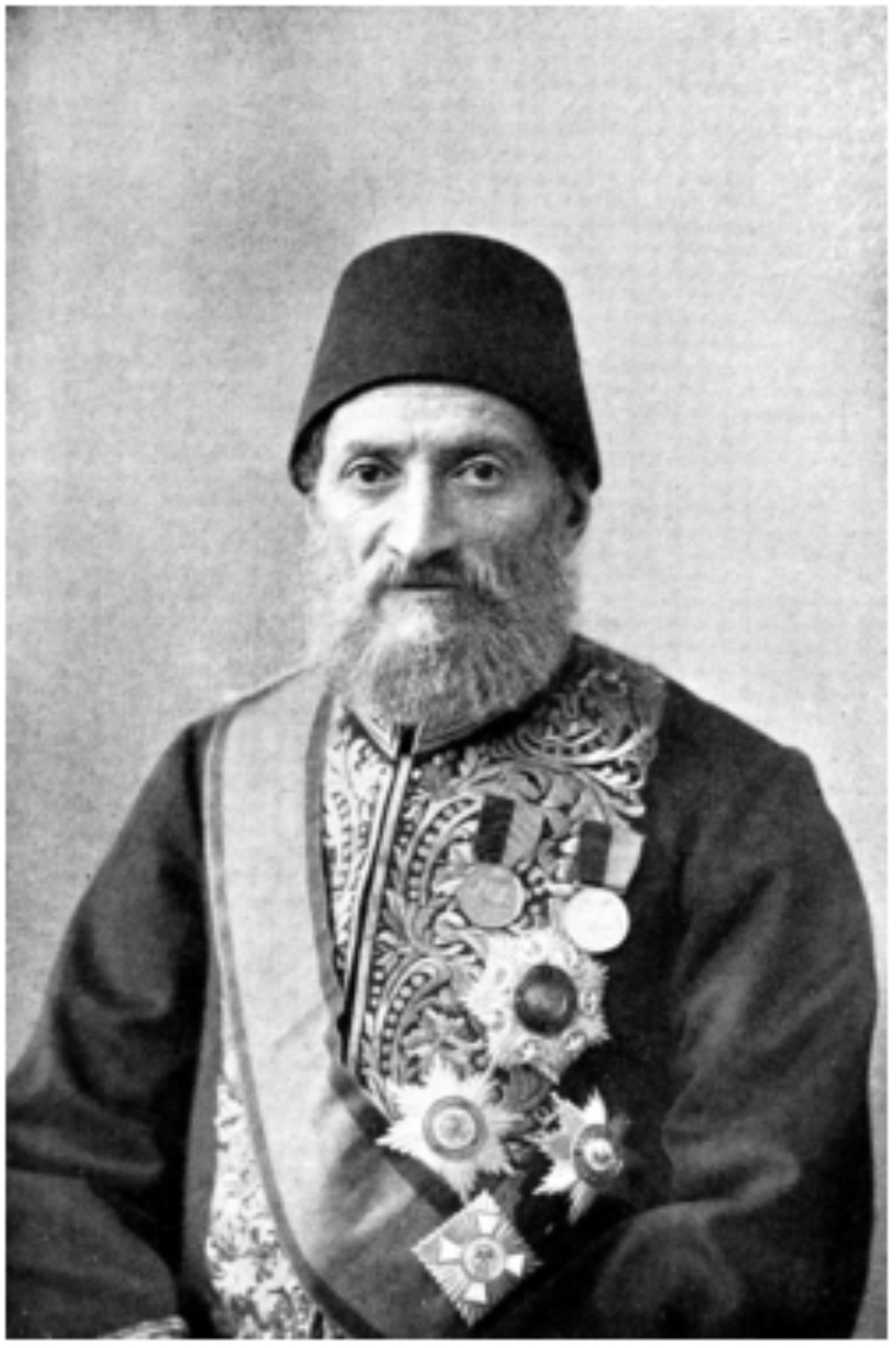
(Grand Vizier Kıbrıslı Mehmet Kamil Pasha, who did not want to giveGaziantep's artifacts to the Germans)
***
Marmara University's Assoc. Prof. OğuzSatır and Assoc.Prof. Ali Çifçi's study,we continue to recount the "Gaziantep robbery" with our own interpretations:
“Despite the letter dated August 30 from Grand Vizier Kâmil Pasha, Humann was insisting on demanding artifacts in exchange for shipping costs”.
Meanwhile (again, invisible hands must haveintervened), the Ministry of Educationinformed the Council of Ministers (Meclis-i Vükelâ) that it would be appropriate to give Humann certainartifacts.
Behind Kaçakçı Humann, there was a power capable of influencing even the Ministry of Education,the OttomanEmpire'sDirector of the Imperial Museum, Osman Hamdi Bey.
ThUndoubtedly, the German State and Humann’s organization in Berlin called the “Orient-Komitee” —or rather, their gang—were also part of this process.
Had theleader, Kâmil Pasha, also been persuaded (!)? Or was he bypassed?had it been?
Did Sultan Abdulhamid II also getinvolved!
The Meclis-i Vükela (Council of Ministers), with a subsequent decision,granted Humann permission for the “excavation and transportexpenses incurred forin exchange for the money and labor spent, on the condition that it does not set a precedent for others, to provide 5–10 pieces of work” was accepted.
Imperialism, seeingtheweakness, recklesslyslowly was collapsing.
“At thisstage, it was deemed appropriate primarily to transport the artifacts to Istanbul, to the Imperial Ottoman Museum.”
However, even at the highest levels of the state, there were serious debatit was understood that clashes had occurred.
Osman Hamdi Bey's such an open manner ofsupporting the German Carl Humann, and his reckless attitude regarding this matter, must have alsotested the patience of the higher authorities.
In a document dated October 24, it is seen that the Grand Vizierlauncheda counterattack,
stating thatthe Sultan ordered Osman Hamdi Bey to go to Zincirli, cover the transportation costs, and bring the artifacts to Istanbul, to the Ottoman Mdeemed it appropriate to bring it to the Imperial Museumwas reporting that.”
In other words, the State was intervening in the matter and telling Hamdi Bey to stop.
However, things had already beensettled.
The bird hadflownspoke!

(Zincirli excavationsconducted and Carl Humann’sexcavation and smugglingassistant Felix von Luschan)
***
“As stated above as, the transport had been started muchearlier, and the found artifacts reached the Istanbul Customs on August 10th.”
Or did they set sail for Germany before going to Istanbulsnakes! What had happened to them?
It was a time when the power of Germanimperialism was felt throughout Europe.It was a time.
Certainly, this transfer was made with the knowledge and consent of Osman Hamdi Bey, but without the knowledge of the higher authoritiesof the state.
Had Osman Hamdi Bey placed himself in the position of the State? This pWhy was he taking it despite thePadishah!
Or perhaps, due to the frequency of the changes in decisions, the correspondence could not reach its destination in time.
Then how was thisillegality going to becovered up?
Future generations would discuss the current reputation of Osman Hamdi Bey, who wandered such winding paths; however, the reputation of the Turkish State had to be permanent.
Finally,the Council of Ministers, once again, based on Article 32 of the Antiquities Regulation—that is,effectively based on the approval of Osman Hamdi Bey— requested from Sultan Abdulhamid II,thepermissiontorequested permission for Humann to be given “5–10 similar works” more.”“Finally, on October 25, approval was granted on the condition that
Osman Hamdi Bey “determine the similar works to be given”; the Ministry of Education was tasked with overseeing the process.”“On November 8,
the Ministry of Education, in line with the Sultan’s decree, appointed Osman Hamdi Bey to thistask.”officially authorized with the task.”
“Thus, Humann’s requests regarding the Zincirli artifacts werefinally met after a long, exhausting, and cautionary process within the Ottoman bureaucracy.”
“From the documents, itAsitis understoodfrom the records, OttomanImperial MuseumDirector Osman Hamdi Bey was personally tasked with allocating the artifacts to Humann and his team.
The artifacts found in 82 crates during the 1888 Zincirli excavationswere brought to Istanbul; of these, only 5 –10 pieces that resembled each other and were “claimed to be valuable”were deemedappropriateto behandedover.ness.
Was it really like that?
It is noteworthy that, the bureaucracy in Istanbul only took action on October 25 and November 8, 1888, regarding the historical monuments of Gaziantepwhile they were able to decide, long before these dates, while driving the “chained geese”,Osman Hamdi Bey and Carl Humann,on June 5, 1888, held a meetingat the Port ofİskenderun,which took placehad brought.”
“This meeting was requested by Osman Hamdi Bey, who had returned from the Sidon excavations in Lebanon.”
“In addition to Humann, Felix von Luschan, one of thede facto directors of the Zincirli excavations, also participated, and a detailed list of the artifacts obtained from the excavations was presented to Osman Hamdi Bey.”
“In Humann’s account, it is clear that this visit was planned inadvance.Although not specified, it was clear that the meetingin Zincirli wasdirectly related to the sharing of the artifacts unearthed.”
“Osman Hamdi Bey told Humann that he would help him get a share of the artifacts obtained from the excavations, but because the timelimit inİskenderun was restricted, the matter would be discussedin Istanbul.that it had to be removed,” he had stated.
“Between Humann, who came to Istanbul, and Osman Hamdi Bey, the eastern half of the Zincirli Great Gate, the Esarhaddon stele, and more wsmall baseit was agreed that the findings would be taken to Berlin.it was agreed that the findings would be taken to Berlin.”(Oğuz Satır – Ali Çifçi, The “Worthless Stones” of Zincirli, pp. 230–231)
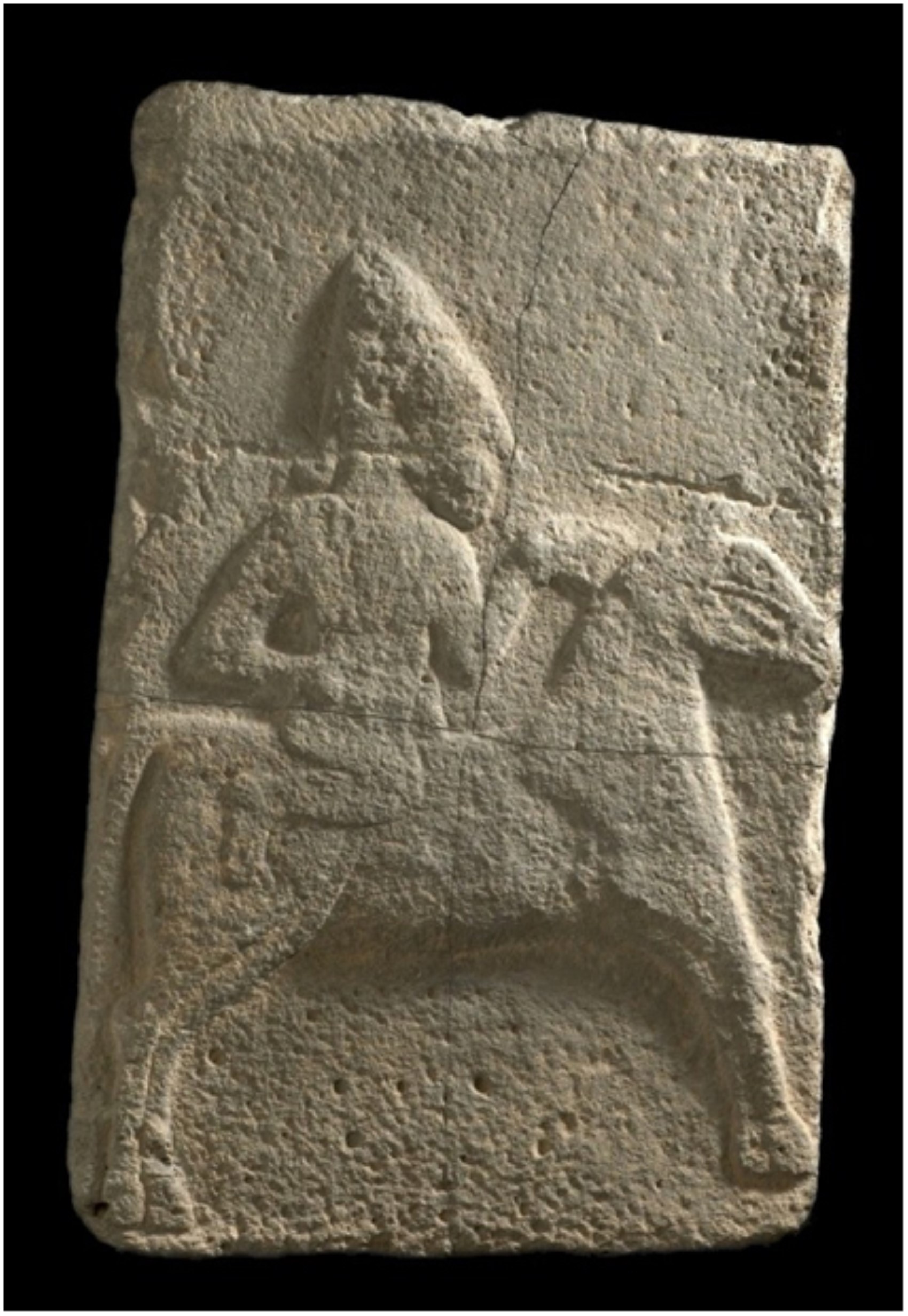
(Found in Zincirli.Smuggled toBerlin.A horseman from Antep. Berlin Vorderasiatisches/Museum of the Ancient Near East)
***
For approximatelya year after this, there were no significant developments regarding the looting of Gaziantep.
During this period, German imperialism, through its local and foreign pawns, was on one hand continuing to plunder Pergamon, while on the other, it was trying to digest the Gaziantep artifacts it had swallowed! Yet, who knows what else lay beneath the soil in Zincirli?
Yet, who knows what else lay beneath the soil in Zincirli?
Would this ancient heritage ever beleftto theOttoman Empire, which had entered a process of collapse,and to theAnatolian peasantry considered“ignorant”!
Fortunately, there were Istanbul intellectuals who served German imperialism, whether consciously or unconsciously. Istanbul intellectuals existed.
The "Turkish Street," which the GermanState purchased for a high price from Osman Hamdi Bey, who was also a painter,Turkish StrThe painting titled “View of [the]” was capable of opening many doors!opening many doors!
“Carl Humann and his smugglingnetwork, in order to conduct new excavations in Gaziantep,of course, with the facilitation of Osman Hamdi Bey,applied to the authorities once again.
On December 25, 1889, in accordance with the conditions of the first permit and the AntiquitiesRegulation,the Horseprovided that the relevant provisions of the Regulation on Antiquities are adheredto, the Germans were granted permission to excavate again in Zincirli.”
The quick-handed Carl Humann was not content with Bergama and Gaziantep,but had also reached out to otherregions of Anatolia.
Our lands should have beenhoney andpastryforhim.
The more he ate,the less satisfied he became; he would never besatisfied.
German imperialism, on behalf of the Berlin Royal (Imperial) Museums, additionally carried out other excavations in different parts of Anatolia.These were conducted.
“One of these excavations was carried out in the ancient city of Tralleis, near Teke Village in the province of Aydın (at that time).” (Note: The original text structure was split across nodes; this translation maintains the requested node count and sequence.)
“According to a document dated March 17, 1889, Carl Humann,together with Wilhelm Dörpfeld, conductedtheseexcavationsand found the head of an Apollo statue.”
“If Humann could find the rest of the statue, he woulduncover it during the Zincirli Höyükexcavations.” excavated and brought to the Ottoman Imperial Museum, he also requested that a portion of the artifacts be given to him.”“This request,
the Council of State (Devlet Şûrası)ı (Şûrâ-ı Devlet) had been accepted.”
“However, whether Humann actually found the remaining part of the Apollo statueor not, and if he did,no document could be found regarding which artifacts were given to him in return.”(Oğuz Satır – Ali Çifçi, The “Worthless Stones” of Zincirli, p. 231. Footnote 37)
In all likelihood, this Apollo head also went to Germany inCarl Humann’s bag.
Humann; in June–July 1887in Hierapolis (Denizli), and in Zincirli in 1888–Sam'al and Tralleis (Aydın), 1891–Between the years 1893, he conducted excavations in the Menderes Basin and Ephesus.He conducted excavations in the Menderes Basin and Ephesus between 1893 and1895.
Who knows how many more statues and historical artifacts were smuggled out of this landabroadillegally.it!
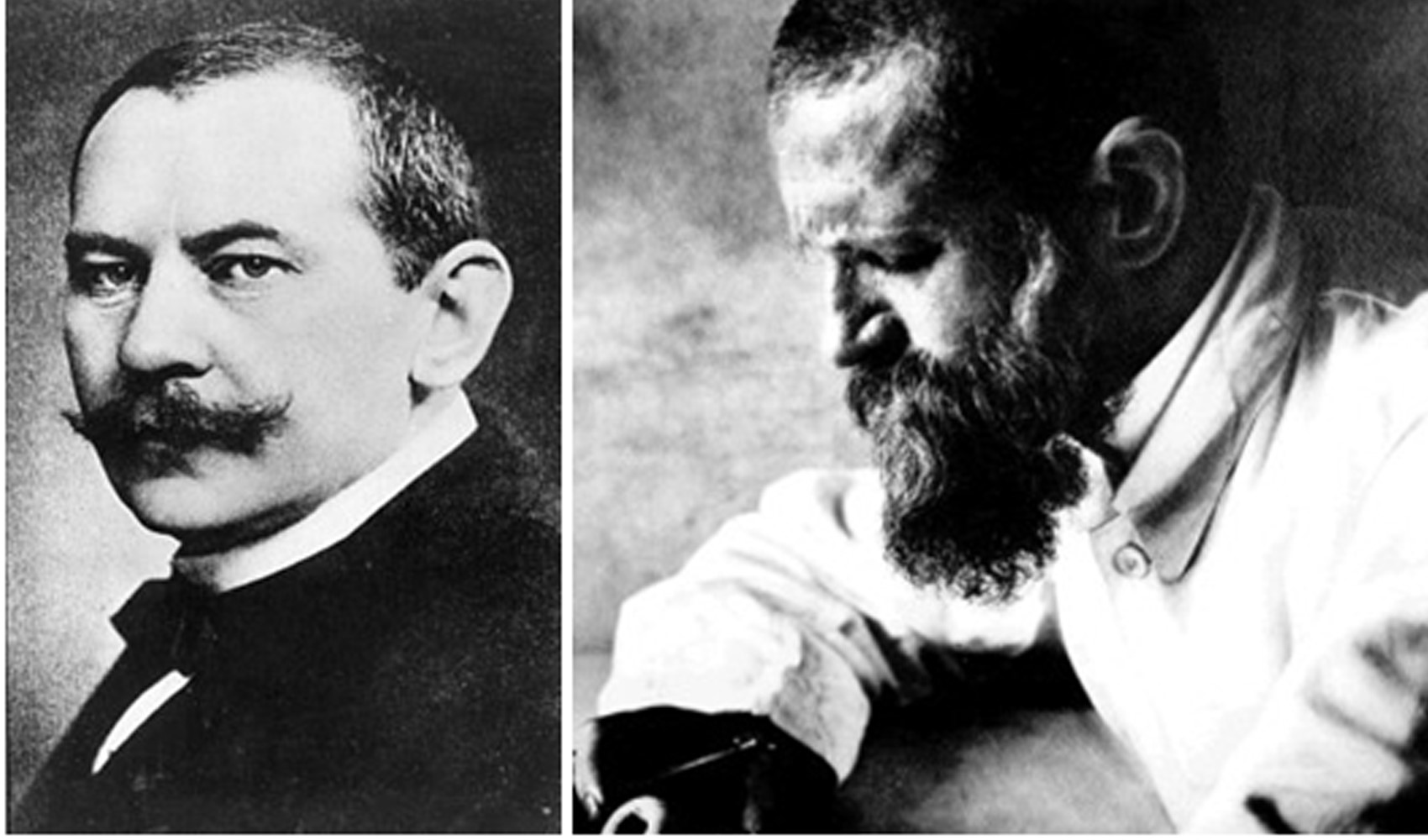
(German excavators from Carl Humann’s smuggling ring in Zincirli: Otto Puchstein and Robert Johann Koldewey)
***
The excavations to be carried out with the new permit obtained on December 25, 1889, would be Carl Humann’s second plundering expedition organized to Gaziantep.
Assoc. Prof. Oğuz Satır and Assoc. Prof. Ali Çifçi, who examine this process in detail, continue to explain:
"The second excavation began on January 27, 1890, and ended on June 14, 1890."
“Humann continued his excavationapplications untilhis deathin 1896; however, from 1890 onwards, the excavations were carried out primarily under thecollaboration anddirection of Felixvon Luschan and Robert Koldewey (1855–1925).had been improved.”
Carl Humann had now become the master ofsmuggling in Anatolia for the Germans. Then new tracks were coming.
When the Germanic tribes, their ancestors, lived in primitive communities agat that time, they were very eager to takeand carry away the superior cultural elementscreated by the people of Anatoliain the mountains.
The German bourgeoisie, which grew wealthyalongside capitalism, sought to providea foundation for their ownbaseless history using Anatolian culture.by abandoning its culturetoseek its roots.
They needed to delve even deeper into the Gaziantep-Zincirli robbery.
To conduct the excavations faster, before the Ottoman Empire fully woke up and blocked their path, to finish the lootingin order totake from Germanythey began to use the new tools that arrived.
“In late February 1890, for the rail system works brought from Germany it was very useful.”
“This technical innovation, for the transportation of the soil excavatedfrom the diggings.” significantly accelerated, increasing the pace of the workconsiderably.”
“In addition to this, they also took on the Gerçin Mound, located approximately 7 kilometers from Zincirli.they are.
“Here; another statue of the Aramean Storm God Hadad and King Panamuwa II (743–733 B.C.)andfragments belongingto variouslion statues.”brought to light.”
“These findings were transported to Zincirli by sleds.”
“The artifacts were reported to the Ottoman Imperial Mu seum on March 31st, along with the photographs taken by the excavation representativeAhmed Bedreddin Bey.”
“It was planned for the Gerçin Höyük artifacts, along with the Zincirli finds,to be transported to the Port of İskenderun, and from there to Berlin,after being shipped to Istanbul.”

(Zincirli excavations-von Luschan 1902)
***
According to O. Satır and A.Çifçi, ”Relevant documents show that the progress of the Zincirli excavations wasregularly reported to the OttomanImperial Museum; and that these reportsalso contained information regarding the artifacts discovered by the German team at Tahtalı Pınarı, Karaburçlu, and Elbistan Höyük,as well as details about the findingsincluded.it shows”.
“At the end of the excavations, C. Humann wanted to take three of the five lion statues unearthed. ”
“Snowin exchange, offered to cover the transportation costs of the remaining two lion statues to Istanbul.”
“On May 31, 1890, this proposal was deemed appropriate by the Ministry of Education,which was tasked with overseeing the Ottoman Imperial Museum (Müze-i Hümayun),and was subsequently submitted for the approval of the Council of Ministers (Meclis-i Vükela)and finally,the Sultan.”
“In June 1890, theMüze-i Hümâyun, the excavationcontaining artifacts obtained from the30 cratesthat thesupervisor Ahmed Bedreddin Beysent to the Port of Iskenderun,and reportedthat an additional 12 crates of artifacts needed to be transported.”
“However, an unexpected obstacle arose at this stage cameout”.
“The İskenderun Rüsumat Administration (Customs Administration), was not officiallyinformed of the matteron the groundsthat it was decided to be given to the Berlin Museumdid not allow the smuggled artifacts to be taken abroad and reported the situation to the Ministry of Education.”
“Upon this, the Ministry of Education requested from the İskenderun Customs Directorate that the crates containing the three lion statues, which had been decided to be given to the Berlin Museum,be oprequested an examination, onlyfor the shipment of these statues; and requested that the other artifacts be seized.”
“These correspondences show that the customs officers at the Port of İskenderun were aware that the artifacts removedfrom Zincirli were being smuggledabroad withoutauthorization,andto effectively prevent it from being broken striving toexpose it”.
Of course, in this country, there are countless honest, determinedpublic servants who love their countryand an official was alsopresent.
“However, these documents do not contain detailed information regarding the fate of the other artifacts from Zincirli and Gerçin Höyük that were brought to İskenderun.”For this reason, the
fate of theartifacts in question during the Ottomanperiodwhether it was handed over to the German team with the knowledge of the museum administrationor whether it was smuggled to Germany through illegal means (under the table)isnot known for certain.
Today,the Hadad statue, the Panamuwa II inscription found at Gerçin Höyük, andthe manypieces of the Hittite lion statuearebeing exhibited at the Vorderasiatisches Museum in Berlin”. (Oğuz Satır – Ali Çifçi, The “Worthless Stones” of Zincirli, pp. 231–233)
Oh, the sorrow!

sent to Germanythe two Antep lions that were taken awayI. Berlin Vorderasiatisches/Museum of the Ancient Near East. Photo: Tayfun Bilgin)
***
“The second excavation season, which ended on June 14, 1890,was extremely productive,havingpassed, a great numberof new works were unearthed.”
“The fact that it was summer made the excavation conditions even more favorable.”
C. Humann's apprentice, Felix von Luschan and his team, considering that the permit would expire at the end of December, three-monthshort break, a new excavation dperiod was planned.”
The Zincirli excavations were, along with Pergamon, among Carl Humann’s mostcherished excavation sites; however, after this stage, the actualmanagement of the excavations was largely left to von Luschanhad been abandoned.
“The third excavation period began on October 9, 1890.”“
Excavations still, Humann’swas being financed by the organization called 'Orient-Komitee' in Berlin."
"Butthe goal was to complete this season asquickly as possibleand to finalize thetasks remainingfrom the previousseason."
“However, the third excavation did not proceed as planned.”
“The 1890–1891 winter was extremely harpastand, in theregion, heavysnowfall had occurred.”
“In addition to this, the cholera epidemic, the implemented quarantine measures, and the social unrestaround Zeytun-Marashskylights, laborsupply had made it seriously difficult.”
“In theend, the excavation team would have to stay at Zincirli for much longer than planned.The excavation permit had expired at the end of December 1890. because.” (Oğuz Satır – Ali Çifçi, The “Worthless Stones” of Zincirli, p. 231–233)
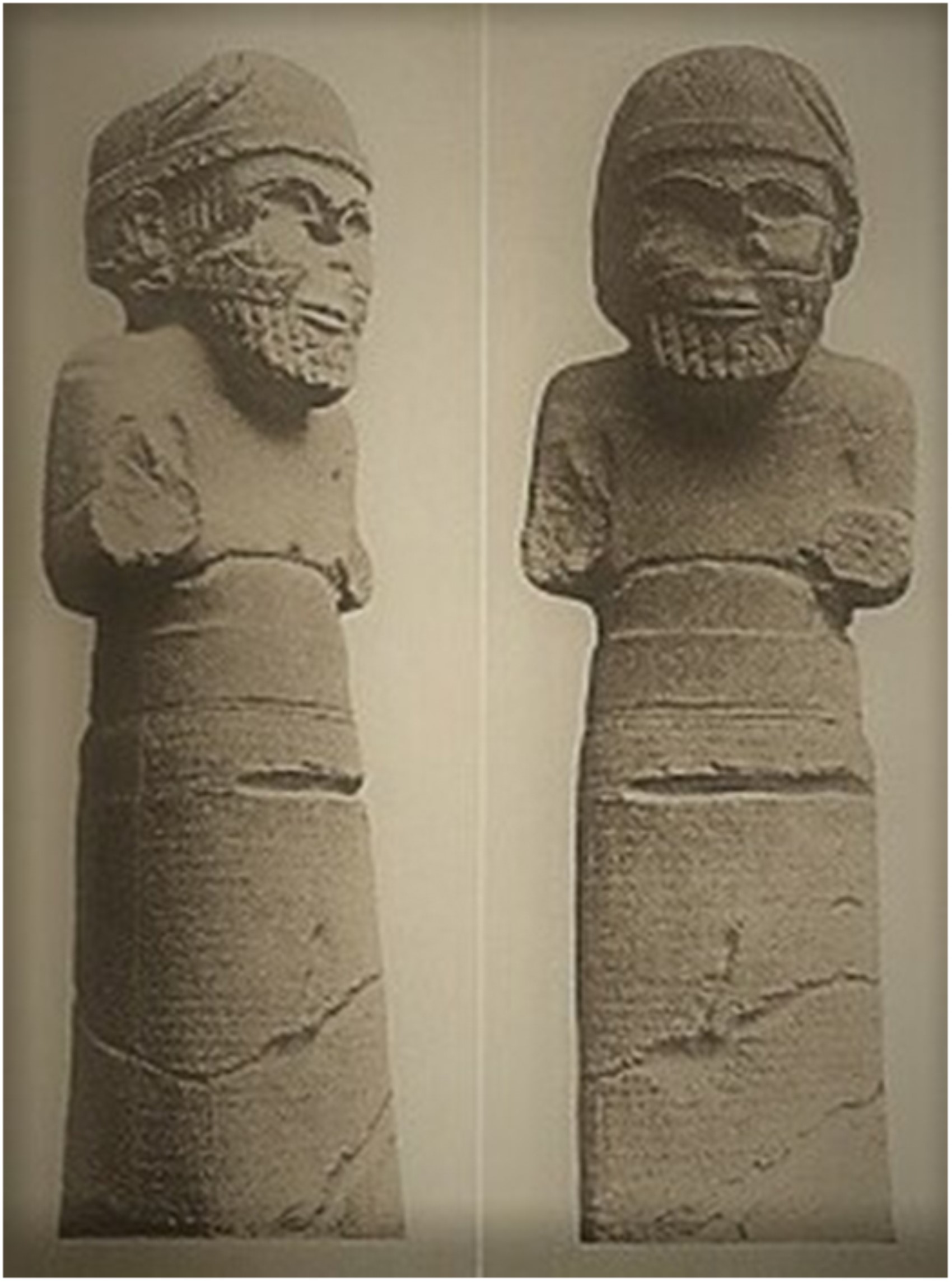
(NearZincirli, GerThe statue of the Semitic (Arab) peoples' storm god Hadad,found in Zincirli and taken to Germany. Berlin Vorderasiatisches/Museum of the Ancient Near East)
***
The robbery had not yetended.
Conditions excavated with prior permissionto do itwas not suitable forit.
“In April 1891, the third excavation season to continue, a new official permit was granted.”
Of course, Osman Hamdi Bey, as always, waswas following the work and facilitating the permits.
“Duringthis period, themajority of theexcavations were concentrated in the section of the city of Zincirli Sam’al called the “UpperPalace”.”
“Here, in the section defined as the North Hall Building,a great numberthe relief wasbrought to thesurface.”
“As in previousexcavations, the activity of collecting artifacts from the surrounding mounds was also being continued.” “Indeed, the excavat
ionrepresentative Ahmed Bedreddin Bey had reported that two stone artifacts from Hacıbeyli in Maraş were transported to Zincirli.”
German smugglers were almost going to leave noartifacts from the 1st millennium B.C.unsmuggled in theGaziantepregion.
“Towards the end of March 1891, during the excavation, the unearthed large-scale stone artifacts, in the future period when excavations would continue, theiwith its past, it was buried back into the ground.”
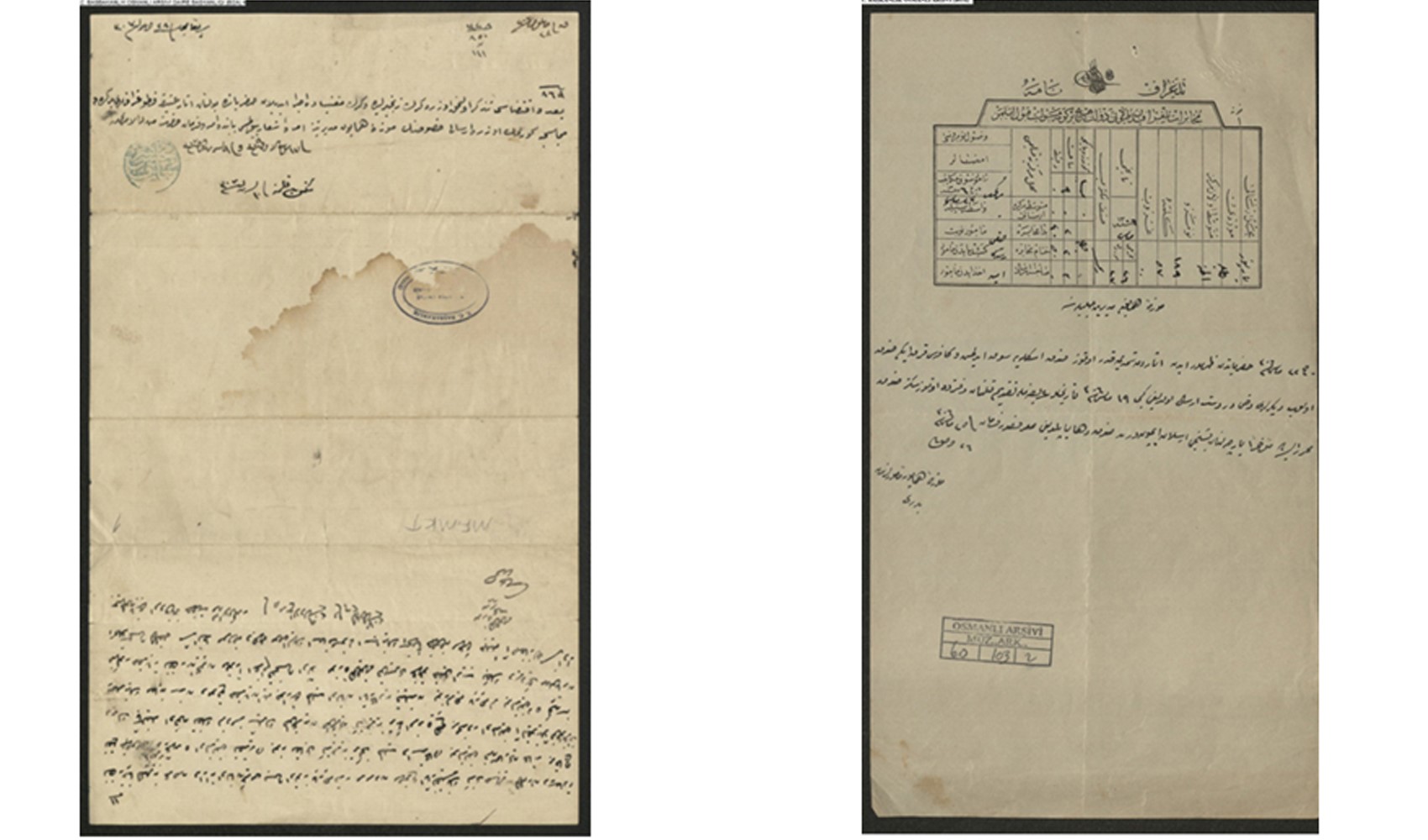
The document on the left is Osman Hamdi Bey’s, C. Humann’s third excavation rseized at Zincirli during theperiod, the official state letter regarding the transportation fees of certain artifactsto Humann in exchange for payment. (BOA.MF.MKT. 132/25. O.Satır and A.Çifçi p.223).
Thedocument on the right - the second excavation at Zincirliperiod, regarding the artifacts found The official letter of Inspector Ahmet Bedrettin Efendi regarding thesending oftheİskenderungarrisonto thefront. (BOA.MÜZ.ARK. 60/103) O. Satr and A.Çifçi p.221).
“With this method, the aim was to protect the works fromnatural erosion and destruction.”“However,how
many works were buriedis unknown.”gu, and then when it was re-excavated is not known for certain.”
“In contrast, in a letter dated January 12, 1891, Carl Humann informed the Ministry of Education that he had packed the artifacts excavated from Zincirli into 42 crates.”
“He requested permission to send 21 of these crates to Berlin and the remainder to Istanbul.”ed.”
“This request was the first example in terms of demanding half of the artifacts to cover Humann’s expenses.” “
This situation was completely contrary to the 1884 Regulation.
“Upon this application, the Ministry of Education İskenderun Rrequested a meeting from theTrust of Deposits (a kindof tax office)and stated that all 42 crates must be sentto Istanbul.The Ministry was resisting.
The Ministry was resisting.
“At the same time, the Ministry of Education informed Ahmed Bedreddin Bey that from the excavations explicitly stated that the transportation costs of the excavated artifacts to Istanbul would be covered by Humann.”
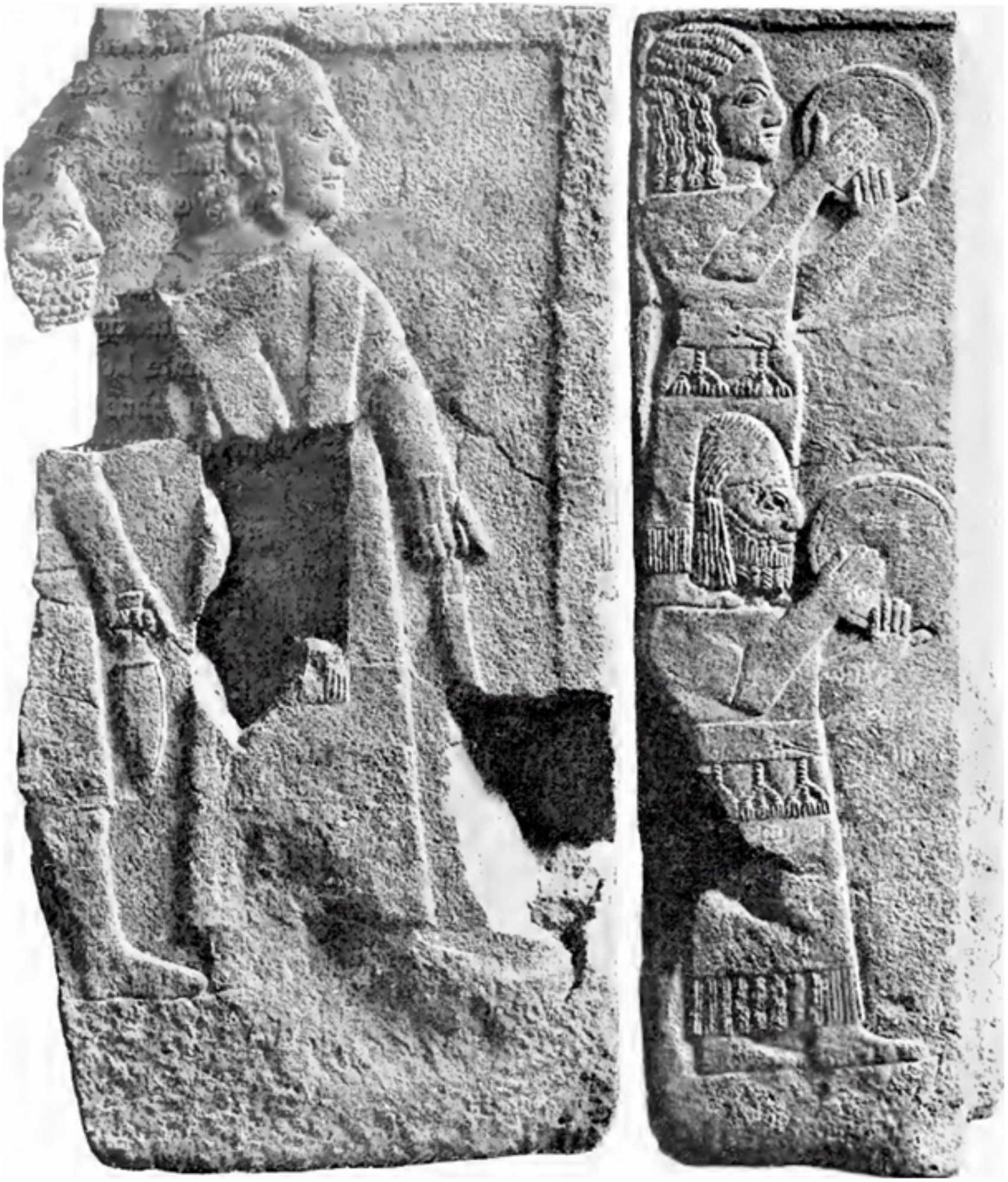
(The structure known as Hilani found in Zincirli (10th–8th century B.C.which emerged and opened intoa columned front porticothe palace/administrative structuretype) building's stone cladding found in IV. Berlin Vorderasiatisches/Museum of the Ancient Near East. Photo: von Luschan. 1911)
***
“On September 15, 1891, Humann, the Minister of EducationMünif Pashato [Osman] Hamdi Bey (1828–1910) in the letter he wrote,all the artifacts obtained from the Zincirli excavations,along with the architectural piecesunearthed from the Menderes-Aydınexcavations, weresent to the Ottomanto the Imperial Museum, stating that he was readyto transport them.”
“In this letter, Humann stated that he had previously made a similar request on July 22,and that the Museum-i Hümâyun Directorate’sof —that is, Osman Hamdi Bey— was fully aware of the excavations and could provide detailed information ifrequested,he specifically emphasized.” Hamdi Bey immediately intervened against the difficulties
raised by theGermans.
“In the report he submitted to the Ministry of Education, he reminded that Humann had beenexcavating in Zincirli for three years; that he was granted permission to take a portion of the artifacts uncoveredduring the first and second excavation seasons to the Berlin Museum, in exchange for transporting the remainderto Istanbul.”“The artifacts found in the excavations are extremely
important.”large and heavy, and therefore its transport from Zincirli to Istanbul would require high costs,” he stated.
“With this excuse, Humann was to cover the transport costshimself and decidedin exchange, he stated that he found it appropriate for a portion of the artifacts to be given.”
“Furthermore, he would personally examine all the artifacts after they were brought to Istanbul; he would decide himself which ones would remain at the Ottoman Imperial Museum andwhich ones would be given to Humann, he clearly stated.was indicating.”
Hamdi Bey continued his consistency inassisting smugglers!
“Upon this report, the Ministry of Education requested that Hamdi Bey examine the photographs of the artifacts and report the evaluation results to the Ministry.”
“On March 11, 1892, Osman Hamdi Bey, on behalf of the Müze-i Hümâyun (Imperial Museum)based on the reports of Ahmed Bedri Bey, who served inZincirli,he reported to the Ministry of Education that the transportation of these Hittite artifacts, made of“porousstone,” to Istanbul would cost approximately 50,000 kuruş.”
“Thesestones were porous”.
Good heavens!
If thesestones were moldy andmeaningless, why was C. Humann so insistent on taking them abroad?Why was he so insistent on taking them abroad?

(The stones taken from Zincirli to Germany,which were supposedly "moldy" according to Hamdi Beyblocks with two relief images from the stones (!). Berlin Vorderasiatisches/Museum of the Ancient Near East)
The OttomanEmpire was going togive thesestones to the Germans just to avoid the expense, and the foolish Germans would load these useless stones onto ships and carry them to the heap of Europeheap!
***
Osman Hamdi was trying to deceive historybut it was in vain!
According toHamdi, the museum (that is, the state) had no budget (that is, money)for the transportation of the artifacts.
More As previouslystated, “some of these artifacts were brought to Istanbul by Humann at his own expense during previous excavations, and some were sent to the Berlin Museumwith the approval of Hamdi Bey,in accordance with Article 32 of the Regulation on Antiquities.”had been given to the museum.”
In this situation, “Hamdi Bey reiterated that all artifacts excavated at Zincirlimust be brought to Istanbul; he stated that those to be given to Humann would be determined separately after an examination.”
“The Ministry of Education [Maarif Nezareti] this dforwardedto the Meclis-i Vâlâ (Council of State); the Council approved the decision and submitted it to the Sultan.”
Because now it is the previous behaviorhad paved the way.
“Following the Sultan’s approval, the Directorate of the Imperial Museum,in other words, Osman Hamdi Bey, was officially commissionedtocarry out the necessary procedures.”
“Until a new excavationpermit application was made for Zincirli (October 6, 1893), third excavation, no further information could be reached regarding the fate of the artifacts unearthed and re-buried.”Were these artifacts
truly buried, or were they, after being buried, by hidden handstaken away?from smuggled out, or was it unearthed again through an official excavation after being buried underground; it is unclear. it is unclear.
Isuch intricate smugglingit is not difficult to guess what these are from theirenvironmentat all!
“However, the final artifactsunearthed in Zincirli for being takenabroad were madeIn the new application made, it was stated that alarge portion of the artifactsexcavated had been transported to Istanbul, and the remainder was expected to bedelivered to Istanbul within a short period of time.”
Finally, on February 28, 1894, to the Adana ProvinceIn a summerthat was proposed, during the thirdexcavationperiod, it was requested thatassistance be provided to Mistakidis Efendi in transporting the artifacts unearthed to the Port of Iskenderun.
Mistakidis Efendi, in the 19thcenturyAt the end of the year, in the Iskenderun–Adana–Aleppo lineoperating intransportation, porterage,port–customsaffairs, stone and crate transportmatters with the state and foreign excavation teams working as a local subcontractor/broker.
He was likely a Greek from Adana.
German excavation teams (Humann, von Luschan, etc.) preferred towork not with local Muslimvillagers, but with Greek-Levantine intermediaries. working with them.
Perhaps it waseasierto do itthat way.

(Found in Zincirli, taken to Germany,an inscriptionof King Barrakib of Sam'al in Aramaic. Berlin. Vorderasiatisches/)Pergamon Museum. Photo: Tayfun Bilgin)
***
What happened in Zincirliis neither an innocent scientific excavation nor an isolated historical event; this process, during thedisintegration of empires, is the cultural heritageof law, bIt is a striking example of how bureaucracy and sciencewere manipulated to change hands. It is astriking example.What happened to the stones in Zincirli is not just a relocation; it is the uprooting of memory and the silence
of the silencethat follows.is the packing and crating of it.
The pickaxe was struck not into the earth, but into time; law was turned into a signature, and science into a pretextforbeingtransferred.
Carl Humann’sIn this chain that began with the pickaxes of, unfortunately, legitimized with the approval of Osman Hamdi Bey, and completed in the display cases of Berlin, the stones deemed "worthless" are actually the multi-layeredsilent witnesses of post-Hittite Anatolian history.
Those black stones called "worthless" are now the silenced voice of post-Hittite Anatolia.
Today, the fact that these artifacts have been tornfrom Anatolia is not just apastIt is not a robbery at work, butan indicator of a mentality that still persists.
Every relief trapped today in the depotsof Berlin museums is like a sentencetorn from its place: itscontext is lost, its meaning is incomplete.
Because astone is suprootedgloses not only its place but also its meaning, it becomes light; yet we know that a stone is heavy in its own place.GAZIANTEP AND BERGAMA'S HISTORICAL ARTIFACTS, THE ALTAR OF ZEUS BELONGS NOT TO COLD AND FOGGY BERLIN, BUT TO ANCIENT GAZIANTEP AND
BEAUTIFUL BERGAMA. THEY MUST ABSOLUTELY COME BACK, THEY MUST RETURNTO THEIR HOMES.THEY MUST RETURNHOME.IT IS!
Sefa Taşkın
04.01.2026
Karşıyaka/İzmir
Most Read

Striking picture for Özgür Özel's 'New Party'

Özgür Özel gives a dated response regarding the number of resignations

Forest fire in Antalya brought under control

The PKK opening and Özgür Özel’s path!..

How did the newspapers view Özgür Özel's farewell to the CHP?

He killed his wife by slitting her throat: Their children witnessed the moments

What did the CHP do?

Özel’s new party move in the world press

The New CHP, against CEHAPE

Fire at TUSAŞ engine factory in Eskişehir under control