



A STONE IS HEAVY IN ITS PLACE-150. LET US NOT FORGET, LET US NOT LET BE FORGOTTEN,
“Mourning” is the outward expression of pain and sorrow felt following the death of family members, community elders, respected individuals, or after major disasters, through certain behaviors.
Every society has its own unique understanding of “mourning.” It varies from society to society.
For example, while family members wear white among Hindus, in today's world, “black” clothing is generally accepted as a sign of “mourning.”
In official ceremonies, flags are flown at half-mast, and collective moments of silence are observed.
These traditions have evolved over history, influenced by other societies, and have reached the present day.
Perhaps one of the most interesting of these that reflects into our present day could be the mourning ceremonies of the ancient city of Gambrion, which existed two thousand five hundred years ago near the village of Poyracık in the Kınık district of modern-day İzmir, in the Bakırçay Valley of Western Anatolia.
This very ancient settlement, which is also very close to the famous city of Pergamon/Bergama, was first mentioned by the warrior and writer Xenophon, who came to the region in 399 B.C.
The ruler of Gambrion at that time, whose name is mentioned in Xenophon's book “Anabasis,” is Gorgion, the son of a noble woman named Hellas who had settled on the Pergamon hill.
While Pergamon was a small settlement like a village at that time, Gambrion was a city rich enough to mint its own coins and engaged in mining on the edge of a fertile plain.
They were so artistic that they would depict the twelve rays of the sun or the moon on their coins.
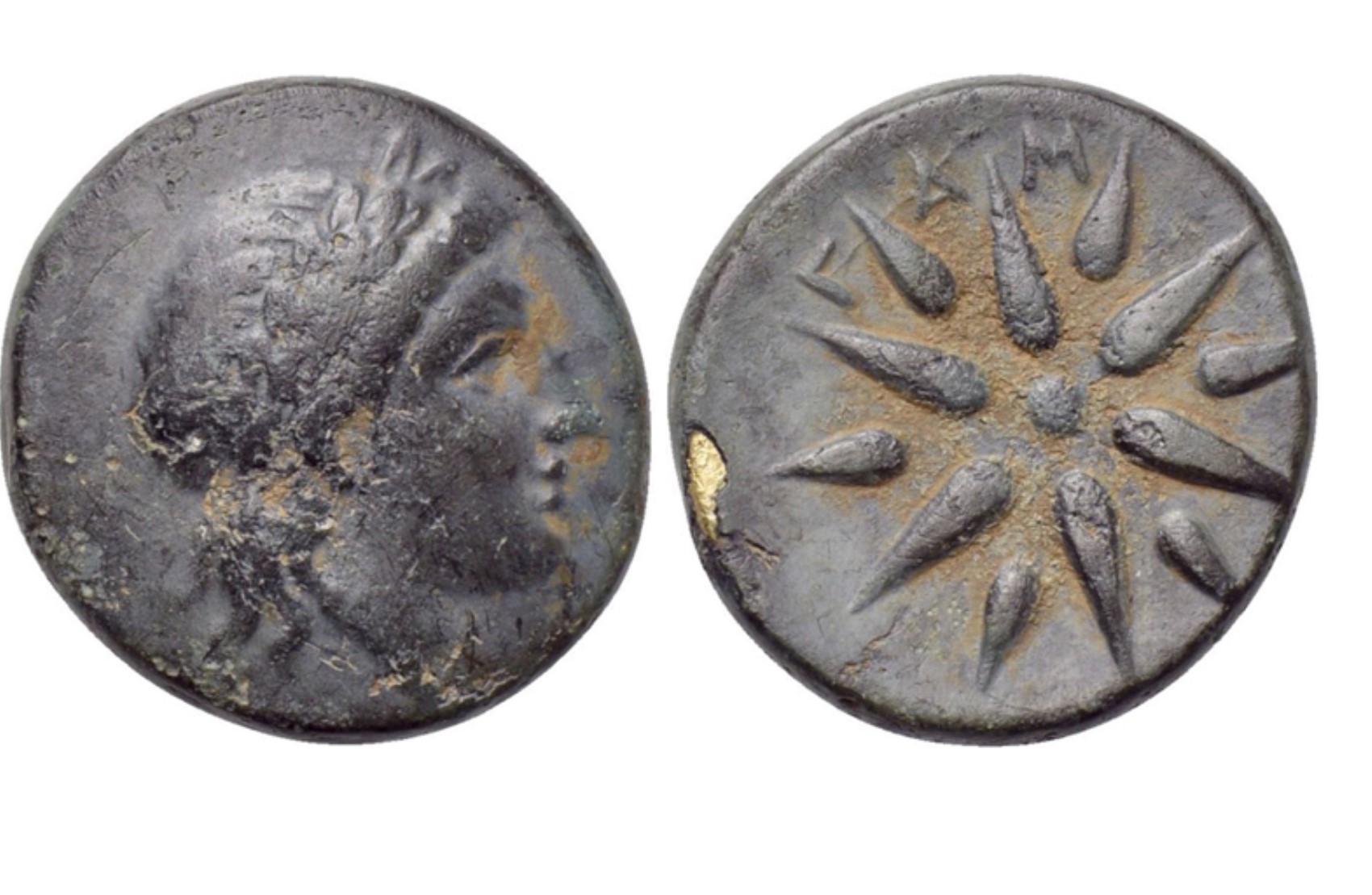
The name Gambrion was likely from the language of the peoples who lived here before the Hellenes.
According to Seher Özkan, who conducted research on Gambrion, the laws by which the city was governed also determined the rules for “mourning” here.
Accordingly, “In Gambrion, men had to mourn for three months, and women for four months! Women who committed crimes could not participate in sacred sacrificial ceremonies for ten months.”
According to the law, “men in mourning could only wear 'white.' For women, the color of mourning was dark. It was 'black,' it was 'brown.'”
Until recently, peasant women in the region would cover their bodies and heads with a black garment called a “kıvrak.”
This means that even before the brilliant Pergamon civilization emerged, there was a mature order and a deep-rooted culture in Gambrion that bound mourning to rules.
***
Then, Gambrion remained buried under the ashes of history.
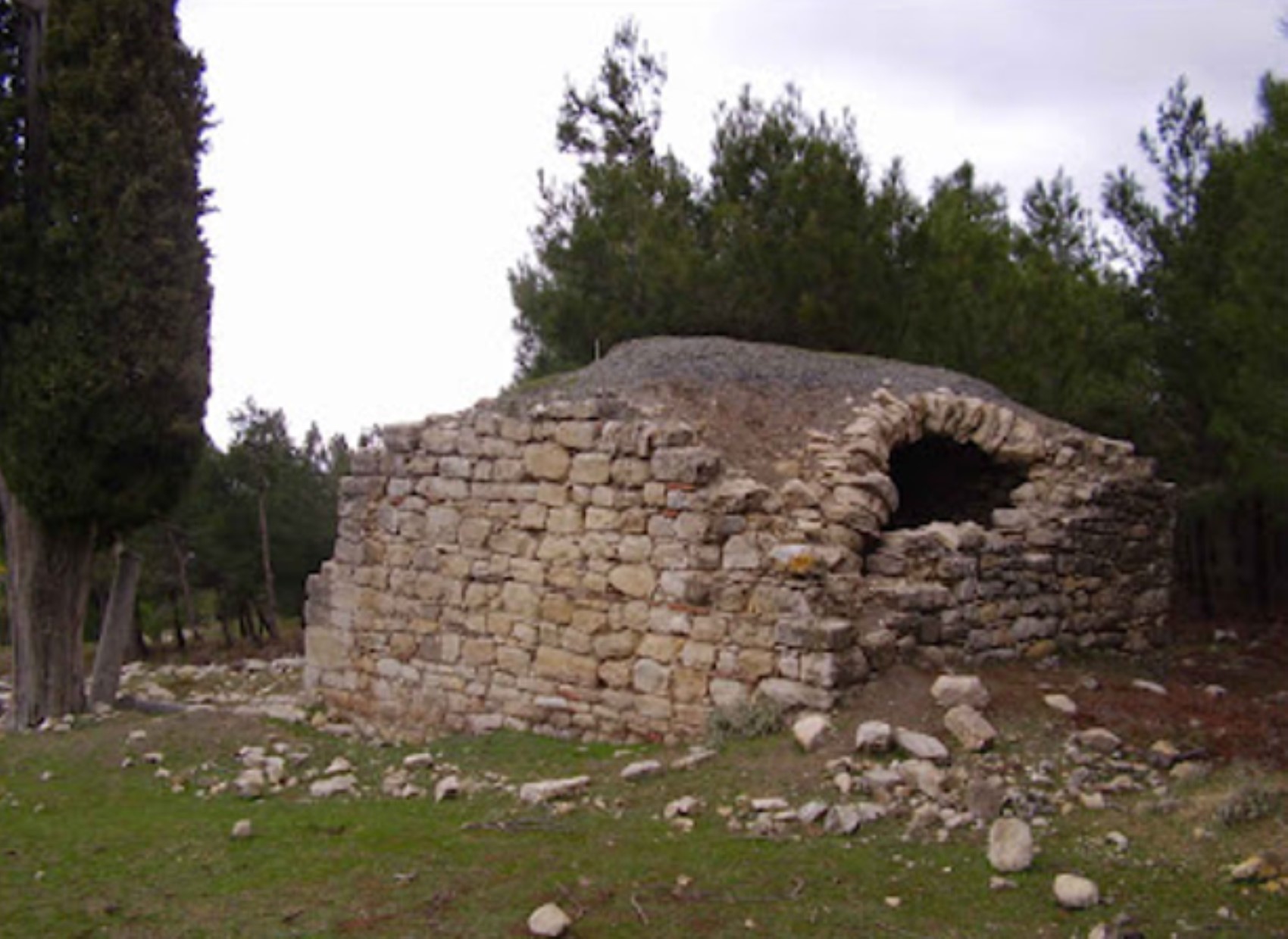
(Remains from Gambrion. Poyracık-Kınık-İzmir)
It was the German archaeologist Alexander Conze who thought that this city, whose name is encountered in ancient sources, was in Poyracık-Kınık and conducted research on this subject.
In 1877, Alexander Conze was the “Director of the Museum of Antiquities in Berlin,” and in 1887, he was the “Secretary of the German Archaeological Institute.”
He was the chief assistant and mentor to the engineer Carl Humann, who robbed Bergama with the support of the German State of that time through smuggling from 1864 to 1878 and dubious excavations between 1878 and 1886.
So, the German State of that time had appointed such a historical artifact thief to such important positions.
How eager colonialism and imperialism are to seize what does not belong to them!
So, Conze had gone out on a land survey to see what was what near the Pergamon they had plundered, in Poyracık-Kınık! For “examination”!
The German Archaeological Institute (DAI), where he worked for a time, continues archaeological excavations today in “Pergamon-Bergama, Hattusa-Boğazköy-Çorum, Didim, Miletus, and Priene-Aydın.”
The authority to conduct excavations in Göbeklitepe-Şanlıurfa was recently taken away from the German Archaeological Institute, the DAI, in 2010, following the theft of a statue at the excavation site and the death of excavation director Klaus Schmidt in 2014.
***
According to information provided by Tekin Gün, Alexander Conze, the assistant to the Bergama/Pergamon robber Carl Humann, conducted archaeological surface surveys in Gambrion-Poyracık, right near Bergama, in 1887.
Therefore, while wandering around the area, he must have found many historical artifacts that caught his eye and that he was keen to smuggle.
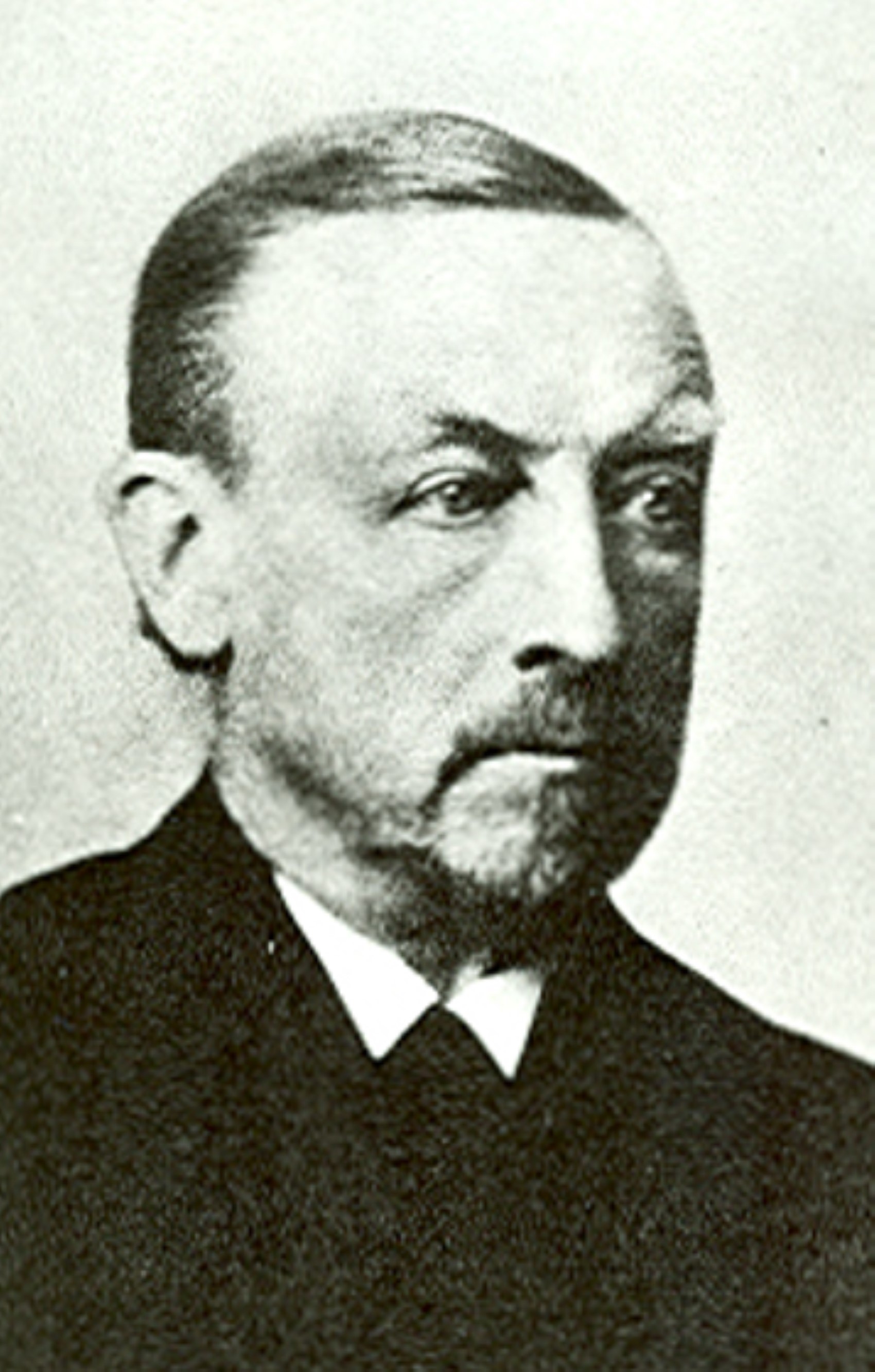
(Alexander Conze)
A. Conze, a member of the robber gang of Carl Humann, who plundered Bergama and took it to Germany, to Berlin, through a thousand tricks, must not have neglected to smuggle what he found in Gambrion as well.
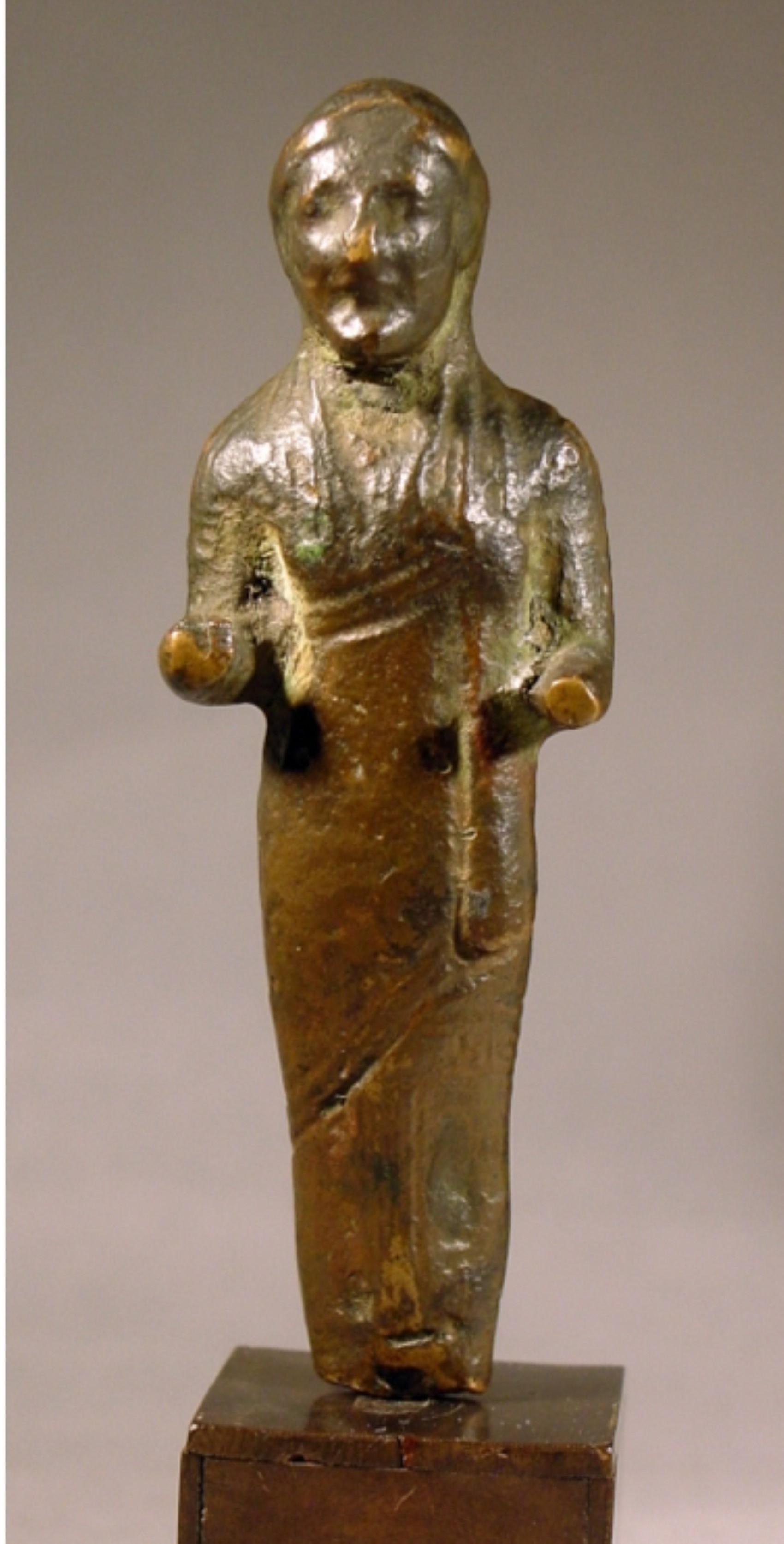
A bronze statuette, which is currently in the Berlin Museum/Prison and is recorded as having been seized in Gambrion/Poyracık, is certainly one of them!
It was entered into the Berlin Museum/Prison records with the code “Ident.Nr. 30025” and recorded as having been “found in the vicinity of Bergama.”
It was named as an “archaic statuette of a man in a coat.”
“Archaic,” “ancient,” meaning even older than the brilliant Pergamon civilization of the 3rd-2nd centuries B.C. that built the Zeus Altar.
This means that metalworking was well-developed here at that time.
The statuette is 8 cm tall. It could be an image of a god or an object of magic.
It has a garment on it that wraps tightly around its body like a coat.
Holiness flows from its appearance!
It seems to be extending its broken hands forward.
It represents the values of Western Anatolia, both local like metalworking and universal like mourning.
The “man in a coat” of the Aegean Region, the province of İzmir, and Poyracık/Kınık has been counted as Prussian (the old name of Germany) Cultural Heritage by today's boorish know-it-alls (!) of Germany!
How angry the Bakırçay (Caicus) river, which flows at the feet of the city, would be if it heard this!
Especially if the Yunt Mountains (Asperdenon), against which it leans and whose ores were likely used to manufacture the bronze it was made of, heard it!
German artists Goethe and Beethoven, whose contributions to contemporary world culture are indisputable, would be ashamed if they saw it!
Not understanding this robbery, not expressing it, not advocating for the return of smuggled historical artifacts to their countries, and not returning them should be a disgrace to contemporary civilization.
***
The information about “mourning” in Gambrion, with men wearing white and women wearing dark colors/black as “mourning attire,” is an indication of how old the roots of today's practices are.
Today, “black” is generally accepted as the color of mourning.
In social development, every people has its “days of mourning” and “dark days.”
“November 10th” is the “day of mourning” for the Turkish nation.
It is the anniversary of the death of Atatürk, the wise statesman who, together with his people, saved his country from the boots of imperialism and showed it the path of science that would lead it to contemporary civilization.
Since that day, Turkey has been “wearing black” and “donning black” on November 10th for years. It commemorates Atatürk once again.
It is unthinkable that Mustafa Kemal Atatürk, with his vast historical knowledge, would not have realized the importance of Bergama.
Atatürk, who came to Bergama in 1934, requested that a “master plan” be prepared to introduce the historical value of this place to the world, that the country's first festival be organized under the name “Kermes,” and that the first “excavation museum” be established.
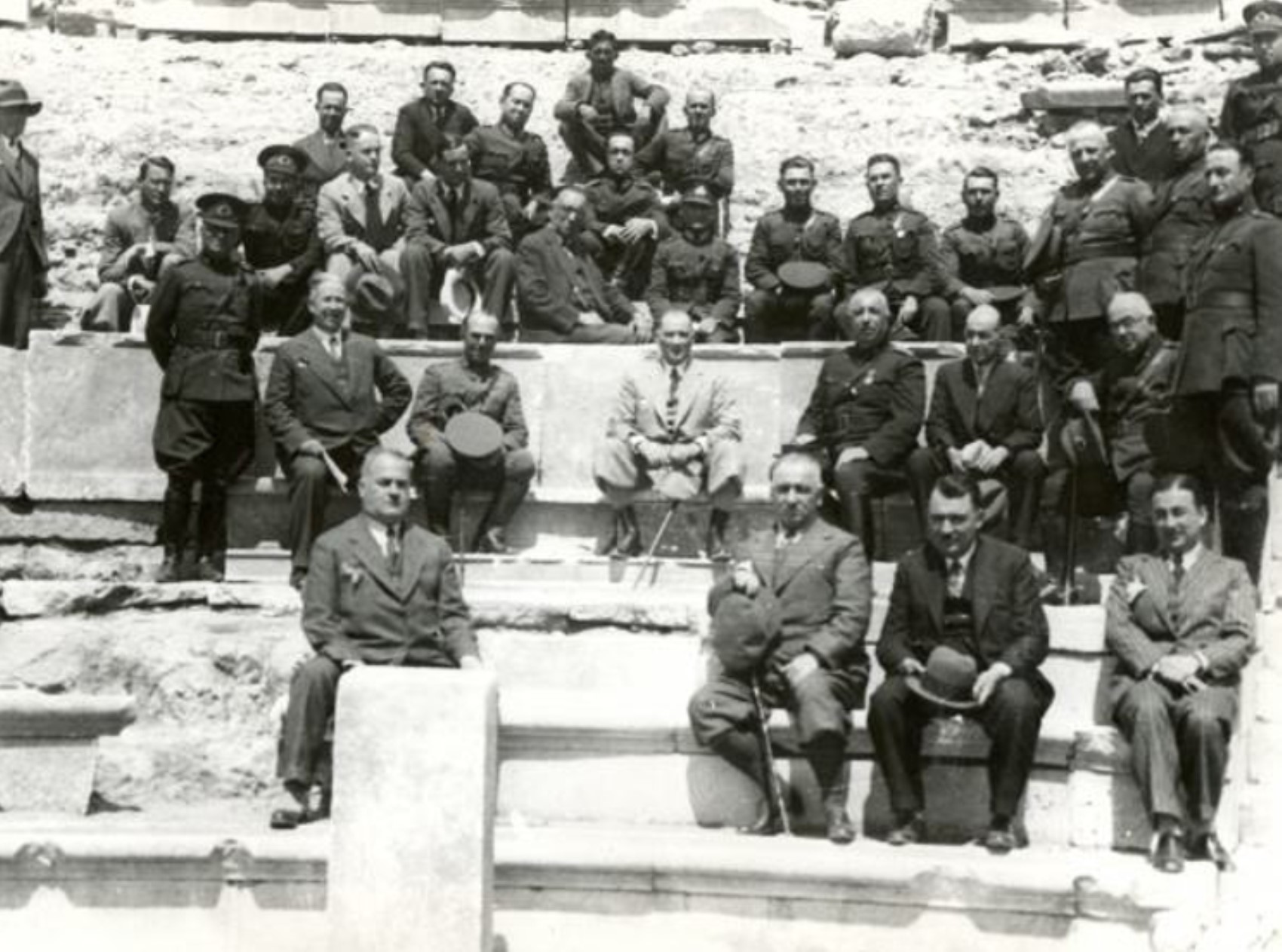
(April 13, 1934. Atatürk, Fahrettin Altay, Kazım Dirik, Izzettin Pasha, and his staff at the Bergama Asclepieion theater)
This understanding also finds expression in his aphorisms.
“Writing history is as important as making history.”
“In terms of history, archaeology and anthropology come at the head of these sciences.
History becomes grounded as long as it relies on the documents that these sciences find and bring to light. It is the nations that base their history on these documents that find and introduce their own essence,” he says.
Of course, “a nation that remains without art means that one of its lifeblood vessels has been severed.”
***
In this context, protecting Anatolian history and its historical artifacts is a national duty.
In this sense, protecting the unique historical artifacts that humanity has created on Anatolian soil is a duty of humanity.
Undoubtedly, “A Stone Is Heavy In Its Place.”
THE ZEUS ALTAR AND BERGAMA ARTIFACTS DO NOT BELONG TO COLD AND FOGGY BERLIN, BUT TO BEAUTIFUL BERGAMA. THEY MUST DEFINITELY COME BACK, THEY MUST RETURN HOME!
(Source: http://www.smb-digital.de/eMuseum, Database-Antikensammlung), (2024) /// Seher Özkan (1991): Gambrion Antik Şehri. (İzmir: Bergama Belediyesi Yayınları) /// Tekin Gün (2020). DİRENEN TARİH (2) Bir belgeselcinin gözünden Türkiye'deki Antik Bolge ve Kentleri-(2011 2020) MYSİA (MİSYA)/// https://erkmensenan.blogspot.com/2010/06/gambreionpoyrack-knk-ve-cesresi-izmir.html /// https://www.ntv.com.tr/turkiye/en-eski-tapinaktan-heykel-calindi,dIUbOFXHy0SF7jH1HOvKnw)
Sefa Taşkın
10.11.2024
Bergama/İzmir
Most Read

Striking picture for Özgür Özel's 'New Party'

Özgür Özel gives a dated response regarding the number of resignations

The PKK opening and Özgür Özel’s path!..

Forest fire in Antalya brought under control

How did the newspapers view Özgür Özel's farewell to the CHP?

He killed his wife by slitting her throat: Their children witnessed the moments

What did the CHP do?

Özel’s new party move in the world press

The New CHP, against CEHAPE

Fire at TUSAŞ engine factory in Eskişehir under control