



CYANIDE DIARIES FROM BERGAMA-25
A paradigm, in its most basic sense, is the fundamental framework that determines how a perspective sees and interprets the world.
It is the totality of assumptions, concepts, and examples shared by a community (scientists, thinkers, institutions, individuals) regarding what is real, what constitutes a problem, and what methods and conclusions are considered valid and correct.
The concept of paradigm is used in the "Philosophy of Science" in the context of what questions scientific work will ask, what methods it will employ, and how it will interpret results.
In the Social Sciences, it determines from which perspective society, power, the economy, or history will be examined.
In everyday language and the world of thought, it draws the boundaries of established assumptions and the scope of habitual perspectives.
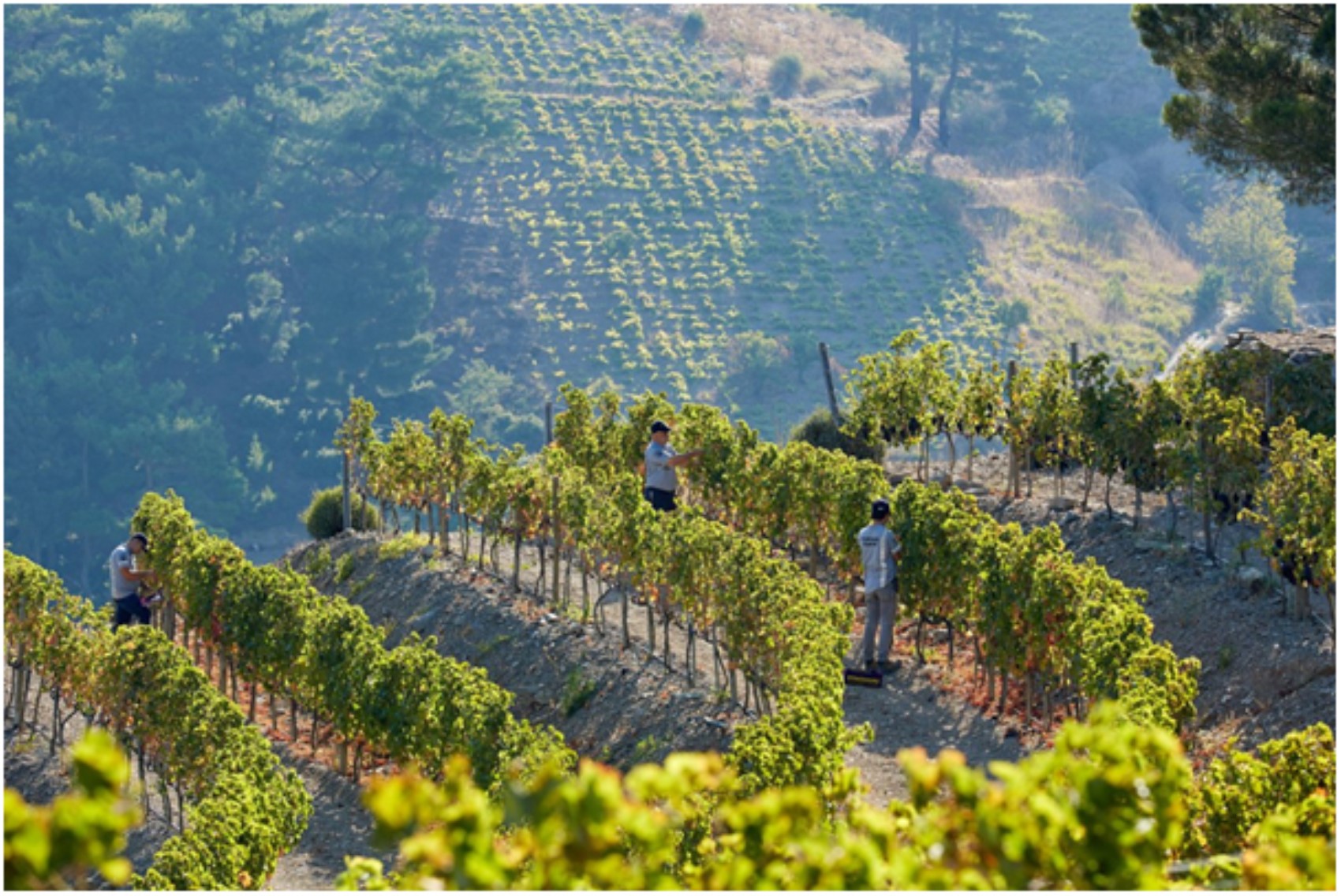
(The vineyards of İzmir-Efemçukuru, whose surroundings were sacrificed to a cyanide gold mine whose very existence poses a threat to the İzmir metropolis)
***
The world and its people changed greatly over the ages, even if slowly.
The development of the means of production and productive forces, and the movements and revolutions brought about by the incompatibility between the two, advanced social orders to higher stages.
Throughout this long process, humans who existed alongside their environments used nature for their own benefit and forced it to change as well. At times they caused significant damage to the environments in which they lived.
But these negatives were never as polluting or as deadly as they have been in recent times.
Capitalism's insatiable appetite for profit has ravaged nature, and continues to do so. Its imperialist form multiplied this damage many times over and elevated it to the scale of catastrophe.
In the pursuit of profit, it has rapidly made the Earth an uninhabitable planet, and continues to do so.
As a result, people were steered toward silence in the face of the relative prosperity gained.
That was the old paradigm. And it still is.
"Pollute as much as you can, exploit nature as much as you can!"
"Be quiet, stay silent as long as you can."
"Break, smash, destroy — but profit, profit, profit!"
And nature?
"Let whatever happens, happen!"
"Or do something for show!"
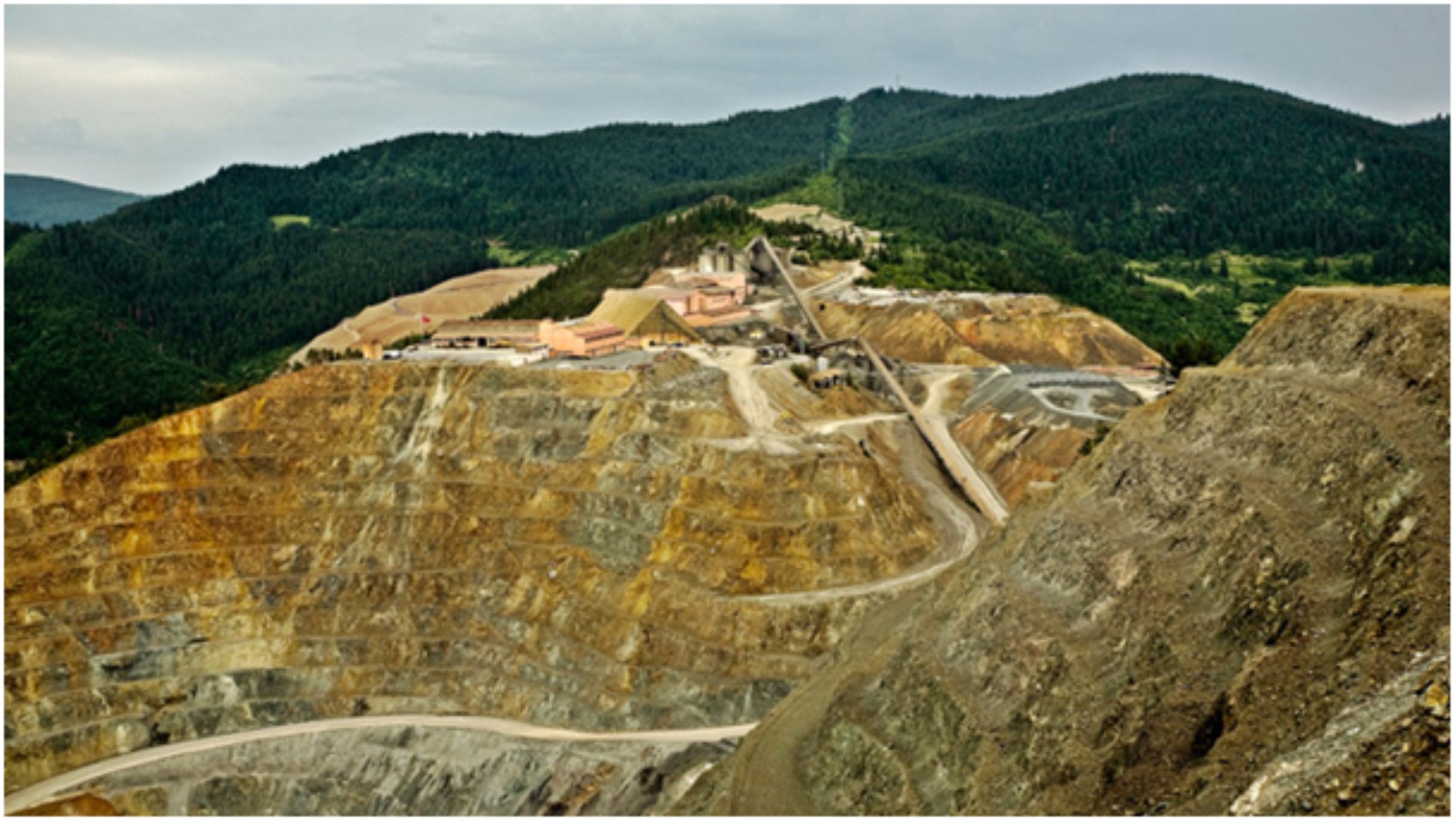
(Artvin Yukarı Hod cyanide gold mine: Yellow against green)
***
The most relentless and dangerous environmental problem Türkiye has faced in the new century is "cyanide gold mining."
In fact, this is not mining at all — it is large-scale open-air chemical processing.
In fact, it is an environment where all manner of poisons run rampant!
In general terms, "mining" means extracting from ore — dug from the earth — the useful and valuable substances it contains, such as coal.
This process does cause some degree of environmental degradation, but it does not directly cause great harm to humans.
Yet "cyanide," used as the primary input in today's chemical gold mining, is an absolutely lethal substance.
Washing the soil with "cyanide solution" to extract small amounts of gold, stockpiling the remaining cyanide-laced "toxic waste" in the open air, and the possibility of these poisons spreading into the environment — all of this places this type of operation before humanity as a gravely serious threat to life.
The environmental devastation, deaths, and destruction of natural life that have occurred and continue to occur at these toxic mines around the world provoke — and continue to provoke — public outrage.
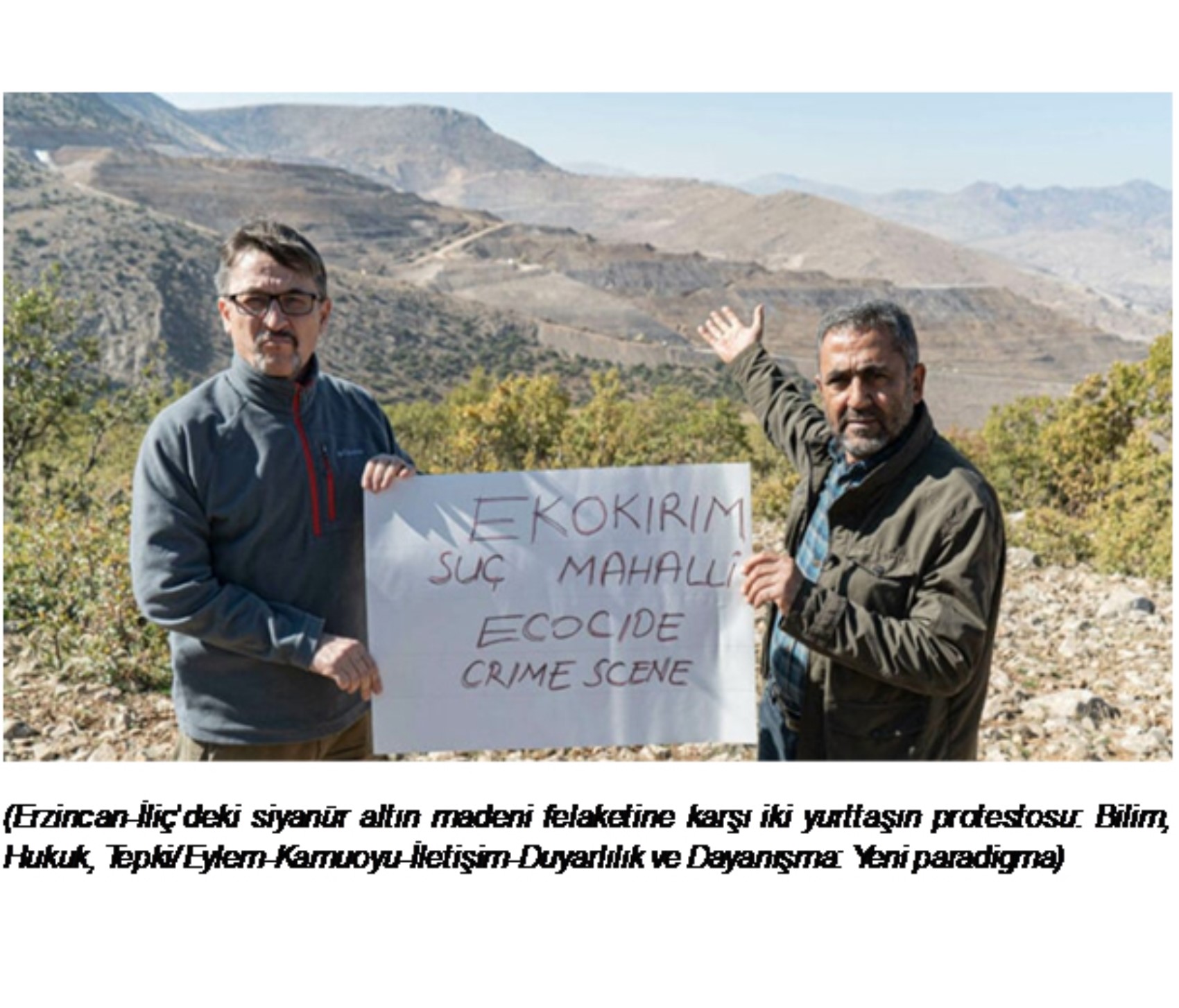
Today, from one corner of Türkiye to another — from Kayseri to Ordu, from Bilecik to Artvin, and even to Kırklareli — our lands have been turned into a playground for these kinds of cyanide gold mines and the "savage capitalists" who are driven by the desire to extract enormous profits from them.
Of course, every action will have a reaction. This is one of the fundamental laws of existence.
Resistance against death and environmental catastrophe!

(Cyanide and gold)
***
Prof. Şükrü Özen from the Department of Business Administration, Faculty of Business, İzmir University of Economics, and Prof. Hayriye Özen from the Department of Sociology, Faculty of Arts and Sciences of the same university, who conducted a comprehensive sociological study on the Bergama events, point to the uniqueness of the developments:
"The resistance movement of local communities (supported by patriotic intellectuals) that arose against the (cyanide) gold mining sought to be operated in Bergama in the early 1990s is a 'paradigmatic' struggle in that, despite being suppressed (in the language of the dominant powers, i.e., retreating in the context of the social movement) in the early 2000s, it bequeathed to the (social) struggles that followed it discursive trajectories and a repertoire of action and tactical-strategic approaches. (Özen, H., & Özen, Ş. (2018). What comes after repression? The hegemonic contestation in the gold mining field in Turkey. Geoforum, 88(1), pp.1–9 and İstanbul Üniversitesi Sosyoloji Dergisi 42(2): 493-524/2022)
As noted above, a "Paradigm," in its simplest form, is the fundamental framework adopted by an era to understand and govern the world; it is the totality of shared common sense and habits that determine what is considered normal, correct, and legitimate.
Before the attempt to operate a cyanide mine in Bergama Ovacık and the opposition that arose against it, the old paradigm viewed environmental issues most often as a secondary detail of development:
"If the state has granted permission, there is no problem": "If technical precautions are taken, the risk is acceptable": "Experts decide, the public adapts afterward": "Employment and investment are in the public interest; the environmental cost is a reasonable sacrifice."
That was generally how events were viewed — that was the "old paradigm."
The "new paradigm" brought by Bergama took the environment out of its role as a 'side issue' and placed it at the center:
"If there is risk, 'public interest' must be redefined."
"Is money more important, or are people and the environment?"
"Scientific warnings, legal oversight, and public consent must all be sought together."
The principle of "prevention/precaution" rather than "after-the-fact remedy" gains strength.
In other words, the old paradigm said "development first, environment later."
The Bergama line compelled public opinion to say "life and health first; development only if compatible with these."
"Science, public sensitivity and action, law, solidarity, and communication" are now the indispensable elements of the new social paradigm —
Whether or not the state's decision-makers and implementers comply with this paradigm!
That is the innovation!

(Prof. Hayriye Özen and Prof. Şükrü Özen)
***
Cyanide gold mining is carried out in our country today through various variants: open-air chemistry (Ovacık-Bergama), direct soil cyanidation (İliç-Erzincan, Eşme-Uşak), with a tailings dam (Fatsa-Ordu) or without a tailings dam (Çukuralan-Dikili), pumping toxic waste into the tunnels from which the ore was extracted (Efemçukuru-İzmir) — with a thousand and one risks and harms. And it is spreading rapidly.
In İzmir, Uşak, Eskişehir, Artvin, Ağrı, Erzincan, Sivas, Çanakkale, Balıkesir, Gümüşhane, Giresun, Niğde, Kırşehir, Konya, Kayseri, Ordu, Bilecik, Kırklareli, Hatay, and Ankara, the cyanide operators are running rampant.
Many domestic and foreign companies are also in line for permits to operate cyanide gold mines.
The soil of Anatolia seems to be the playground where the "Cyanide Octopus" — a name we give to the totality of gold companies — plays its poisonous games.
Public officials, with the legislation they have made easier, unfortunately consider helping them — if not out of malicious intent — a service to the homeland; a duty!
But wherever they go, the people stand in their way.
Resistance comes to life through the paradigm that emerged in Bergama: "science, law, peaceful action, solidarity, and winning over public opinion through communication."
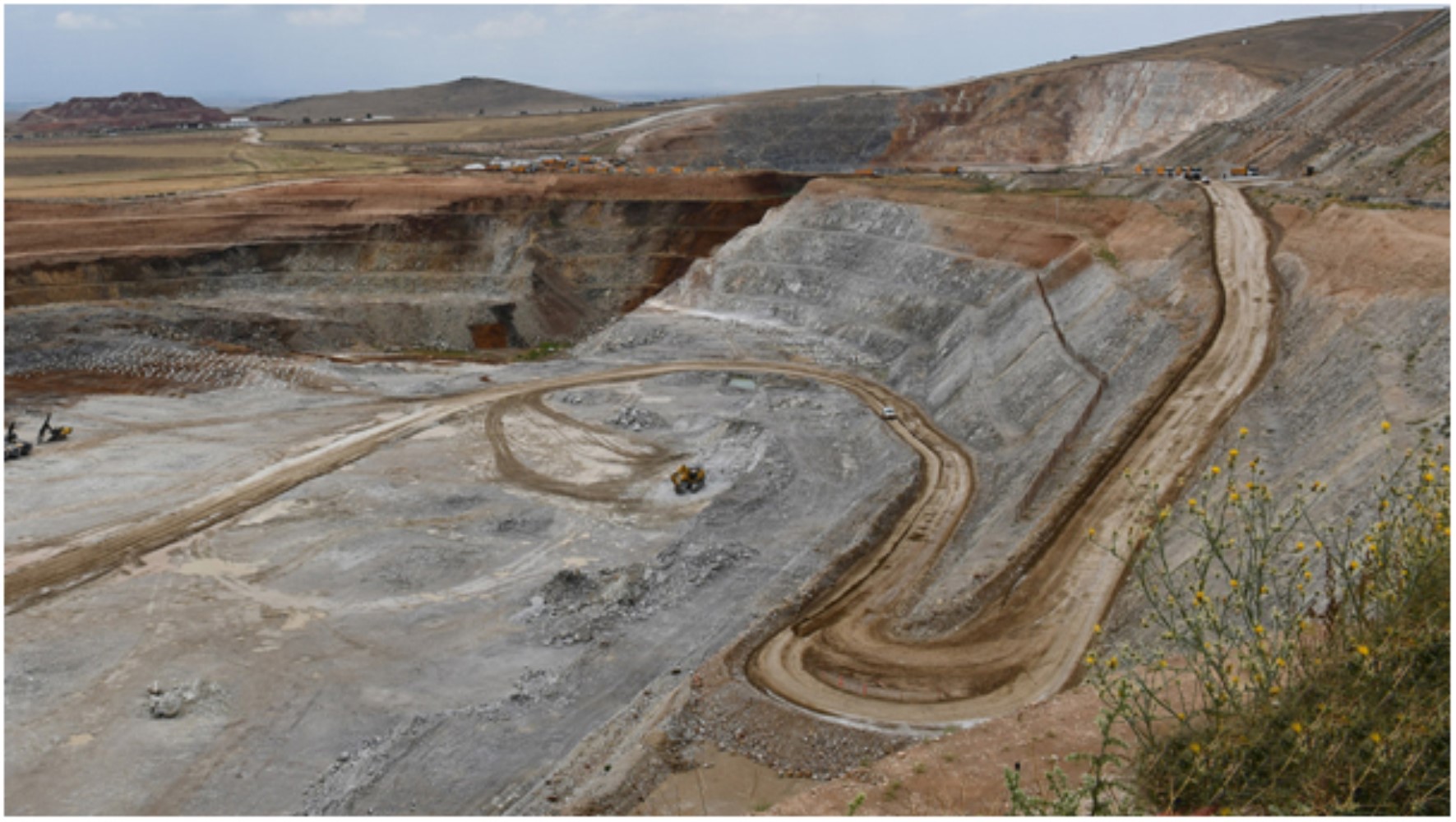
(Cyanide gold mine in Eskişehir-Kaymaz)
***
Studies conducted by scientists from many parts of the world revealed that Bergama, in this context, was like a laboratory for social events related to the environment.
The emergence of the problem, society's awareness of it, its understanding and response, and the transformation of information into action were themselves subjects of study.
The world's most renowned scientific bodies are doing exactly this.
The first data at hand was information — becoming informed.
Before events began in Bergama, through various explanatory meetings, villagers who became aware of the harms that had befallen and would befall them had become near-experts on certain subjects.
Of course, "science," when used in the right hands and for the right purpose, is always to humanity's benefit.
Among the villagers who learned how harmful the cyanide mine in Bergama-Ovacık was: Uncle Bektaş from Çamköy on heavy metals, farmer Tahsin on tailings dams, Sabahat Hanım on international environmental agreements, Headman Hayrettin from Süleymanlı village on cyanide, and driver İrfan from Tepeköy on getting every guest to the mining area — they were all knowledgeable enough to astonish their listeners.
Of course, listeners were astonished by this: How had the villagers learned such complex subjects? How instructive and explanatory was their knowledge? Were they not the descendants of the Ottoman's ignorant, voiceless (!) reaya (the subjects of the countryside)?
Yet the resisting people had understood — through information provided by Chambers of Engineers, Universities, and Bergama Municipality — that without "knowledge," without "learning the subject," it was not possible to stand up against this global giant Cyanide Octopus that had been draining the blood of the world's soil and was now pushing its way right up to the doorsteps of their villages, or to protect their lands.
Only with knowledge could one resist the attempts of malicious actors to deceive and mislead society with lies.
This was one of the elements — the first — of the "new paradigm"!
Knowledge!
Young staff members like Özcan, Nail, and Şükret at the Communications Center established in the Municipal Building by a decision of the Bergama Municipal Council relayed every piece of information obtained and every event that occurred to the public in Türkiye and around the world.
They had even set up a local TV station — which was not yet prohibited at the time — and were broadcasting under the name Bakırçay TV (BTV).
The headmen of the 17 villages surrounding the mine had formed a committee among themselves (in a country just emerging from September 12, forming a committee was very dangerous at the time) and were in close contact with the Communications Center at Bergama Municipality. Moreover, each of them had a different cultural identity and political inclination.
Another element of the new "paradigm" was a fact drawn from the experience of other social events: "solidarity and communication."
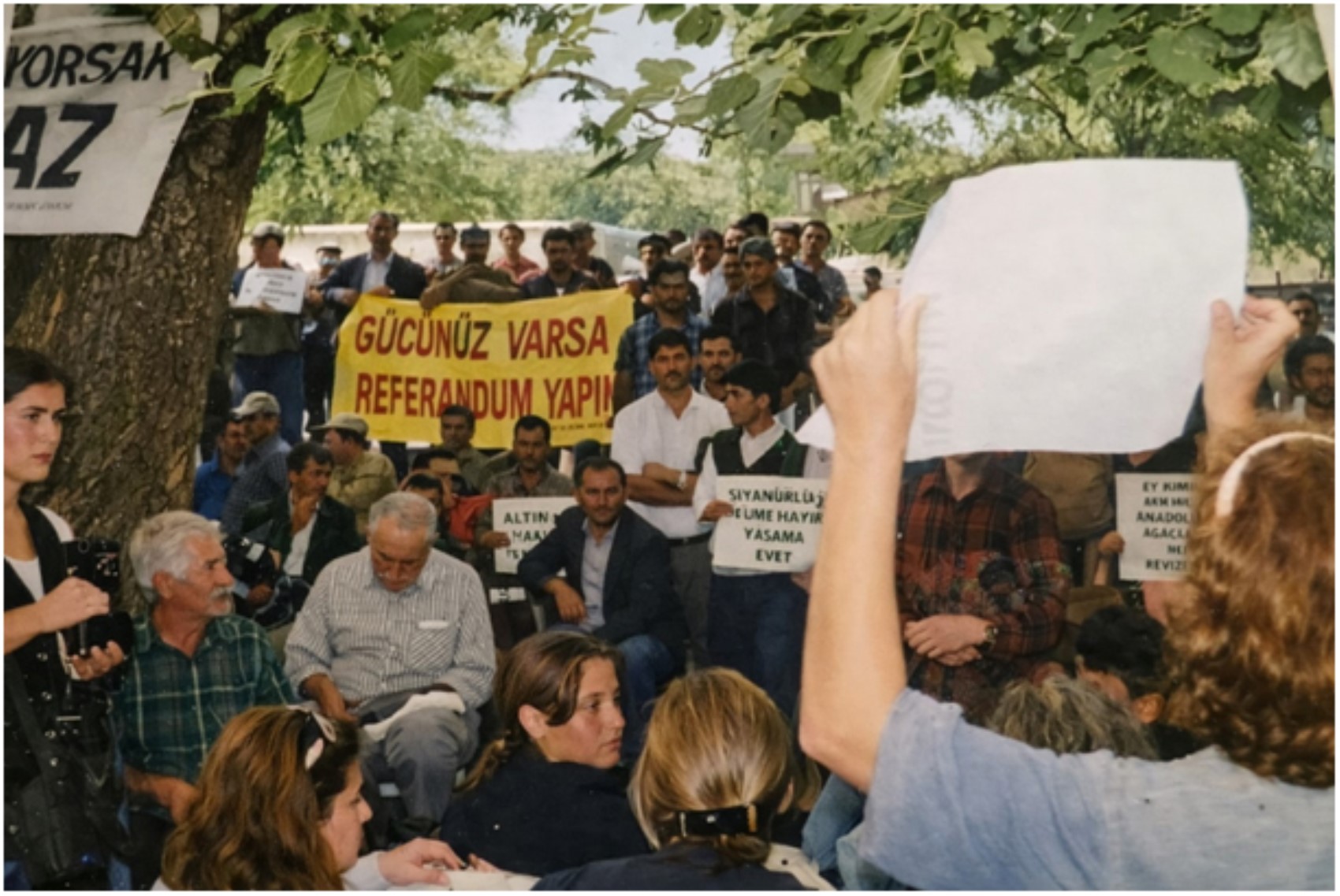
(One of the information meetings of villagers and urban environmentalists in Bergama-Çamköy — 1991)
***
It soon became clear that the scientific debates surrounding the Bergama cyanide gold mine — which would serve as an example and a lesson for the entire country — and the conscious, peaceful actions and resistance of the villagers and environmentalists arising from this reality were entirely justified and appropriate.
Initially, these had been effective on decision-makers both in İzmir and Ankara, and the granting of an operating license to the multinational Eurogold company — which involved a Canadian-disguised German entity, an Australian company of American origin, and a branch of the French State — had been delayed.
Of course, for decision-makers, making a decision on this matter when the public interest was at stake was not easy.
There, plain as day, stood a deadly poison: "cyanide."
History catches up with every decision-maker who acts against the public good.
The prolongation of the process was on the side of the environmentalists. They had to wear down the Cyanide Octopus.
Every passing day caused financial losses for these gold-loving cyanide operators, these savage capitalists.
For them, there could be nothing worse than losing money, than failing to make a profit. Such a thing was contrary to their very existence.
The lifeblood flowing through capitalism's veins was "money."
As the state's decision-making process regarding the opening of the operation dragged on, at one point the cyanide company had even considered abandoning the project and leaving.
The environmentalists' resistance was costing them money.
But the poisoners did not give up.
Cyanide was bitter, but money and gold were sweet. Winning was cheap!
They bore down on Türkiye with all their might.
In the meantime, a significant portion of the bureaucratic path had been cleared.
The state was on the verge of being persuaded.
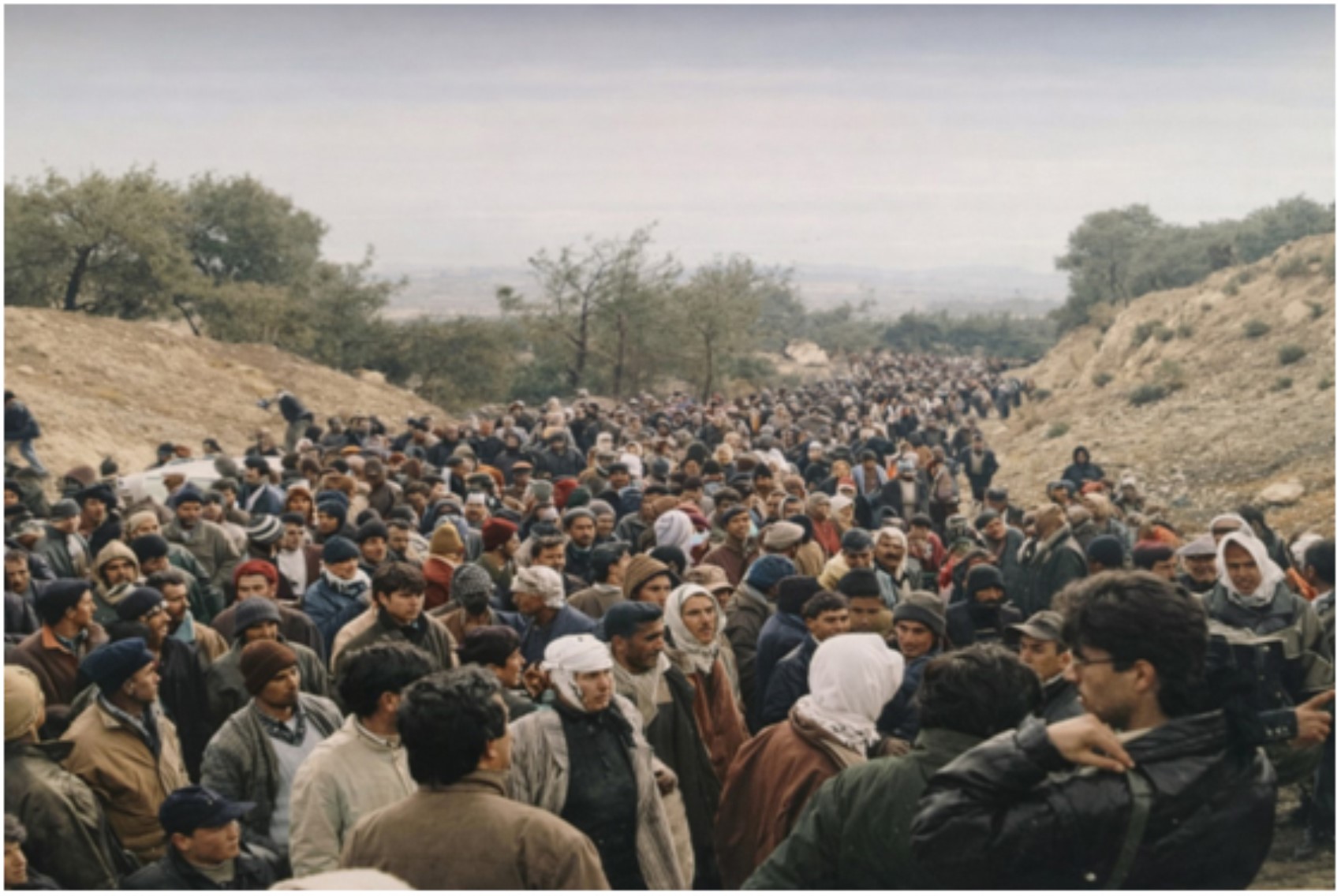
(Villagers in front of the Bergama-Ovacık Gold Mine saying "No" — 1993)
***
At the beginning of this process, the multinational Eurogold company, under the name Normandy Madencilik A.Ş., had purchased the gold exploration license held by ESAN, a company of Eczacıbaşı Holding, and on 16 August 1989 had obtained the right to begin gold exploration.
Under the laws, when gold was believed to exist in a location, one first had to obtain an exploration permit from the state.
The domestic Eczacıbaşı Holding had identified that gold existed in Bergama, and the multinational Eurogold company had purchased the operating rights from them.
The mining extraction rights were in their hands. This was an important step.
Despite every kind of difficulty and obstacle — despite the villagers' opposition — it was plainly visible that a portion of the State and certain domestically ambitious capitalists wanted this mine to be operated.
Therefore, it was necessary to put a little more pressure on the state.
Keep pushing!
The cyanide operators' visible and invisible efforts were now bearing fruit.
While villagers — men, women, and children — were staging protests against the company's moves to settle on and begin constructing facilities on land it had purchased on its own, through brokers, or without brokers, and on land allocated by the state in Bergama Ovacık-Çamköy, behind closed doors the Ministry of Energy and Natural Resources' Mines Administration and the Ministry of Forestry granted the two permits required by this company on 4 July and 12 August 1991.
Subsequently, the İzmir Directorate of Public Works, on 14 January 1992, sent a letter to the Ministry of Environment requesting an opinion on the facility buildings to be constructed at the Ovacık gold mine.
The company wanted to build the cyanidation buildings.
Immediately thereafter, the Ministry of Energy and Natural Resources signed the construction permit for the Ovacık Gold Mine buildings on 12 February 1992.
This permit was valid for 10 years and allowed the use of the cyanide gold extraction technique at the facility.
However, for the final permit, an EIA (Environmental Impact Assessment) Report was required.
Relying on the permits it had obtained, the company began cutting some of the trees in the forested area allocated to it on 22 June 1992.
However, this move was forced to a halt by the opposition of the villagers, the village headmen, and Bergama Municipality. It was announced that the remaining forested section would be preserved for the time being to form a protection buffer zone. (European Court of Human Rights Judgment TAŞKIN AND OTHERS v. Türkiye Case No: 46117/99 Strasbourg 10 November 2004)
Around the same time, in a state letter dated 28 September 1992 and signed by İzmir-born Minister of Energy and Natural Resources Ersin Faralyalı, sent to the relevant state units, assistance to the cyanide company was warmly ordered.
This poisonous gold was very important to the state. The survival of our country…
Meanwhile, the EIA process — which had caused so much controversy and for which a regulation had finally been issued — to assess the environmental impact of this operation was initiated at the initiative of the Ministry of Environment, in accordance with Article 10 of Environmental Law No. 2872.
The EIA process — examining the mine's environmental impact and preparing a report to that effect — lasted 27 months.
Public sensitivity, the statements of patriotic scientists, and the actions of the villagers had required that such a report be handled with great care…
Those tasked by the Ministry of Environment with preparing this report were perhaps more careful, or perhaps they were preoccupied with answering the criticisms that had been and would be made against the operation of this mine, and finding solutions.
Perhaps they had been assigned the task of extinguishing scientific opposition: They were finding cover for the negatives!
But this hurdle too was cleared: The EIA was commissioned and accepted by the authorities.
Thus the Ministry of Environment had, in its own way, fulfilled the requirement of the Environmental Law to conduct an EIA.
Based on the findings of this assessment, the Ministry decided on 19 October 1994 to grant the final operating permit for the Bergama-Ovacık gold mine.
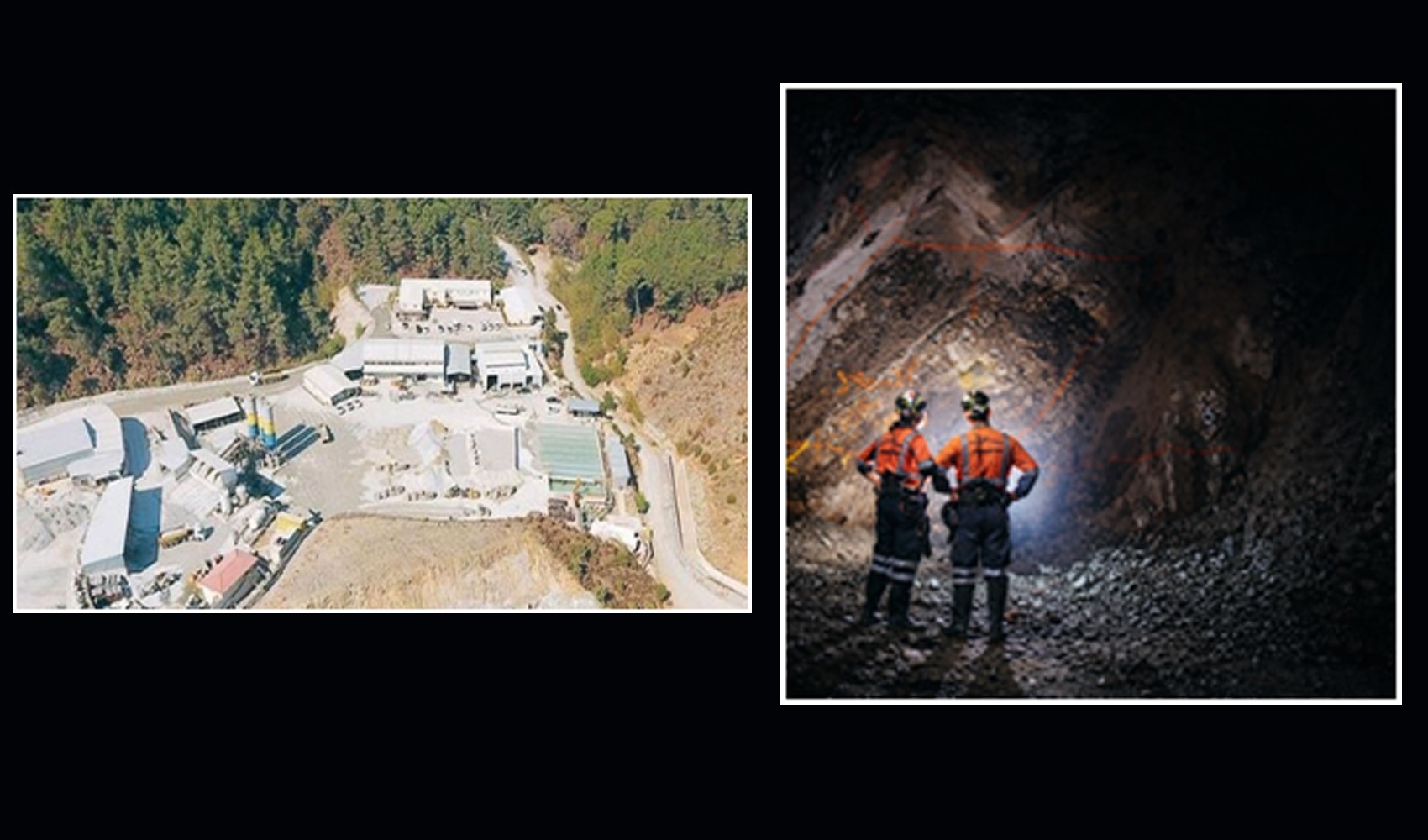
(The Efemçukuru cyanide gold mine in İzmir lies within the protection zone of the Tahtalı Dam's water catchment area, which supplies 40% of İzmir's water needs. It consumes enough water to meet a city's water needs — İzmir's drinking water. Meanwhile, toxic waste is pumped into tunnels bored inside the mountain. There is both a shortage of water and a very high risk of water contamination. The mountain is being poisoned!)
***
While all these developments were unfolding, the environmentalists — who found themselves up against the world's wealthiest companies, the German giant Metallgesellschaft and Dresdner Bank, the French State's BRGM company, Australian-fronted American financiers, and even some enthusiastic state officials in Ankara — knew they were scientifically in the right, applied everywhere, and wore down the doors of government offices in Bergama, İzmir, İstanbul, and Ankara.
But a decision had now been made: The pen had been broken!
What were the environmentalists and villagers to do?
Being right in terms of knowledge, warning state officials, building public opinion, civil support from every direction — whatever could be done had been done.
The Cyanide Octopus, with the wind of Ankara at its back, was doing as it pleased.
Türkiye's visible and invisible powerful forces were right beside it.
However, the country had a Constitution, and laws that were thought to protect the rights of the individual.
The State was constituted through legislative, executive, and judicial organs in order to maintain social order in a healthy manner.
From the very beginning, states had been able to legitimize their orders through law and through "nominal or genuine" mechanisms that allowed citizens to seek their rights.
The judicial system, the courts, had been established for this purpose.
The judiciary, the prosecution, and the defense/legal profession existed to ensure the functioning of law and the pursuit of rights.
Moreover, alongside various judicial matters, there was a concept called "Administrative Justice" and an institution called "Administrative Courts," established for citizens to defend themselves against decisions made by state institutions.
This institution had been established to protect citizens against the power of the state, but over time it had transformed into an institution that protected the state against citizens.
Yet the State was very powerful, and the citizen very weak.
How was a small community of villagers, a handful of environmentalist intellectuals, and a few local politicians to defend themselves against the decisions the state/administration had made against them — against the mighty state itself?
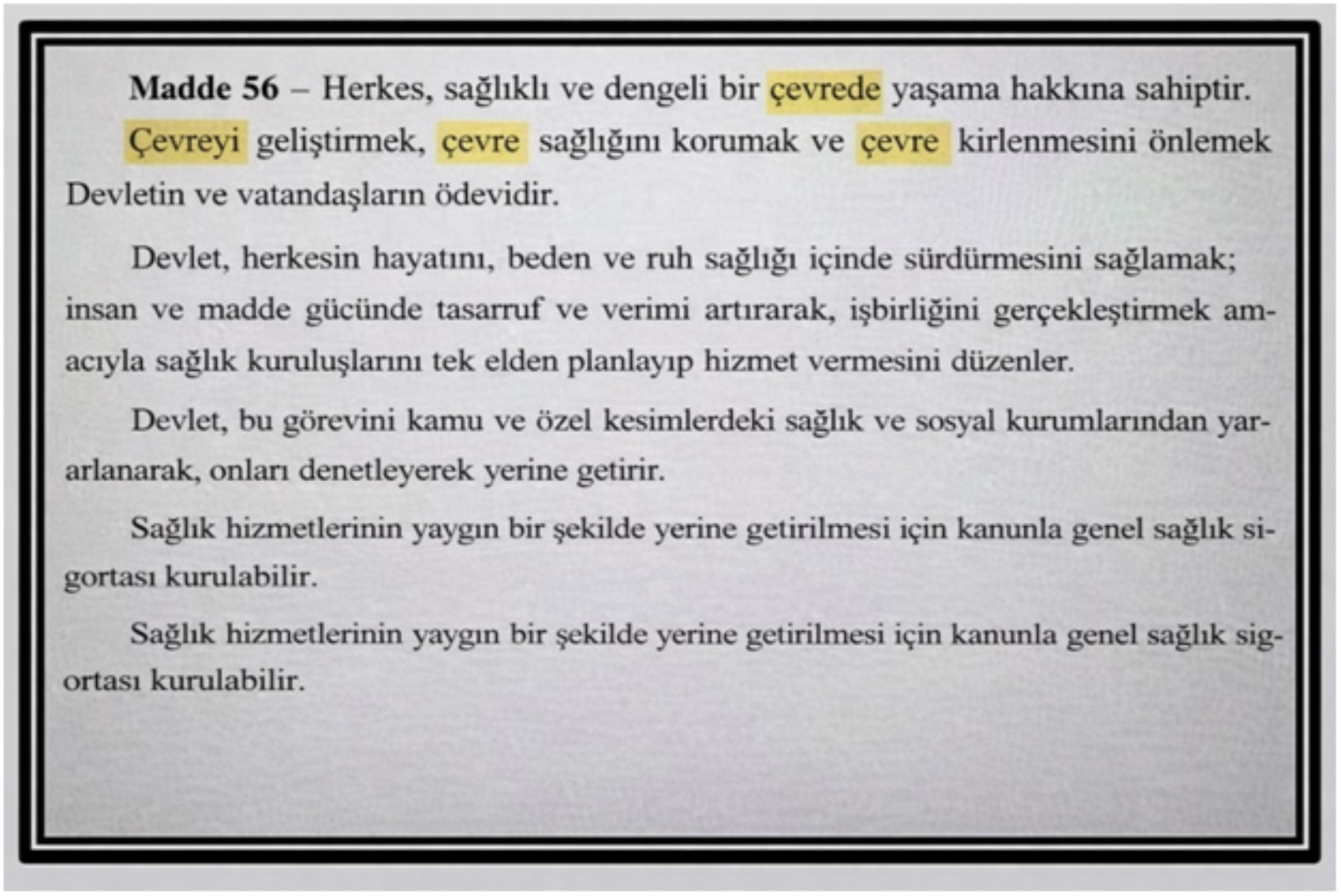
(Article 56 of the Turkish Republic Constitution on the Right to Life)
***
A story told in relation to this situation — said to have taken place in Germany in 1750 — is instructive.
Frederick II, the King of Prussia/Germany at the time, pays an unofficial visit to the city of Potsdam near Berlin.
The surroundings are very beautiful. It is lush with greenery. A small stream runs through the middle. He greatly admires a plot of land there for building a palace and has a manor constructed on it. However, on this land, by the stream, there is a mill.
Through his men, he wishes to purchase the mill from its owner, the elderly Sanssouci miller. He will even pay more than its worth. Despite this, the miller refuses to sell the mill.
King Frederick this time speaks with the miller himself. He asks why he does not wish to sell the property. The old man says "the mill has been passed down to him from his ancestors, and he will leave it to his children." "Even if the one asking is the King, the mill is not for sale," he says.
When Frederick says that the King will take it by force if necessary, the miller gives him an answer that strikes like a slap in the face:
"The King is powerful and can take the mill by force, but let him not forget that there are judges in the capital Berlin."
"No power, no politics, no force — not even a King — is above justice."
King Frederick II receives this answer with maturity. He is himself a ruler who wants the rule of law to be established in his country.
He orders that no one shall touch this mill for as long as the Kingdom of Prussia (the predecessor of Germany) exists. He has his palace built not on the site of the mill, but right next to it.
Believing that it is the righteous, not the powerful, who should prevail in the courts, he says:
"Let the law speak, let Kings remain silent."
Today, in Potsdam, the palace and the mill still stand side by side.

(A 1913 postcard depicting the story of Prussian (German) King Frederick II and the miller)
***
Law, as a system established to resolve various disputes between individuals, has been one of the most important regulatory elements of social life since the very beginning of humanity.
People have exalted and sanctified the justice it provides.
In the course of social progress, with the emergence of the state, problems between the state and the individual gained importance, and the individual's rights in the face of the state's great power have always been questioned.
Today this is called "Administrative Law." Problems in this area are resolved in "Administrative Courts."
In the Ottoman State, there were no "Administrative Courts" in the modern sense.
In 1868, modeled on France's "Conseil d'État," the "Şura'yı Devlet" (Council of State) was established by Sultan Abdülaziz.
This institution served for 54 years until the fall of the Ottoman Empire.
This council had both an advisory function and a function of resolving administrative disputes. It is considered the nucleus of today's administrative judiciary.
When all Ottoman State institutions in İstanbul passed to the administration of the Grand National Assembly Government on 4 November 1922, the Şura'yı Devlet's mandate came to an end.
After the Republican order was established, this institution was restructured on 6 July 1927 and began operating under the name Danıştay (Council of State).
Within the framework of the 1924 Constitution, the Danıştay functioned as both a court of first instance and a court of appeal.
The Constitution renewed in 1961 introduced the necessary provisions to protect the independence of courts and judges from both the legislative and executive branches.
Article 125 of the Constitution stated: "The judicial path is open against all actions and acts of the administration."
With the Constitution revised again in 1982, Administrative and Tax Courts were established.
The Danıştay today continues its judicial function as a court of appeal above these courts.
***
The multinational Eurogold company had by now obtained the necessary official permits from the Ministries of Energy and Natural Resources, Forestry, and Environment to operate the cyanide gold mine in Bergama.
The doors of Anatolia had been "legally" opened wide to them.
Of course, the Ministries of the Turkish Republic had granted these permits — along with their own assessments — for the "supreme interests" of the country.
Those at the very top of the state presumably saw the situation this way.
The villagers, meanwhile, were going from street to street telling of their troubles. They were fighting for their lives!
So what could be done institutionally?
Av. İbrahim Atlam from the "Legal Bureau" at Bergama Municipality, Municipal Council and Executive Committee Member Av. Fuat Ateşoğlu, and the city's environmentalist lawyers İbrahim Toktamış and Turgay Konyar pointed the way toward mounting a legal challenge to these permits.
That direction was the İzmir Administrative Court. An application had to be made there. The decisions made by the administration (the Ministries) had to be suspended and annulled.
The law could protect individuals and society against the wrong decisions made by the Administration/State.
However, this process was one that required a degree of legal expertise and close follow-up. The city's distinguished legal professionals could follow this process, but this effort had to be made by lawyers specialized in this area, idealistically, without any expectation of financial gain.
Because the issue was defending "life."
Of course, a lawyer assigned to the task could be paid for their labor, but while this problem was local, it was also a general problem. It concerned everyone.
"Could money be a consideration when defending the people's right to life?"
"This was a matter of the homeland!"
All those who took up this cause, all those who stepped forward, were running on a voluntary basis — their only concern was saving their lands and their lives.
Moreover, it had by now become plainly clear that the Bergama affair was a matter of Imperialism seeking to take over Anatolia — a national issue:
"If Bergama falls, Anatolia falls too!" it was said.
The Cyanide Octopus was waiting at the threshold.
At a joint meeting held at the Bergama Municipality building with the headmen of the 17 surrounding villages, the villages' opinion leaders, Municipal Executive Committee members, and the young people responsible for communications, it was decided to also pursue the struggle through legal channels.
All the village headmen were ready to grant power of attorney to the idealist lawyers who would represent them in these cases.
Caution was needed: The tentacles of the Cyanide Octopus reached everywhere.
The İzmir Bar Association, however, was the home of patriotic lawyers!
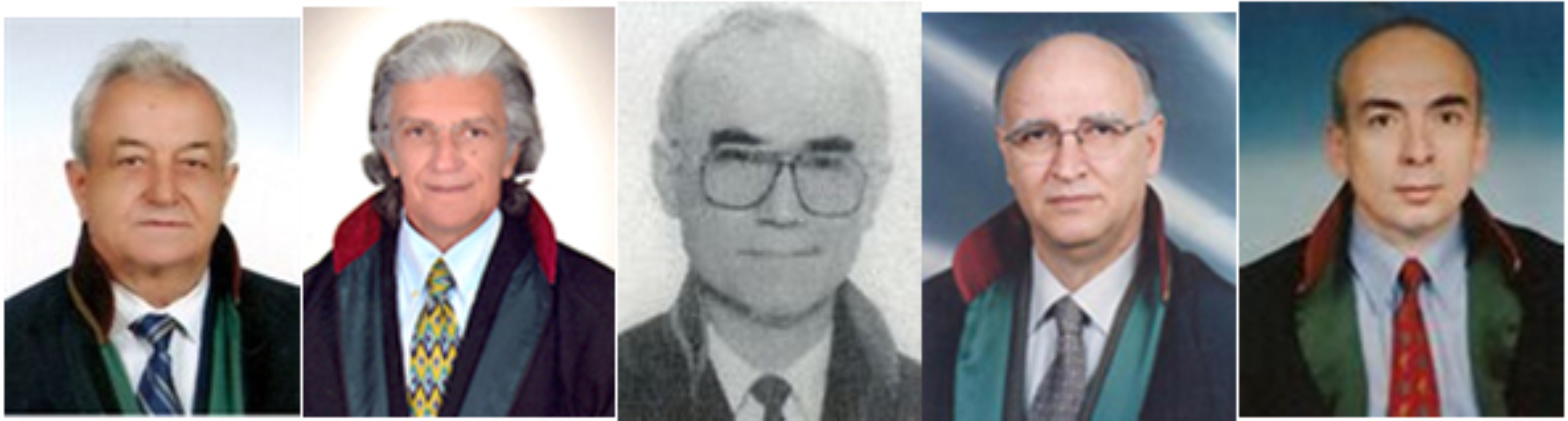
(İzmir Bar Association Presidents between 1988 and 2002: Sabri Kurt — Volkan Alposkay — Kazım Sönmez — Çetin Turan — Noyan Özkan)
***
Until that day, the local people had never taken the "administration" — the Administration/state — to court over such a serious matter.
Even when problems arose, the state's "Treasury Lawyer" in the city resolved them.
It was also not desirable for day-to-day politics to become involved in the mining affair with its political identity at that time.
In the public's view, when politics gets involved in an issue, differences of opinion can turn into conflict; parties competing for national or local power, in environments where large crowds gather, would try to draw the masses to their side for their own interests: What they called black today they might call white tomorrow. They were not to be trusted.
And yet, in the end, it was politics that resolved problems: It was politics that elected the decision-makers.
According to the thinking of the day, a defender seeking to gain political power could harm the unity of the villagers — though it could not be said they were entirely wrong about that!
The Mayor of Bergama was also a CHP member, a politician, but by now "he" was accepted by all the villagers, regardless of party affiliation.
From the very beginning of the local environmental struggle, he had tried to assist with a stance that transcended party lines.
Political identity was of course important for the struggle to be carried forward successfully, but differences should not harm the environmentalists' ability to act together.
Among the headmen and those who joined this struggle, there were people from every party, every school of thought, every sect, and every background.
Among the 17 villages in the area, some were Alevi Çetmi/Çepni, some were Sunni Yörük, immigrants from Bulgaria and Macedonia, and refugees from Greece.
Throughout this environmental struggle, an incredible solidarity had formed among them despite their cultural differences.
The fundamental message that would then translate into action — that brought the people together and bound them tightly to one another — was: "Life, Existence, the Right of People to Live."
As reflected in the research conducted in the region by Banu Aysu Koçer of the University of Tennessee, USA:
During the stage of the villagers' information-gathering, they were asked questions and given answers:
"What does cyanide do?": "It kills!"
"Who does cyanide kill?": "You, your children, your grandchildren, your animals, your environment."
"When cyanide enters the bloodstream, does it ask who you are, whether you are Alevi or Sunni?": "It does not."
"What does it do?": "It kills!"
"When cyanide enters the bloodstream, does it ask which party you voted for, whether you are right-wing or left-wing?": "It does not!"
"Do you want to die?": "No!"
The villagers had memorized, internalized, and made this approach their own. (Banu Aysu Koçer: "Eight Karats of Justice: Analysis of the Grassroots Resistance Movement Against Gold mining in the Villages of Bergama, Turkey." PhD diss., University of Tennessee, 2007, pp.133-134. https://trace.tennessee.edu/utk_graddiss/216)
The unity of the villagers against death and cyanide was incredibly tight.
It was natural for people to stand together and show solidarity in the face of death.
However, they absolutely refused to let in outsiders whom they sensed to be ill-intentioned.
Of course, everyone had an identity, a political preference, and an organization, but in this environmental affair the fundamental ideology was "the right to life."
At meetings and marches, representatives of various political parties were not excluded, but they were asked to walk behind the crowds, not in front of them. (Banu Aysu Koçer (2007) pp.133-134.)
The word "No" would gradually become a slogan used in every action.
Saying "no" to cyanide was a virtue for the villagers!
Shouting "No!" together at the end of meetings had become something of a ritual.
Alongside the scientific struggle and peaceful meetings demanding rights, resisting cyanide through "legal" channels had also become essential.
How else could the world's giant Cyanide Octopus — which had the support of part of the state — be stopped?
Because "the right to life" was not only a discourse but also a matter of law.
The "new paradigm" of social environmental struggles was being drawn.
"Science, action, law, solidarity, communication."
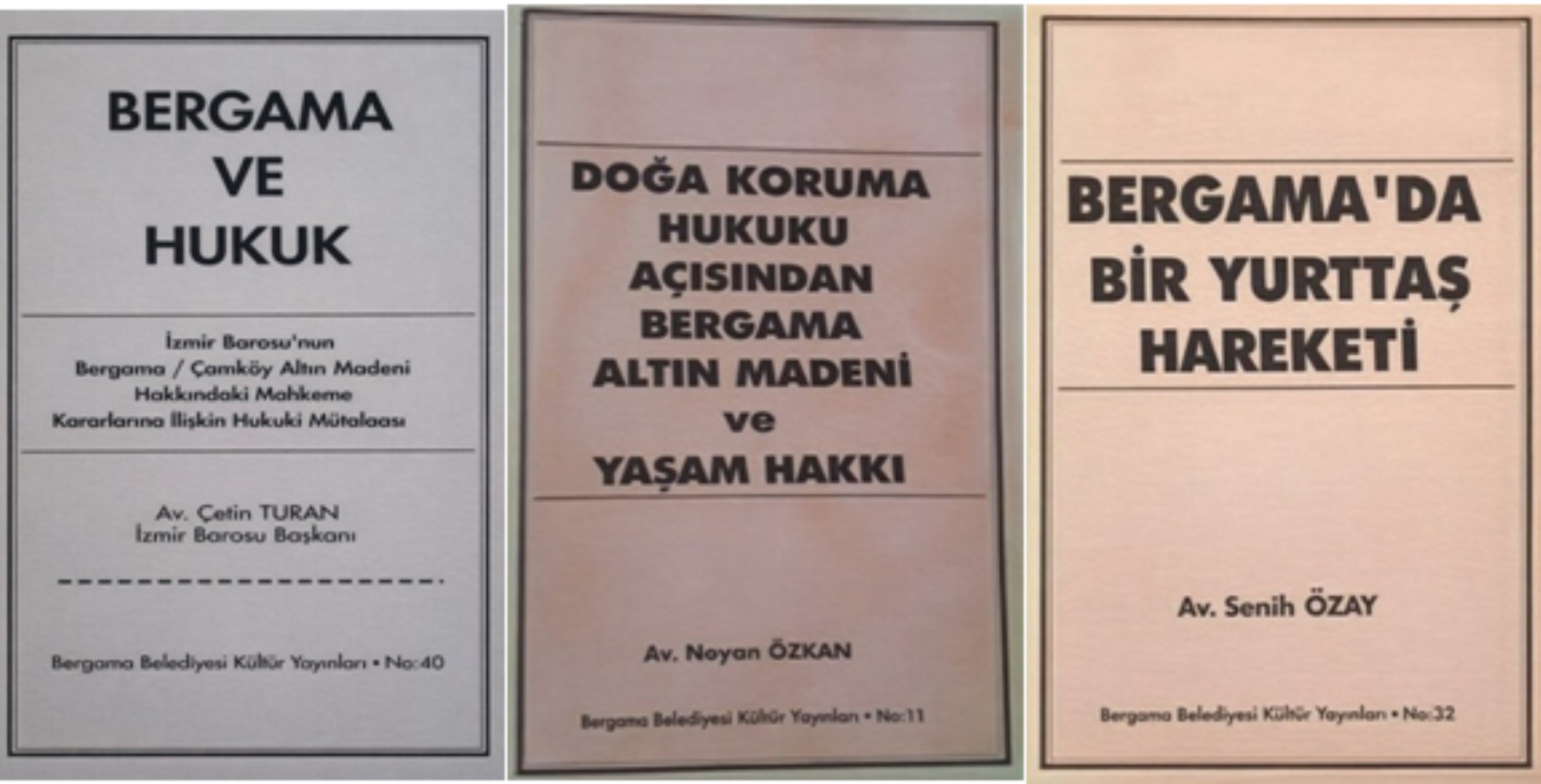
(The first books published on Environmental Law in Türkiye and the Bergama paradigm — 1990-1999)
***
At that time, Av. Sabri Ergül — known for his defense of young people who were alleged to have been tortured in Manisa, and who later became an İzmir CHP Member of Parliament — could have been the villagers' legal lawyer.
However, the environmentalists and villagers who had come together with a stance that transcended party lines were not yet ready for a major opposition party to become involved.
In this context, despite being a very successful human rights advocate, Av. Sabri Ergül — whose political identity was very prominent in day-to-day politics — was not approached to serve as representative in the legal struggle to be conducted in İzmir and Ankara.
Yes, it was lawyers who would carry out the villagers' official legal struggle by power of attorney.
When it came to the legal struggle, the organization closest to the area for the lawyers and legal professionals who first came to mind was the "İzmir Bar Association."
The Chambers of Engineers in İzmir had already provided great scientific assistance to the Bergama environmentalists.
"Civil Society Organizations," known as "CSOs," were very effective in social events and held a trusted place in the public eye.
The rising objections to the cyanide gold mine in Bergama, the assistance provided by the Chambers of Engineers on this matter, and the discussion of the issue in İzmir's intellectual circles had also brought the interest in existing environmental events to the İzmir Bar Association.
During the terms of Bar President Av. Volkan Alposkay (1992-1994) and Av. Kazım Sönmez (1995-1996), the "City and Environment" commission that existed within the İzmir Bar Association was also following the Bergama affair.
The members of this commission — which included young lawyer Arif Ali Cangı, who would later become a dedicated and voluntary lawyer for environmental issues — shared among themselves the matters referred to the Bar in order to examine them and determine a position.
Av. Senih Özay, a member who was very interested and eager regarding environmental matters, took on the Bergama affair single-handedly.
Birsel Lemke — who had been involved in an initiative to meet neighboring Mytilene (Midilli) mayors at sea in Ayvalık, who had taken active steps against the cyanide gold mine in Balıkesir-Havran, who ran a tourism business in Burhaniye-Ören and was closely involved in environmental affairs — had recommended Av. Senih Özay to the Mayor of Bergama as a lawyer.
Birsel Lemke was simultaneously a Turkish citizen and a German citizen, and had friendships with the world-renowned German Greens movement.
As the Bergama people later learned, Av. Senih Özay was one of the founders and administrators of the Turkish Greens Party, which became active in 1988 and later closed. (Şenay Tavuz. İzmir Barosu Dergisi March-2013. p.17). Birsel Lemke was a close friend of his.
He was known as someone who took the side of the environment and the people on issues related to environmental and social problems, and who had no interest in money.
On the other hand, it was known that the cyanide operators, with the financial power they possessed, had influenced many individuals and institutions on various matters.
When "Greens" was mentioned, "environment" was the first thing that came to mind fundamentally. If they were not going to oppose cyanide, who would? Only "Greenpeace," known as an "environmentalist" organization, was for some reason silent on this matter.
This was a period of walking in darkness full of unknowns!
It was essential to walk alongside "reliable people who know environmental law well" in the fight against the Cyanide Octopus.
Although not very well known, Av. Senih Özay appeared this way to the people of Bergama.
At a meeting held at Bergama Municipality with Executive Committee members and Village Headmen, it was decided to assign Av. Senih Özay to handle the legal affairs of the cyanide gold mine and to grant him power of attorney.
He was also connected to the İzmir Bar Association, after all!
Upon meeting, Senih Özay had also won the trust of the Environmental Center at Bergama Municipality with his knowledge and pleasant manner. It was apparent that he was not a particularly wealthy person.
Why would the wealthy give work and money to those trying to protect a world polluted by capitalism!
In later years, Senih Özay's daughter Gupse Özay would become known throughout the country as a successful comedian and film actress.
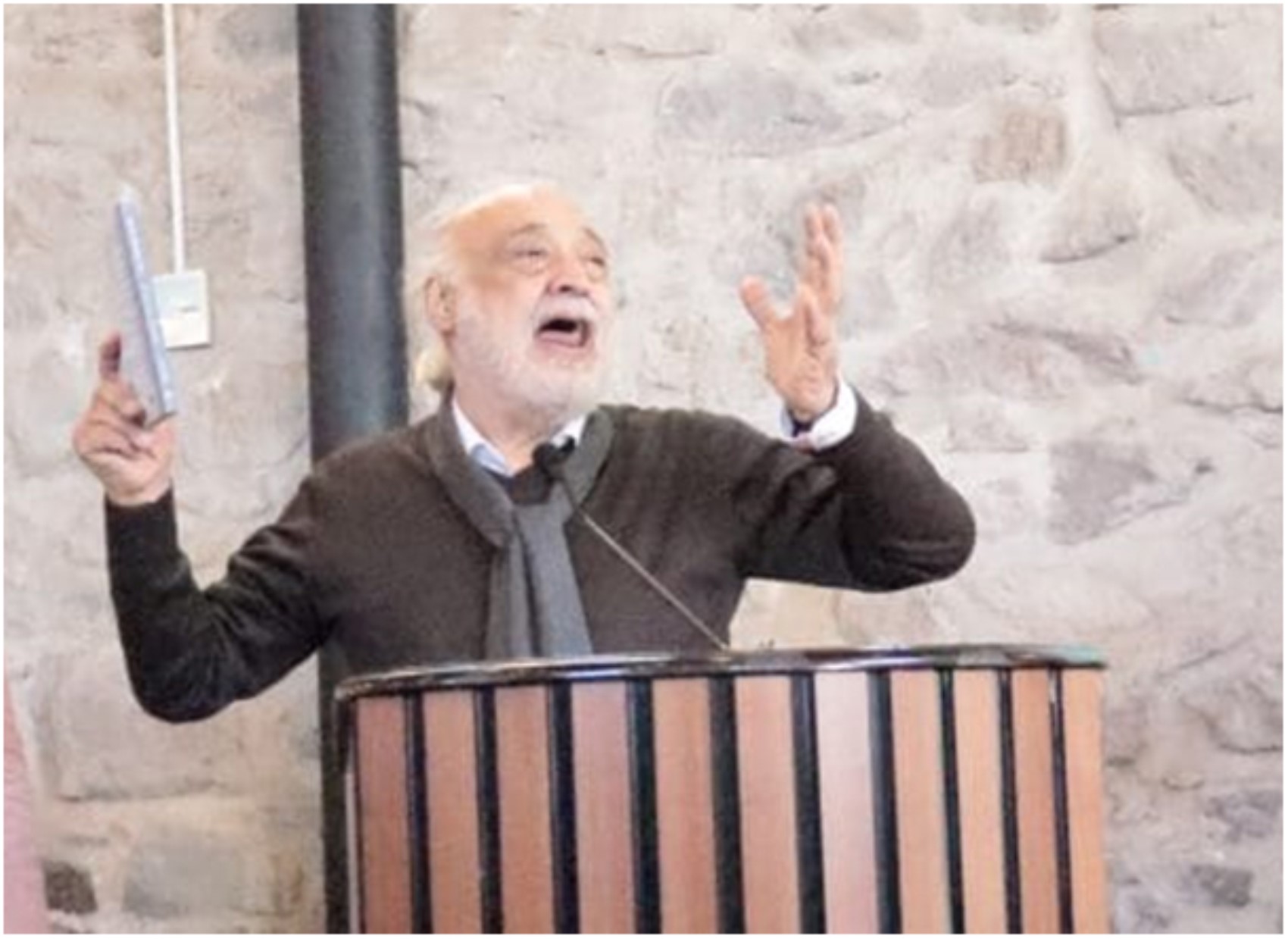
(Av. Senih Özay)
***
Thereupon, with the power of attorney granted by the Mayor of Bergama and the villagers, through Av. Senih Özay, an application was made on 8 November 1994 to the İzmir Administrative Court, as required by procedure, for the annulment of the permit decision issued by the Ministry of Environment for the operation of the cyanide gold mine in Bergama.
In the annulment petition, the dangers of the company (Eurogold) using cyanide to extract the precious metal (gold), particularly the risks of contaminating the water table and destroying local flora and fauna, were among the stated grounds. Additionally, the danger posed by this type of operating method to human health and safety was noted. (European Court of Human Rights Judgment TAŞKIN AND OTHERS v. Türkiye Case No: 46117/99 Strasbourg 10 November 2004)
At the first hearing, when the Mayor excitedly presented his views, the court prosecutor intervened, saying "this is not an election rally."
The case lasted about two years.
Much water flowed under the bridge.
The İzmir Administrative Court, on 2 July 1996, rejected the plaintiffs' (the environmentalists') request.
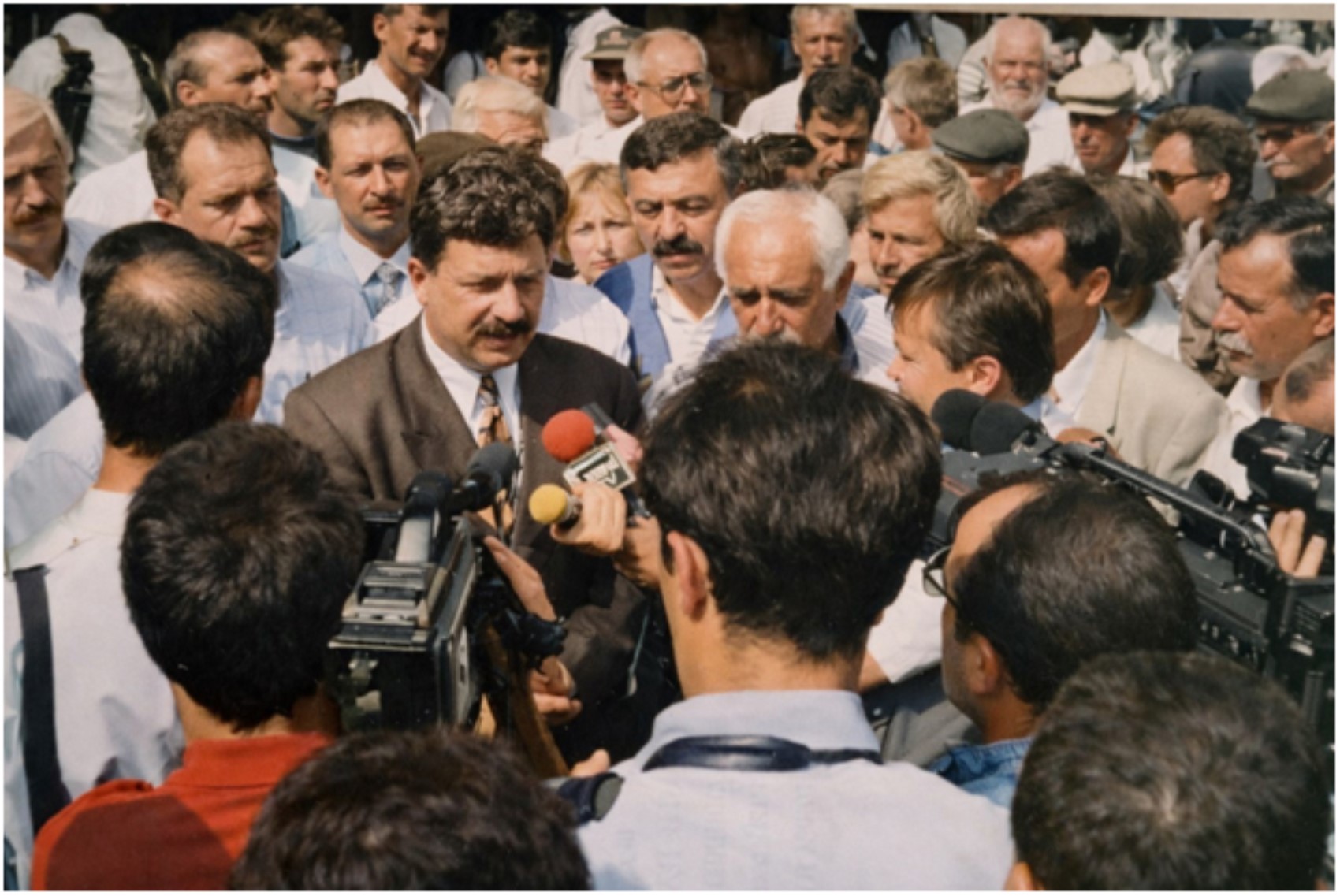
(Bergama Mayor Sefa Taşkın, Municipal Council members, 17 Village Headmen, and the public make a press statement against the İzmir Administrative Court's decision — 1994)
According to the court's assessment, the gold mine was in compliance with the criteria set within the scope of the environmental impact assessment, and the contested decision had been taken in accordance with the permit procedure for projects that could affect the environment. (European Court of Human Rights Judgment TAŞKIN AND OTHERS v. Türkiye Case No: 46117/99 Strasbourg 10 November 2004).
In other words, the environmentalists had lost the case!
Despite all the effort and resistance, the villagers had been found to be in the wrong!
Or the case had not been well argued.
Some time after the case was concluded, one of the court's judges who visited Bergama said that Av. Senih Özay's aggressive defense had played a role in such a negative verdict being reached.
It seemed the Court had looked at the form, not the substance!
***
When this situation was conveyed to the Bar, the Communications Center at Bergama Municipality requested that the İzmir Bar Association participate in the affair — which was becoming a national cause — with a broader team.
Between 1994 and 1996, Av. Kazım Sönmez had served as Bar President.
The vitality of the Bergama movement was also inspiring patriotic lawyers.
The "Environmental Commission" formed within the Bar, with the participation of other civil organizations, transformed into the "İzmir Environmental Movement."
The "Bergama-İzmir hand in hand" platform was established.
Among the lawyers within this movement, Noyan Özkan became known as a good lawyer and patriot who looked at the Bergama affair with the deepest sincerity, without political or financial concern, from the perspective of the public interest.
He was greatly loved by the people of Bergama for his deep knowledge, serious bearing, and trustworthy manner.
Noyan Özkan, Senih Özay, and İzmir's environmentalist lawyers held a meeting with the Mayor in Bergama and decided to conduct the legal affairs in this manner.
Noyan Özkan — also known for his stance supporting the environmentalists in the Bergama cases, who served as İzmir Bar President between 2000 and 2002 following President Av. Çetin Turan, who was also known for his supportive stance — stood by the Bergama villagers with great courage until the day he passed away in 2013 at a very young age, and defended them.
Yet the cyanide company's operatives had not refrained from smearing him, just as they did to everyone who stood in their way. (https://alivedatoygurmadencilik.wordpress.com/2018/01/06/ovacik-altin-madeni-bugunlere-nasil-geldi)
They tried to discredit anyone who stood against them. With their dirty money!
When he was a new lawyer, in the early years when no one — not even the people of Bergama — knew much about cyanide mines, he had briefly worked as a lawyer for Eurogold due to his foreign language skills, but — contrary to the slander spread by Ankara-based A.V. Oygür, one of the cyanide company's pen-wielding operatives — he had not been involved in drafting the company's founding documents.
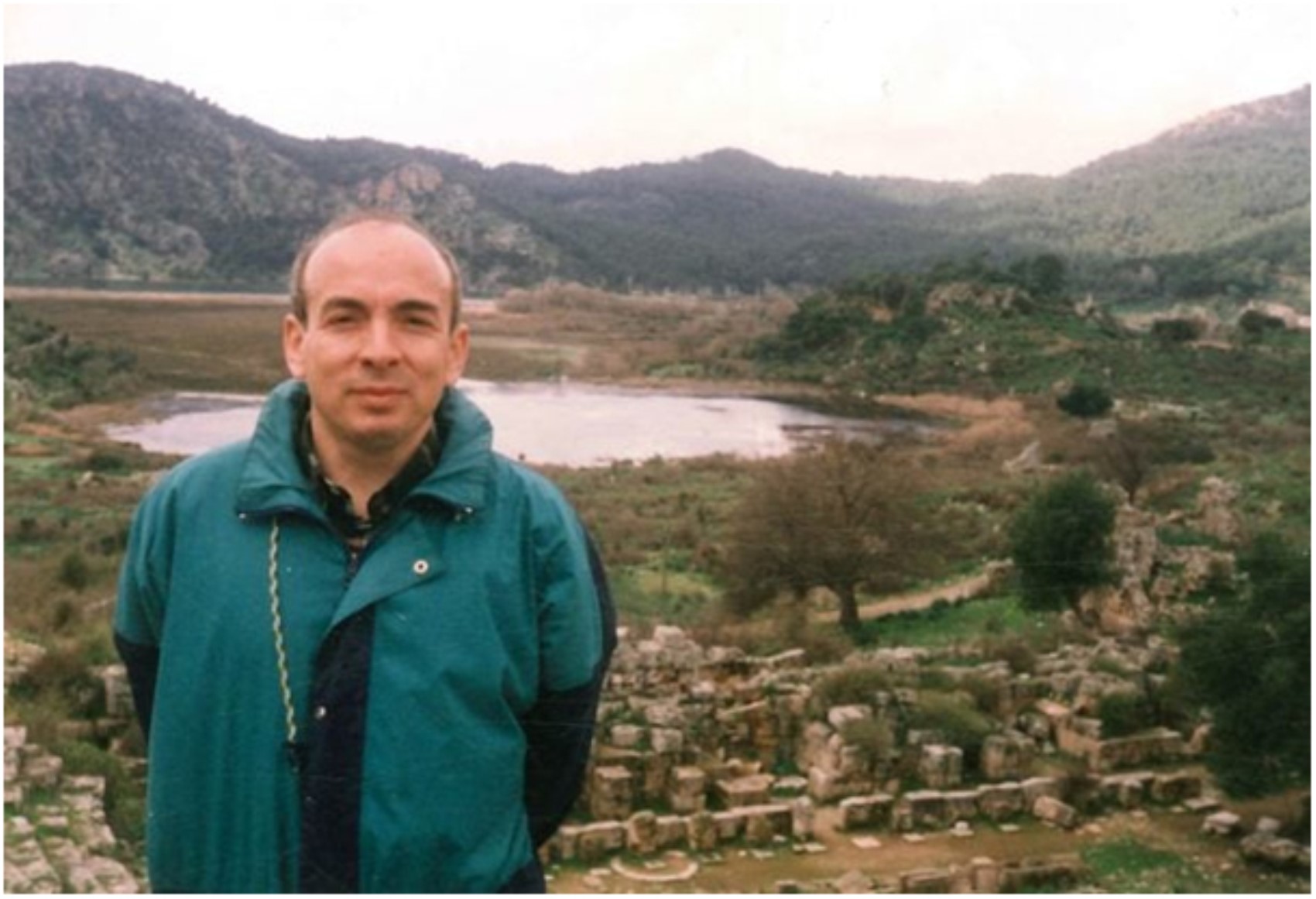
(Av. Noyan Özkan. İzmir Bar Association President 2000-2002.)
Later, when the company's dirty designs on Bergama came to light, he had immediately severed his ties with the company.
The cyanide company had always claimed that what it was doing was in the national interest, and at times had used its financial power to try to employ many bright-careered Turkish experts in its dirty work — but this time it had hit a hard stone.
Noyan Özkan stood against the cyanide operators with his legal knowledge until the end of his life, and played a very important role in winning the cases heard on behalf of the Bergama villagers in subsequent legal battles — at the Danıştay and the European Court of Human Rights.
Av. Senih Özay — to whom the villagers and the Mayor of Bergama had also granted power of attorney — and the İzmir Bar Association's Environmental Lawyers made important contributions to this process.
***
Noyan Özkan, born in Zonguldak in 1953, graduated from Ankara Law Faculty and began practicing as a freelance lawyer in İzmir in 1983.
Özkan, who had a keen interest in nature conservation activities, had attended the 1990 Bergen Conference on Environment and Development (in Norway) — which Sabahat Hanım from Bergama-Çamköy knew very well — as a representative of Turkish Non-Governmental Organizations.
He had participated in the 1990 Danube Environmental Organizations Meeting, the 1991 Sundsvall Conference on Environment and Health, and the 1993 and 1995 Madrid/Barcelona Mediterranean Environmentalist Organizations meetings.
In the İzmir Environmental Movement Lawyers Group, over 8 years he had taken part in cases related to İzmir and Türkiye (Bergama Cyanide Gold, Akkuyu Nuclear Power Plant, Konak Area Galleria, Kordonboyu road, Karşıyaka Multi-Story Car Park, Kokarkoy, İnciraltı, Egepalas, Gökova/Yatağan Thermal Power Plants) and in environmental protection struggles that would affect future generations.
He contributed to the preparation of Bar publications including 'International Environmental Agreements,' 'The Right to the Environment,' and '17 August Earthquake Legal Findings' books and booklets, and had also published a booklet on the legal status of the Bergama cyanide gold mine. (https://istanbulbarosu.org.tr/HaberDetay.aspx?ID=7976)
Before he had even reached sixty, with many more days still ahead of him, he passed away from a heart attack while walking on a highway.
The people of Bergama will never forget Noyan Özkan, who helped the Bergama villagers without expecting any benefit in return and opened new windows onto environmental law.
Noyan Özkan is one of those who made a very great contribution to the formation of the "new environmental paradigm."
Now, from where he left off, young lawyers Arif Ali Cangı and his colleagues continue.
They do not let up on the cyanide operators and nature destroyers across every corner of Anatolia.
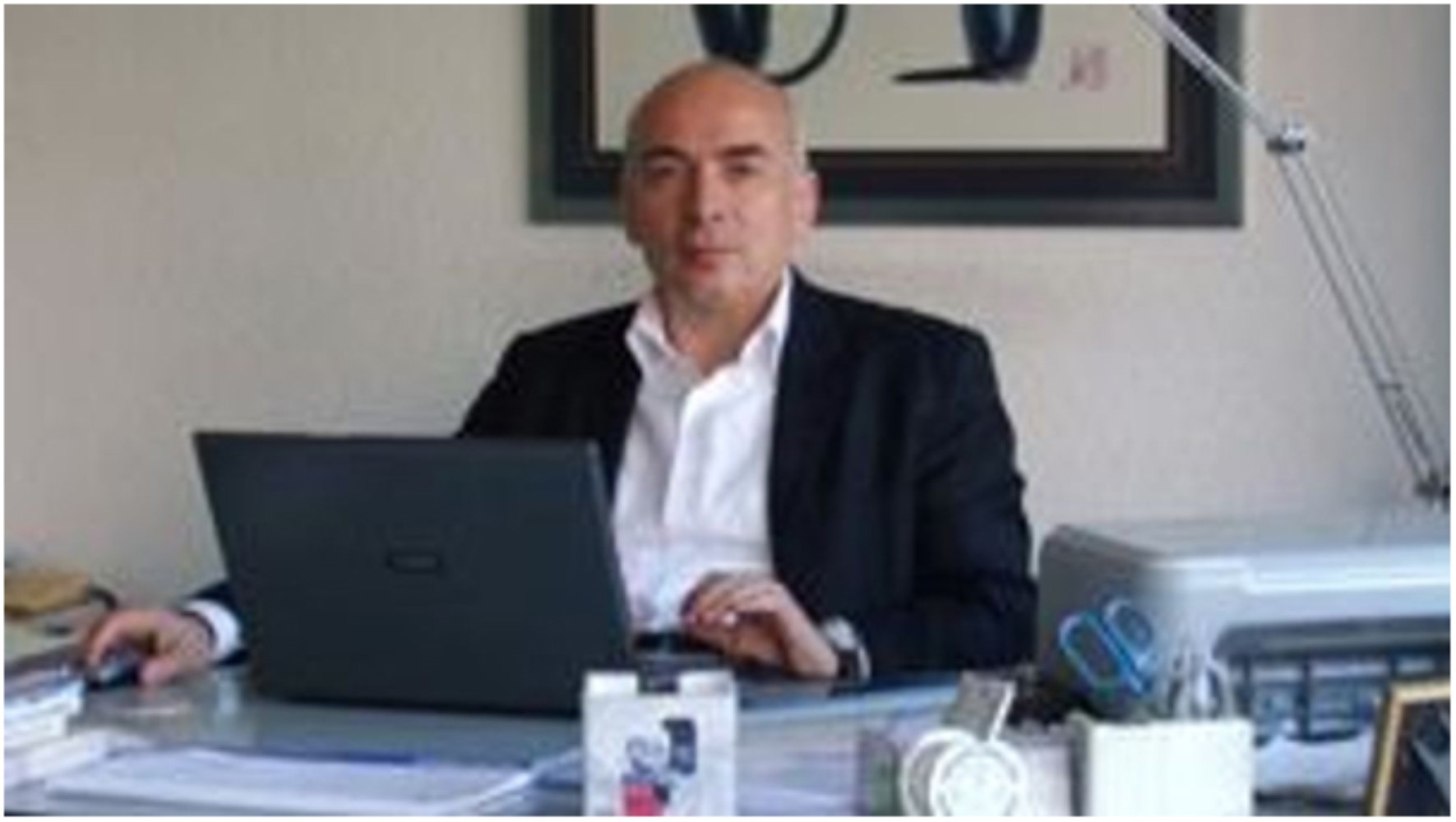
(Av. Noyan Özkan. 1953-2013)
***
The people of Bergama — who managed to use and combine effective elements of social struggle such as "science, sensitivity and activism on environmental events, law, solidarity, and communication" — were of course not aware that in this process they were creating a "paradigm" that would influence all of Türkiye in environmental affairs.
This "new paradigm" was a phenomenon born of necessity.
A phenomenon had transformed into a concept, and a concept into a mode of behavior.
This paradigm — drawn jointly, through debate and experimentation, by scientists, engineers, lawyers, journalists, villagers, farmers, teachers, tradespeople, and a state institution like the Municipality — now echoes from every corner of the country. It reverberates from everywhere.
People are resisting — using the elements of this "paradigm" — against globally giant cyanide companies, the wealthy financiers who own them, and the decision-making administrators of certain public institutions that assist them.
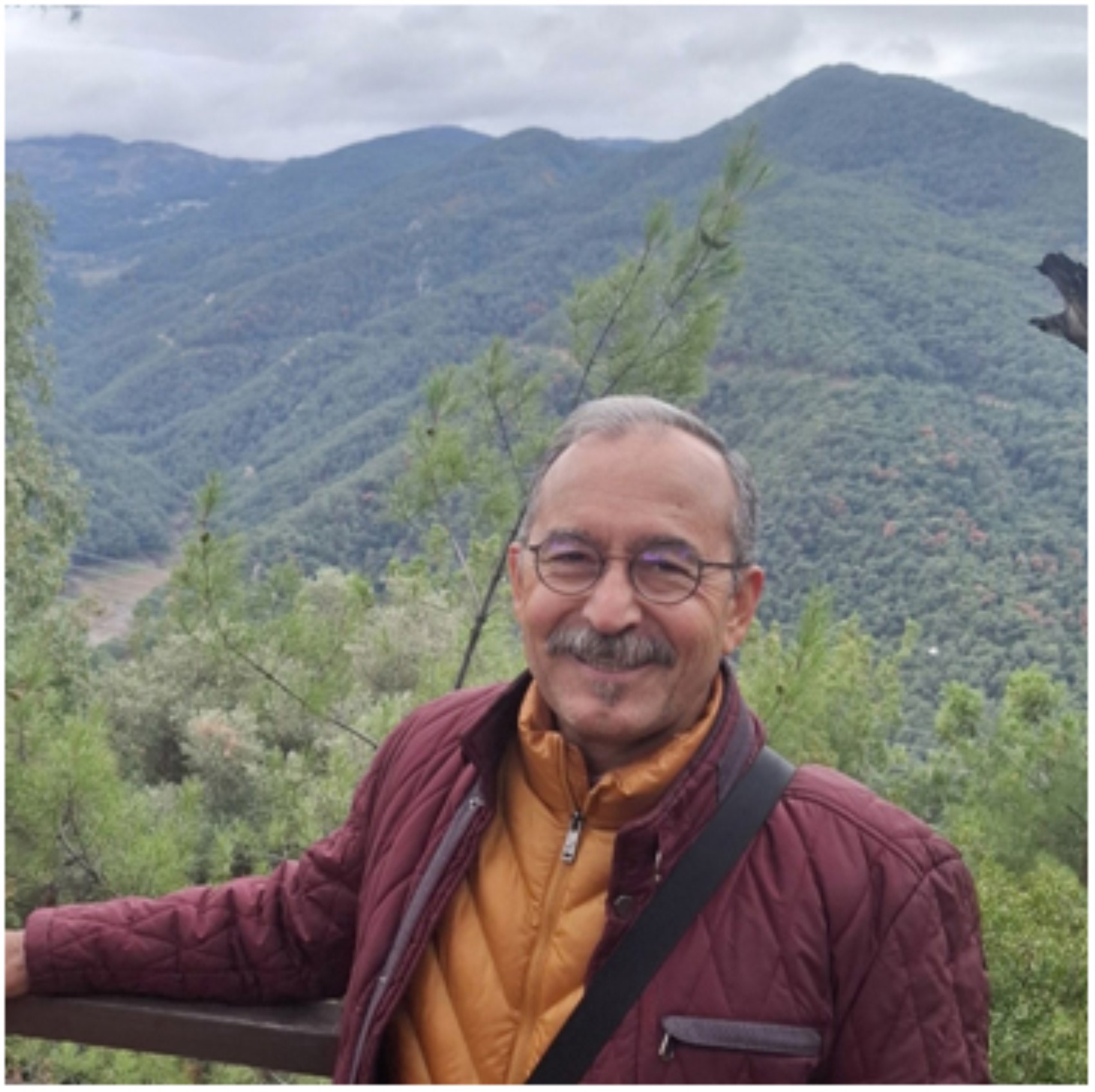
(Today, Av. Arif Ali Cangı, who continues the legal struggle alongside his colleagues in İzmir and across Türkiye for the protection of nature and the environment, with dedication and determination. The paradigm continues.)
***
The resistance that emerged in Bergama against cyanide gold mining is not merely an environmental objection; it is a historical moment of rupture that questions the power relations between the state, capital, and society.
This struggle has made visible a new social paradigm that defends the right to life as an absolute value, against the view of the environment as a sacrificeable "cost of development."
The Bergama experience — which demonstrates that no decision taken without the convergence of scientific warnings, legal oversight, and public consent can be considered legitimate — continues to serve as the intellectual compass of the environmental struggles ongoing across every corner of Anatolia today.
In this respect, Bergama is not a suppressed local resistance; it is a social memory whose legal challenges are still ongoing, that still speaks and is spoken of, still teaches, and still unsettles the polluters.
Sefa Taşkın
11.01.2026
Karşıyaka/İzmir
Most Read

Striking picture for Özgür Özel's 'New Party'

The PKK opening and Özgür Özel’s path!..

How did the newspapers view Özgür Özel's farewell to the CHP?

He killed his wife by slitting her throat: Their children witnessed the moments

What did the CHP do?

Özel’s new party move in the world press

The New CHP, against CEHAPE

Fire at TUSAŞ engine factory in Eskişehir under control

From self-efficacy to despair

Kılıçdaroğlu's first message on Özgür Özel's new party announcement