



CYANIDE DIARIES FROM BERGAMA-1.
The environment and ecology are rapidly becoming the defining factors of our lives.
In fact, our world is an environment!
Human existence depends on this environment.
Otherwise, it will perish!
Are people's eyes slowly opening?
Or is it already too late?
What do politics and sociology have to say on this matter?
****
Following the Second World War, issues concerning nuclear contamination and the risks posed by atomic power plants, acid rain, the thinning of the ozone layer, carbon emissions, genetically modified agricultural products and livestock, and increasingly severe global climate change began to emerge and were recognized by "societies" and "decision-makers."
In 1972, representatives from many states discussed the situation at the "United Nations Conference on the Human Environment" in Stockholm. It was decided to establish the United Nations "Environment Programme."
In parallel with this environment, public awareness regarding these issues was growing globally, and individuals and organized groups began to loudly protest the negative trajectory.
This accumulation of reactive sentiment first led to the birth of the "Green Party" in Germany, which addressed environmental and social issues in a broad context. Organizations such as "Greenpeace" emerged.
It had now become understood that environmental issues also possessed a political and mass-scale dimension.
***
In Turkey, to establish a national policy regarding environmental issues and to ensure coordination between various written regulations and implementing institutions, the "Undersecretariat for the Environment," affiliated with the Prime Ministry, was established by a Council of Ministers decision on August 12, 1978, during the premiership of Bülent Ecevit.
In Turkey, environmental protection practices carried out by various state institutions through various decrees after the 1970s, along with the legal regulations regarding these initiatives, were first established on August 11, 1983, with the 'Environmental Law'.
The law was enacted by the 'September 12 Junta'.
The 'Junta', which caused harm to thousands of people with its fascist practices—killing, imprisoning, depriving them of their freedoms, and placing the country in an iron grip—had issued an 'Environmental Law' as it was on its way out.
The state's responsibility to take measures against environmental pollution problems, along with previous preparations and pressure from the international community, must have compelled the military junta that seized power in Turkey on September 12, 1980, to enact such a law on August 11, 1983.
Two months later, in the 'General Elections' held on November 6, 1983, the ANAP (Motherland Party), under the premiership of Turgut Özal, would take over the 'visible power' left behind by the 'Junta'.
Turgut Özal was elected President on November 9, 1989, following the heavy defeat his party suffered in the local elections on March 26, 1989.
Just before this election, on October 9, 1989, the 'Presidency of the Special Environmental Protection Agency', which had legal personality and was affiliated with the Prime Ministry, was established by a Decree-Law. This was another institution related to environmental protection.
Later, this institution would be attached to the Ministry of Environment and Urbanization, which was to be created on August 17, 2011.
In this context, the State's "environmental policies and practices" were shaped according to the changing political conjuncture.
***
Turkey first encountered a glaring and severe environmental problem, along with the subsequent public reaction, in Bergama in 1989.
Multinational companies, having exhausted gold deposits in the soil in many parts of the world,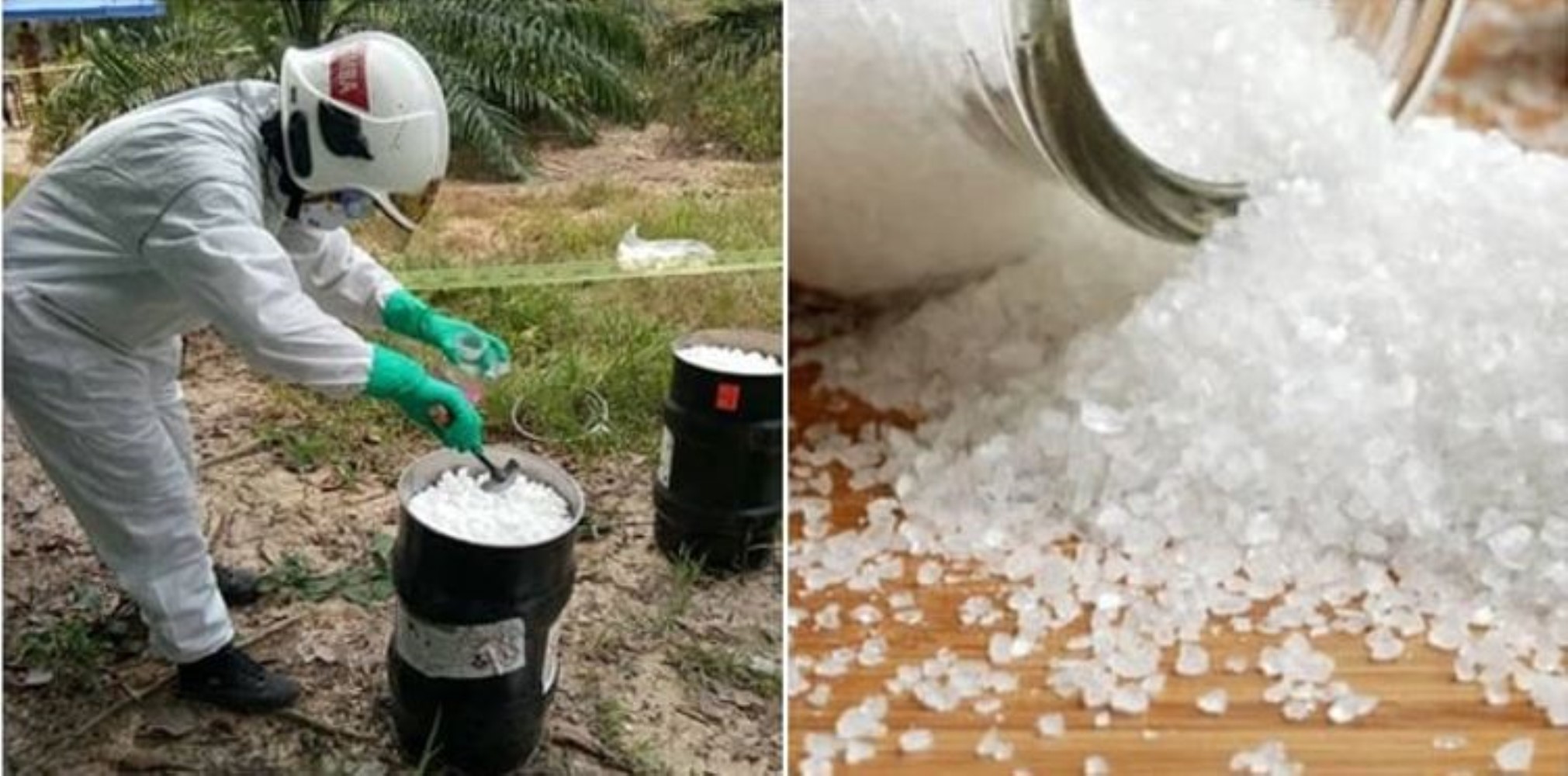 had set their sights on Turkey.
Coarse-grained gold was no longer left in nature. These companies called soil or crushed rock containing 2-3 grams of gold per ton a "mine."
However, this gold could only be extracted by treating the soil with "cyanide" (CN), one of the world's most dangerous poisons, or with highly corrosive sulfuric acid (H2SO4 - oil of vitriol). The remaining "heavy metal" waste, which contains lethal substances like arsenic and cadmium, also posed a very significant threat.
While one segment of the state viewed this type of operation with suspicion, another segment was very eager for this mine to be operated.
It was thought that the Turkish economy, which could not seem to recover, would be saved by the gold to be obtained.
However, apart from the poisoning multinational corporations, which country had ever become rich from "cyanide gold mines" (!)
It was also assumed that Turkey would become rich!
Of course, there were domestic and foreign interest groups that were very influential over the country's "decision-makers" and planned to make a lot of money from this.
***
On the other hand, cyanide gold mines had created problems in many parts of the world and caused countless environmental disasters.
Living things had died, and nature had been destroyed.
However, even before cyanide gold mines began operating in Turkey, there were those who were happy about it!
At one point, ministers who were also İzmir deputies, such as "Ersin Faralyalı," were overjoyed.
However, the state institutions that were supposed to authorize this operation, set the rules, and conduct inspections had neither the knowledge nor the experience in this matter!
They had never seen anything like it.
Although Article 10 of the Environmental Law No. 2872, dated 11.08.1983, stated: "Institutions, organizations, and businesses that may cause environmental problems as a result of the activities they plan to carry out shall prepare an 'Environmental Impact Assessment Report.' In this report, all potential impacts on the environment shall be considered, and the methods for rendering waste and residues that may cause environmental pollution harmless, as well as the measures to be taken in this regard, shall be determined," no EIA (Environmental Impact Assessment) reports had been prepared in the country until that day.
There was not even a regulation on how to conduct one if it were to be done.
***
Turkey, which was said to have gold ore deposits in over 500 locations like the one in Bergama, had whetted the appetites of cyanide gold miners.
The cyanide company named EUROGOLD that came to Bergama was composed of partners with immense power.
The US, appearing as the Australian Normandy Poseidon; the German Metalgesellschaft, appearing as Canadian; and the BRGM company, directly owned by the French state, were all gathered in Bergama.
Moreover, the German company Degussa, which sold gold collected from Nazi camps, was the cyanide supplier.
Interestingly, while the buying and selling of cyanide is prohibited in Germany, this German cyanide manufacturer was preparing to sell cyanide poison to Turkey.
The German Dresdner Bank, the British Royal Bank of Scotland, and the US-based JP Morgan Chase Manhattan Bank were the financiers of the operation.
These were the most influential stakeholders of international or global capital.
And they gathered to set up a base in the village of Ovacık in Bergama, on the edge of the fertile Bakırçay Plain.
On the other hand, another multinational company, an extension of the German Preussag company under the name TÜPRAG, had come to Havran-Balıkesir with the intention of extracting gold from the Kaz Mountains and poisoning the soil.
Of course, the real goal was to settle in Bergama and conquer all of Turkey.
***
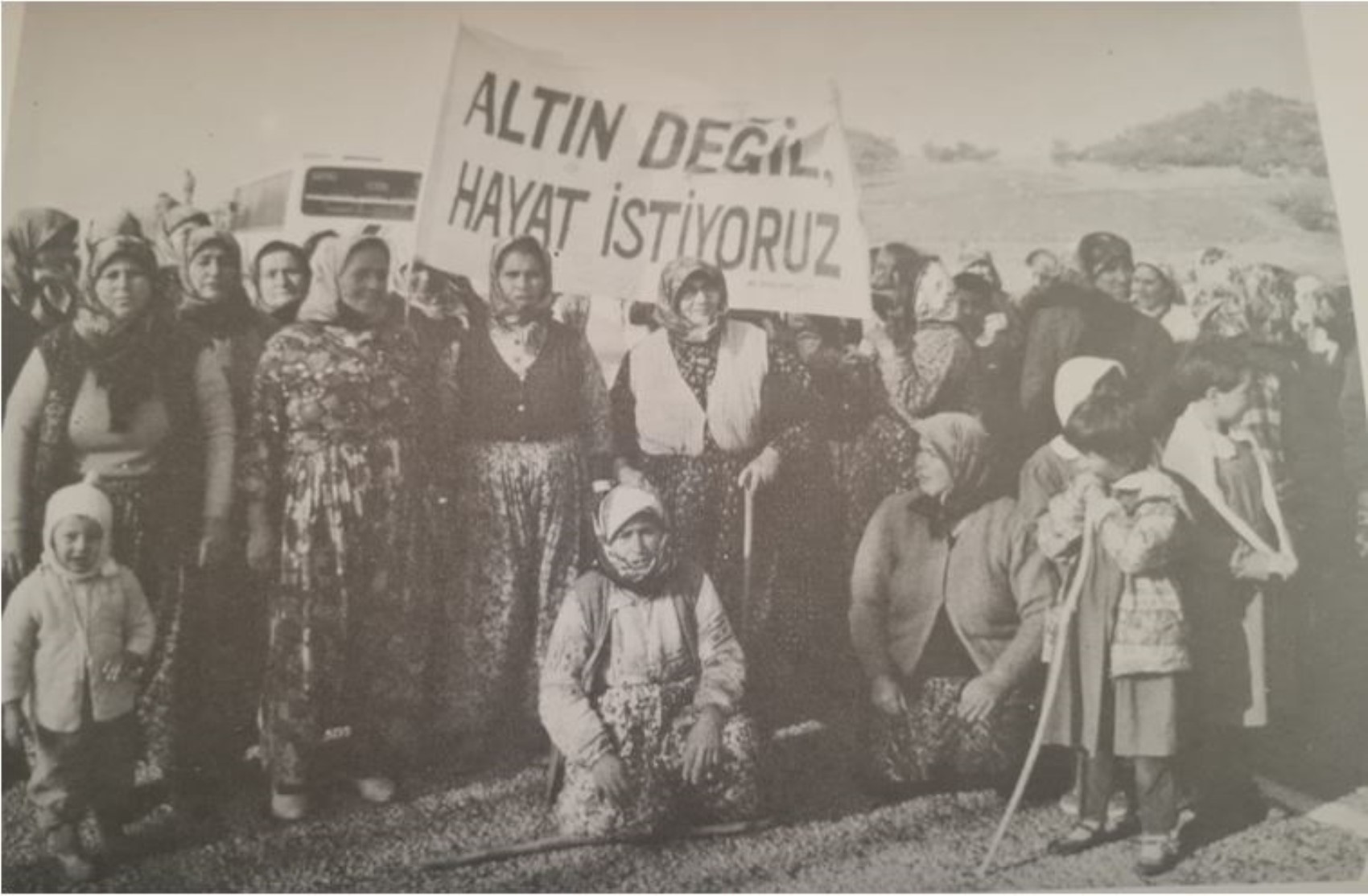
At first, the people of Bergama were happy because there was gold in their region.
Because "gold could buy anything."
They thought they would get a share of it too!
Then, step by step, they learned about cyanide, arsenic, and heavy metals. They learned what kind of mischief toxic companies were up to around the world.
They learned their rights and legal standing.
Unprecedented, unexpected, and unique events unfolded on the soil of the Aegean.
The people of the Aegean "stood tall" against imperialist companies.
Instead of bowing down and obeying, they stood up!
***
What has happened and what is currently happening in Bergama over the last 35 years can shed light on Turkey's political, economic, social, and ecological problems.
Social memory is our treasure.
Sefa Taşkın
07.13.2024
Dikili/Izmir
Most Read

Striking picture for Özgür Özel's 'New Party'

The PKK opening and Özgür Özel’s path!..

How did the newspapers view Özgür Özel's farewell to the CHP?

He killed his wife by slitting her throat: Their children witnessed the moments

What did the CHP do?

Özel’s new party move in the world press

Fire at TUSAŞ engine factory in Eskişehir under control

The New CHP, against CEHAPE

From self-efficacy to despair

Kılıçdaroğlu's first message on Özgür Özel's new party announcement