



Erzincan-Çöpler, Ordu-Fatsa-Altıntepe, İzmir-Dikili-Çukuralan, İzmir-Bergama-Ovacık, Giresun-Şebinkarahisar-Taşçılı, Kütahya-Gümüşköy, Balıkesir-İvrindi, Balıkesir-Havran, Balıkesir-Balya, Çanakkale-Lapseki-Şahintepe, Çanakkale-Kirazlı, İzmir-Efemçukuru, Germencik-Aydın, Samsun-Havza, Gümüşhane-Mastra, Eskişehir-Kaymaz, Tokat-Erbaa, Kayseri-Himmetdede, Sivas-Bakırtepe, Malatya-Hekiman, Kayseri-Develi, Artvin-Cerattepe, Artvin-Yukarı Hod, Ağrı-Diyadin…
And many more.
In every corner of the country.
'Cyanide Gold Mines' that are being operated or prepared for operation.
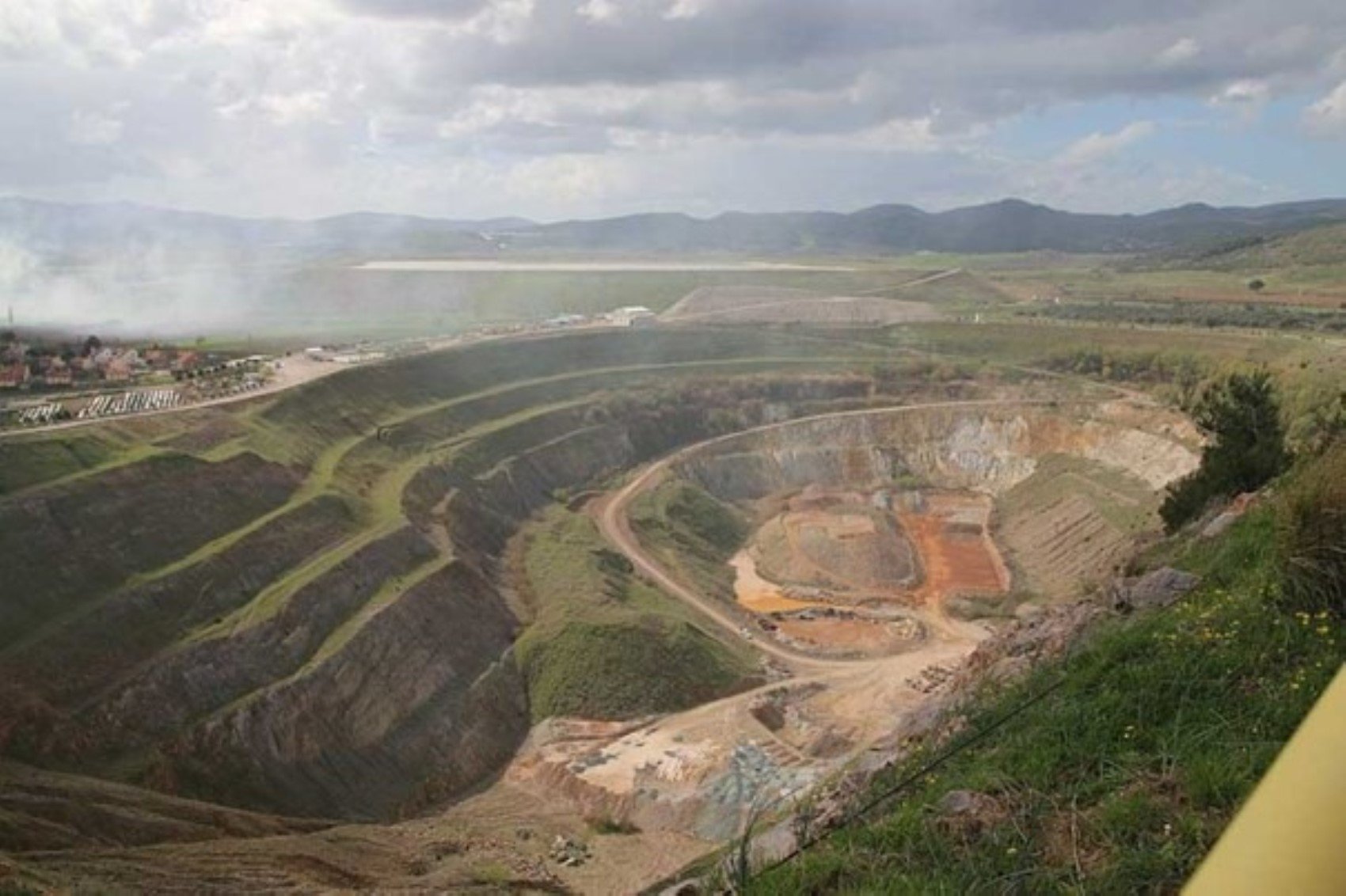
Environmental disasters that have occurred and those that are potential.
Inventions of "multinational corporations" seen sucking the blood of the world; many "poisonous," "cyanide-laced," "bitter almond-scented" projects that whet the appetites of local collaborators and moneyed elites, filling their pockets while ruining nature.
"Gold, money, poison, gold, money, poison..." say the "Lords of Savage Capitalism," blinded by greed and indifferent to the environment. And some public officials who turn a blind eye to, ignore, or pave the way for potential disasters for a handful of "taxes and value-added" revenue.
And the poisoned lands, the polluted country.
Diseases, deaths…
How things have changed! How things have changed!
***
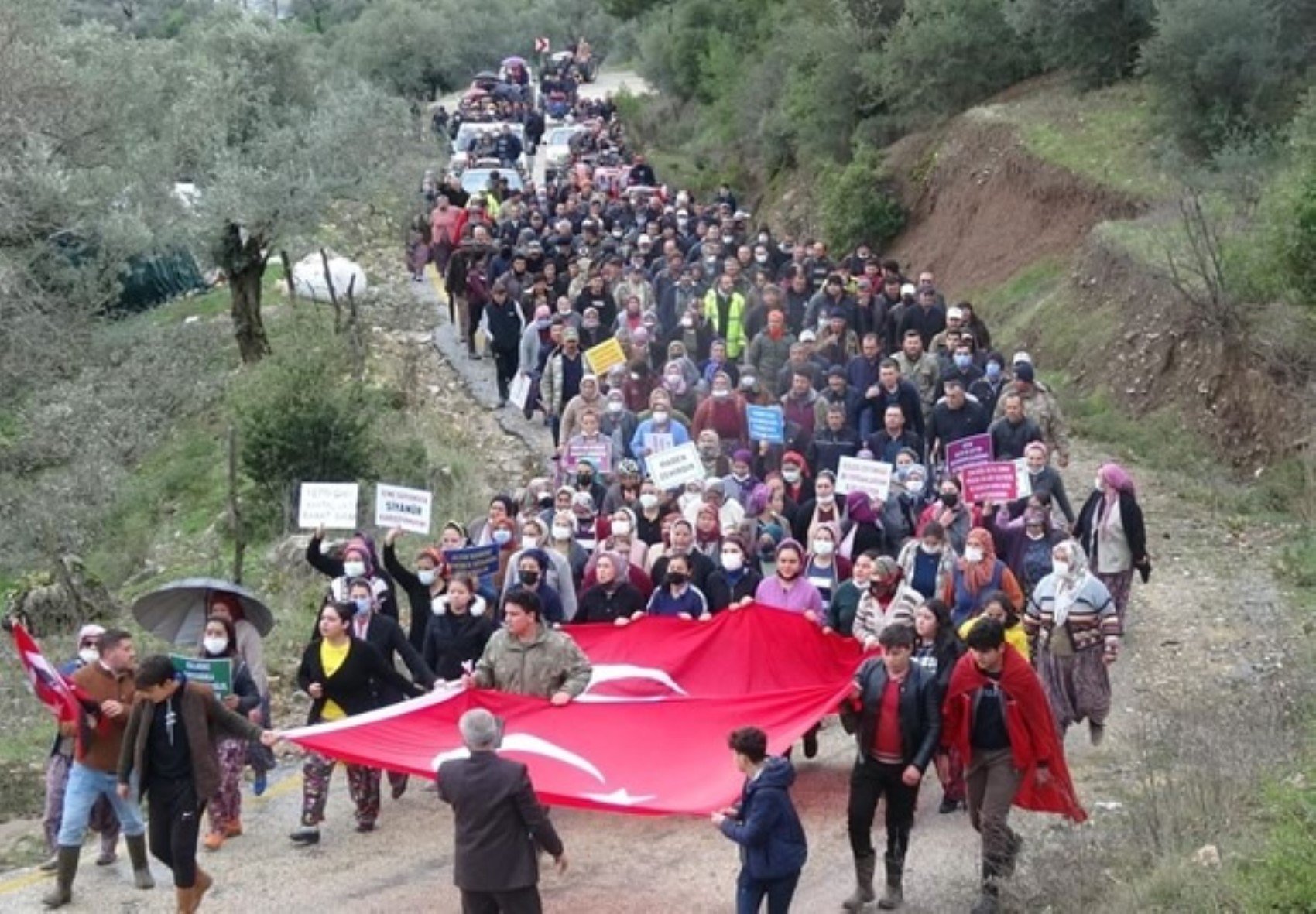
With the Mining Law enacted in 1985 during Turgut Özal's premiership, and the official invitation of the then-Minister of Energy Ersin Faralyalı in 1989, environmentally polluting multinational "cyanide gold mining" companies began to flock to Turkey.
In this environment, many local and foreign companies conducted research in the context of mining, obtained "exploration licenses" for places where they found minerals, and after convincing themselves that there was a productive mine there, they either sold it to a company that would operate the mine or began operations themselves.
There were companies that had become highly professional in mineral exploration.
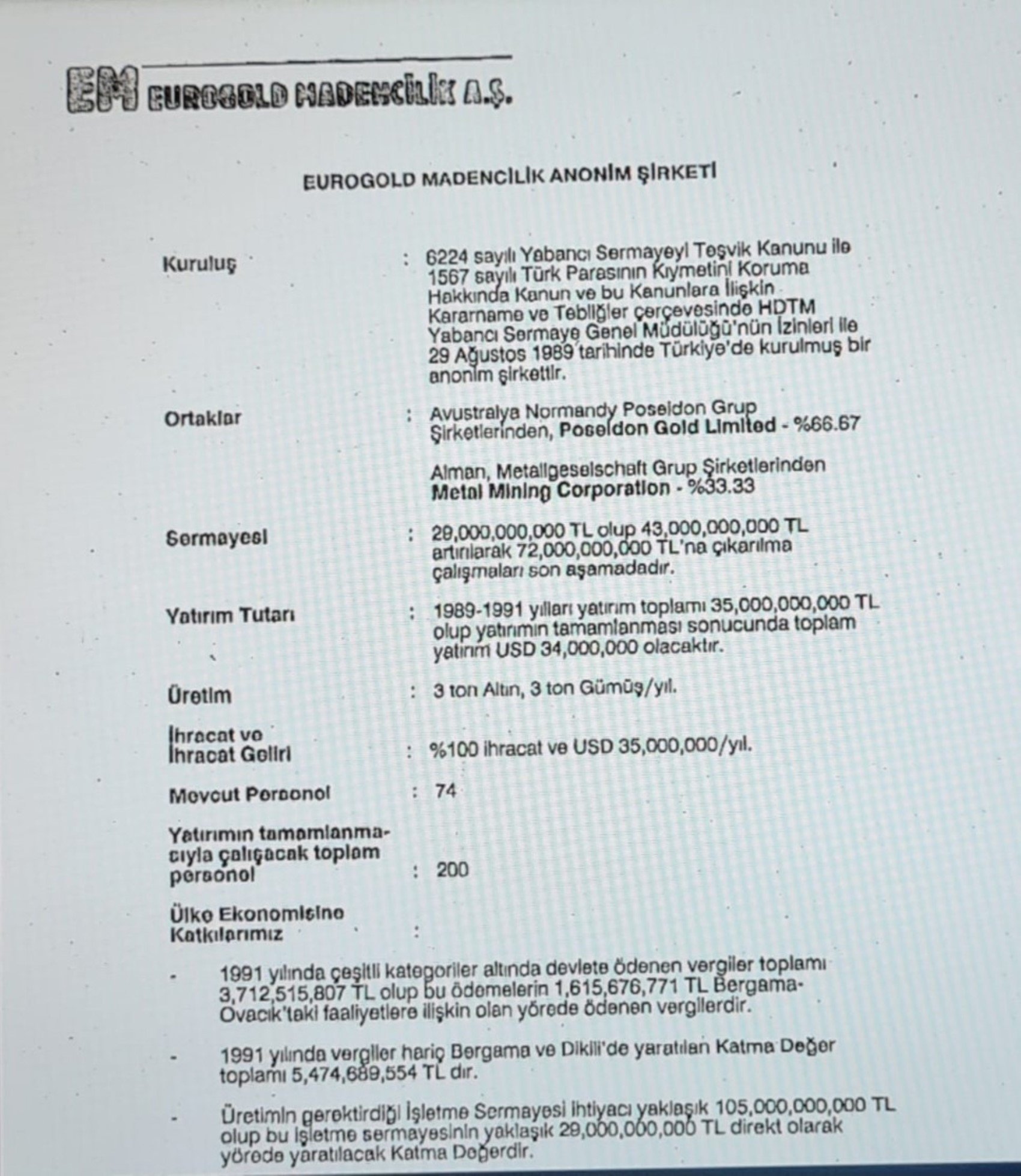
The multinational, foreign-state-backed cyanide company "Eurogold" had purchased the "mining exploration permit" in this region from Eczacıbaşı Holding, which had determined that there was gold around the villages of Bergama Ovacık-Çamköy-Narlıca.
It was a profitable business for large companies and shrewd merchants in Turkey to obtain "mining exploration licenses" in places where minerals were identified through information obtained by their staff, and then sell the "mining operation rights" to other companies.
How nice; they were making money from the comfort of their seats through brokerage!
By then, the General Directorate of Mineral Research and Exploration (MTA), established by the Republican Revolution and specialized in this field, had been largely sidelined.
That is how Eczacıbaşı sold the "mining exploration license" in Bergama to the cyanide-using multinational company Eurogold.
***
Eurogold, a company partnered with Canadian-looking German, French, and Australian-appearing US companies, and backed by German, US, and British banks, came to Bergama with great enthusiasm.
The estimate that there were 8-10 grams, and in some places 15 grams, of gold in 1 ton of soil had dazzled them.
Use cyanide, which is almost cheaper than water, and take the gold, which is heavy in value and weight, and leave!
Realizing that there was gold in the soil and rocks in many parts of Anatolia, this company made Bergama its base.
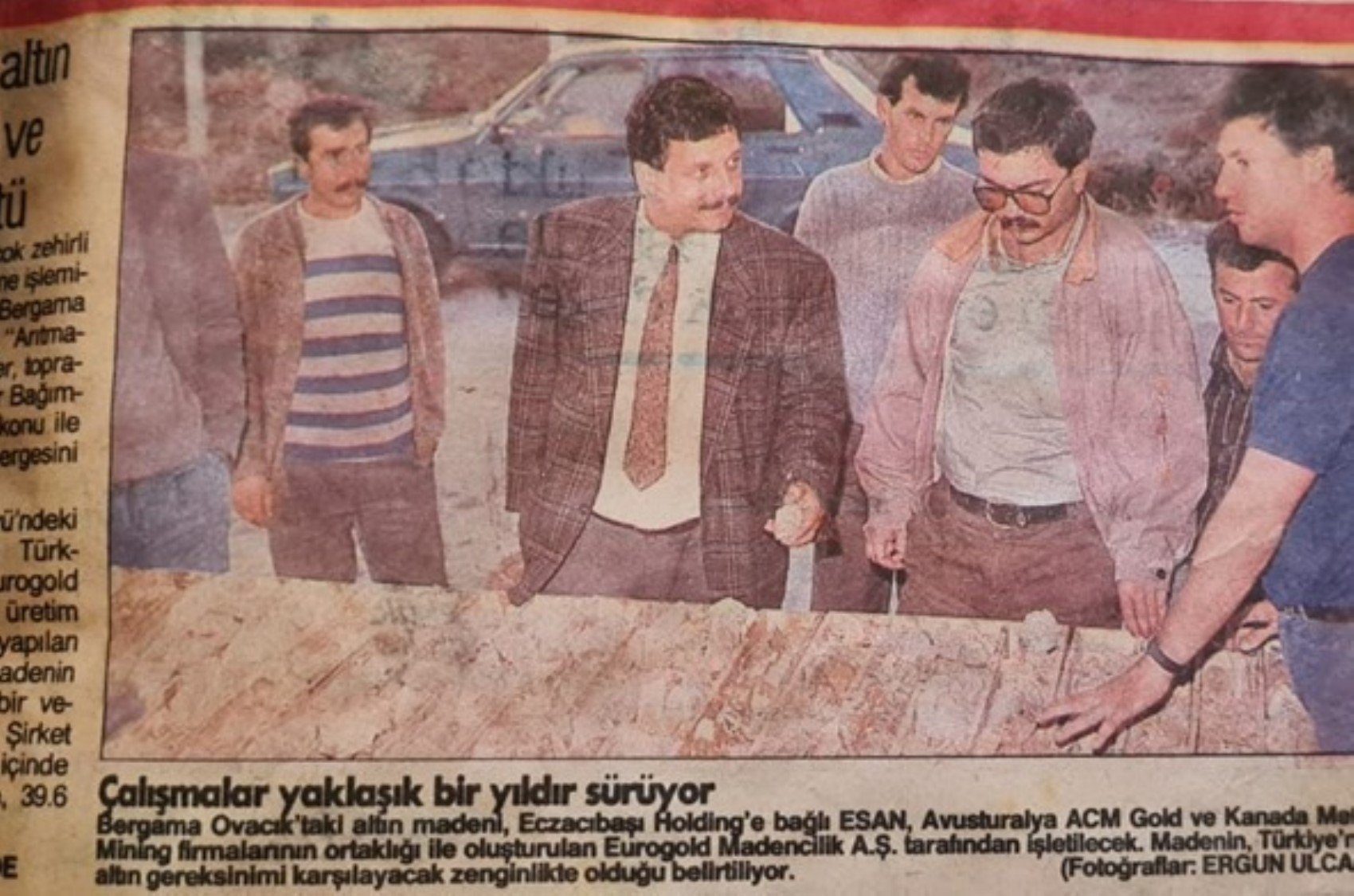
The General Manager of the cyanide-using Eurogold company, the Scotsman Roger McCraddock, and his team first visited the Bergama Municipality in the region.
With his condescending look, R. McCraddock had the air of an officer of the British Empire, the colonial/imperialist power that once showed its strength in India.
His attitude was that of an overbearing manager who dominated everything and wanted to remain dominant. Of course, he also had Turkish assistants standing by, ready to serve.
Their words were honey-coated!
They were bringing civilization and wealth to the region.
After all, the people of Anatolia were poor.
They would give jobs to workers and buy trucks for transporters. They would do their shopping from local tradesmen. The townspeople would earn money…
Mr. McCraddock and his entourage were welcomed in Bergama with the hospitality unique to Anatolia…
Finding a gold mine sounded nice, but the people of Bergama had not seen any signs of gold in their region until that day.
The mine they wanted to operate was near the city of Bergama, 10 km away.
The municipal officials asked Eurogold how this gold would be extracted and how it would be obtained.
The company officials, with confidence in themselves, delivered many documents printed on glossy paper regarding the operation to the Bergama Municipality.
After all, they had applied their complex, poisonous methods in many underdeveloped countries.
They had somehow convinced the relevant parties there!
Of course, for the local people who did not know the subject, nothing could be understood from these documents in Bergama.
The matter was an engineering issue.
The Mayor and members of the Municipal Council went to the Chamber of Civil Engineers in İzmir and asked for help from the Chamber's administrators at the time. The secretary of the Chamber was Civil Engineer Sadettin Uçkun.
S. Uçkun delivered the summary of the information he received from the Chamber of Civil Engineers and other Engineering Chambers to the Bergama Municipality shortly after.
It was understood from the information that "Cyanide Gold Mining" was not an "innocent business" at all.
This type of operation was not "roses and sugar" as presented!
To extract the gold from the soil, a poison called "cyanide" would be used, and after the cyanide was treated with the soil and the gold within it was separated, the remaining waste would be collected in a place called a "waste pool" or "waste dam."
Cyanide was a disaster in itself!
It was death dust!
If an autopsy was not performed quickly, it was not understood that the deceased had died from cyanide poisoning.
It was dismissed as a heart attack!
Perhaps for this reason, deaths caused by the cyanide used in Cyanide Gold Mines were not reported in the records.
Except for the birds that dropped dead and the ducks that tried to enter the waste pool.
They were very sensitive to this poison.
The poisons accumulated in the waste pool/dam contained cyanide compounds and heavy metals such as arsenic and cadmium.
There was a possibility that all of these would mix into groundwater, and the environment had been shaken by a very severe earthquake 50 years ago. There were ground fissures in the region.
The town of Dikili, 15 km away on the coast, had sunk.
Moreover, the region was covered with olive and pine trees.
The finest-fibered cotton in the country was grown in the Bakırçay Plain of the Northern Aegean, where irrigated agriculture was practiced.
Even if the mine were closed, its potential impact should have been monitored for decades.
Yes, there was a problem here!
***
Meanwhile, the multinational cyanide company began drilling in the villages of Çamköy-Narlıca, where gold was found in the soil, in the context of the "mining exploration license" it had taken over from Turkey's famous and powerful Eczacıbaşı Holding.
However, the local villagers were not as "ignorant" as the multinational company's manager, McCraddock, thought.
These lands were the cradle of very deep-rooted civilizations.
On the slopes of the Kalarga hill opposite, the invader Achilles, one of the heroes of the Troy legend, had fought with the local Telephos, who was considered the founder of the city of Bergama/Pergamon and was trying to defend his country.
The villagers were alarmed by the noise made by the huge machines, overseen by foreign technicians whose language they did not know, drilling the soil in their region, and by the dirty water poured onto the ground.
They applied to the Bergama Municipality, which owned the drinking water wells that met the water needs of the city of Bergama near their villages.
WHAT WOULD HAPPEN NOW?
There is nothing more precious than life!
Let us not forget the experiences, and let us not let them be forgotten.
Social memory is our true treasure!
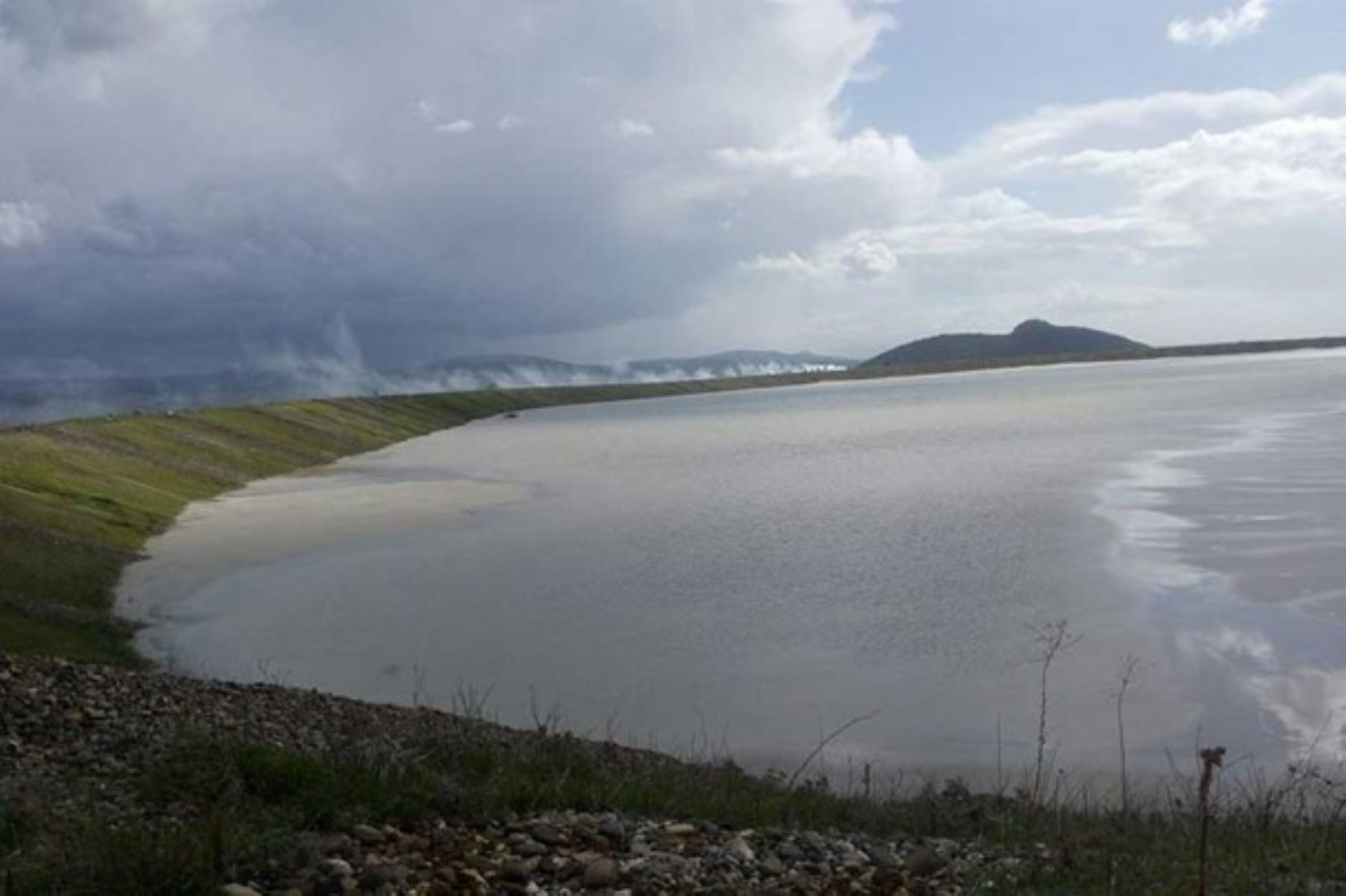
Photos: 1) Germencik-Aydın. 2) Bergama Ovacık Cyanide Gold Mine. Photo: Özer Akdemir. 3) A newspaper clipping about Mr. Roger Craddock. 4) Executives of the multinational Eurogold company in Bergama. A newspaper clipping. 5) The incentive certificate received by the Eurogold company from the Republic of Turkey. 6) The dam where toxic waste collected from other gold mines in the vicinity is stored during the operation of the Bergama-Ovacık Cyanide Gold Mine. Photo: Özer Akdemir)
Sefa Taşkın
29.10.2024
Bergama/İzmir
Most Read

Striking picture for Özgür Özel's 'New Party'

Özgür Özel gives a dated response regarding the number of resignations

Forest fire in Antalya brought under control

The PKK opening and Özgür Özel’s path!..

How did the newspapers view Özgür Özel's farewell to the CHP?

He killed his wife by slitting her throat: Their children witnessed the moments

What did the CHP do?

Özel’s new party move in the world press

The New CHP, against CEHAPE

Fire at TUSAŞ engine factory in Eskişehir under control