



CYANIDE DIARIES FROM BERGAMA-29
Courtrooms, felled trees, blocked roads — Bergama's environmental struggle had taken on a different dimension starting in 1994.
This struggle was no longer being fought only in village squares, but in the Administrative Courts of İzmir, the high corridors of Ankara, and in the shade of Anatolia's oldest olive groves.
Law had been introduced as a tool — as the villagers sought their rights within the framework of the law, the language of the struggle also expanded.
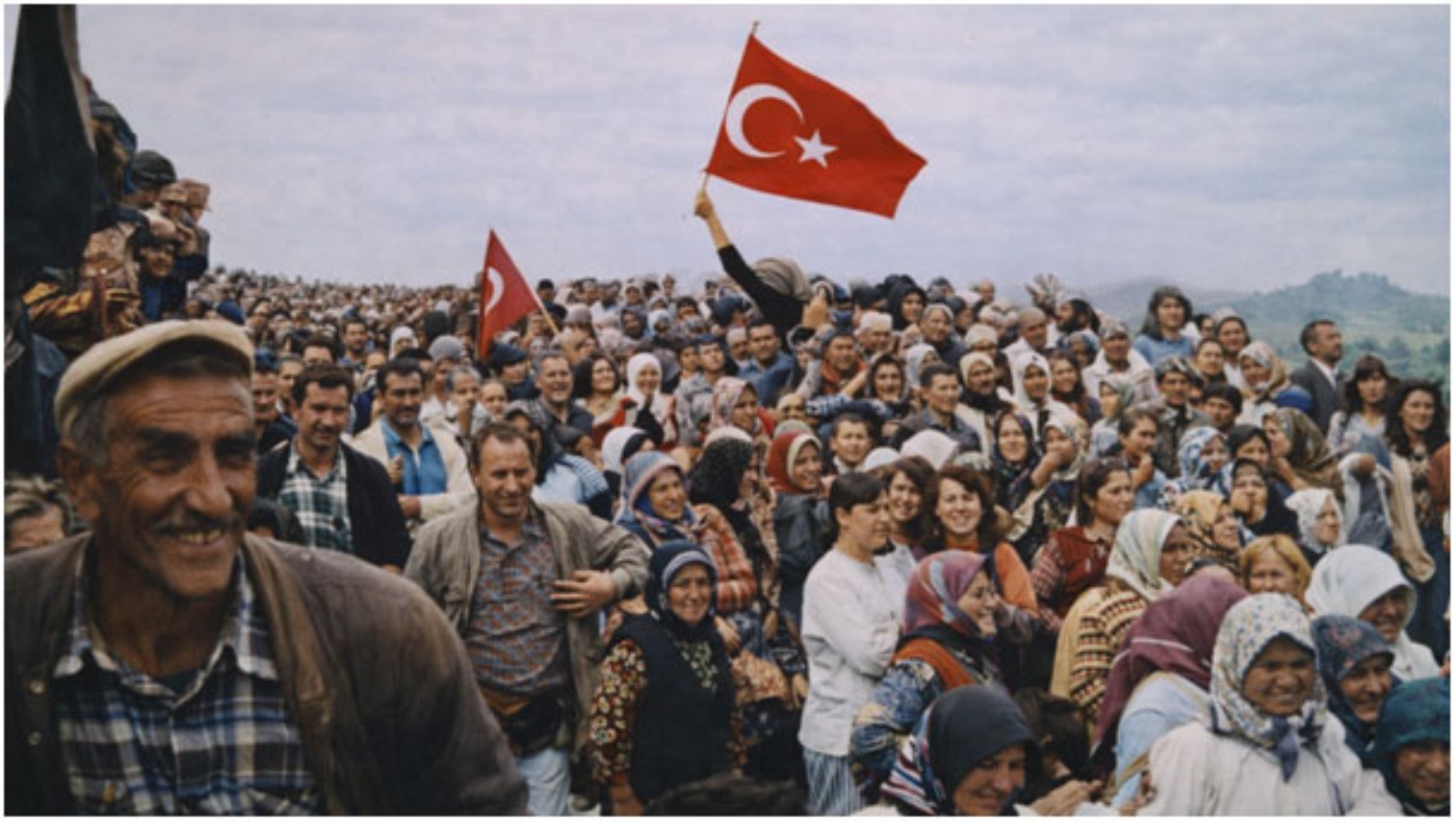
(Bergama villagers. The Turkish flag never left their hands.)
***
In such a political climate, cyanide gold mining in Turkey was struggling to keep its facilities in Bergama operational, while Bergama environmentalists were making the earth and sky resound with various protests.
While the power struggle in Ankara continued at full speed, the country was preparing to open its doors wide to toxic gold mines.
The Cyanide Octopus, with its head outside and its arms intent on tightly wrapping around Anatolia, was trying to convince whichever political party was aspiring to power to support these toxic gold operations.
Yet, there were still politicians who listened to the reactive voice of the public.
In this environment, the cyanide company Eurogold was obtaining permits from certain state levels to operate the mine in Bergama, while lawyers were ensuring closure decisions were obtained from courts through their objections in the cases they filed.
With what we call the "ecological paradigm"; through efforts to create public opinion via science, law, social action, press and communication, politics, and international relations, there was no one left in the country who had not heard of the Bergama incident; a very large segment of the population had been affected by the issue and had turned their attention in this direction.
While one segment of the state hoped to overcome the economic crises the country could not escape from by extracting gold at a national level, another segment was acting cautiously to observe the public interest and avoid opening the door to potential disasters.
Of course, imperialist companies and local individuals and organizations eager to cooperate with them were also waiting at the door to grab a share of the cyanide gold pie.
Politics was also closely interested in the subject, and many sensitive politicians were following the issue.
CHP deputies Kemal Anadol, Ali Rıza Bodur, Aydın Güven Gürkan, Veli Aksoy, and Sabri Ergül were among those leading the way on this issue.
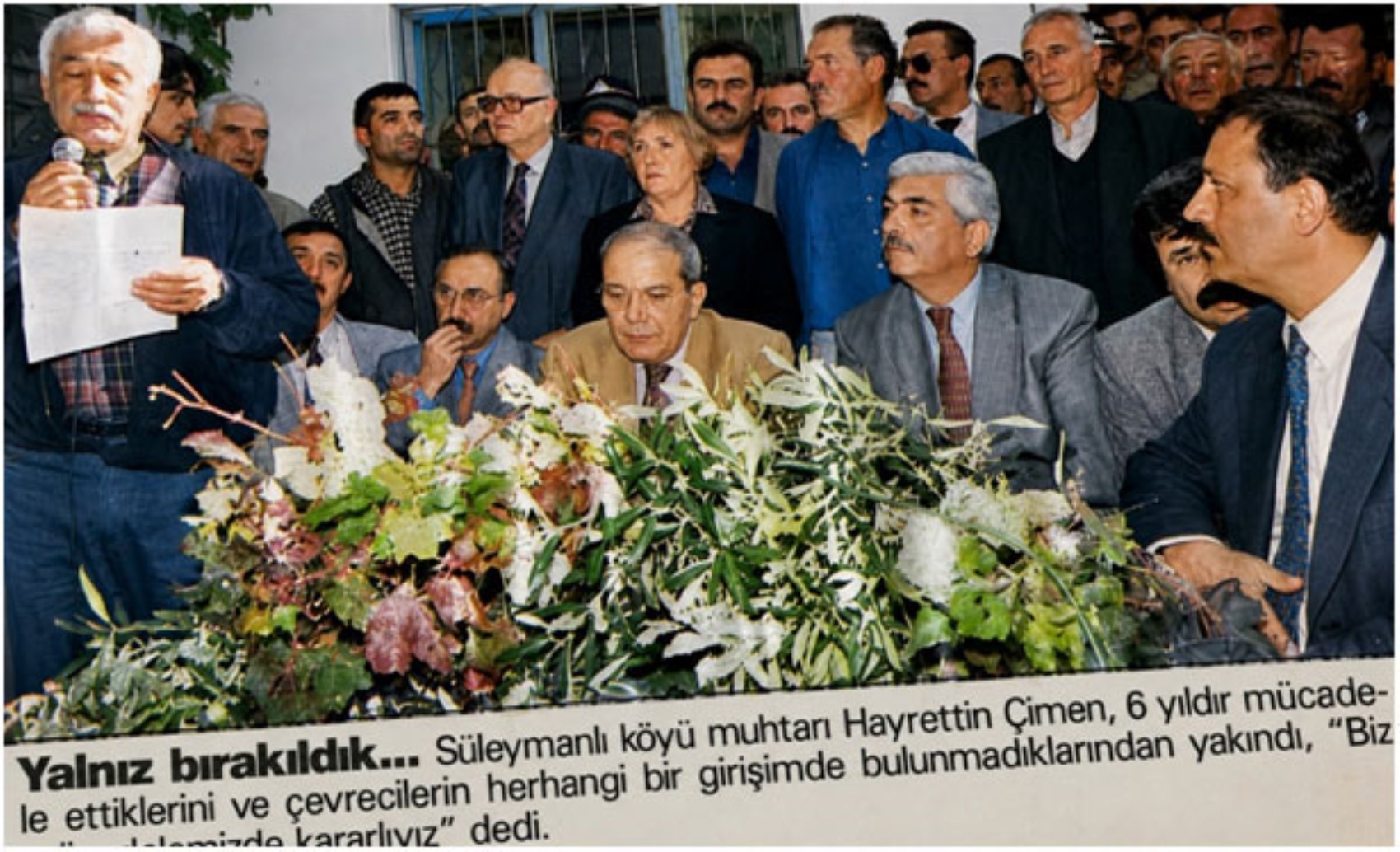
(Deputies Aydın Güven Gürkan and Ali Rıza Bodur listening to the village headmen of Bergama. October 1996)
***
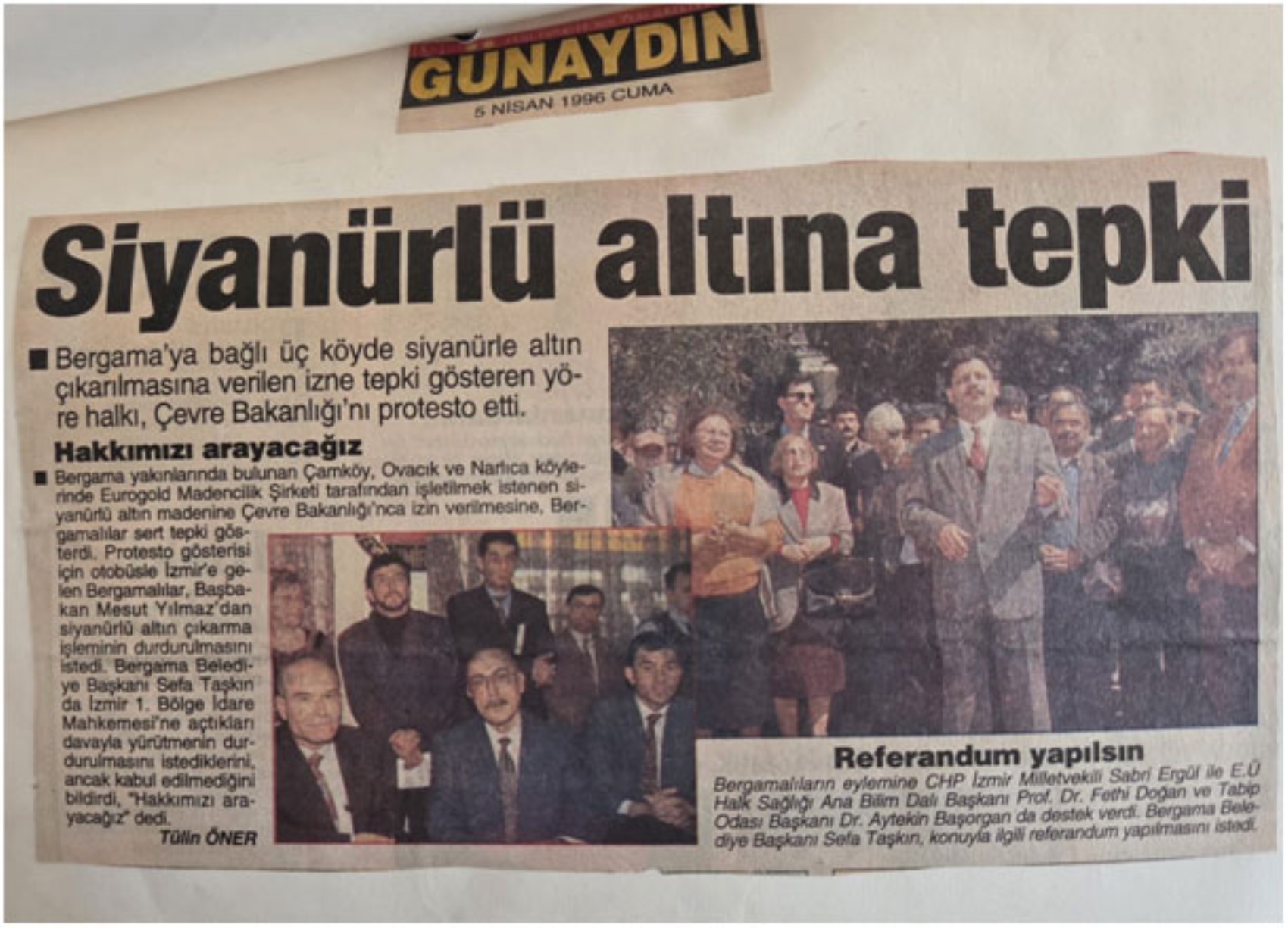
Following this, Bergama Mayor Sefa Taşkın and Attorney Senih Özay, with the power of attorney of 632 people, filed three separate lawsuits in the İzmir Administrative Court on November 8, 1994, to stop the legal proceedings related to this mine. (https://www.anayasa.gen.tr/law315-bergama.htm)
In the request for cancellation; the dangers of using cyanide by the company (Eurogold) for the extraction of precious (gold) ore, especially the pollution of the water table, and the destruction of local flora and fauna were among the stated justifications. Furthermore, the danger that such an operating method posed to human health and safety was also noted. (European Court of Human Rights Judgment TAŞKIN AND OTHERS v. Turkey Case. Case No: 46117/99 Strasbourg November 10, 2004)
In the first hearing of the case, the Trial Prosecutor intervened against the Bergama Mayor, who was explaining his views excitedly, saying, "This is not an election square."
This attitude was not a good omen for the villagers.
The prosecutor was unaware that environmentalists were seeking justice at the courthouse doors to protect their lives.
Were courts not the temples of democracy?
Where else would ordinary people seek their rights?
(People of Bergama in front of the İzmir 1st Administrative Court.)
***
While the people of Bergama were reinforcing their opposition to the mine through various meetings and information events, they were also continuing their legal struggle.
The case lasted about two years. Much water flowed under the bridge.
On April 2, 1996, the İzmir Administrative Court rejected all the demands of the environmentalists.
The environmentalists had been wounded by this decision in their legal struggle, but they had not given up on the resistance.
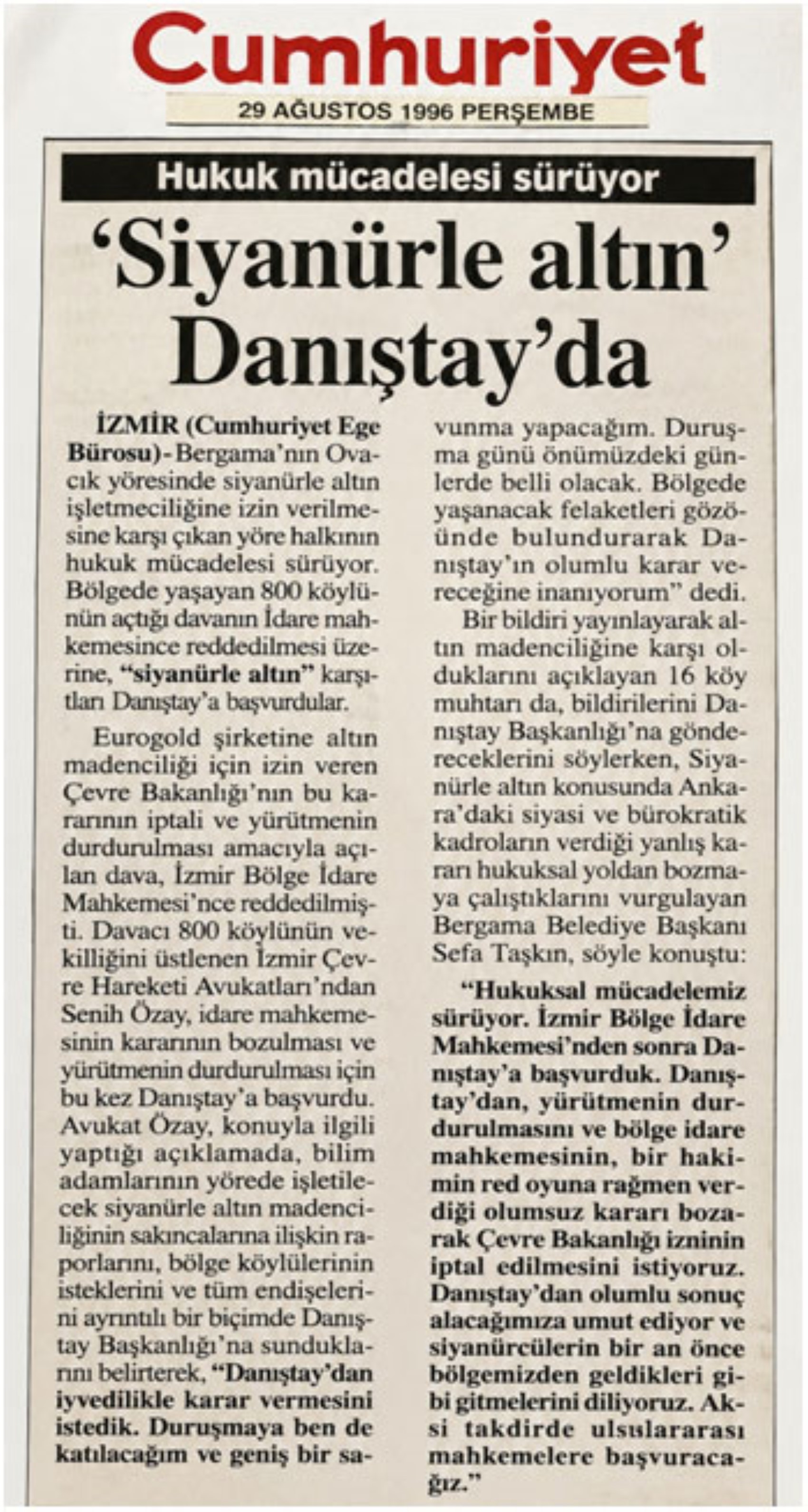
Immediately after this rejection decision, the villagers' lawyers appealed the decision in July/August 1996 and moved the file to Ankara, to the High Court, the Council of State, for it to be overturned.
However, the decision given by the İzmir Court in favor of the cyanide users had encouraged the gold miners even more; they thought it would be even easier for them to walk the poisonous path.
A decision in their favor would surely come from the Council of State as well.
Therefore, they intensified their persuasion efforts in Ankara.
Politics had also become murky enough to help them, and fishing had become easier.
However, the same politics was responsible to the people from whom it sought votes. Except for those who truly helped them in line with the public interest, how could some politicians look the public in the face if they did not care about the problems or appeared not to care!
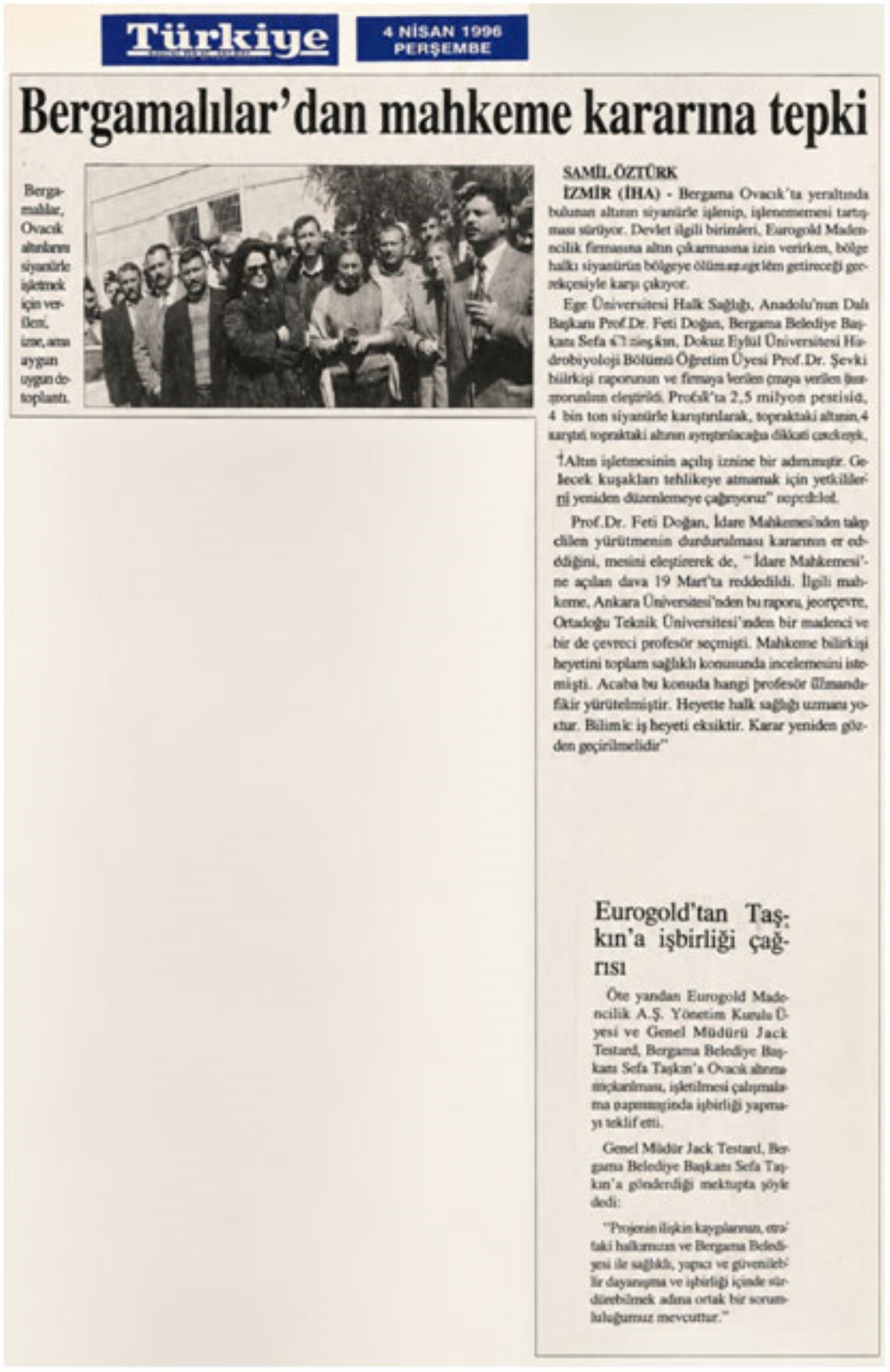
(French imperialism, backed by the local court's first decision, says surrender.)
***
The rejection by the İzmir 1st Administrative Court of the environmentalists' demands regarding the cessation of cyanide operations in Bergama had whetted the appetite of the Cyanide Octopus even more.
It accelerated its permit acquisition processes even further.
Meanwhile, judging by the trucks entering and leaving the fenced-off mine site and the activity inside, the mine and the cyanide gold operation were being run secretly.
The constructed waste pond was filling up with toxic heavy metals, and cyanide gas was constantly mixing into the air.
The anger of the villagers, who were aware of the situation, was increasing day by day. Moreover, they had lost the court case. In the meantime, the intermediaries of the cyanide users were calling the village leaders one by one and offering them jobs at the mine with high wages.
Everything was permissible for the sake of gold. They had even distributed lamb during the month of Ramadan to appear friendly. Or quarter-gold coins!
In this environment, the villagers held a press conference with a large crowd in Çamköy, which was the center of the actions.
Bergama municipal council members and 17 village headmen were there.
They protested the initiatives at the mine site, the multinational Eurogold company, and those who turned a blind eye to its illegal work carried out without full permits.
But the Cyanide Octopus did not even care about this. It had the wind of a part of the state behind it.
Using the open-close method, operating illegally, and closing when objections rose, it was getting its toxic gold.
It was even preparing to expand its area of activity further.
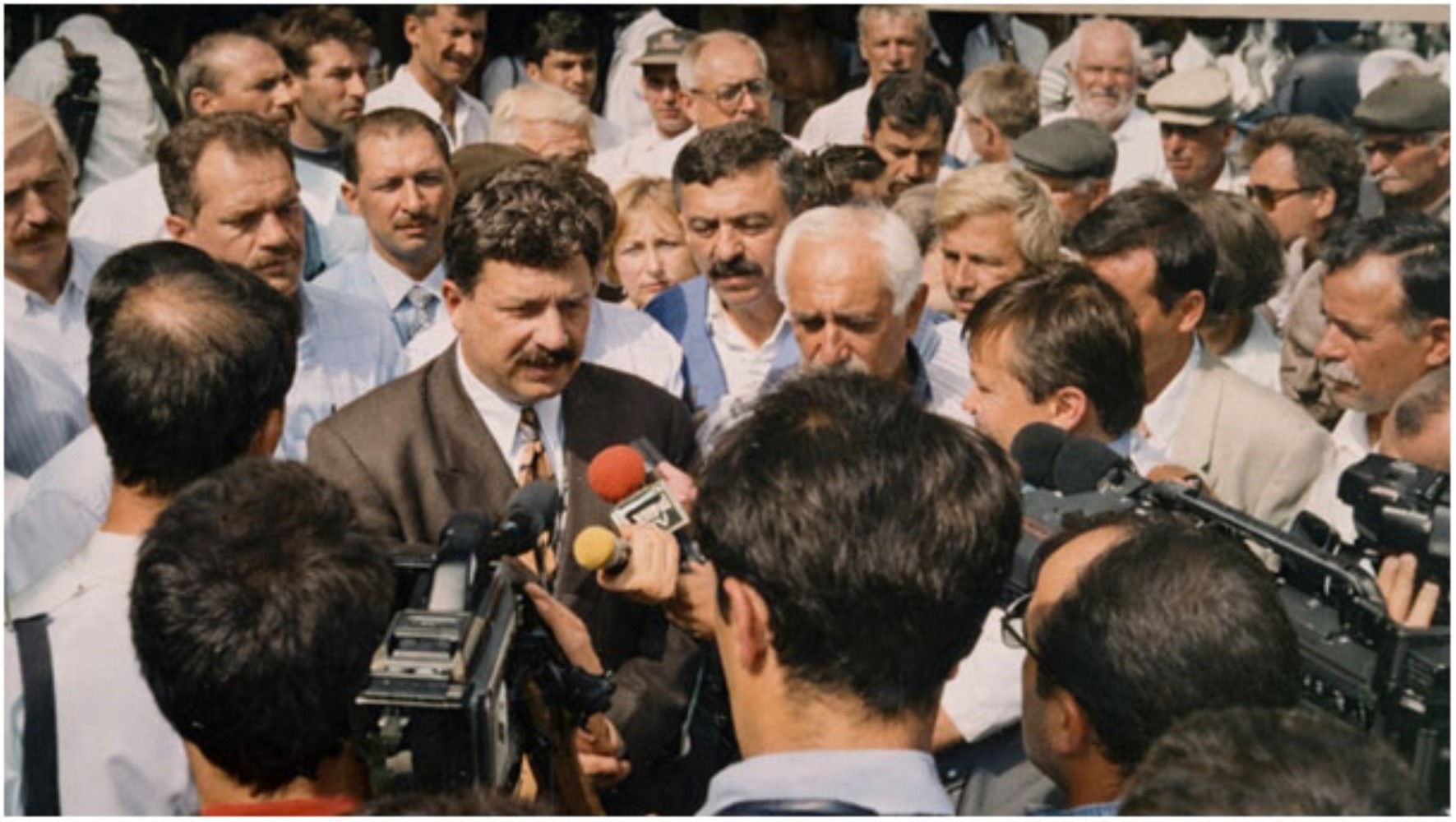
(Press conference in Çamköy.)
***
When the İzmir 1st Administrative Court rejected the lawsuit filed by the villagers on 02.04.1996, Eurogold received the result of the application it had previously made to the Ministry of Forestry shortly after, on 14.11.1996.
The permit for the tree massacre had been issued. Others could follow.
With the permit in hand, the cyanide company immediately started work with huge machines.
Decades-old olive and pine trees began to be laid out along the ground.
The gendarmerie was ensuring the security of the company personnel and not letting the villagers approach.
A great reaction rose from the villages in the face of this pitiful situation.
Women were crying, children were looking on in confusion, and animals were fleeing in all directions from the noise of the machines.
What would happen now?
No one was listening to them, no one was paying attention to them.
The only place they could take refuge was the Bergama Municipality, which had drinking water wells near Narlıca village, one of the 17 villages in the region.
The Municipality had already been following the situation from the beginning and standing by the villagers.
It was also a state institution at the same time.
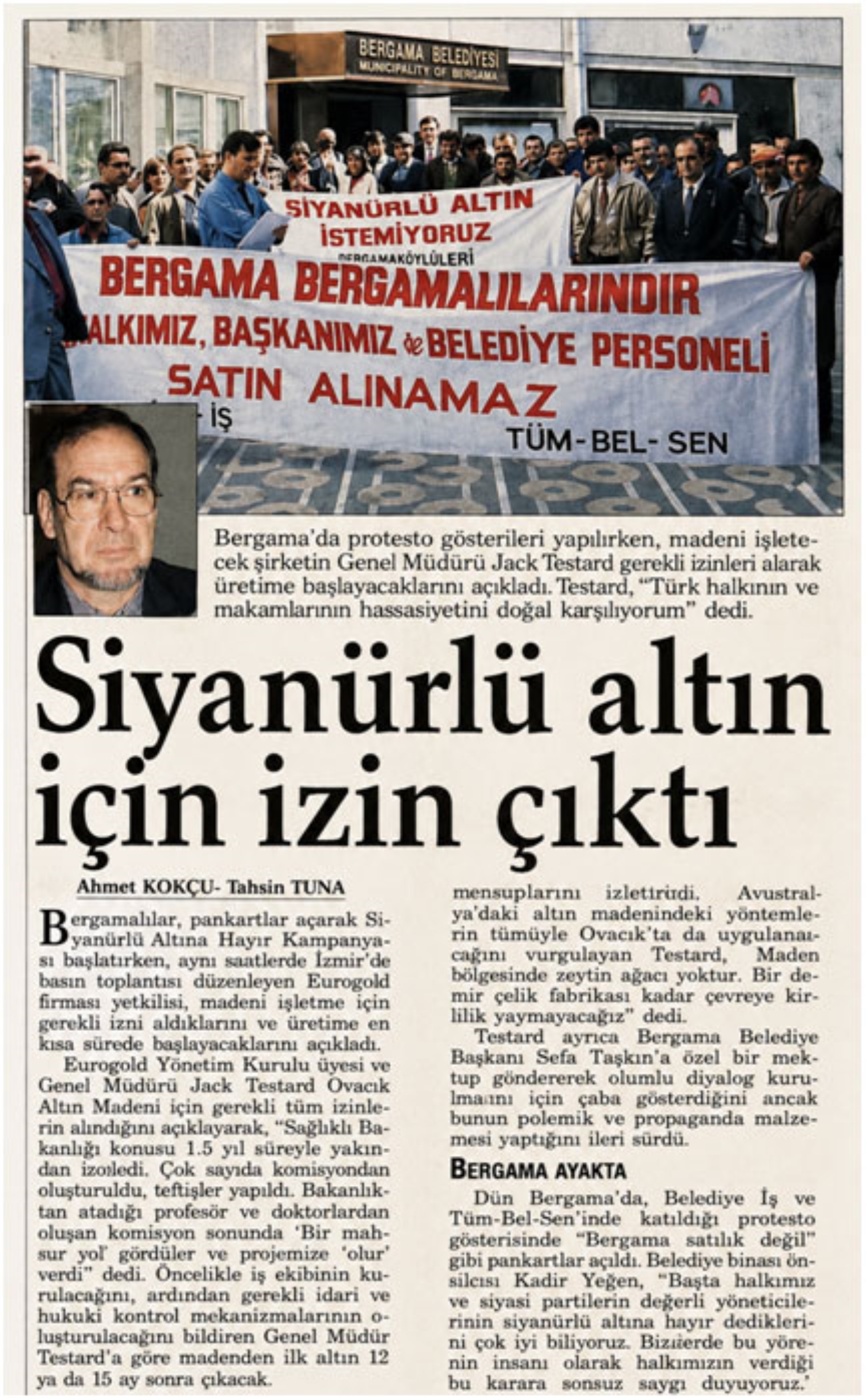
(October 1996)
***
The villagers, led by their headmen, called the Mayor early in the morning and explained the situation. It was decided to gather in Bergama the next morning.
Morning came, and dozens of people, men and women, mostly with their children, had gathered at the Municipality.
They had packed the Mayor's office to the brim.
Cengiz Bektaş, one of Turkey's most distinguished architects and intellectuals, who designed Bergama's city square, was also there.
He was watching the excited and angry atmosphere with astonishment.
The mobility of the villagers and their collective search for rights were extraordinary.
The headmen were asking the Mayor to call the state (the General Directorate of Forestry) and demand that the cutting be stopped: After all, he was the Mayor, they would listen to the Mayor's word!
So thought the pure-hearted villagers who had obeyed their masters for years and were loyal to their state.
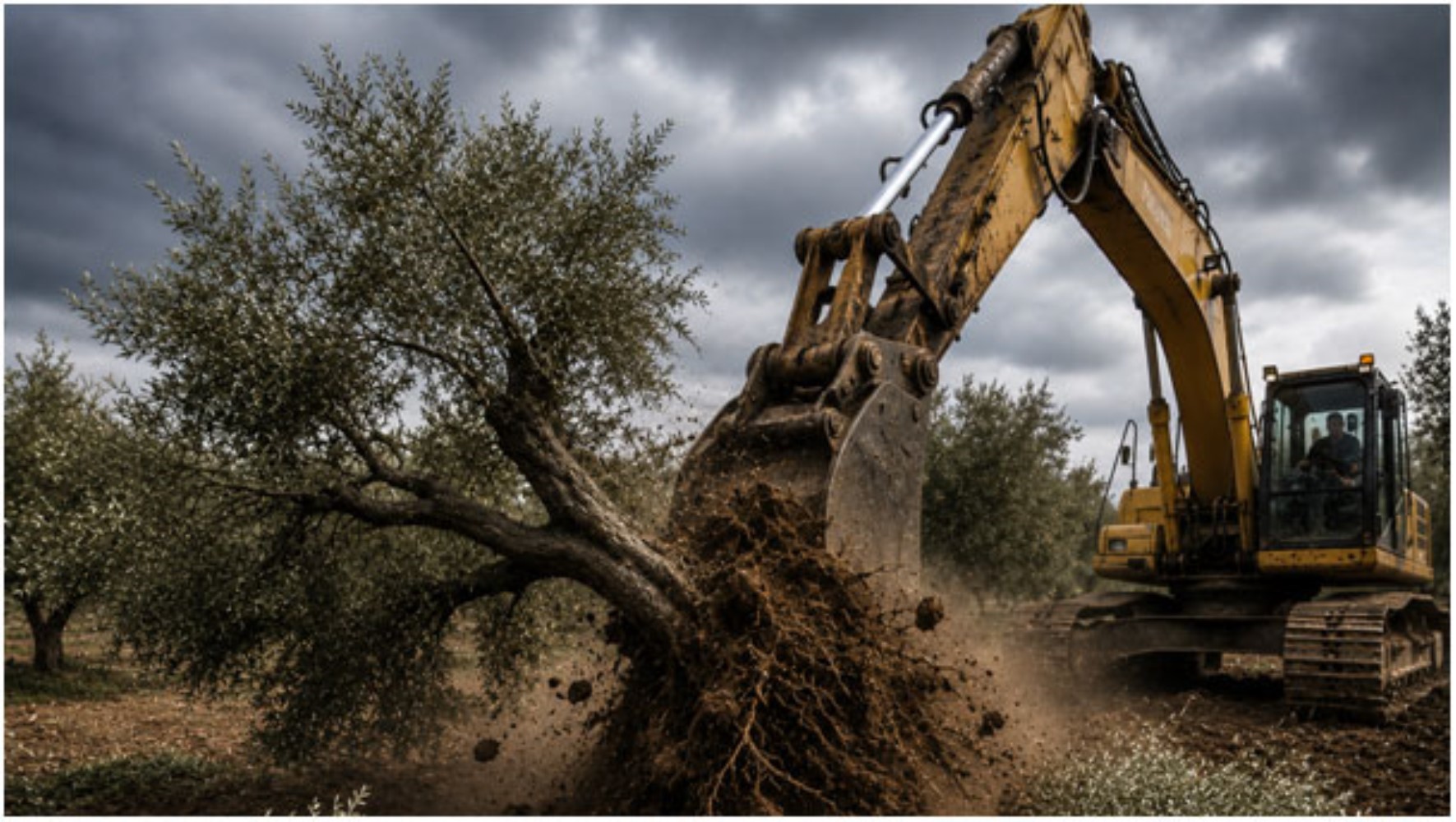
(Olive trees cut down in the mine fields. YZ)
The people of Turkey have an incredible trust in the state:
The state would not do wrong!
They knew from experience that its hand was very heavy on those who opposed it!
The poor people still had hopes from Ankara!
Is that so?
Mayor Sefa Taşkın called Ankara and demanded that the situation be addressed, that the public's anger was at its peak, that unwanted events could occur, and that the tree cutting be stopped.
The villagers, who had packed the room, were also carefully following the conversation on the speakerphone.
The General Director of Forestry listened politely. He said to stay calm and that he would fulfill the request. He was cautious in his speech. He had probably been warned in advance!
The villagers were happy. Cries of hope were shouted.
Finally, an official had emerged in Ankara who listened to their request.
They were about to thank the Mayor and leave when Sefa Taşkın said, "Wait":
"They must have heard the tension in you, as the General Director told us he would stop the tree cutting. He is also a servant of orders. He has a superior too. And a superior above that. You might see them stop it now, but tomorrow this order might change, and the cutting will continue."
"What will we do then?" the villagers said in unison.
"If the roads you want to take are closed, it is your right to raise your head," said the Mayor.
"Raise your head! You will see far!"
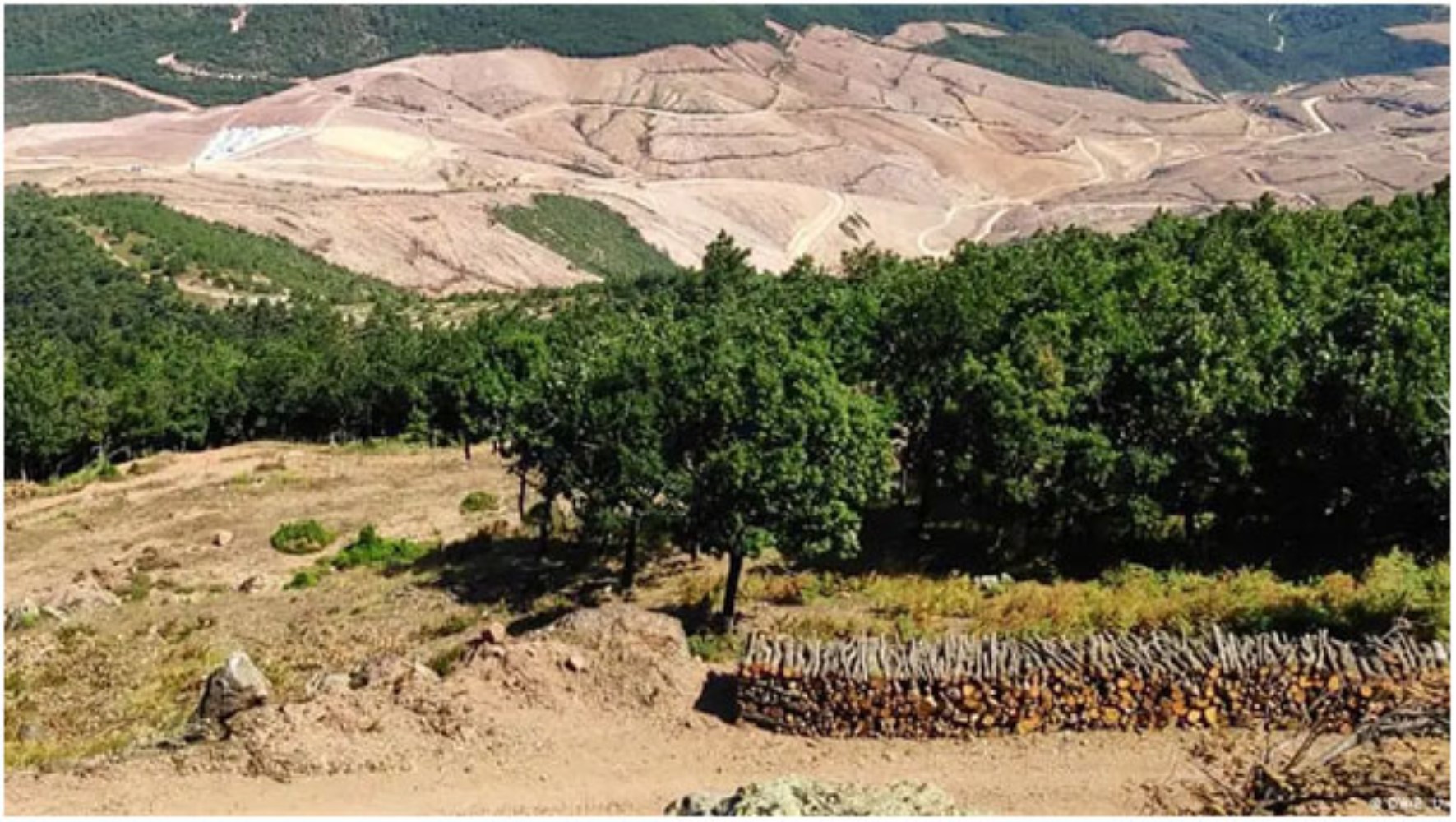
(Destroyed nature. The bodies of dead trees.)
***
The villagers left the Municipality with stern looks. It was clear that they were determined in the struggle. They were even more ambitious.
The next day, on 15.11.1996, news came from the villages that the tree cutting had started again and that the wooded areas were being flattened with heavy machinery.
The place had turned into a graveyard of uprooted trees.
The sacred olive trees had been laid out along the ground. The magnificent pine trees were in pieces.
The ground was covered with weeping leaves!
Would a stranger pity your land!
This image was an image that would be repeated in many parts of the country in the following years.
In Çanakkale-Balıkesir-Kaz Mountains, in Ordu-Fatsa, in Muğla-Akbelen, etc.
A new era of tree slaughter was beginning in Anatolia.
Nothing like this had been seen until then.
So that multinational companies or their local imitators and collaborators could earn more money, make more profit!
That was what imperialism was like.
The killing of the olive trees, from whose branches they collected olives, from whose grains they extracted juice and olive oil, and in whose shade they rested, was a great wound to the consciousness of the villagers.
They had raised their heads, taken their tractors with them, come down from their villages, and closed the İzmir-Çanakkale road to traffic for a while.
They were letting vehicles with urgent needs pass, and they wanted the İzmir Governor to come there and tell him their troubles.
This was a real breaking point.
They were determined. There was no way they would give up!
They had stood up fearlessly to protect their environment and their lives.
This was just the beginning. Hotter days were waiting for Bergama.
By blocking the highway for a long time, the villagers had shown how resilient they were on this issue.
As a result of the İzmir Governor coming, listening to the villagers, and the persistent warnings of the law enforcement officers, they ended the action without any incidents and without anyone getting hurt.
The message given had been delivered to where it needed to go!
The Governor of the state had listened to them.
The demand was so clear.
"The villager did not want this toxic mine!"
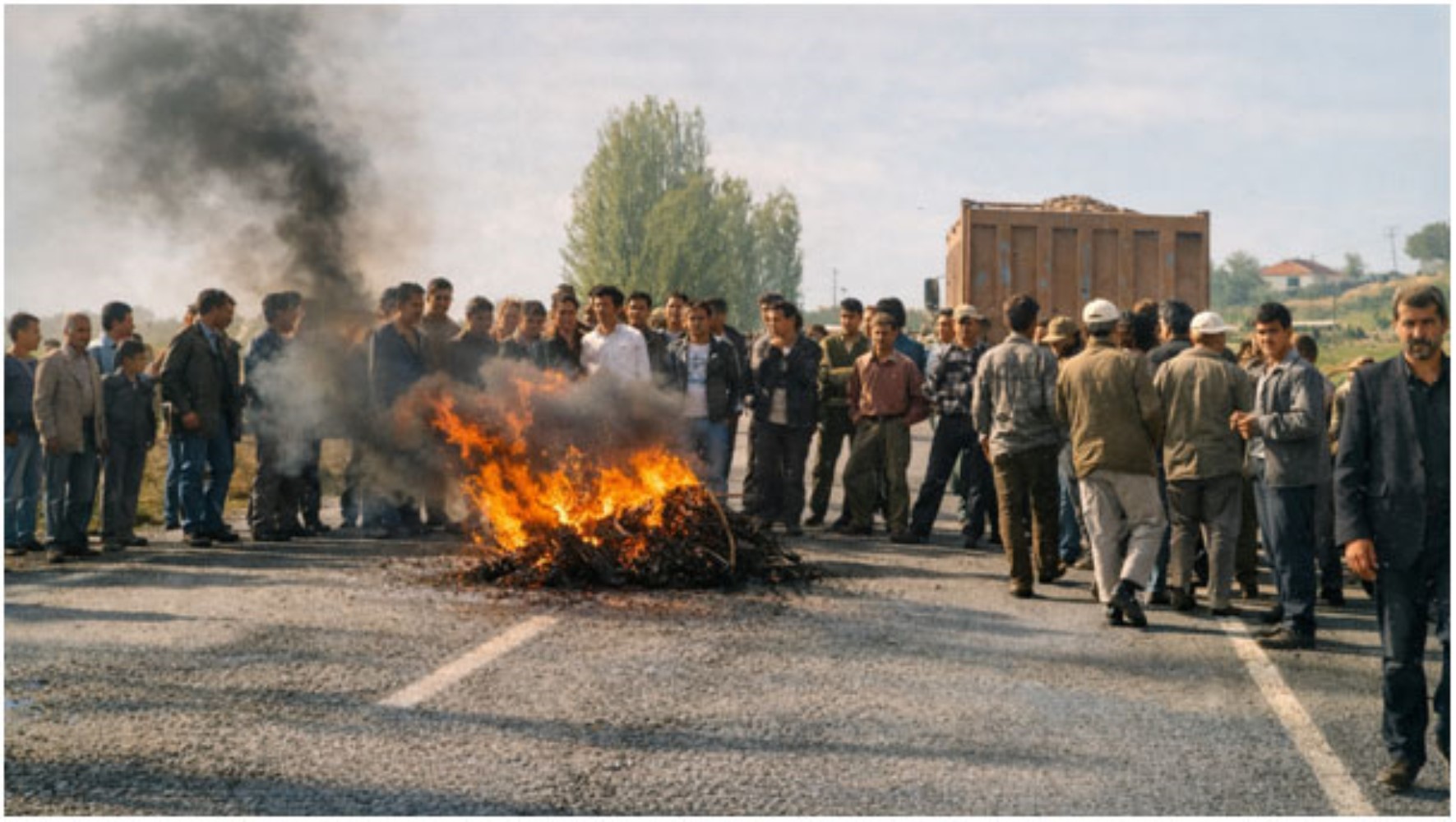
(İzmir-Çanakkale road, Ovacık location. 15.11.1996.)
***
Meanwhile, Eurogold had complained to the prosecutor's office about the stance taken by the villagers against tree cutting and had filed a criminal complaint against the ringleaders it had identified itself.
Later, the local prosecutor's office filed a lawsuit against the people who participated in this road-blocking action and issued a conviction, but the 8th Criminal Chamber of the Court of Cassation, which reviewed the case, overturned this verdict in 1998:
"... It is a mistake to decide on their conviction without considering that the elements of the crime of organizing or managing an illegal meeting and demonstration march were not formed in the actions of the defendants, who, together with those coming from different villages of the region, walked in a single file without disrupting traffic on the İzmir-Çanakkale highway as a result of a social reflex on a sensitive issue, with the thought that the company was continuing its cyanide gold exploration work despite the administrative court decisions to stop the company's activities, and the belief that cyanide would negatively affect human life and the environment..." it ruled.
Regarding this exemplary decision taken on the democratic right to protest due to the non-violent meetings and demonstrations of the people of Bergama, Ali Arif Cangı, one of the environmentalists' lawyers, reported that the Bergama process (events) ensured that serious gains were achieved in the field of environmental law and contributed to the development of environmental law. https://bianet.org/yazi/bergama-direnisi-cevre-hukukunu-nasil-degistirdi-160776
Moving environmental events to a legal dimension was a product of the New Bergama "Ecological paradigm".
This paradigm was a method of fighting collectively against injustices through science, law, action, communication, politics, and international solidarity.
And the legal gains born from this method were no longer staying only in Bergama, but were spreading to every part of the country.
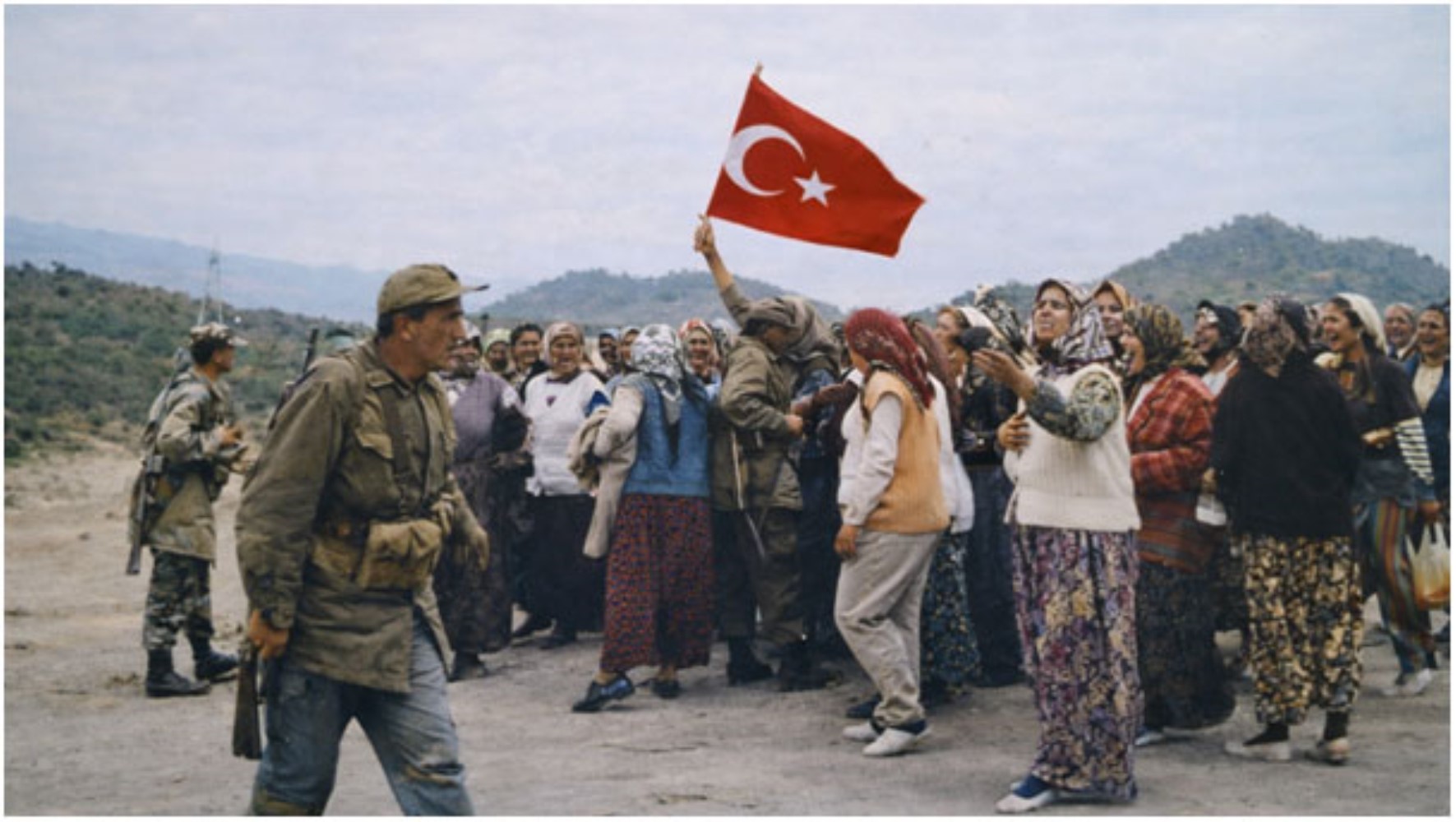
(Our women.)
***
While the Bergama villagers were struggling on one hand with the company that was backed by court decisions, and on the other hand with every tree cut, every road closed, and every lawsuit filed, they were unknowingly laying the foundation for something else: Turkey's environmental law.
That reversal decision of the Court of Cassation, the files moved to the Council of State, the objections in the İzmir courts — each of these would become a precedent in the cases of other villages, other rivers, and other forests in the future.
With the Bergama stance, it was writing law not only for itself but also for many places whose names it did not yet know.
Sefa Taşkın
21.06.2026
Dikili-İzmir.
Most Read

Striking picture for Özgür Özel's 'New Party'

The PKK opening and Özgür Özel’s path!..

How did the newspapers view Özgür Özel's farewell to the CHP?

He killed his wife by slitting her throat: Their children witnessed the moments

What did the CHP do?

Özel’s new party move in the world press

Fire at TUSAŞ engine factory in Eskişehir under control

The New CHP, against CEHAPE

From self-efficacy to despair

Kılıçdaroğlu's first message on Özgür Özel's new party announcement