



A photo taken on the Bostancı coast yesterday morning appeared on my Twitter feed. It was a chilling frame showing the Sea of Marmara struggling for life.
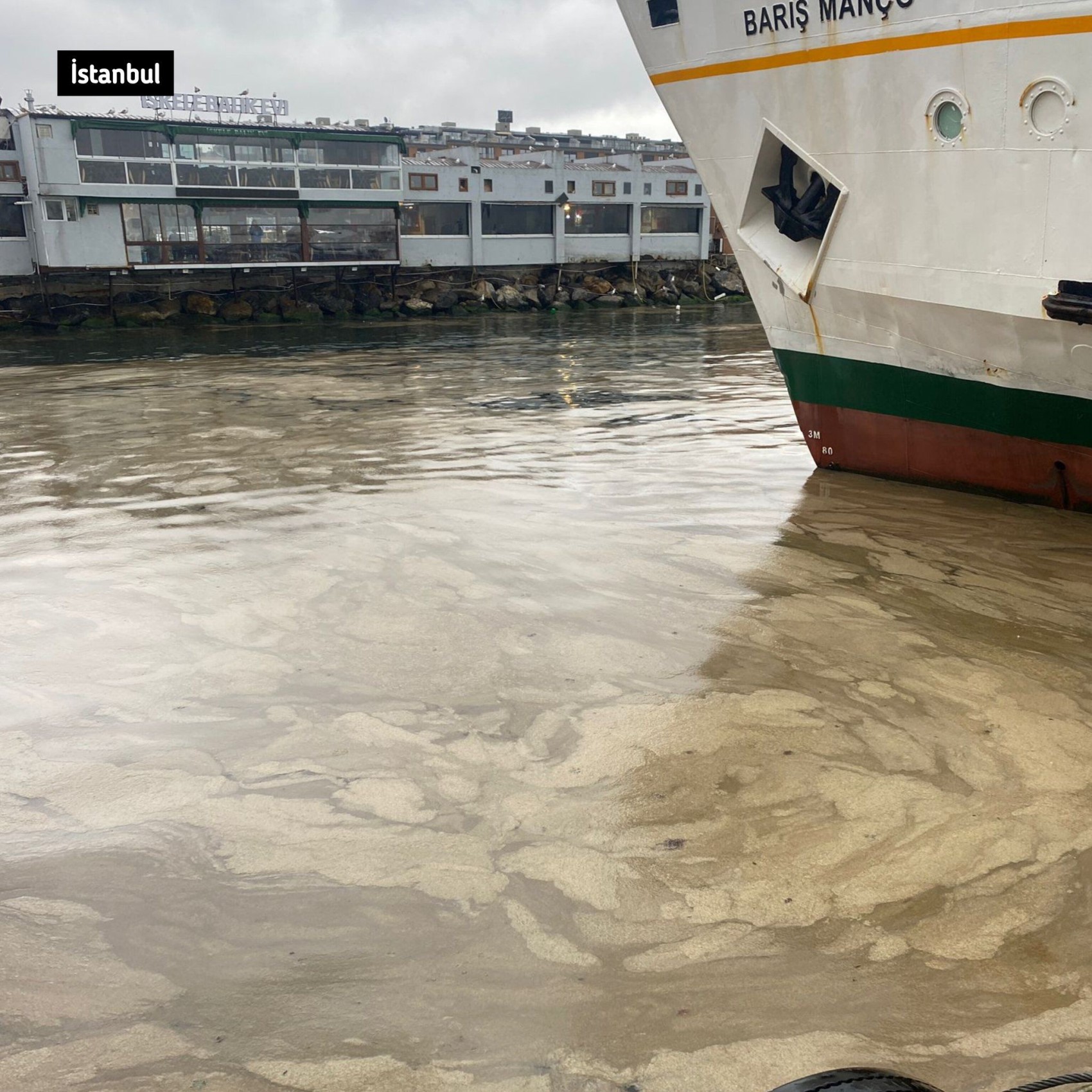
Prof. Dr. Mustafa Sarı, a faculty member at Bandırma Onyedi Eylül University's Faculty of Maritime Studies, had shared this frame with the note: "For those waiting for the mucilage to necessarily surface."
In his previous warnings, Mustafa Sarı had stated that there was almost no place left in the Sea of Marmara, down to depths of 30 meters, that was free of mucilage.
The mucilage, which showed its dangerous face on the Bostancı coast without waiting for the weather to warm up, was also seen on the shores of the Princes' Islands (Büyükada) a few days ago. The white layer covering the sea surface was caught on the fishermen's phone cameras.
The day before yesterday (January 14, 2025), Mustafa Bozbey, President of the Marmara Municipalities Union and Mayor of Bursa Metropolitan Municipality, drew attention to the fact that mucilage has started to appear again in the Sea of Marmara and made a very comprehensive press statement. As a result of the inspections they carried out in the Gulf of Gemlik, he announced that the mucilage has begun to emerge on the sea surface again. He emphasized the importance of initiating an emergency action plan before the mucilage reaches a level that threatens public health.
How much attention did Mustafa Bozbey's announcement of an Emergency Action Plan for Mucilage receive in our media? How much was his voice heard?
THE SITUATION IS SERIOUS
The Sea of Marmara is facing a pollution load that has built up over many years. The Marmara Sea Action Plan, launched in 2021 to eliminate the mucilage threatening the Sea of Marmara, had been successful, and this giant sea snot that threatened marine life had been wiped from the Sea of Marmara.
However, unfortunately, 3 years later, the mucilage has returned. And it is progressing very quickly! According to the findings of Prof. Dr. Mustafa Sarı, the mucilage, which started again in the Gulf of Erdek on October 20, 2024, tore the nets of fishing boats and broke their cranes.
On November 6, it reached the surroundings of the Marmara Islands and the coasts of Tekirdağ.
On November 13, it reached the Princes' Islands in Istanbul, and on December 5, it reached the Gulf of İzmit, spreading throughout the Sea of Marmara within 7 weeks, and yesterday it showed its ruthless face to the people of Istanbul on the Bostancı Coast.
How did mucilage spread so quickly?
Is the Marmara Sea Action Plan not being implemented effectively?
Have inspections and sanctions been shelved?
Could the increase in sea water temperature due to climate change have triggered the mucilage?
In this period when meat prices are hurting pockets and the fishing season is abundant, how healthy are the fish caught from the Sea of Marmara?
While mucilage damages fishermen's hunting equipment, does it not harm the fish at all?
Fish caught in the Marmara are distributed throughout Turkey. Will this situation emerge as a public health problem very soon?
Is it safe to eat fish from the Sea of Marmara?
Should it be fed to children?
We are waiting for an urgent joint response from the Minister of Agriculture and Forestry and the Minister of Environment and Urbanization...
Most Read

Striking picture for Özgür Özel's 'New Party'

Özgür Özel gives a dated response regarding the number of resignations

The PKK opening and Özgür Özel’s path!..

Forest fire in Antalya brought under control

How did the newspapers view Özgür Özel's farewell to the CHP?

He killed his wife by slitting her throat: Their children witnessed the moments

What did the CHP do?

Özel’s new party move in the world press

The New CHP, against CEHAPE

Fire at TUSAŞ engine factory in Eskişehir under control