



In the morning hours, an attack was launched on Iran by Israel with US support. The names of the operation—the US's "Epic Fury" and Israel's "Roaring Lion"—summarize the purpose of the attack: while the US aims to influence the Iranian people by demonstrating strategic resolve, Israel intends to protect its existence and send a message of deterrence.
Unlike previous operations, this time the attacks are being carried out with a precision-strike strategy. The targets are concentrated on both Iran's central structures and its strategic infrastructure. The office of Supreme Leader Ali Khamenei, the headquarters of the Revolutionary Guards, General Staff and intelligence buildings, missile launch sites, depots, and underground facilities in the cities of Kermanshah, Qom, Isfahan, and Tabriz were targeted.
In addition to these, seas and ports were also targeted. Warships in the Persian Gulf and the Gulf of Oman, as well as the strategic port cities of Bandar Abbas, Bushehr, and Chabahar, were among the points hit.
Explosions occurred in Tehran and some other cities one day before the attack, but no statement was made regarding them. These actions, which may have been organized from within, were carried out by an unidentified unit or organization and may constitute an activity targeting the government.
The explosions and the actions targeting the government show that the attack is targeting not only the infrastructure but also the leadership cadre. In this context, the political dimension of the attack shows that it is directly linked to Khamenei's security and freedom of movement.
It is not clear where Khamenei is; it is stated that he is in a safe place, and there is even talk of the possibility that he is in Russia.
There are also allegations that President Masoud Pezeshkian, Chief of General Staff Seyyed Mousavi, Secretary of the Supreme National Security Council Ali Shamkhani, and Secretary of the Expediency Discernment Council Ali Larijani are among the targets of the operation. In this context, the call made by US President Trump to the Iranian people emphasizes that military operations alone will not achieve success, and highlights the importance of public support and internal dynamics.
These dynamics have also been reflected in the ways the public has shown their reactions. Although the public has not taken to the streets for security reasons, they have shown their reactions from balconies with slogans such as "Death to Khamenei."
When the possibility of a civil war is evaluated, it is likely that the stance of the Kurds and the Baloch will play an important role in determining the course of the process. However, looking at the statements made by Turks, Baloch, and Kurds in the first days of the protests, it is seen that these groups are largely in favor of a federal state structure.
Looking at Iran's internal dynamics, the mobilization of those opposed to the regime may be in question. For example, the release of political prisoners and their attempts to seize control could be considered a possible scenario. These developments could pave the way for internal unrest to grow rapidly and for support to be provided for the establishment of a new government if US troops enter from the borders of Iraq, Turkmenistan, and Azerbaijan.
Although a ground war is seen as risky, the US and Israel may aim to take control of both the coastal region and its surroundings through an airborne operation to strategic cities on the Persian Gulf coast.
Pakistan's attack on Afghanistan on February 27 is also important in this context because Pakistan knows the region well and can directly influence the strategic dynamics at the border. Sistan and Baluchestan Province, located in southeastern Iran where the Shia and Sunni populations live together, shares borders with Pakistan and Afghanistan. The Balochistan region, divided among different countries, has the characteristic of being able to affect the territorial integrity of Iran and Pakistan.
The Balochistan region holds strategic importance due to energy pipeline projects and has a special position as the only point overlooking the Gulf of Oman. It also has a position to control energy shipments made via the Persian Gulf. Therefore, turmoil or civil war in the region could affect energy security.
It would be misleading to look at the Pakistan-Afghanistan war only through the argument of Pakistan's attack. The expectation of the US and Israel may be for Pakistan to neutralize radical organizations on the Iranian border and keep the border under control, thereby creating an Iran under their own control against Russia and China.
Similarly, Israel's deployment of troops to the Lebanon border and targeting of Hezbollah infrastructure can be read as part of a broader plan. These strategic moves show that the operation was pre-planned and multi-dimensional.
The fact that the operation was planned weeks in advance shows that the negotiation processes were symbolic and that the attack would be carried out with determination. The fact that the attack plan was prepared with the foresight that no results would come from the negotiation talks shows that the regional states were included in the process regarding the attack and were persuaded.
The direction and form of the attacks will reveal which regional countries play an active role in the coming process.
In conclusion, this operation is not just a military action, but a strategic, political, and regional test. What will determine the direction and outcome of the war is not the names of the operations, but the historical context and the strategic decisions to be made. Past experiences show that strategic planning is decisive in such conflicts.
With the coordinated attack by the US and Israel, it is no longer just the branches of the tree that are being targeted, but the roots. This situation weakens Iran's infrastructure and military capacity while also triggering internal unrest and regional balances.
The outcome of the war seems to depend not only on the use of force but on decisions to be made in a strategic and historical context.
Most Read

Striking picture for Özgür Özel's 'New Party'

The PKK opening and Özgür Özel’s path!..

How did the newspapers view Özgür Özel's farewell to the CHP?

He killed his wife by slitting her throat: Their children witnessed the moments

What did the CHP do?

Özel’s new party move in the world press

Fire at TUSAŞ engine factory in Eskişehir under control

The New CHP, against CEHAPE

From self-efficacy to despair
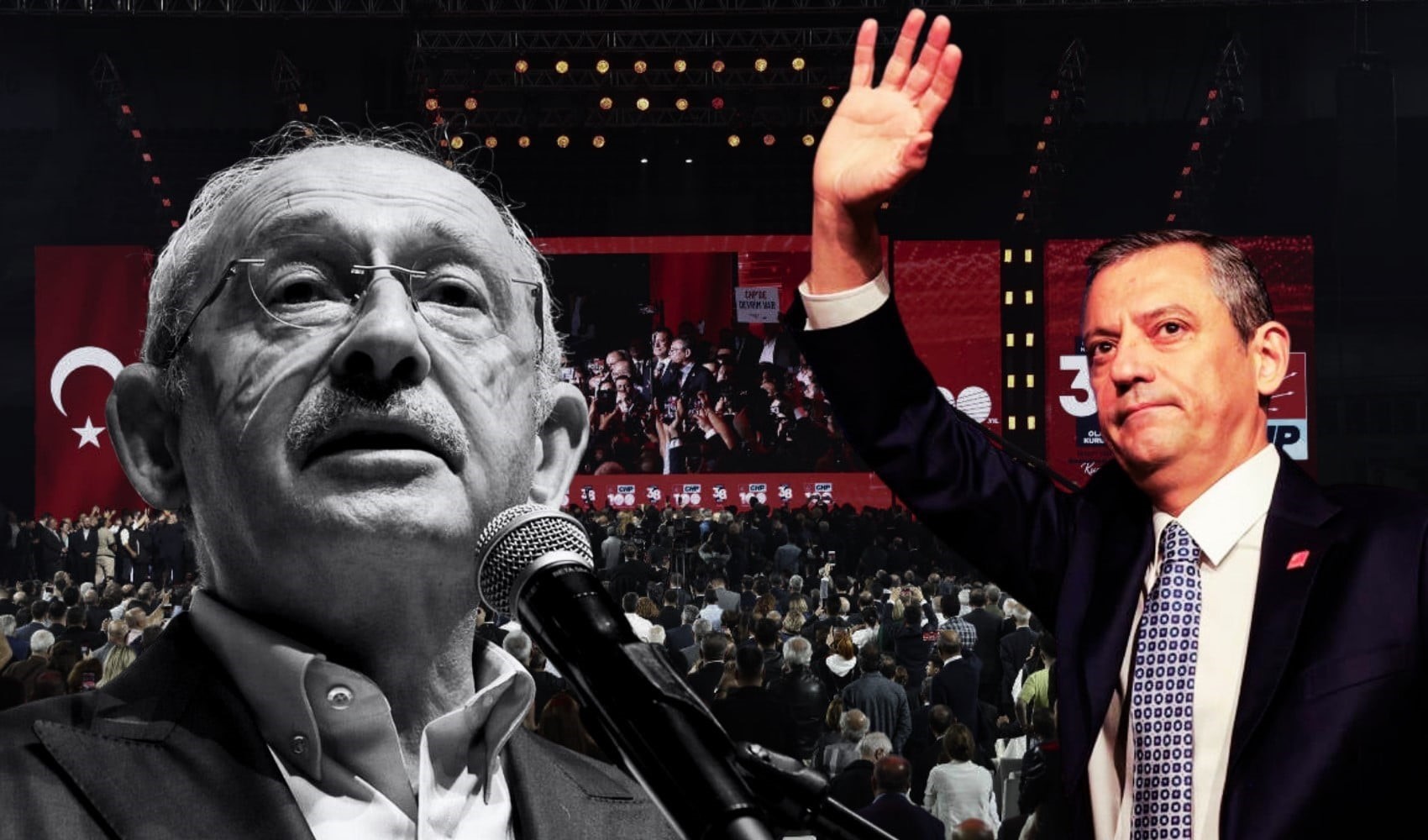
Kılıçdaroğlu's first message on Özgür Özel's new party announcement