



U.S. President Donald Trump’s contradictory statements indicate that the U.S. is in a stalemate regarding Iran. Two options stand out for the U.S.: either step back by accepting the limitations on the ground or carry out a more comprehensive and harsh military intervention against Iran. In this process, it is observed that Israel also tends to carry out a wider-scale attack against Iran before the U.S. withdraws. This situation increases the potential for the crisis to evolve into a broader conflict at the regional level, rather than just on the U.S.-Iran axis.
While this strategic uncertainty and possible military options are being discussed on the U.S. and Israeli front, different approaches are also emerging within Iran. On the Iranian side, President Masoud Pezeshkian is at the center of diplomatic contacts conducted with the U.S. In contrast to Pezeshkian’s search for a diplomatic solution, it is understood that the Revolutionary Guards have adopted a harsher and security-focused approach. This shows that there are disagreements between the political elite and the military elite regarding how to handle the crisis. If this division deepens, the possibility of internal political instability and even a governance crisis in Iran could come to the fore.
Internal political developments further reinforce this picture. Although it is noteworthy that there are no large-scale street protests against the regime within Iran, it is assessed that this situation is related to repression mechanisms rather than social support. It is known that even forms of protest carried out from balconies and windows following street protests have been met with harsh interventions. Within the framework of decisions taken against such actions, protest activities are evaluated under the scope of treason and opposing religious values; this can bring about severe sanctions ranging from the seizure of assets to the death penalty. Furthermore, practices indicating that individuals identified as being abroad will also be tried are noteworthy.
The Kurdish Factor and Ground Operation
When these internal and external dynamics are evaluated together, it is understood that the U.S. is having difficulty reaching its goals directly in its strategy toward Iran and is therefore turning to indirect methods. In this context, the search for creating pressure through Iran’s ethnic structure is becoming more visible.
Although mutual accusations were made between the U.S. and Iran following the attack on the residence of Nechirvan Barzani, President of the Kurdistan Regional Government in Iraq, this event must be evaluated in a multidimensional way when the regional network of relations is taken into account. It is known that the Barzani family has historically had a certain level of relations with Iran, while the regional government also tries to balance its relations with the U.S. and Israel. Therefore, such developments should be evaluated not only as military moves but also within a long-term network of relations.
In this framework, reports are appearing in the international media that Iranian Kurds are being armed, and images regarding training processes in camps in Iraq are being shared. Additionally, claims that some Peshmerga elements are being shifted to Kurdish cities in Iran are also coming to the agenda. These developments increase discussions about preparations for a possible ground operation.
However, despite these developments on the ground, the official statements of the Kurdistan Regional Government emphasize that they will not be a part of the war. This creates a contradictory situation between developments on the ground and political rhetoric. Indeed, the active role of Kurdish groups in a possible conflict could further expand the scope of the war, which has so far drawn in Gulf countries, and make the Kurdistan Regional Government a direct target for Iran.
It is observed that there are different views regarding the role of Kurdish groups in Iran in a possible ground operation. It has been expressed by a significant portion of Kurdish actors that they are not in an alliance with any foreign power in this direction and do not want to fall into the position of being a tool for foreign powers. The main reason for this is the assessment that Iran’s military capacity is still strong and that a possible attempt could have serious consequences. Nevertheless, the possibility of achieving political gains in the long term is not completely ignored. In general, there are demands for a democratic and federal governance model in Iran.
On the other hand, the Iranian administration is closely familiar with the geography where the Kurdish population of approximately 9 million, living intensively in the western parts of the country, is located, and the local dynamics of this region. This increases the administration’s power to bring these elements under control in the face of a possible foreign intervention. Therefore, the extent to which the U.S. and Israel take this strategic reality into account in their possible plans to use the Kurds emerges as an important question.
In this framework, the extent to which the U.S. can implement its strategy of using local actors in Iran, as in the past examples of Afghanistan, Iraq, Syria, and Libya, is debatable. It is assessed that Kurdish groups in Iran could be more effective in rural areas but would not be able to form a decisive force in large cities. Also, considering the internal divisions among Kurdish groups, the success probability and future consequences of this strategy remain uncertain.
While the probability of success for an operation attempt through Iran’s ethnic structure is low, the possibility of Kurdish actors being left alone after being supported by foreign powers should not be ignored in light of historical examples. This carries a risk of long-term instability not only for Iran but for all countries in the region with ethnic diversity.
However, while a U.S. ground operation against Iran seems low-probability, even an attempt to seize some islands, including Kharg Island, could change the dimensions of the war. Such a situation might even work in Iran’s favor. It can be thought that Iran, which has been under sanctions for many years and has entered a grueling war process, could follow a strategy of spreading the cost to the other side.
The New Threshold of the Global Crisis: The Bab el-Mandeb Strait
In addition to these developments on the ground, developments that may occur via sea routes are also of a nature that could directly affect the course of the crisis. Attacks on Iran have also directly drawn the Houthis in Yemen into the equation. It is assessed that the Houthis have the capacity to attack Israel and can use, in particular, unmanned aerial vehicles and long-range missile systems.
In this context, the most striking step by the Houthis is the threat to close the Bab el-Mandeb Strait. This situation, which emerged after the risks in the Strait of Hormuz, is an extremely important development in terms of global energy and trade. The Bab el-Mandeb Strait, through which approximately 8 percent of world oil trade passes and which is also described as the "Gate of Tears," is a critical transit point between the Suez Canal and the Indian Ocean.
For this reason, the possibility of the closure of the said strait is of a nature that could have consequences not only on a regional but also on a global scale. Indeed, it is seen that shipping companies have already started to evaluate the Cape of Good Hope as an alternative route. Although this route is longer and more costly, it is considered safer.
The closure of the Bab el-Mandeb Strait could lead to new crises that will negatively affect not only energy markets but also food and raw material transportation. This situation could cause oil prices to increase by up to 40 percent.
However, the political and security dimension of the closure of the strait is also important. It will also bring with it the risk of conflicts spreading to the Horn of Africa.
Within the framework of all these developments, assessments are being made that Iran will become even more isolated and may face new sanctions. However, considering that Iran has been under sanctions for 46 years, it is assessed that it may follow a harsher strategy in the current process with the perception that "there is nothing left to lose."
The Arab World and Security Searches
Due to Iran’s attacks on Gulf countries, a meeting was held in Riyadh, the capital of Saudi Arabia, on March 19, with the participation of the Foreign Ministers of Azerbaijan, Bahrain, the United Arab Emirates, Qatar, Kuwait, Lebanon, Egypt, Syria, Turkey, and Jordan. In the declaration published after the meeting, it was stated that Iran’s attacks on regional countries were condemned and a call was made for Iran to stop its attacks. However, it was noted that the declaration did not mention the attacks by Israel and the U.S. against Iran.
This situation shows that Iran is positioned as the primary threat in the security perception of regional countries. Indeed, the general trend in Arab countries is toward creating a more organized security architecture against Iran. In this context, the Abraham Accords, which include the normalization process with Israel, are seen as a reference point, and in addition to this, the idea of a NATO-like regional defense alliance is being discussed. There are views that such a structure should be expanded to include countries such as Turkey and Pakistan.
What This War Has Shown
All these developments reveal important results regarding the perceptual and strategic dimension of the war, as well as the military balances on the ground. While Israel’s military and technological superiority came to the fore in the early stages of the war, developments that caused some assumptions to be questioned occurred during the process. It is seen that the expectations that Iran would quickly step back or remain devoid of external support have not fully materialized.
Furthermore, it has been understood that Iran’s political system has mechanisms that can ensure institutional continuity even in the event of a loss of leadership. According to Article 111 of the Iranian Constitution, the ability to form a temporary leadership structure consisting of the president, the head of the judiciary, and a member elected from the Guardian Council serves as an example of this situation.
However, while it is seen that Iran has been in favor of negotiation from the beginning, there has been no situation of bowing to Israel and U.S. pressure and surrendering.
Conclusion
In this process where military pressure on Iran is increasing, it is seen that the war is not limited to the U.S.-Israel and Iran, but on the contrary, it has turned into a multi-layered crisis at the regional and global level. The possible role of Kurdish groups, the capacity of the Houthis to target sea routes, and the new security searches of Arab countries increase the potential for the conflict to expand. It can be predicted that military options against Iran carry a limited probability of success in the short term, but could deepen regional fragilities in the long term.
In particular, strategies to be carried out through ethnic and sectarian differences carry the risk of destabilizing not only Iran but the entire region.
In this framework, regional actors need to act by taking into account not only existing alliances but also the geopolitical reality that will emerge after the conflict. Otherwise, it may be inevitable that a similar process to the one that emerged with the withdrawal of the United Kingdom from the region in the past, which left regional countries with long-term instability and unresolved problems, will repeat itself with a possible U.S. withdrawal.
Most Read
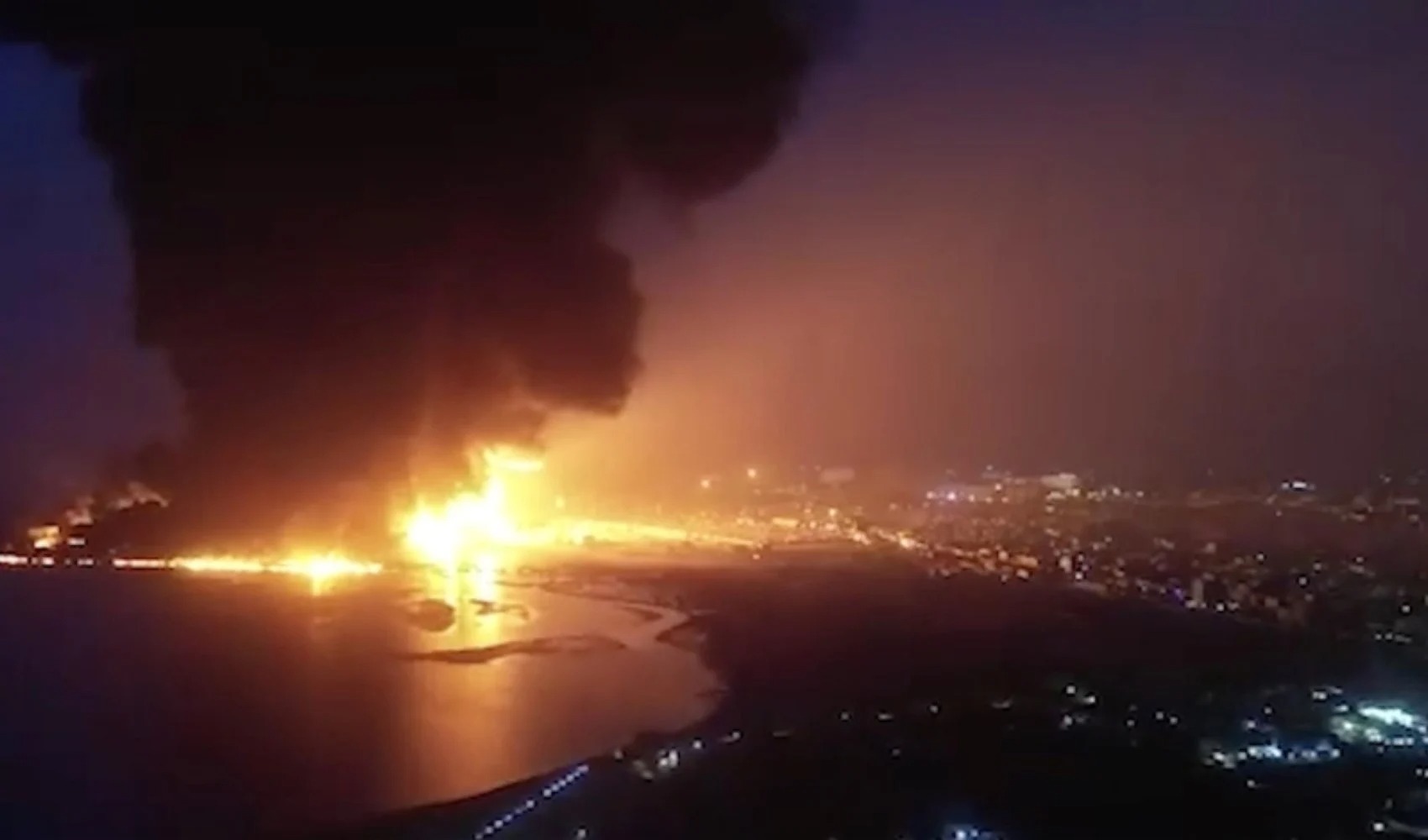
Houthis strike Saudi-owned tanker
It never ends: Another FETÖ memory
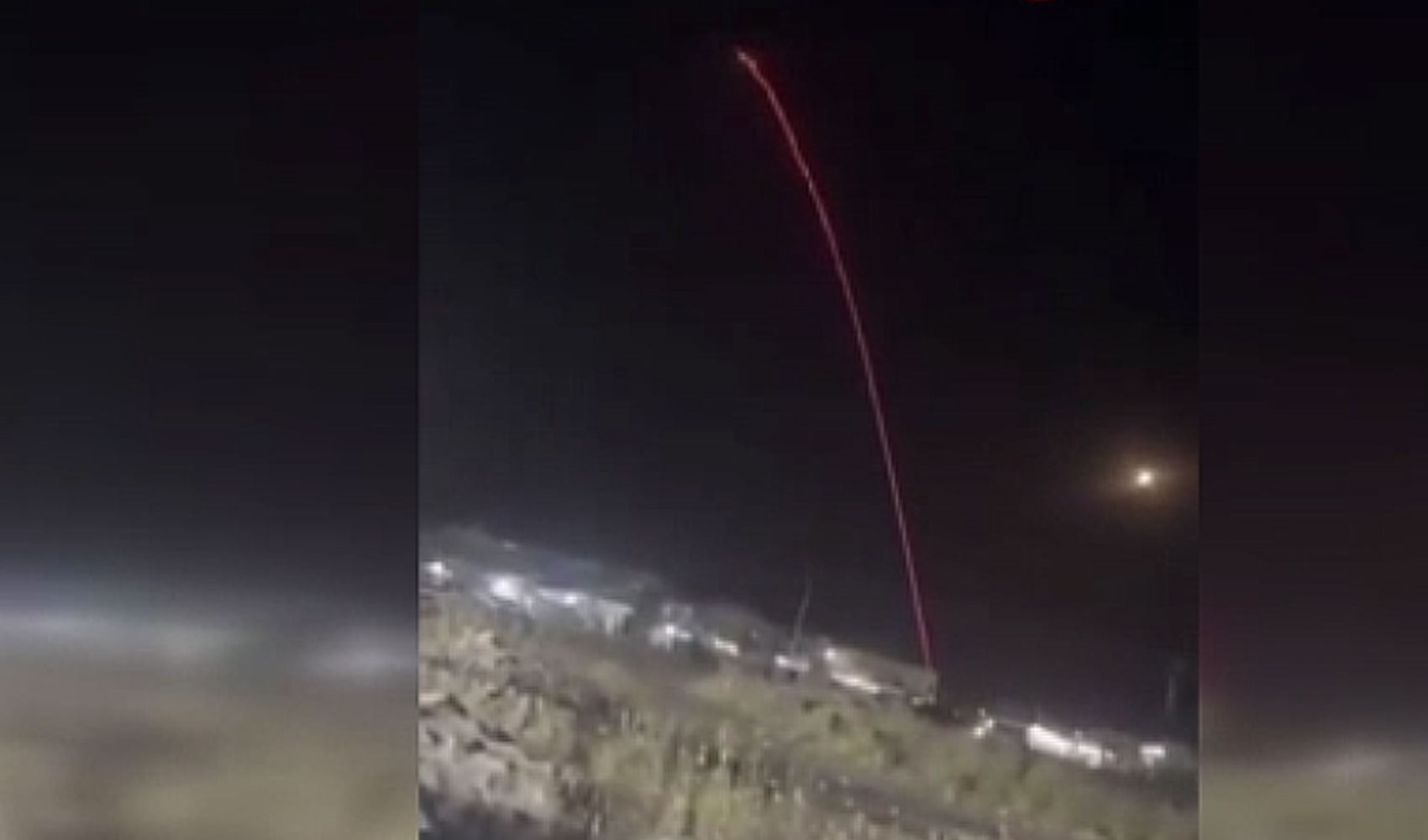
4 drones shot down near US Consulate General in Erbil
A mind fixated on leggings...
Famous director Ezel Akay and his brother have been detained
He announced which municipalities will join the 'New Party', the Istanbul detail drew attention
The official, rumored to be switching to the AKP, has begun a persuasion tour

A critical distinction in the claim about eating out
CHP's mass SMS move in response to Özel's new party decision
The debates within the CHP do not interest me at all