

“A Thousand Shams, One Jalal al-Din”: Speaking not of a story, but of a state of being
Sociologist and author Shahzadeh Igual brings the possibility of inner transformation to the stage with “A Thousand Shams, One Jalal al-Din.”



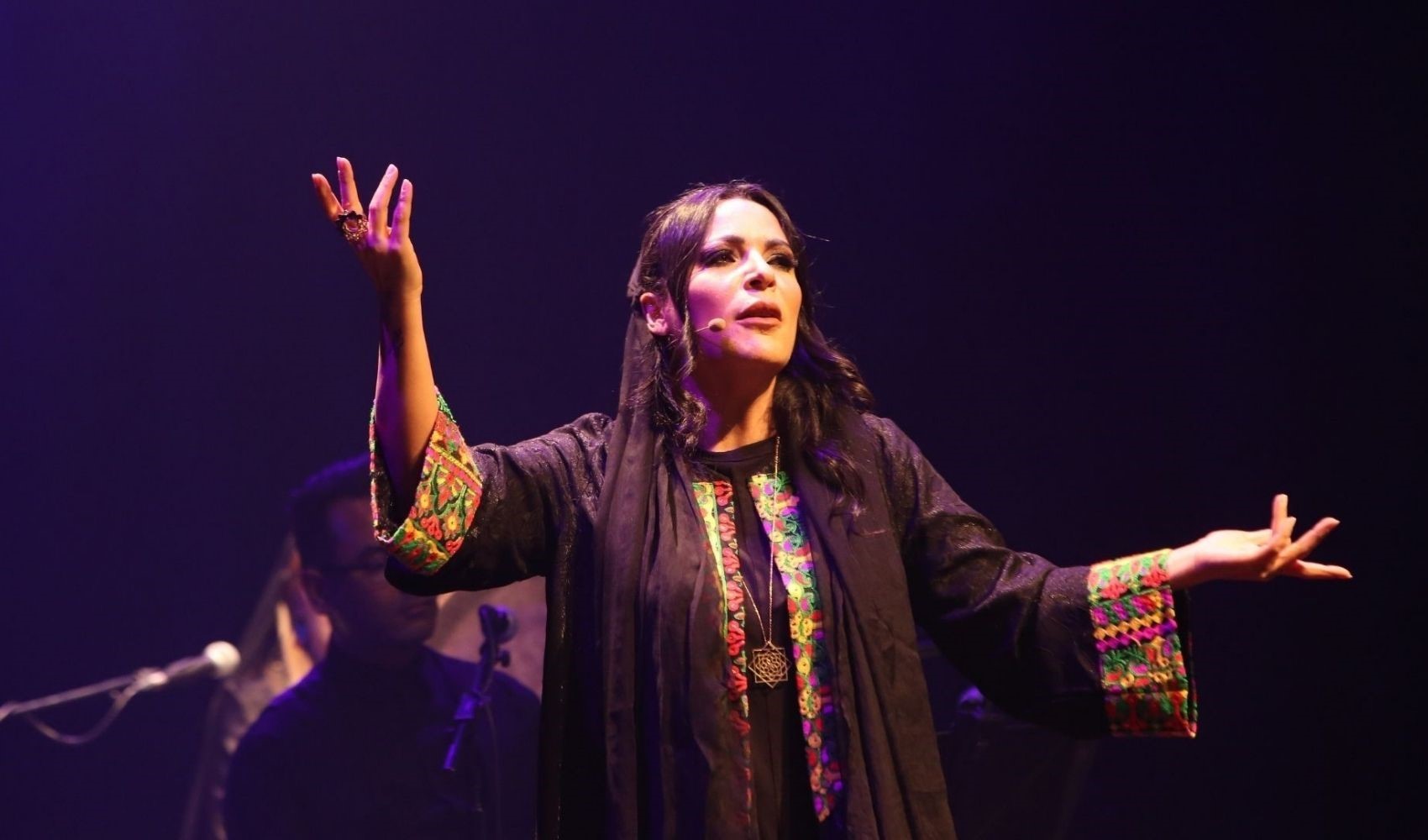
“A Thousand Shams, One Jalal al-Din,” brought to the stage by sociologist and author Shahzadeh Igual, who was born in Iran and lives in Turkey, consciously violates the boundaries of a conventional narrative. Rather than reconstructing the historical encounter between Shams Tabrizi and Mevlana Jalal al-Din Rumi, this work explores the echoes of that encounter as they multiply within the human inner world. According to Igual, this story does not belong to two people; it is a field of truth that multiplies, reconstructed by every spectator within themselves.
We spoke with the author and actor Shahzadeh Igual about the performance titled “A Thousand Shams, One Jalal al-Din,” which will meet the audience again on May 7, 2026, at the KKM Gönül Ülkü and Gazanfer Özcan Stage.
The phrase “A Thousand Shams, One Jalal al-Din” seems to point from a singular story to a plural truth. Why is the story of Shams and Jalal al-Din a multiplying narrative for you, and what distinguishes this narrative from others in its fundamental aspects?
The phrase ‘A Thousand Shams, One Jalal al-Din’ is an exaggeration in appearance, but a multiplying manifestation in reality. Because the story of Shams Tabrizi and Mevlana Jalal al-Din Rumi is not so much about the encounter of two bodies, but the appearance of a truth in countless hearts. This narrative is not a classic story of friendship or master-disciple. Language here is not just a tool; it is also a veil, a mirror. Every reader and spectator finds another Shams, another Jalal al-Din corresponding to their own state. That is why the story does not remain singular; it multiplies. This tale is a story of influence rather than singular power. Shams has no rank, yet he possesses the power to shake a scholar of a madrasa. This whispers to us: True transformation does not occur through top-down orders, but through the fire that passes from heart to heart. In this respect, the narrative carries a silent objection to the order of every age. On the path of gnosis, Shams is not a person, but a state; Jalal al-Din is the one who finds himself in the mirror of that state. To say ‘A Thousand Shams’ is for the truth to manifest in different forms. ‘One Jalal al-Din’ is the essence that perceives that truth. In other words, the issue is not so much the story of two people, but the human finding the Shams within themselves and awakening to their own Jalal al-Din. That is where it differs from other narratives: This story is not told, it is lived. It is not read, one falls into it, and everyone who falls multiplies their own story. In short, ‘A Thousand Shams, One Jalal al-Din’ is the name of infinite encounters.”
As an author who still dreams in Persian but constructs your most beautiful sentences in Turkish, is this work a story of “intra-lingual migration” for you?
My dreams are still in Persian. It is like the voice of an ancient civilization echoing in the deep layers of my memory. If I construct my sentences in Turkish, it is from the pulse of the land I walk upon. This state turns into a balance established by two worlds in the same body, moving beyond a simple ‘intra-lingual migration.’ From a literary perspective, I did not take refuge from one language in another; on the contrary, I opened the possibilities of two languages to each other. Persian gave me depth, while Turkish provided clarity and sharpness. That is why the texts I write are not translations, but the shared breath of two souls. From a geopolitical perspective, the issue is broader: Turkish and Persian are not just two languages; they are the carriers of two of the greatest historical basins. The interaction that has continued for centuries between two neighbors has been shaped sometimes by competition and sometimes by gnosis. With my pen, I invite a rethinking of the borders drawn between these two basins. Because languages are older than states; words are more permanent than maps. Therefore, my work is more of a ‘transition’ than a ‘migration.’ For in migration, there is an abandonment; I have not abandoned, I have only carried. I brought the dream of one language into the consciousness of the other. My story is not the tension of two geographies; it is the meeting of two languages. And perhaps the most authentic act of art is when a person can express themselves most accurately.
What challenged you the most while bringing the bond between Mevlana Jalal al-Din Rumi and Shams Tabrizi to the stage: historical reality or the metaphysical dimension of that bond?
Bringing the bond between Mevlana Jalal al-Din Rumi and Shams Tabrizi to the stage… This is neither just writing history nor purely dreaming. The real difficulty is how the invisible, not the visible, will be perceived on stage. Historical reality offers us a framework. Names, places, times… But the inside of that framework is mostly silent. I had to make that silence speak. This forced me, the author, to walk a tightrope between documents and intuition. You can write the conversation of two people, but to show the collision of two souls… That is where words fall short. Metaphysics seems like an even tougher test to me. Because Shams and Mevlana, besides being individuals, are a valley of spiritual journeying that is desired to be reached. Bringing this to the stage aims for the audience to perceive it with their hearts. If we look with political attention, the arrival of Shams shakes the established knowledge. Mevlana’s transformation is also the dissolution of authority. While telling this, one should neither deny history nor see the right to prune the truth in oneself. In this direction, what was difficult was neither just history nor metaphysics… The hardest part was maintaining the author’s loyalty between the two. Because history is the shadow of truth; metaphysics is its light. What needs to be done is not to show the fight between the shadow and the light, but their coexistence.
When “fictionalizing” this narrative, which part of reality did you choose to preserve, and which part did you choose to transform?
A tale is not a denial of reality, of course, but its expression in a deeper language. While conveying the narrative of Mevlana Jalal al-Din and Shams Tabrizi, I chose to preserve the essence rather than the chronology of events. Without setting aside the bare facts provided by history, I wanted to preserve the inner vibration born from the events. I symbolized the characters a bit more, made the locations indefinite, and took time out of its memorized form. Because a tale feeds on possibility, not certainty. Therefore, I preserved the core of the truth, but I re-kneaded and shaped its shell. For some truths are incomplete when told as they are, and complete when conveyed through a tale.
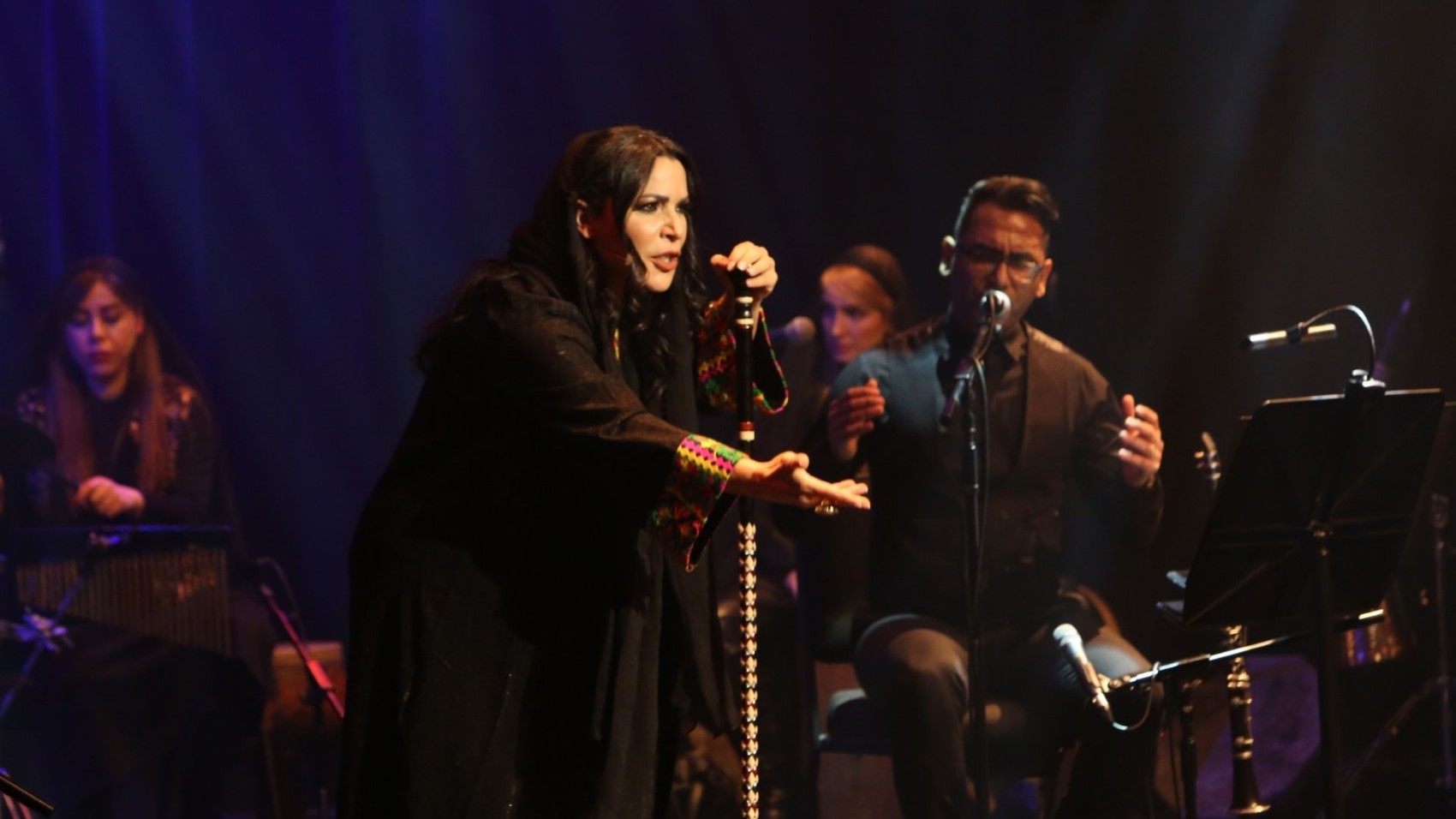
The Naqqali tradition relies on the power of oral storytelling. Considering the modern audience’s addiction to visuality, was it a risk to bring this tradition to the stage?
The Naqqal tradition is a legacy of times when the word alone could build a stage. Today’s audience is bombarded with images that appeal to the eye. So yes, it was risky. But art begins with a little risk. The Naqqal paints pictures only with words, only with sound. The modern stage, however, shows the picture directly. Instead of making these two clash, I wanted to make them talk. I did not completely reject visuality; but in this show, I made the word the center, not its servant. Bringing this ancient Iranian narrative tradition to today’s stage is not just an aesthetic choice; it is a matter of keeping memory alive. Global visual culture tends to swallow local oral traditions. I wanted to establish a point of resistance on stage. The risk was here: The audience would either get impatient or remember how to listen again. I believed in the second possibility. In short, this was not a risk, it was a test.
Would you define this performance as a theater play, a musical, or a ritual?
To imprison this performance in a single word would be to diminish it. I am trying to establish a ‘transition zone’ on stage. Using the narrative discipline of theater together with the flow of music that deepens emotion, but approaching a ritual. Because the issue is not just to watch, but to participate from within. The audience does not just look at the story; they wander inside it. The modern stage often produces shows that can be easily consumed. Approaching a ritual, on the other hand, offers slowing down in an age of speed, and deepening in an age of superficiality. This is my own silent objection. My stance against the commodification of cultural production. This stage language is fed by the shared memory between Anatolia and Iran. In these lands, art has never been just a ‘show’; it has also been a state, a dhikr, a remembrance. If a name must be given, this is a ‘stage ritual.’ A ‘state’ that brings theater, music, and memory together in the same breath.
As a sociologist born in Iran and writing in Turkey, in which word, which sound, or which silence do you think the “cultural bridge” between the two civilizations is built most?
As someone born in Iran and writing in Turkey, I have seen this: Bridges are built most in the states carried by speech. This bridge sometimes appears in a single word: ‘aşk’ (love) in Persian is ‘eshgh’, in Turkish ‘aşk’… The pronunciation changes, the vibration remains the same. That vibration, I think, is the common heartbeat of the two civilizations. Languages and cultures often appear separated by borders. But this bridge carries beyond official narratives. In a line of poetry, in a lullaby, in a lament… The sound reaches places that the maps drawn by states cannot cross. This bridge is felt simultaneously in the stone of Anatolia and the desert wind of Iran. But it is built most powerfully in silence. For where two languages fall silent, a common perception begins. This bridge is the deepest place where two civilizations understand each other.
The work has been evolving with every performance since its 2018 premiere. Which new layer did you add while focusing on the May 7, 2026 version of “A Thousand Shams, One Jalal al-Din”? Do you see this version as “final,” or will it still change?
The first curtain in 2017 was telling the astonishment of the encounter. With every new performance, it began to be the deepening echo of that astonishment. When we say ‘A Thousand Shams, One Jalal al-Din’ on May 7, 2026, I am bringing a multiplying perception to the stage. In this new version, the most prominent layer will be the more explicit placement of the idea of ‘plurality’ in the stage language. I am approaching the possibility of transformation within every human being. This turns the narrative into a shared experience. This preference for plurality also serves as an answer to the fragmentation of today’s world. In an age where the claim of a single truth produces conflict, to say ‘a thousand Shams’ is an intellectual stance that says different interpretations, different paths can exist together. The 2026 version makes those meaningful transitions between Anatolia and Iran even more visible. A flow where two geographies mix through language, music, and rhythm. Not a single location on stage; a transition line. As for the question ‘Is it final?’… No. This work cannot be ‘final.’ Because what it tells is not a completed story, but an ongoing process. Every time it is performed, it gives birth to a new Shams, a new Jalal al-Din. I may be writing the text, but in reality, that text continues to write me. The May 7, 2026 version is not an arrival; it is the threshold of a deeper journey. This work does not end, it transforms...
Interview: Görkem YAKUT
News Source: 12punto
Most Read

Striking picture for Özgür Özel's 'New Party'

The PKK opening and Özgür Özel’s path!..

How did the newspapers view Özgür Özel's farewell to the CHP?

He killed his wife by slitting her throat: Their children witnessed the moments

What did the CHP do?

Özel’s new party move in the world press

The New CHP, against CEHAPE

Fire at TUSAŞ engine factory in Eskişehir under control

From self-efficacy to despair

Kılıçdaroğlu's first message on Özgür Özel's new party announcement