

Folk poet Aşık Mahzuni Şerif commemorated on the 22nd anniversary of his passing
22 years have passed since the death of folk poet Aşık Mahzuni Şerif, who captured the hearts of listeners with numerous unforgettable folk songs including "Han Sarhoş Hancı Sarhoş," "Çeşmi Siyahım," "Yalan Dünya," and "Dom Dom Kurşunu." Writer Miyase İlknur said of the master artist, "He would shift from one state to another within the same timeframe. A part of him always remained a child."



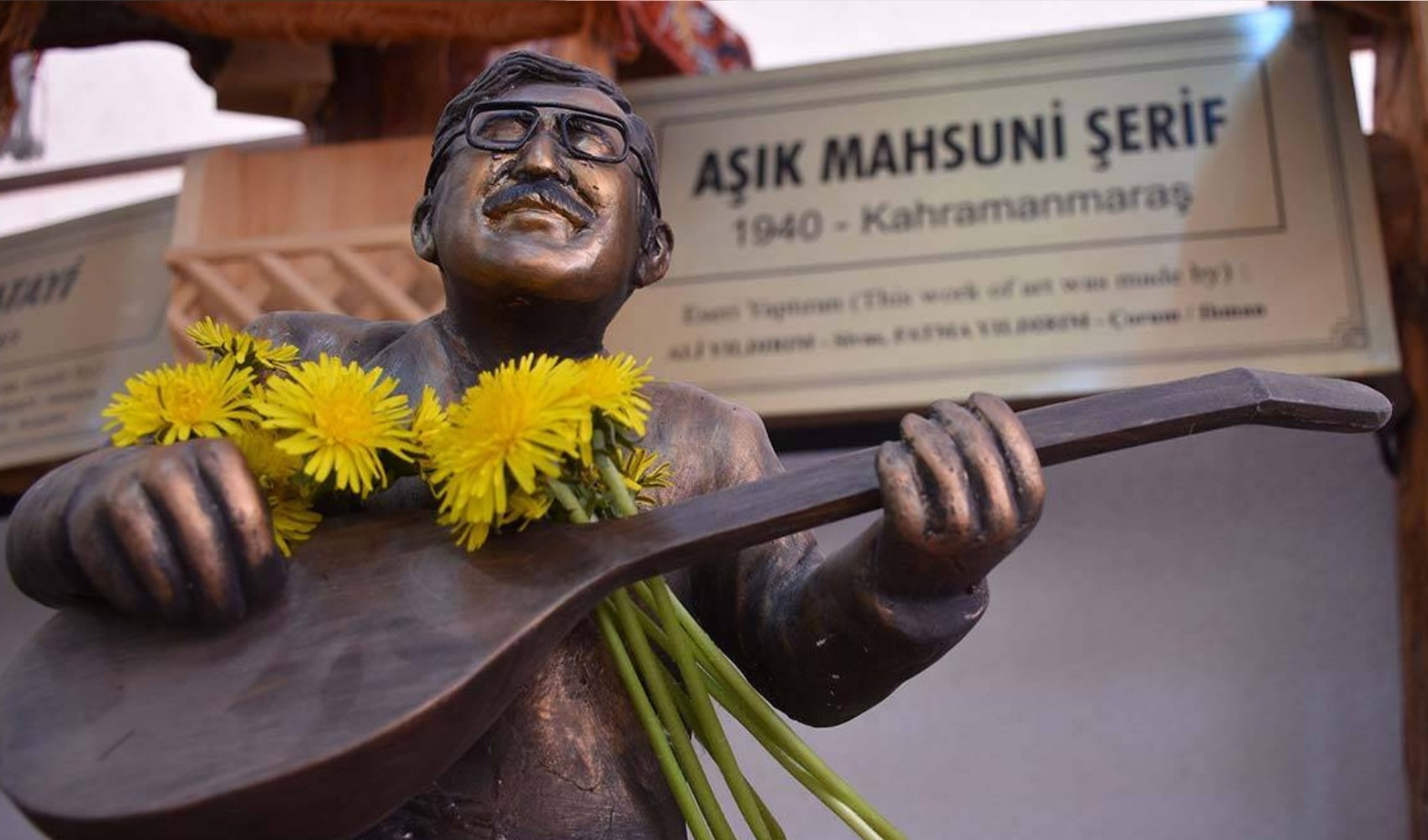
Born with the birth name Şerif Cırık, Mahzuni Şerif was the son of Döndü and Zeynel Cırık, born on November 17, 1939, in the Afşin district of Kahramanmaraş, in the village of Berçenek, known today as Tarlacık.
The artist began his education at the Lütfi Mehmet Efendi Madrasa in the village of Alembey in Afşin, and continued his studies at the primary school once one was built in his village.
Aşık Mahzuni graduated from the Mersin 3rd Non-Commissioned Officer Preparatory School in 1959 and the Ankara Army Ordnance Technical School in 1960. Later, the poet enrolled in the Kuleli Military High School but had to cut his education short due to financial difficulties.
HE FELL IN LOVE WITH MUSIC AT A YOUNG AGE
The folk poet, who began his musical life by learning to play the saz and recite deyiş (folk poems) from his uncle Aşık Fezali (Behlül Baba) at a young age, was given the pen name "Mahzuni" by Cırık Baba, from whom he took Sufism lessons, due to his shy nature.
Mahzuni Şerif married his cousin Emine when he was 17 years old. Their daughter Züleyha was born from this marriage. After divorcing his first wife, the poet married an Italian-born woman named Sovina (Suna), whom he met while studying in Ankara, and they had three children named Ferhat, Şirin, and Emrah.
The artist married for the third time to Fatma Hanım, a primary school teacher in Gaziantep, and they had children named Derya, Ali Bülent, Şeyda, and Yetiş.
The artist released his first record in 1964. After living in Gaziantep for a while, he moved to Ankara, where he began to associate with figures such as Fikret Otyam, Feyzullah Çınar, Nesimi Çimen, Aşık Daimi, and Kul Ahmet. Aşık Mahzuni founded the Association of Poets (Aşıklar Derneği) there and gave concerts with the support of the Journalists' Union and painter Fikret Otyam.
Aşık Mahzuni Şerif created many unforgettable works, including "Dom Dom Kurşunu," "Yedin Beni," "Yuh yuh," "Fadimem," "Gül Yüzlüm," "Ciğerparem," "Merdo," "Dostum Dostum," "Han Sarhoş Hancı Sarhoş," "Çeşmi Siyahım," "Yalan Dünya," "Ağlasam mı?," "Abur Cubur Adam," "Katil Amerika," and "Ekmek Kölesi."
The artist visited Aşık Veysel Şatıroğlu, one of the important representatives of the minstrel tradition, in Sivas in 1972.
Following the March 12 Memorandum, the master artist was banned from performing on stage and traveling abroad for 8 years. During this period, he began selling records in a small shop so as not to be separated from art and folk songs.
In an interview, the artist described this period by saying, "Not being able to sing folk songs saddened me deeply. Take a live fish and throw it onto the sand. Just as that fish looks at the sea, that is how I looked at folk songs."
'HE LIVED LIKE A DERVISH'
In an article where writer Miyase İlknur recounts the life of Aşık Mahzuni Şerif, the following statements were included:
"Throughout his life, he always lived like a dervish. He always maintained his shy and humble demeanor. He would not even lift his face from the ground when speaking to a child. Sometimes he would take on the identity of a five-year-old child, and other times that of a sage who had lived through centuries. He would shift from one state to another within the same timeframe. A part of him always remained a child. This childlike and pure side of his would make his friends laugh. Despite having tens of thousands of fans, he never saw himself as a celebrity, remaining the shy Mahzuni who played the saz and recited spiritual breaths at the feet of Şakir and Cırık Baba."
HE RELEASED 58 CASSETTES THROUGHOUT HIS LIFE
Aşık Mahzuni Şerif, who expressed his feelings and thoughts through his writings in newspapers such as "Milliyet," "Meydan," and "Anadolu'nun Sesi," and magazines such as "Pir Sultan," "Hacı Bektaş," "Kızıldeli," and "Ozanca," in addition to his saz, was sentenced to prison several times and tried for the death penalty twice due to some of his writings and folk songs.
The artist was named one of the world's 3 greatest poets by the Federation of Folk Poets between 1989 and 1991. Deeply devoted to folk poetry, Mahzuni Şerif released 453 records and 58 cassettes throughout his life.
The folk poet, who was taken into intensive care in Cologne, Germany, in 2001 due to heart and respiratory failure, was discharged from the hospital in May after treatment, but passed away a year later, on May 17, 2002, at the age of 62.
In accordance with his will, Aşık Mahzuni was buried in a place called Çilehane, near the Hacı Bektaş Veli Complex in the Hacıbektaş district of Nevşehir.
The artist, who also produced albums titled "Gel Gizli Gizli," "Zincirli Vize," "Fadimem," "Dargın Mahkum," "Dom Dom Kurşunu," "Benim Neyim Var," "Barışak," and "Son Acı (Orta Doğu)," collected his poems written in free verse, alongside his folk songs, in a book titled "Dolunaya Tül Düştü."
News Source: 12punto
Most Read

Striking picture for Özgür Özel's 'New Party'

The PKK opening and Özgür Özel’s path!..

How did the newspapers view Özgür Özel's farewell to the CHP?

He killed his wife by slitting her throat: Their children witnessed the moments

What did the CHP do?

Özel’s new party move in the world press

The New CHP, against CEHAPE

Fire at TUSAŞ engine factory in Eskişehir under control

From self-efficacy to despair

Kılıçdaroğlu's first message on Özgür Özel's new party announcement