

Mardin is talking about this: 1500-year-old drinking water canal discovered in the Ancient City of Dara
A 400-meter-long drinking water canal has been identified during ongoing excavations in the agora section of the Ancient City of Dara in Mardin.



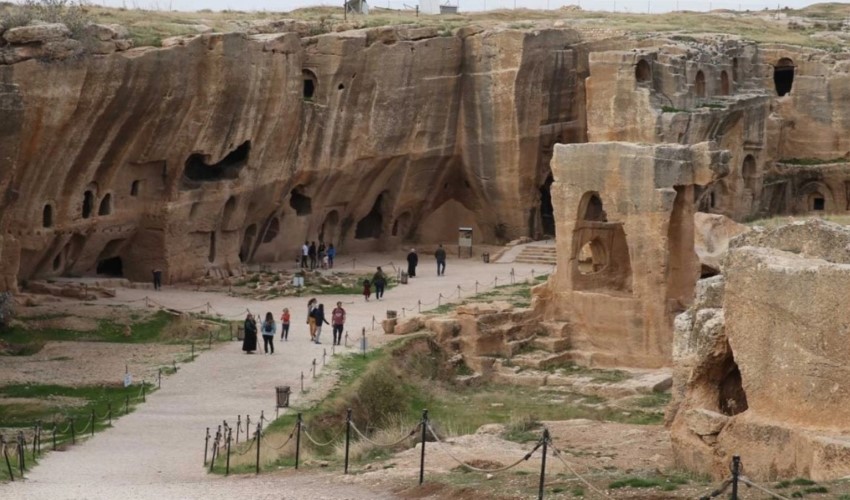
A 400-meter-long, 1500-year-old drinking water canal has been identified during ongoing archaeological excavations in the Ancient City of Dara, located in the Artuklu district of Mardin.
According to AA, excavations in the Oğuz neighborhood, 30 kilometers from the city center, are continuing this year. The work began 38 years ago under the leadership of the then-Acting Director of the Mardin Museum, Abdülhalik Ekmen, with the scientific consultancy of Prof. Dr. Metin Ahunbay, a faculty member at the Istanbul Technical University Faculty of Architecture.
In the excavations carried out under the leadership of the Mardin Museum in the agora of the ancient city—which was established by the Eastern Roman Empire to protect its borders against the Sassanids—more than 10 shops and workshops, as well as a 1500-year-old drinking water system built during the Roman period, were unearthed.
As a result of the work, it was determined that the canal, which transported drinking water to the region from a water cistern discovered approximately 35 years ago, was protected by stones weighing about 2 tons each, and that distribution from this canal was carried out using a system of terracotta pipes (künk).
30-METER SECTION OF THE WATER CANAL UNEARTHED
During the excavations conducted by the Mardin Museum Directorate, excavation head Abdulgani Tarkan stated that in the excavation work they began in October this season in the Ancient City of Dara, which was founded by Emperor Anastasios in 507, they found a water system that carried water to the agora region of the ancient city.
400 METERS LONG
Stating that water was distributed from the water canal extending from the cistern to the agora, and in some places from the water canal via terracotta pipes, Tarkan said:
"We have identified a clean water system extending from the cistern to the agora. This is a new find. It is approximately 400 meters long. It is a system that carries water transferred to different structures from the 2 cisterns found in Dara.
In Dara, there are water cisterns similar to the Basilica Cistern in Istanbul. Water was transported to the city from the water cistern, which contained tons of water, via a system of canals and terracotta pipes. It is actually a water system that met the drinking water needs of the city established in Dara 1500 years ago."
IT WAS ENTIRELY UNDERGROUND, IT EMERGED AS WE DUG
Archaeologist Dr. Devrim Hasan Menteşe, who works at the Mardin Museum, also stated that they have been working in front of the agora and the city walls since 2018.
Explaining that they have focused their work on the agora region, where many shops and workshops have been brought to light, Menteşe noted that they found water channels inside the shops at lower levels, and then followed the channels to reach the massive water canal.
'IT IS NOT EASY TO MEET THE NEEDS OF PEOPLE'
Stating that the water channels were covered with stones weighing approximately 2 tons and that they saw water transfers from the cistern, known as the dungeon cistern, toward the western side of the city, Menteşe said:
"Currently, there are about 300 large stones on top of it. The smallest stone is over one ton. The largest ones go up to 3 tons. Because there are very large stones. We know from ancient writers that the Ancient City of Dara was established as a garrison and that 25,000 soldiers were stationed there. Meeting the needs of such a large army and people is not an easy task. That is why water systems are very important. Next to this canal, we also found terracotta pipe systems.
It is very important in terms of showing how water was distributed to the shops inside the agora. At the same time, this canal system is very important in terms of showing how it was distributed throughout the city. It was entirely underground; it emerged as we dug. It appeared at a depth of approximately 1.5 meters. This water canal winds its way toward the southern dungeon cistern."
News Source: 12punto
Most Read

Striking picture for Özgür Özel's 'New Party'

The PKK opening and Özgür Özel’s path!..

How did the newspapers view Özgür Özel's farewell to the CHP?

He killed his wife by slitting her throat: Their children witnessed the moments

What did the CHP do?

Özel’s new party move in the world press

The New CHP, against CEHAPE

Fire at TUSAŞ engine factory in Eskişehir under control

From self-efficacy to despair

Kılıçdaroğlu's first message on Özgür Özel's new party announcement